
India: Tiger and Wildlife Spectacular Tour Report 2026
18 May 2026
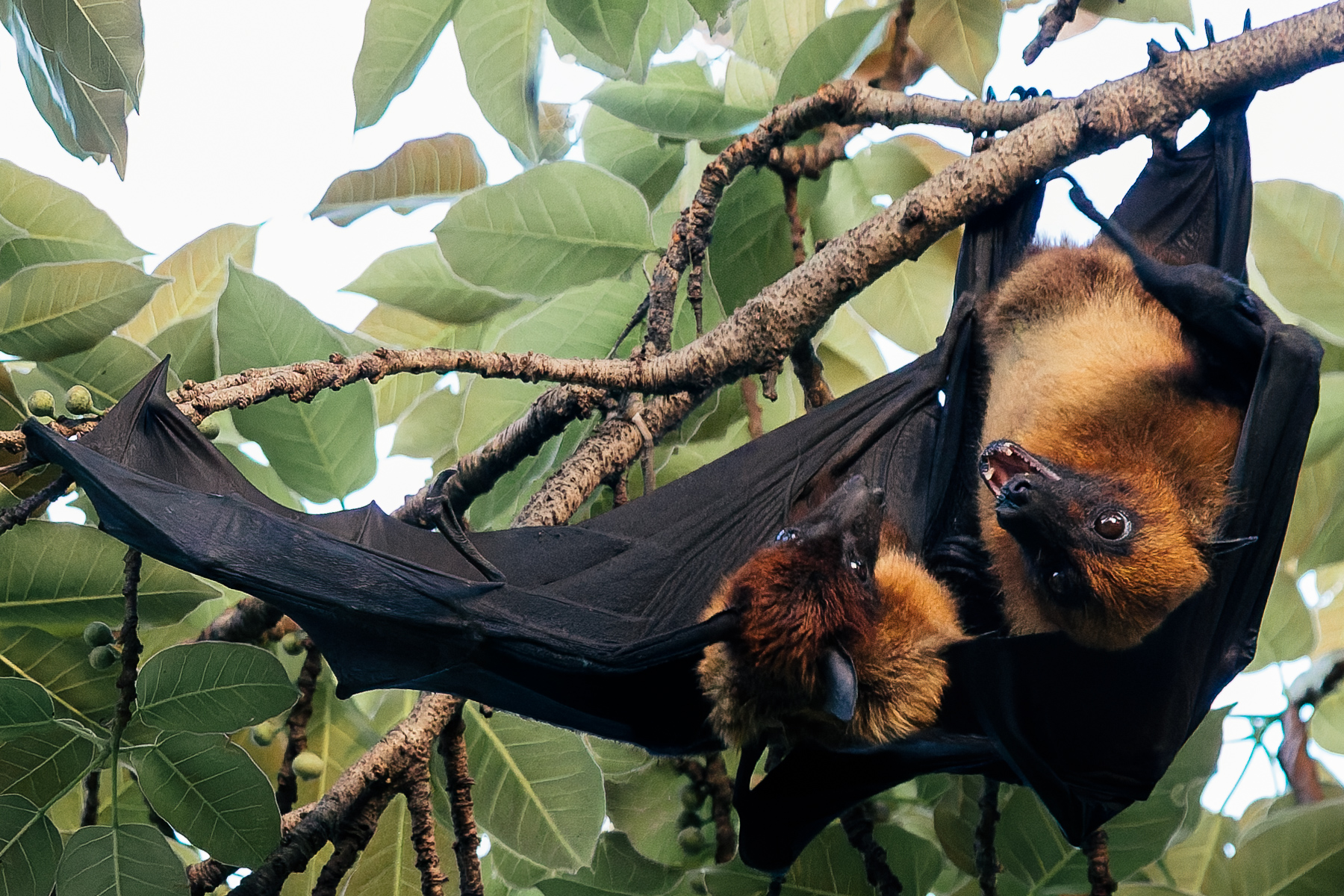
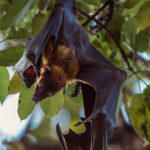
Two courting Indian Flying Foxes appear deep in gossip as they entangle in each others' wings during a mating ritual. Indian Flying Foxes - also known as Greater Indian Fruit Bats - are known as 'megabats', with a wingspan of up to 5ft (1.5 metres) and a habit of living in colonies several hundred, or even a thousand-strong (image by Virginia Wilde)
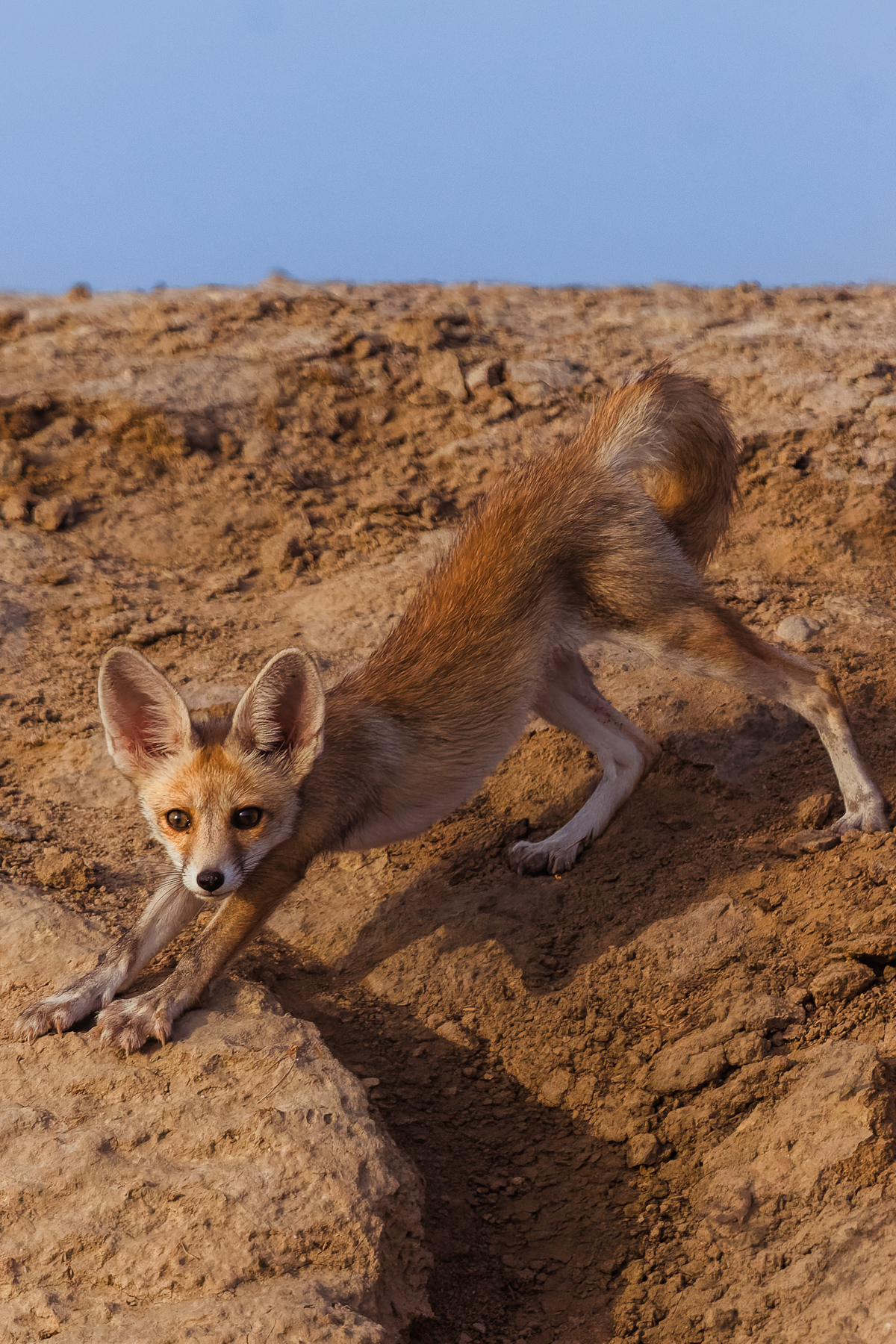
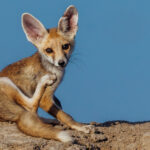
And stretch, little one! A Desert Fox cub gives its front legs a good stretch as the sun rises over the saline desert of India's Little Rann of Kutch (image by Virginia Wilde)
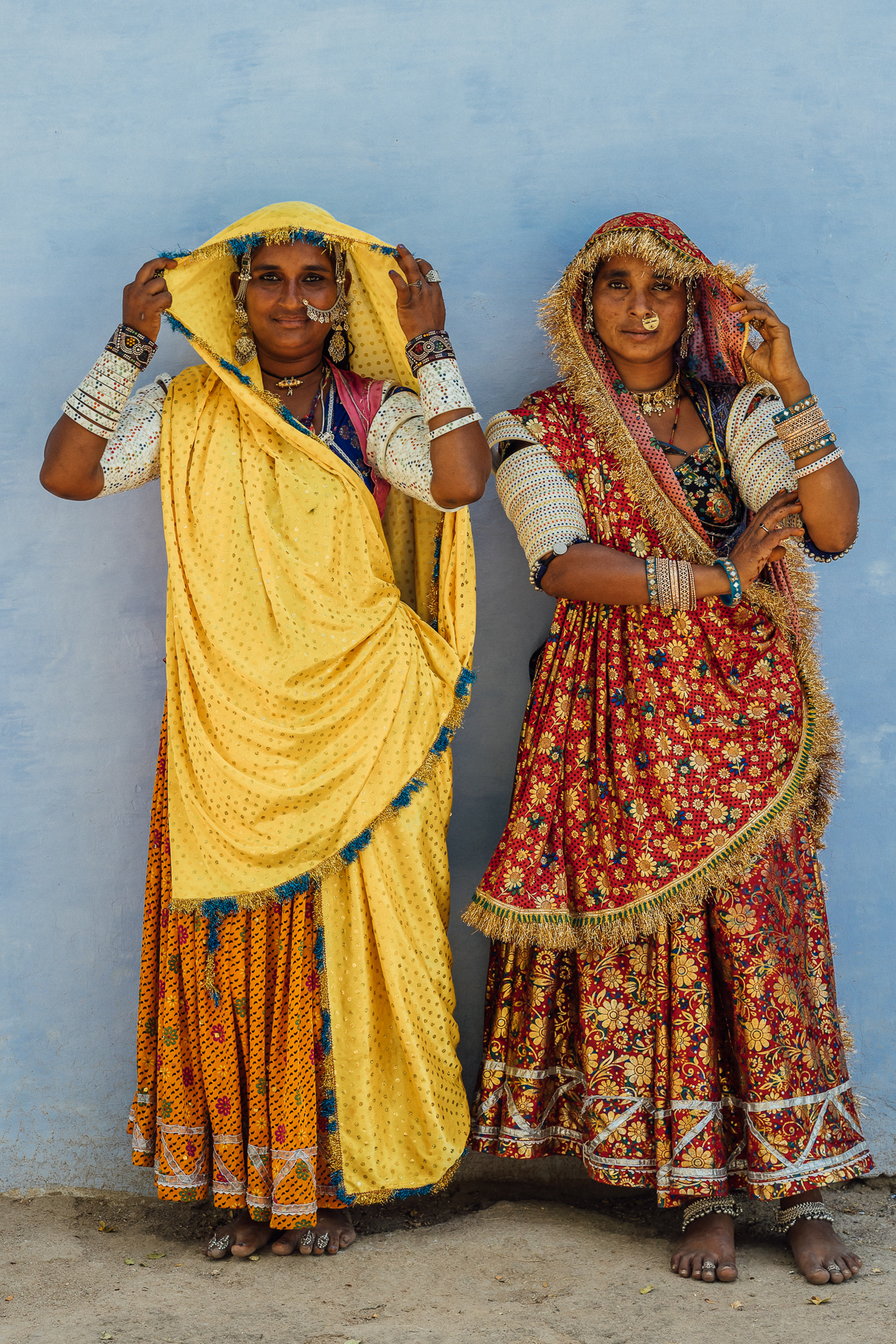
Women from the Mir tribe in India's Little Rann of Kutch, who are descended from the Butt tribe in Kashmir. These formerly nomadic people are highly-regarded for their handicrafts and detailed bead-making (image by Virginia Wilde)
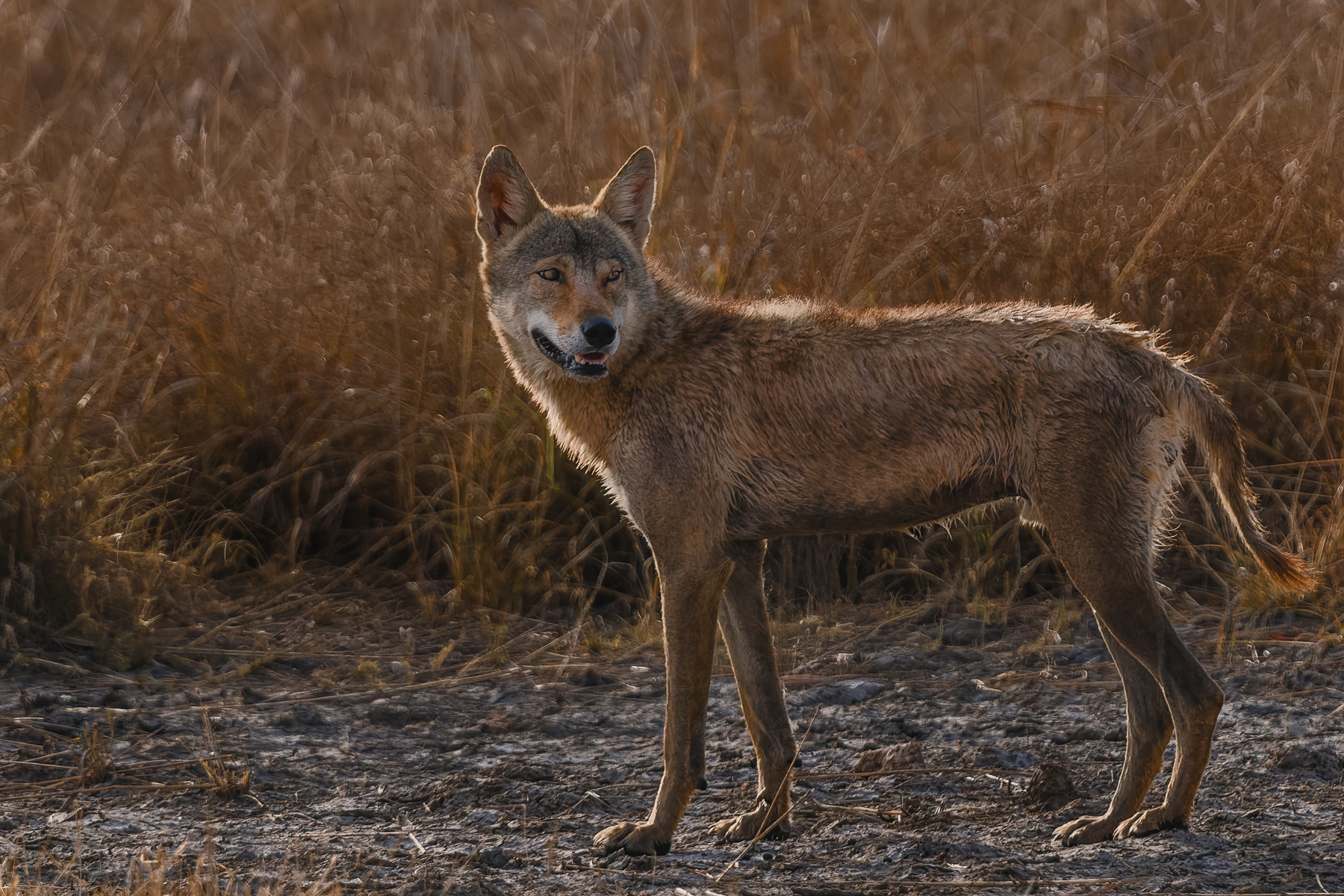
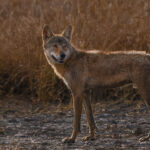
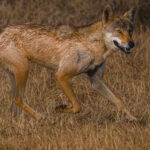
The evening sun lights up the fur on the back of an Indian Wolf's coat. Indian Wolves are among the most ancient wolf lineages in the world, with genetic divergence dating back more than 800,000 years (image by Virginia Wilde)
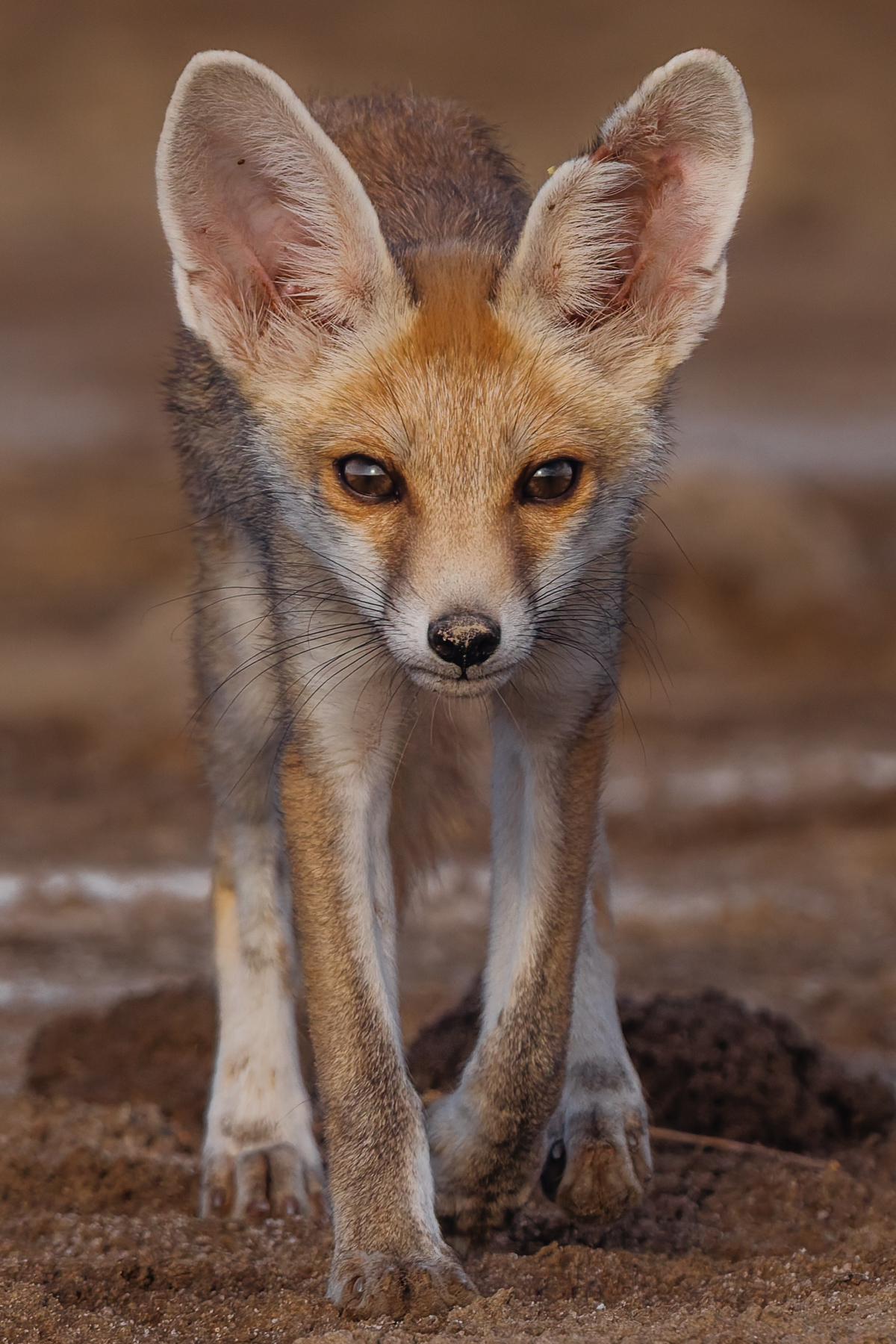
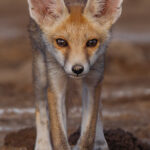
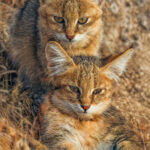
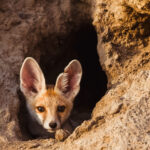
The almost cartoonish outsized ears of the Desert Fox are designed for survival in arid environments. These almost cartoonishly-large ears act as acoustic amplifiers to detect the low frequency sounds of burrowing prey (such as insects or rodents) in sandy or hard-packed ground (image by Virginia Wilde)
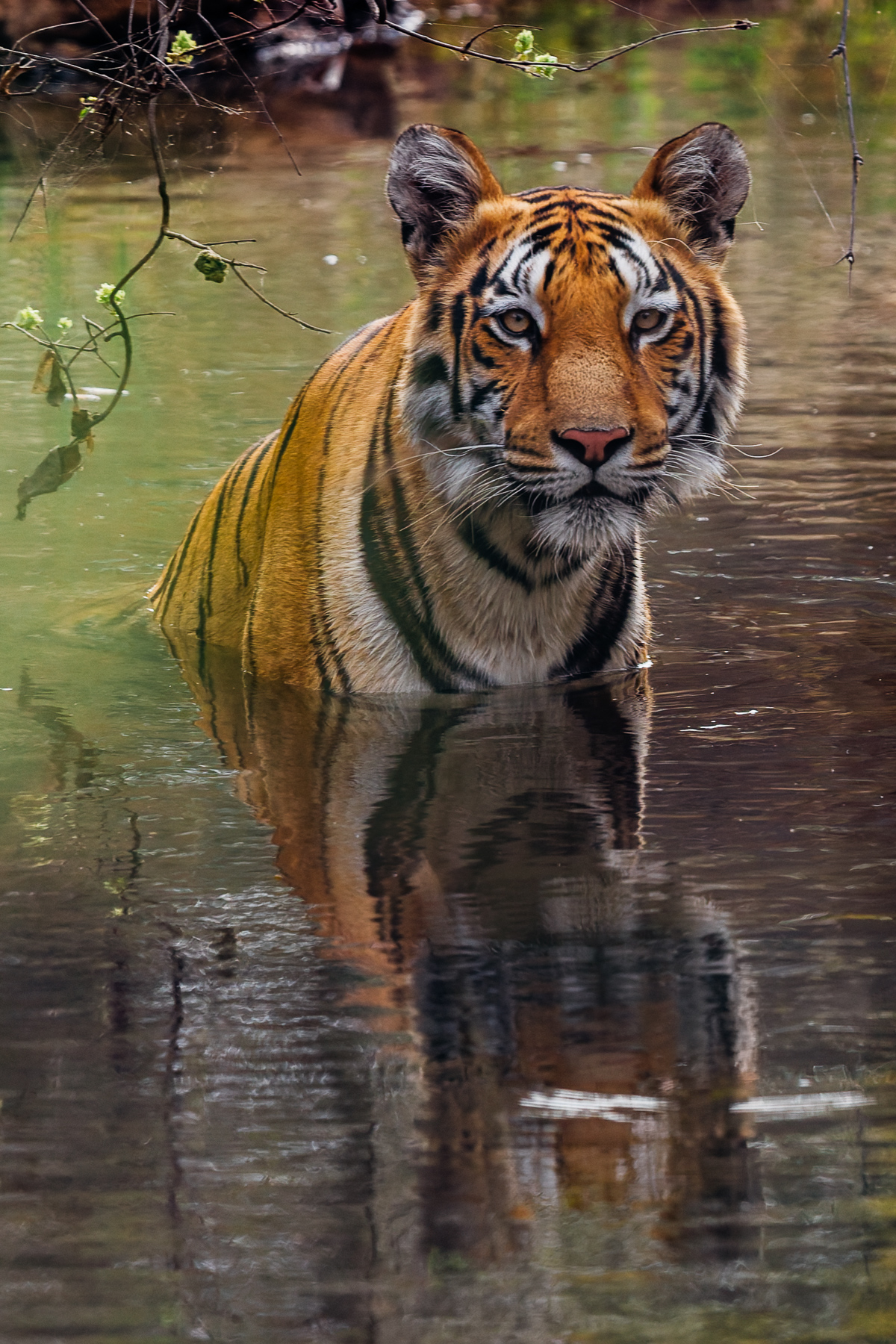
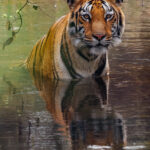
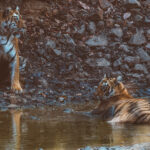
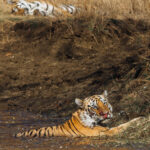
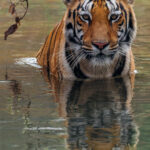
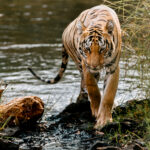
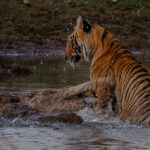
One of my favourite moments in India this year - tigress 'Kajri' bathing in a shallow river in India's Tadoba Reserve, just as dusk was starting to fall (image by Virginia Wilde)
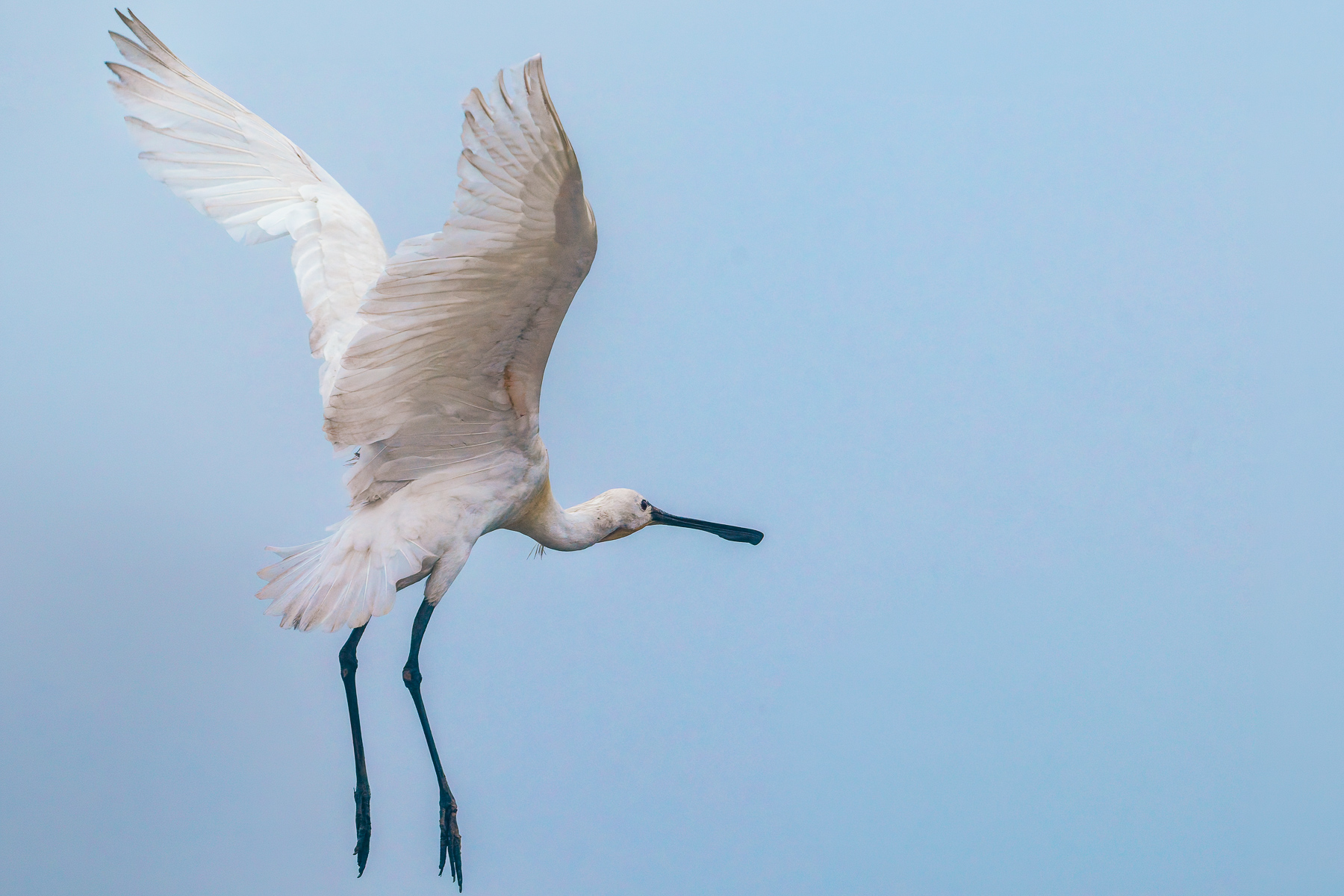
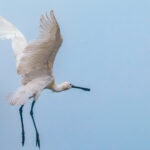
A flying Eurasian Spoonbill takes off during a particularly misty morning on India's Chambal Rover, rendering a painterly look to the sky (image by Virginia Wilde)
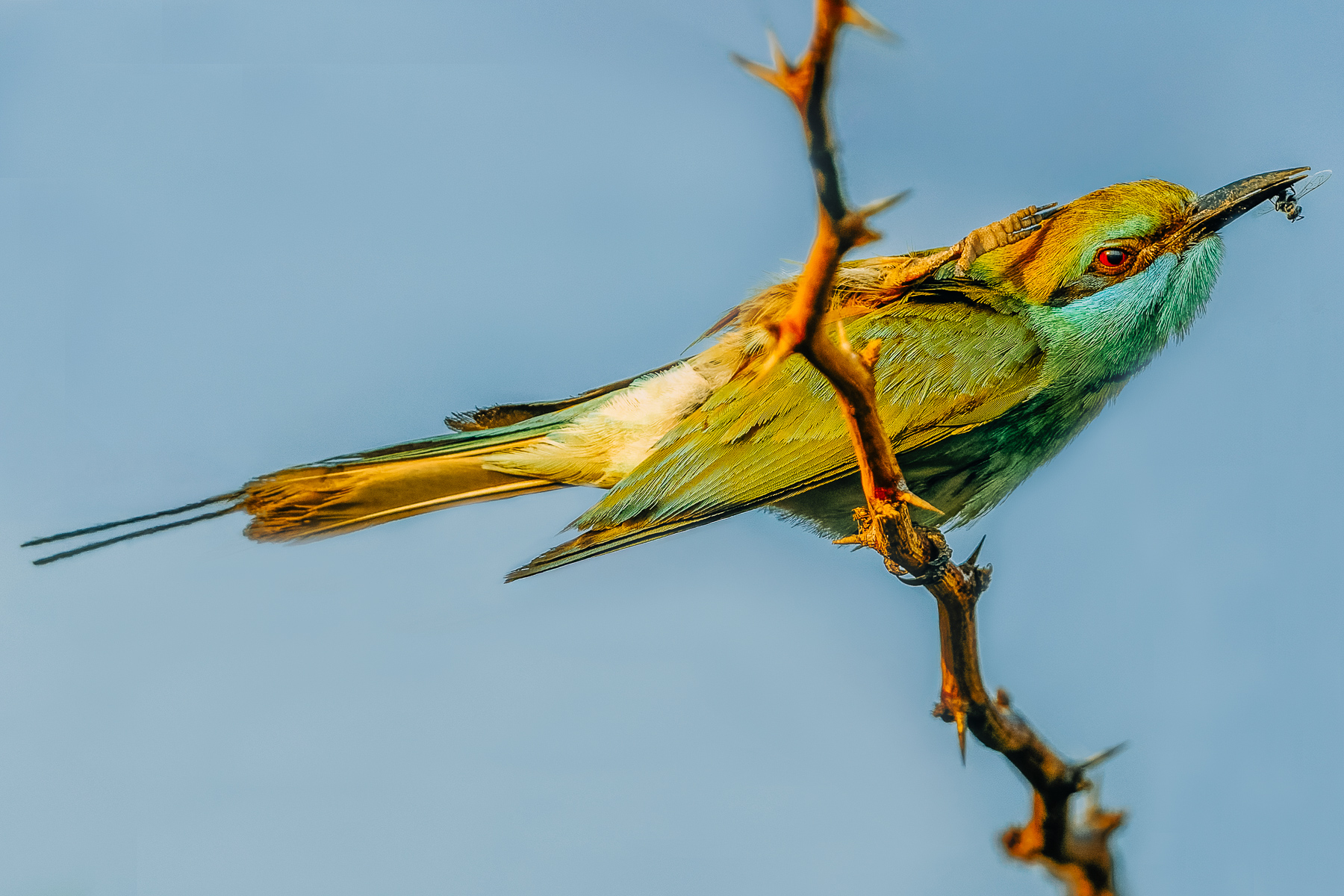
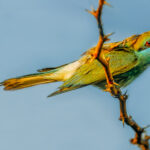
A colourful Asian Green Bee-eater - also known as the Little Green Bee-eater - tucks into its insect lunch. Asian Green Bee-eaters are highly gregarious, often gathering in groups of up to 300 individuals (image by Virginia Wilde)
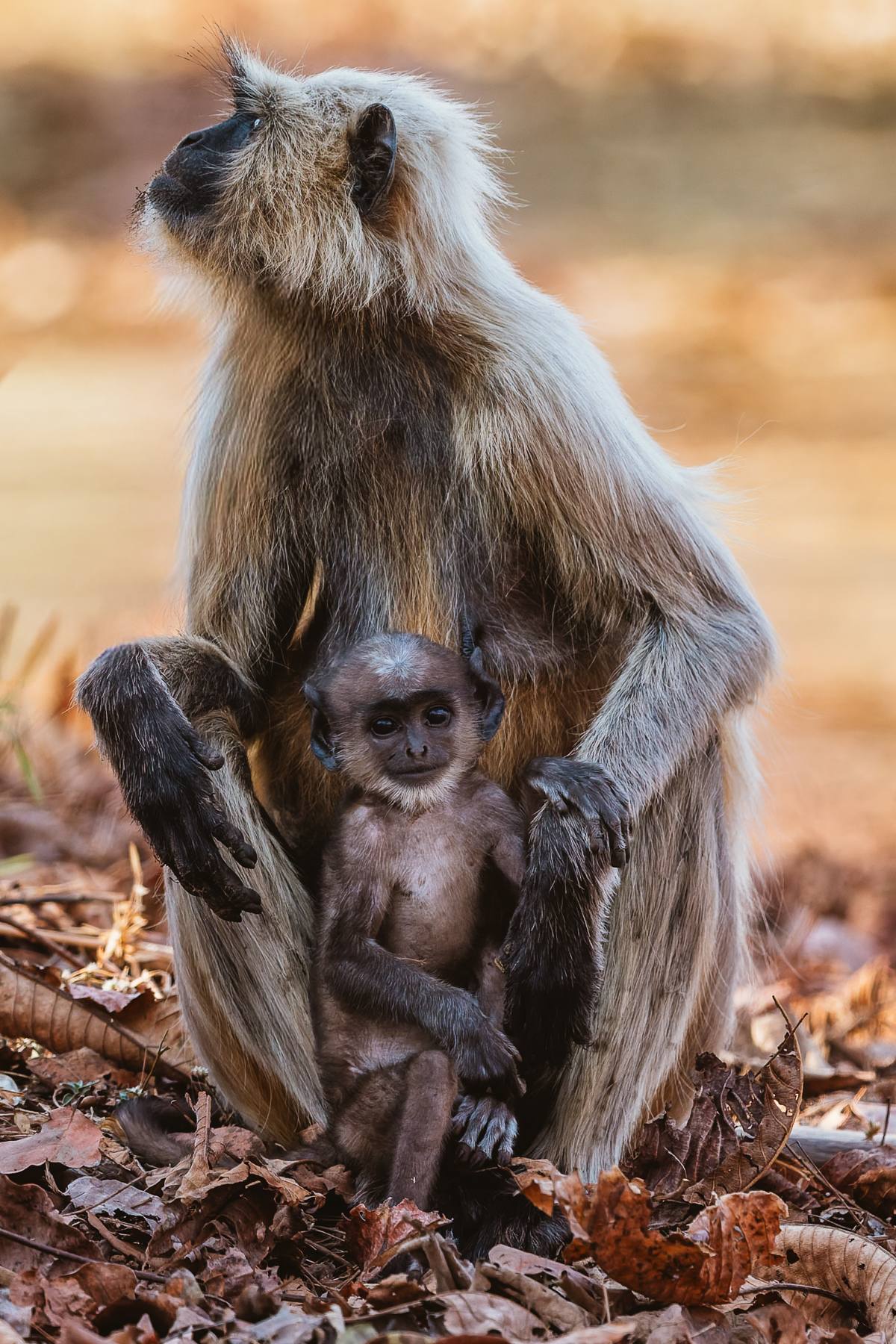
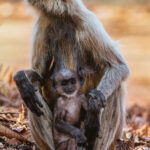
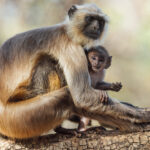
This adorable Northern Plains Grey Langur infant - a species of primate also known as Sacred Langurs - poses contentedly in its mother’s lap, as assuredly as any human baby (image by Virginia Wilde)

Few architectural wonders show the dedication to symmetry as much as India's Taj Mahal. This image was actually photographed on film camera using Fuji Velvia film and digitised using a smartphone app scanner. Who says Wild Images tour leaders can't experiment with different techniques? (image by Virginia Wilde)
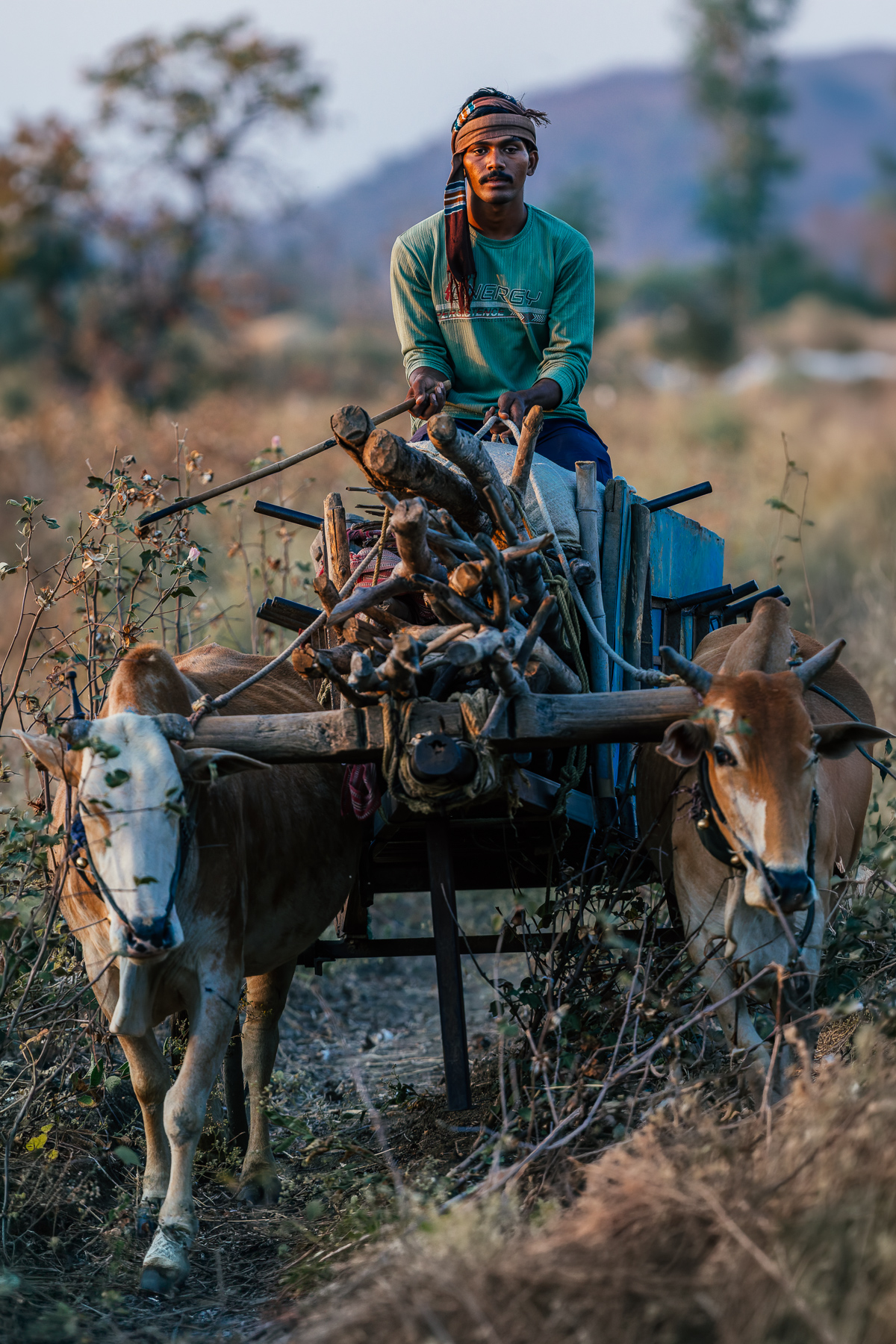
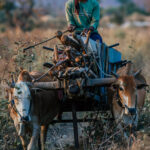
A local farmer collects wood using a cattle-driven cart, after a day in the fields in one of the buffer zones of India's Tadoba-Andhari Tiger Reserve (image by Virginia Wilde)
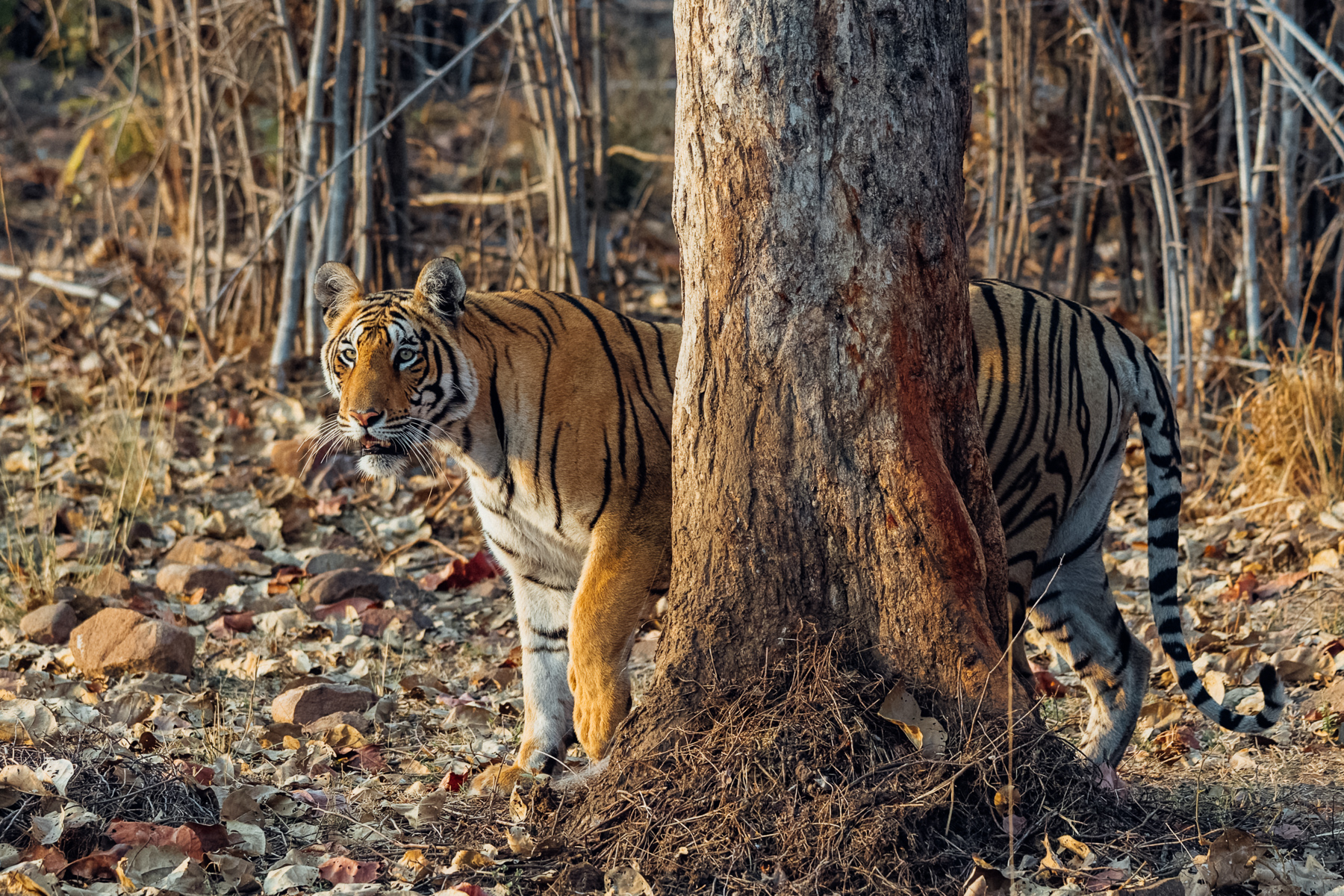
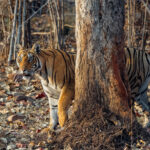
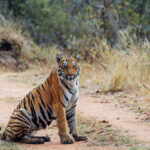
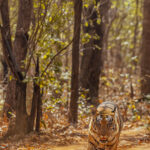
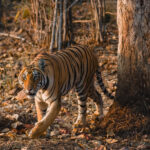
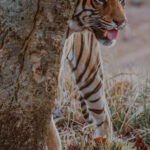
Part-tree, part-Tiger. Bengal Tigers are masters of ambush predation, relying on stealth and camouflage - followed by explosive power - to hunt down prey (image by Virginia Wilde)
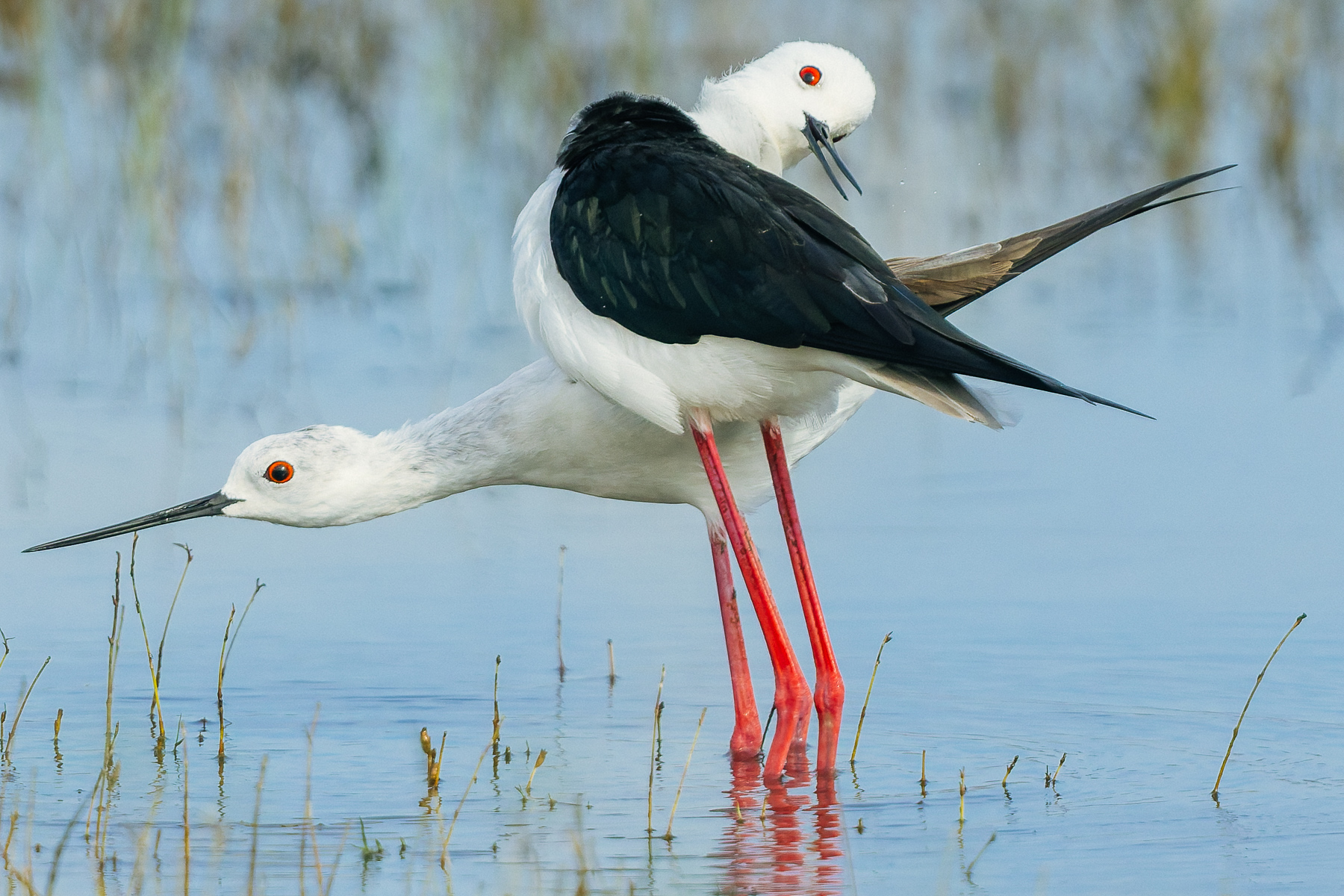
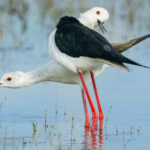
A pair of Black-winged Stilts contort around one another as a courtship display before mating (image by Virginia Wilde)
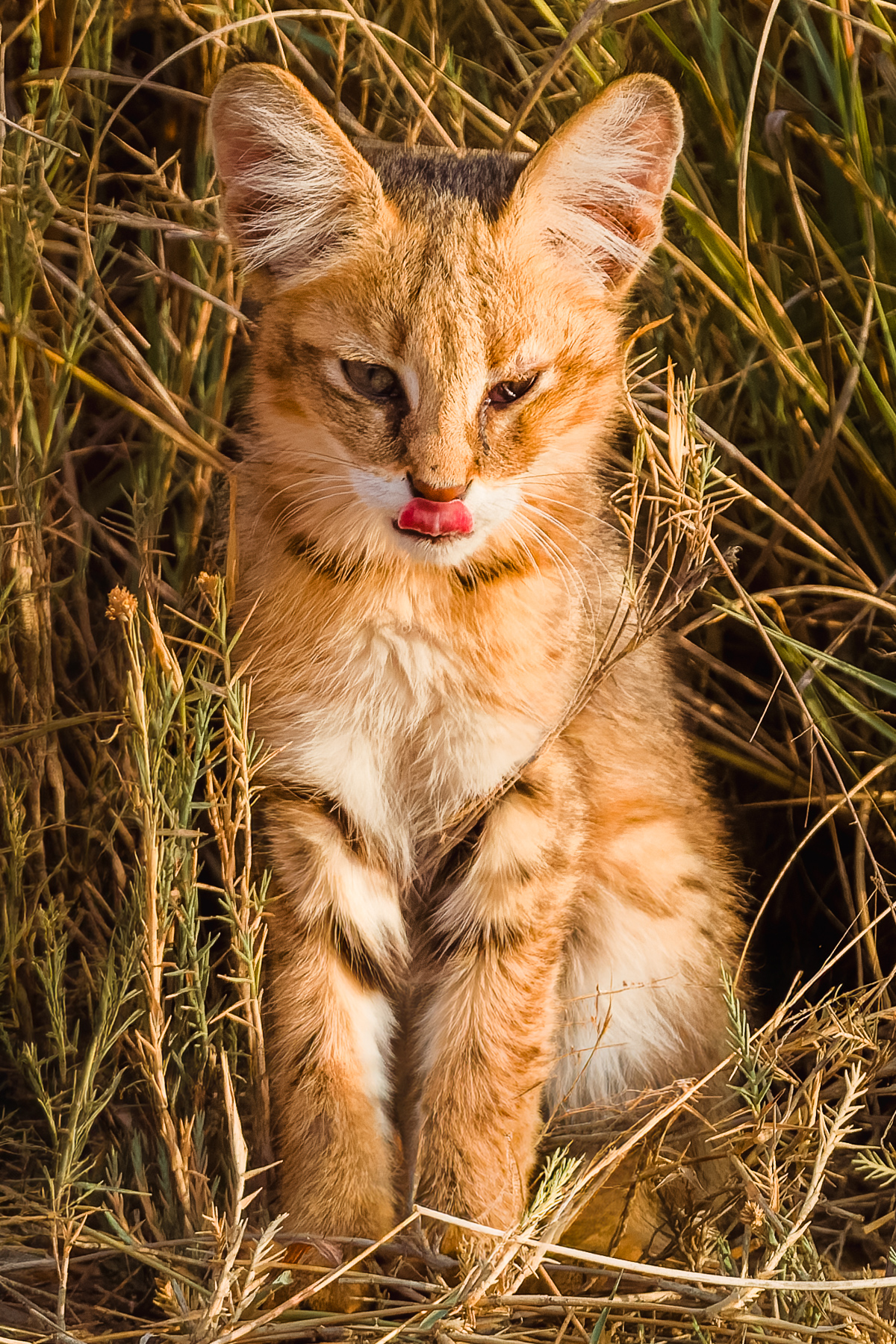
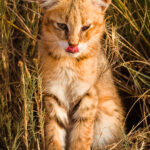
Oh Jungle Cat kitten, you are so cute. I know you will grow up to be a surprisingly fierce killer, especially for your modest size. But right now, you're adorable (image by Virginia Wilde)
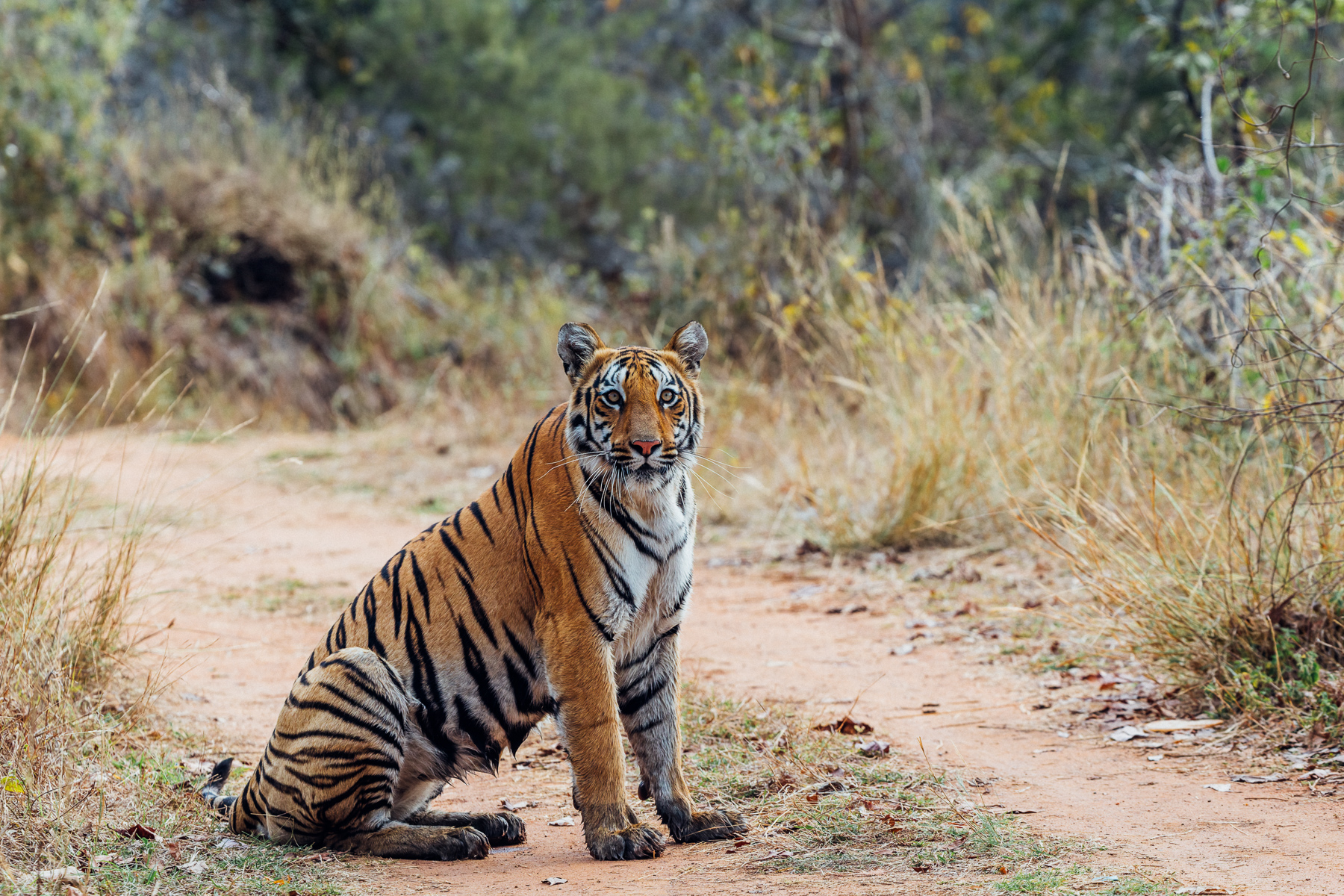
The beautiful tigress 'Kajri' - whose prettiness made her a tour favourite (image by Virginia Wilde)
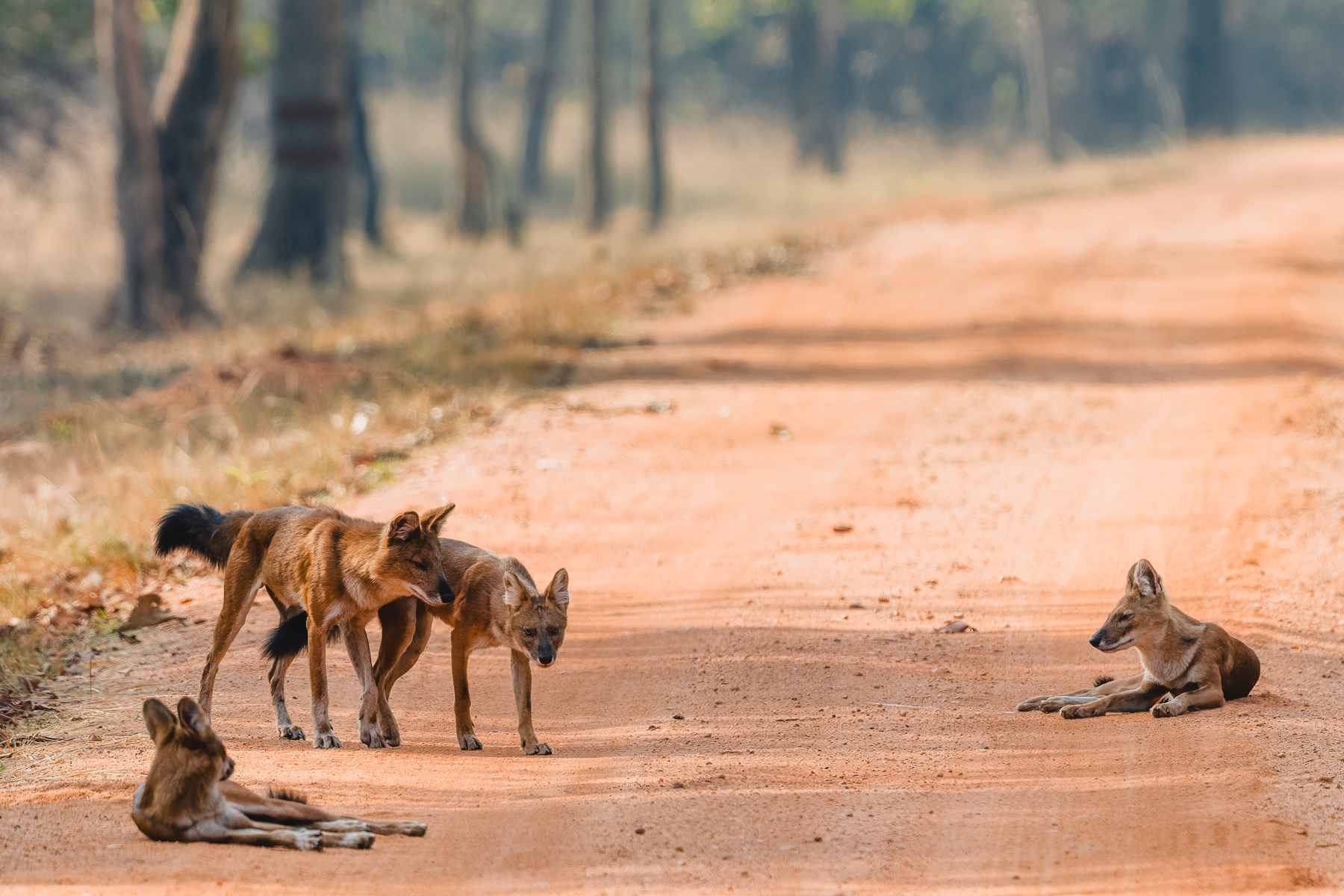
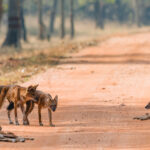
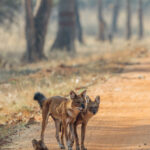
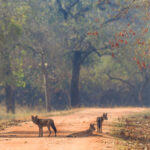
Indian Wild Dogs - or 'Dholes' - are a real treat to see. There are fewer than 2,500 individuals left, globally, with India representing the last remaining stronghold. Dholes are highly social animals, living in packs of 5-12 members (image by Virginia Wilde)
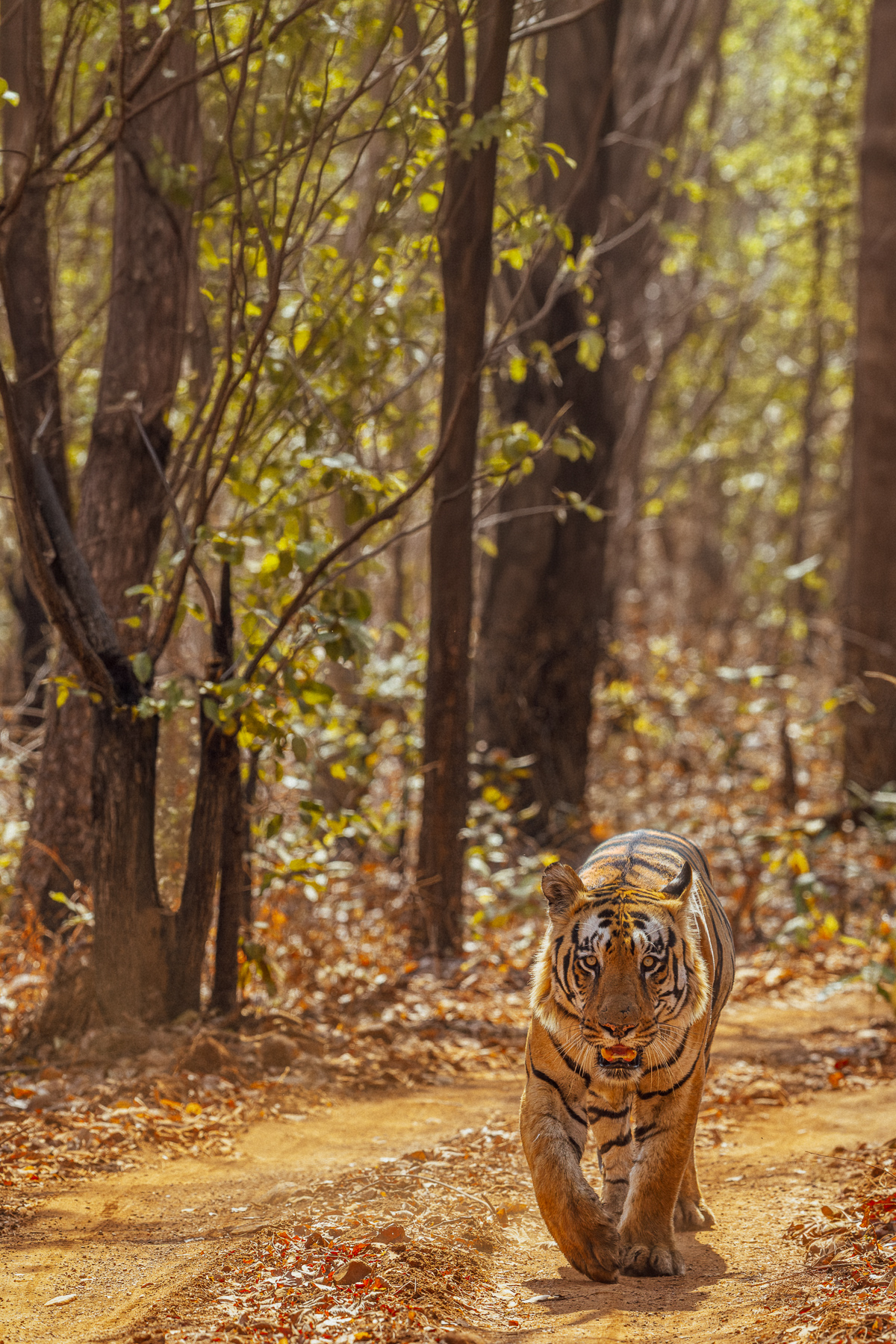
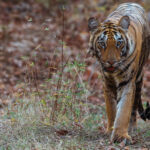
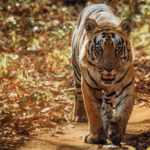
Dominant male tiger 'Mowgli' pads along the forest floor in India's Tadoba National Park. Male Bengal tigers have a roar that can be heard up to 3km away and are the largest wild cats, often weighing more than 480lbs (220 kg) (image by Virginia Wilde)
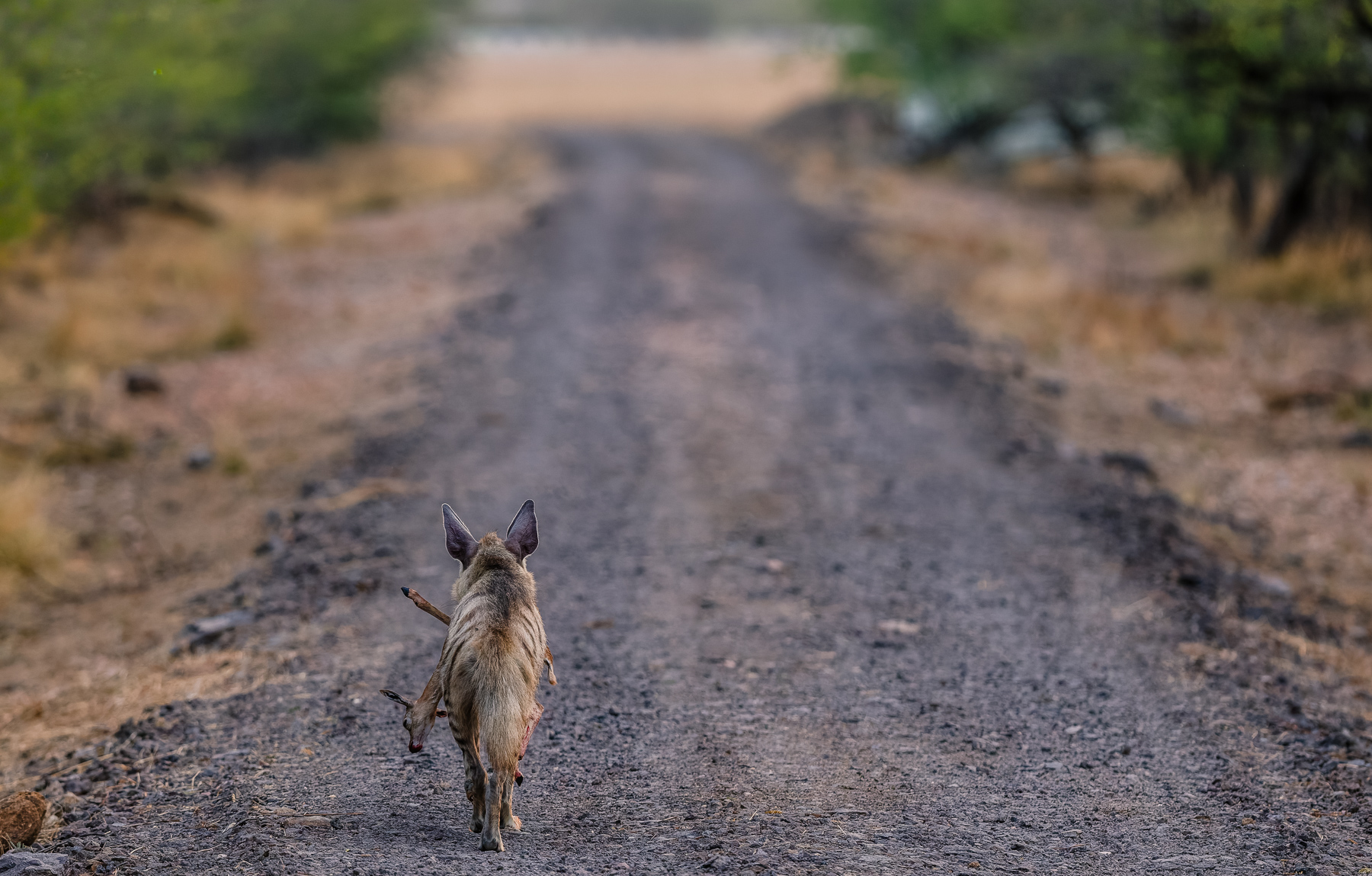
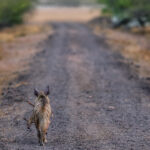
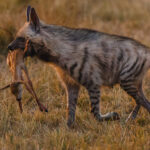
'Homeward Bound.' A nursing Striped Hyena carries the limp body of an infant antelope in her mouth, strolling down the road in Blackbuck National Park and back to her den - and hungry cubs (image by Virginia Wilde)
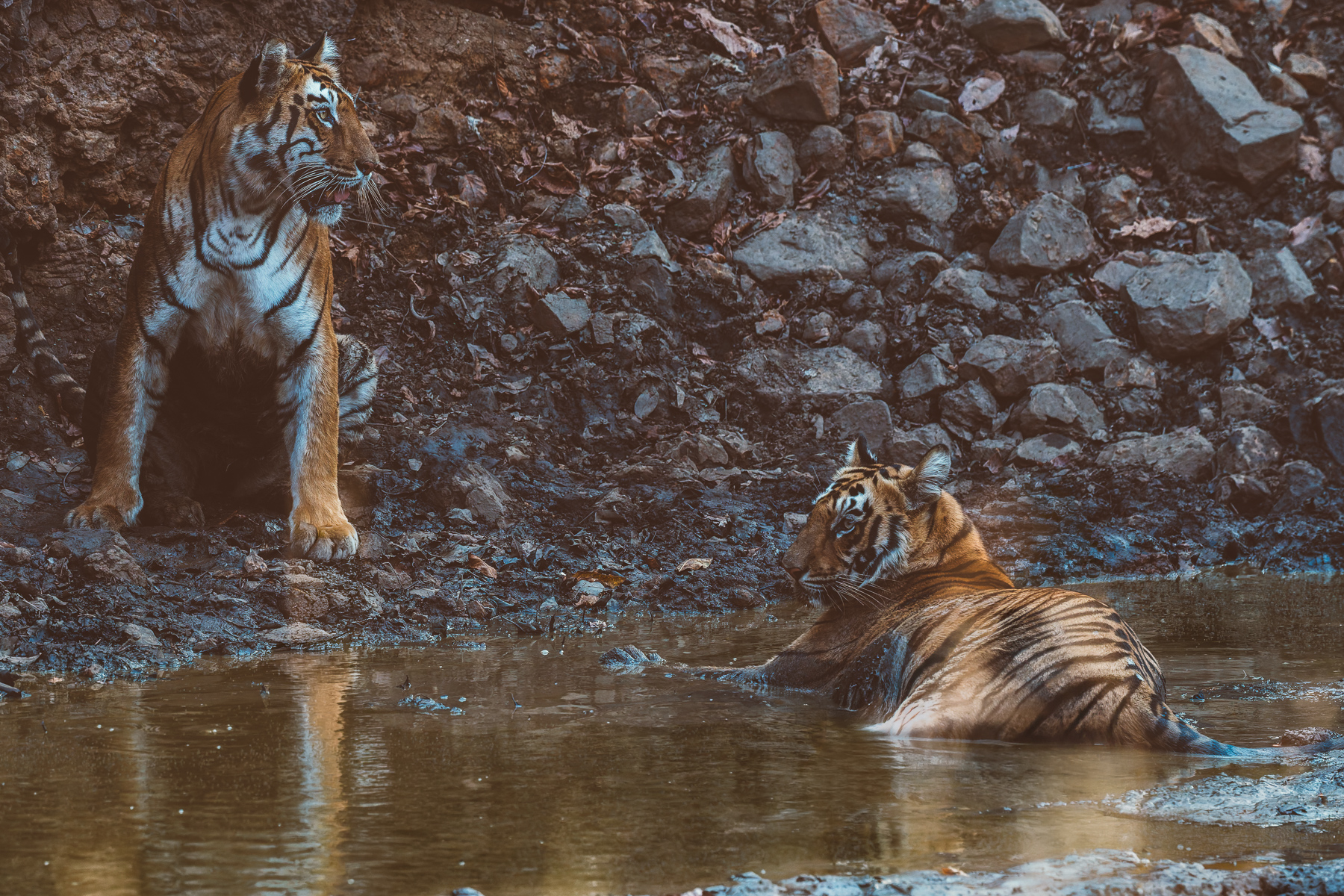
Bengal Tiger mum 'Collarwali' and her female cub relax in the shade by a muddy pool after daytime temperatures in India's Tadoba National Park reached 42 degree C (image by Virginia Wilde)
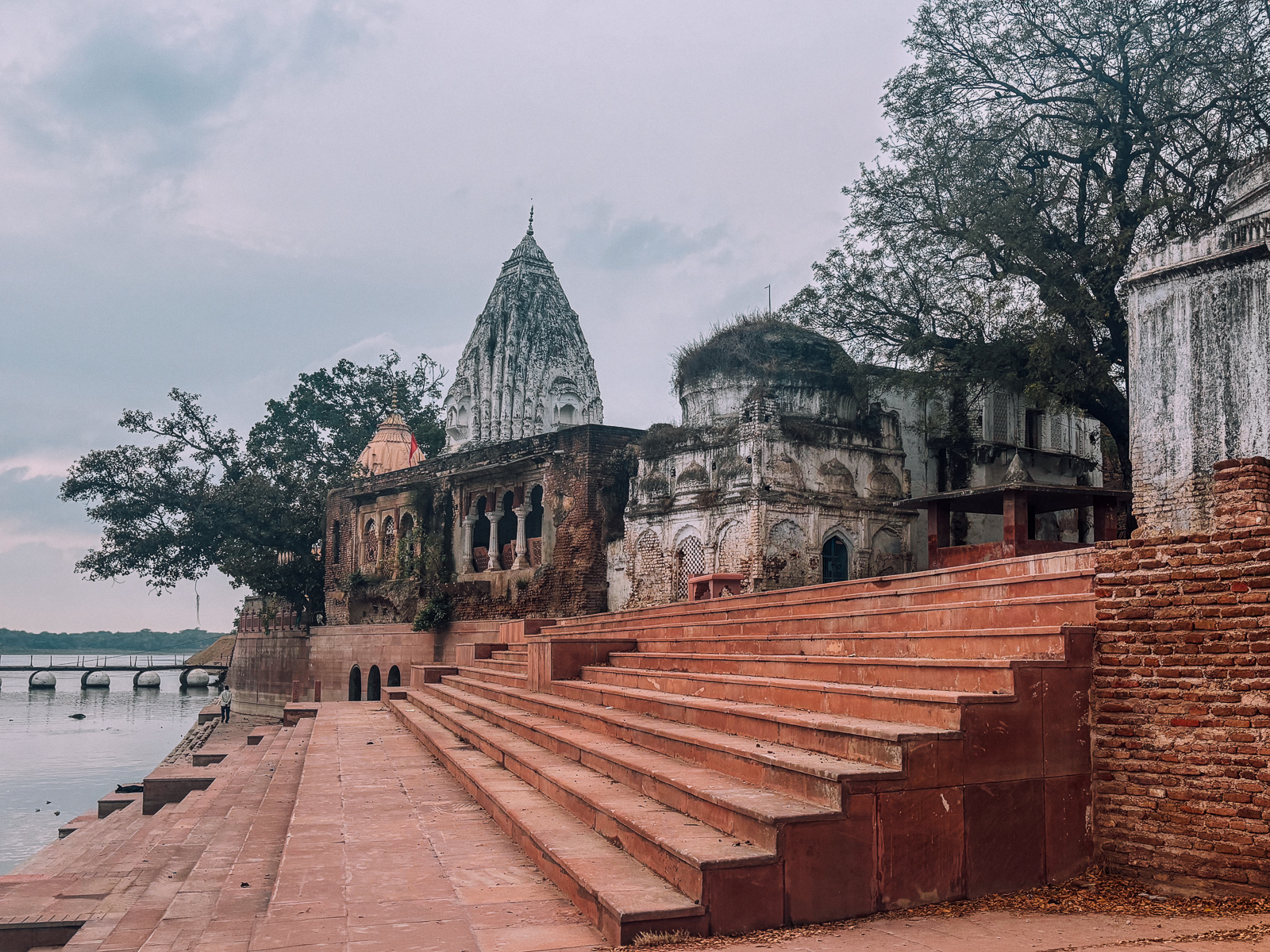
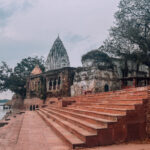
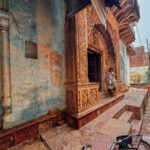
Some of the 200 sandstone Hindu Temples in the Bateshwar temple Complex - built between the 8th and 10th century (image by Virginia Wilde)
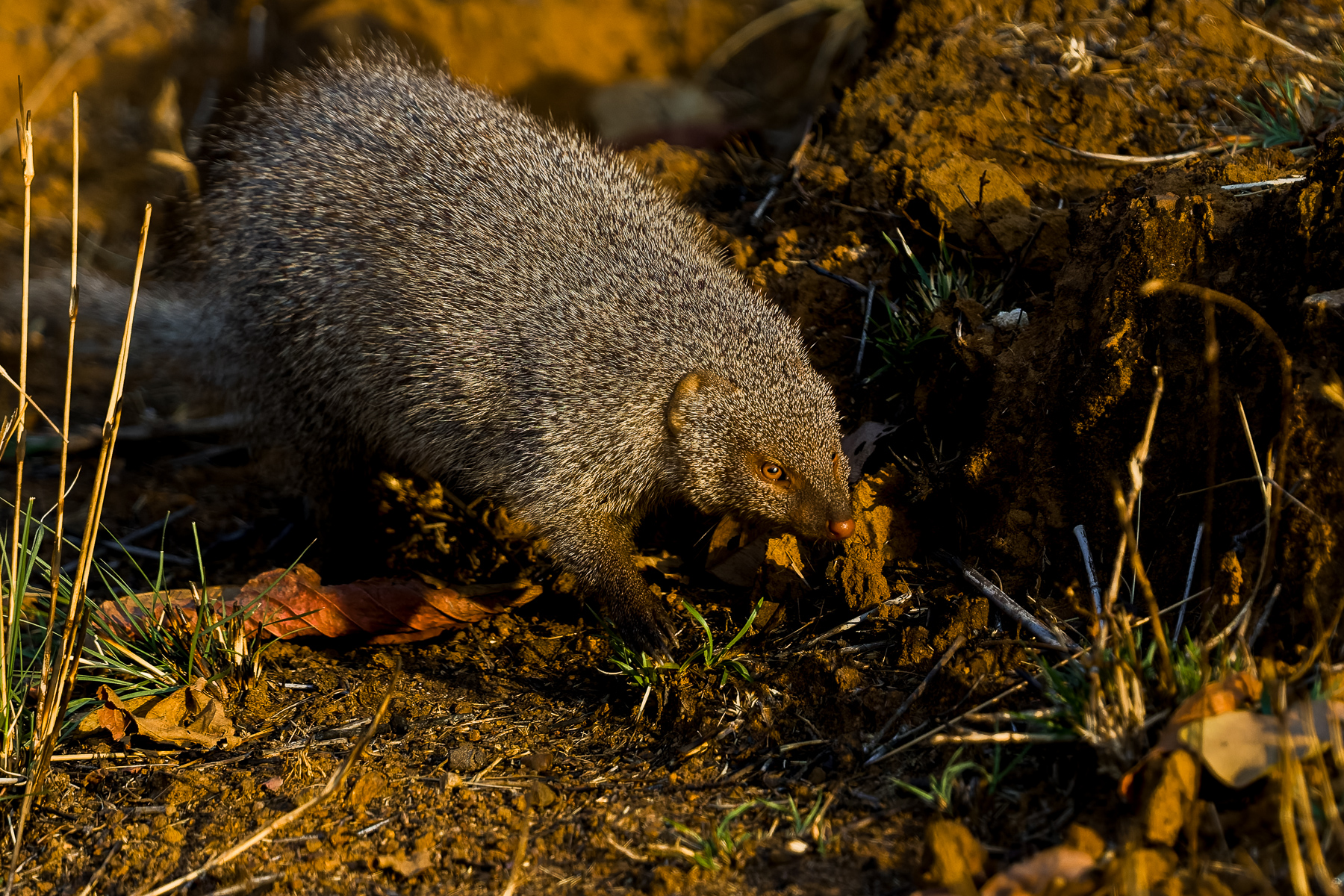
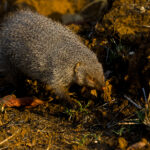
India is home to six species of mongoose, of which the Indian Grey Mongoose - like this one here - is the most numerous (image by Virginia Wilde)
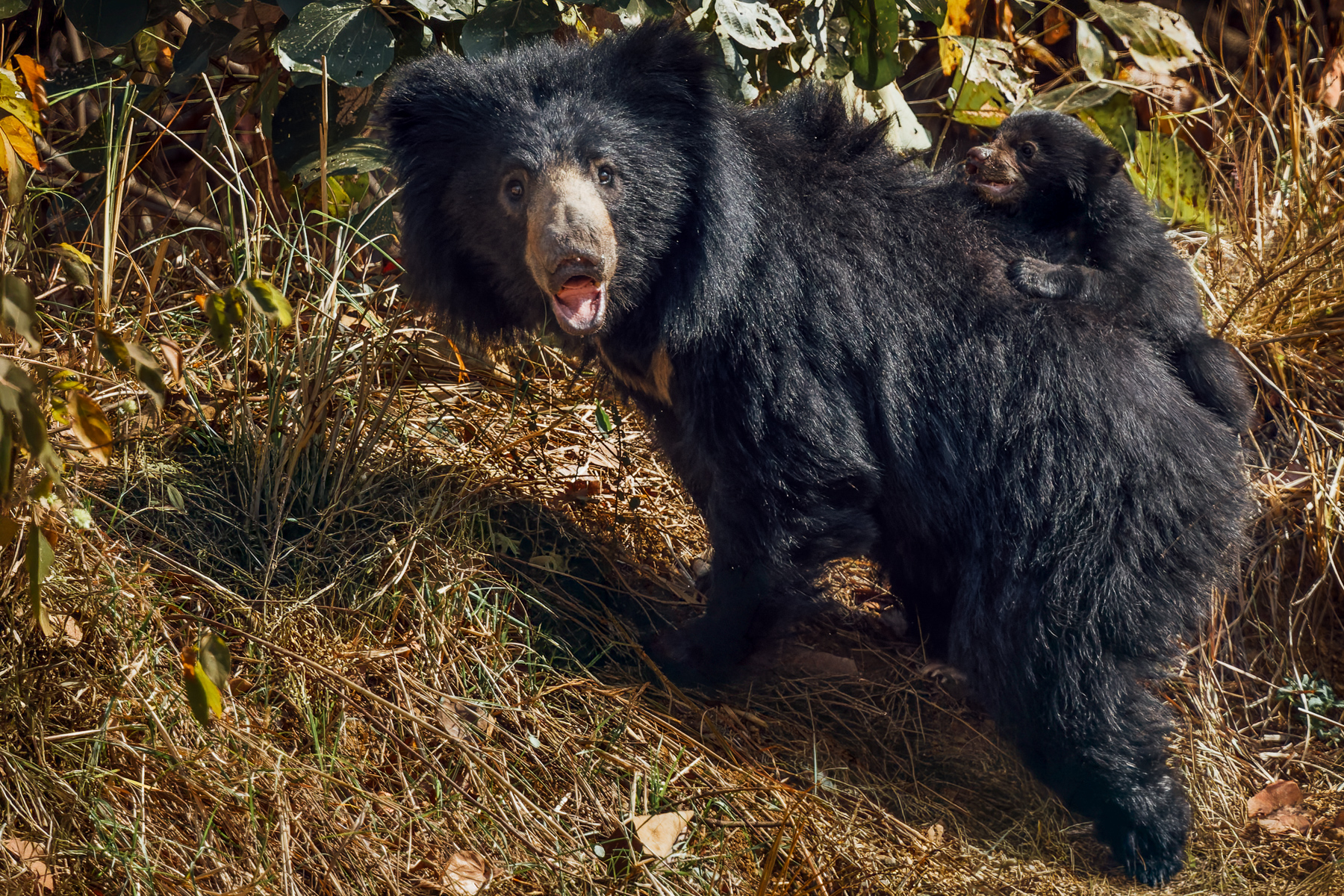
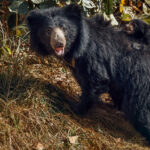
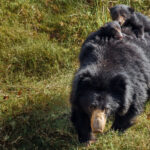
'Hold tight little one!' A mama Sloth Bear - the inspiration for Baloo in Rudyard Kipling's 'The Jungle Book' - emerges from the vegetation to sup from a pool, with her youngster in tow (image by Virginia Wilde)
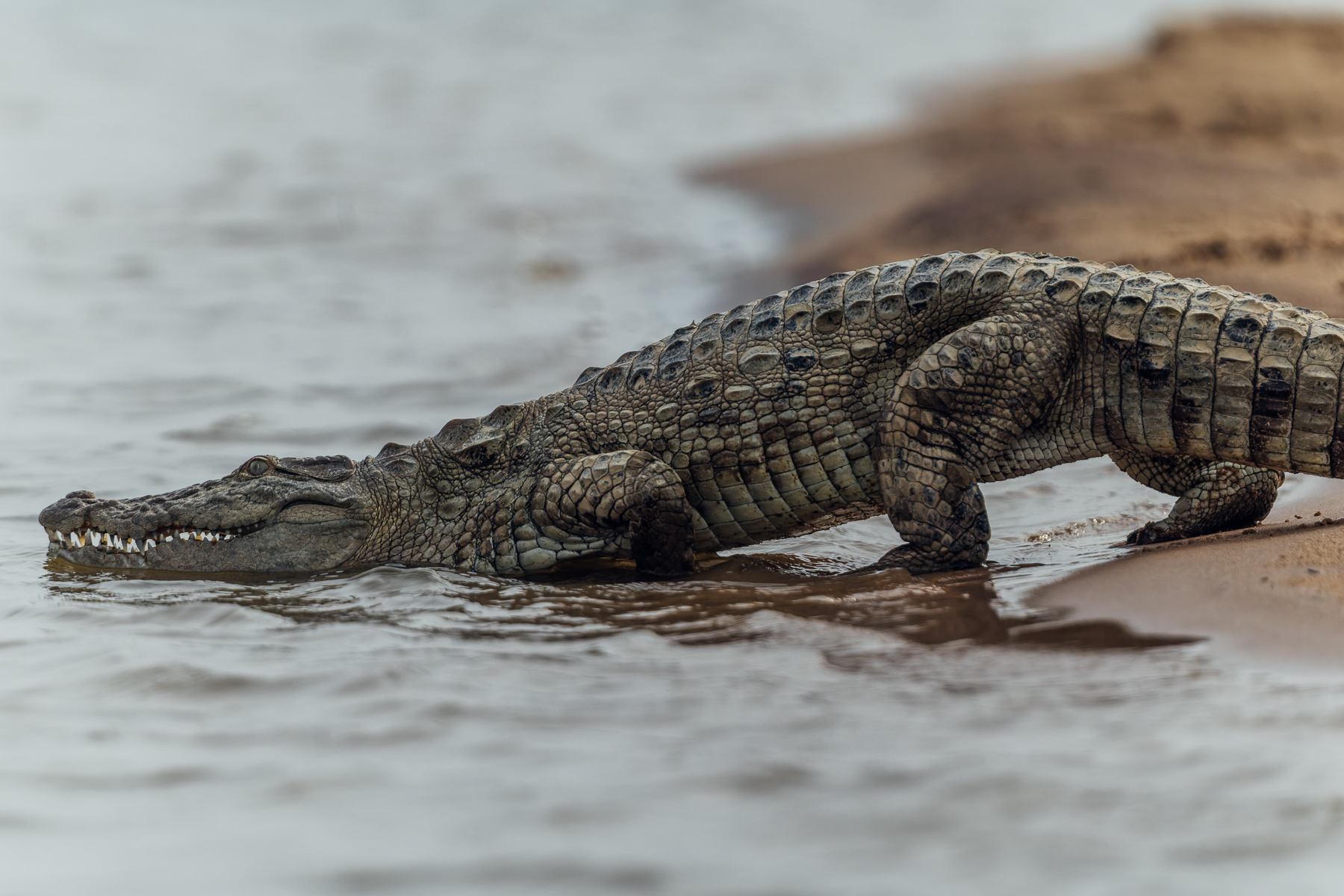
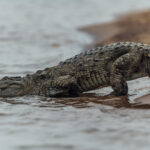
India has three crocodile species: the critically-endangered Gharial, the Saltwater croc, and the Mugger, like this individual. Muggers are often found in areas with high human population density, meaning attacks are relatively common (image by Virginia Wilde)
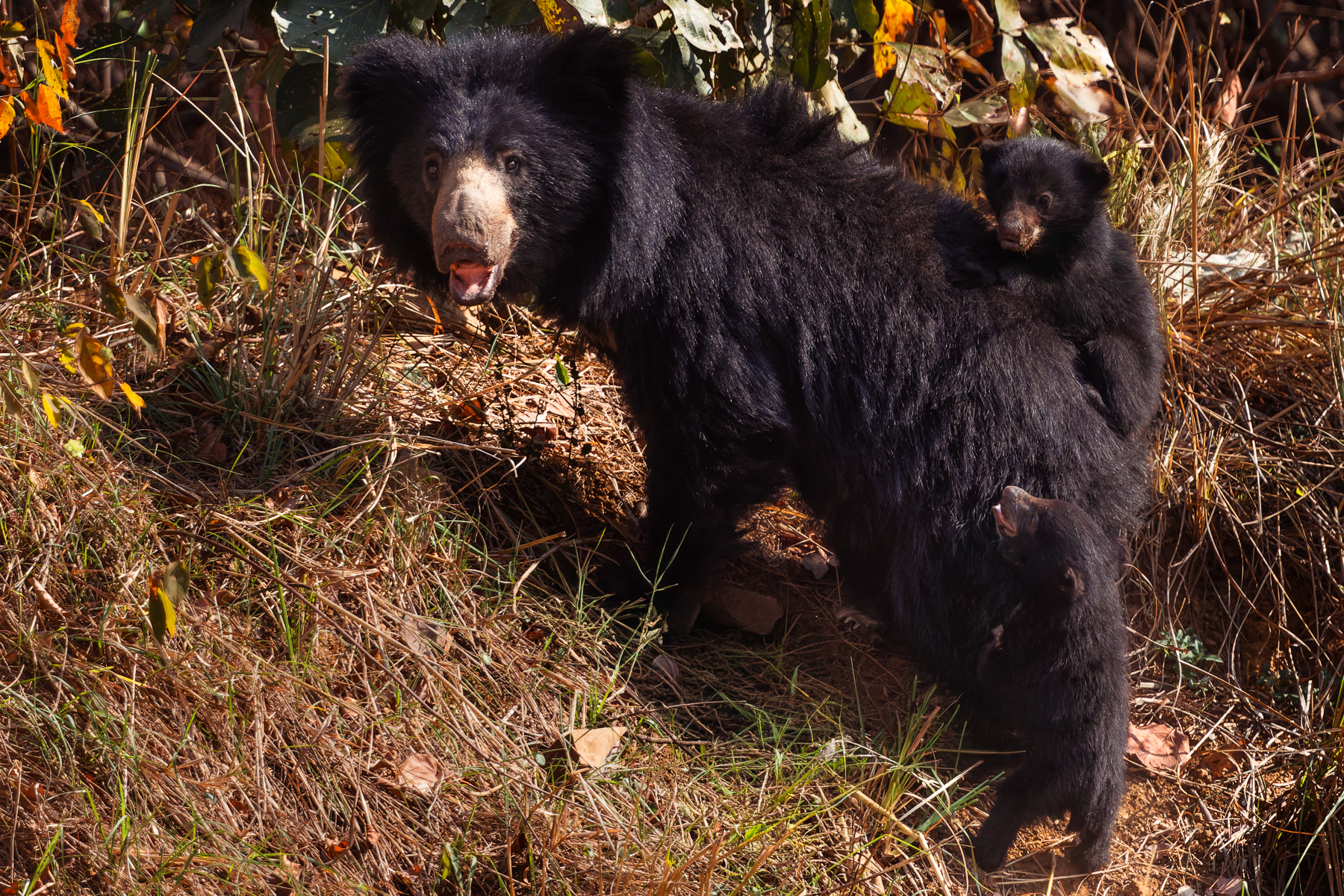
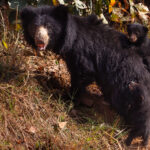
A Sloth Bear cub struggles to climb back up onto its mother's back - while its sibling managed the feat perfectly. Hopefully, its mama will be patient! (image by Virginia Wilde)
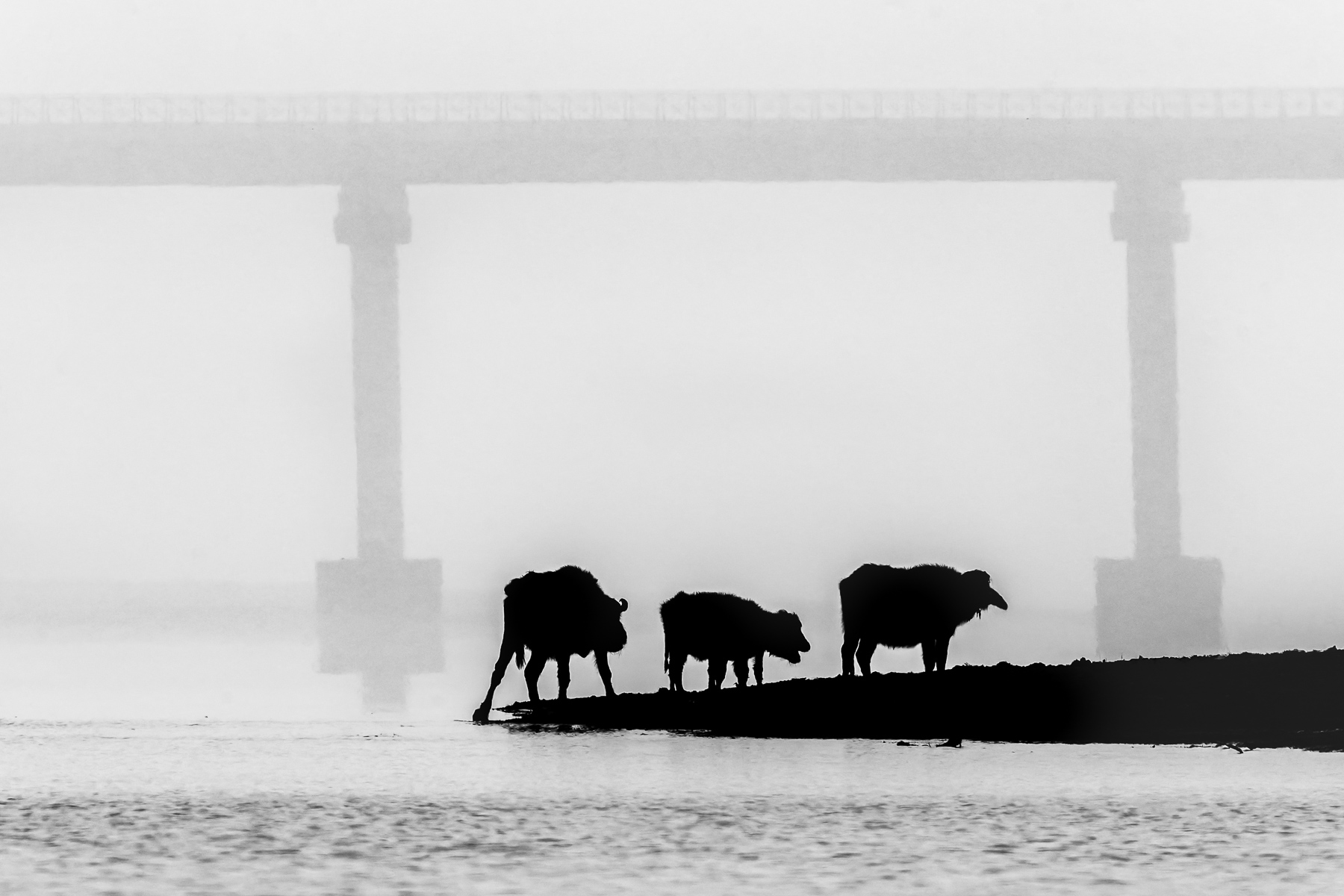
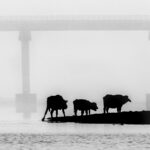
Cattle silhouetted on the banks of the Chambal River, with a newly-built bridge just visible in the mist behind (image by Virginia Wilde)
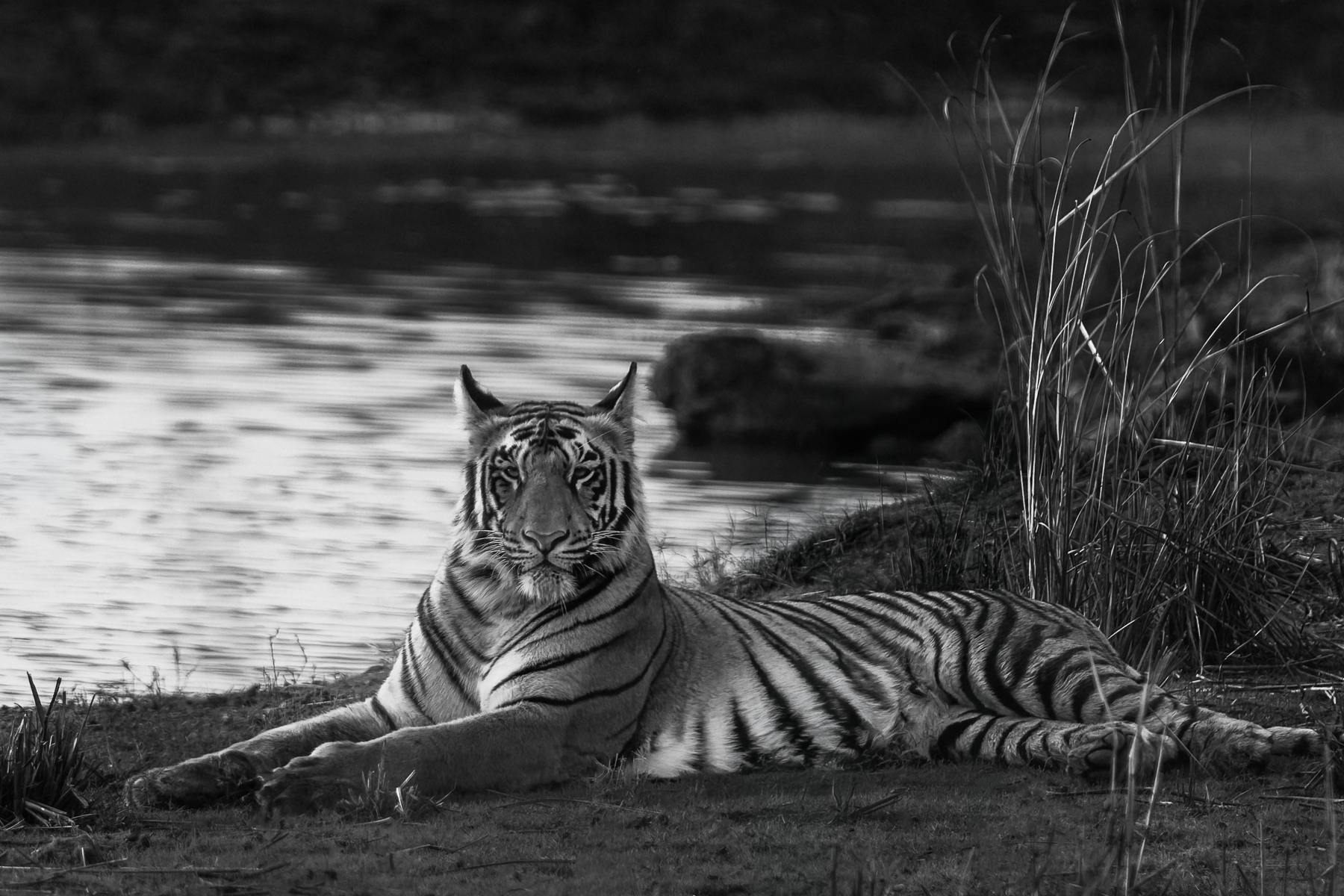
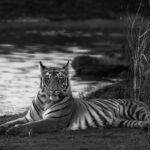
Black and white portrait of a subadult male Bengal Tiger, in a moment of calm before embarking on a hunt in Tadoba National Park (image by Virginia Wilde)
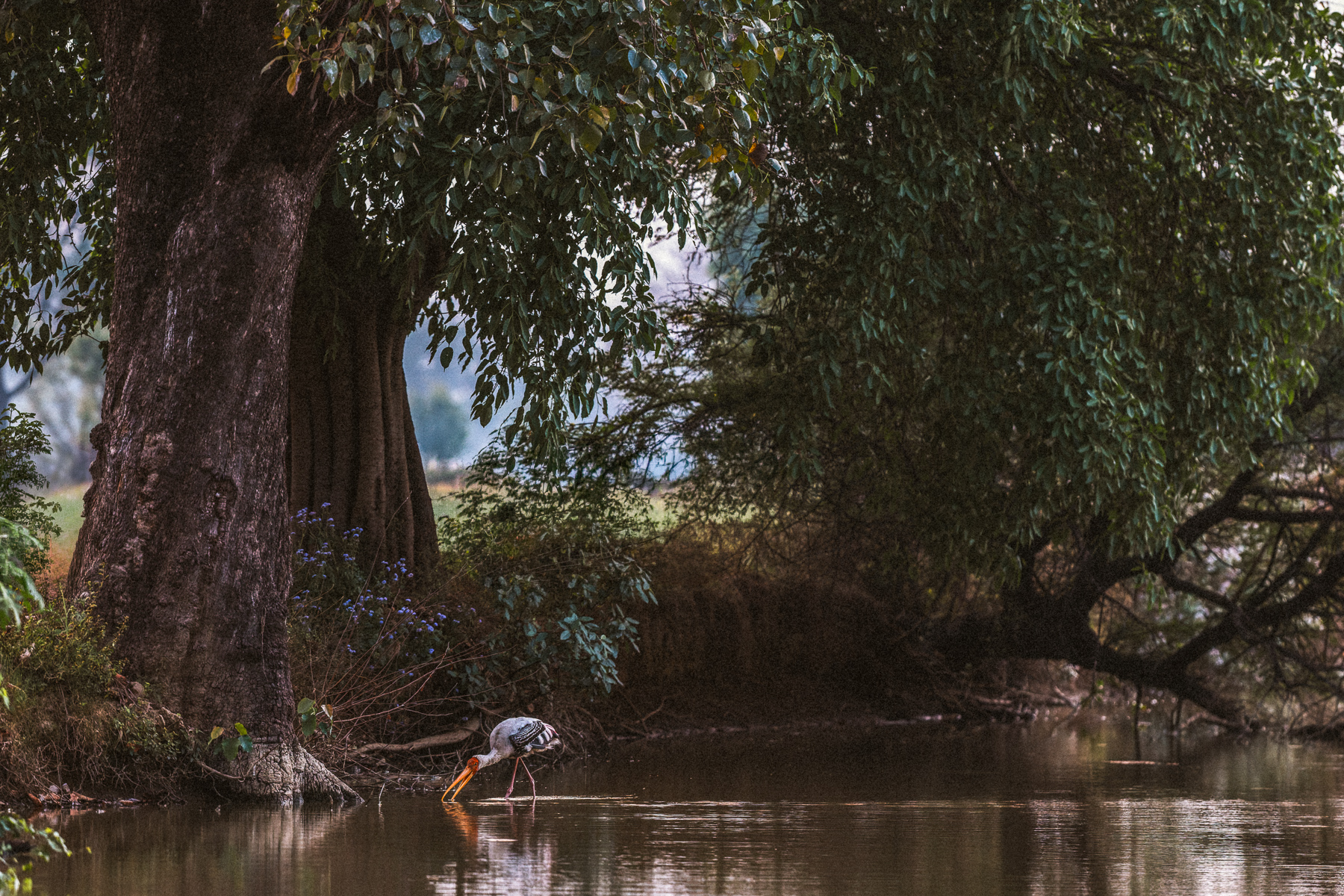
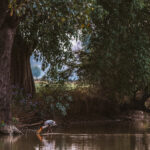
A Painted Stork feeds in the shallows of a stream by the Chambal Safari Lodge, spotted during an evening stroll before dinner (image by Virginia Wilde)
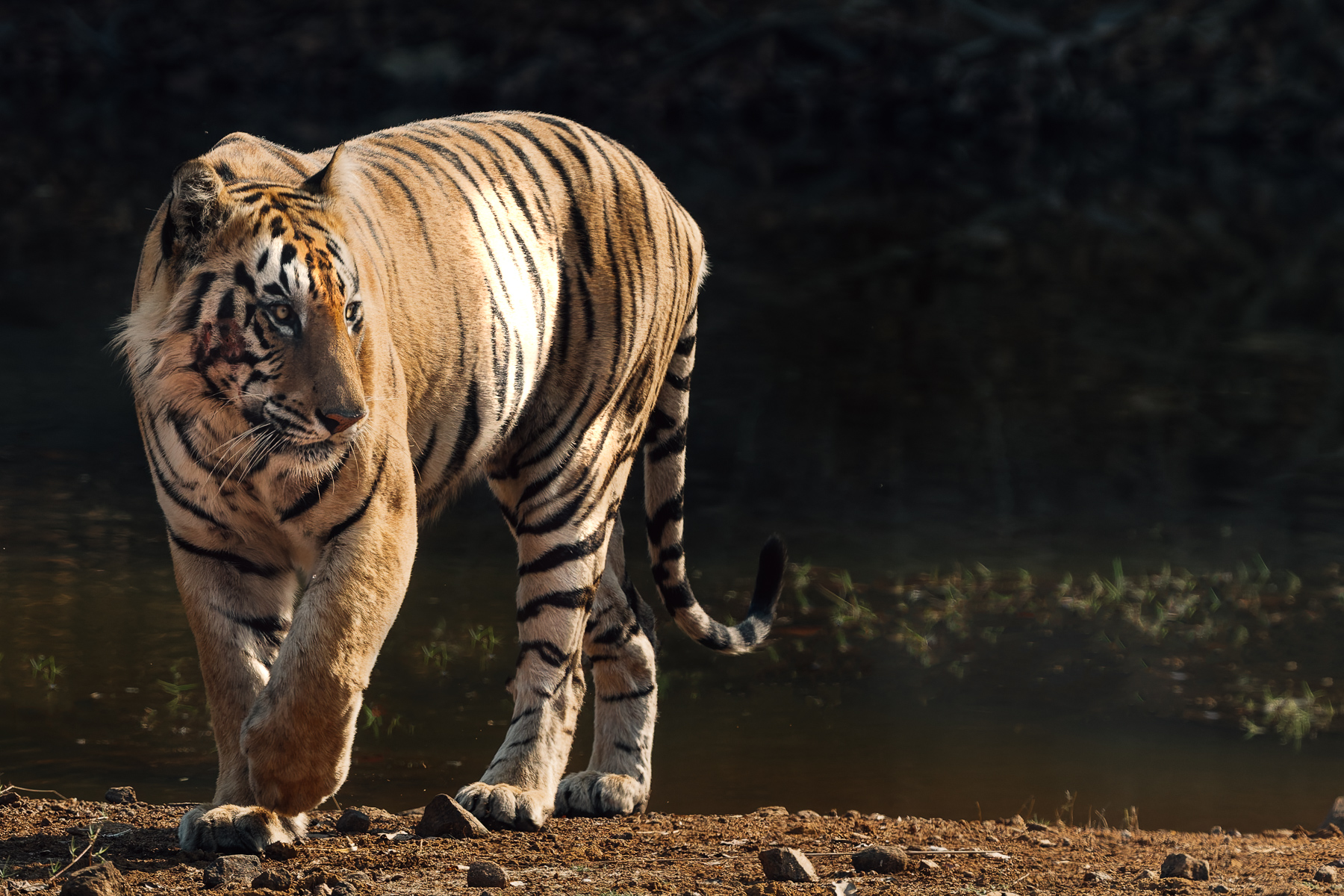
The tigress known as 'Bijlee' was our first tiger sighting on this year's tour. A further 35 tiger encounters (of 21 individuals) were to come. I love the sepia tones that can result when wildlife moves out of the shadows and into the light (image by Virginia Wilde)
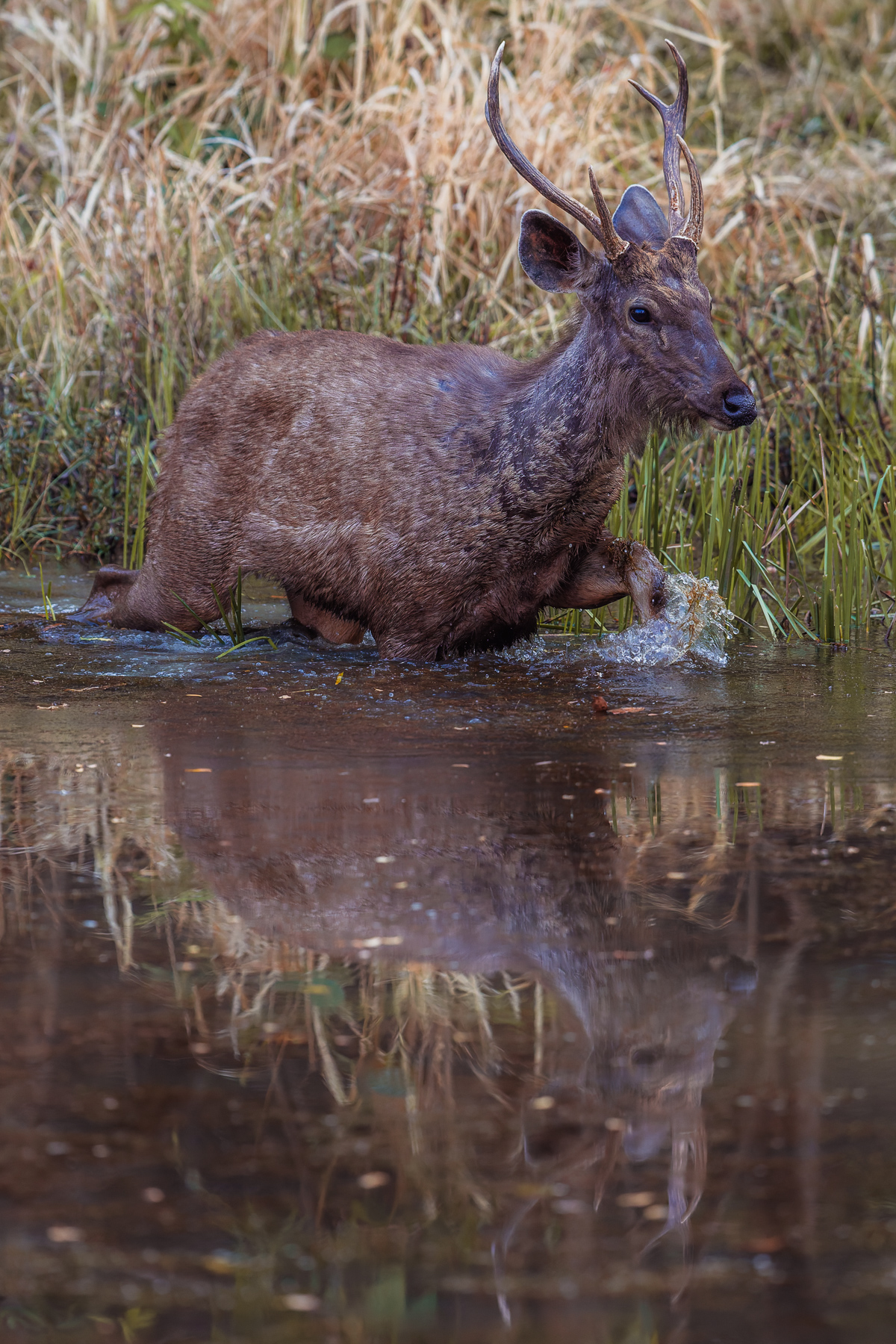
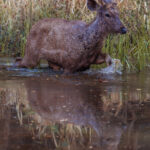
A young male Sambar Deer splashes through marshes. Sambar Deer comprise up to 45% of the biomass consumed by the Bengal Tiger. Anecdotally, the tiger is said to mimic the call of the Sambar, to deceive it while hunting (image by Virginia Wilde)
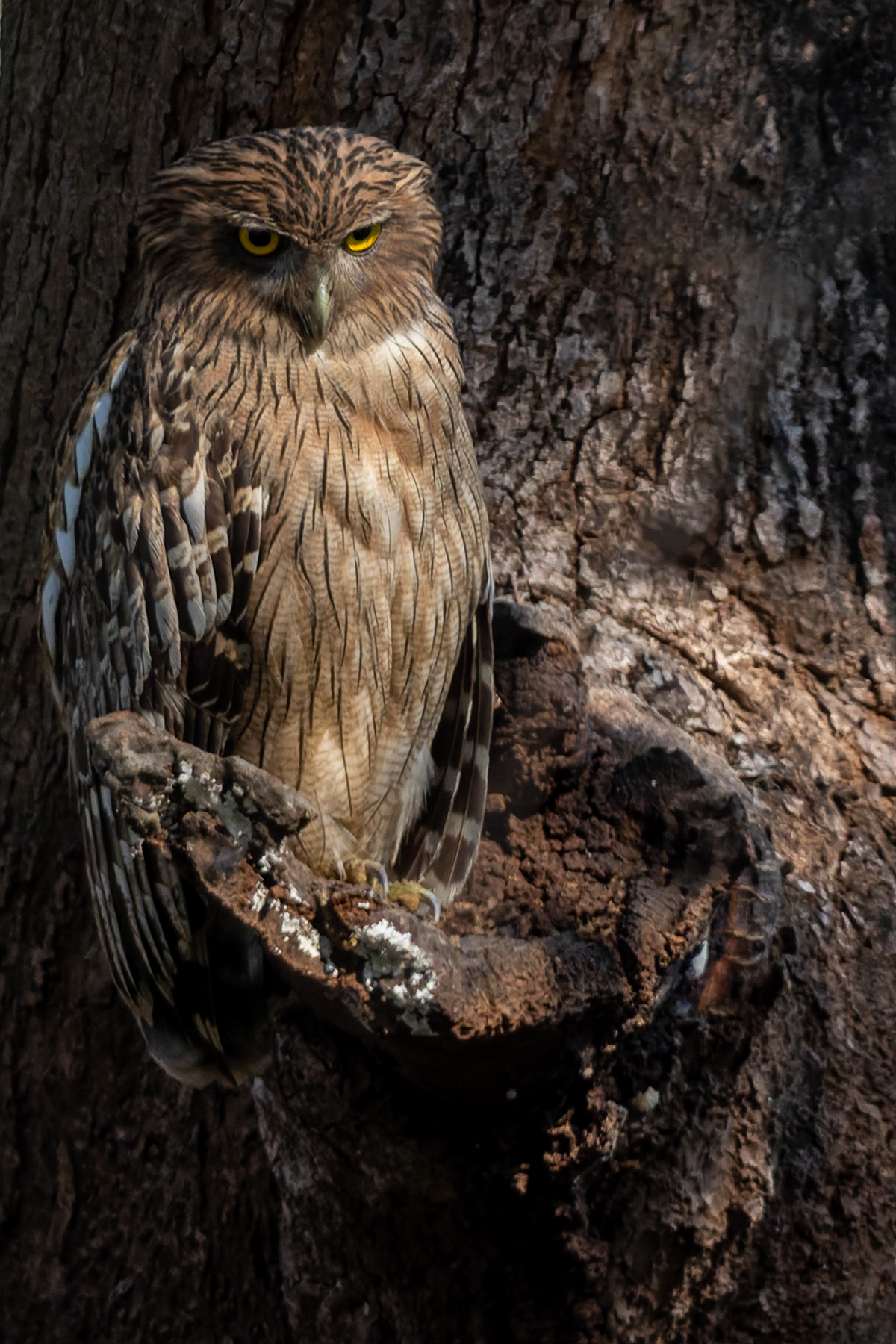
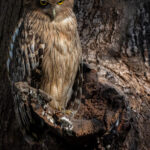
When on the hunt, India's Brown Fish Owls often strategically perch on rock overhangs or hanging branches above rivers, grabbing prey by suddenly gliding just over the water's surface (image by Virginia Wilde)
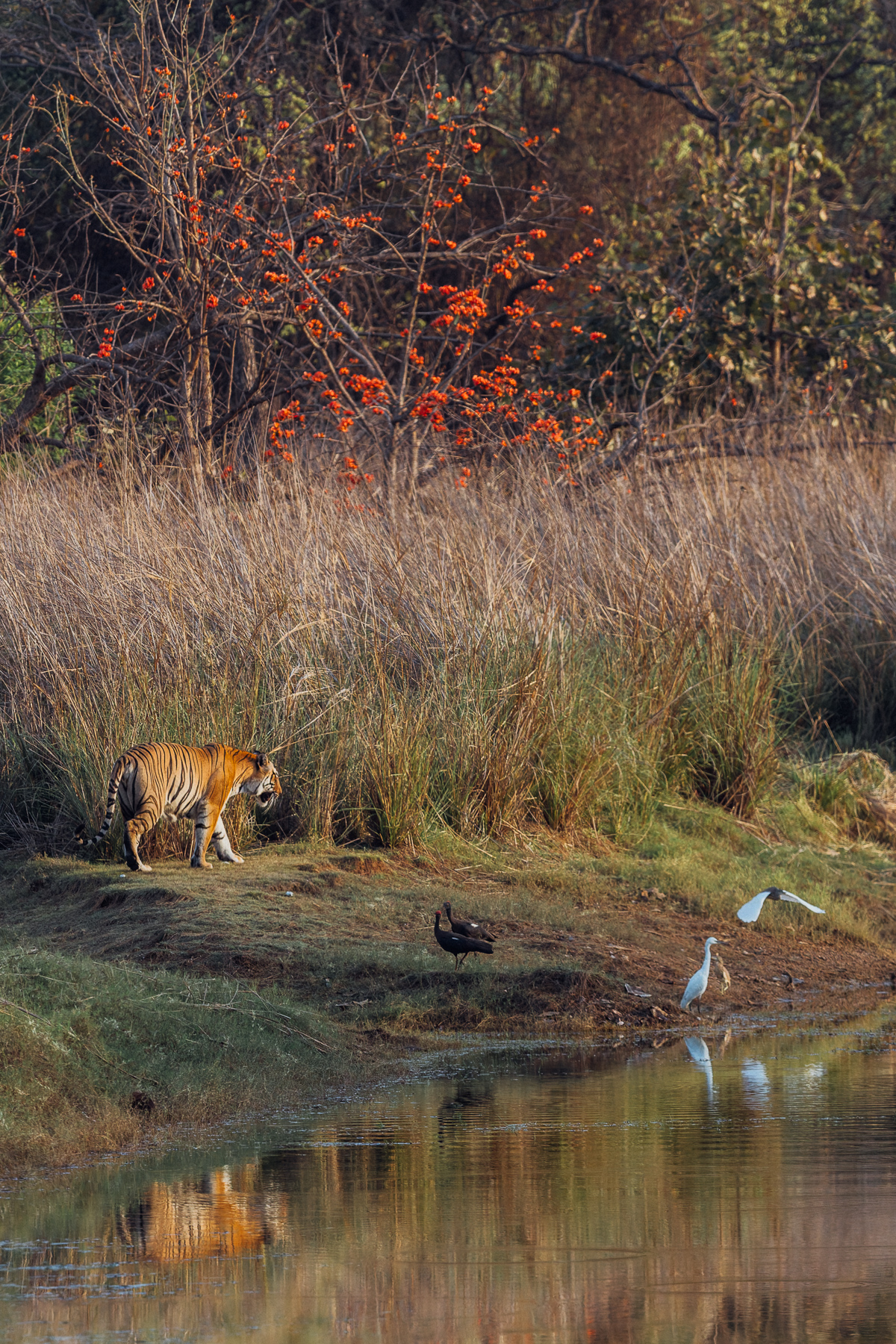
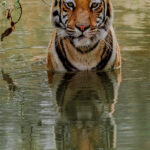
One of the pleasures of photographing Tigers in the Tadoba reserve is the large number of watering holes, rivers and lakes - making the chances of tiger reflection images relatively high (image by Virginia Wilde)
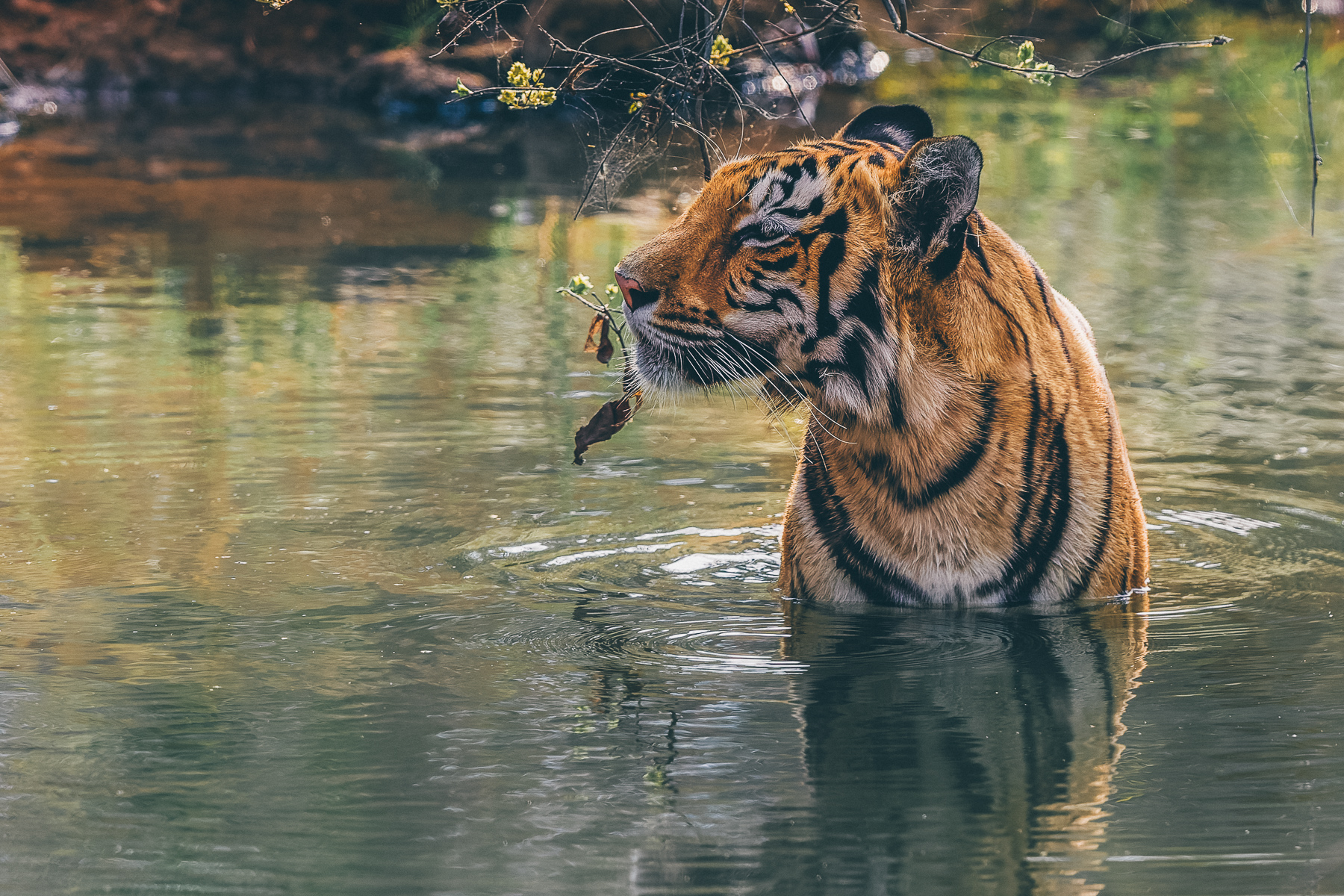
Young female tiger 'Kajri' is one of the prettiest tigers in India's Tadoba-Andhari Tiger Reserve. We watched her in these moments of calm and tranquillity, bathing in the cool river of the reserve's Jumona buffer zone (image by Virginia Wilde)
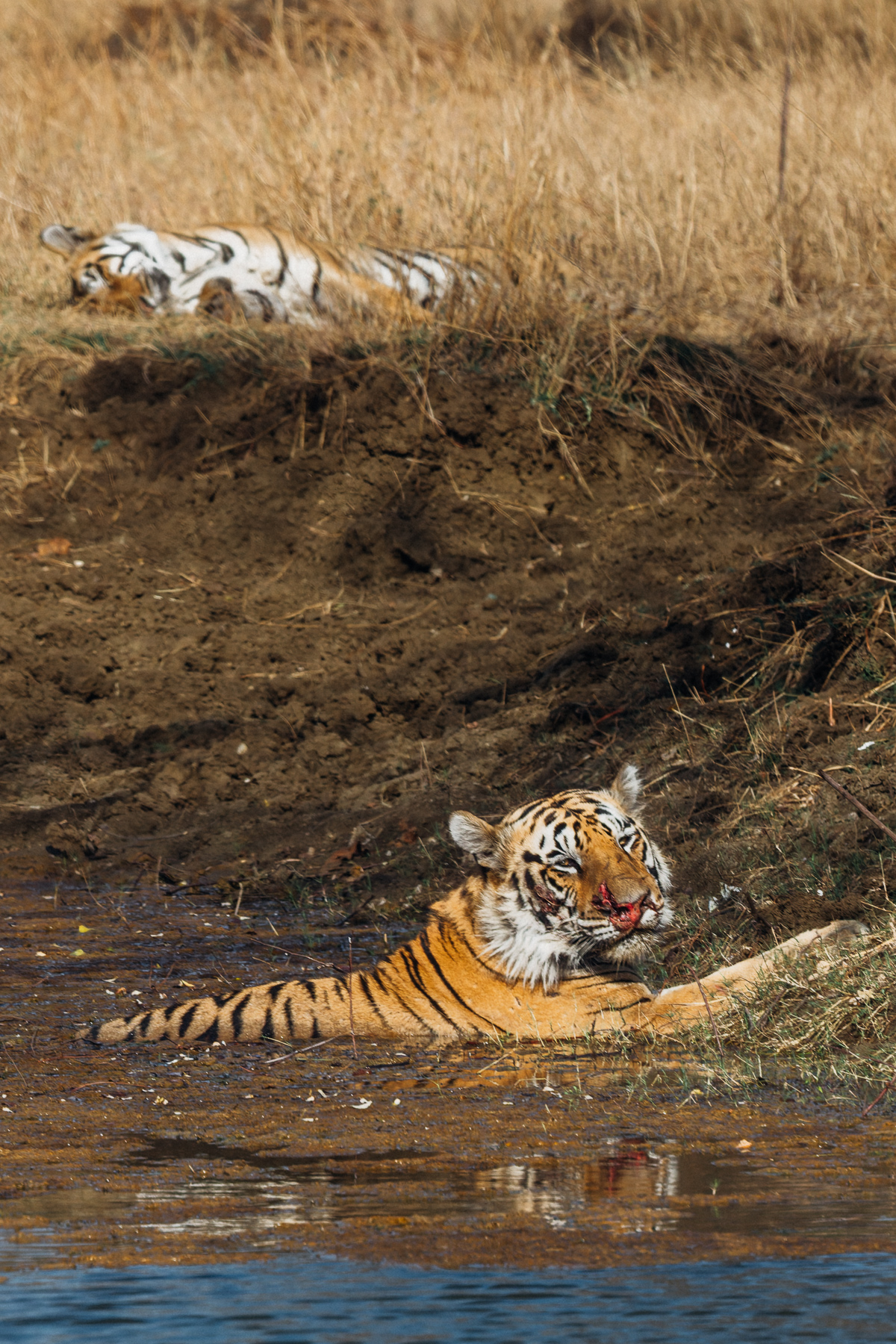
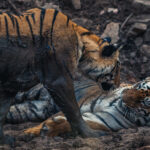
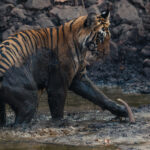
Male Tiger 'Collarwala' shows his bloody nose - whether from fighting for the rights to mate female Bubli (sleeping on the bank) or from a tussle with prey. Regardless, a dip in the mud-bath must be soothing (image by Virginia Wilde)
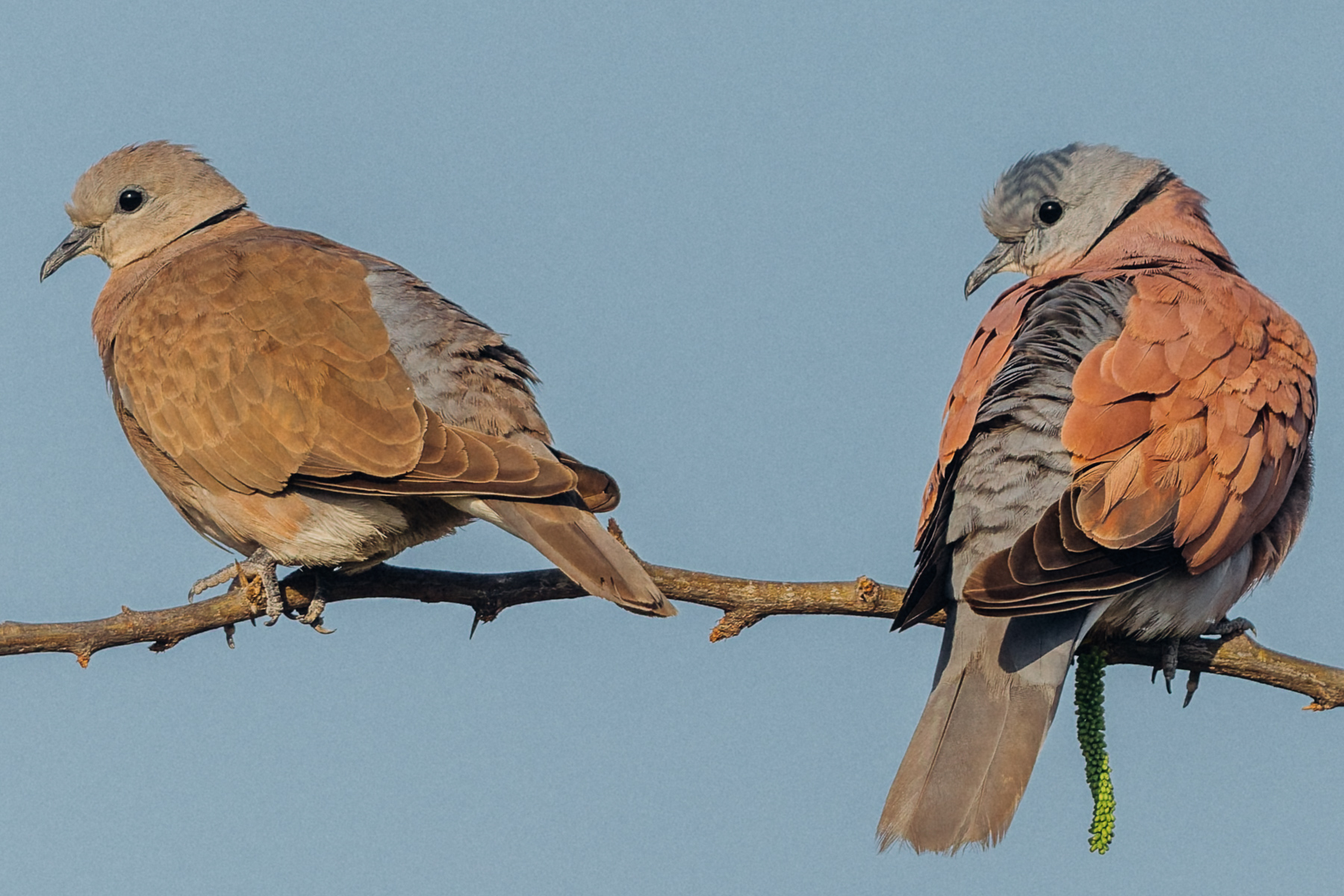
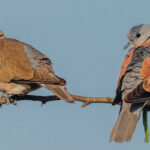
A Red-collared Dove and Collared Dove sit side by side on a branch. Both species as pretty as each other, in my view, while common sightings in India (image by Virginia Wilde)
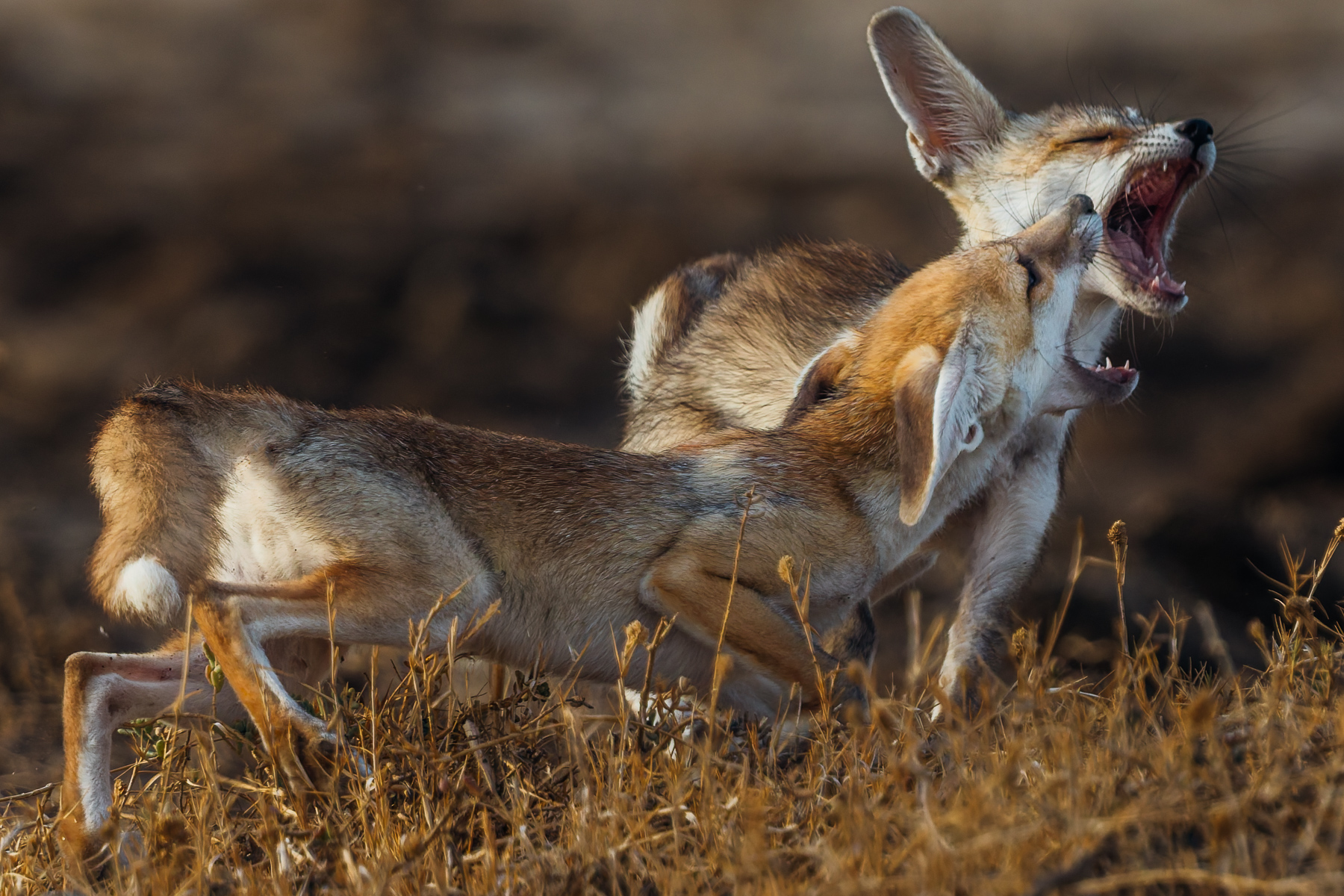
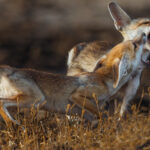
What's the point of being a Desert Fox cub if you can't playfight? Right? (image by Virginia Wilde)
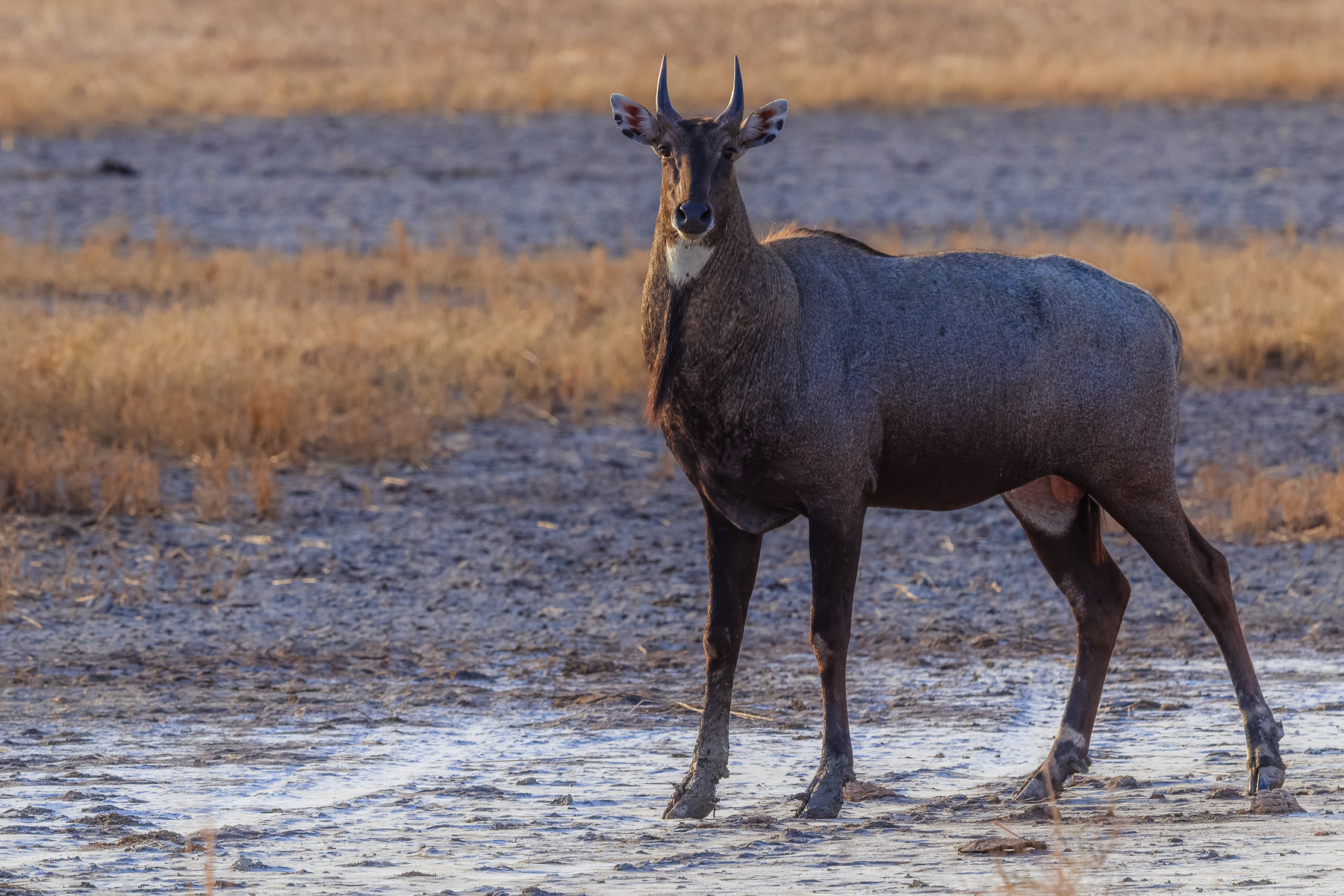
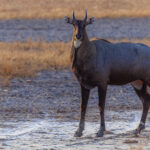
The statuesque Nilgai is the largest antelope in Asia and ubiquitous across the northern Indian subcontinent. Also called 'Blue Bull' for the bluish tinge to their coats, only the males bear horns (image by Virginia Wilde)
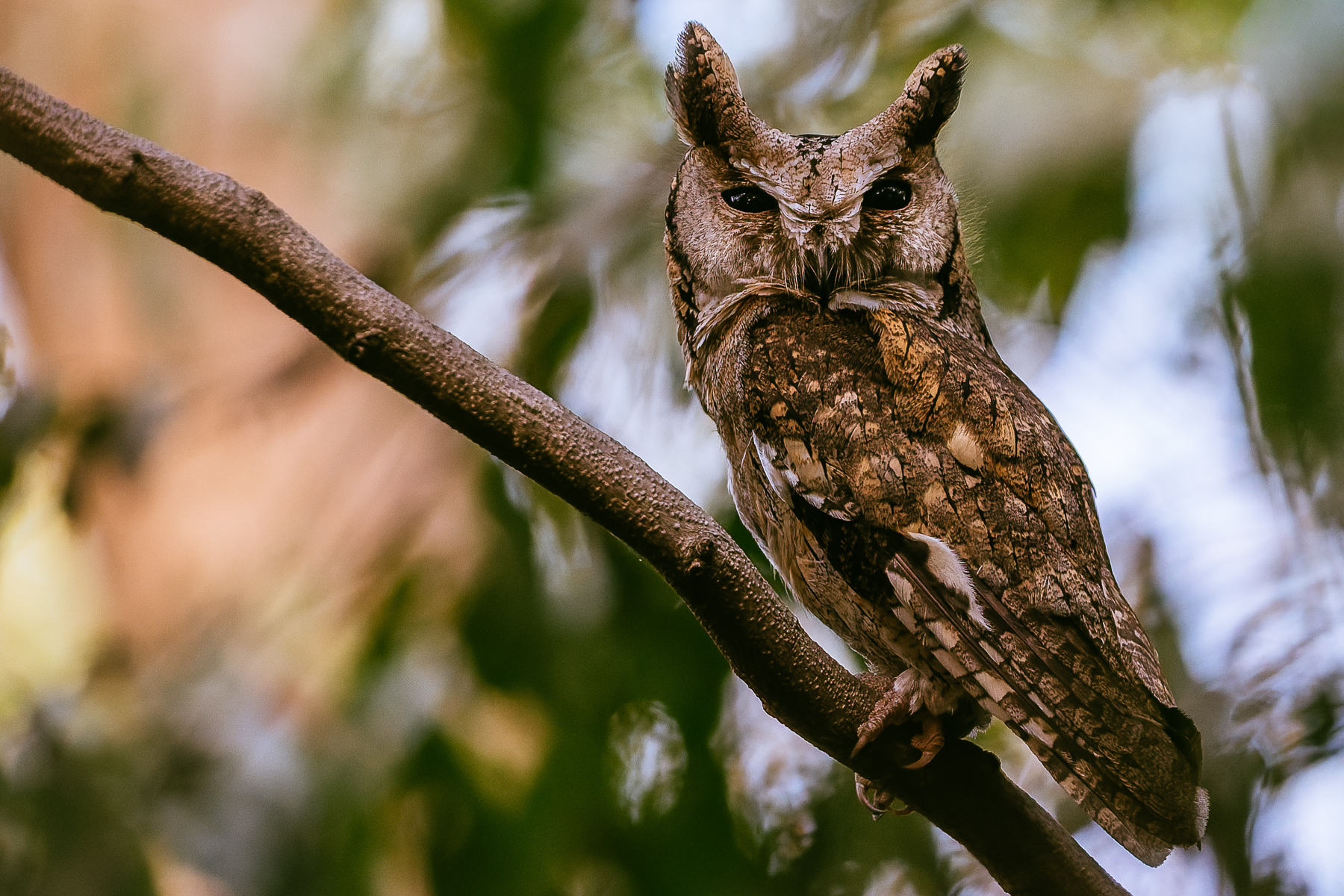
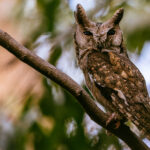
Portrait of an Indian Scops Owl, whose mottled plumage makes it often difficult to spot in the daytime (image by Virginia Wilde)
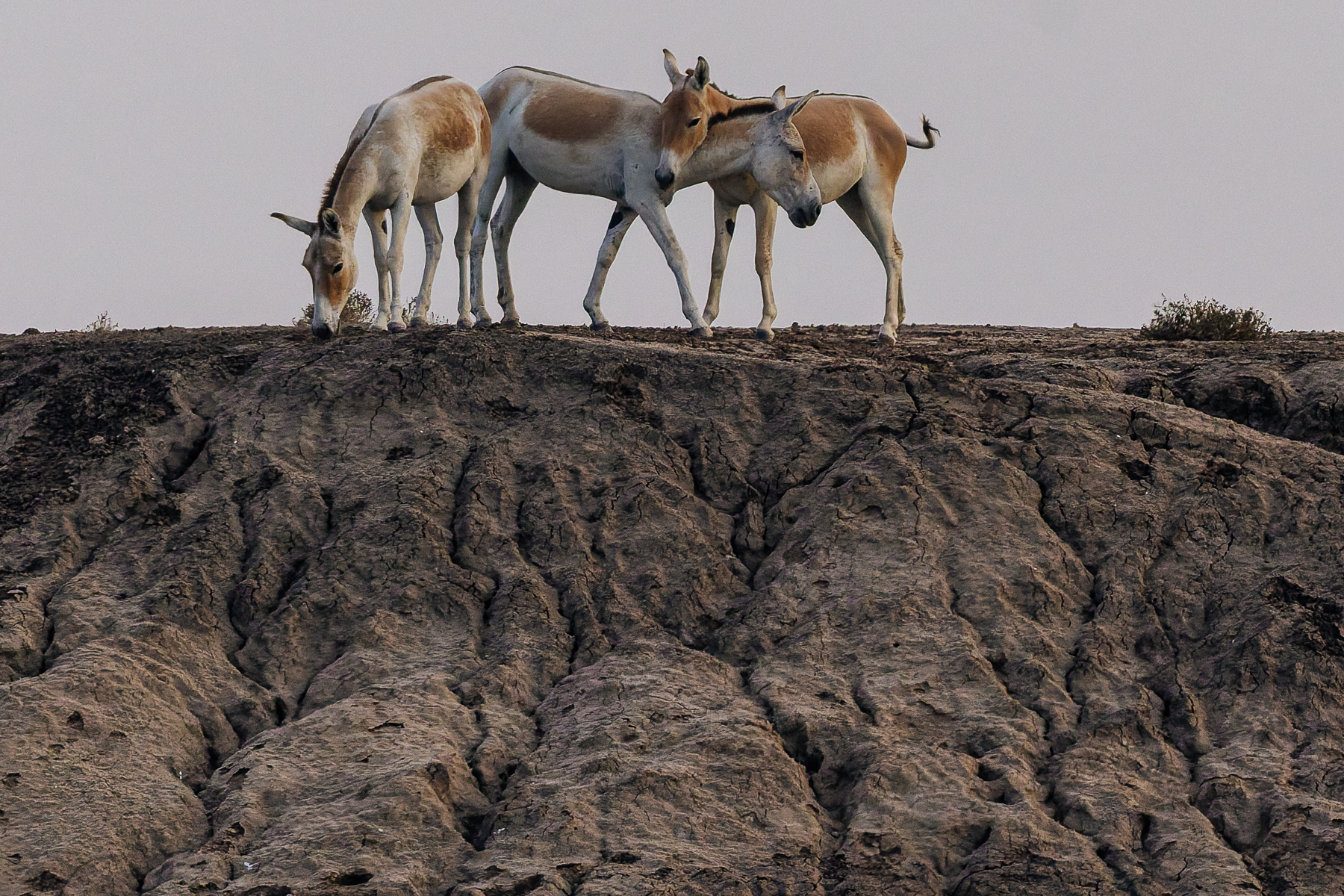
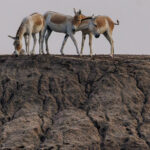
Indian Wild Asses are one of India's fastest animals. But even running champions have to rest. And this is the way to do it (image by Virginia Wilde)
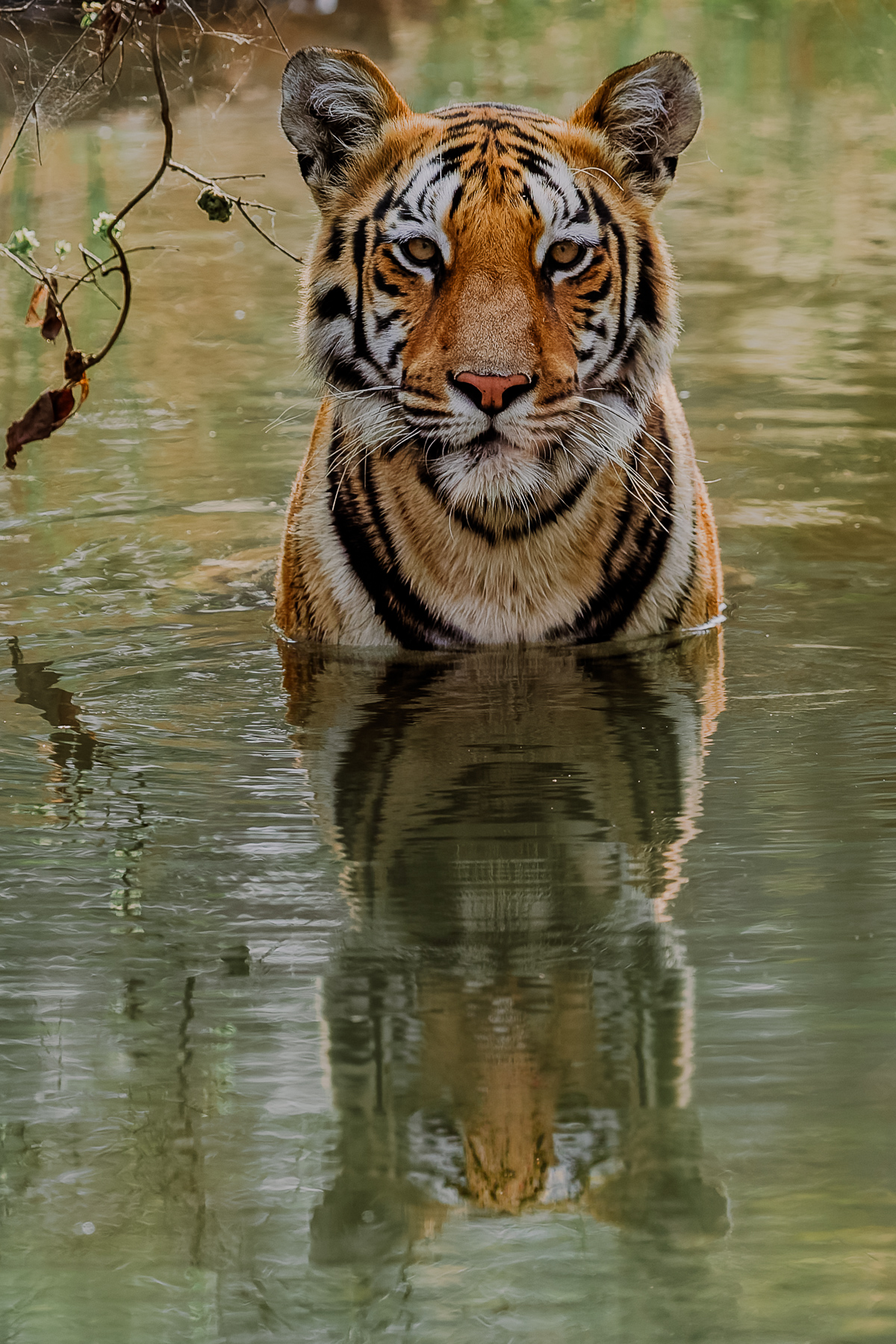
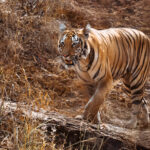
Eye-to-eye with a young female tiger known as 'Kajri' - one of the prettiest Bengal Tigers in the Tadoba National Park, Maharashtra Province (image by Virginia Wilde)
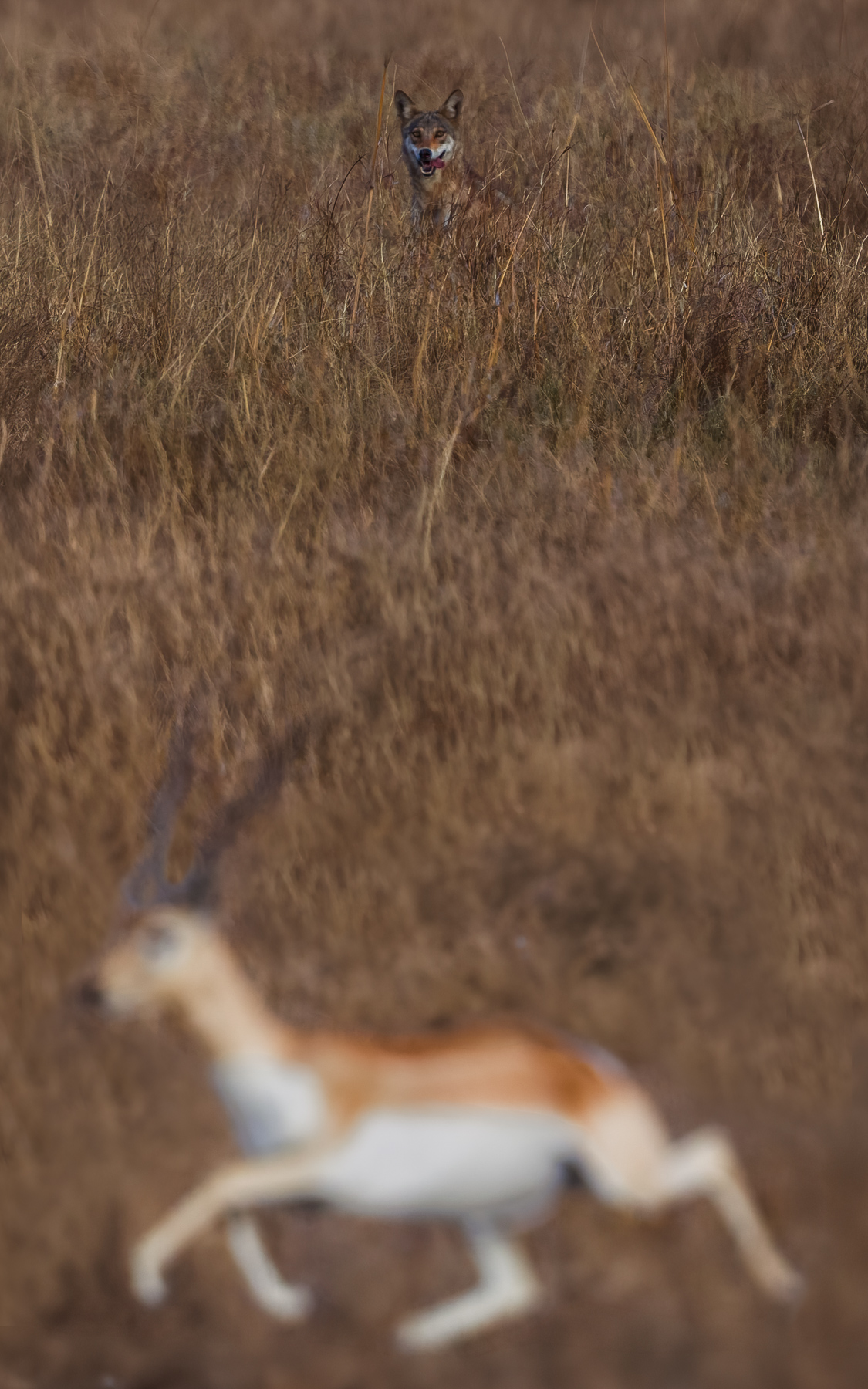
'Who's afraid of the Big Bad Wolf?' This young Blackbuck Antelope, definitely. This image almost appears as an optical illusion. The soft-focus form of the foreground deer, contrasting with the sharper form of the wolf behind is the result of photographing with a 600mm telephoto lens (image by Virginia Wilde)
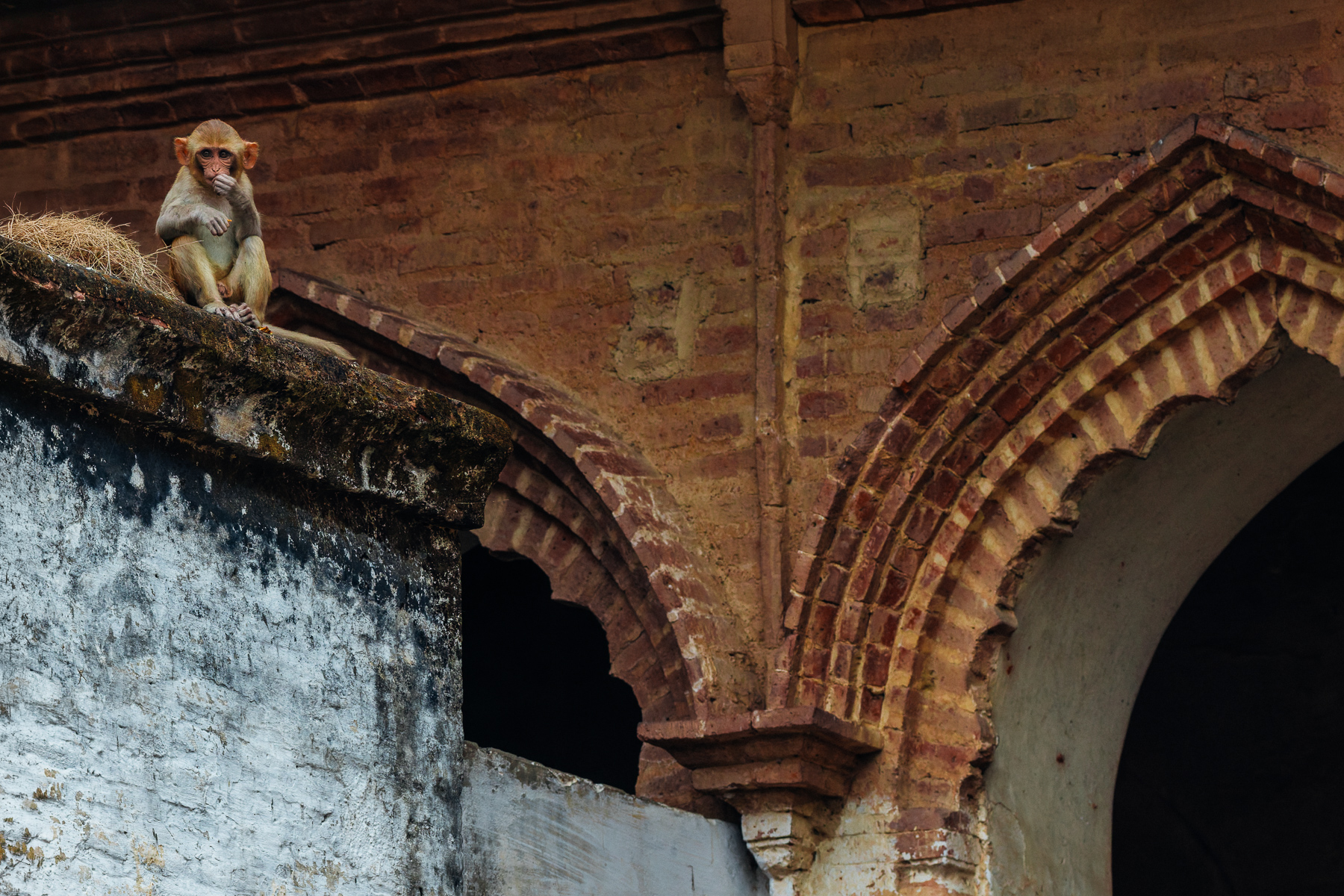
There are few countries in the world where wildlife lives as cheek-by-jowl with humans, as it does in India. Here, a Rhesus Macaque rests on houses in Holipura village, in Uttar Pradesh (image by Virginia Wilde)
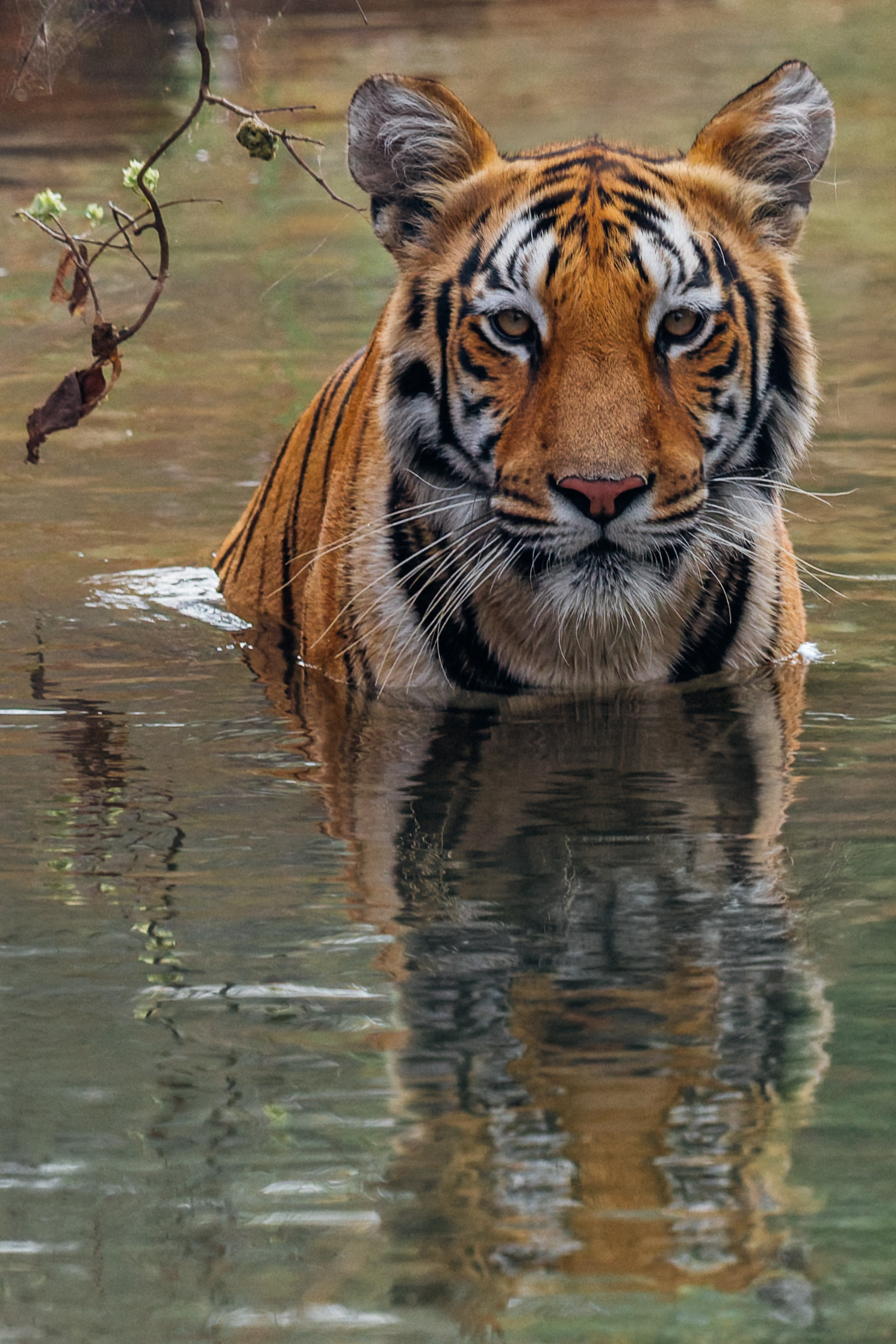
There are few animals on Earth as beautiful and iconic as the Tiger. Who could ever tire of seeing them in the wild, especially when they bathe just a few metres away, like this tigress did from our jeep (image by Virginia Wilde)
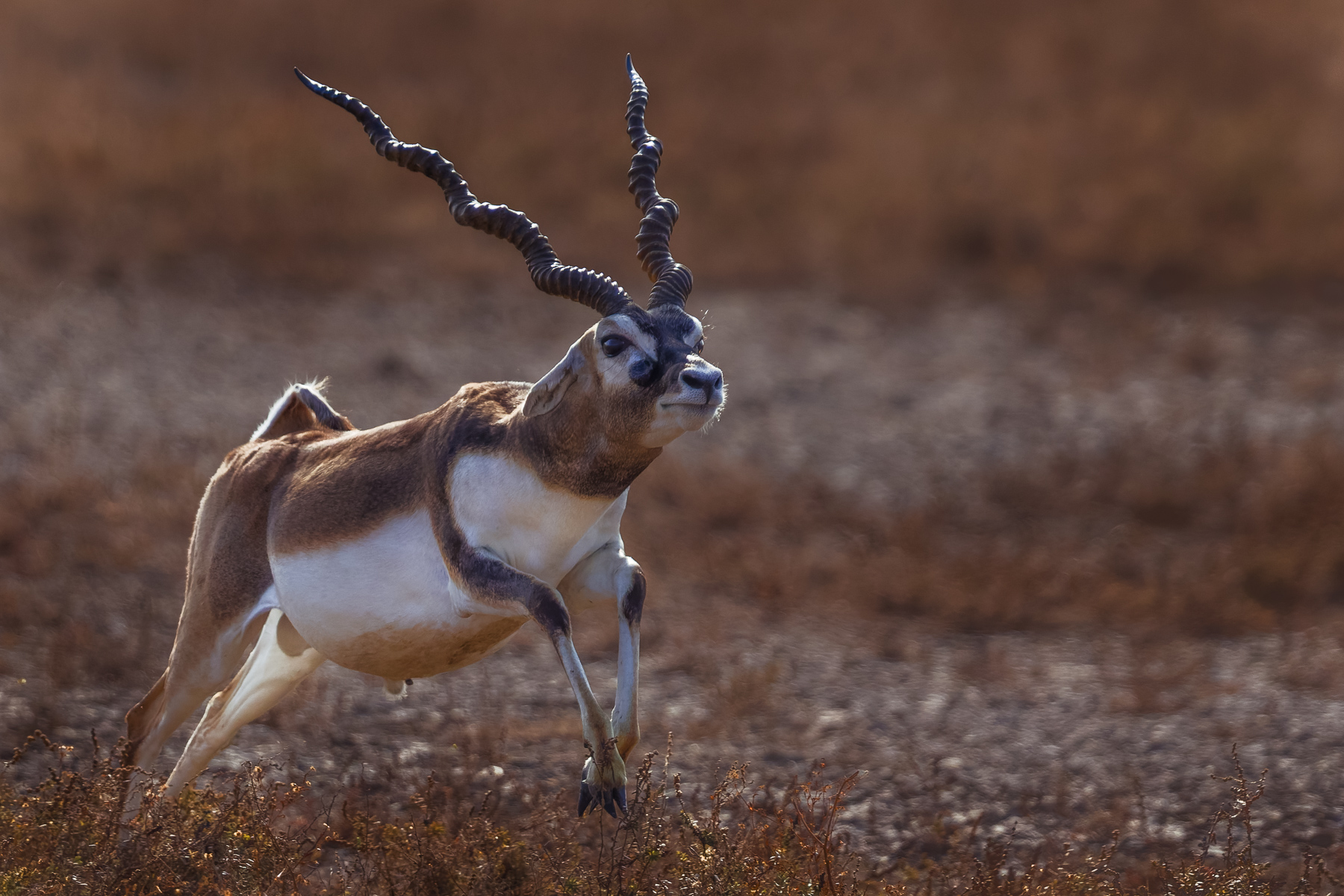
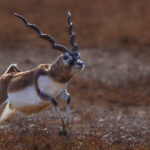
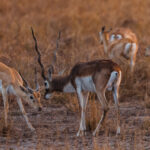
Blackbuck antelope - also known as the Indian antelope - are native to the Indian subcontinent but have been heavily hunted for the male's incredibly beautiful long spiralling horns. They rank in the top ten fastest animals on Earth, and can outrun almost any other animal over long distances (image by Virginia Wilde)
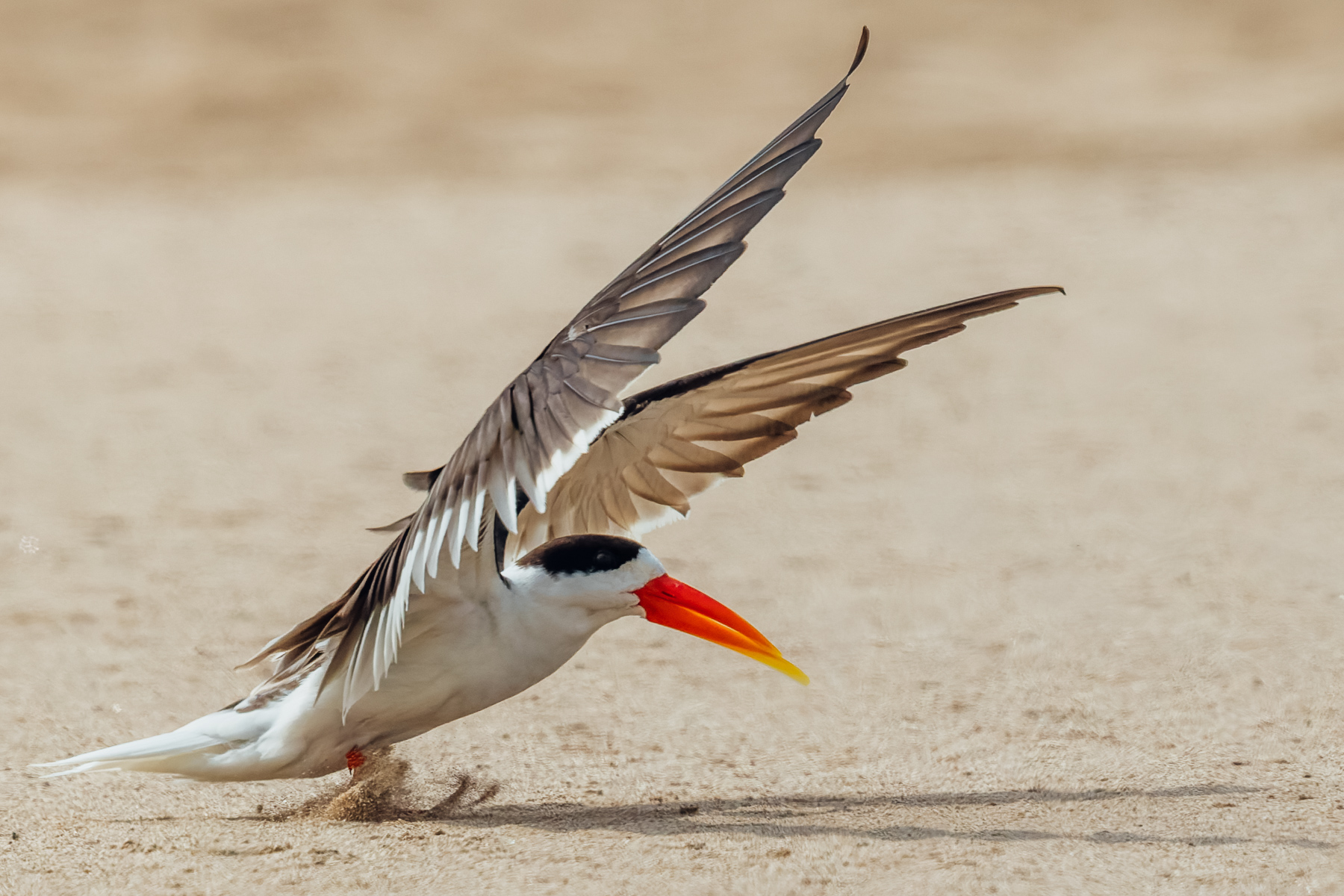
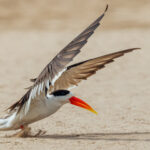
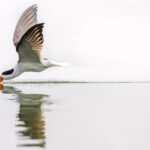
An endangered Indian Skimmer scoops up sand as it starts to take flight, on a sandbank by India's Chambal River (image by Virginia Wilde)
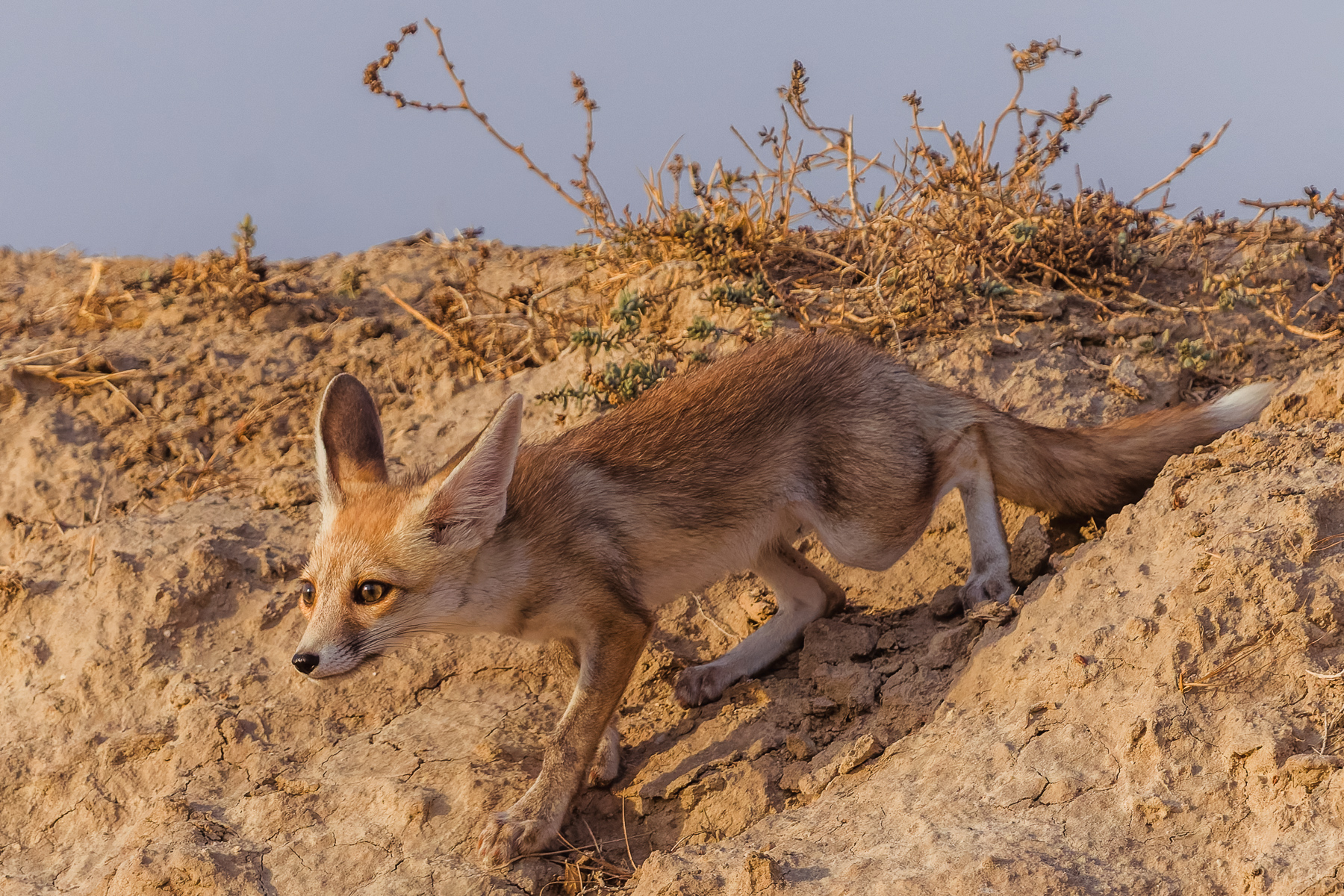
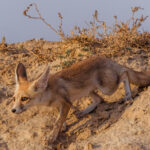
A suspicious-looking Desert Fox creeps down the earthy bank near its den, before pouncing on his sibling in a surprise playfight ambush (image by Virginia Wilde)
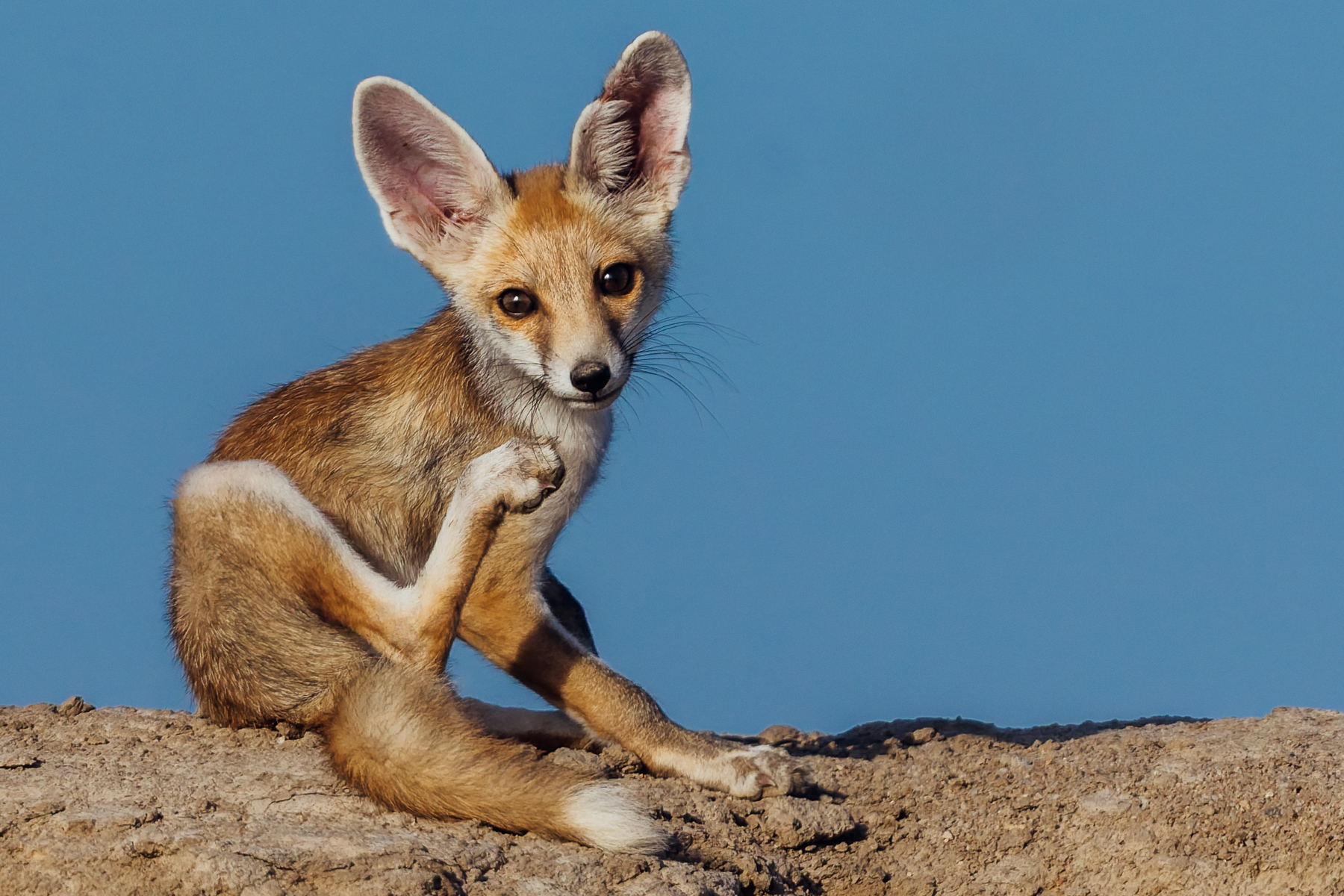
A month-old Desert Fox cub gives himself a good scratch, before scampering around his den in the saline desert of India's Little Rann of Kutch (image by Virginia Wilde)
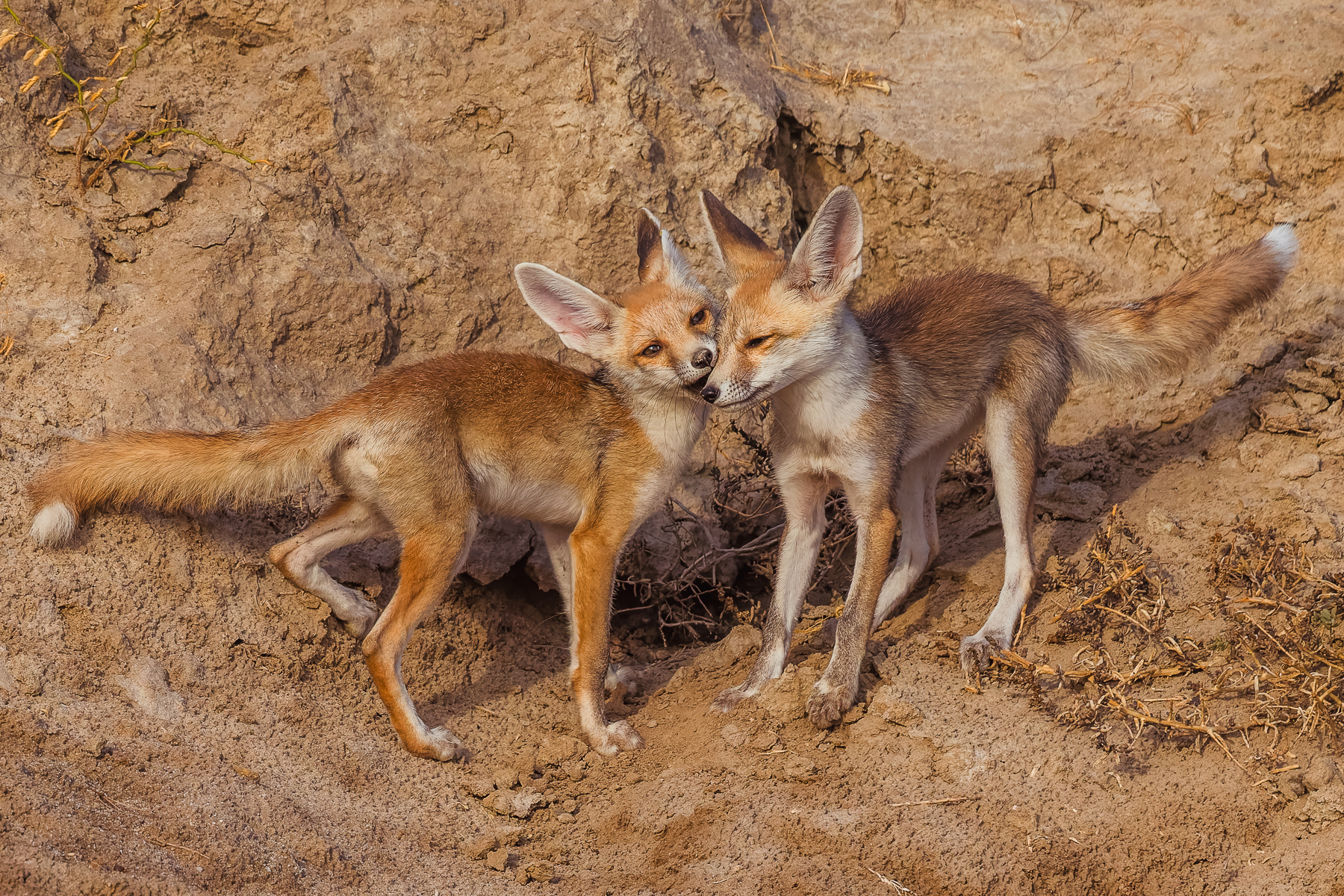
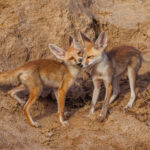
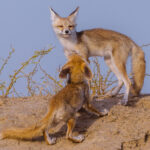
Desert Foxes are easily distinguished from Indian Foxes by the colour of their tail tips: white for Desert Foxes, black for Indian. This pair of sibling cubs do what all infant siblings do - playfight, bite and then briefly scarper (image by Virginia Wilde)
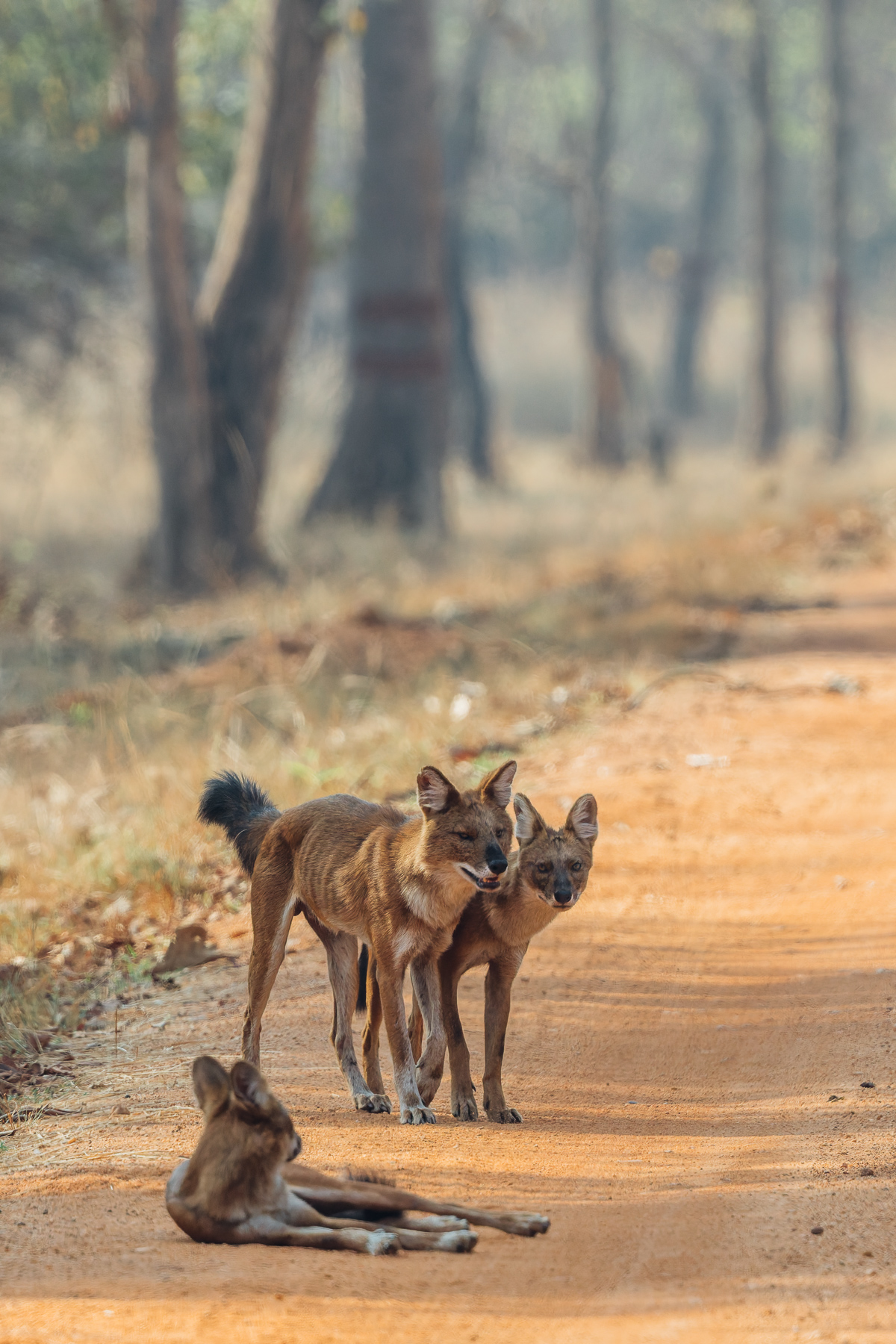
Indian Wild Dogs (or Dholes) are actually about the size of German Shepherd dogs, but look more like a long-legged fox. These highly elusive animals are also fierce. A pack of Dholes will often drive away a Tiger, through endurance, co-ordination and harassment (image by Virginia Wilde)
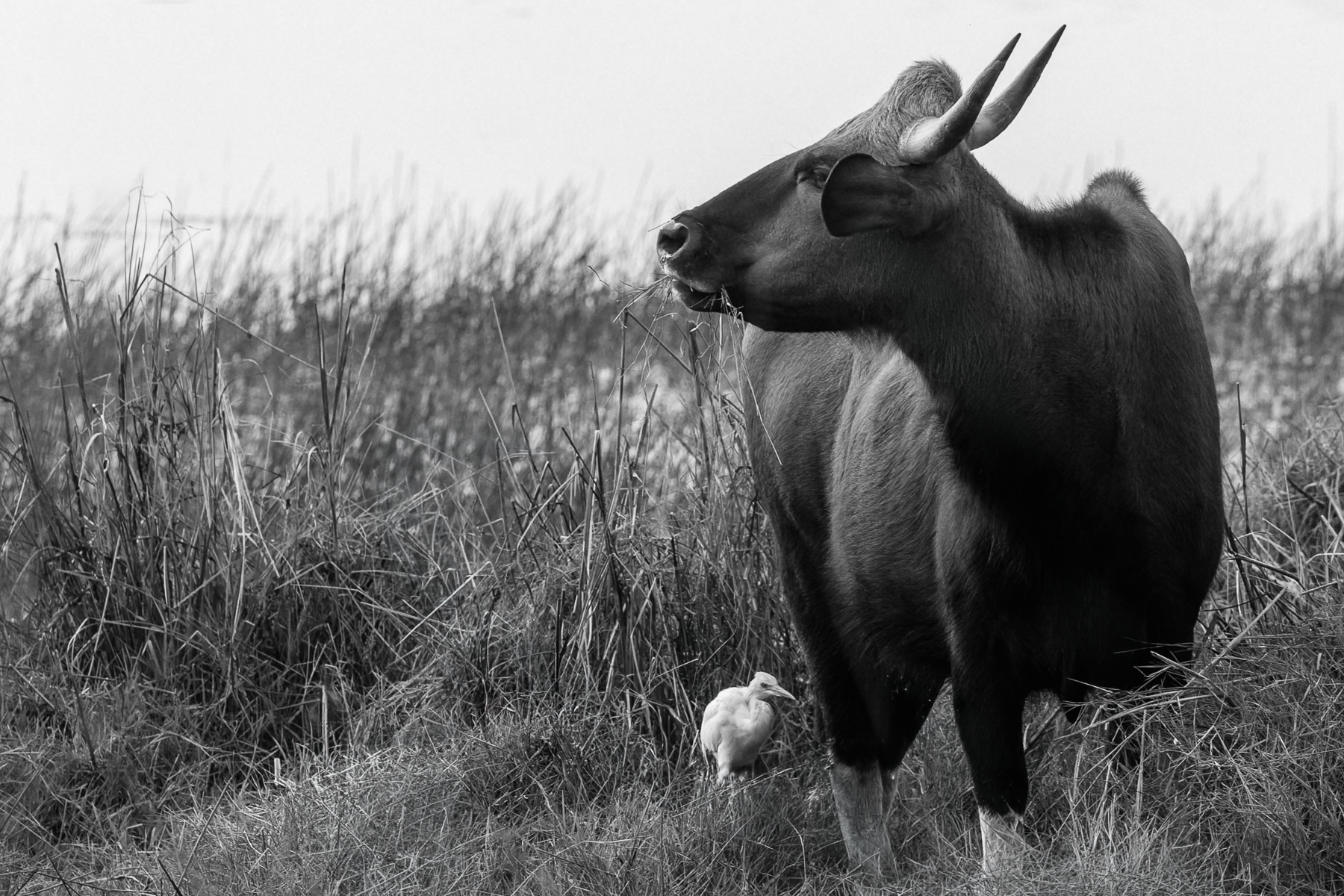
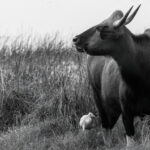
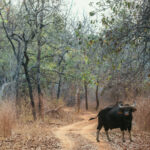
Black-and-white portrait of a Gaur - the world's largest wild cattle species. The Gaur, or Indian Bison, can weigh up to 2,200 lbs with males standing over 6ft tall at the shoulder (image by Virginia Wilde)
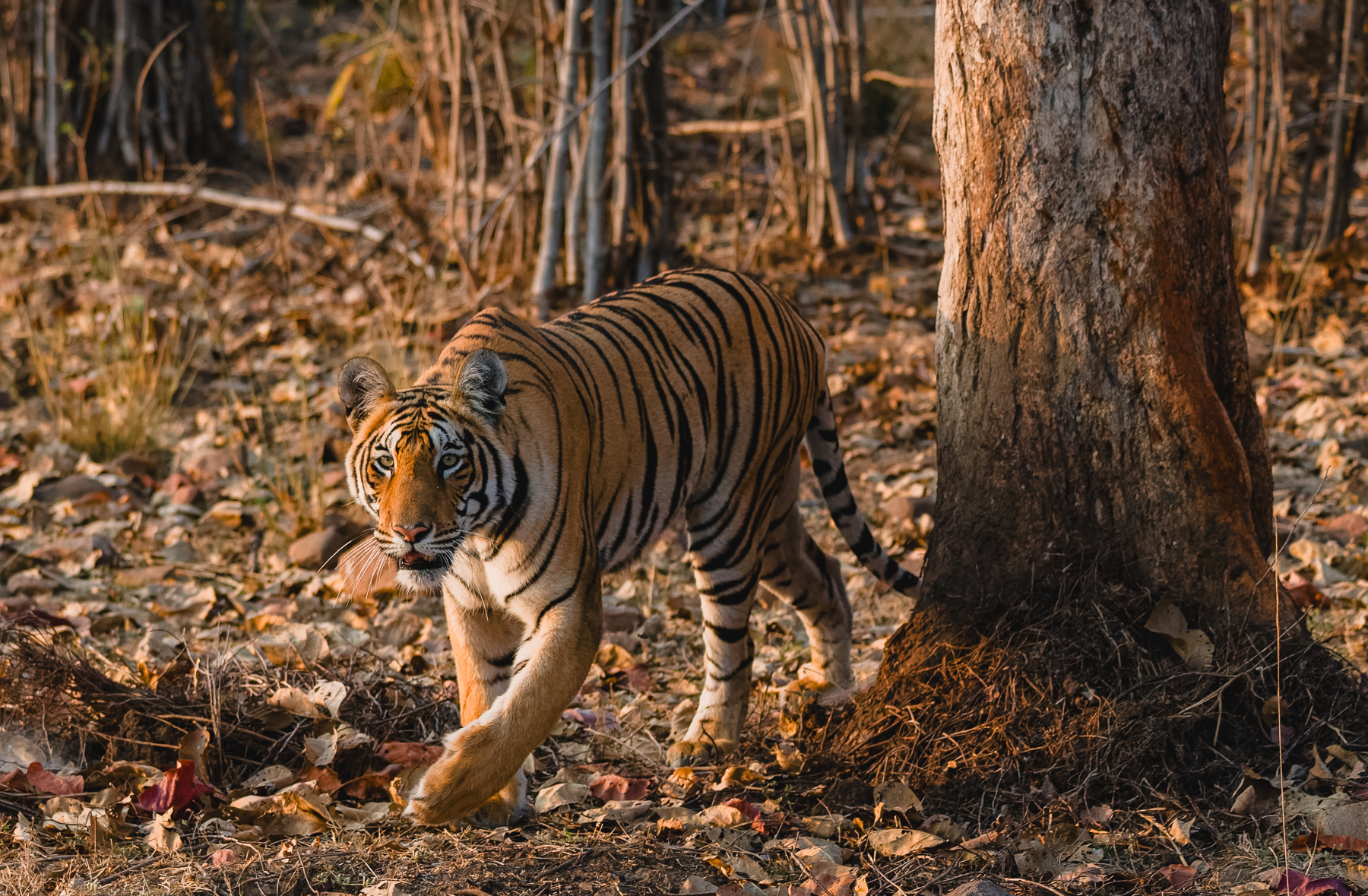
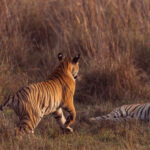
A sub-adult Tigress emerges from behind a tree, padding towards her two male siblings, who she already bosses around. Female tigers are just as territorial as their male counterparts, often fiercely defending areas to ensure survival and food for their cubs (image by Virginia Wilde)
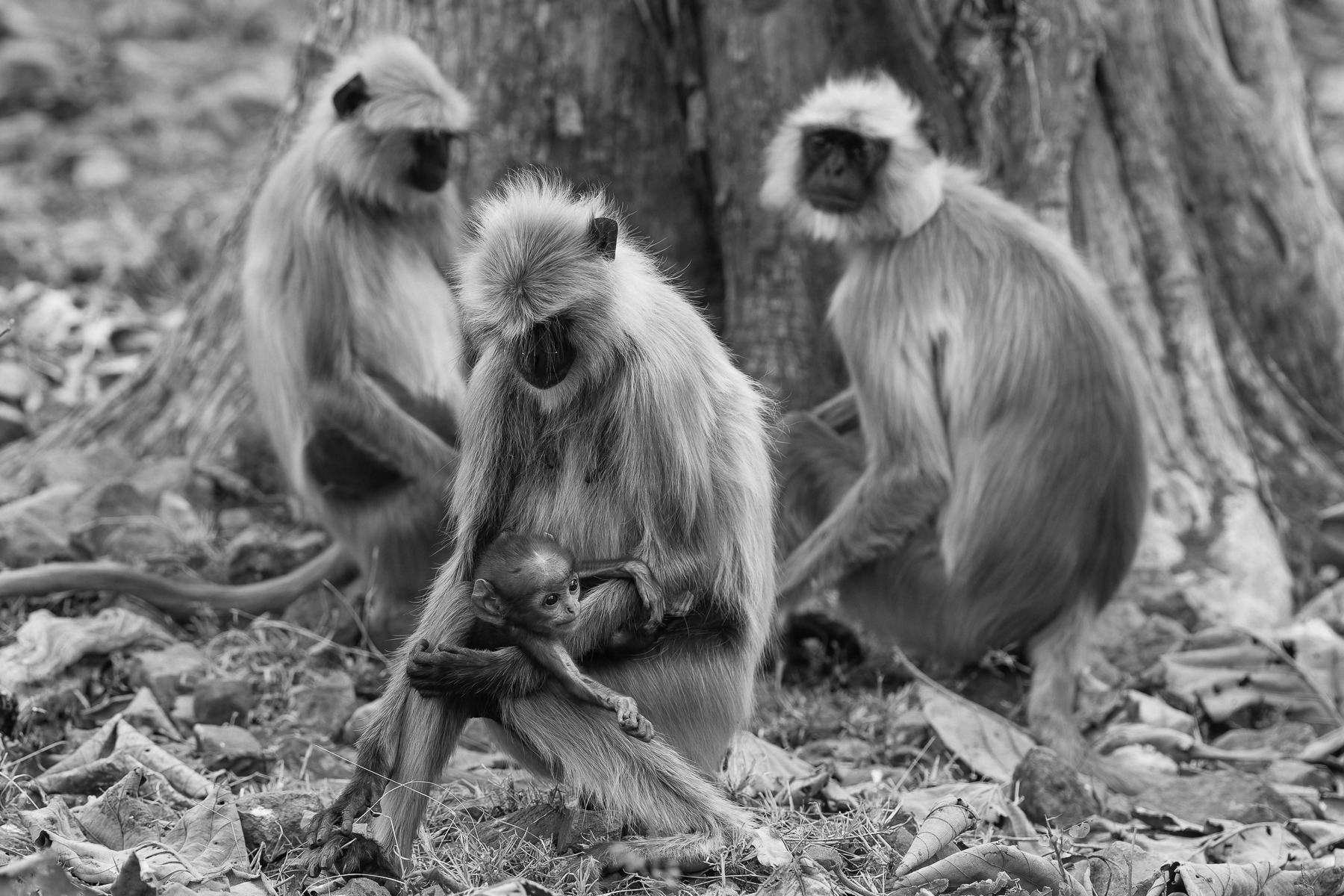
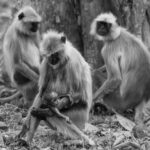
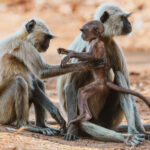
A Northern Plains Grey Langur mother gazes lovingly at her infant, surrounded by other members of her troop. Grey Langurs are considered sacred in Hinduism and thrive in diverse environments, including cities (image by Virginia Wilde)
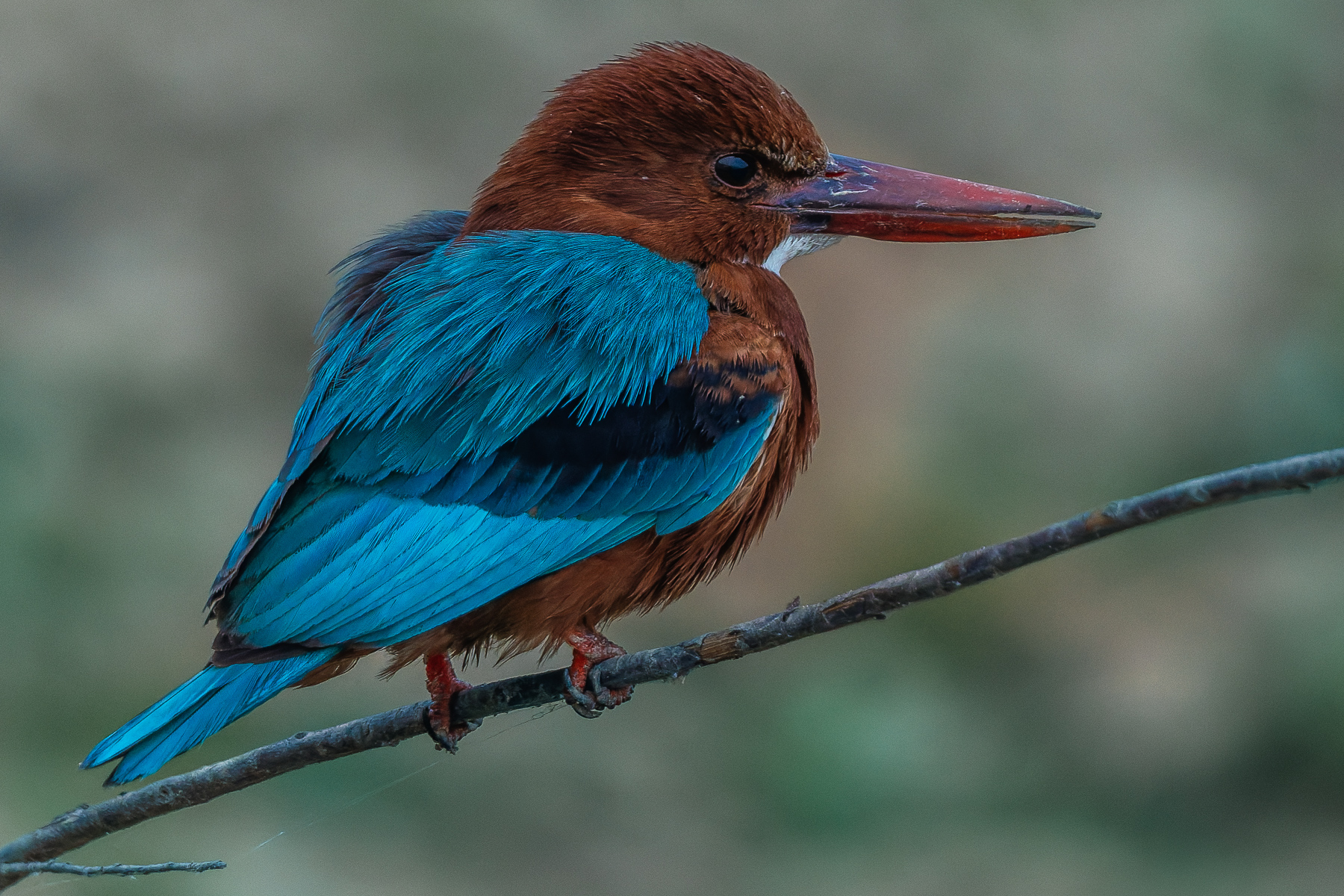
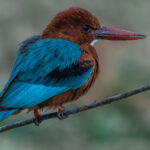
Despite their name, White-throated Kingfishers are not strictly fish-eaters. They have a varied diet including small reptiles and amphibians, rodents, crabs and the young of other birds. In the 1800s, they were heavily hunted for their electric blue feathers (image by Virginia Wilde)
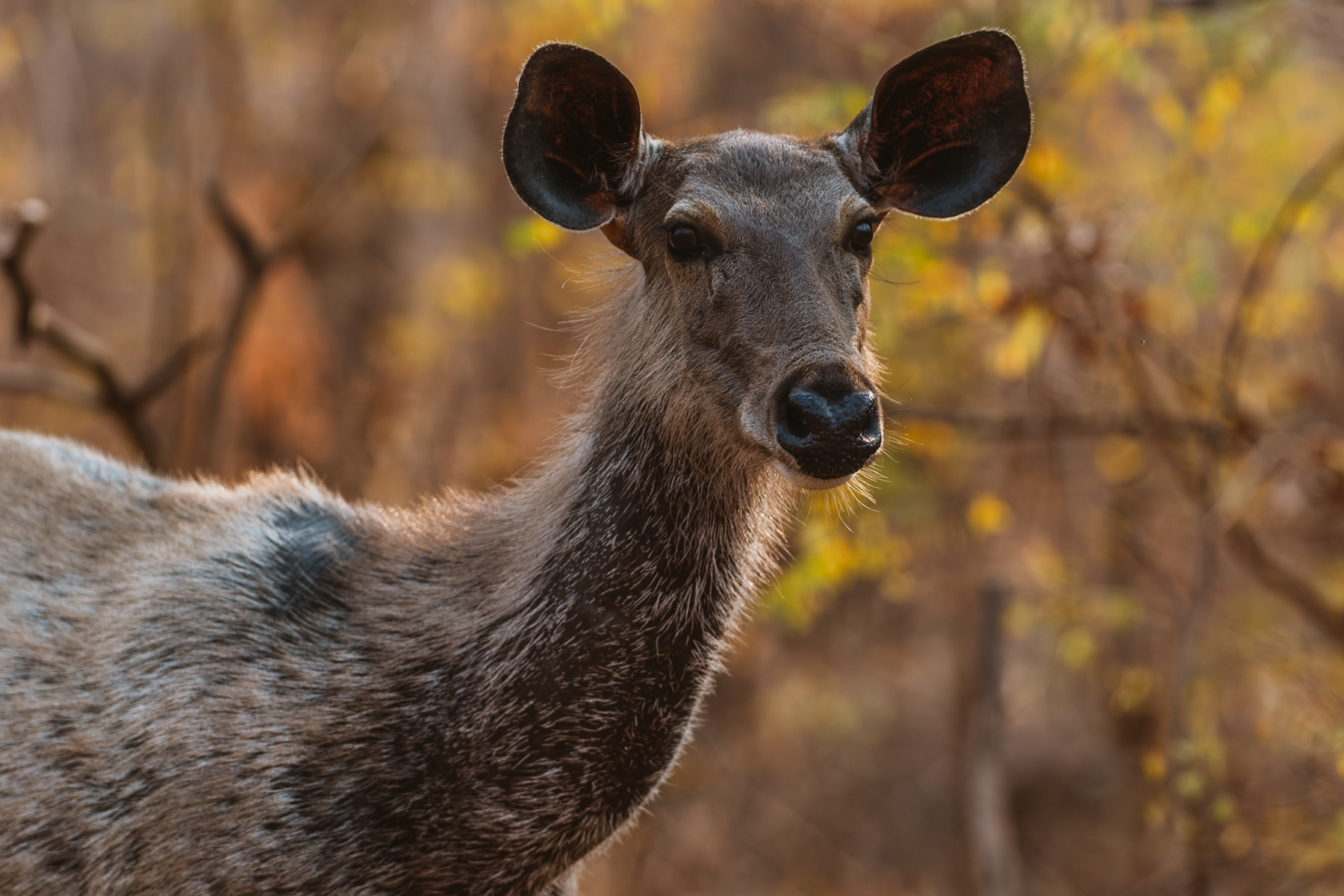
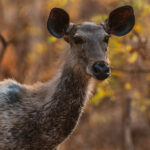
A watchful female Sambar Deer catches sight of something potentially hazardous in the jungles of Tadoba. Unusually for deer, the average herd size is only three or four individuals - with herd members often fighting back fiercely when attacked by predators. Sambar are the favourite prey of Bengal Tiger and Asiatic Lion (image by Virginia Wilde)
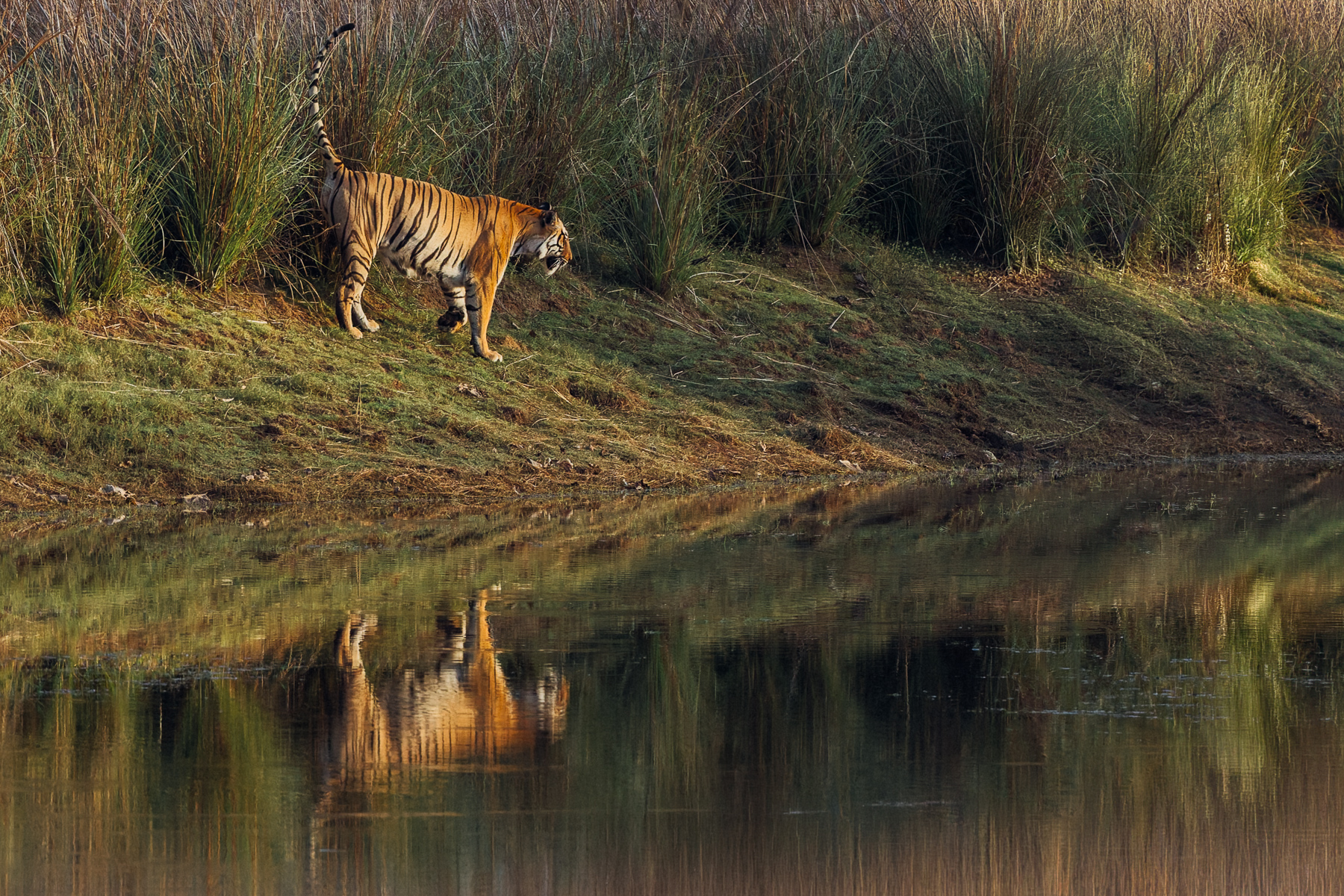
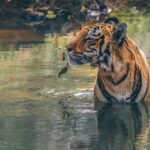
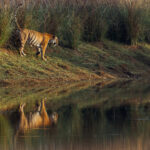
'Reflections of a Bengal Tiger'. It's a privilege to see such a stunning cat in the wild. Fewer than 3,700 wild Bengal Tigers remain in the world - with India's Bengal subspecies representing around 75% of the total global wild tiger population (image by Virginia Wilde)
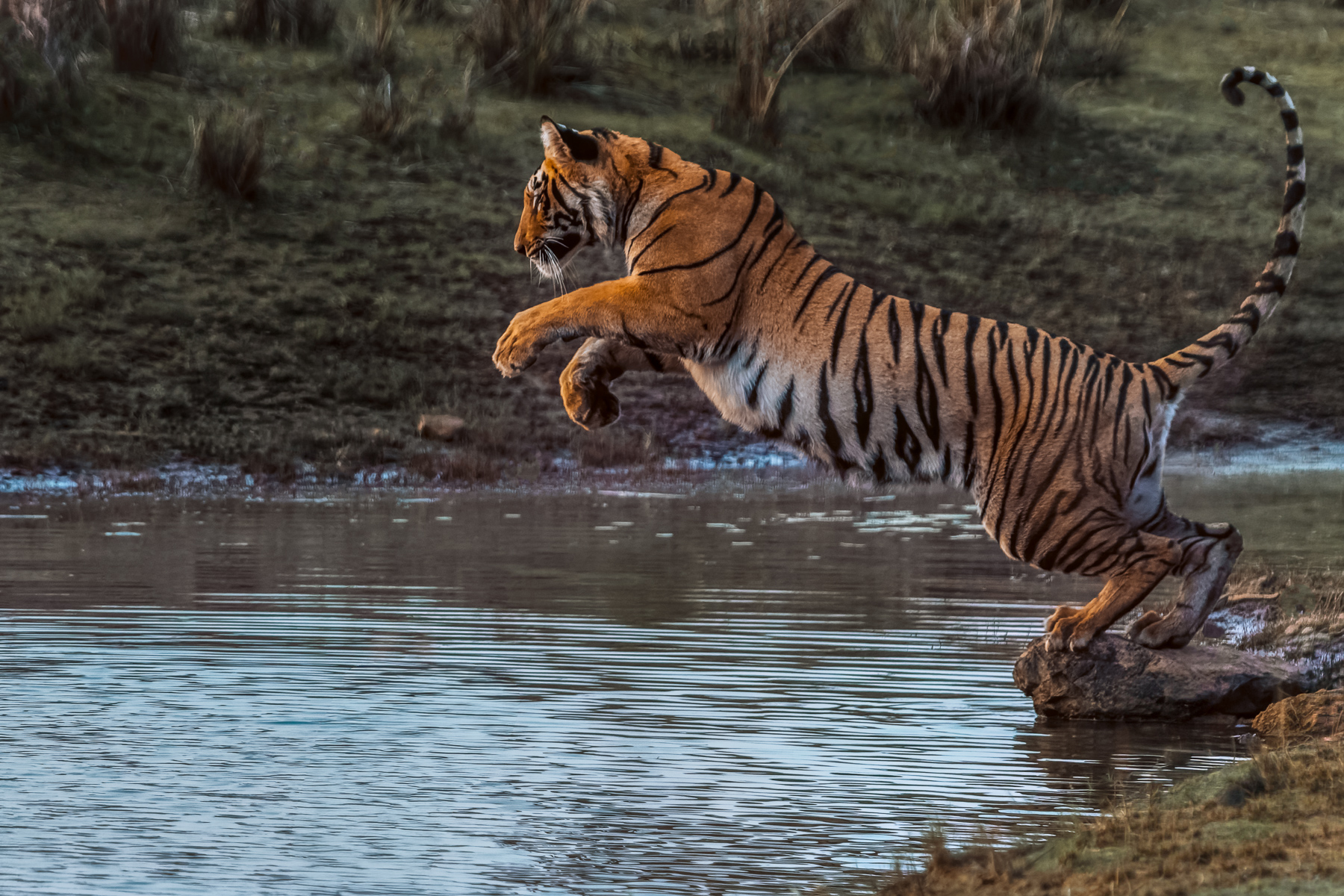
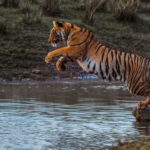
Bengal Tigers are highly proficient jumpers, capable of leaping up to 30ft (9 metres) in a single bound. Nevertheless, this young female bungled his landing and ended up smashing his face on a rock in India's Tadoba National Park (image by Virginia Wilde)
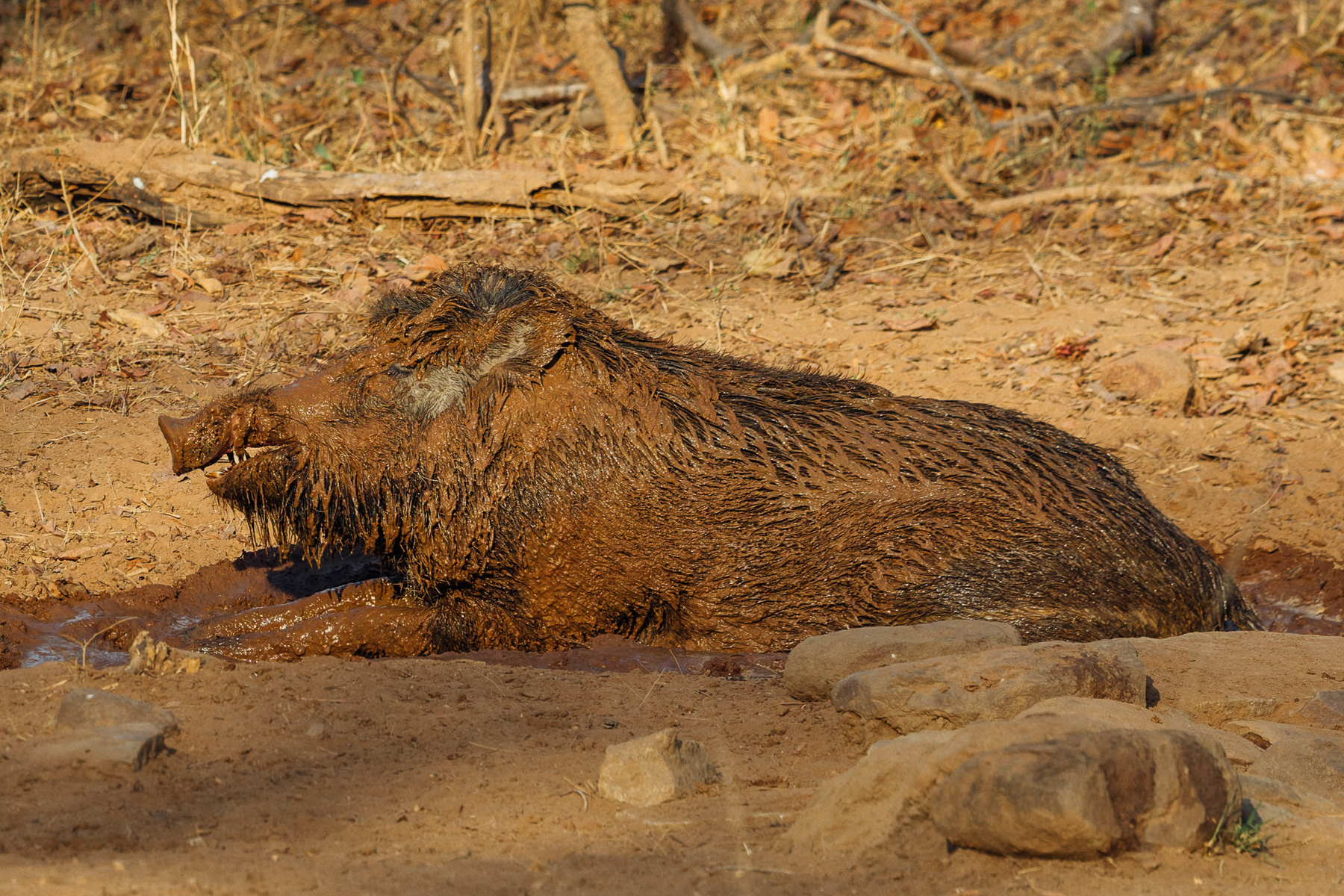
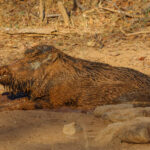
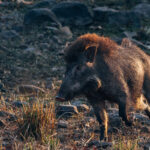
It's surprisingly entertaining, watching a Wild Boar roll in mud. Many of us have rarely seen an animal enjoy itself as much as this fella, on a hot afternoon, after finding the mud bath of his dreams (image by Virginia Wilde)
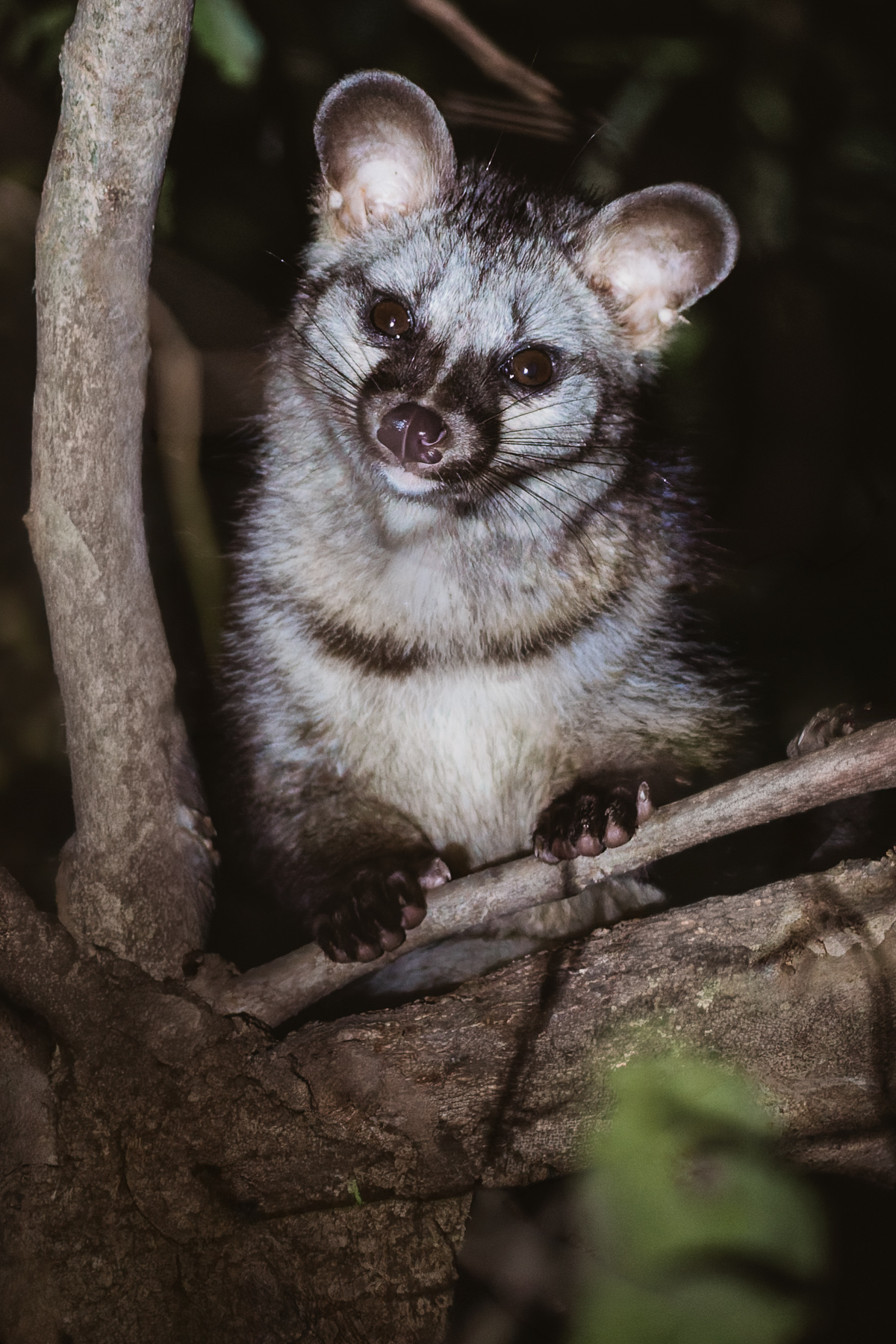
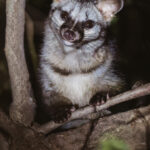
Aww! Definitely one of the cutest mammals of our tour was this nocturnal Common Palm Civet. He scampered around the trees at night at our lodge in the Chambal River region of India (image by Virginia Wilde)

Another view of the iconic Taj Mahal, this time showing a few of the many Cattle Egrets that flock to its reflective pool (image by Virginia Wilde)
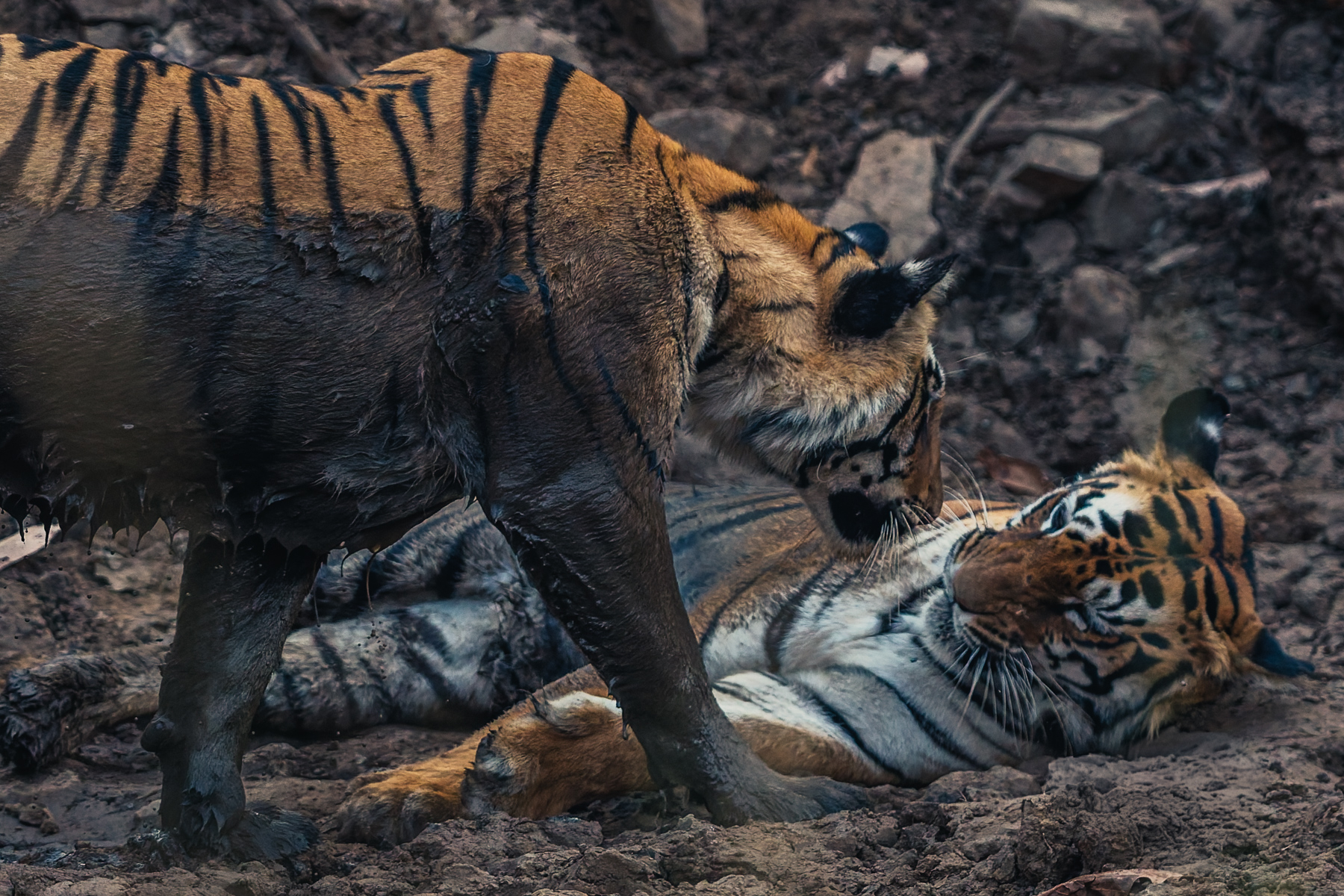
Matriach tiger 'Collawali' tenderly greets one of her subadult daughters, before returning to her mud bath to escape the heat of the late afternoon sun, in India's Tadoba National Park (image by Virginia Wilde)
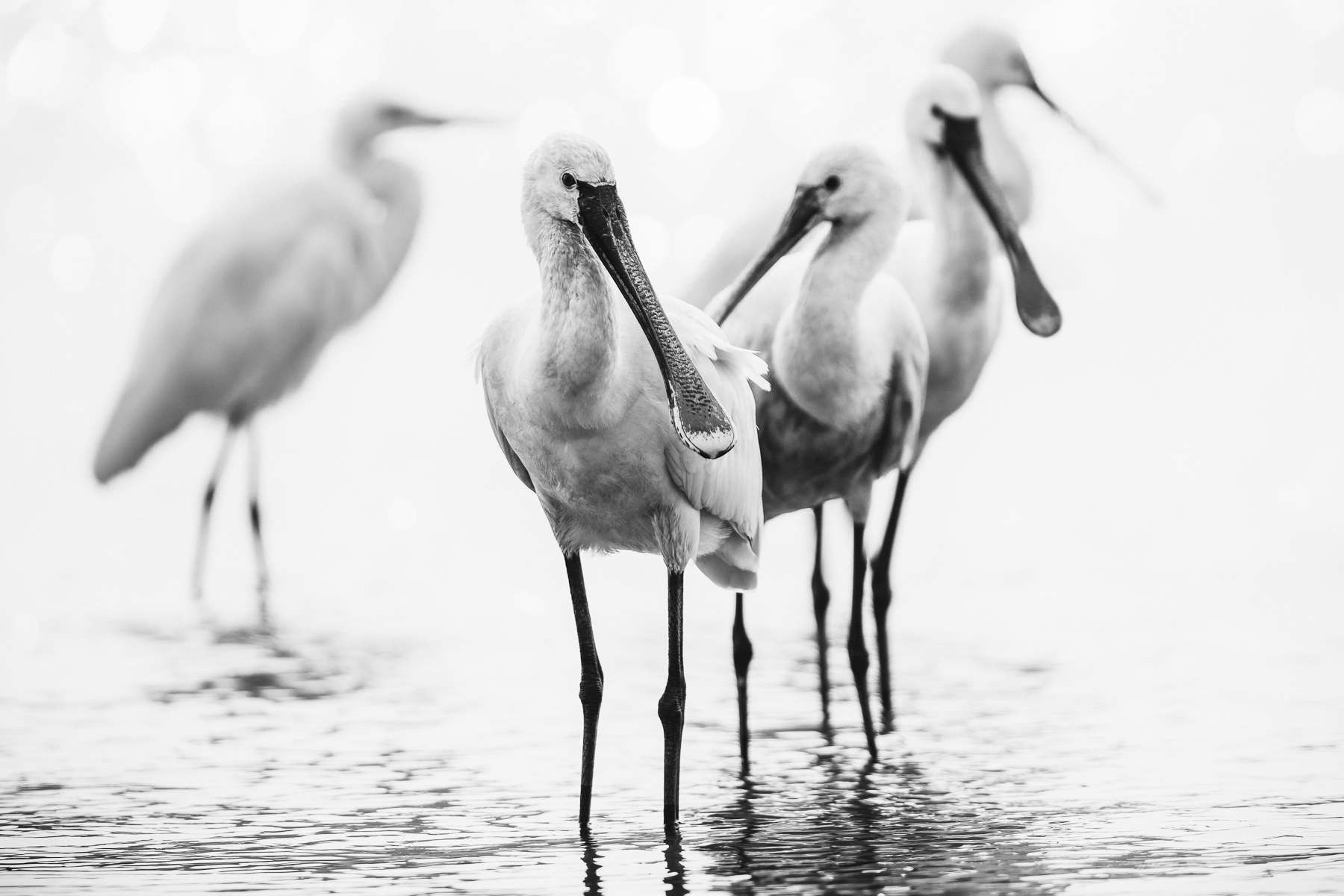
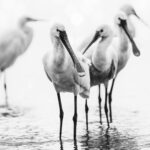
Black-and-white portrait of Eurasian Spoonbills on the Chambal River - one of India's least polluted major rivers (image by Virginia Wilde)
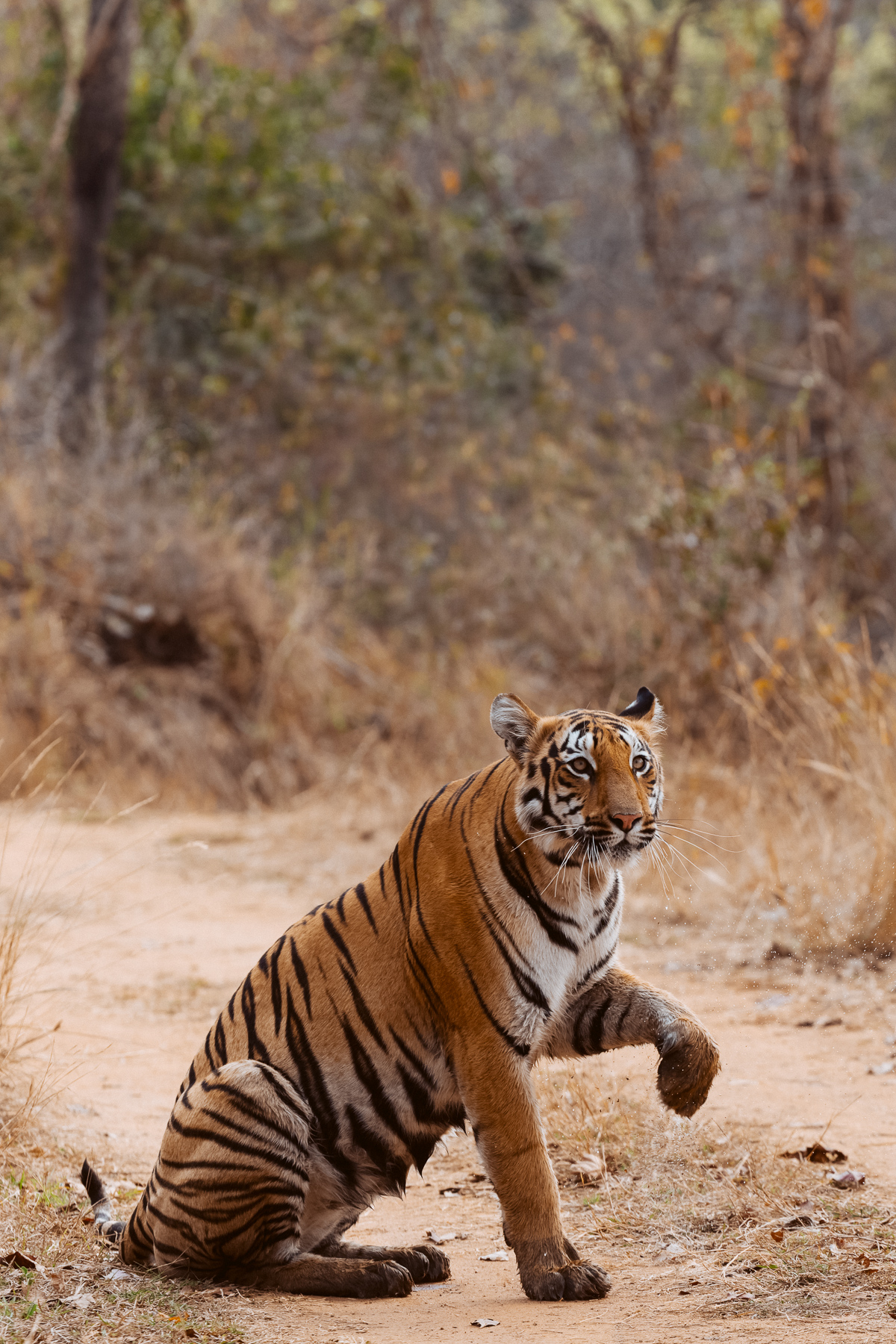
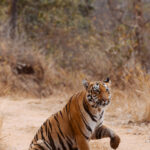
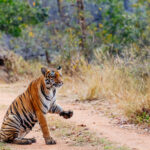
A female tiger holds up her paw - as if there is something wrong. But it's actually just one step in her paw stretching routine, which lasted for more than one minute. Until she was satisfied with her paw yoga session (image by Virginia Wilde)
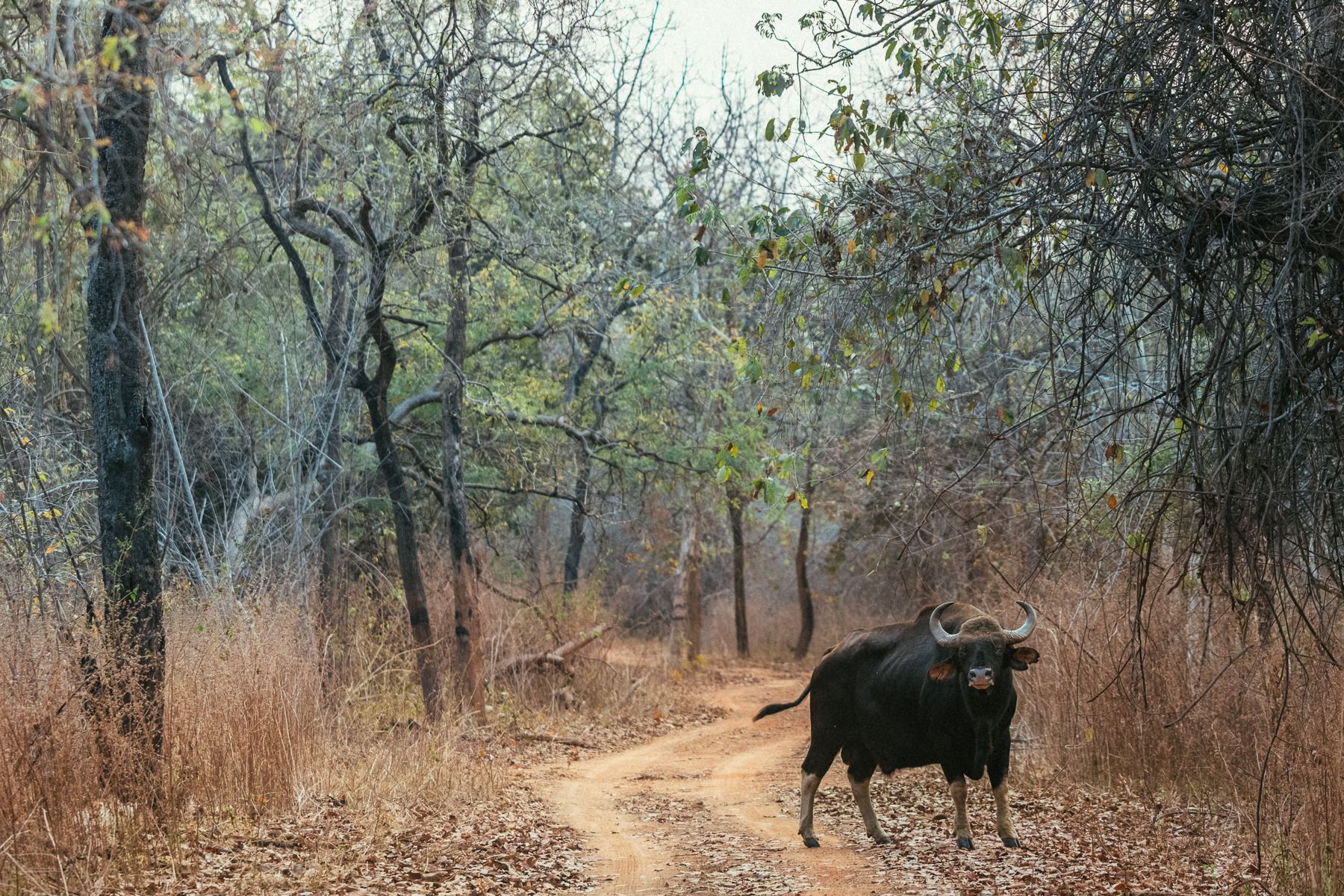
'It's me. A Gaur bull. Also known as 'The Unit'. On account of me being the size of a car. And weighing as much as a ton. Do not mess with me. Okay?' (image by Virginia Wilde)
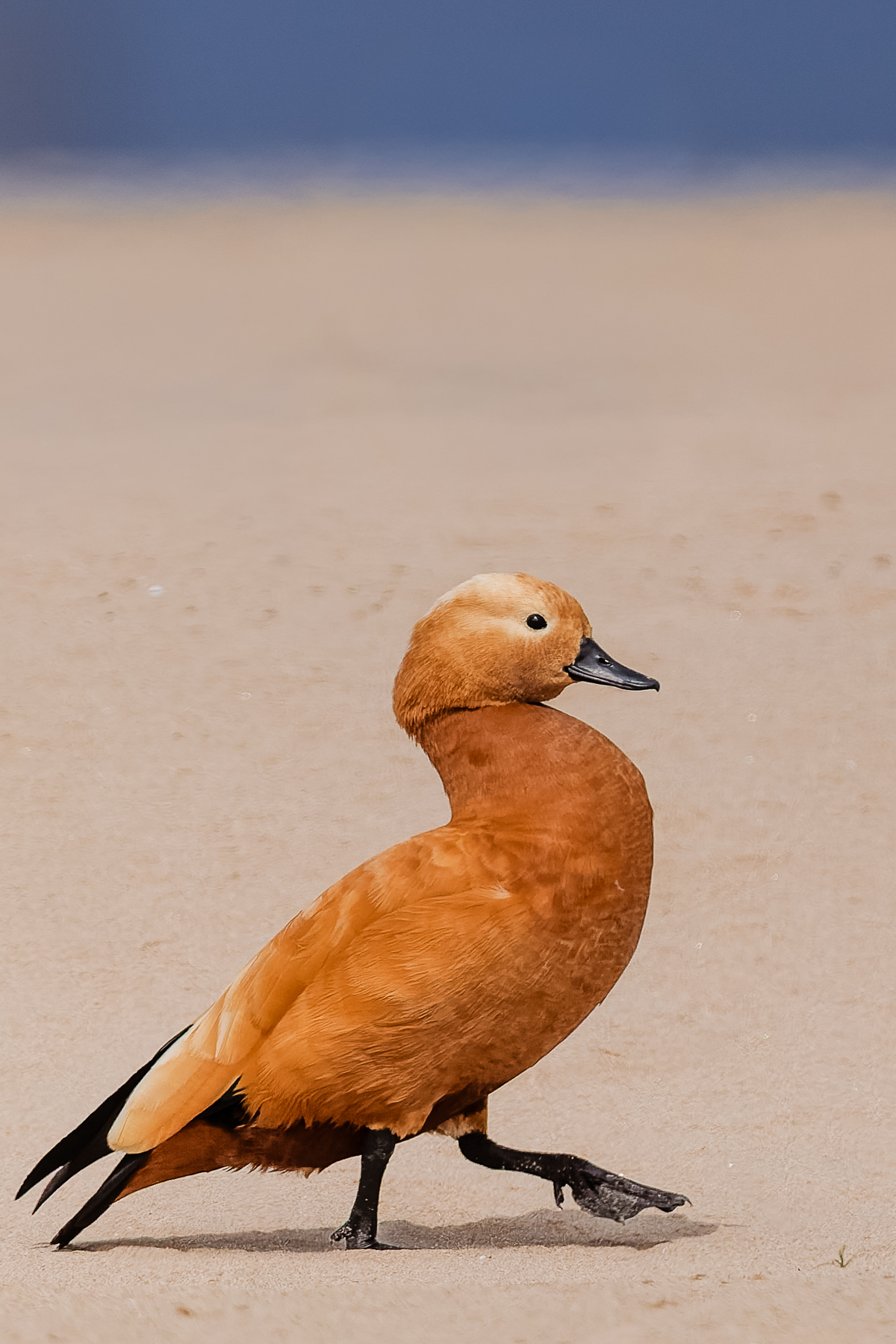
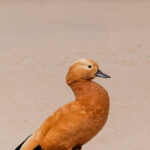
Although becoming quite rare in Southeastern Europe, the beautiful Ruddy Shelduck remains a common sighting across much of its Asian range (image by Virginia Wilde)
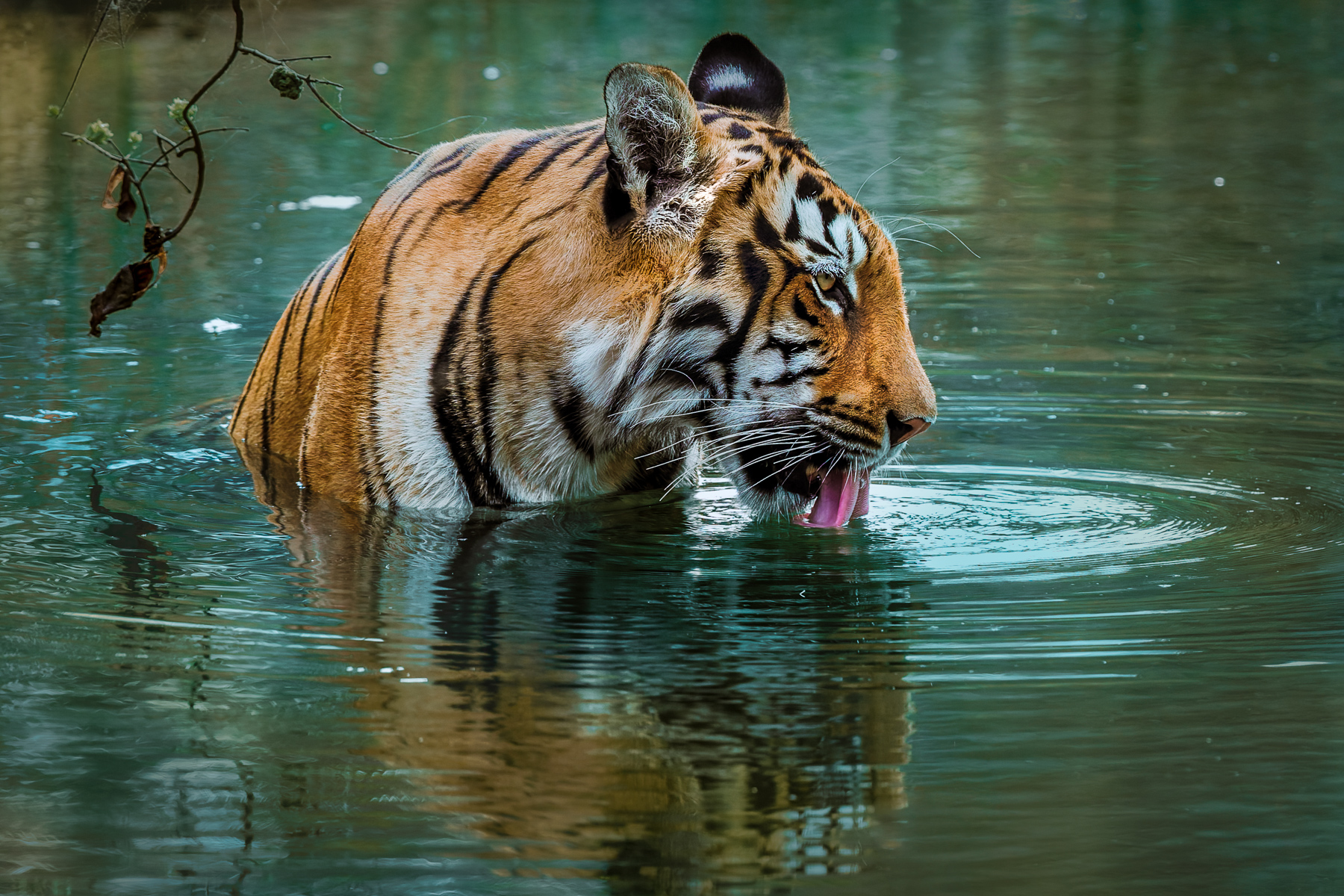
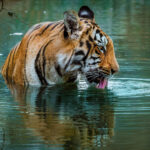
Tigers are exceptional swimmers and frequently bask in rivers and lakes to regulate their body temperature in summer. Here, a young female tiger laps at the river in India's Tadoba National Park (image by Virginia Wilde)
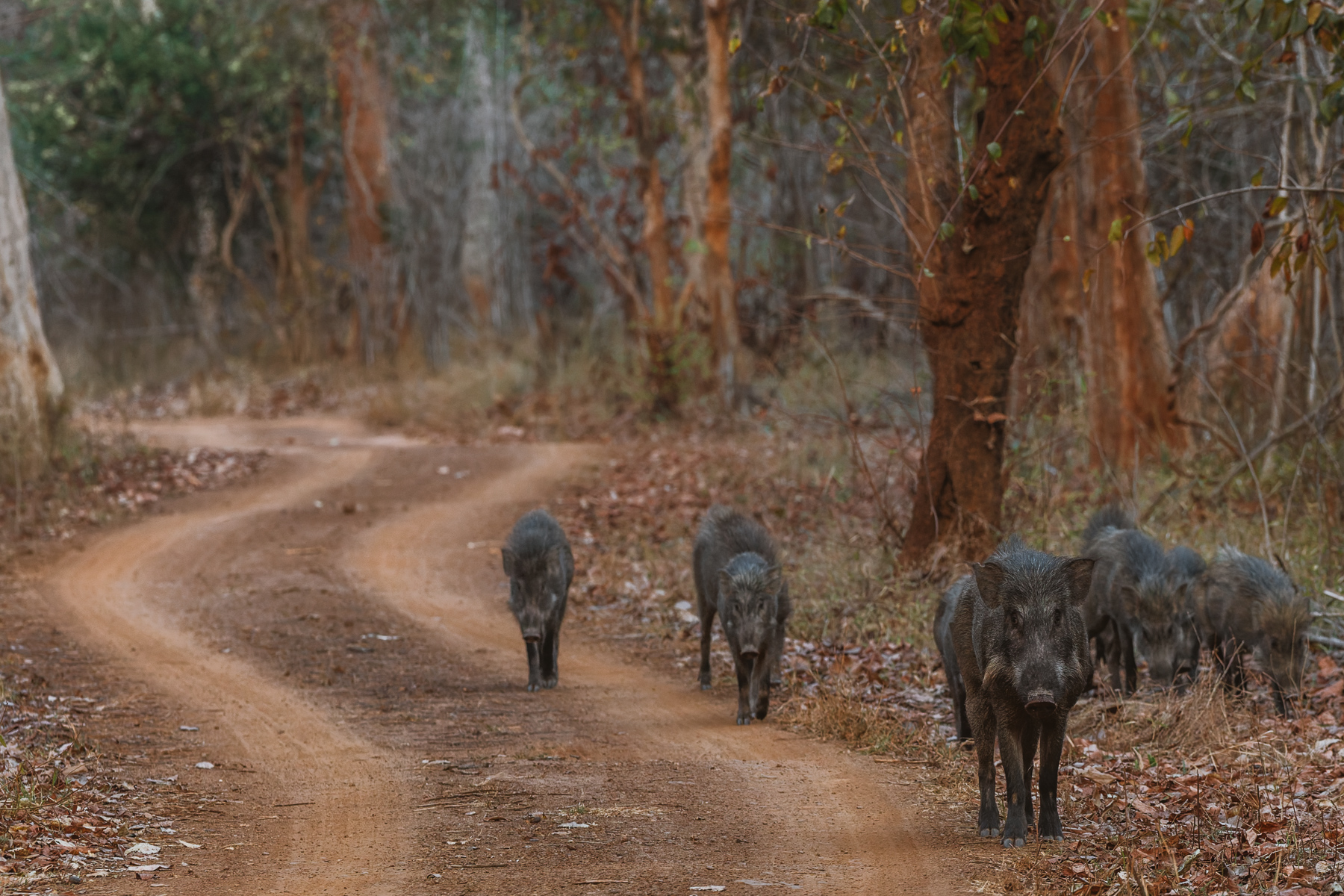
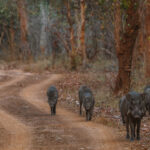
Most of the forest paths we drove along in the Tadoba-Andhari Tiger Reserve were snaking and frequented by the wildlife too . Beautifully demonstrated by this Wild Boar pack (image by Virginia Wilde)
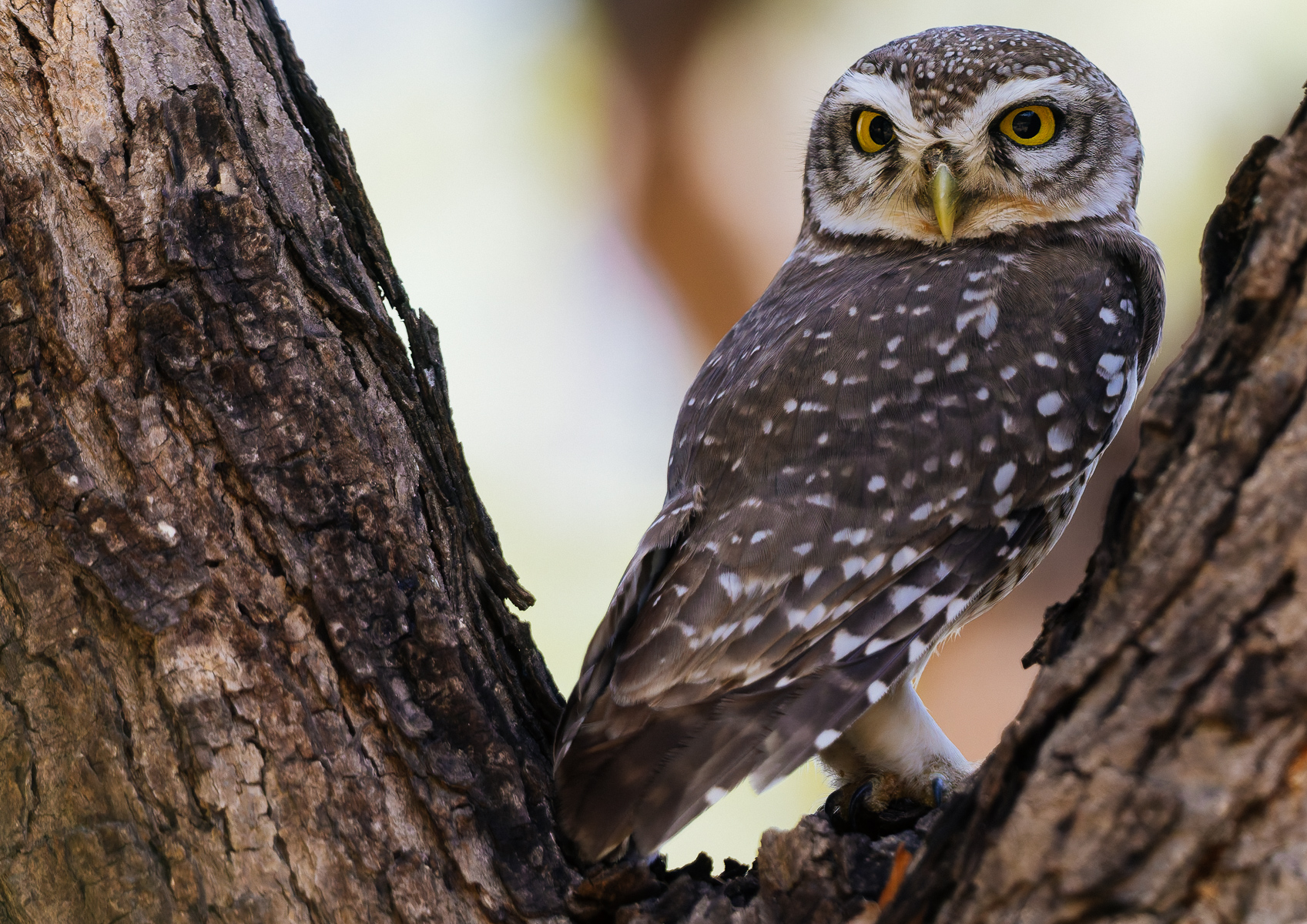
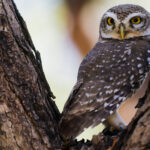
Spotted Owlets are a common sight in India - not least because they have adapted well to living in cities, as well as farmland (image by Virginia Wilde)
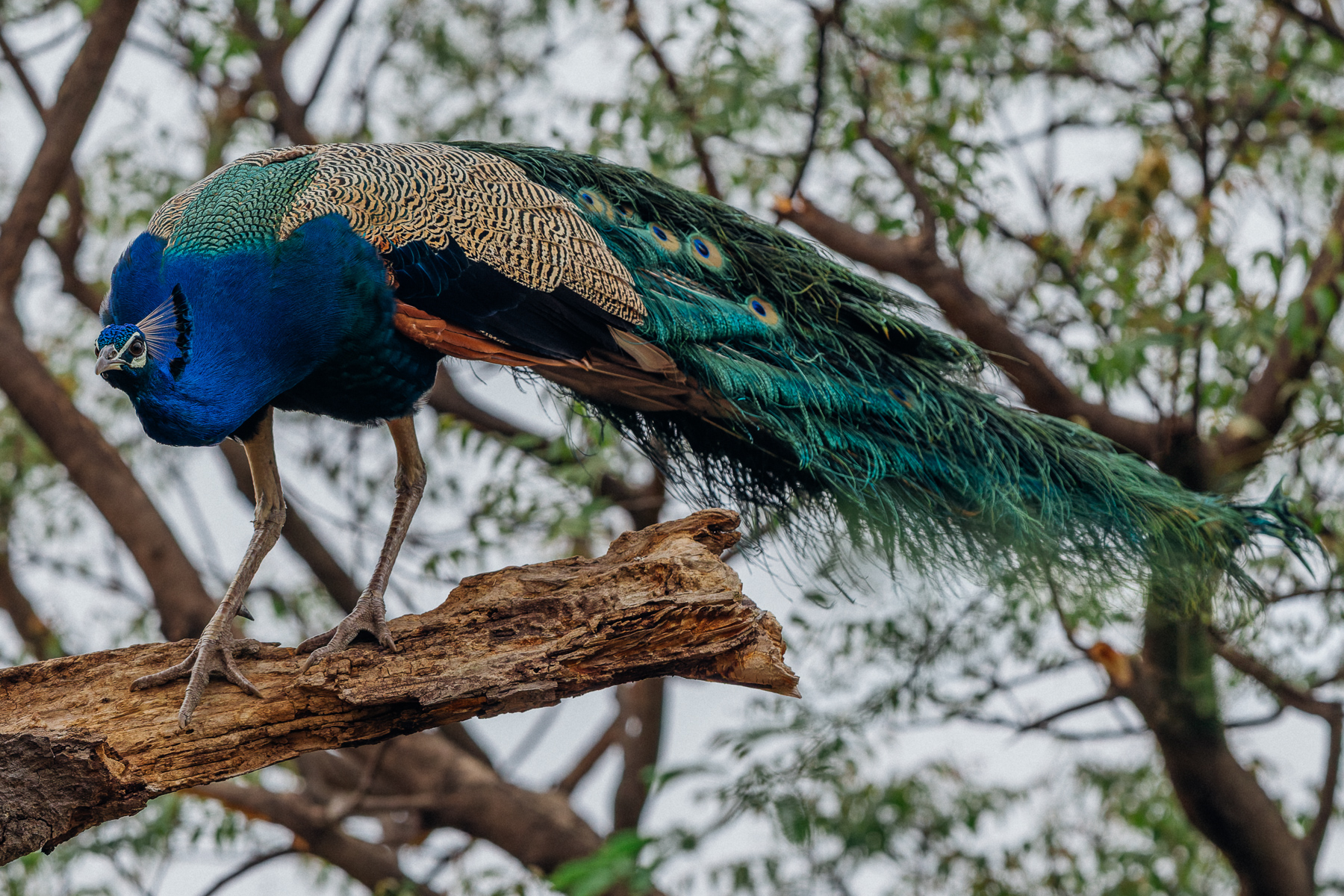
So many peafowl reside in decorative bird parks and gardens across the world now that it's easy to forget that they are native to the Indian subcontinent. These iconic birds are symbols of beauty and immortality in both Greek and Hindu mythology (image by Virginia Wilde)
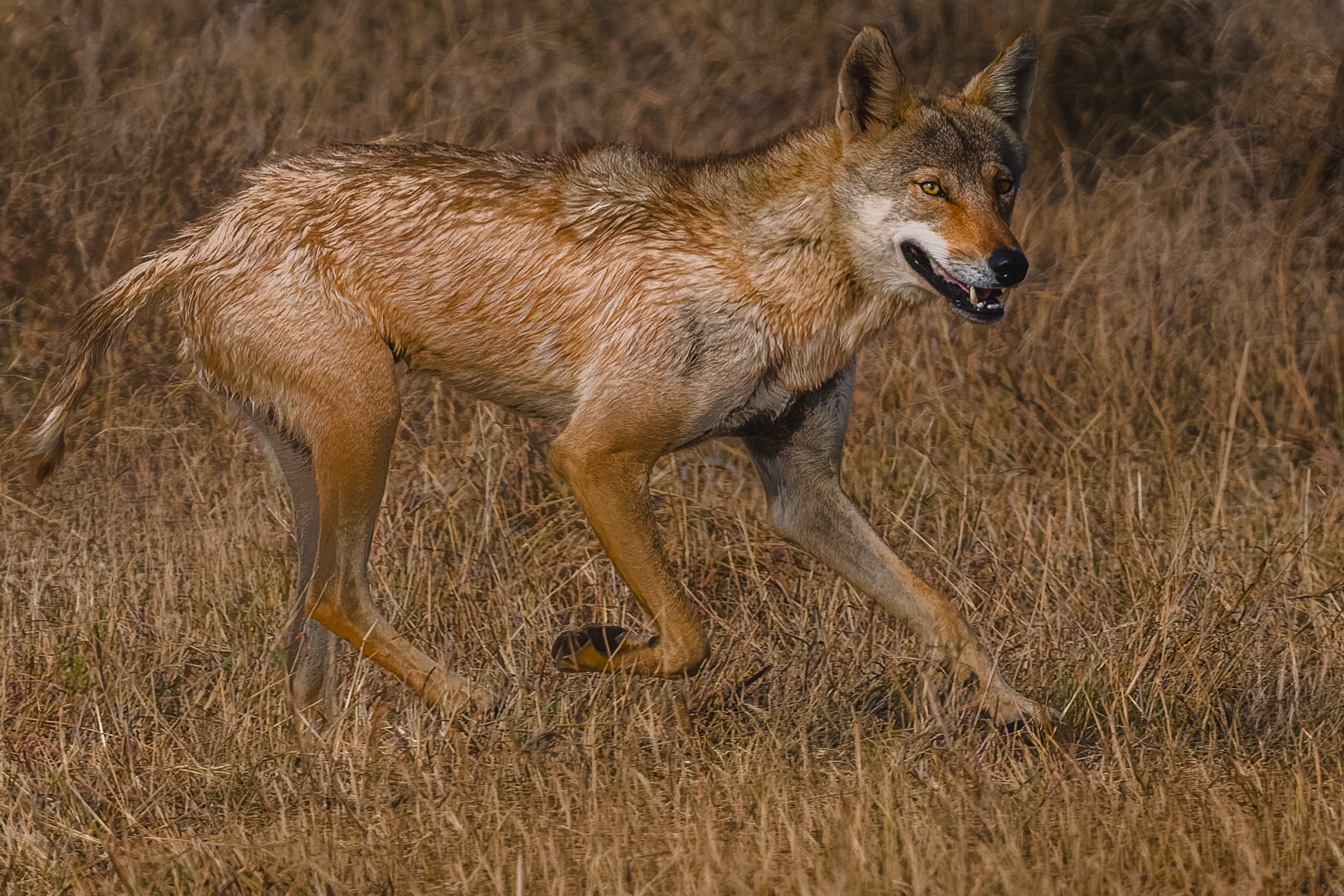
We watched several Indian Wolf hunts on our tour - mostly all unsuccessful. These predators are known to use a 'decoy' tactic, where one or two wolves distract a herd of Blackbuck Antelope, while another wolf attacks from the side or rear (image by Virginia Wilde)
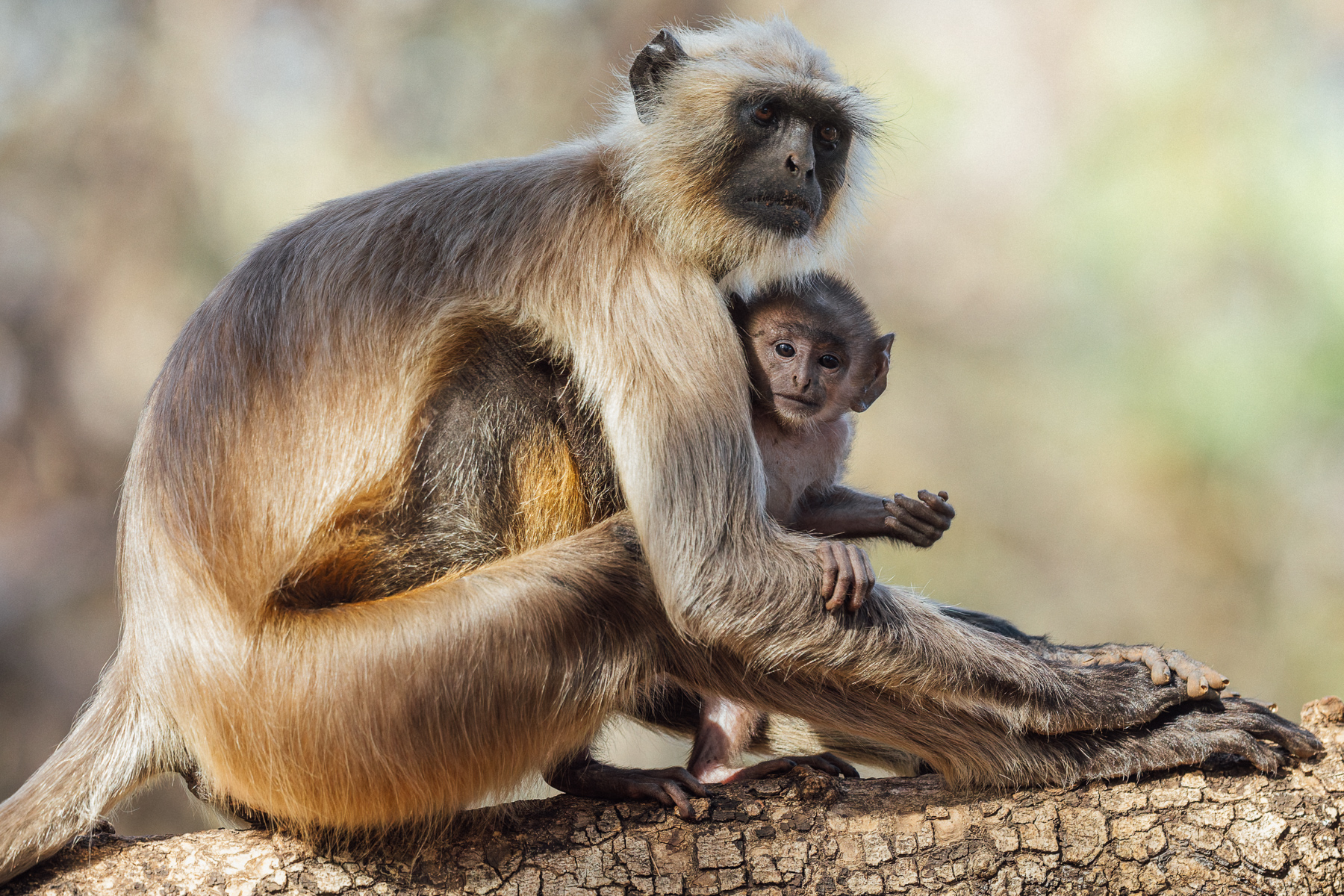
Northern Plains Grey Langur infants have surprisingly humanoid faces, like this youngster here. Langurs often associate with Spotted Deer, with both species responding to each other's alarm calls. The deer benefit from the langur's treetop vigilance, while the langurs benefit from the deer's stronger sense of smell and hearing (image by Virginia Wilde)

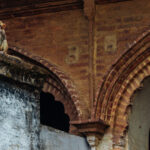
The heritage village of Holipura, in India's Uttar Pradesh, has some gorgeously decaying buildings. Beautiful - if you enjoy photographing architecture (image by Virginia Wilde)
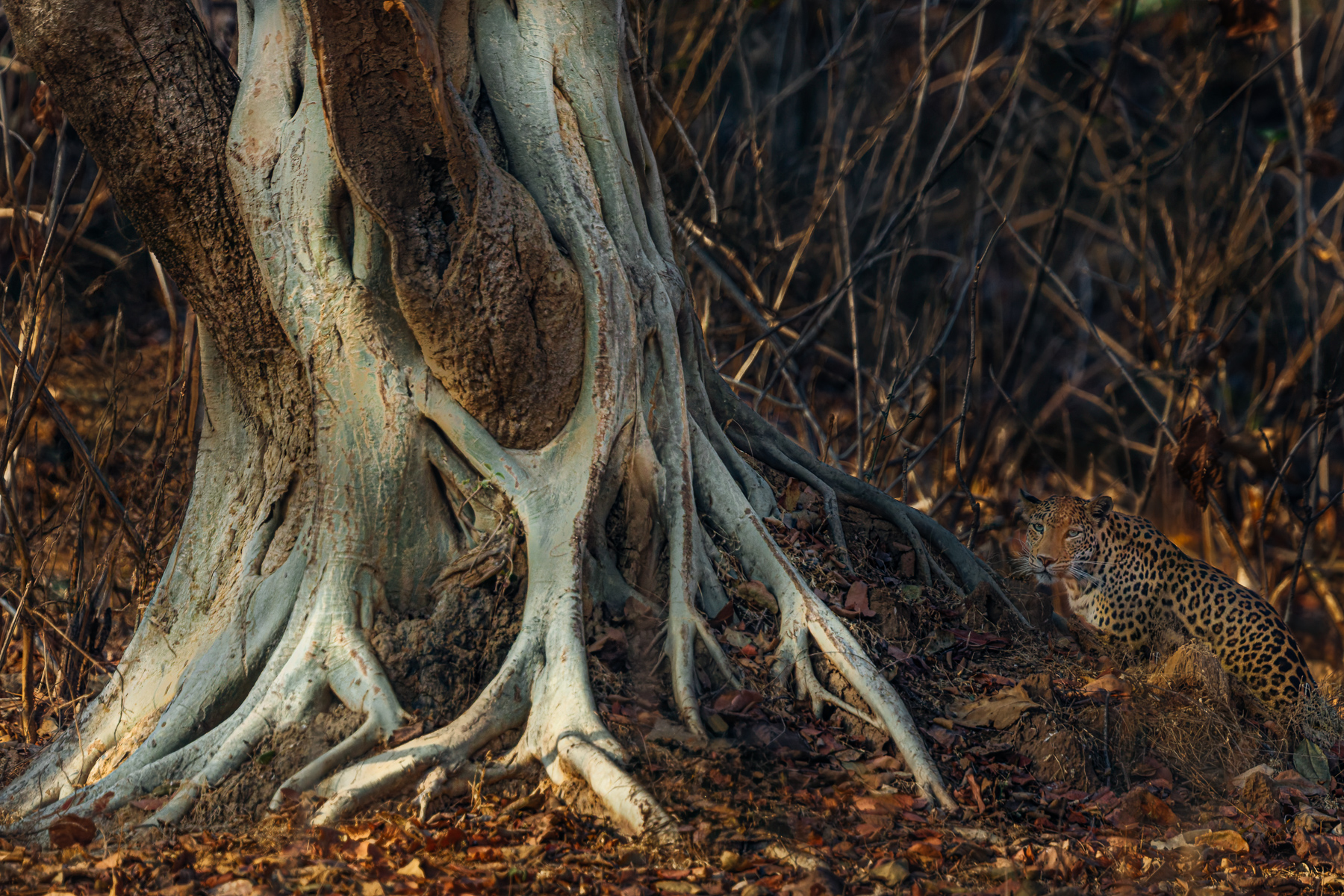
Yes, there is a very distinctive tree. But can you spot the Asiatic Leopard? We watched a Sambar Deer stop in its tracks by this tree, smelling the hidden Leopard but unable to spot it - before slowly and carefully backing away (image by Virginia Wilde)
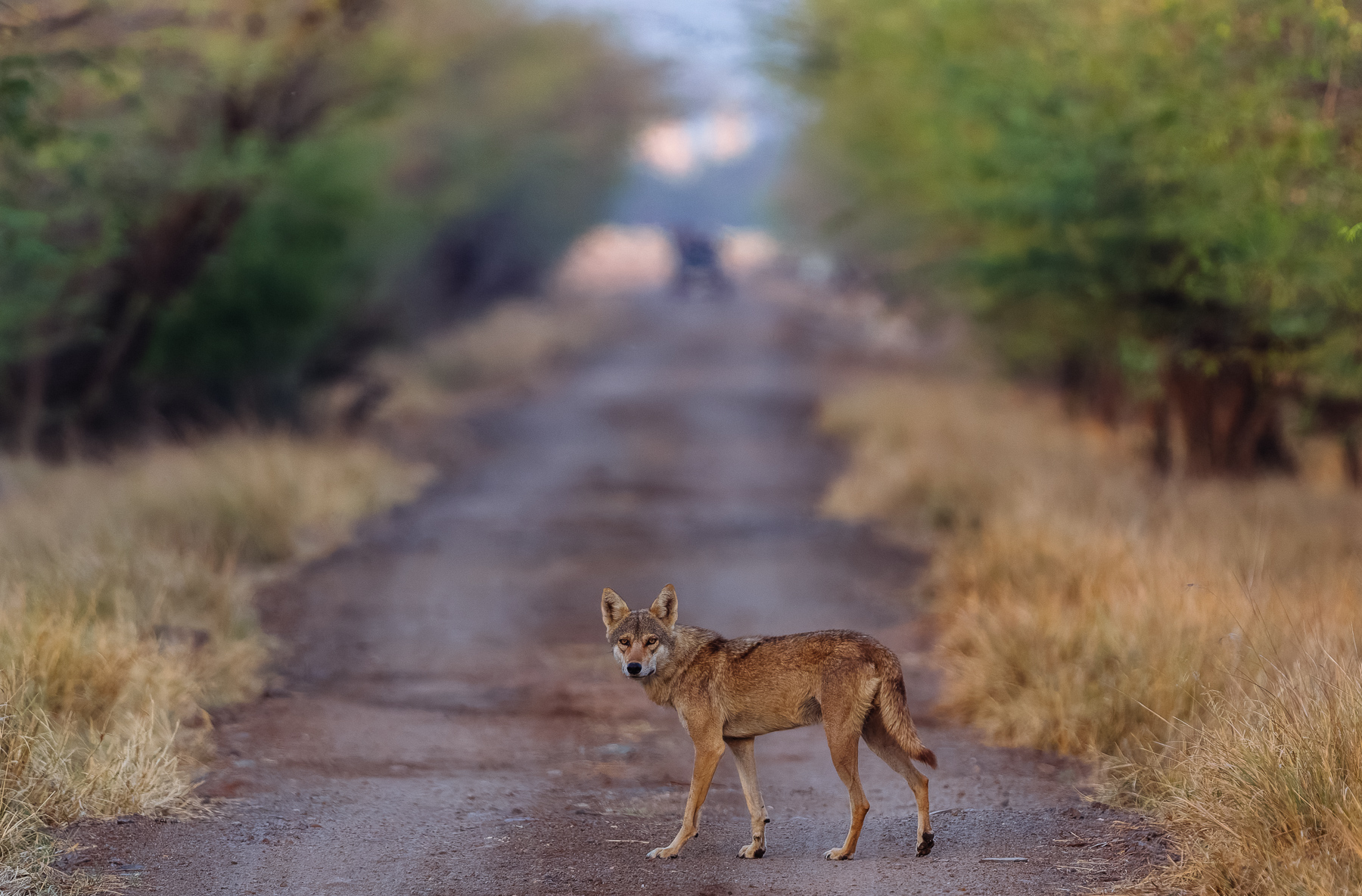
A handsome Indian Wolf crosses the road in India's Blackbuck National Park, before joining members of its pack in a morning hunt (image by Virginia Wilde)
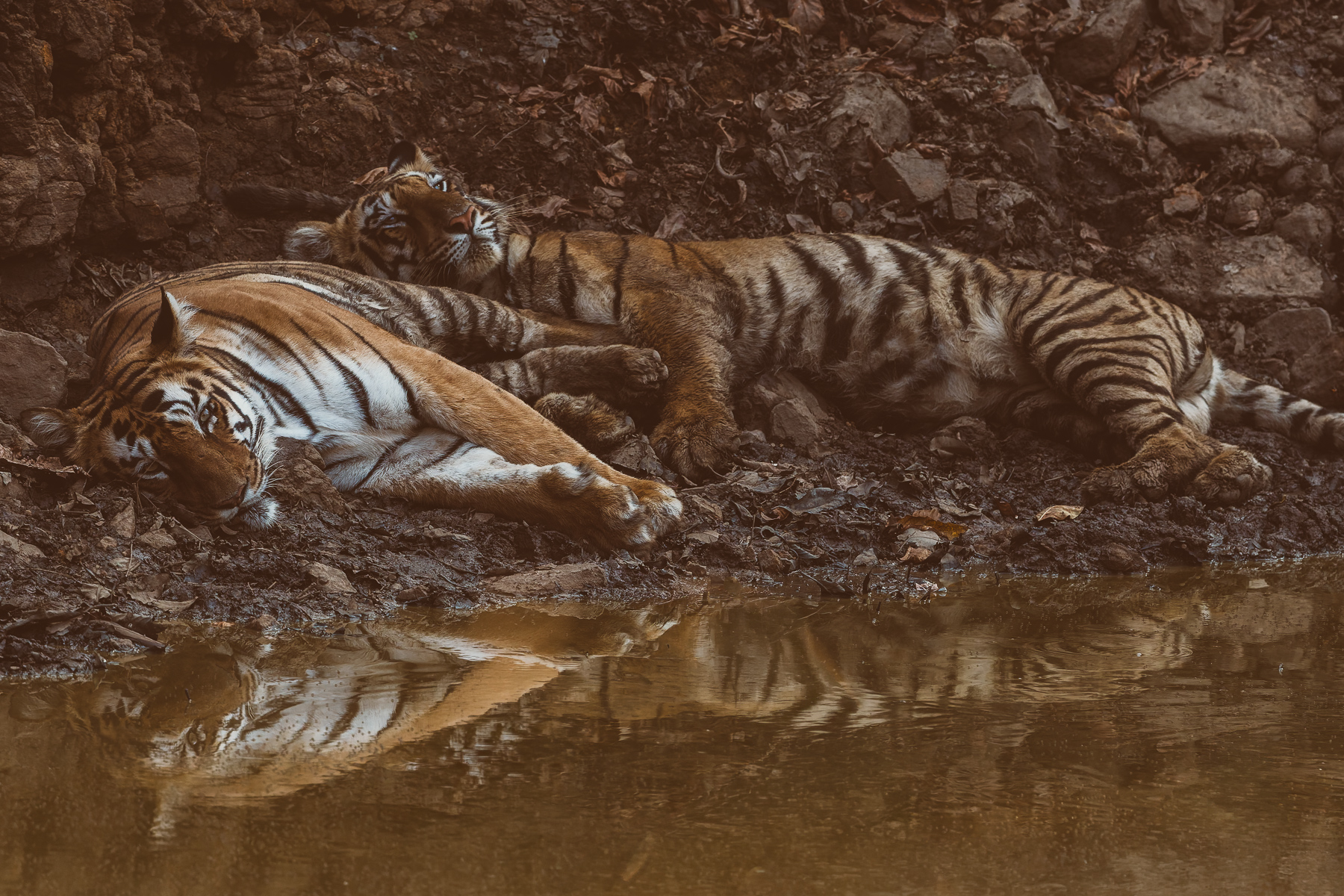
Whoever said 'Let Sleeping Dogs Lie' clearly didn't understand that it is the far more deadly cats that one should let lie. Particularly if that cat is a tiger (image by Virginia Wilde)
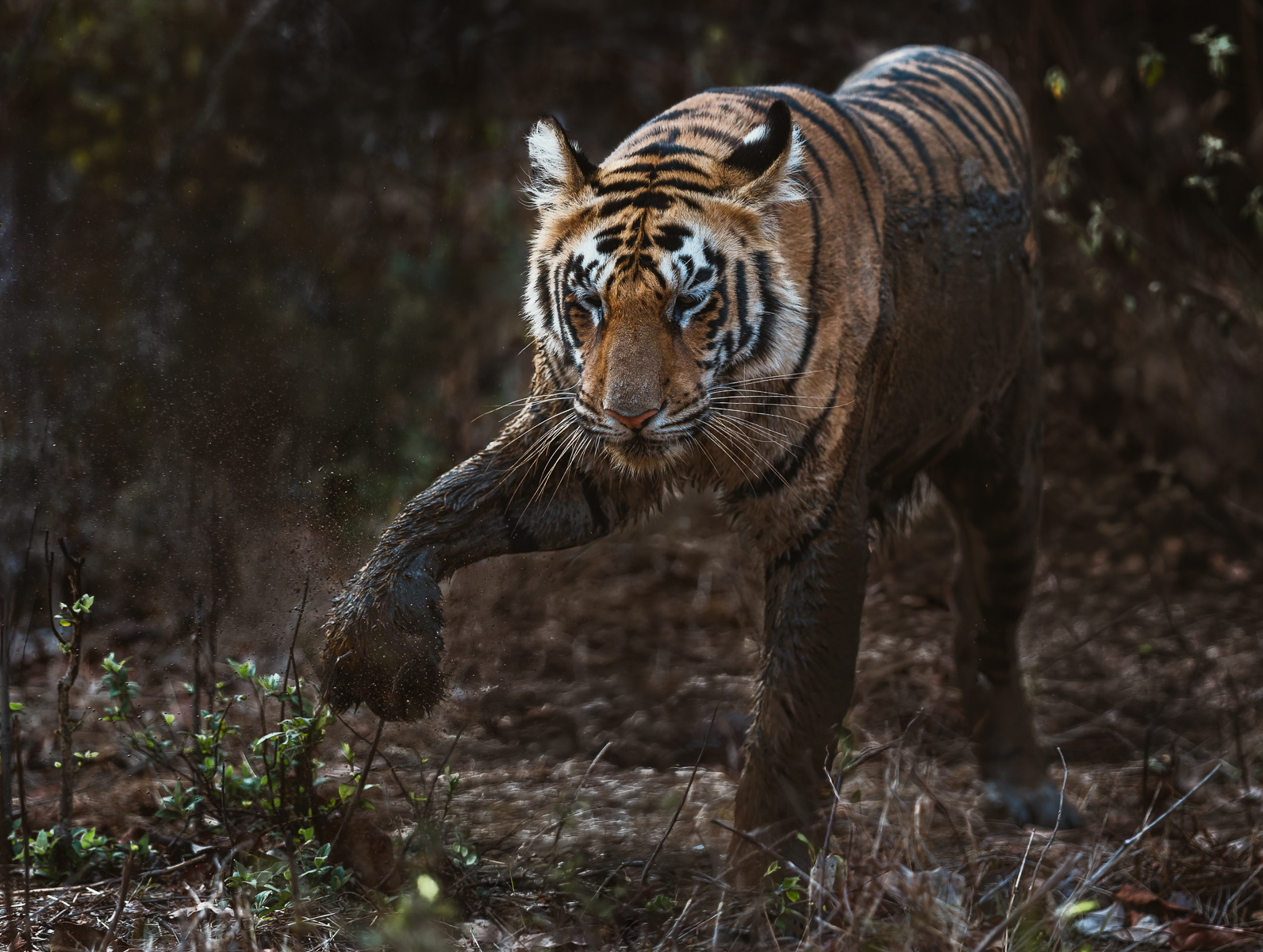
Mud is incredibly cooling in the heat of the Indian day, but can be messy and sticky, as this juvenile tiger is fully aware (image by Virginia Wilde)
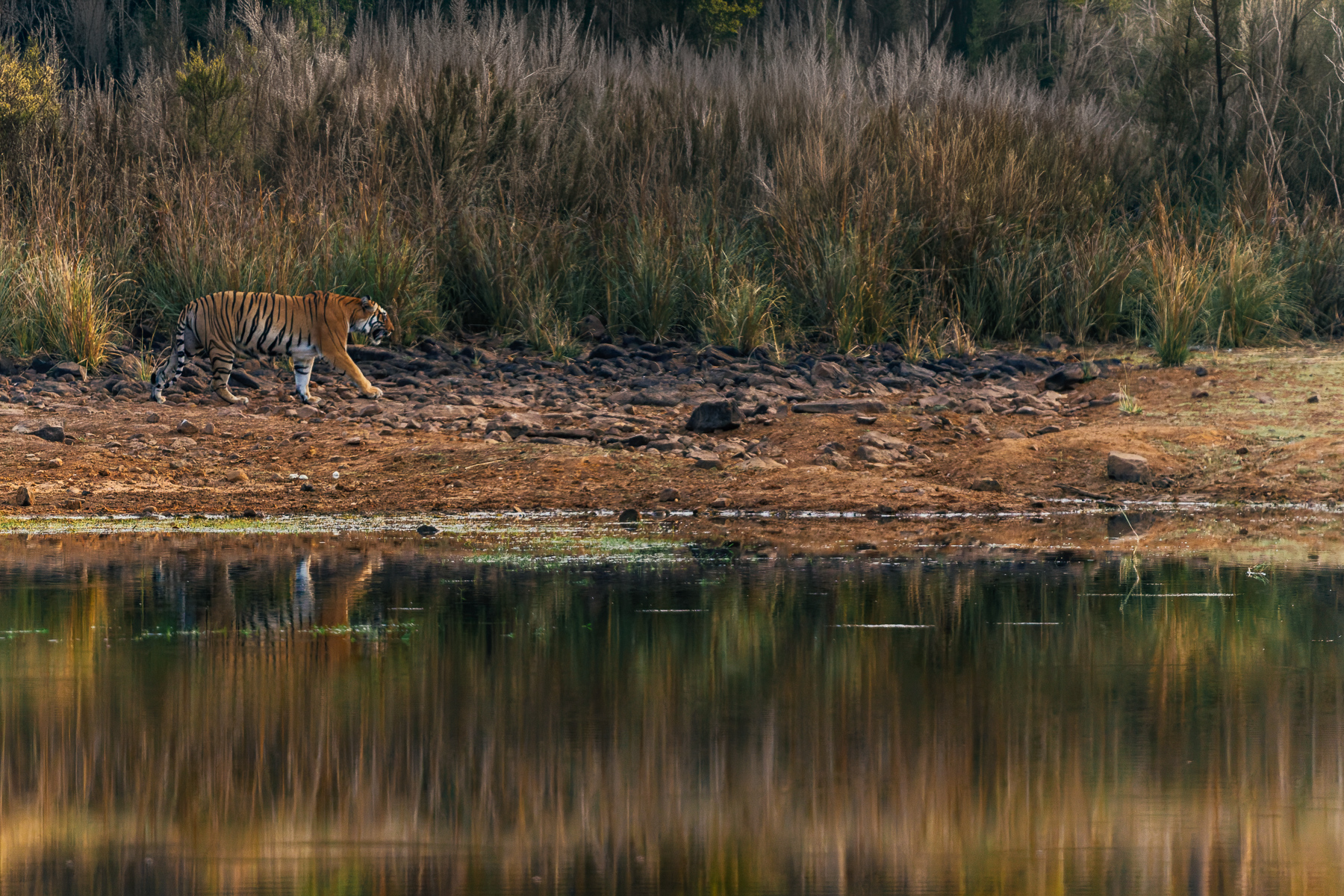
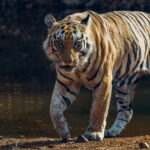
Where are you heading, Tiger? Over there on the river bankside? Many photographs taken in India have an almost painterly look, due to atmospheric mixes of dust and moisture in the air (image by Virginia Wilde)
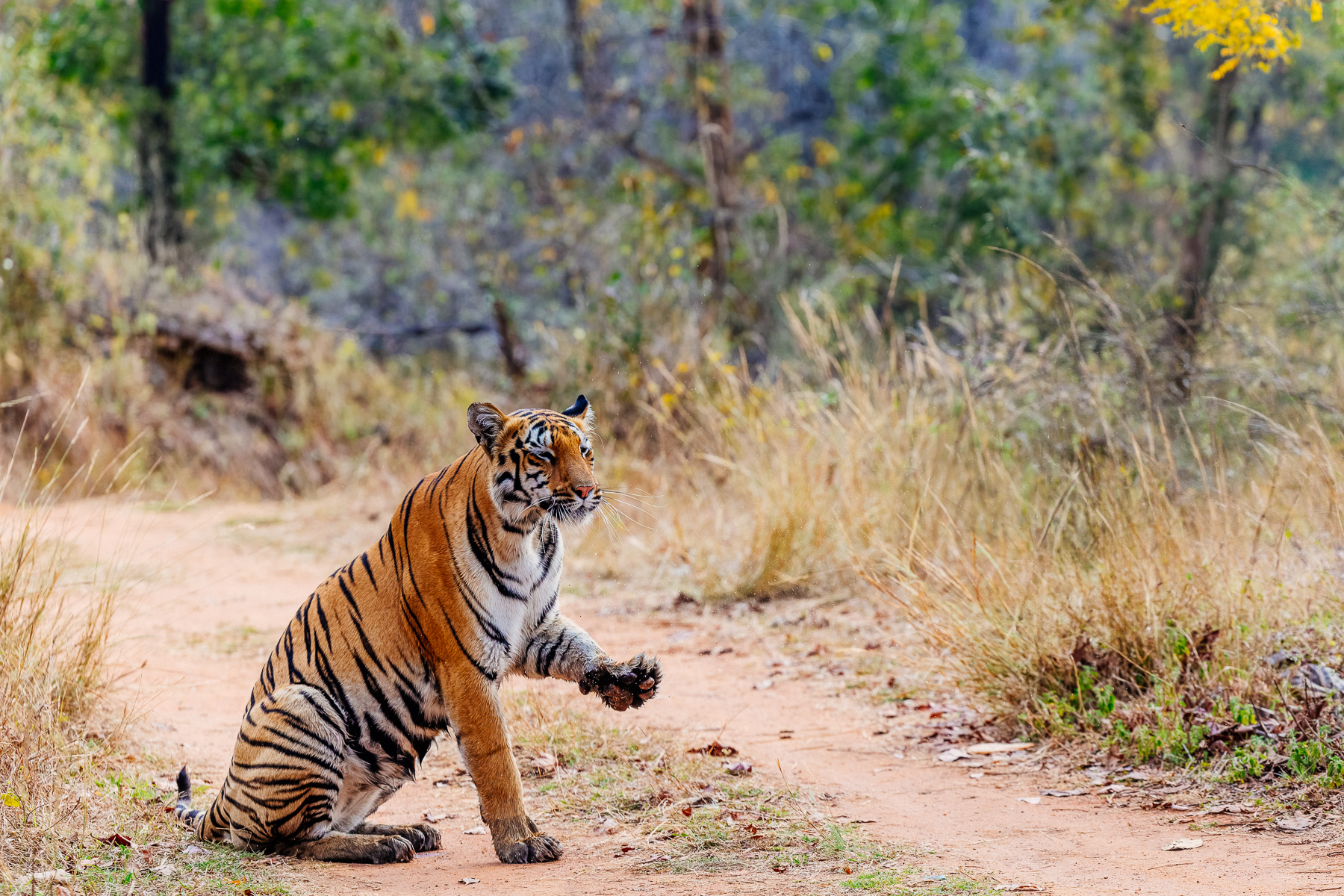
Bengal Tiger paws are highly specialised tools for hunting and stealth - with a single swipe capable of delivering 10,000 pounds per square inch of force, enough to break a prey's back or neck. Paws feature soft thick pads for silent stalking and retractable claws up to 4 inches long. No wonder they deserve a stretch (image by Virginia Wilde)
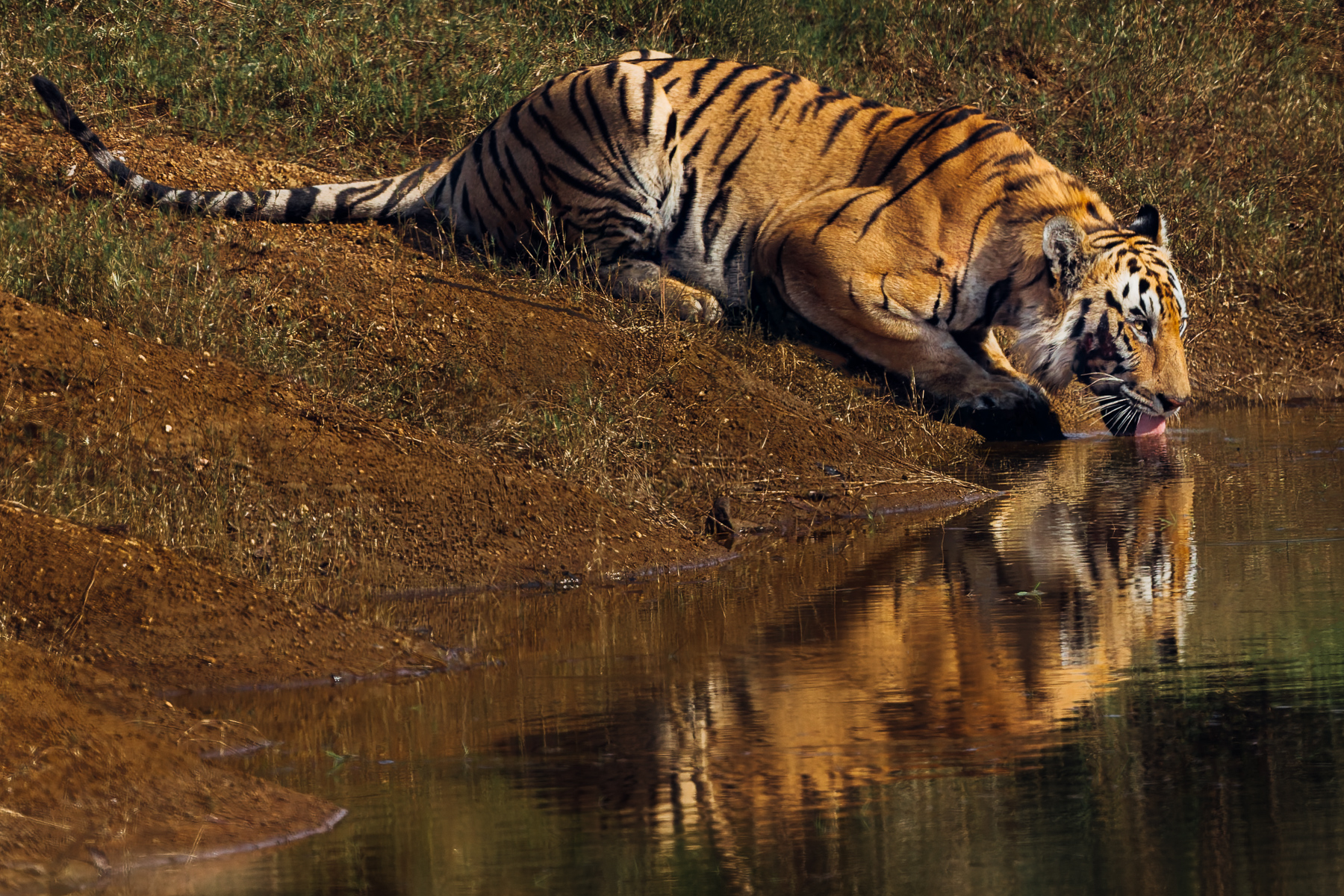
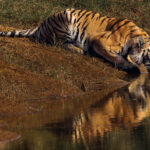
Watching this female Bengal Tiger sip from a river, on an already blisteringly hot Indian day, made me thirsty (image by Virginia Wilde)
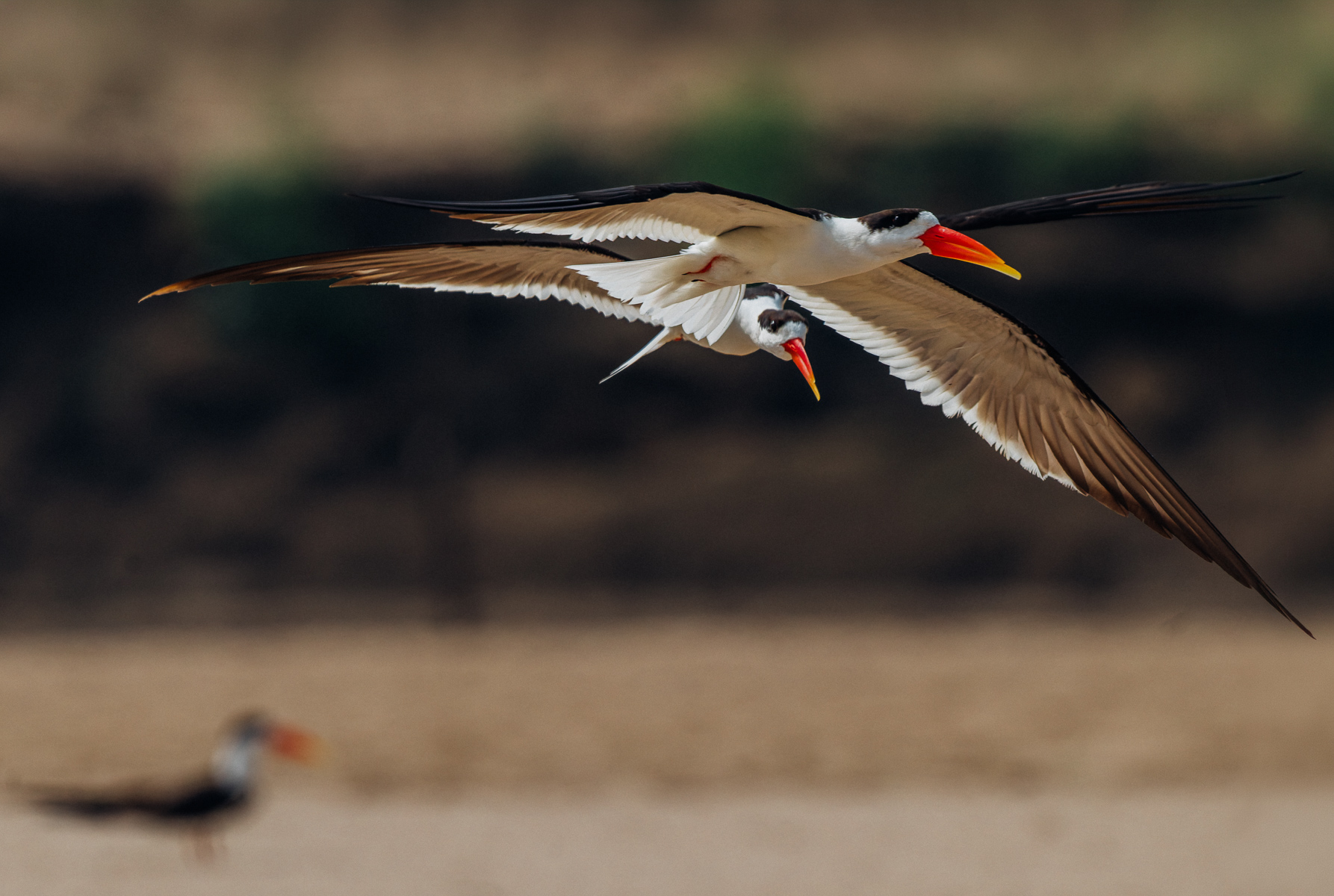
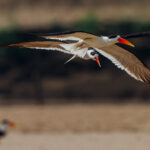
A pair of endangered Indian Skimmers fly over a sandbank on India's Chambal River - showing the bright orange knife-like bill for which they are renowned (image by Virginia Wilde)
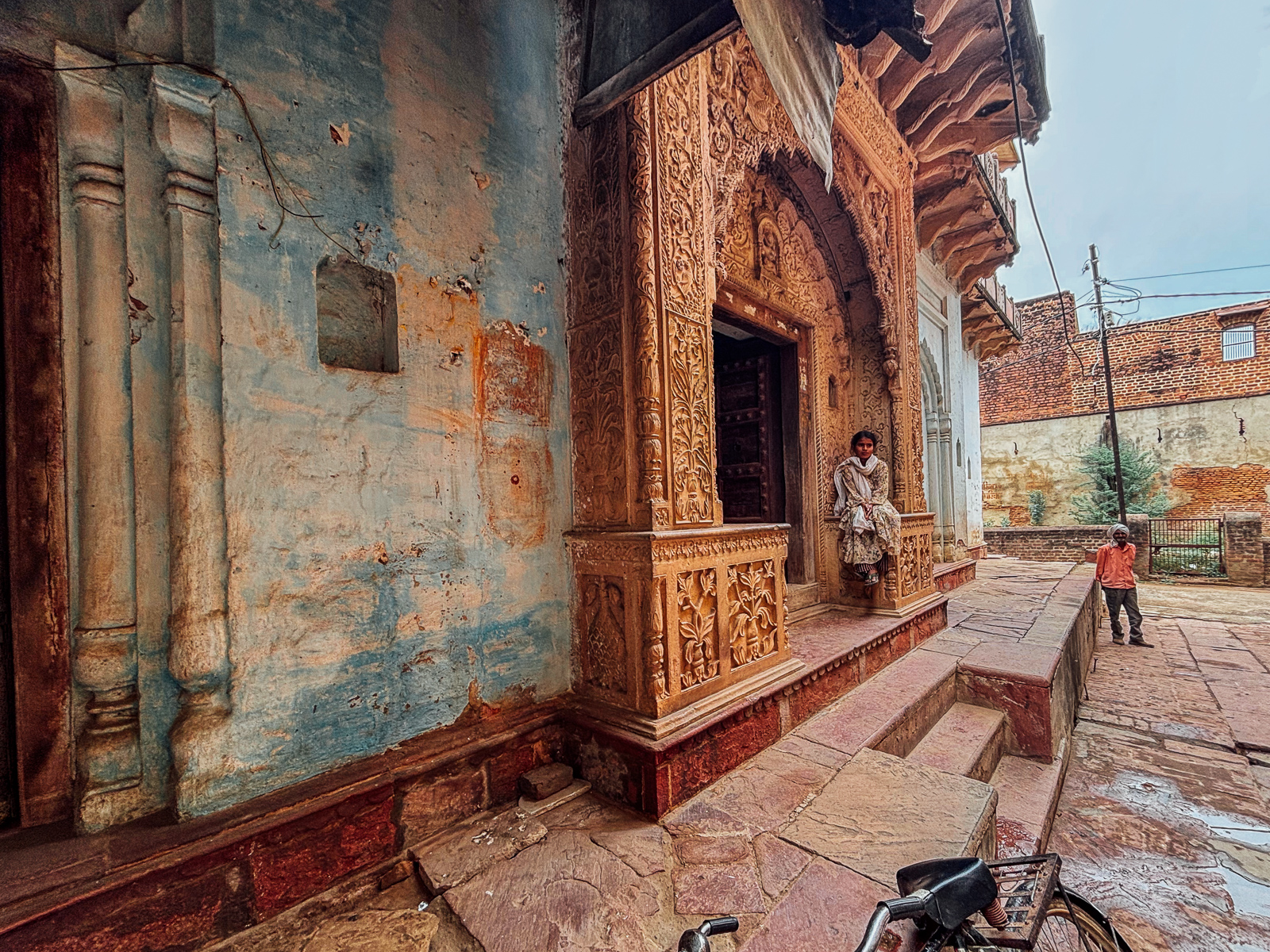
A girl delightfully poses for our group in the heritage village of Holi Pura, Uttar Pradesh (image by Virginia Wilde)
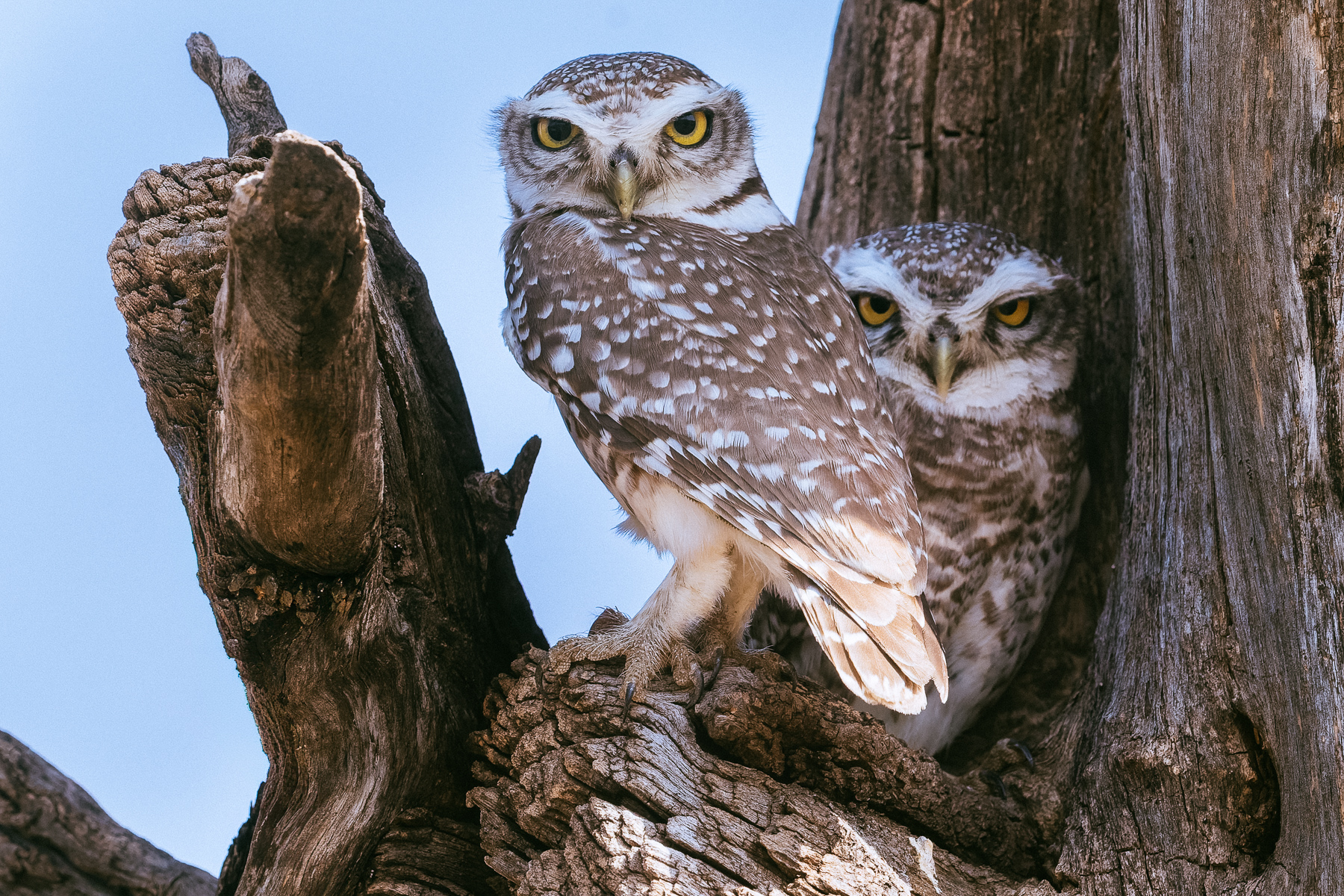
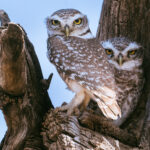
Two Spotted Owlets nestle together in their favourite roosting tree in the grounds of the Blackbuck Lodge, in India's Gujarat state (image by Virginia Wilde)
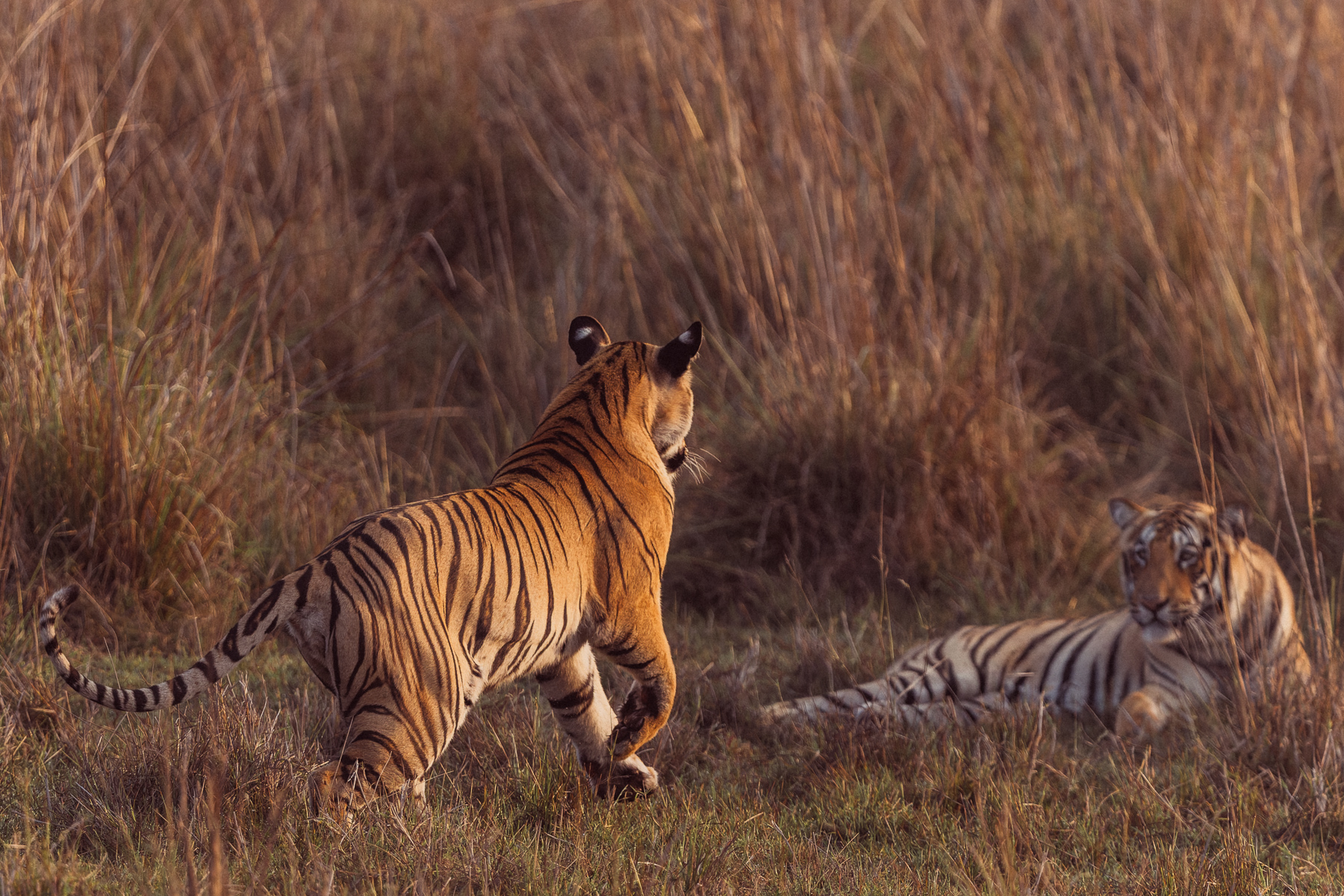
A Bengal tiger sub-adult female rushes to greet her brother in the marshland of Khutwanda core zone, Tadoba National Park (image by Virginia Wilde)
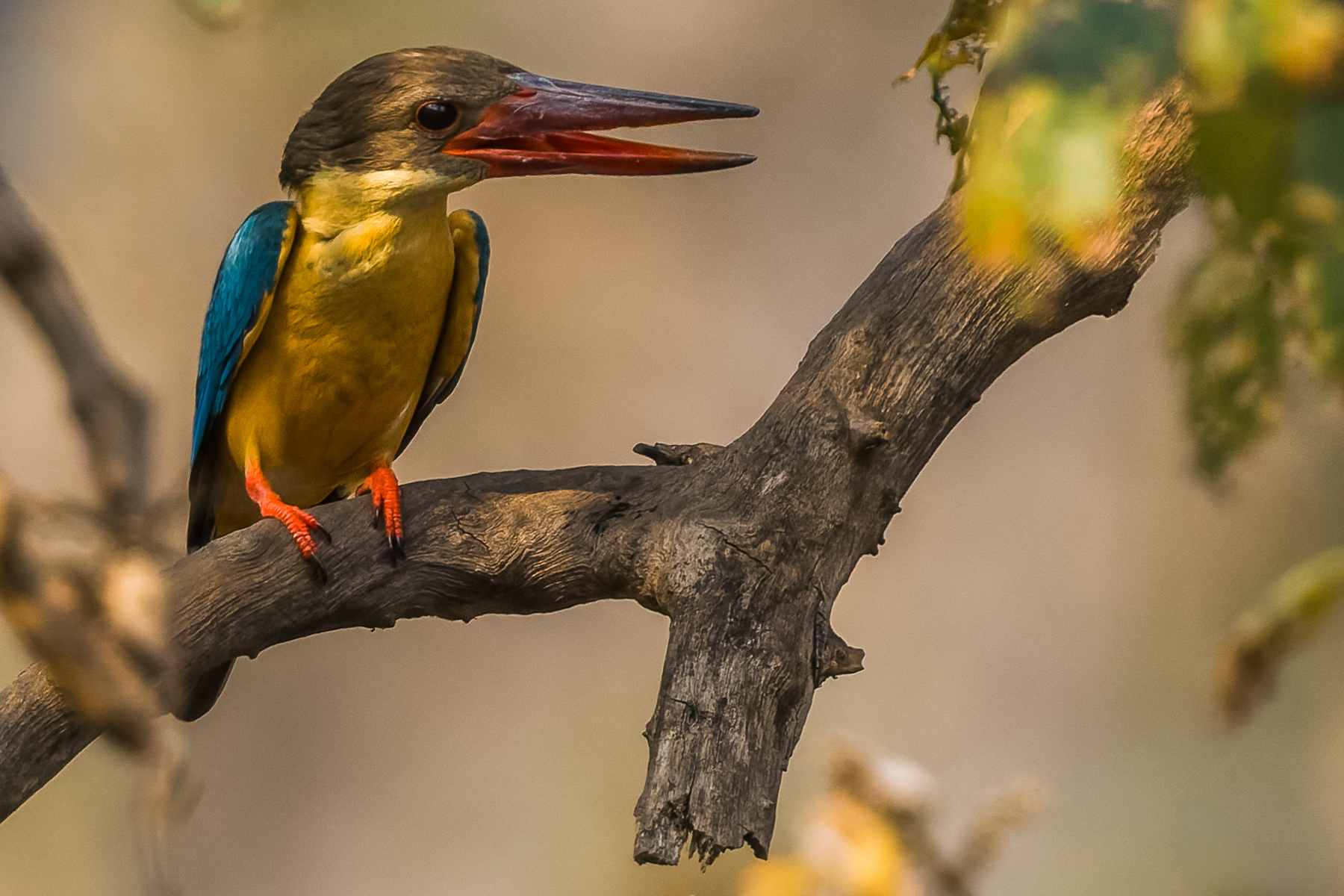
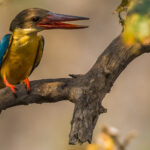
The chunky Stork-billed Kingfisher is famously territorial - chasing away eagles and other large predators (image by Virginia Wilde)
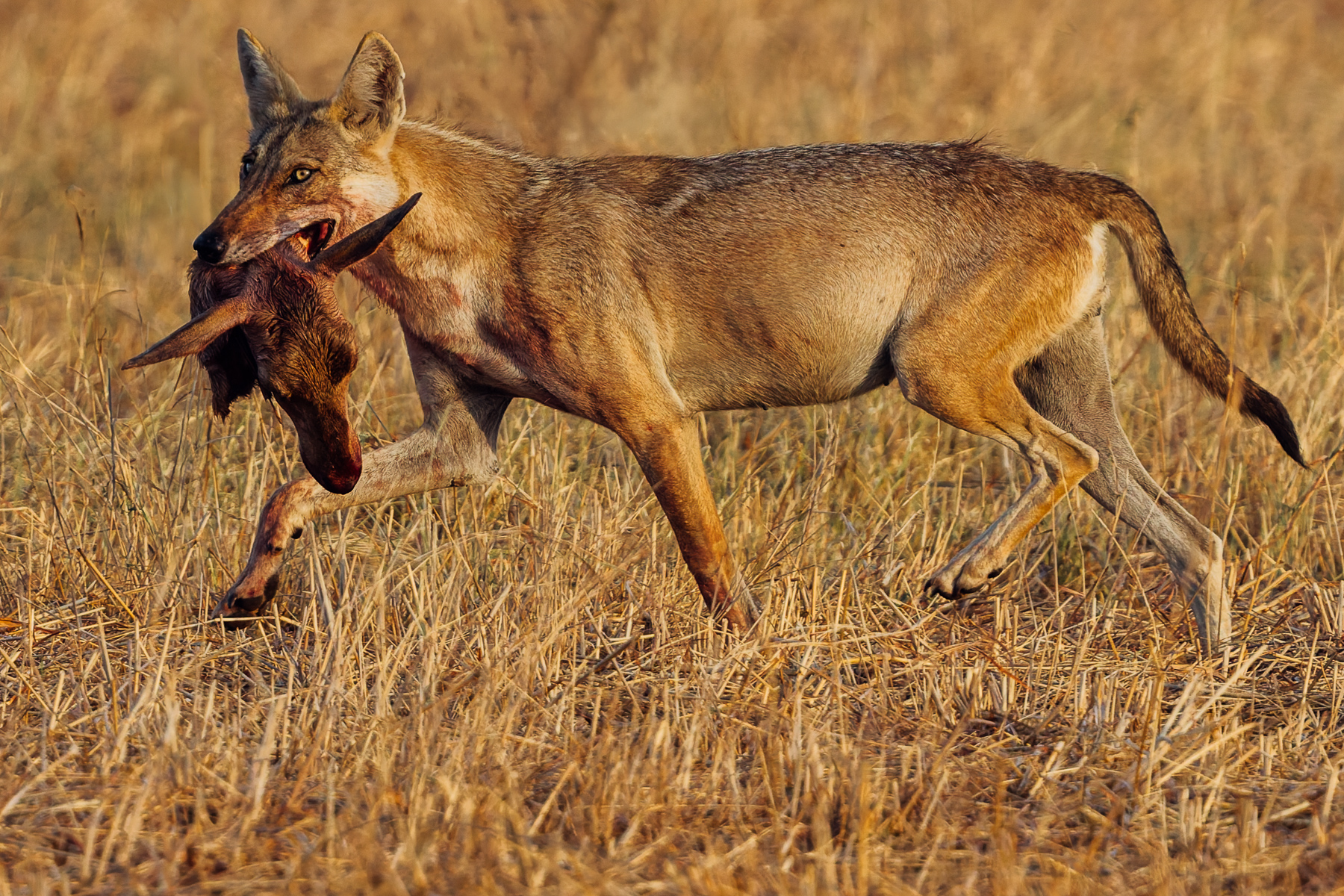
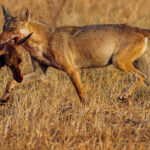
In a rather grisly image, an Indian Wolf carries the head of her antelope prey - as her portion of her pack's recent kill. With fewer than 3,000 individuals left in the wild, Indian Wolves are considered one of the world's most endangered and distinct wolf populations (image by Virginia Wilde)
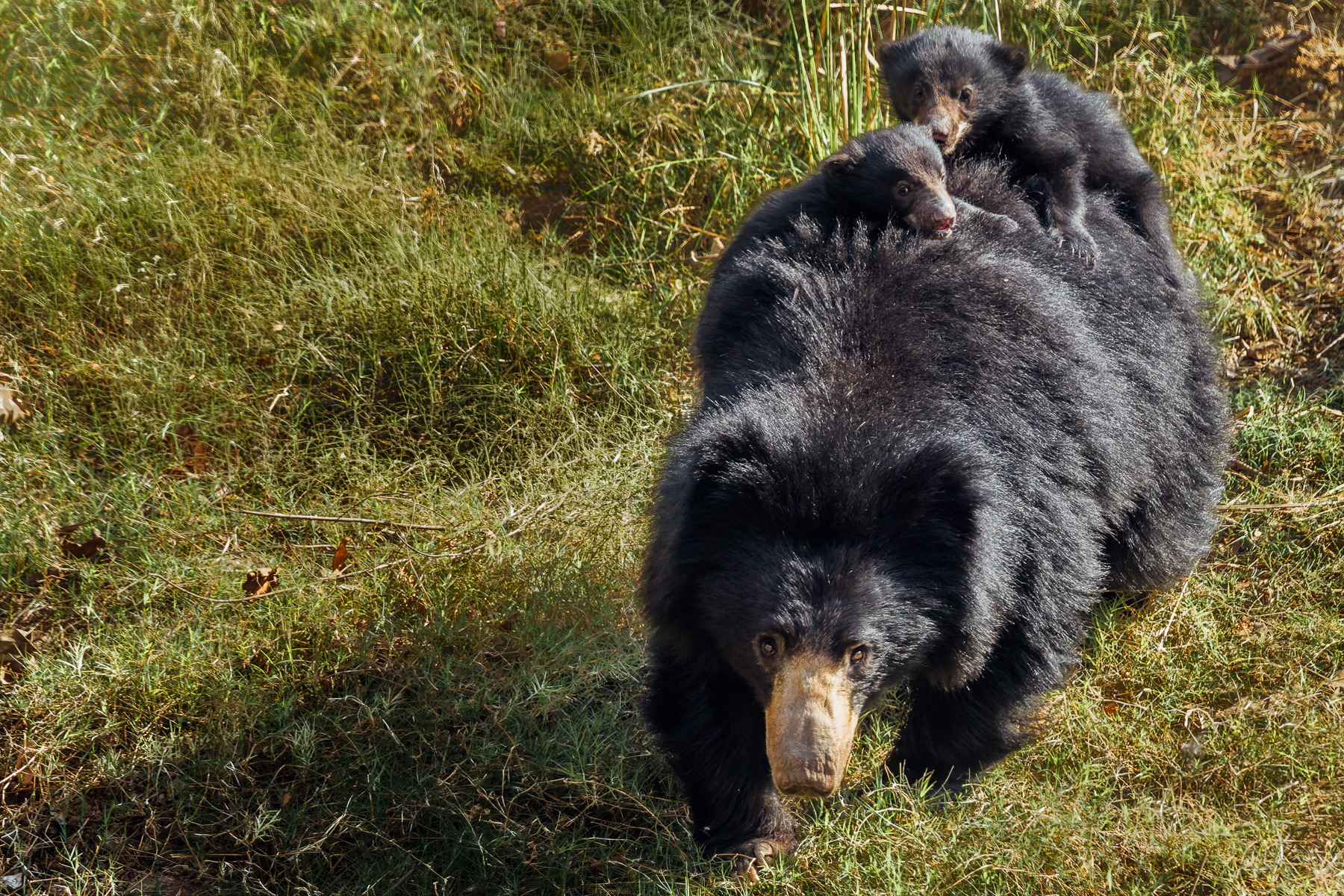
Sloth Bear cubs often ride on their mother's back for up to 9 months, clinging to her fur - a behaviour not seen in any other bear species. These solitary bears are myrmecophagous, meaning they mostly eat termites and ants, but also enjoy fruit and honey (image by Virginia Wilde)
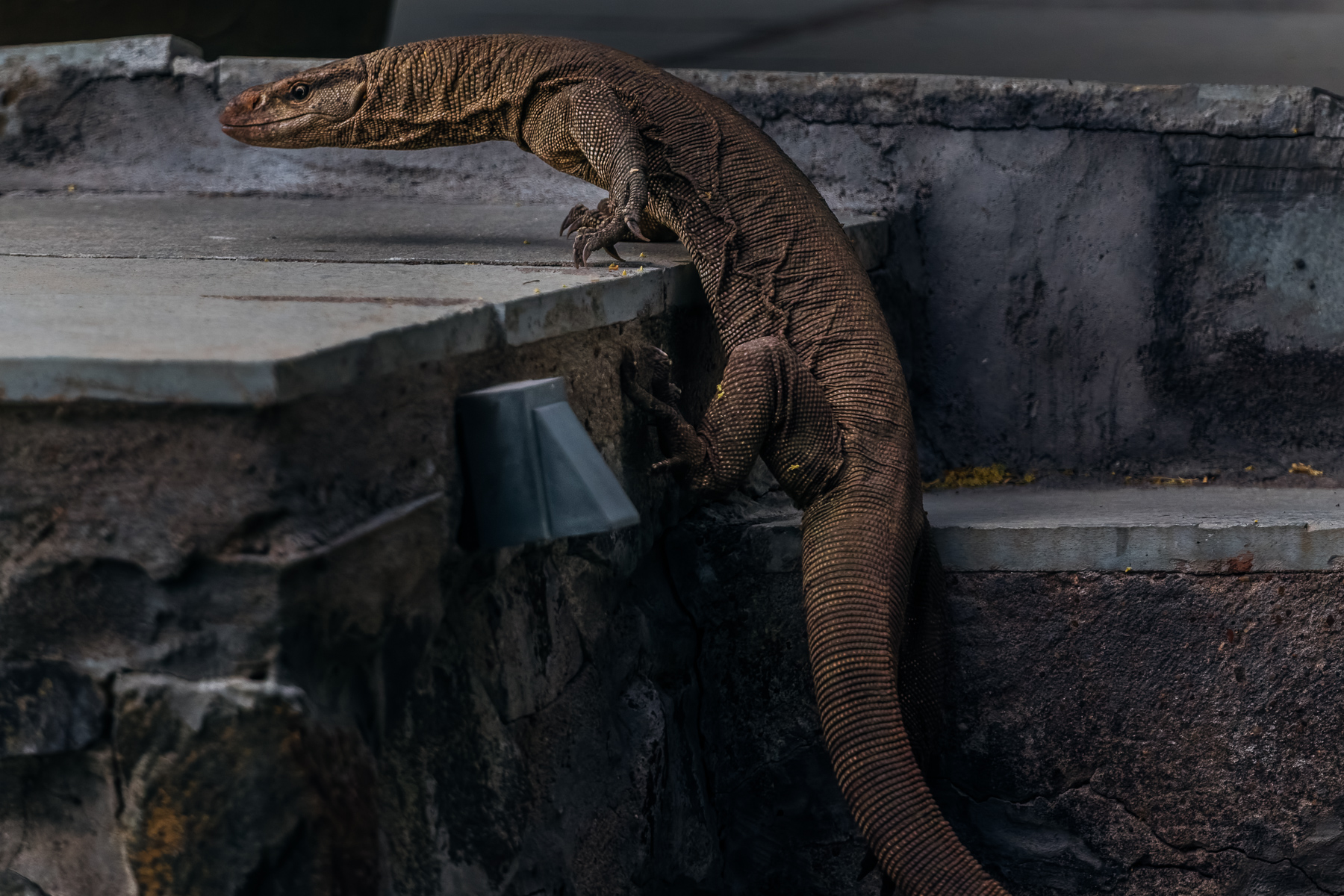
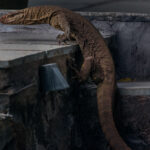
A Bengal Monitor Lizard regularly visited the steps of our tea lounge in the lovely Blackbuck Lodge. Bengal Monitors can reach lengths of up to 175cm (69 inches) when fully grown - making them among the largest lizards in all of Asia (image by Virginia Wilde)
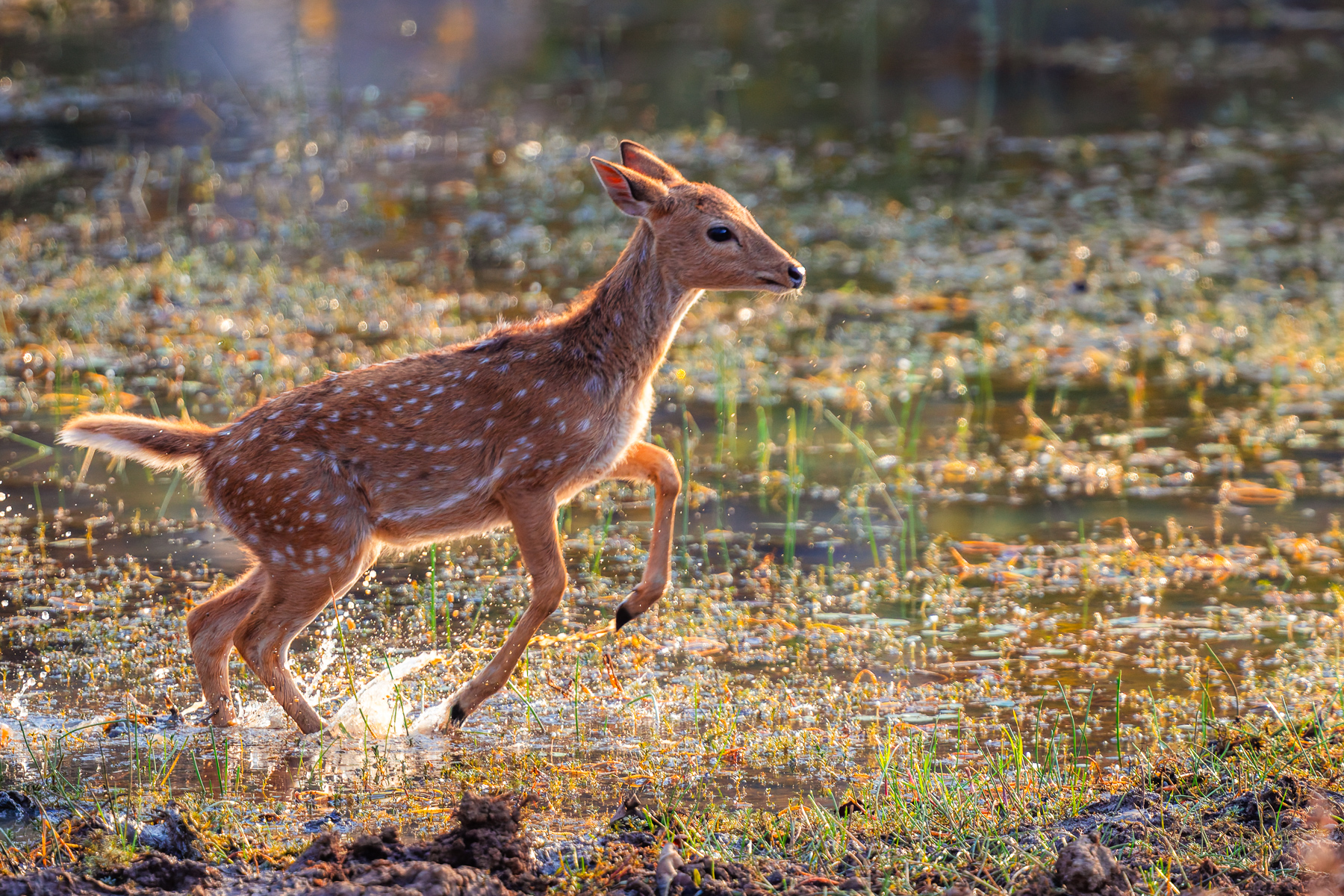
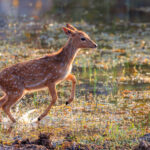
A Spotted Deer fawn bounds through the shallow waters of the marshes in Tadoba National Park, enjoying the relief from the 40 degrees C heat (image by Virginia Wilde)
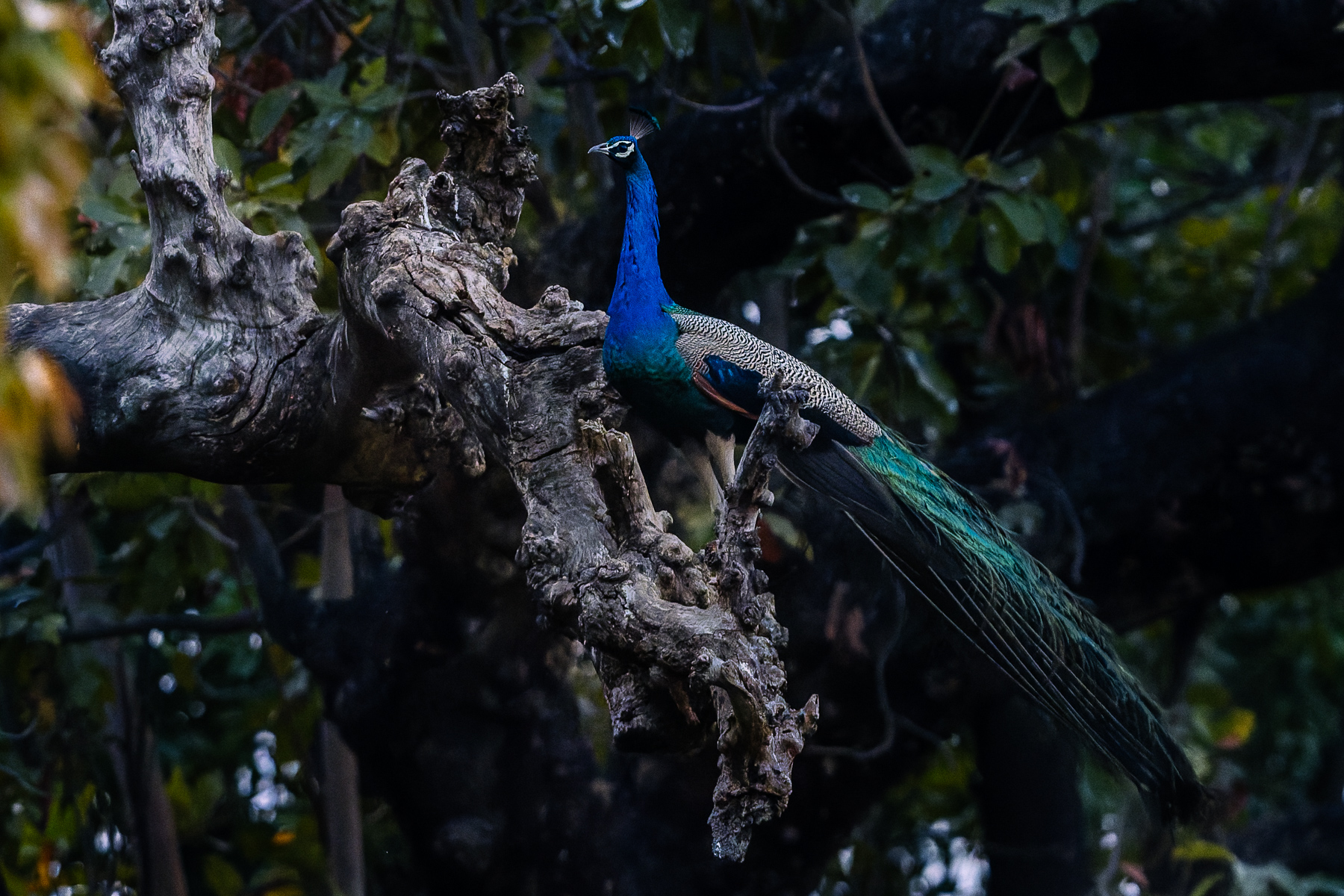
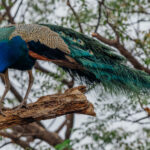
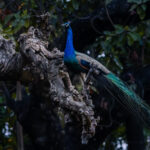
The beautifully iridescent plumage of a male Indian Peafowl, in the branches of a tree near India's Chambal River. Female Peafowl choose mates based on the size, colour and complexity of these tails, forcing males to evolve increasingly extravagant plumage to successfully breed (image by Virginia Wilde)
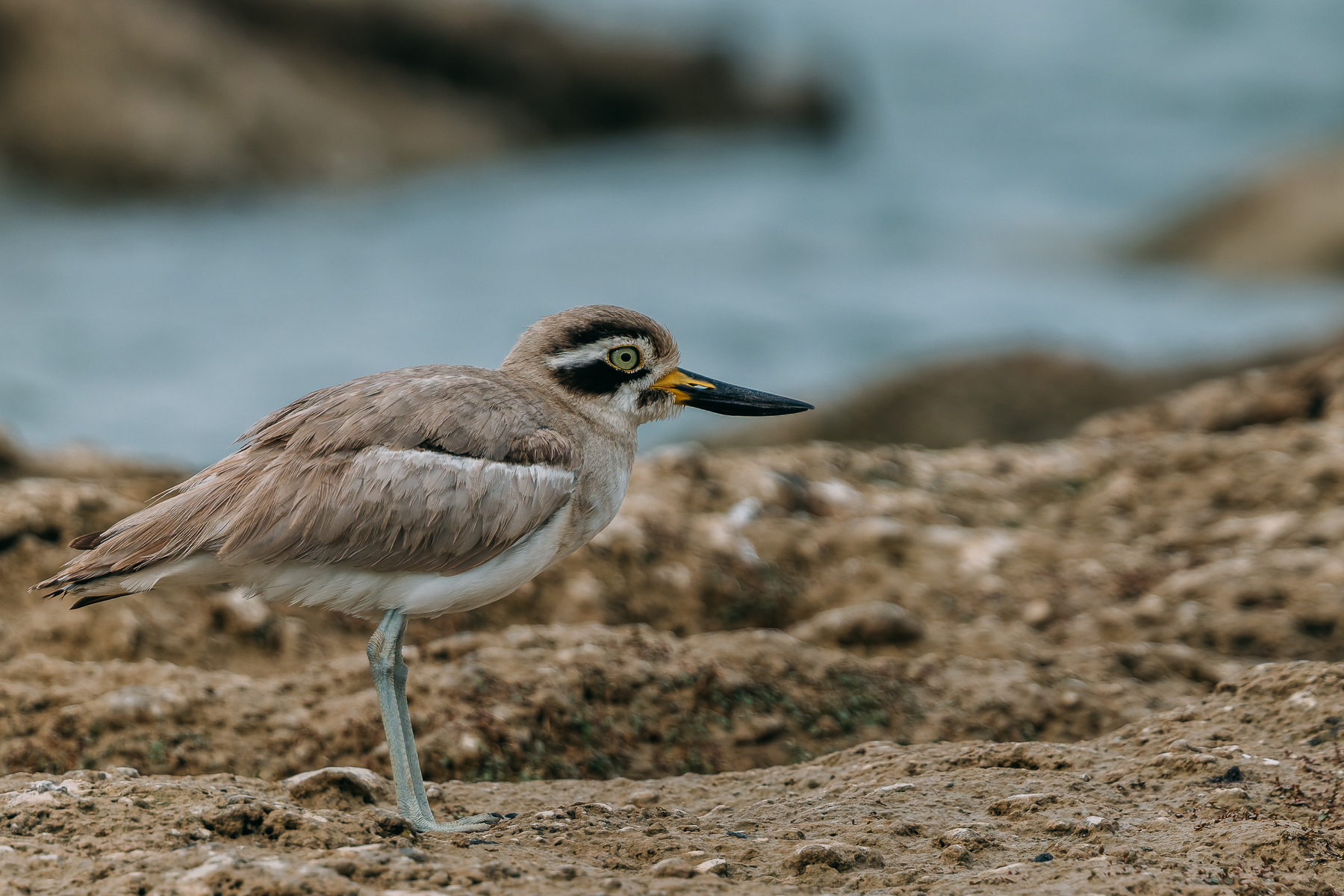
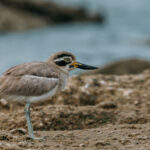
A Great Stone Curlew - also known as a Great Thick-knee - wanders along the banks of India's Chambal River. Mostly nocturnal, the Great Stone Curlew's eyes reflect its mostly nocturnal existence (image by Virginia Wilde)
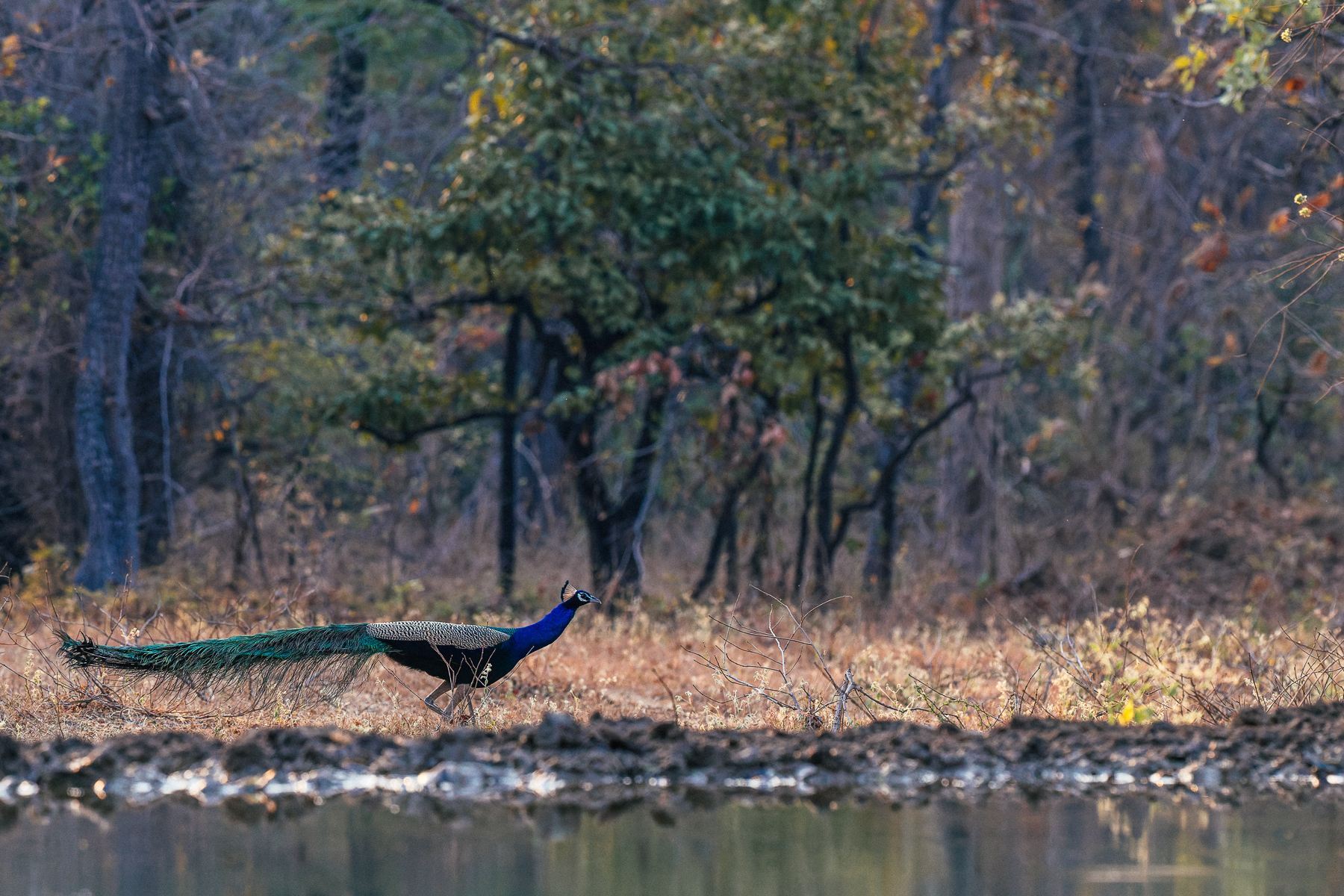
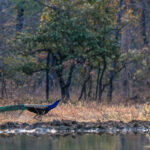
Some of the everyday scenes on our safari drives in India were as beautiful as the more iconic wildlife. Here a male Peafowl skirts along the a river in the Tadoba-Andhari Tiger Reserve (image by Virginia Wilde)
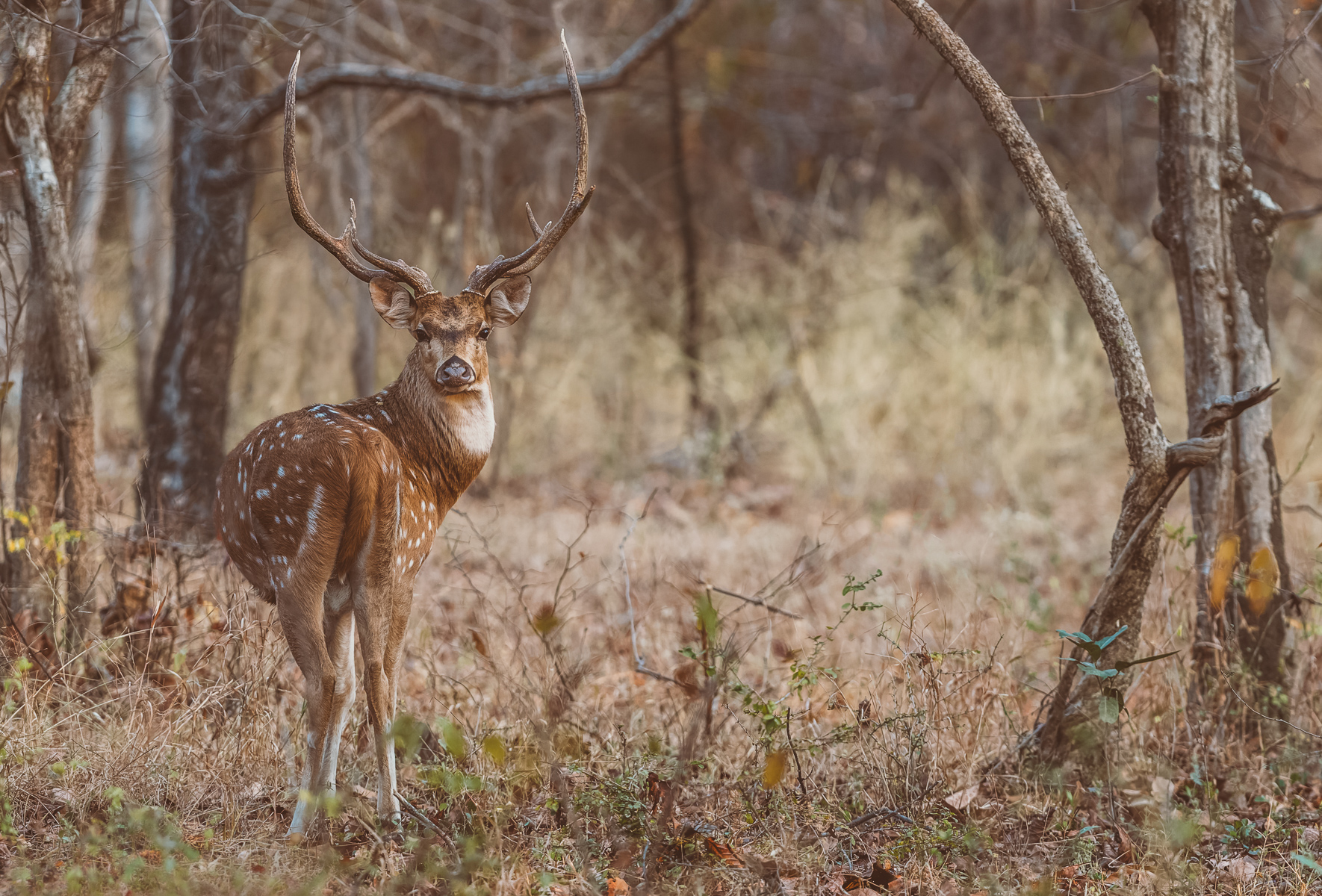
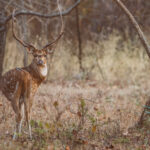
Portrait of an Indian Spotted Deer (or Chital) stag, showing his impressive antlers, in India's Tadoba-Andhari Tiger Reserve (image by Virginia Wilde)

India's eternally resplendent Taj Mahal - the Grande Dame of all architectural behemoths. And wonderful to visit on our Wild Images tour. (image by Virginia Wilde)
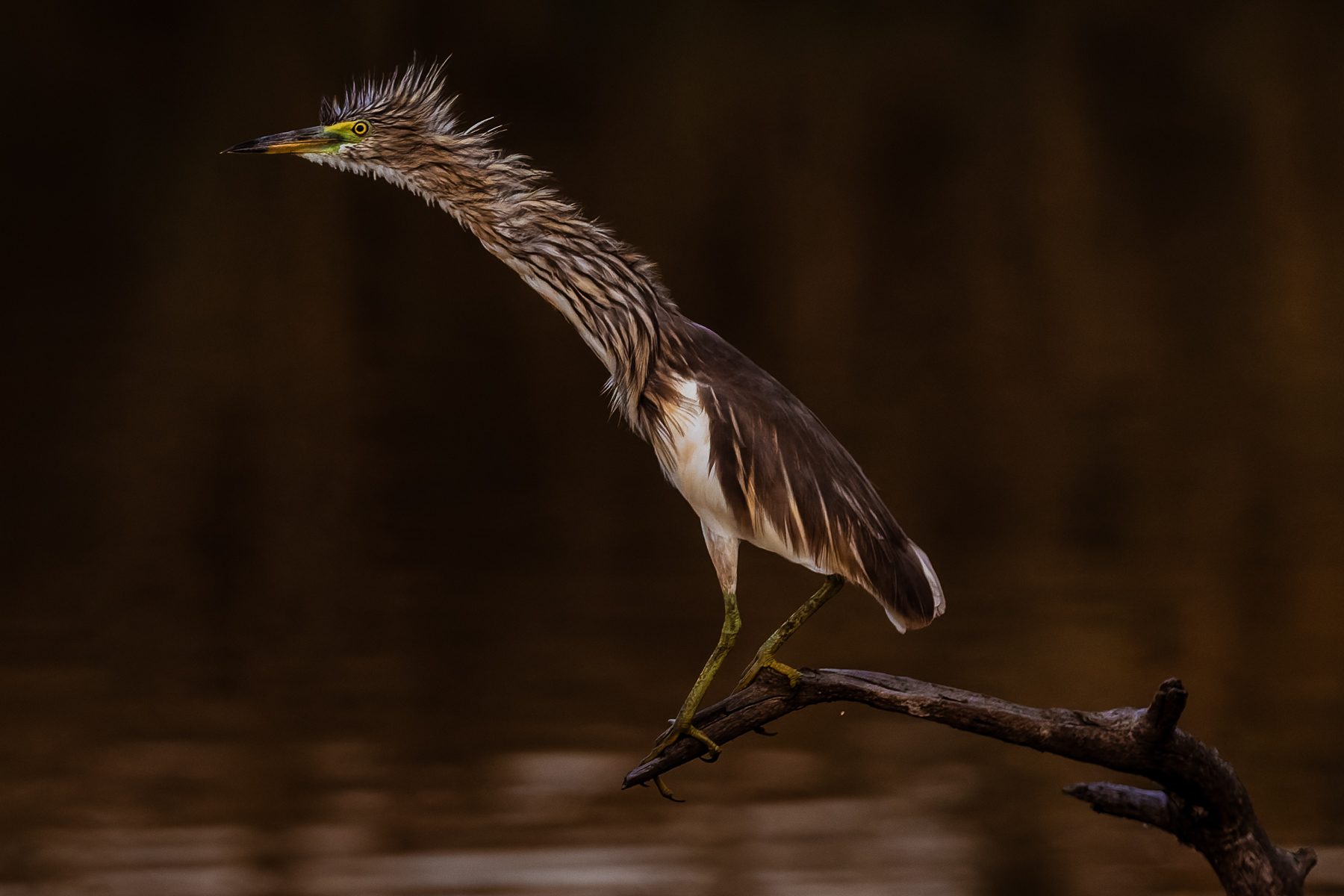
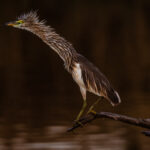
An Indian Pond Heron - or 'paddybird' - stands motionless at the side of a lake, showing its long neck feathers that appear during the monsoon breeding season (image by Virginia Wilde)
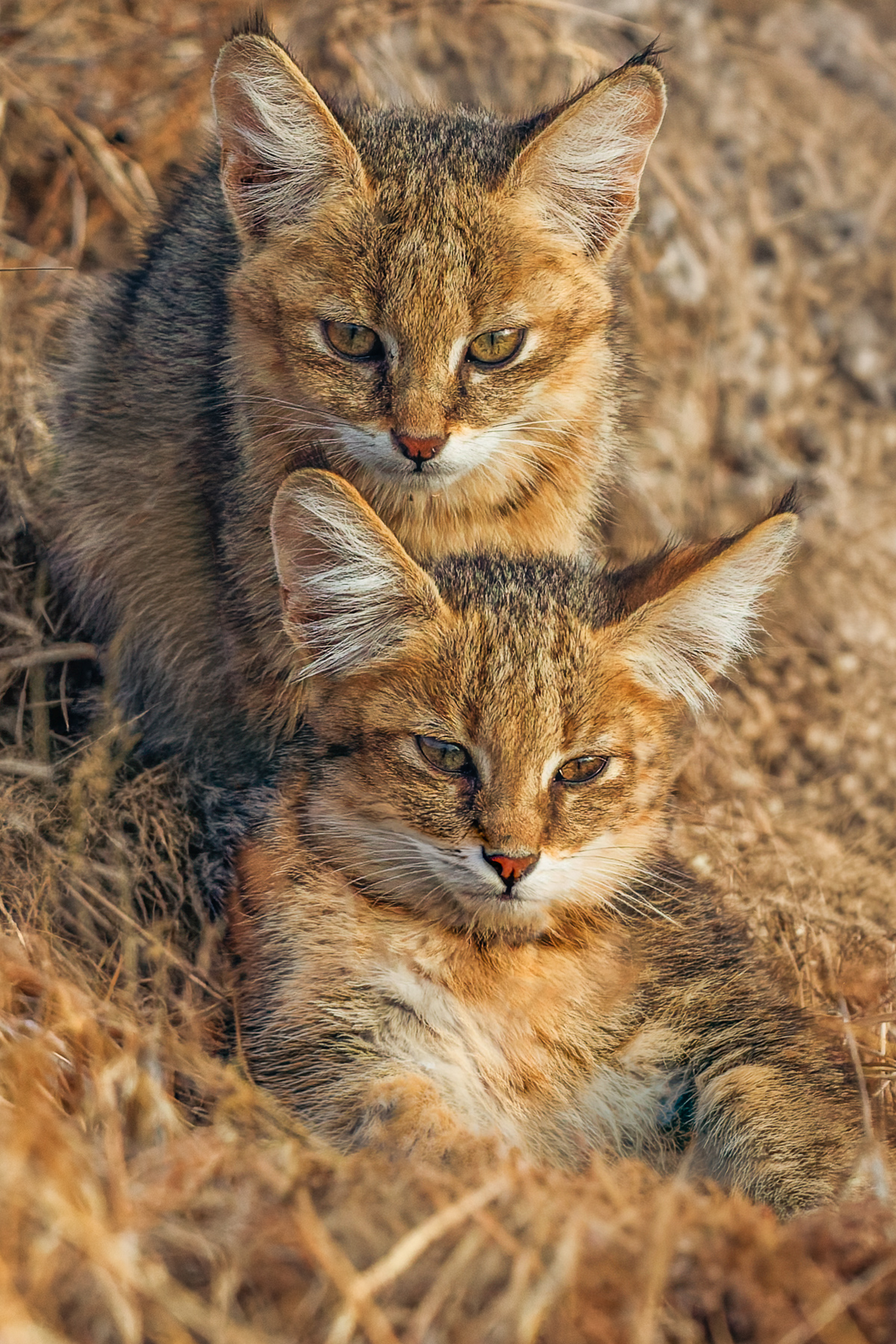
A pair of Jungle Cat kittens nestle in the grasses of India's Blackbuck National Park. Just like tigers, Jungle Cats are skilled swimmers and actually appear to enjoy diving into water after prey (image by Virginia Wilde)
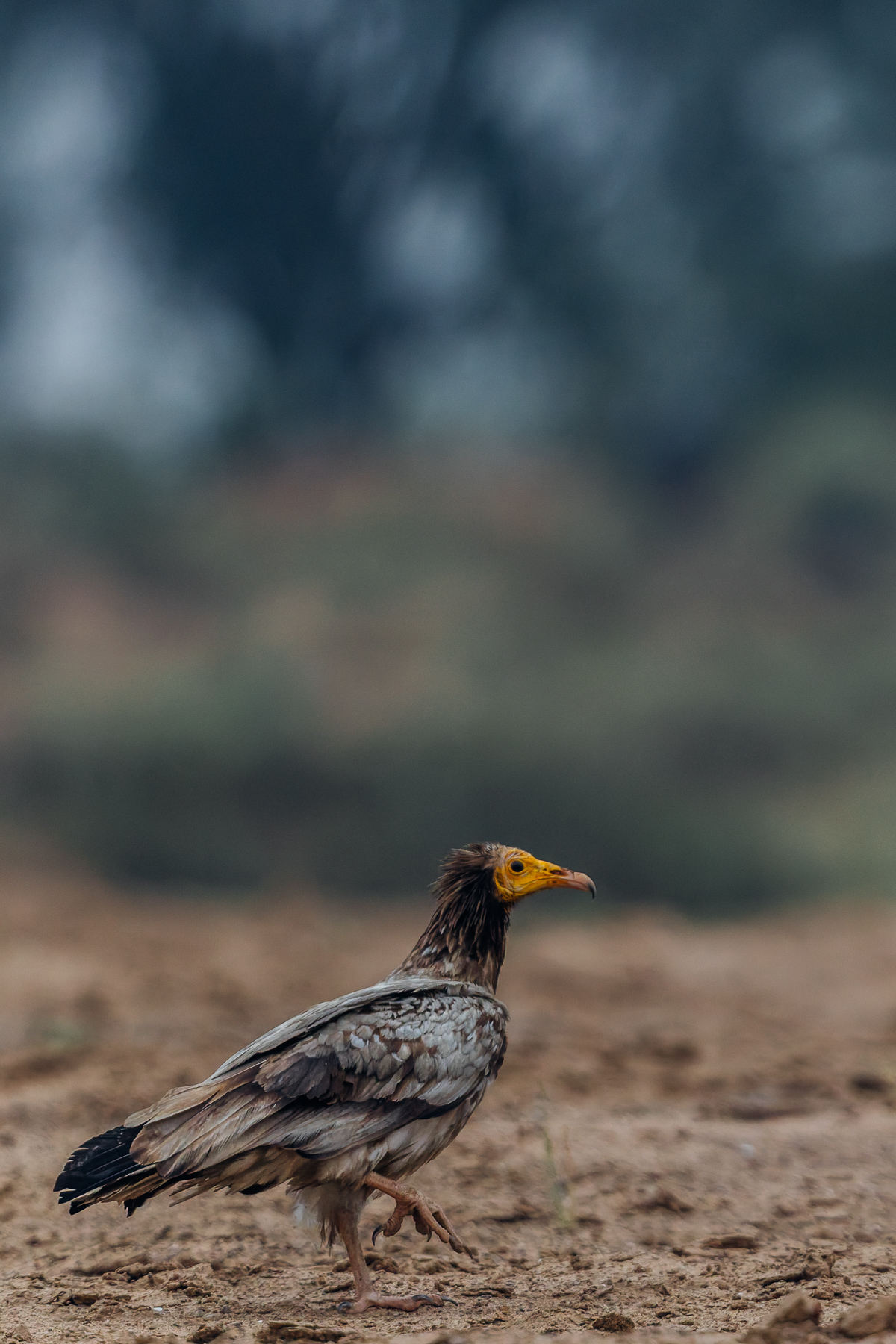
An Egyptian Vulture struts along the bankside in India's Chambal River. Celebrated in many cultures for their resourcefulness, the Egyptian Vulture is one of the few bird species to use tools - utilising pebbles to smash open large eggs (image by Virginia Wilde)
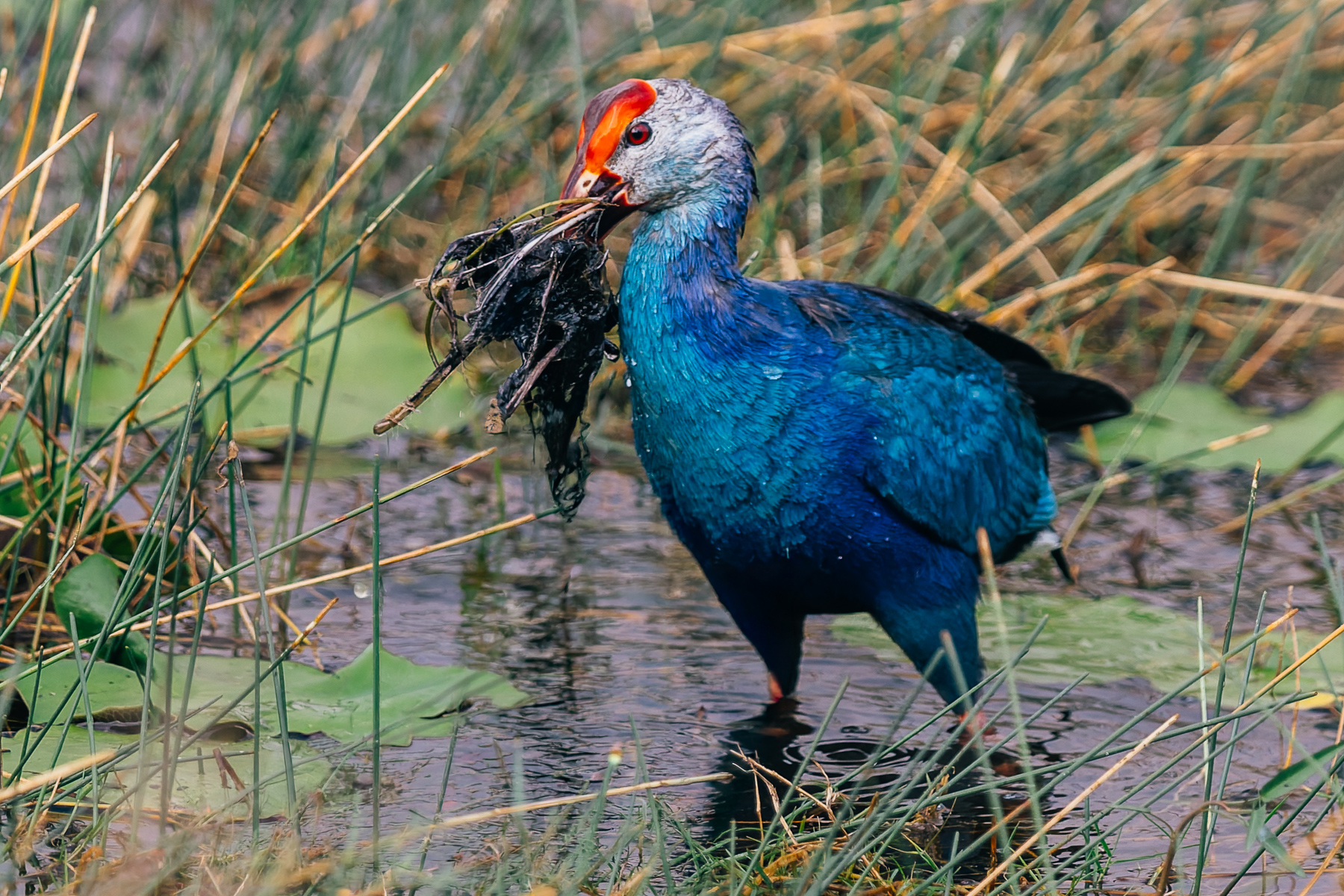
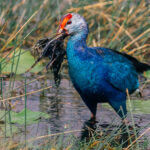
The name 'Grey-headed Swamphen' doesn't do justice to the beauty of this wetland bird. Those iridescent blue-purple feathers make this bird a treat to watch in the rivers and swamps (image by Virginia Wilde)
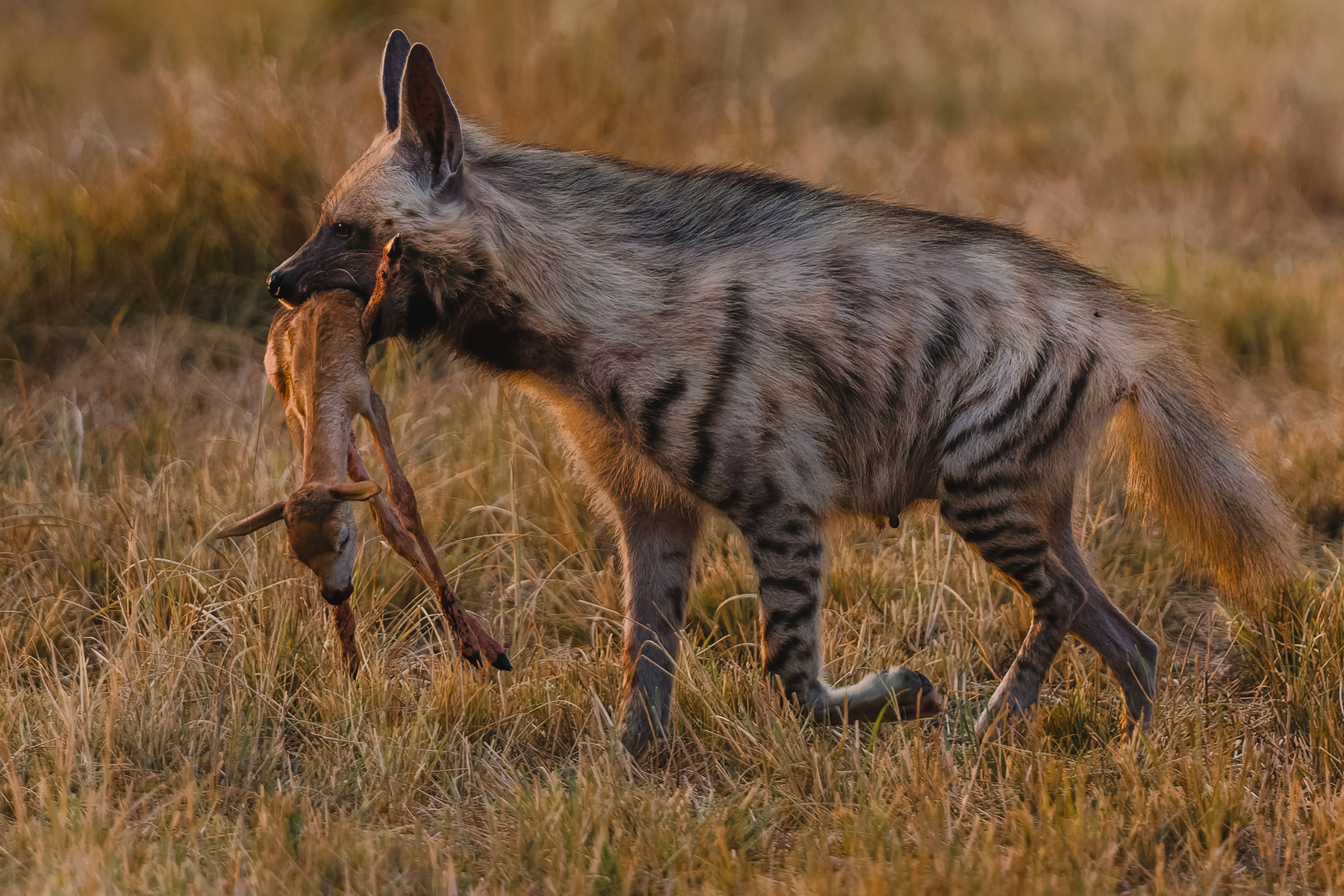
antelope calf in the grasslands of India's Blackbuck National Park. Whether hidden by its mother, or left behind due to frailty or stillbirth, the calf was carried back to the nursing hyena's den, to feed her own cubs (image by Virginia Wilde)
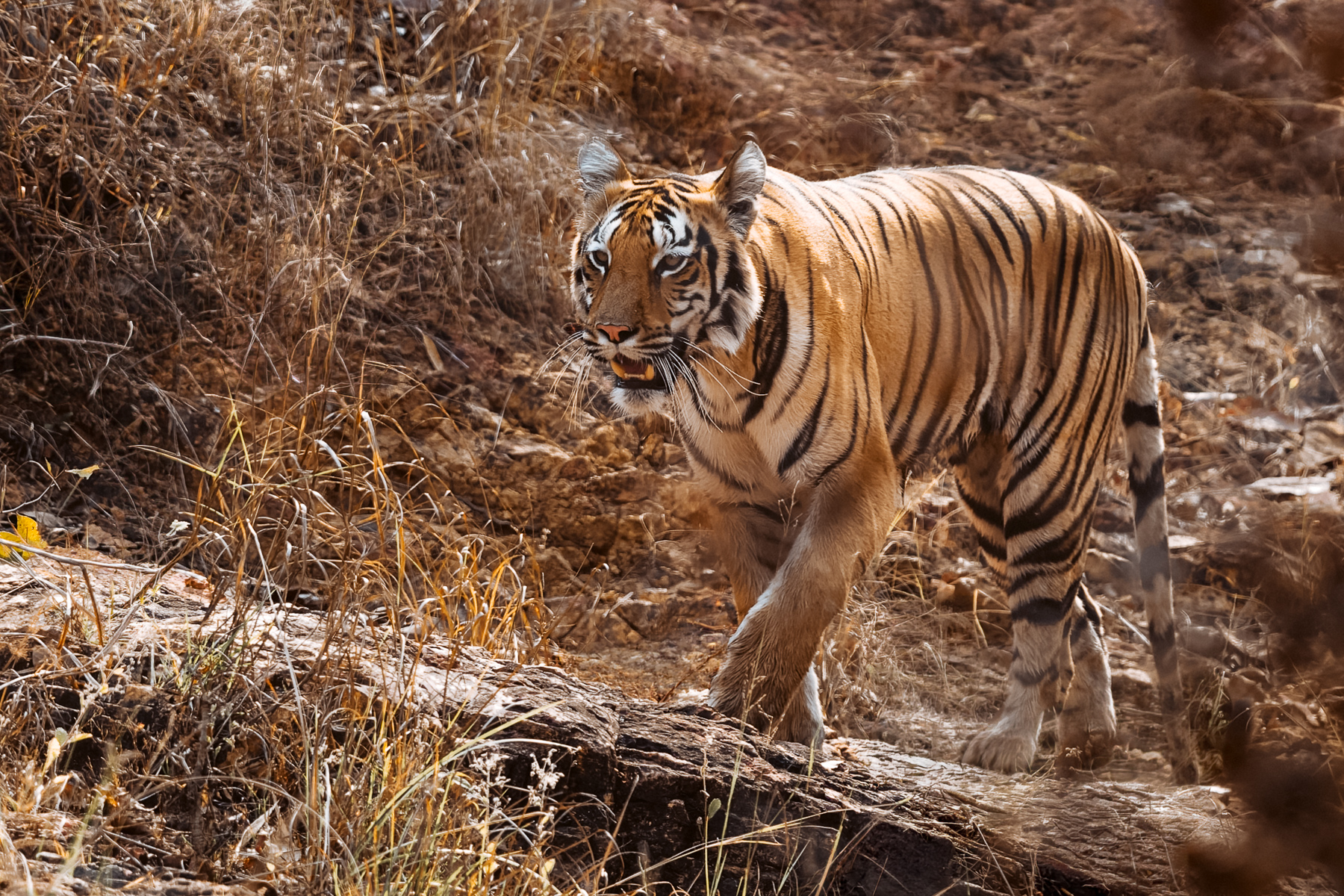
The female Tiger known as 'Madhu' pads along a rock-bed in India's Tadoba reserve, showing the instantly distinctive thick neck stripe on her right side (image by Virginia Wilde)
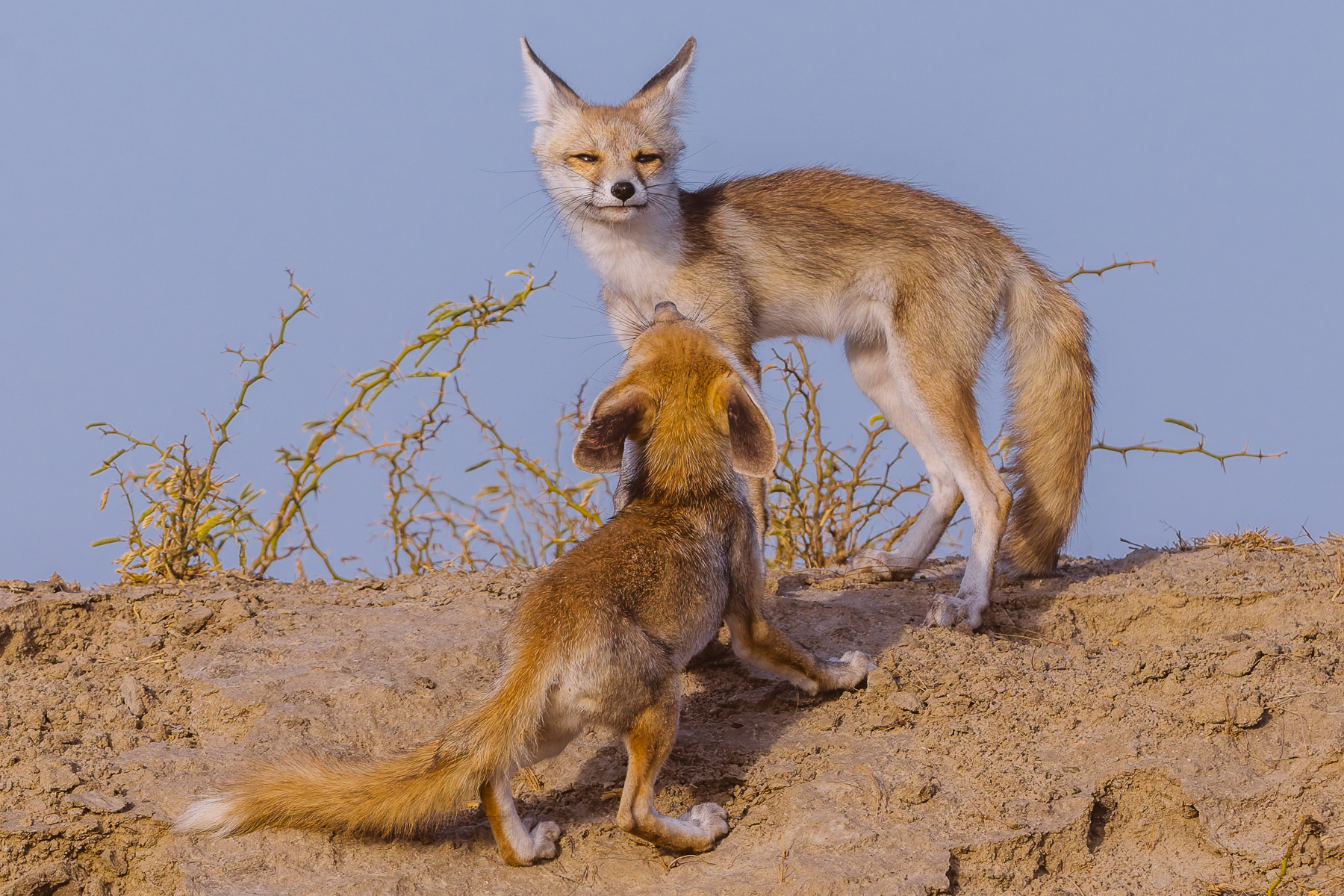
'I'm up here, above you, giving me the height advantage...should I suddenly choose to pounce on you!' Desert Fox cubs indulge in playfighting in India's Little Rann of Kutch (image by Virginia Wilde)
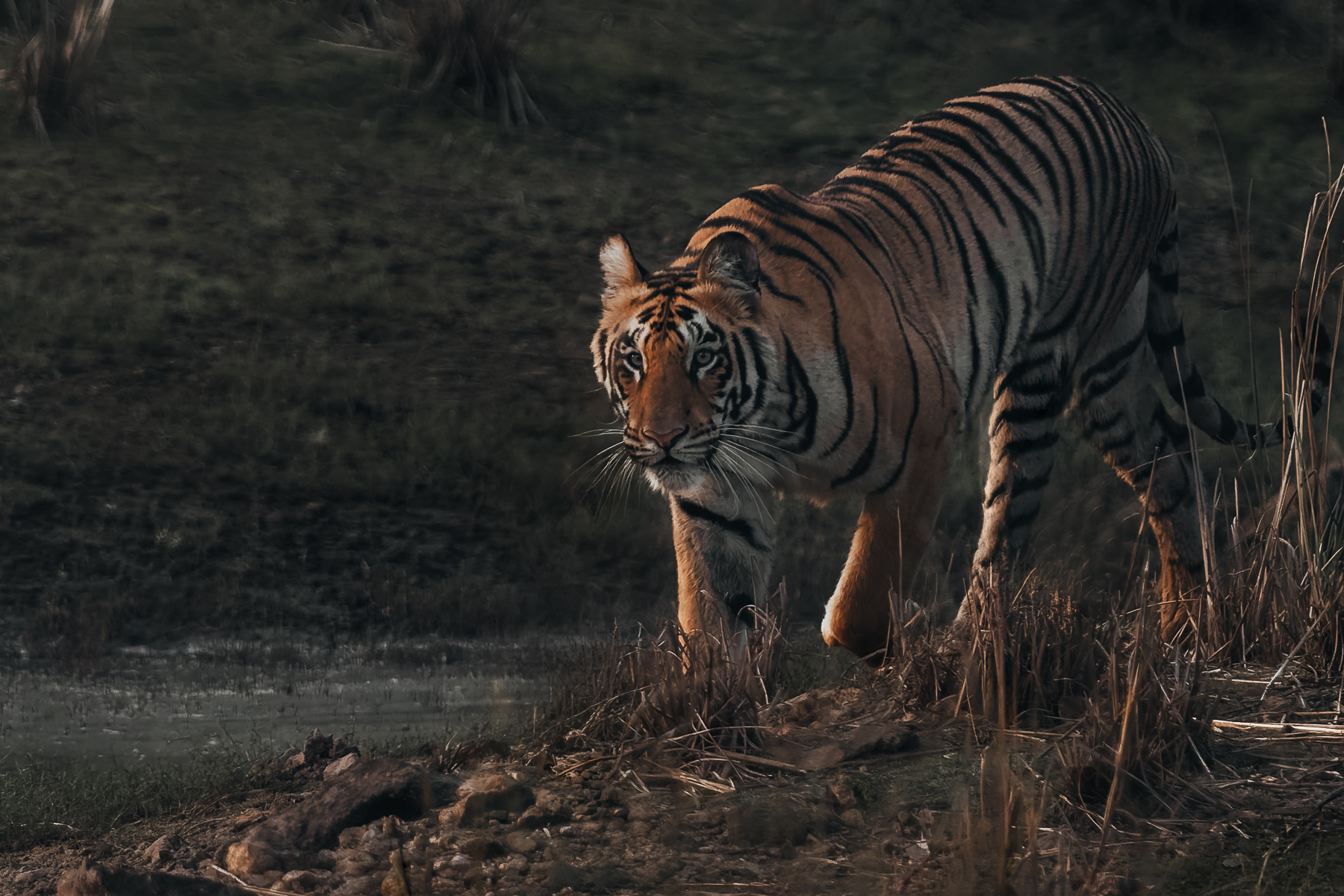
Tiger matriarch 'Collarwali' spots some potential prey down by the river - and heads down to investigate, in India's Tadoba National Park (image by Virginia Wilde)
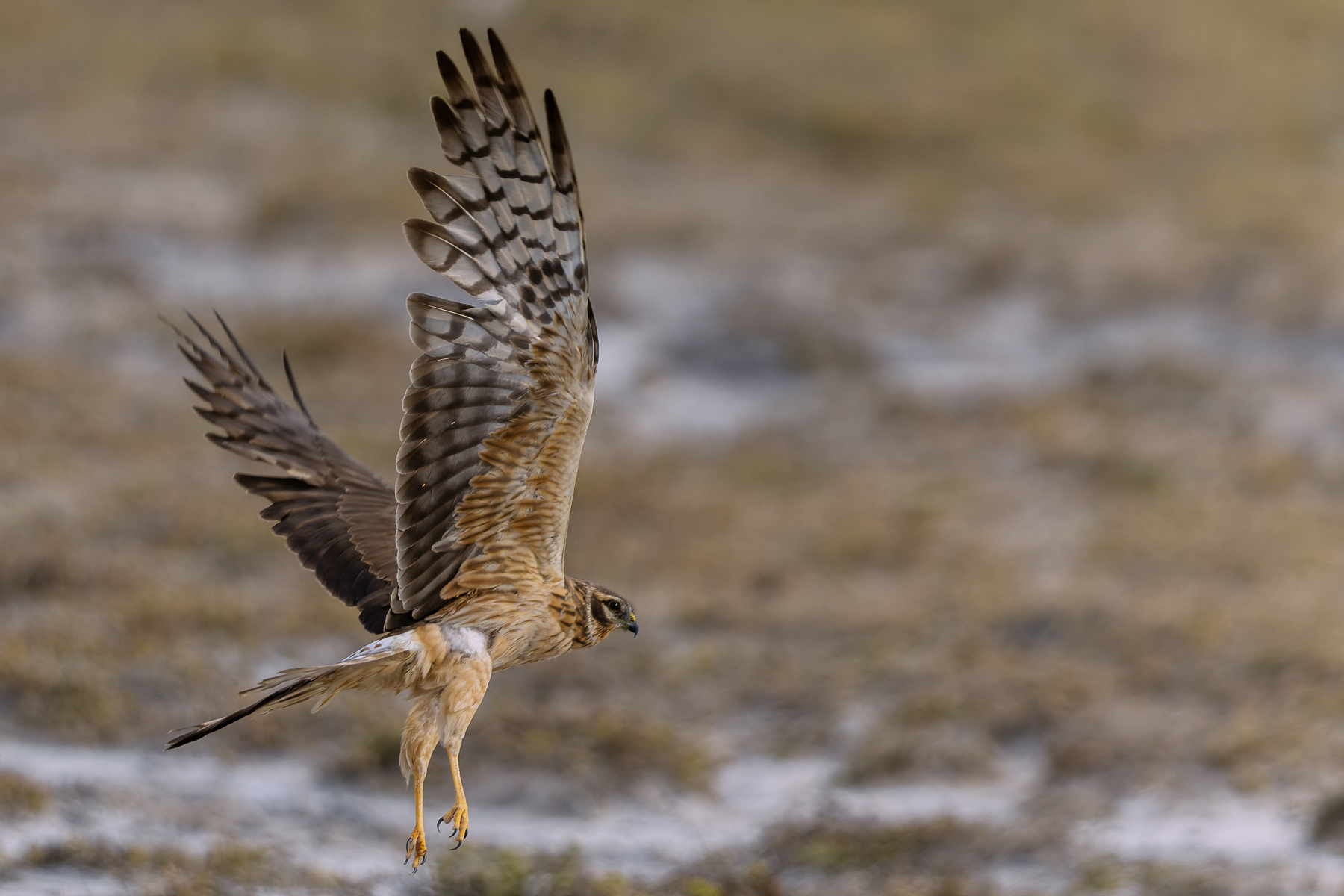
A female Hen Harrier swoops on some potential prey, in the Harrier-rich grasslands of India's Blackbuck National Park (image by Virginia Wilde)
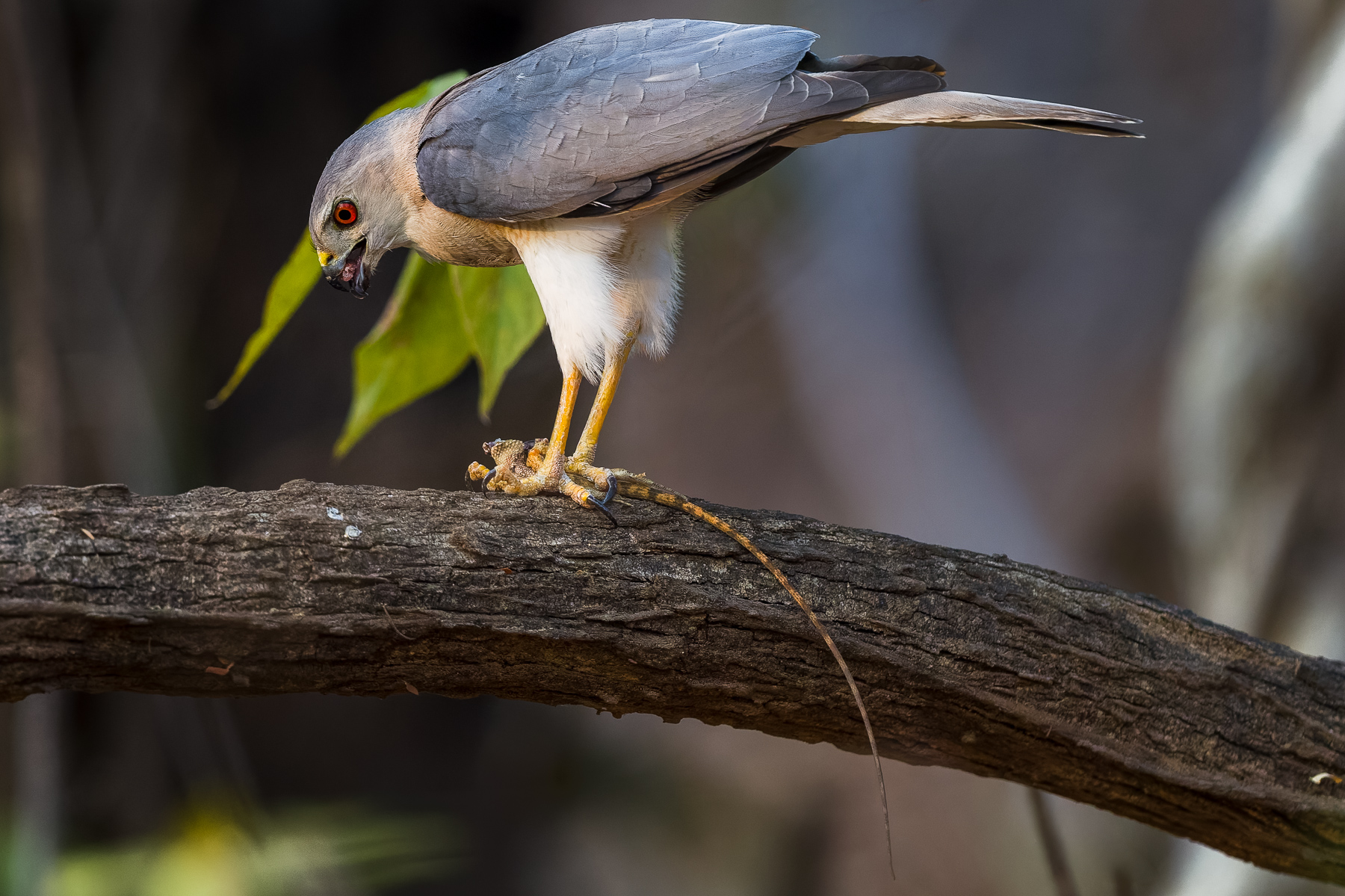
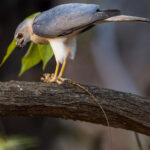
A Shikra devours what's left of its lizard prey in the jungle of India's Tadoba National Park. Shikras are known to be secretive but highly skilled ambush hunters, with a long banded tail which helps them to navigate quickly through trees (image by Virginia Wilde)
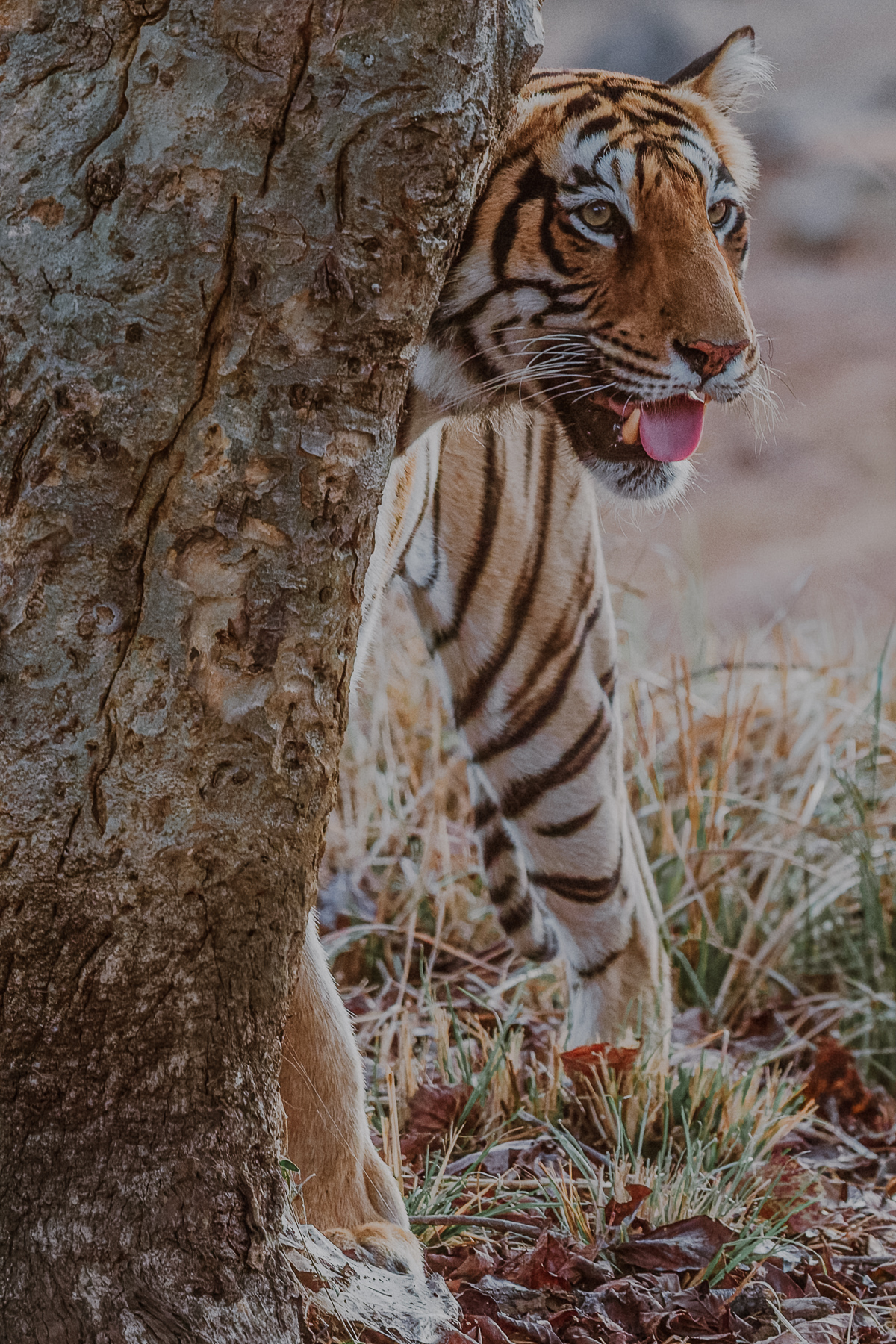
Tigers are masters of stealth, with their soft silent paws and striped fur enabling them to blend into tall grass and dappled sunlight. Prey animals often cannot distinguish the bright orange fur - making tigers very hard to spot in undergrowth. Or hiding behind trees, like this one (image by Virginia Wilde)
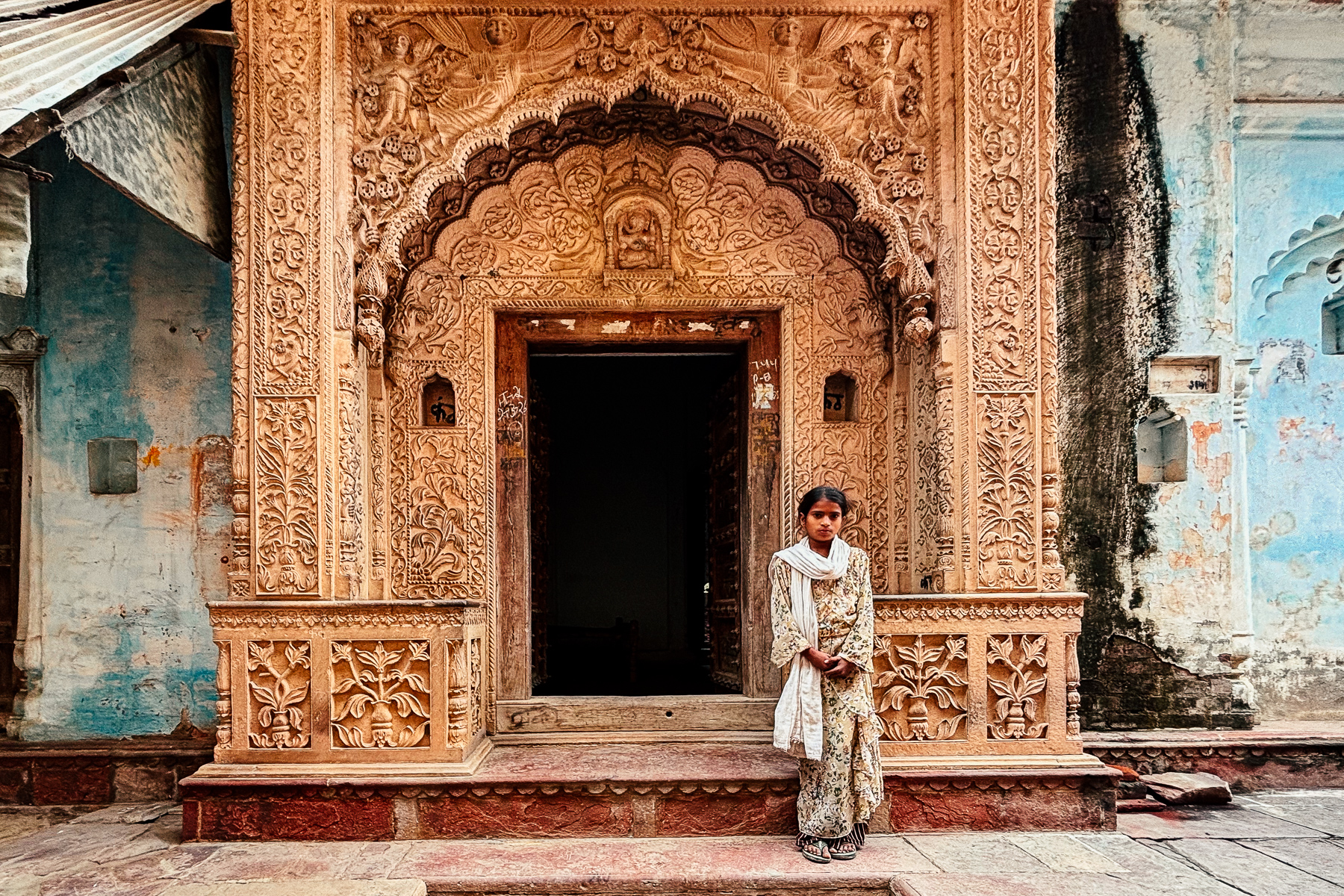
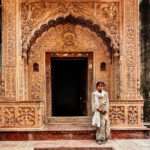
This local girl was delighted to pose for our group, backdropped by one of the crumbling former mansions in the heritage village of Uttar Pradesh (image by Virginia Wilde)
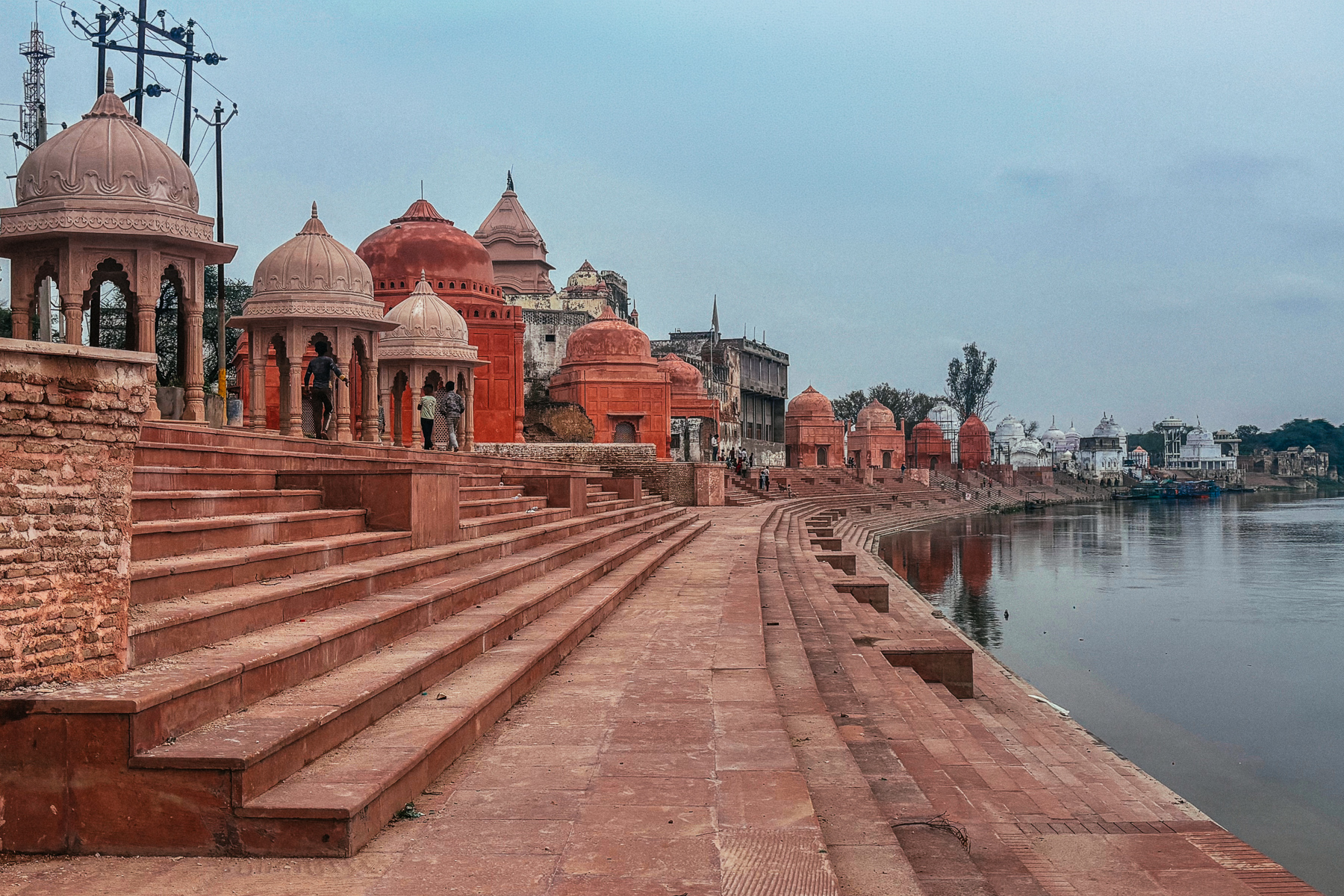
Another view of some of the 8th century Hindu temples, at the Bateshwar Temple Complex, Madhya Pradesh (image by Virginia Wilde)
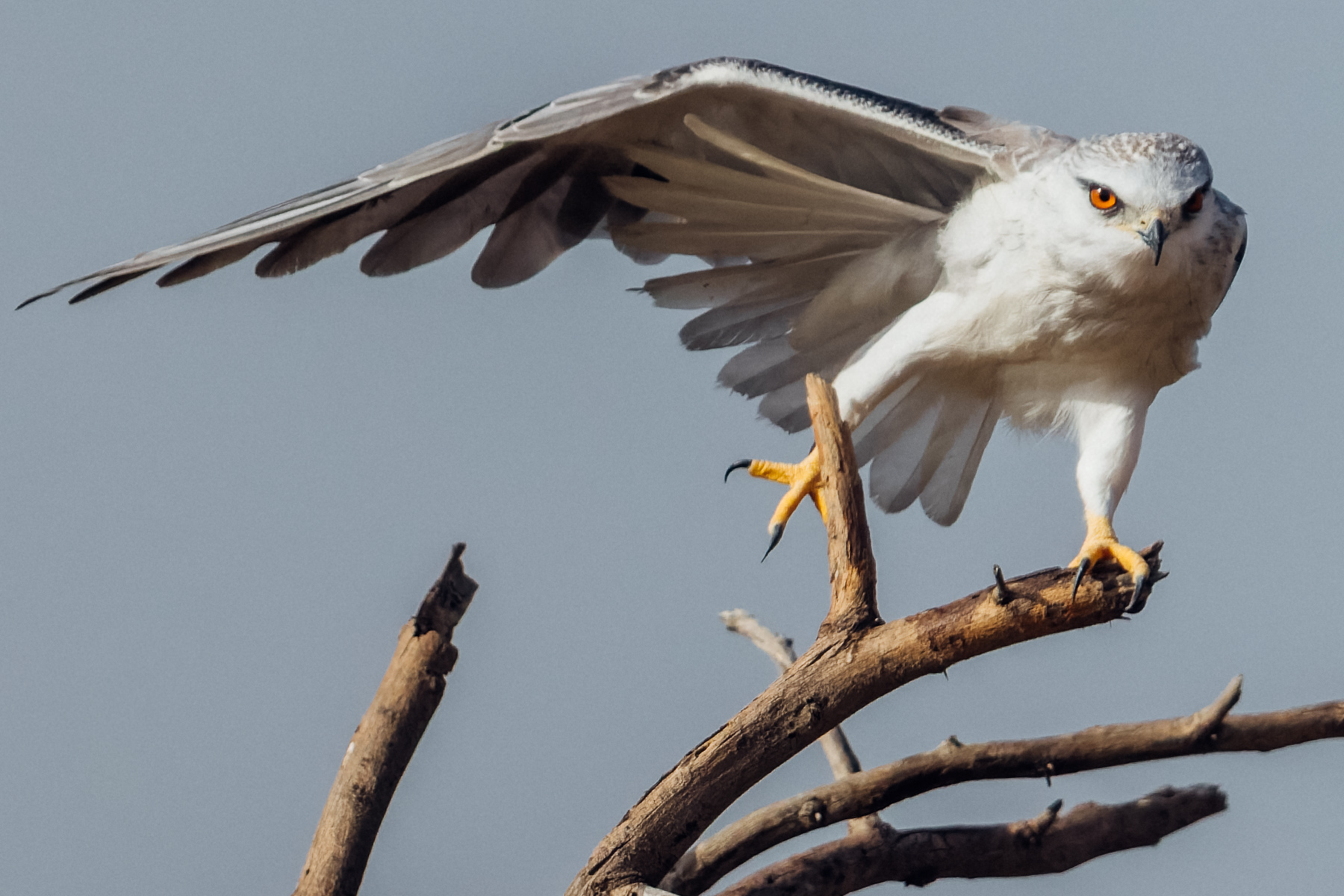
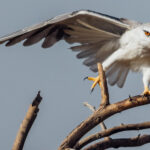
'First one leg, then the next. That'll do the job nicely.' A Black-winged Kite gingerly stretches out each talon, limbering up for the day of hunting ahead (image by Virginia Wilde)
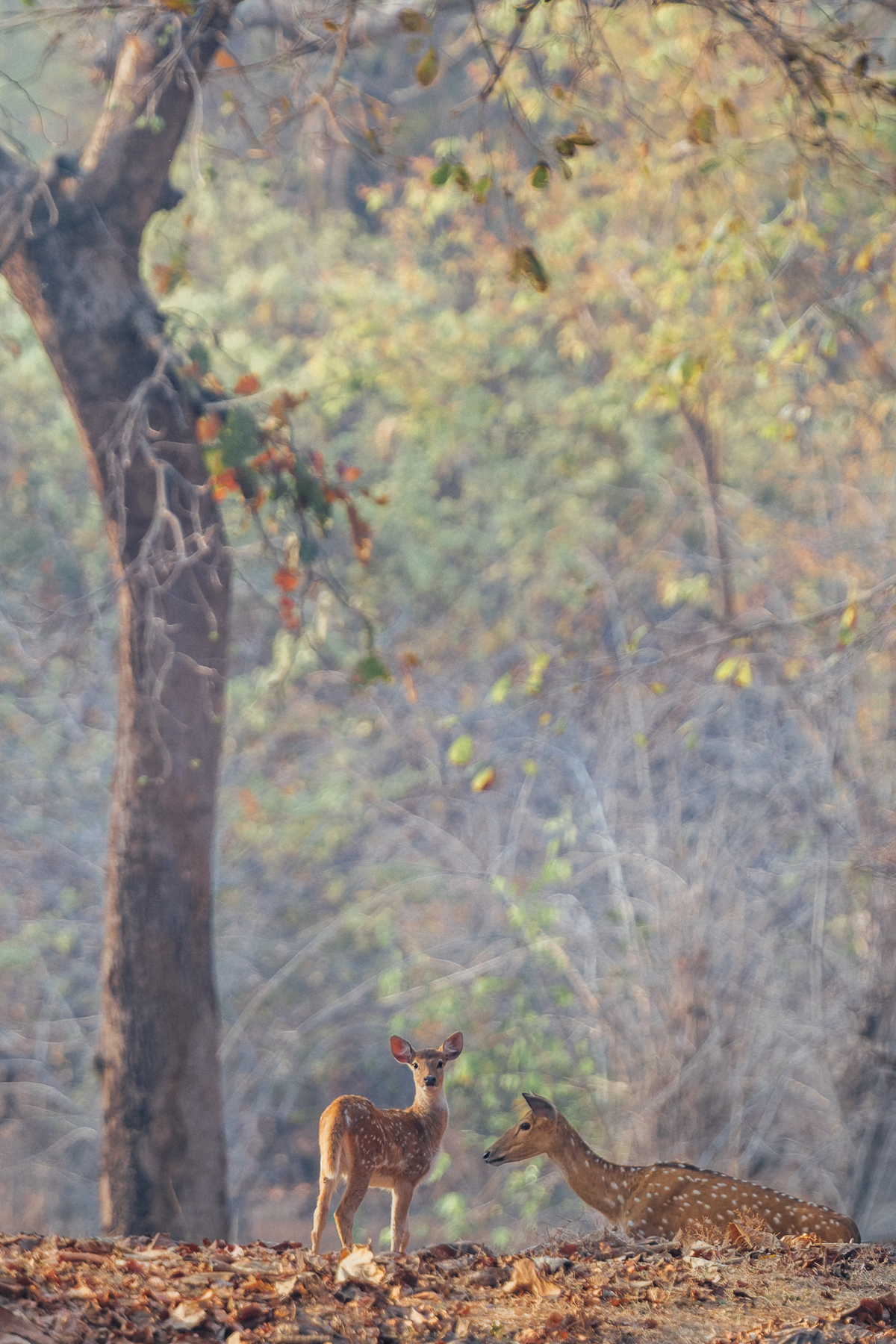
India's forests often have a 'soft focus' look - giving a hazy, dreamlike quality in photographs. While primarily due to high levels of atmospheric haze, moisture and dust, they can produce painterly backdrops, such as in this image of a mother and infant Spotted Deer (image by Virginia Wilde)
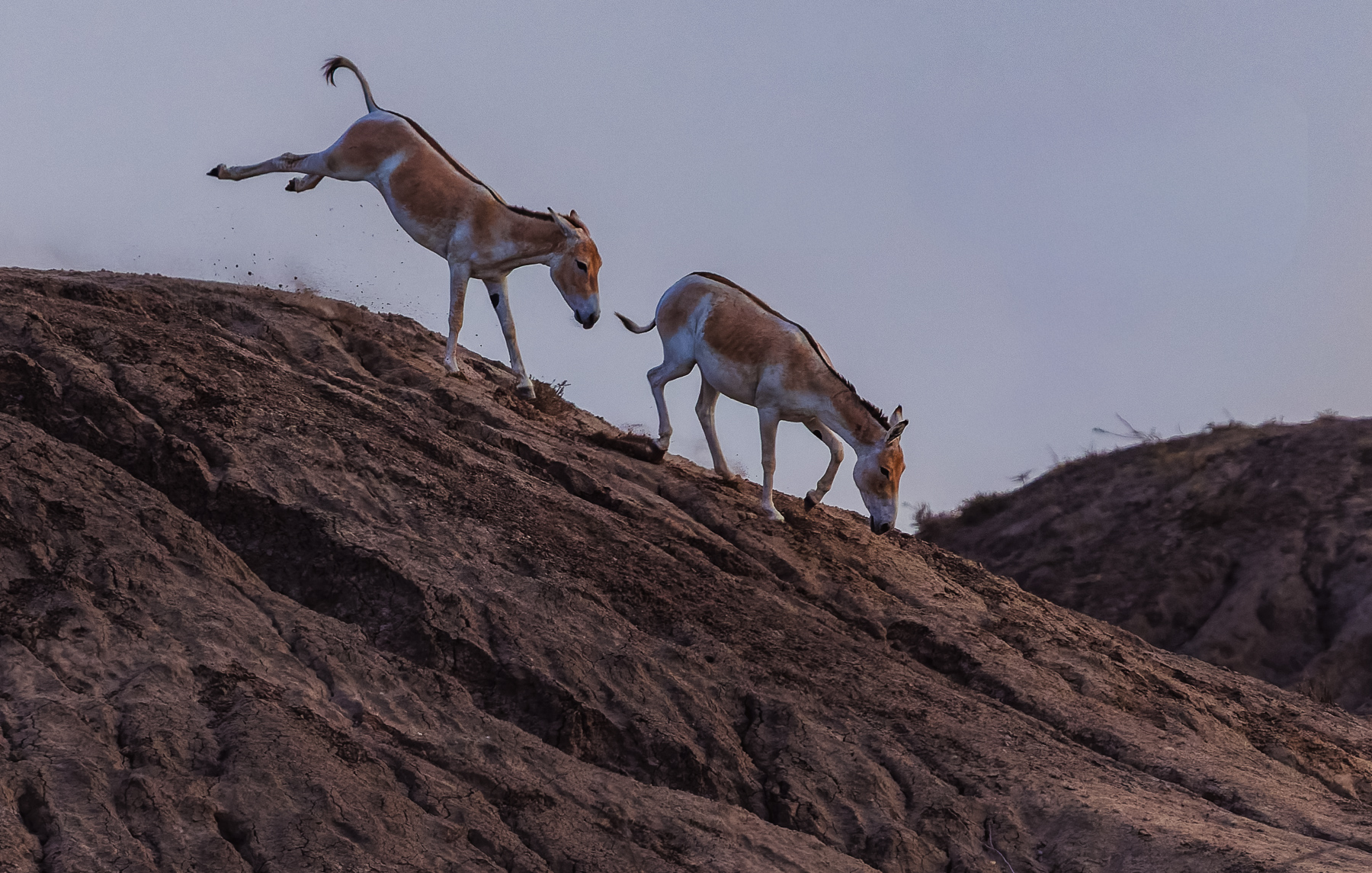
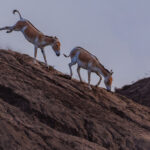
A pair of Indian Wild Asses frolic and canter down a hill in India's saline desert-land in the Little Rann of Kutch (image by Virginia Wilde)
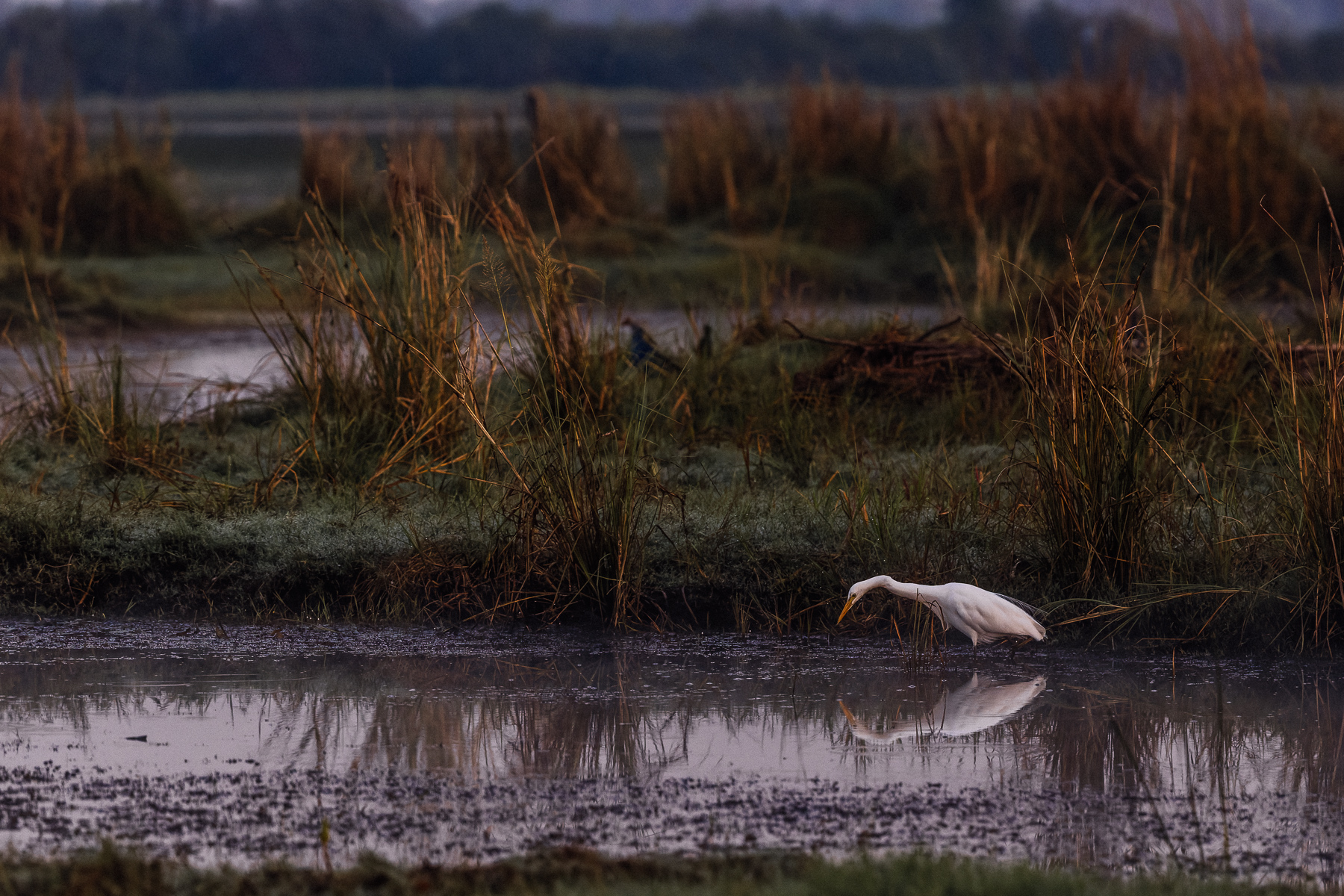
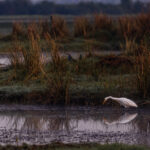
A beautifully misty and moody morning in the Tadoba-Andhari Tiger Reserve, as a Great Egret hunts in a pool (image by Virginia Wilde)
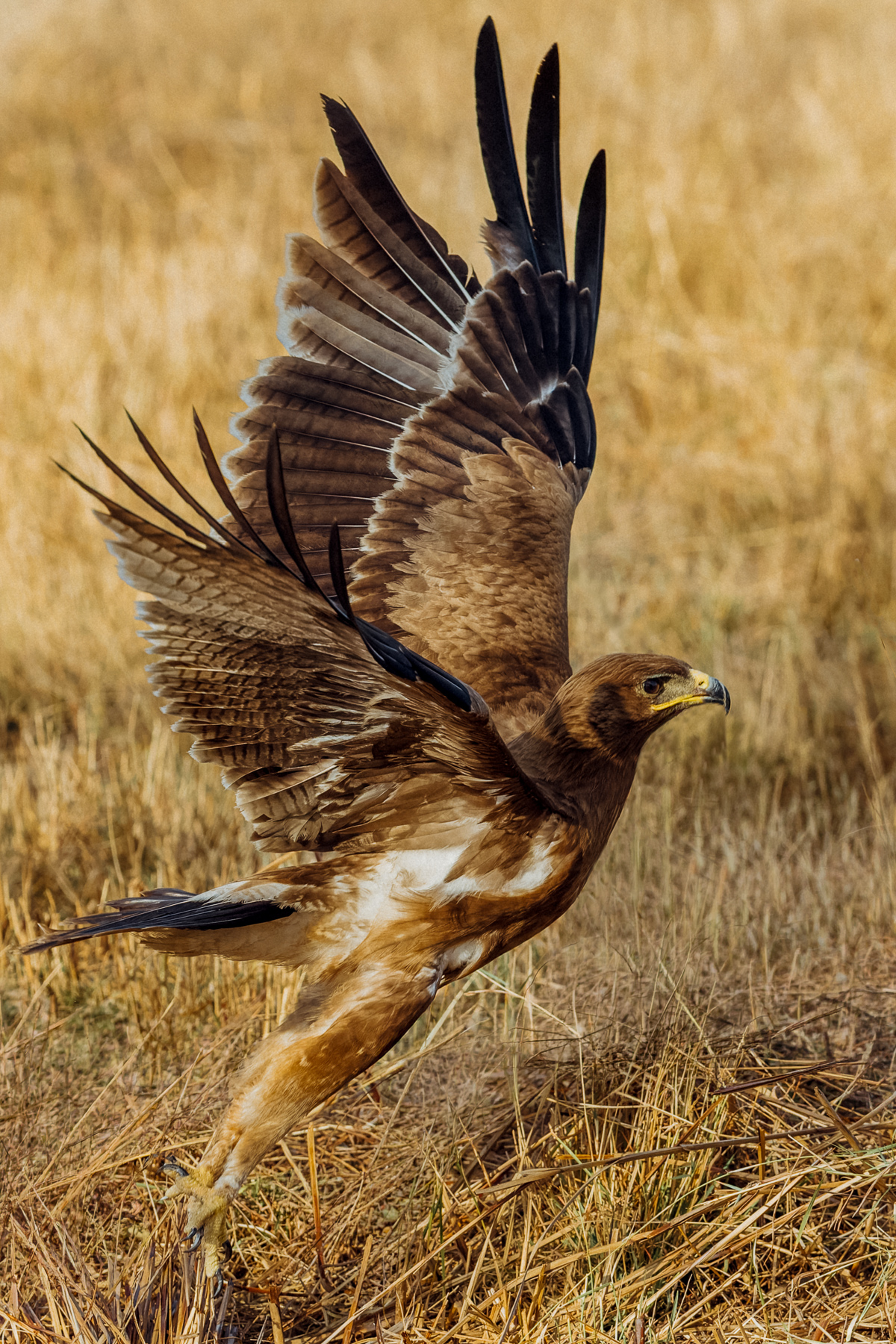
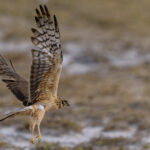
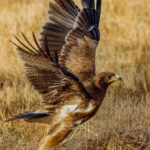
An Indian Spotted Eagle takes flight from the grasslands of Blackbuck National Park in Velavadar, India (image by Virginia Wilde)
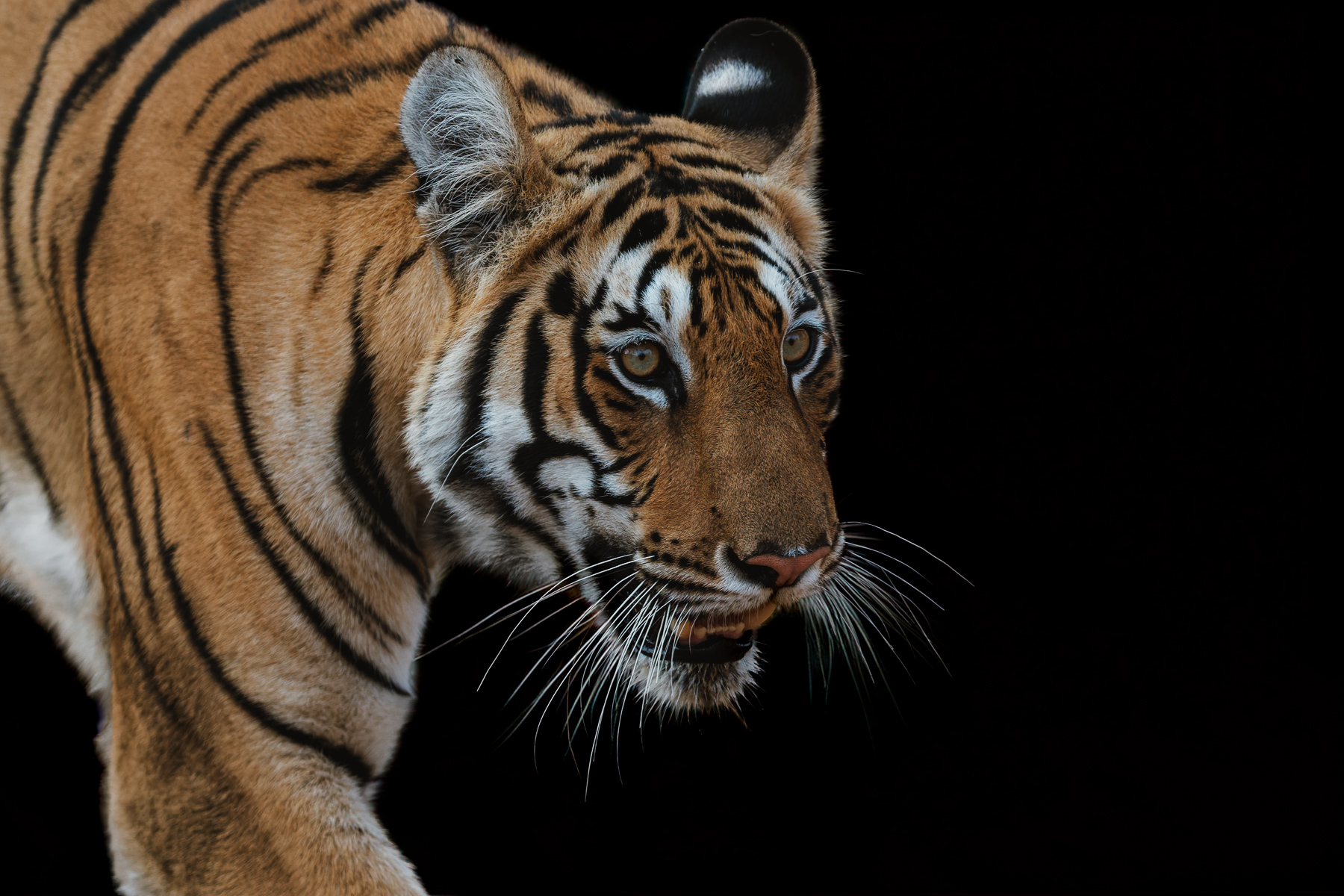
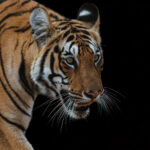
Close-up portrait of a female Bengal Tiger, showing her incredible markings. Each tiger has a distinct stripe pattern, similar to human fingerprints (image by Virginia Wilde)
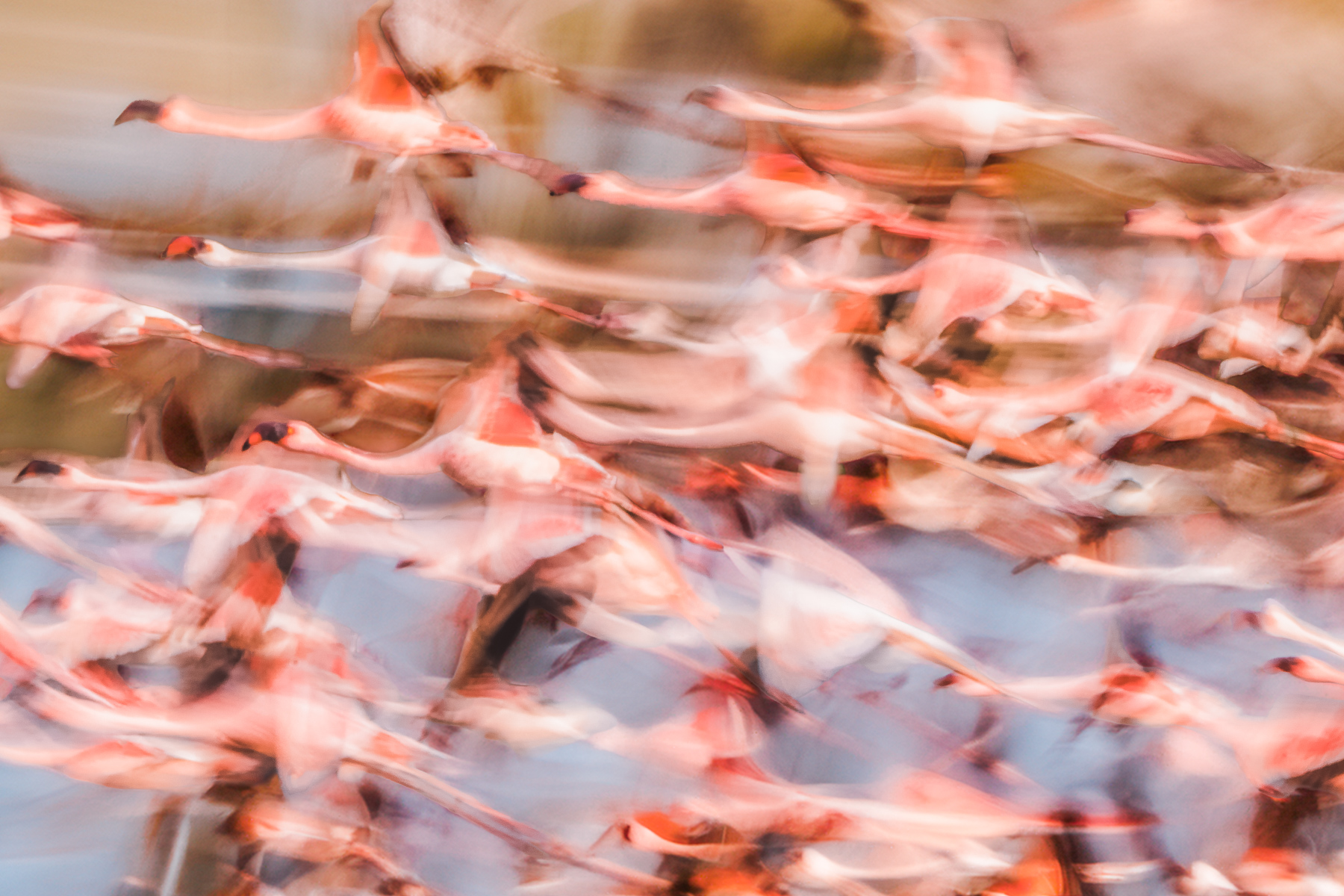
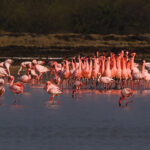
Huge flocks of Lesser and Greater Flamingos take to the skies - giving ample opportunity for creative photography (image by Virginia Wilde)
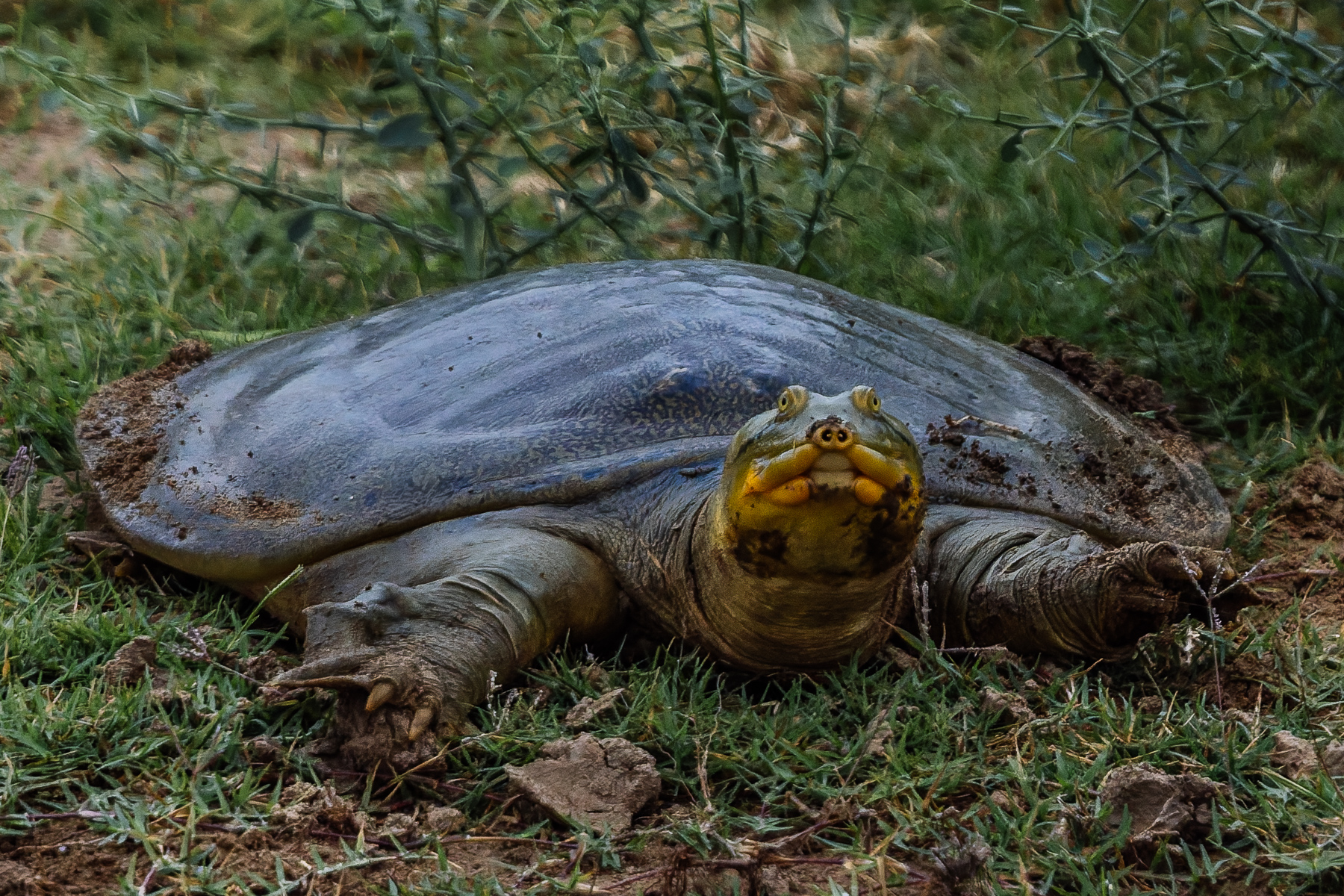
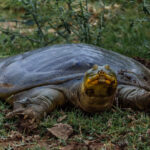
Indian Softshell Turtles have flexible leathery shells, rather than hard scaly ones. Their distinctive snorkel-like snout enables them to remain submerged, while breathing at the surface (image by Virginia Wilde)
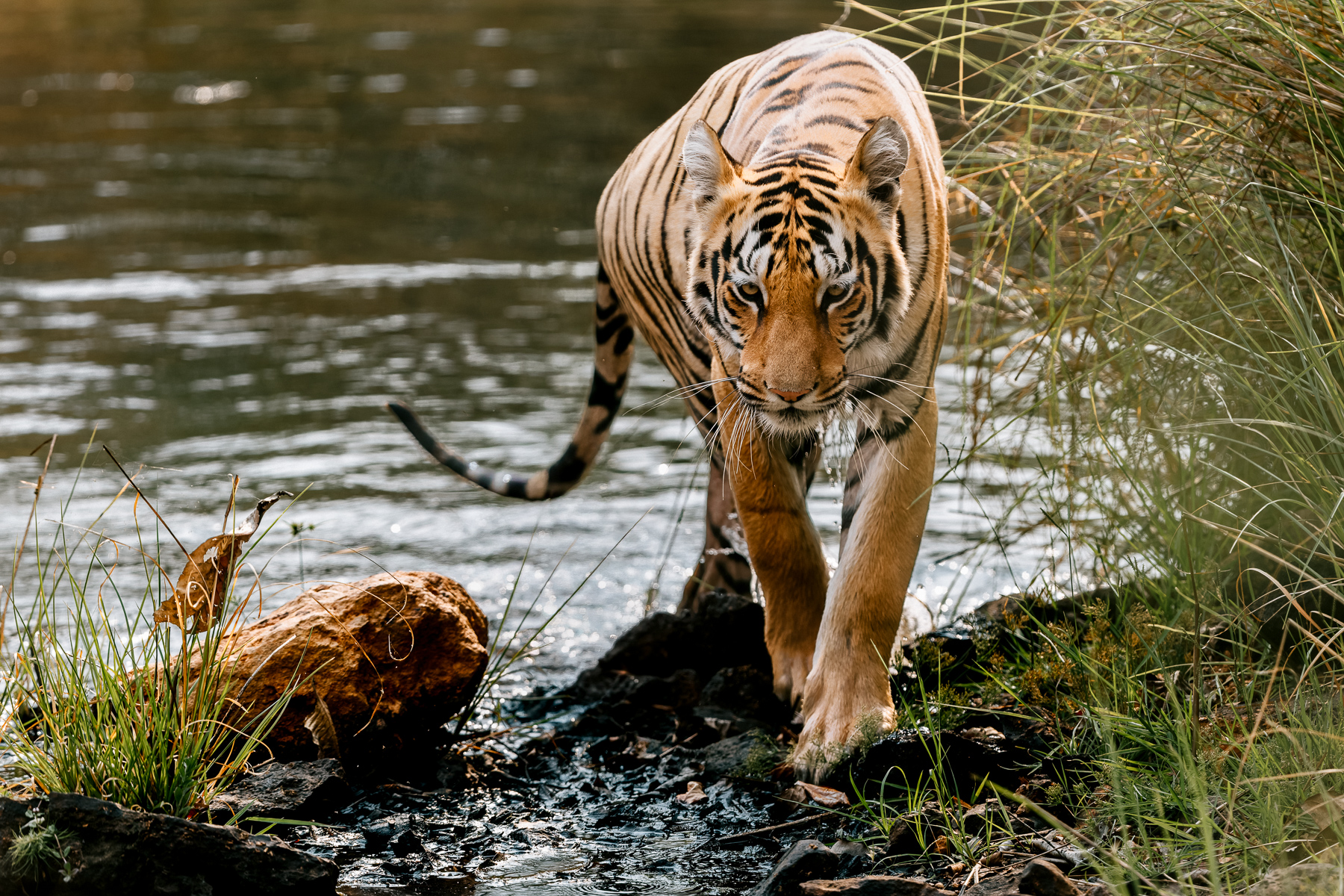
Young female Tiger 'Kajri' emerges from the river after bathing for ten minutes to avoid India's afternoon heat (image by Virginia Wilde)
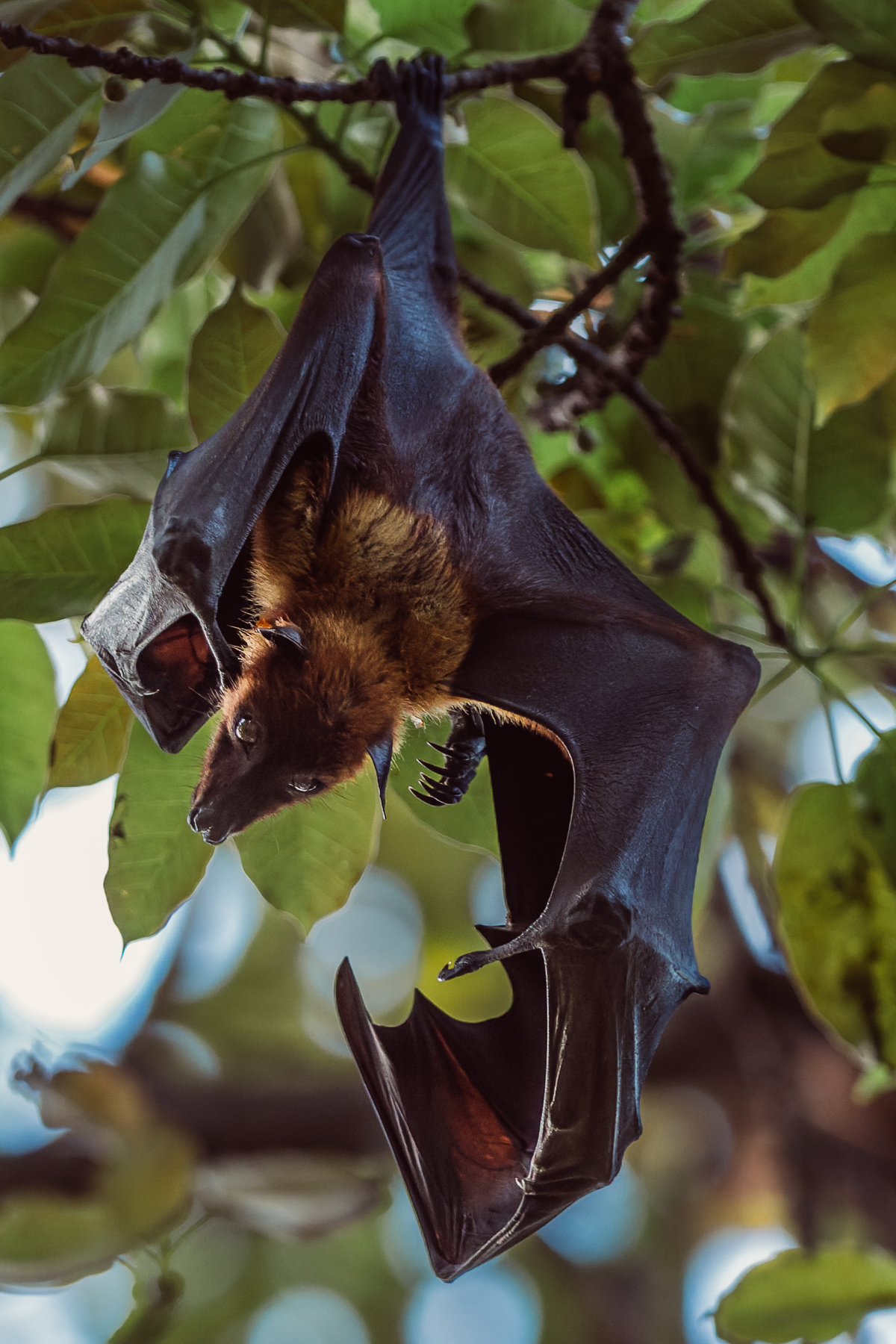
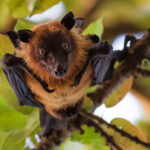
'Just hanging around on an evening, you know, hanging out with myself.' Indian Flying Foxes (also known as the Greater Indian Fruit Bat) live up to 20 years in the wild, with lifespans only shortened by snake and raptor predation and human conflict (image by Virginia Wilde)
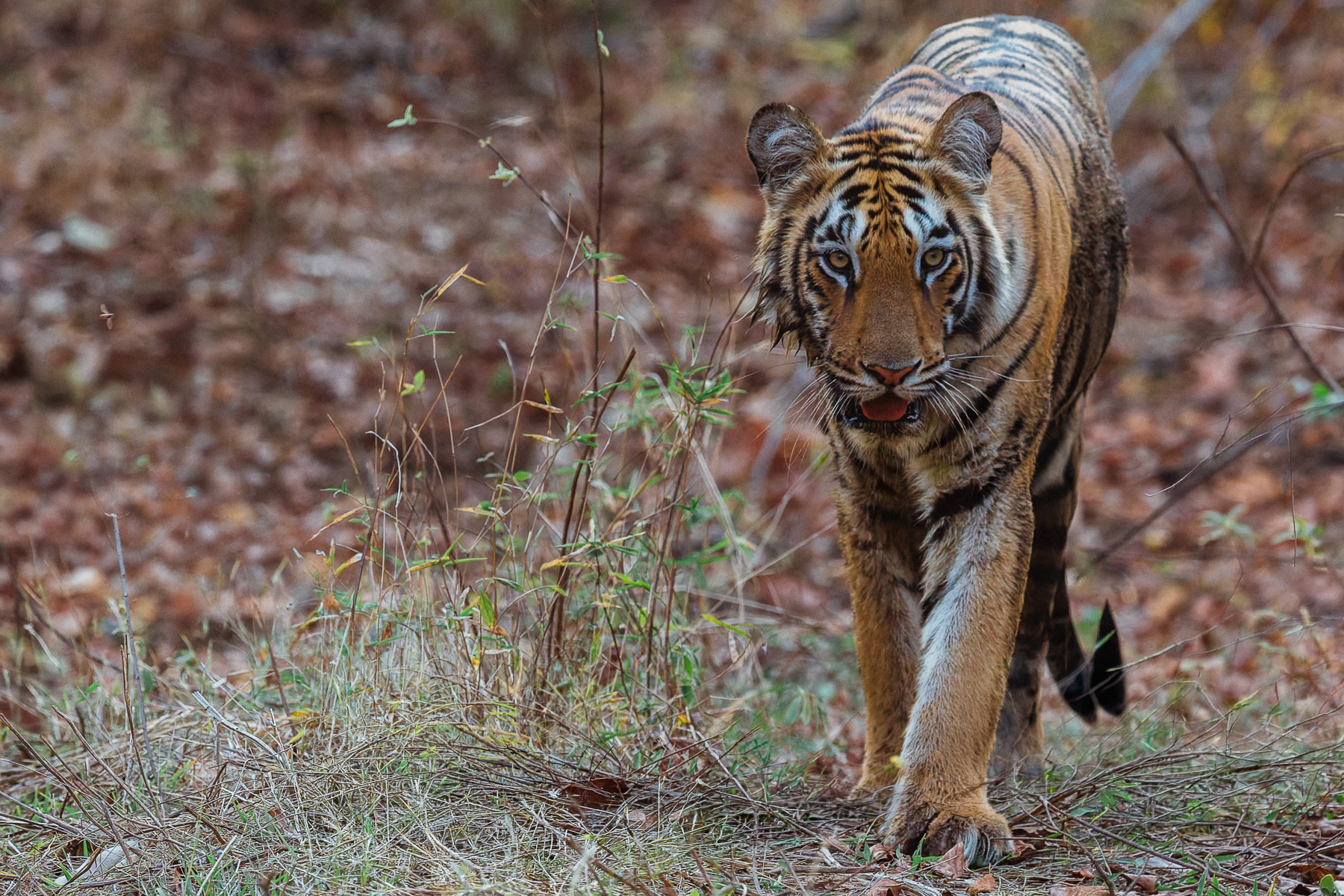
One of Tiger matriarch 'Collarwali's' 11-month-old daughters - showing her youthful features - pads through the undergrowth in India's Tadoba reserve (image by Virginia Wilde)
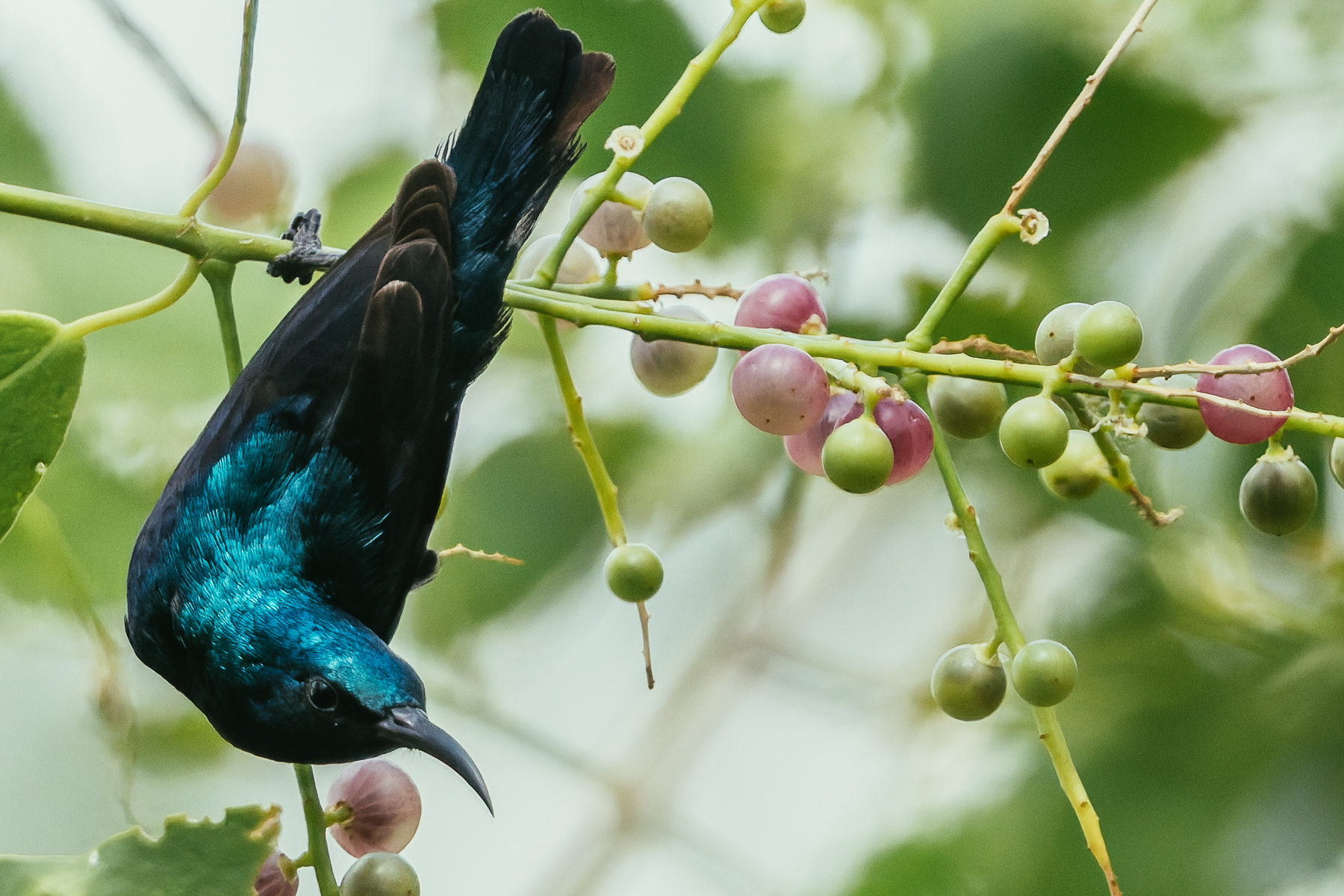
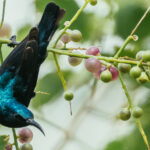
The iridescent plumage of a Purple Sunbird makes it a lovely sighting, as one of 13 species of sunbird found in India (image by Virginia Wilde)
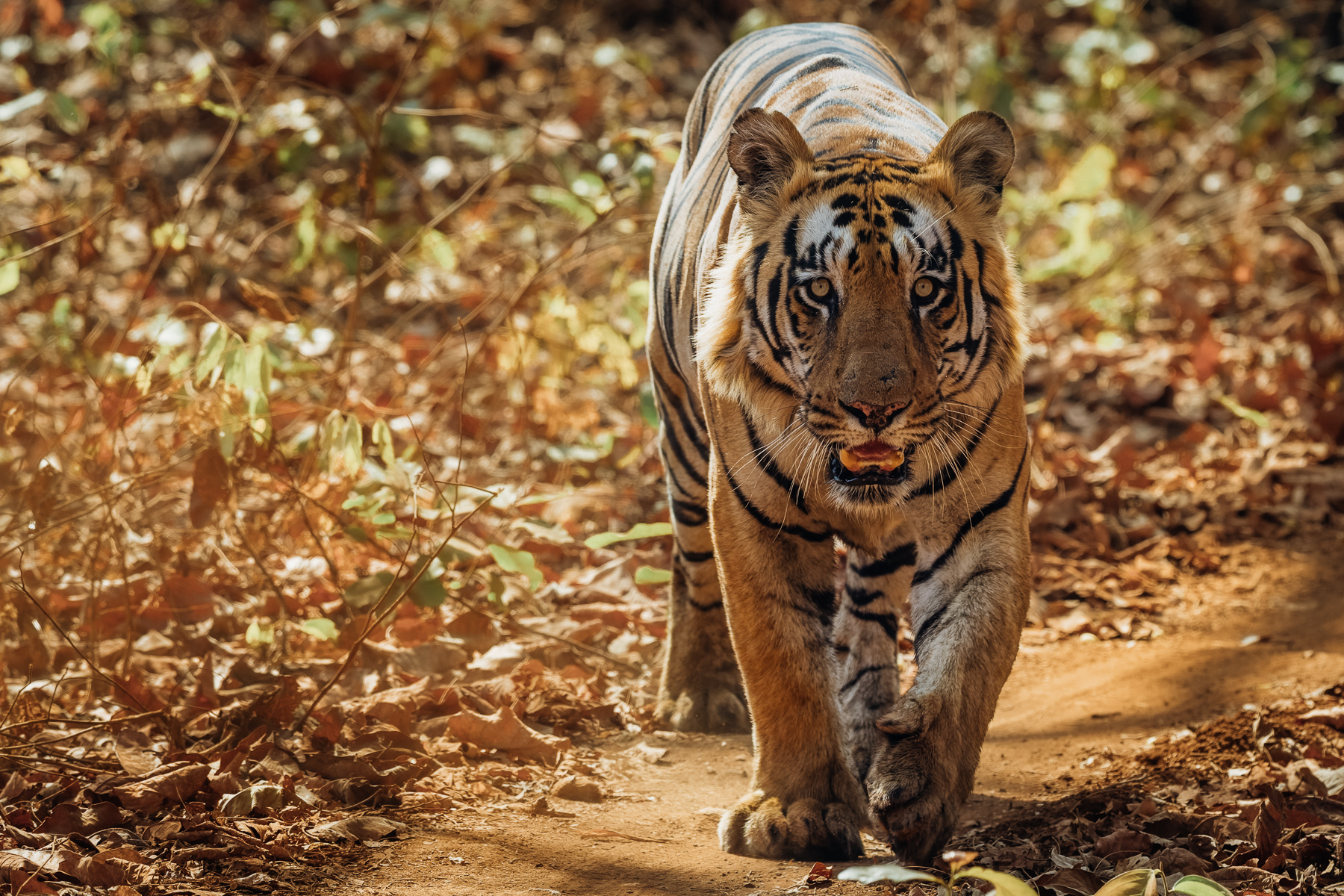
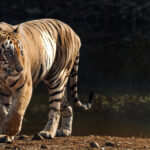
This dominant male tiger - known as 'Mowgli' - pads along the forest paths in India's Tadoba-Andhari Tiger Reserve, showcasing his massive paws. Mowgli is known as a 'bruiser' male, who has sired dozens of cubs (image by Virginia Wilde)
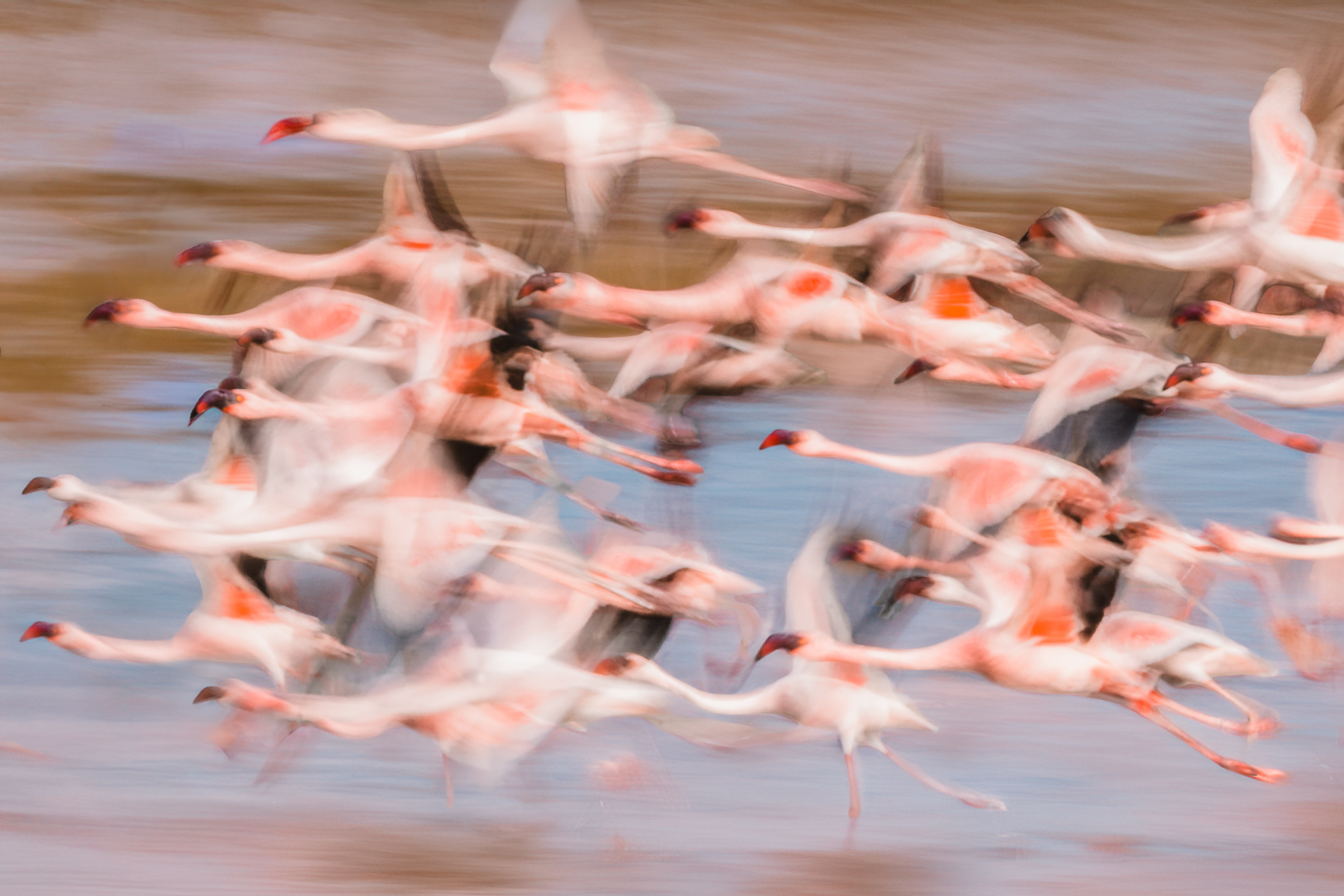
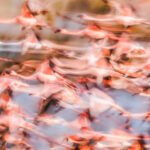
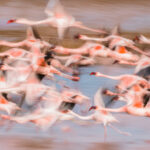
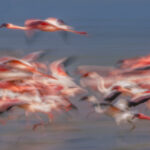
Slow-shutter speed panning shot of both Lesser and Greater Flamingos swooping over the shallow wetlands of India's Little Rann of Kutch (image by Virginia Wilde)
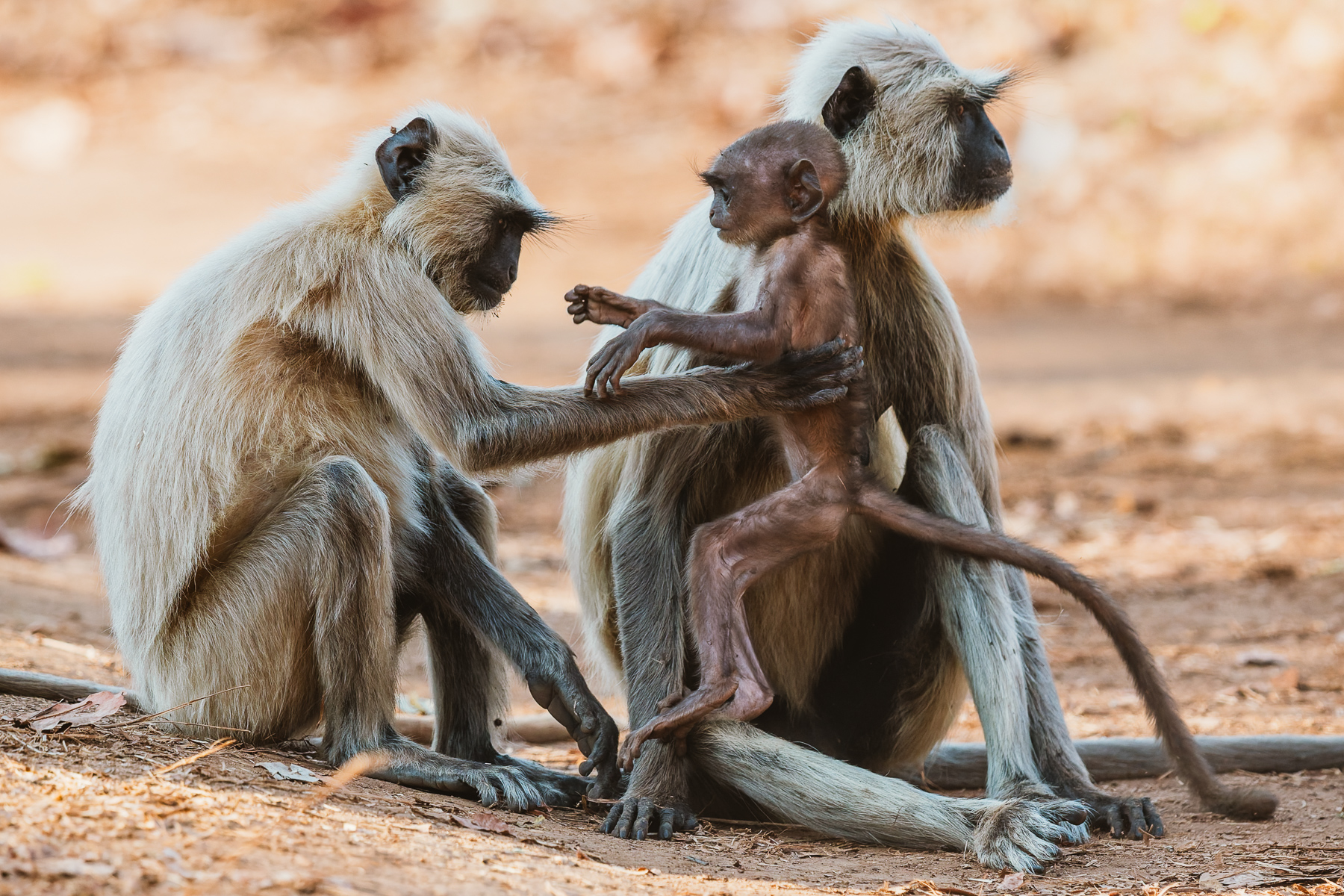
'Good job, son. You've definitely gained a few pounds here.' A Grey Langur inspects her infant, as if checking that all is well with its weight and height (image by Virginia Wilde)
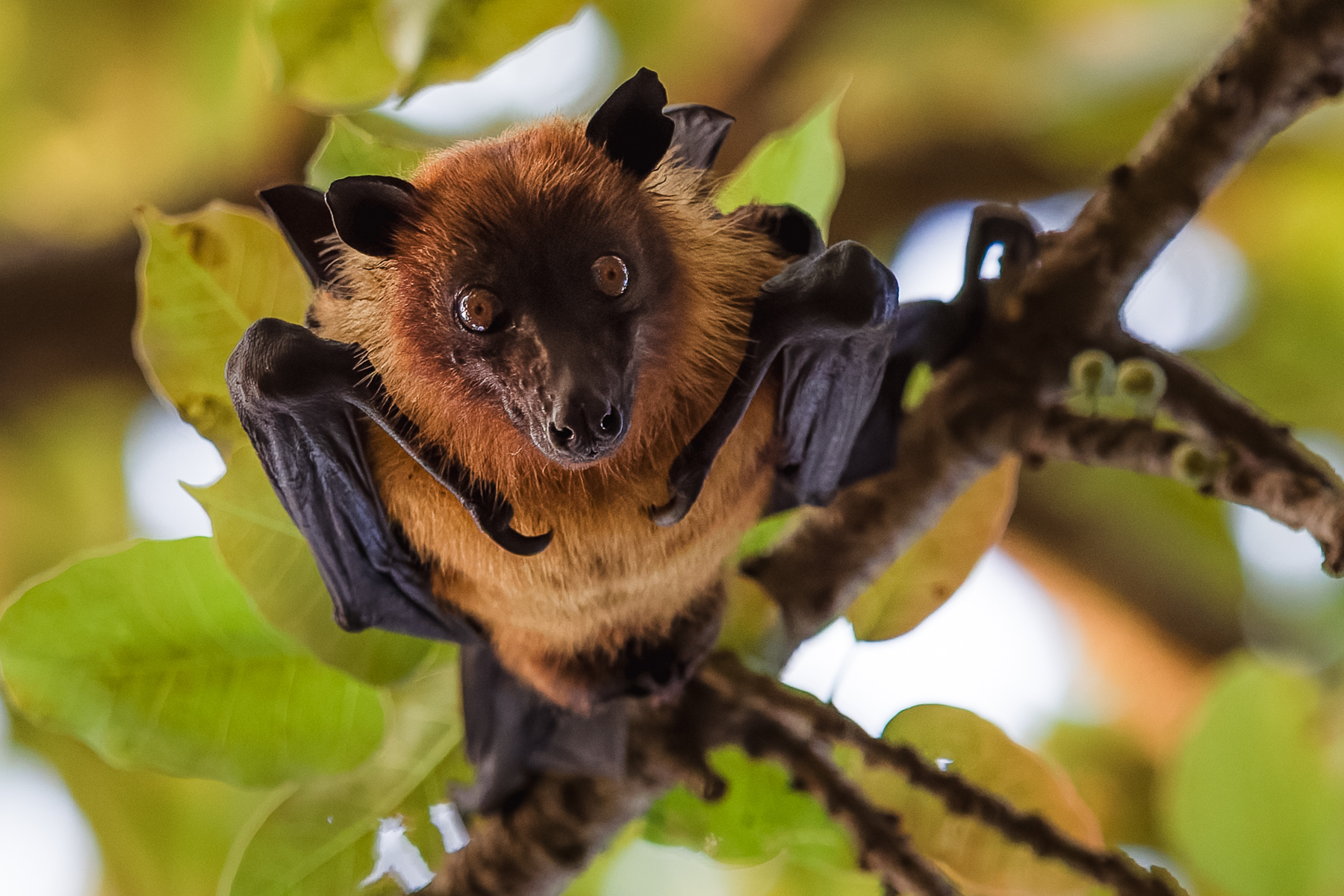
A permanently surprised looking Indian Flying Fox - also known as the Greater Indian Fruit Bat - looks down from a tree in our lodge, by the National Chambal Sanctuary. Indian Flying Foxes are one of the largest bats in the world (image by Virginia Wilde)
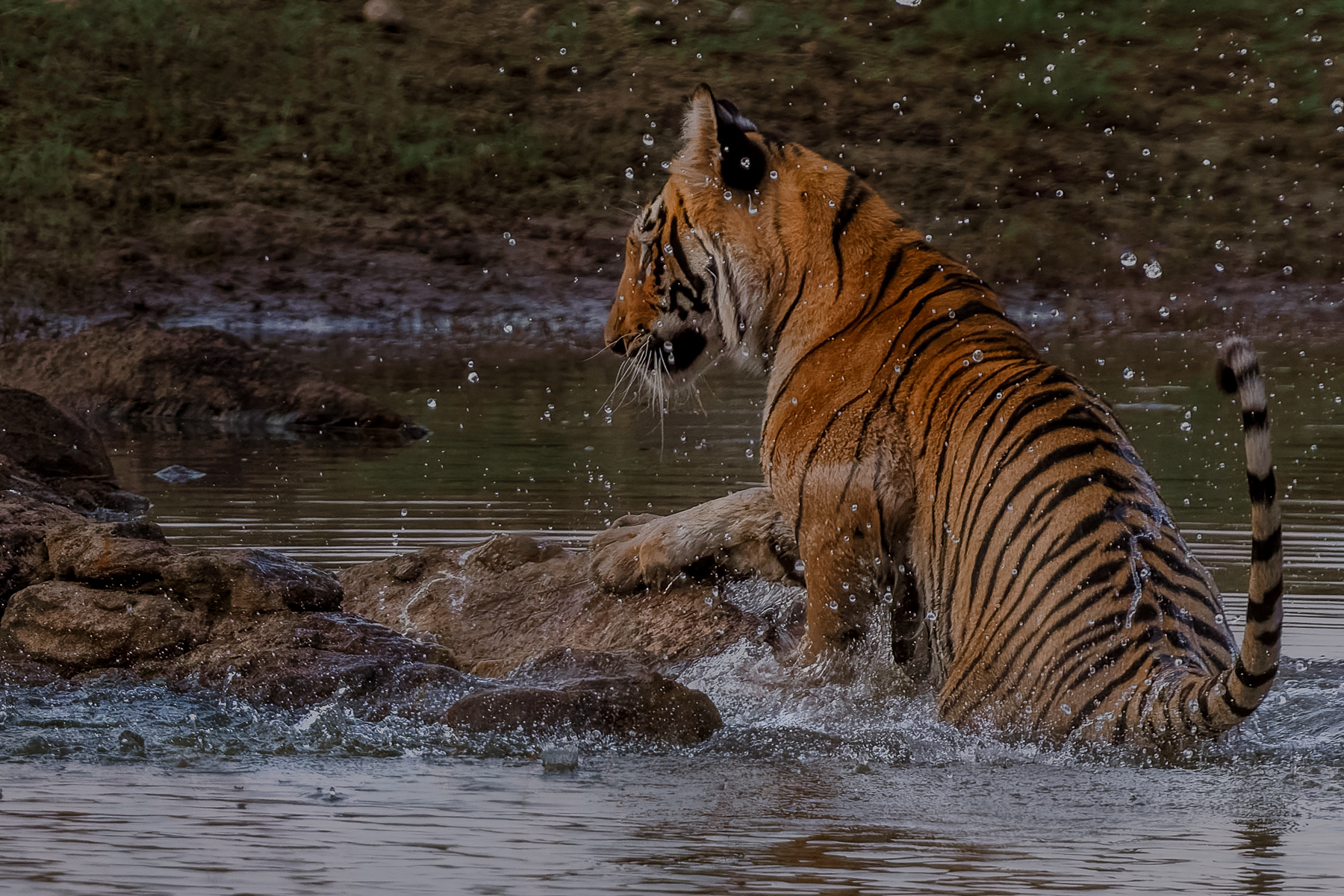
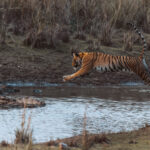
There's no denying that Tigers are emblematic with grace and stealth. But even Tigers have days that don't go their way: this female sub-adult messed up her river leap, smashing her head on the rocks and then ungainly clambering up the bankside (image by Virginia Wilde)
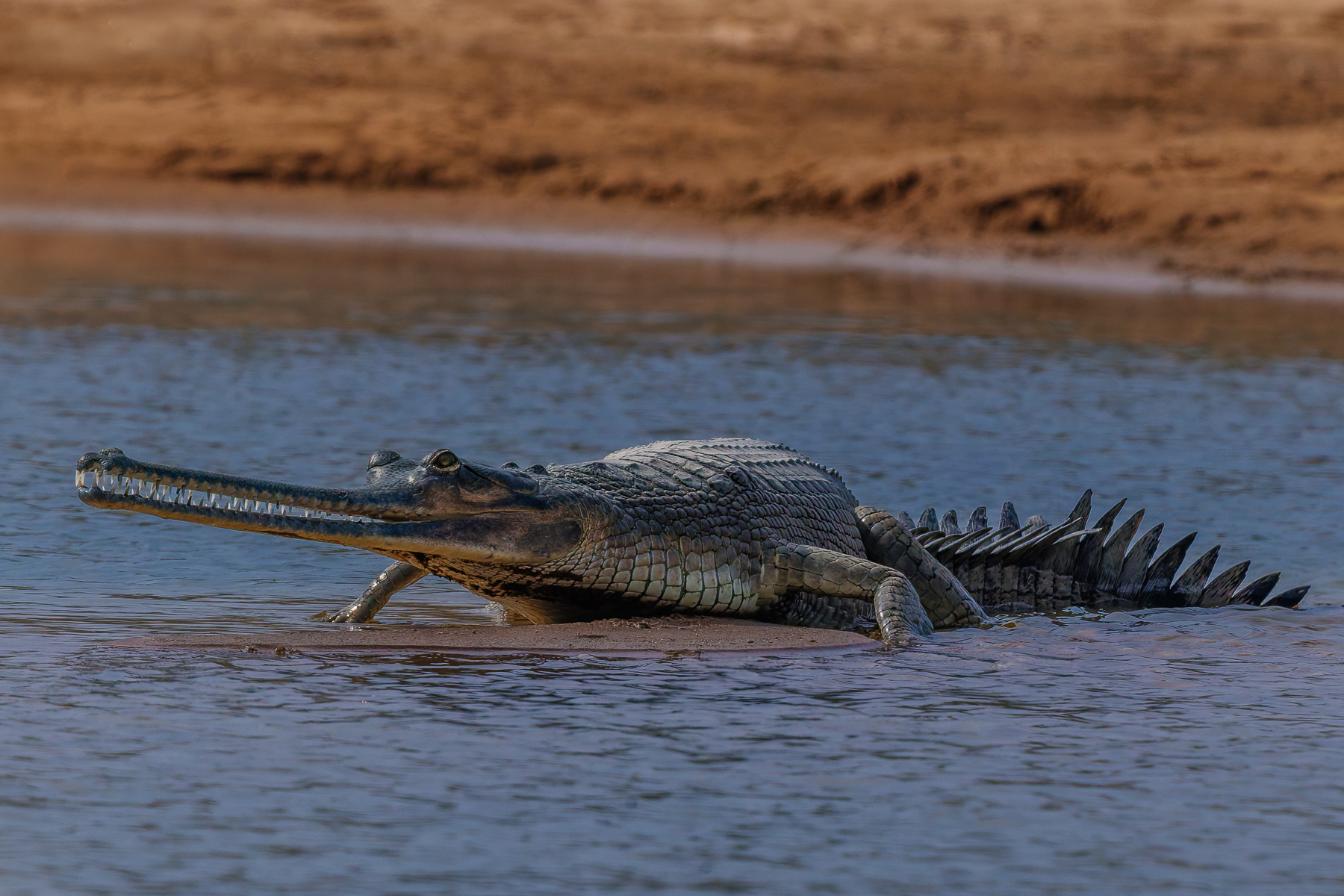
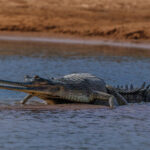
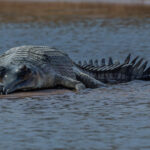
A magnificent Gharial shows its distinctive long snout, while basking near a sandbank along India's Chambal River. Gharials are among the longest and rarest of crocodiles, with only around 200 breeding pairs of this critically endangered species remaining in the wild (image by Virginia Wilde)
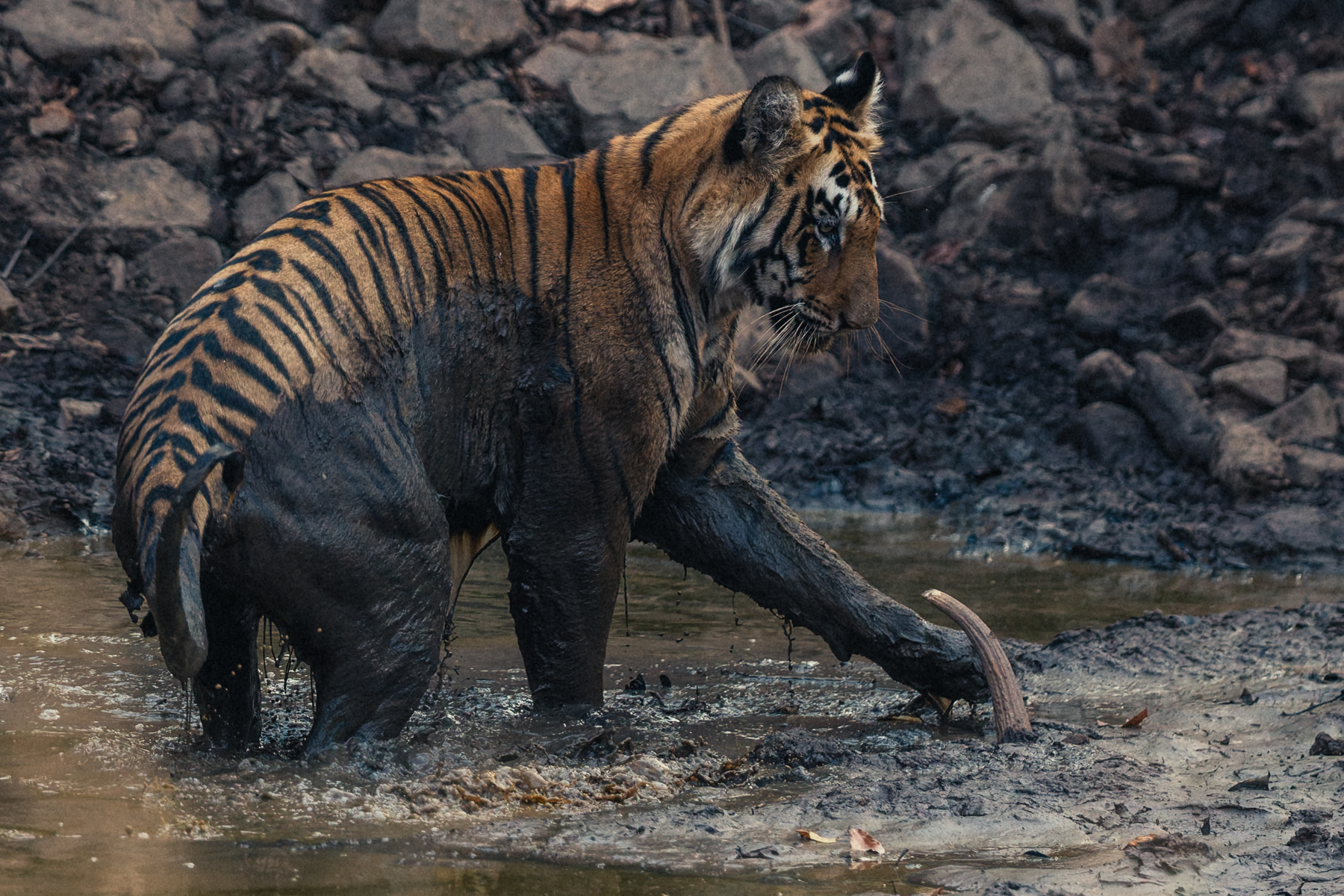
You're never too fierce or powerful a predator to escape the lure of playing with a stick. Especially if that stick is protruding enticingly from the mud (image by Virginia Wilde)
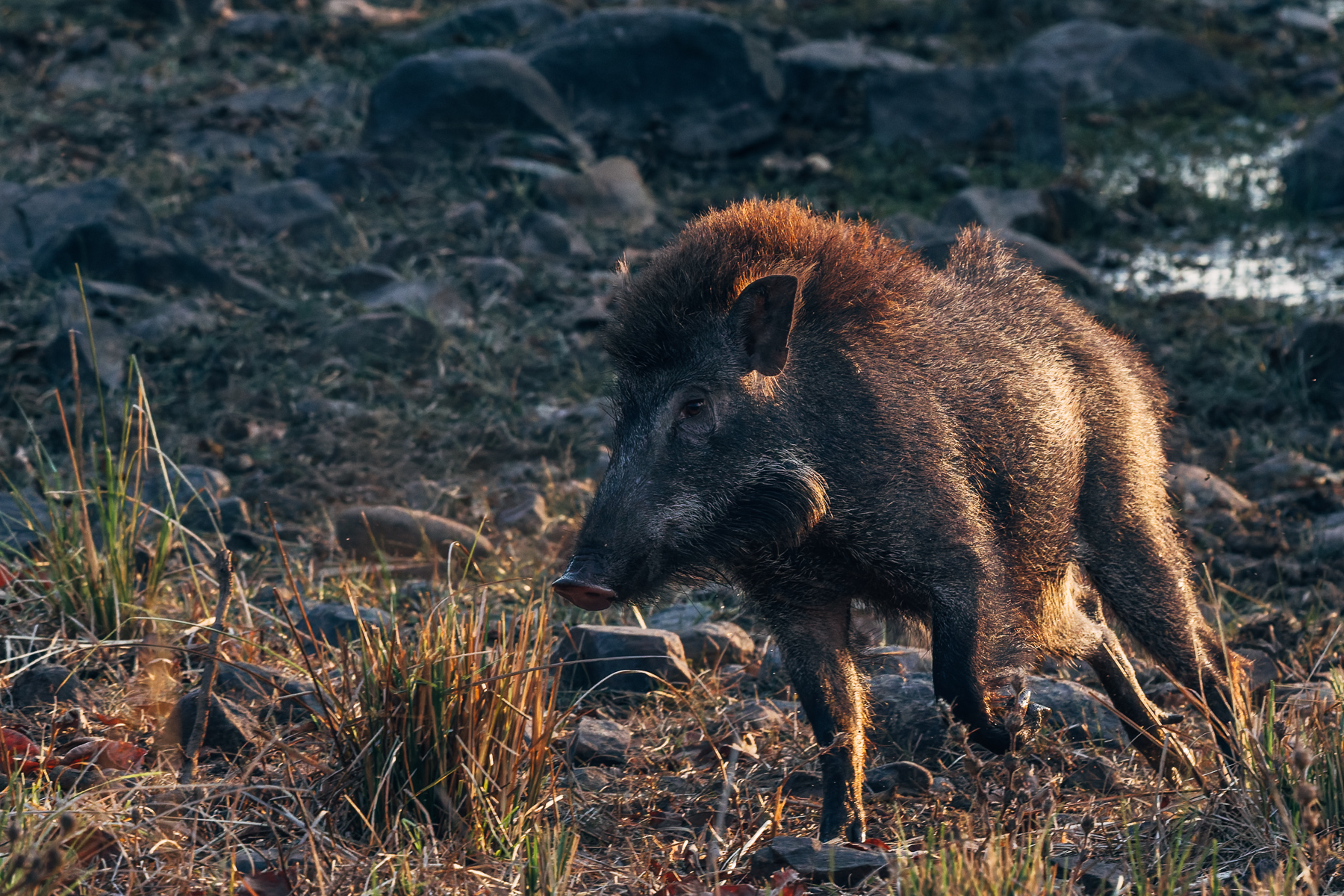
Wild Boar are a common sight in India's jungles. Although preyed on by Tigers, Indian Leopards and Dholes, adult boars are dangerous and often fight back, making them a challenging prey item (image by Virginia Wilde)
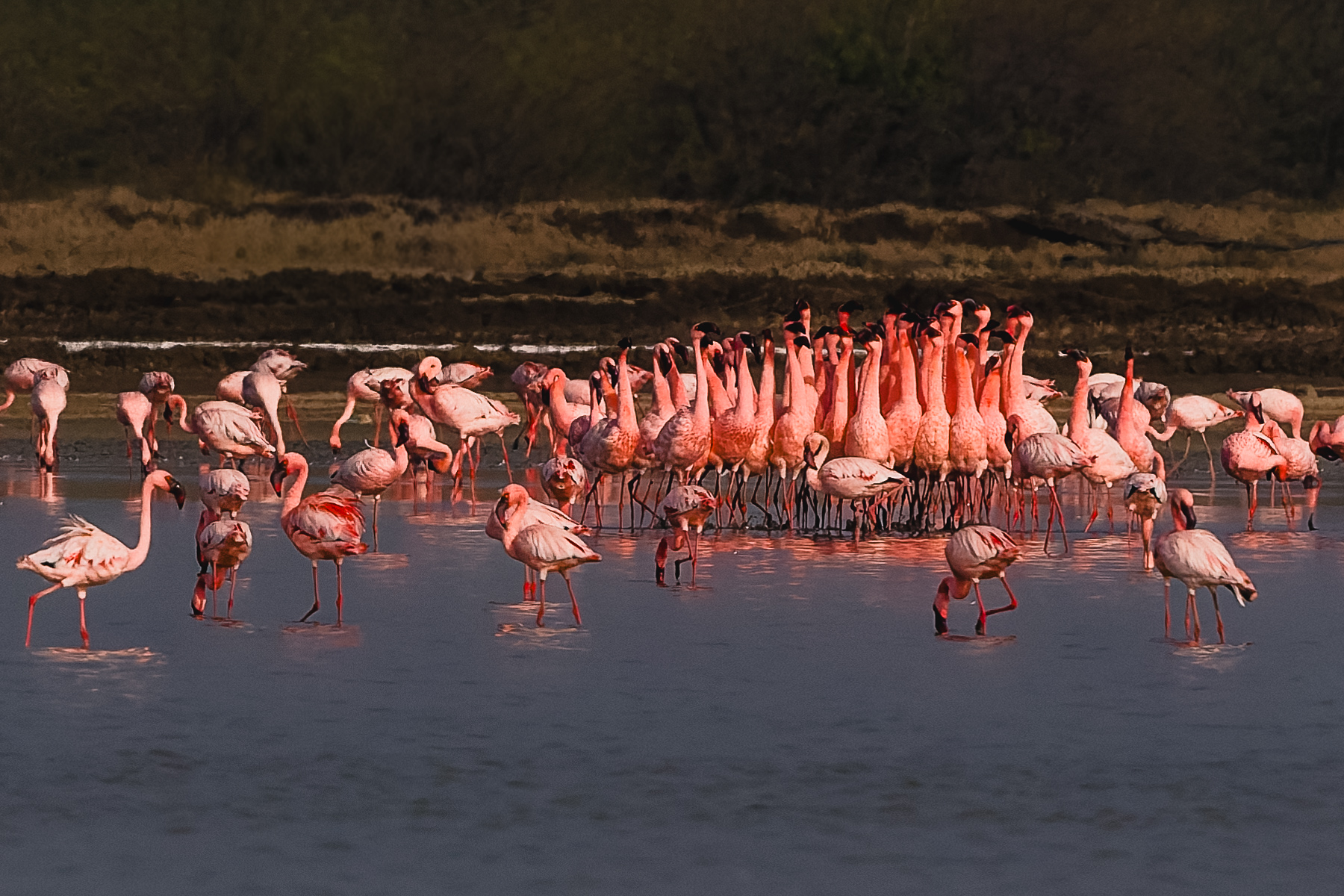
A flock of male Lesser Flamingos engaging in a highly synchronised group courtship dance, often referred to as a 'flamboyance.' These dances attract mates and stimulate breeding (image by Virginia Wilde)
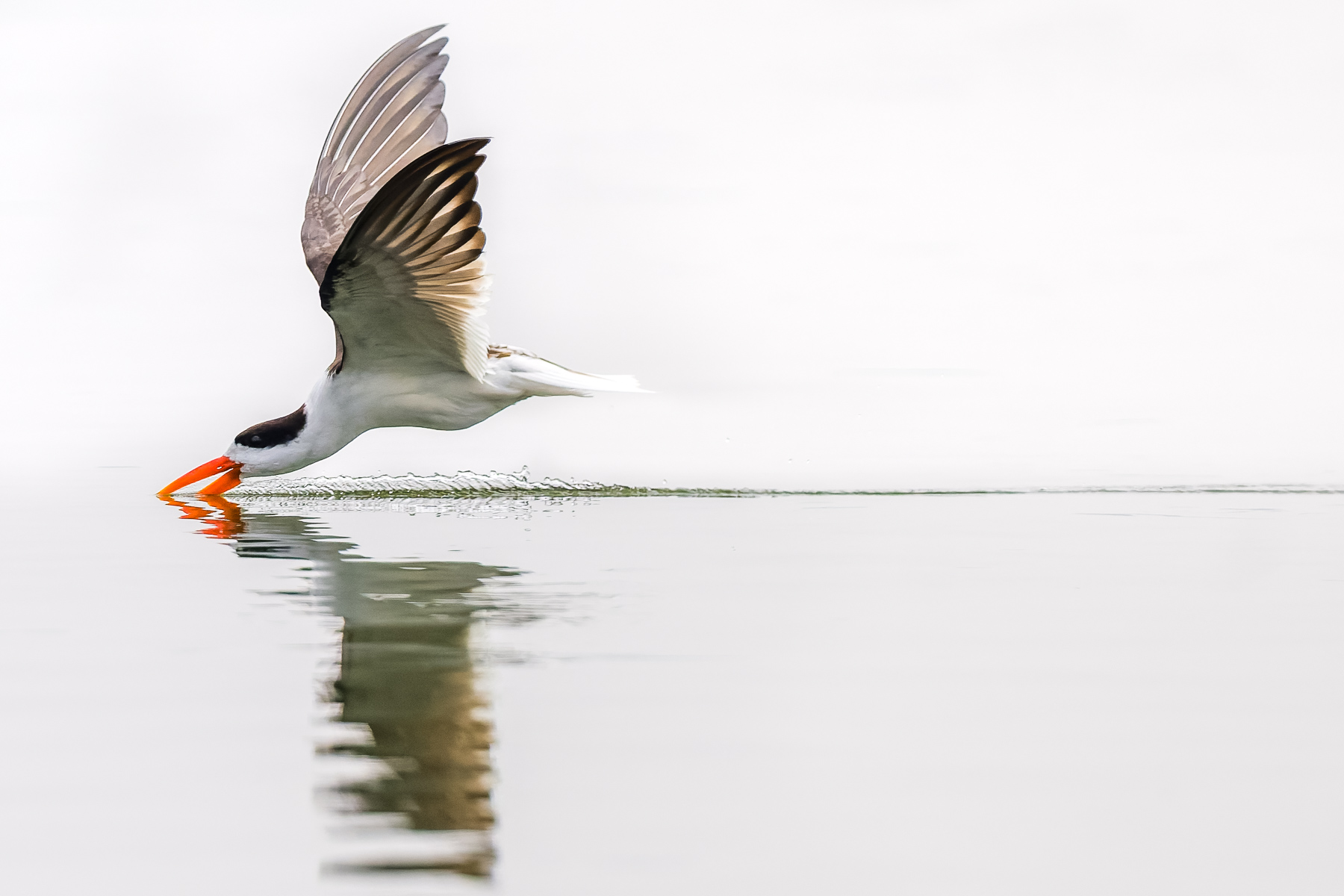
An Indian Skimmer does what it does best: skimming along the surface of the water of the Chambal River -while catching small fish and crustaceans with a specially-adapted lower mandible that acts like a scoop (image by Virginia Wilde)
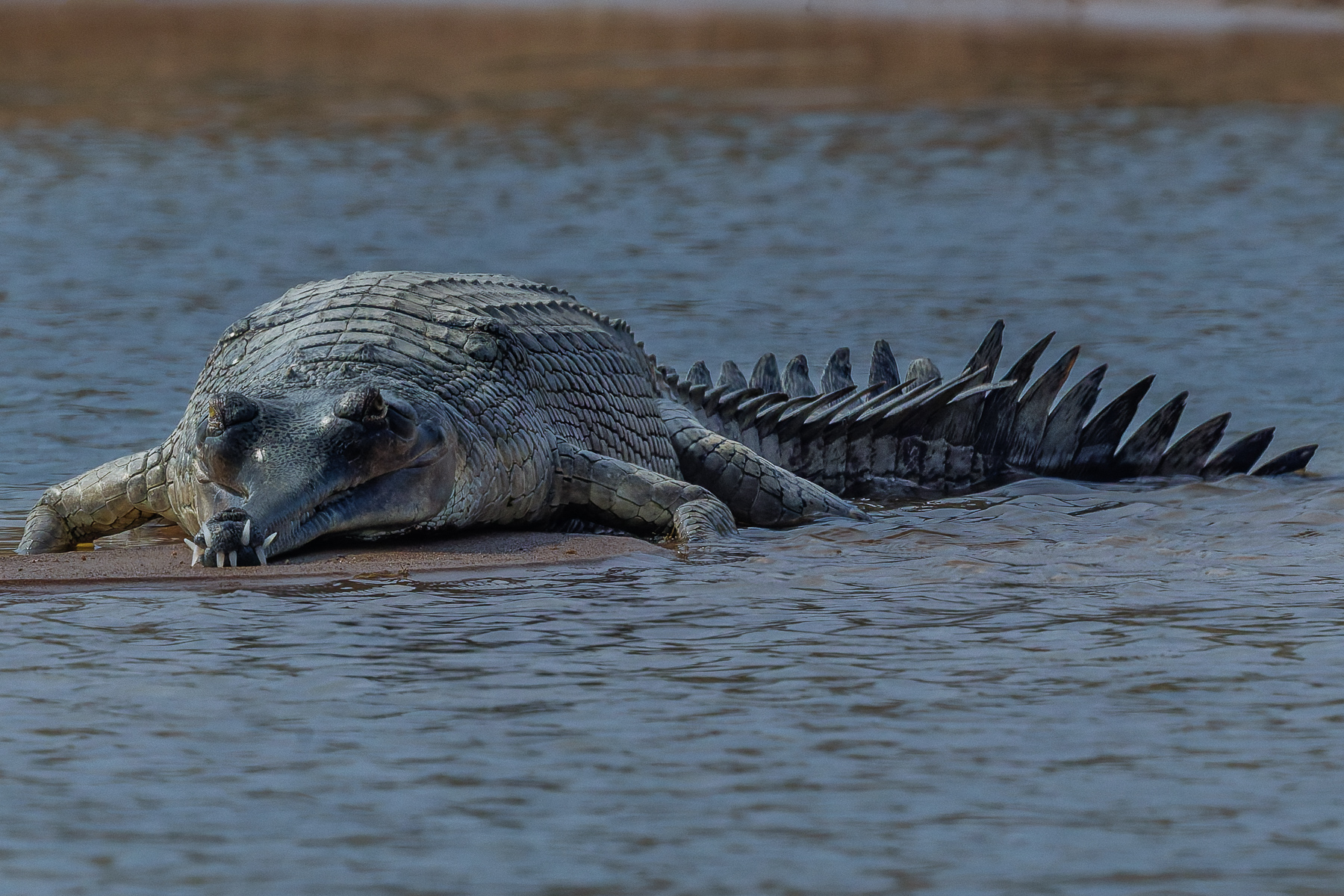
If ever there was an animal depiction of what British dentistry was like in the 1970s, its the gnashers on this Gharial. These stunning - yet critically endangered Crocodilians are renowned for their incredible tail spikes. According to my eight-year-old son, they are pure Godzilla (image by Virginia Wilde)
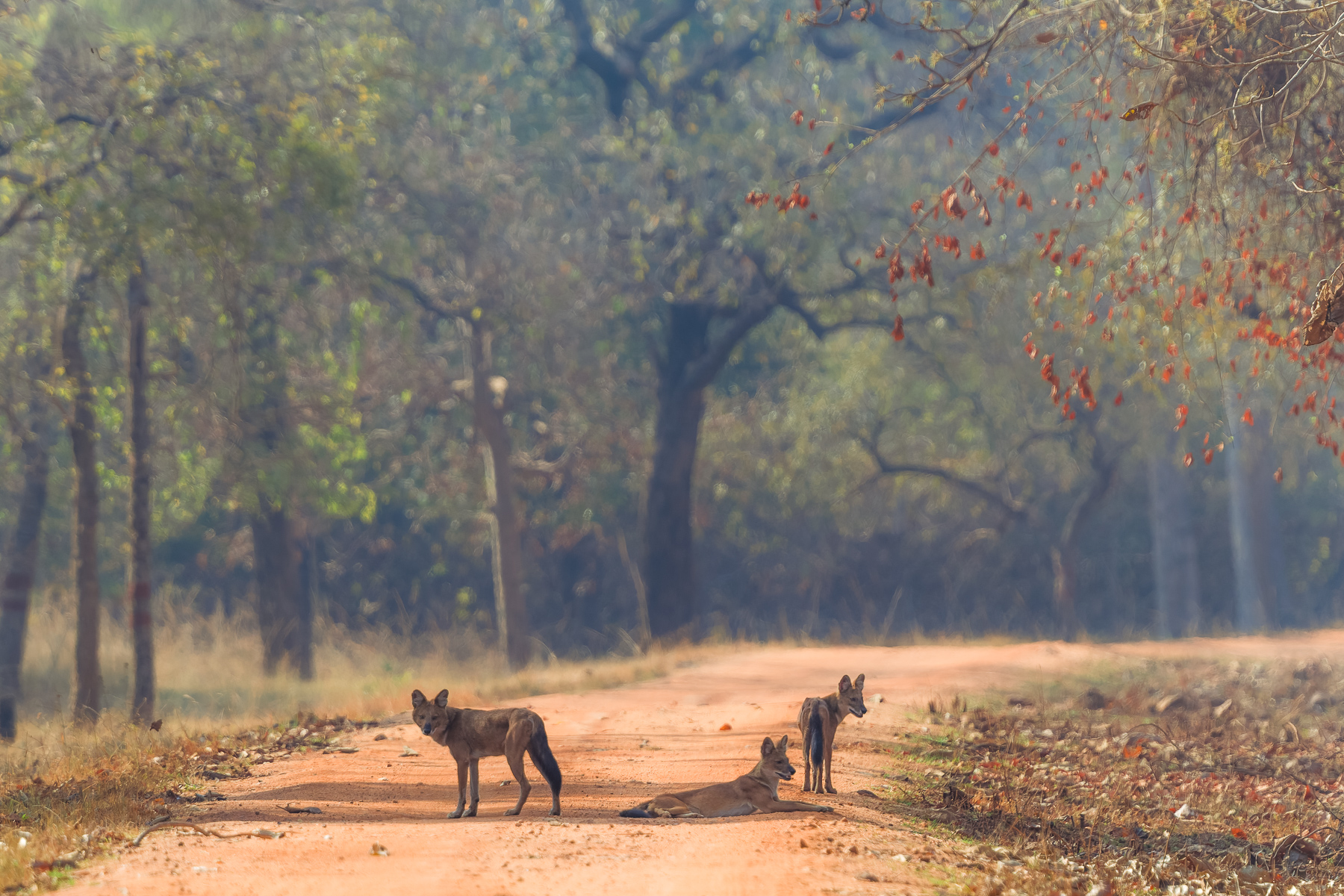
One of the absolute joys of our tour to India were the two separate encounters with Asiatic Wild Dogs (also known as 'Dholes'). These endangered canines are a delight to watch (image by Virginia Wilde)
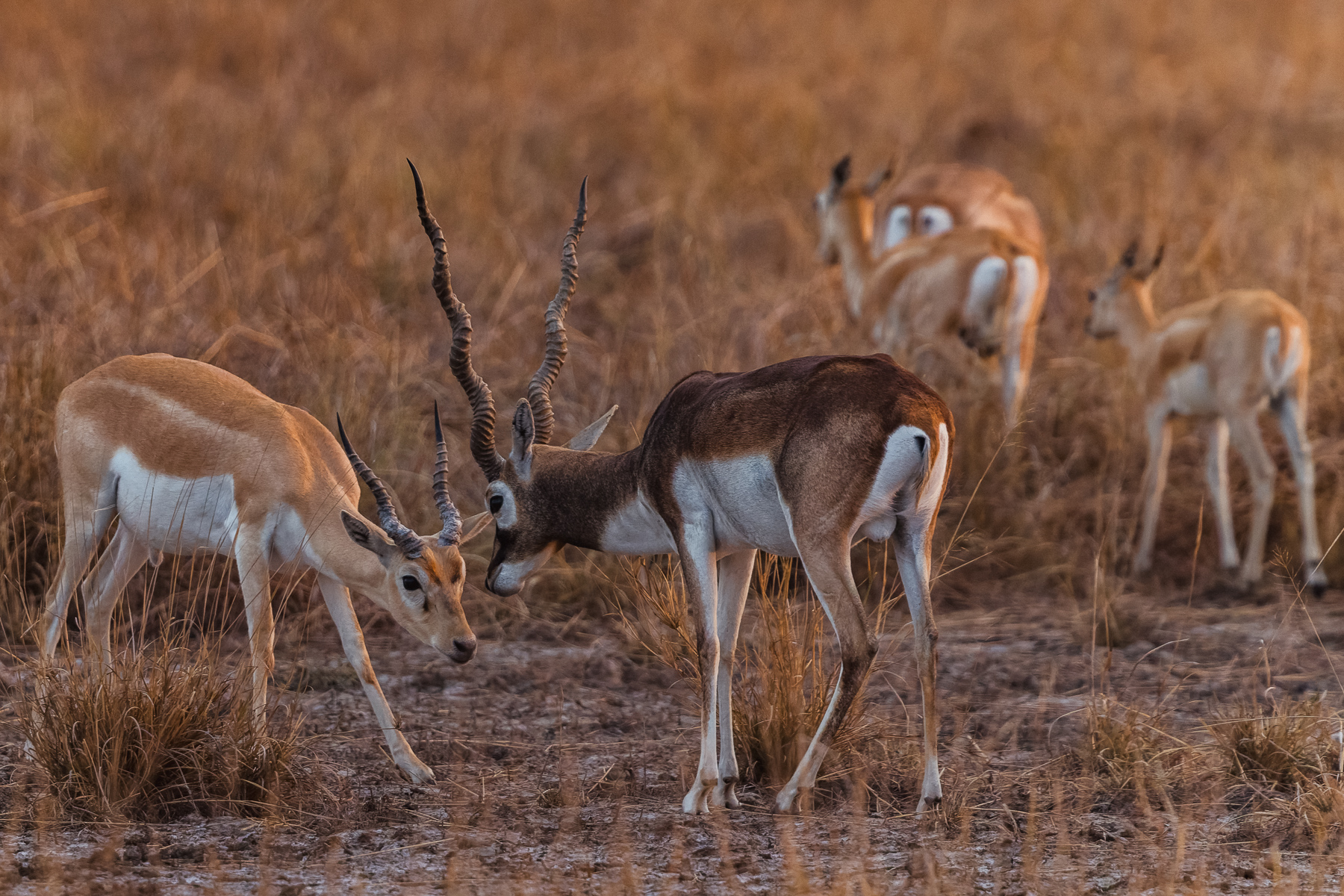
A young Blackbuck Antelope male bows in front of his more dominant elder, in the grassland plains of India's Blackbuck National Park (image by Virginia Wilde)
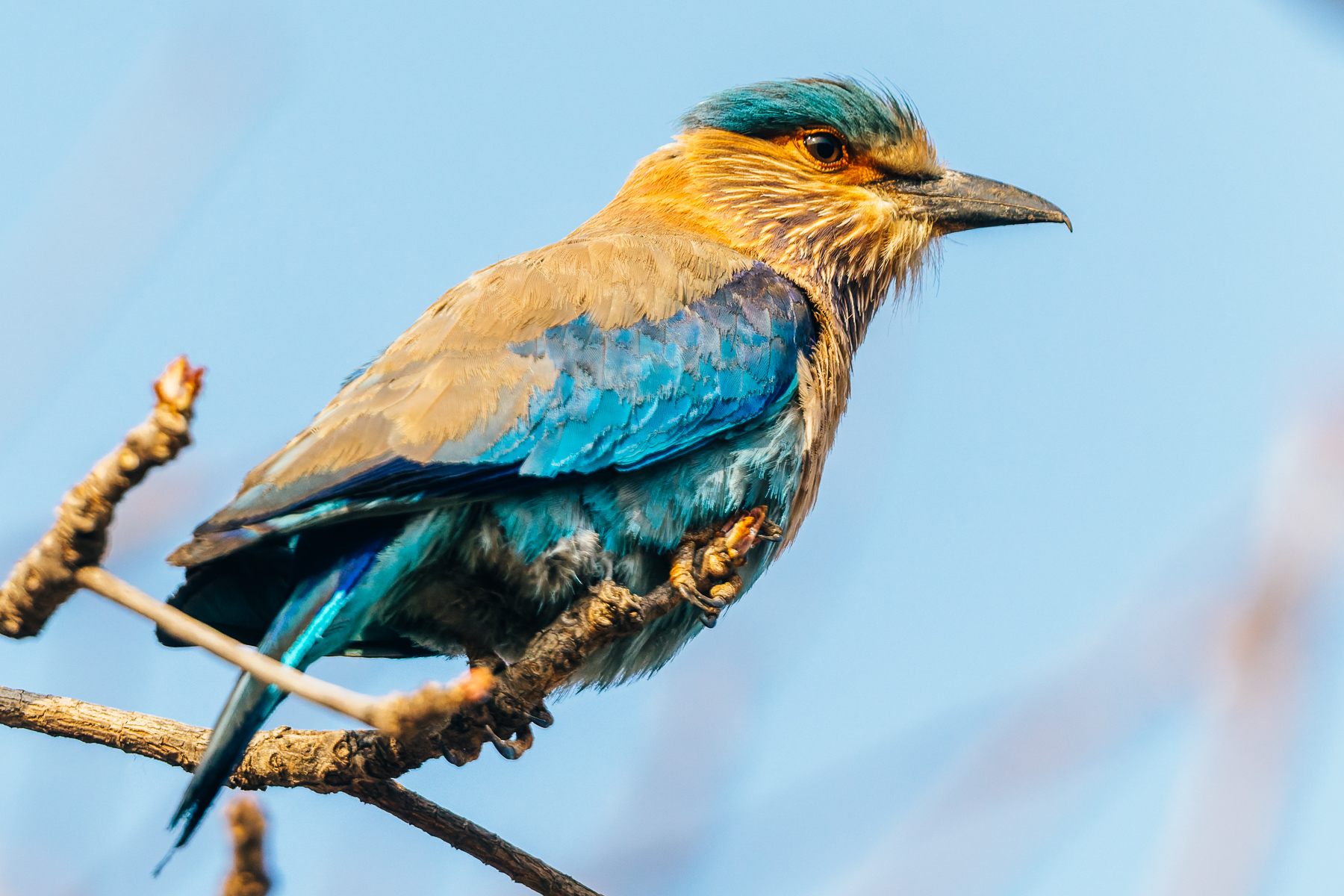
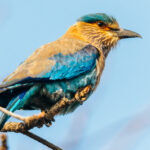
Beautiful but ruthless, the Indian Roller has been frequently observed flying towards forest fires and brush burns, perching near the flames to snatch fleeing insects (image by Virginia Wilde)
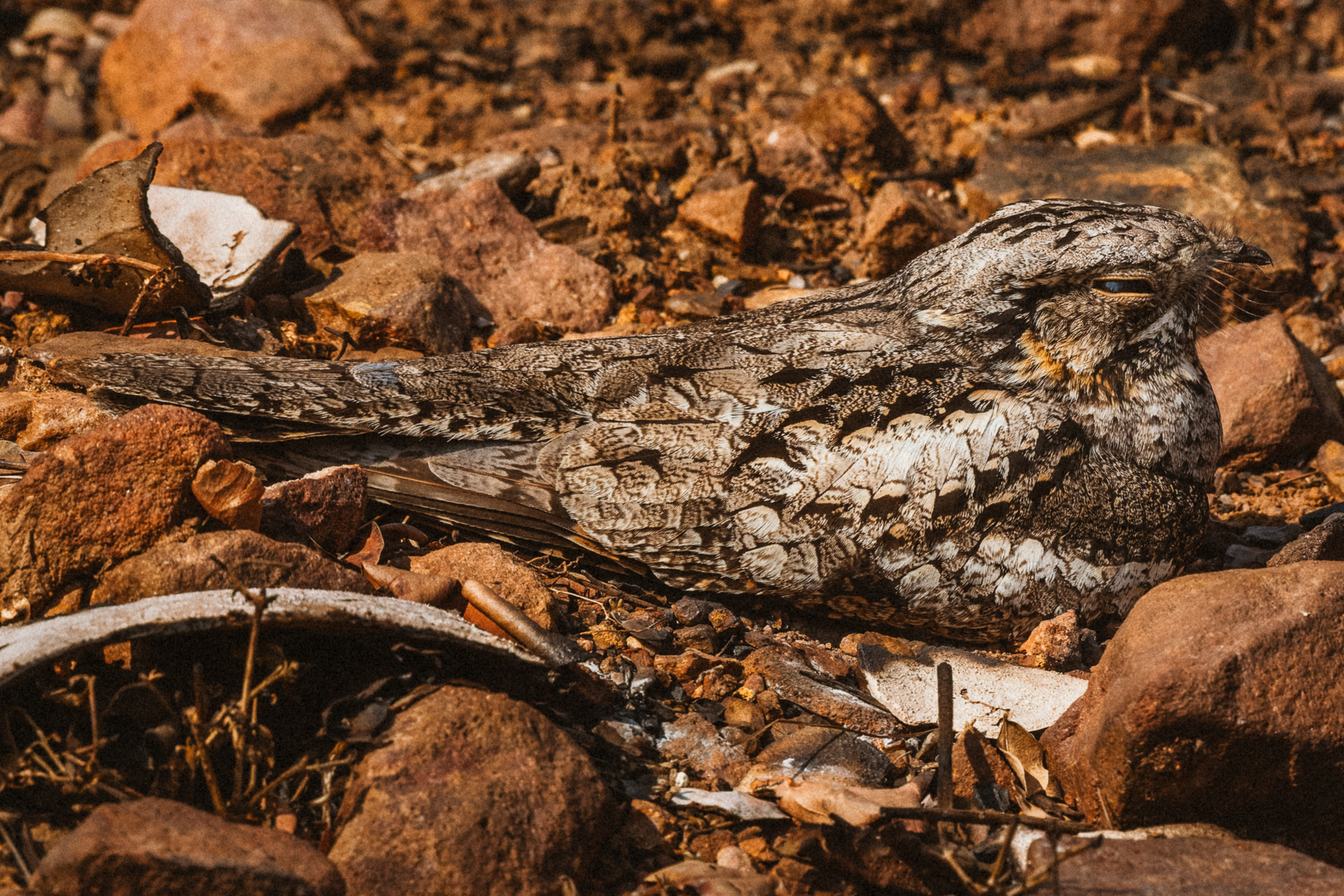
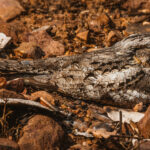
We were lucky to have sightings of five Nightjar species on this year's tour - including the coveted Sykes's Nightjar. But my personal favourite was this Jungle Nightjar. Just look at that beautiful mottled plumage! (image by Virginia Wilde)
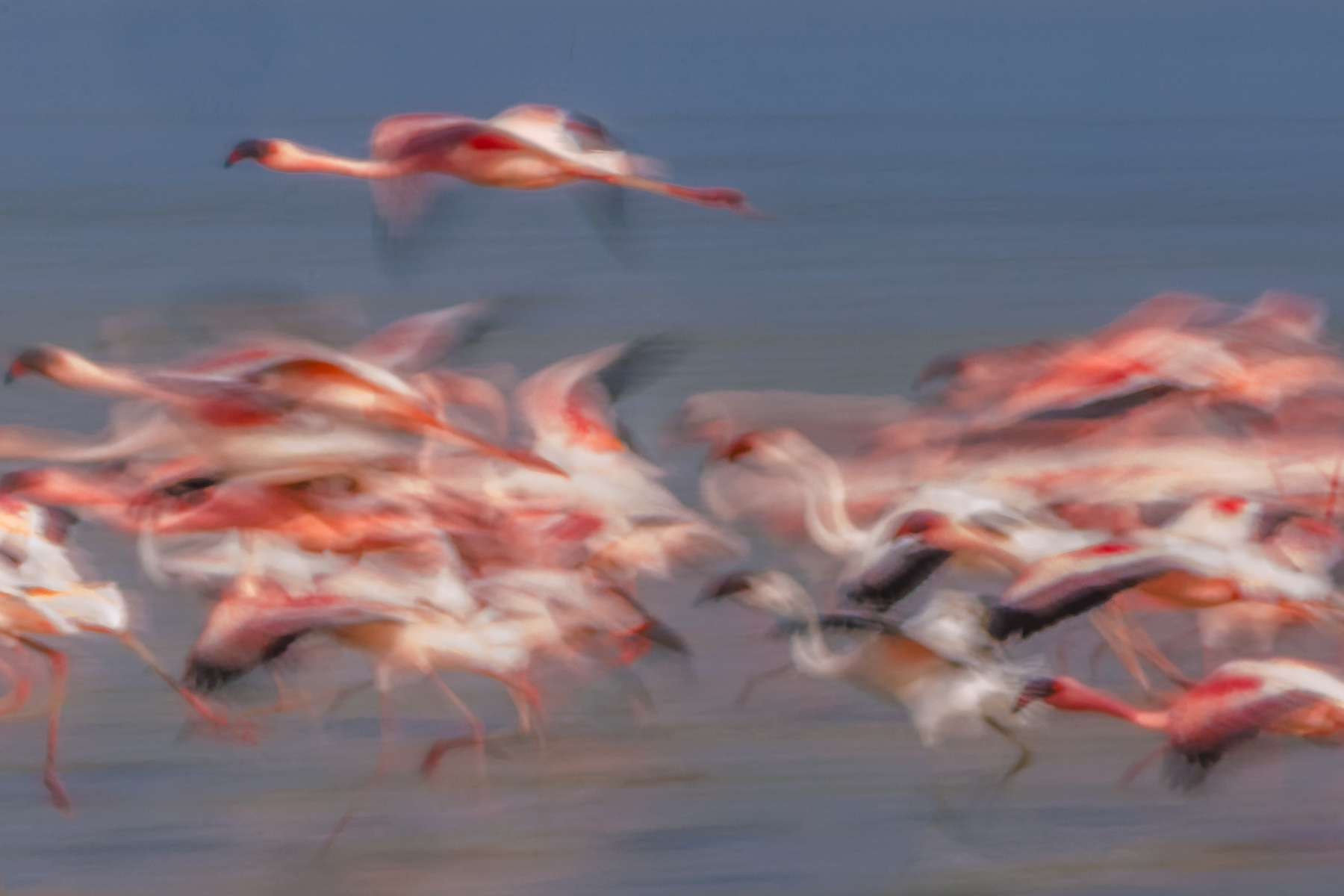
Slow-shutter speed panning shot of both Lesser and Greater Flamingos swooping over the shallow wetlands of India's Little Rann of Kutch (image by Virginia Wilde)
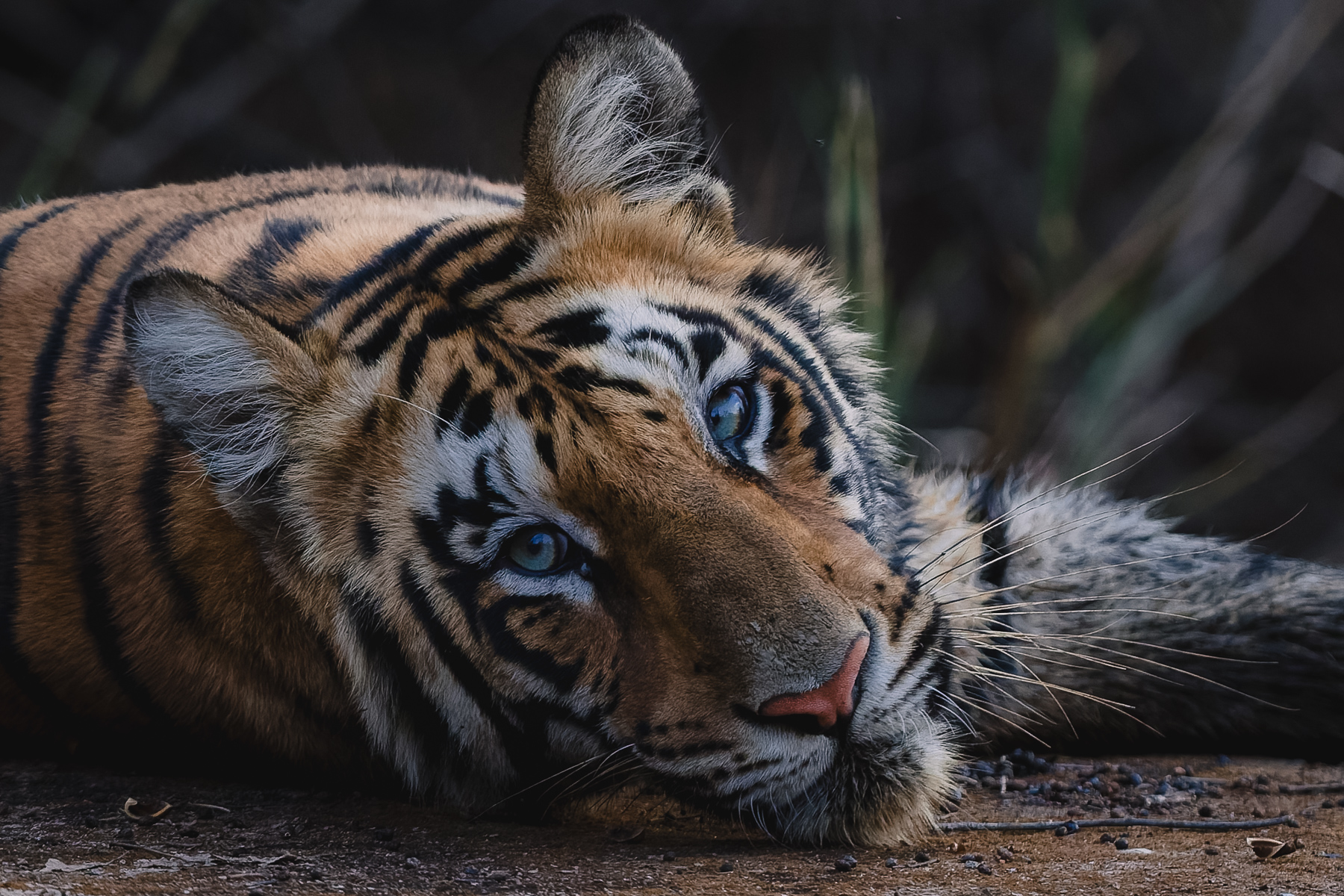
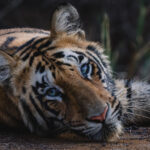
All tiger cubs are born with blue eyes, which change colour as they grow older. This sub-adult - around 11 months old - still has a hint of blue in hers. And, my, isn't she beautiful! (image by Virginia Wilde)
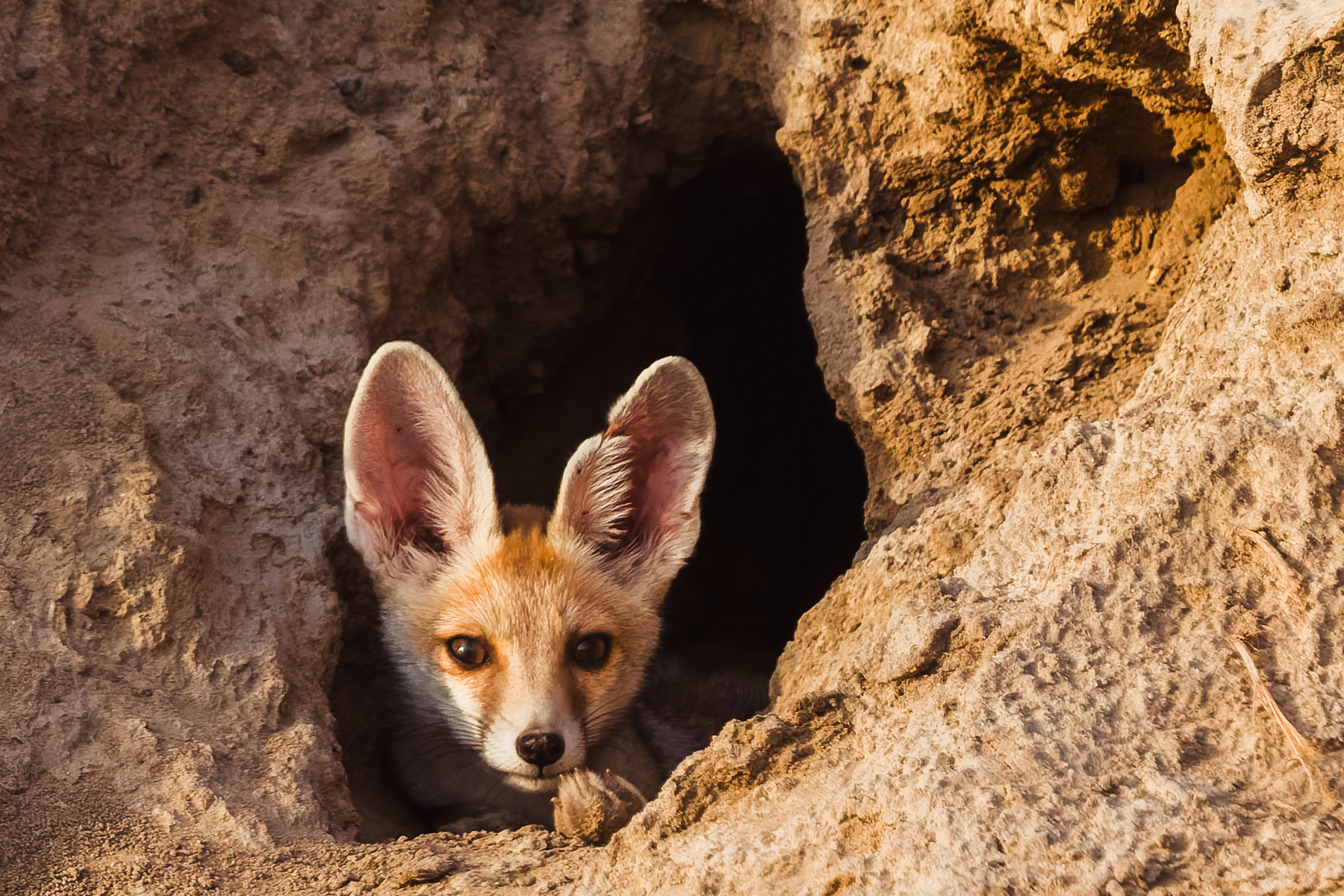
Desert Fox cubs are a month old before they start to venture outside of their dens to play. By six weeks old, they start learning to forage for solid food, returning only to rest (image by Virginia Wilde)
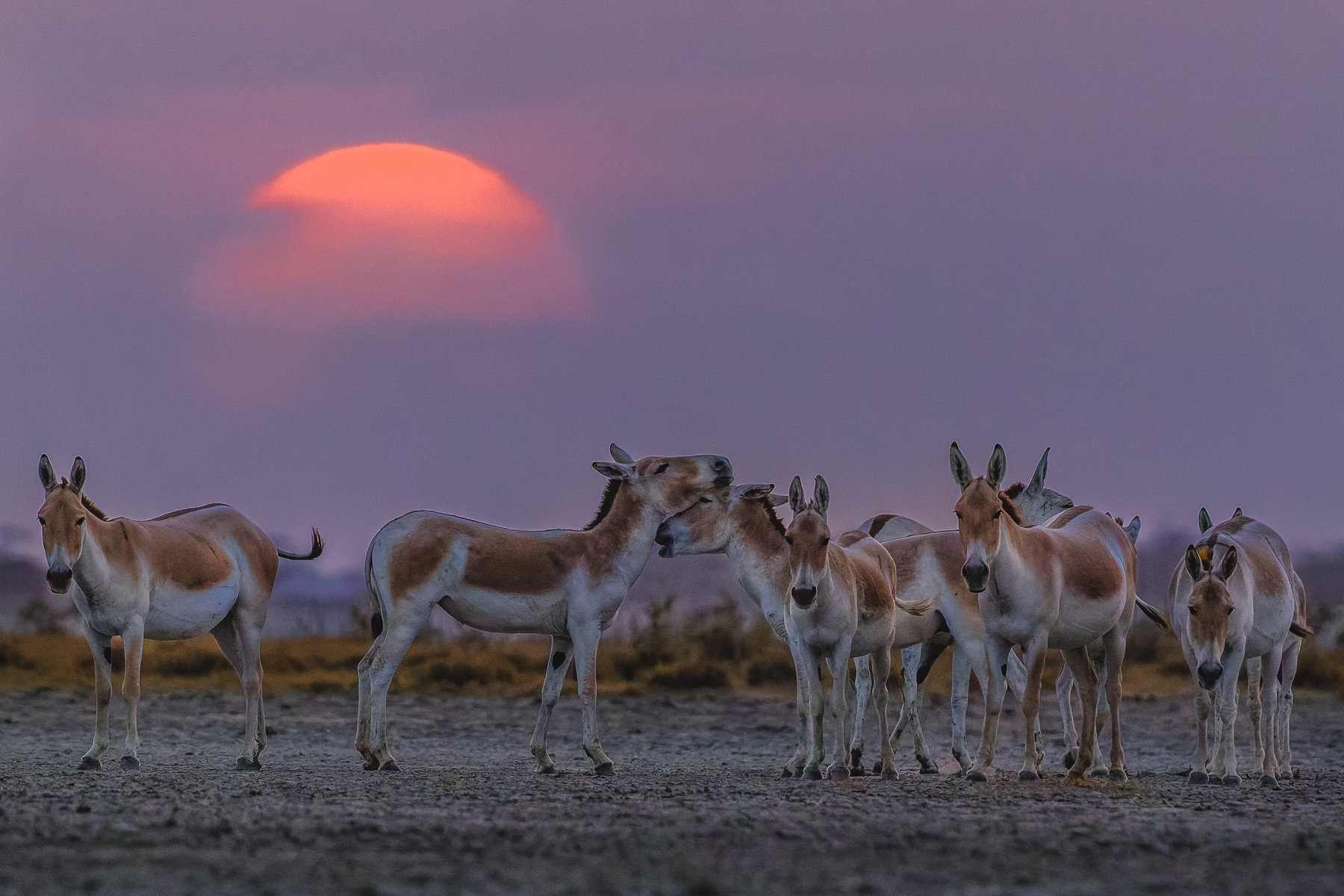
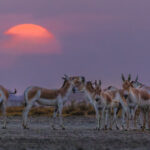
A small herd of Indian Wild Ass in the blush of a beautiful Indian sunset (image by Virginia Wilde)
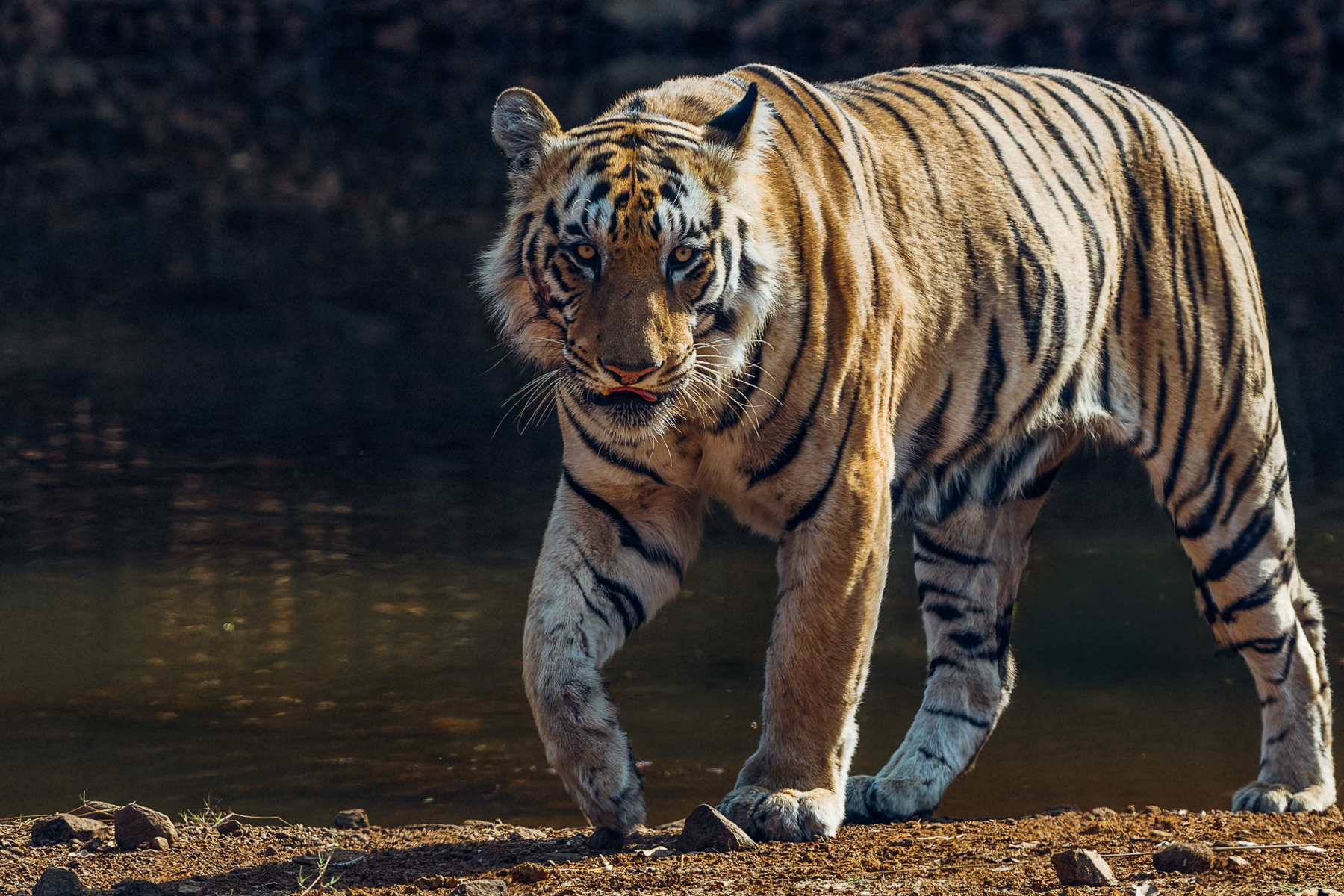
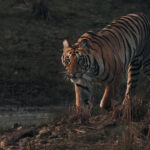
An impressive male tiger - known as 'Collarwalla' emerges from the shadows and pads along the riverside in India's Tadoba National Park. The width of tigers' stripes has been shown to match the width of their territories' dominant vegetation, to aid in camouflage (image by Virginia Wilde)
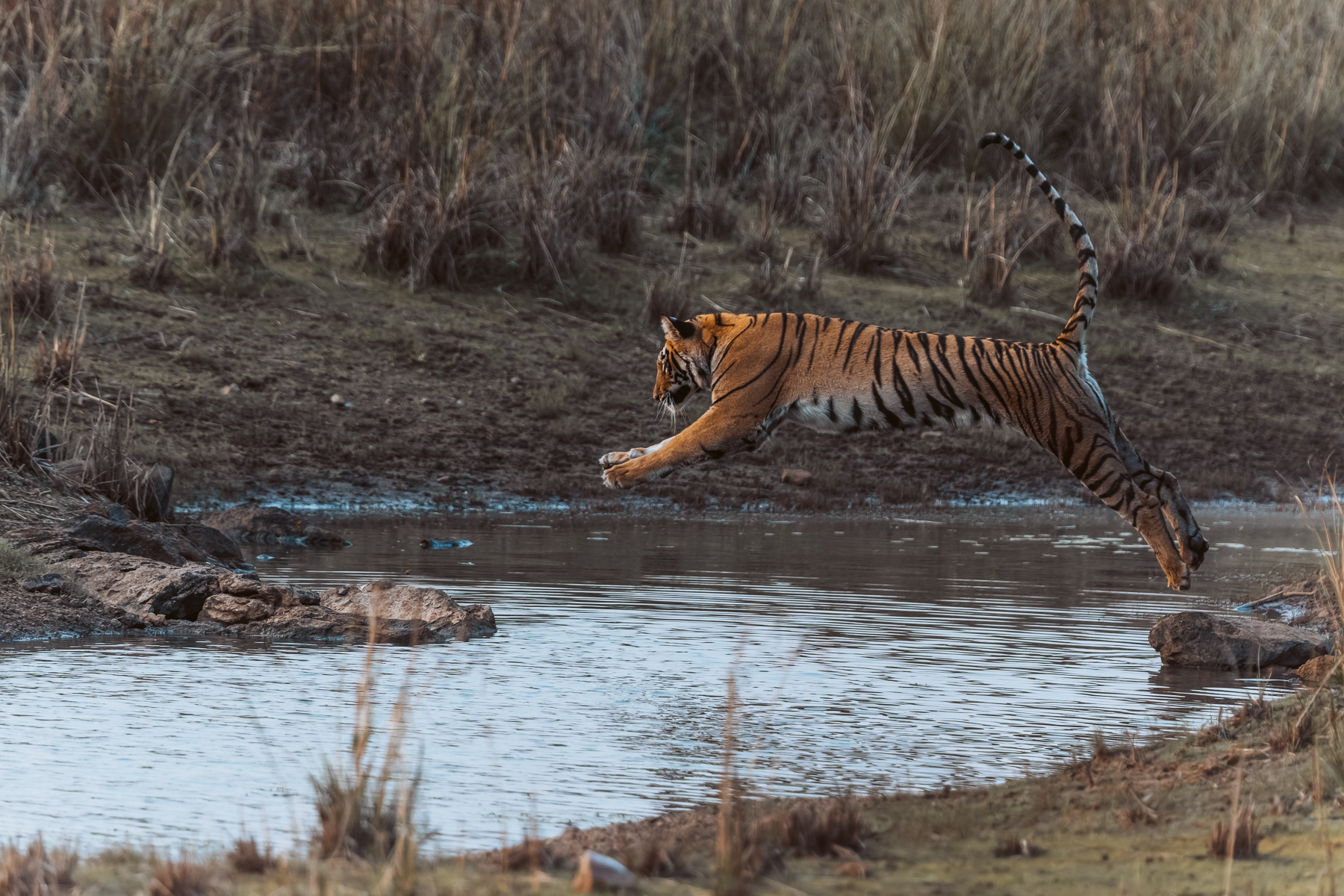
Captured mid-jump, this majestic tigress mis-judged her leap and slipped on the rocks, before quickly recovering to start hunting (image by Virginia Wilde)
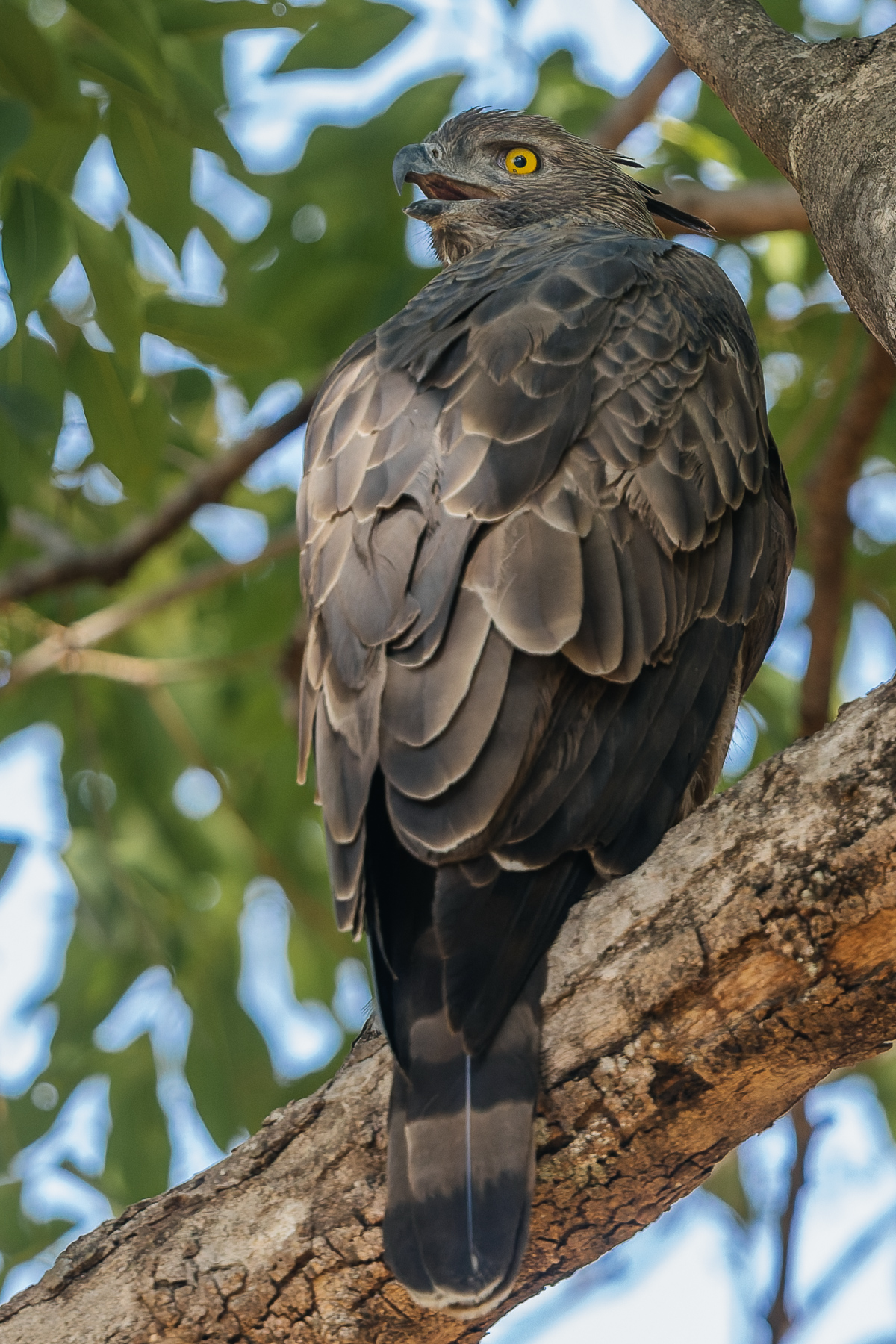
A Crested Hawk Eagle showing is distinctive 10cm long 'crest'. Also known as the Changeable Hawk-Eagle with individual showing a wide range of variation in plumage from pale to dark (image by Virginia Wilde)








Two courting Indian Flying Foxes appear deep in gossip as they entangle in each others' wings during a mating ritual. Indian Flying Foxes - also known as Greater Indian Fruit Bats - are known as 'megabats', with a wingspan of up to 5ft (1.5 metres) and a habit of living in colonies several hundred, or even a thousand-strong (image by Virginia Wilde)
And stretch, little one! A Desert Fox cub gives its front legs a good stretch as the sun rises over the saline desert of India's Little Rann of Kutch (image by Virginia Wilde)
Women from the Mir tribe in India's Little Rann of Kutch, who are descended from the Butt tribe in Kashmir. These formerly nomadic people are highly-regarded for their handicrafts and detailed bead-making (image by Virginia Wilde)
The evening sun lights up the fur on the back of an Indian Wolf's coat. Indian Wolves are among the most ancient wolf lineages in the world, with genetic divergence dating back more than 800,000 years (image by Virginia Wilde)
The almost cartoonish outsized ears of the Desert Fox are designed for survival in arid environments. These almost cartoonishly-large ears act as acoustic amplifiers to detect the low frequency sounds of burrowing prey (such as insects or rodents) in sandy or hard-packed ground (image by Virginia Wilde)
One of my favourite moments in India this year - tigress 'Kajri' bathing in a shallow river in India's Tadoba Reserve, just as dusk was starting to fall (image by Virginia Wilde)
A flying Eurasian Spoonbill takes off during a particularly misty morning on India's Chambal Rover, rendering a painterly look to the sky (image by Virginia Wilde)
A colourful Asian Green Bee-eater - also known as the Little Green Bee-eater - tucks into its insect lunch. Asian Green Bee-eaters are highly gregarious, often gathering in groups of up to 300 individuals (image by Virginia Wilde)
This adorable Northern Plains Grey Langur infant - a species of primate also known as Sacred Langurs - poses contentedly in its mother’s lap, as assuredly as any human baby (image by Virginia Wilde)
Few architectural wonders show the dedication to symmetry as much as India's Taj Mahal. This image was actually photographed on film camera using Fuji Velvia film and digitised using a smartphone app scanner. Who says Wild Images tour leaders can't experiment with different techniques? (image by Virginia Wilde)
A local farmer collects wood using a cattle-driven cart, after a day in the fields in one of the buffer zones of India's Tadoba-Andhari Tiger Reserve (image by Virginia Wilde)
Part-tree, part-Tiger. Bengal Tigers are masters of ambush predation, relying on stealth and camouflage - followed by explosive power - to hunt down prey (image by Virginia Wilde)
A pair of Black-winged Stilts contort around one another as a courtship display before mating (image by Virginia Wilde)
Oh Jungle Cat kitten, you are so cute. I know you will grow up to be a surprisingly fierce killer, especially for your modest size. But right now, you're adorable (image by Virginia Wilde)
The beautiful tigress 'Kajri' - whose prettiness made her a tour favourite (image by Virginia Wilde)
Indian Wild Dogs - or 'Dholes' - are a real treat to see. There are fewer than 2,500 individuals left, globally, with India representing the last remaining stronghold. Dholes are highly social animals, living in packs of 5-12 members (image by Virginia Wilde)
Dominant male tiger 'Mowgli' pads along the forest floor in India's Tadoba National Park. Male Bengal tigers have a roar that can be heard up to 3km away and are the largest wild cats, often weighing more than 480lbs (220 kg) (image by Virginia Wilde)
'Homeward Bound.' A nursing Striped Hyena carries the limp body of an infant antelope in her mouth, strolling down the road in Blackbuck National Park and back to her den - and hungry cubs (image by Virginia Wilde)
Bengal Tiger mum 'Collarwali' and her female cub relax in the shade by a muddy pool after daytime temperatures in India's Tadoba National Park reached 42 degree C (image by Virginia Wilde)
Some of the 200 sandstone Hindu Temples in the Bateshwar temple Complex - built between the 8th and 10th century (image by Virginia Wilde)
India is home to six species of mongoose, of which the Indian Grey Mongoose - like this one here - is the most numerous (image by Virginia Wilde)
'Hold tight little one!' A mama Sloth Bear - the inspiration for Baloo in Rudyard Kipling's 'The Jungle Book' - emerges from the vegetation to sup from a pool, with her youngster in tow (image by Virginia Wilde)
India has three crocodile species: the critically-endangered Gharial, the Saltwater croc, and the Mugger, like this individual. Muggers are often found in areas with high human population density, meaning attacks are relatively common (image by Virginia Wilde)
A Sloth Bear cub struggles to climb back up onto its mother's back - while its sibling managed the feat perfectly. Hopefully, its mama will be patient! (image by Virginia Wilde)
Cattle silhouetted on the banks of the Chambal River, with a newly-built bridge just visible in the mist behind (image by Virginia Wilde)
Black and white portrait of a subadult male Bengal Tiger, in a moment of calm before embarking on a hunt in Tadoba National Park (image by Virginia Wilde)
A Painted Stork feeds in the shallows of a stream by the Chambal Safari Lodge, spotted during an evening stroll before dinner (image by Virginia Wilde)
The tigress known as 'Bijlee' was our first tiger sighting on this year's tour. A further 35 tiger encounters (of 21 individuals) were to come. I love the sepia tones that can result when wildlife moves out of the shadows and into the light (image by Virginia Wilde)
A young male Sambar Deer splashes through marshes. Sambar Deer comprise up to 45% of the biomass consumed by the Bengal Tiger. Anecdotally, the tiger is said to mimic the call of the Sambar, to deceive it while hunting (image by Virginia Wilde)
When on the hunt, India's Brown Fish Owls often strategically perch on rock overhangs or hanging branches above rivers, grabbing prey by suddenly gliding just over the water's surface (image by Virginia Wilde)
One of the pleasures of photographing Tigers in the Tadoba reserve is the large number of watering holes, rivers and lakes - making the chances of tiger reflection images relatively high (image by Virginia Wilde)
Young female tiger 'Kajri' is one of the prettiest tigers in India's Tadoba-Andhari Tiger Reserve. We watched her in these moments of calm and tranquillity, bathing in the cool river of the reserve's Jumona buffer zone (image by Virginia Wilde)
Male Tiger 'Collarwala' shows his bloody nose - whether from fighting for the rights to mate female Bubli (sleeping on the bank) or from a tussle with prey. Regardless, a dip in the mud-bath must be soothing (image by Virginia Wilde)
A Red-collared Dove and Collared Dove sit side by side on a branch. Both species as pretty as each other, in my view, while common sightings in India (image by Virginia Wilde)
What's the point of being a Desert Fox cub if you can't playfight? Right? (image by Virginia Wilde)
The statuesque Nilgai is the largest antelope in Asia and ubiquitous across the northern Indian subcontinent. Also called 'Blue Bull' for the bluish tinge to their coats, only the males bear horns (image by Virginia Wilde)
Portrait of an Indian Scops Owl, whose mottled plumage makes it often difficult to spot in the daytime (image by Virginia Wilde)
Indian Wild Asses are one of India's fastest animals. But even running champions have to rest. And this is the way to do it (image by Virginia Wilde)
Eye-to-eye with a young female tiger known as 'Kajri' - one of the prettiest Bengal Tigers in the Tadoba National Park, Maharashtra Province (image by Virginia Wilde)
'Who's afraid of the Big Bad Wolf?' This young Blackbuck Antelope, definitely. This image almost appears as an optical illusion. The soft-focus form of the foreground deer, contrasting with the sharper form of the wolf behind is the result of photographing with a 600mm telephoto lens (image by Virginia Wilde)
There are few countries in the world where wildlife lives as cheek-by-jowl with humans, as it does in India. Here, a Rhesus Macaque rests on houses in Holipura village, in Uttar Pradesh (image by Virginia Wilde)
There are few animals on Earth as beautiful and iconic as the Tiger. Who could ever tire of seeing them in the wild, especially when they bathe just a few metres away, like this tigress did from our jeep (image by Virginia Wilde)
Blackbuck antelope - also known as the Indian antelope - are native to the Indian subcontinent but have been heavily hunted for the male's incredibly beautiful long spiralling horns. They rank in the top ten fastest animals on Earth, and can outrun almost any other animal over long distances (image by Virginia Wilde)
An endangered Indian Skimmer scoops up sand as it starts to take flight, on a sandbank by India's Chambal River (image by Virginia Wilde)
A suspicious-looking Desert Fox creeps down the earthy bank near its den, before pouncing on his sibling in a surprise playfight ambush (image by Virginia Wilde)
A month-old Desert Fox cub gives himself a good scratch, before scampering around his den in the saline desert of India's Little Rann of Kutch (image by Virginia Wilde)
Desert Foxes are easily distinguished from Indian Foxes by the colour of their tail tips: white for Desert Foxes, black for Indian. This pair of sibling cubs do what all infant siblings do - playfight, bite and then briefly scarper (image by Virginia Wilde)
Indian Wild Dogs (or Dholes) are actually about the size of German Shepherd dogs, but look more like a long-legged fox. These highly elusive animals are also fierce. A pack of Dholes will often drive away a Tiger, through endurance, co-ordination and harassment (image by Virginia Wilde)
Black-and-white portrait of a Gaur - the world's largest wild cattle species. The Gaur, or Indian Bison, can weigh up to 2,200 lbs with males standing over 6ft tall at the shoulder (image by Virginia Wilde)
A sub-adult Tigress emerges from behind a tree, padding towards her two male siblings, who she already bosses around. Female tigers are just as territorial as their male counterparts, often fiercely defending areas to ensure survival and food for their cubs (image by Virginia Wilde)
A Northern Plains Grey Langur mother gazes lovingly at her infant, surrounded by other members of her troop. Grey Langurs are considered sacred in Hinduism and thrive in diverse environments, including cities (image by Virginia Wilde)
Despite their name, White-throated Kingfishers are not strictly fish-eaters. They have a varied diet including small reptiles and amphibians, rodents, crabs and the young of other birds. In the 1800s, they were heavily hunted for their electric blue feathers (image by Virginia Wilde)
A watchful female Sambar Deer catches sight of something potentially hazardous in the jungles of Tadoba. Unusually for deer, the average herd size is only three or four individuals - with herd members often fighting back fiercely when attacked by predators. Sambar are the favourite prey of Bengal Tiger and Asiatic Lion (image by Virginia Wilde)
'Reflections of a Bengal Tiger'. It's a privilege to see such a stunning cat in the wild. Fewer than 3,700 wild Bengal Tigers remain in the world - with India's Bengal subspecies representing around 75% of the total global wild tiger population (image by Virginia Wilde)
Bengal Tigers are highly proficient jumpers, capable of leaping up to 30ft (9 metres) in a single bound. Nevertheless, this young female bungled his landing and ended up smashing his face on a rock in India's Tadoba National Park (image by Virginia Wilde)
It's surprisingly entertaining, watching a Wild Boar roll in mud. Many of us have rarely seen an animal enjoy itself as much as this fella, on a hot afternoon, after finding the mud bath of his dreams (image by Virginia Wilde)
Aww! Definitely one of the cutest mammals of our tour was this nocturnal Common Palm Civet. He scampered around the trees at night at our lodge in the Chambal River region of India (image by Virginia Wilde)
Another view of the iconic Taj Mahal, this time showing a few of the many Cattle Egrets that flock to its reflective pool (image by Virginia Wilde)
Matriach tiger 'Collawali' tenderly greets one of her subadult daughters, before returning to her mud bath to escape the heat of the late afternoon sun, in India's Tadoba National Park (image by Virginia Wilde)
Black-and-white portrait of Eurasian Spoonbills on the Chambal River - one of India's least polluted major rivers (image by Virginia Wilde)
A female tiger holds up her paw - as if there is something wrong. But it's actually just one step in her paw stretching routine, which lasted for more than one minute. Until she was satisfied with her paw yoga session (image by Virginia Wilde)
'It's me. A Gaur bull. Also known as 'The Unit'. On account of me being the size of a car. And weighing as much as a ton. Do not mess with me. Okay?' (image by Virginia Wilde)
Although becoming quite rare in Southeastern Europe, the beautiful Ruddy Shelduck remains a common sighting across much of its Asian range (image by Virginia Wilde)
Tigers are exceptional swimmers and frequently bask in rivers and lakes to regulate their body temperature in summer. Here, a young female tiger laps at the river in India's Tadoba National Park (image by Virginia Wilde)
Most of the forest paths we drove along in the Tadoba-Andhari Tiger Reserve were snaking and frequented by the wildlife too . Beautifully demonstrated by this Wild Boar pack (image by Virginia Wilde)
Spotted Owlets are a common sight in India - not least because they have adapted well to living in cities, as well as farmland (image by Virginia Wilde)
So many peafowl reside in decorative bird parks and gardens across the world now that it's easy to forget that they are native to the Indian subcontinent. These iconic birds are symbols of beauty and immortality in both Greek and Hindu mythology (image by Virginia Wilde)
We watched several Indian Wolf hunts on our tour - mostly all unsuccessful. These predators are known to use a 'decoy' tactic, where one or two wolves distract a herd of Blackbuck Antelope, while another wolf attacks from the side or rear (image by Virginia Wilde)
Northern Plains Grey Langur infants have surprisingly humanoid faces, like this youngster here. Langurs often associate with Spotted Deer, with both species responding to each other's alarm calls. The deer benefit from the langur's treetop vigilance, while the langurs benefit from the deer's stronger sense of smell and hearing (image by Virginia Wilde)
The heritage village of Holipura, in India's Uttar Pradesh, has some gorgeously decaying buildings. Beautiful - if you enjoy photographing architecture (image by Virginia Wilde)
Yes, there is a very distinctive tree. But can you spot the Asiatic Leopard? We watched a Sambar Deer stop in its tracks by this tree, smelling the hidden Leopard but unable to spot it - before slowly and carefully backing away (image by Virginia Wilde)
A handsome Indian Wolf crosses the road in India's Blackbuck National Park, before joining members of its pack in a morning hunt (image by Virginia Wilde)
Whoever said 'Let Sleeping Dogs Lie' clearly didn't understand that it is the far more deadly cats that one should let lie. Particularly if that cat is a tiger (image by Virginia Wilde)
Mud is incredibly cooling in the heat of the Indian day, but can be messy and sticky, as this juvenile tiger is fully aware (image by Virginia Wilde)
Where are you heading, Tiger? Over there on the river bankside? Many photographs taken in India have an almost painterly look, due to atmospheric mixes of dust and moisture in the air (image by Virginia Wilde)
Bengal Tiger paws are highly specialised tools for hunting and stealth - with a single swipe capable of delivering 10,000 pounds per square inch of force, enough to break a prey's back or neck. Paws feature soft thick pads for silent stalking and retractable claws up to 4 inches long. No wonder they deserve a stretch (image by Virginia Wilde)
Watching this female Bengal Tiger sip from a river, on an already blisteringly hot Indian day, made me thirsty (image by Virginia Wilde)
A pair of endangered Indian Skimmers fly over a sandbank on India's Chambal River - showing the bright orange knife-like bill for which they are renowned (image by Virginia Wilde)
A girl delightfully poses for our group in the heritage village of Holi Pura, Uttar Pradesh (image by Virginia Wilde)
Two Spotted Owlets nestle together in their favourite roosting tree in the grounds of the Blackbuck Lodge, in India's Gujarat state (image by Virginia Wilde)
A Bengal tiger sub-adult female rushes to greet her brother in the marshland of Khutwanda core zone, Tadoba National Park (image by Virginia Wilde)
The chunky Stork-billed Kingfisher is famously territorial - chasing away eagles and other large predators (image by Virginia Wilde)
In a rather grisly image, an Indian Wolf carries the head of her antelope prey - as her portion of her pack's recent kill. With fewer than 3,000 individuals left in the wild, Indian Wolves are considered one of the world's most endangered and distinct wolf populations (image by Virginia Wilde)
Sloth Bear cubs often ride on their mother's back for up to 9 months, clinging to her fur - a behaviour not seen in any other bear species. These solitary bears are myrmecophagous, meaning they mostly eat termites and ants, but also enjoy fruit and honey (image by Virginia Wilde)
A Bengal Monitor Lizard regularly visited the steps of our tea lounge in the lovely Blackbuck Lodge. Bengal Monitors can reach lengths of up to 175cm (69 inches) when fully grown - making them among the largest lizards in all of Asia (image by Virginia Wilde)
A Spotted Deer fawn bounds through the shallow waters of the marshes in Tadoba National Park, enjoying the relief from the 40 degrees C heat (image by Virginia Wilde)
The beautifully iridescent plumage of a male Indian Peafowl, in the branches of a tree near India's Chambal River. Female Peafowl choose mates based on the size, colour and complexity of these tails, forcing males to evolve increasingly extravagant plumage to successfully breed (image by Virginia Wilde)
A Great Stone Curlew - also known as a Great Thick-knee - wanders along the banks of India's Chambal River. Mostly nocturnal, the Great Stone Curlew's eyes reflect its mostly nocturnal existence (image by Virginia Wilde)
Some of the everyday scenes on our safari drives in India were as beautiful as the more iconic wildlife. Here a male Peafowl skirts along the a river in the Tadoba-Andhari Tiger Reserve (image by Virginia Wilde)
Portrait of an Indian Spotted Deer (or Chital) stag, showing his impressive antlers, in India's Tadoba-Andhari Tiger Reserve (image by Virginia Wilde)
India's eternally resplendent Taj Mahal - the Grande Dame of all architectural behemoths. And wonderful to visit on our Wild Images tour. (image by Virginia Wilde)
An Indian Pond Heron - or 'paddybird' - stands motionless at the side of a lake, showing its long neck feathers that appear during the monsoon breeding season (image by Virginia Wilde)
A pair of Jungle Cat kittens nestle in the grasses of India's Blackbuck National Park. Just like tigers, Jungle Cats are skilled swimmers and actually appear to enjoy diving into water after prey (image by Virginia Wilde)
An Egyptian Vulture struts along the bankside in India's Chambal River. Celebrated in many cultures for their resourcefulness, the Egyptian Vulture is one of the few bird species to use tools - utilising pebbles to smash open large eggs (image by Virginia Wilde)
The name 'Grey-headed Swamphen' doesn't do justice to the beauty of this wetland bird. Those iridescent blue-purple feathers make this bird a treat to watch in the rivers and swamps (image by Virginia Wilde)
antelope calf in the grasslands of India's Blackbuck National Park. Whether hidden by its mother, or left behind due to frailty or stillbirth, the calf was carried back to the nursing hyena's den, to feed her own cubs (image by Virginia Wilde)
The female Tiger known as 'Madhu' pads along a rock-bed in India's Tadoba reserve, showing the instantly distinctive thick neck stripe on her right side (image by Virginia Wilde)
'I'm up here, above you, giving me the height advantage...should I suddenly choose to pounce on you!' Desert Fox cubs indulge in playfighting in India's Little Rann of Kutch (image by Virginia Wilde)
Tiger matriarch 'Collarwali' spots some potential prey down by the river - and heads down to investigate, in India's Tadoba National Park (image by Virginia Wilde)
A female Hen Harrier swoops on some potential prey, in the Harrier-rich grasslands of India's Blackbuck National Park (image by Virginia Wilde)
A Shikra devours what's left of its lizard prey in the jungle of India's Tadoba National Park. Shikras are known to be secretive but highly skilled ambush hunters, with a long banded tail which helps them to navigate quickly through trees (image by Virginia Wilde)
Tigers are masters of stealth, with their soft silent paws and striped fur enabling them to blend into tall grass and dappled sunlight. Prey animals often cannot distinguish the bright orange fur - making tigers very hard to spot in undergrowth. Or hiding behind trees, like this one (image by Virginia Wilde)
This local girl was delighted to pose for our group, backdropped by one of the crumbling former mansions in the heritage village of Uttar Pradesh (image by Virginia Wilde)
Another view of some of the 8th century Hindu temples, at the Bateshwar Temple Complex, Madhya Pradesh (image by Virginia Wilde)
'First one leg, then the next. That'll do the job nicely.' A Black-winged Kite gingerly stretches out each talon, limbering up for the day of hunting ahead (image by Virginia Wilde)
India's forests often have a 'soft focus' look - giving a hazy, dreamlike quality in photographs. While primarily due to high levels of atmospheric haze, moisture and dust, they can produce painterly backdrops, such as in this image of a mother and infant Spotted Deer (image by Virginia Wilde)
A pair of Indian Wild Asses frolic and canter down a hill in India's saline desert-land in the Little Rann of Kutch (image by Virginia Wilde)
A beautifully misty and moody morning in the Tadoba-Andhari Tiger Reserve, as a Great Egret hunts in a pool (image by Virginia Wilde)
An Indian Spotted Eagle takes flight from the grasslands of Blackbuck National Park in Velavadar, India (image by Virginia Wilde)
Close-up portrait of a female Bengal Tiger, showing her incredible markings. Each tiger has a distinct stripe pattern, similar to human fingerprints (image by Virginia Wilde)
Huge flocks of Lesser and Greater Flamingos take to the skies - giving ample opportunity for creative photography (image by Virginia Wilde)
Indian Softshell Turtles have flexible leathery shells, rather than hard scaly ones. Their distinctive snorkel-like snout enables them to remain submerged, while breathing at the surface (image by Virginia Wilde)
Young female Tiger 'Kajri' emerges from the river after bathing for ten minutes to avoid India's afternoon heat (image by Virginia Wilde)
'Just hanging around on an evening, you know, hanging out with myself.' Indian Flying Foxes (also known as the Greater Indian Fruit Bat) live up to 20 years in the wild, with lifespans only shortened by snake and raptor predation and human conflict (image by Virginia Wilde)
One of Tiger matriarch 'Collarwali's' 11-month-old daughters - showing her youthful features - pads through the undergrowth in India's Tadoba reserve (image by Virginia Wilde)
The iridescent plumage of a Purple Sunbird makes it a lovely sighting, as one of 13 species of sunbird found in India (image by Virginia Wilde)
This dominant male tiger - known as 'Mowgli' - pads along the forest paths in India's Tadoba-Andhari Tiger Reserve, showcasing his massive paws. Mowgli is known as a 'bruiser' male, who has sired dozens of cubs (image by Virginia Wilde)
Slow-shutter speed panning shot of both Lesser and Greater Flamingos swooping over the shallow wetlands of India's Little Rann of Kutch (image by Virginia Wilde)
'Good job, son. You've definitely gained a few pounds here.' A Grey Langur inspects her infant, as if checking that all is well with its weight and height (image by Virginia Wilde)
A permanently surprised looking Indian Flying Fox - also known as the Greater Indian Fruit Bat - looks down from a tree in our lodge, by the National Chambal Sanctuary. Indian Flying Foxes are one of the largest bats in the world (image by Virginia Wilde)
There's no denying that Tigers are emblematic with grace and stealth. But even Tigers have days that don't go their way: this female sub-adult messed up her river leap, smashing her head on the rocks and then ungainly clambering up the bankside (image by Virginia Wilde)
A magnificent Gharial shows its distinctive long snout, while basking near a sandbank along India's Chambal River. Gharials are among the longest and rarest of crocodiles, with only around 200 breeding pairs of this critically endangered species remaining in the wild (image by Virginia Wilde)
You're never too fierce or powerful a predator to escape the lure of playing with a stick. Especially if that stick is protruding enticingly from the mud (image by Virginia Wilde)
Wild Boar are a common sight in India's jungles. Although preyed on by Tigers, Indian Leopards and Dholes, adult boars are dangerous and often fight back, making them a challenging prey item (image by Virginia Wilde)
A flock of male Lesser Flamingos engaging in a highly synchronised group courtship dance, often referred to as a 'flamboyance.' These dances attract mates and stimulate breeding (image by Virginia Wilde)
An Indian Skimmer does what it does best: skimming along the surface of the water of the Chambal River -while catching small fish and crustaceans with a specially-adapted lower mandible that acts like a scoop (image by Virginia Wilde)
If ever there was an animal depiction of what British dentistry was like in the 1970s, its the gnashers on this Gharial. These stunning - yet critically endangered Crocodilians are renowned for their incredible tail spikes. According to my eight-year-old son, they are pure Godzilla (image by Virginia Wilde)
One of the absolute joys of our tour to India were the two separate encounters with Asiatic Wild Dogs (also known as 'Dholes'). These endangered canines are a delight to watch (image by Virginia Wilde)
A young Blackbuck Antelope male bows in front of his more dominant elder, in the grassland plains of India's Blackbuck National Park (image by Virginia Wilde)
Beautiful but ruthless, the Indian Roller has been frequently observed flying towards forest fires and brush burns, perching near the flames to snatch fleeing insects (image by Virginia Wilde)
We were lucky to have sightings of five Nightjar species on this year's tour - including the coveted Sykes's Nightjar. But my personal favourite was this Jungle Nightjar. Just look at that beautiful mottled plumage! (image by Virginia Wilde)
Slow-shutter speed panning shot of both Lesser and Greater Flamingos swooping over the shallow wetlands of India's Little Rann of Kutch (image by Virginia Wilde)
All tiger cubs are born with blue eyes, which change colour as they grow older. This sub-adult - around 11 months old - still has a hint of blue in hers. And, my, isn't she beautiful! (image by Virginia Wilde)
Desert Fox cubs are a month old before they start to venture outside of their dens to play. By six weeks old, they start learning to forage for solid food, returning only to rest (image by Virginia Wilde)
A small herd of Indian Wild Ass in the blush of a beautiful Indian sunset (image by Virginia Wilde)
An impressive male tiger - known as 'Collarwalla' emerges from the shadows and pads along the riverside in India's Tadoba National Park. The width of tigers' stripes has been shown to match the width of their territories' dominant vegetation, to aid in camouflage (image by Virginia Wilde)
Captured mid-jump, this majestic tigress mis-judged her leap and slipped on the rocks, before quickly recovering to start hunting (image by Virginia Wilde)
A Crested Hawk Eagle showing is distinctive 10cm long 'crest'. Also known as the Changeable Hawk-Eagle with individual showing a wide range of variation in plumage from pale to dark (image by Virginia Wilde)


“It’s my childhood dream to see a Tiger in the wild,” confided tour-member Mario on our first morning in India. A sentiment and desire that echoed around the group.
For there’s no denying the elemental pull that Tigers – perhaps more than any other creature on Earth – exert on the collective imagination. Few animals are so utterly emblematic of stealth, power and violent elegance. Few apex predators are so compellingly beautiful and simultaneously lethal.
So palpable was this anticipation in our group that I found myself holding my breath on our first wildlife drive in the Tadoba-Andhari Tiger Reserve. The first two hours in the jungle, although humming with bird and animal life, were, predator-wise, relatively slow.
We pulled over at a river, drawn by a raptor near the bankside. Then we saw him: a Tiger emerging from the bamboo, padding along the road and towards the water, broad-pawed and unhurried; carrying the absolute confidence of an animal with nothing to fear in the forest around him.
He knelt to drink, his reflection – all velvet fur, anvil and muscle – staring back like a mirror. I looked over at the group and exhaled. All childhood dreams now conquered. Our Tiger days had begun!
And so continued what turned out to be an absolute powerhouse of a Wild Images tour. By the end of our nineteen-day India journey, we’d notched up thirty-six Tiger encounters, of twenty-one different individuals. Together with sixteen Wolf sightings and a roll-call of thirty different mammal species.
Yet, the truth is, for the most part, these numbers become meaningless in India: a country that works less as a checklist and more as an accumulation of impressions. Dust, alarm calls, cardamom, wingbeats, Tiger roars.
We saw Tiger mothers with still-juvenile cubs relaxing in a mud pool; young newcomers leaping rivers, and battle-scarred dominant males stalking the jungle trails. There were young males hunting and Tigresses bathing in forest pools lit by the golden tones of the setting sun.
And Tigers were far from the only highlights. We saw Wolves hunting in the grasslands at dawn and Striped Hyenas carrying prey to their dens. There were Sloth Bear cubs clinging to their mother in the Sal forests, Desert Foxes playing in the dried saline marshes of Kutch, and mist rising from the Chambal River around prehistoric-looking Gharials, River Dolphins and Skimmers.
India changed quickly as we moved through our tour. Teak Forest to Salt Desert to Wetland; Tigers to Wolves; blush-pink temples to crumbling havelis; never settling into a single mood for long. Each evening, we shared long tables of regional dishes fragrant with saffron, rose, smoke and spice.
And for birders, this year’s tour was exceptional. We recorded 186 species, including five species of Nightjar and eighteen species of raptor. Plus rarities like the Indian Skimmer and Black-bellied Tern.
Yes, India can be confronting and contradictory. There’s Delhi’s crazy traffic and wildlife living cheek-by-jowl with humans; the sheer vibrance of life jangling with chaos and clutter. But while the streets were overwhelmed, the Tigers we saw did the opposite. They reduced the world – and us – to awed silence.
The Tour Begins: India’s Megacity of Delhi and the Taj Mahal
It may seem somehow wrong-footed to kick off a wildlife tour with a visit to a mausoleum. But when that monument is the Taj Mahal, not only one of the Seven Wonders of the Modern World but one of its most beautiful (and frankly, we were headed in that direction, anyway), it would be remiss not to make a proper stop.
Our 2026 Wild Images tour had begun that morning in Delhi, with our group hopping onto a private bus and heading out of the sprawling megalopolis that comprises India’s capital. Although undeniably fascinating, Delhi can be ‘a lot’.
Typical Delhi sightings include a herd of cows sat defiantly in the middle of a terrifyingly busy intersection; car horns blaring, street dogs sniffing, India’s famed Black Kites swooping overhead, and a family of four crowded onto the back of a single moped.
Clearing the traffic, we stopped for the first of many hot Masala Chais: sweet warm tea with ginger, cardamom and cloves, often served in disposable earthenware cups. After a few hours of driving, we pulled up beside the Taj Mahal in Agra, transferring into golf buggies for a lift to the entrance.
For most of our group, this was their first visit to Emperor Shah Jahan’s monument to love and architectural excess. The Taj Mahal is justly revered for its gleaming white marble, set with precious gemstones that absorb and mirror the shifting sky. Built between 1632 and 1653, it took the labour of 20,000 artisans and sculptors from across Asia to translate royal heartbreak – from the loss of the Shah’s favourite wife Mumtaz – into permanent stone, as her tomb.
Sadly, Shah Jahan’s plans to build a black marble version for himself opposite the Taj on the banks of the River Yamuna were never realised. He was deposed and imprisoned by his son in Agra’s nearby Red Fort, living out his last days, able only to see the Taj Mahal from a narrow window.
After a guided tour of the mausoleum, we had some wildlife encounters in the grounds of the Taj itself, with Rhesus Macaques, Five-striped Palm Squirrels, Rose-ringed and Alexandrine Parakeets and Cattle Egrets roaming the compound.
Following the first of many lovely lunches, on this occasion in Agra, and a visit to an artisan marble workshop, we pressed on south to our first wildlife destination: Chambal.

India’s eternally resplendent Taj Mahal – the Grande Dame of all architectural behemoths. And wonderful to visit on our Wild Images tour. (image by Virginia Wilde)
The National Chambal Sanctuary: Gharials, Skimmers and Gangetic River Dolphins
No sooner had we dropped our bags at the bougainvillaea-clad Mela Kothi eco-lodge than we were out exploring the grounds with our Chambal guide, Gajendra. Here we photographed our first Spotted Owlets and Indian Scops Owl, together with White-throated Kingfisher, Black-headed Ibis, Jungle Babbler and Black-crowned Night Heron.
While we waited for the Spotted Owlet to emerge from his Rosewood tree roost, we photographed a fascinating colony of Indian Flying Foxes – also known as Greater Indian Fruit Bats – hanging from branches above our heads. Some mating, wrapping their huge wings around one another like blankets. Come nightfall, they swooped over the outside dining area, dark forms occasionally requiring a double-take against the black sky.
Early the next morning, we embarked on our first boat trip on the Chambal River, which lies on the border between Uttar Pradesh and Madhya Pradesh. So much of the wildlife here is endangered or critically endangered, with a national sanctuary established in 1979 to protect this river, the last relatively unpolluted major waterway left in northern India.
We spent our time at Chambal expecting the onslaught of heavy rain that had already caused flash floods in Agra and Delhi, creating headlines throughout India.
And we did indeed have rain on our first boat trip, with group members having to photograph beneath umbrellas or the canvas boat porch. But it was such a rush to see our first endangered Indian Skimmers skimming the water and our first Gangetic River Dolphins leap (good luck ever trying to catch them on camera) that we continued regardless.
By the end of our first morning, we’d had sightings of Mugger Crocodiles and distant Gharials, with Nilgai and Golden Jackal spotted along the banks.
Our bird sightings included the endangered Black-bellied Tern, Egyptian Vulture, Asian Woolly-necked Stork, Pied and White-throated Kingfisher, Pallas’s Gull, Red-naped Ibis and the bizarre, huge-eyed Great Stone-curlew.
Later that morning, we wandered around the nearby heritage village of Holipura, a fascinating architectural settlement where dozens of abandoned but formerly grand mansions, known as ‘havelis’, are slowly crumbling to dust. With influences ranging from Mughal to Colonial, it is an otherworldly place to spend some time. In the ruins of the houses, we found some bird species: Indian Peafowl, Brown Rock Chat, Black Redstart, Spotted Owlet and Green Bee-eater, to enjoy.
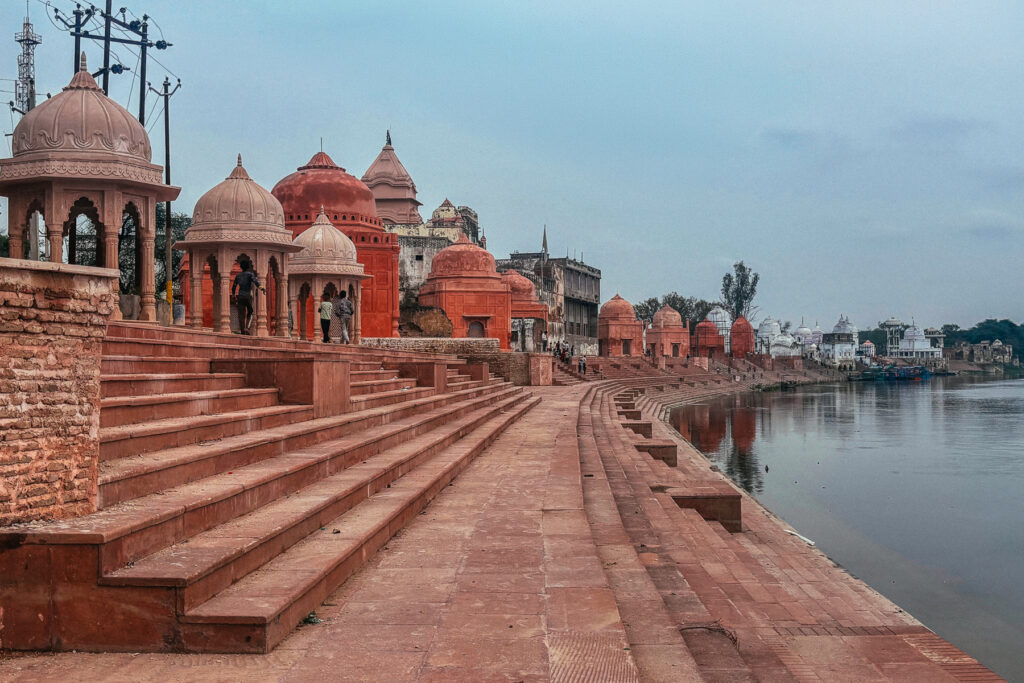
Another view of some of the 8th century Hindu temples, at the Bateshwar Temple Complex, Madhya Pradesh (image by Virginia Wilde)
Determined to avoid further downpours, we headed out to our afternoon destination: the Bateshwar Temple Complex, as soon as we could after lunch. This architectural site features nearly 200 miniature sandstone Hindu temples, dating from the eighth century, many dedicated to the gods of Shiva, Vishnu and Shakti.
Normally, a breathtaking sunset spot, the clouds meant there was no chance of that today. But we still enjoyed rooftop coffee and Masala Chai over the temples, while watching Rhesus Macaques lark about, pulling each other’s tails, in the ruins below.
Our final morning in Chambal delivered the thickest fog any of us had ever seen. Living in Edinburgh, I’m no stranger to sea fog, but this was something else entirely. A few in our tour group remarked that it felt like the kind of mist you only see in horror films. At one point, visibility appeared to be no more than two metres.
Nevertheless, we headed out on our boat trip, silently motoring into the white nothingness, while I prayed it would burn off soon, giving us a chance of seeing some Gharials at closer range.
Sometimes, adverse conditions can produce spectacular images. So, with this in mind, we photographed every species we could see through the fog, though we still came up short on Gharial sightings.
We had just thirty minutes remaining of our three-hour river trip before the mist finally started to clear. Motoring at speed back up towards the jetty we spotted, not one, not two, but four Gharials in quick succession: one of the most elusive, ancient and prehistoric-looking crocodilians alive today.
With as few as 600 mature individuals left in the wild, and tails as jagged as a fictional Godzilla, we continued to see seven more in the last gasp of our river trip, including a small juvenile.
As we pulled into the jetty, a pair of Indian Softshell Turtles slipped into the water from the bankside – giving us the full complement of species I’d hoped we’d see here in Chambal. Phew!
After a last lunch at Mela Kothi – and a visit to the resident Indian Scops Owl – we started our long bus ride back into Delhi. With India feeling the bite of the US incursion into Iran, culminating in fuel shortages, I was initially worried by the number of shuttered gas stations.
But, as we neared the capital, with its hyper-chaotic traffic, my fears abated. Before long, we were tucking into pizza at an Italian restaurant dinner, back in our Delhi base hotel.
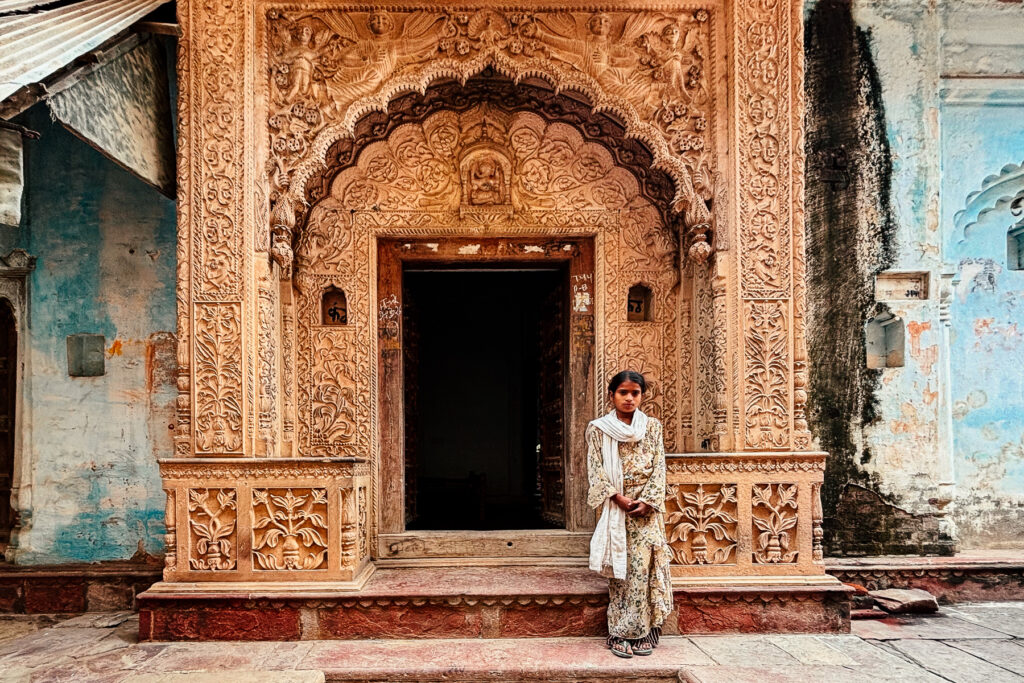
This local girl was delighted to pose for our group, backdropped by one of the crumbling former mansions in the heritage village of Uttar Pradesh (image by Virginia Wilde)
Tadoba-Andhari Tiger Reserve: Into the Land of Tigers
After a very early start and an airport breakfast, we touched down in Nagpur, the capital of the central Indian state of Maharashtra. Our destination: the Tadoba-Andhari Tiger Reserve – Maharashtra’s oldest and largest national park – which justly deserves its reputation as the ‘Land of the Tigers’.
Named ‘Tadoba’ after a local tribal deity, and ‘Andhari’ for the meandering river slicing through its jungle, the reserve is special not only for maintaining one of India’s largest Tiger populations, but also for its wealth of other wildlife, such as Sloth Bear and rare Asiatic Wild Dog.
At 625 square kilometres, its landscape is a tapestry of Southern Tropical Dry Deciduous forest, centred on Teak, Sal, Bamboo and white-barked ‘ghost trees’. The forest intersects with grassy meadows and streams that flow into the vast Tadoba Lake.
Guides and workers in the reserve are drawn from members of the local communities, with the main tribal group being the Gond (also known as the ‘Children of the Forest) and famed for their distinctive art.
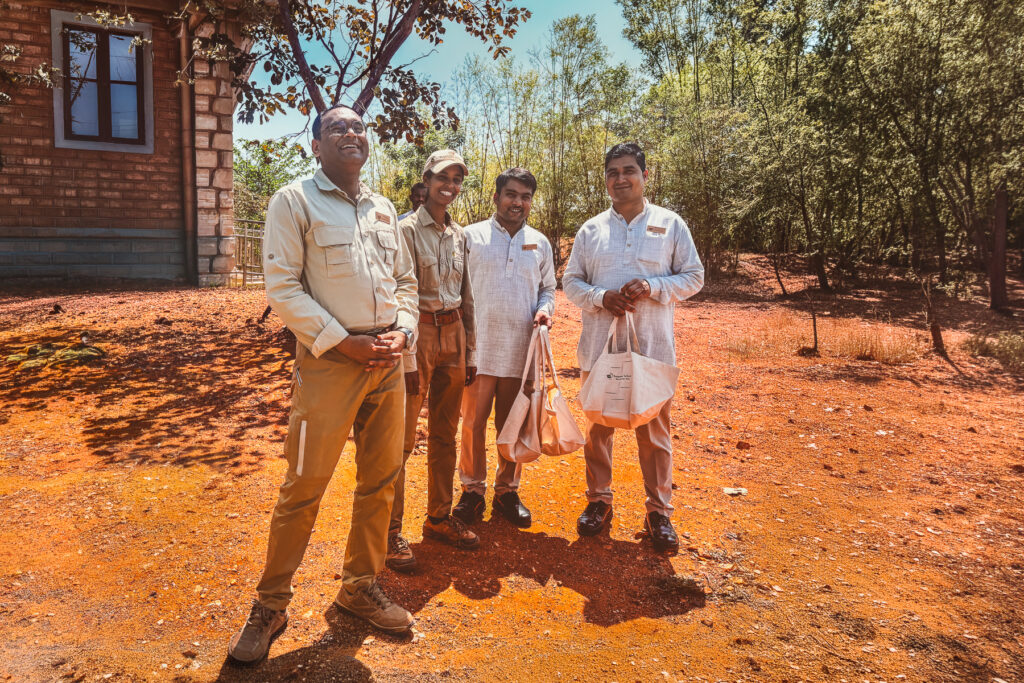
We could not have wished for a better time at the Waghoba Eco-lodge during our Tiger-searching days. Here, the manager, waiter and Shaheen – our co-guide – say goodbye to us (image by Virginia Wilde)
Tiger-human conflicts in this part of central India are sadly inevitable. And the numerous ‘Tiger god’ statues – erected every time a human life is taken by the animal the Gond consider a deity – dotted on the local roads are a testament to this reality of life here.
“Most wildlife groups take eight or nine Tiger safaris,” explained Shaheen, our highly talented female co-guide, when we arrived in Tadoba. “But your group is down for seventeen – the most of any wildlife tour we’ve had this year.”
But this ‘time in the field’ factor was precisely why we were ultimately rewarded with such wonderful sightings in this Tiger-rich reserve – in a region that inspired Rudyard Kipling’s beloved tale, ‘The Jungle Book’.
No description of our time in Tadoba would be complete without mentioning our exceptional eco-lodge, Waghoba. The stand-out features that made us all adore it so much included the warm welcomes after each drive, the beautifully decorated rooms, and the outstanding regional thalis prepared each day.
Never before have I had ice cream as delicious as the homemade cardamom-and-chai flavour served here – and I’ve lived in Italy.
Once we’d had a night to settle, our Tiger-searching days followed a distinct pattern: early morning chai or coffee before a short drive to whichever zone – core or buffer – and forest guide we’d been allocated that day. Followed by a four-hour safari drive with a short, boxed breakfast break in between. Then lunch and rest at the lodge before heading out for another four-hour safari drive, returning home by dark for one of Waghoba’s exceptional dinners.
Our transport here was the iconic open-top Maruti Gypsy 4×4 jeeps – a vehicle now discontinued by Maruti Suzuki, but highly sought after by the Indian Army. Motoring through the forest trails in these elegant jeeps – clad with wood panels and painted British racing green – amid clouds of red dust gave our safaris the feel of something from another era.
Although we had many excellent sightings of both Tiger and other species here, here are some of the highlights:
Our first Tiger: The first time we saw a male ‘Collarwala’ pad down towards the river.
It had been quiet and unusually cold on our first morning in the Reserve. Everyone was anxious to see what, for many, would be their first-ever wild Bengal Tiger. We’d searched some of the more usual haunts, but nothing. And then Collarwala appeared as if from nowhere, his huge paws silent as he padded towards the river to drink.
Not only was this sighting special because it was our first, but to see him reflected in the water – before he disappeared once more into the bamboo – felt symbolic of the mythological depiction of Tigers as ghosts of the forest.
Collarwala was our first of three long-term dominant male Tigers we saw in Tadoba. ‘Mowgli’, the bruiser, was another, with the hulking ‘Shambu’ our third.
Tigress ‘Kajri’ bathes in the river as the setting sun turned the water differing shades of green and gold.
My personal favourite Tiger moment was watching the pretty Tigress Kajri enjoy her evening bath.
Our visit to the Jumona buffer zone came after a rare morning where we’d seen no Tigers – just flashes of two Asiatic Leopards, which we’d continued to track. But from the moment we climbed into our Gypsy jeeps in the afternoon, with forest guides of renowned skill, we had luck on our side.
We spent the first hour of our drive watching female ‘Madhu’ (known as ‘Queen of the Buffer Zone’ for her bold demeanour) snooze in the Tadoba Lake, occasionally rolling upside down behind reeds. After another hour of barely any movement, Shaheen and I made the call to try for another Tiger before circling back.
Our timing was perfect. A particularly beautiful young female, known to the guides as ‘Kajri’, suddenly strolled out in front of us and headed down to a small river on the left of the road.
Our driver reacted like lightning, positioning the jeep as close to the riverbank as possible without tipping us into the water below. I encouraged as many of the group as possible to carefully lean out of the left side of the vehicle, to avoid the thick grass and get clear views of Kajri sipping water and staring directly at us, while the river turned shades of green and gold.
After only a few minutes, she waded out, passing so close I could almost have reached down and stroked her. Kajri padded directly towards our second jeep before sitting in the middle of the road, stretching and flexing her paws, seemingly without a care in the world.
As if that wasn’t enough of a good sighting, we returned to sleeping Madhu just before she woke, strolling so close to our second vehicle that I genuinely thought she might leap up inside. It was a stunningly beautiful evening of Tiger encounters.
Matriarch ‘Collarwali’ and her two Juvenile Cubs Relaxing in a Mud-Bath by the Shady Pool
We had been searching for Sloth Bear in the Morharli core zone – with no luck – when we came upon matriarch ‘Collarwali’ and her two sub-adult daughters resting in a mud bath beside the forest road.
There was an almost sepia tone to the scene beneath the shady trees, creating lovely photographic conditions. Before long, the juveniles became restless. One female rose from the mud like some swamp creature, before greeting her mother and sibling and strolling up a bank towards the trees.
Collarwali later followed, while the remaining juvenile Tigress – still displaying the youthful blue eyes that all tiger cubs are born with (and caked in wet mud) – leapt onto a small bridge beside us, before collapsing asleep once again, in a heap of lethargy and striped fur.
The Young Tigress Hunting, Leaps over the River – But Smashes Her Head on the Rocks
We’d just arrived in the Khutwanda core zone when we spotted a Tigress in the distance. Speeding around the river area, we saw that this tiger was one of Collarwali’s daughters, an as-yet unnamed female sub-adult.
She suddenly became aware of nearby Sambar Deer, shifting from casual interest to intense interest. We then saw her begin her hunt, winding her way carefully through river weeds towards her prey. We ourselves could barely see her, but occasional movement in the grass betrayed her location.
After a while, the Tigress lay down; lethargy seemingly winning over hunger. But then, spotting the deer again, she rose like a wound coil and crouched to leap the five-metre stretch of river separating her from her prey.
Alas, she misjudged the landing completely and came crashing down, belly-flopping into the water and smashing her head against the rocks.
Undeterred – or perhaps embarrassed – she resumed the hunt moments later, sprinting after the deer for several hundred metres before eventually giving up. For now, anyway.
Asiatic Wild Dogs (Dhole) vs The Sambar Deer – a Masterclass in a Prey’s Retreat
It was a particularly dusty morning, and we rounded a corner after photographing a Grey-headed Fish Eagle to find a small pack of Dhole (Asiatic Wild Dogs) trotting to greet each other in one of the reserve’s quieter roads.
These charismatic canines are a real treat to see at any time. Especially as fewer than 2,500 individuals remain globally, with India as the last remaining stronghold. As we observed the pack, a small herd of Sambar Deer emerged from the trees. Literally almost stumbling onto the pack of dogs.
We watched as the largest deer started stomping the ground, refusing to stop his rhythmic drumming until the rest of his herd had slowly backed away. And melted back into the undergrowth.
Zoologists think the reason Sambar Deer do this hoof-beating is threefold. One, it serves as a threat-verification technique and a warning signal for nearby wildlife. Two, it serves as a clear ‘pursuit deterrent’ to the Dholes, signalling that the element of surprise is now lost.
And three – and most interestingly – Sambar Deer possess specialised interdigit scent glands, located between their hooves. Slamming their foot into the ground deposits concentrated alarm pheromones onto the soil, leaving a persistent chemical marker to warn other deer to avoid the area – long after the initial interaction.
To watch this strategy unfold before us was fascinating. A few days later, we watched a Sambar Deer conduct the same defence mechanism when they could smell – but not see – an Asiatic Leopard, hidden behind an ancient-looking tree
The Sloth Bear Mother and her Cubs, Riding Her Back all the way to the Watering Hole
As our time in Tadoba neared its end, so did the window of opportunity for a much-desired Sloth Bear sighting. We’d put in so much time searching for one – so keen we were, as a group, to find this elusive and secretive mammal; the inspiration for ‘Baloo’ in Kipling’s ‘The Jungle Book.’
We’d scoured the known haunts and den-sites and followed endless fresh scat and footprints. All of which came to nothing.
But on the last evening of our tour, we pulled in at a watering hole and waited – thanks to a tip from a nearby forest guide that a female Sloth Bear had been visiting this spot at 3 pm every day to drink.
The time came, and passed. Just as we were considering moving on, a head poked out of the bushes, stared at us, then just as quickly vanished.
A minute later, a mother Sloth Bear ambled down the bank to the pool, her cubs riding on her back, like kids on a lumbering all-terrain vehicle crossed with a black shaggy-piled carpet, holding on with tiny claws and rocking side to side with every one of her steps.
If a mother Sloth Bear has two cubs – like this one – the infant bears are known to fight fiercely for the dominant riding positions. With luck, the dominant cub secures the ‘first-class spot’ on her shoulders, while the submissive one is forced to ride on her rear end, where it frequently tumbles off.
As our bear neared the water’s edge, her cubs slipped off to drink themselves, before then finding themselves in a race to try and pull themselves back up onto her back again, as she ambled back up the bank and disappeared into the thick reeds.
We paused for a moment or two before I looked over at Shaheen in our second vehicle, and we both silently punched the air in triumph. There were even some client tears at the beauty of it all. We’d seen our Sloth Bear!
Tadoba’s Birding Highlights: Owls, Nightjars, Eagles and Waterbirds
We had so many bird encounters in Tadoba that every tour-member seemed to have a different favourite. For owl-lovers, there was the Mottled Wood Owl (although distant) and strong sightings of Jungle Owlet, Scops and Brown Fish Owl.
Other raptors included the Osprey, Oriental Honey Buzzard, Crested Serpent Eagle and Crested Hawk Eagle. And my favourite – a secretive Shikra devouring a lizard in front of us.
Then there were our Nightjars (Indian, Jungle and Savanna); three species of Kingfisher: Stork-billed, Pied and White-throated. Other birding favourites included the Indian Roller, Coppersmith and Brown-headed Barbets, Black-hooded and Golden Orioles, Orange-headed Thrush and the strikingly-coloured Grey-headed Swamphen.
On our last morning in Tadoba, we went for gold; waiting by the deep forest bridge where there’d been the briefest of sightings of very young Tiger cubs – the newest in the reserve. Despite circling back frequently, there was no further sign of them.
But after 36 Tiger encounters – some of them very strong sightings and more images than most of us had hard drive space for – we were unanimously delighted with our time in the Tadoba-Anhari Tiger Reserve.
One final sighting, however, was that of retired cricketer Sachin Tendulkar – often referred to as the ‘God of Cricket’ and regarded as perhaps the greatest player of all time. We found ourselves alongside Tendulkar several times during our Tiger searching days, as he also enjoyed safaris in the park.
Although no one in our group was a cricket fan, when I texted my Aussie friends at home that Tendulkar was here, they replied: ‘Sod the Tigers, get a photo with Tendulkar. He’s an absolute legend!’ Who says Wild Images doesn’t do celebrities?
Little Rann of Kutch: Gujarat’s Salt Desert Wildlife Wonder
Although leaving Tadoba and Waghoba Ecolodge was a wrench, we had to press on with our tour. We reluctantly headed back to Nagpur, with a few tour members joining me to visit a local cafe in the city. The next morning, we flew west to Ahmedabad, in Indian Prime Minister Narendra Modi’s home state of Gujarat.
Our destination: the unique, vast salt marsh of the Little Rann of Kutch – a refuge for some wonderful and unusual bird and mammal species. Spanning nearly 5,000 km, the Rann was originally part of the Arabian Sea. Yet geological forces separated this land, leaving behind a stark, cracked-earth wilderness, punctuated by small, scrubby islands of higher ground, known as ‘beyts.’
During the monsoon season, the Rann floods create wetlands and shallow lagoons that are a paradise for many birds. In particular, this region is one of the largest and most critical breeding grounds for both the Lesser and Greater Flamingo in Asia.
Despite salt production being illegal in the Rann, the area produces 75% of India’s table salt, with competition for resources, and the need to eke out a living in this desolate landscape, competing with the desire to keep this saline desert as a refuge for species like the Indian Wild Ass.
Heading to the remote village of Zainabad, our home in the Little Rann was the family-run, peaceful and beautifully rustic Desert Coursers Lodge, owned by long-time Wild Images friend, the wonderful Danraj, his wife Zahida and son Armaan.
A wonderful character to share a glass of gin and swap stories with, Danraj is technically a prince; the son of King Malek Shri Azizkhanji, one of the last ‘kings’ of India. Although legally, his title has depreciated, Danraj still reigns as prince of the state, settling local disputes and dedicating his life to conservation and funding local orphanages and schools.
Rather than using safari jeeps, the Rann is best explored on the back of large flatbed farm trucks, which serve as a kind of mobile viewing platform with seats. We’d pile in and race over this saline desert, with nothing but the horizon stretching out for miles around us.
At times, we travelled at great speeds, with this desert-driving like something out of a Mad Max movie. It wasn’t for everyone, but for most of us, this landscape was so otherworldly it was a breath of fresh air after so many days in the forest.
Our highlights in the Rann, overwhelmingly, were the two separate encounters we had with a pair of young Desert Foxes playing and scampering outside of their den.
We loved this cute pair – estimated to be just a month old – so much that we returned several times, photographing them in lovely early-morning light and again in the late afternoon.
Desert Foxes are a small subspecies of the Red Fox found primarily in the deserts of Rajasthan and the saline flats of the Rann. Their large ears help regulate body temperature in this harsh environment.
Another target species here was the iconic Indian Wild Ass. Also known as Indian Onagers, Ghudkhars or Wild Donkeys, these equines are almost exclusively found in the Rann, with fewer than 7,000 left in the wild. Surprisingly speedy – and capable of sprints of up to 80 km/hr – they are recognised as resolutely untameable.
We tried to keep up with running herds of Wild Asses, photographing them mid-gallop or atop one of the few higher-ground islands.
But our hopes of the classic sunset shot of Wild Asses silhouetted by the fiery desert sun were mostly dashed by the surprisingly overcast weather. However, we had a few minutes where the sky turned mauve around a half-moon-shaped sun melting below the horizon, while Wild Ass frolicked in front. Enough to produce a few interesting images, anyway.
Other sightings in the Rann included Striped Hyena, a night-time Indian Fox (distinguished from the Desert Fox by its black tail tip) and an Indian Crested Porcupine that visited our lodge after dark.
Our birding encounters included the lovely Chestnut-bellied Sandgrouse, Grey Francolin, both Montagu’s, Western Marsh and Pallid Harriers, the coveted resident Sykes Nightjar and an unseasonal sighting of an Egyptian Nightjar.
Danraj informed us that unusual weather patterns this year had led to overall bird numbers in the Rann being abnormally low. So instead of persevering in our usual Rann location, we visited a wetland area.
Here we photographed Great White Pelicans and captured some creative shots of Lesser and Greater Flamingos, engaged in the curious mating practice in which males bunch together in a mutual dance-off to impress females.
Before leaving the Rann, we had a visit by the Mir ladies – women from the now-resident Mir tribe, who are descended from the Butt tribe in Kashmir. These formerly nomadic people are highly regarded for their handicrafts and intricate beadwork, selling us bags and jewellery and showing us their traditional homemade dresses.
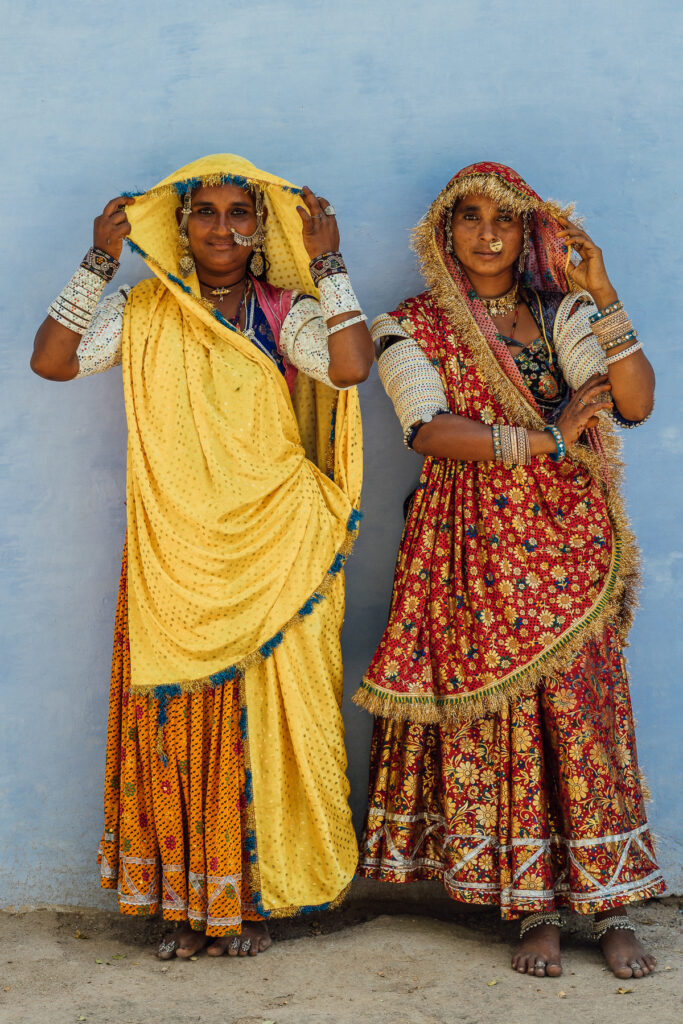
Women from the Mir tribe in India’s Little Rann of Kutch, who are descended from the Butt tribe in Kashmir. These formerly nomadic people are highly regarded for their handicrafts and detailed bead-making (image by Virginia Wilde)
And, as a last treat for anyone who enjoys photographing horses, Danraj’s son, Armaan (a gifted event rider and breeder of India’s beautiful Marwari horses; a rare breed famed for their distinctive inward-curving ears) brought a stallion into the lodge to pose for portraits. It was a lovely end to a memorable few days in the desert.
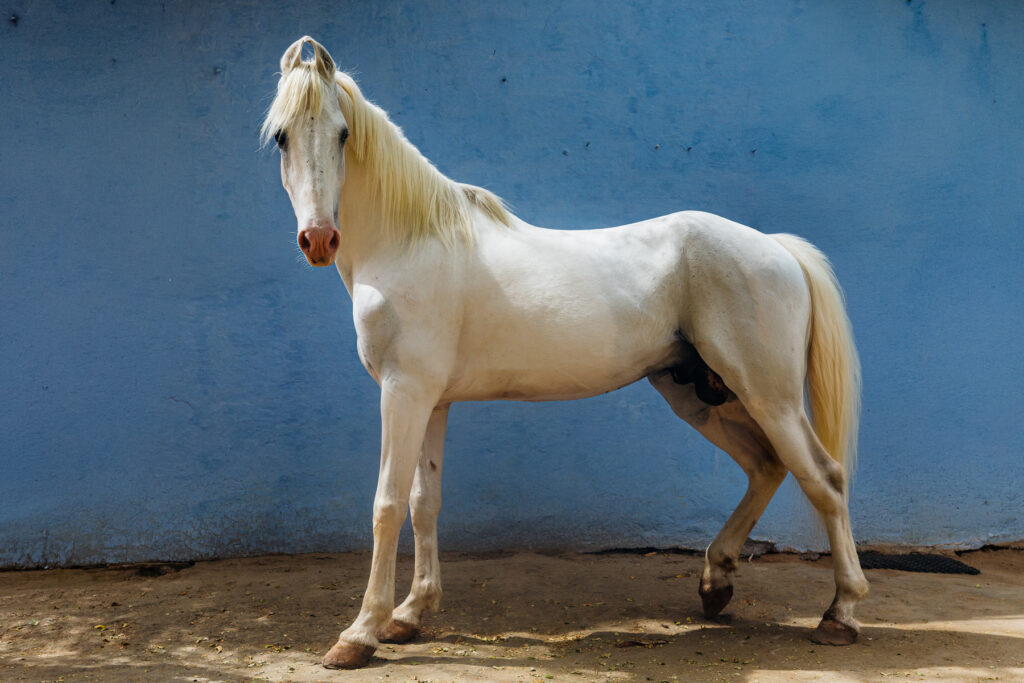
Portrait of an iconic Marwari horse stallion – showing the distinctive inward-curving ears, for which this rare Indian breed is renowned (image by Virginia Wilde)
Blackbuck National Park: To India’s Grasslands for Wolves, Jungle Cat and Raptors
For the final stop in our Indian wildlife adventure, we headed south to Velavadar, a unique savannah-like grassland renowned for its large population of Blackbuck Antelope, wintering migratory harriers, Jungle Cats and Indian Wolves.
India’s grasslands are often overlooked in favour of its famous Tiger reserves, but they possess a beauty entirely of their own. Velavadar’s wide-open plains – in the 34 square km Blackbuck National Park – support one of the highest densities of Indian Wolves anywhere in Asia, with Striped Hyena and Nilgai common sightings here too.
Our home here was the – frankly – spectacular Blackbuck Lodge. Run by the charismatic conservationist Mickey Desai, Blackbuck Lodge has deservedly earned a reputation as one of India’s finest eco-lodges. The hospitality was exceptional throughout our stay. After long days in the field, returning to superb Gujarati cuisine, fresh breads, fragrant curries and candlelit dinners felt deeply restorative.
Added to that, there was plenty of wildlife to explore in the grounds of the lodge in our downtime. We notched up sightings of the large Bengal Monitor Lizard (one of Asia’s biggest lizards); Spotted Owlet, Sunbirds, and Indian Softshell Turtles, Rufous Treepie and both Ashy-crowned Sparrow Lark and Sykes Lark while barely even walking a few steps from the restaurant.
Over our five safari drives in Blackbuck National Park, we had some astonishingly good mammal sightings. Our first morning belonged to the Jungle Cat kittens, nestled and playing in straw-like grass by the side of the road. These tiny cats – while cute now – grow up to be surprisingly fierce hunters. But the adult versions can be very skittish indeed.
Our highlight of Blackbuck Park was, undoubtedly, our several sightings of hunting Indian Wolves. On our first encounter – first thing in the morning – we almost drove past the pair of wolves as they ran towards us, crossed the road and disappeared into a distant meadow.
We caught up with them, able only to watch for a distance as they gave chase to a herd of Blackbuck antelope, loping low and purposefully through the scrub. There is something very different about Wolves in India compared with their northern counterparts. These were lean, long-legged and heat-adapted animals; pale-coated ghosts of the grassland rather than creatures of forest or snow.
The wolf pack slowed and – at the same time – a Blackbuck Antelope calf ran past us at speeds I can only describe as breakneck, wide-eyed and frantic, but a lucky escape. The wolves, on the other hand, climbed into a nearby water-trough, temporarily defeated and exhausted. On this occasion, it was Antelope: 1, Wolf: 0.
This was the first of several failed wolf hunts we witnessed in the park. On our last morning, we caught up with the pack after the prey had already been caught and dispatched, witnessing one Indian Wolf carrying just the blood-soaked head of an antelope that had been torn apart.
Another strong sighting in our time in Blackbuck National Park was that of the Indian Striped Hyena, which stumbled across a newborn antelope calf in the grasslands in front of us. One minute, the Hyena was trotting through the grass, the next, dangling carefully from her jaws was the tiny body of a newborn Blackbuck calf.
The nursing Hyena carried the fallen calf almost delicately – rather than savagely – as she transported it back towards her cubs concealed deep within the scrub. There was something unexpectedly tender in the scene despite its brutality; another reminder that predators exist not out of cruelty but out of necessity.
Whether the calf was hidden by its mother or left behind due to frailty or stillbirth, we will never know.
Among our birding highlights in Blackbuck National Park were the Greater Spotted and Indian Spotted Eagles, Eastern Marsh Harrier, Steppe Eagle and Short-toed Snake Eagle.
Finally, after a last incredible meal at the Blackbuck Lodge, our taxis arrived to take us to Ahmedabad and start our journeys home. I loved every moment of our 2026 India Wildlife Spectacular Tour. It was, simply, one of the best Wild Images tours I have ever had the pleasure of leading.
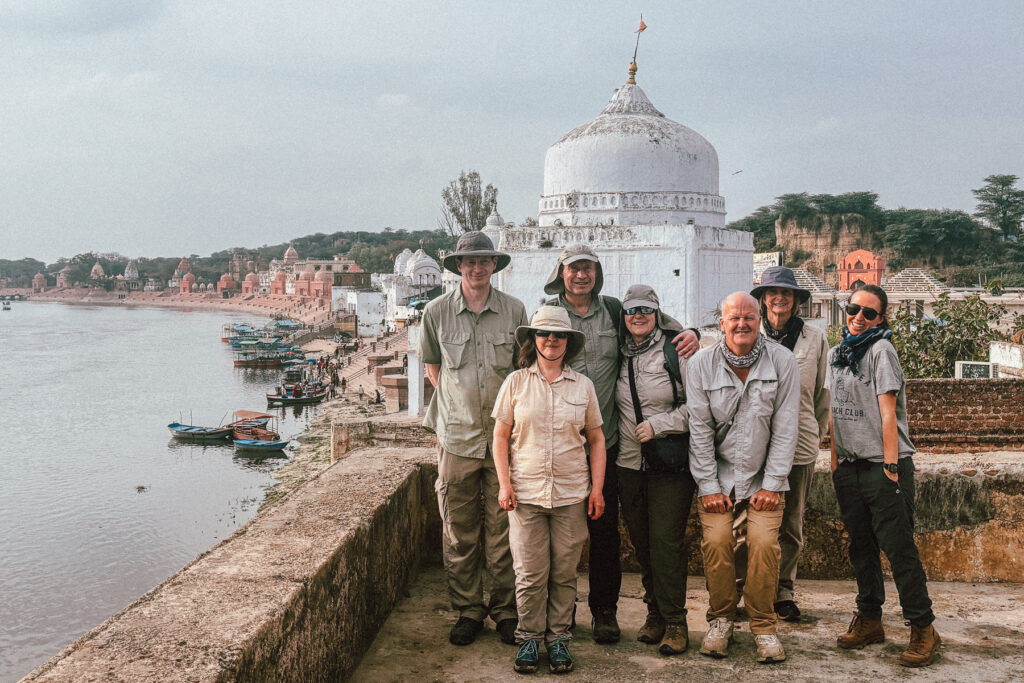
This year’s Wild Images tour members, enjoying a break while visiting the Bateshwar Temple complex in Madhya Pradesh (image by Virginia Wilde)
Virginia Wilde
Virginia Wilde lives in Edinburgh with her two children, Esme and Albie. Virginia is a photojournalist with a life-long passion for wildlife and the natural world. She spent years working in conflict zones such as Afghanistan and Libya – but has returned to her love of nature and is now based in Scotland. Virginia has […]