
Asia (including its islands)
SNOW LEOPARDS & WILDLIFE OF MONGOLIA – a real adventure, including Pallas’s Cat, Saiga, Przewalski’s Horse, Wild Camel and sought-after birds

The Jargalant range (image by Mark Beaman)

Upland Buzzard dark morph (image by Mark Beaman)

The Khalzan steppe on a frosty morning (image by Mark Beaman)

Early snow in Eastern Mongolia (image by Mark Beaman)

Plate-tailed Gecko (image by Mark Beaman)

Red-necked Phalarope (image by Mark Beaman)

Pere David's Snowfinch (image by Mark Beaman)

Wild Camel in Great Gobi (image by Mark Beaman)

Siberian Accentor (image by Mark Beaman)

Amur Falcon (image by Mark Beaman)

Mongolian or Henderson's Ground Jay (image by Mark Beaman)

Watching for Snow Leopards in the Jargalant range (image by Mark Beaman)

Snow Leopard (image by Mike Watson)

Guldenstadt's or White-winged Redstart (image by Mark Beaman)

Long-eared Hedgehog (image by Mark Beaman)

Pallas's Cat (image by Mark Beaman)

Azure Tit (image by Mark Beaman)

Siberian Ibex (image by Mike Watson)

Kulan or Mongolian Wild Ass (image by Ekaterina Dmitrenko)

Travel in Mongolia can be an adventure! (image by Mark Beaman)

White-naped Cranes (image by Mark Beaman)
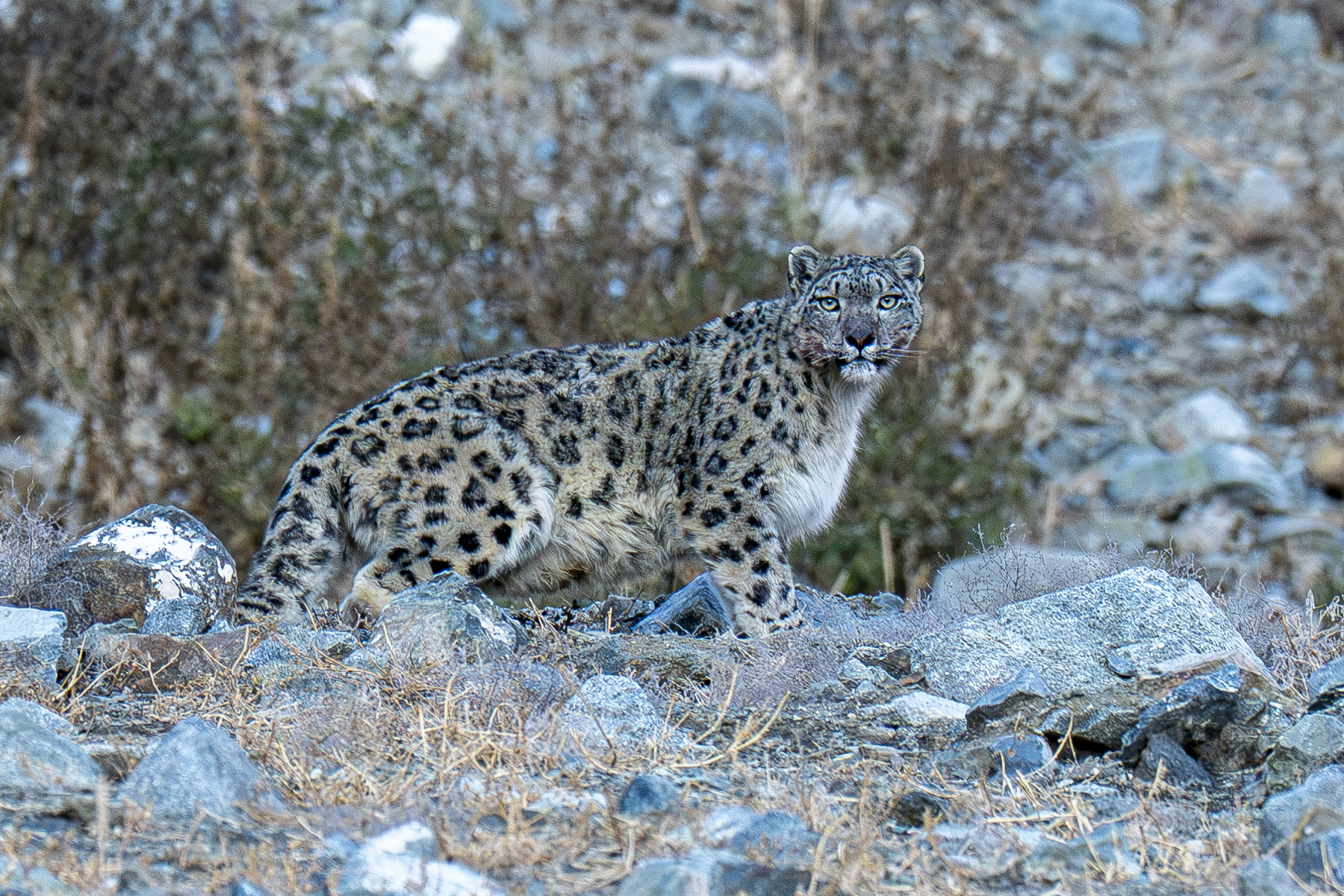
Snow Leopard, Jargalant Mountains (image by Mark Beaman)

The Jargalant range from Khar Us Nuur (image by Mark Beaman)

Wild Camel in Great Gobi (image by Mark Beaman)

Great Gobi National Park (image by Mark Beaman)

Sharga reserve at dusk (image by Mark Beaman)

Argali herd (image by Mike Watson)

Grey Wolf (image by Mark Beaman)

Pallas's Sandgrouse (image by Mark Beaman)

Siberian Ibex (image by Mark Beaman)

Hairy-footed or Northern Three-toed Jerboa (image by Mark Beaman)

Cinereous Vultures (image by Mark Beaman)

Kulans or Mongolian Wild Asses (image by Mark Beaman)

Przewalski's Horses

Pallas's Cat (image by Mark Beaman)

Pallas's Cat (image by Mark Beaman)

Brown Accentore(image by Mark Beaman)

Pallas's Pika (image by Mark Beaman)

Eurasian Eagle-Owl (image by Mark Beaman)

Our 2024 group and our fantastic Jargalant team (image by Mark Beaman)

Daurian Jackdaws (image by Mark Beaman)

Pallas's Cat (image by Mark Beaman)

Brambling (image by Mark Beaman)

Brandt's Vole (image by Mark Beaman)

Snow Leopard (image by Mike Watson)

Red-throated Thrush (image by Mark Beaman)

Relict Gulls (image by Mark Beaman)

Altai Snowcocks (image by Mark Beaman)

Goitred Gazelle (image by Mark Beaman)

Siberian Cranes (image by Mark Beaman)

Steppe and badlands near the Jargalant range (image by Mark Beaman)

Bearded Vulture (image by Mark Beaman)

Bactrian Camel (image by Mark Beaman)

Przevalski's Horses (image by Mark Beaman)

Red-necked Phalaropes (image by Mark Beaman)

Saiga (image by Mark Beaman)

Mongolian Jerbil (image by Mark Beaman)

Dusky Thrush (image by Mark Beaman)

Przewalski's Horses

Przewalski's Horses

Altai Accentor (image by Mark Beaman)

Boon Tsagaan Nuur at sunset (image by Mark Beaman)

Hill Pigeon (image by Mark Beaman)

Upland Buzzard (image by Mark Beaman)

'Siberian' Elk (image by Mark Beaman)

Altai Snowcocks (image by Mark Beaman)

Snow Leopard (image by Mike Watson)

Black-throated Thrush (image by Mark Beaman)

Our Jargalant camp at dawn (image by Mark Beaman)

Cinereous Vulture (image by Mark Beaman)

'Siberian' Elk (image by Mark Beaman)

Whooper Swans (image by Mark Beaman)

Red Fox (image by Mike Watson)

Siberian Cranes (image by Mark Beaman)

Siberian Tit (image by Mark Beaman)

Pallas's Leaf Warbler (image by Mark Beaman)

The Genghis Khan (Chinggis Khaan) statue east of Ulaanbaatar (image by Mark Beaman)

Siberian Ibex (image by Mark Beaman)

Saxaul Sparrows (image by Mark Beaman)

Ikhes Nuur (image by Mark Beaman)

Grey Wolf (image by Mark Beaman)

Isabelline Shrike (image by Mark Beaman)

Blyth's Pipit (image by Mark Beaman)

Naumann's Thrush (image by Mark Beaman)

Pallas's Cat in its den (image by Mark Beaman)


The Jargalant range (image by Mark Beaman)
Upland Buzzard dark morph (image by Mark Beaman)
The Khalzan steppe on a frosty morning (image by Mark Beaman)
Early snow in Eastern Mongolia (image by Mark Beaman)
Plate-tailed Gecko (image by Mark Beaman)
Red-necked Phalarope (image by Mark Beaman)
Pere David's Snowfinch (image by Mark Beaman)
Wild Camel in Great Gobi (image by Mark Beaman)
Siberian Accentor (image by Mark Beaman)
Amur Falcon (image by Mark Beaman)
Mongolian or Henderson's Ground Jay (image by Mark Beaman)
Watching for Snow Leopards in the Jargalant range (image by Mark Beaman)
Snow Leopard (image by Mike Watson)
Guldenstadt's or White-winged Redstart (image by Mark Beaman)
Long-eared Hedgehog (image by Mark Beaman)
Pallas's Cat (image by Mark Beaman)
Azure Tit (image by Mark Beaman)
Siberian Ibex (image by Mike Watson)
Kulan or Mongolian Wild Ass (image by Ekaterina Dmitrenko)
Travel in Mongolia can be an adventure! (image by Mark Beaman)
White-naped Cranes (image by Mark Beaman)
Snow Leopard, Jargalant Mountains (image by Mark Beaman)
The Jargalant range from Khar Us Nuur (image by Mark Beaman)
Wild Camel in Great Gobi (image by Mark Beaman)
Great Gobi National Park (image by Mark Beaman)
Sharga reserve at dusk (image by Mark Beaman)
Argali herd (image by Mike Watson)
Grey Wolf (image by Mark Beaman)
Pallas's Sandgrouse (image by Mark Beaman)
Siberian Ibex (image by Mark Beaman)
Hairy-footed or Northern Three-toed Jerboa (image by Mark Beaman)
Cinereous Vultures (image by Mark Beaman)
Kulans or Mongolian Wild Asses (image by Mark Beaman)
Przewalski's Horses
Pallas's Cat (image by Mark Beaman)
Pallas's Cat (image by Mark Beaman)
Brown Accentore(image by Mark Beaman)
Pallas's Pika (image by Mark Beaman)
Eurasian Eagle-Owl (image by Mark Beaman)
Our 2024 group and our fantastic Jargalant team (image by Mark Beaman)
Daurian Jackdaws (image by Mark Beaman)
Pallas's Cat (image by Mark Beaman)
Brambling (image by Mark Beaman)
Brandt's Vole (image by Mark Beaman)
Snow Leopard (image by Mike Watson)
Red-throated Thrush (image by Mark Beaman)
Relict Gulls (image by Mark Beaman)
Altai Snowcocks (image by Mark Beaman)
Goitred Gazelle (image by Mark Beaman)
Siberian Cranes (image by Mark Beaman)
Steppe and badlands near the Jargalant range (image by Mark Beaman)
Bearded Vulture (image by Mark Beaman)
Bactrian Camel (image by Mark Beaman)
Przevalski's Horses (image by Mark Beaman)
Red-necked Phalaropes (image by Mark Beaman)
Saiga (image by Mark Beaman)
Mongolian Jerbil (image by Mark Beaman)
Dusky Thrush (image by Mark Beaman)
Przewalski's Horses
Przewalski's Horses
Altai Accentor (image by Mark Beaman)
Boon Tsagaan Nuur at sunset (image by Mark Beaman)
Hill Pigeon (image by Mark Beaman)
Upland Buzzard (image by Mark Beaman)
'Siberian' Elk (image by Mark Beaman)
Altai Snowcocks (image by Mark Beaman)
Snow Leopard (image by Mike Watson)
Black-throated Thrush (image by Mark Beaman)
Our Jargalant camp at dawn (image by Mark Beaman)
Cinereous Vulture (image by Mark Beaman)
'Siberian' Elk (image by Mark Beaman)
Whooper Swans (image by Mark Beaman)
Red Fox (image by Mike Watson)
Siberian Cranes (image by Mark Beaman)
Siberian Tit (image by Mark Beaman)
Pallas's Leaf Warbler (image by Mark Beaman)
The Genghis Khan (Chinggis Khaan) statue east of Ulaanbaatar (image by Mark Beaman)
Siberian Ibex (image by Mark Beaman)
Saxaul Sparrows (image by Mark Beaman)
Ikhes Nuur (image by Mark Beaman)
Grey Wolf (image by Mark Beaman)
Isabelline Shrike (image by Mark Beaman)
Blyth's Pipit (image by Mark Beaman)
Naumann's Thrush (image by Mark Beaman)
Pallas's Cat in its den (image by Mark Beaman)


|
Friday 24th September –
Saturday 9th October 2027 Leaders: János Oláh and expert local trackers and guides |
16 Days | Group Size Limit 9 (tour guaranteed) |
|
Wild Camel Extension
Thursday 16th September – Friday 24th September 2027 |
9 Days | Group Size Limit 9 |
SNOW LEOPARD & WILDLIFE OF MONGOLIA PHOTOGRAPHY TOUR: OVERVIEW
Wild Images’ Snow Leopards & Wildlife of Mongolia tour is an adventurous journey across this wild, empty and still largely ‘Land without Fences’ in search of such extraordinary mammals as the legendary Snow Leopard, the inscrutable Pallas’s Cat, Corsac Fox, the world’s last Wild Camels, Przewalski’s Horse (the last surviving Wild Horse on earth), Mongolian Kulan (or Mongolian Wild Ass), the strange Saiga antelope, Goitred and Mongolian Gazelles, Siberian Ibex, the huge-horned Argali (the largest wild sheep on the planet) ande a selection of smaller mammals ranging from marmots to jerboas.
There will be many great birds to see as well, including the near-endemic Altai Snowcock, Swan Goose, Daurian Partridge, White-naped and Demoiselle Cranes (and quite possibly Siberian Crane), Relict and Mongolian Gulls, Pallas’s Sandgrouse, Mongolian and Mongolian Short-toed Larks, Asian Desert Warbler, Eversmann’s and Güldenstädt’s Redstarts, Red-throated, Naumann’s and Dusky Thrushes, Mongolian (or Henderson’s) Ground Jay, Daurian Jackdaw, Azure Tit, Siberian, Brown, Altai and perhaps Black-throated Accentors, Saxaul Sparrow and Pallas’s Reed, Pine and Rustic Buntings.
On our crowded planet, imagine an almost empty land where a traditional nomadic lifestyle is still the norm, a land of awesome landscapes and fantastic mammals and birdlife. That is Mongolia, even today!
The very name Mongolia conjures up images of endless grasslands, the wastes of the Gobi Desert, yurts and wild horsemen. This is the land from whence came the hordes of Genghis Khan and his successors, sweeping down like a breaking wave on the civilisations of China, India, Central Asia, the Middle East and Eastern Europe – the first real ‘blitzkrieg’ in the history of the world. Yet after this shattering impact on history, the Mongols faded into obscurity, and today, Mongolia is an almost unknown land, far away in the heart of Asia, about which one hears little.
For anyone interested in the wildlife of Asia or in travel for its own sake, Mongolia has a great deal to offer. With its tiny population of only three and a half million scattered across a huge area (and over two million now live in the capital, Ulaanbaatar!), it is one of the least densely settled countries on earth – a true wilderness where most of the land is still the domain of wild creatures rather than man. Mongolia is the crossroads of East Asia. In the north is the southern edge of the great Siberian boreal forest (or taiga), in the centre the seemingly endless steppe and in the south the sands of the Gobi Desert. Adding further diversity to this mixture are the Altai, Gobi Altai, Khangay and Khentiy mountains and a multiplicity of lakes and marshes.
The wide range of habitats is reflected in an exciting fauna that encompasses both Siberian and Central Asian forms, including a number that are unique to Mongolia and its immediate surroundings.
The first part of the main tour focuses on that king of Mongolian mammals, the magnificent but elusive Snow Leopard.
From the capital, Ulaanbaatar, we fly far to the west to the remote town of Khovd and then head off into the wide blue yonder as we make our way into the even more remote Jargalant Mountains, part of the immense Altai range.
Here, we will spend a week looking for the ‘Grey Ghost of the Mountains’, and with the help of our expert guides, we have an extremely high chance of success, and indeed, we should enjoy multiple encounters. A happy aspect of the Jargalant is that one can often drive close to or even right up to good Snow Leopard observation points, and even when a longer walk is required, it is often fairly flat and at a much lower altitude than hikes in Ladakh. In addition, early autumn temperatures in this region are quite mild by Snow Leopard-watching standards.
Our top guide is Otgonbayar Baatargal, who is the leading Snow Leopard and Pallas’s Cat authority and guide in the country. As he says, during the period from mid-August to mid-October, there is no difference at all in the frequency of Snow Leopard sightings. Differences between one week and another are simply random. However, there is a higher chance of a close encounter as this period of the year progresses, owing to the increasing chances of short-lived early autumn snowfall bringing the cats temporarily lower down the mountainsides.
(Note: As with Snow Leopard observation and photography expeditions elsewhere in its range, the highest chances for close encounters are from January to early March, during the mating period. But at that time of year it is very cold, averaging minus 25-30°C at night, so winter expeditions are not for all!)
As well as the monarch of the mountains itself, we will come across its main prey, Siberian Ibex, Argali and Tarbagan (or Siberian) Marmots, while at lower altitudes there are Goitred Gazelles and, in particular, the bizarre, bulbous-nosed Saiga antelope.
Some great birds include the near-endemic Altai Snowcock, Bearded Vulture (or Lammergeier), Hill Pigeon, Eversmann’s and Güldenstädt’s Redstarts, Altai and Brown Accentors, and Mongolian (or Henderson’s) Ground Jay.
After returning by air to Ulaanbaatar, we head west for a relatively short distance to beautiful Khustai (or Hustai) National Park, home to a healthy population of Przewalski’s Horses (the last surviving true Wild Horses on earth) and the steppe-inhabiting Siberian form of the Elk (or Wapiti), which will be rutting noisily at this time of year.
Tarbagan Marmots, Long-tailed Ground Squirrels, Cinereous Vultures, Daurian Partridges and Pine and Pallas’s Reed Buntings should also be seen. There is a fair chance for the attractive Azure Tit.
After a welcome night in Ulaanbaatar, we travel to eastern Mongolia and a large area of steppe country, interspersed with rocky areas that hold a high density of the superb Pallas’s Cat. We can be confident of multiple sightings, and some are likely to be very close!
As well as these wonderful, yellow-eyed ‘scowling cats’, we should also see Corsac Fox, Mongolian Gazelle, Mongolian Gerbil and zillions of very sweet little Brandt’s Voles (the staple prey of the cats, foxes and raptors). A nocturnal foray may turn up the cute Siberian Jerboa.
Birdlife is also very interesting and includes many Steppe Eagles and Upland Buzzards, Saker Falcon, the huge Eurasian Eagle-Owl, numerous Mongolian Larks, lingering Mongolian Short-toed Larks, Pere David’s Snowfinch and many others of interest. Migration will be going on, and we can expect to see a number of highly sought-after species including Siberian Accentor, Dusky, Naumann’s and Red-throated Thrushes, Chinese Grey Shrike and Rustic Bunting.
During the optional extension (not available with every departure), our prime aim will be to see some of the last Wild Camels on Earth!
Great Gobi A Strictly Protected Area comprises a huge area of desert terrain to the south of the Altai Mountains and north of Mongolia’s border with China. Here are stony and sandy plains, areas of sand dunes and saxaul woodlands. Great Gobi A (as opposed to the much smaller B section of the reserve further west) protects an area of 46,369 square kilometres (or 17,903 square miles), making it one of the largest reserves on Earth!
The park is most famous as one of the last haunts of the Wild Camel. Away from Great Gobi A, this Critically Endangered species, which is now reduced to only around 950 individuals or fewer, is restricted to a few reserves in northwestern China. Interestingly, the Wild Camel Camelus ferus is now known to be a completely different species from the nowadays entirely domesticated Bactrian Camel Camelus bactrianus, the two having diverged from a common ancestor over 750,000 years ago! Wild Camels are smaller and thinner, with flatter heads (indeed, the Mongolian name Havtagai means ‘flat head’) and have smaller, more conical humps. Amazingly, Wild Camels can survive on very saline water (even more saline than seawater!) that no other mammal can tolerate, not even Bactrian Camels!
Although our prime target at Great Gobi is, of course, the Wild Camel, we can also expect to encounter the Mongolian Kulan or Mongolian Wild Ass, which is still quite common in the area. Grey Wolves sometimes predate both species, but more usually Goitred (or Black-tailed) Gazelles. They are scarce and elusive, and we would be lucky to see one during our visit, let alone the ultra-rare, very shy, Critically Endangered ‘Gobi’ Bear (a subspecies of the widespread Brown Bear). Other likely mammals include the appropriately named Great Gerbil, a diurnal, colonial species. Spotlighting may turn up Red Fox, Long-eared Hedgehog and one or more species of jerboa.
Pallas’s Sandgrouse occurs commonly in the area, and we should also encounter the handsome Saxaul Sparrow, ‘Steppe’ Grey Shrike, Asian Desert Warbler and Isabelline Shrike. At the wetlands we will visit during the extension, we should encounter many migrant waterbirds, and we have a high chance of encountering the rare Relict Gull at one of its most regular sites.
By the time our Mongolia wildlife adventure ends, we will have a true exploration of one of the ‘wildest’ countries left on the face of our ever-more-developed planet.
We have operated Mongolia tours since 1989.
Important
The internal flights in Mongolia are infrequent, and the schedules change rather unpredictably. Please be sure to keep at least two days on either side of the published tour dates free in case we have to adapt the tour dates to a change in the flight schedules.
Accommodation & Road Transport
The hotels used in Ulaanbaatar are comfortable and of good standard. The ger camp used in the Jargalant Mountains consists of traditional wood and felt ‘gers’ (ger is Mongolian for yurt) as used by Mongolian nomads for thousands of years. Each ger has one or two beds complete with bedding. In cold weather, they are heated with a wood-, dung- or coal-burning stove. There is a separate dining ger with tables and chairs. Washing facilities are very simple, and toilet facilities are pit toilets. The ger camp used in the Pallas’s Cat area likewise consists of traditional gers. Each ger has one or two beds complete with bedding. There is a separate, larger dining ger with tables and chairs. Nowadays there is a modern toilet and shower block with hot water. At Khustai, the ‘tourist ger camp’ is more elaborate and more comfortable, with larger gers, including pretty furniture, while there is a large restaurant and toilets and hot showers in a conventional building.
For the four camping nights during the Wild Camel extension, each participant will have their own tent. The only camp assistance group members may be asked to give is erecting and dismantling their personal tent (an easy and rapid task) on those occasions when the camp crew have limited time. In addition to the individual sleeping tents, there is a dining tent with a table and chairs, and a toilet tent. Washing facilities are very basic.
Roads range from good tarred roads to mostly smooth or bumpy dirt tracks. Our transport consists of sturdy 4×4 vehicles. There are long drives between Ulaanbaatar and Khalzan and several long drives during the Wild Camel extension.
Walking
The walking effort during our Snow Leopards & Wildlife of Mongolia tours is mostly easy, sometimes moderate grade.
Climate
Predominantly dry and sunny, but some overcast weather and rain or even snow are likely, while wind is a regular feature. Temperatures range from warm to cool in the middle of the day, but it can be cold at night and in the early morning, especially in the Jargalant Mountains.
Photographic opportunities
Opportunities for photographing Pallas’s Cats are good, and we should get some very close encounters (down to a few metres!). As regards Snow Leopards, there is only a modest chance for fairly close photographs. (For the best chances, but even then no guarantee, you have to put up with the extreme cold of late winter.) Wild Camels are hit or miss: sometimes one gets a close encounter. Some other mammals are likewise hit or miss as regards close encounters, including the strange Saiga. Close encounters with raptors and other birds are the norm. Scenic photography is extraordinary.
Photographic Highlights
- Enjoying some of the most amazing scenery on Earth, in a truly wild and mostly empty country with deserts, high mountains, lakes and vast grasslands
- Exploring a country with a fascinating history, where the great Genghis Khan founded the Mongol Empire
- Seeing and photographing the wonderful Snow Leopard, the elusive 'Grey Ghost of the Mountains'!
- Looking for the sought-after Altai Snowcock in the high mountains
- Admiring and photographing that extraordinary bulbous nose on the Saiga antelopes in the steppe
- Watching the unique Mongolian (or Henderson's ) Ground Jay in its arid habitat
- Admiring the surprisingly wild Przewalski's Horses at Khustai National Park
- Watching and hearing huge Siberian Red Deer or Elk bellowing in the rut
- Photographic the 'scowling' Pallas's Cat in the rocky steppes of Mongolia
- Spotlighting delightful little Northern Three-toed Jerboas and maybe a Steppe Polecat.
- Photographing the rare and little known Relict Gull on a birdy lake, perhaps next to a Pallas's Fish Eagle
- Seeking out endangered Wild Camels in one of their last haunts, the Great Gobi Strictly Protected Area.
- Watching the rare Mongolian Kulan or Mongolian Wild Ass
- Admiring flocks of Pallas's Sandgrouse at close range
- Travelling far and wide across 'a land without fences', a true wildlife adventure!
OUTLINE ITINERARY
- WILD CAMEL EXTENSION
- Day 1: Morning tour start at Ulaanbaatar. Drive to Bayankhongor.
- Day 2: Drive to Great Gobi A National Park. Camping.
- Days 3-4: Great Gobi A National Park. Camping.
- Day 5: Drive to Boon Tsagaan Nuur. Camping.
- Day 7: Drive via Ikhes Nuur to Khovd.
- Day 8: Khovd region.
- Day 9: Khovd area, then meet up with those flying in from Ulaanbaatar.
- MAIN TOUR
- Day 1: Morning tour start at Ulaanbaatar. Fly to Khovd in western Mongolia. Transfer to the Jargalant Mountains.
- Days 2-7: Exploring the Jargalant Mountains, home to Snow Leopards, Argalis, Siberian Ibexes and Altai Snowcocks.
- Day 8: Return to Khovd and fly back to Ulaanbaatar. Drive to Khustai (or Hustai) National Park.
- Day 9: Khustai National Park.
- Day 10: Khustai National Park then return to Ulaanbaatar.
- Day 11: Transfer to Pallas's Cat area.
- Days 12-14: Pallas's Cat area.
- Day 15: Return to Ulaanbaatar.
- Day 16: Morning tour end at Ulaanbaatar.
To see a larger map, click on the square-like ‘enlarge’ icon in the upper right of the map box.
To see (or hide) the ‘map legend’, click on the icon with an arrow in the upper left of the map box.
To change to a satellite view, which is great for seeing the physical terrain (and for seeing really fine details by repetitive use of the + button), click on the square ‘map view’ icon in the lower left corner of the ‘map legend’.
PRICE INFORMATION
Wild Images Inclusions: Our tour prices include transportation, accommodations, meals and entrance fees.
Our tour prices also include all tips for local guides, drivers, camp staff and accommodation/restaurant staff.
Deposit: 20% of the total tour price. Our office will let you know what deposit amount is due, in order to confirm your booking, following receipt of your online booking form.
TO BOOK THIS TOUR: Click here (you will need the tour dates)
2027: provisionally £5760, $7900, €6750, AUD11060. Ulaanbaatar/Ulaanbaatar.
Wild Camel Extension £2920, $4000, €3420, AUD5600. Ulaanbaatar/Khovd.
Single Supplement: 2027: £380, $530, €450, AUD740.
Wild Camel Extension £210, $300, €250, AUD420.
The single supplement will not apply if you indicate on booking that you prefer to share a room/ger and there is a room-mate of the same sex available.
This tour is priced in US Dollars. Amounts shown in other currencies are indicative.
SNOW LEOPARDS & WILDLIFE OF MONGOLIA PHOTOGRAPHY TOUR: DETAILED ITINERARY
Snow Leopards & Wildlife of Mongolia: Day 1
Our tour begins this morning at Chinggis Khan Airport (Ulaanbaatar/Ulan Bator).
From Ulaanbaatar, you will take a flight to Khovd in western Mongolia, and then, after meeting up with those group members who opted to take the Wild Camel Extension, we will all travel southeastwards into the Jargalant Mountains, just a small part of the vast Altai Mountains range, for a seven-night stay in our ger camp.
(Note: If you are taking the main tour but not the extension, you will likely have to arrive in Ulaanbaatar the previous day and overnight. We can arrange a hotel stay and the necessary airport transfers upon request, or you can make your own arrangements. Ulaanbaatar traffic is unusually heavy for much of the day, so transfers into the city on arrival are generally very slow, taking two hours or more, whereas early morning transfers back out to the airport are rapid, taking around 50 minutes.)
Snow Leopards & Wildlife of Mongolia: Days 2-7
The wild mountain scenery of the Altai certainly makes for an awesome backdrop to our quest for the ‘Grey Ghost of the Mountains’! With six full days on the ground, we have plenty of time to search for Snow Leopards and other interesting mammals and birds. Indeed, it would be extremely surprising if we failed to see a Snow Leopard during our visit to the Jargalant, as the chances during a six-day visit in the last half of September are close to 100%. At this time of year, there is even a good chance of multiple sightings.
Around 35 Snow Leopards are estimated to inhabit the Jargalant Mountains, a comparatively healthy population. In recent times, persecution has diminished in the area, and the cats have become somewhat less shy. Nonetheless, close encounters like those one experiences in late winter and early spring in the Buddhist areas of Ladakh in the northwestern Himalayas are far less frequent, as is the overall number of sightings per week. Most sightings involve watching ‘the cat’ at middle to long range with binoculars or a telescope, and it is unusual to get images, even with a long telephoto, that are more than small.
On the other hand, the viewing and living conditions in the Jargalent are much less demanding. Here, at this time of year, temperatures later at night are typically around freezing, and during the day they are still quite mild for such a high-altitude area. The altitudes where we watch for leopards are much lower, too, in the range of 2200-2600 m (7200-8500 ft). Best of all, in the Jargalant, one can typically drive all the way to the viewing areas! Living conditions in our ger camp (see Accommodation) are more comfortable than camping in the wilds of Ladakh, and the mild temperatures at this time of year make them even better.
Snow Leopards typically have their cubs in June or early July, and by early autumn, the cubs have grown considerably and can leave the den areas, making it possible to spot females with one or more smallish cubs in tow. In addition, Snow Leopards, in general, start to descend from their high-altitude, less accessible summer haunts toward lower-altitude areas where they spend the winter. So early autumn tends to be better for sightings than the summer months in the Jargalant.
The main prey of the Snow Leopards of the Jargalant are the Siberian Ibex and the less numerous Argali, the world’s largest wild sheep. Tarbagan (or Siberian) Marmots and other mammals and birds are also regular prey items. Even the sweet little Pallas’s Pika makes for a snack if needs must.
On one of our days, we will drop down to lower altitudes where the arid landscape holds Goitred Gazelles and, in particular, the wonderful Saiga, an antelope with a bulbous nose that would not look out of place on an elephant seal! This area is also a prime habitat for the sought-after Mongolian (or Henderson’s) Ground Jay as well as Desert Wheatear, Isabelline Shrike, Red-cheeked Ground Squirrel and the diurnal Mongolian Gerbil.
Night driving is possible in the area, and we will surely want to see the endearing Northern Three-toed and Siberian Jerboas, which often allow a very close approach. We may also see the bandit-masked Steppe Polecat and Tolai Hare. Other mammals we could encounter include Grey Wolf and Red and Corsac Foxes, although the former is rare and shy in the Jargalant because herders persecute it.
While we look for Snow Leopards, we’ll also have some great bird encounters. High on the wants list will be the near-endemic Altai Snowcock, which is pretty straightforward to spot in this area. Other likely species include Chukar, Bearded Vulture (or Lammergeier), Cinereous and Himalayan Vultures, Golden and Steppe Eagles, the superb Saker Falcon, Eurasian Eagle-Owl, Red-billed Chough, Brown Accentor, the showy Güldenstädt’s (or White-winged) Redstart, Black Redstart, Pied Wheatear, Red-throated and Black-throated Thrushes, White-winged Snowfinch, the Asian form of the Twite, Mongolian Finch and Pine Bunting.
Snow Leopards & Wildlife of Mongolia: Day 8
This morning, we will head back towards Khovd airport, but we will detour to the huge Khar Us Nuur (Khar Us Lake), a bird-rich wetland. Among the more interesting birds here are the Endangered Dalmatian Pelican and Swan Goose, White-headed Duck and Pallas’s Reed Bunting.
Other likely species at Khar Us include Whooper Swan, Red-crested Pochard, Eurasian Coot, Pallas’s and Mongolian Gulls, and Citrine Wagtail. The dry steppe surroundings hold Isabelline Wheatear and Asian Short-toed Lark.
From Khovd, we will fly back to Ulaanbaatar airport. From there, we will travel a comparatively short distance westwards to Khustai (or Hustai) National Park for a two-night stay at a ‘tourist ger camp’. Depending on the flight schedule or any delays, we may arrive in time for some initial exploration.
Snow Leopards & Wildlife of Mongolia: Day 9
Khustai National Park covers some 50,000 hectares of steppe landscape with rocky ridges and light woodland on some slopes and in some valleys. It is a pretty place and, with such open terrain, it is easy to explore.
Przewalski’s (or Przevalski’s) Horses were reintroduced to Khustai from 1992 onwards, and there are now around 400 living in the wild in the park. The species was declared extinct in the wild in 1969, and only zoos and private collections in the West saved it from extinction. To this day, Khustai is the only place in the historic range of Przewalski’s Horse where animals have been reintroduced.
Initially, Przewalski’s Horse was considered a separate species of horse, Equus przewalskii, but more recently, genetic studies have shown that Domesticated Horses differ markedly from Wild Horses, Equus ferus, having two fewer chromosomes, and they are now separated as Equus caballus, whereas Przewalski’s Horse is now treated as a subspecies of the Wild Horse (the other forms of which are all extinct).
Happily, the horses are straightforward to find, and we will surely come across some stallions with their harems and foals during our visit. Sometimes the horses tolerate a fairly close approach, but at other times they are quite shy.
Another prominent mammal species at Khustai is the very large Siberian form of the Red Deer (or Elk), and here they graze in the open steppe rather than sticking to the woodland. We will be there at the height of the rut, so we should witness bellowing bulls and maybe witness a fight!
Other likely mammals include Corsac Fox and Mongolian Gazelle. The Siberian form of the Roe Deer and Wild Boar are also possible. Grey Wolf occurs at Khustai but is difficult to observe.
Birdlife is interesting and features Daurian Partridge, Cinereous Vulture, Upland Buzzard and the striking Mongolian Lark. At this season, many buntings gather in weedy areas, including Little and Rustic Buntings.
Snow Leopards & Wildlife of Mongolia: Day 10
After some final exploration at Khustai, we will return to Ulaanbaatar for an overnight stay.
Ulaanbaatar is a relatively modern, if somewhat chaotic, city (with bad traffic jams!) situated in north-central Mongolia. Before the beginning of the 20th century, there were only a few permanent buildings here and, as a result, only a few older structures of historical interest.
Snow Leopards & Wildlife of Mongolia: Day 11
Today, we will transfer to the Pallas’s Cat area in the Khalzan area of eastern Mongolia for a four-night stay at a ger and chalet camp and Pallas’s Cat research base owned by our local agents.
The drive is long, but we will stop along the way at a couple of wetlands that hold lots of birds. In particular, this season we have a pretty good chance of encountering the Endangered Siberian Crane in migration, as well as the lovely White-naped Crane.
Snow Leopards & Wildlife of Mongolia: Days 12-14
The part of Mongolia we will be exploring is still almost pristine steppe grassland, interspersed with rocky outcrops and ridges, with areas of elm woodland along the occasional river.
The focus of our visit will, of course, be the wonderful Pallas’s Cat (known as ‘Manul’ in Mongolian). Of all the Asian cats, Pallas’s Cat is surely an outstanding one, with its round pupils and staring yellow eyes, long bushy coat, and strange, Chinese-sage-like face (although a decidedly scowling one!).
The area we are exploring has a high density of Pallas’s Cats. The cats like the rocky areas that punctuate the steppe, probably because they provide cover when hunting and denning sites for the females in the spring. With the help of our local guide, we should have no trouble getting sightings, and we have a very good chance of some close ones. We have even got within a few metres of one fearless individual!
Mongolian Gazelles and Corsac Foxes inhabit the area, and spotlighting could turn up Pallas’s Cat, Tolai Hare and perhaps Steppe Polecat. Our ger and chalet camp is alive with sweet little Brandt’s Voles, while the Mongolian Gerbils tend to avoid the camp itself and prefer the sandy areas in the valley bottom.
At this time of year, migrant birds pass through the area, and the low trees at the camp, fence lines, and vegetated areas along the valleys attract many species. Siberian Accentor and Red-throated, Dusky and Naumann’s Thrushes, all sought-after specialities, are regular and other species are likely to include Pallas’s Warbler, Red-flanked Bluetail and Little, Rustic and Black-faced Buntings.
Snow Leopards & Wildlife of Mongolia: Day 15
Today, we will return to Ulaanbaatar for an overnight stay.
Snow Leopards & Wildlife of Mongolia: Day 16:
Our tour ends this morning in Ulaanbaatar. We will provide a transfer to Chinggis Khan Airport if you are departing today.
(The tour end is designed to coincide with the departure of the Turkish Airlines flight bound for Istanbul.)
WILD CAMEL EXTENSION
Mongolia (Wild Camel): Day 1
The extension begins this morning at Ulaanbaatar (or Ulan Bator).
(If you prefer to avoid a stay in Ulaanbaatar, you can fly in this morning with Turkish Airlines from Istanbul.)
From Ulaanbaatar, we head southwest to Bayankhongor, where, after a long drive, we will spend the night in a comfortable hotel.
We will be travelling through typical Mongolian steppelands with occasional rivers and wetlands. The latter will likely hold the Endangered Swan Goose as well as Whooper Swan, Ruddy Shelduck, the handsome Eastern Spot-billed Duck, Mallard, Eurasian Teal, Northern Lapwing, Black Stork, Eurasian Spoonbill, and perhaps some lingering Demoiselle Cranes.
Raptors are quite prominent, and we will soon get used to the remarkable numbers of Cinereous (or Eurasian Black) Vultures that survive in Mongolia, often feeding on carcasses close to the roadsides. Upland Buzzards and Black Kites are also common, and we should also see our first Steppe Eagles and Saker Falcons.
The big Mongolian Lark, with its dramatic white wing panel, will be commonly seen, and other birds likely to be seen today include Eurasian Magpie, Red-billed Chough, Rook, Carrion Crow, Northern Raven, Horned and Asian Short-toed Larks, Barn Swallow, Eurasian Tree Sparrow, White Wagtail, and Twite.
Mongolia (Wild Camel): Day 2
As we traverse the vast landscapes of Mongolia between Bayankhongor and Great Gobi A National Park, we will see the steppes give way to the Gobi Desert. The transition from moist steppe to desert is slow at first, but before long, the aridity increases markedly, and the grassy steppes and mountains give way to harsh vistas of black or brown, vegetationless hills, some rising sentinel-like from the wide plains, and endless stony expanses or sandier areas with low desert bushes.
We are unlikely to see many new birds or mammals today, but we will look out for Hill Pigeon, Isabelline, Desert and Pied Wheatears, and Alashan Ground Squirrel.
Eventually, we will reach the edge of the park, where we will camp at an oasis for three nights.
Mongolia (Wild Camel): Days 3-4
Great Gobi A, a Strictly Protected Area, comprises a huge area of desert terrain to the south of the Altai Mountains and north of Mongolia’s border with China. It includes stony and sandy plains, sand dunes, and saxaul woodlands. Great Gobi A (as opposed to the much smaller B section of the reserve further west) covers 46,369 square kilometres (or 17,903 square miles), making it one of the largest reserves on Earth!
The park is most famous as one of the last haunts of the Wild Camel. Away from the Great Gobi A, this Critically Endangered species, which is now reduced to only around 950 individuals or fewer, is restricted to a few reserves in northwestern China. Interestingly, the Wild Camel, Camelus ferus, is now known to be a completely different species from the domesticated Bactrian Camel, Camelus bactrianus, with the two having diverged from a common ancestor over 750,000 years ago! Wild Camels are smaller and thinner, with flatter heads (indeed, the Mongolian name Havtagai means ‘flat head’) and have smaller, more conical humps. Amazingly, Wild Camels can survive on very saline water (even more saline than seawater!) that no other mammal can tolerate, not even Bactrian Camels!
Although our prime target at Great Gobi is, of course, the Wild Camel, we can also expect to encounter the Mongolian Kulan or Mongolian Wild Ass, which is still quite common in the area. Grey Wolves sometimes prey on both species, but more usually on Goitred Gazelles. They are scarce and elusive, and we would be lucky to see one during our visit. Other likely mammals include the appropriately named Great Gerbil, a diurnal, colonial species. Spotlighting may turn up Red Fox, Long-eared Hedgehog and Hairy-footed (or Northern Three-toed) Jerboa.
Among the more notable birds of the area may well be Blyth’s Pipit, ‘Steppe’ Grey Shrike, Isabelline Shrike, Mongolian (or Henderson’s) Ground Jay, Asian Desert Warbler, and Black-throated and Red-throated Thrushes.
More widespread species likely include Eurasian Sparrowhawk, Green and Common Sandpipers, Oriental Turtle Dove, Eurasian Collared Dove, Common Kestrel, Eurasian Hobby, Citrine and Grey Wagtails, Tree Pipit, Crested Lark, and Common Rosefinch.
Mongolia (Wild Camel): Day 5
After some final exploration of the Gobi, we will head north, passing through some wild hills along the way, until we reach Boon Tsagaan Nuur, where we will camp overnight.
Mongolia (Wild Camel): Day 6
Boon Tsagaan Nuur, a huge lake, lies in the intermontane basin between the Gobi Altai range in the south and the Khangay range in the north.
There are usually lots of waterbirds and other species present, including Great Crested Grebe, Greylag and Bar-headed Geese, Common Shelduck, Gadwall, Northern Shoveler, Eurasian Wigeon, Mallared, Northern OPintail, Ferruginous Duck, Coimmon Goldeneye, Common Crane, Black-winged Stilt, Pied Avocet, Grey (or Black-bellied) Ploiver, Pacific Golden Plover, Kentish Plover, Eurasian Curlew, ‘Eastern’ Black-tailed Godwit, Common Snipe, Common and Spotted Redshanks, Ruff, Wood and Curlew Sandpipers, Temminck’s and Little Stints, Dunlin, Caspian and Common Terns, Pallas’s, Black-headed, Common and Mongoplian Gulls (and perhaps our firtst Relict Gull), huge numbers of Great Cormorants, Great Egret, the uncommon and declining Dalmatian Pelican, Little Owl, Sand Martin,
Afterwards, we will cross a river (quite a fun experience in our sturdy 4x4s!) and then make our way north on dirt roads across the steppe (looking out for Pallid Ground Squirrel along the way) until we join the main Ulaanbaatar to Khovd highway. It will be a surprise (a nice one!) to be on a tar road again after our travels in the Gobi, and soon we will reach the town of Govi Altai, where a comfortable hotel and a hot shower beckon.
Mongolia (Wild Camel): Day 7
We will set off early and be out in the steppe in time to see hundreds of Pallas’s Sandgrouse come to drink at a small river. It is quite a spectacle as flock after flock fly in, waddle down to the water, take a short but deep drink and then rapidly fly off deep into the arid wastes, where they will forage for the rest of the day.
Not far away, we could well come across our first Saiga Antelopes, although they are shy in this part of Mongolia, so getting close is tricky.
Further north lies Ikhes Nuur, a large lake and one of the few known nesting places for the rare Relict Gull. There should still be some present in the area.
Afterwards, we will continue northwards to the town of Khov, the ‘capital’ of Western Mongolia, for a two-night stay, stopping off at some small, bird-rich wetlands along the way.
Mongolia (Wild Camel): Day 8
This morning, we will visit an area of hills and scrub in the Khovd region that, at this time of year, usually holds some Kozlov’s (or Mongolian) Accentors. This near-endemic breed lives in the arid mountains of southern and central Mongolia and disperses as far as northernmost China in winter (whether they breed in China is not yet established).
During the afternoon, we will pay a first visit to the huge Khar Us wetlands (see the main tour for more information).
Mongolia (Wild Camel): Day 9
We will have time to explore the vicinity of Khovd this morning before heading to the tiny airport and waiting for the flight from Ulaanbaatar that will bring those arriving for the main tour.
Snow Leopards & Wildlife of Mongolia Tour Report 2024
by Mark Beaman
Our first ‘Snow Leopards & Wildlife’ tour to Mongolia was a resounding success. Among the 27 mammals recorded we had no fewer than eight sightings of Pallas’s Cat (mostly very close), three Snow Leopard sightings and 20 Wild Camels in total! The latter is now one of the rarest mammals in the Old World. Not […]
View Report
Other Wild Images Tours focussing on cats
Asia (including its islands)
March 2027
SNOW LEOPARDS & WILDLIFE OF LADAKH, INDIA – In Search of the Grey Ghost of the Mountains
Asia (including its islands)
March-April 2027
INDIA: TIGER & WILDLIFE SPECTACULAR – Tadoba, Agra, the Chambal River, the Little Rann and Velavadar

South America (including Galapagos)
August 2027
BRAZIL’S PANTANAL: JAGUARS AND SO MUCH MORE – South America’s best wildlife photography destination
South America (including Galapagos)
October 2027