
Africa & Madagascar
SOUTH SUDAN: MUNDARI & DINKA EXPEDITION
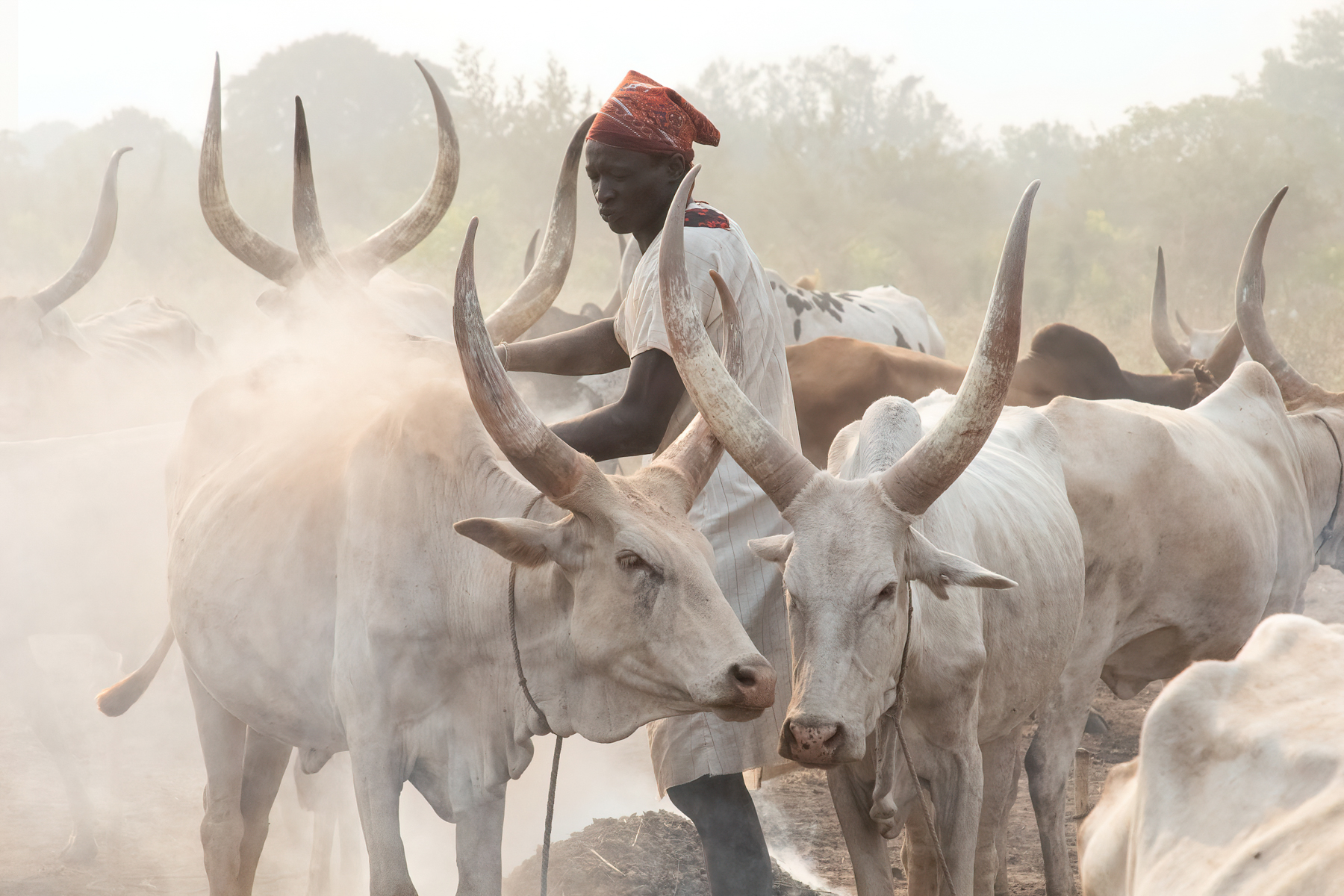
A morning massage of Ankole Watusi cows using ash from a nearby fire that burned overnight to keep cattle free of biting insects (image by Inger Vandyke)
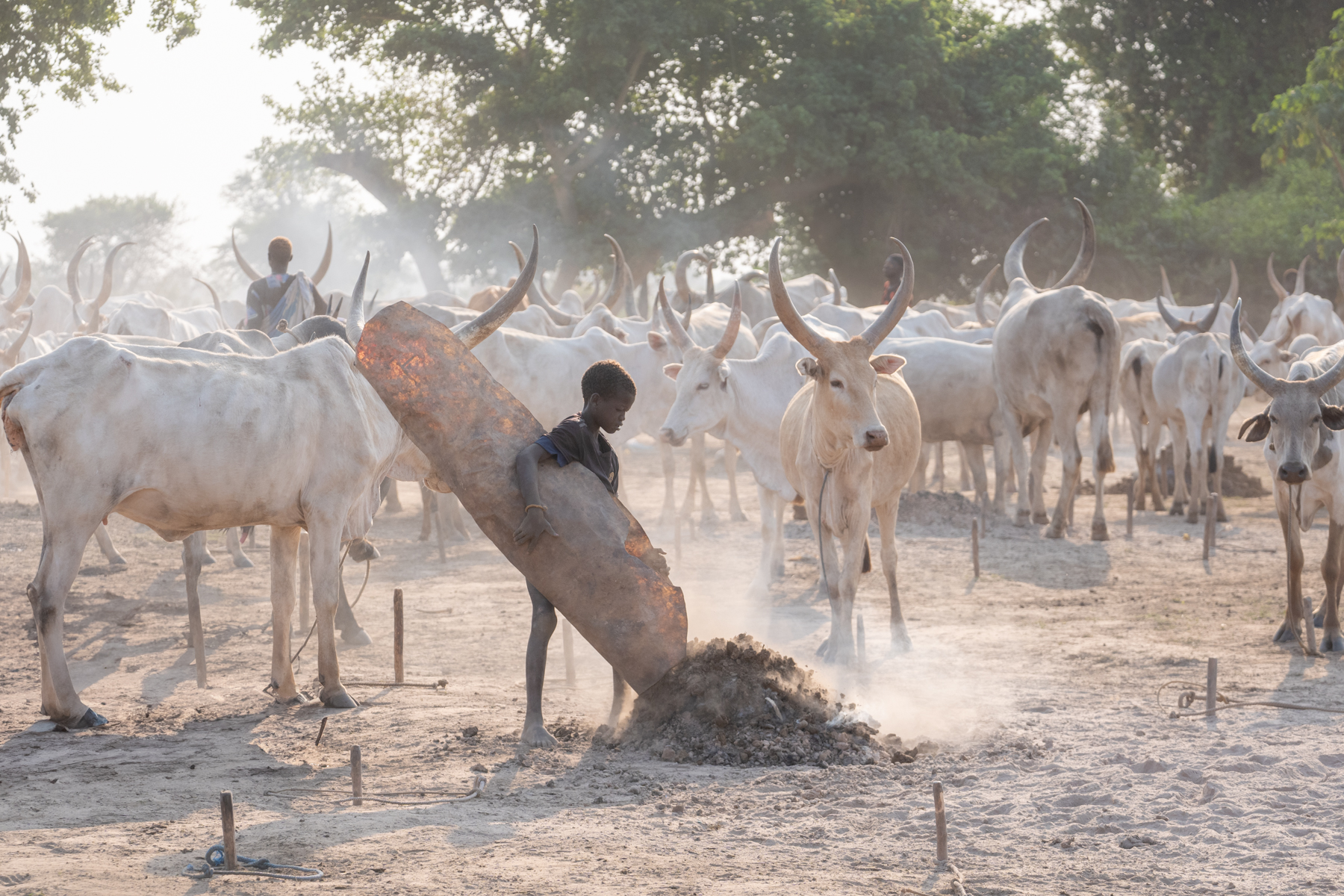
A young Mundari boy collects dung using a cowskin (image by Inger Vandyke)
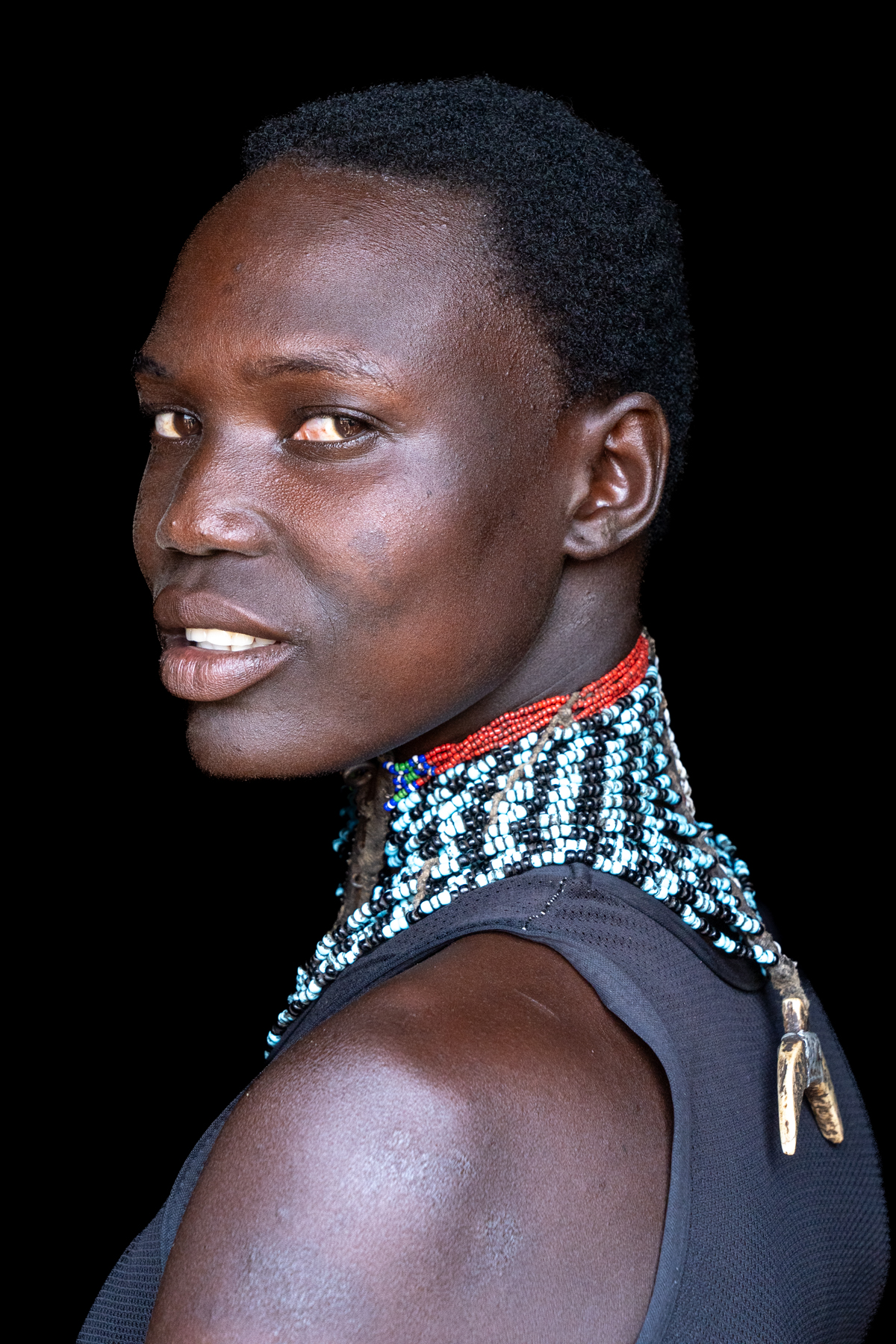
Mundari woman wearing Guet (image by Inger Vandyke)
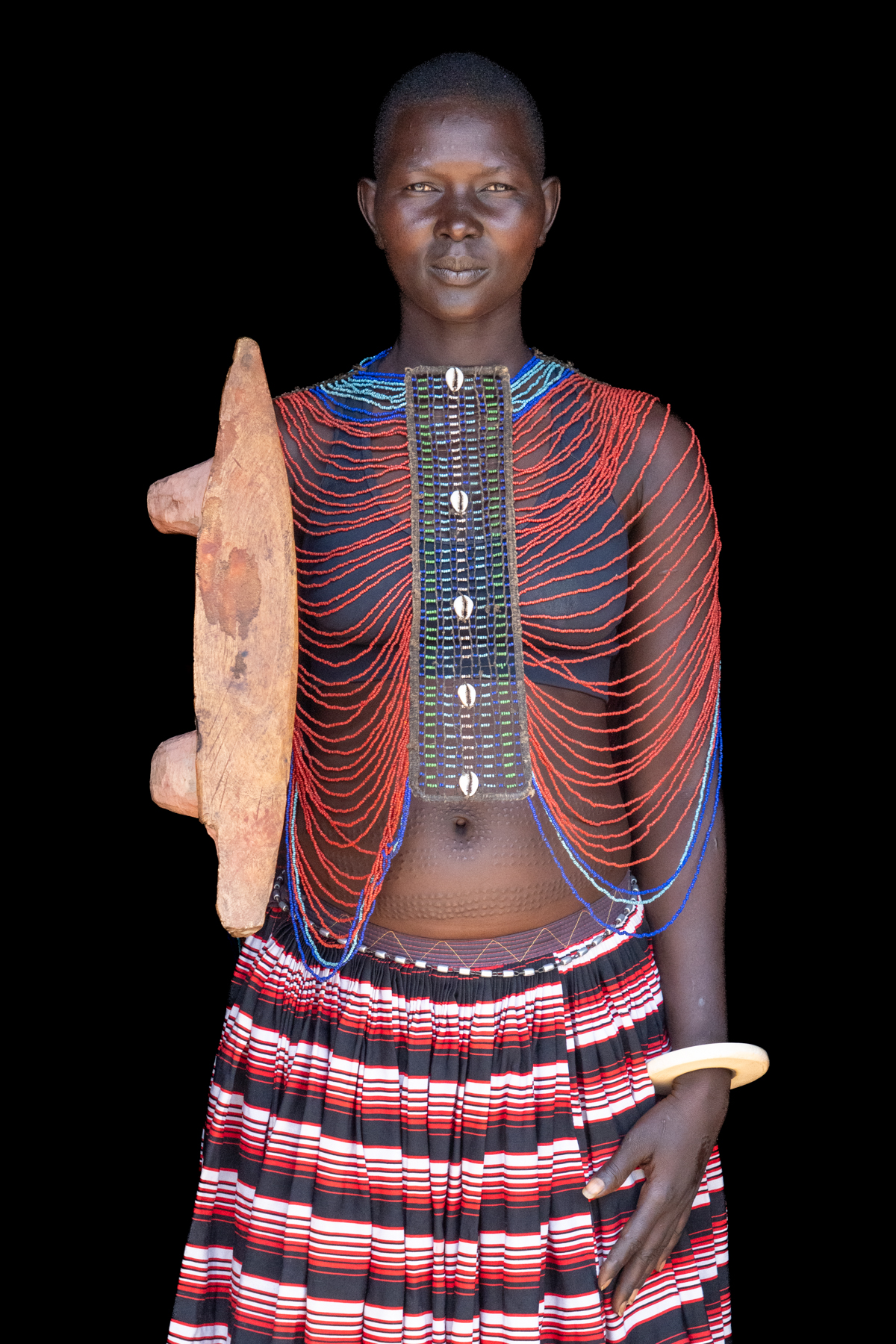
Beautiful Mundari woman wearing her bone bracelet, beaded collar and carring a hand-carved wooden seat (image by Inger Vandyke)

The Mundari dress up their cows with pompoms and bright sashes for celebrations (image by Inger Vandyke)

Mundari people will often hold their arms up to form the shape of their cows when you photograph them! (image by Inger Vandyke)
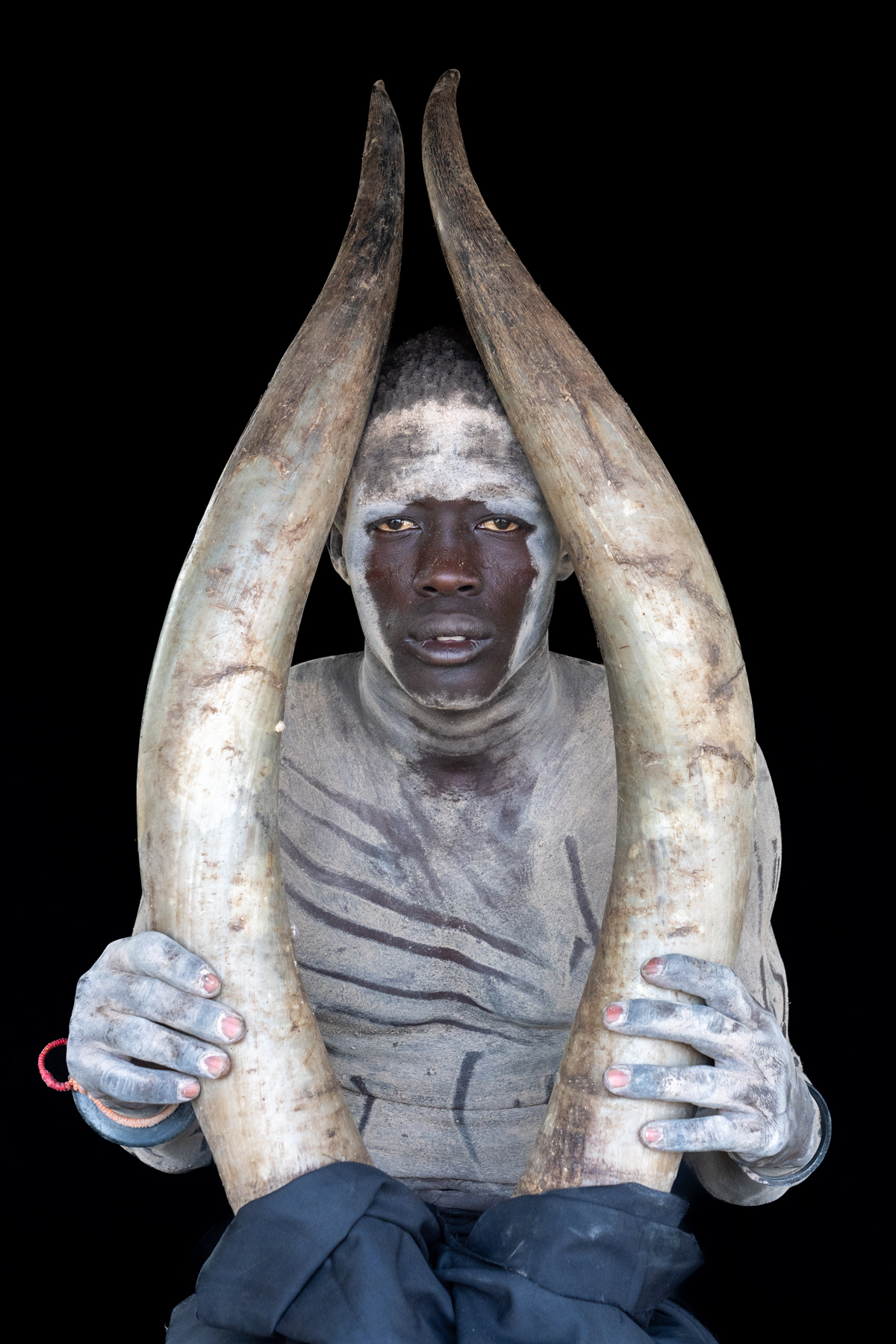
Portrait of a Mundari man with the gigantic horns of an Ankole Watusi cow (image by Inger Vandyke)
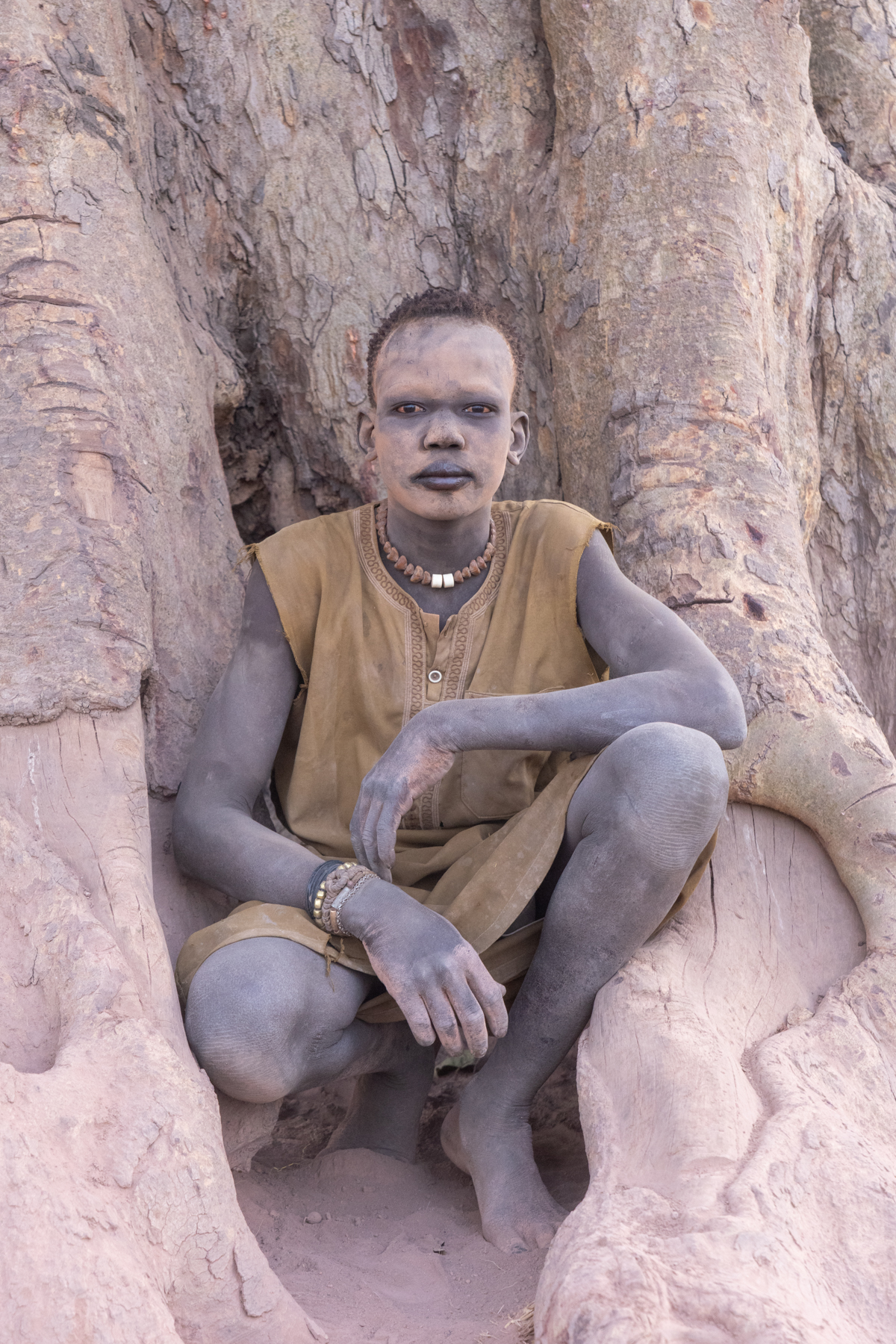
Young Mundari boy in the buttress roots of a large fig tree (image by Inger Vandyke)
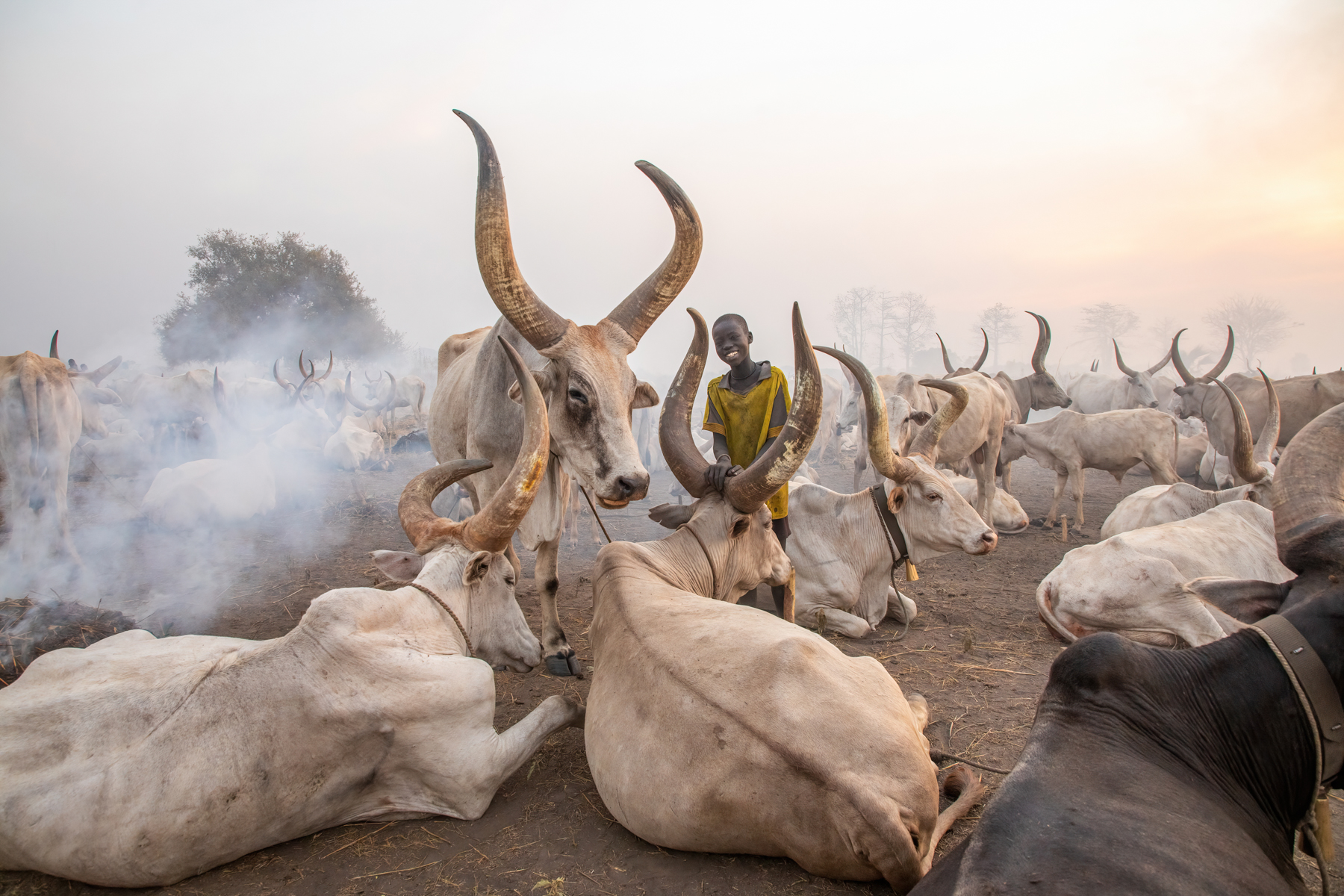
A young boy stops and smiles aside the gigantic Ankole Watusi cows of the Mundari people (image by Inger Vandyke)
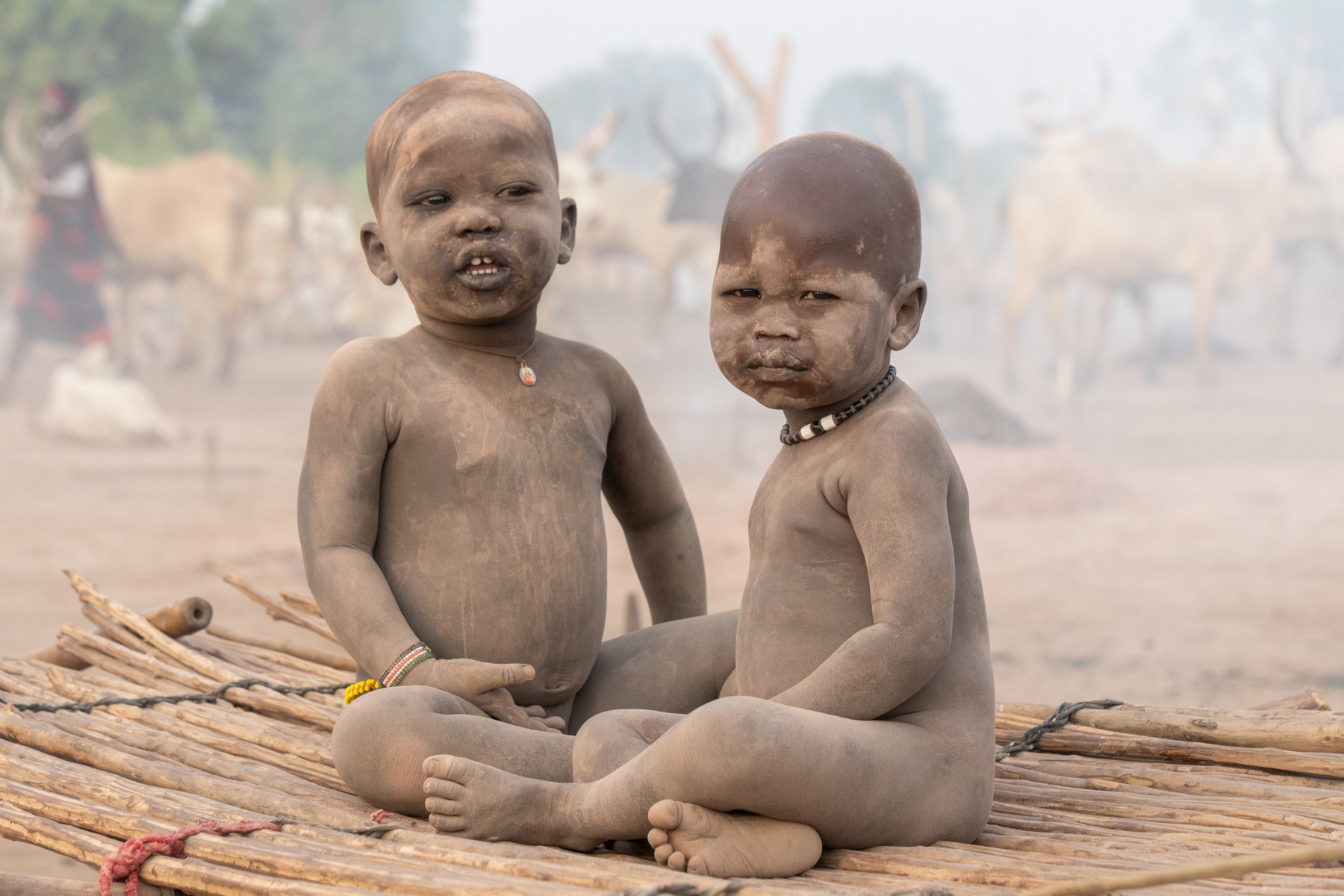
Mundari babies (image by Inger Vandyke)
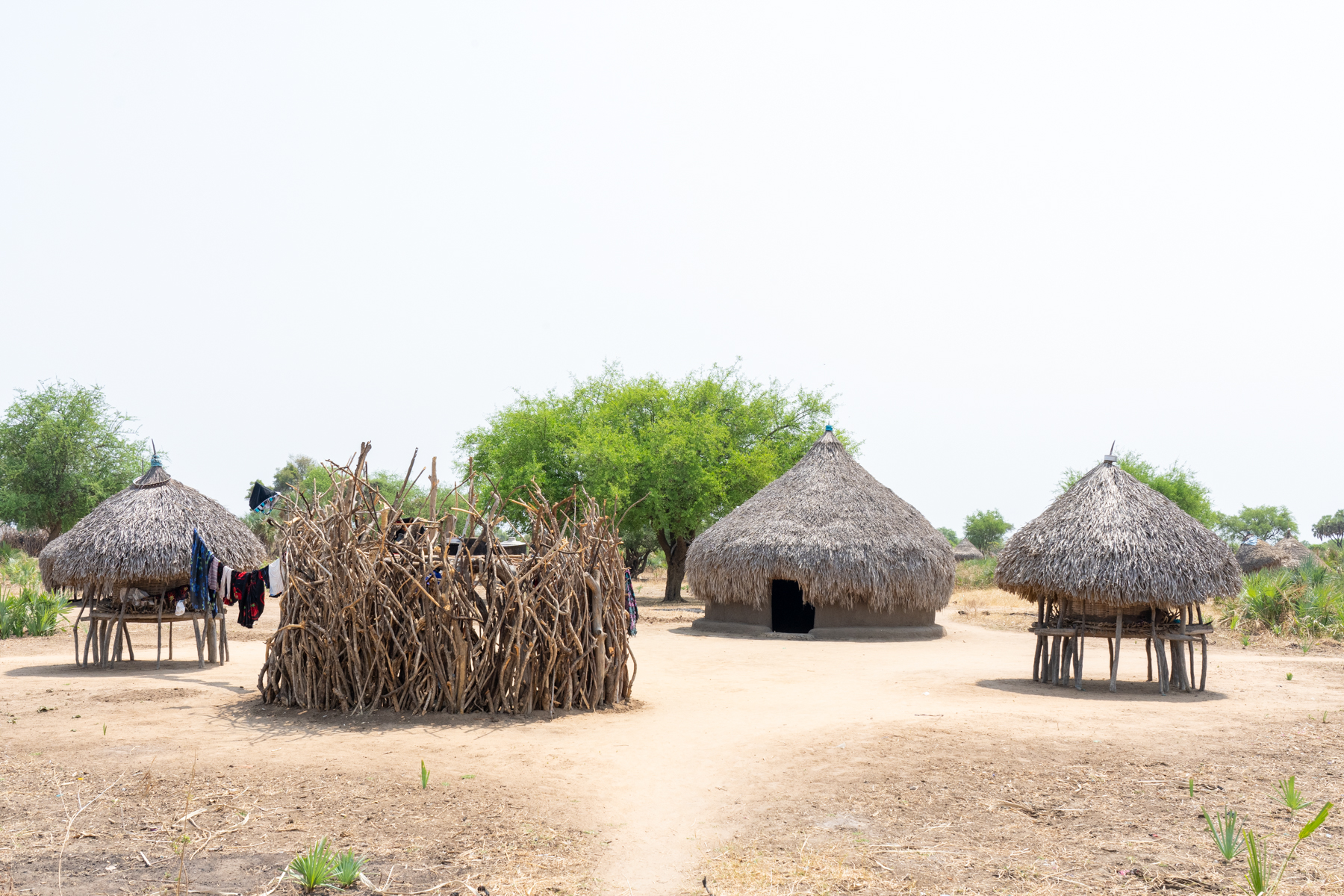
A typical Mundari village (image by Inger Vandyke)

A Mundari boy blows into the vagina of his cow to help her produce milk (image by Inger Vandyke)
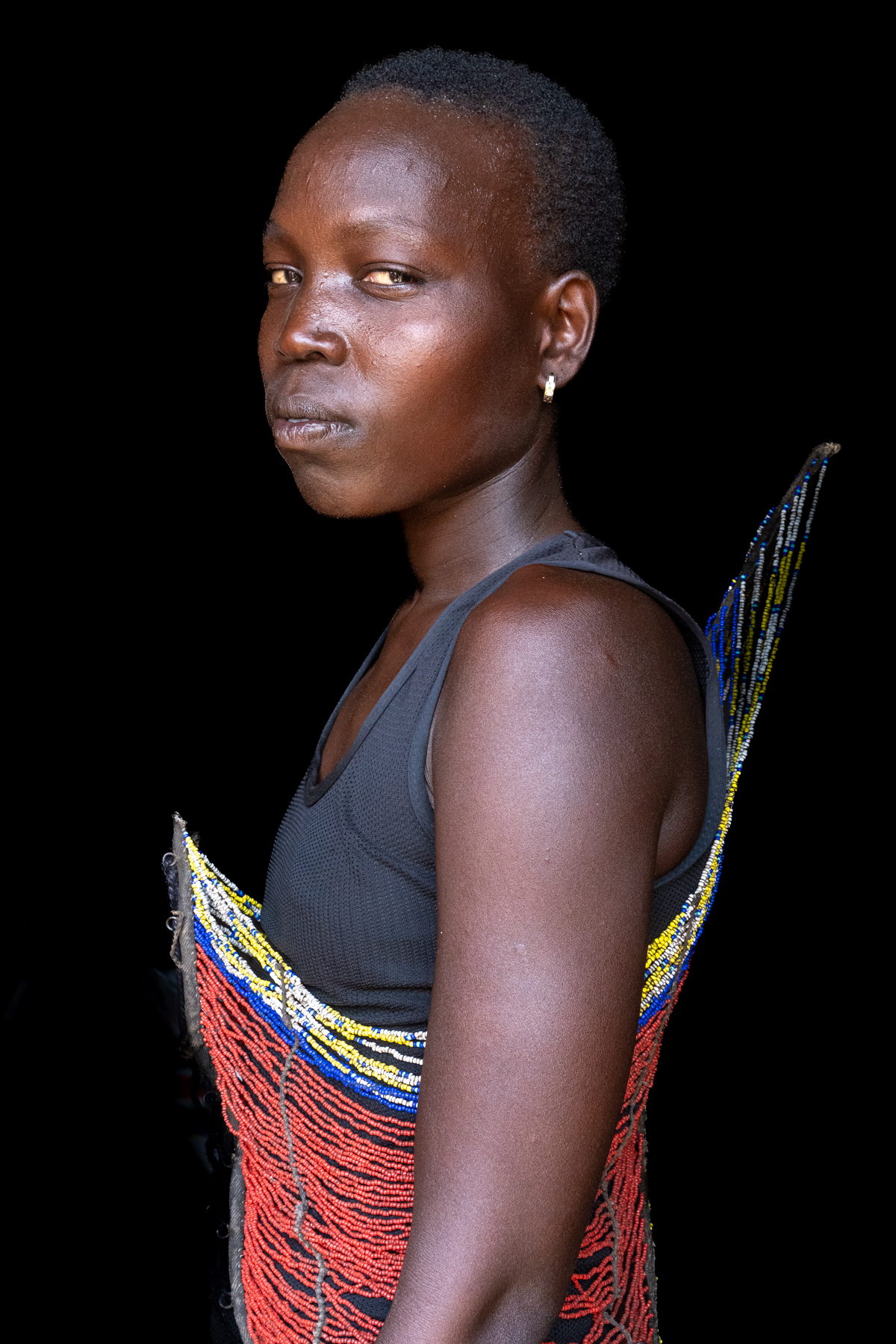
Mundari woman wearing a traditional corset (image by Inger Vandyke)

Collecting dung before it has even dropped. Dried cow dung is a vital part of life in the cattle camps of South Sudan (image by Inger Vandyke)

The night watchman. A Mundari man surveys his cattle at the camp on sunset (image by Inger Vandyke)

A young Mundari girl emerges from a makeshift tent at her cattle camp (image by Inger Vandyke)
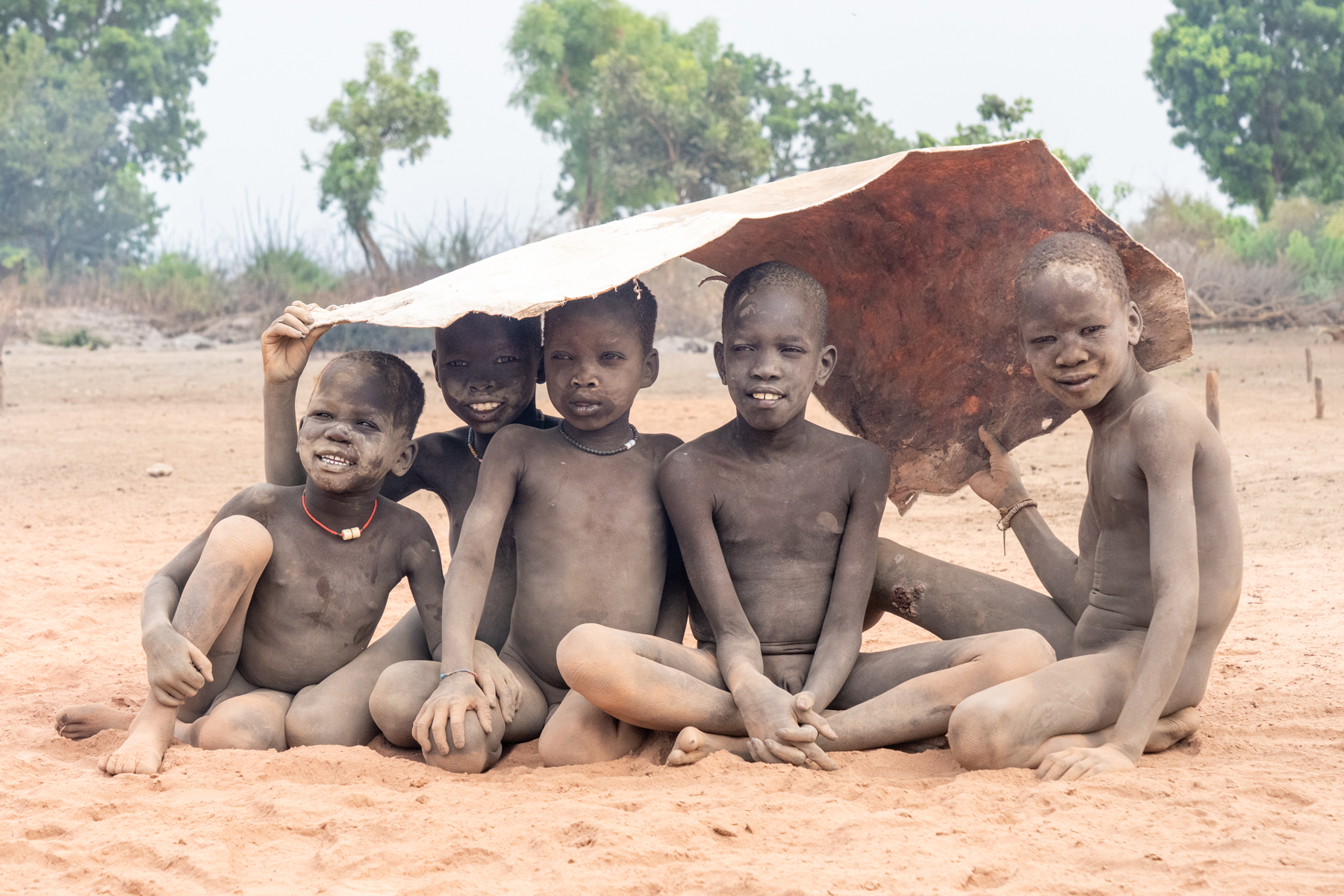
Mundari children take shelter under a cow skin from a light rain shower (image by Inger Vandyke)
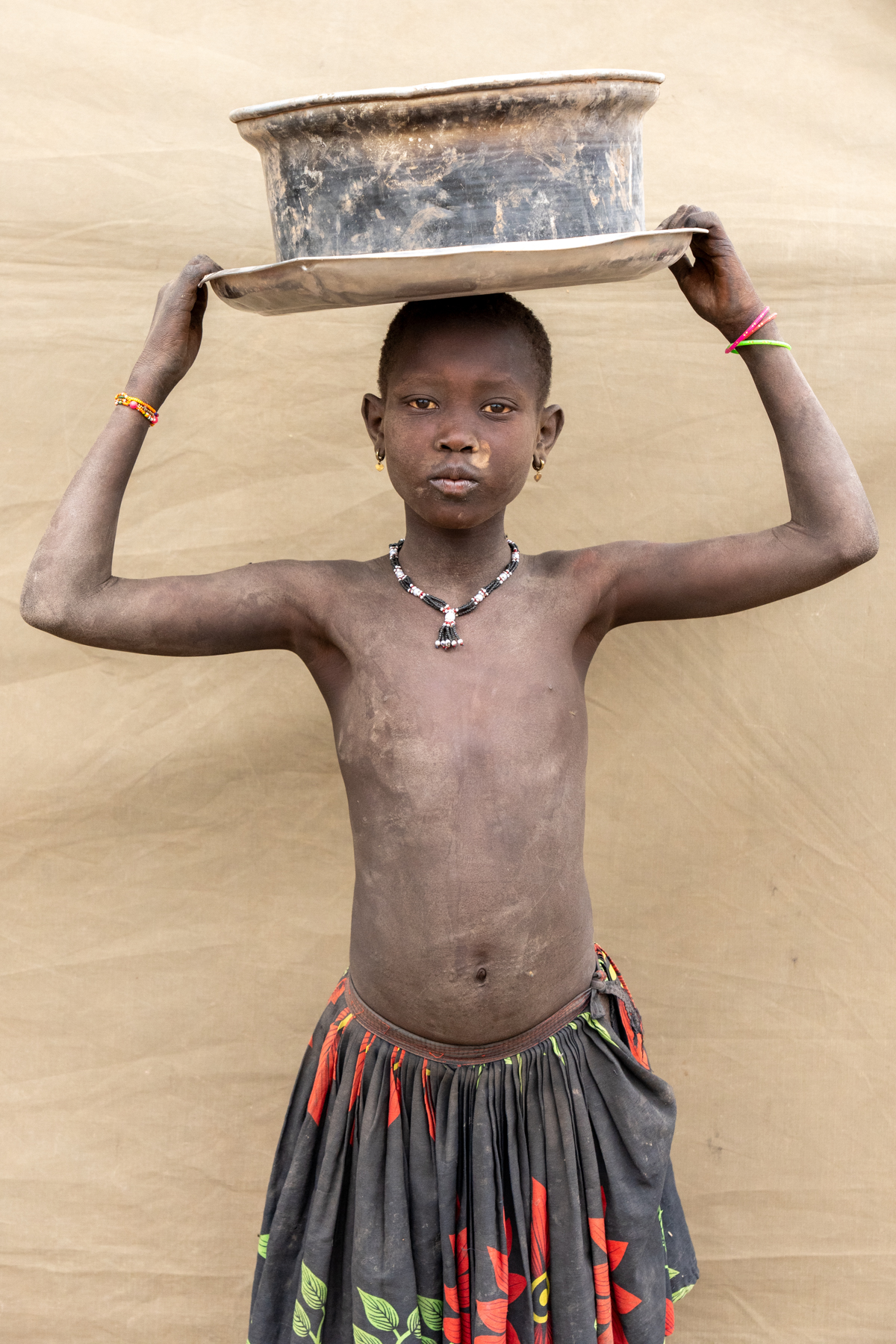
Mundari girl carrying washing bowl (image by Inger Vandyke)
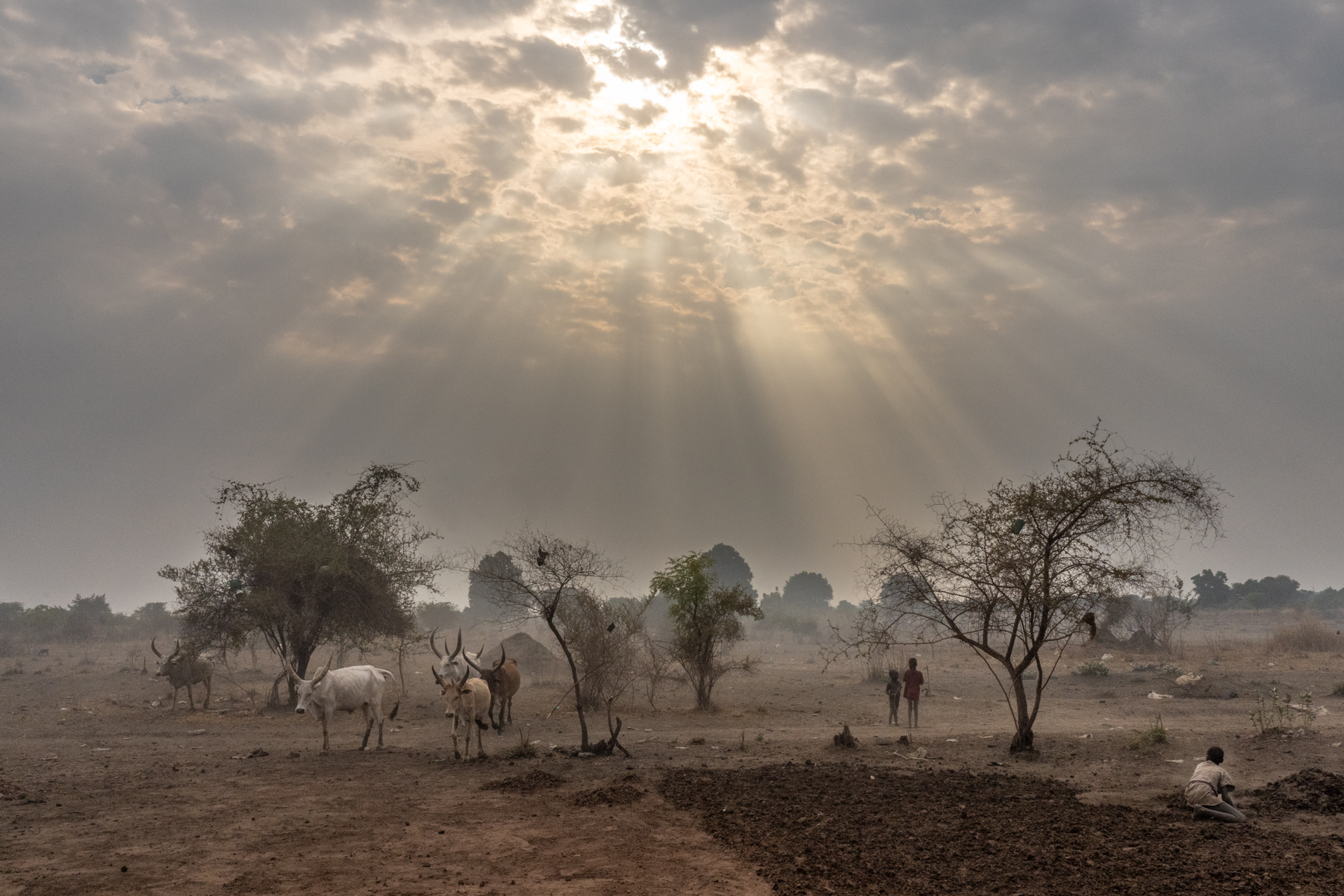
Dramatic afternoon skies herald the end of the dry season (image by Inger Vandyke)
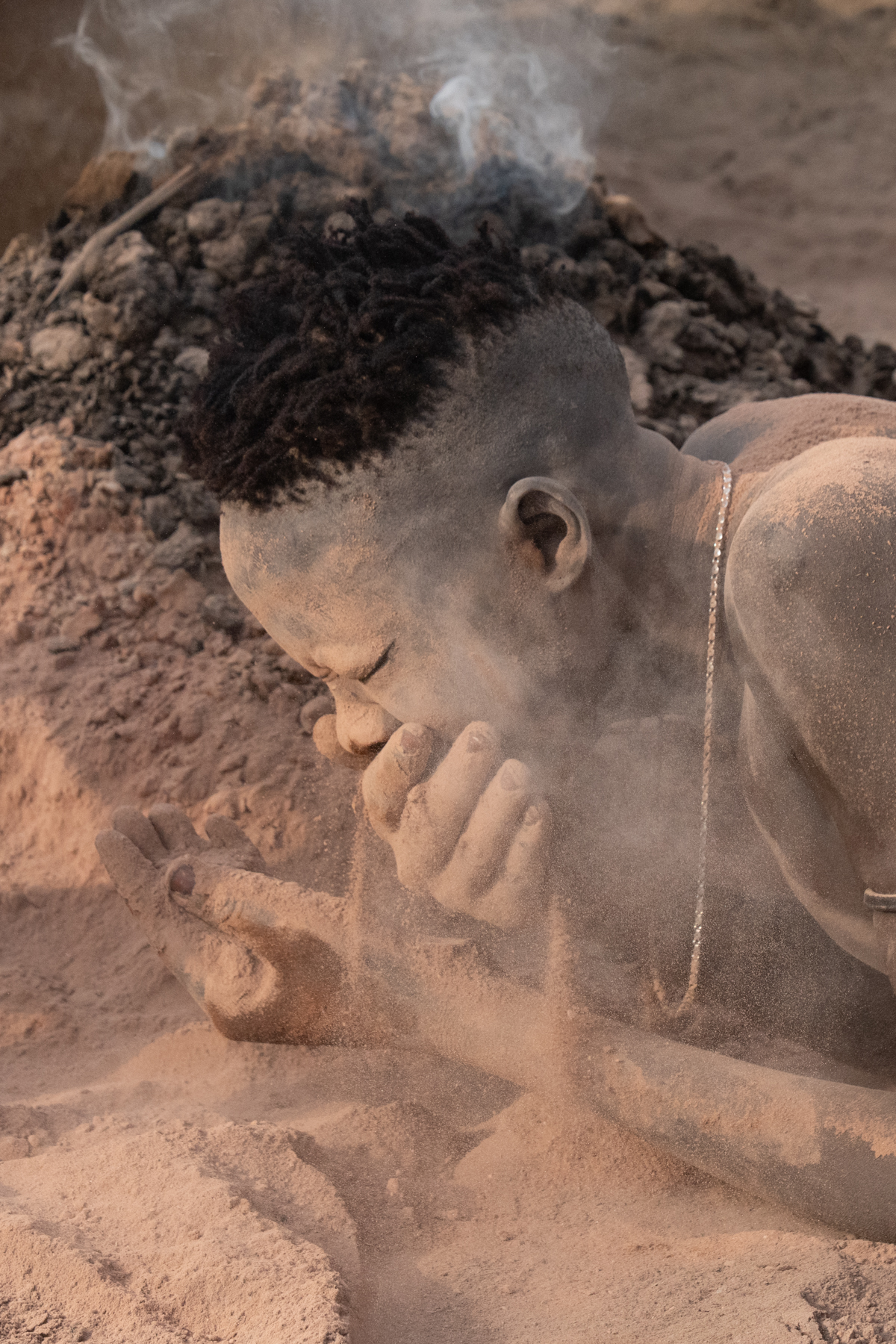
A young Mundari man 'makes up' his face with ash and dust from the fire (image by Inger Vandyke)
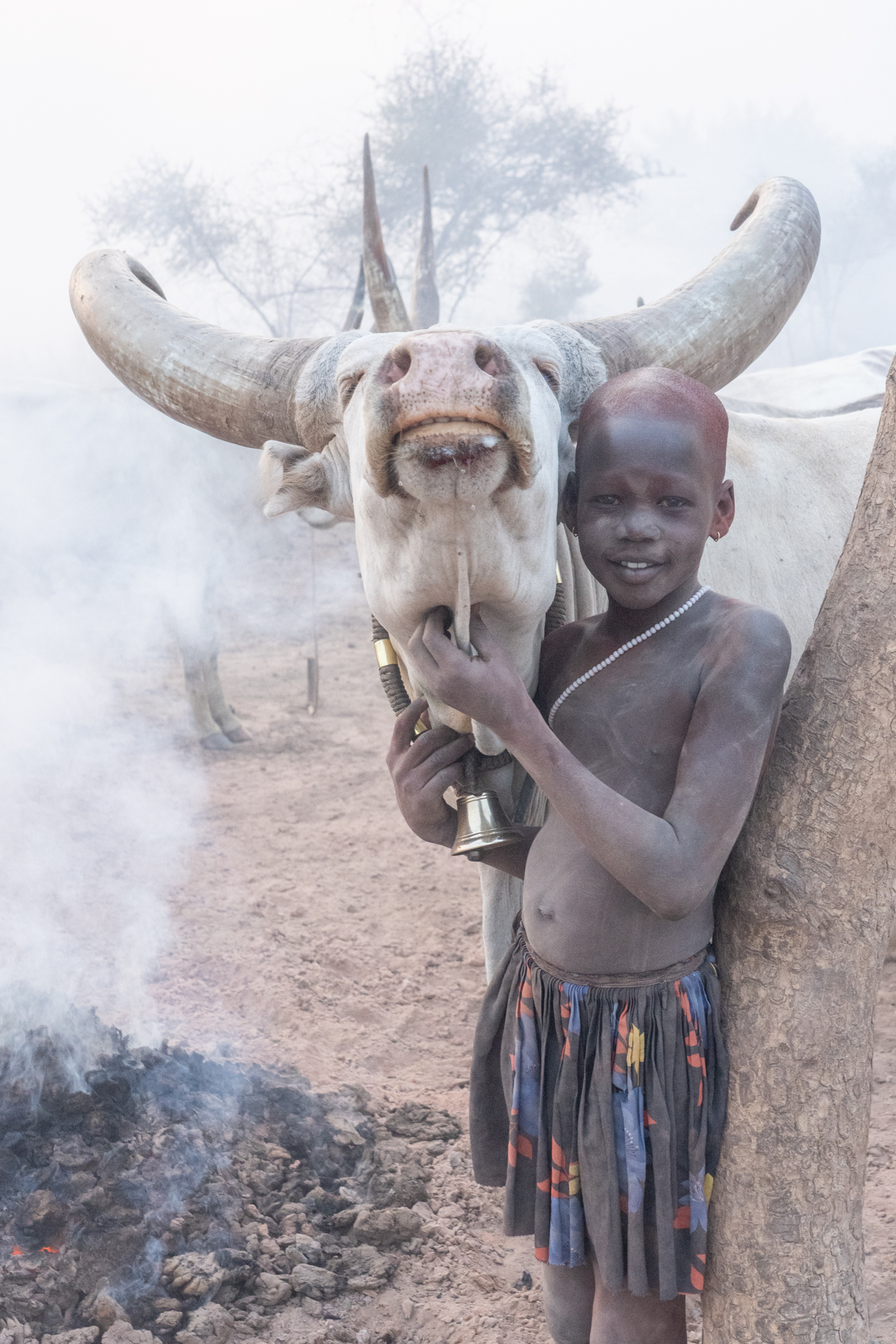
A young Dinka girl strokes her favourite cow (image by Inger Vandyke)

Beautiful Aker (image by Inger Vandyke)
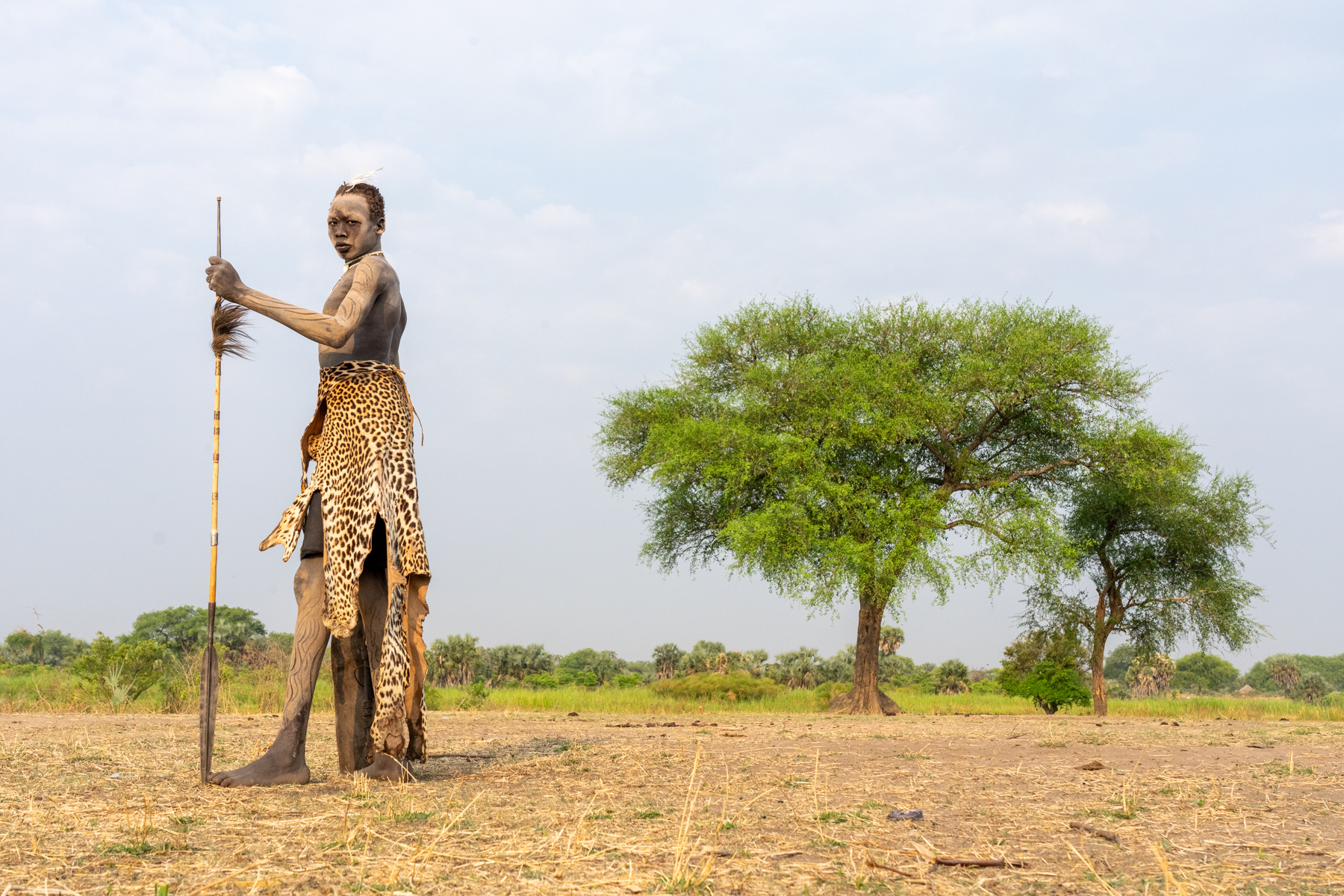
Young Mundari man with traditional leopard skin and spear (image by Inger Vandyke)
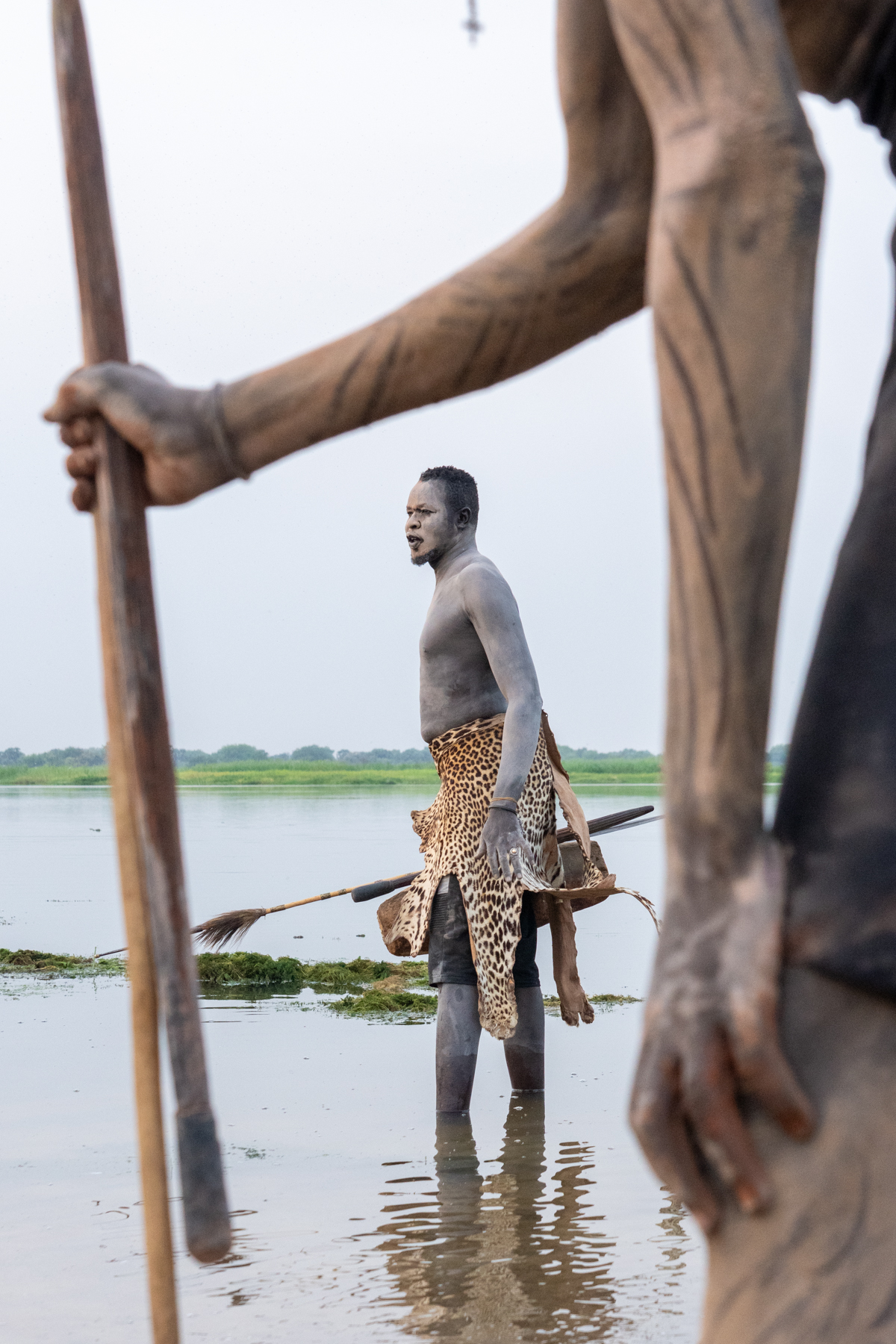
Getting ready to fight (image by Inger Vandyke)

Nyanda wearing a traditional corset in a Mundari cattle camp (image by Inger Vandyke)

Mundari (image by Inger Vandyke)
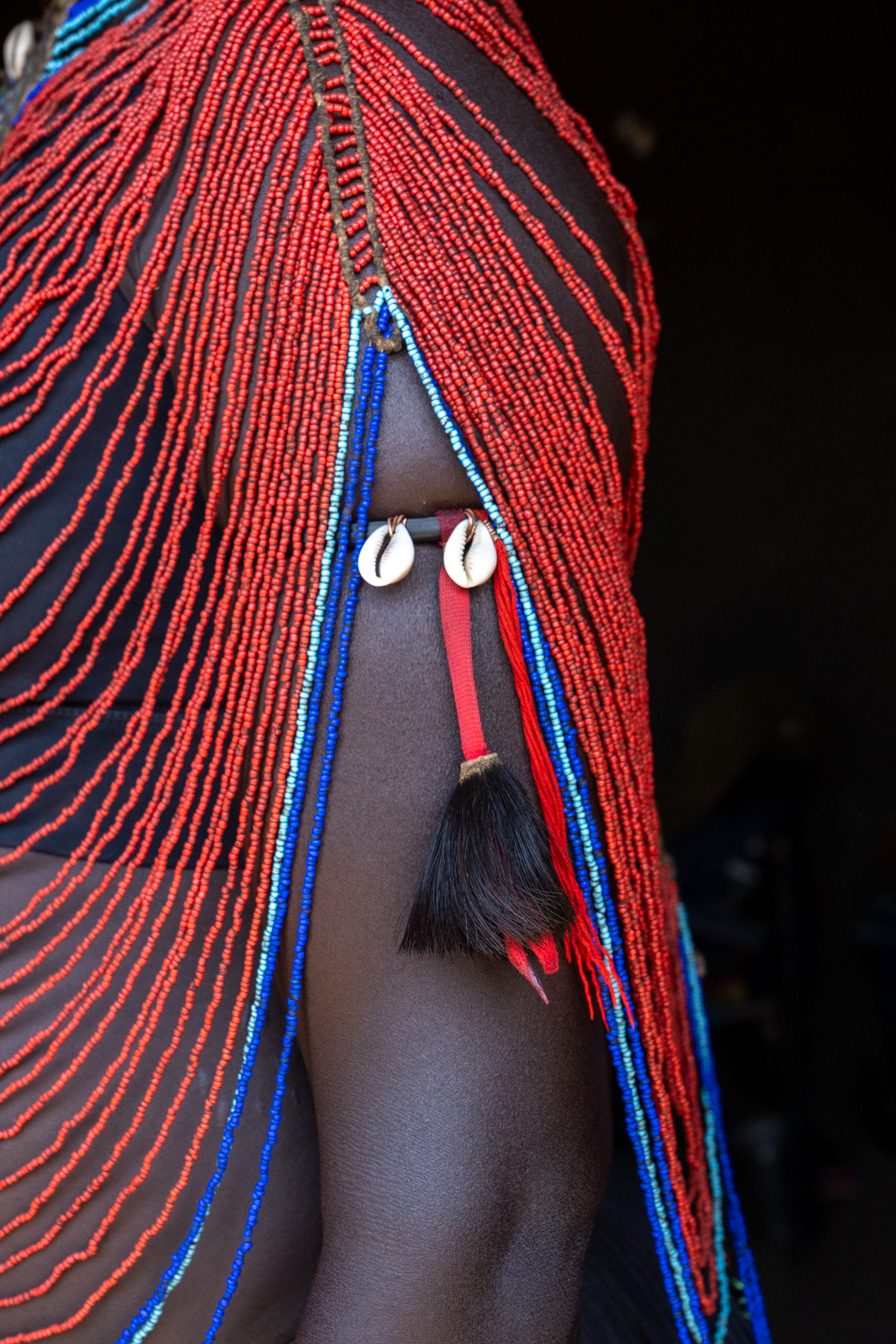
Mundari decoration detail (image by Inger Vandyke)
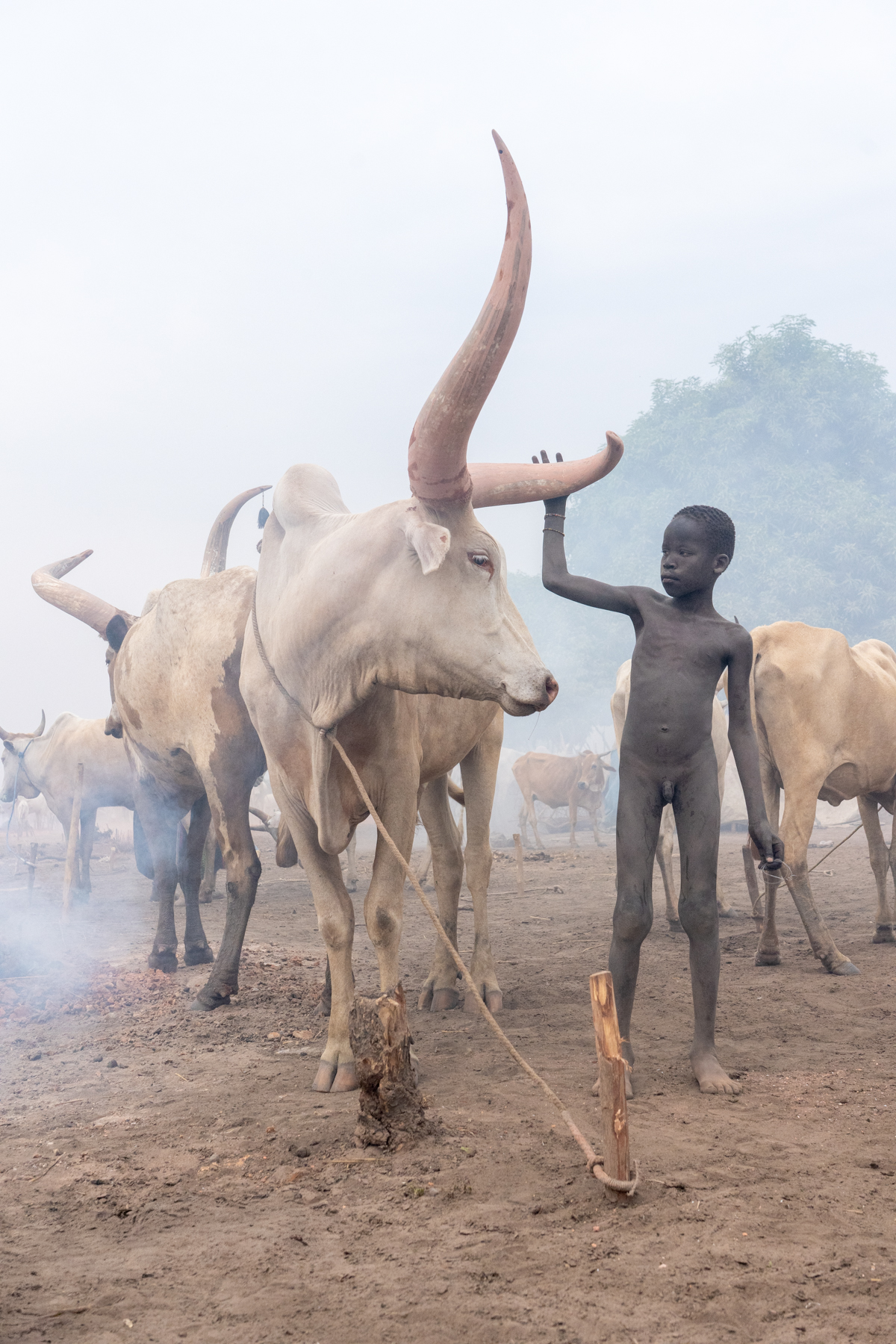
Mundari boy with his favourite cow (image by Inger Vandyke)
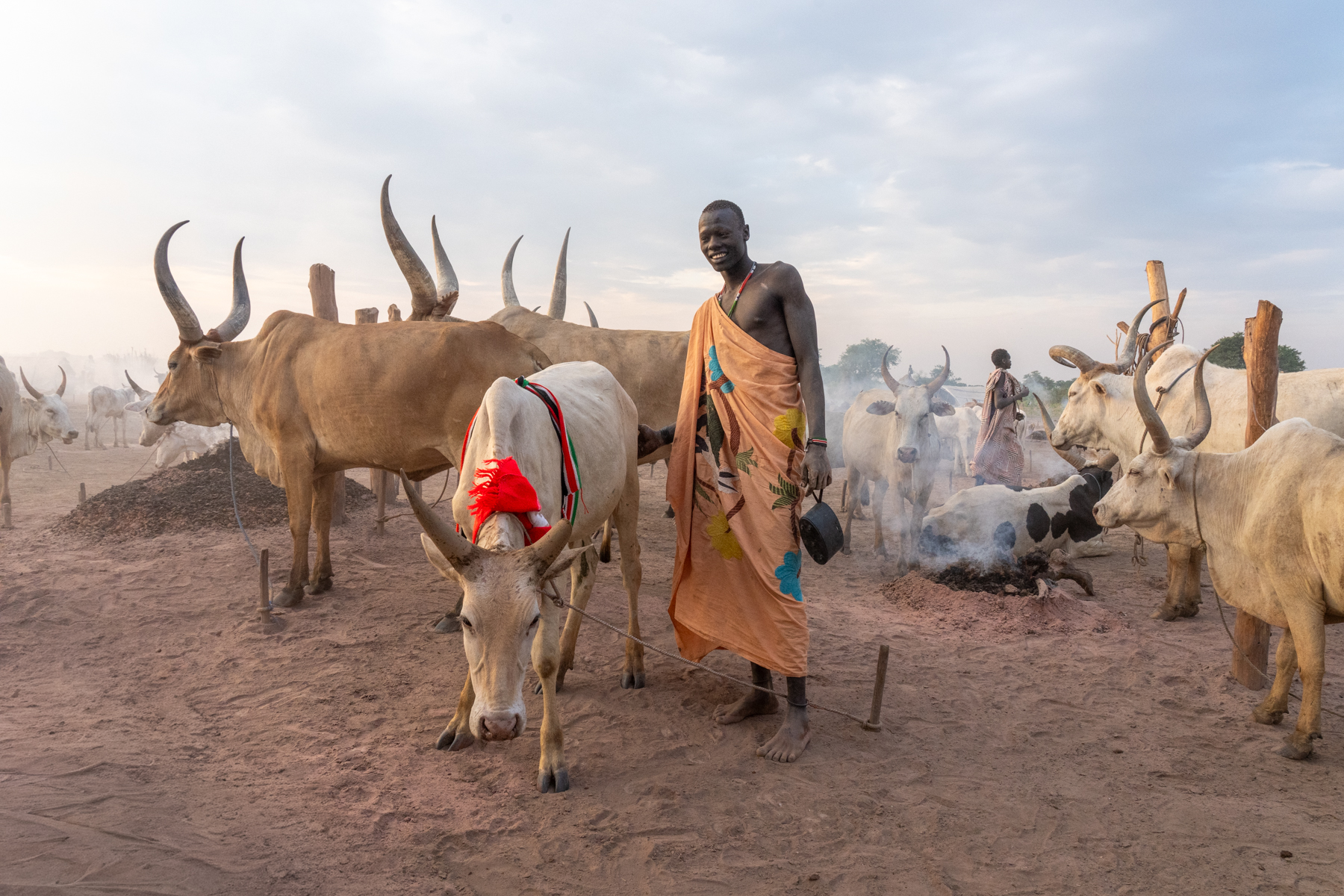
A proud Mundari man with his decorated cow (image by Inger Vandyke)

Blue hour in a Mundari cattle camp. Mundari people often fashion tassles out of the cow tail hair to decorate their own cows (image by Inger Vandyke)
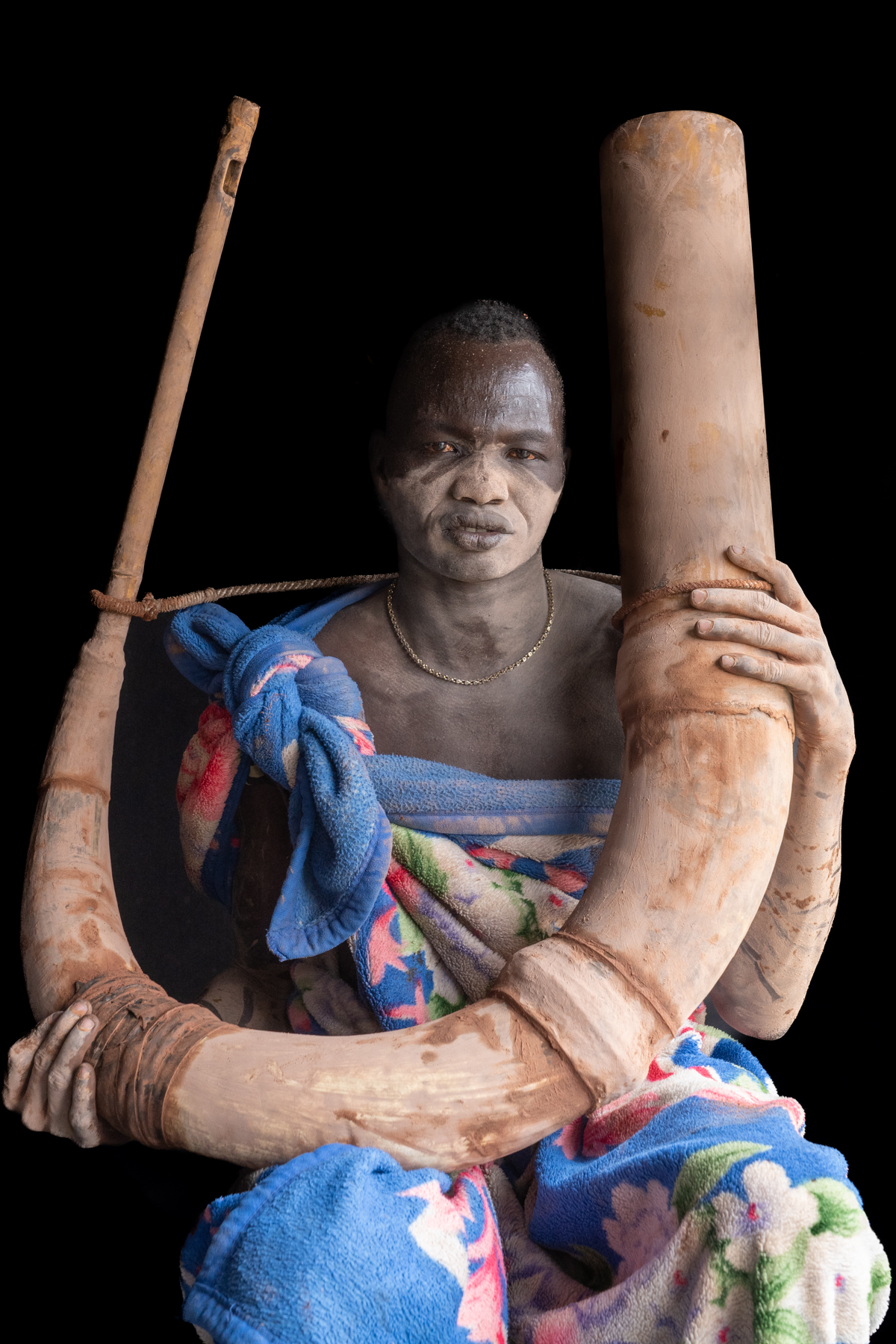
Mundari man with Tung horn (image by Inger Vandyke)
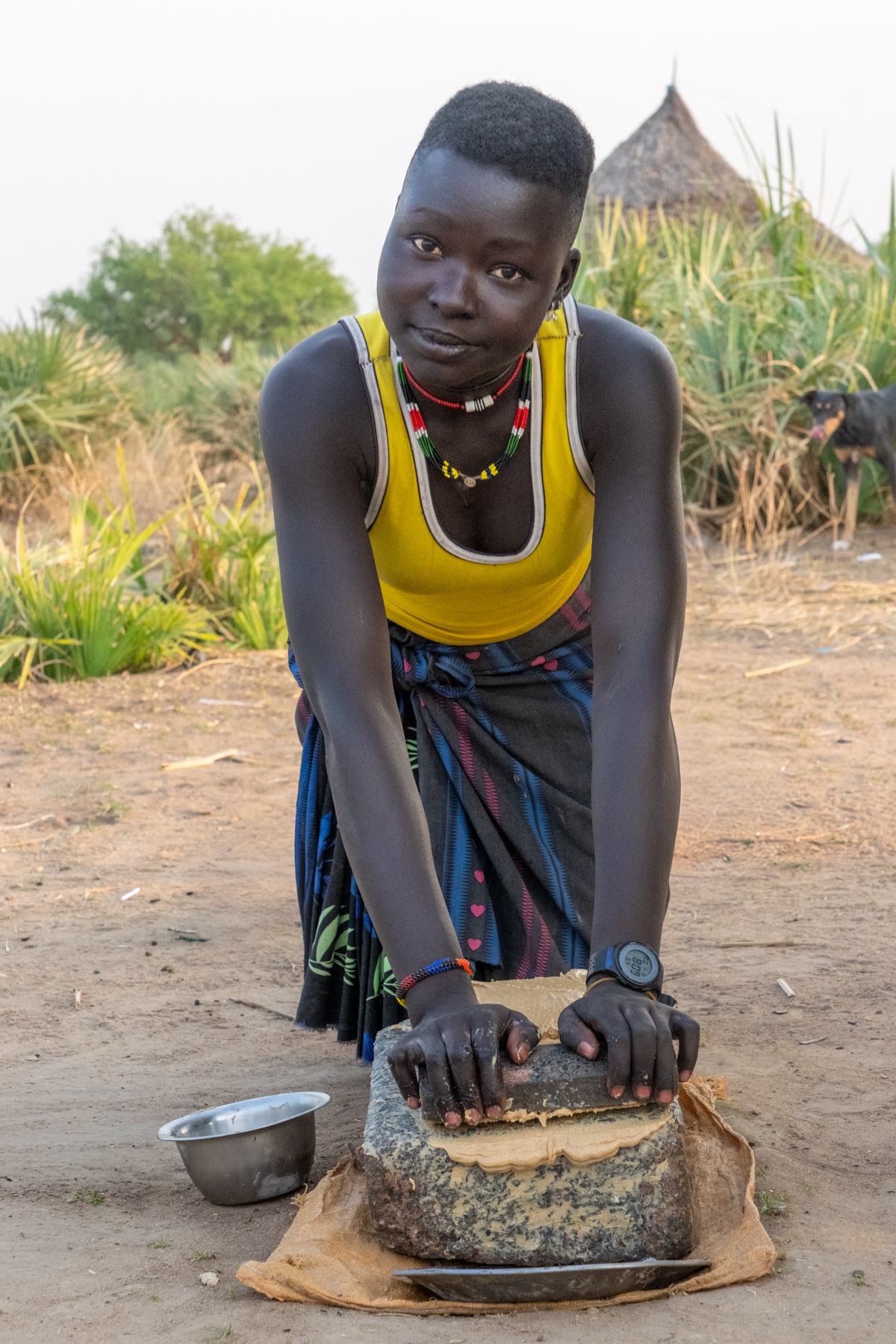
Grinding fresh peanut butter - delicious! (image by Inger Vandyke)
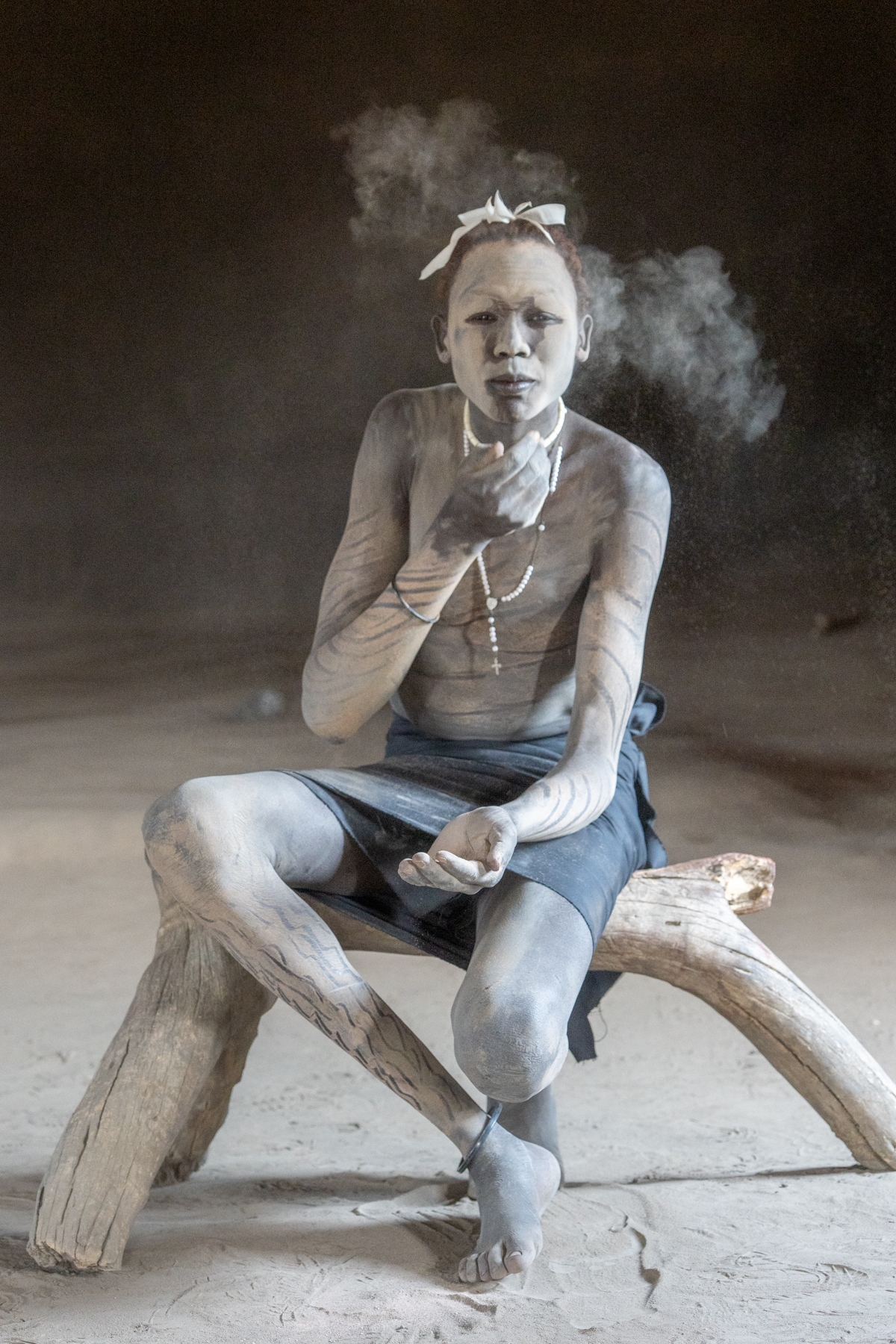
A Mundari boy powders his nose (image by Inger Vandyke)
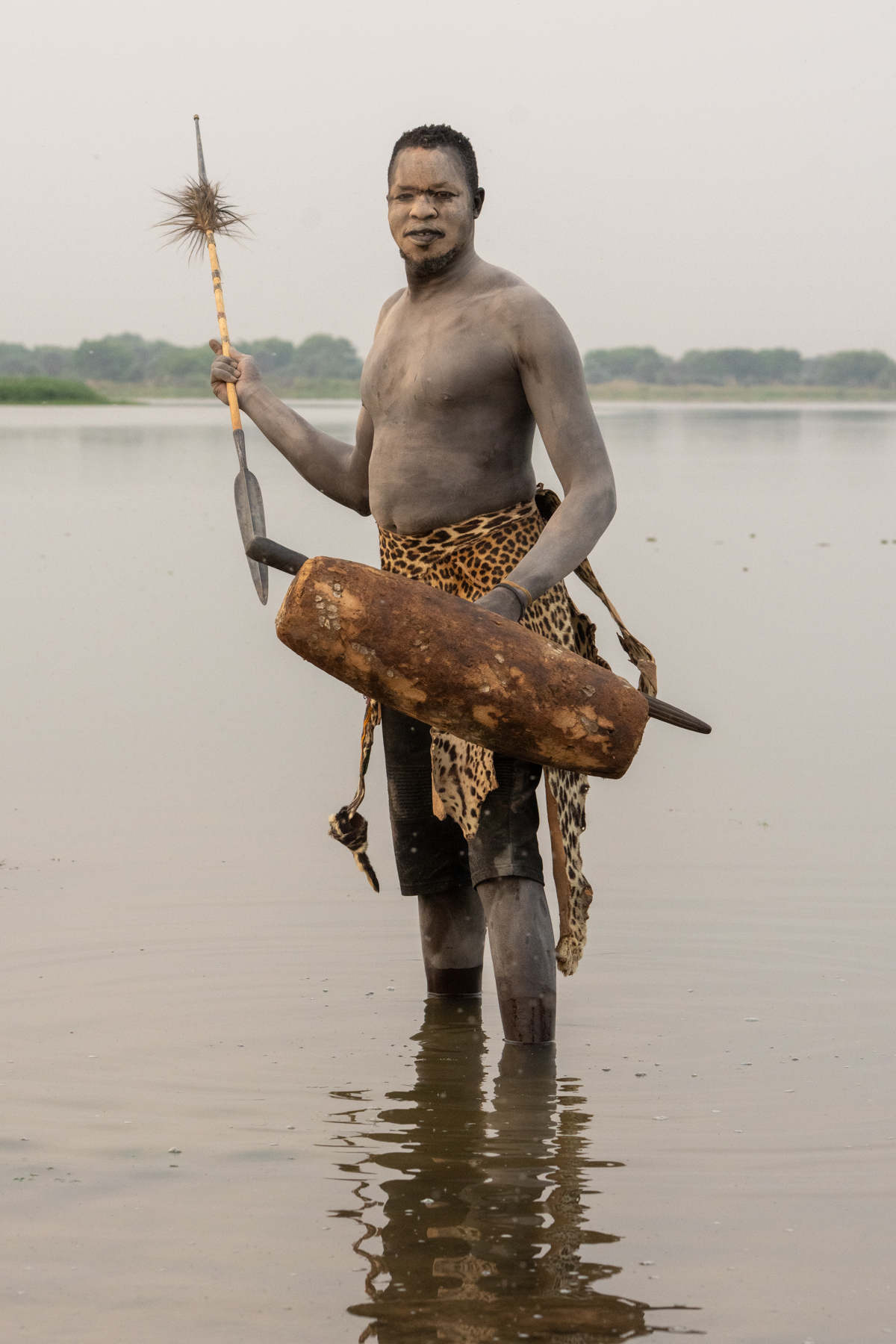
Mundari chief ready to battle (image by Inger Vandyke)

Mundari man in a sea of cow horns (image by Inger Vandyke)
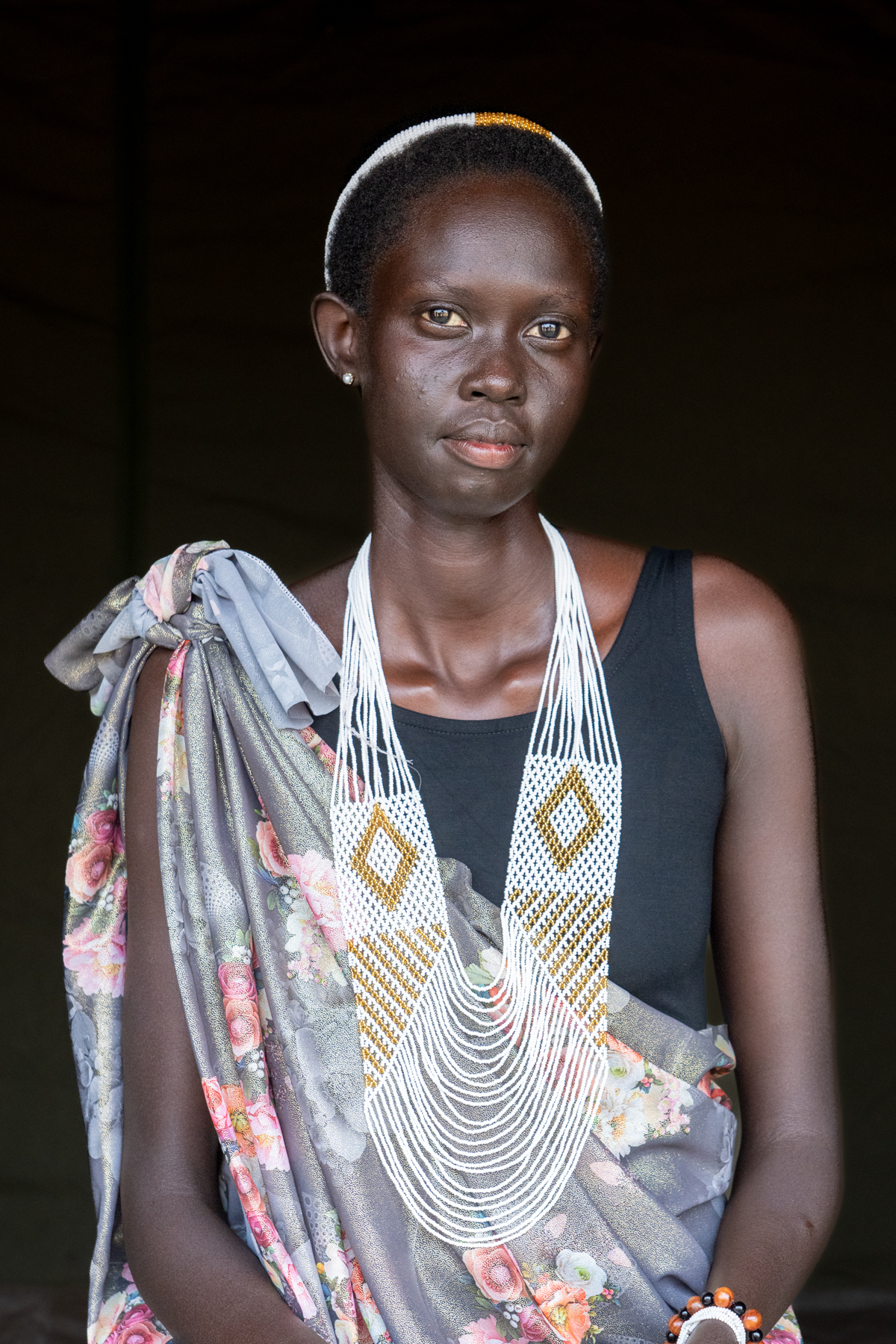
Nyanda wearing traditional Dinka wedding attire (image by Inger Vandyke)

Mundari people gather to celebrate a wedding (image by Inger Vandyke)

Portrait of Mochi holding his traditional 'Tung' or musical horn made from the cowhorns of Mundari cattle (image by Inger Vandyke)
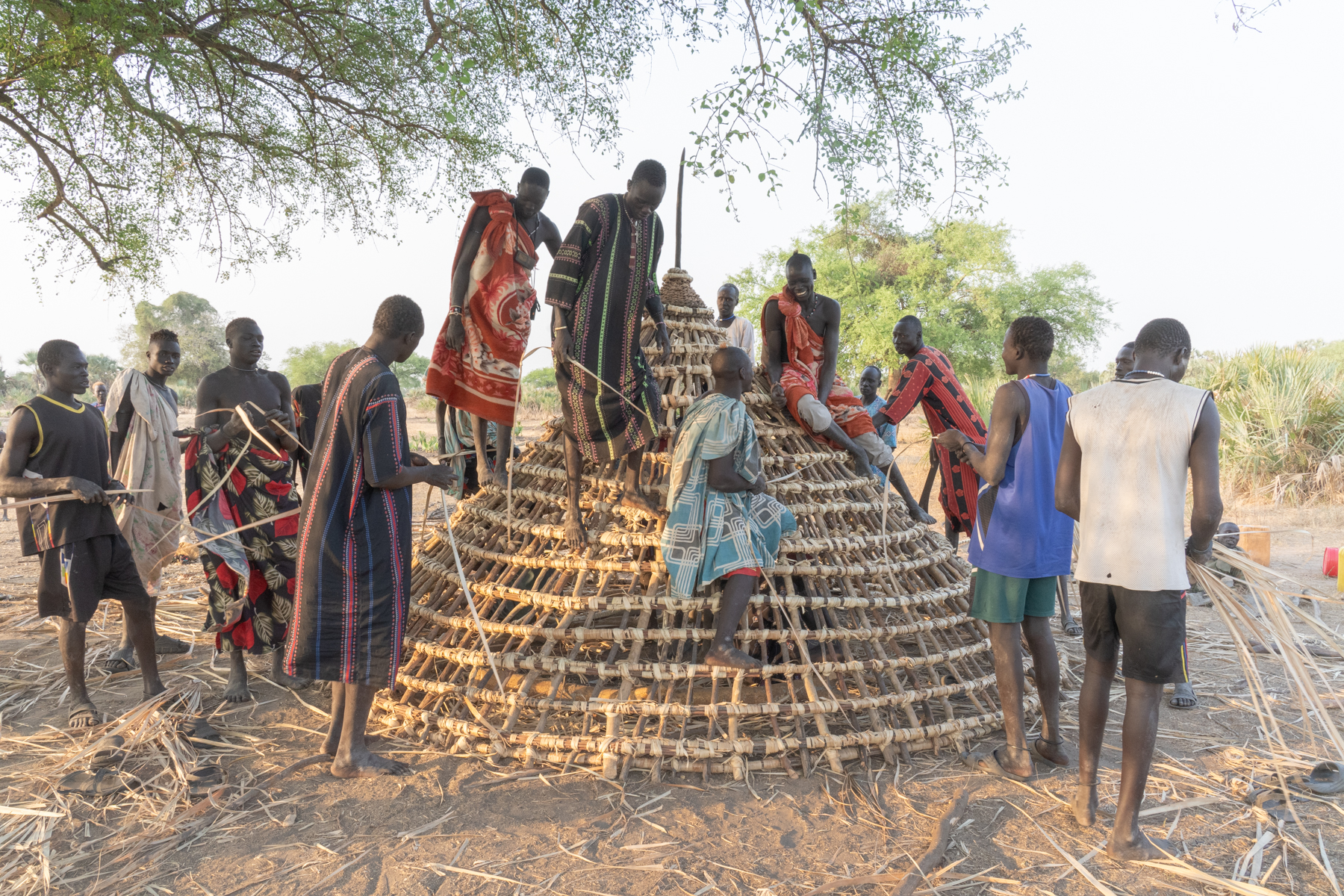
Unlike many parts of Africa where women build houses, in Mundari culture it is the men who create them. A group of men building the roof of a new home (image by Inger Vandyke)
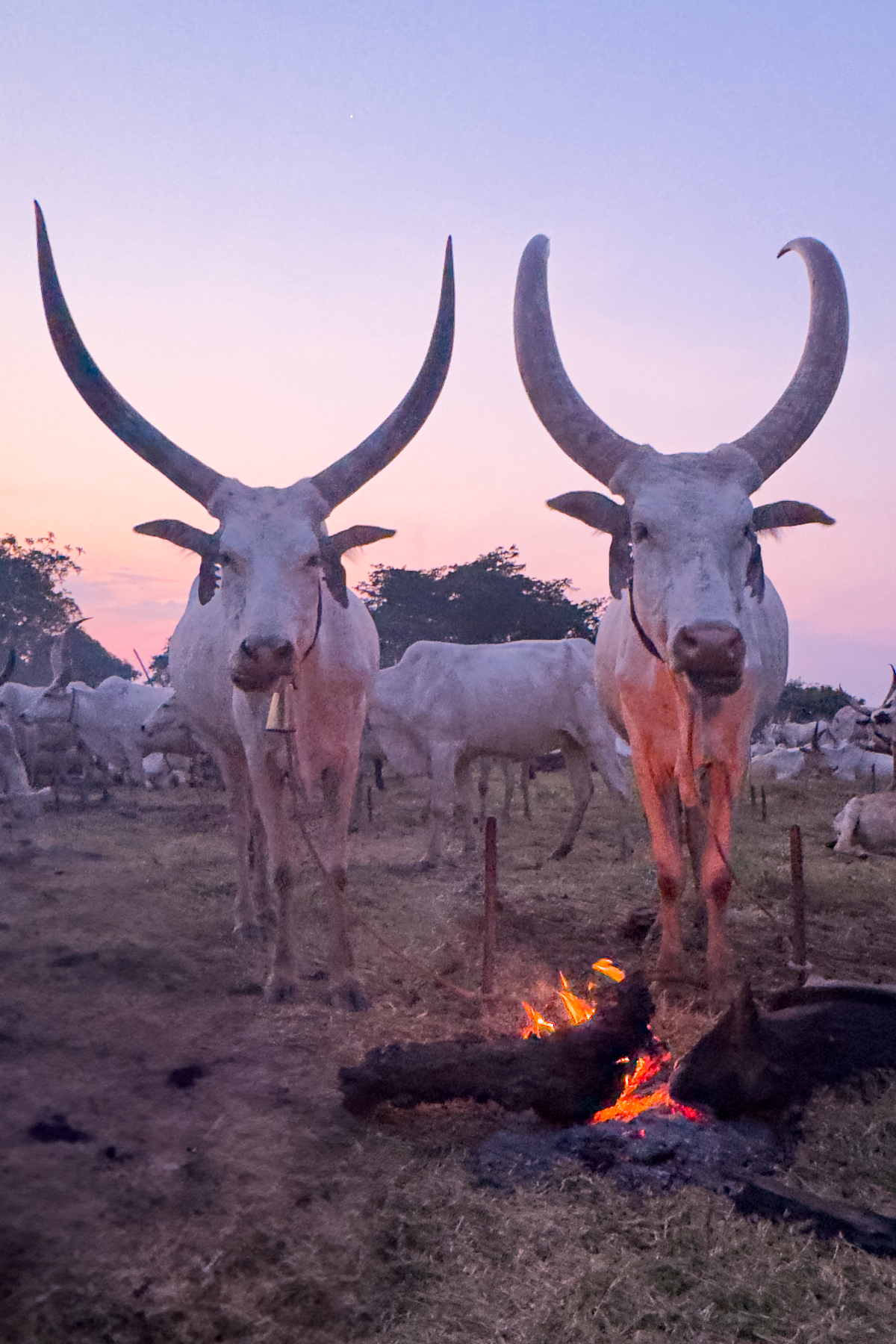
The Mundari's beautiful Ankole Watusi cows stand by the fire during the blush of dawn (image by Inger Vandyke)
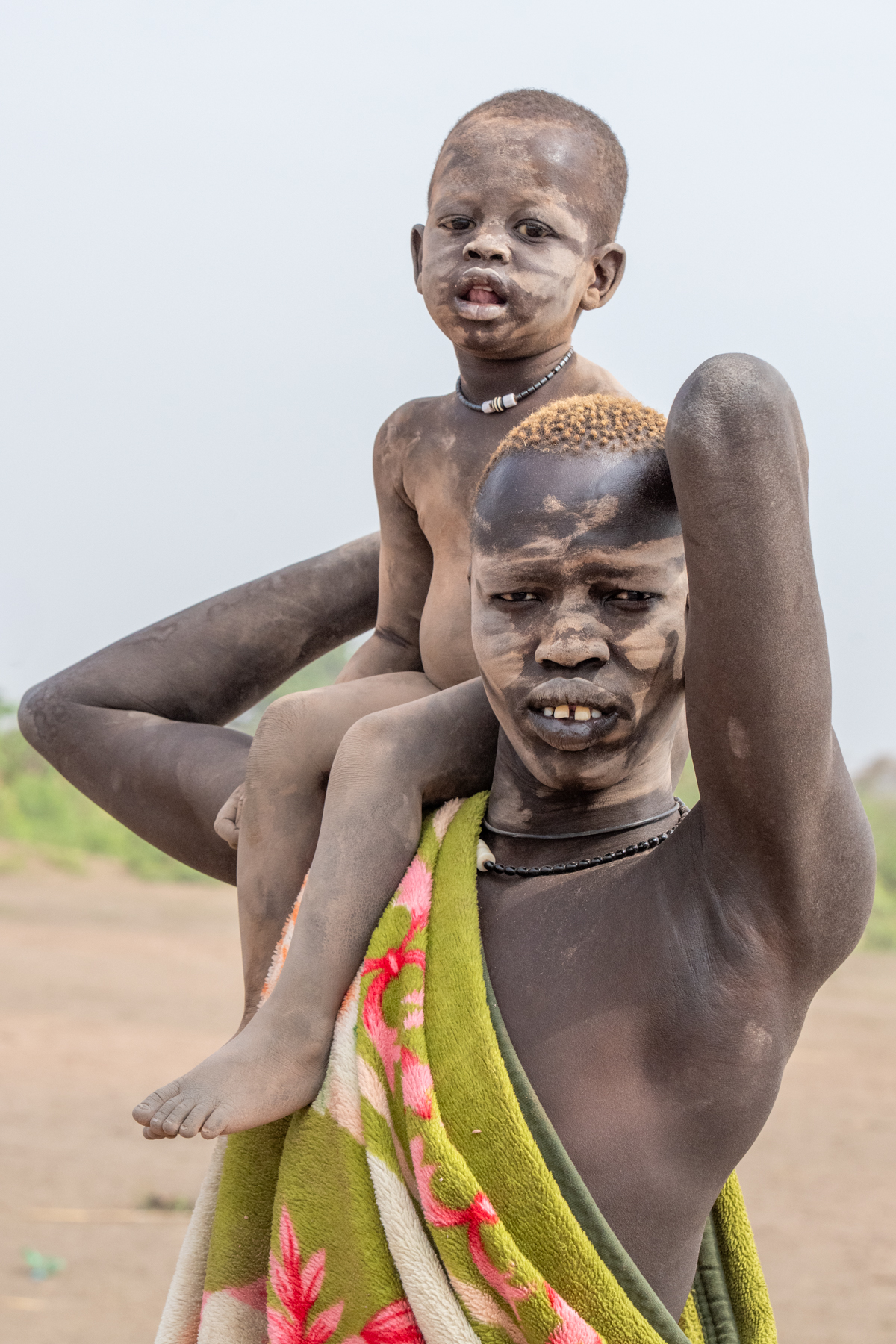
Mundari father and son (image by Inger Vandyke)
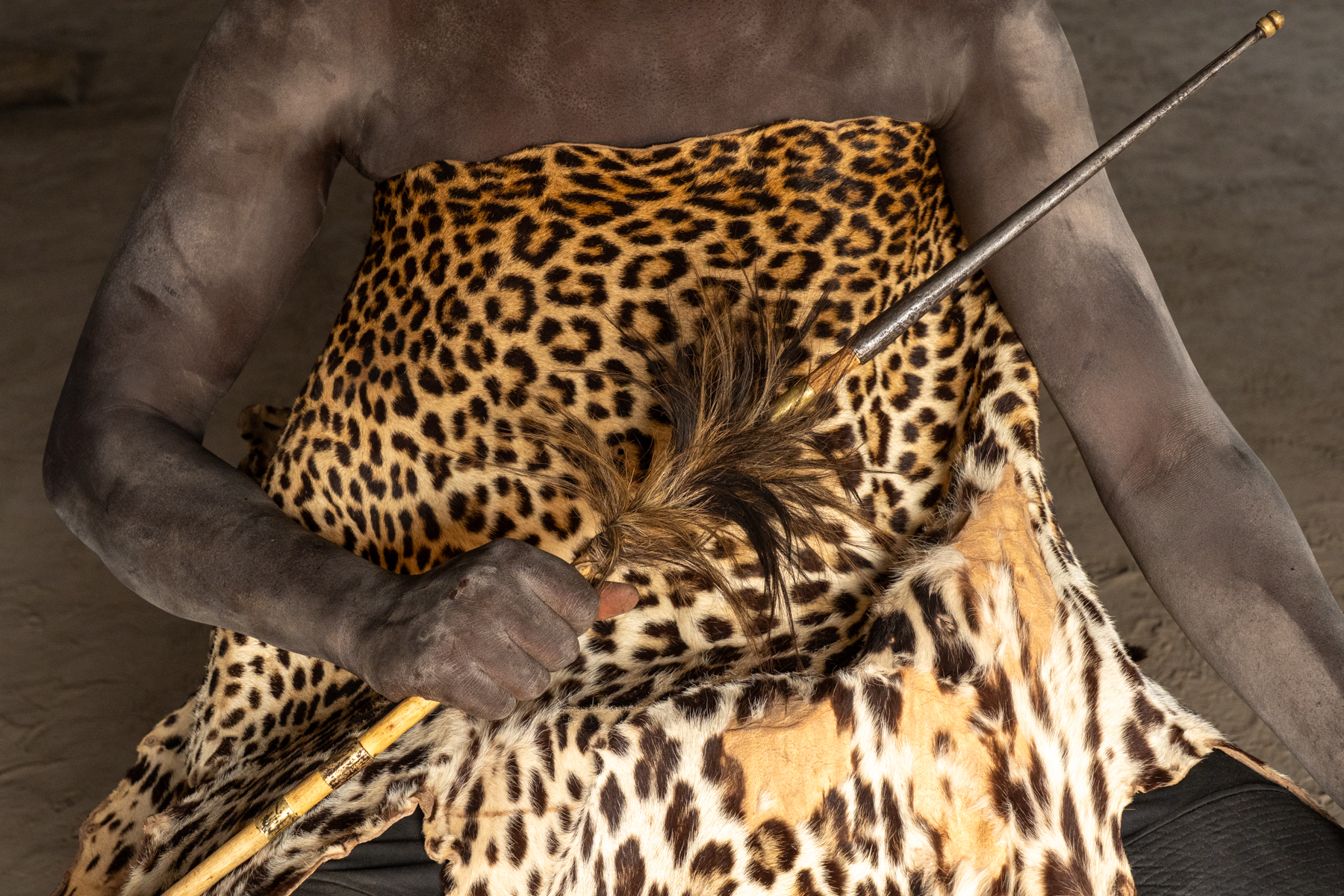
Mundari spear and leopard skin (image by Inger Vandyke)
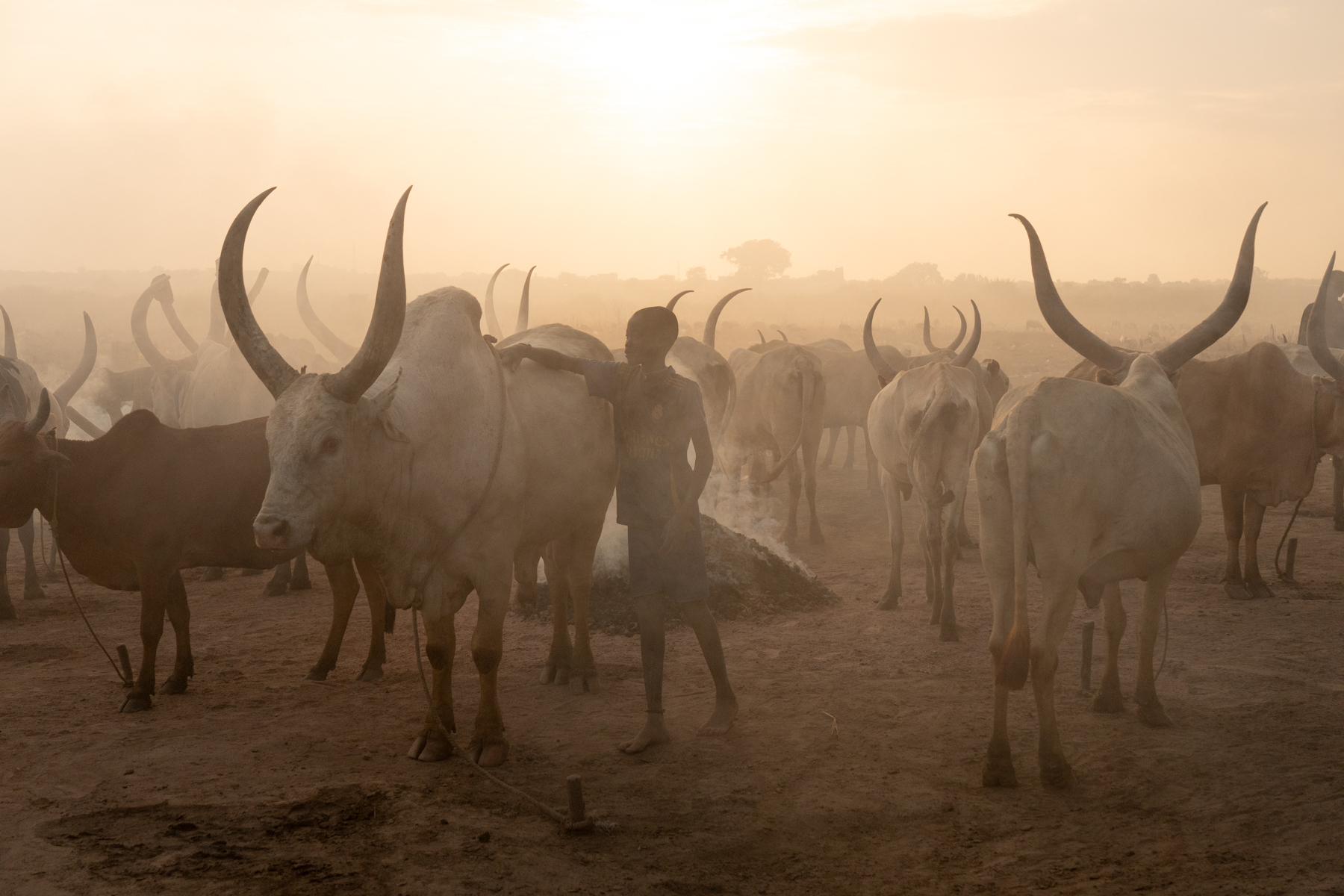
The atmosphere of Mundari and Dinka cattle camps can only be described as magical (image by Inger Vandyke)
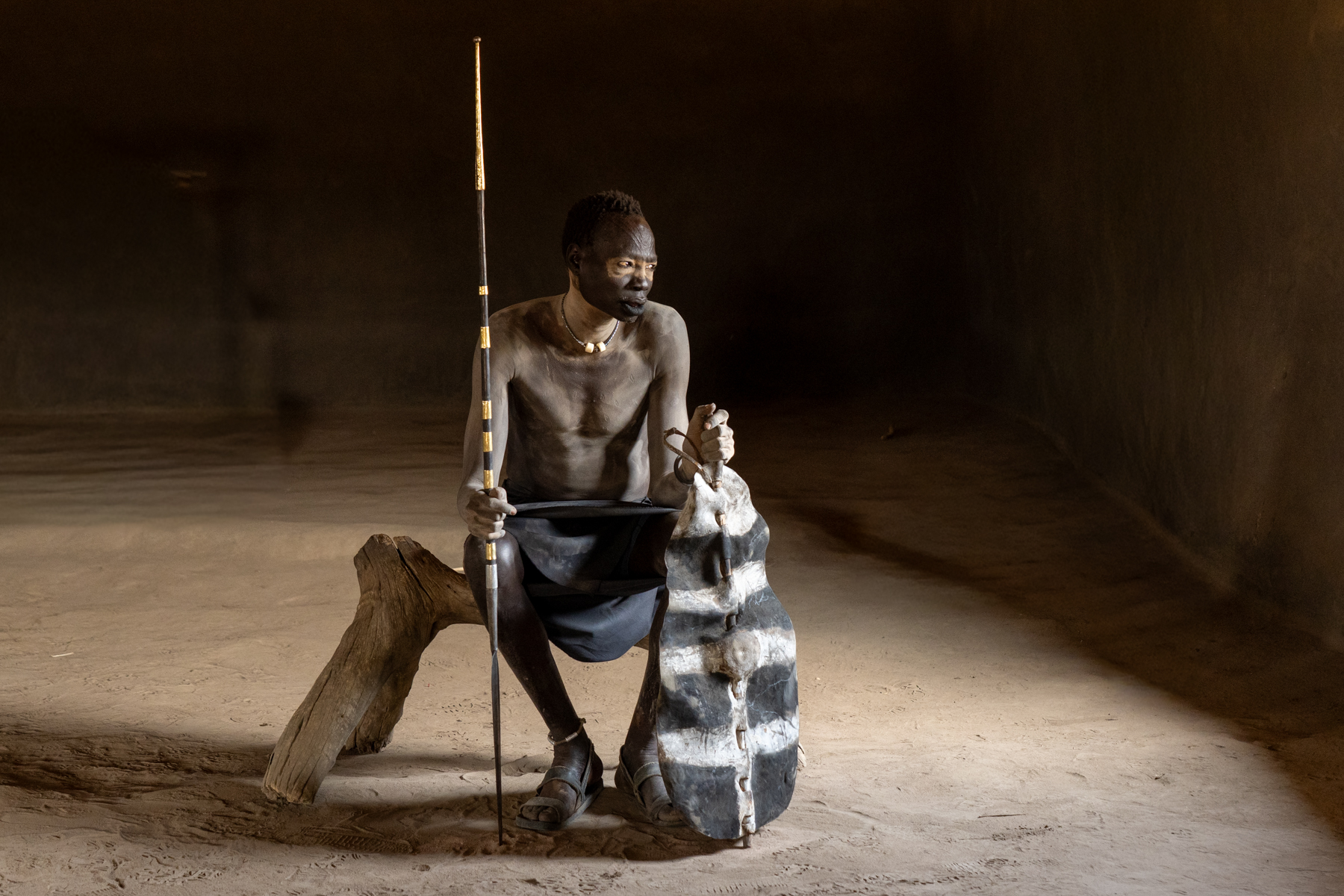
Mundari warrior with spear and shield (image by Inger Vandyke)

Malik poses like a cow during the Yanguera dance of Mundari people (image by Inger Vandyke)
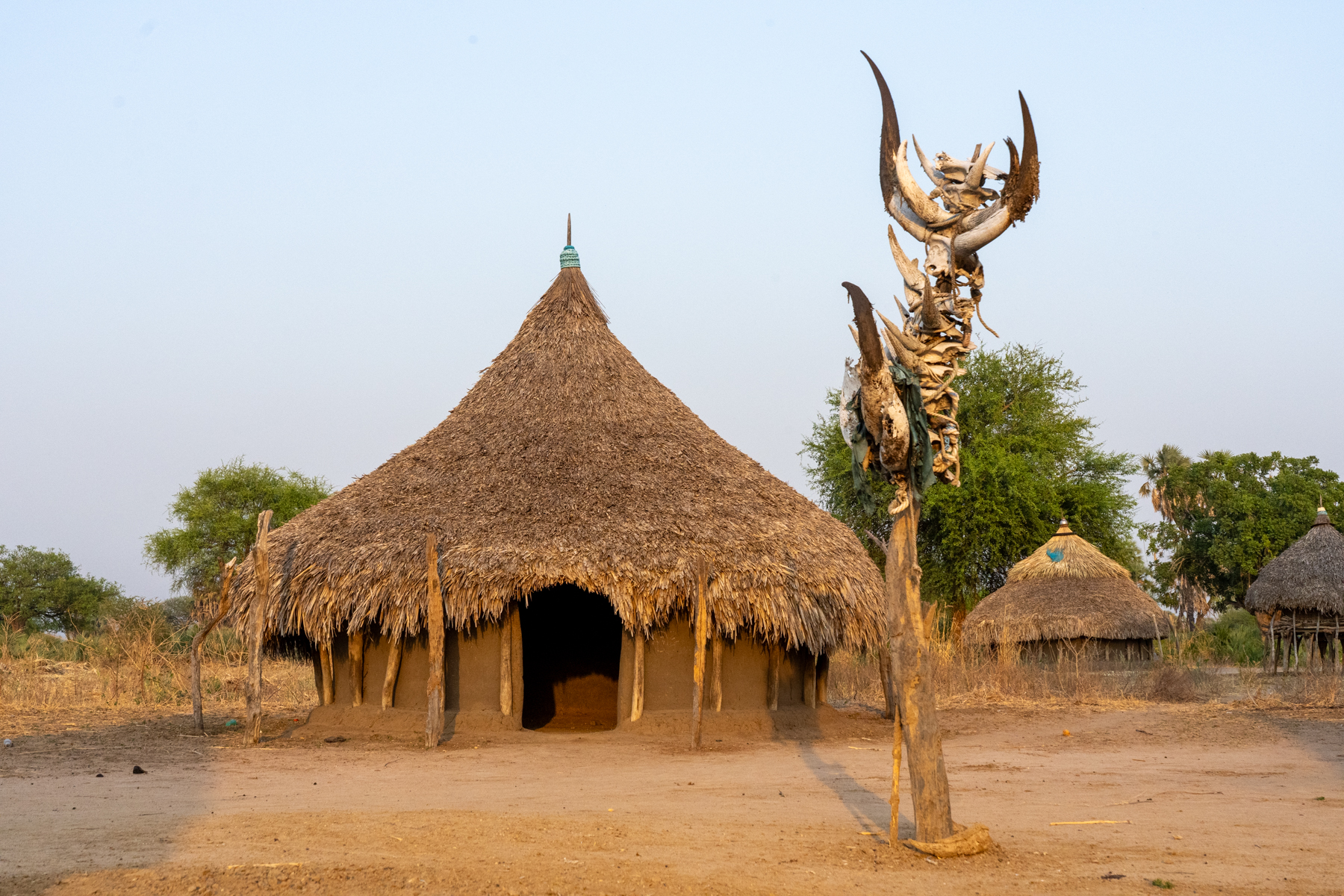
A traditional Mundari home with the marked gravesite of an elder (image by Inger Vandyke)
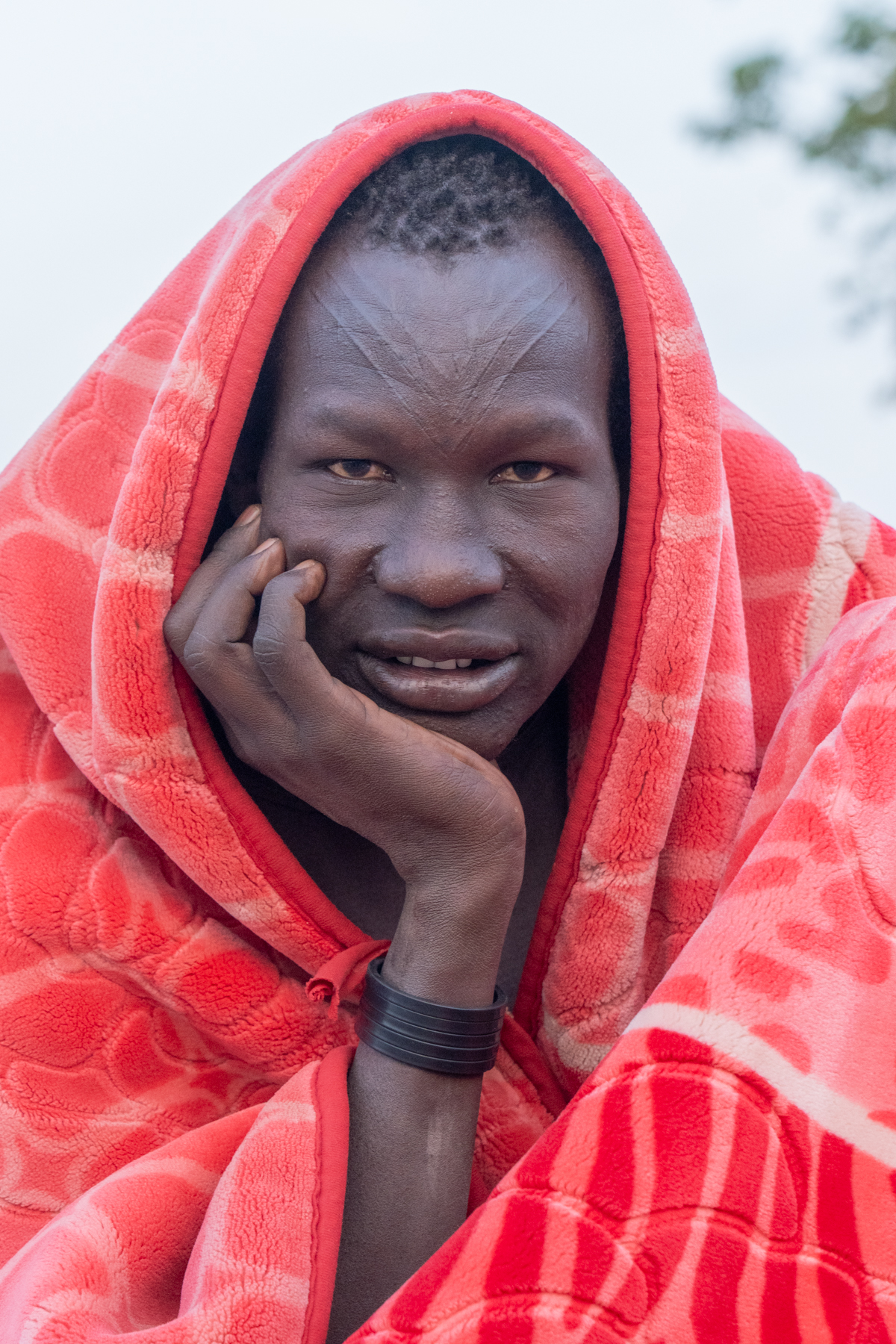
Early morning Mundari man draped in a blanket to stay warm (image by Inger Vandyke)

Nothing in the world beats the atmosphere of the Mundari camps. They are simply magical (image by Inger Vandyke)

Bathing in urine is not only sterile but helps a Mundari's hair to go orange which is seen as aesthetically beautiful (image by Inger Vandyke)
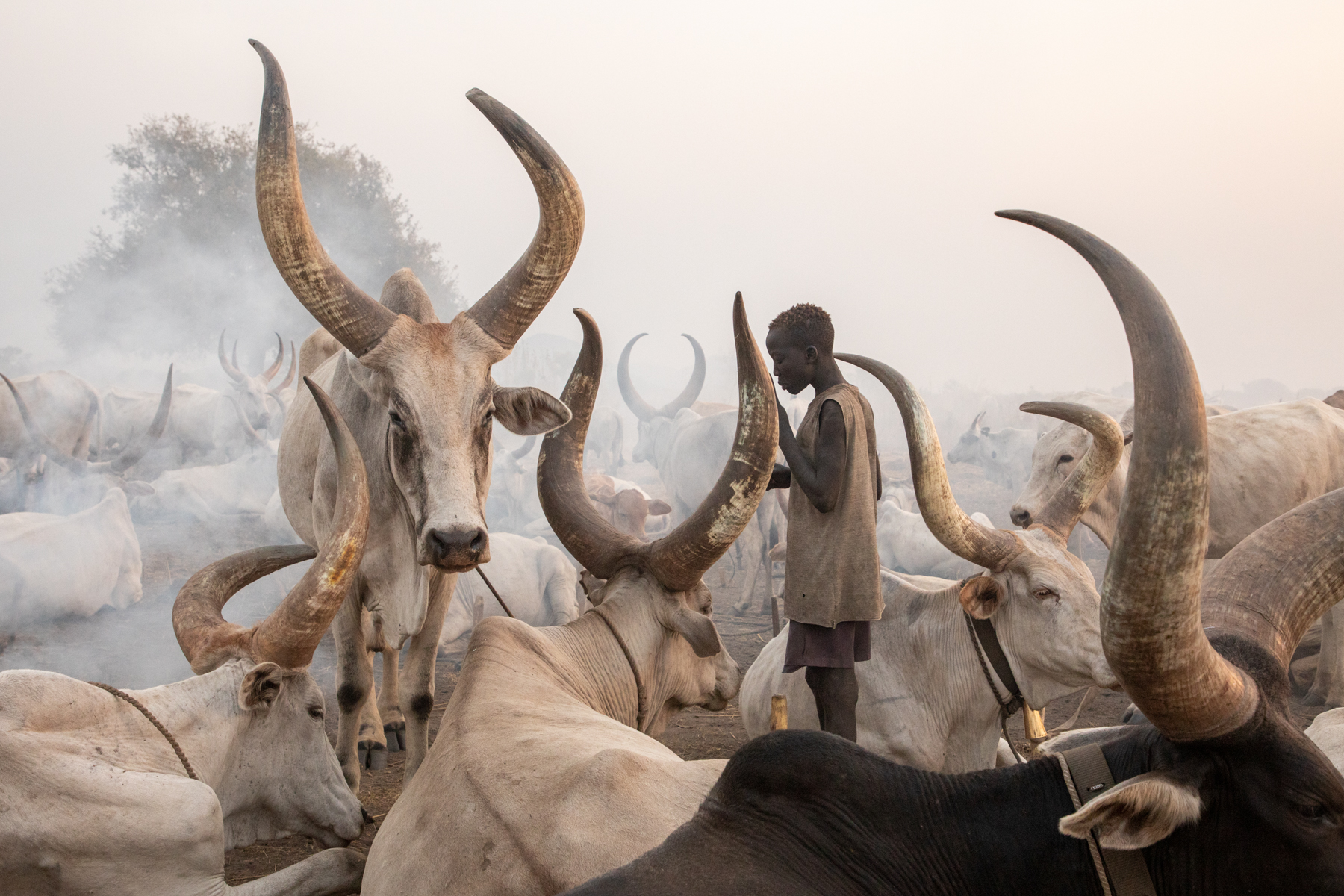
The Mundari revere their Ankole Watusi cows, often stopping to stroke their horns, pick ticks off them and massage them (image by Inger Vandyke)
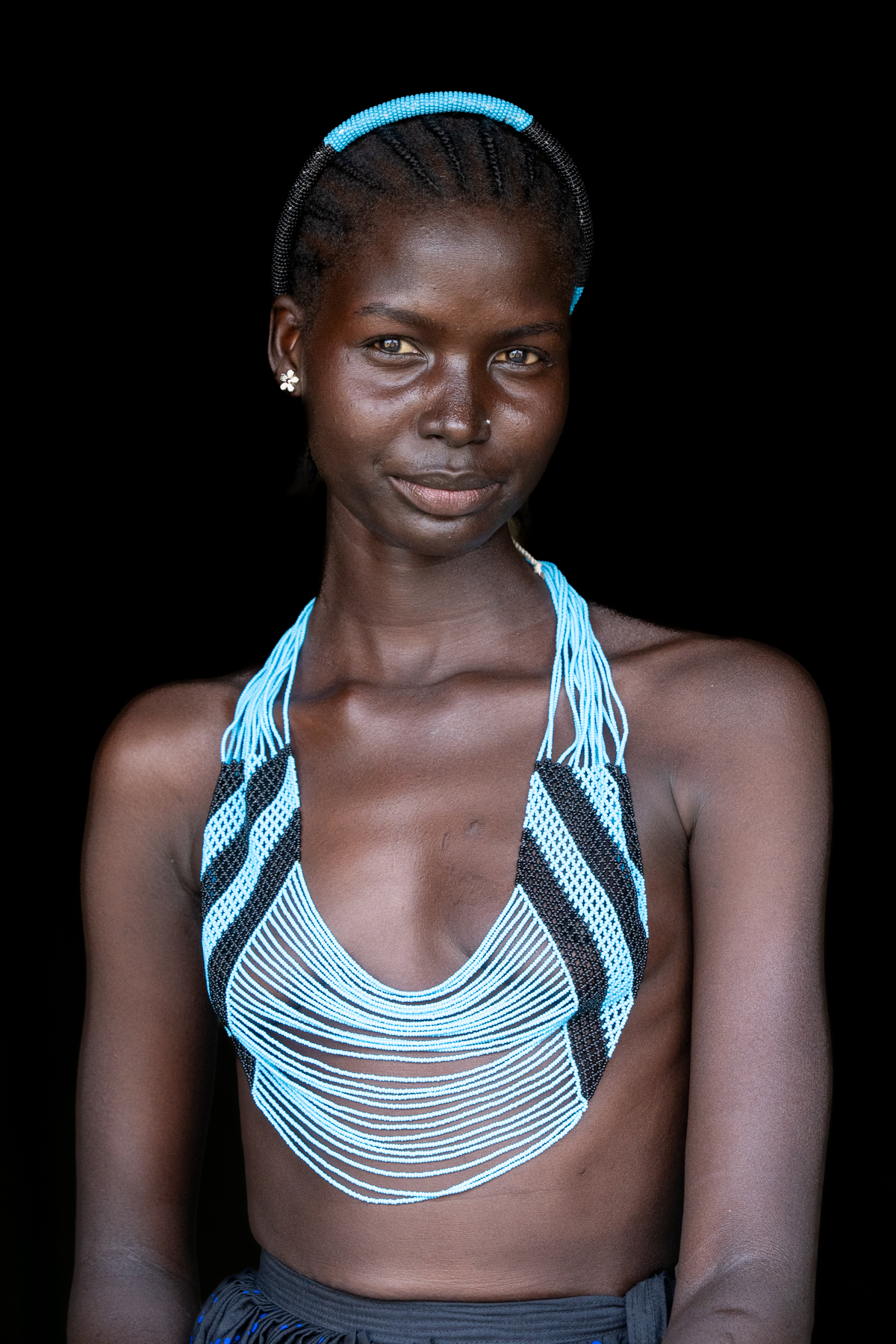
Aker wearing a Dinka crown and necklace (image by Inger Vandyke)
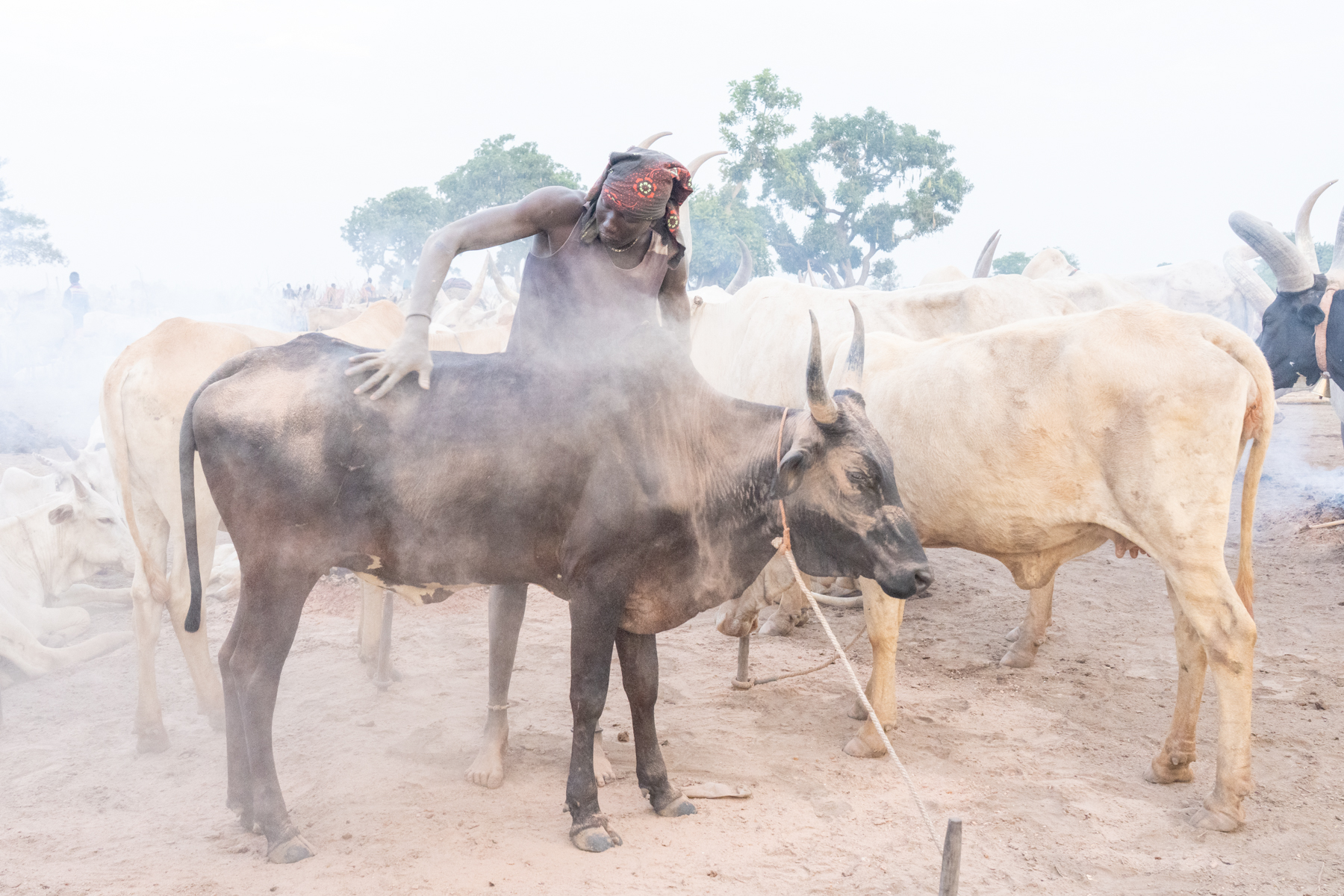
Mundari man dusting his cow before taking it out for the day to graze (image by Inger Vandyke)

The wearing of corsets was outlawed by the government of Sudan in 1984 so we will be taking antique pieces on this expedition for women to wear (image by Inger Vandyke)
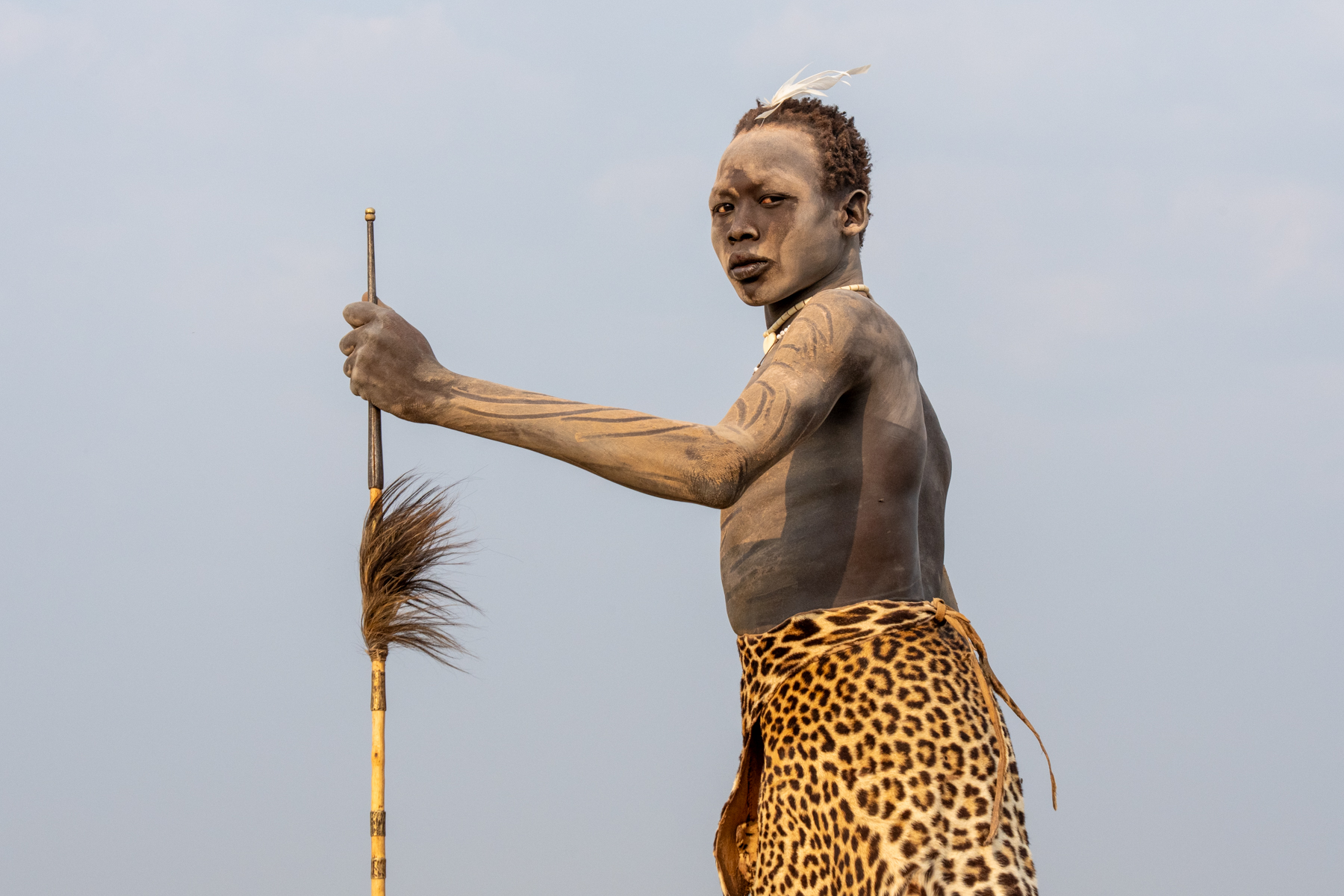
The Mundari, when they wear traditional warrior attire, truly look quite formidable (image by Inger Vandyke)

Mundari men spend their entire lives with their favourite cow (image by Inger Vandyke)
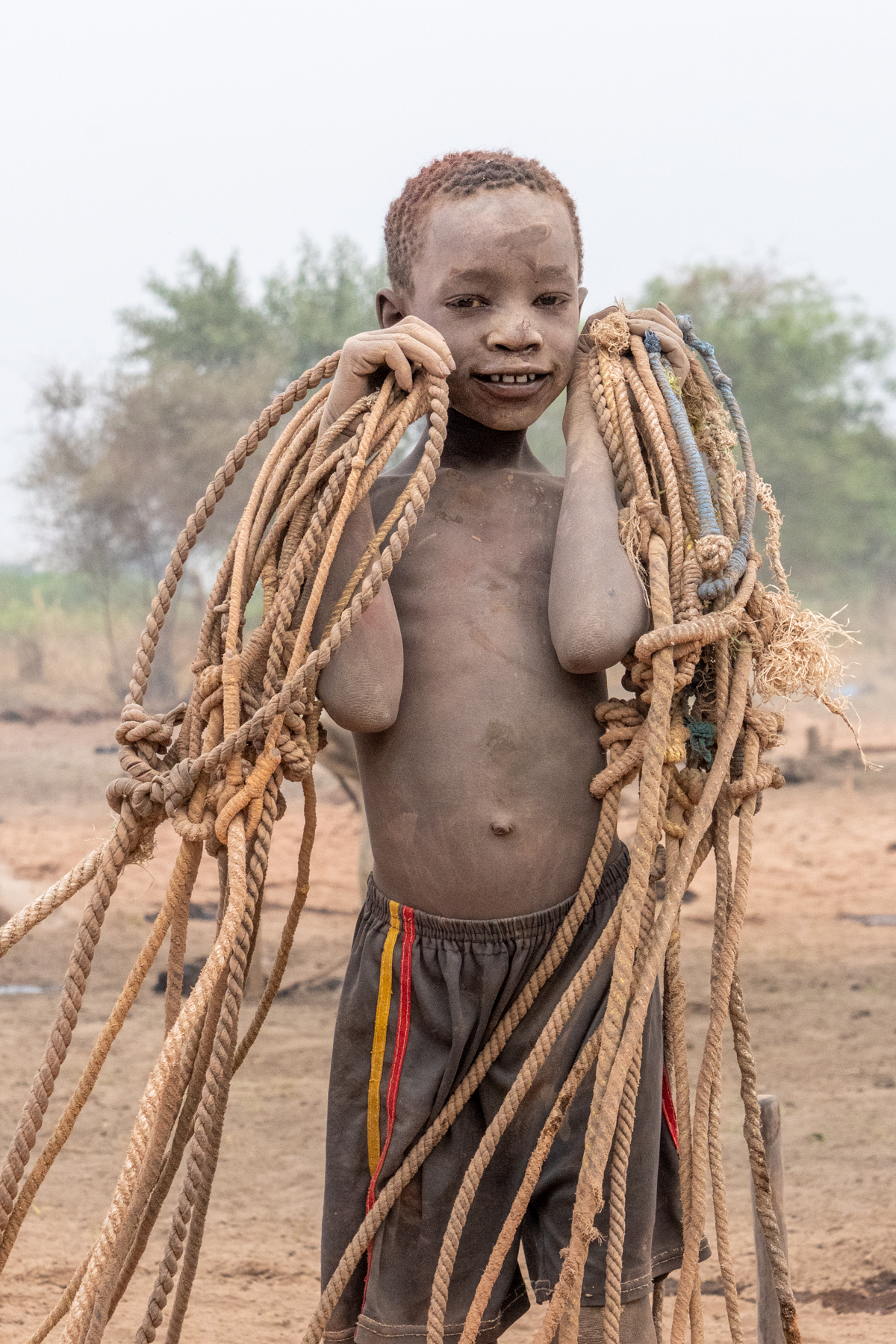
Smiling Mundari boy with tethering ropes (image by Inger Vandyke)

A Mundari man playing a horn named "Tung" at a ceremony (image by Inger Vandyke)

Aker wearing a traditional beaded collar in a cattle camp (image by Inger Vandyke)
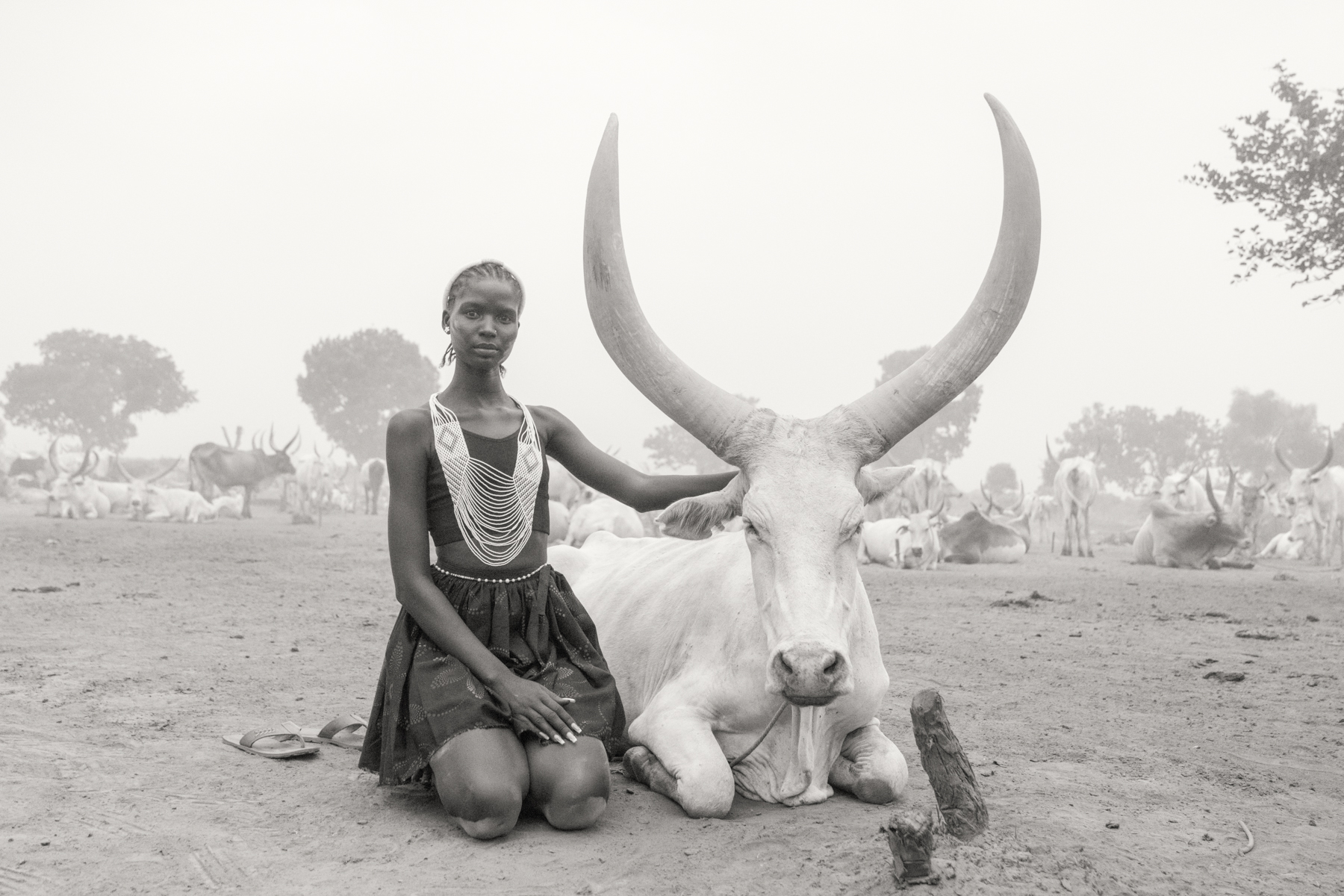
Beautiful Aker wearing the traditional Dinka Guet Yest, or wedding beads, next to one of the magnificent cows in camp (image by Inger Vandyke)
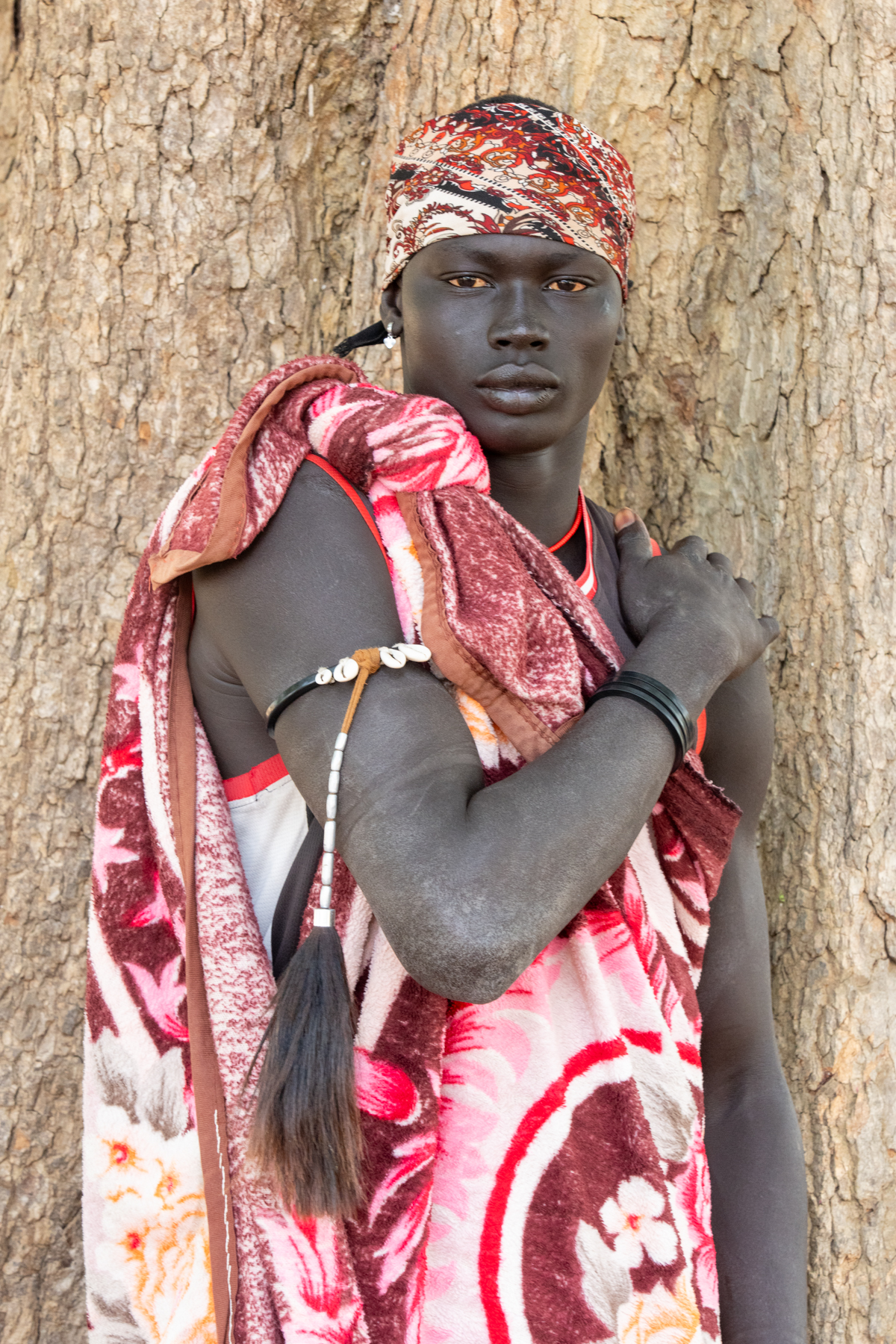
Handsome Mundari man (image by Inger Vandyke)

A Mundari girl wearing an antique Dinka Guet which features a crescent moon made from elephant ivory (image be Inger Vandyke)
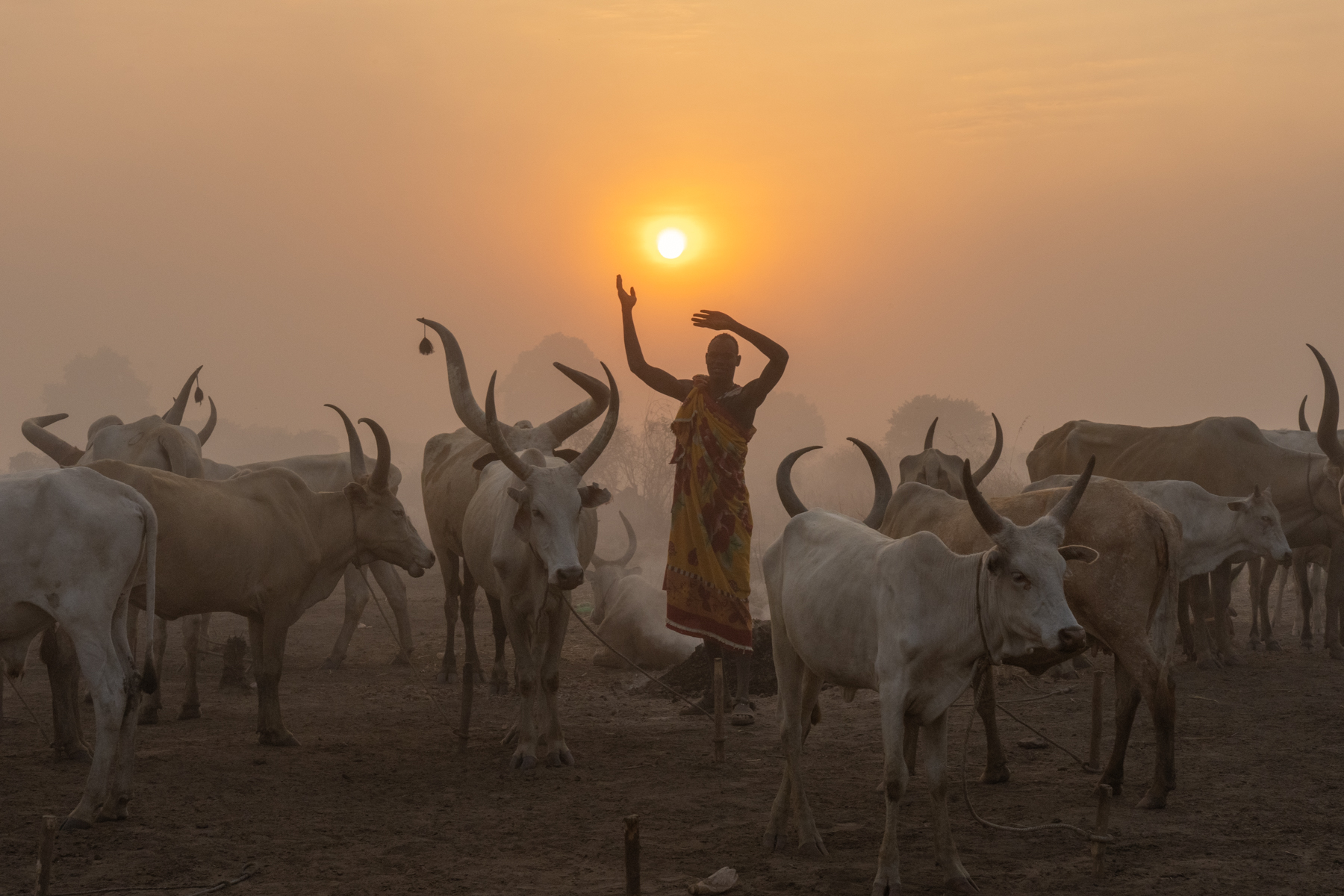
A Mundari man holds his hands in the air in the shape of his favourite cow (image by Inger Vandyke)
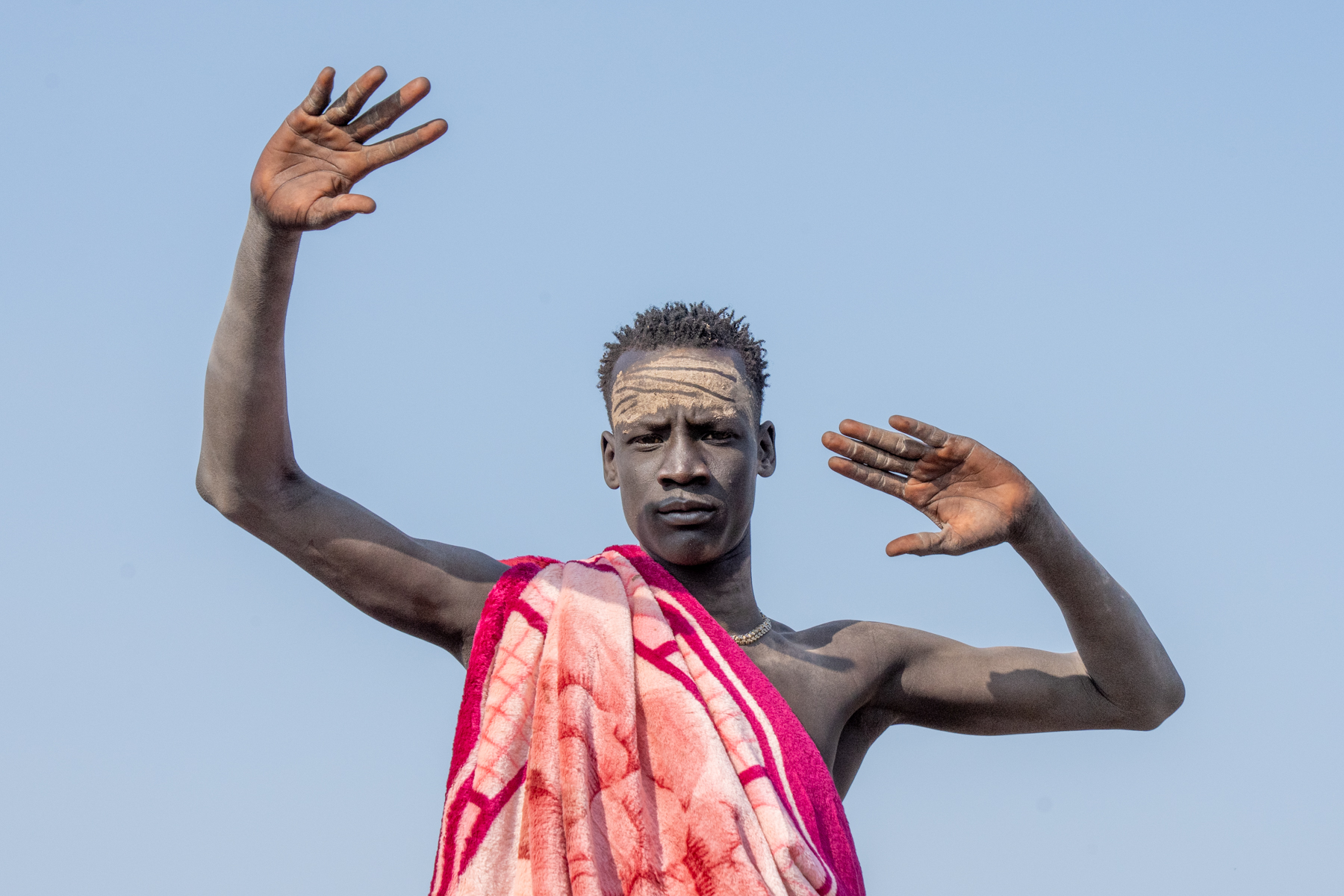
Young Mundari man dressed up for a wrestling match (image by Inger Vandyke)
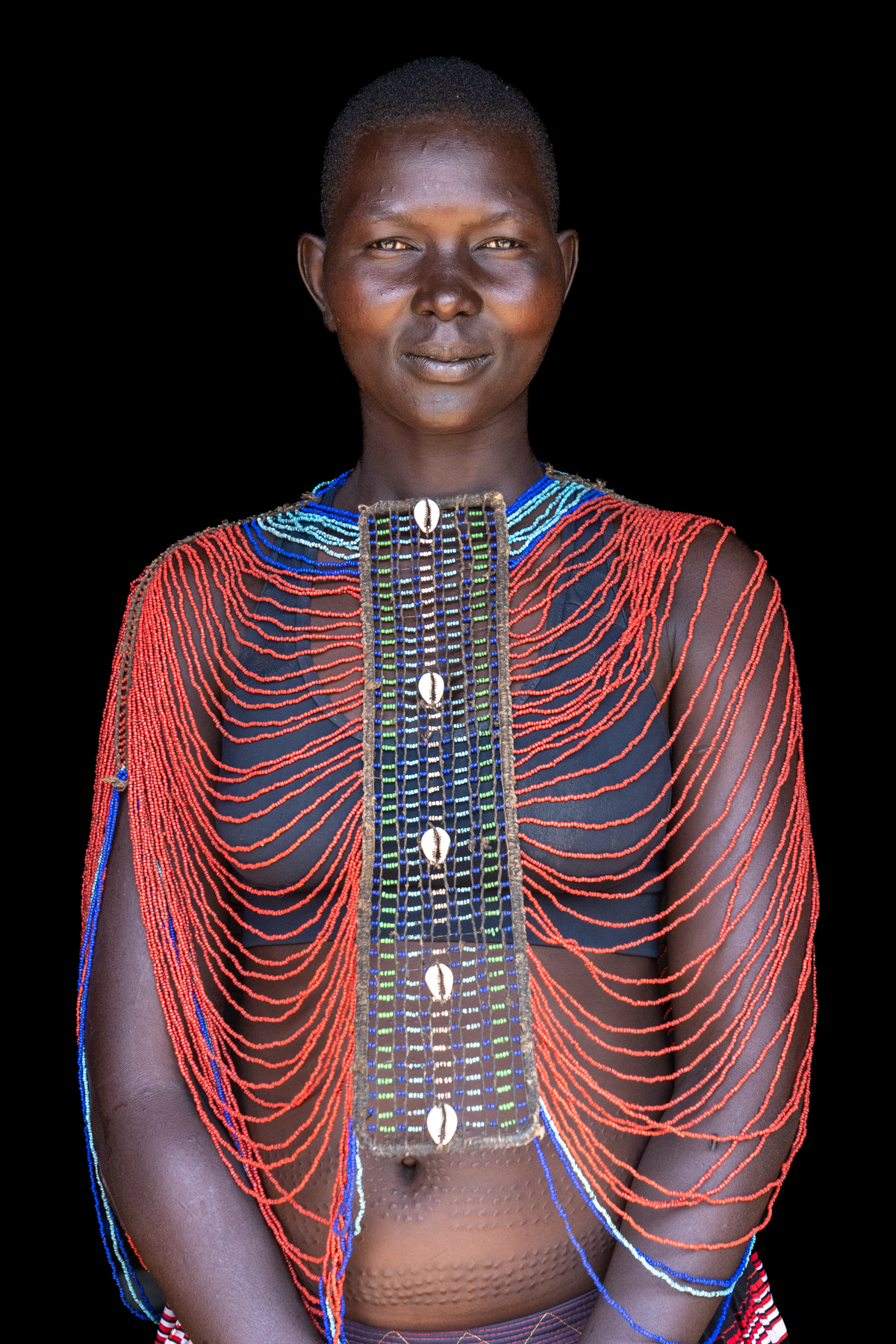
Mundari woman with beaded collar (image by Inger Vandyke)
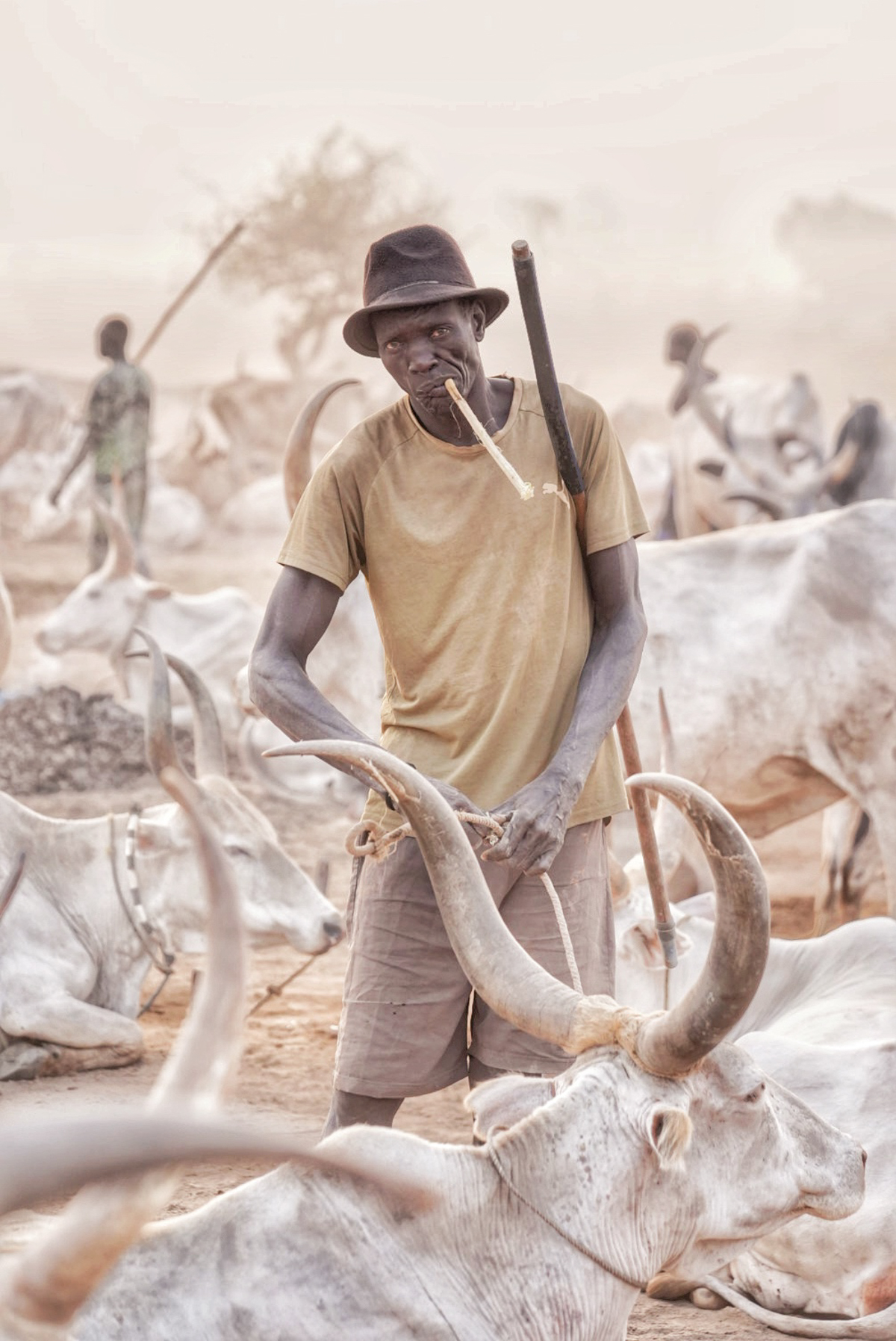
An elderly Mundari man with his stick toothbrush (image by Inger Vandyke)
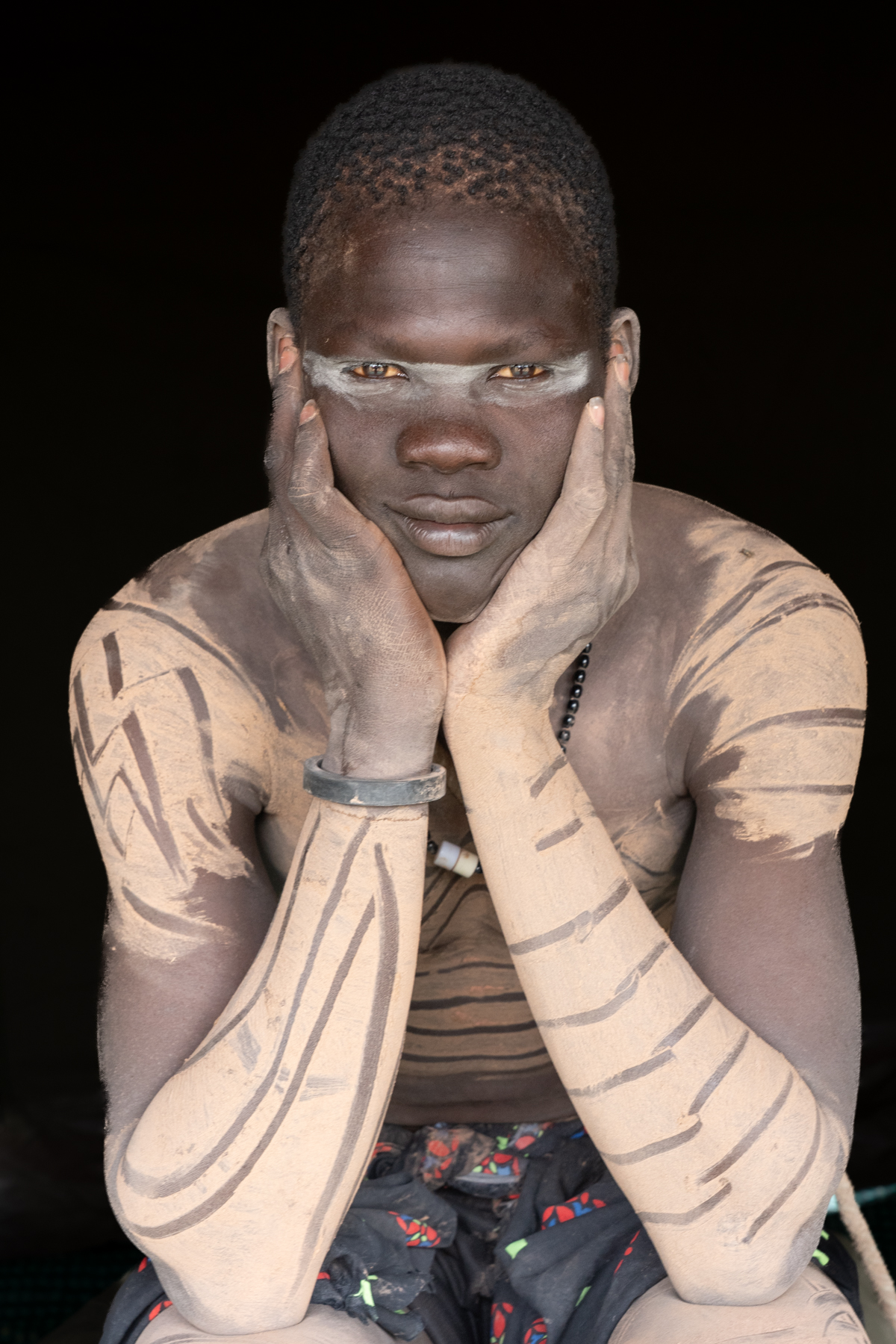
Mundari man with clay decoration (image by Inger Vandyke)
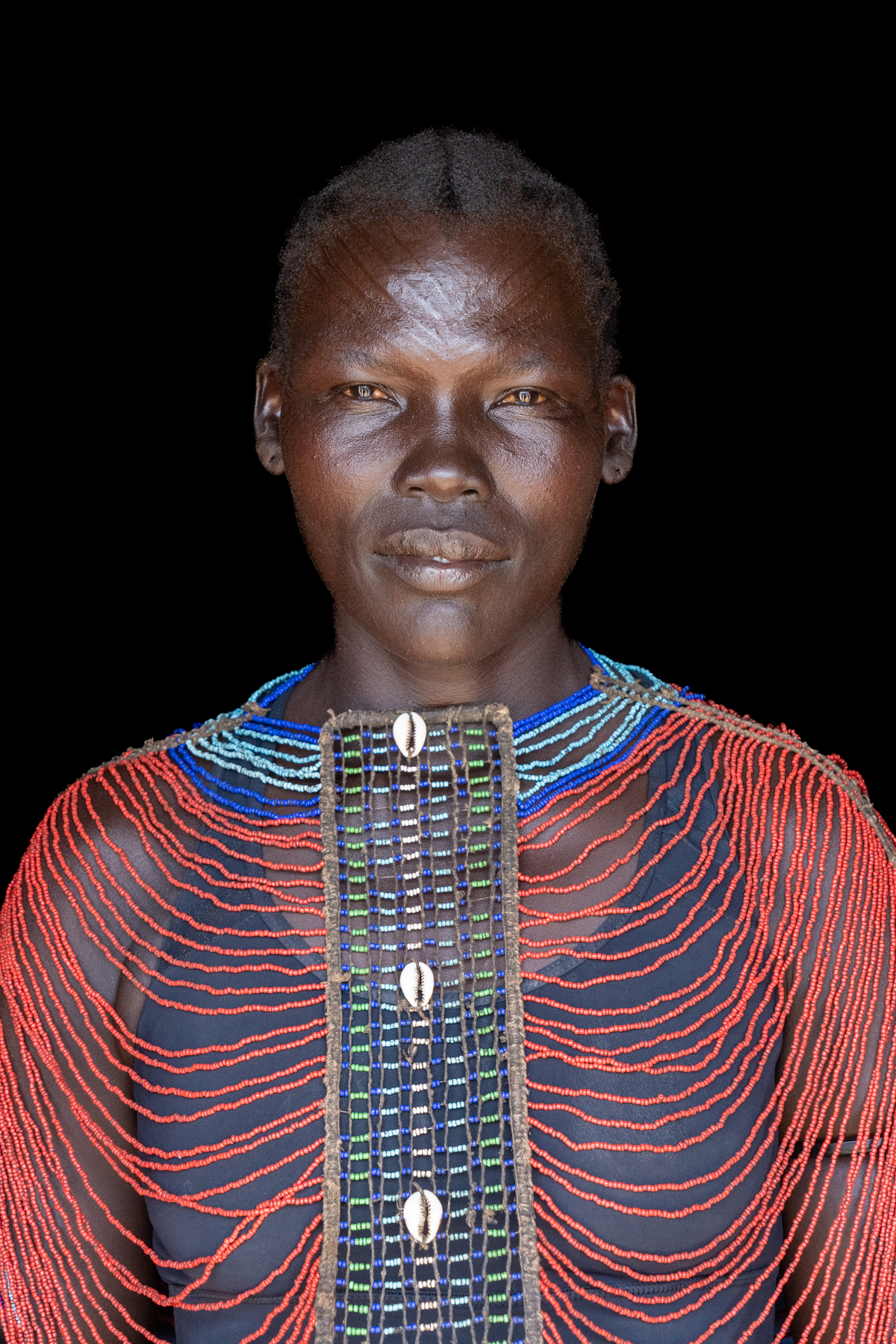
Mundari women wearing beaded collar (image by Inger Vandyke)
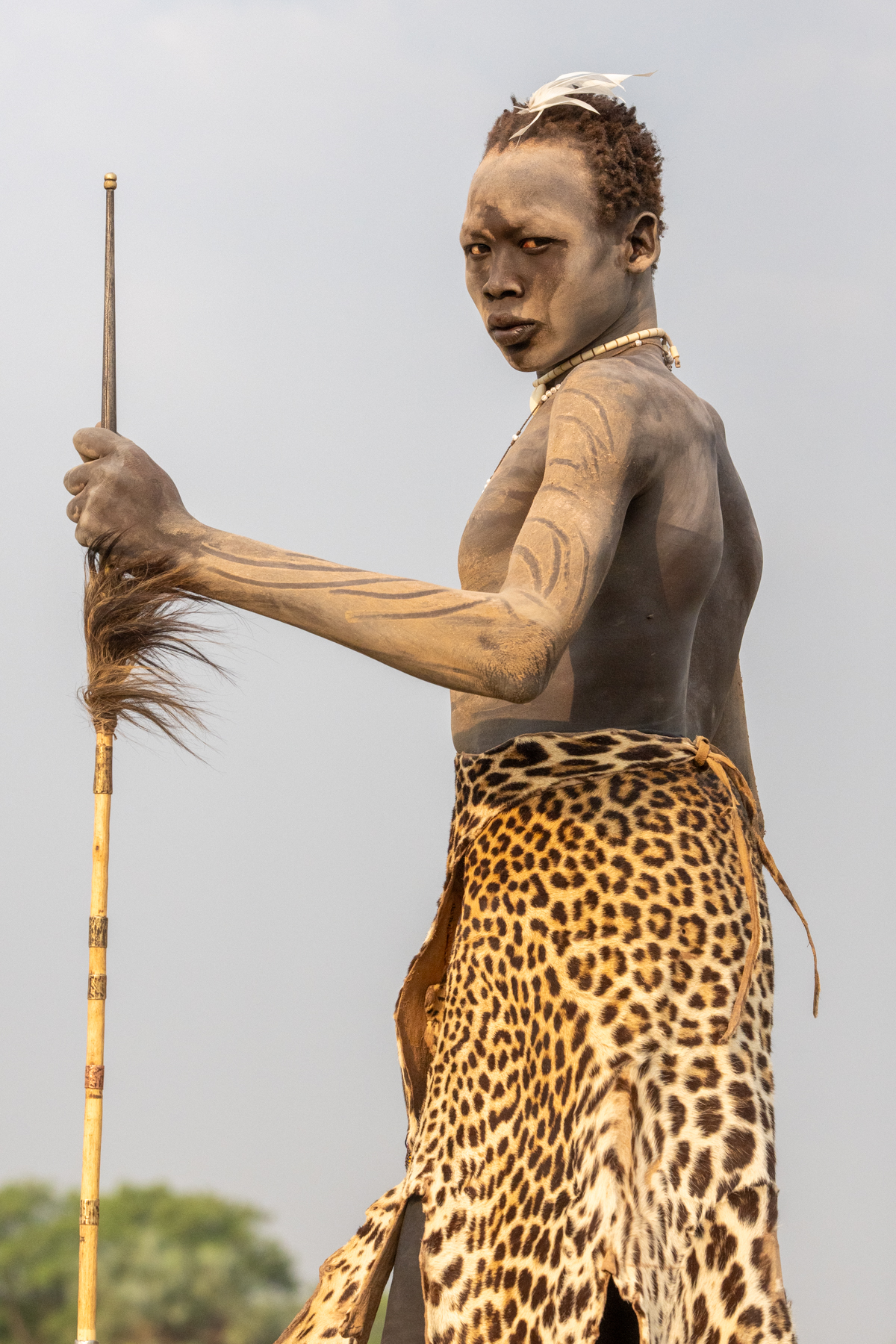
Mundari man with leopard skin and spear (image by Inger Vandyke)
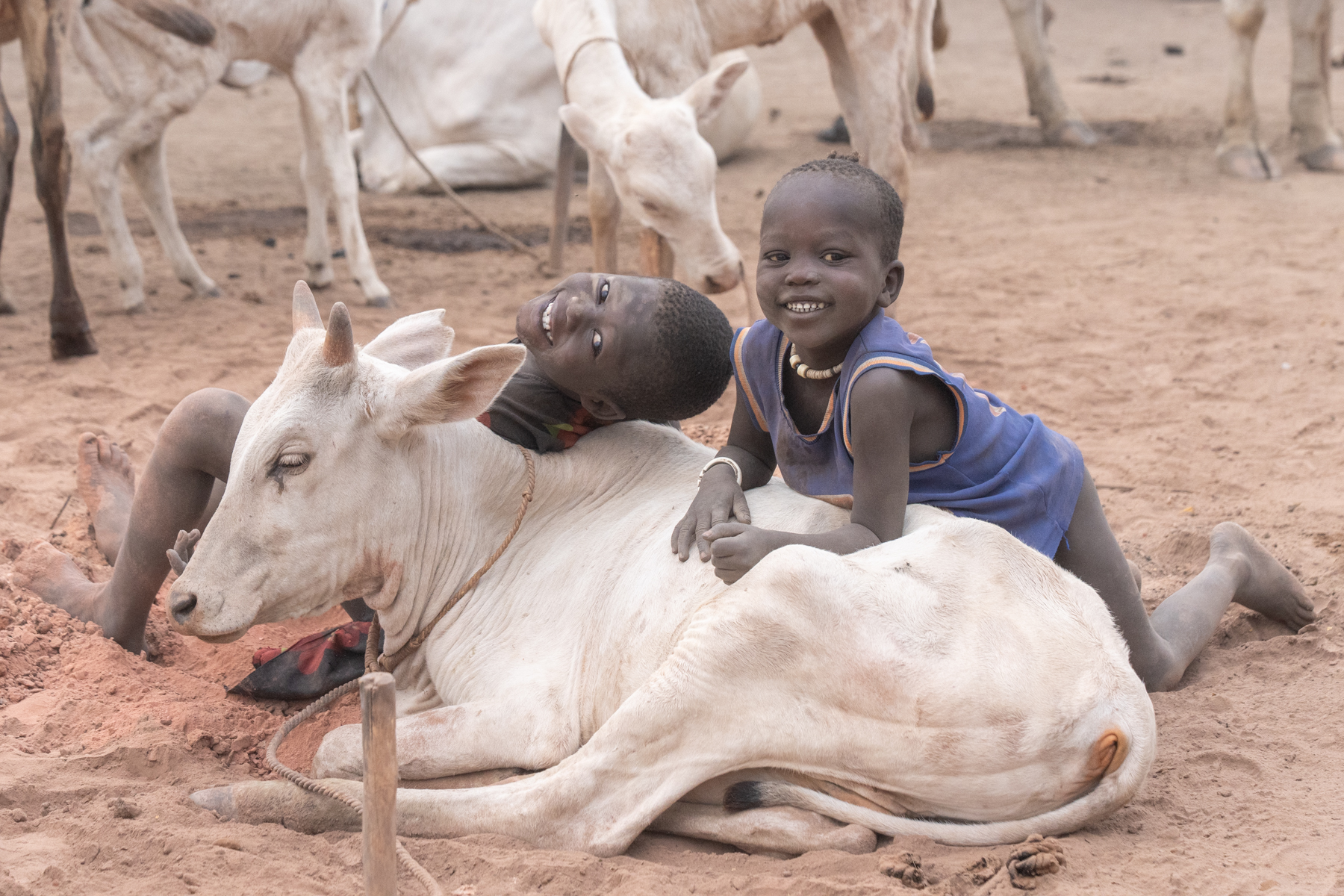
Giggling Mundari boys hanging out with their favourite calf (image by Inger Vandyke)
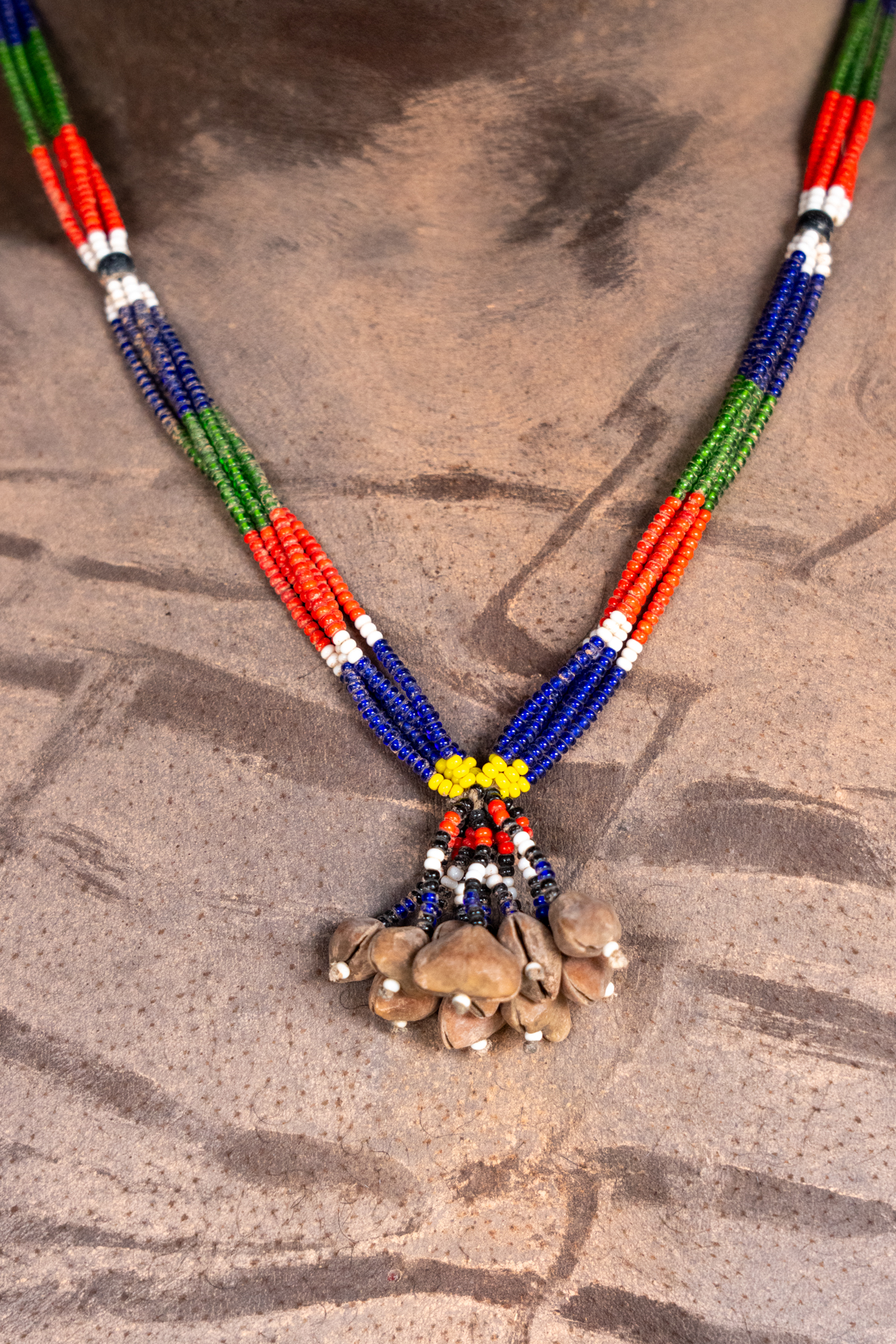
Necklace worn by Mundari men (image by Inger Vandyke)
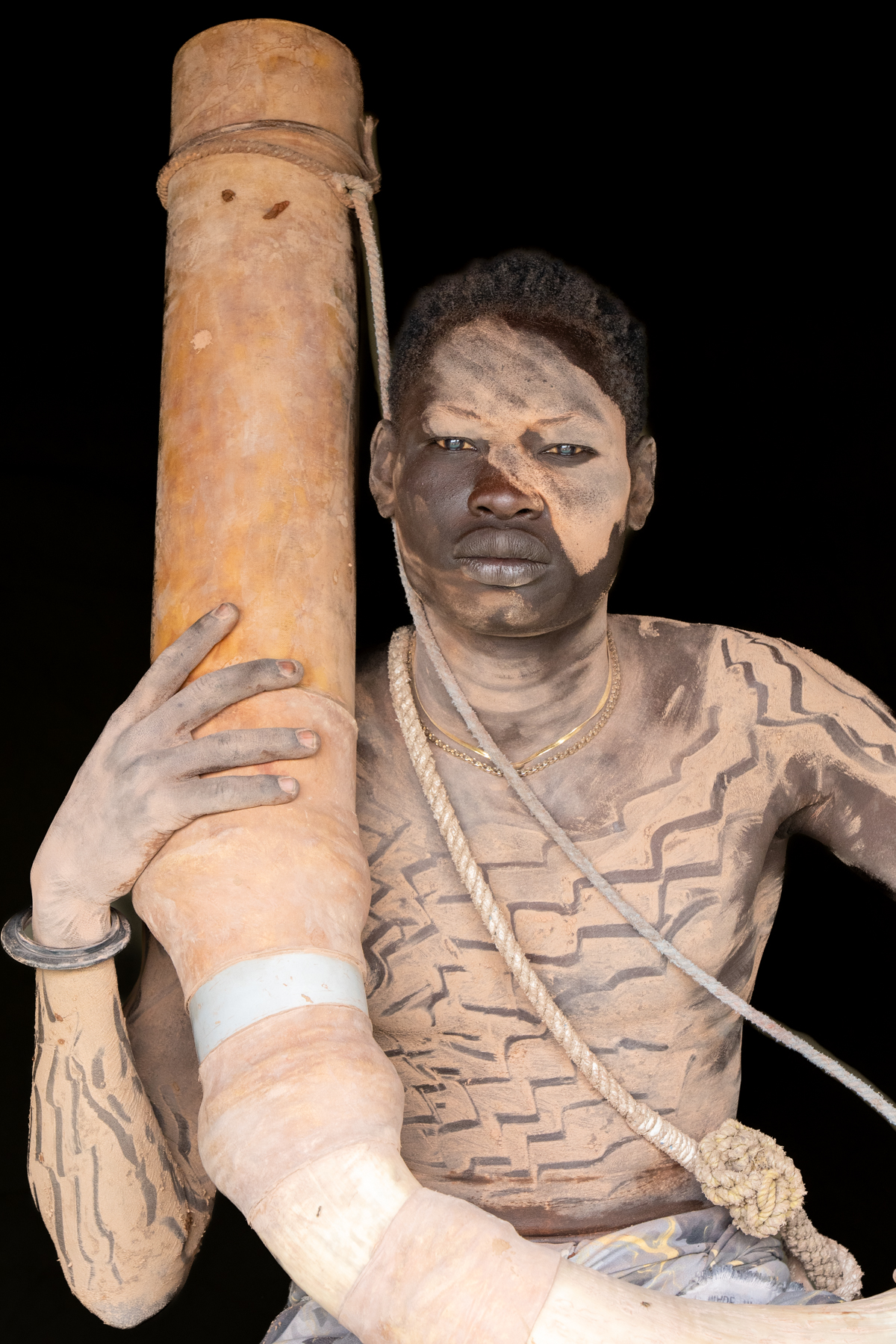
Mundari man with Tung (horn) (image by Inger Vandyke)

The stunning atmosphere of a Mundari cattle camp at sunrise (image by Inger Vandyke)
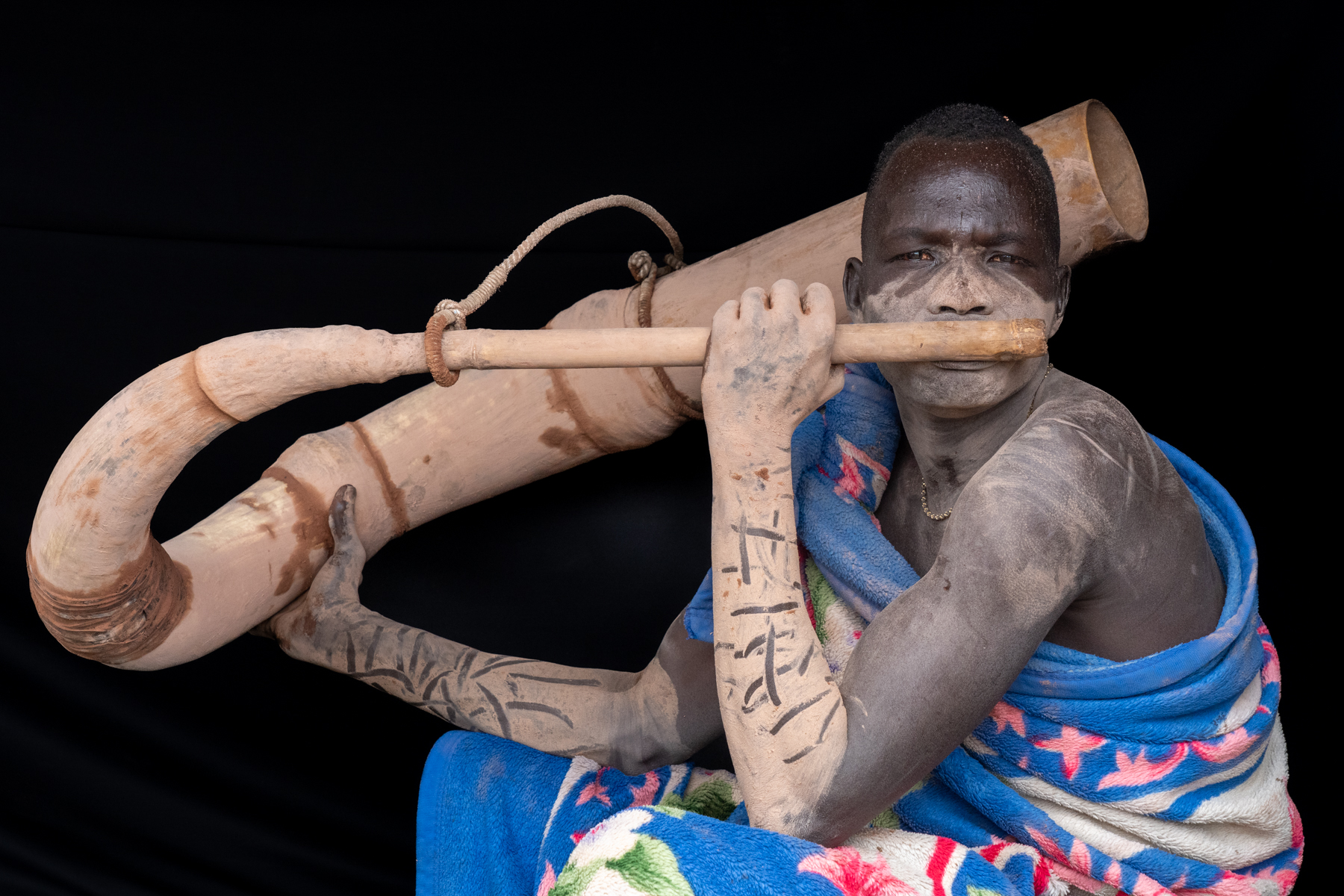
Portrait of a Mundari man playing Tung (image by Inger Vandyke)

Massaging ash into the pelts of cows is a typical morning activity of the Mundari cattle camps (image by Inger Vandyke)
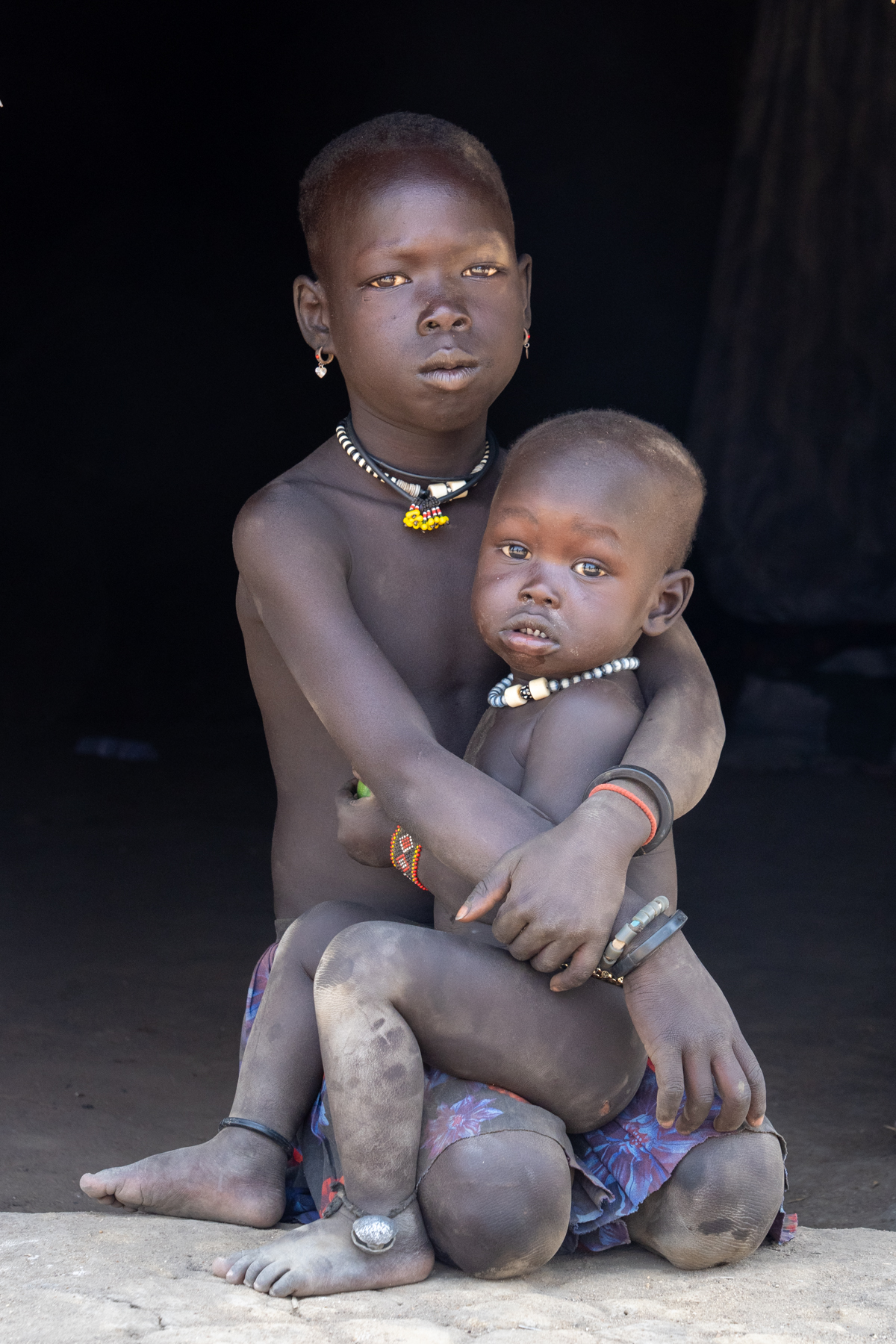
Mundari sisters (image by Inger Vandyke)

Mundari men dancing Yanguera (image by Inger Vandyke)
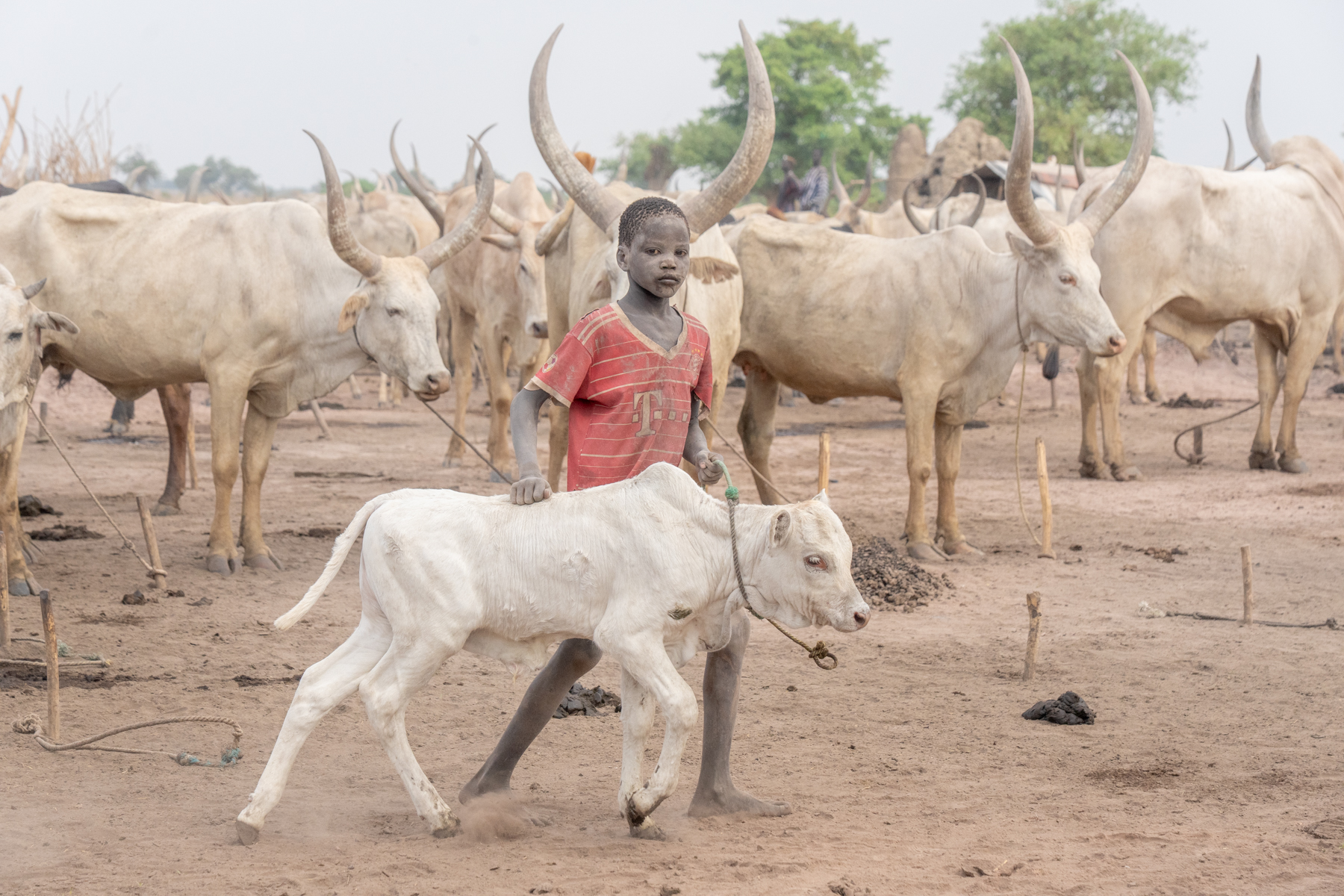
A young Mundari boy guides his calf into camp (image by Inger Vandyke)
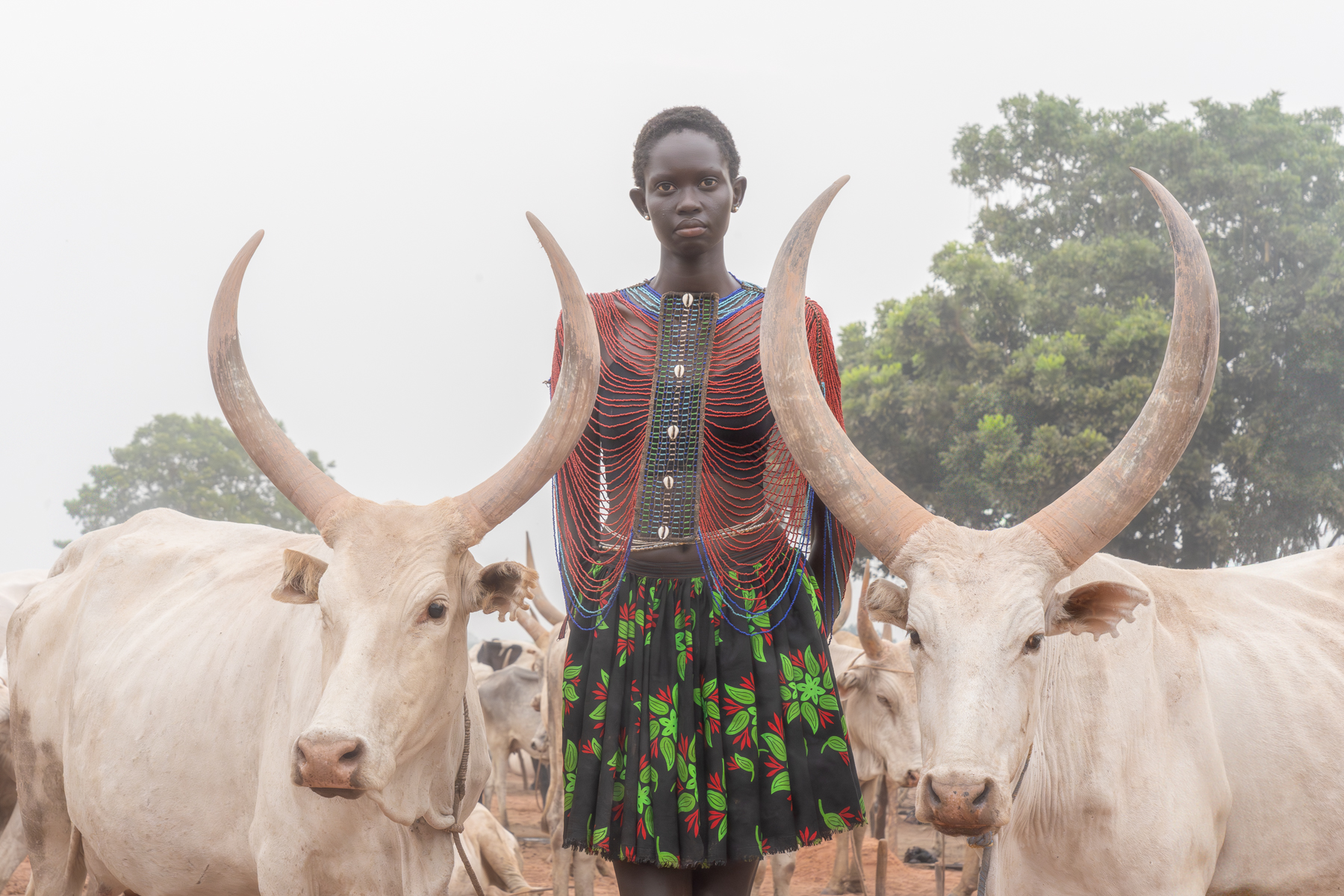
Nyanda with her cows (image by Inger Vandyke)
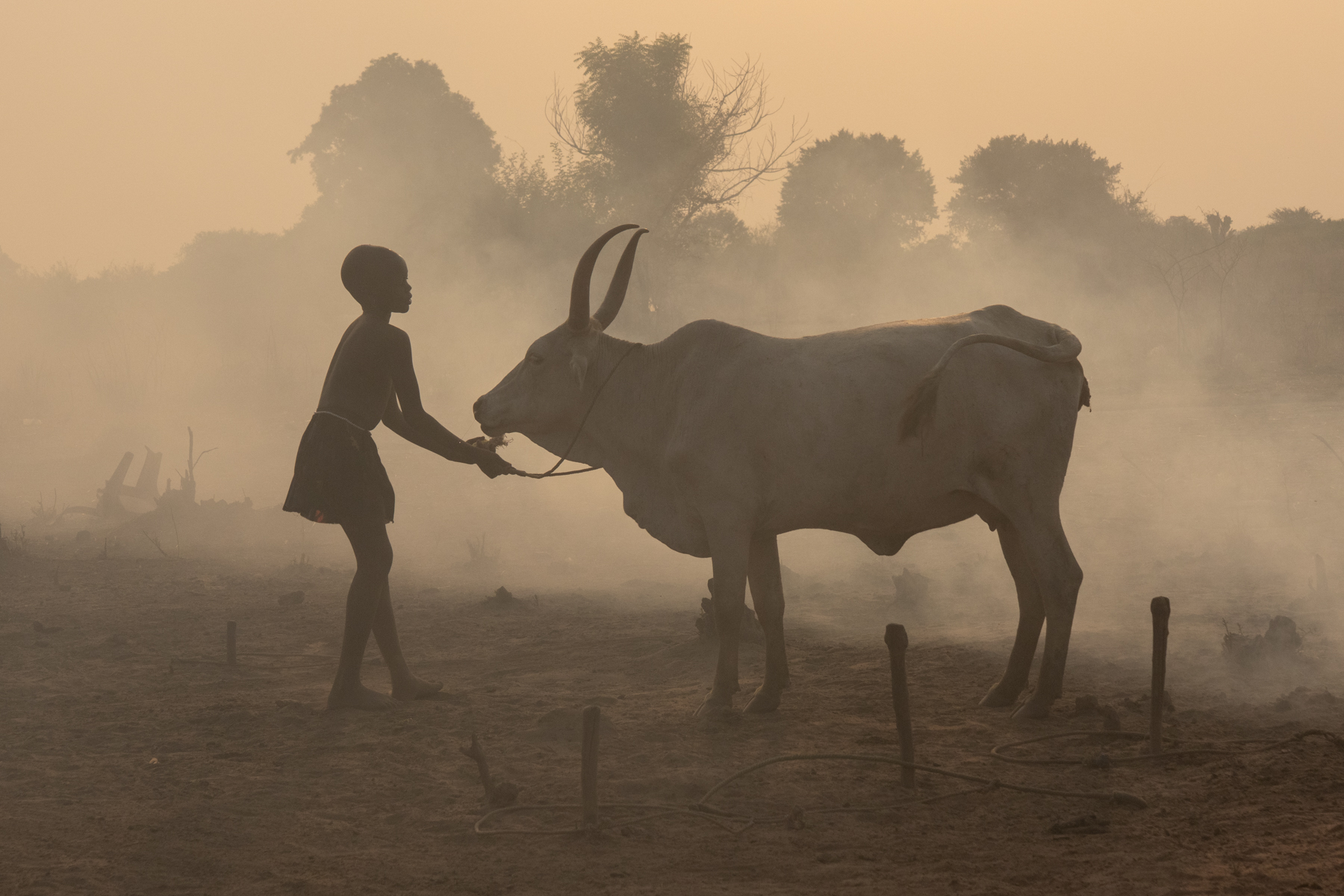
A young Dinka girl guides her cow to its tethering post (image by Inger Vandyke)
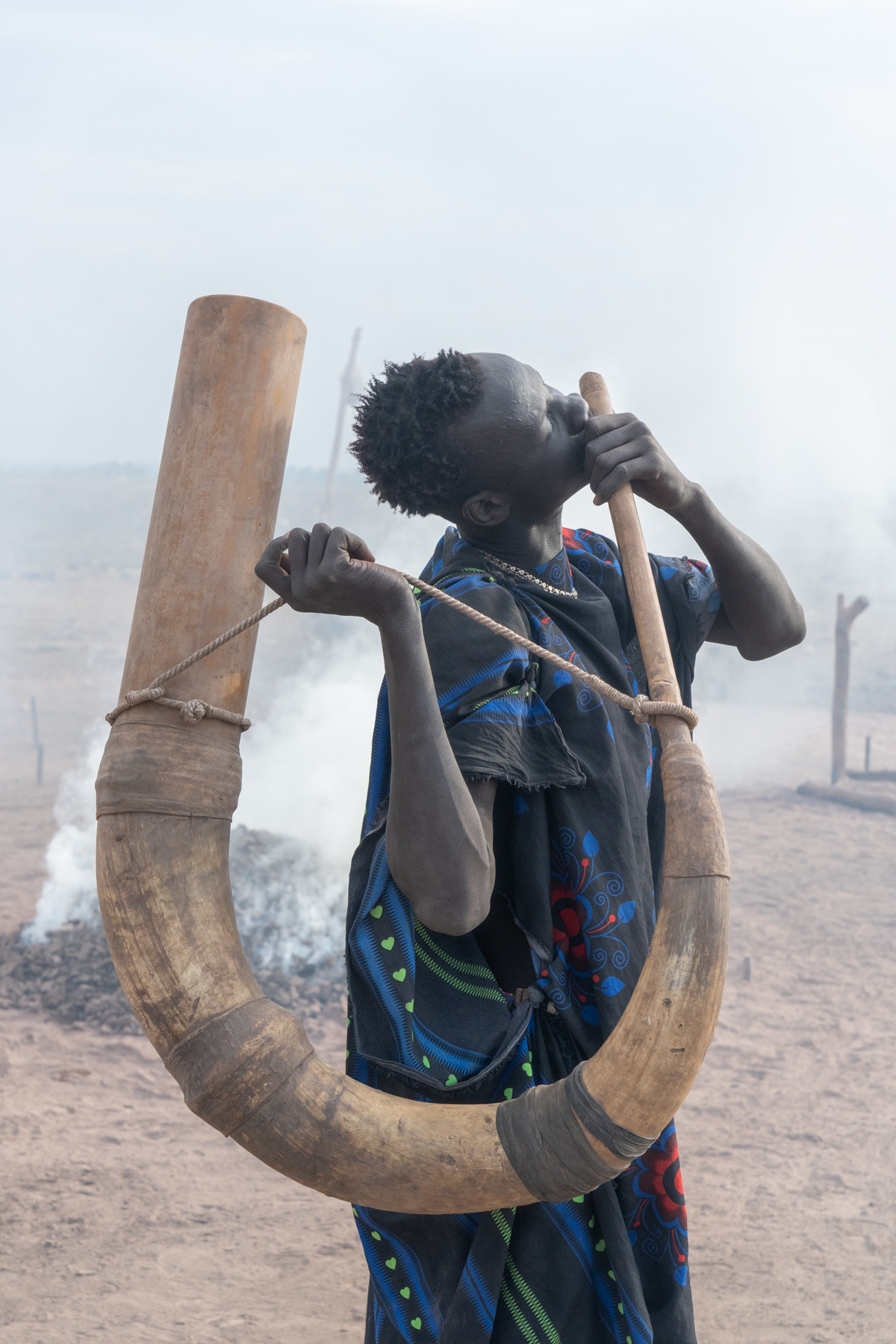
A young Mundari man playing music on a ceremonial Tung horn (image by Inger Vandyke)
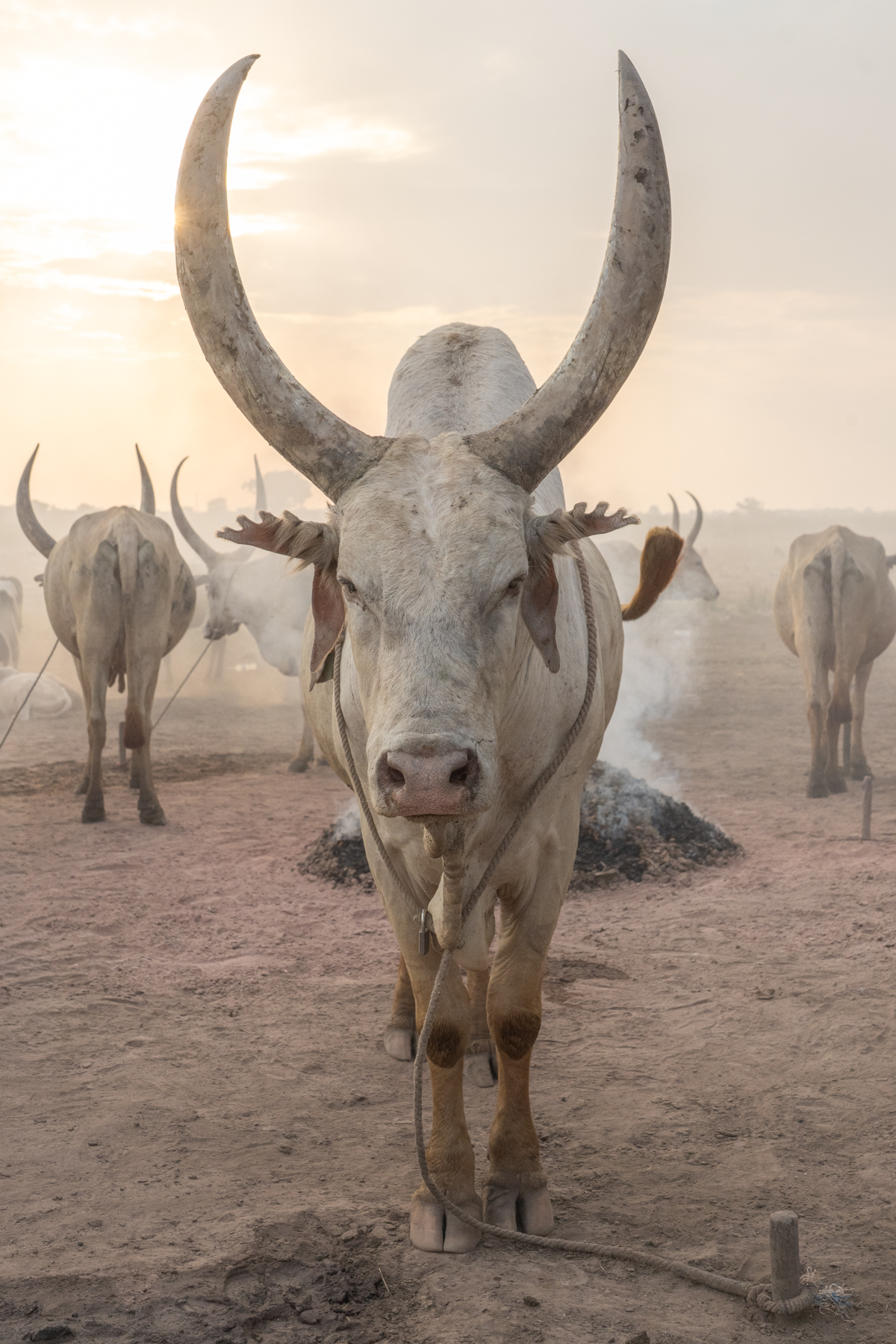
Mundari cow with its clipped ears (image by Inger Vandyke)
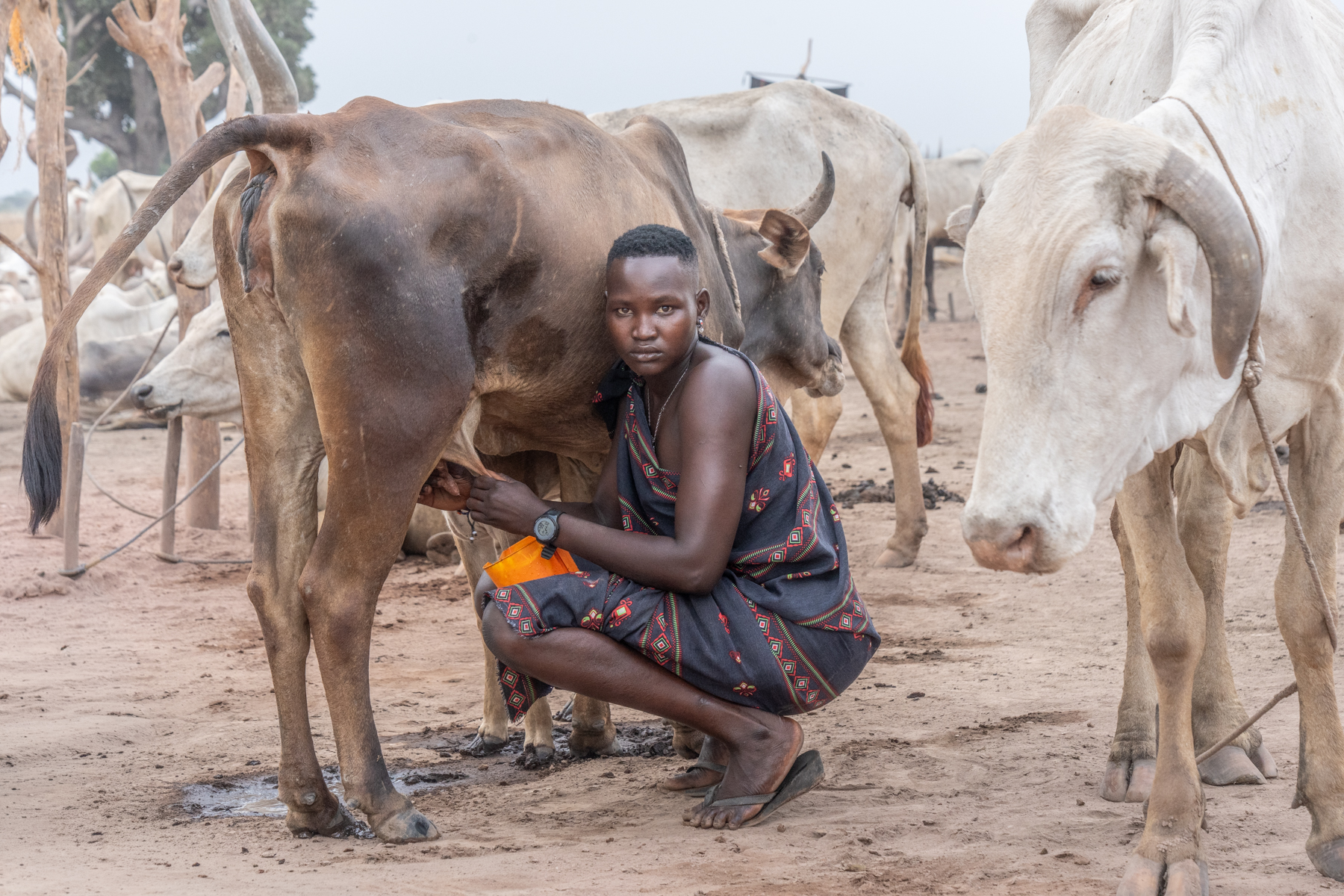
A beautiful Mundari woman milking her cow (image by Inger Vandyke)

A Mundari drummer blesses the cowskin of his cylindrical drum to prepare for a ceremonial dance (image by Inger Vandyke)

Mundari men cover their skin in fire ash, like their cows, to protect themselves from the sun while they take their cows to graze (image by Inger Vandyke)

The traditional dress of Mundari people is very special (image by Inger Vandyke)
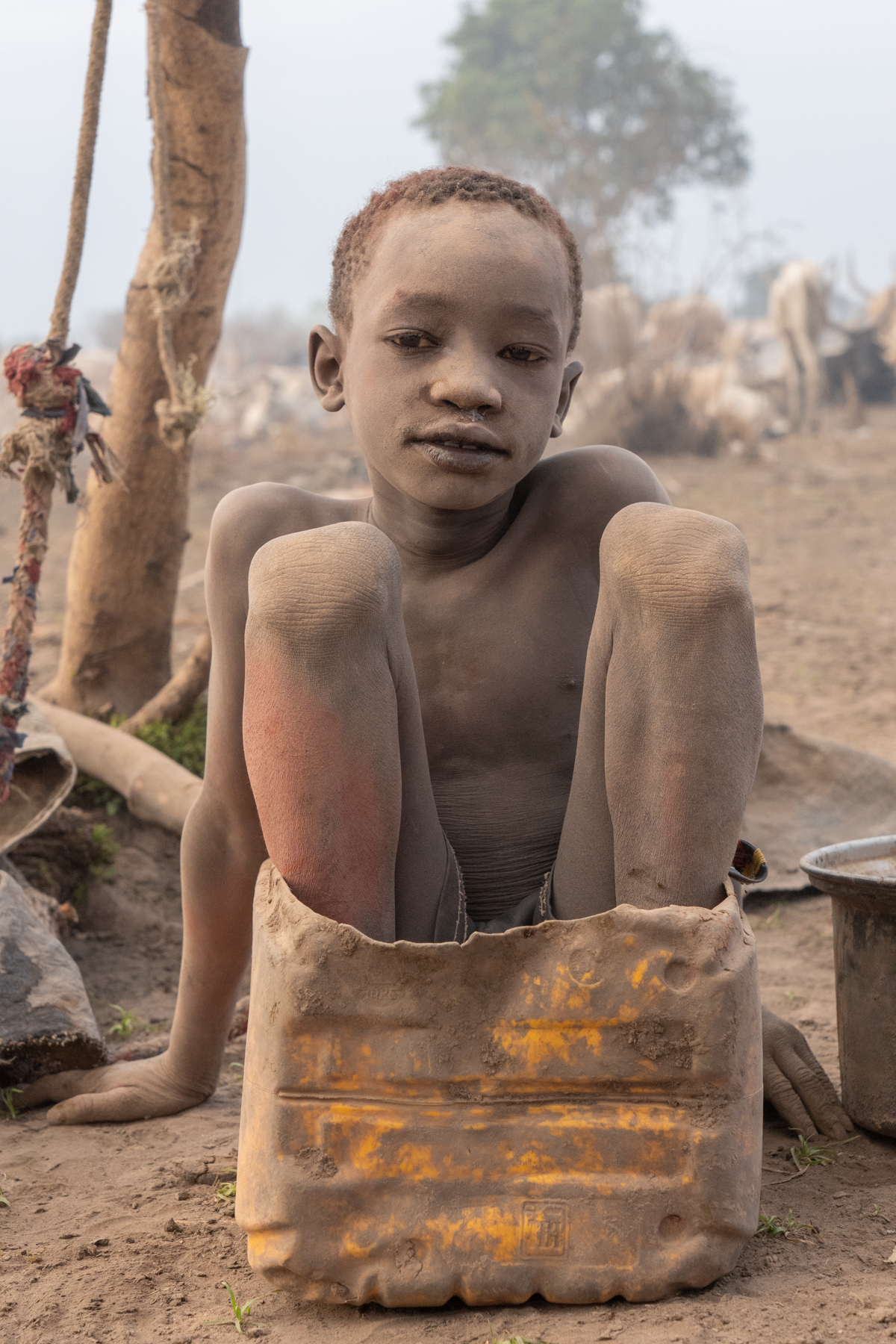
Tiny Mundari boy in a bucket (image by Inger Vandyke)

A young Mundari boy watches over the cows in a camp (image by Inger Vandyke)

A young Mundari boy takes a moment to think while holding the horn of his favourite cow (image by Inger Vandyke)

A Mundari girl milks her cow as part of her early morning chores (image by Inger Vandyke)
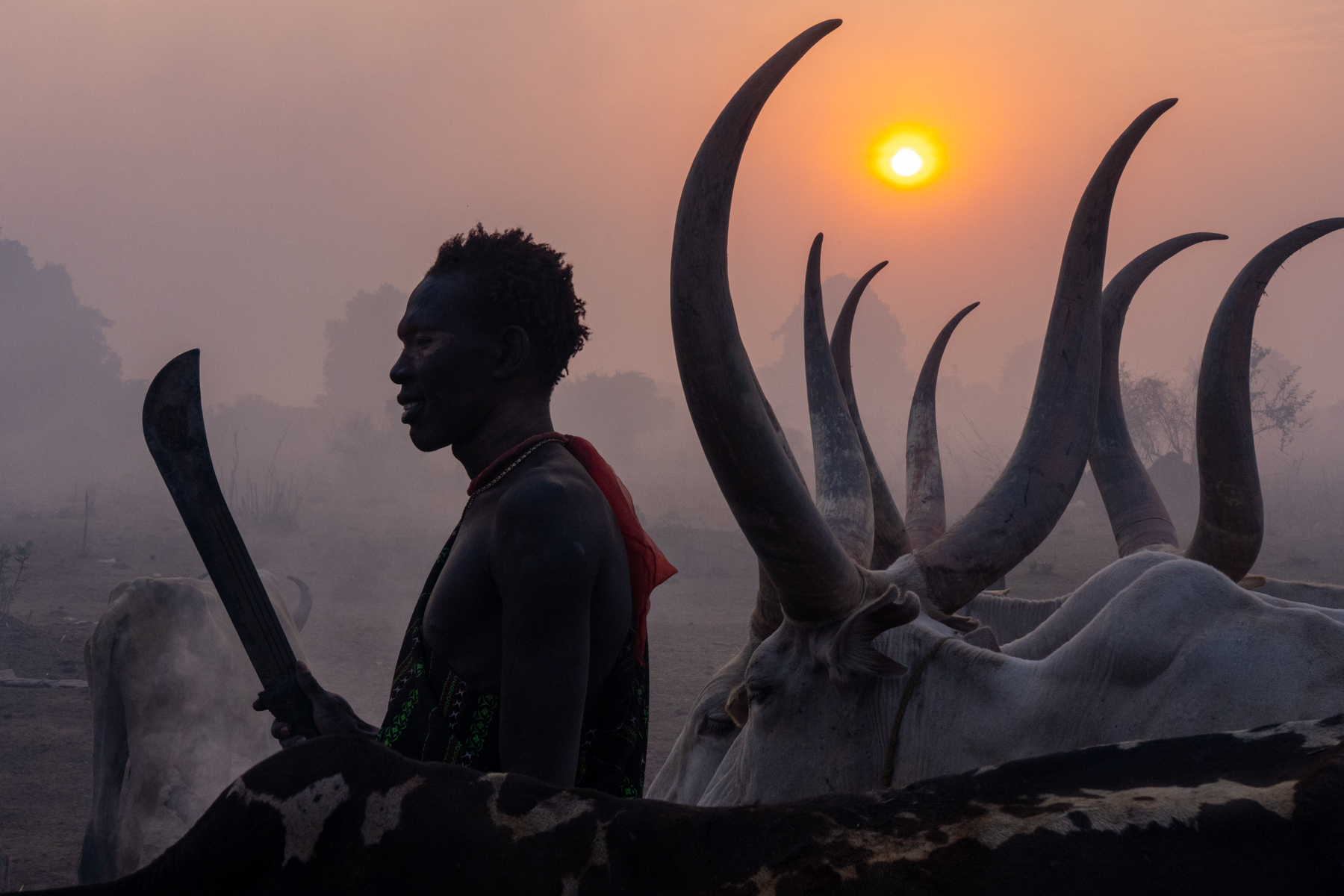
Mundari man and cows in silhouette (image by Inger Vandyke)
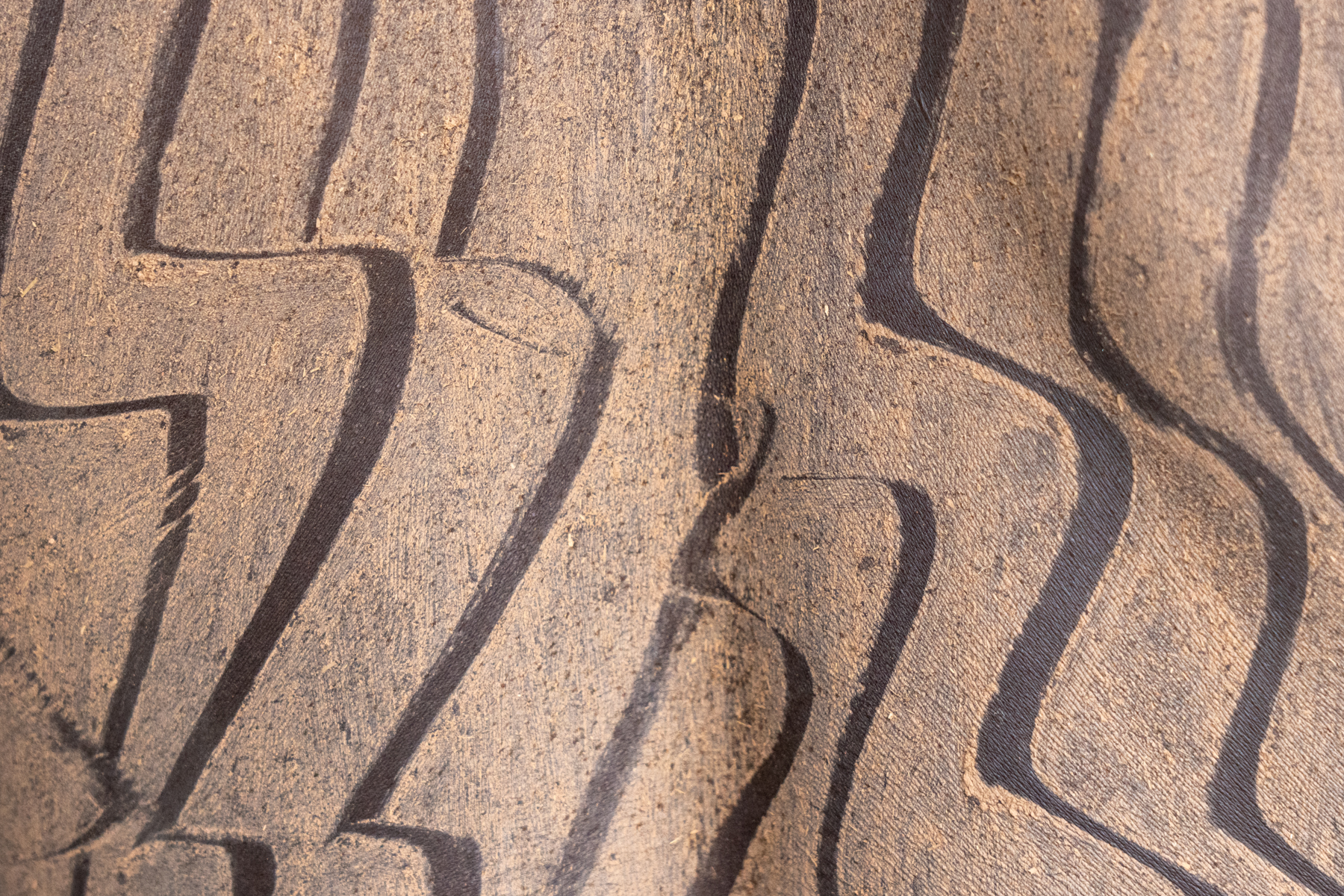
Closeup of Mundari decoration (image by Inger Vandyke)
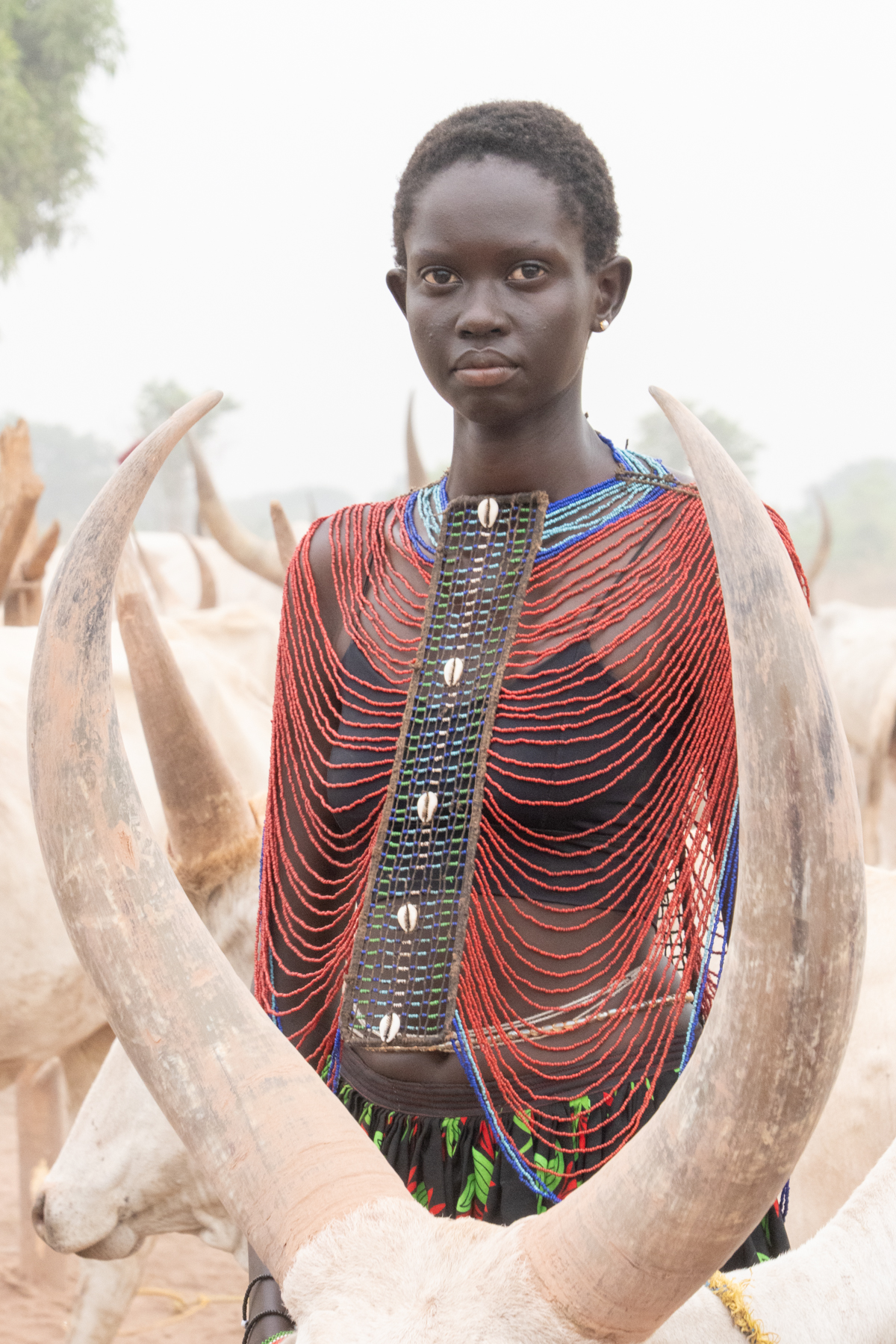
Beautiful Nyanda wearing a beaded collar in the cattle camp (image by Inger Vandyke)

Life inside the Mundari camps is a sea of dust and haze - beautiful (image by Inger Vandyke)
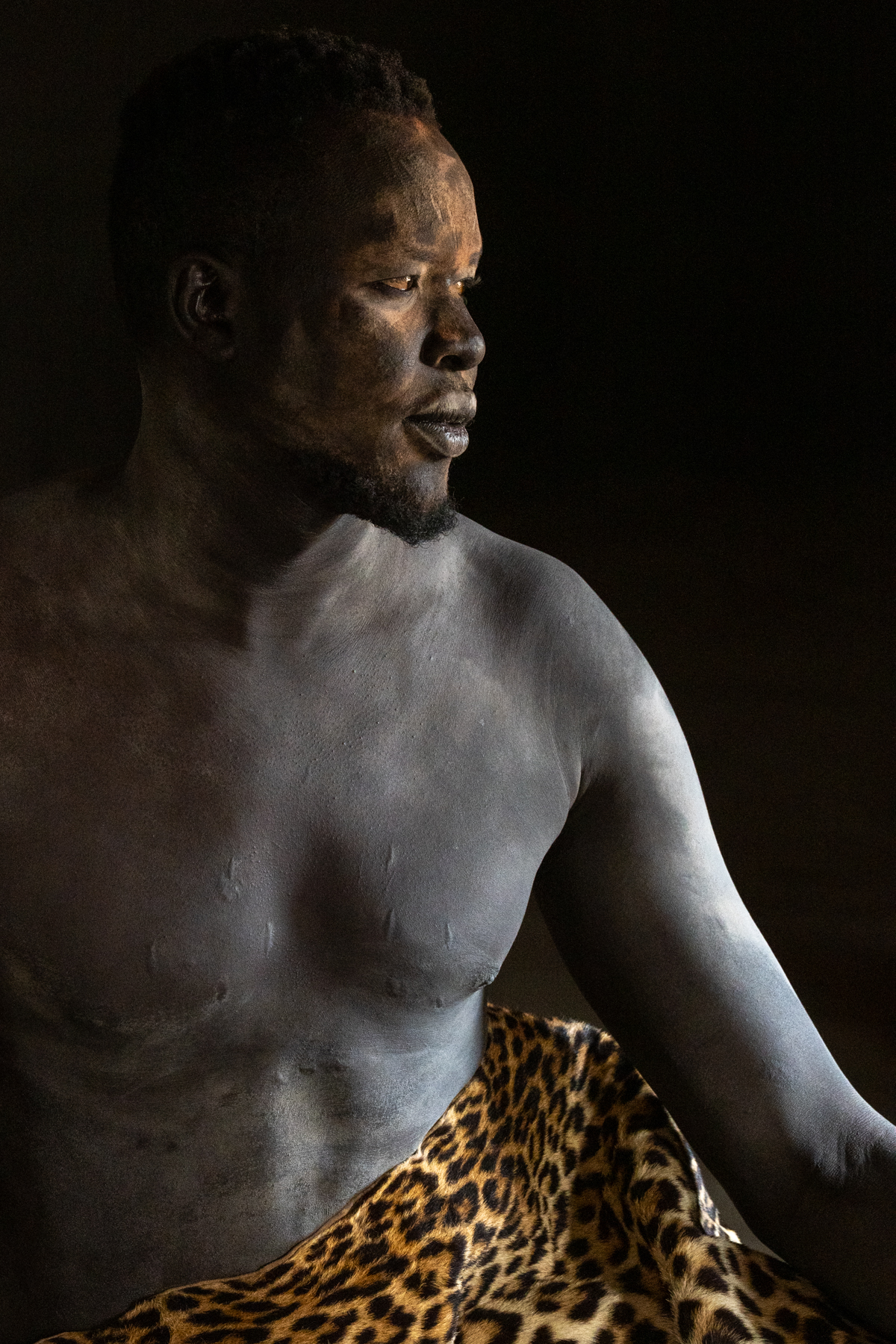
Mundari chief profile (image by Inger Vandyke)

Dung carrying is an integral part of life for Mundari children. The dung they collect is used as fuel for fires at night (image by Inger Vandyke)
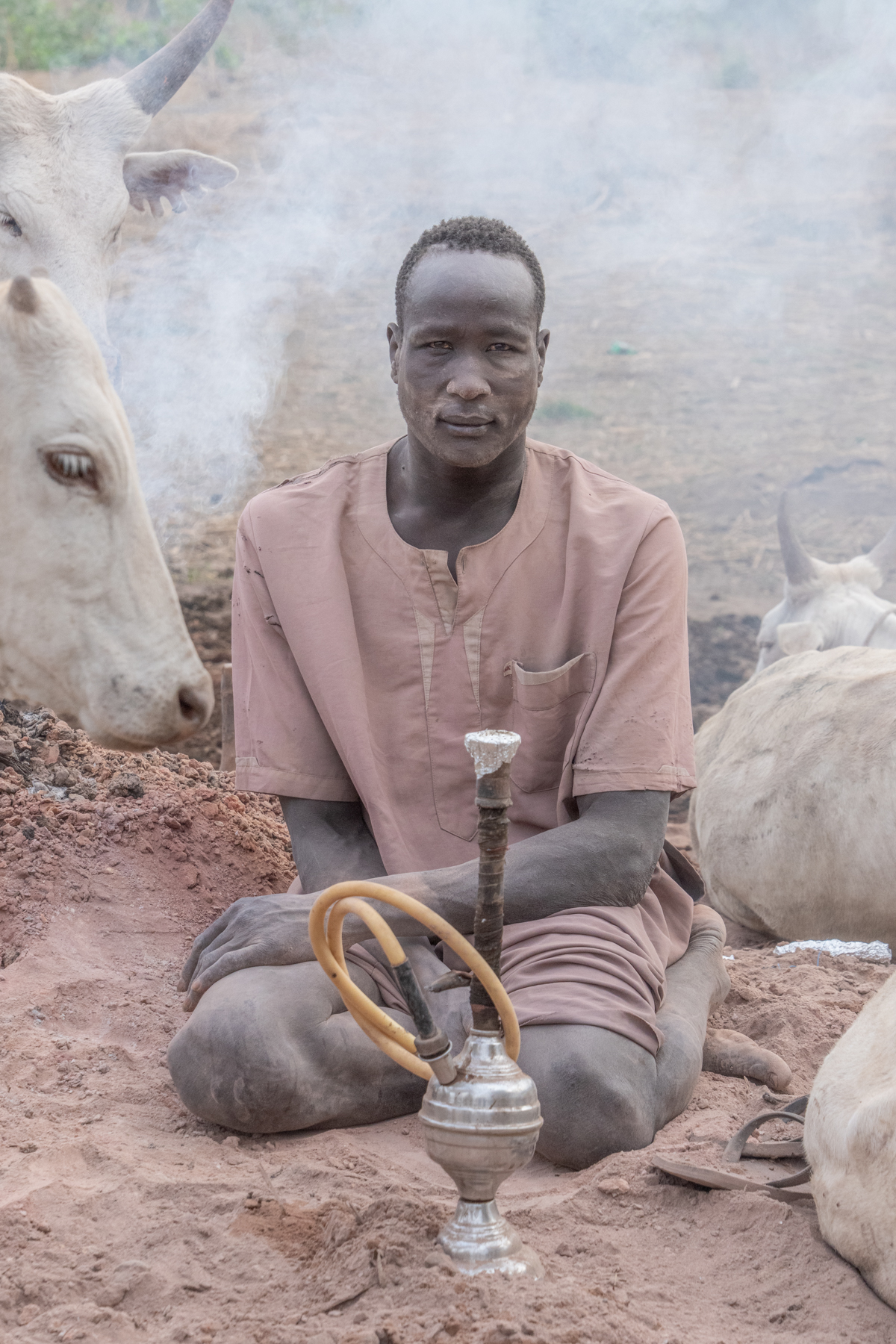
Rest time means a chance to smoke a hookah (image by Inger Vandyke)

It's hard to understand the true size of the Mundaris' cattle until you see a young person standing beside one! (image by Inger Vandyke)
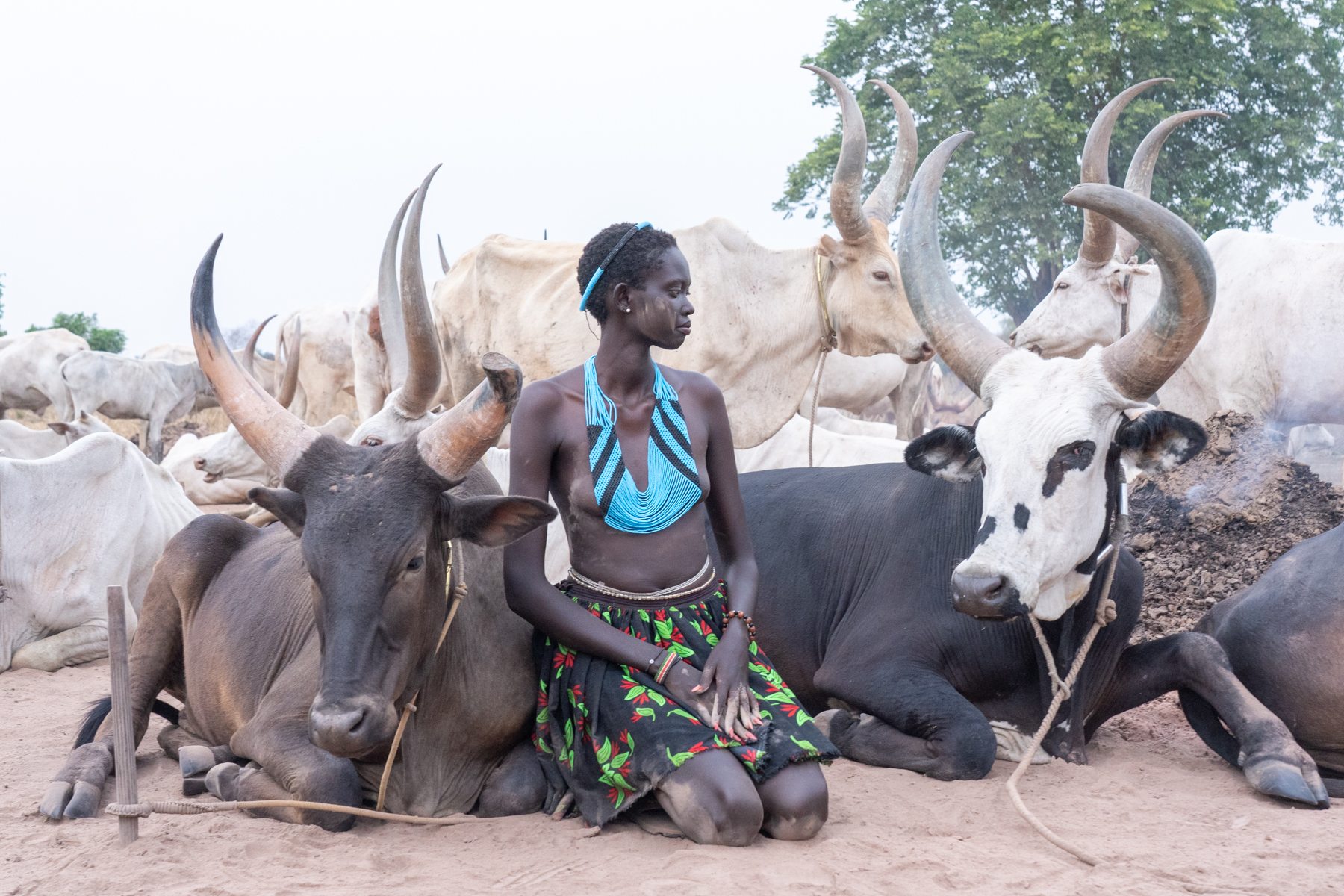
Nyanda wearing Dinka Guet Nom & Yest, the traditional wedding beads, with cows (image by Inger Vandyke)
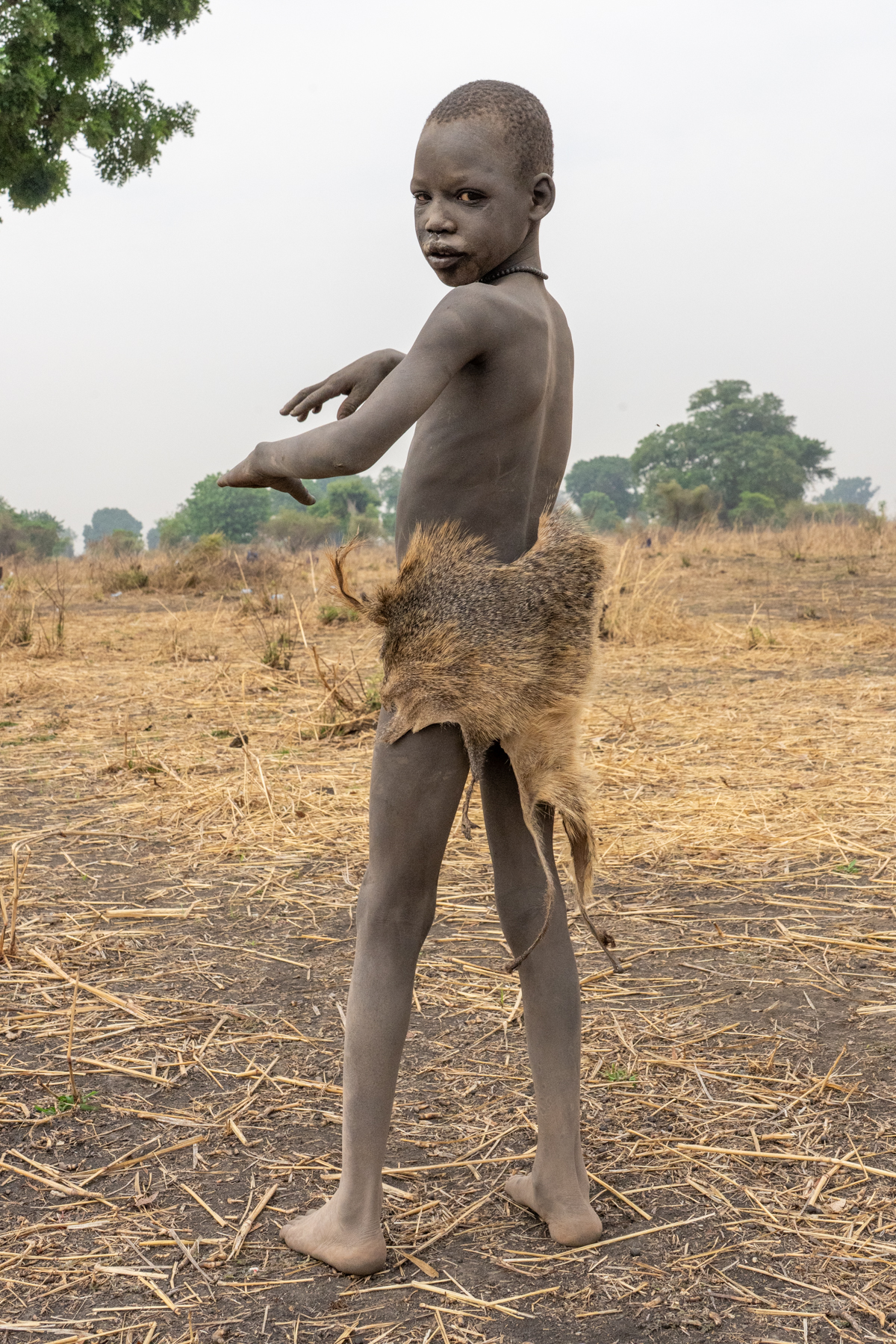
Mundari boy wearing the skin of an Egyptian Mongoose (image by Inger Vandyke)

A Mundari boy drinks milk directly from his cow (image by Inger Vandyke)

A young Mundari boy collecting cow dung at a camp. This is then dried and used as fuel for night fires (image by Inger Vandyke)
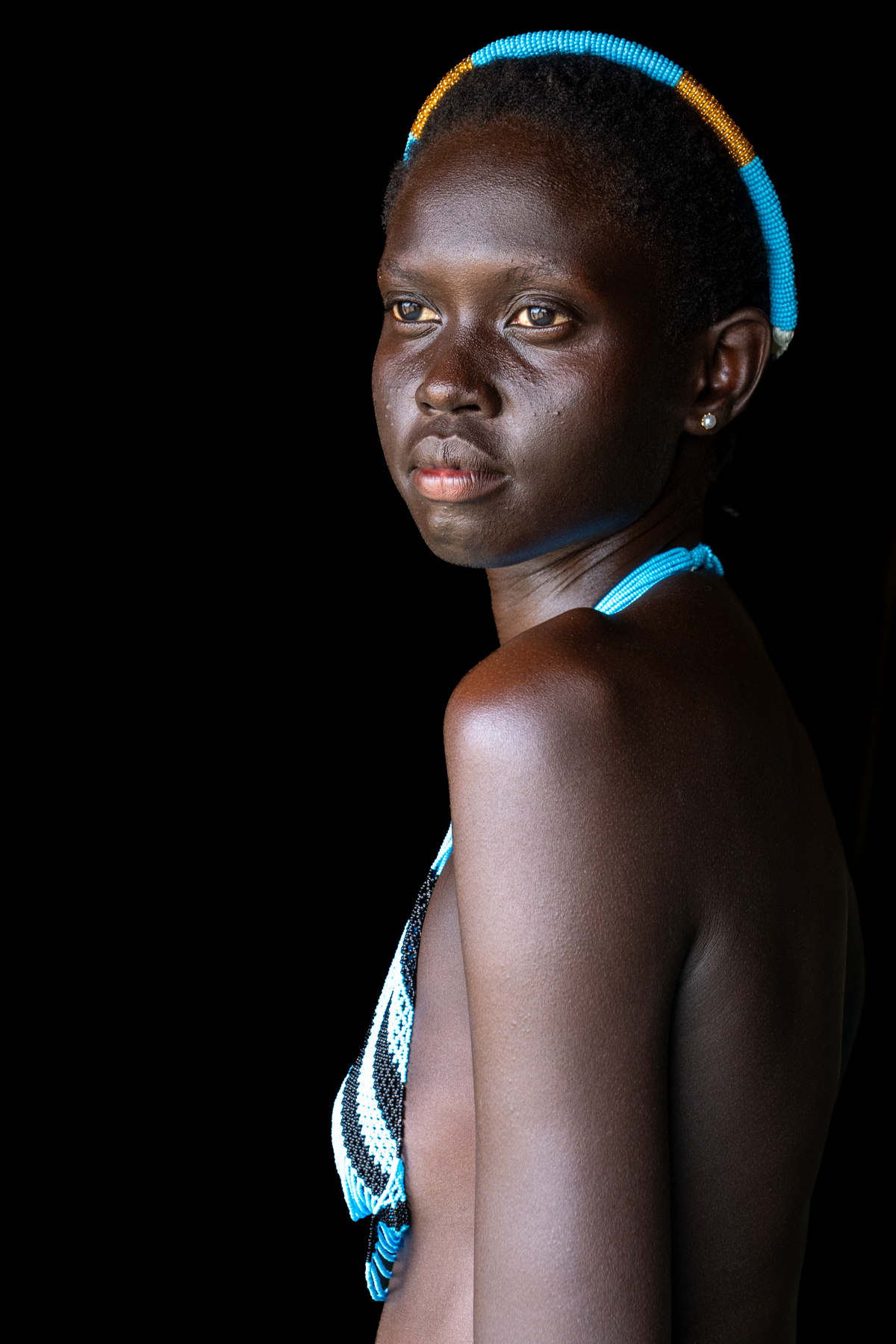
Nyanda wearing Dinka wedding beads (image by Inger Vandyke)

Blue hour in a Mundari cattle camp (image by Inger Vandyke)

A Mundari boy poses next to his favourite cow in camp (image by Inger Vandyke)
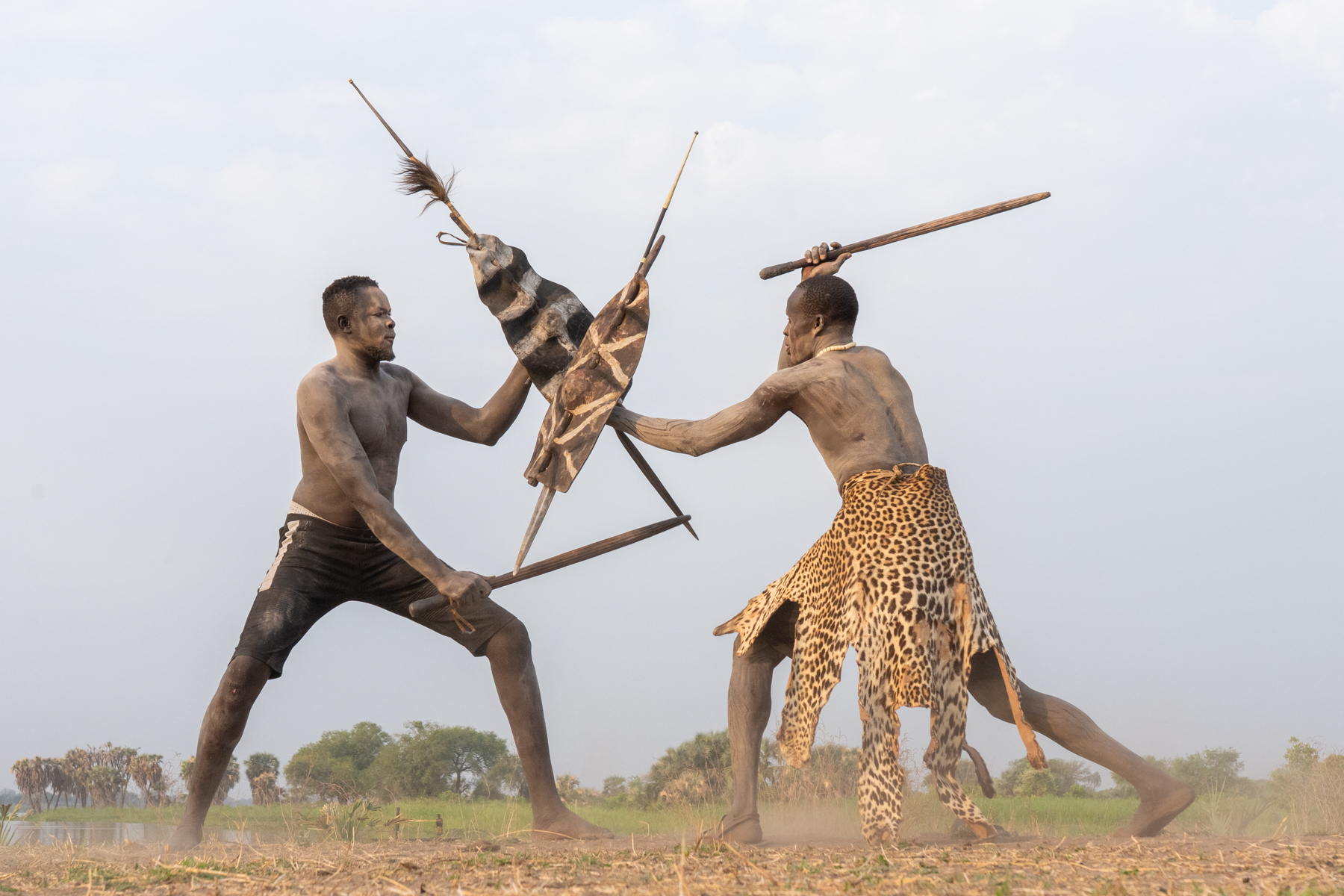
Clashing Mundari warriors (image by Inger Vandyke)

A Mundari boy carries his goat across the camp (image by Inger Vandyke)

A Mundari man with his favourite cow (image by Inger Vandyke)
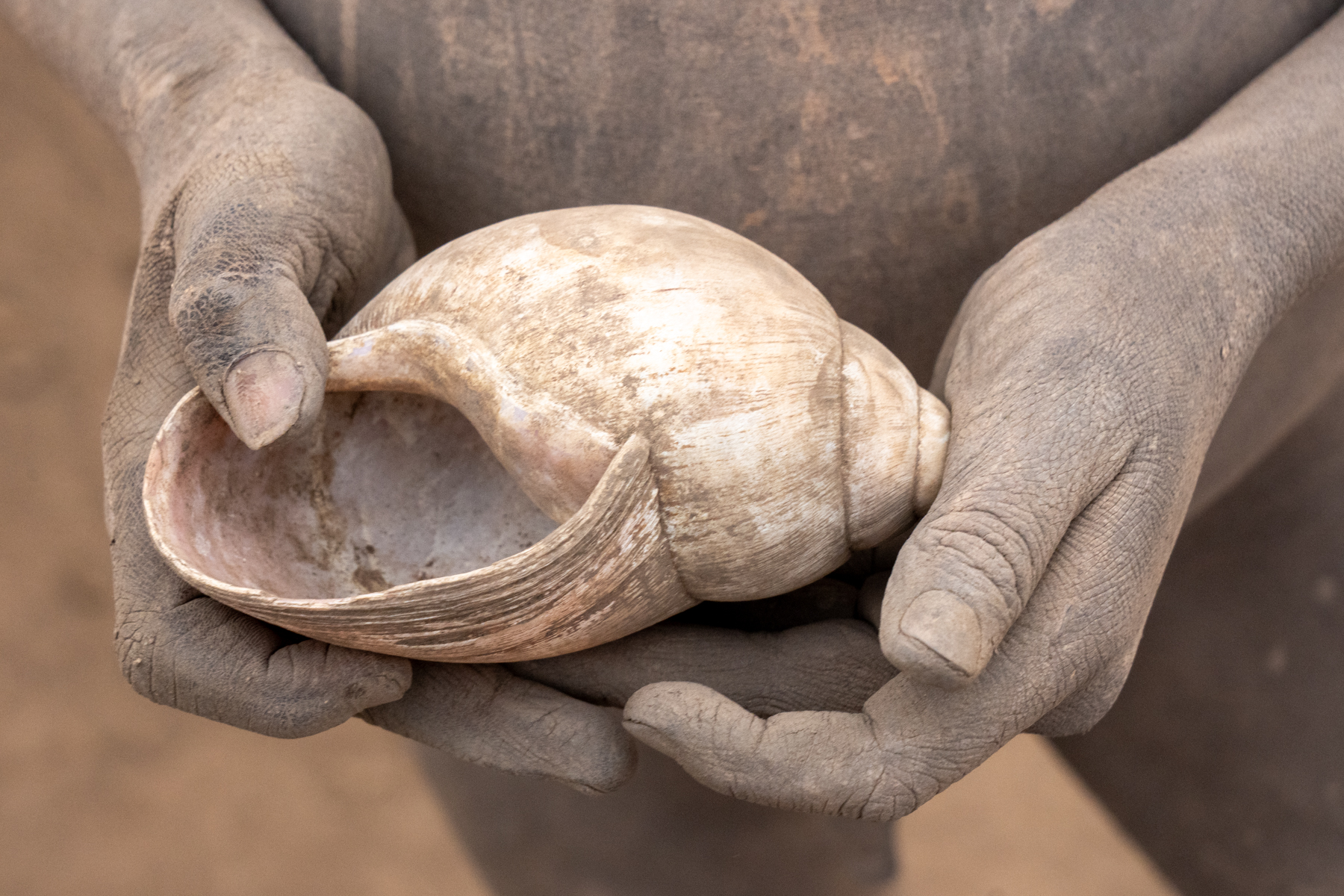
Mundari children make toys out of simple things like land snail shells (image by Inger Vandyke)

Portrait of Ituri, a Mundari man standing in the cattle herd (image by Inger Vandyke)

A young Mundari boy wanders through his cattle camp at sunrise (image by Inger Vandyke)

A Mundari man with his traditional 'V' scarification (image by Inger Vandyke)
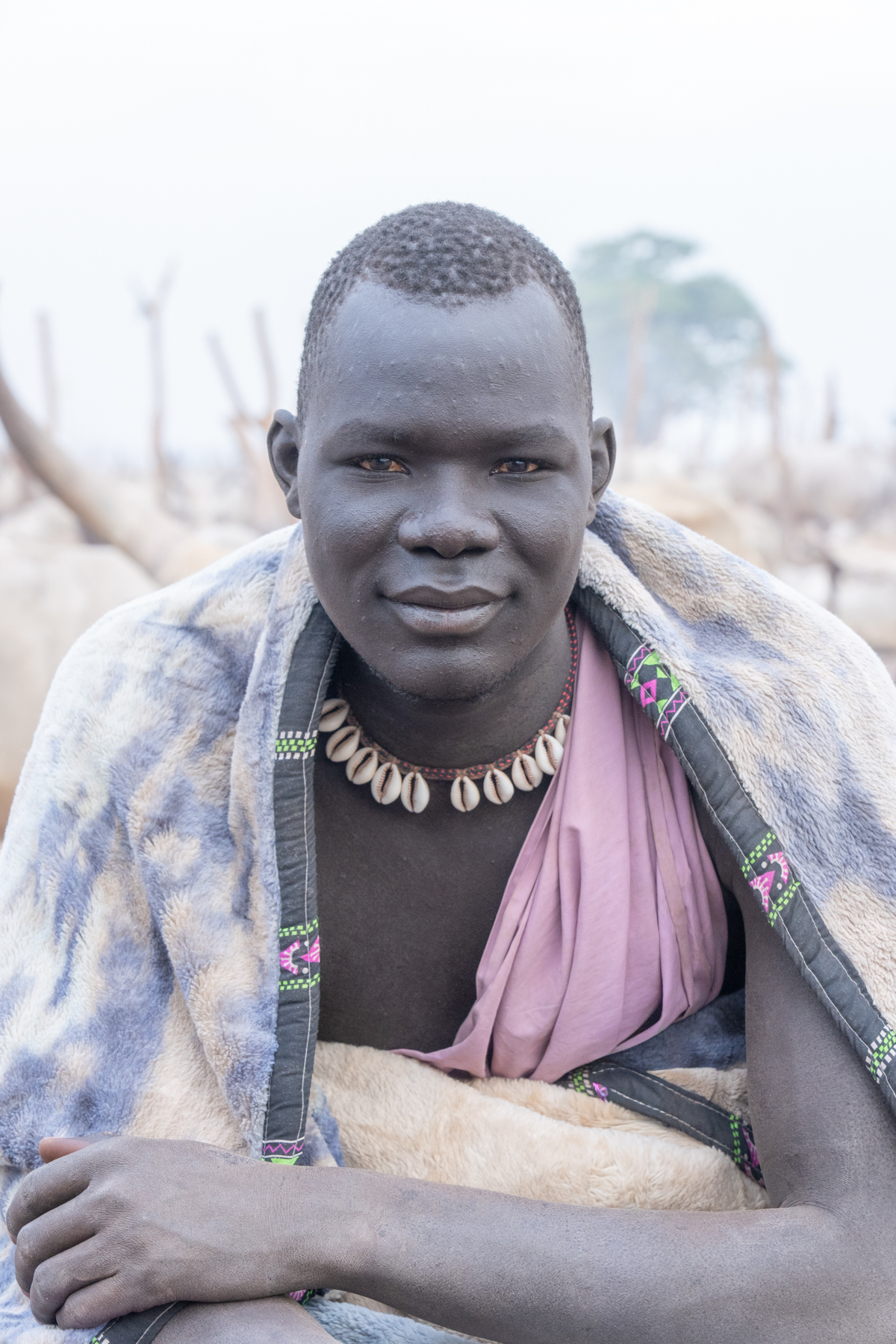
Portrait of champion Mundari wrestler (image by Inger Vandyke)
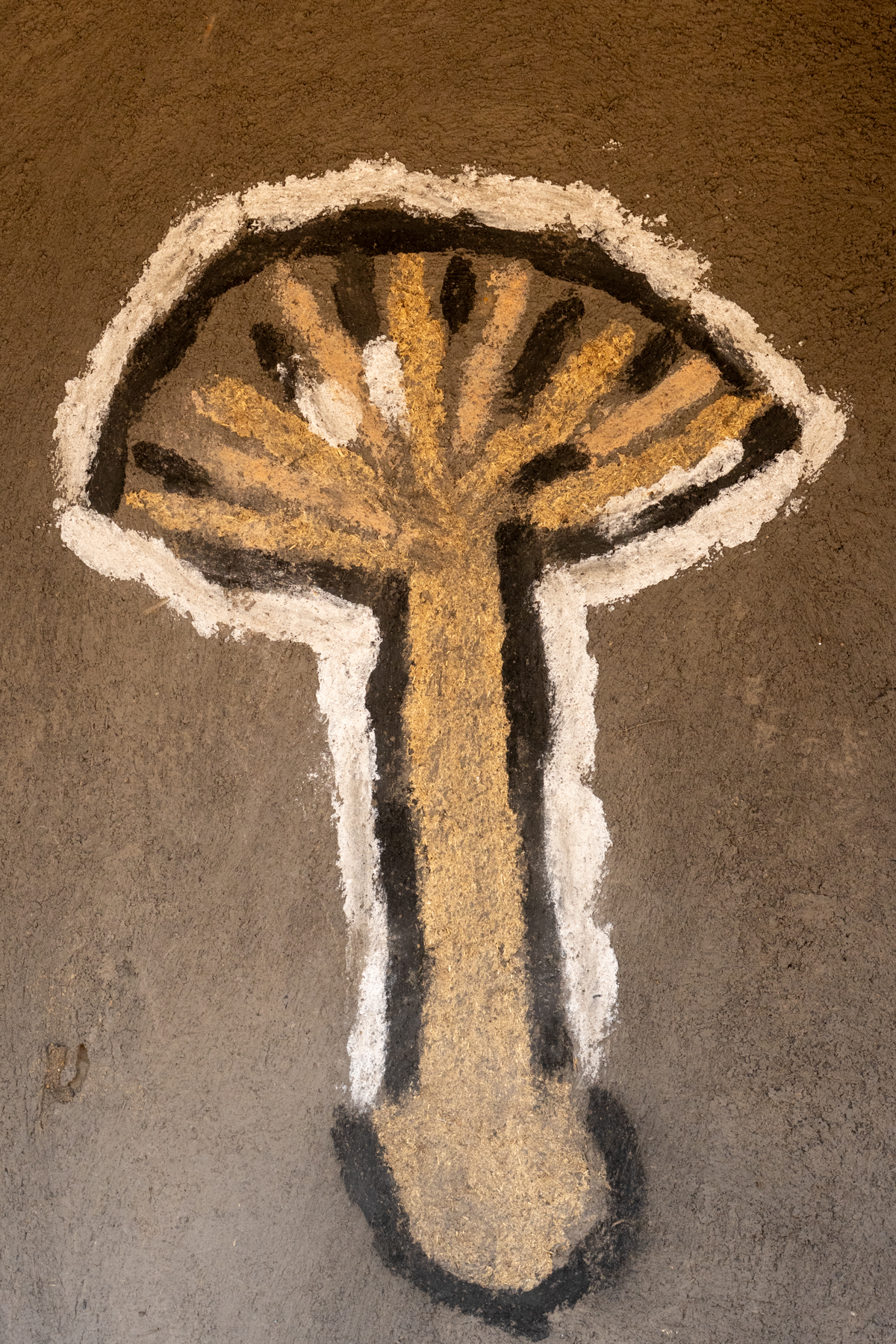
Hand-painted Motif adorning a Mundari home (image by Inger Vandyke)
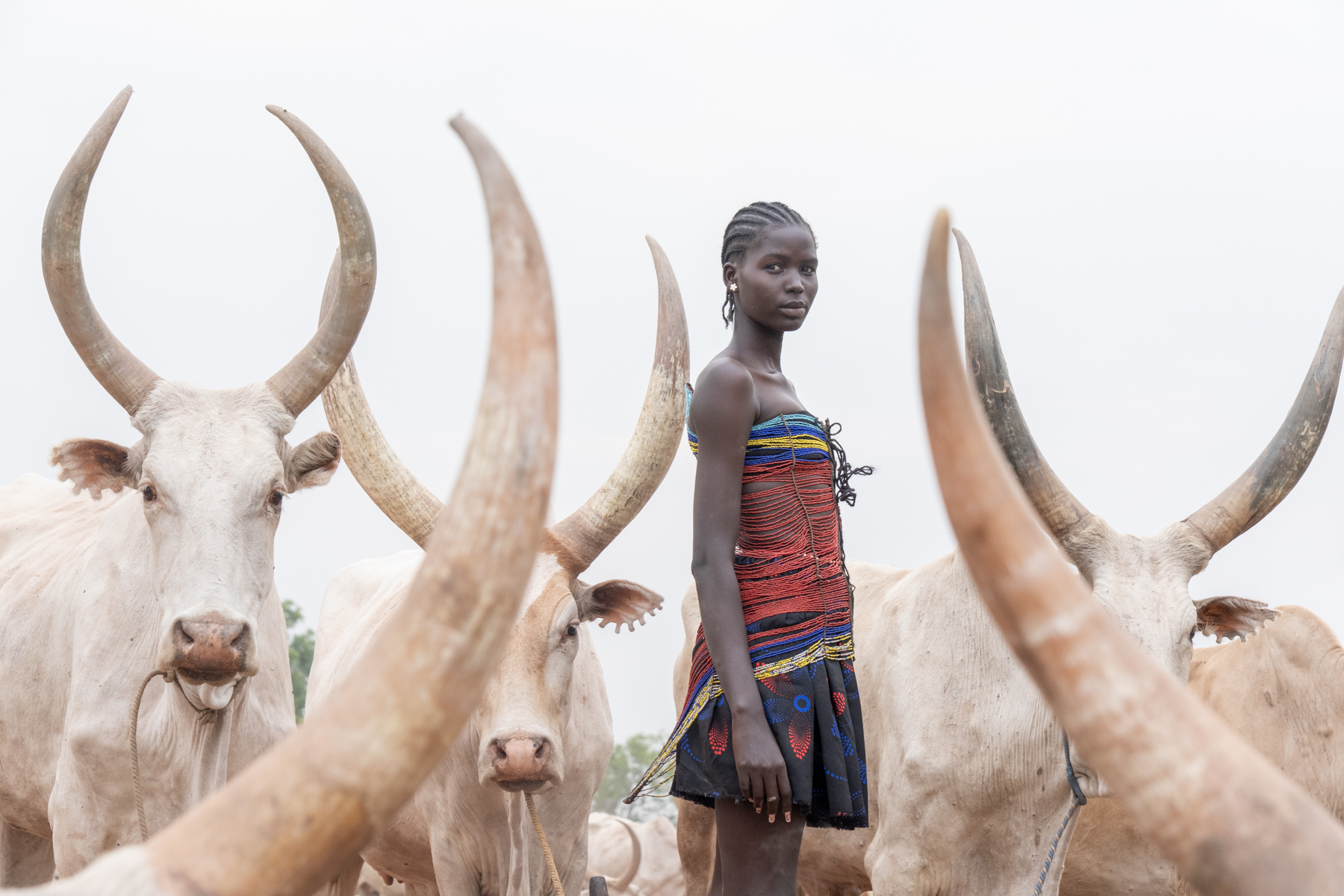
Aker and cows (image by Inger Vandyke)
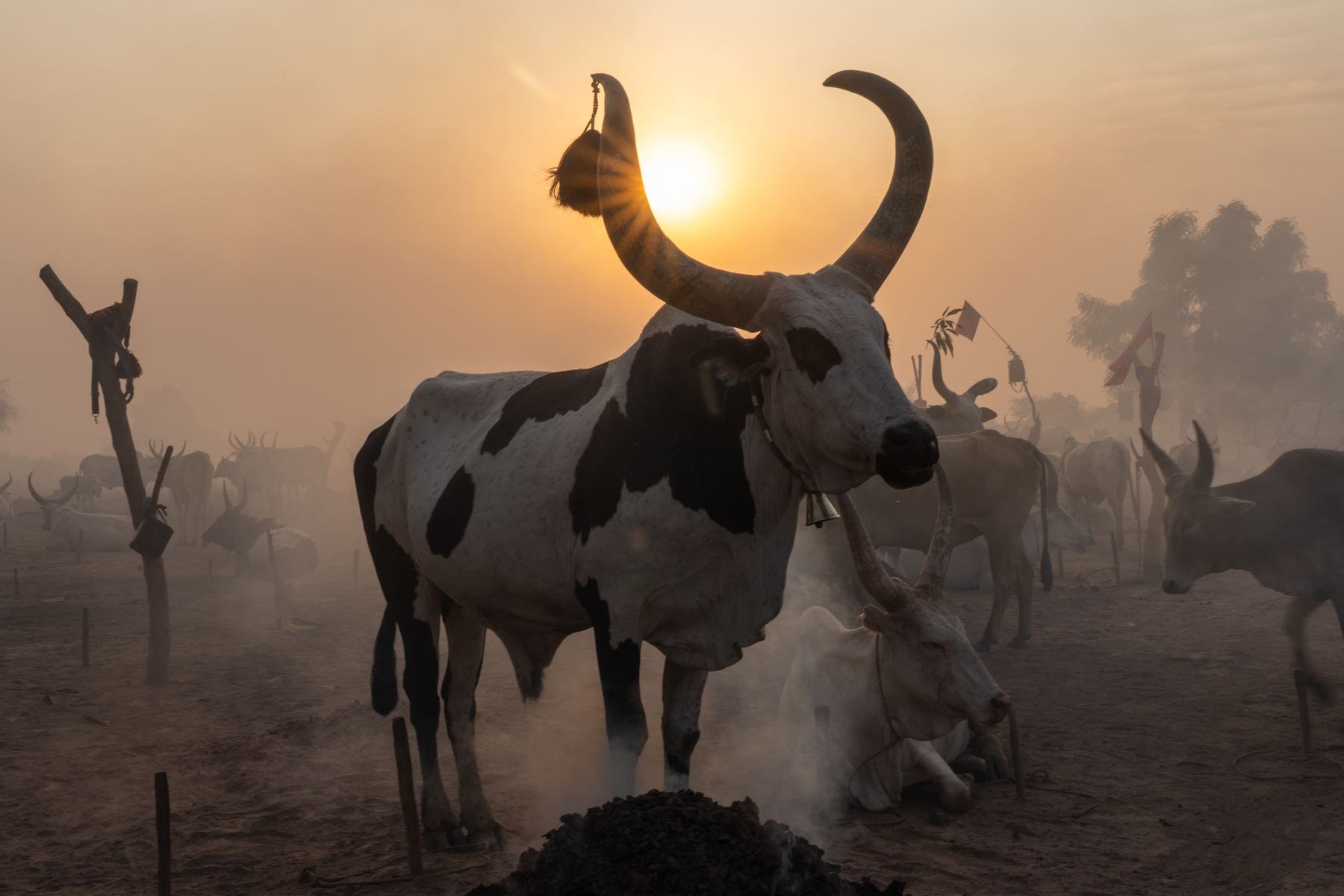
Mundari cow and sunburst (image by Inger Vandyke)

A smiling Mundari man with his 'V' scar and hair dyed orange by cow urine (image by Inger Vandyke)

Aker wearing her beaded collar in a Mundari camp (image by Inger Vandyke)
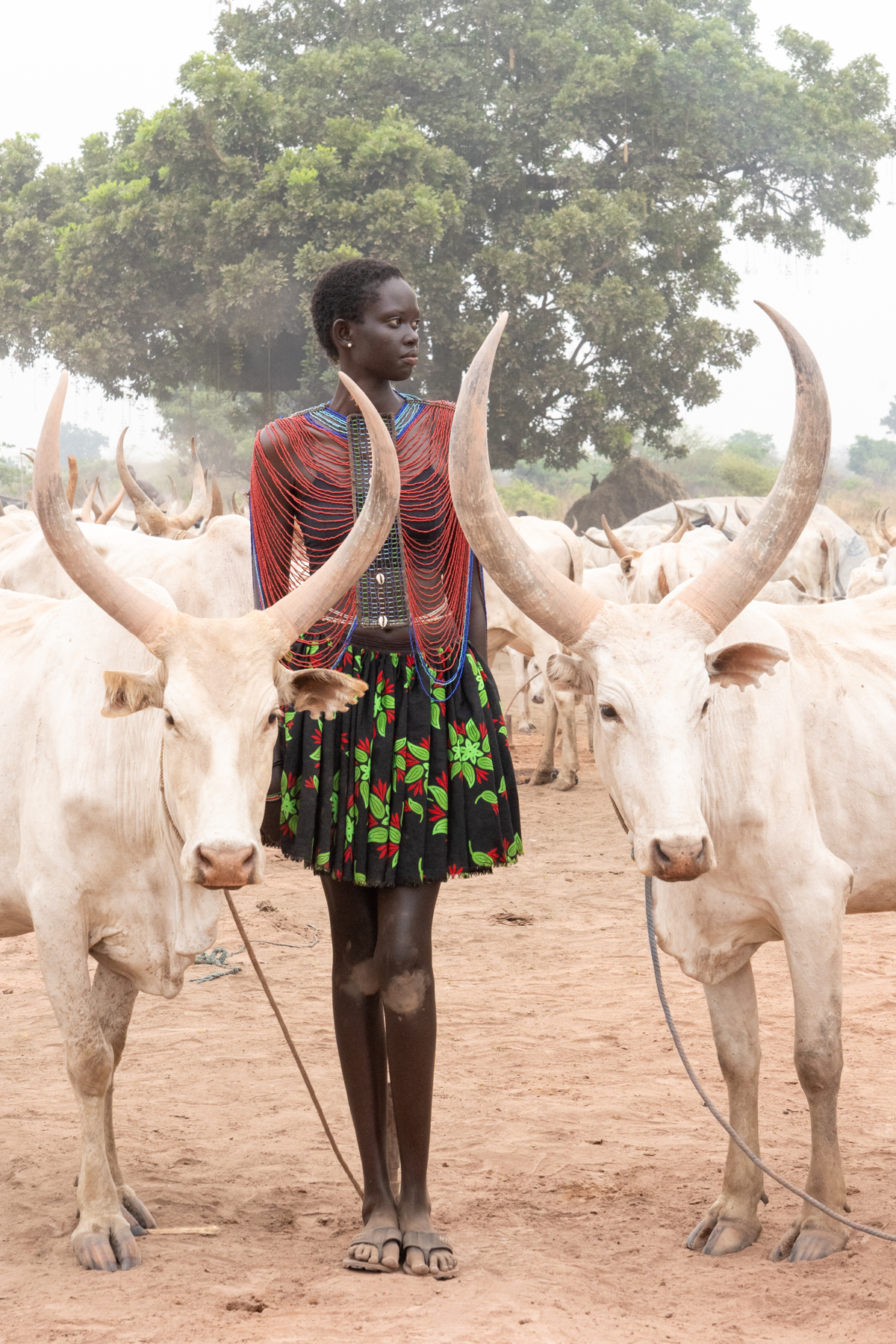
Nyanda and cows (image by Inger Vandyke)

In the peak of the dust and smoke season Mundari cattle camps are shrouded in an ethereal haze (image by Inger Vandyke)
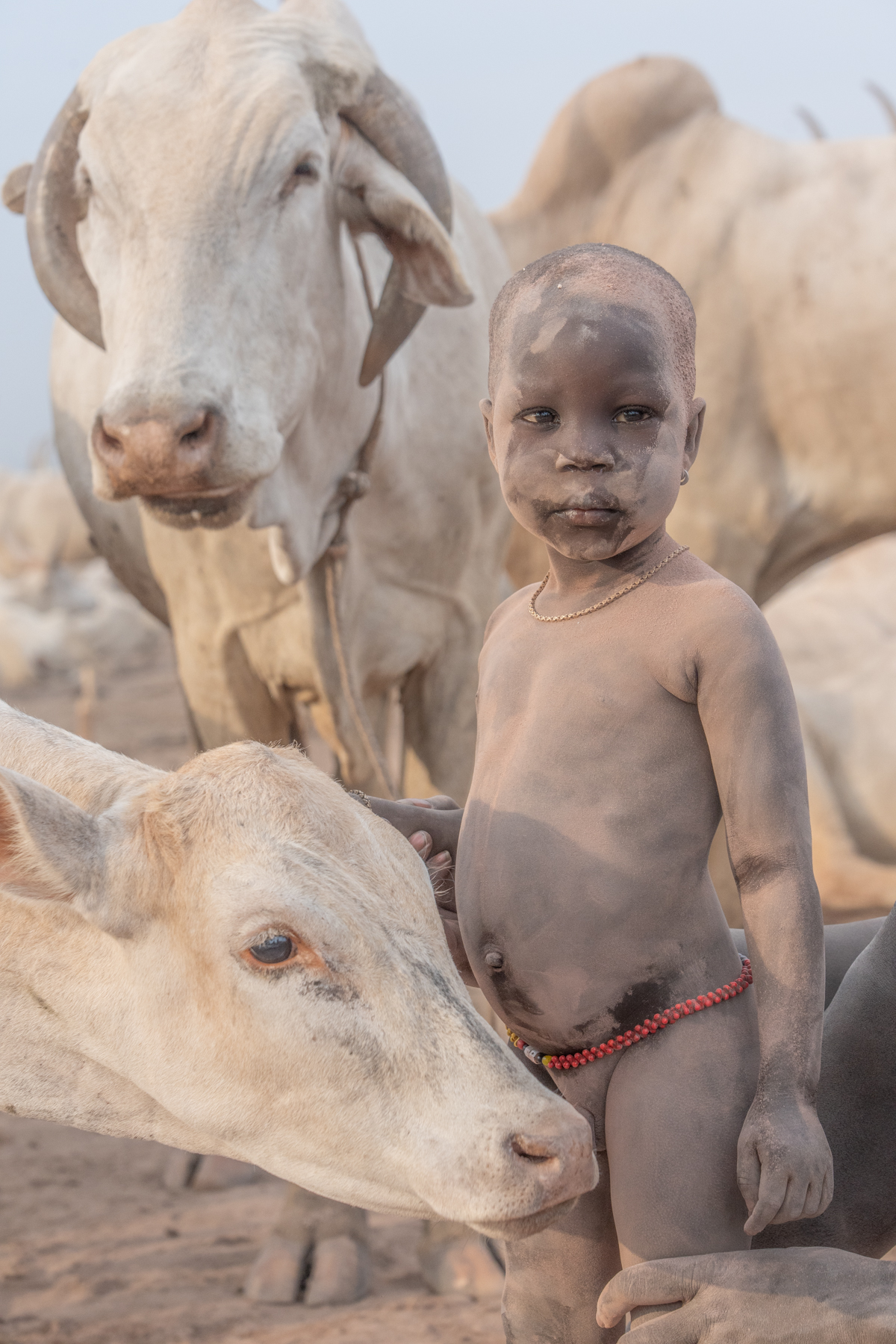
Mundari children are introduced to cows when they are babies (image by Inger Vandyke)

A Mundari man dusting his cow in a daily ritual (image by Inger Vandyke)

A young Mundari boy atop a camp watch post (image by Inger Vandyke)

Portrait of a young Mundari girl in remote South Sudan (image by Inger Vandyke)
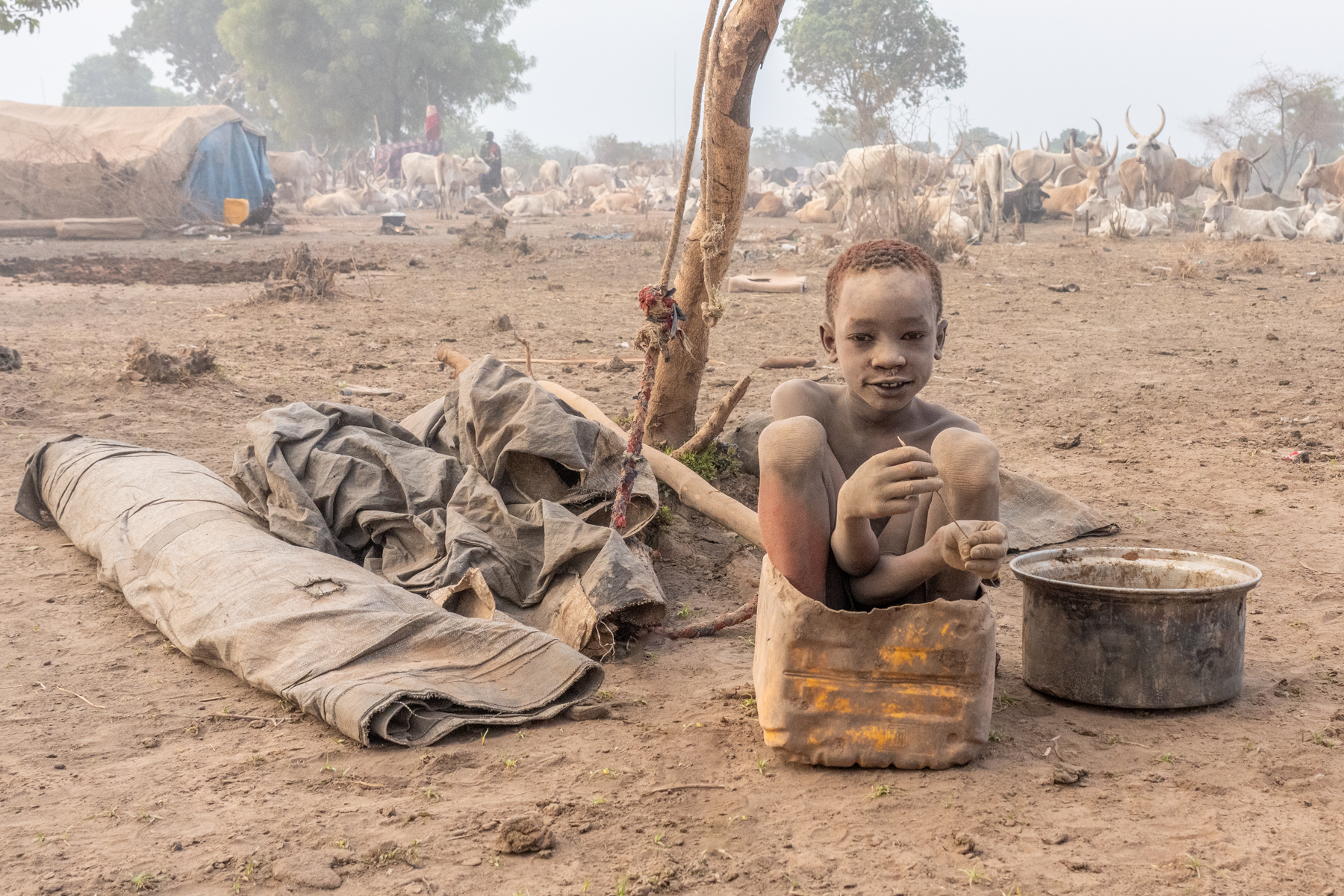
A Mundari boy sitting in a bucket that he would normally use to collect dung (image by Inger Vandyke)

Portrait of Jeshep, a young Mundari man holding a 'Tung' musical instrument (image by Inger Vandyke)
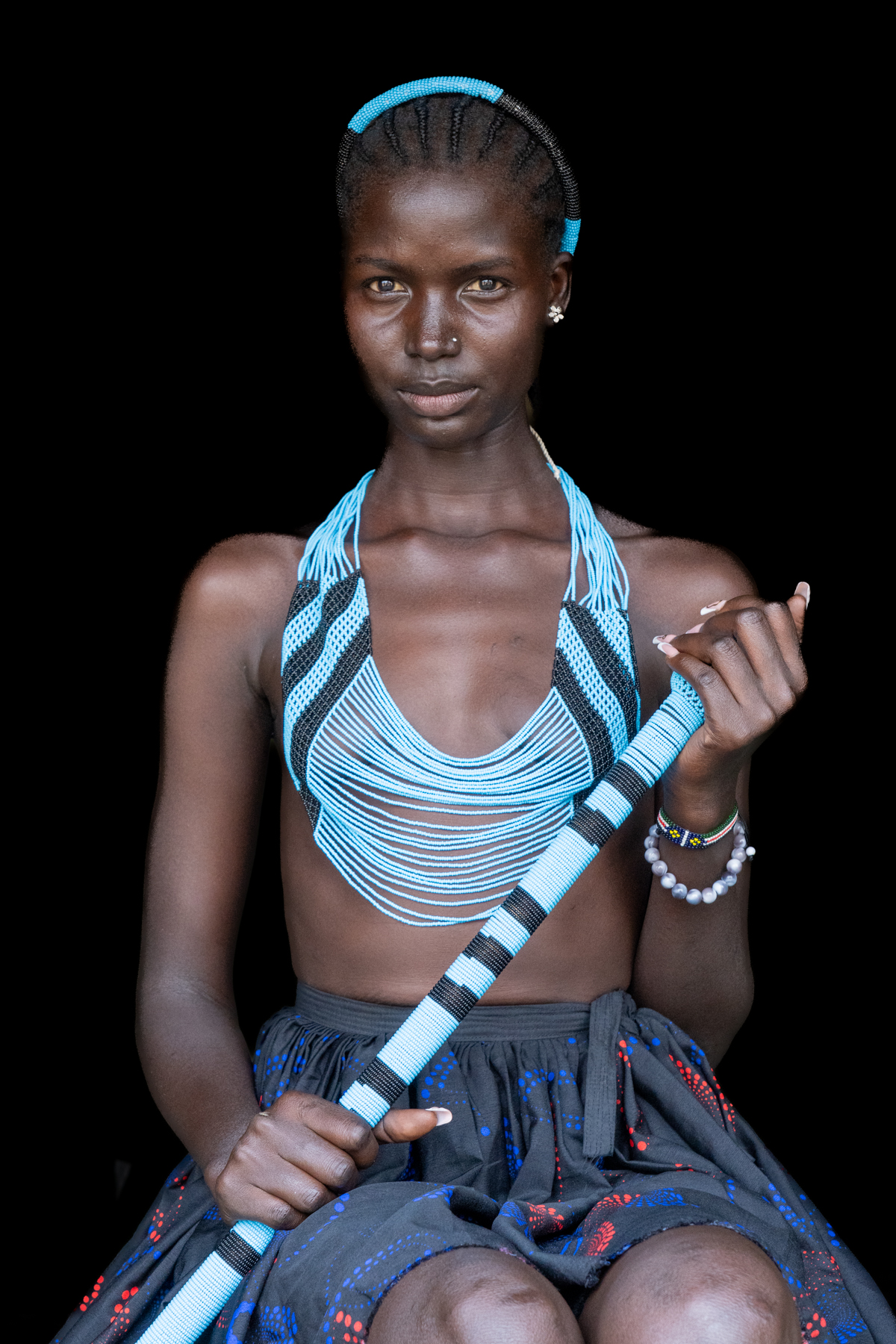
Aker with Dinka wedding beads (image by Inger Vandyke)
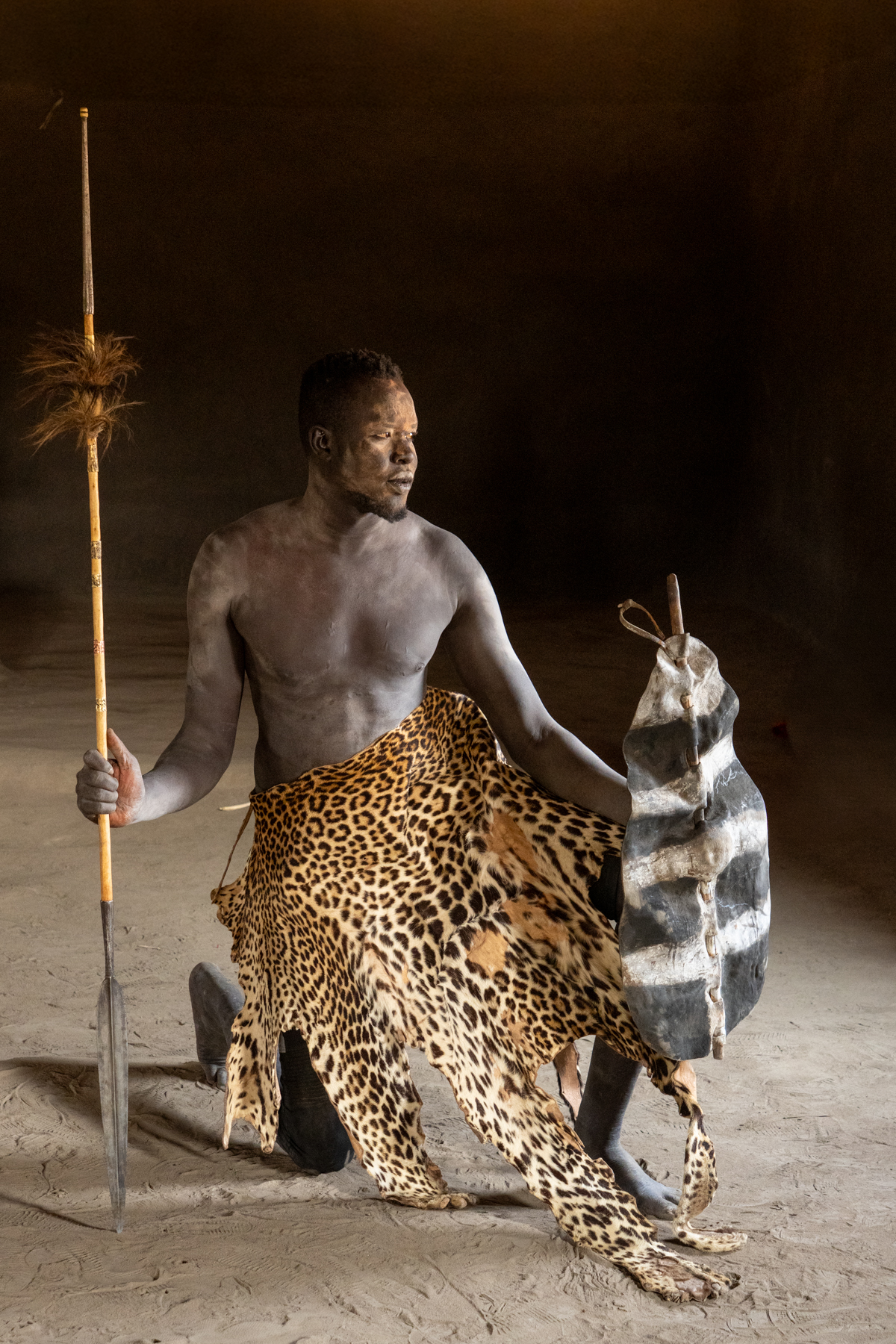
Portrait of a traditionally dressed Mundari warrior (image by Inger Vandyke)
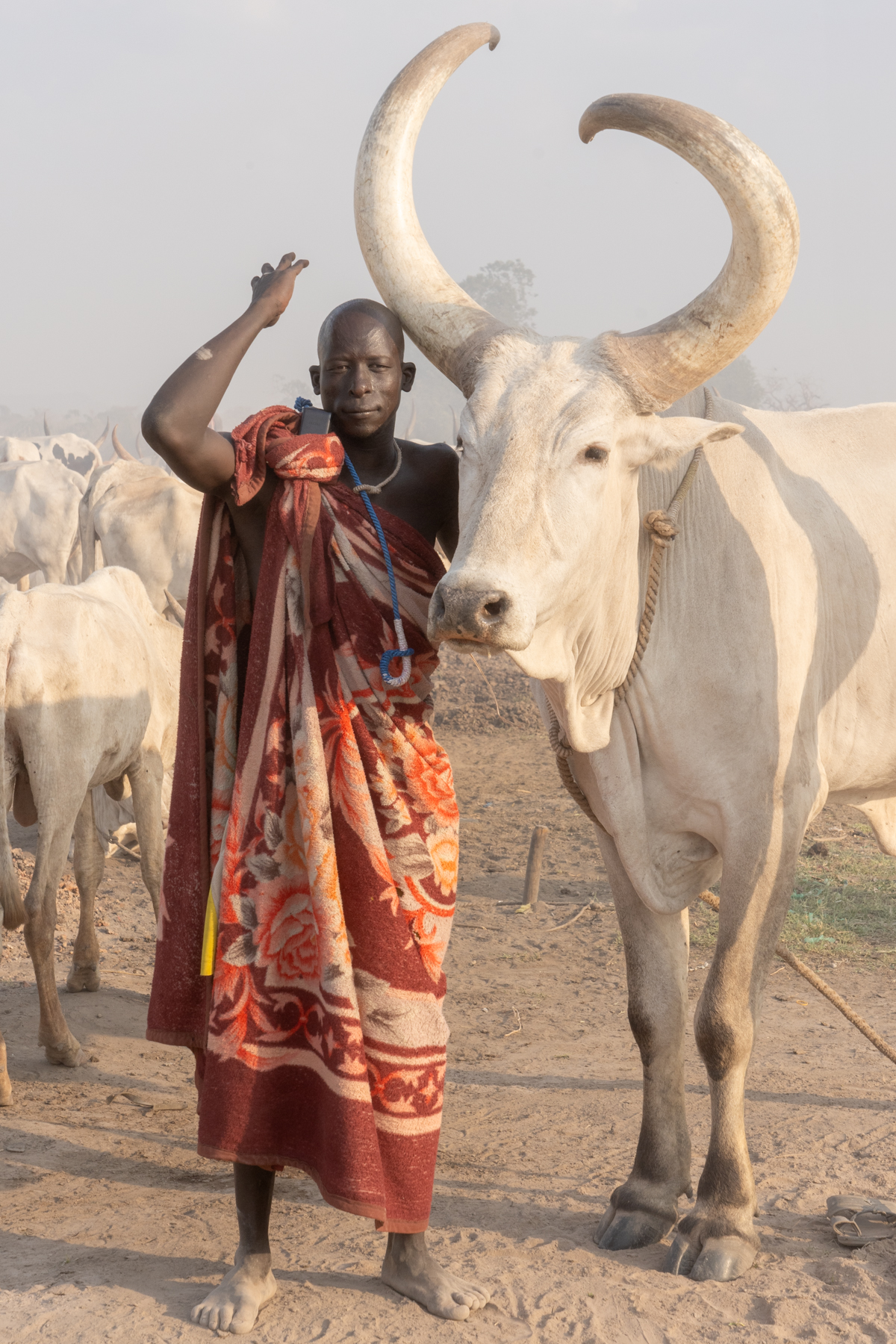
Standing around 8ft tall, a giant Ankole cow with his owner (image by Inger Vandyke)

A Mundari man wraps himself in a blanket to stay warm at sunrise (image by Inger Vandyke)
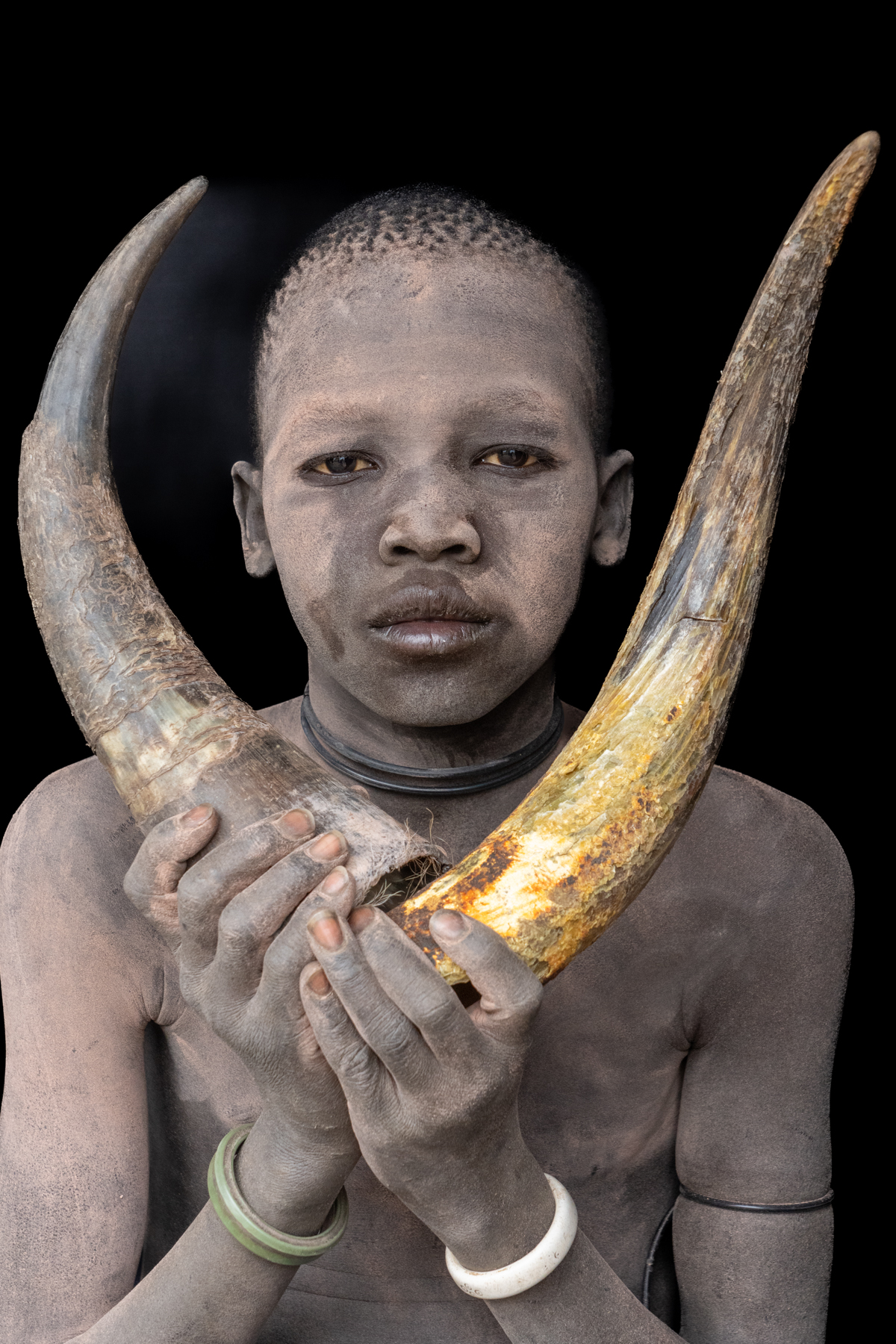
Young Mundari boy with cow horns (image by Inger Vandyke)
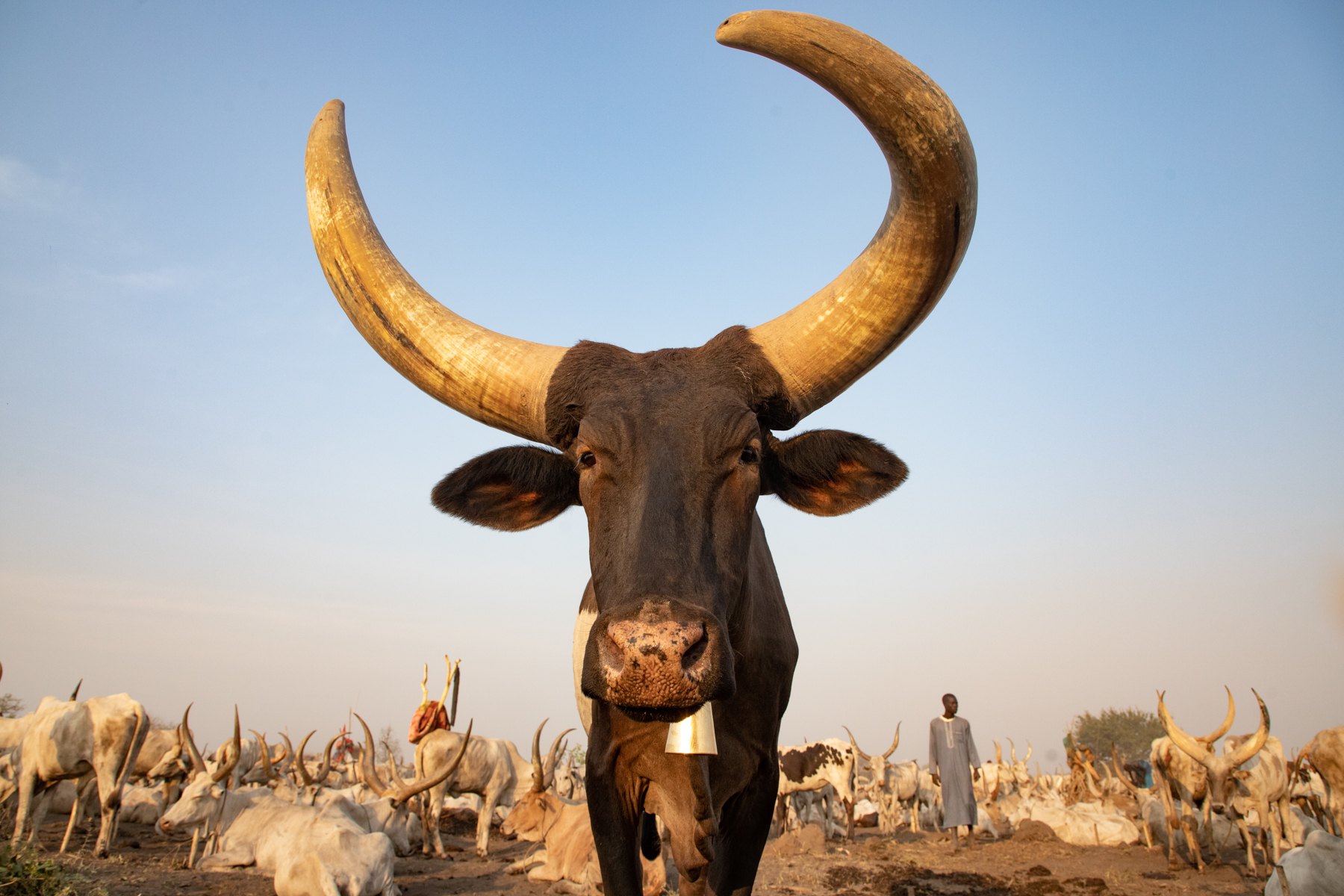
The gigantic Ankole Watusi cows of the Mundari people (image by Inger Vandyke)

Each day the Mundari dust their cows with ash from the fire to protect them from the sun and biting insects (image by Inger Vandyke)

Each morning the Mundari rub fire ash into the pelts of their cows to protect them from the sun (image by Inger Vandyke)
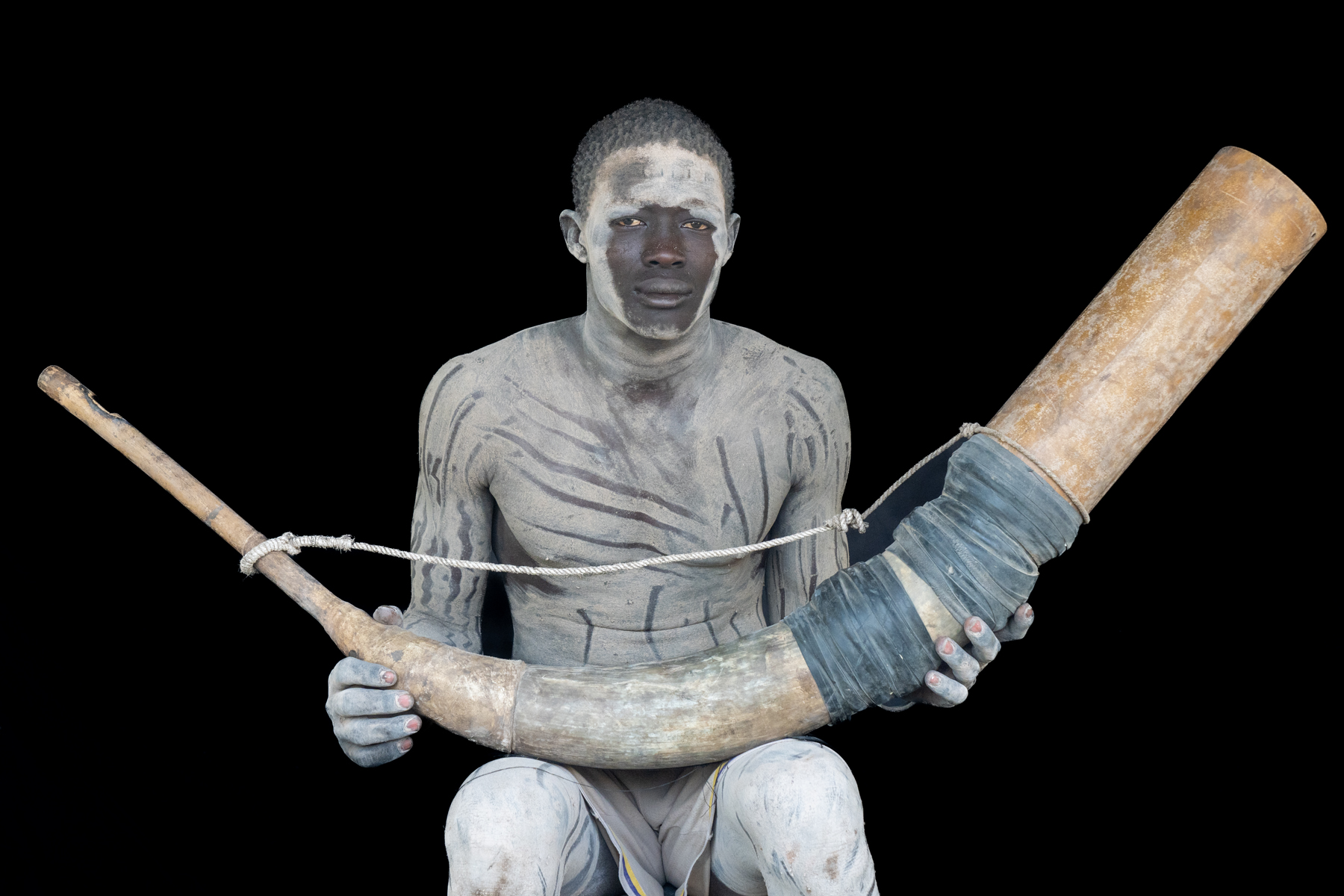
Mundari man holding a 'Tung' or musical horn made from Ankole horn (image by Inger Vandyke)

The beautiful Ankole Watusi cows of the Mundari at sunrise (image by Inger Vandyke)
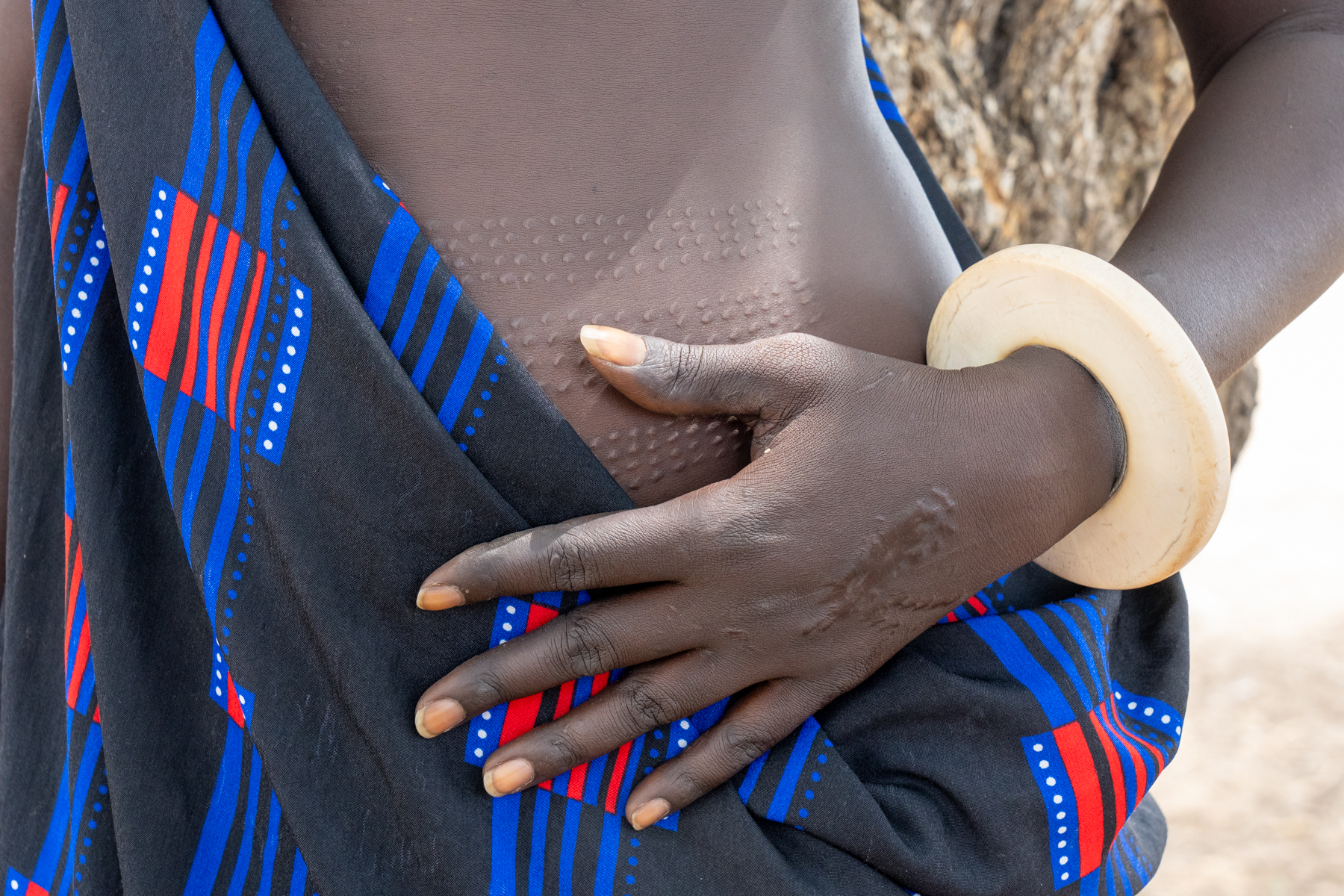
Mundari scarification and bone bracelet (image by Inger Vandyke)

A Mundari man tending to his sheep and goats at sunrise (image by Inger Vandyke)
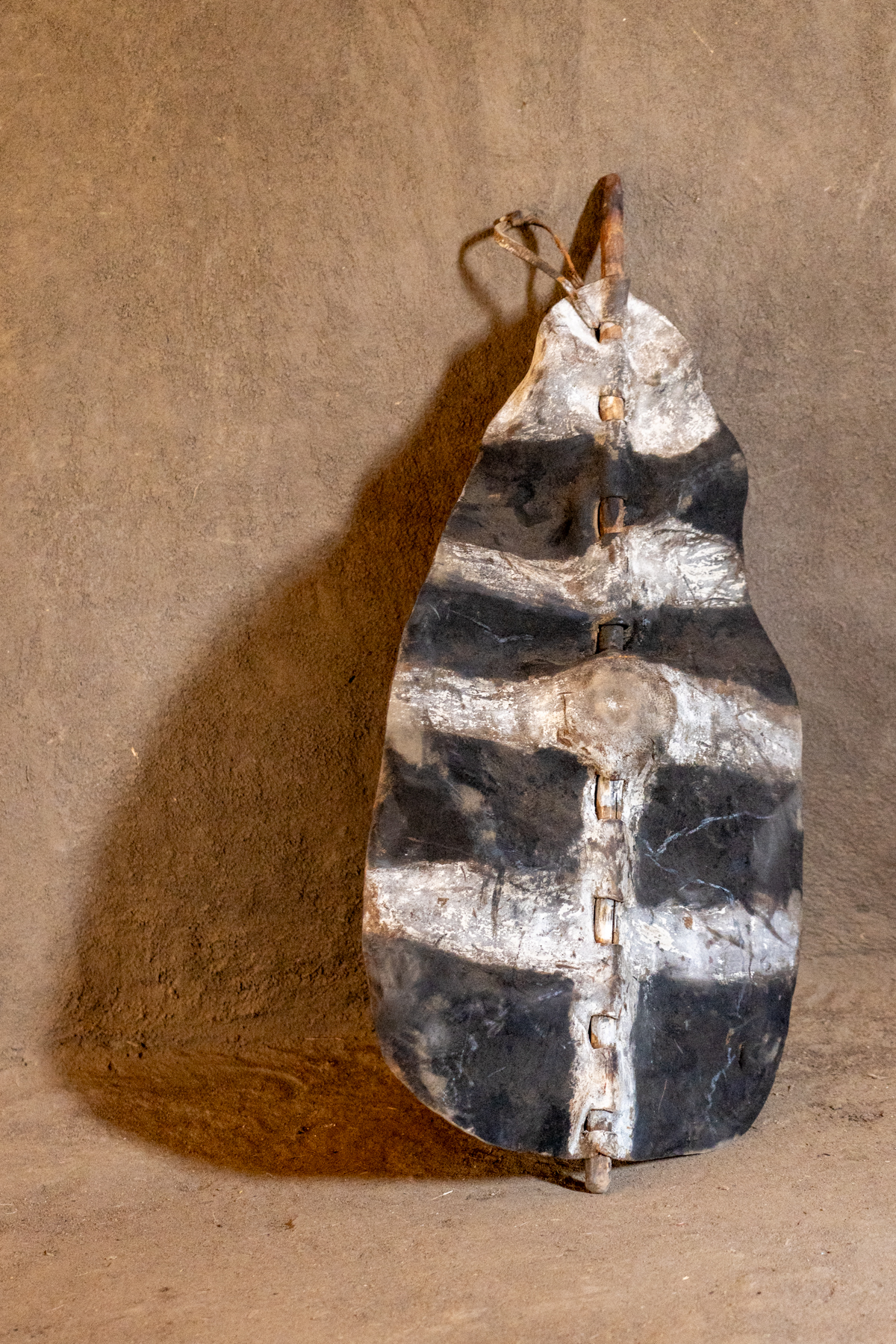
Ku'u, the traditional Mundari fighting shield, fashioned out of cow skin (image by Inger Vandyke)

A young Mundari boy drinks milk directly from his goat (image by Inger Vandyke)
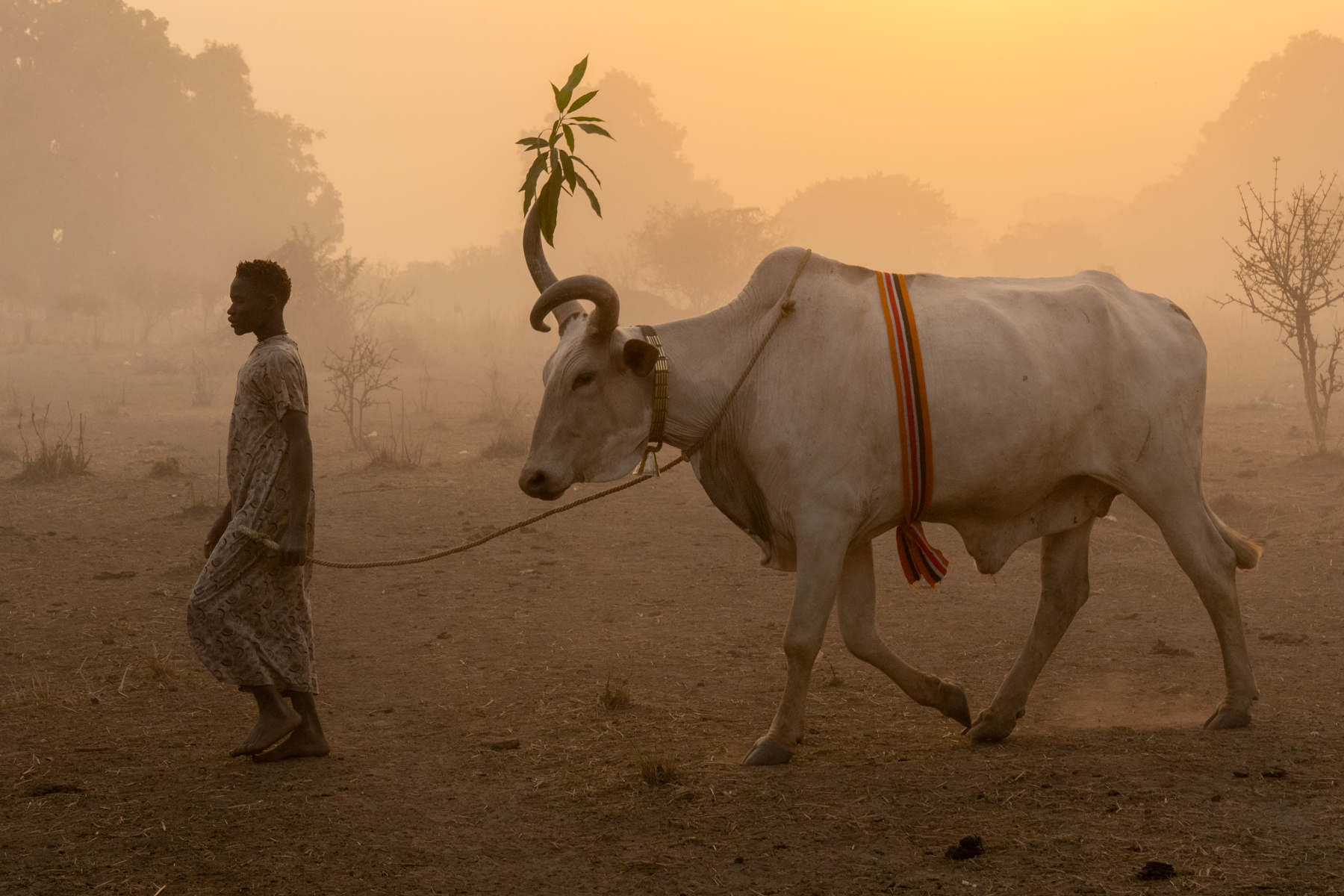
A decorated 'announcement cow' is walked through a camp at sunset (image by Inger Vandyke)
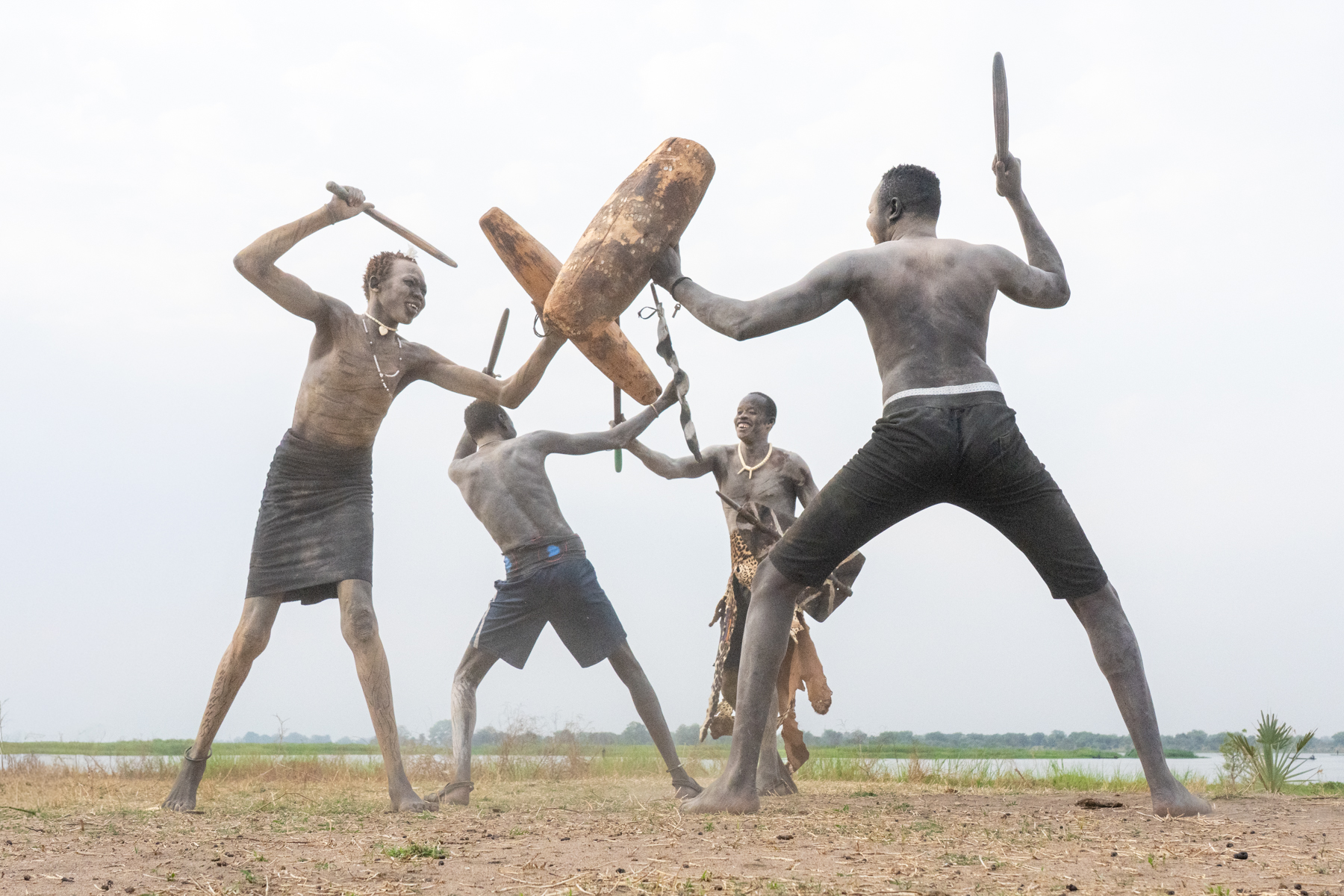
Mundari men practicing fighting using traditional guards, shields and clubs (image by Inger Vandyke)

The dust and light of Mundari cattle camps is incredible (image by Inger Vandyke)
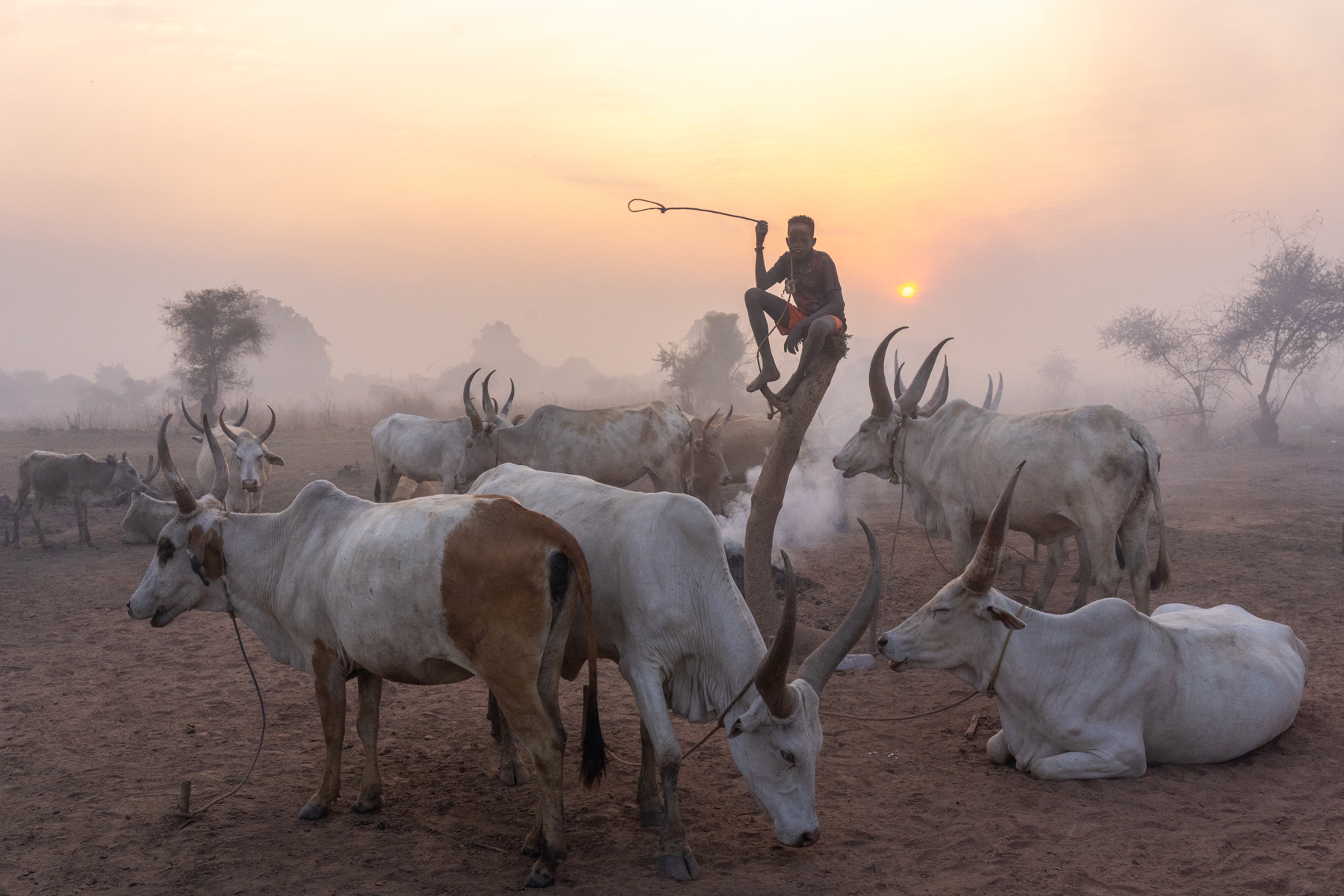
Mundari children become experts at handling ropes and cows from a young age (image by Inger Vandyke)

Portrait of Guli taking a moment to contemplate the whereabouts of his cows in a Mundari cattle camp (image by Inger Vandyke)
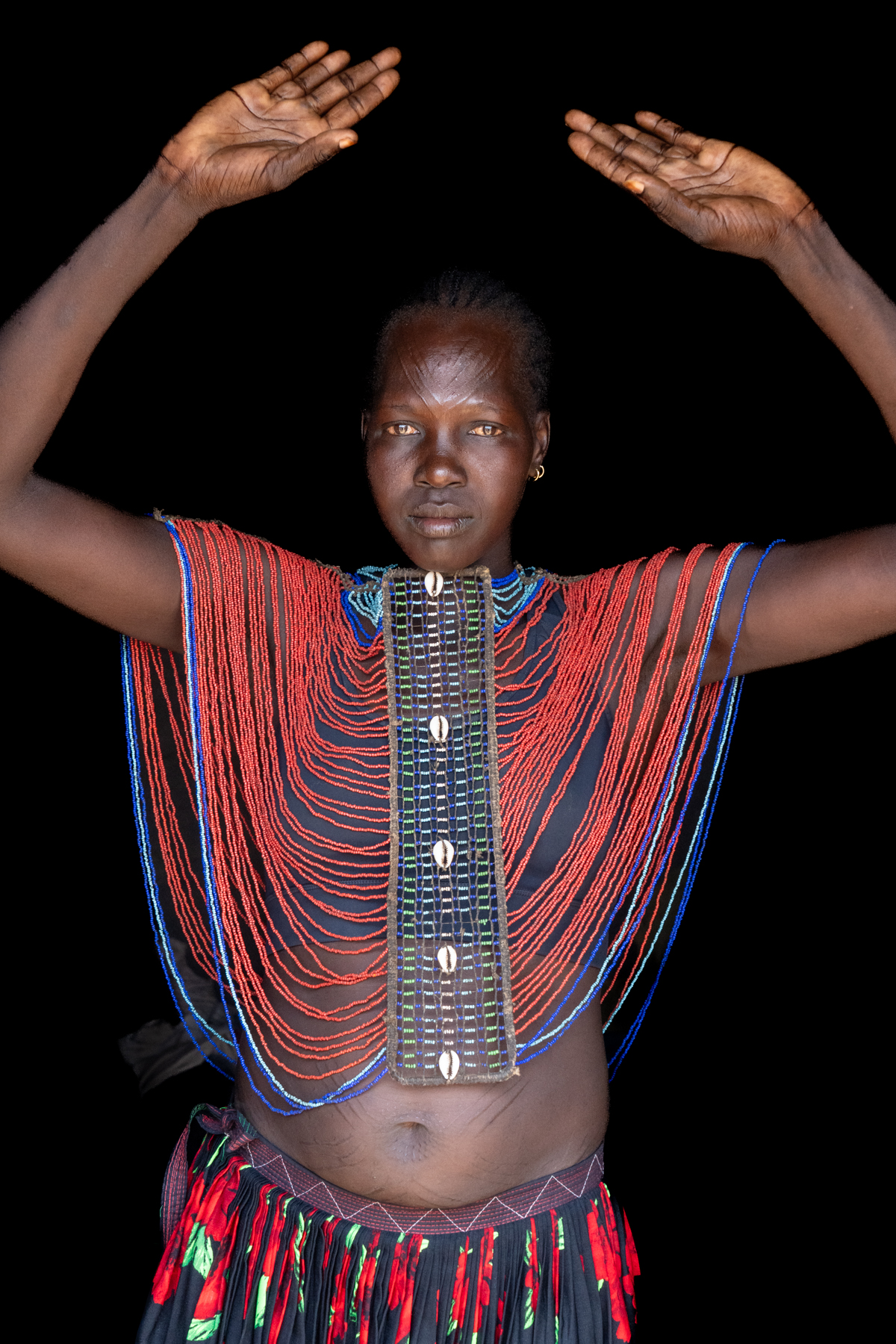
Traditional Mundari corset (image by Inger Vandyke)

A Mundari man on his bed with his toothbrush. The Mundari prize their cows so much that they will even sleep beside their favourite cow each night (image by Inger Vandyke)

For the Mundari, dances like the Yanguera are an emotionally charged event (image by Inger Vandyke)
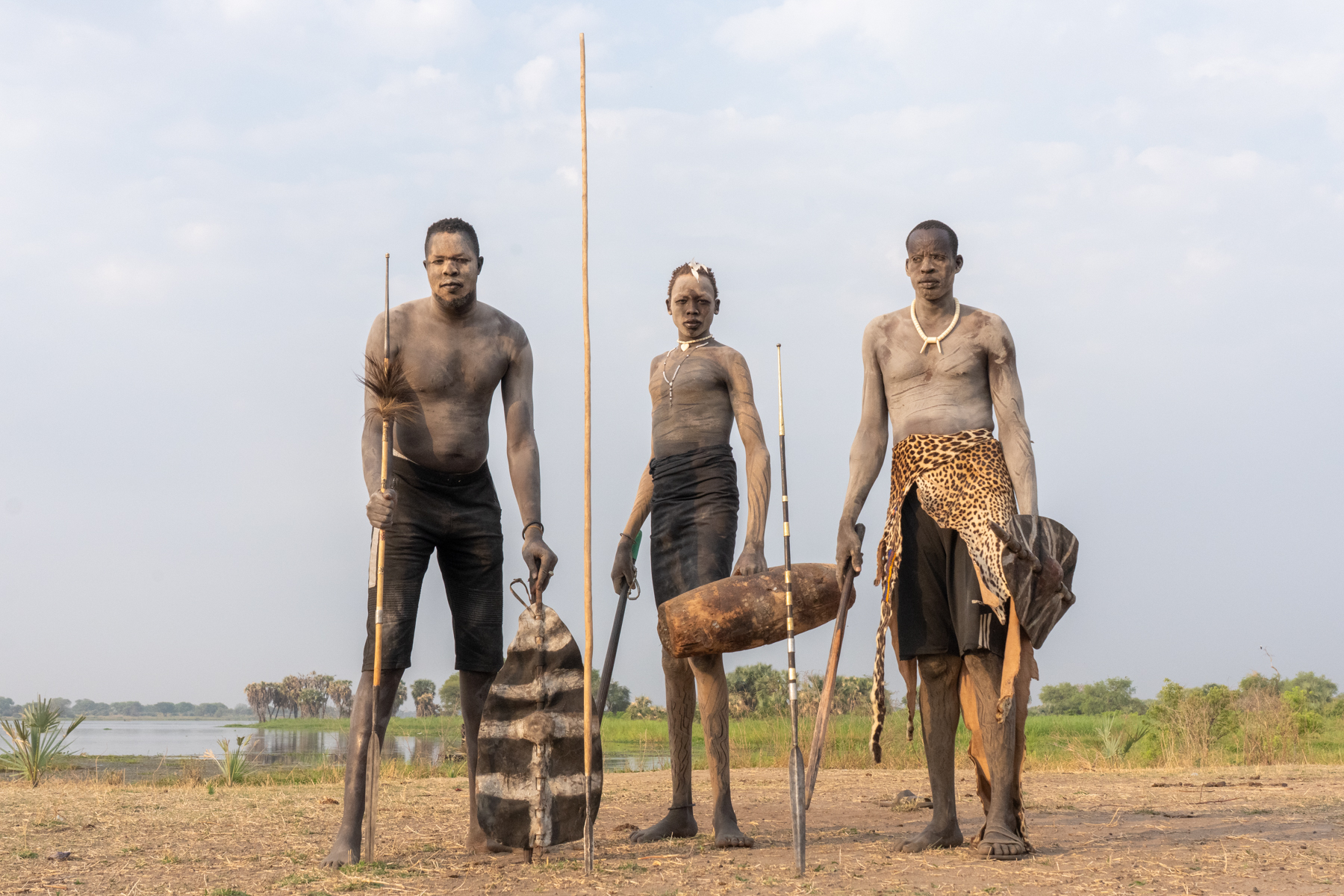
Mundari warriors (image by Inger Vandyke)
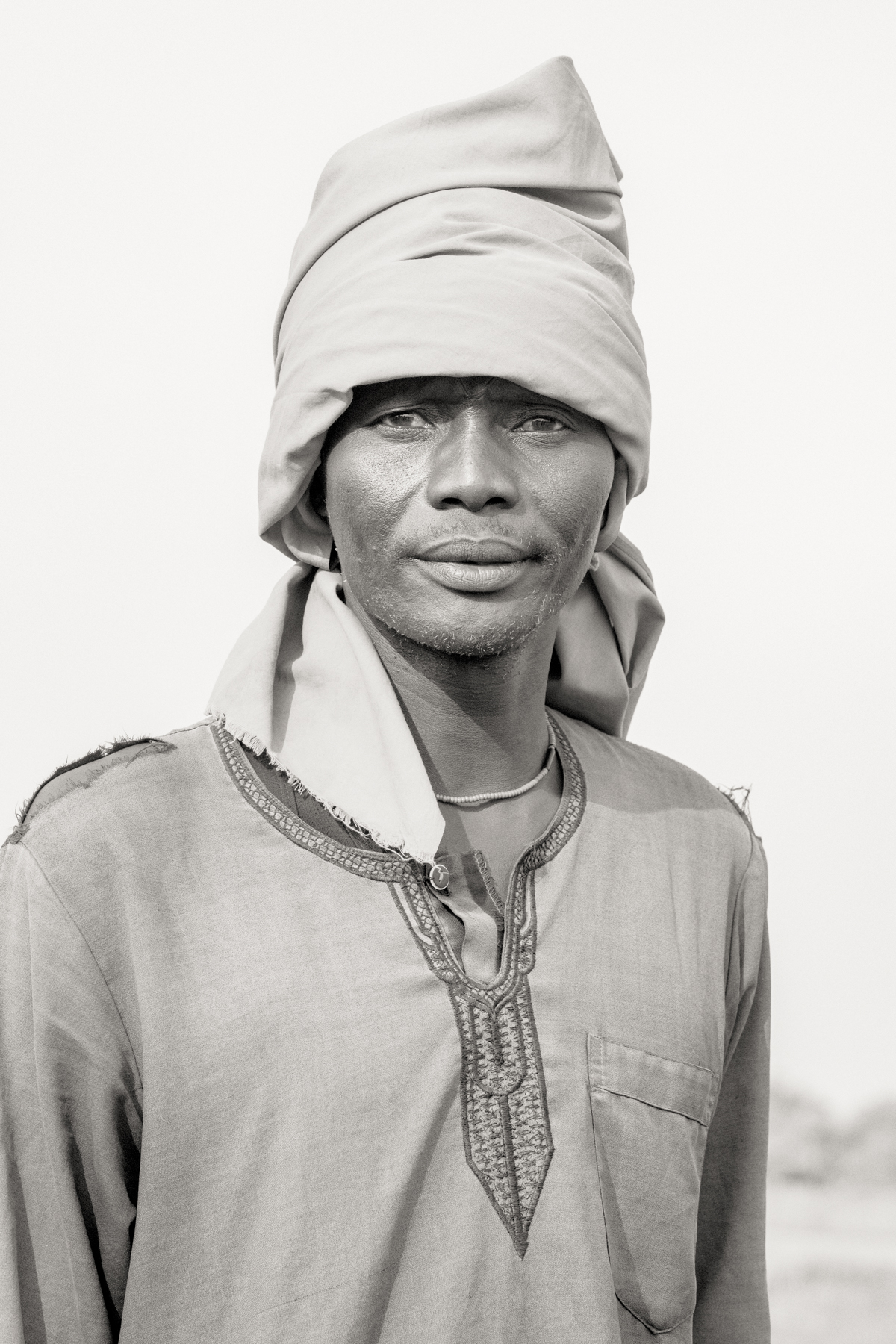
Portrait of a Mundari fisherman (image by Inger Vandyke)

A Mundari man covers himself in ash for decoration (image by Inger Vandyke)

A Mundari girl holds her arms in the air to pose like her favourite cow (image by Inger Vandyke)


A morning massage of Ankole Watusi cows using ash from a nearby fire that burned overnight to keep cattle free of biting insects (image by Inger Vandyke)
A young Mundari boy collects dung using a cowskin (image by Inger Vandyke)
Mundari woman wearing Guet (image by Inger Vandyke)
Beautiful Mundari woman wearing her bone bracelet, beaded collar and carring a hand-carved wooden seat (image by Inger Vandyke)
The Mundari dress up their cows with pompoms and bright sashes for celebrations (image by Inger Vandyke)
Mundari people will often hold their arms up to form the shape of their cows when you photograph them! (image by Inger Vandyke)
Portrait of a Mundari man with the gigantic horns of an Ankole Watusi cow (image by Inger Vandyke)
Young Mundari boy in the buttress roots of a large fig tree (image by Inger Vandyke)
A young boy stops and smiles aside the gigantic Ankole Watusi cows of the Mundari people (image by Inger Vandyke)
Mundari babies (image by Inger Vandyke)
A typical Mundari village (image by Inger Vandyke)
A Mundari boy blows into the vagina of his cow to help her produce milk (image by Inger Vandyke)
Mundari woman wearing a traditional corset (image by Inger Vandyke)
Collecting dung before it has even dropped. Dried cow dung is a vital part of life in the cattle camps of South Sudan (image by Inger Vandyke)
The night watchman. A Mundari man surveys his cattle at the camp on sunset (image by Inger Vandyke)
A young Mundari girl emerges from a makeshift tent at her cattle camp (image by Inger Vandyke)
Mundari children take shelter under a cow skin from a light rain shower (image by Inger Vandyke)
Mundari girl carrying washing bowl (image by Inger Vandyke)
Dramatic afternoon skies herald the end of the dry season (image by Inger Vandyke)
A young Mundari man 'makes up' his face with ash and dust from the fire (image by Inger Vandyke)
A young Dinka girl strokes her favourite cow (image by Inger Vandyke)
Beautiful Aker (image by Inger Vandyke)
Young Mundari man with traditional leopard skin and spear (image by Inger Vandyke)
Getting ready to fight (image by Inger Vandyke)
Nyanda wearing a traditional corset in a Mundari cattle camp (image by Inger Vandyke)
Mundari (image by Inger Vandyke)
Mundari decoration detail (image by Inger Vandyke)
Mundari boy with his favourite cow (image by Inger Vandyke)
A proud Mundari man with his decorated cow (image by Inger Vandyke)
Blue hour in a Mundari cattle camp. Mundari people often fashion tassles out of the cow tail hair to decorate their own cows (image by Inger Vandyke)
Mundari man with Tung horn (image by Inger Vandyke)
Grinding fresh peanut butter - delicious! (image by Inger Vandyke)
A Mundari boy powders his nose (image by Inger Vandyke)
Mundari chief ready to battle (image by Inger Vandyke)
Mundari man in a sea of cow horns (image by Inger Vandyke)
Nyanda wearing traditional Dinka wedding attire (image by Inger Vandyke)
Mundari people gather to celebrate a wedding (image by Inger Vandyke)
Portrait of Mochi holding his traditional 'Tung' or musical horn made from the cowhorns of Mundari cattle (image by Inger Vandyke)
Unlike many parts of Africa where women build houses, in Mundari culture it is the men who create them. A group of men building the roof of a new home (image by Inger Vandyke)
The Mundari's beautiful Ankole Watusi cows stand by the fire during the blush of dawn (image by Inger Vandyke)
Mundari father and son (image by Inger Vandyke)
Mundari spear and leopard skin (image by Inger Vandyke)
The atmosphere of Mundari and Dinka cattle camps can only be described as magical (image by Inger Vandyke)
Mundari warrior with spear and shield (image by Inger Vandyke)
Malik poses like a cow during the Yanguera dance of Mundari people (image by Inger Vandyke)
A traditional Mundari home with the marked gravesite of an elder (image by Inger Vandyke)
Early morning Mundari man draped in a blanket to stay warm (image by Inger Vandyke)
Nothing in the world beats the atmosphere of the Mundari camps. They are simply magical (image by Inger Vandyke)
Bathing in urine is not only sterile but helps a Mundari's hair to go orange which is seen as aesthetically beautiful (image by Inger Vandyke)
The Mundari revere their Ankole Watusi cows, often stopping to stroke their horns, pick ticks off them and massage them (image by Inger Vandyke)
Aker wearing a Dinka crown and necklace (image by Inger Vandyke)
Mundari man dusting his cow before taking it out for the day to graze (image by Inger Vandyke)
The wearing of corsets was outlawed by the government of Sudan in 1984 so we will be taking antique pieces on this expedition for women to wear (image by Inger Vandyke)
The Mundari, when they wear traditional warrior attire, truly look quite formidable (image by Inger Vandyke)
Mundari men spend their entire lives with their favourite cow (image by Inger Vandyke)
Smiling Mundari boy with tethering ropes (image by Inger Vandyke)
A Mundari man playing a horn named "Tung" at a ceremony (image by Inger Vandyke)
Aker wearing a traditional beaded collar in a cattle camp (image by Inger Vandyke)
Beautiful Aker wearing the traditional Dinka Guet Yest, or wedding beads, next to one of the magnificent cows in camp (image by Inger Vandyke)
Handsome Mundari man (image by Inger Vandyke)
A Mundari girl wearing an antique Dinka Guet which features a crescent moon made from elephant ivory (image be Inger Vandyke)
A Mundari man holds his hands in the air in the shape of his favourite cow (image by Inger Vandyke)
Young Mundari man dressed up for a wrestling match (image by Inger Vandyke)
Mundari woman with beaded collar (image by Inger Vandyke)
An elderly Mundari man with his stick toothbrush (image by Inger Vandyke)
Mundari man with clay decoration (image by Inger Vandyke)
Mundari women wearing beaded collar (image by Inger Vandyke)
Mundari man with leopard skin and spear (image by Inger Vandyke)
Giggling Mundari boys hanging out with their favourite calf (image by Inger Vandyke)
Necklace worn by Mundari men (image by Inger Vandyke)
Mundari man with Tung (horn) (image by Inger Vandyke)
The stunning atmosphere of a Mundari cattle camp at sunrise (image by Inger Vandyke)
Portrait of a Mundari man playing Tung (image by Inger Vandyke)
Massaging ash into the pelts of cows is a typical morning activity of the Mundari cattle camps (image by Inger Vandyke)
Mundari sisters (image by Inger Vandyke)
Mundari men dancing Yanguera (image by Inger Vandyke)
A young Mundari boy guides his calf into camp (image by Inger Vandyke)
Nyanda with her cows (image by Inger Vandyke)
A young Dinka girl guides her cow to its tethering post (image by Inger Vandyke)
A young Mundari man playing music on a ceremonial Tung horn (image by Inger Vandyke)
Mundari cow with its clipped ears (image by Inger Vandyke)
A beautiful Mundari woman milking her cow (image by Inger Vandyke)
A Mundari drummer blesses the cowskin of his cylindrical drum to prepare for a ceremonial dance (image by Inger Vandyke)
Mundari men cover their skin in fire ash, like their cows, to protect themselves from the sun while they take their cows to graze (image by Inger Vandyke)
The traditional dress of Mundari people is very special (image by Inger Vandyke)
Tiny Mundari boy in a bucket (image by Inger Vandyke)
A young Mundari boy watches over the cows in a camp (image by Inger Vandyke)
A young Mundari boy takes a moment to think while holding the horn of his favourite cow (image by Inger Vandyke)
A Mundari girl milks her cow as part of her early morning chores (image by Inger Vandyke)
Mundari man and cows in silhouette (image by Inger Vandyke)
Closeup of Mundari decoration (image by Inger Vandyke)
Beautiful Nyanda wearing a beaded collar in the cattle camp (image by Inger Vandyke)
Life inside the Mundari camps is a sea of dust and haze - beautiful (image by Inger Vandyke)
Mundari chief profile (image by Inger Vandyke)
Dung carrying is an integral part of life for Mundari children. The dung they collect is used as fuel for fires at night (image by Inger Vandyke)
Rest time means a chance to smoke a hookah (image by Inger Vandyke)
It's hard to understand the true size of the Mundaris' cattle until you see a young person standing beside one! (image by Inger Vandyke)
Nyanda wearing Dinka Guet Nom & Yest, the traditional wedding beads, with cows (image by Inger Vandyke)
Mundari boy wearing the skin of an Egyptian Mongoose (image by Inger Vandyke)
A Mundari boy drinks milk directly from his cow (image by Inger Vandyke)
A young Mundari boy collecting cow dung at a camp. This is then dried and used as fuel for night fires (image by Inger Vandyke)
Nyanda wearing Dinka wedding beads (image by Inger Vandyke)
Blue hour in a Mundari cattle camp (image by Inger Vandyke)
A Mundari boy poses next to his favourite cow in camp (image by Inger Vandyke)
Clashing Mundari warriors (image by Inger Vandyke)
A Mundari boy carries his goat across the camp (image by Inger Vandyke)
A Mundari man with his favourite cow (image by Inger Vandyke)
Mundari children make toys out of simple things like land snail shells (image by Inger Vandyke)
Portrait of Ituri, a Mundari man standing in the cattle herd (image by Inger Vandyke)
A young Mundari boy wanders through his cattle camp at sunrise (image by Inger Vandyke)
A Mundari man with his traditional 'V' scarification (image by Inger Vandyke)
Portrait of champion Mundari wrestler (image by Inger Vandyke)
Hand-painted Motif adorning a Mundari home (image by Inger Vandyke)
Aker and cows (image by Inger Vandyke)
Mundari cow and sunburst (image by Inger Vandyke)
A smiling Mundari man with his 'V' scar and hair dyed orange by cow urine (image by Inger Vandyke)
Aker wearing her beaded collar in a Mundari camp (image by Inger Vandyke)
Nyanda and cows (image by Inger Vandyke)
In the peak of the dust and smoke season Mundari cattle camps are shrouded in an ethereal haze (image by Inger Vandyke)
Mundari children are introduced to cows when they are babies (image by Inger Vandyke)
A Mundari man dusting his cow in a daily ritual (image by Inger Vandyke)
A young Mundari boy atop a camp watch post (image by Inger Vandyke)
Portrait of a young Mundari girl in remote South Sudan (image by Inger Vandyke)
A Mundari boy sitting in a bucket that he would normally use to collect dung (image by Inger Vandyke)
Portrait of Jeshep, a young Mundari man holding a 'Tung' musical instrument (image by Inger Vandyke)
Aker with Dinka wedding beads (image by Inger Vandyke)
Portrait of a traditionally dressed Mundari warrior (image by Inger Vandyke)
Standing around 8ft tall, a giant Ankole cow with his owner (image by Inger Vandyke)
A Mundari man wraps himself in a blanket to stay warm at sunrise (image by Inger Vandyke)
Young Mundari boy with cow horns (image by Inger Vandyke)
The gigantic Ankole Watusi cows of the Mundari people (image by Inger Vandyke)
Each day the Mundari dust their cows with ash from the fire to protect them from the sun and biting insects (image by Inger Vandyke)
Each morning the Mundari rub fire ash into the pelts of their cows to protect them from the sun (image by Inger Vandyke)
Mundari man holding a 'Tung' or musical horn made from Ankole horn (image by Inger Vandyke)
The beautiful Ankole Watusi cows of the Mundari at sunrise (image by Inger Vandyke)
Mundari scarification and bone bracelet (image by Inger Vandyke)
A Mundari man tending to his sheep and goats at sunrise (image by Inger Vandyke)
Ku'u, the traditional Mundari fighting shield, fashioned out of cow skin (image by Inger Vandyke)
A young Mundari boy drinks milk directly from his goat (image by Inger Vandyke)
A decorated 'announcement cow' is walked through a camp at sunset (image by Inger Vandyke)
Mundari men practicing fighting using traditional guards, shields and clubs (image by Inger Vandyke)
The dust and light of Mundari cattle camps is incredible (image by Inger Vandyke)
Mundari children become experts at handling ropes and cows from a young age (image by Inger Vandyke)
Portrait of Guli taking a moment to contemplate the whereabouts of his cows in a Mundari cattle camp (image by Inger Vandyke)
Traditional Mundari corset (image by Inger Vandyke)
A Mundari man on his bed with his toothbrush. The Mundari prize their cows so much that they will even sleep beside their favourite cow each night (image by Inger Vandyke)
For the Mundari, dances like the Yanguera are an emotionally charged event (image by Inger Vandyke)
Mundari warriors (image by Inger Vandyke)
Portrait of a Mundari fisherman (image by Inger Vandyke)
A Mundari man covers himself in ash for decoration (image by Inger Vandyke)
A Mundari girl holds her arms in the air to pose like her favourite cow (image by Inger Vandyke)


|
Sunday 27th February –
Sunday 5th March 2028 Leaders: Inger Vandyke and Expert local cultural and photography guides |
8 Days | Group Size Limit 5 |
SOUTH SUDAN – MUNDARI & DINKA EXPEDITION
South Sudan’s magical Mundari and Dinka people are the original warriors of the White Nile. Some of the tallest people on earth, they roam South Sudan’s wilds, living in an almost symbiotic relationship with their giant Ankole Watusi cows.
On this Mundari- and Dinka-focused tour, we will visit them in villages, explore their unique architecture, sacred ceremonial poles, traditional dress, and their culture of wrestling and fishing.
If you have ever wondered where the Mundari go when they are not in their cattle camps, this expedition is for you.
Traditional Dress
In 1984, the then Islamic government in Sudan stopped the Dinka from wearing their traditional corsets, collars and jewellery under the guidance of Sharia. Since then, both the Mundari and the Dinka, who traditionally wore these items, abandoned them in the name of covering their bodies for modesty.
These spectacular decorations indicated age and social status in Mundari culture, and during this expedition we will carry antique pieces from Inger’s private collection for local people to wear during our photo shoots.
Wrestling
For young boys raised in Mundari culture, traditional wrestling is used to both form kinships and build strength. These matches are a traditional way to hone fighting skills, and they are a serious pursuit for young Mundari men, who must always be ready to defend their families and their cattle.
Village Life
During this expedition, we will be searching for traditional Mundari homes in villages. While young men and women live semi-nomadic lifestyles with their cattle during the dry season, Mundari elders keep a more sedentary life in around twelve main settlements: Terekeka, Gemeiza, Mangalla, Muni, Tombek, Tindilo, Tali, Rego, Tijor, Rijong, Koweri, and Nyori.
We will visit Mundari villages to photograph and explore this other side of their way of life, and we hope to see a traditional Mundari hut with grass walls and a conical roof made of neatly cut layers of yellow grass.
On the banks of the White Nile, we will also be searching for fishing activities in Mundari culture.
Other cultural facets we will explore include the Mundari sacred poles, their pottery and markets.
The Cattle Camps
Throughout our expedition, we will camp alongside a large, bustling cattle camp.
The Mundari’s world centres on looking after their magnificent Ankole Watusi cows, which they care for from birth until death. This relationship is so special that a Mundari man will often sleep beside his favourite cow, and if you gently ask someone to take their photo, they will hold their arms in the air in the same position as the horns of their beloved cow. The Mundari nomadically herd their cattle to places close to grazing and water sources, setting up cattle camps that are a frenzy of activity from dawn to dusk each day. A typical Mundari day starts with dusting their cows with ash from overnight fires to keep both cows and animals free of mosquito bites. The ash helps protect Ankole cows from the harsh heat of the African sun. Young Mundari children run around collecting milk from their favourite cow or freshly laid dung, which they transport in buckets to special piles that dry during the day for fire fuel. Some children drink milk directly from the udders of cows, while others take a shower in a cow’s urine, which acts as a sterilising agent and bleach for their hair! During the day, young men and women take their cows out to feed and water them. As the sun gets lower, they return, and the children are tasked again with tethering their cows overnight. Women then gather dried dung to make fires for cooking, warmth, and to repel biting insects. This is the Mundari cycle of life, and it is most spectacular during the dry season, when fire smoke and clouds of dust stirred up in the cattle camps create an almost ghost-like atmosphere, offering unrivalled photographic opportunities each day.
These hardy, resilient people are fascinating to learn about through our conversations around camp. We will establish our expedition base right next to a cattle camp, giving us enough free time to wander through the cows, meet people, and take photos without rushing.
Our expedition has been timed to ensure we are in South Sudan at the peak of the heat and dust season in Mundari camps, allowing us to fully immerse ourselves in their world while staying in one of the most charismatic photography situations in all of Africa.
Accommodation & Road Transport
The hotel we use in Juba is a good standard with hot showers, air conditioning, Wi-Fi, and ensuite facilities. During the expedition, we will stay in tented camps. There will be 2-man tents (but each person can have their own tent: couples may prefer to use one tent for luggage) and a dining table with chairs. Our support staff will provide and cook all meals. We provide a shared shower tent and a toilet tent with a seated pit toilet. Our camp staff will set up and take down your camp at each location.
The transport for the South Sudan Mundari expedition will be by 4×4 vehicles. Roads in South Sudan are only reasonable in the cities; the few tarred highways are usually dotted with potholes. For much of our journey we will be on dirt roads and tracks, so our transport is in 4WD expedition vehicles.
Walking
The walking on this tour is mostly easy on flat ground in the cattle camps and villages
Climate
The weather in South Sudan will be hot. Expect a mix of sunny and overcast conditions. Rain is unlikely.
OUTLINE ITINERARY
- Day 1: Arrive in Juba in time for dinner by the side of the White Nile and an overnight stay
- Days 2-6: Six days based in two separate cattle camps and exploring Mundari culture in their villages
- Day 7: After a final sunrise shoot we will return to Juba for our final dinner by the river
- Day 8: The tour will end with a transfer to the airport for your flight home
To see a larger map, click on the square-like ‘enlarge’ icon in the upper right of the map box.
To see (or hide) the ‘map legend’, click on the icon with an arrow in the upper left of the map box.
To change to a satellite view, which is great for seeing the physical terrain (and for seeing really fine details by repetitive use of the + button), click on the square ‘map view’ icon in the lower left corner of the ‘map legend’.
PRICE INFORMATION
South Sudan Photography Tour Prices: Tour prices in South Sudan are high given the local conditions, but there are reasons for this. In the first place, transport for tourism purposes is very expensive. South Sudan is a country with only a thin ‘meniscus’ of development that sits on an otherwise very undeveloped part of the world. Furthermore, and even more importantly, the country is quite rigidly controlled by costly road permits to travel and police at the checkpoints often require ‘extra fees’ which are unavoidable if we want to complete our tour! This combination makes for high prices.
Wild Images Inclusions: Our tour prices include the South Sudan tourist visa, transportation, accommodations, meals and entrance fees. All photography, guide, village and driver donations and tips are included in the tour price. Since all camera equipment needs to be registered and paid for in South Sudan, we include registration for two camera bodies for each guest.
Deposit: 20% of the total tour price. Our office will let you know what deposit amount is due, in order to confirm your booking, following receipt of your online booking form.
TO BOOK THIS TOUR: Click here (you will need the tour dates)
2028: provisionally £5400, $7400, €6320, AUD10360. Juba/Juba.
Single Supplement: 2028: £280, $390, €330, AUD540.
If you are travelling alone, the single supplement will not apply if you are willing to share a room and there is a room-mate of the same sex available. The small single supplement applies to the overnight stays in hotels in Juba. The tented accommodation on the main tour is the same cost for a single or twin share.
This tour is priced in US Dollars. Amounts shown in other currencies are indicative.
SOUTH SUDAN – THE MUNDARI PHOTOGRAPHY TOUR: DETAILED ITINERARY
South Sudan: Day 1
Our South Sudan photography tour starts in the early evening at our Juba hotel, where we will enjoy dinner on the banks of the pulsing White Nile, one of Africa’s most iconic rivers.
South Sudan: Days 2 – 6
For six days, we will camp in two separate, large Mundari cattle camps, and we will also spend two nights in a beautiful Mundari village area near one of their favourite fishing lakes.
South Sudan: Day 7
After a final sunrise photography session with the Mundari, we will pack up our expedition, say our final farewells and drive back to Juba, where we will once again enjoy a wonderful, final dinner on the banks of the White Nile.
South Sudan: Day 8
Our tour ends today after breakfast with a transfer to the airport to meet your international flight.
SOUTH SUDAN: Mundari and Dinka Expedition Tour Report 2026
The beautiful Mundari and Dinka people of South Sudan. On my past visits to Africa’s youngest country, I have always enjoyed leading trips there, largely due to the frontier-like feel of exploring the vast expanses of wild Africa and meeting the people that call them home. The extended tour that Wild Images operates in the […]
View Report

Africa & Madagascar
November 2026
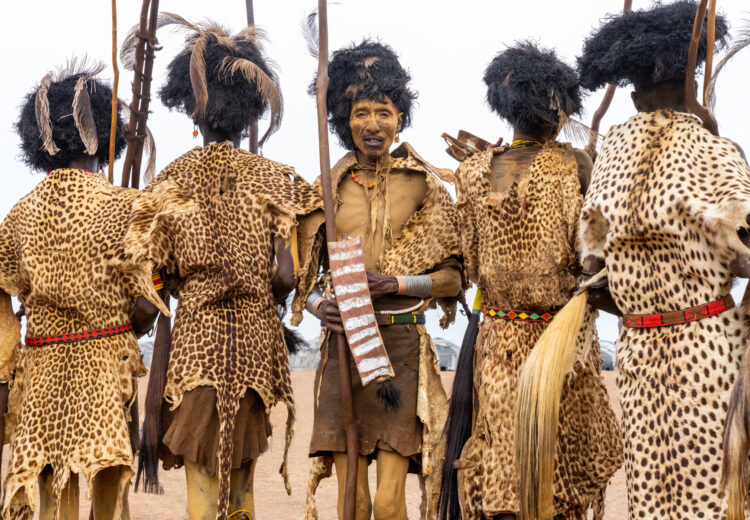
ETHIOPIA: DANAKIL EXPEDITION – Volcanoes, sulphur lakes, the Afar people of the Danakil Depression and the rare African Wild Ass
Africa & Madagascar
October 2027
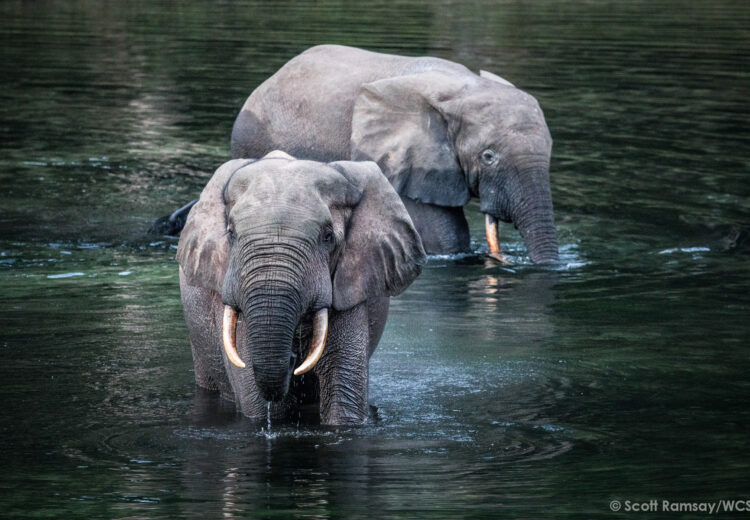
CONGO RAINFOREST EXPEDITION: Exploring the Great Rivers by Luxury Boat
Africa & Madagascar
August-September 2028