
Uganda Wildlife Spectacular Tour Report 2026

7 September 2026
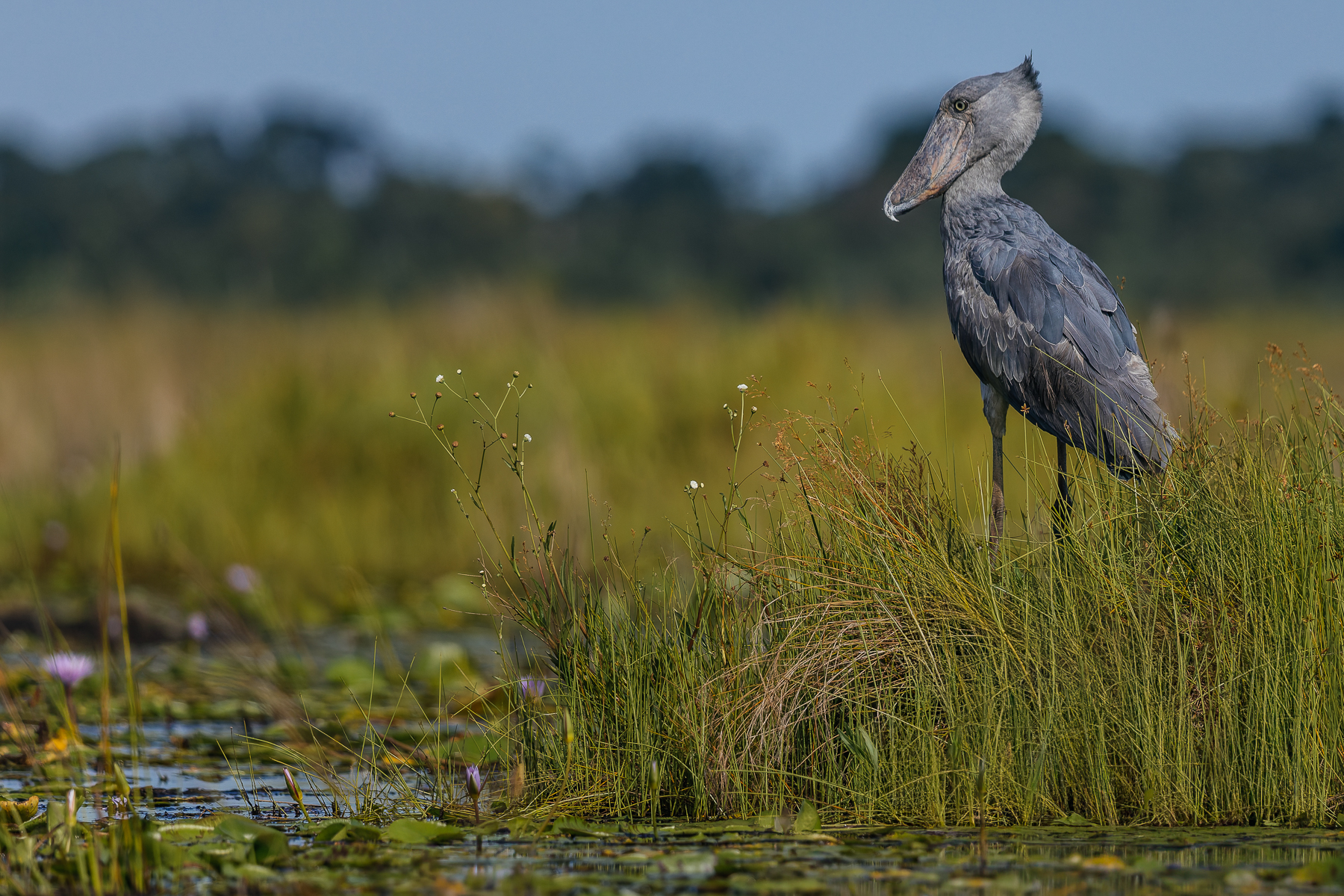
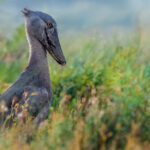
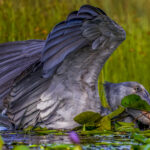
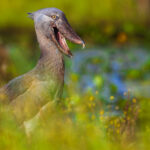
A Shoebill lords over the Mabamba Swamp, on the northern shores of Lake Victoria. The hooked tip, visible here, on the end of the Shoebill's bill is an important part of its hunting equipment, serving as a fish-grabber and cutting tool, while helping to decapitate prey (image by Virginia Wilde)
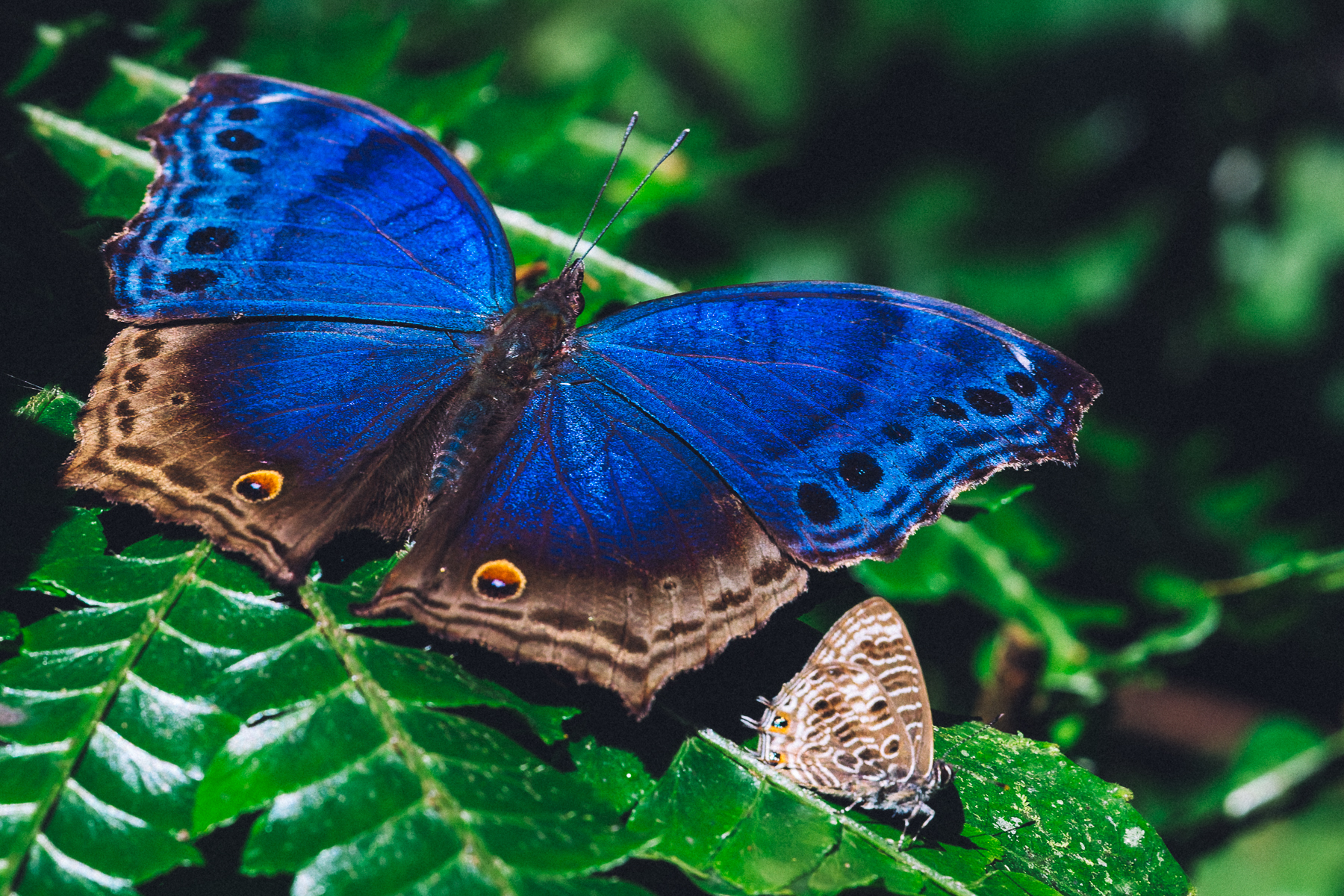
e Striking Common Blue Charaxes Butterfly has spectacular blue wings that are produced by microscopic structures that reflect light - rather than by blue pigment alone. The false eyespots underneath add another layer of defence, potentially confusing predators (image by Virginia Wilde)
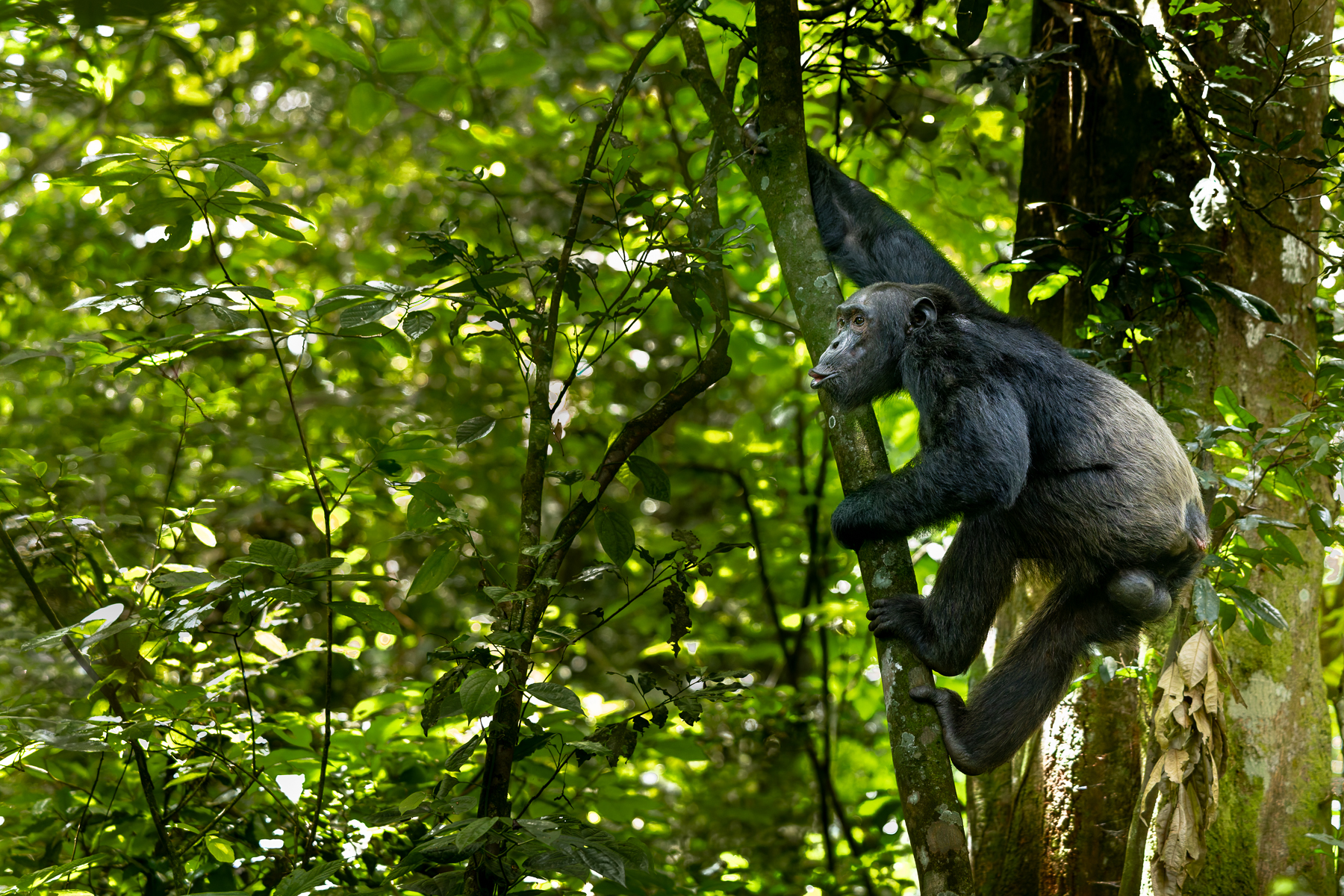
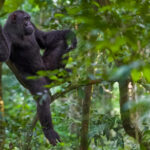
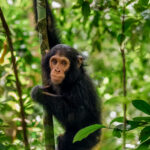
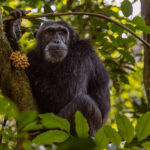
A member of the Kanyantare Chimpanzee family, calling from the trees in Kibale, Uganda. Chimpanzees are wonderfully charismatic to photograph (image by Virginia Wilde)
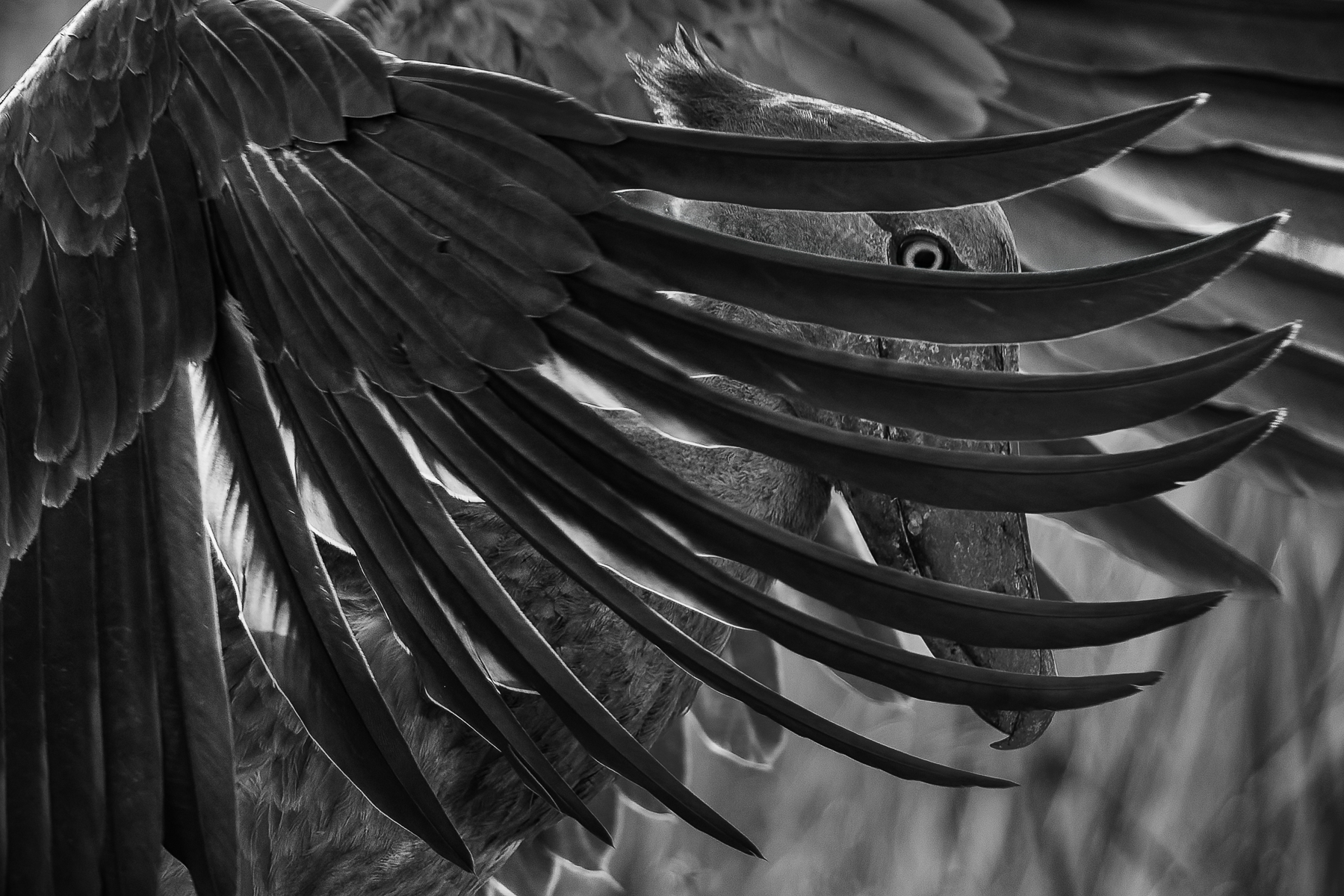
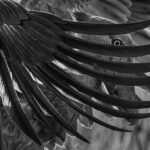
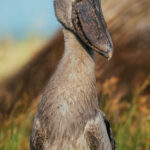
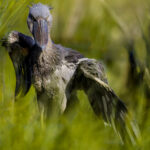
African Shoebills often stand with their wings spread to cool themselves, while also deliberately shading their eggs and chicks in hot weather. Shoebills are genuinely an ancient evolutionary lineage - splitting from the ancestors of their closets living relatives - the Pelicans and Hamerkops - tens of millions of years ago (image by Virginia Wilde)
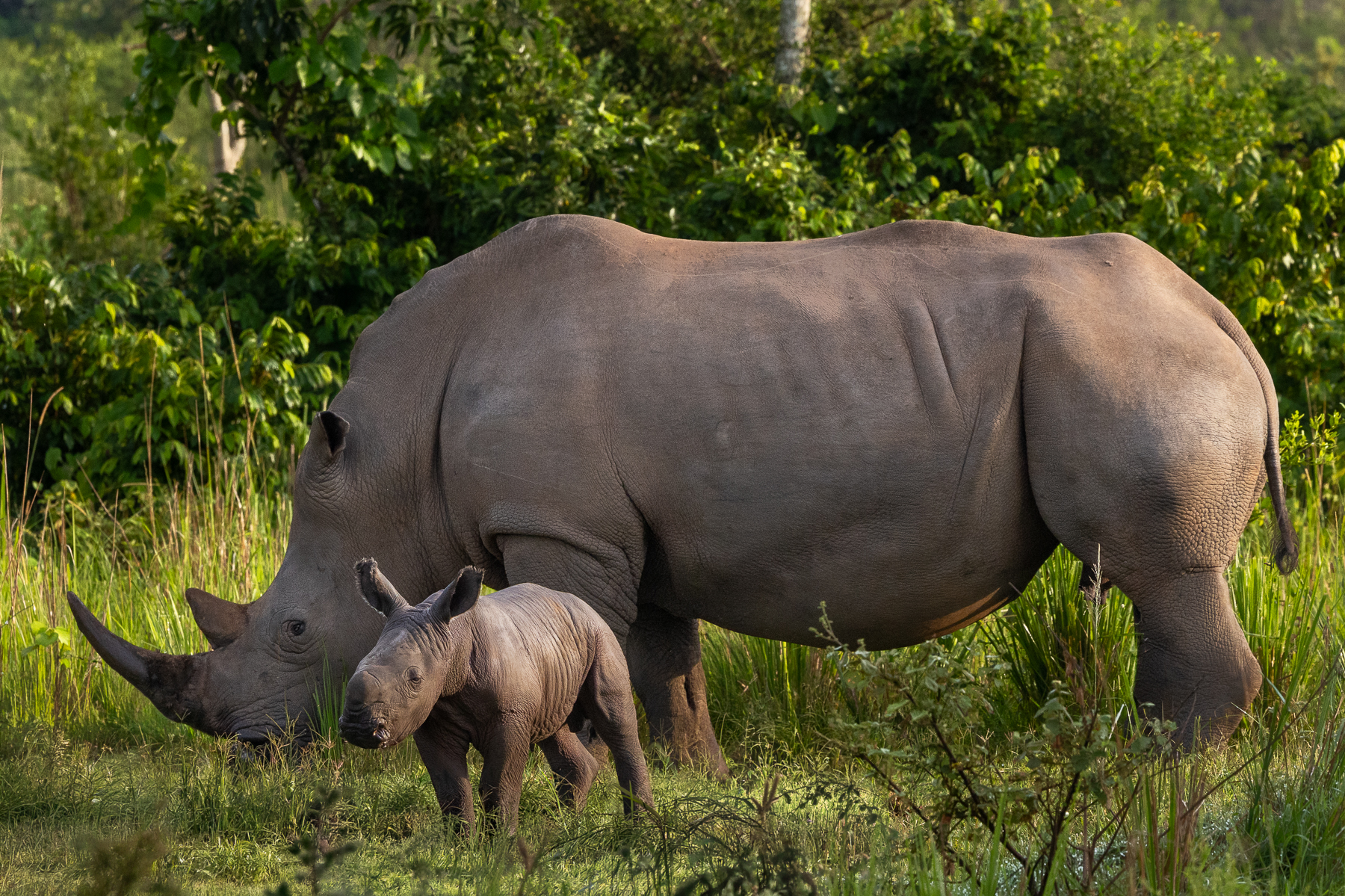
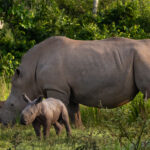
Quite probably the most adorable Rhino ever seen on a Wild Images tour: a two-day-old Southern White Rhino newborn stands wobbly beside its mum in Ziwa Rhino Sanctuary (image by Virginia Wilde)
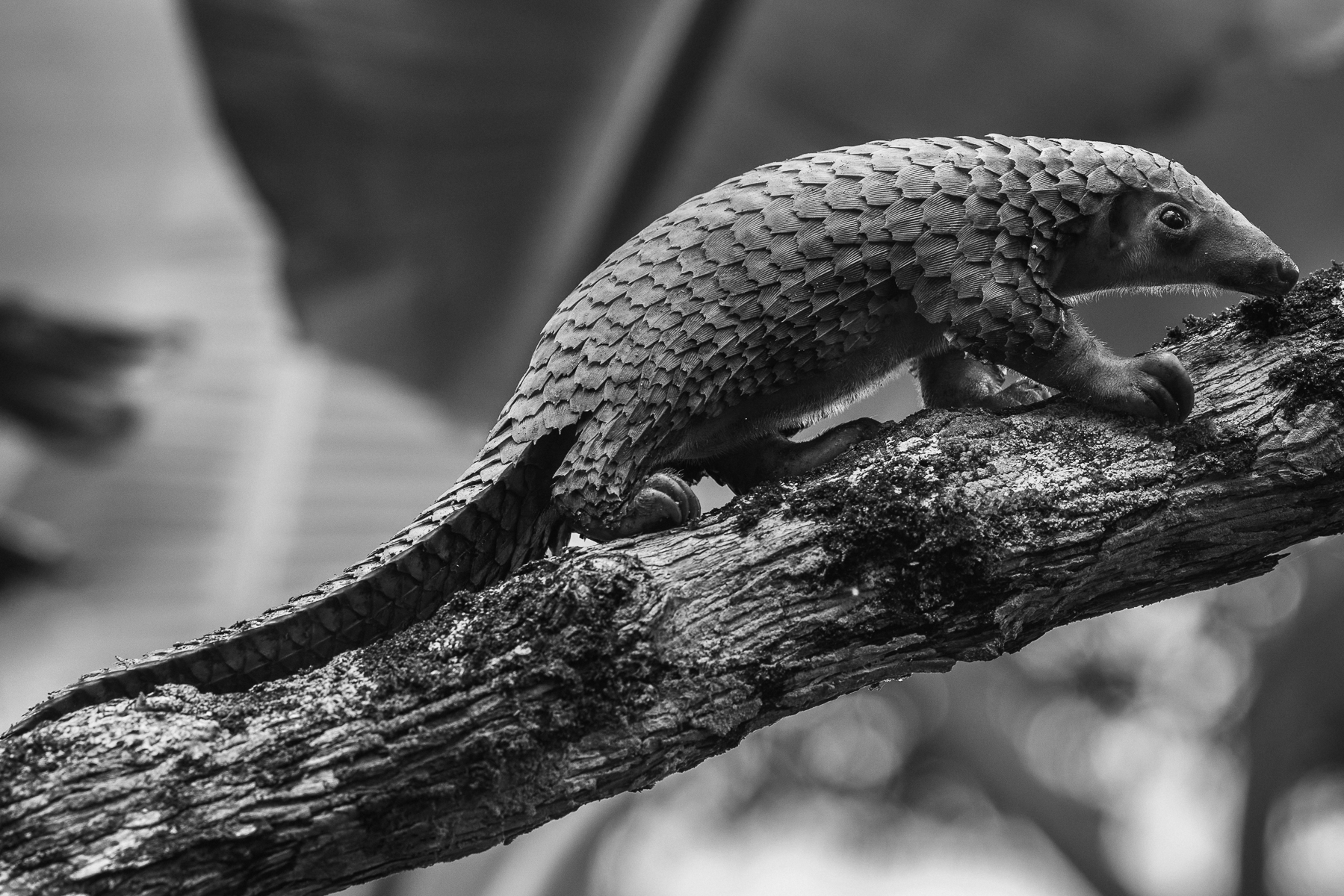
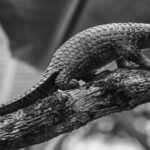
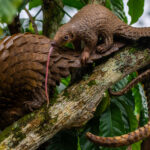
There's no doubt that this Tree Pangolin Pango-pup was one of the cutest animals this year's Uganda tour group had ever seen. Set to be released into the wild a few weeks after we'd seen it, this two-week old pup was born at Uganda's Pangolin Rescue Centre after its mum was found vulnerable to trafficking (image by Virginia Wilde)
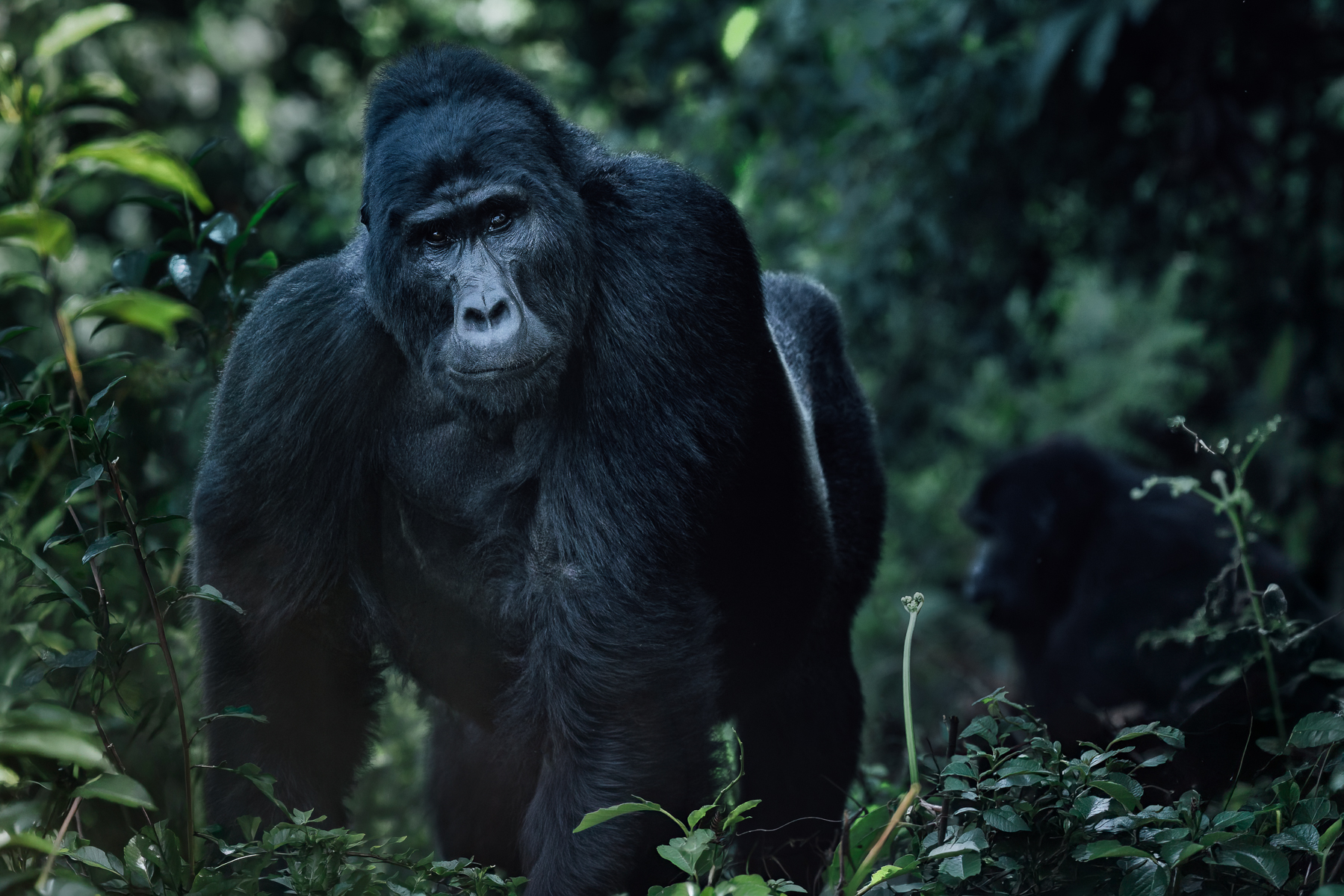
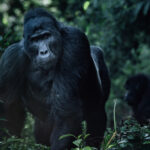
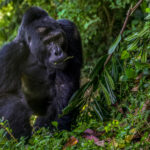
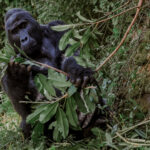
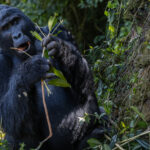
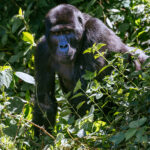
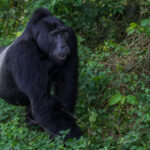
A Silverback Mountain Gorilla emerges from the green maze of Bwindi's Impenetrable Forest. Mountain Gorillas have unique nose-prints, much like human fingerprints (image by Virginia Wilde)
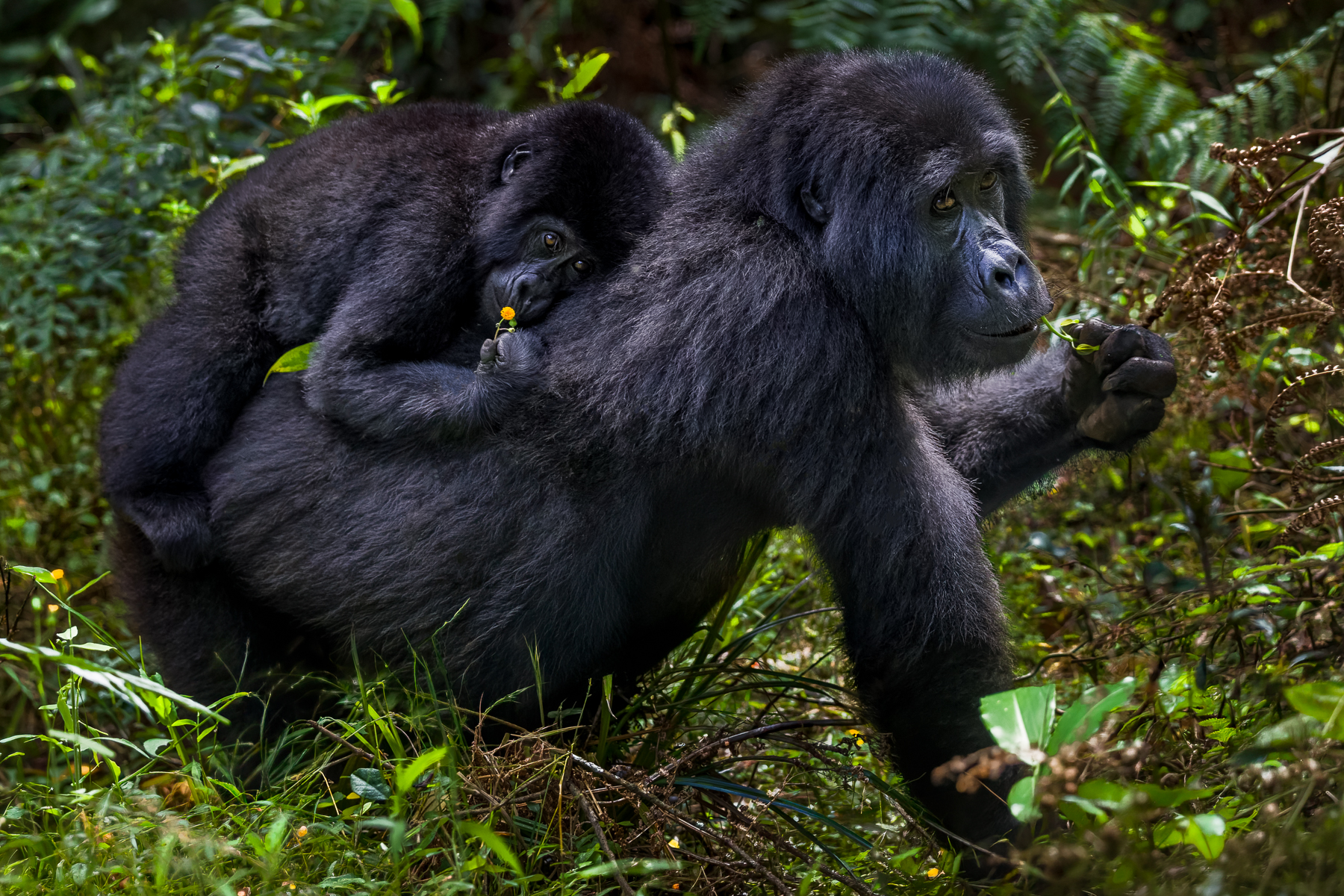
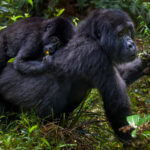
Clutching a single yellow flower and his mother's back, a juvenile Mountain Gorilla is carried through the undergrowth in Uganda's Bwindi Impenetrable Forest. This youngster is estimated to be around three-years-old, an age when young Gorillas are still very dependent on their mothers (image by Virginia Wilde)
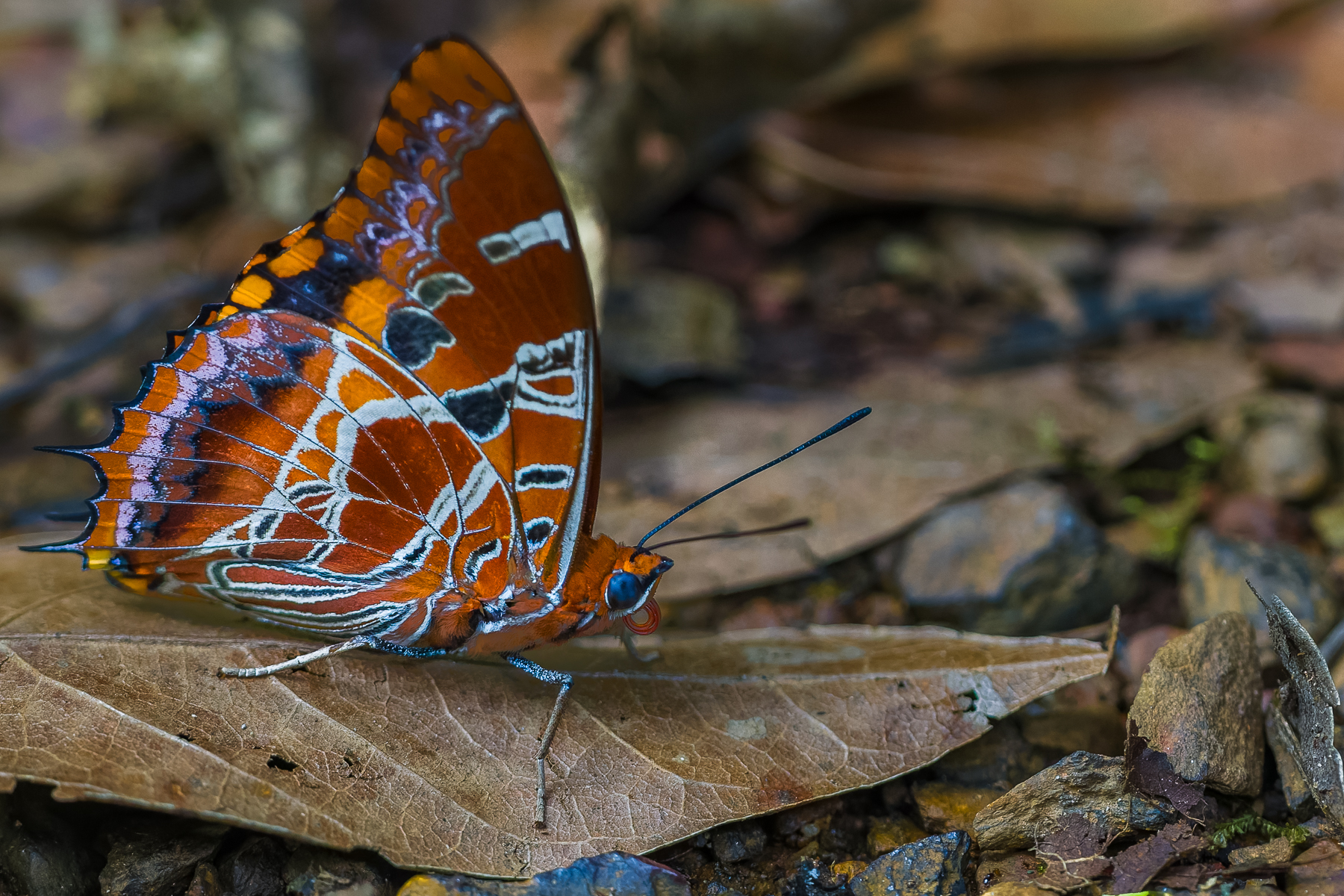
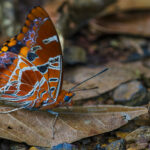
A Painted Emperor Butterfly on a leaf in Uganda's Kibale National Park. Uganda is an extraordinary country for butterflies, with around 1,470 species currently recorded (image by Virginia Wilde)
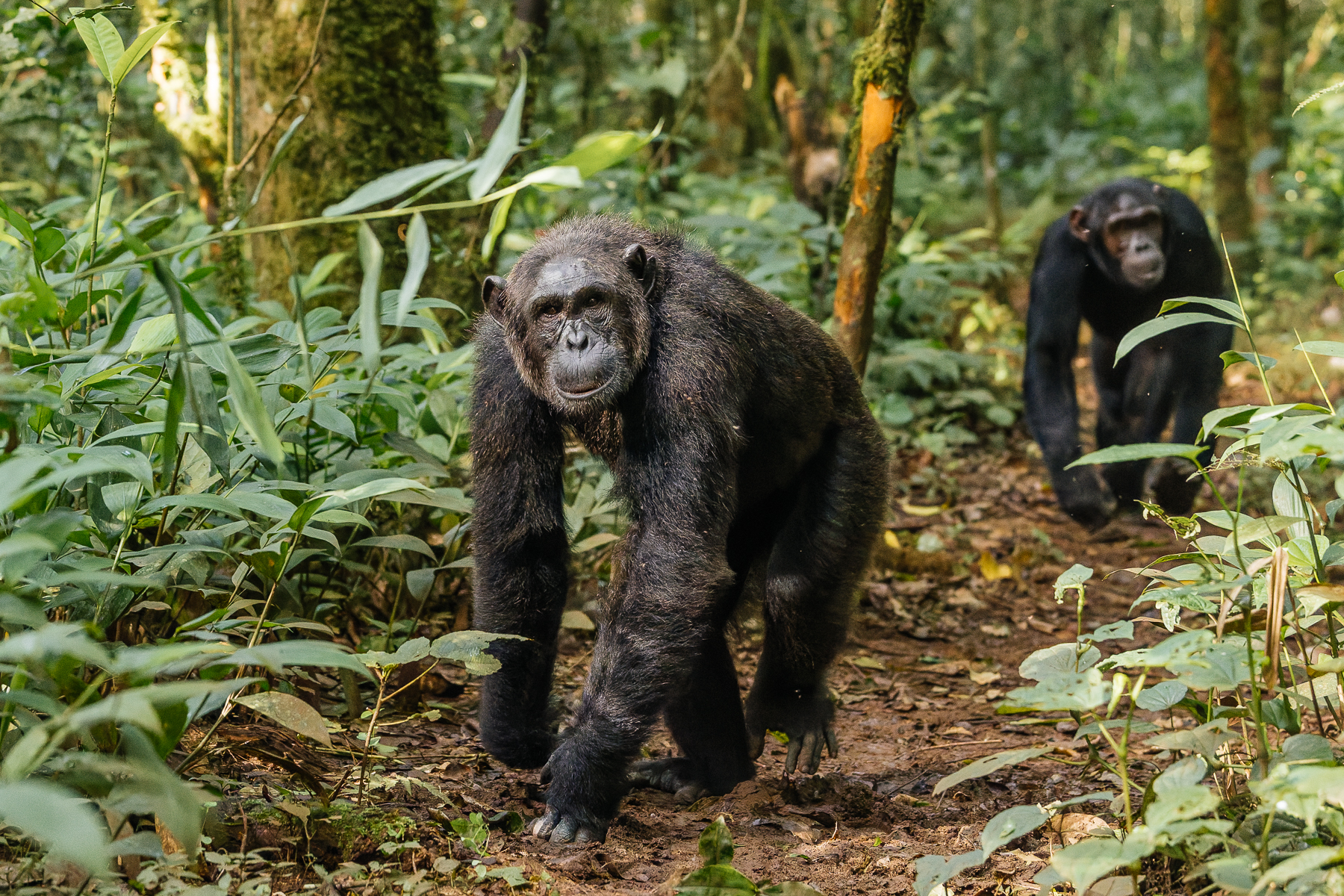
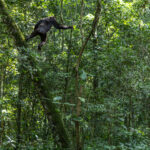
The forest's answer to a morning commute. Chimpanzees travel both on the ground and through the canopy, using their knuckle-walking gait on the forest floor and their long arms for climbing when the route goes upwards (image by Virginia Wilde)
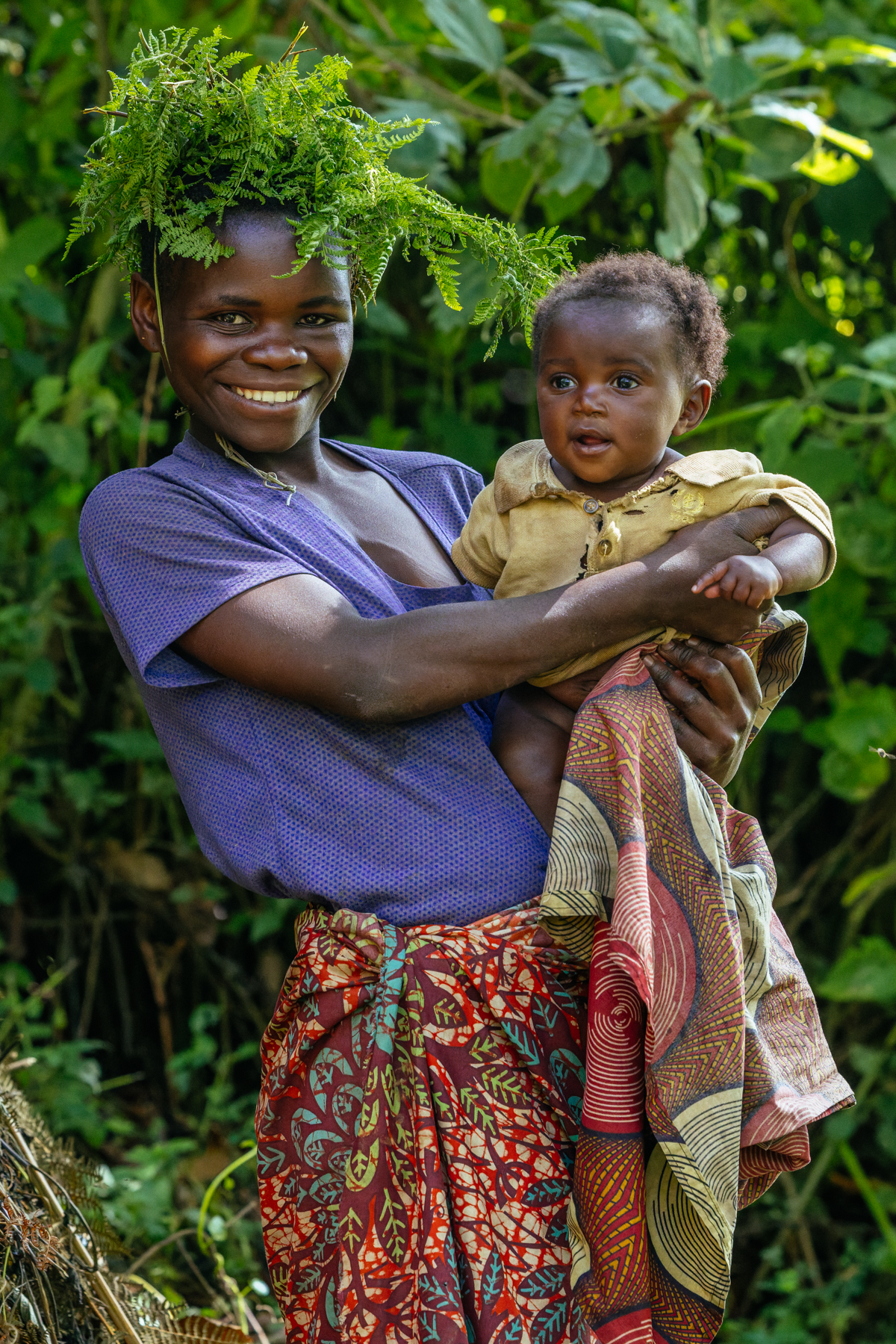
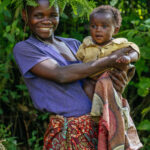
Echuya Twa mum Mugabirwe hugs her infant daughter while wearing traditional forest headwear. The Echuya Twa (or Batwa) are a distinct - but heavily marginalised - indigenous community living on the edges of the Echuya Forest Reserve in the Kisoro and Kabale districts of southwestern Uganda (image by Virginia Wilde)
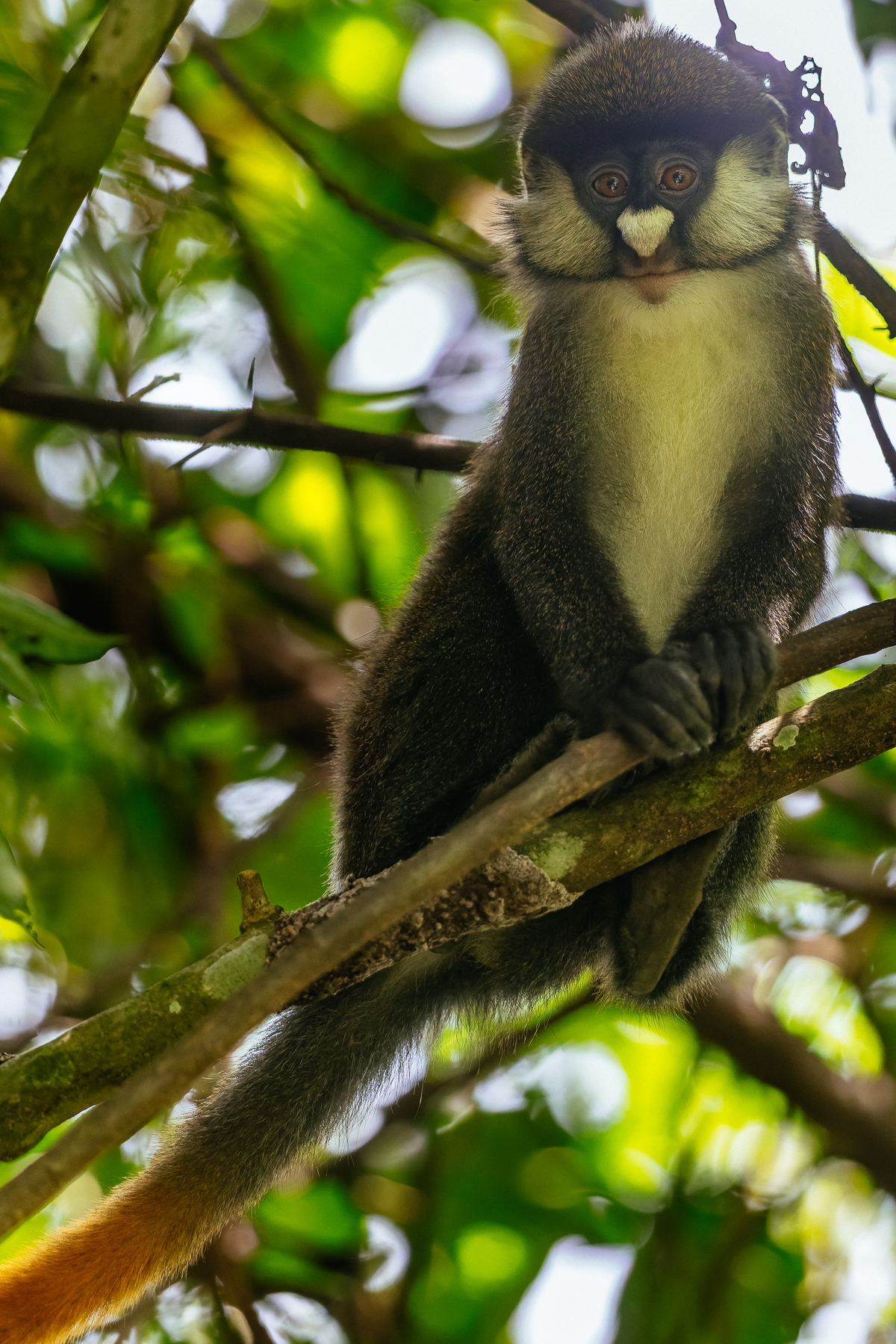
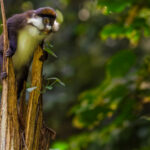
Red-tailed Monkeys must be among the sweetest-faced of all primates, with the heart-shaped patch of white fur under their nose and sweeping white cheek fur (image by Virginia Wilde)
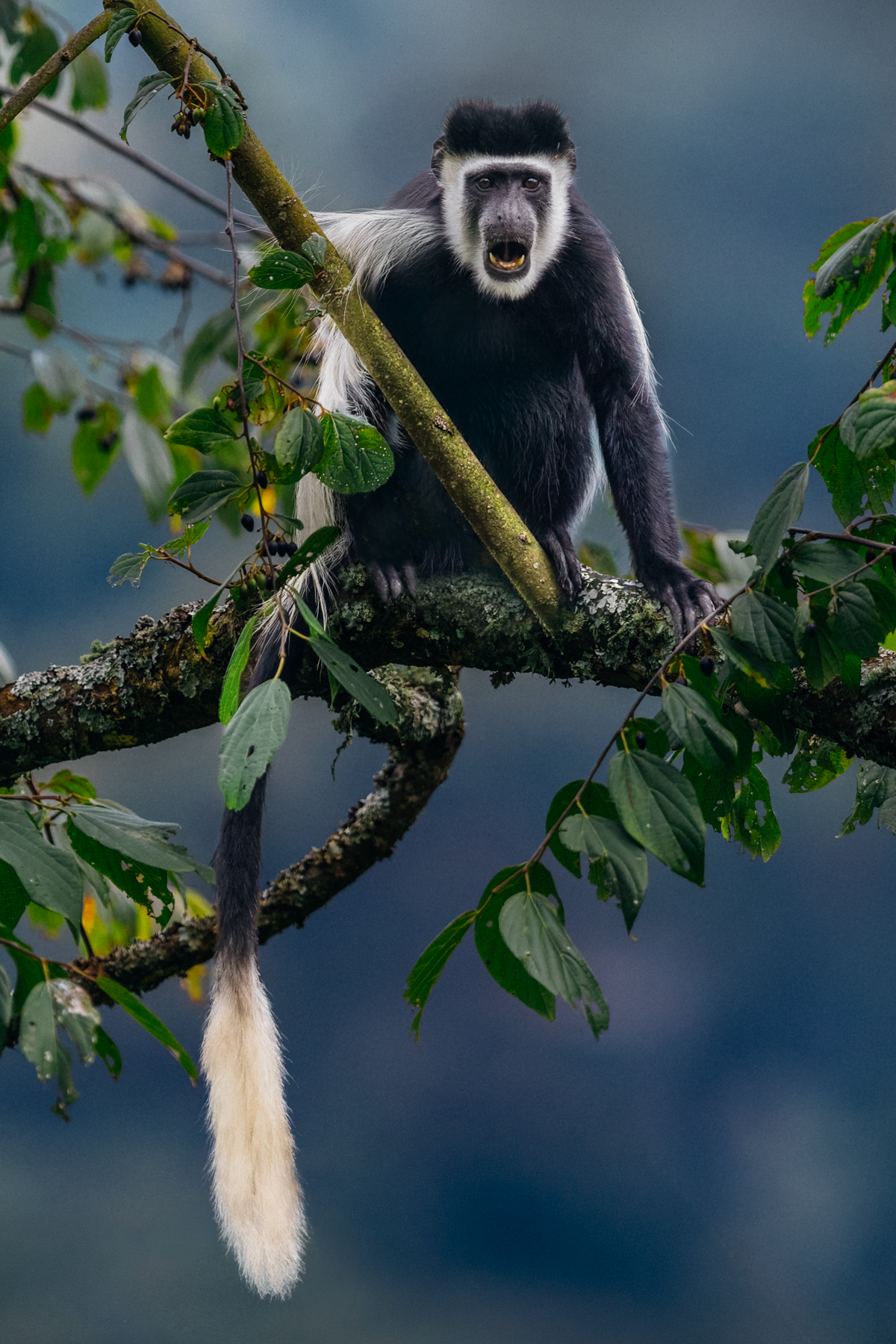
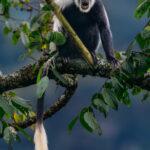
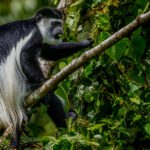
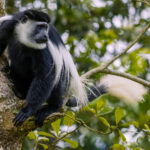
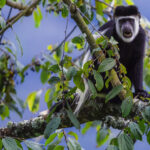
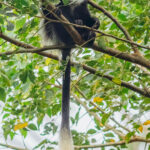
An animated Black-and-White Colobus Monkey shows off its favourite feature: that enormous, white-tipped tail. It acts as a counterweight when leaping between branches: essentially a built-in aerial stabiliser (image by Virginia Wilde)
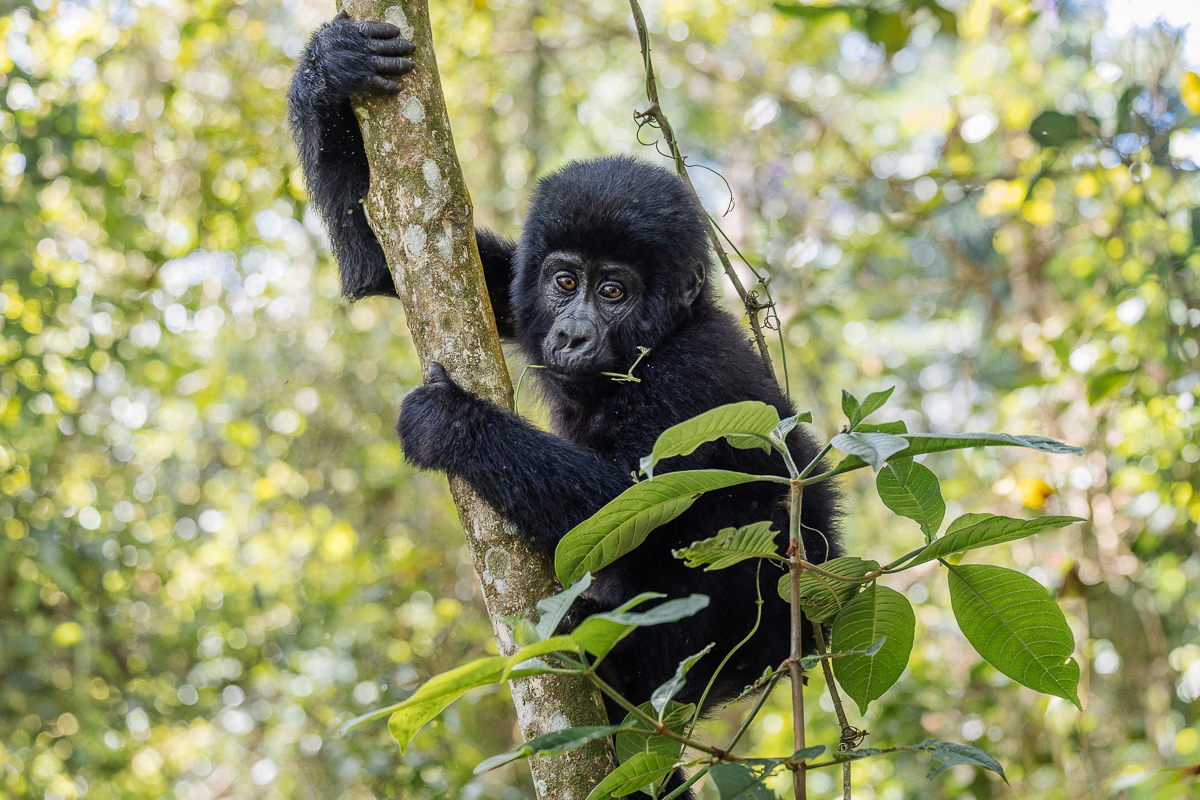
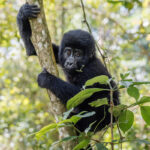
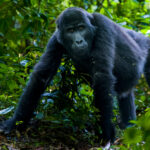
The forest in Bwindi comes with its own climbing frame. This juvenile Mountain Gorilla has found the perfect spot to hang out and have a snack (image by Virginia Wilde)
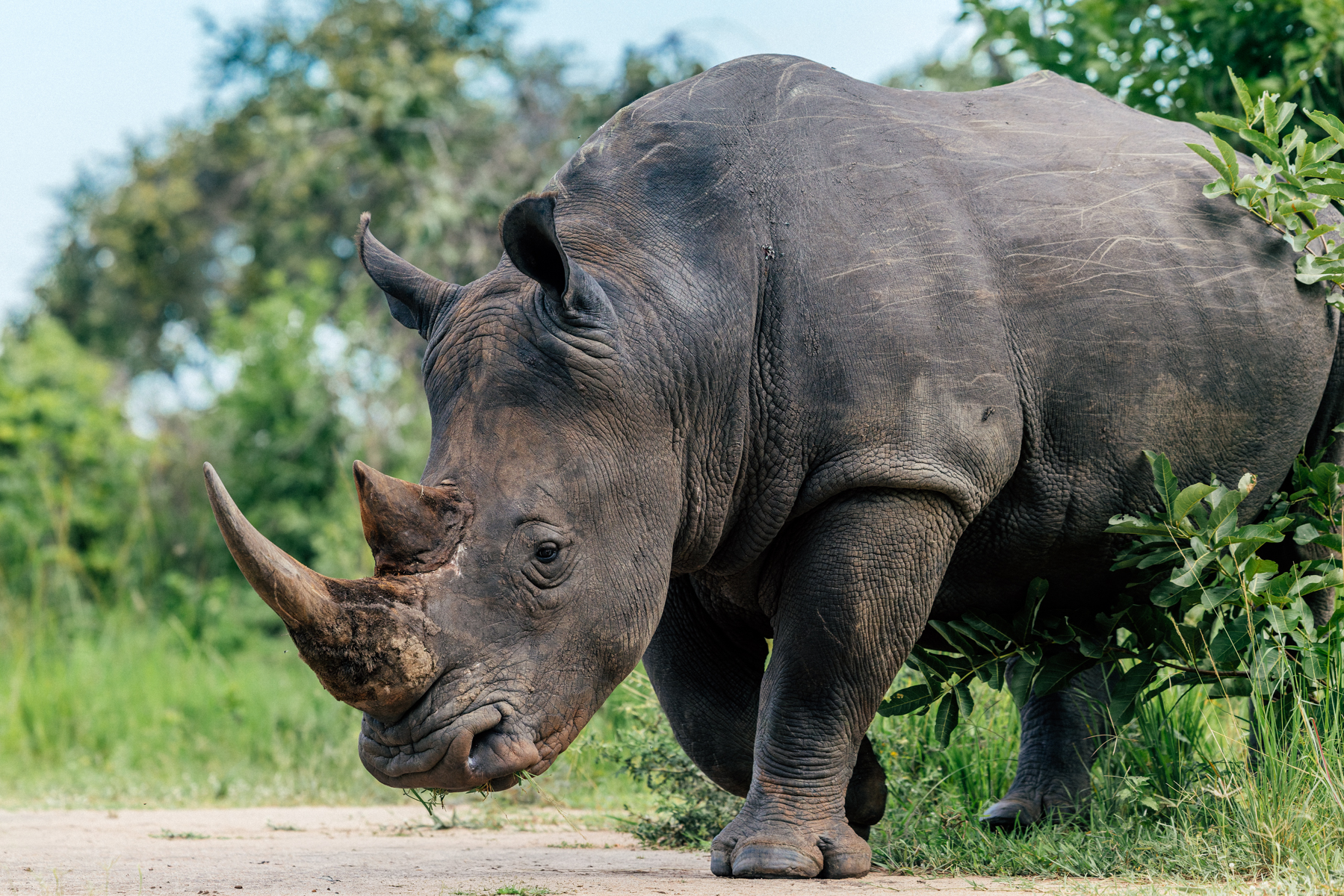
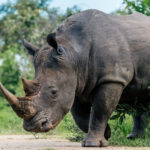
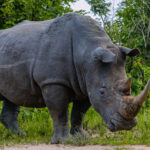
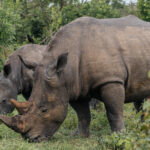
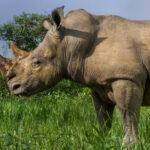
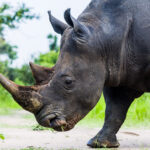
One of Uganda's magnificent Southern White Rhinos, a subspecies introduced to Kenya after its native Northern White and Eastern Black Rhinos were hunted to extinction. Built like a tank, this Rhino is determined to take up the whole road (image by Virginia Wilde)
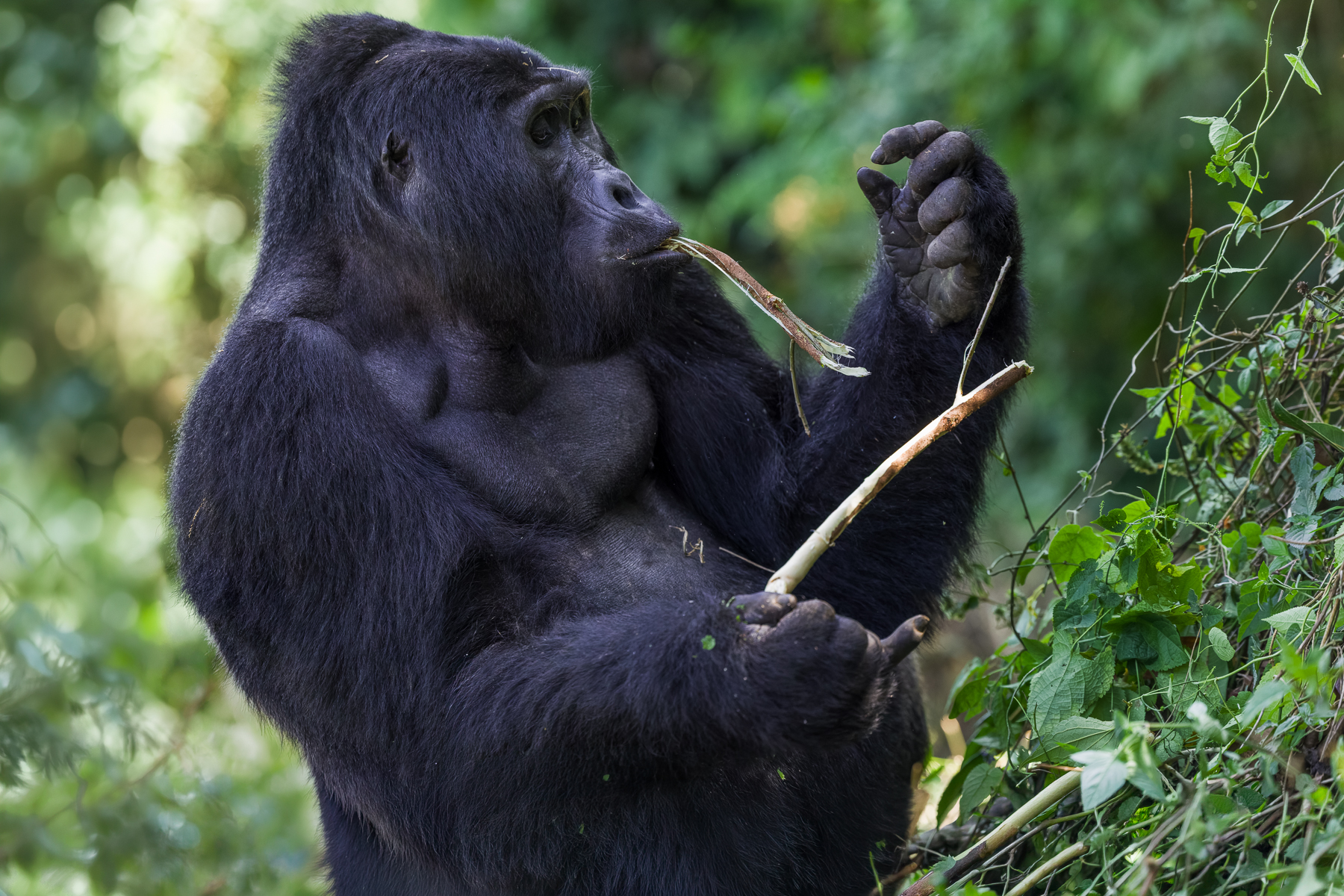
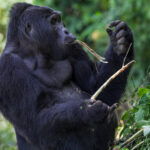
Silverback Mountain Gorilla Kavuyo strips bark from a branch, while sat just a few metres away from us in fields by the Bwindi Impenetrable Forest (image by Virginia Wilde)
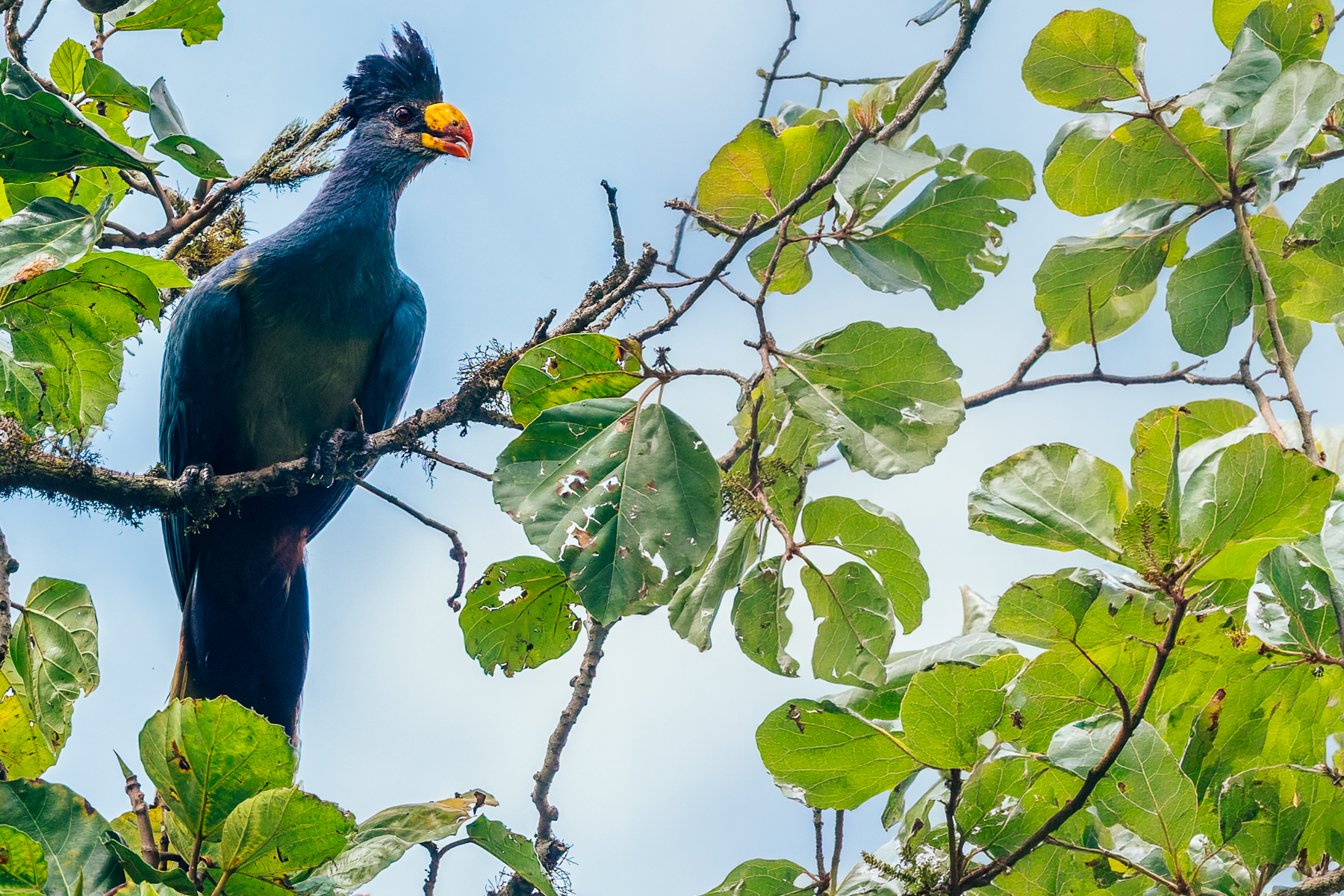
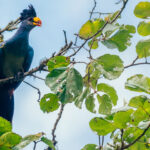
The Great Blue Turaco is one of Africa's largest Turacos, reaching around 70cm in length. Turacos are surprisingly poor fliers for such spectacular birds. They prefer moving through the canopy by running and hopping between branches (image by Virginia Wilde)
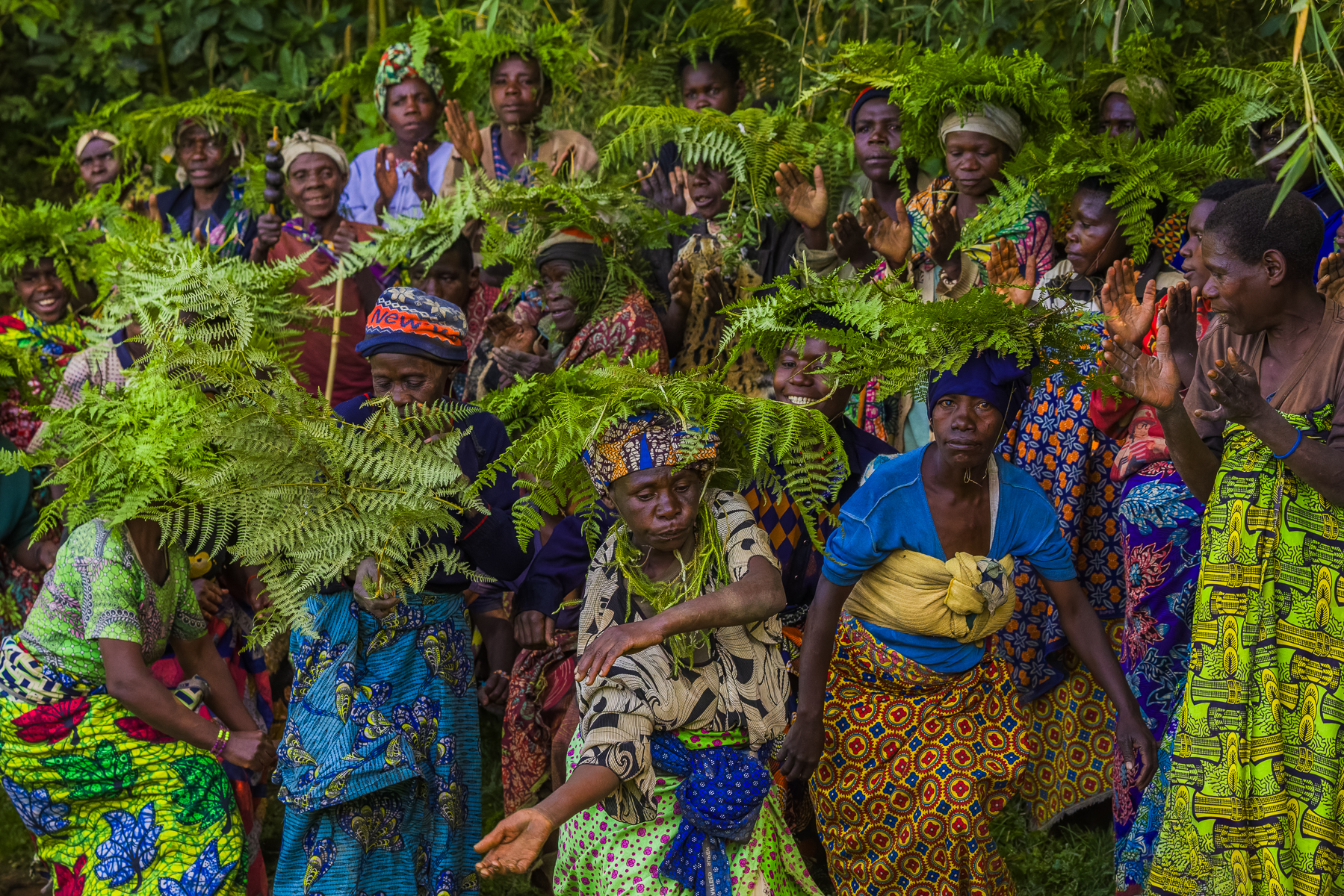
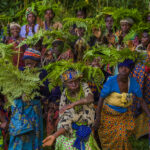
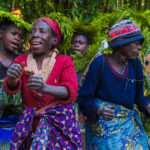
Women of the Echuya Twa dance and sing while wearing traditional foliage hats, symbolising their deep spiritual connection to the forest (image by Virginia Wilde)
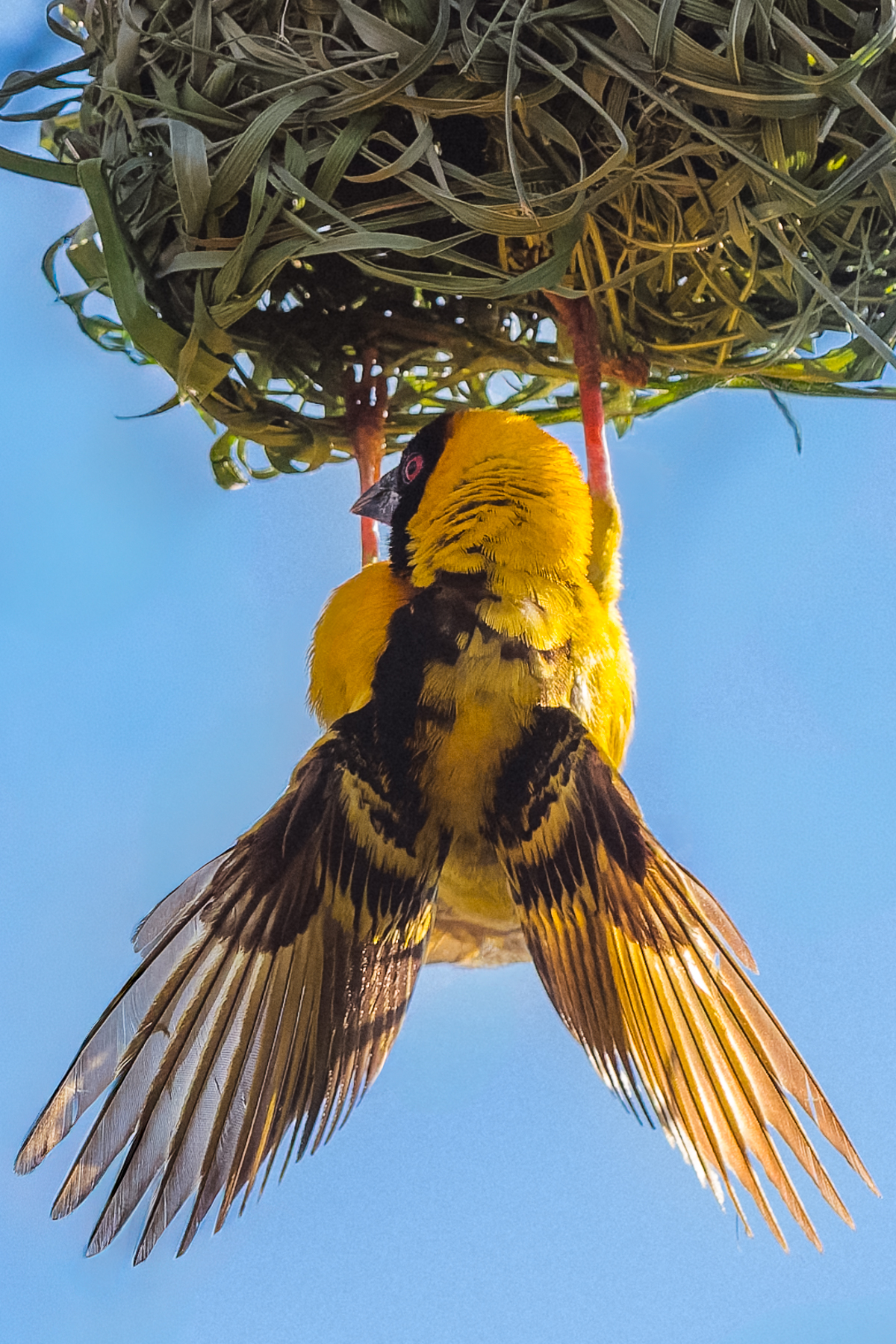
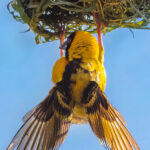
Male Village Weavers can spend hours constructing and rebuilding nests, using their bills and feet to knot and weave vegetation into a surprisingly strong structure - before convincing a female that his skills are up to scratch (image by Virginia Wilde)
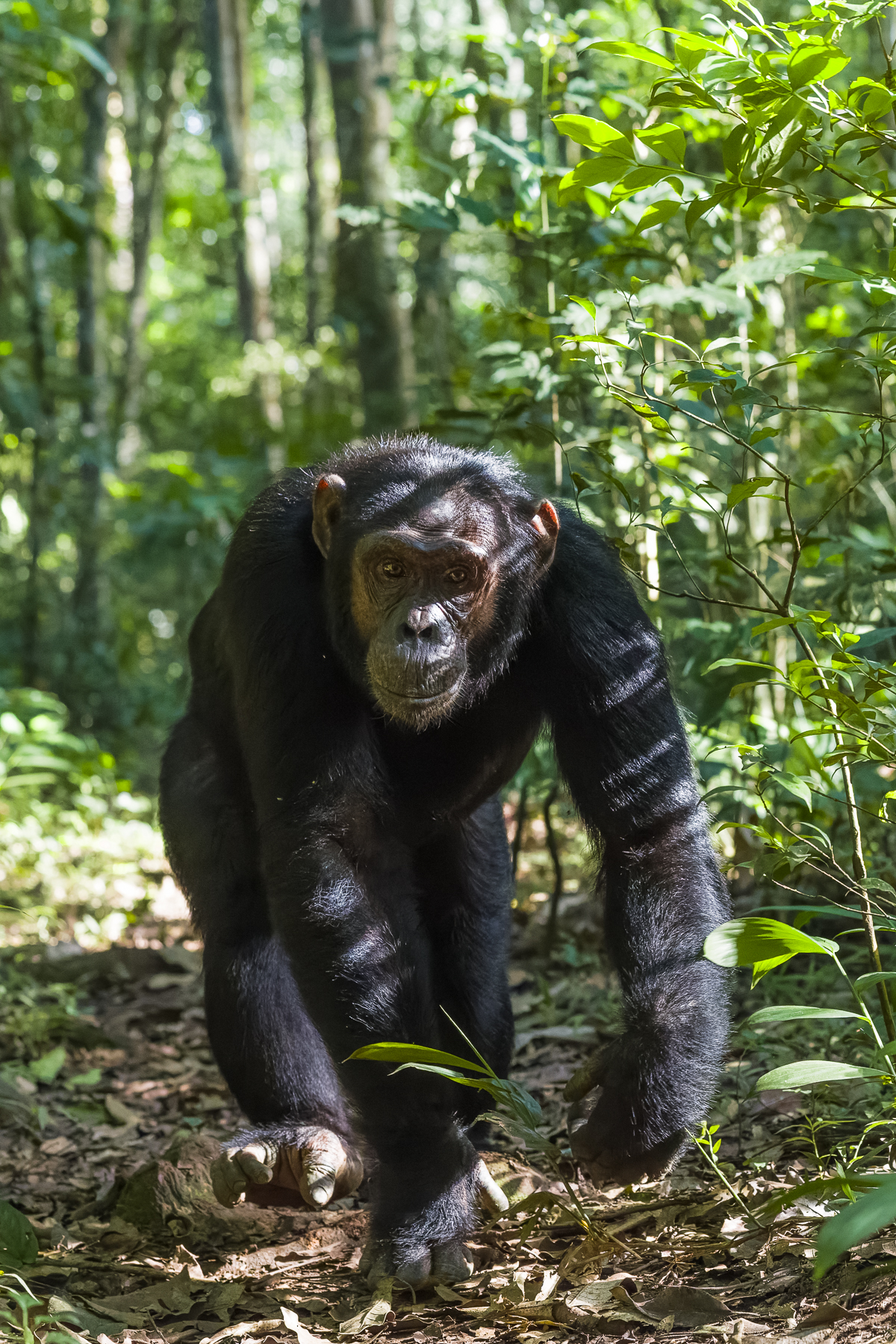
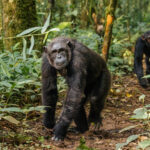
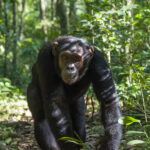
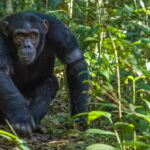
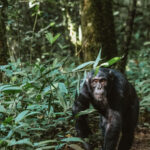
An Eastern Chimpanzee from the Kanyantare family strides along the paths of the Kibale National Park in western Uganda. Kibale is the world's best destination for viewing chimpanzees in the wild, holding a population of roughly 1,500 (image by Virginia Wilde)
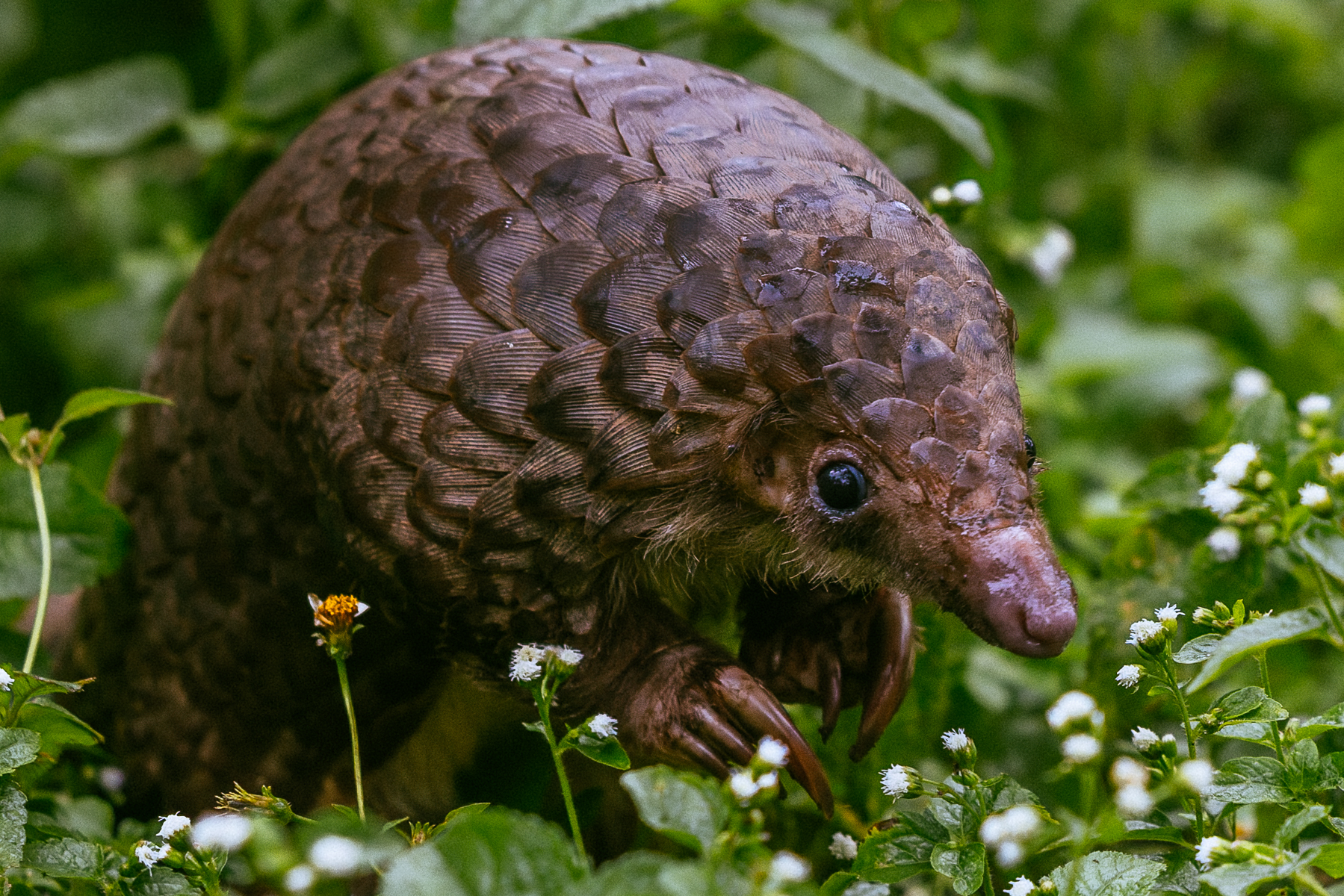
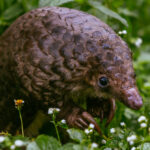
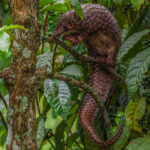
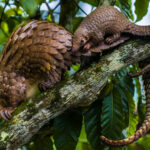
The Tree Pangolin's curved claws are serious digging tools, used to rip apart termite mounds and ant nests, before they sweep up insects with their incredibly long, sticky tongue (image by Virginia Wilde)
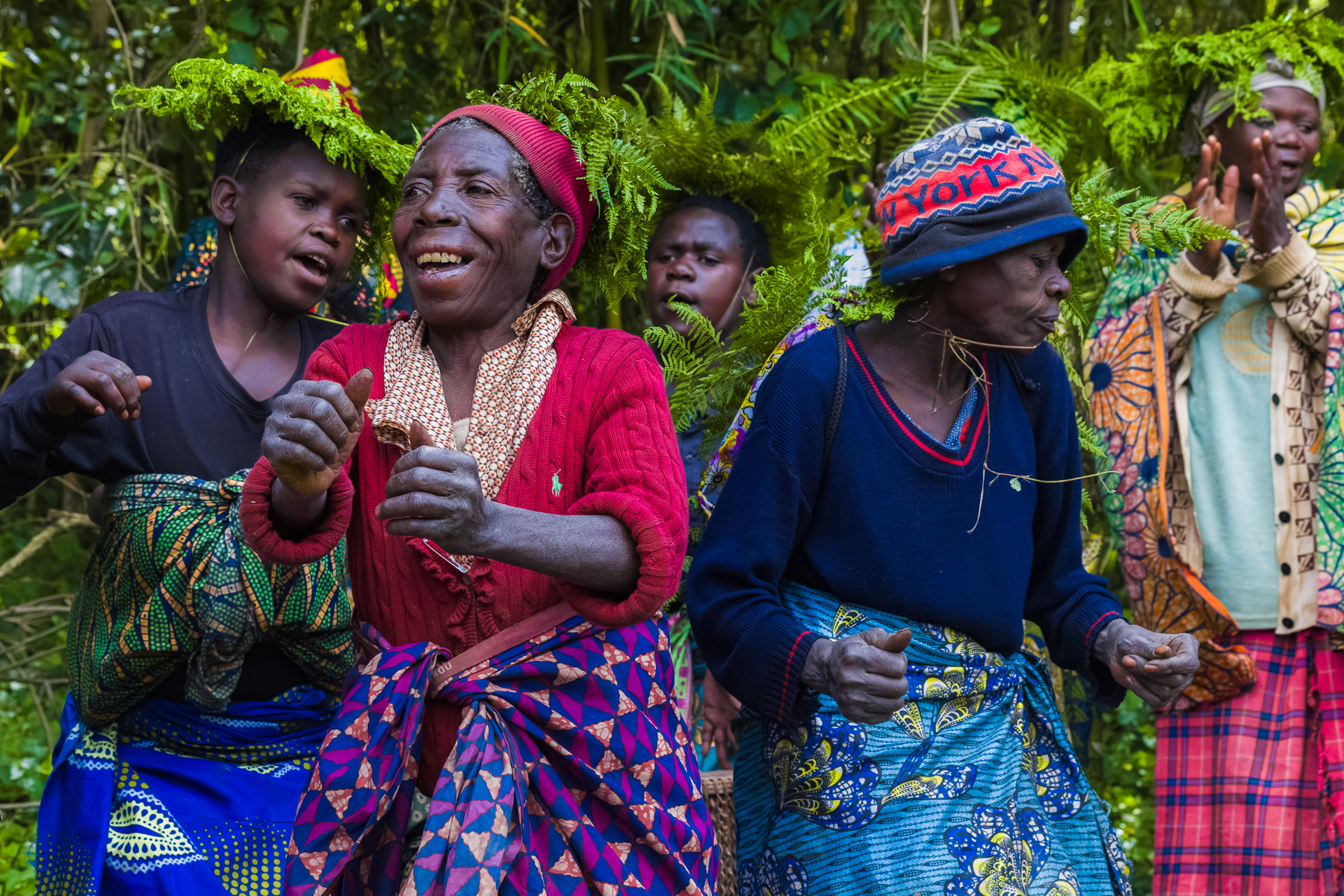
Echuya Twa women perform the traditional song and dance 'Inanga Nyamunini' - which praises the things that the forest provides: honey, medicinal plants and small game (image by Virginia Wilde)
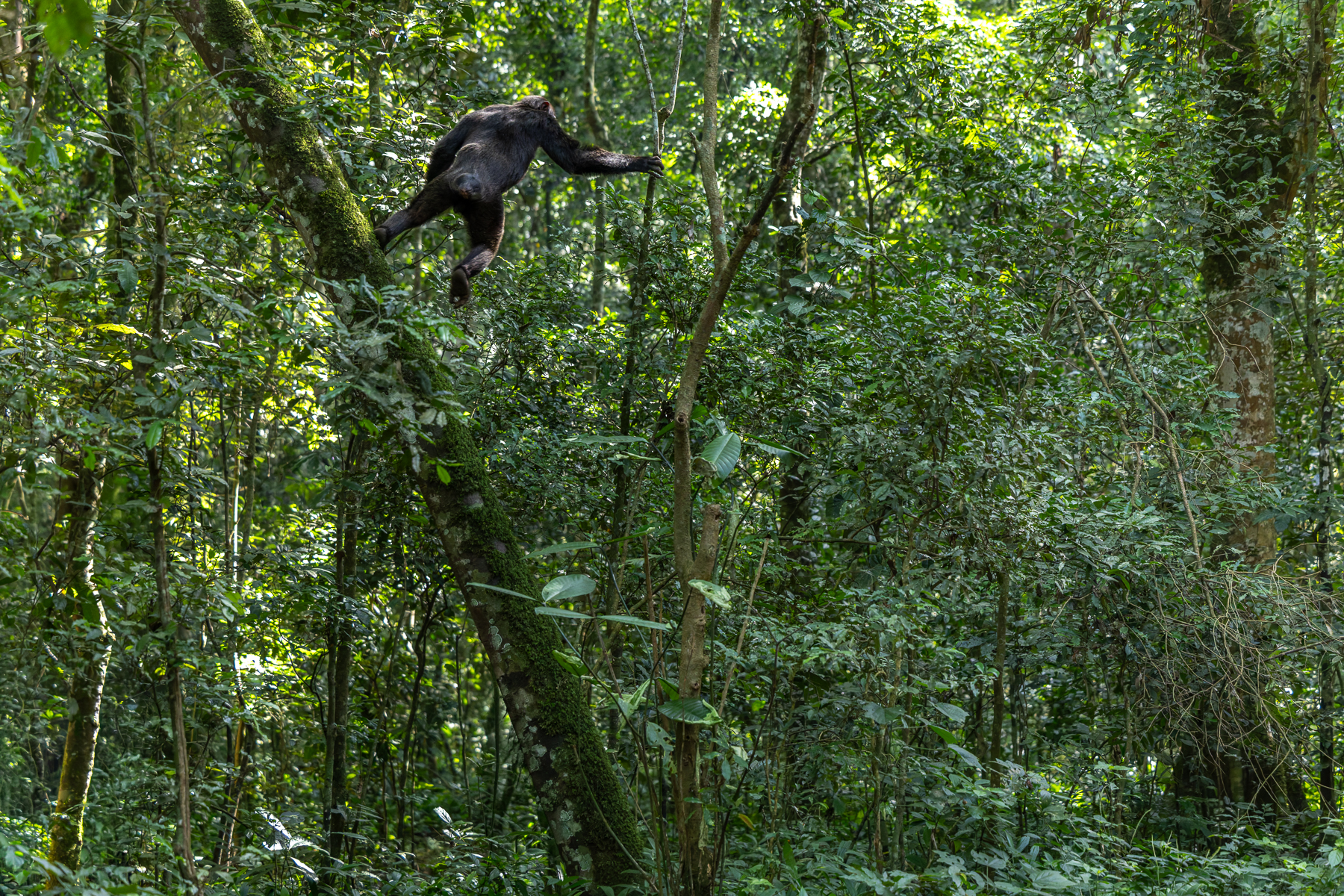
st World of the Chimpanzee.' An Eastern Chimpanzee can move though trees and cover ground surprisingly quickly. Here, a troop member leads the way in Uganda's Kibale National Park (image by Virginia Wilde)
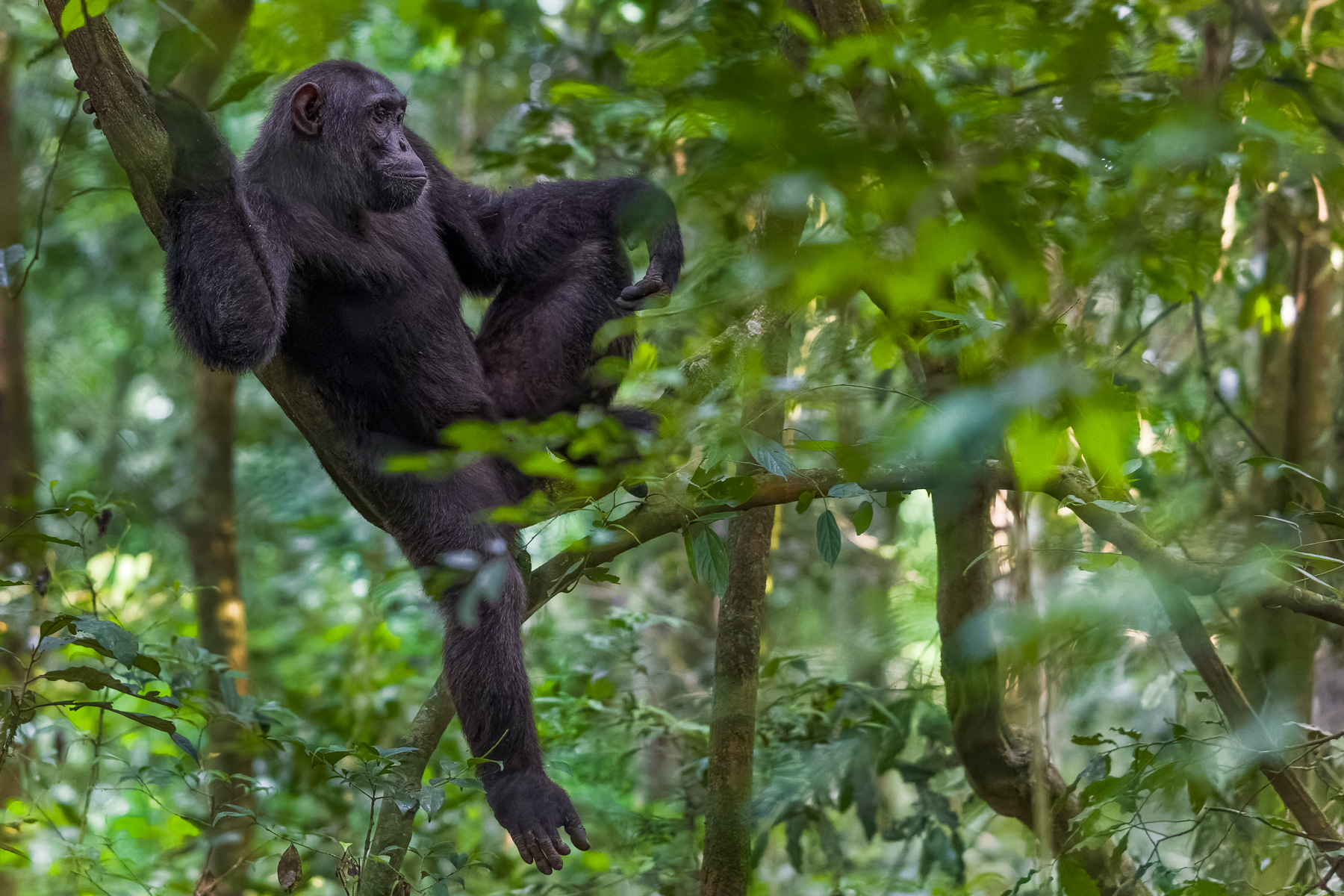
When you've been asked to look natural, but you're secretly posing for your Tinder profile. A male Eastern Chimpanzee displays his muscles in Uganda's Kibale Forest (image by Virginia Wilde)
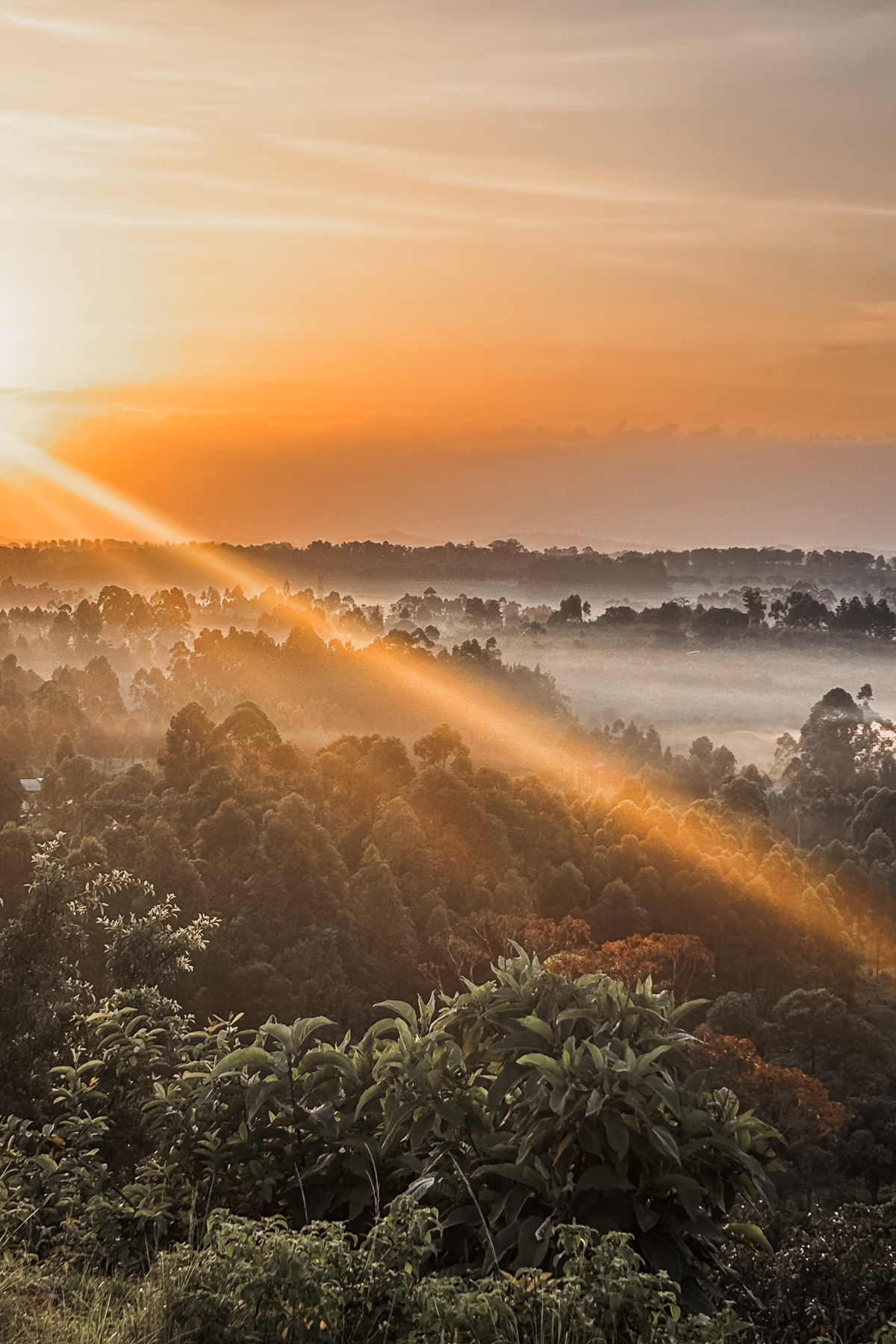
Uganda gave us some incredible sunrises, particularly when the mist shrouded the valleys (image by Virginia Wilde)
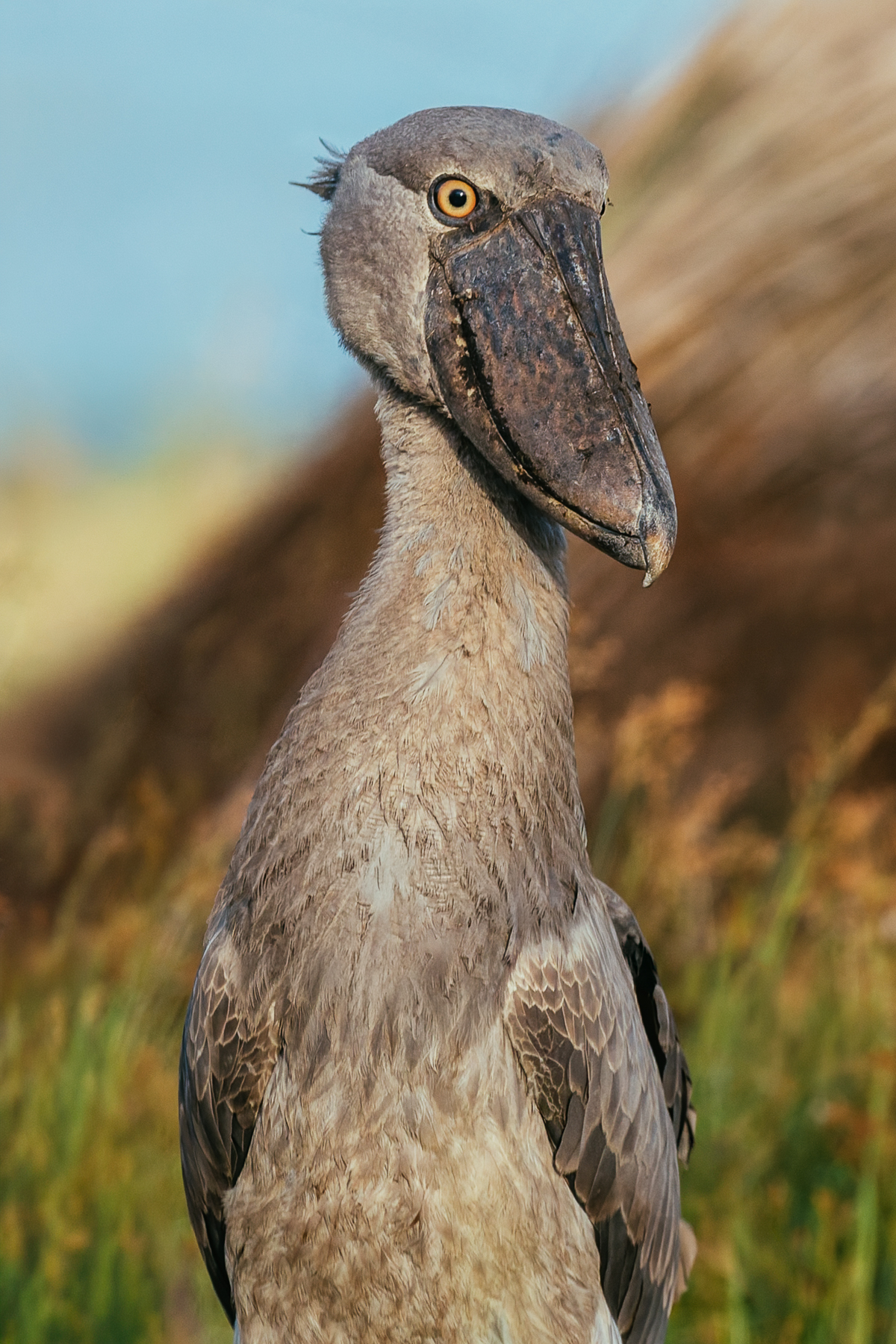
If the gothic film director Tim Burton were to invent a bird, it would surely look like the Shoebill. Part sinister, part cartoonish and completely prehistoric-looking, it's hard to believe it was designed by evolution (image by Virginia Wilde)
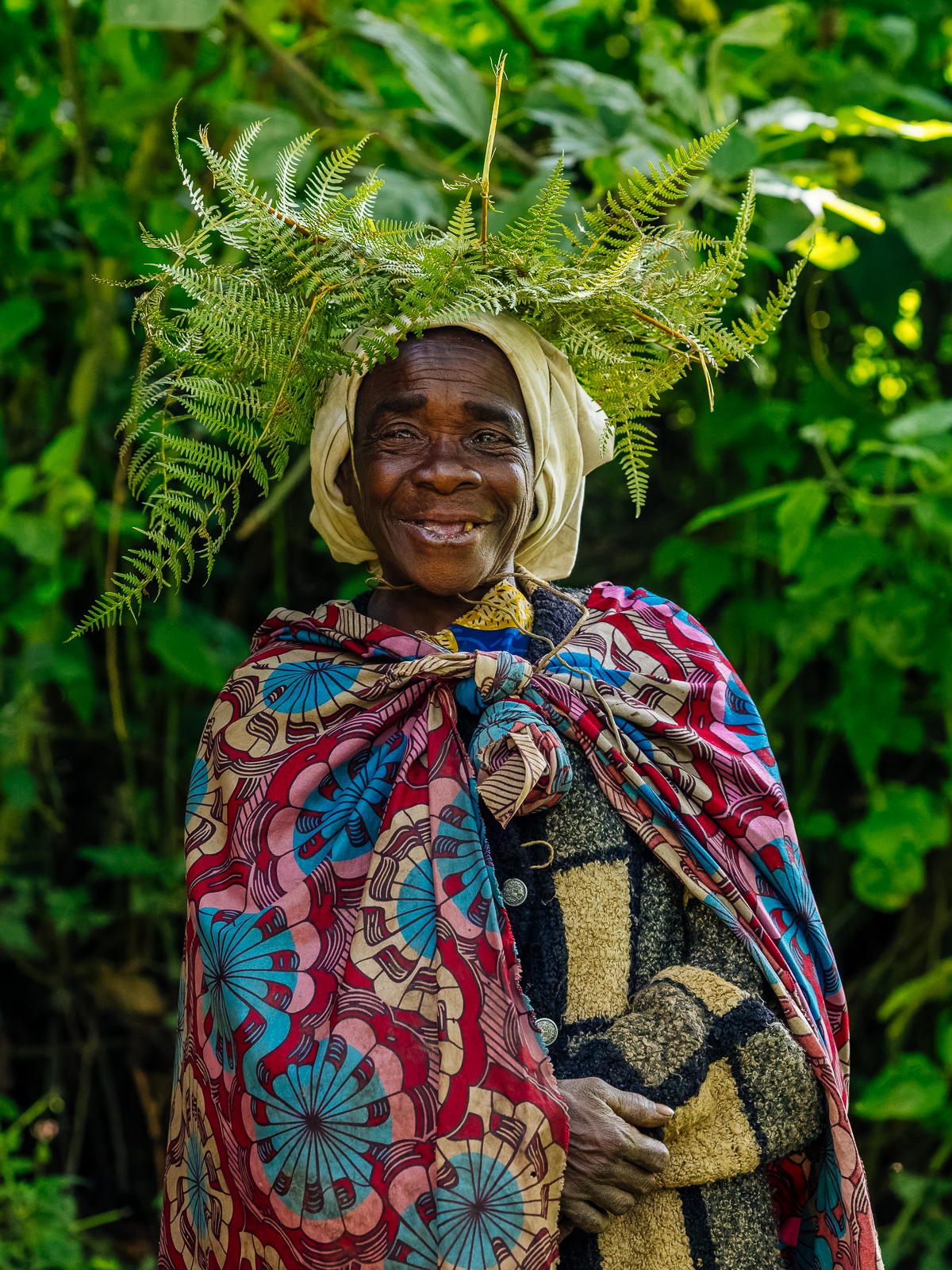
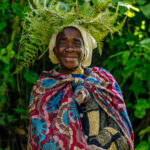
An Echuya Twa woman beams after showing us some traditional crafts in Uganda (image by Virginia Wilde)
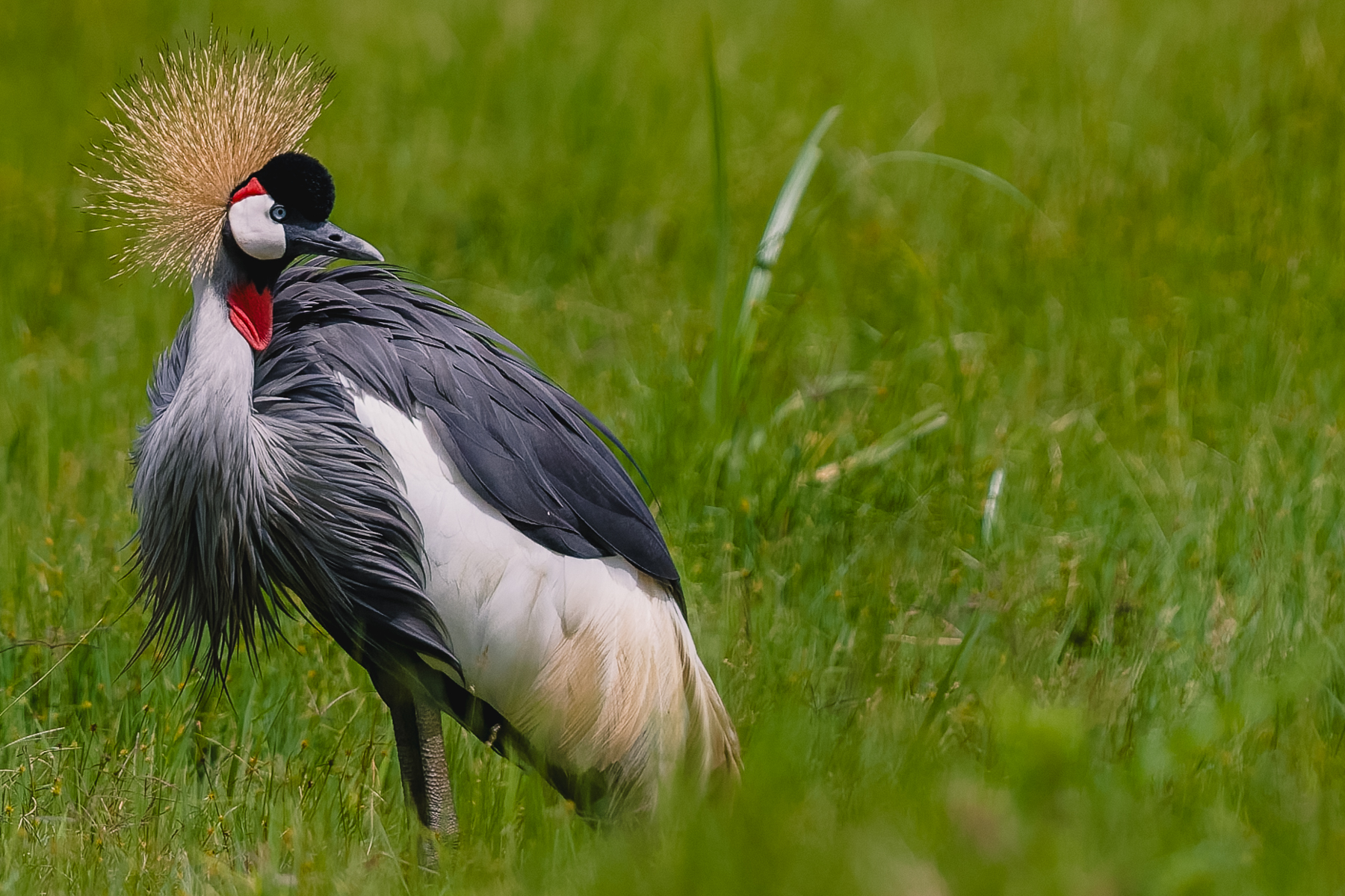
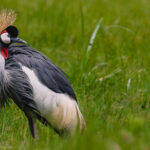
A splendid Grey-Crowned Crane's golden crown is actually a fan of stiff, hair-like feathers. Both males and females have them, and they are believed to help with courtship and for communication with other cranes (image by Virginia Wilde)
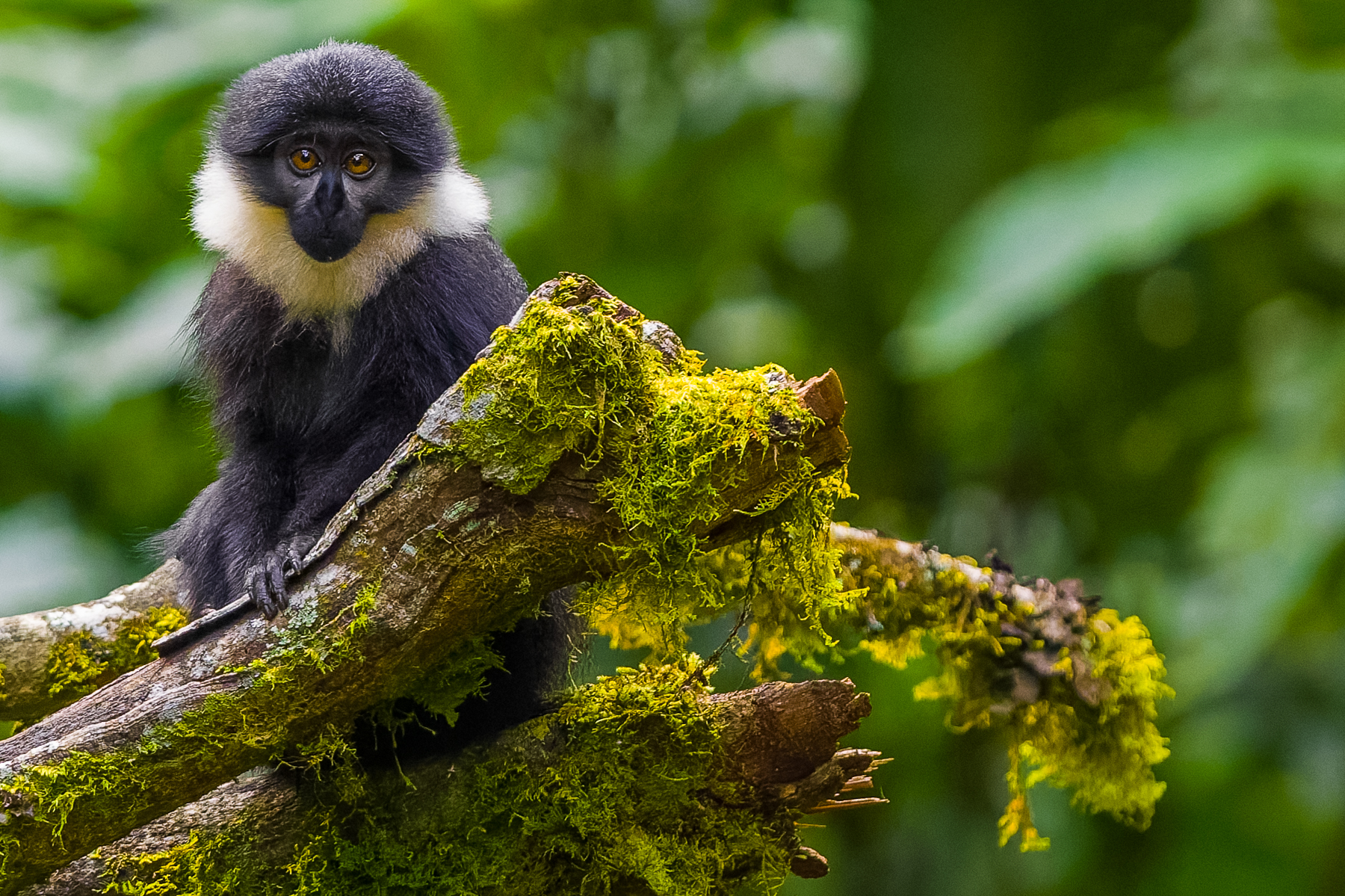
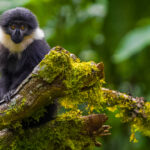
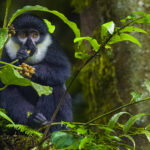
A juvenile L'Hoest's Monkey makes eye contact in Uganda's Bwindi Impenetrable Forest. L'Hoest's live in small, female-dominated groups and sleep sitting upright, grabbing a branch for support (image by Virginia Wilde)
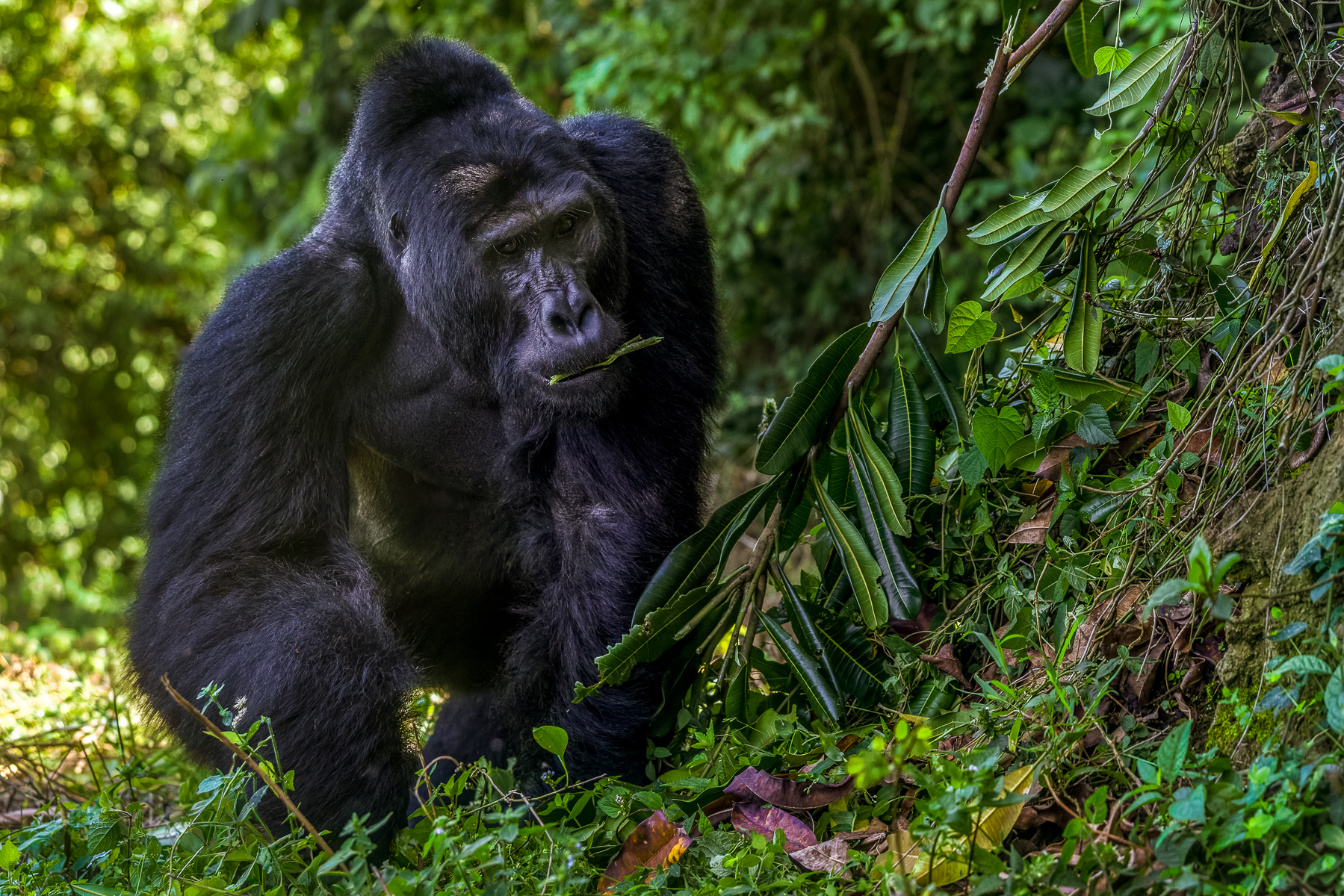
Stunning Silverback Mountain Gorilla Kavuyo strides over to feast on the best leaves in Uganda's Bwindi Impenetrable Forest. Silverbacks are mature male gorillas, typically around 12 years or older, who lead and protect their family groups - deciding when and where the group moves, feeds and rests (image by Virginia Wilde)
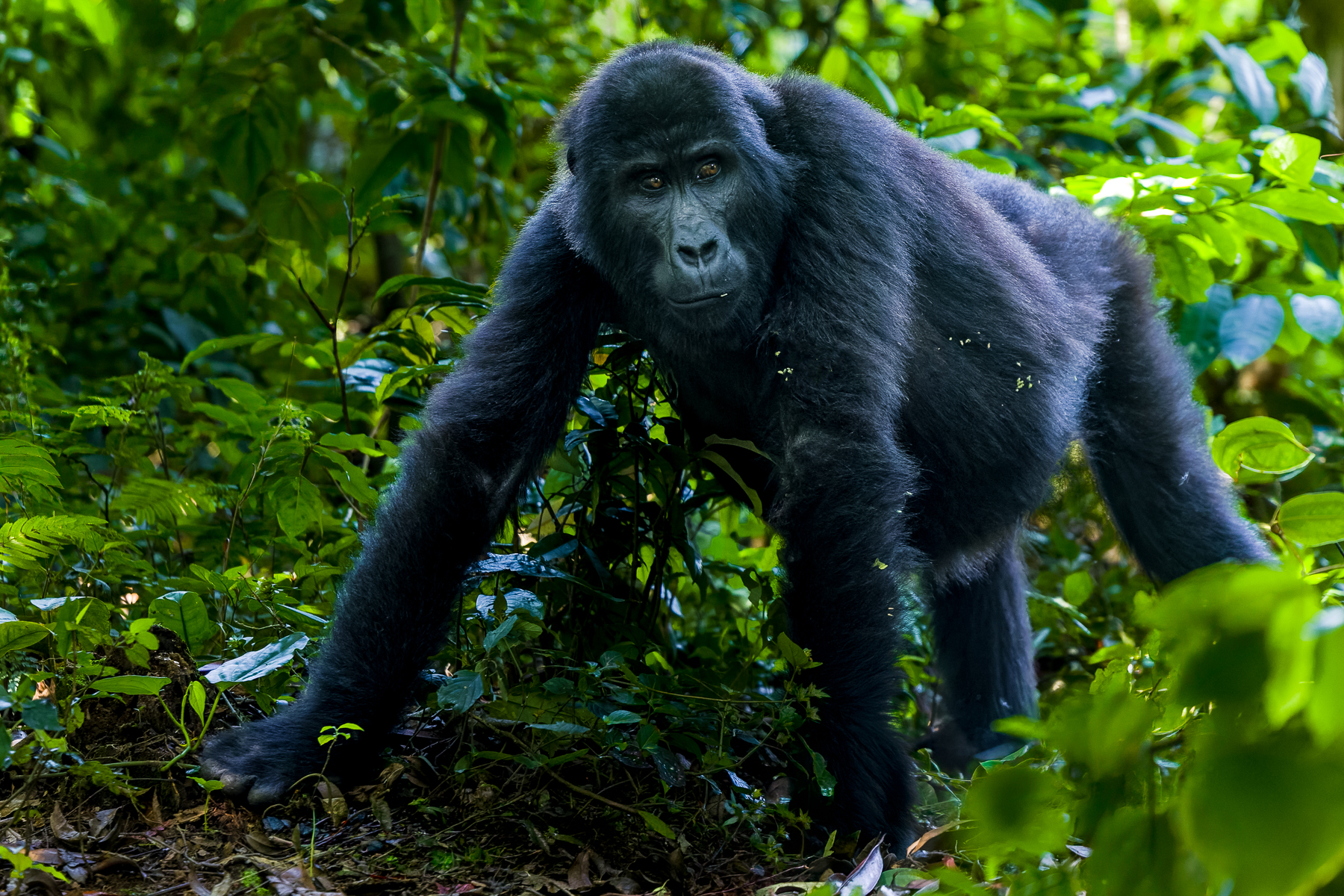
Chimpanzees are wonderfully charismatic to photograph - and sometimes maddening. But when they gave us a clear view, the portraits were wonderful (image by Virginia Wilde)
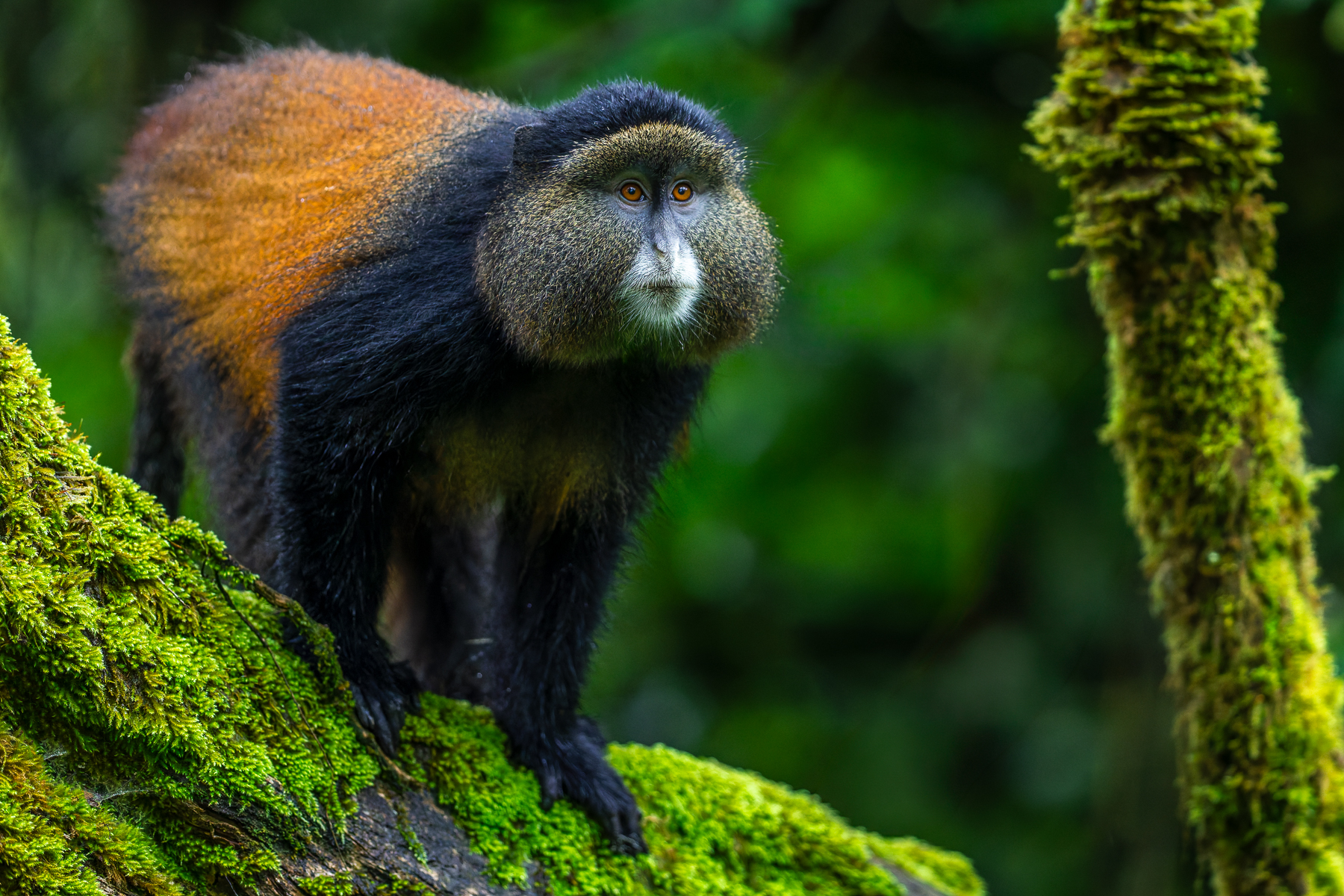
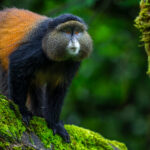
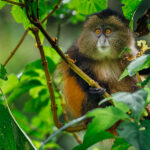
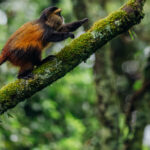
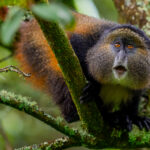
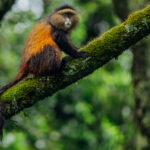
Golden Monkeys are little blazes of colour in Uganda's misty mountain forests. Found only in the Virunga volcanic mountain range - a chain of eight major volcanoes stretching across Uganda, Rwanda and the Democratic Republic of Congo - these primates live in lively social groups, communicating with a rich repertoire of calls and facial expressions (image by Virginia Wilde)
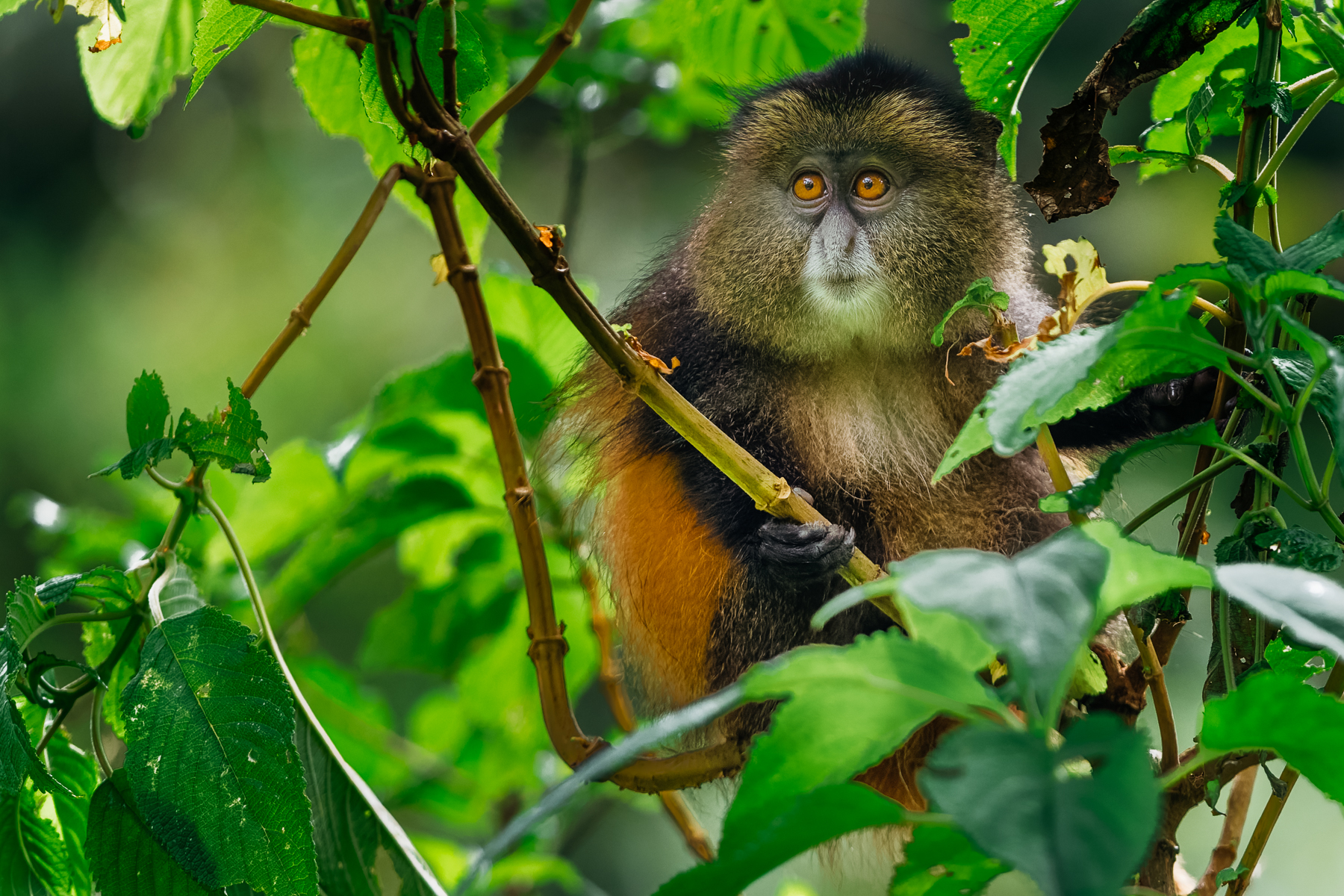
A juvenile Golden Monkey. Currently completing a degree in Monkey Business. The syllabus includes climbing, stealing snacks, avoiding trouble and keeping up with everyone else (image by Virginia Wilde)
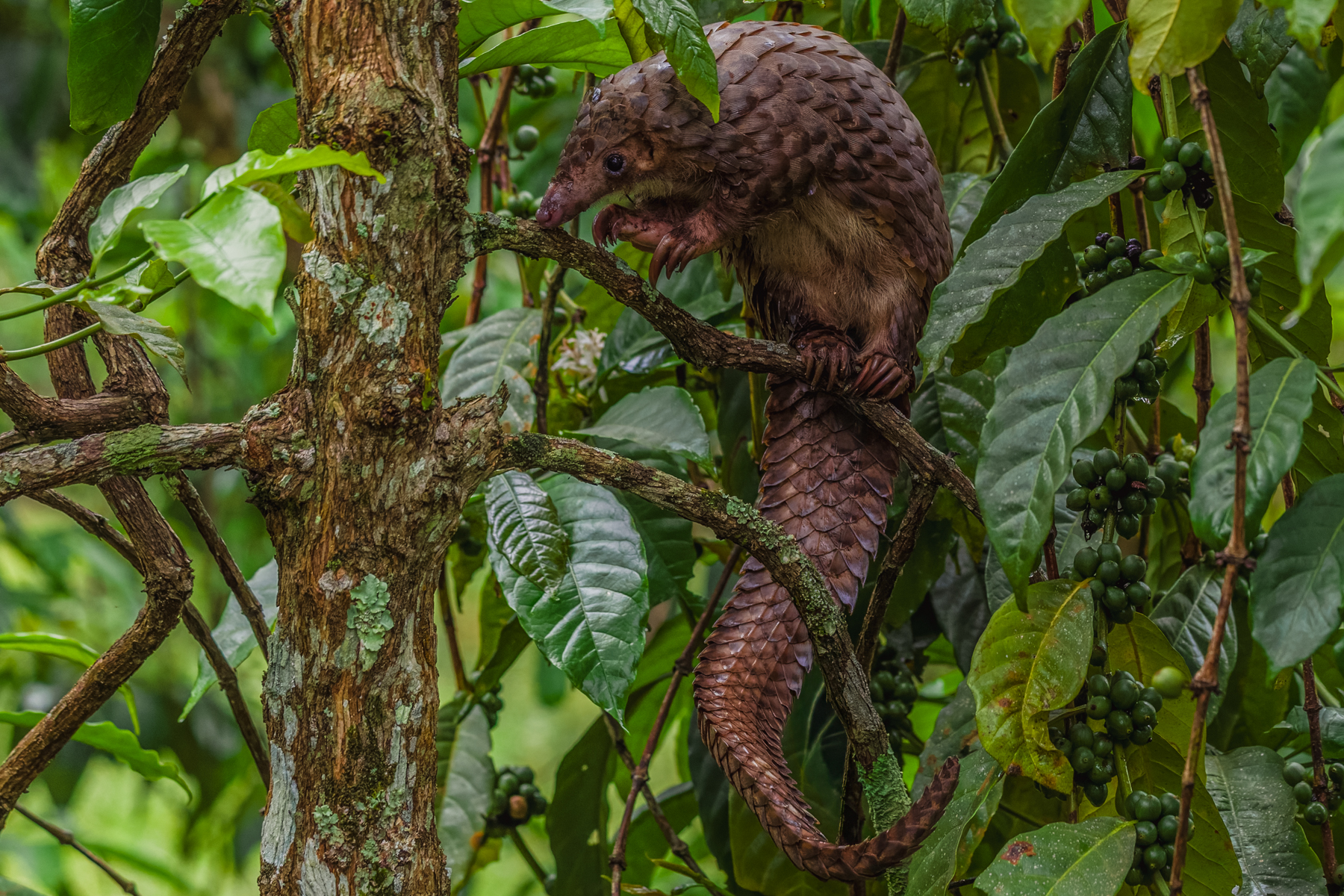
Looking like a pinecone that grew legs and developed an adorable personality. Tree Pangolins are covered in overlapping scales made of keratin, and when threatened they can curl into an almost impenetrable ball (image by Virginia Wilde)
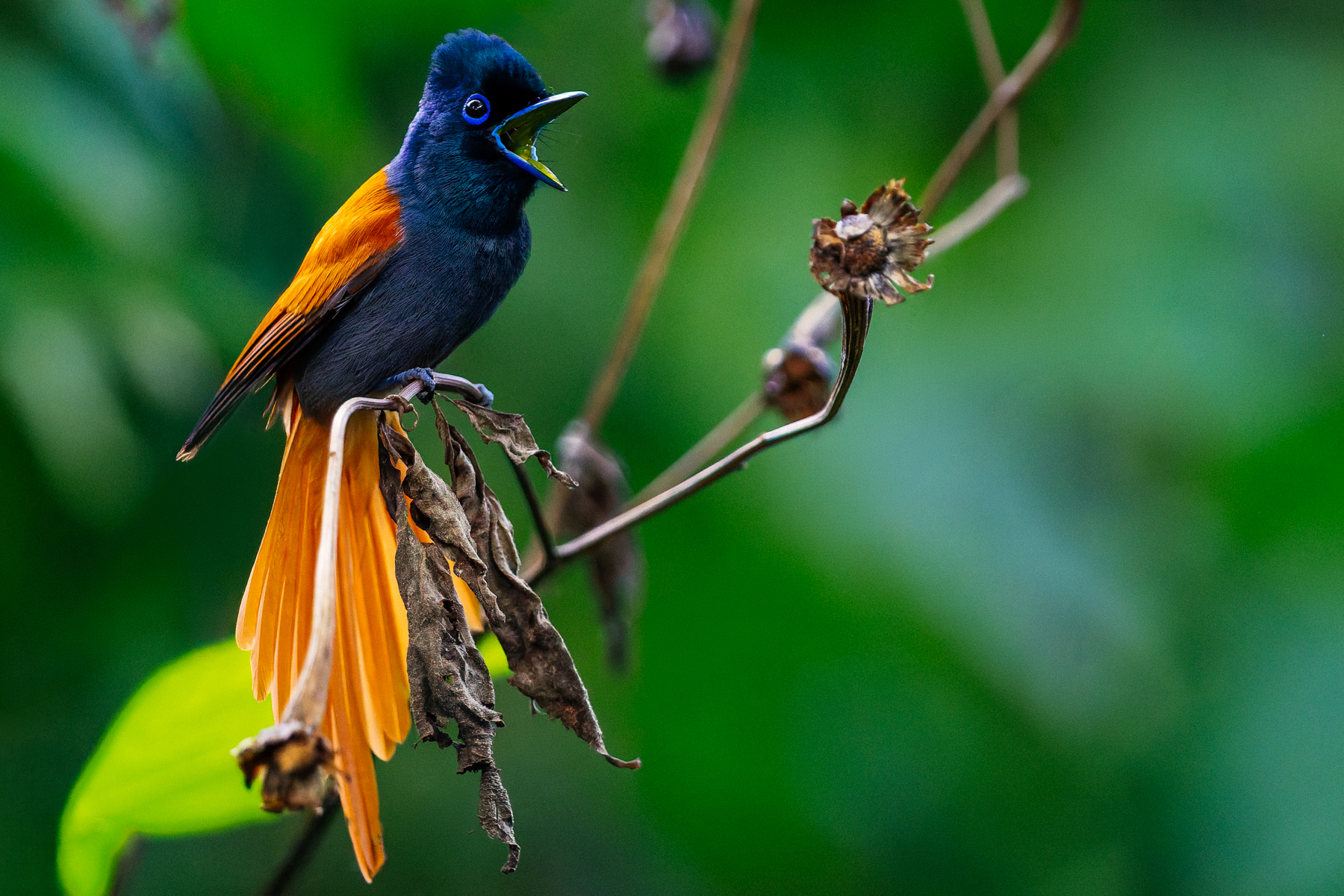
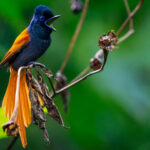
A female African Paradise Flycatcher calls to her chick, in the gardens of our lodge near Uganda's Bwindi Impenetrable Forest (image by Virginia Wilde)
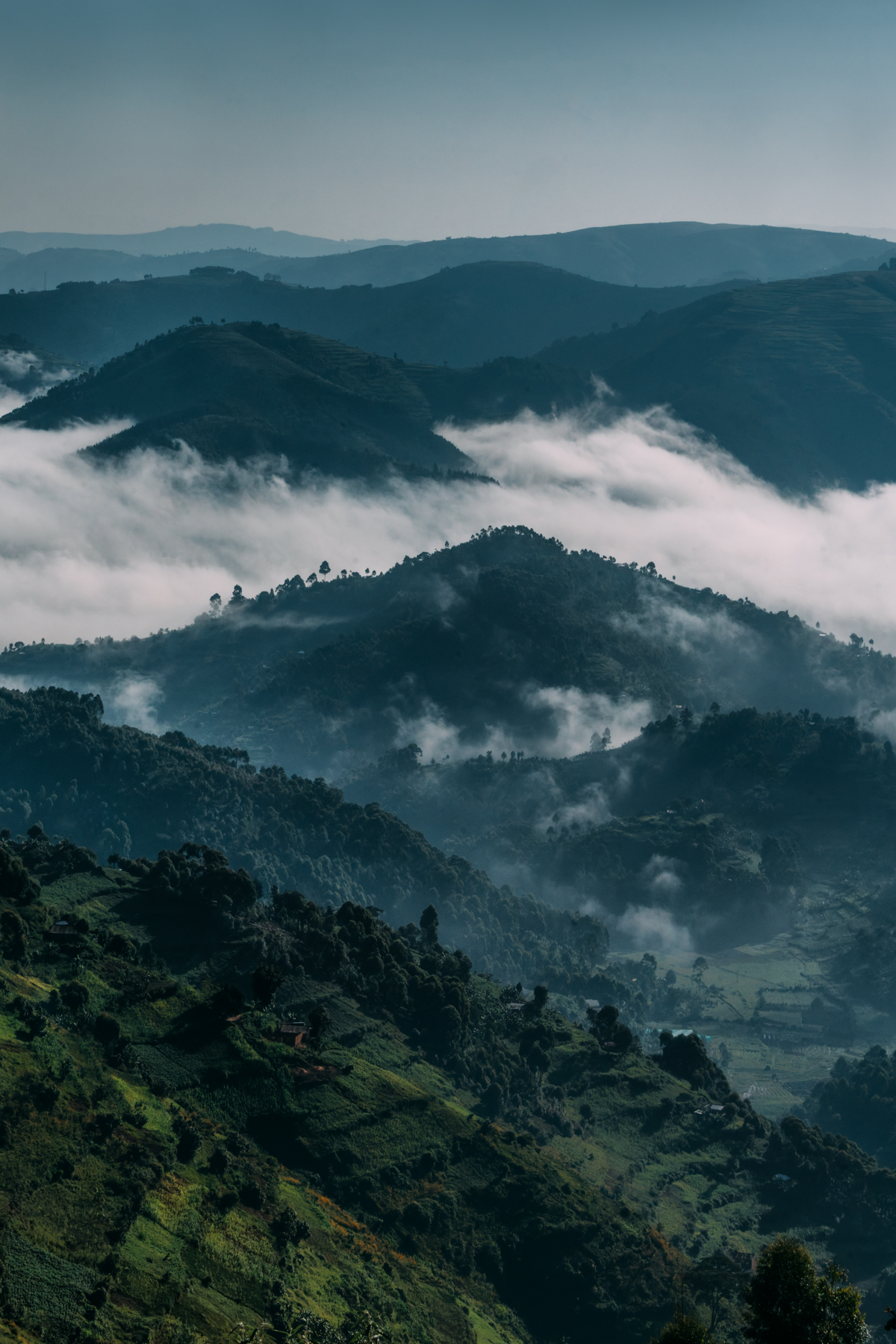
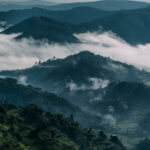
The Ugandan Highlands can look more like waves than hills, with clouds pooling in the valleys below. Every layer seems to reveal another ridge beyond it (image by Virginia Wilde)
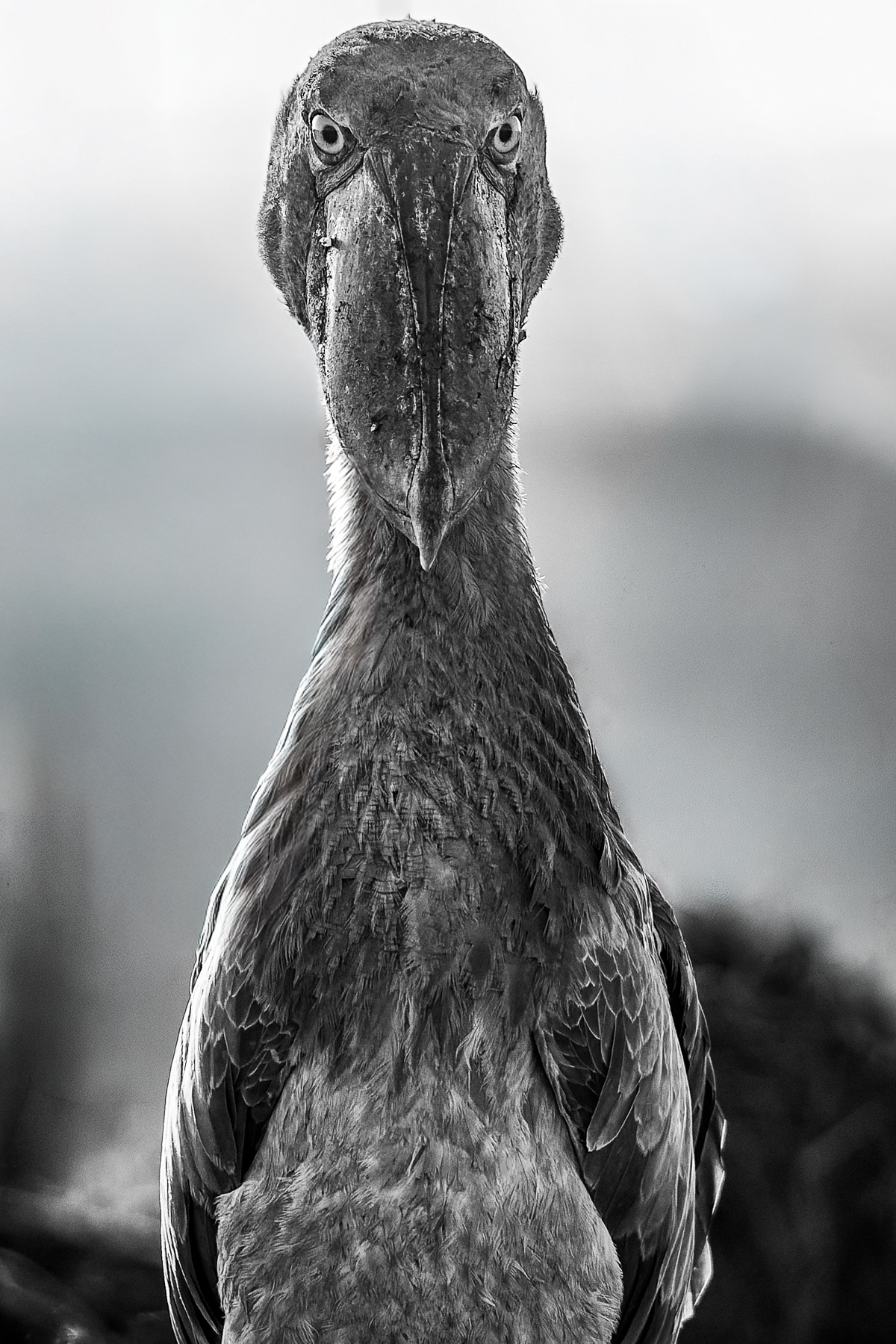
African Shoebills often stand with their wings spread to cool themselves, while also deliberately shading their eggs and chicks in hot weather. Shoebills are genuinely an ancient evolutionary lineage - splitting from the ancestors of their closets living relatives - the Pelicans and Hamerkops - tens of millions of years ago (image by Virginia Wilde)
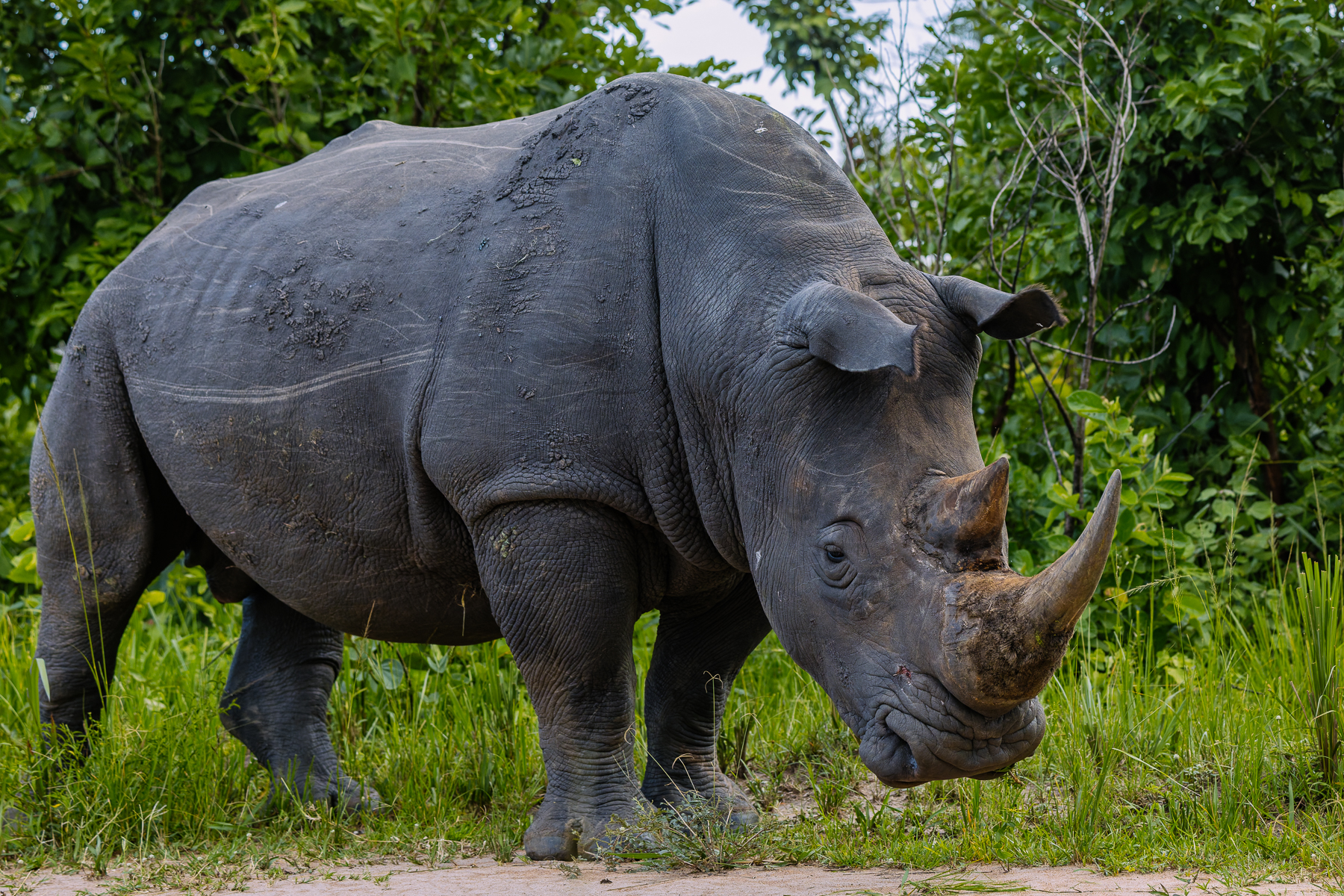
The introduction of Southern White Rhino into Uganda -whose Rhinos had become functionally extinct in the 1980s - has become one of this country's conservation success stories (image by Virginia Wilde)
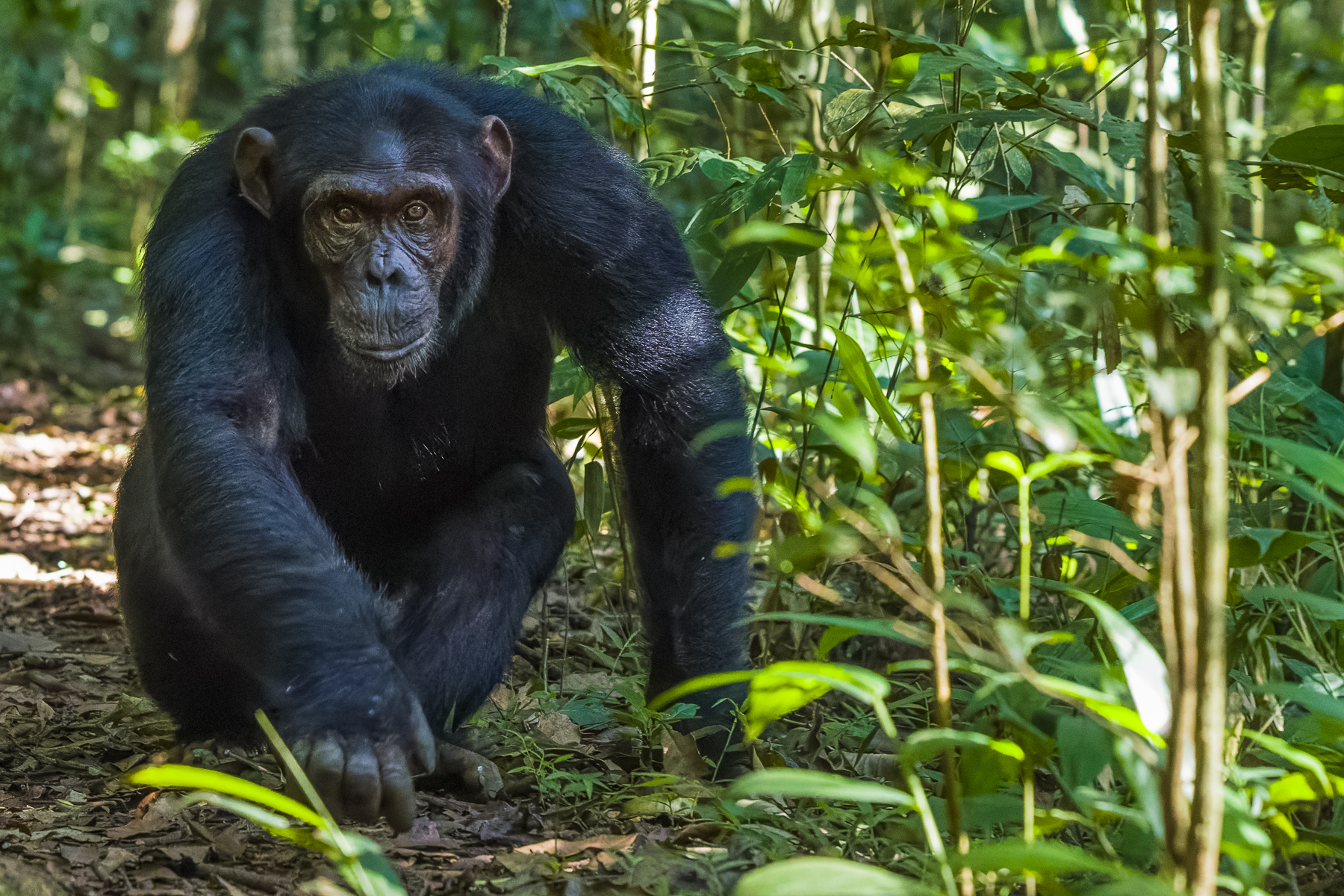
An Eastern Chimpanzee from the Kanyantare family strolls past our group, maintaining eye contact with each of us. Chimpanzees maintain complex social relationships, remembering who is friend, rival, ally. And, occasionally, who is a nuisance (image by Virginia Wilde)
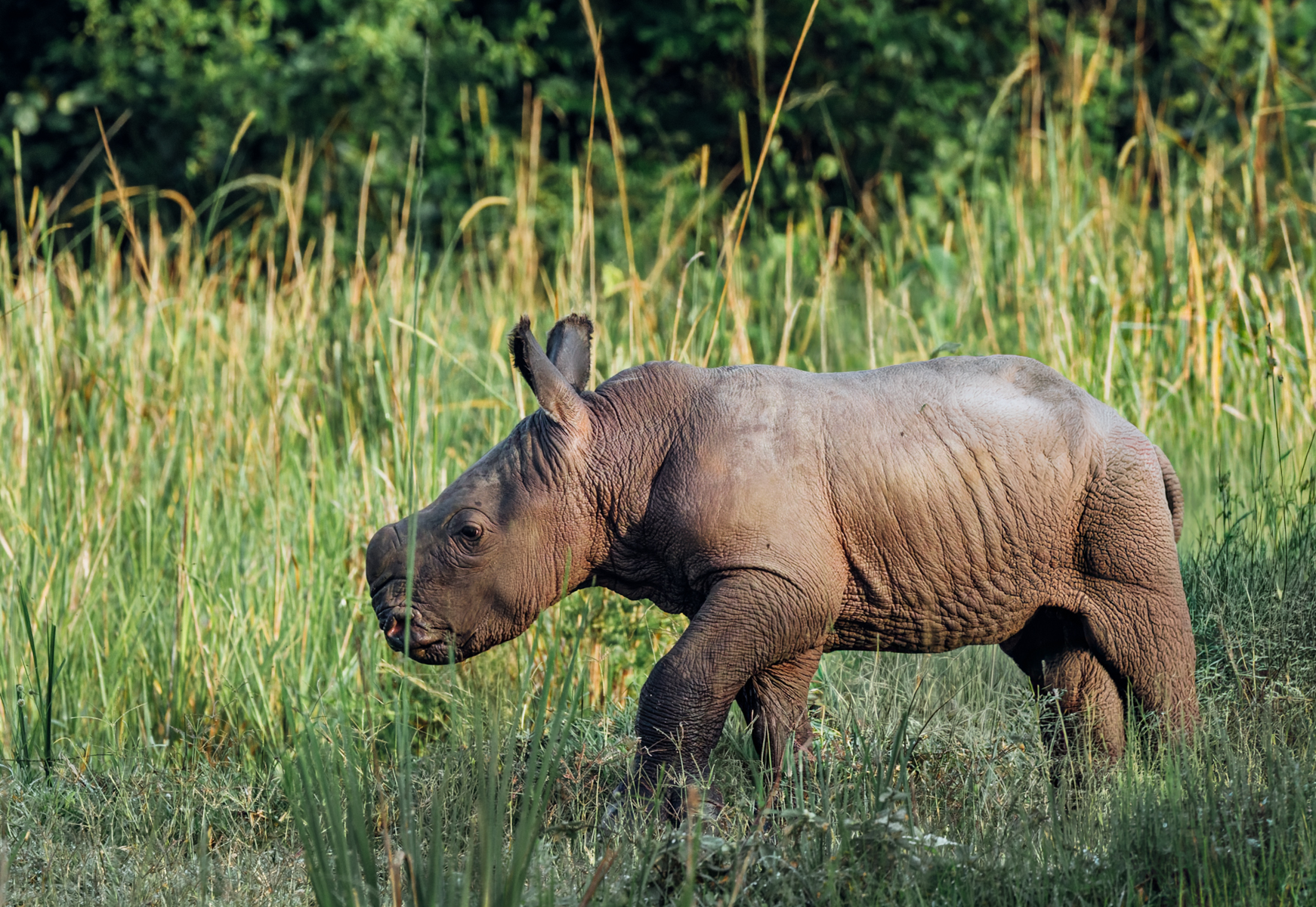
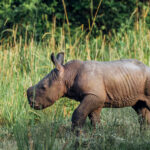
Two days old, already unmistakenly a Rhino - tiny horn buds oversized ears and built like a miniature tank. This infant was the newest Southern White Rhino on the reserve at Ziwa Rhino Sanctuary (image by Virginia Wilde)
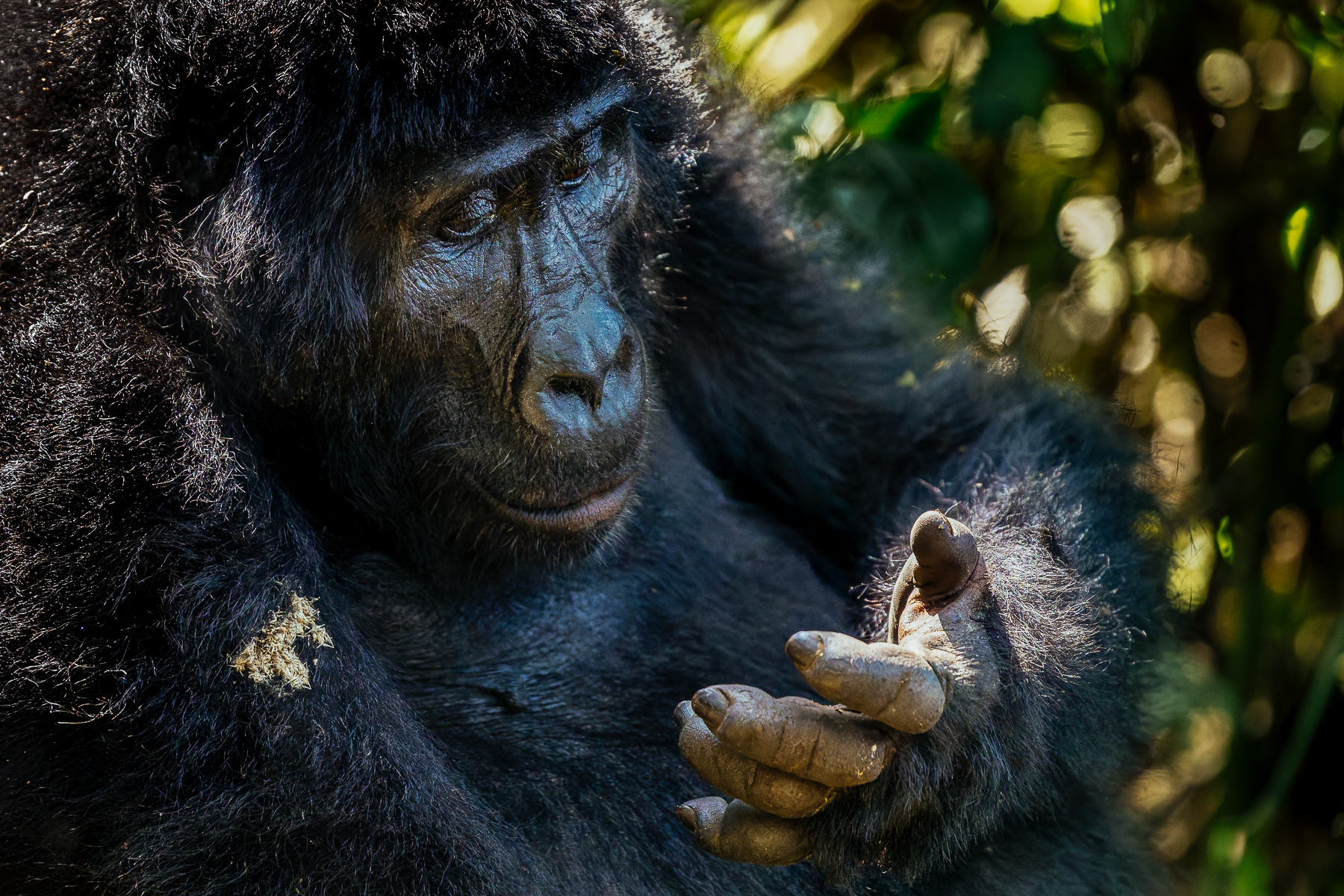
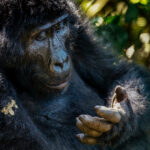
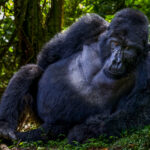
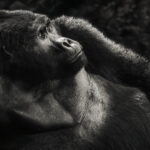
Mountain Gorillas use their huge hands for climbing, feeding and moving through dense vegetation. Although this one looks as if he's simply contemplating life (image by Virginia Wilde)
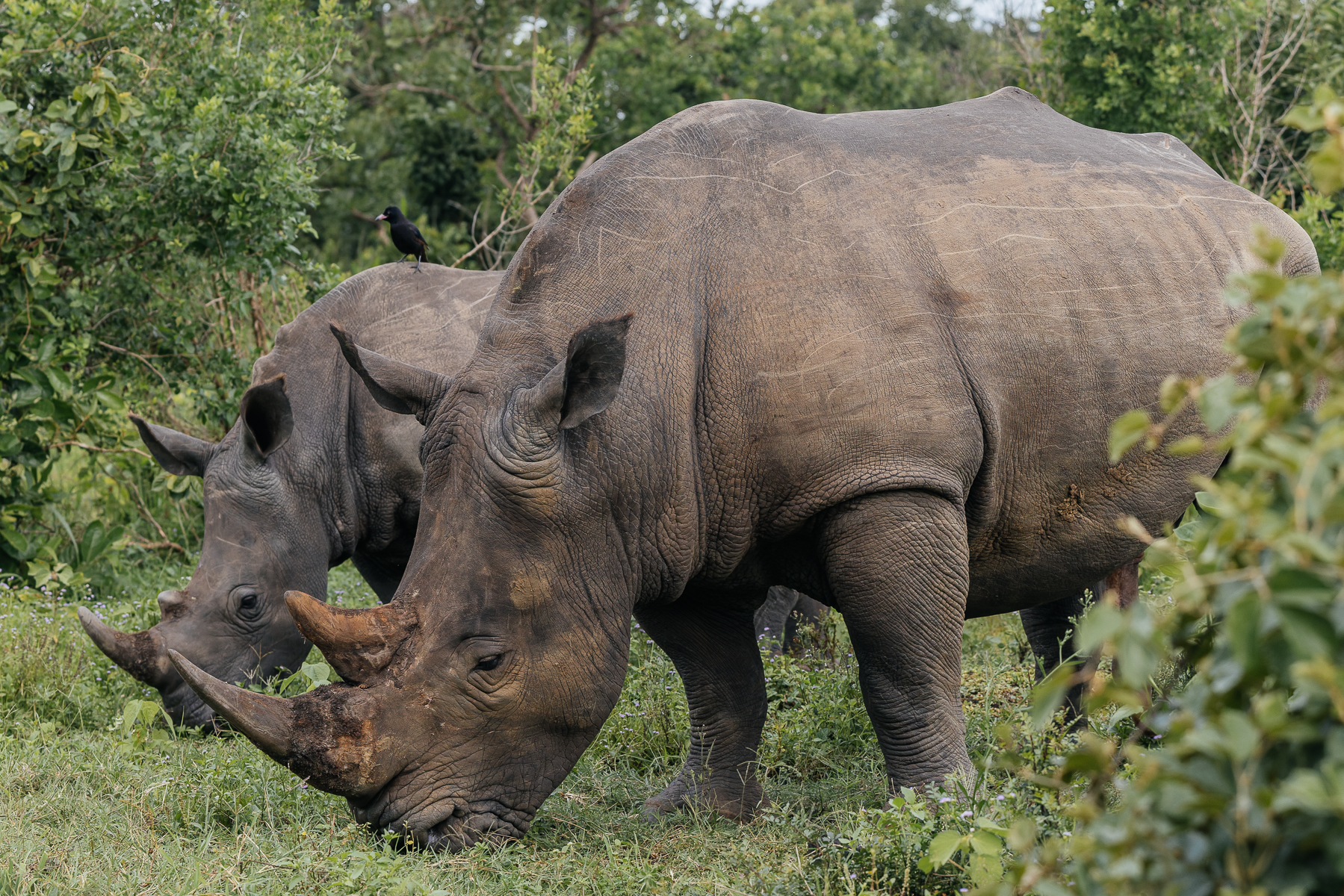
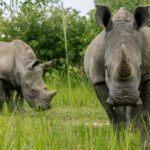
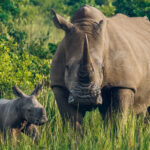
A Southern White Rhino mother and her rapidly-growing calf, already looking like a formidable double act. Southern White Rhino calves stay close to their mums for 2-3 years both for protection and learning the important business of eating grass (image by Virginia Wilde)
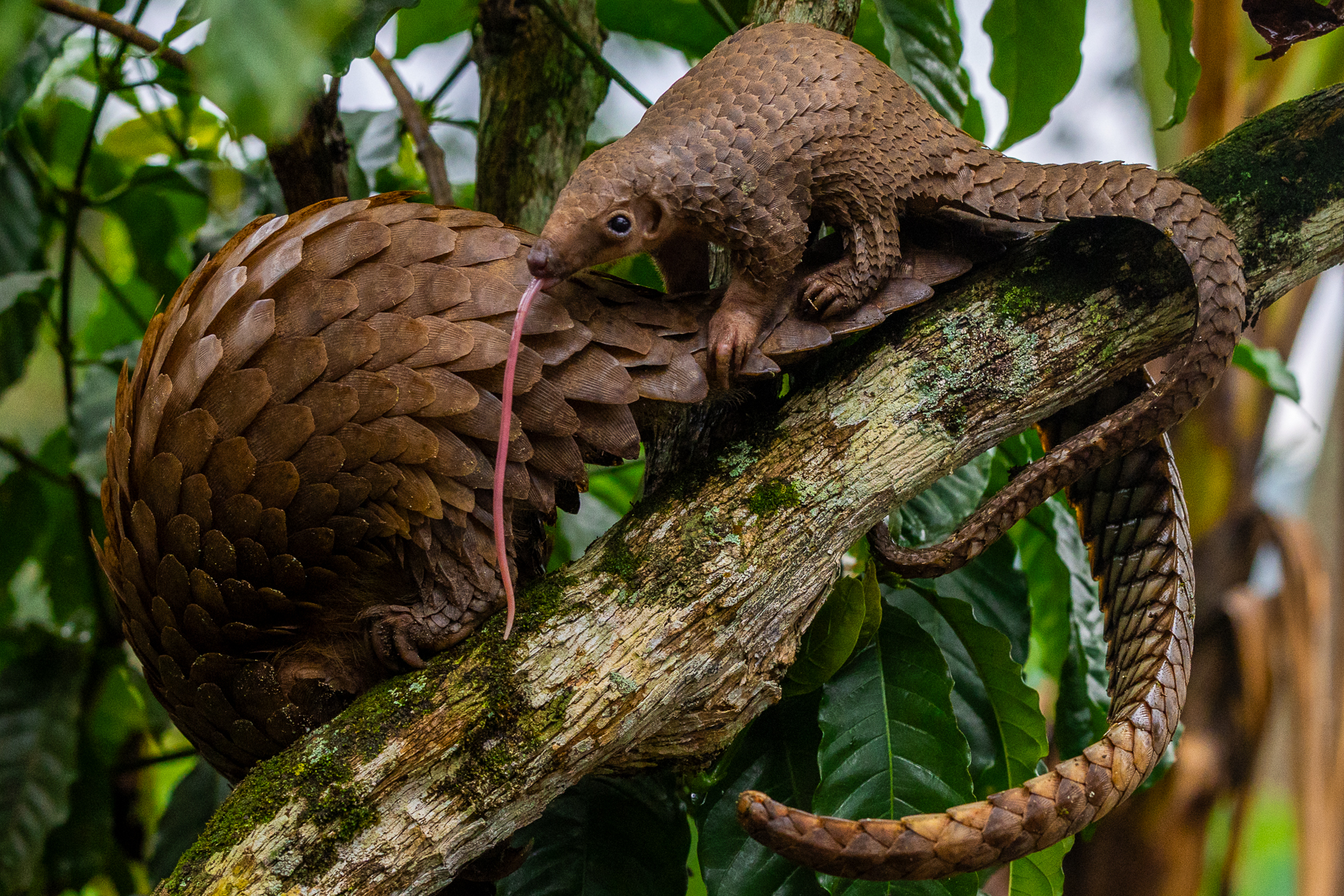
A Tree Pango-pup showing the tongue that will enable it to reach deep into ant and termite nests. Pangolins tongues can be 16 inches (40cm) long when fully extended! (image by Virginia Wilde)
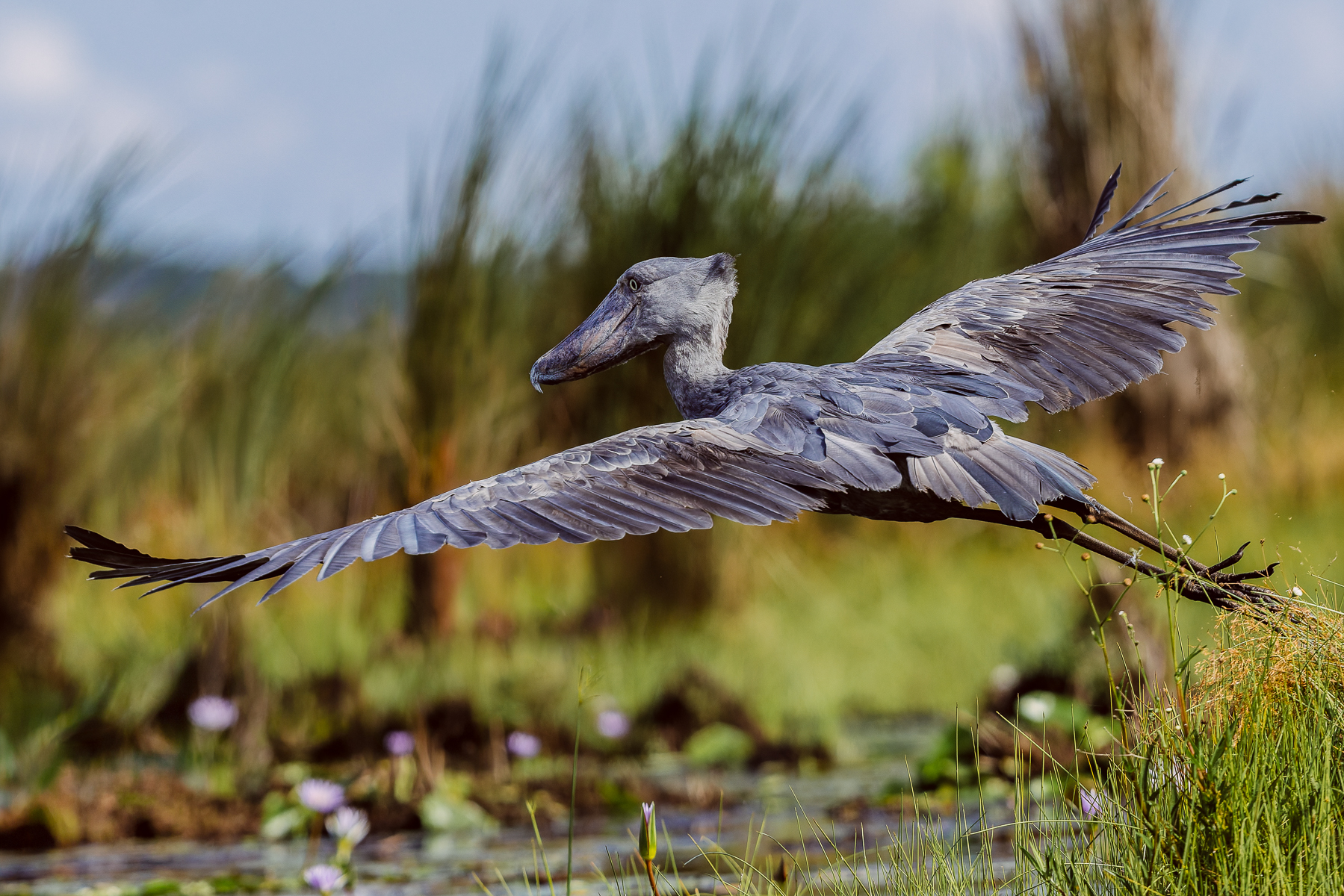
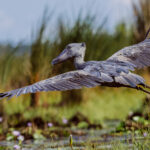
Getting airborne, when you are a Shoebill, is no mean feat. Yet its 2.4 metre wingspan is perfectly suited to low flight across the papyrus swamps and wetlands of East Africa (image by Virginia Wilde)
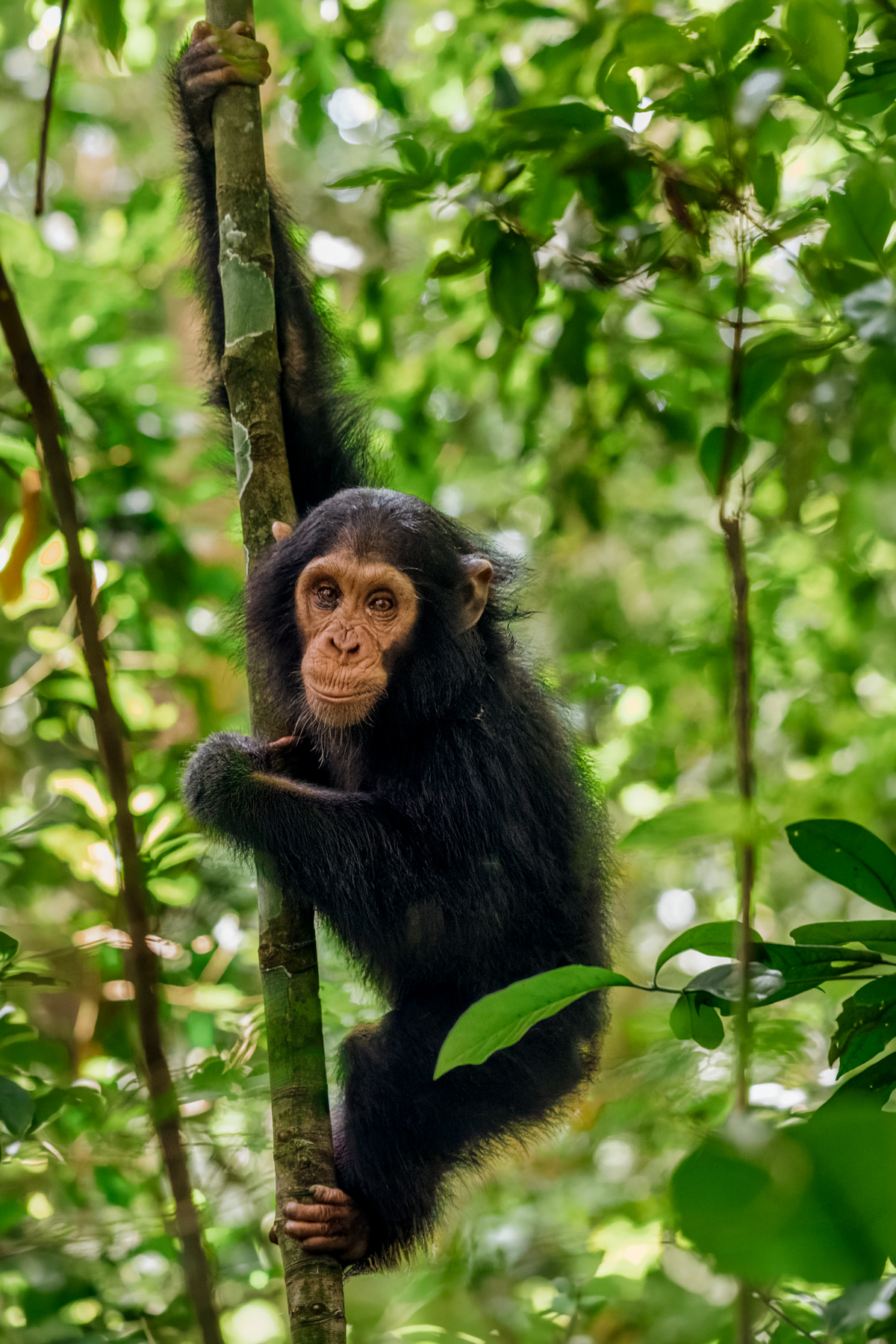
A young chimpanzee - believed to be around two years old -pauses mid-climb in Kibale's forest canopy. Chimpanzees have opposable big toes as well as opposable thumbs, giving the, four gripping limbs to climb, hang and balance (image by Virginia Wilde)
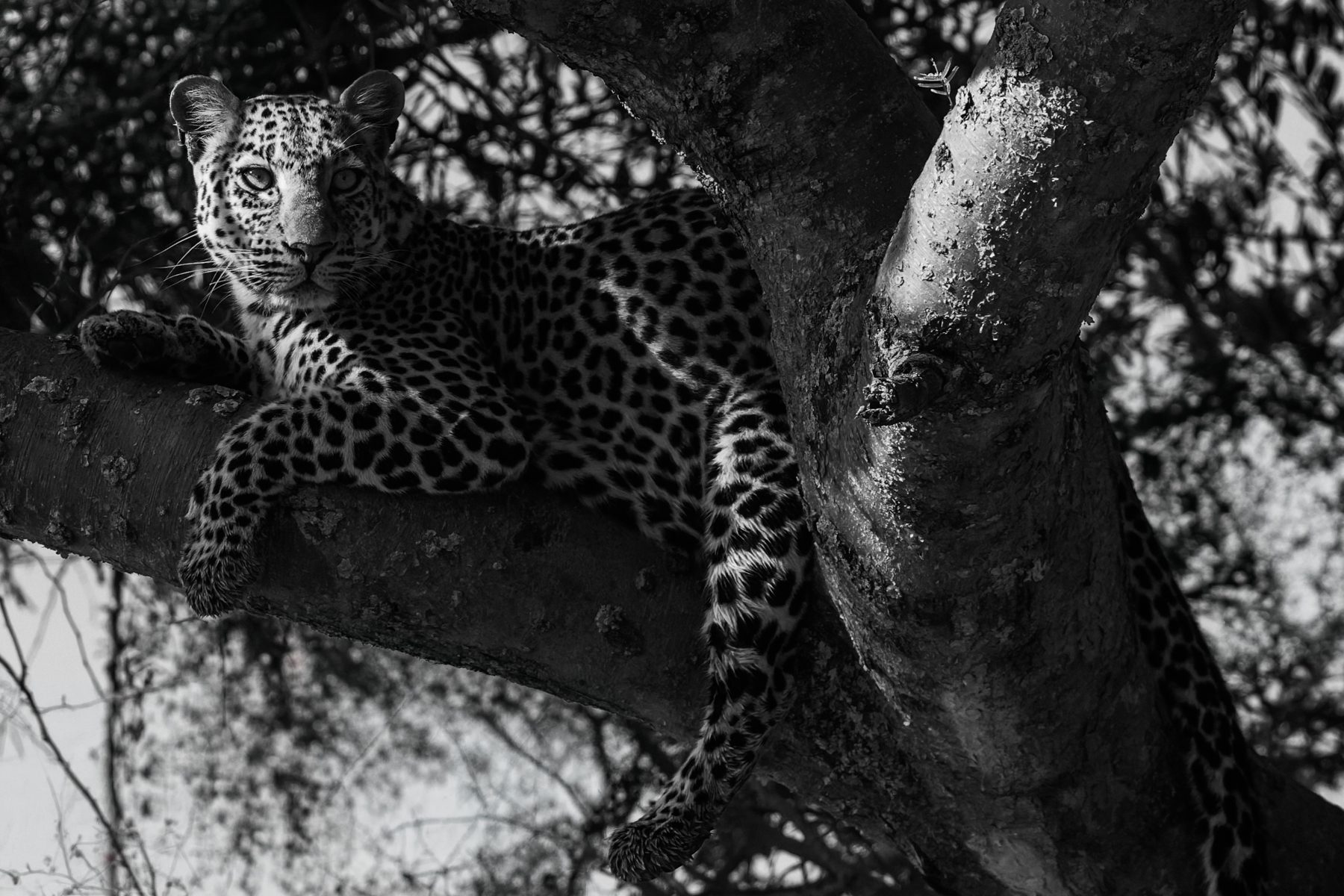
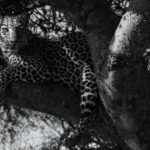
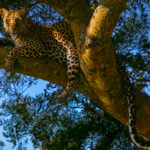
High above the ground, a Leopard settles into the fork of an Acacia tree, its powerful forelimbs draped over the branch (image by Virginia Wilde)
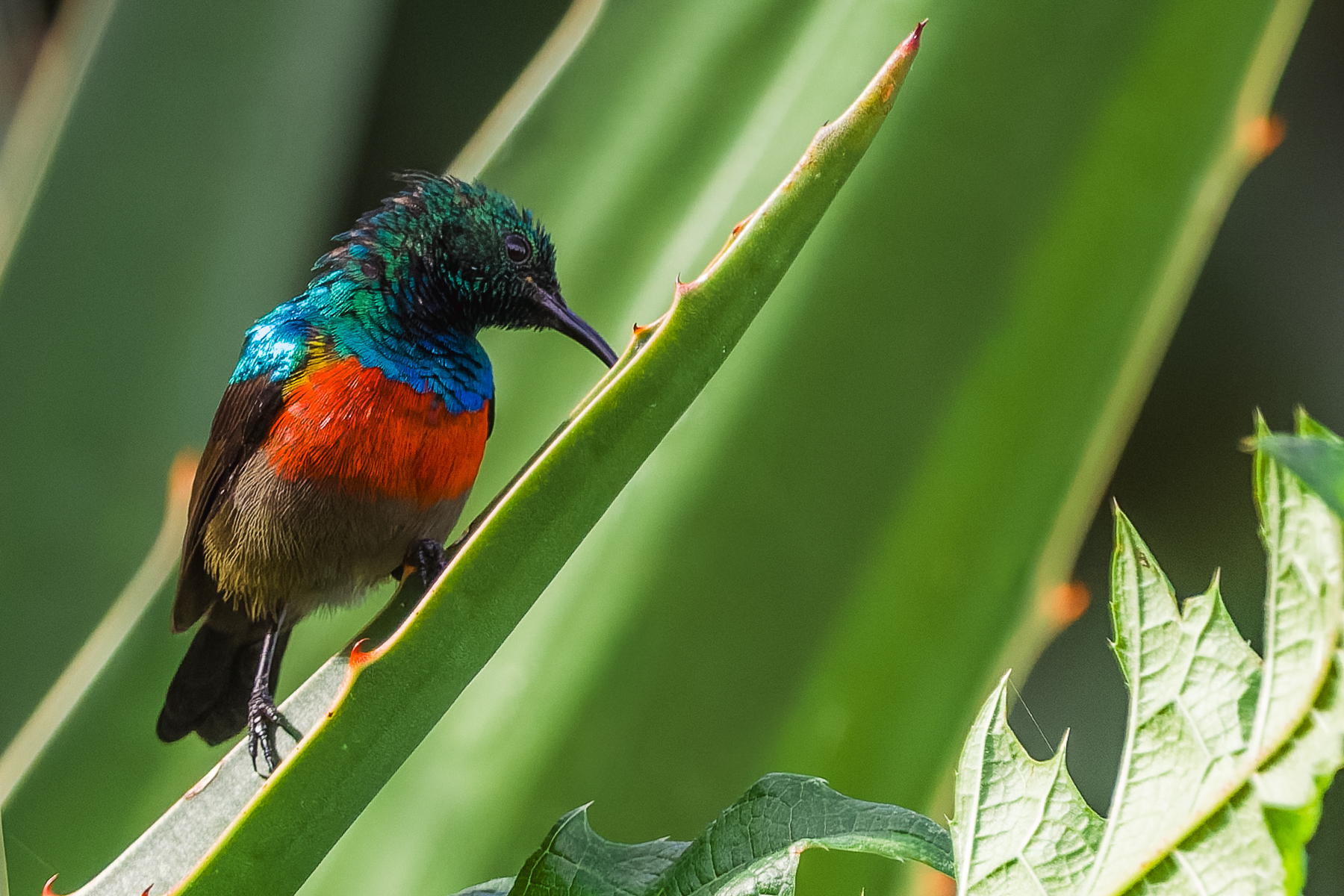
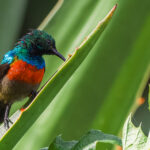
Olive-bellied Sunbirds often manifest as just a flash of scarlet, turquoise and green in Uganda's forests and gardens. The male's brilliant colours are especially striking when their iridescent feathers catch the light, while that long, slender bill is perfectly suited to probing flowers for nectar (image by Virginia Wilde)
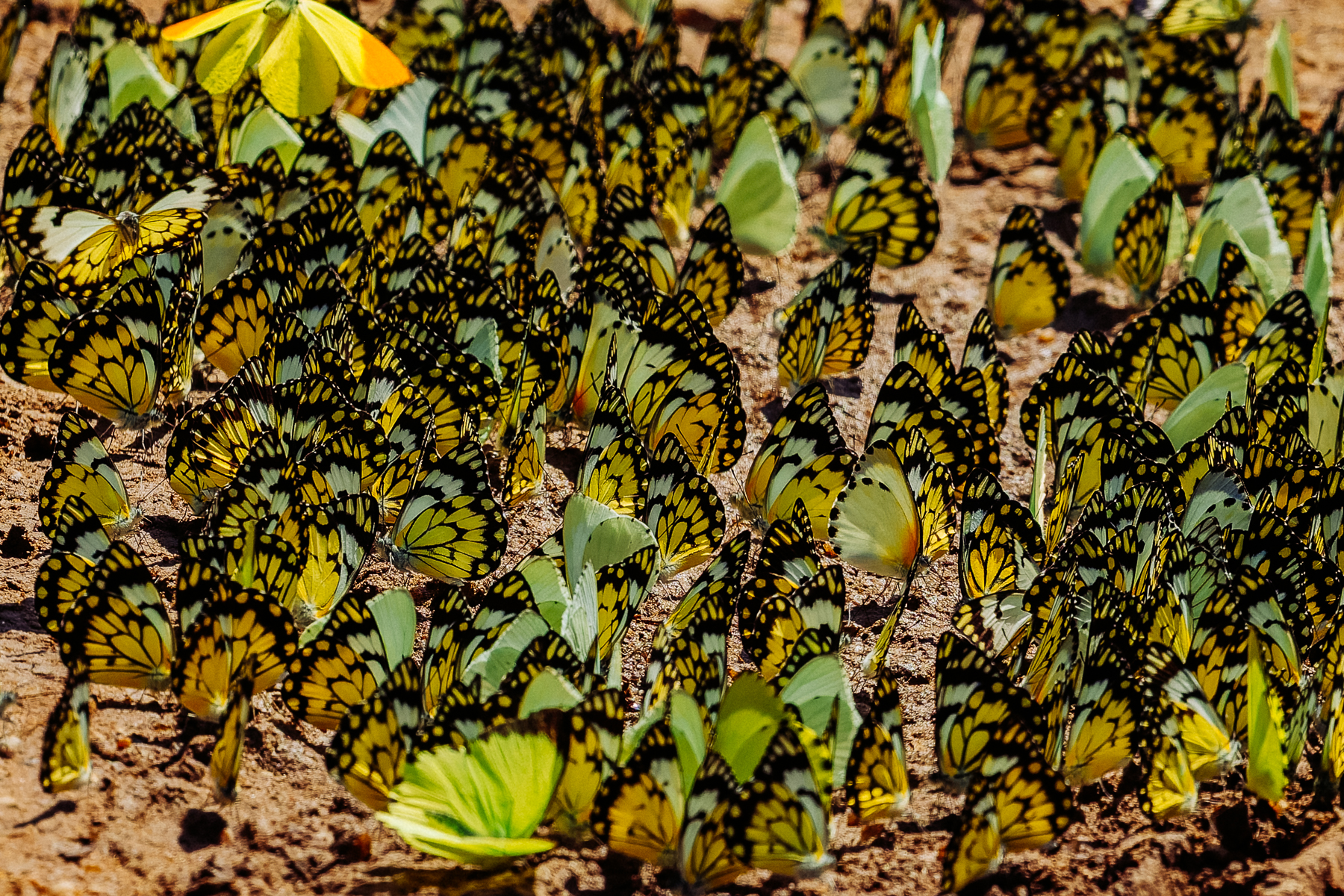
A puddling aggregation of African Caper White Butterflies in Uganda's Queen Elizabeth National Park. Caper Whites can undertake large-scale migrations, with impressive numbers on the wing at the same time (image by Virginia Wilde)
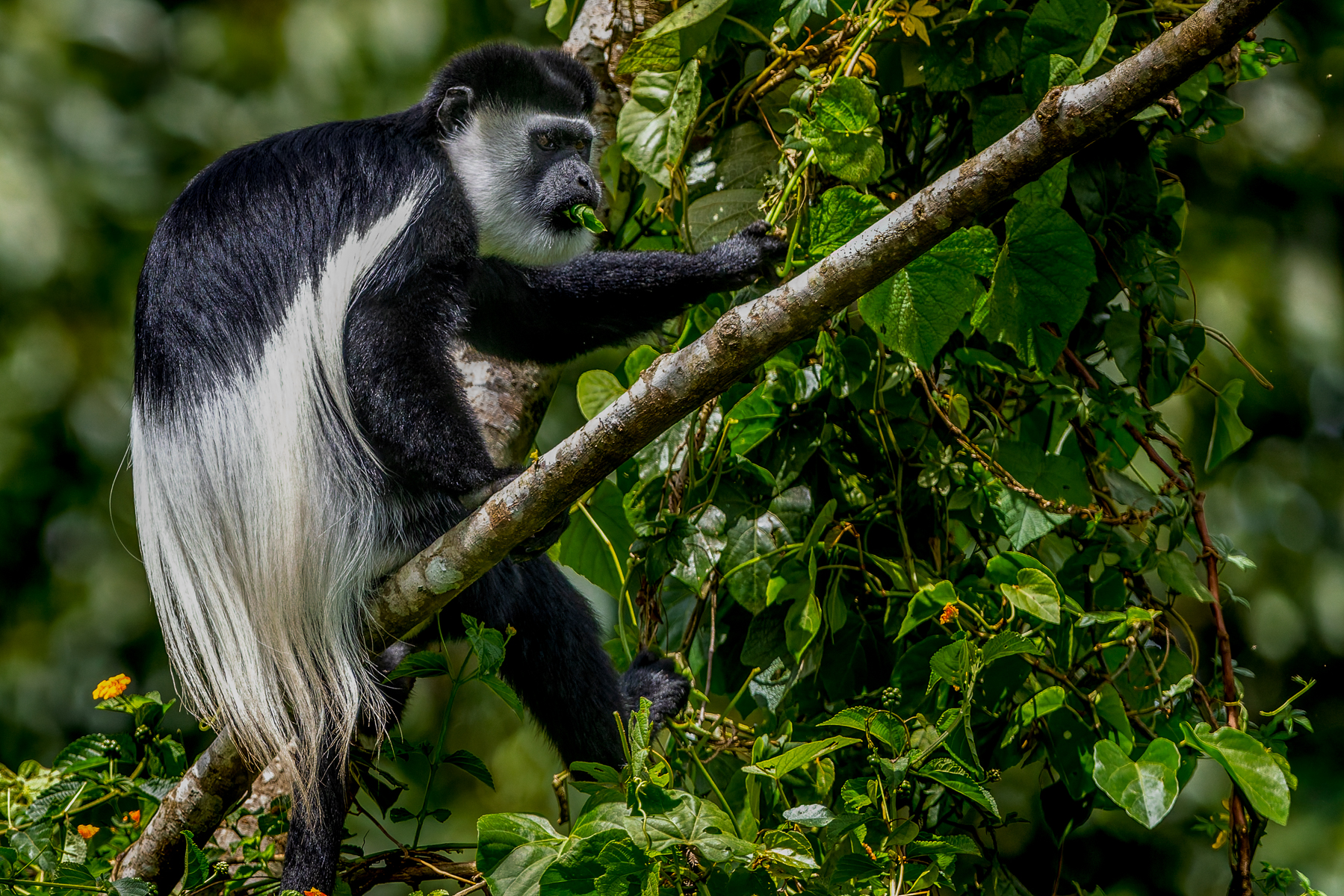
A Black-and-White Colobus displays the thick white mantle that can aid its balance when leaping through trees. Male Colobus have a spectacular dawn chorus of deep, roaring calls, helping neighbouring groups maintain spacing (image by Virginia Wilde)
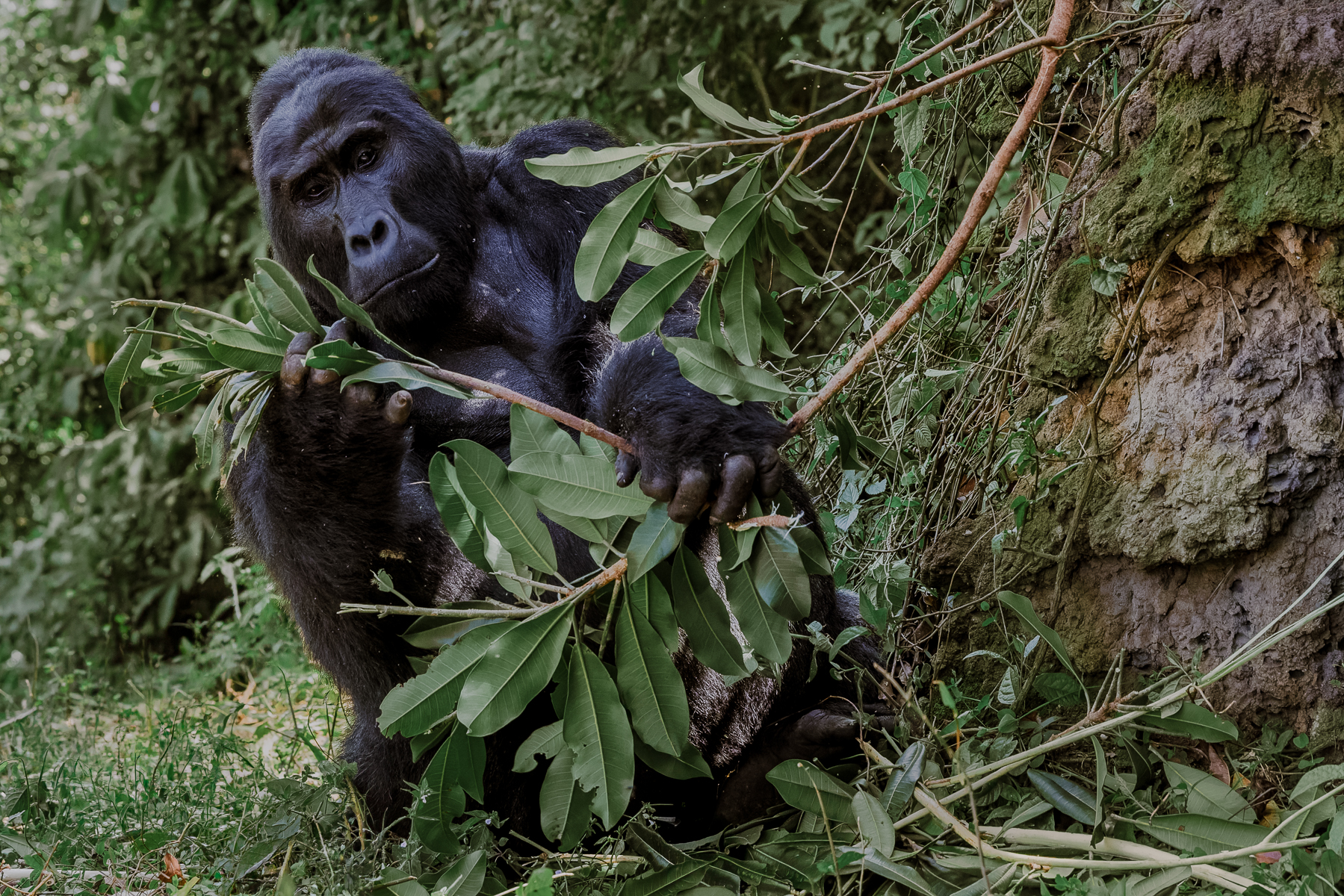
Silverback Mountain Gorilla Kavuyo, of the Binyindo family, tucks into some tasty branches in Uganda's Bwindi Impenetrable Forest (image by Virginia Wilde)
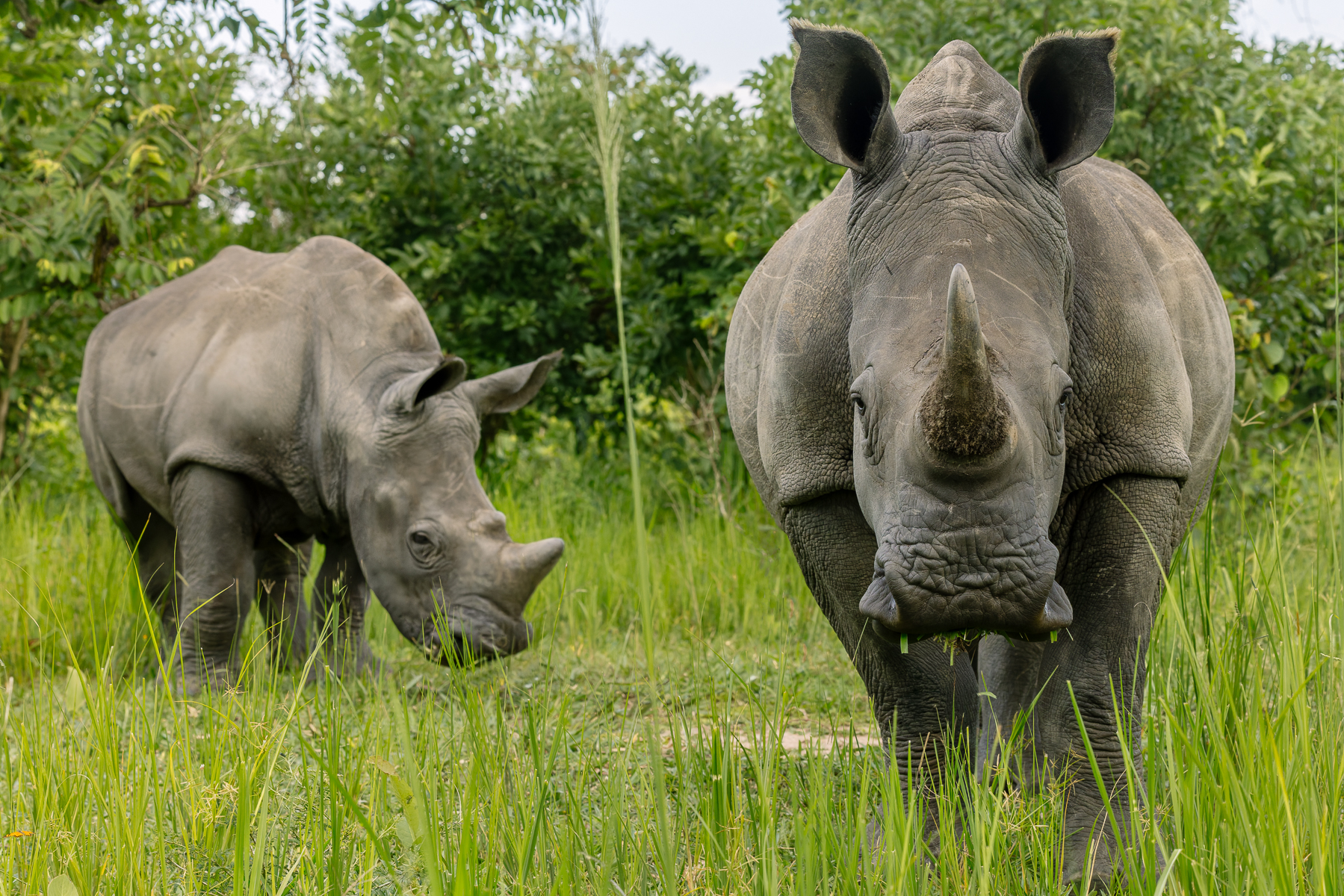
A Southern White Rhino mother and her year-old calf, already looking like a formidable double act. Southern White Rhino calves stay close to their mums for 2-3 years both for protection and learning the important business of eating grass (image by Virginia Wilde)
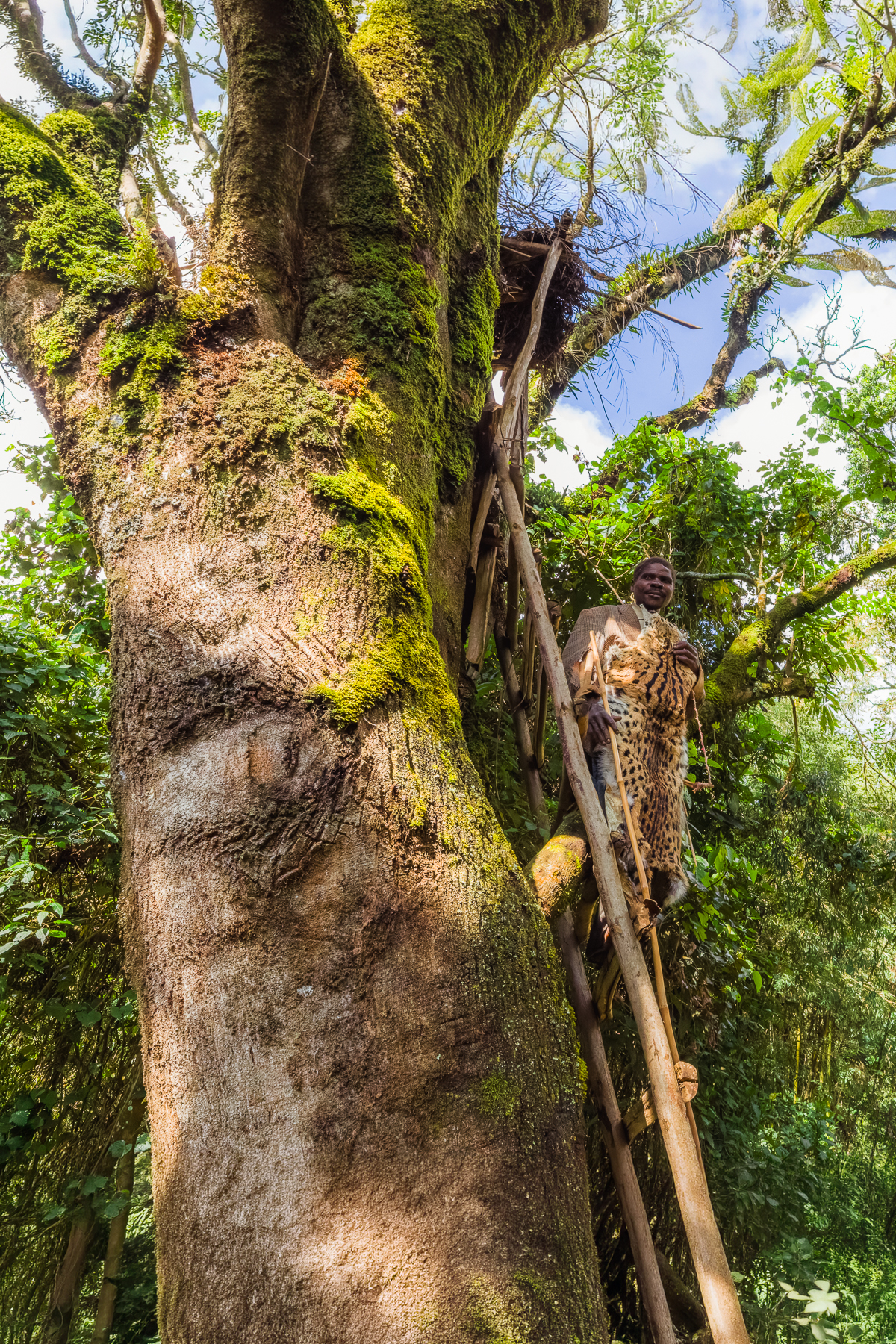
Echuya Twa man George shows the way to a traditional forest look-out to scan for prey: an essential way of life when this community centred their lives around hunting and gathering (image by Virginia Wilde)
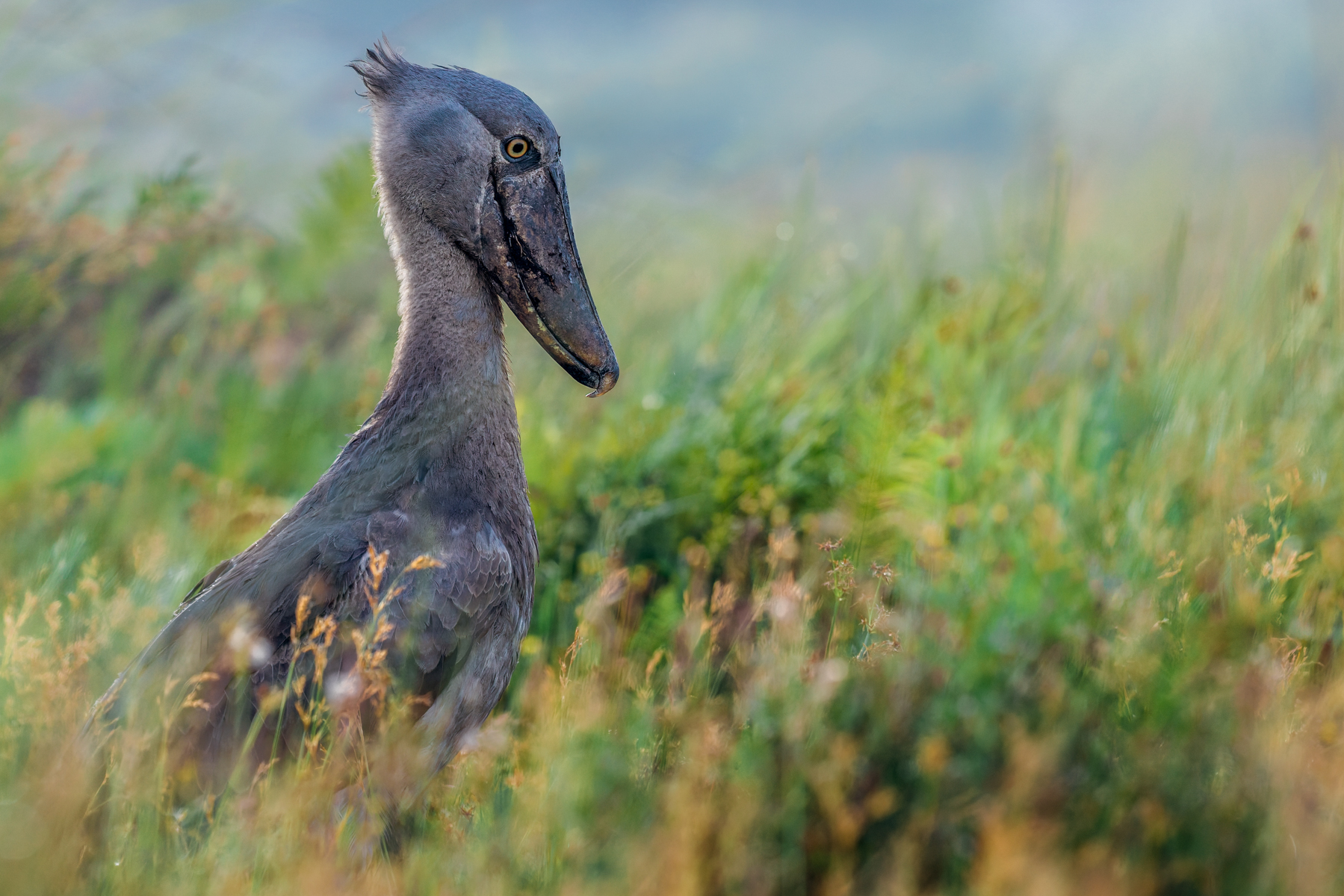
Shoebills - part prehistoric-looking Swamp Lord, part ancient statue - are one of Africa's most extraordinary birds. Their enormous shoe-shaped bill is perfectly adapted for catching large prey, including lungfish, catfish and even waterbirds. Shoebills can also stand remarkably still for very long periods before making a lightning-fast strike (image by Virginia Wilde)
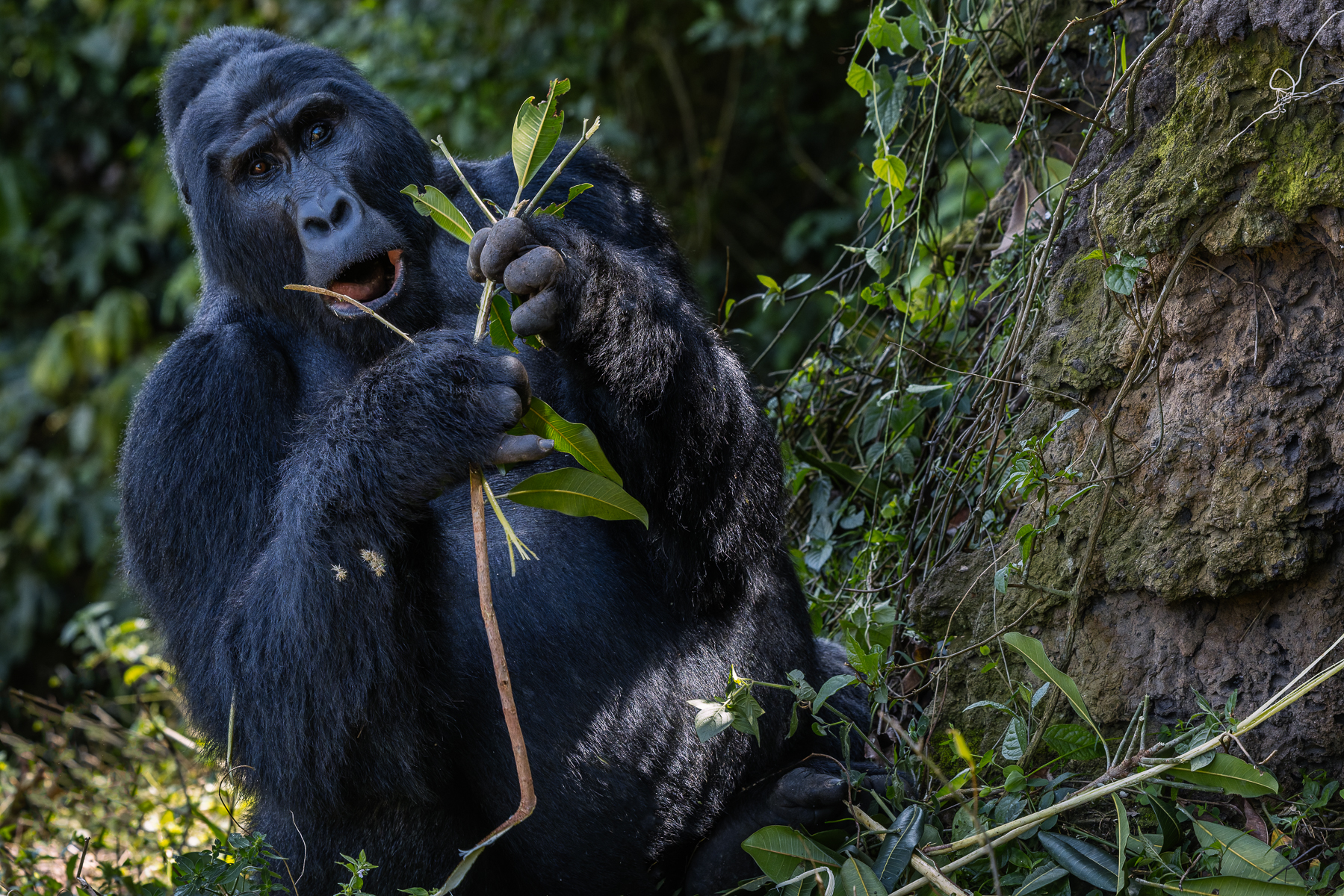
Nothing says fine dining like eating an entire branch. Mountain Gorillas are primarily herbivores and can spend hours each day stripping leaves, stems and shoots from the vegetation around them - with around 32kg of food needed each day for an adult male (image by Virginia Wilde)
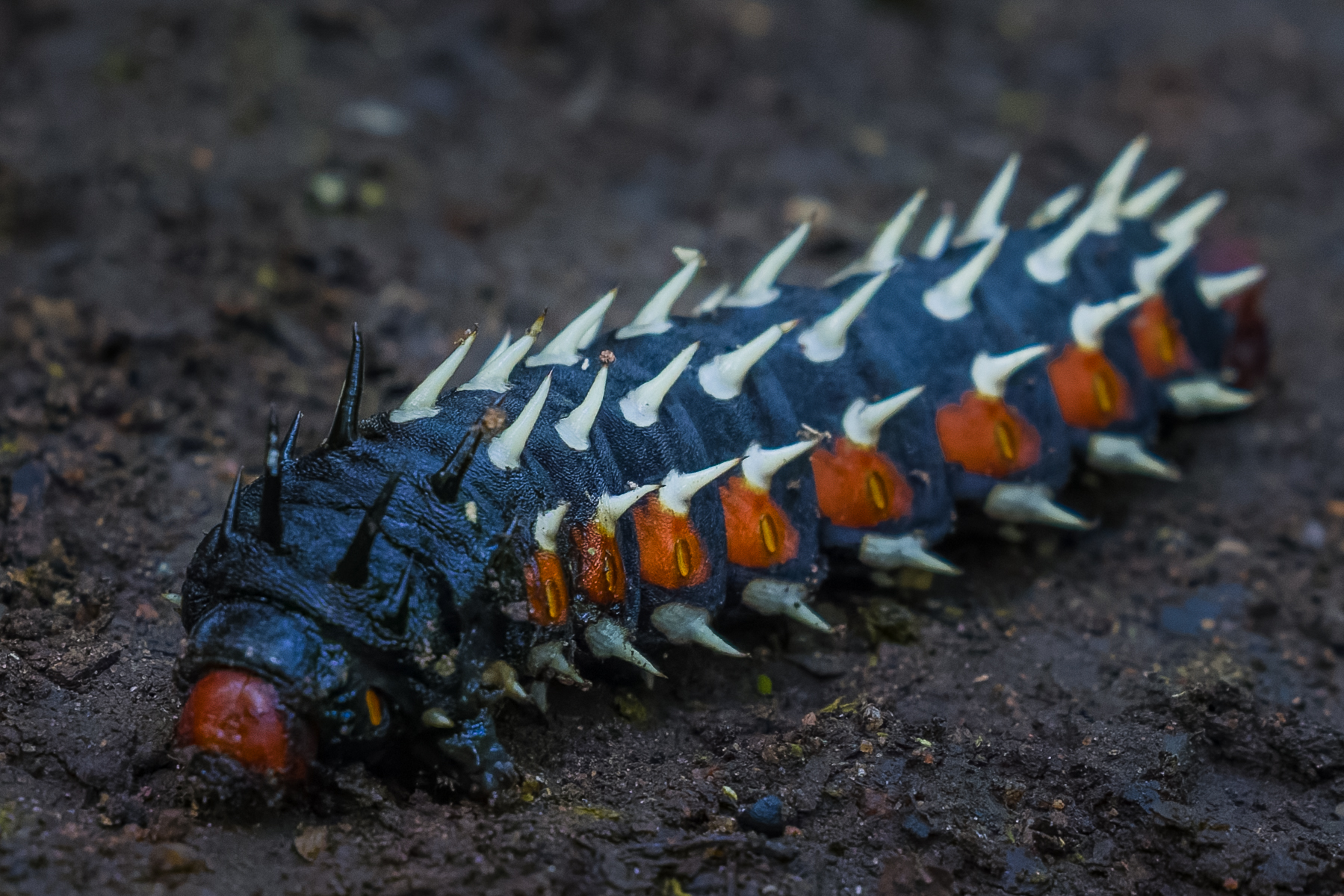
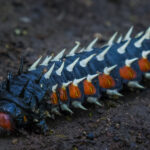
The Cabbage Tree Emperor Caterpillar is one spiky-looking larva. Designed to repel and confuse predators, I think he's doing a great job at this (image by Virginia Wilde)
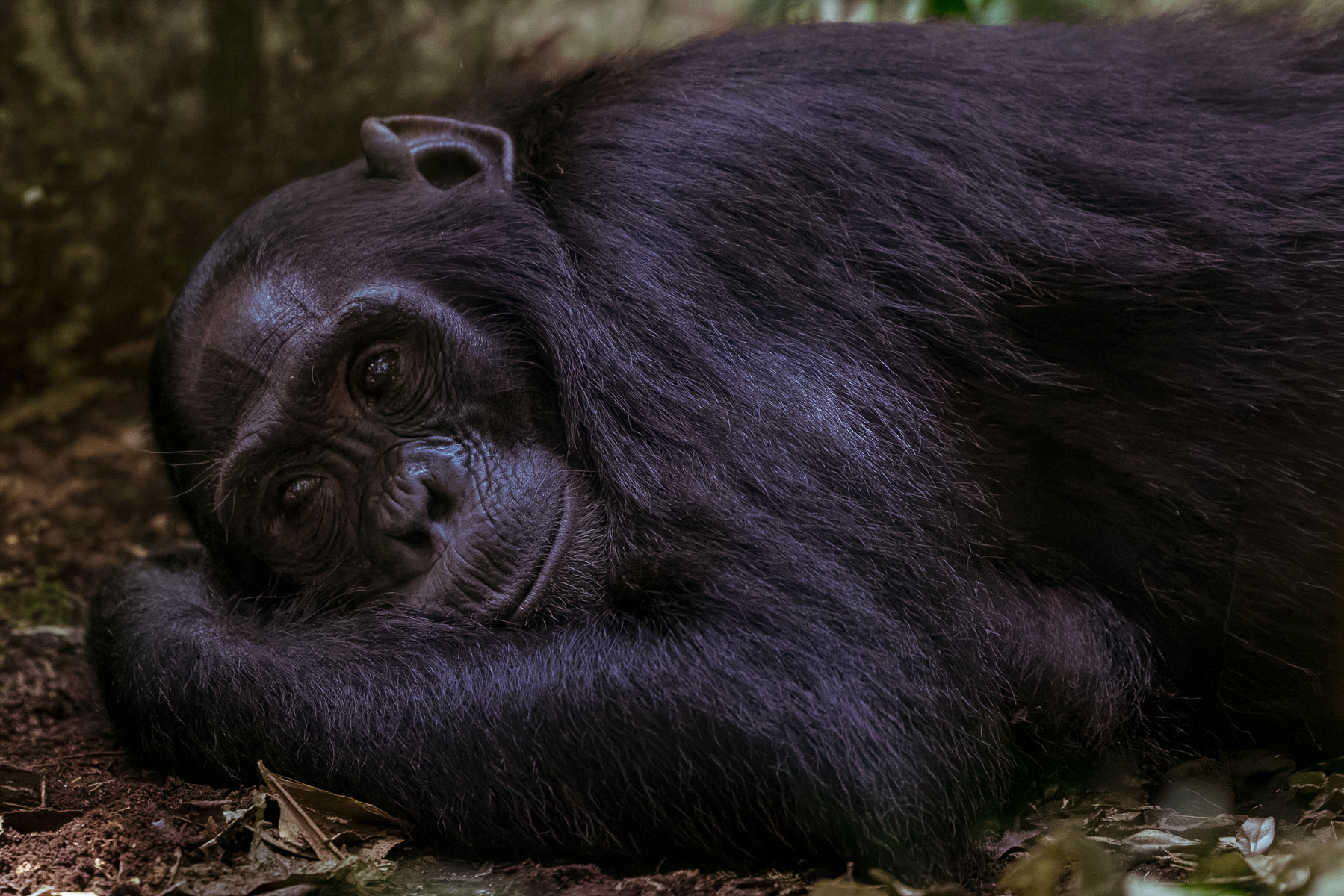
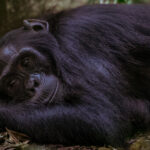
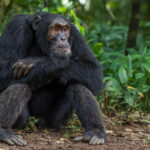
This Eastern Chimpanzee has the face of someone who has cancelled every plan and feels absolutely no guilt about it. Chimpanzees spend a lot of time resting between bouts of feeding, travelling and socialising (image by Virginia Wilde)
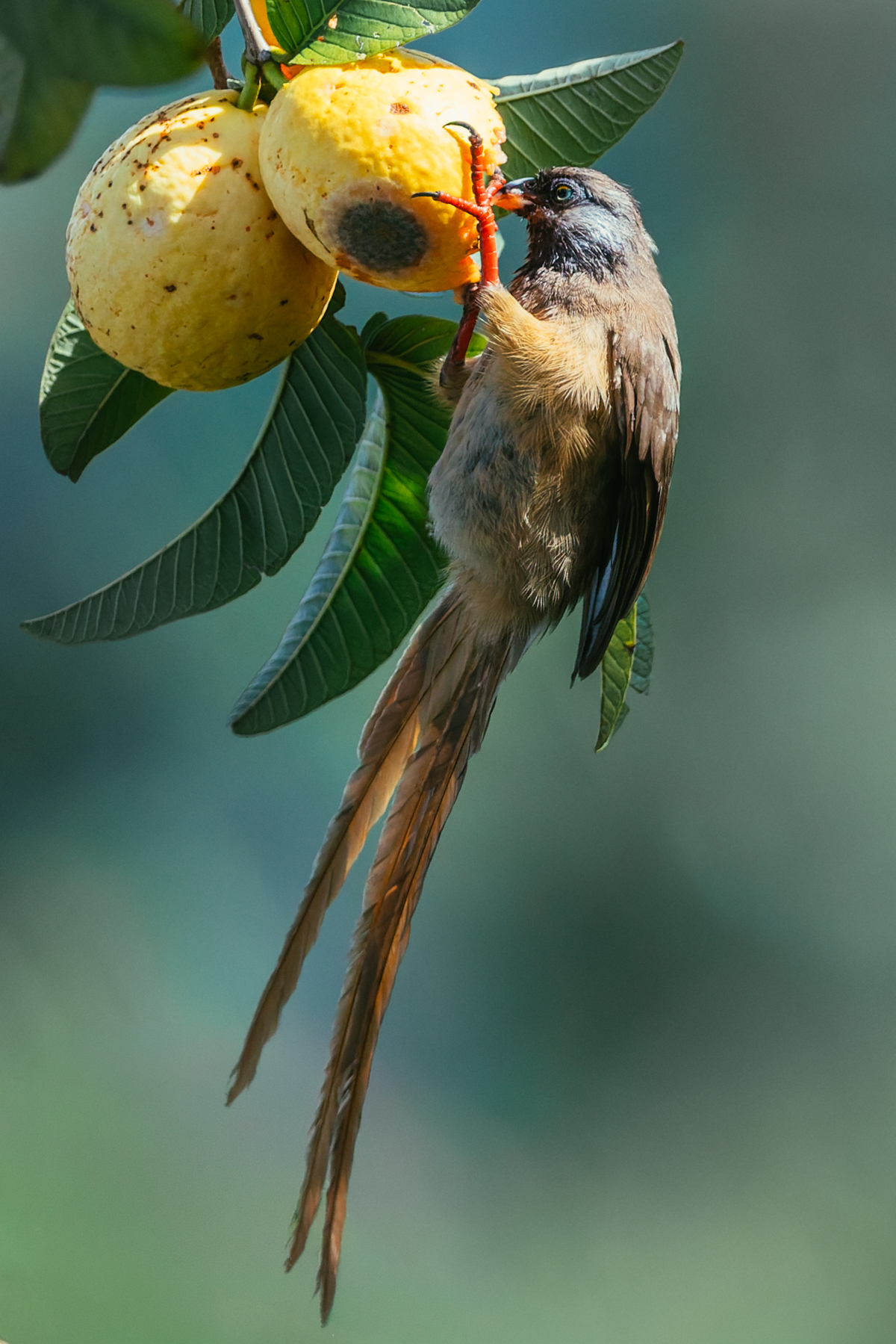
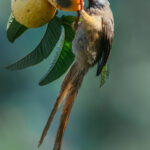
A Speckled Mousebird feasts on a ripe guava in our lodge garden near Uganda's Kibale Forest. These highly social birds are mainly frugivorous, also feeding on flowers and nectar (image by Virginia Wilde)
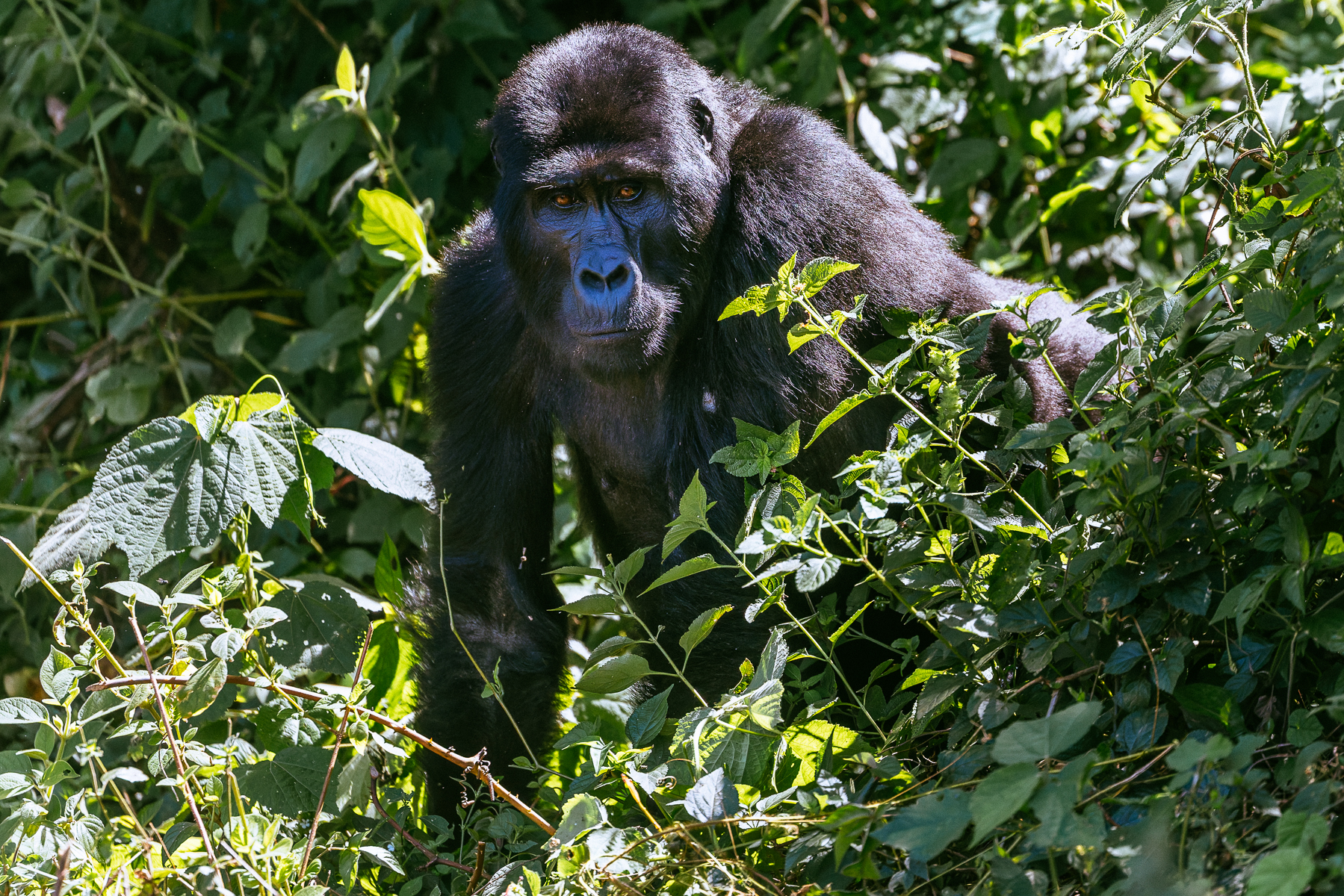
A female Mountain Gorilla emerges from the bushes on the edge of Uganda's Bwindi Impenetrable Forest. Females usually remain with their birth group until adolescence, then transfer to another group - often several times during their lives - preventing inbreeding (image by Virginia Wilde)
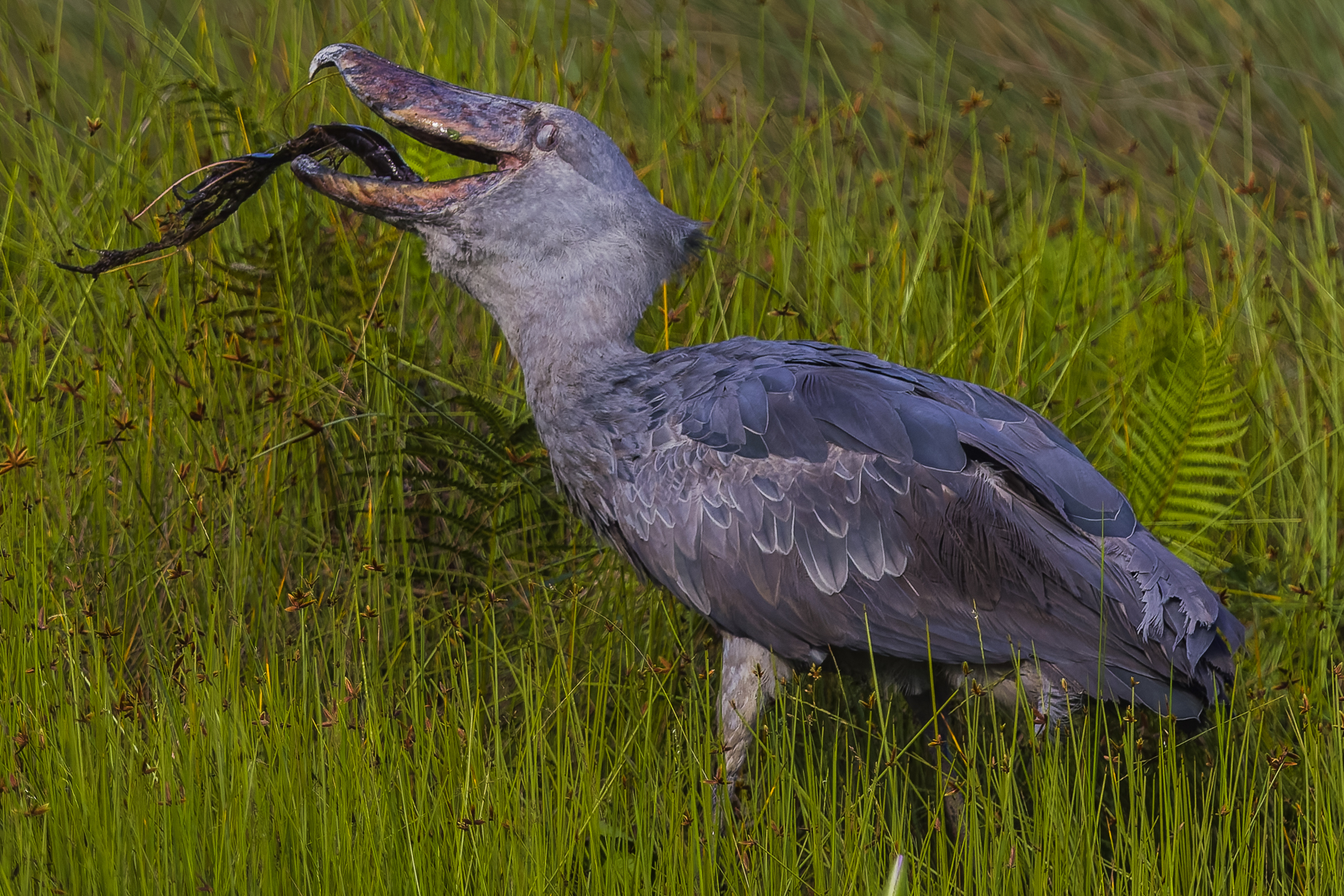
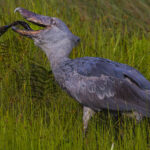
The Lungfish is the Shoebill's idea of fast food: catch it, clamp it, swallow it. That enormous bill can seize surprisingly large prey, while the sharp hooked tip keeps a slippery fish firmly under control (image by Virginia Wilde)
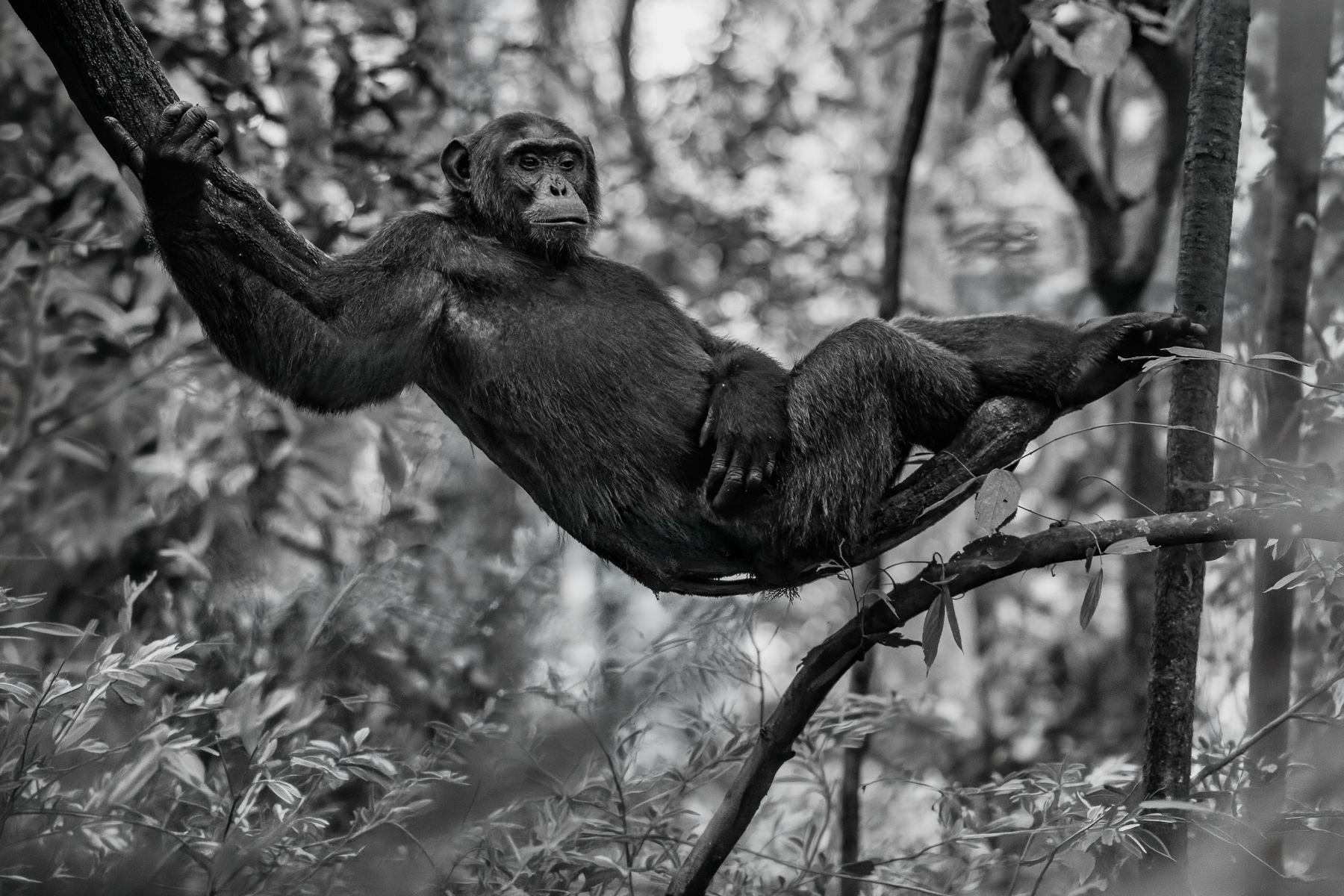
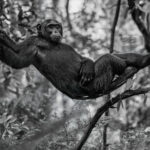
Apparently, this is the best seat in the forest, and he's not giving it up! A member of the Kanyantare Chimpanzee family shows why hanging around is actually a perfectly sensible way to spend an afternoon (image by Virginia Wilde)
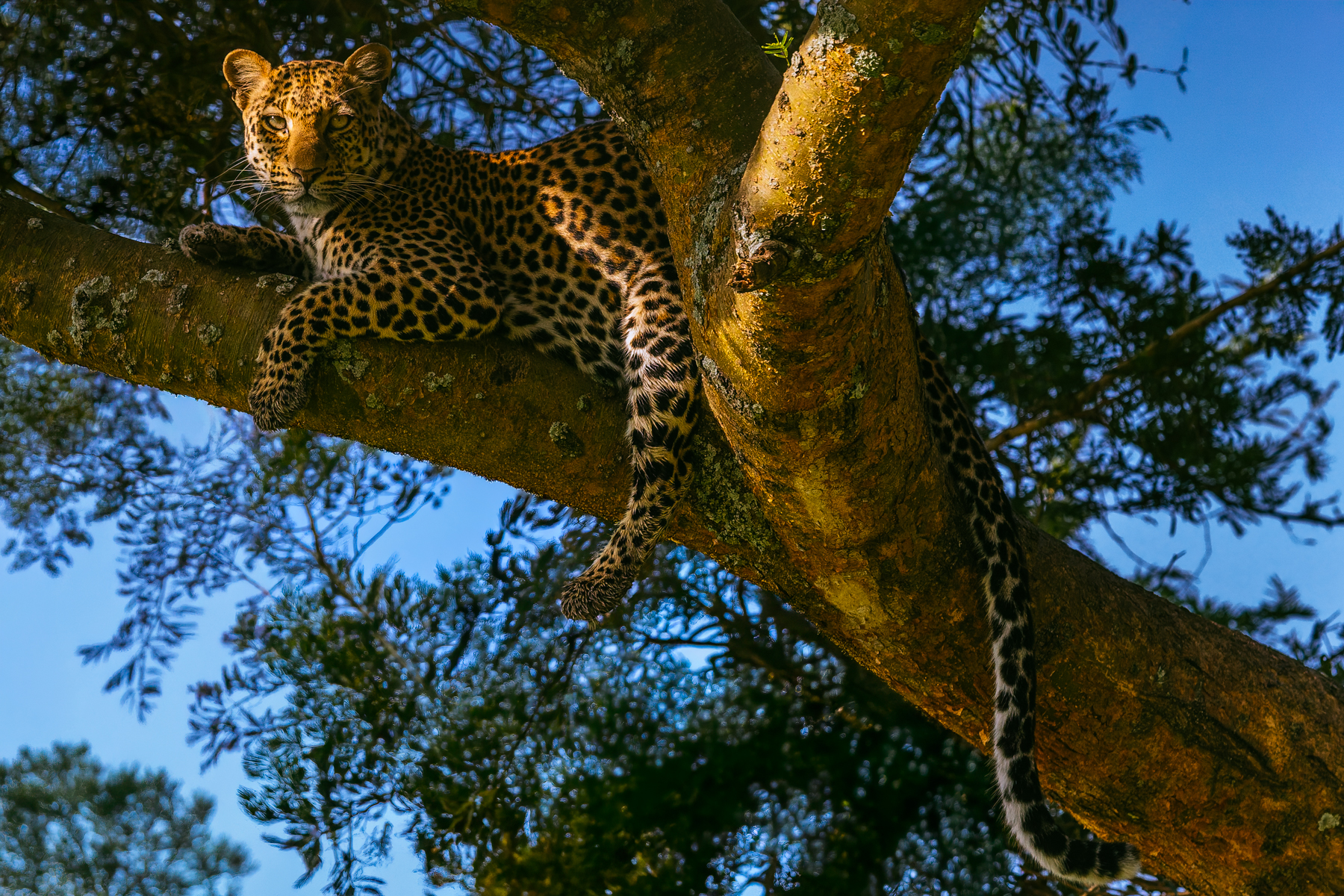
Eye-to-eye with a beautiful young female Leopard, resting in a tree in Uganda's Queen Elizabeth National Park (image by Virginia Wilde)
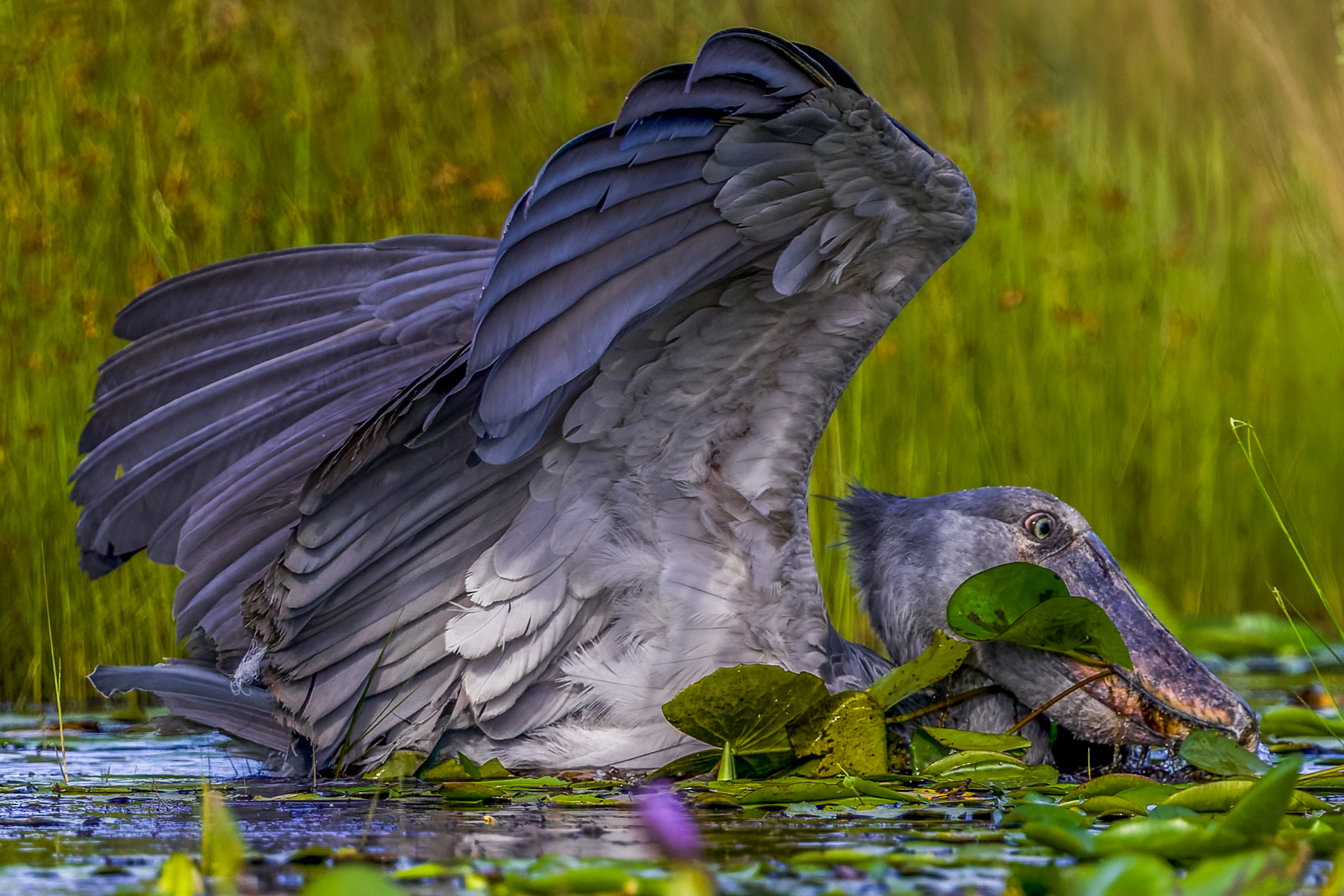
A prehistoric-looking Shoebill dives for its favourite lungfish, using their huge bill as a fishing net, scooping up prey rather than stabbing it (image by Virginia Wilde)
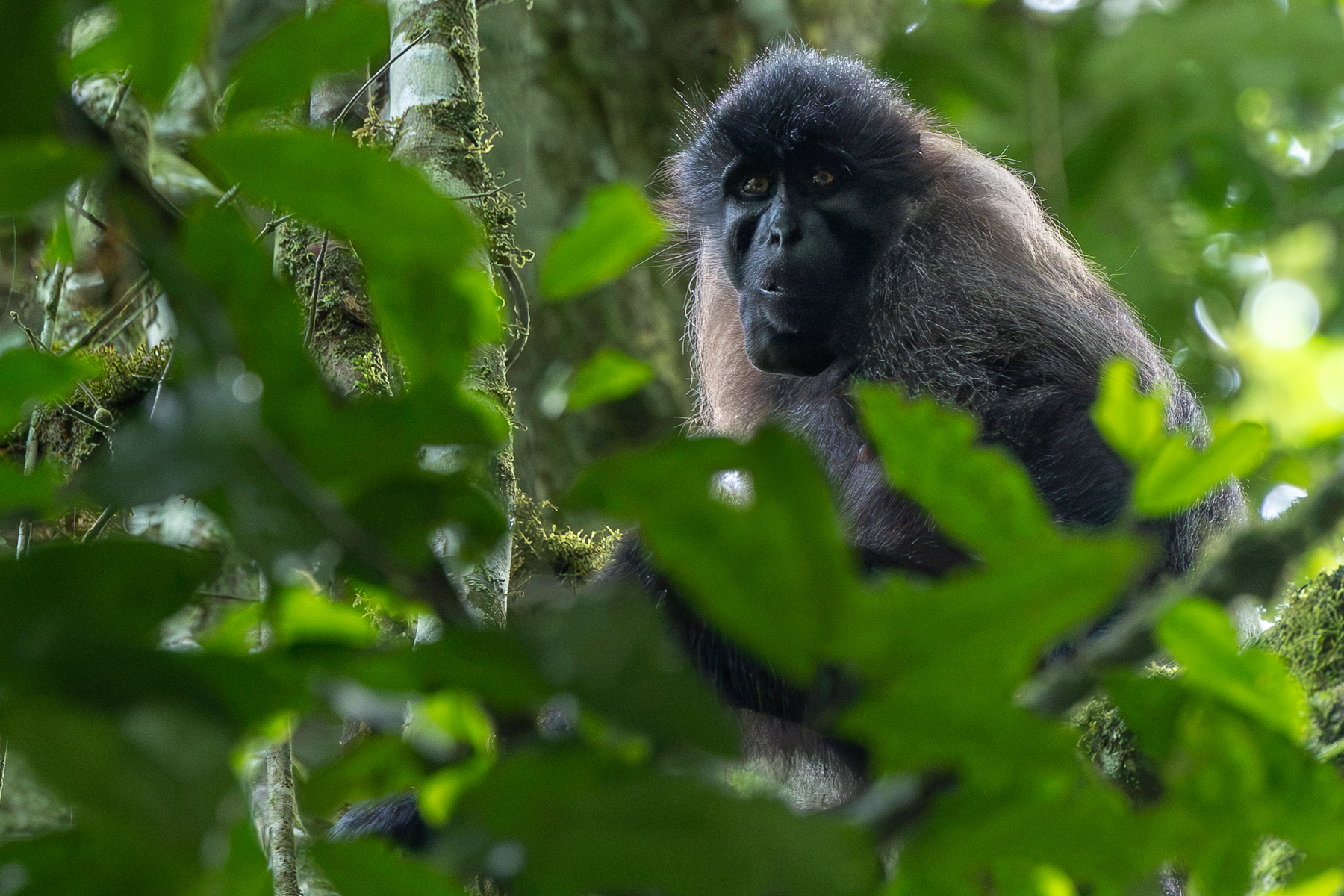
The large-chinned faces of Grey-cheeked Mangabeys can give them an intense, suspicious expression. Some taxonomists treat the Ugandan form as a separate species - but it is not widely accepted as such (image by Virginia Wilde)
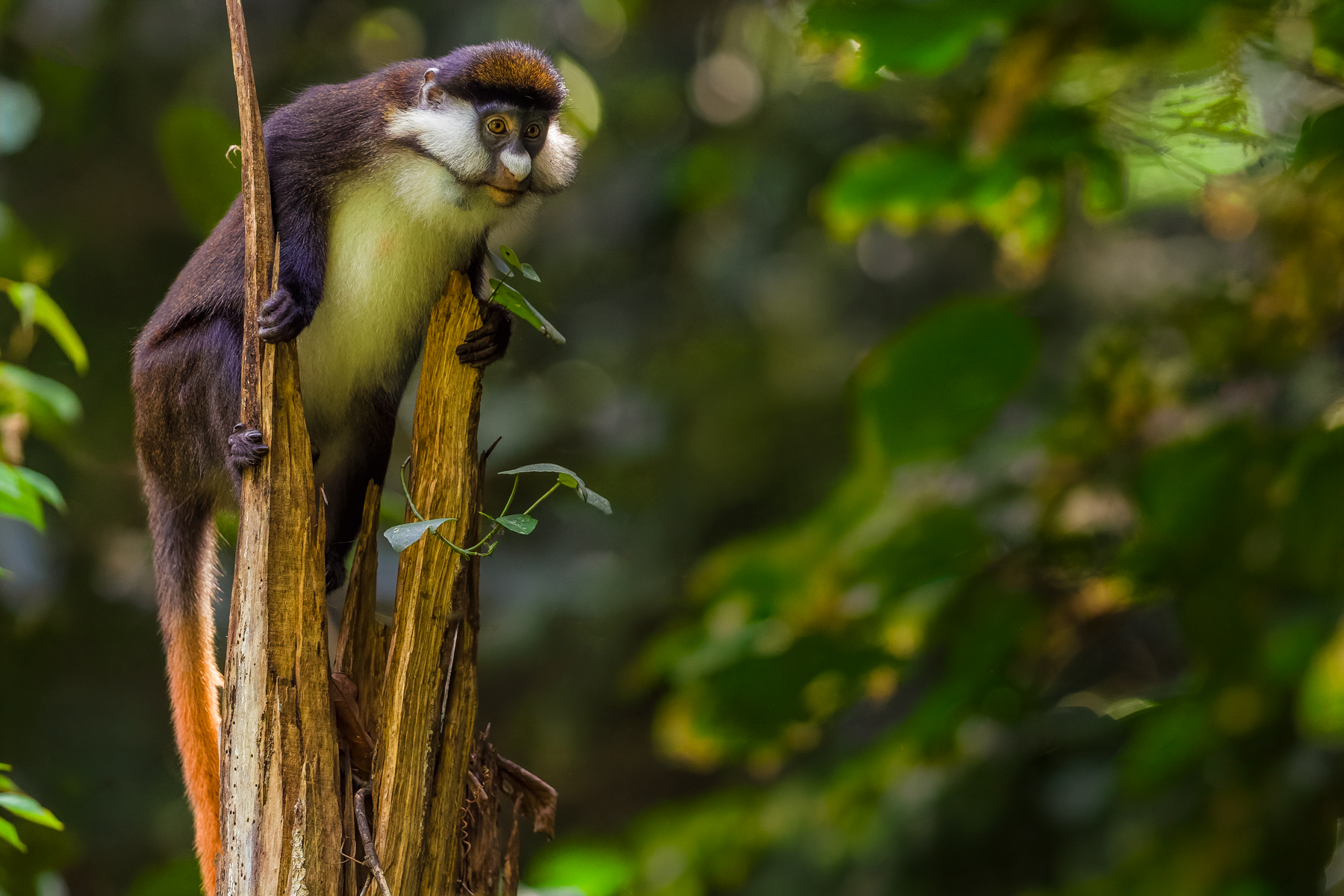
A Red-tailed Monkey uses a broken tree trunk as a look-out post. This species' striking white cheek whiskers and red tail make it one of Uganda's most distinctive forest primates (image by Virginia Wilde)
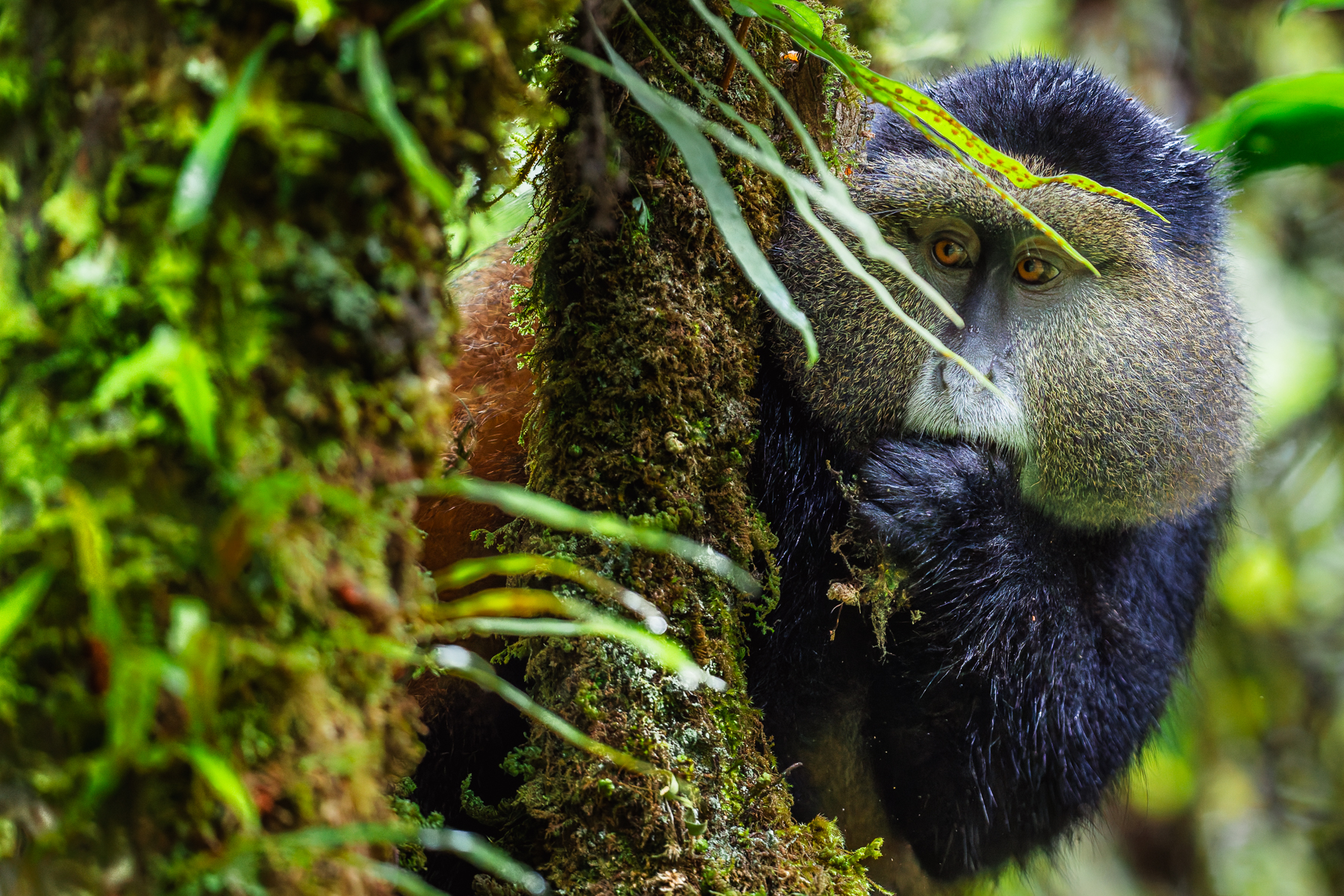
'How long can I hide behind here, before she sees me?' A Golden Monkey appears to be taking sneaky looks from behind a tree trunk, while foraging for leaves and berries (image by Virginia Wilde)
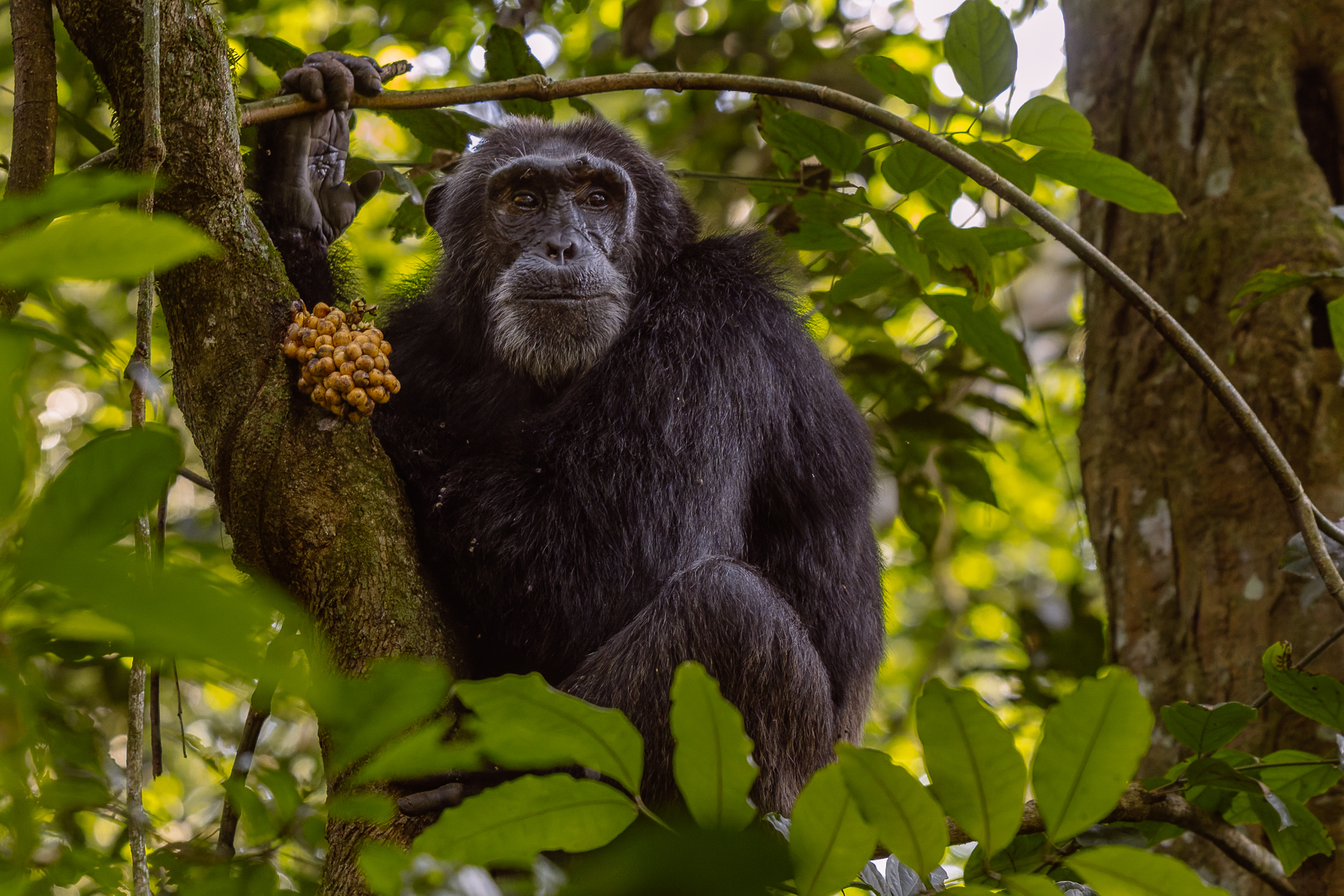
A more senior Eastern Chimpanzee from the Kanyantare family guards some berries, which it then started tucking into, in Uganda's Kibale National Park (image by Virginia Wilde)
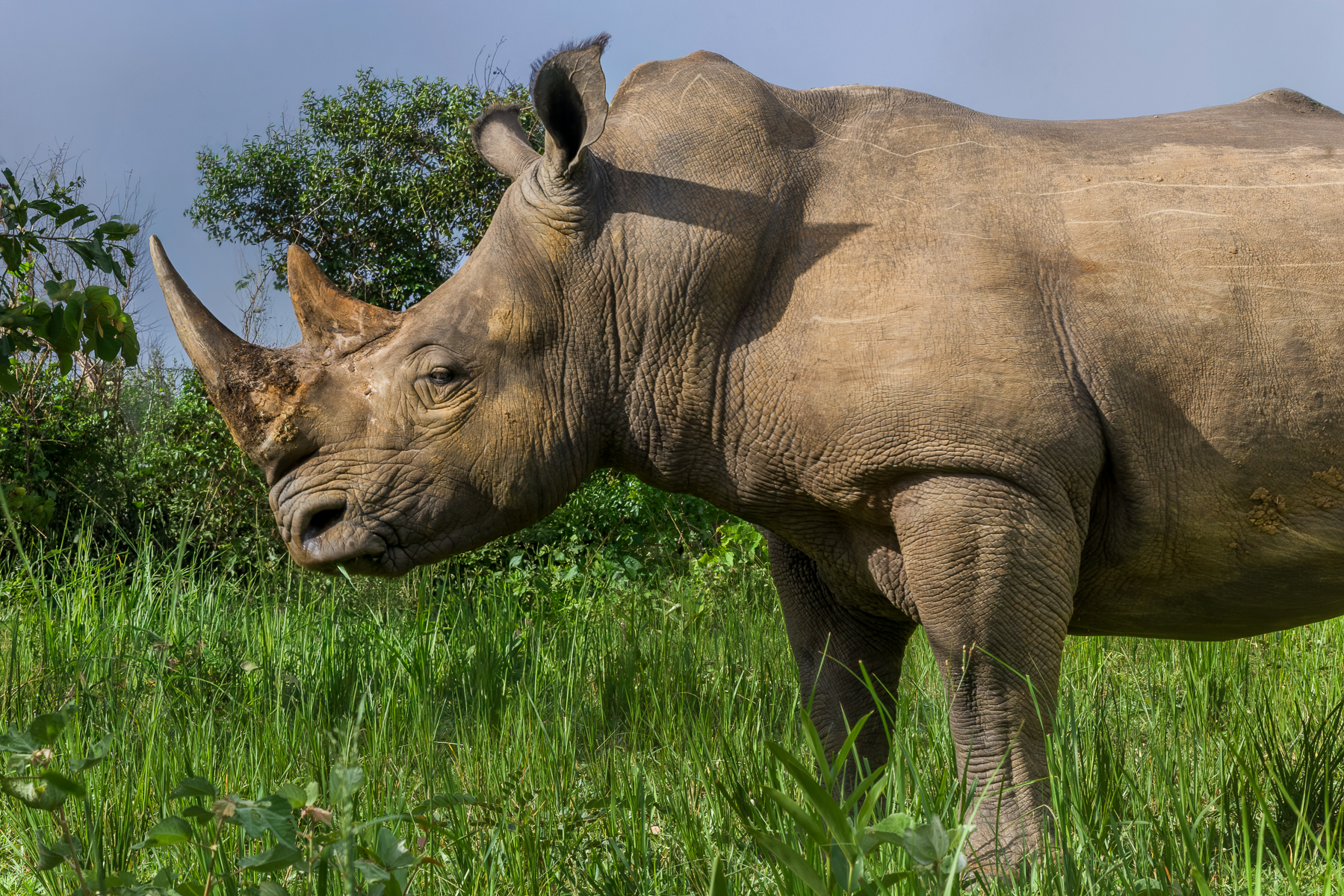
A Southern White Rhino showcasing its incredible horn. The horn isn't bone and is not attached to its skull like an antler. It grows from the skin as a dense mass of keratin fibres and is worn down, broken and shaped over a Rhino's lifetime, making every horn slightly different (image by Virginia Wilde)
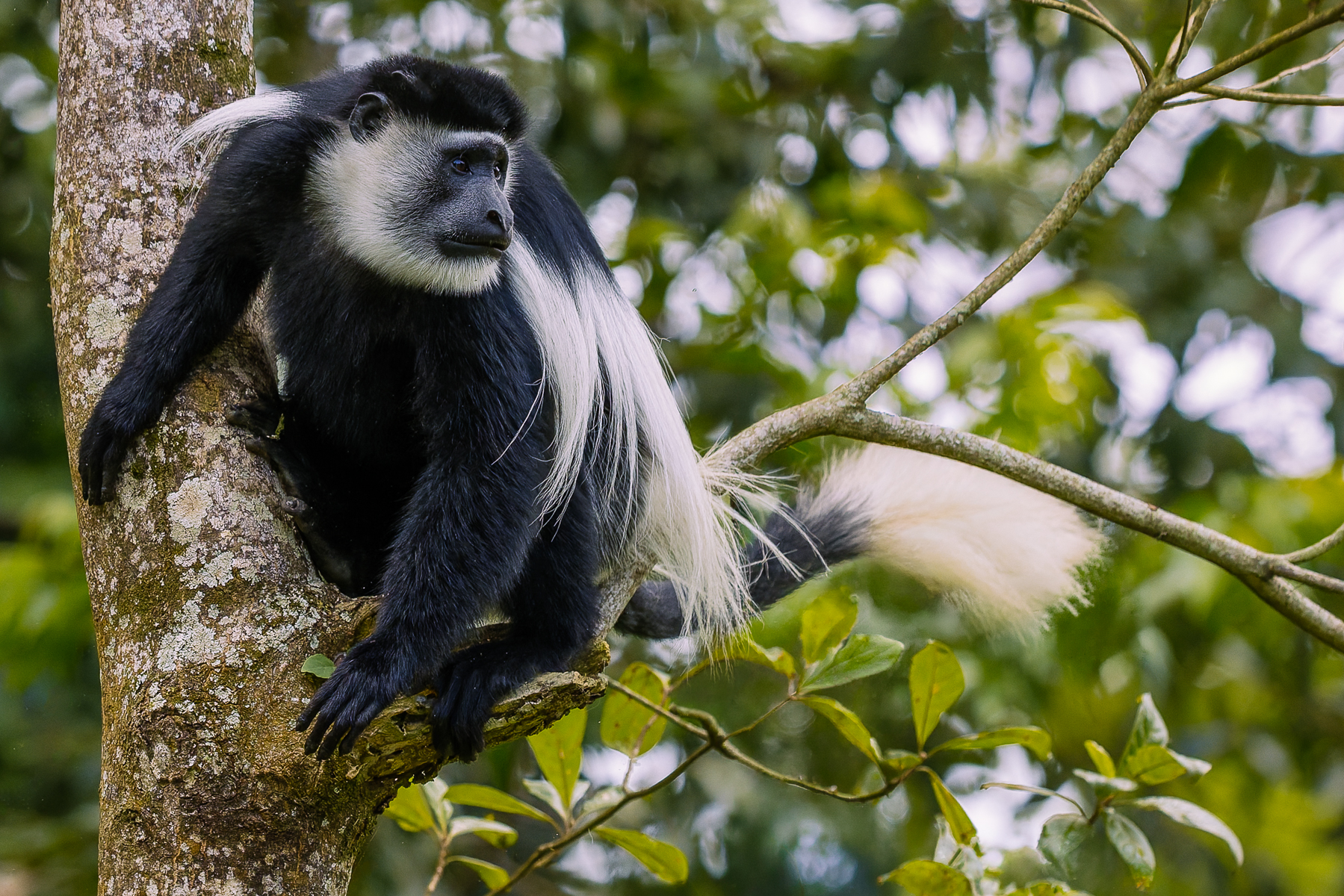
A Black-and-White Colobus displays the spectacular white mantle that may make this monkey fly. The long, fringe of hair, together with the huge tail, is thought to help them control their leaps through the forest - rather than having a built-in parachute (image by Virginia Wilde)
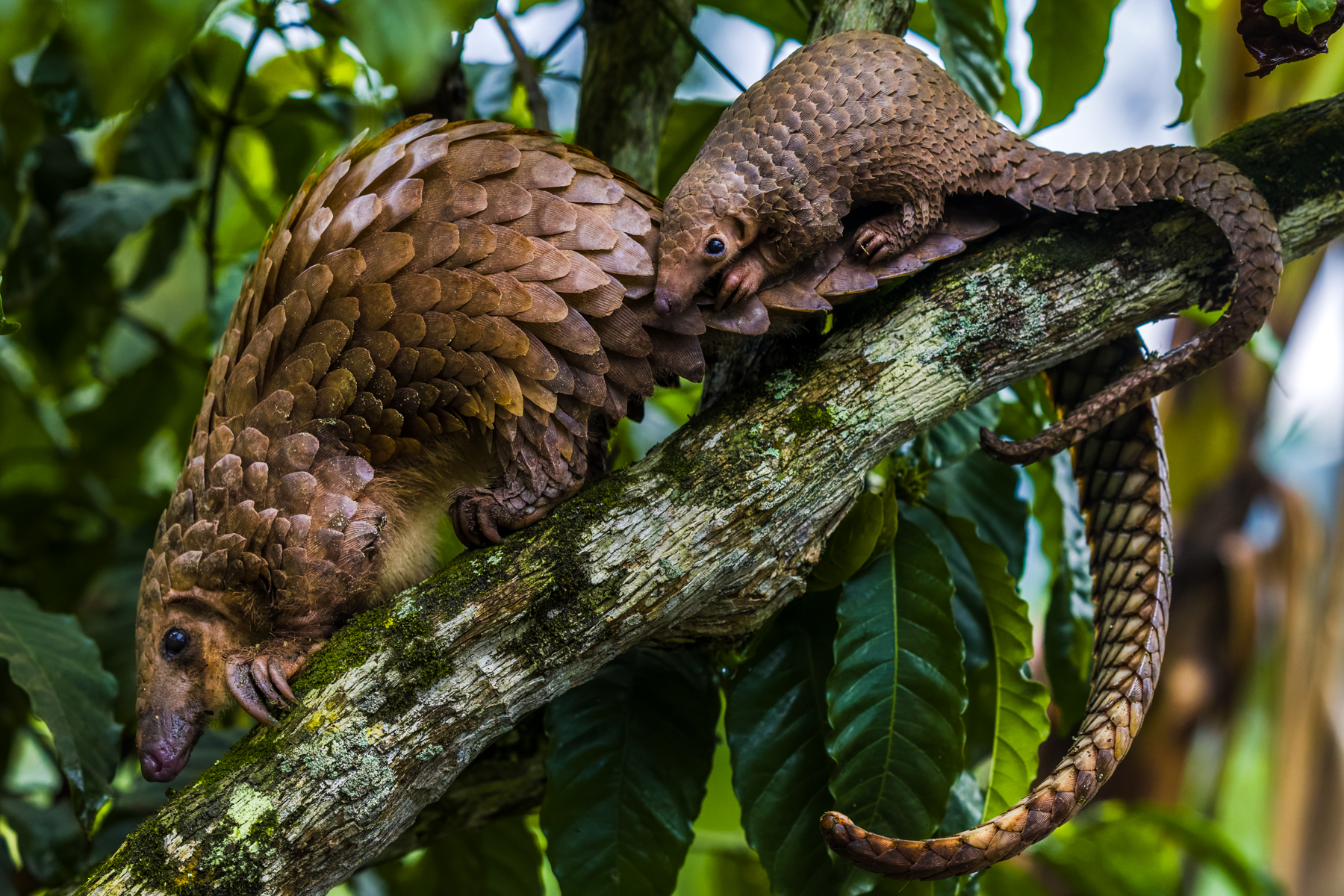
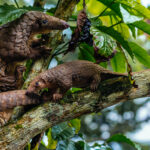
An adorable Tree Pangolin and her two-week-old Pangopup. This female was rescued from a vulnerable location with a high risk of poaching and trafficking. After a few weeks bonding in the safe haven of Uganda's Pangolin Rescue Centre, the pair were on course to be released deep into another area of the forest (image by Virginia Wilde)
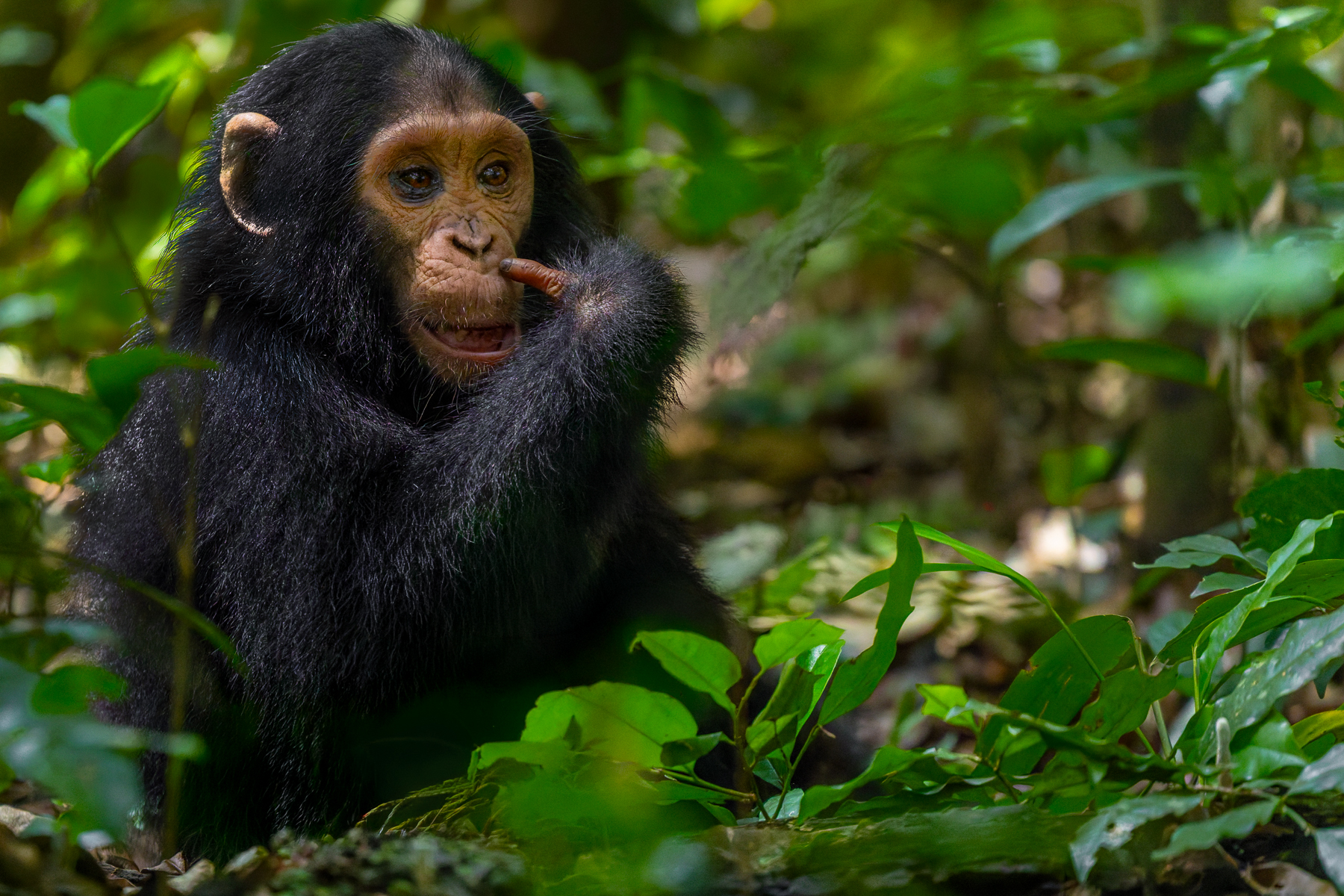
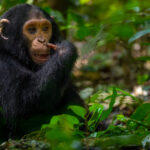
A juvenile Eastern Chimpanzee, believed to be around five years old, scratches under his nose in Uganda's Kibale Forest. Chimps have remarkably human-like hands, with opposable thumbs and sensitive fingertips used to explore, manipulate and find food (image by Virginia Wilde)
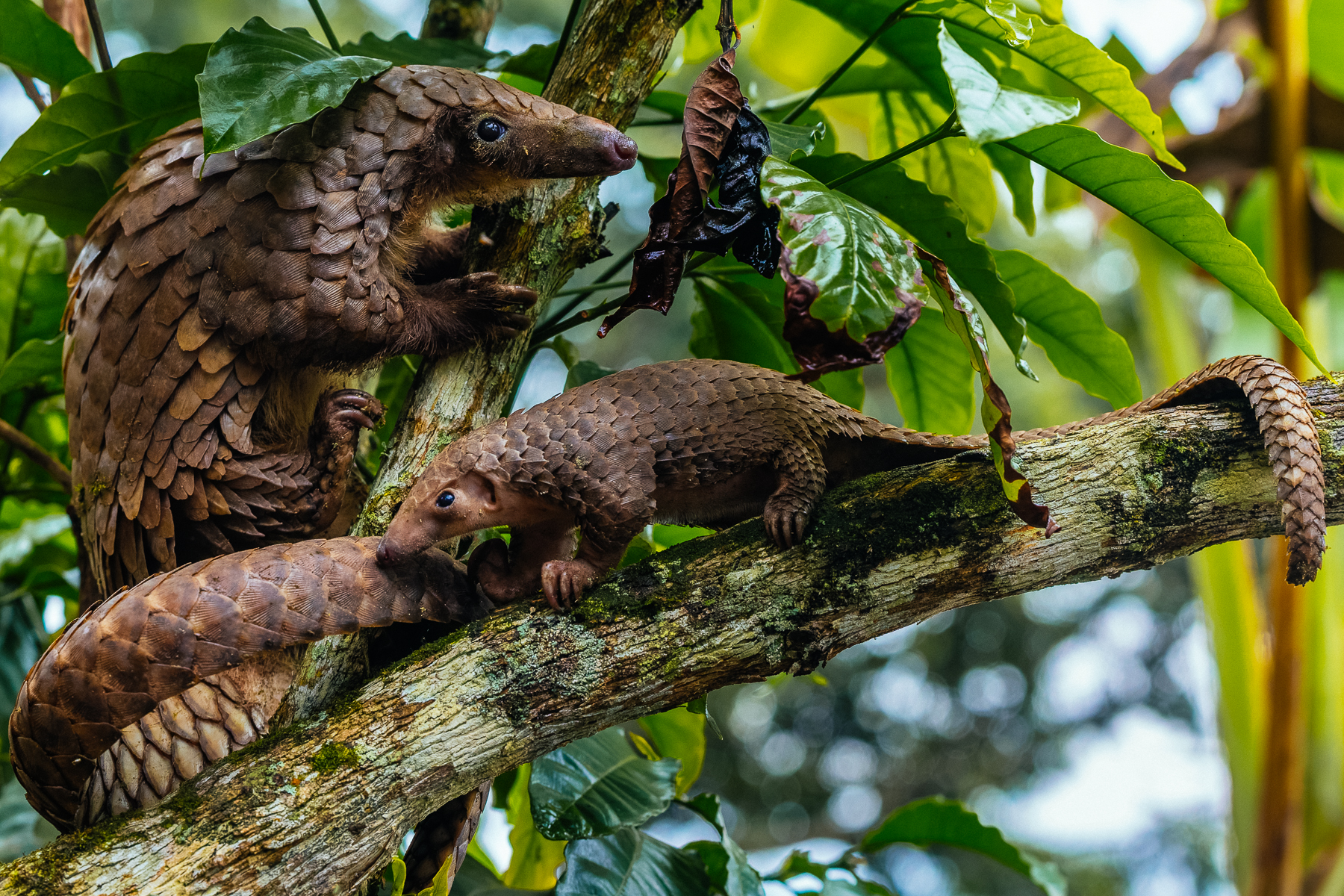
This Tree Pangolin pup was utterly charming - all overlapping scales, tiny head and surprisingly determined little movements. Watching it scamper around its mother was an unbelievable sight (image by Virginia Wilde)
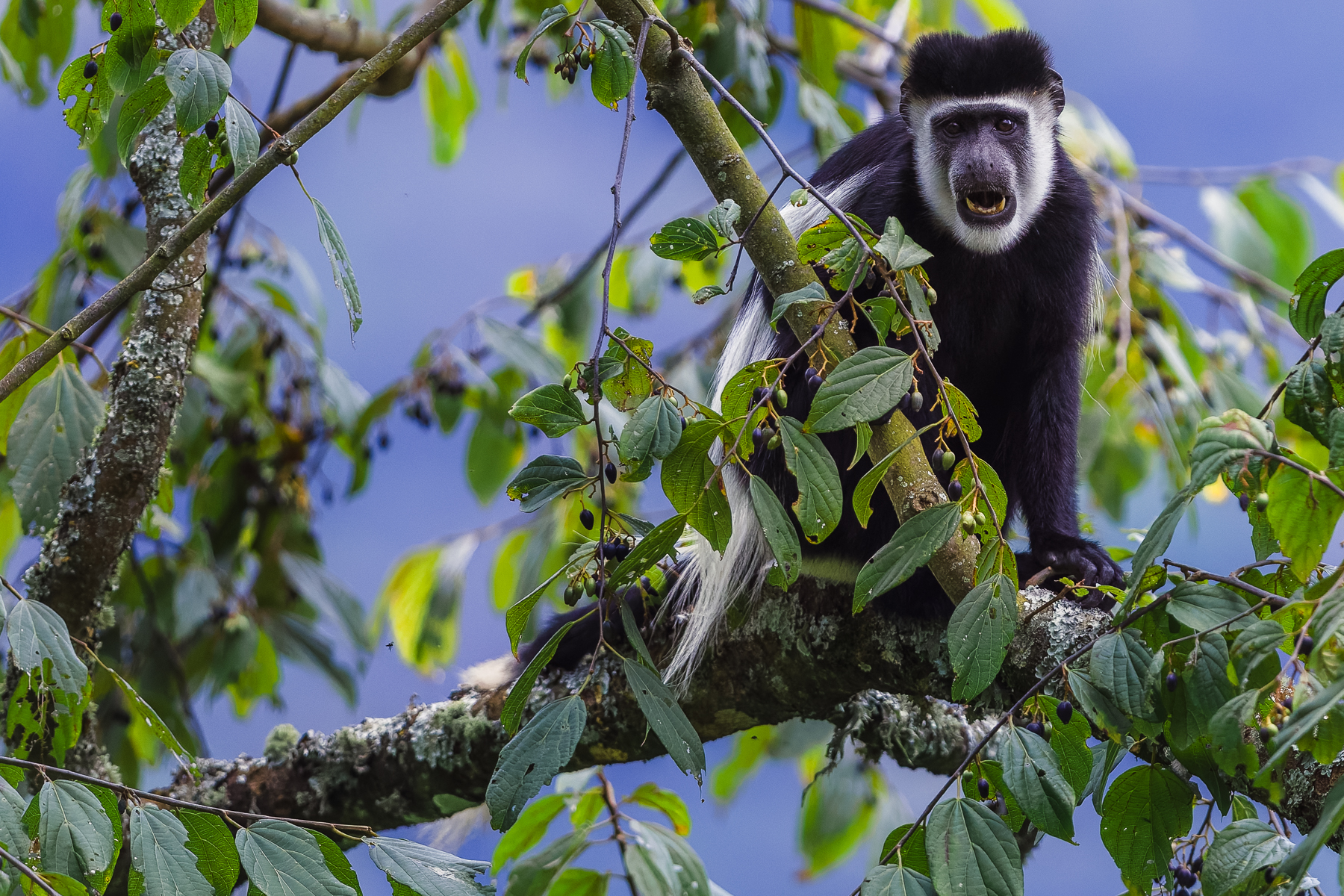
That expression suggests someone has just interrupted a very important lunch! Black-and-White Colobus are built for life in the treetops - with a spectacular white mantle that helps it balance as it moves through the canopy (image by Virginia Wilde)
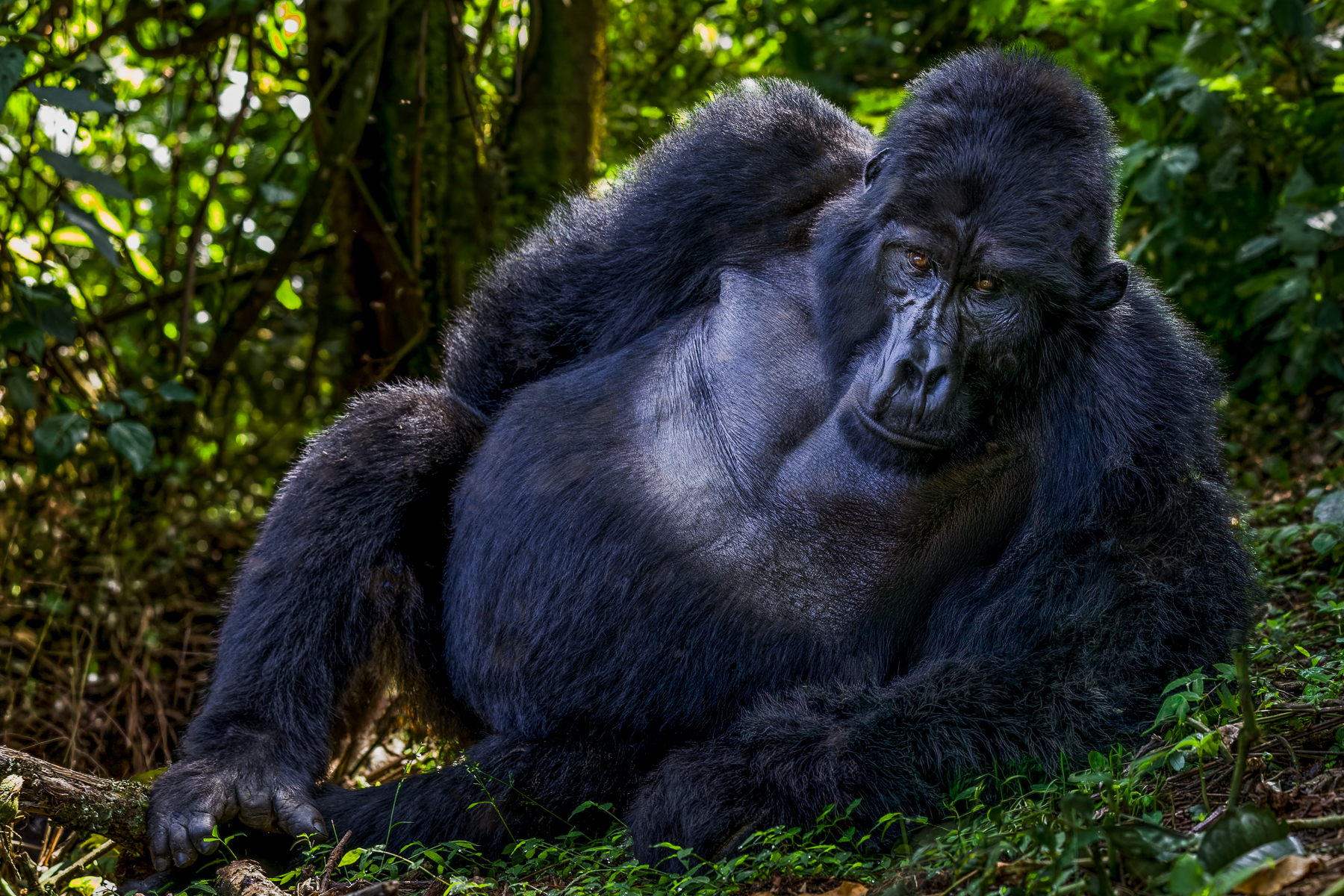
A magnificent Mountain Gorilla rests among the lush vegetation of Uganda's Bwindi Impenetrable Forest. A new census is expected to show the number of wild Mountain Gorillas has passed 1,100, which would be a remarkable conservation success story for a species that brushed extinction, with only 250 remaining in the early 1980s (image by Virginia Wilde)
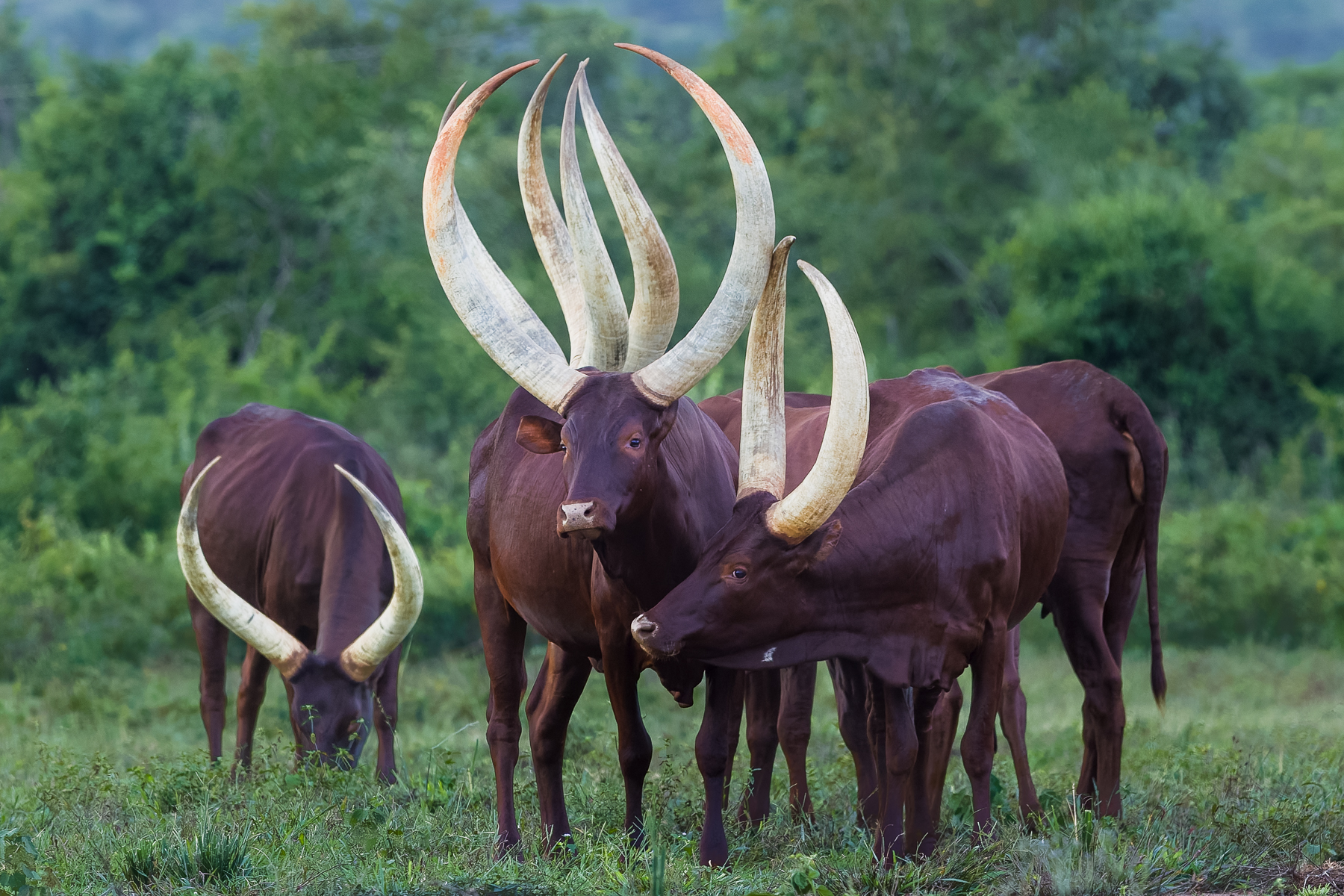
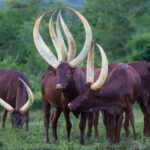
The incredible sweeping horns of Uganda's domestic Ankole Longhorn cattle, which can approach 1.8 metres in length. The horns aren't just ornamental: blood circulates through them, helping the cows dissipate heat in the summer (image by Virginia Wilde)
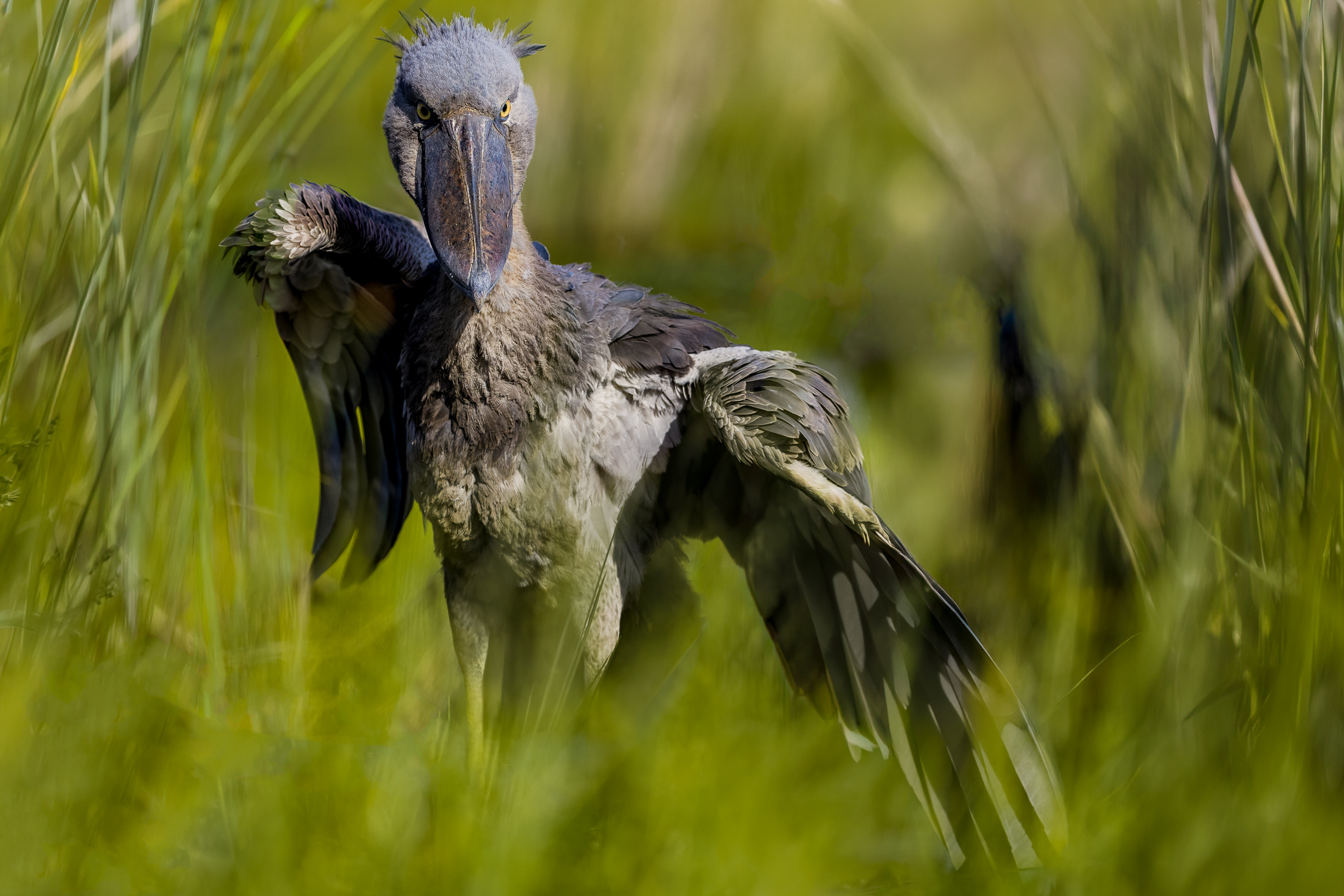
The Shoebill's version of a warm-up before take-off... Those spectacular wings are built for surprisingly powerful flight, but getting airborne is serious business when you're this big (image by Virginia Wilde)
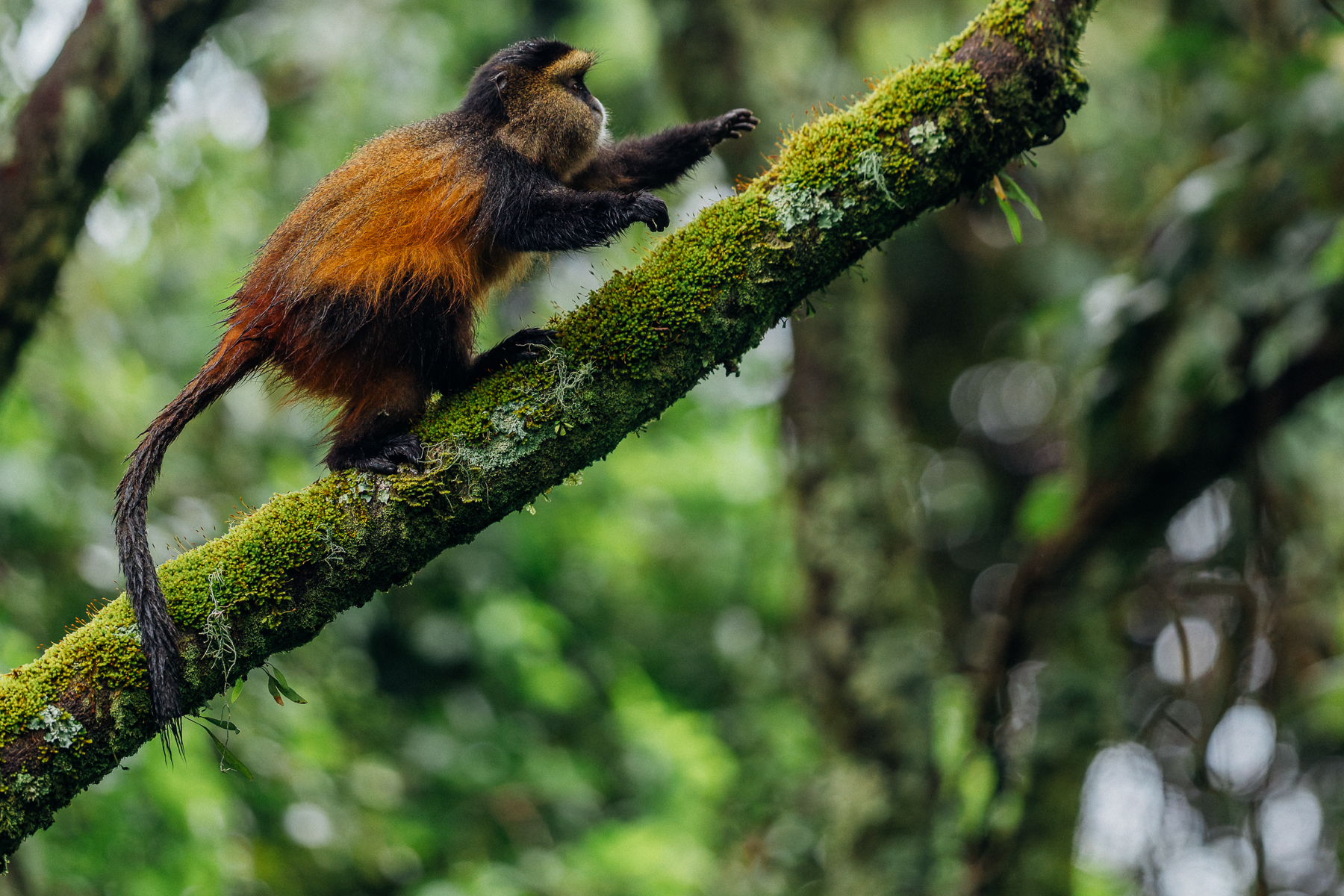
Golden Monkeys must be among the most striking of forest primates. They have broad, almost cartoonish rounded cheeks, with a golden-orange mantle and cheeks contrasting with their blackish face and crown (image by Virginia Wilde)
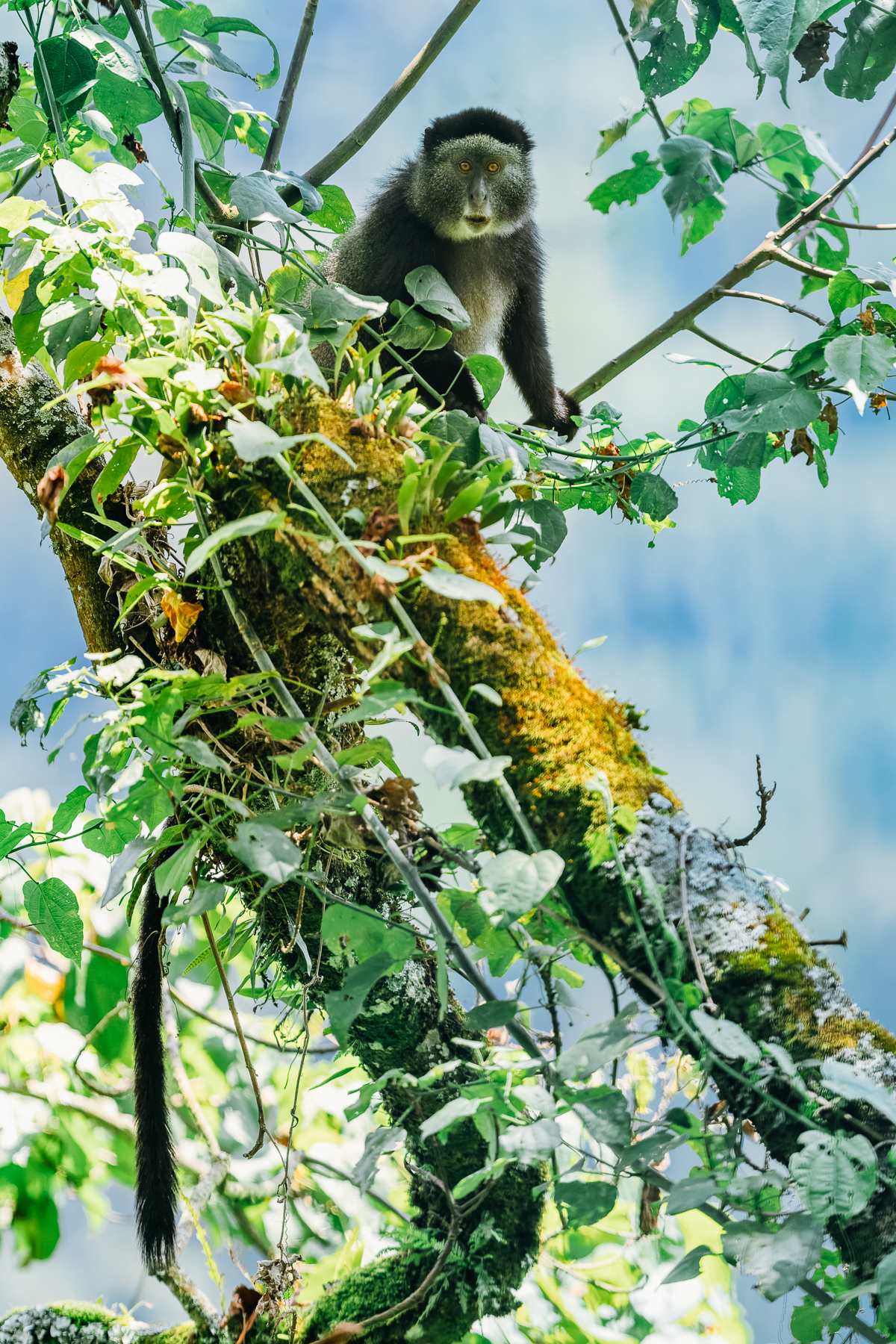
A transfixed-looking Blue Monkey, high in trees in Uganda's Bwindi Impenetrable Forest. Blue Monkeys have an elaborate alarm calling system, with different vocalisations for different types of predator (image by Virginia Wilde)
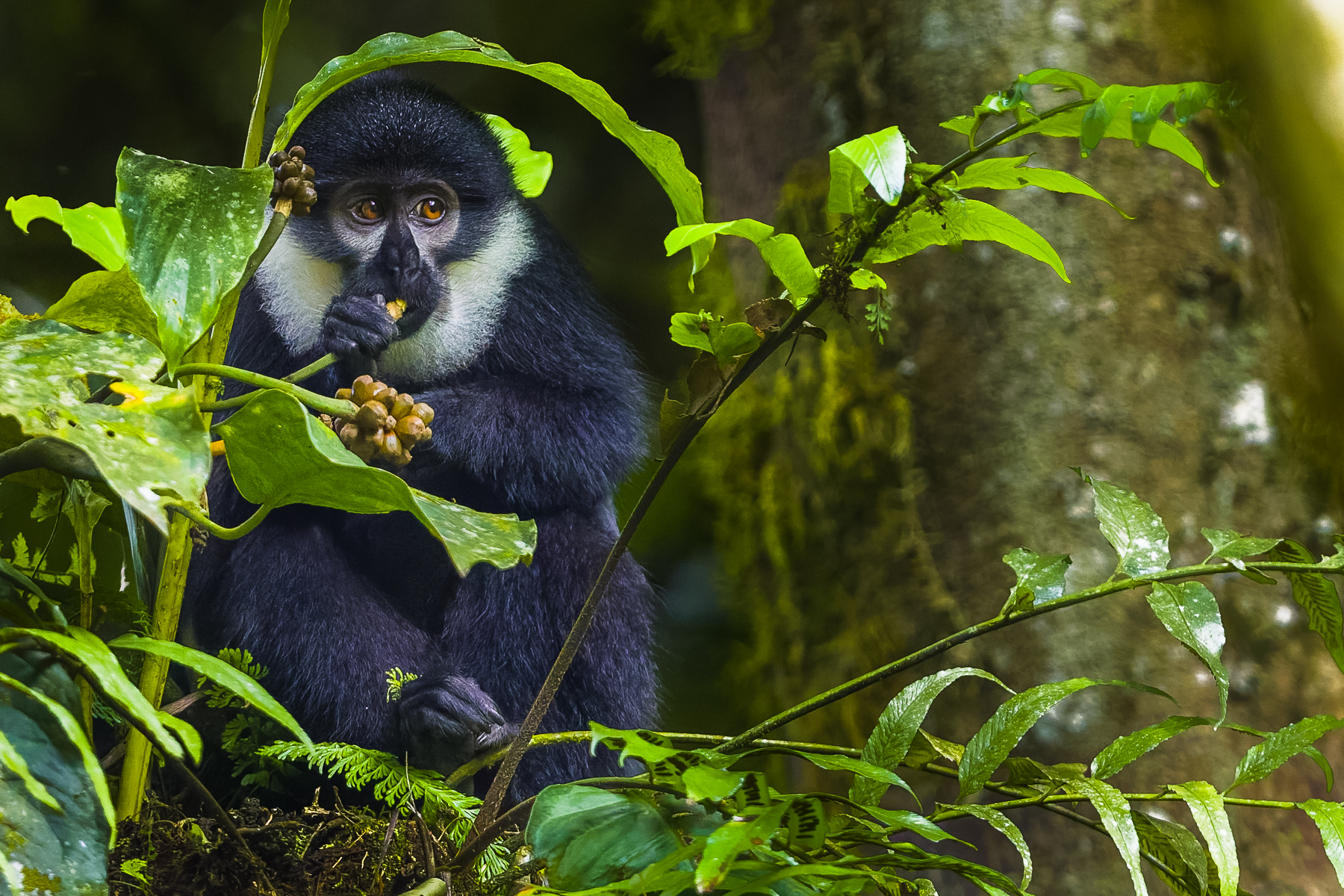
This L'Hoest's Monkey tucks into a forest snack under the canopy of a single leaf. L'Hoest's Monkeys have cheek pouches which they use to stuff food into while foraging on the forest floor - before moving somewhere safer to eat it (image by Virginia Wilde)
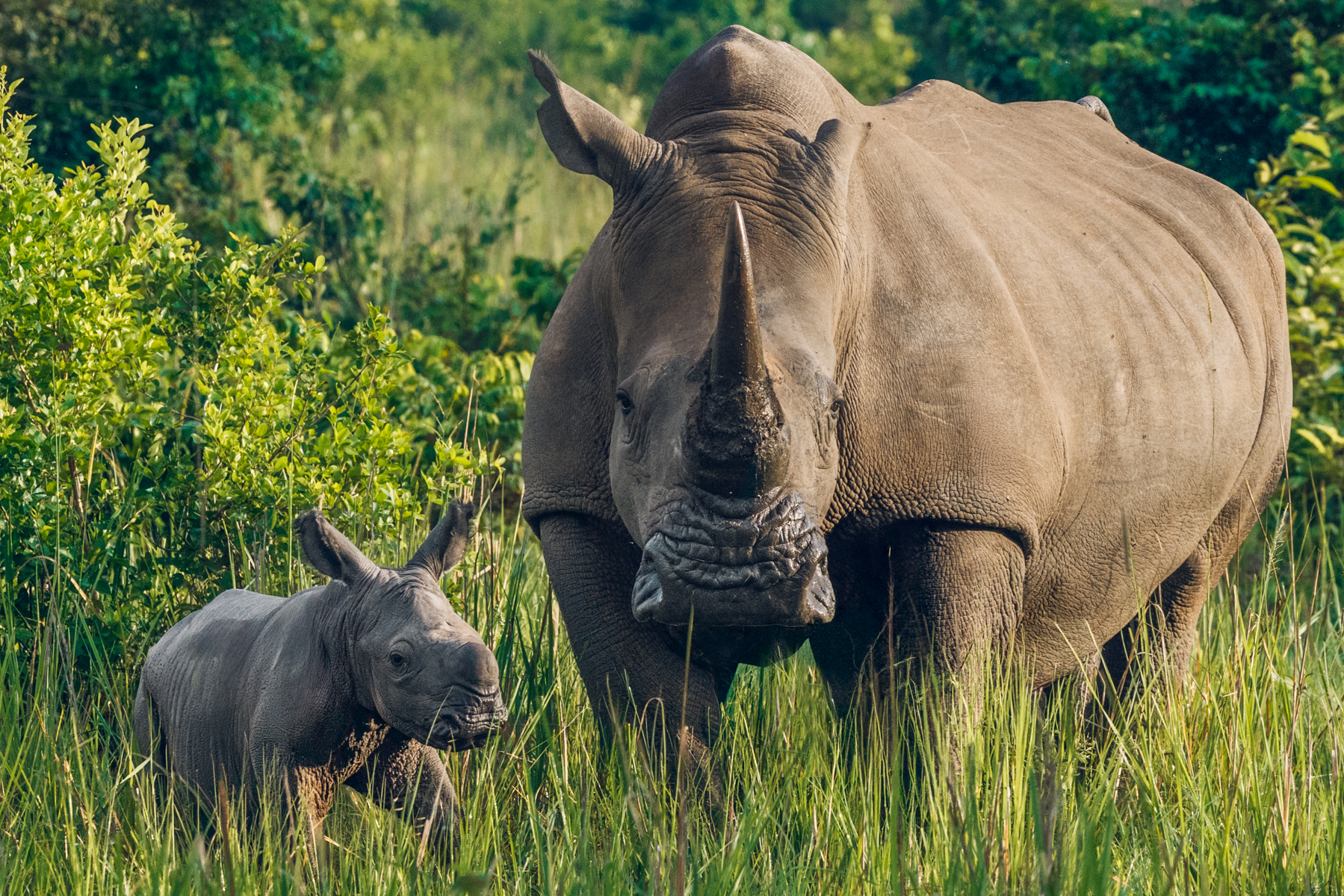
We had the real privilege of being the first wildlife photographers to visit this two-day-old baby Southern White Rhino. Baby rhinos can walk within hours of birth, and their horn is only a tiny nub, developing gradually into the impressive adult form from compressed keratin fibres (image by Virginia Wilde)
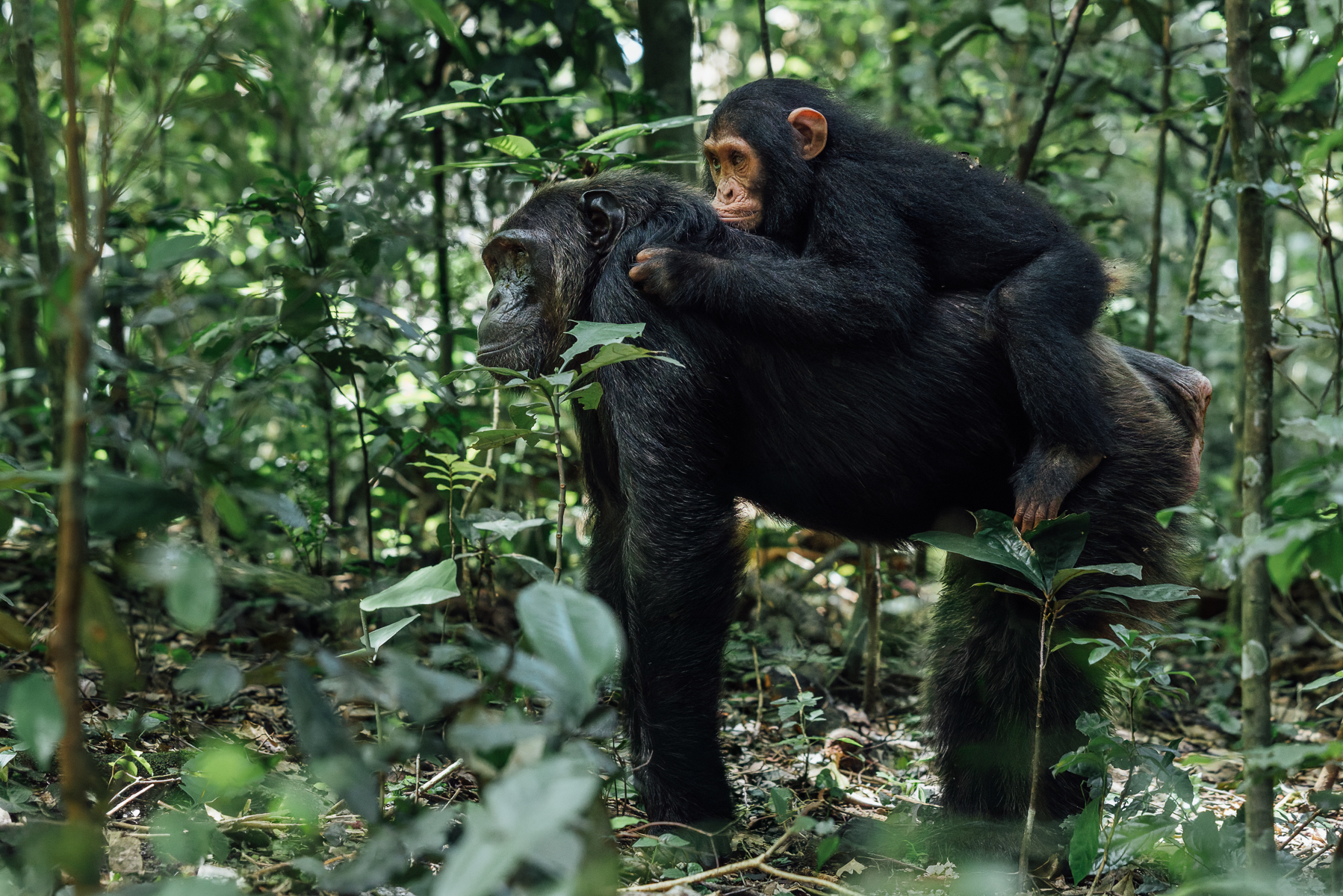
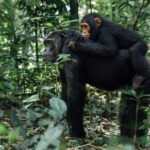
Mother Chimpanzee: doing the navigating, walking and carrying. Juvenile Chimp: supervising. Chimpanzee youngsters are dependent on their mums for years, learning where to go and how to negotiate life in the forest by watching them (image by Virginia Wilde)
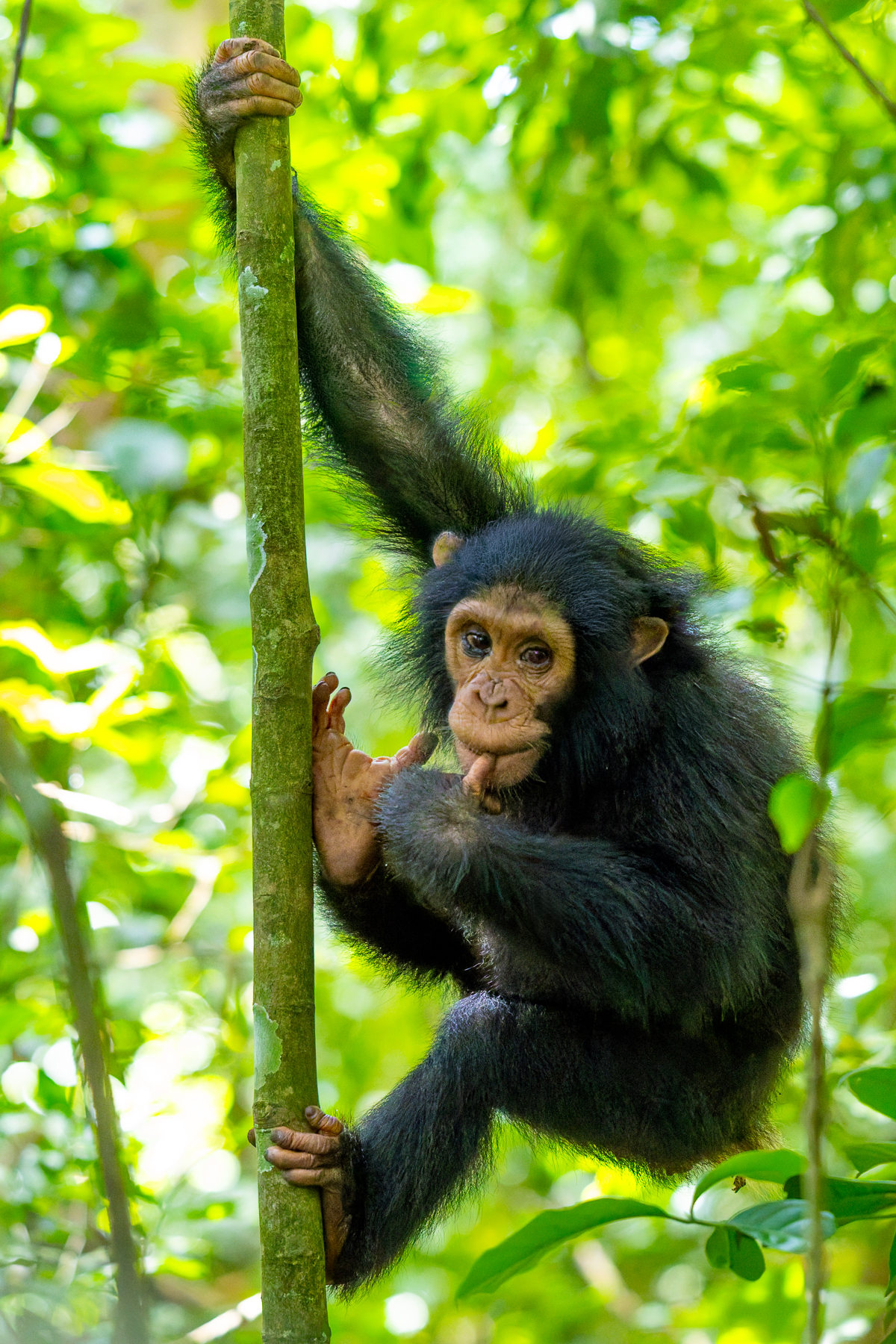
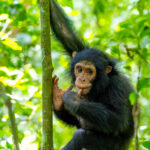
At three-years-old, this Chimpanzee juvenile has decided that the forest floor is optional. Fortunately, chimps are perfectly built for climbing, with long arms and feet that can grip branches like hands (image by Virginia Wilde)
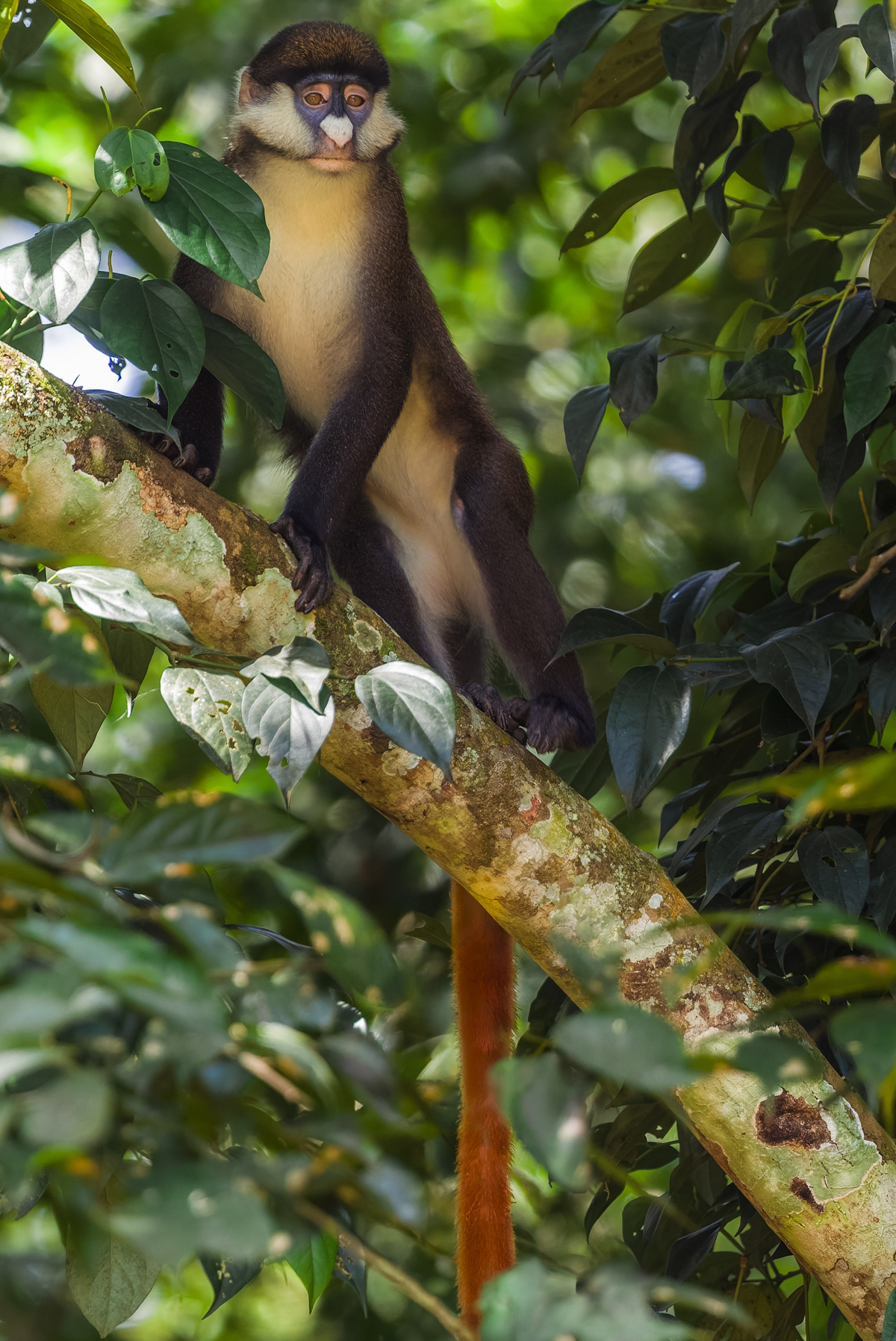
The strikingly colourful tale of a Red-tailed Monkey, hanging down from a branch. And those cheeks aren't just for looking cute - Red-tailed Monkeys have enormous cheek pouches that can hold as much food as their stomachs (image by Virginia Wilde)
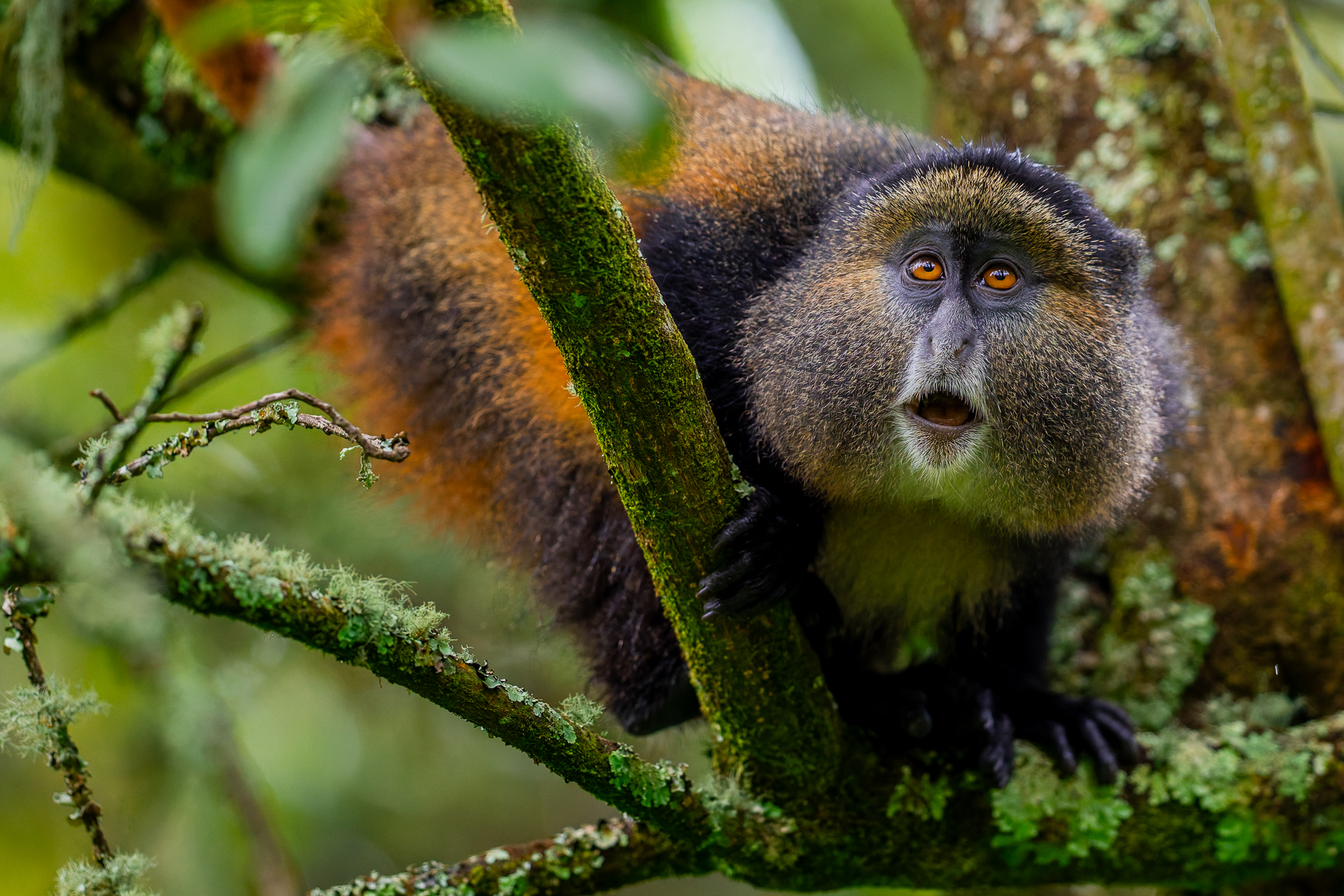
A wide-eyed Golden Monkey gazes open-mouthed at the antics of fellow troop members, as they manoeuvre through the trees in Uganda's Mgahinga Gorilla National Park (image by Virginia Wilde)
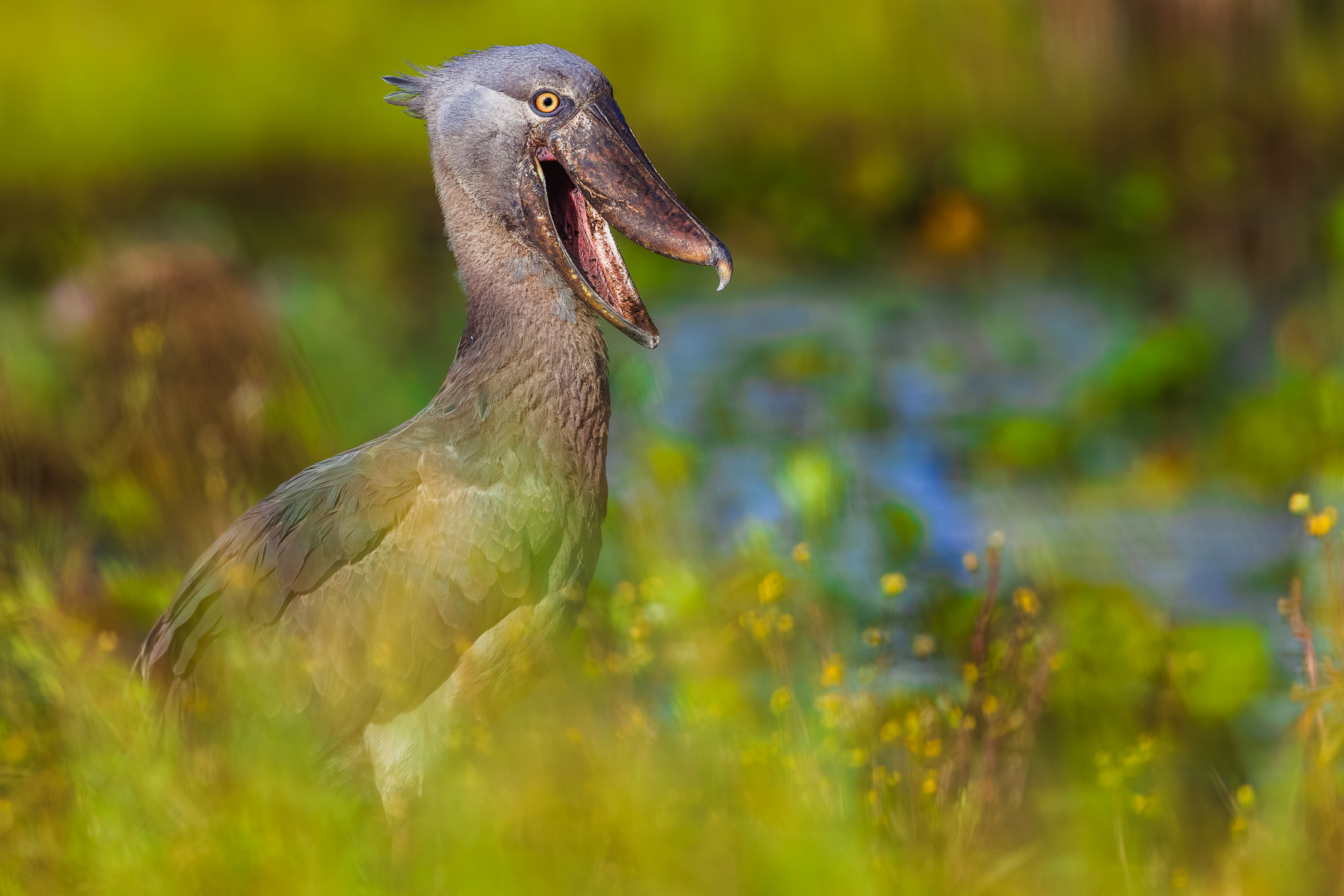
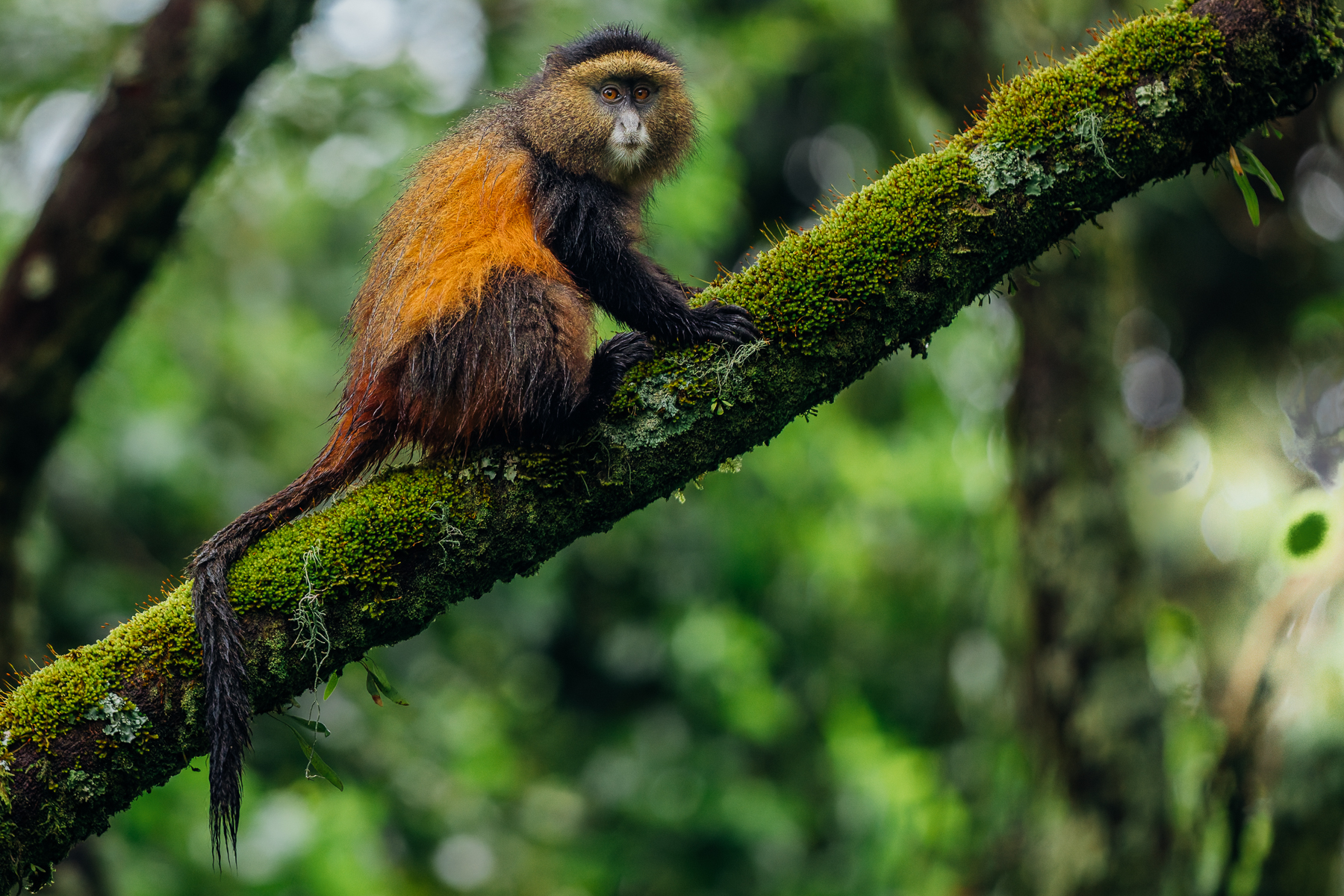
The gorgeous colours of a Golden Monkey perched high in the mountain forest of Mgahinga, Uganda. Endemic to the Virunga region, these endangered primates are particularly dependent on bamboo (image by Virginia Wilde)
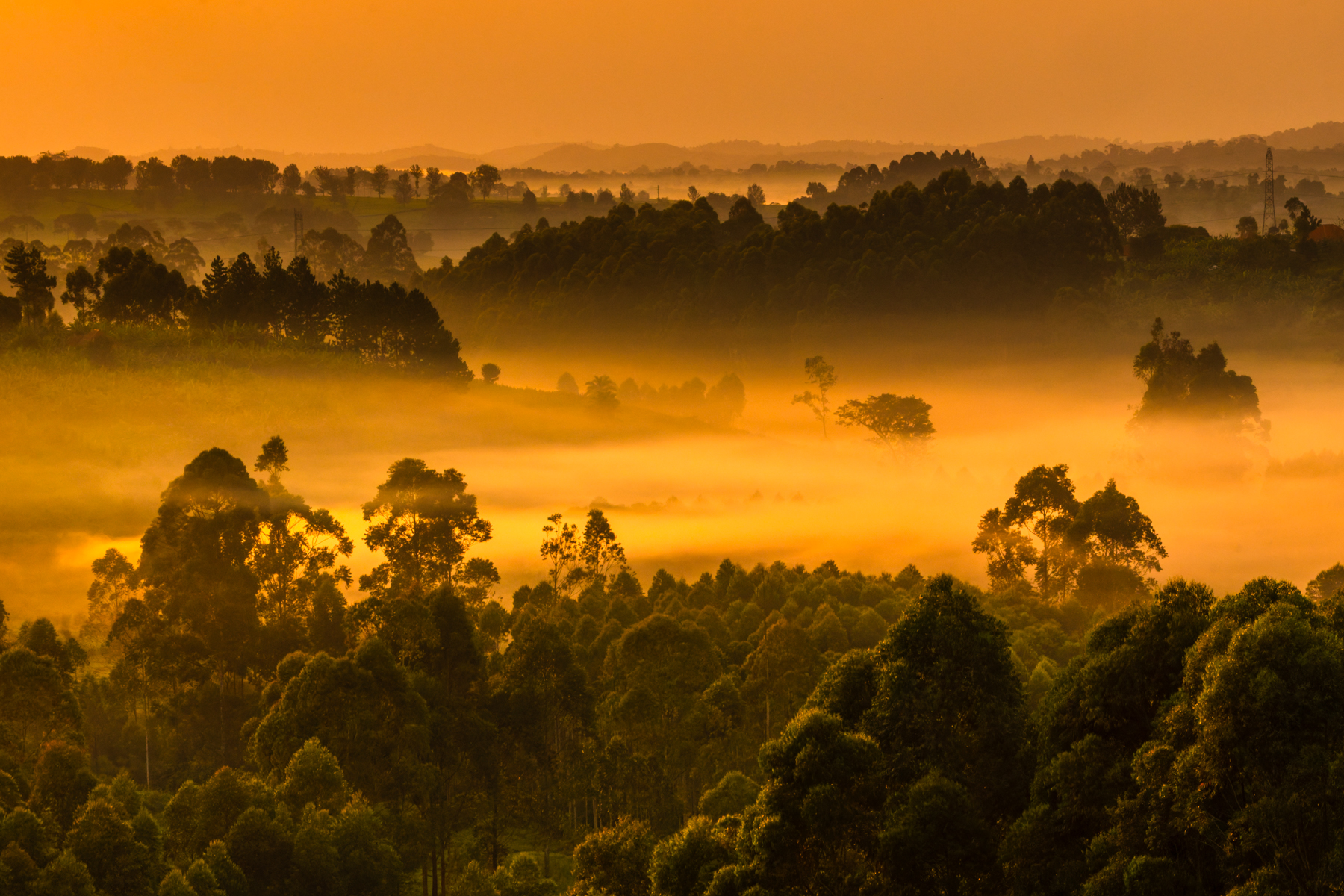
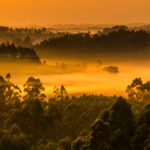
The sunrise turns the mist orange over hills near Uganda's Kibale Forest (image by Virginia Wilde)
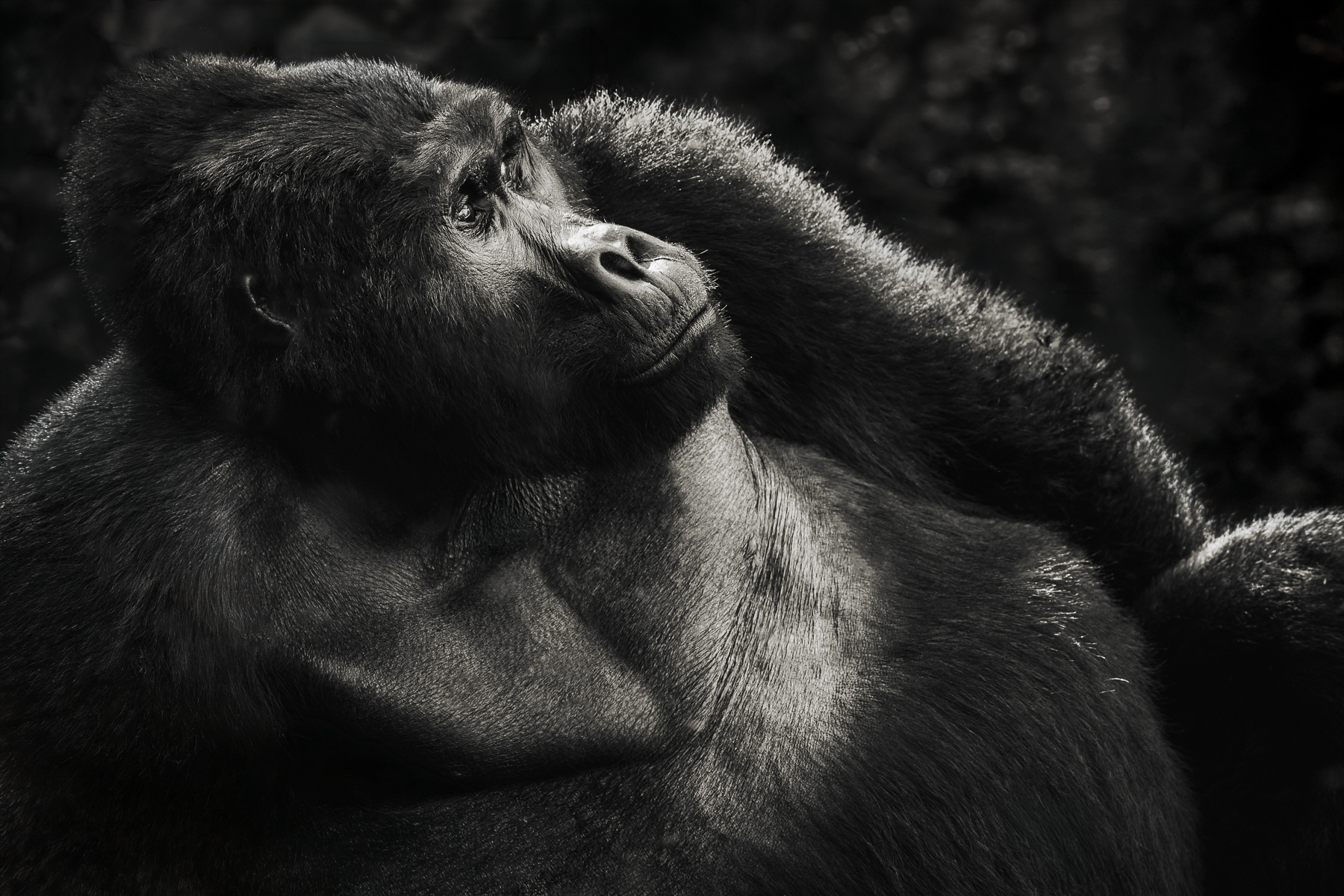
Mountain Gorillas are the gentle giants of Uganda's forests. Bathed in shafts of dappled light, this male's powerful frame contrasts with his thoughtful expression, hinting at the remarkable intelligence of these Great Apes (image by Virginia Wilde)
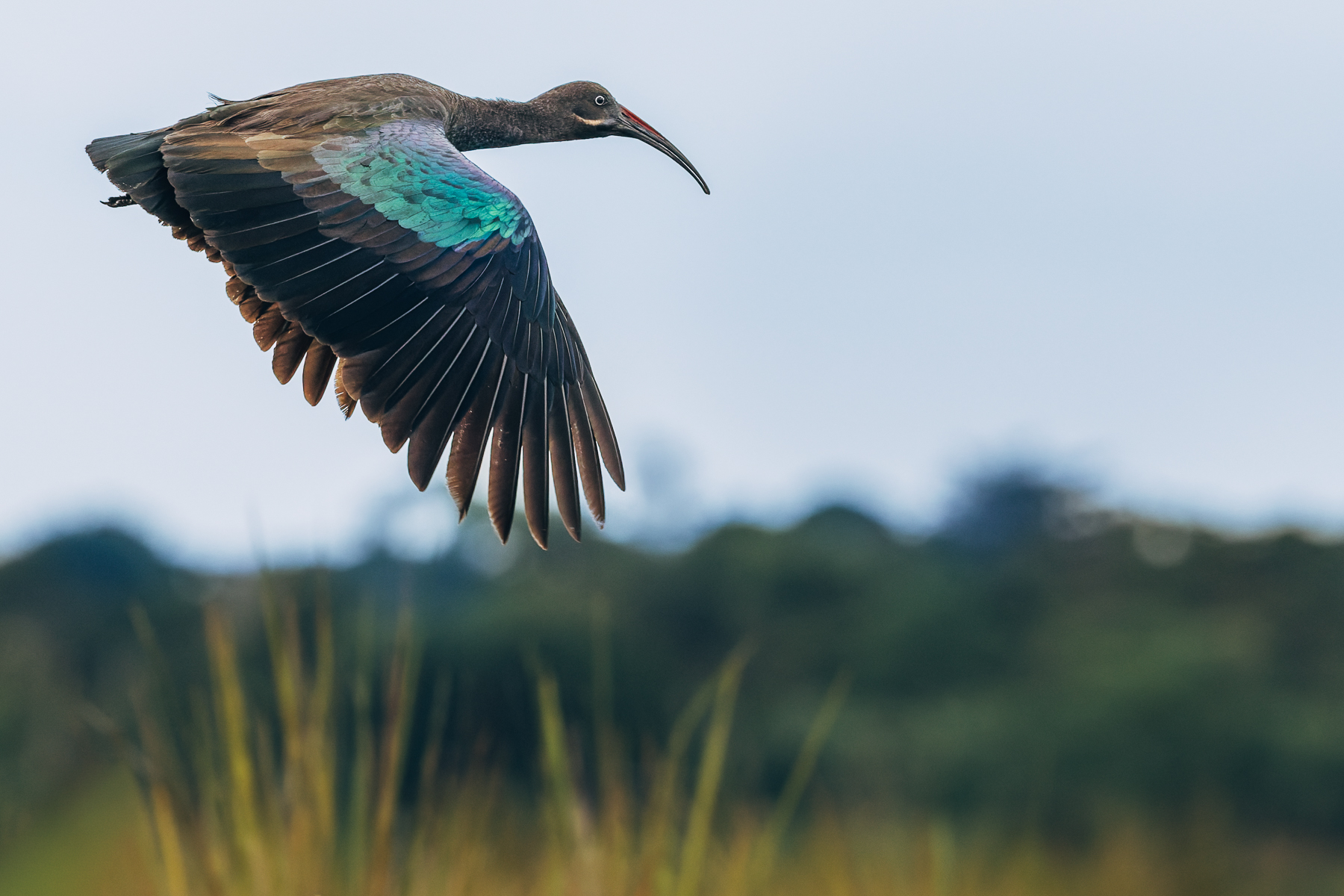
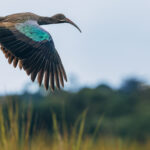
The Hadada Ibis has surprisingly beautiful wings. Its otherwise sombre brown plumage catches the light with metallic green, purple and bronze iridescence, particularly across the flight feathers (image by Virginia Wilde)
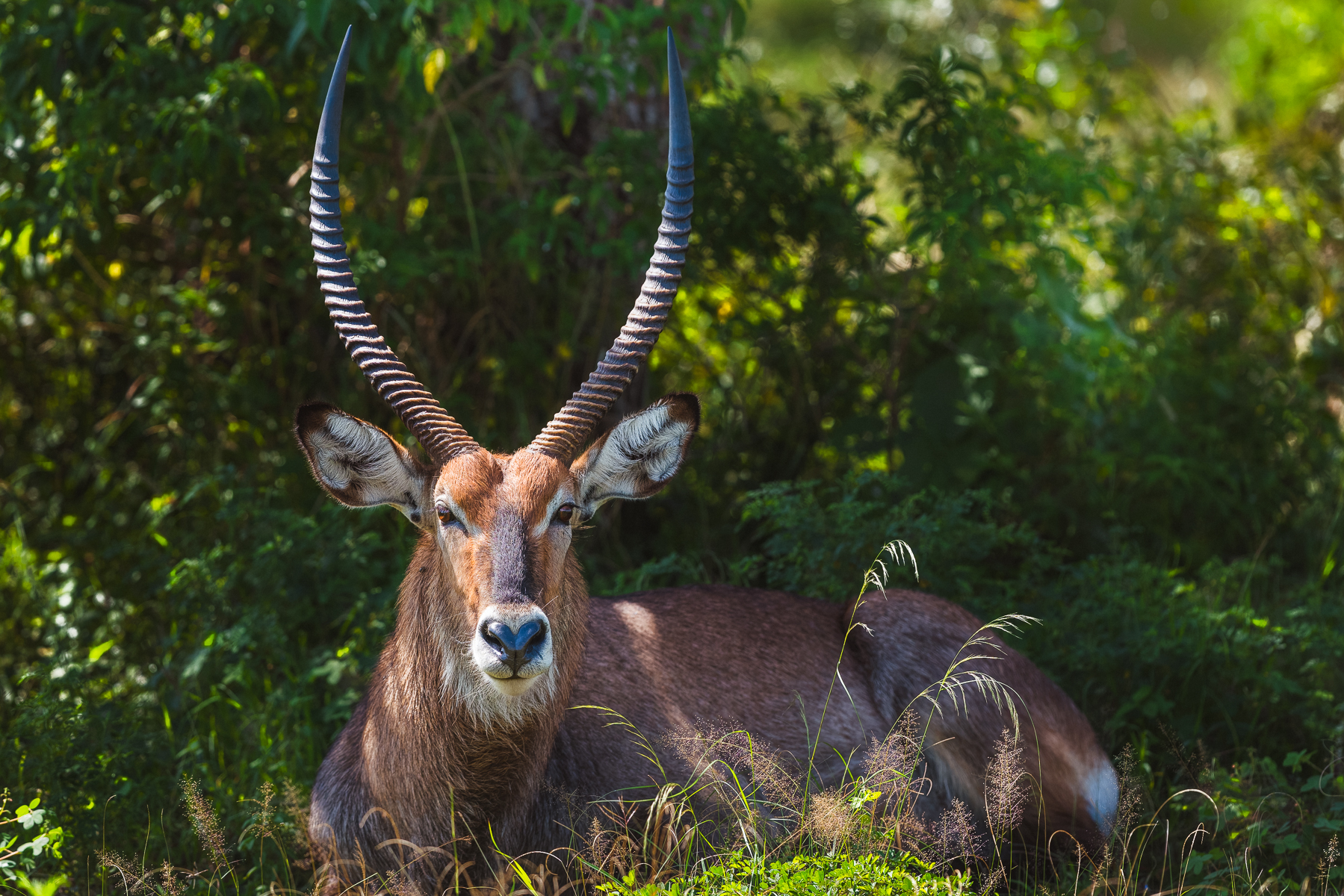
The magnificent lyre-shaped horns of a male Uganda Kob: one of Uganda's most characteristic savanna mammals and featuring on the nation's coat of arms (image by Virginia Wilde)
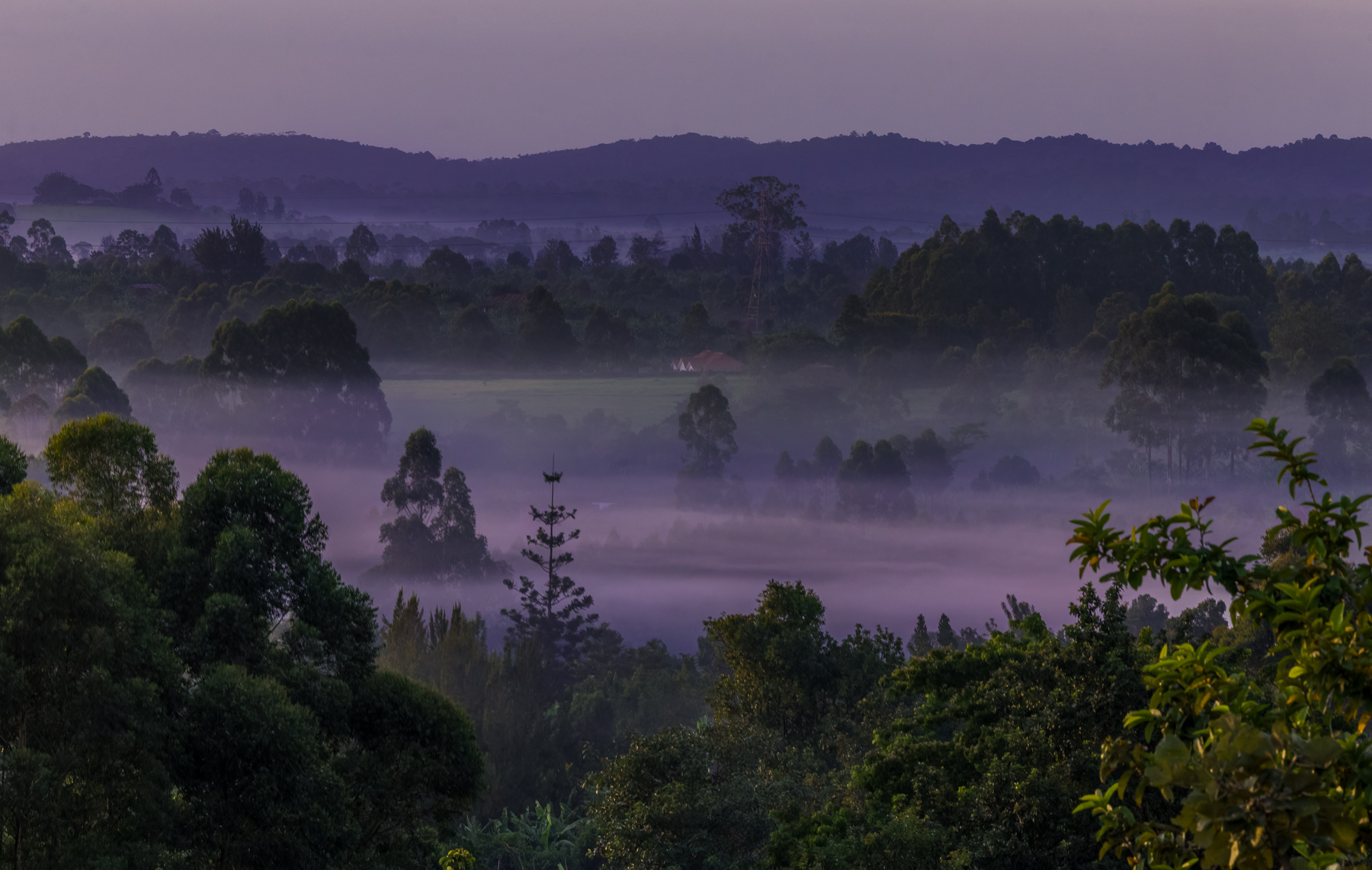
Twilight colours turn the misty fields purple, just after sunrise on hills near Uganda's Kibale National Park (image by Virginia Wilde)
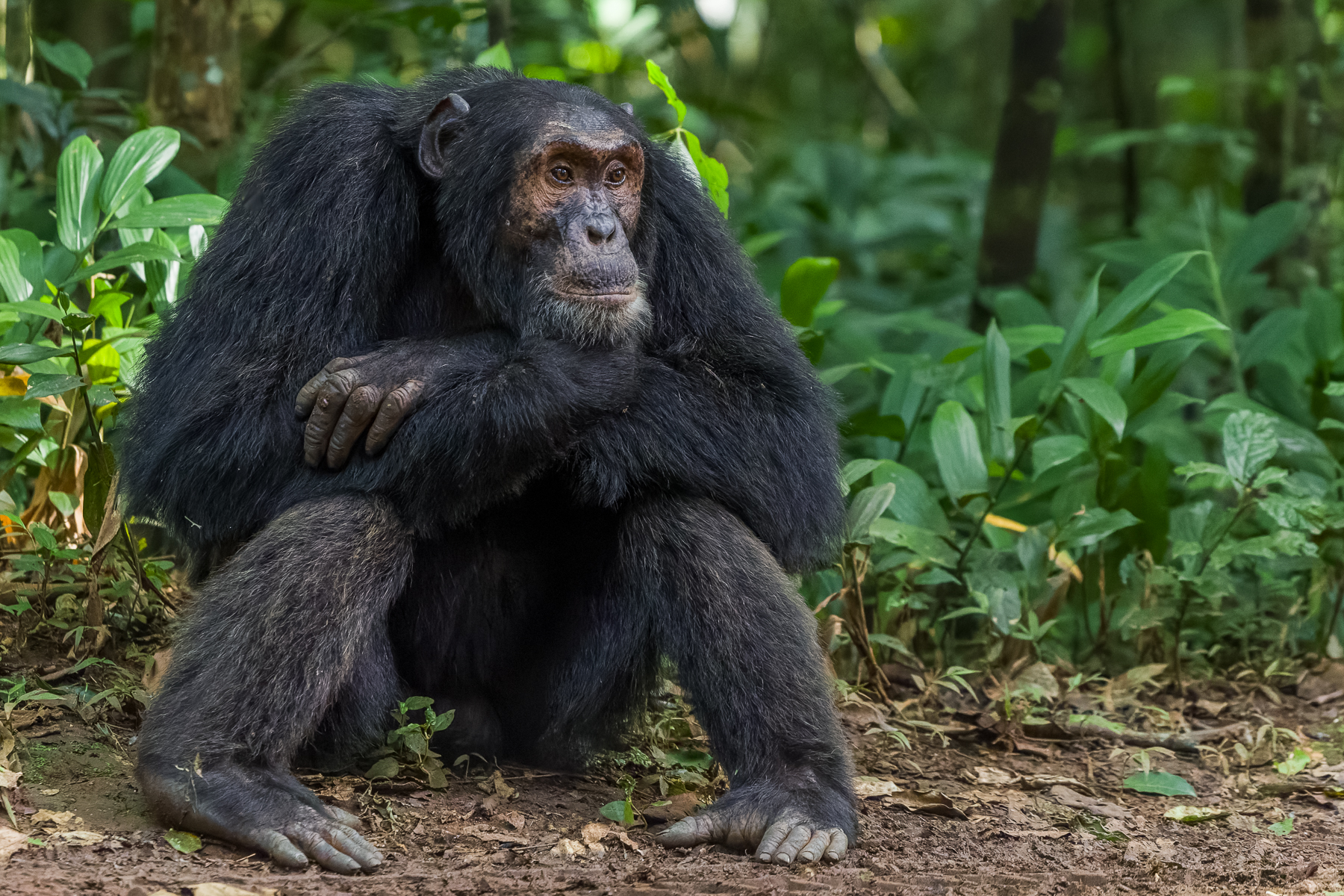
'I've been waiting here for a loooong time! Will she ever come back?' Chimpanzees are extraordinarily expressive, with their faces uncannily human-like (image by Virginia Wilde)
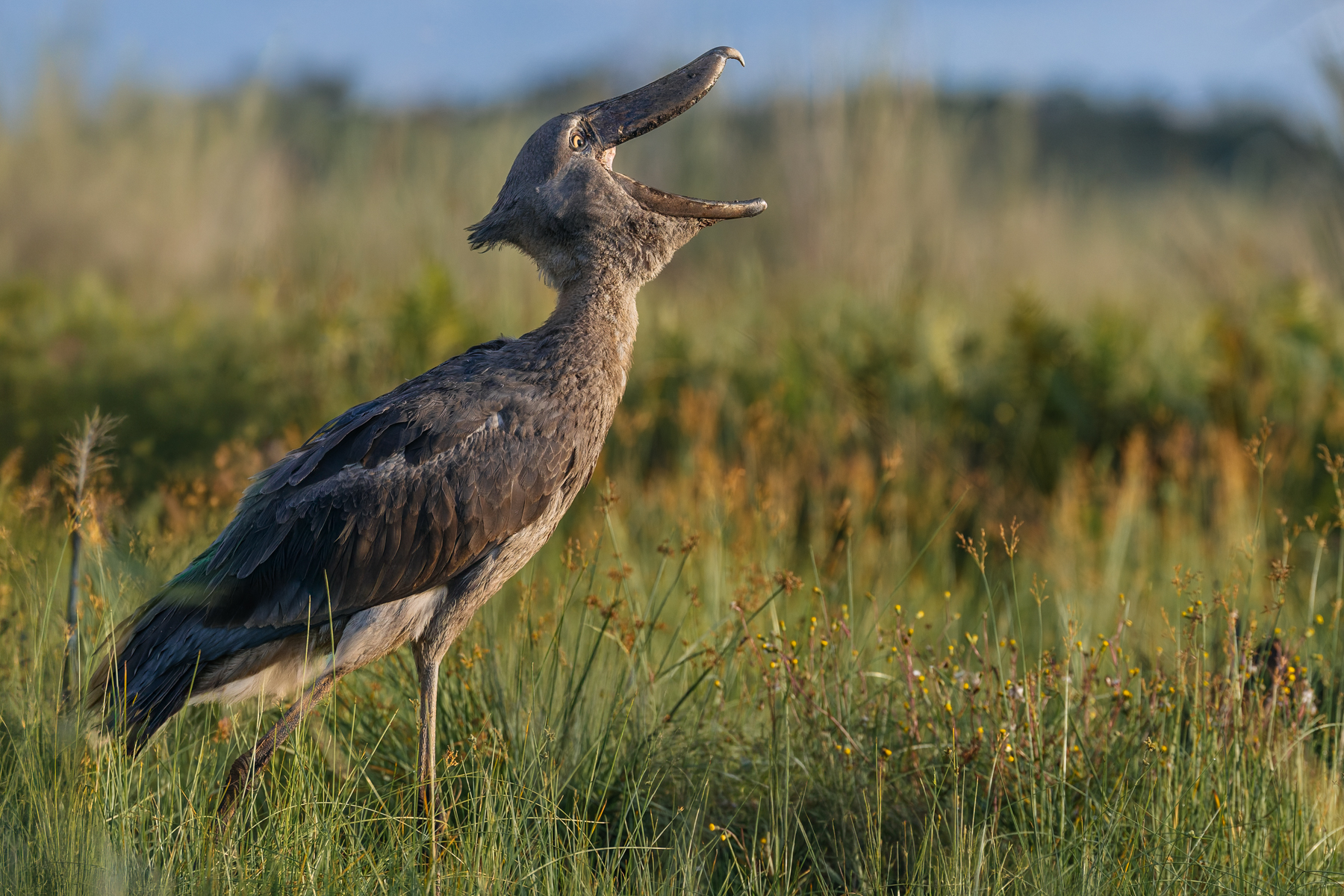
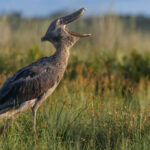
Someone clearly told the funniest joke in the Swamp. At least the Shoebill thought so! This is a typical expression for a creature that looks less like a bird and more like something that escaped from the Jurassic (image by Virginia Wilde)
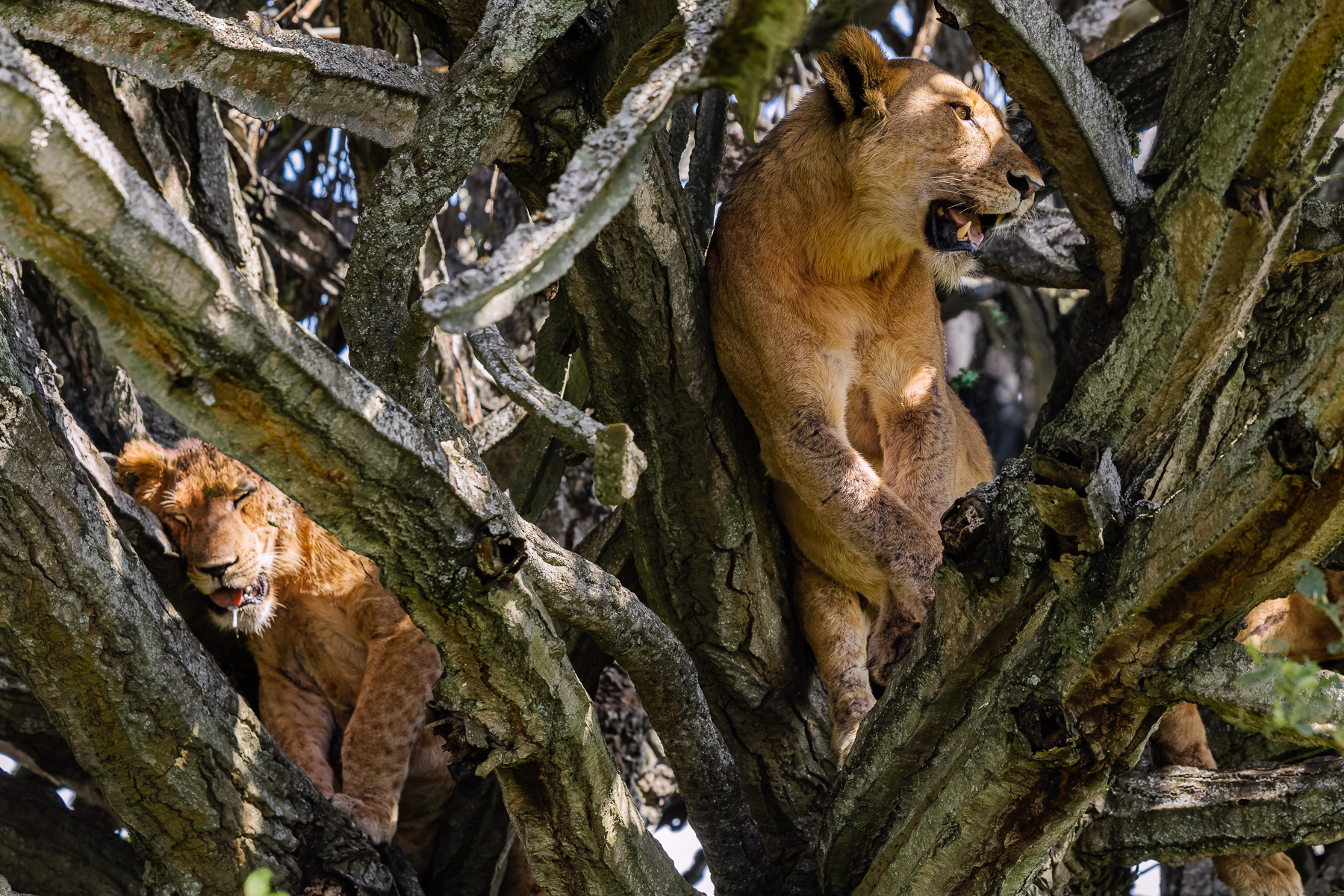
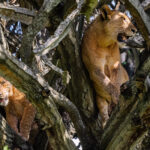
A small pride of Lions rest in a Candelabra euphorbia tree, giving them respite from ground-dwelling flies and the heat. Lions in Uganda's Queen Elizabeth National Park frequently haul themselves up into these giant, cactus-like trees (image by Virginia Wilde)
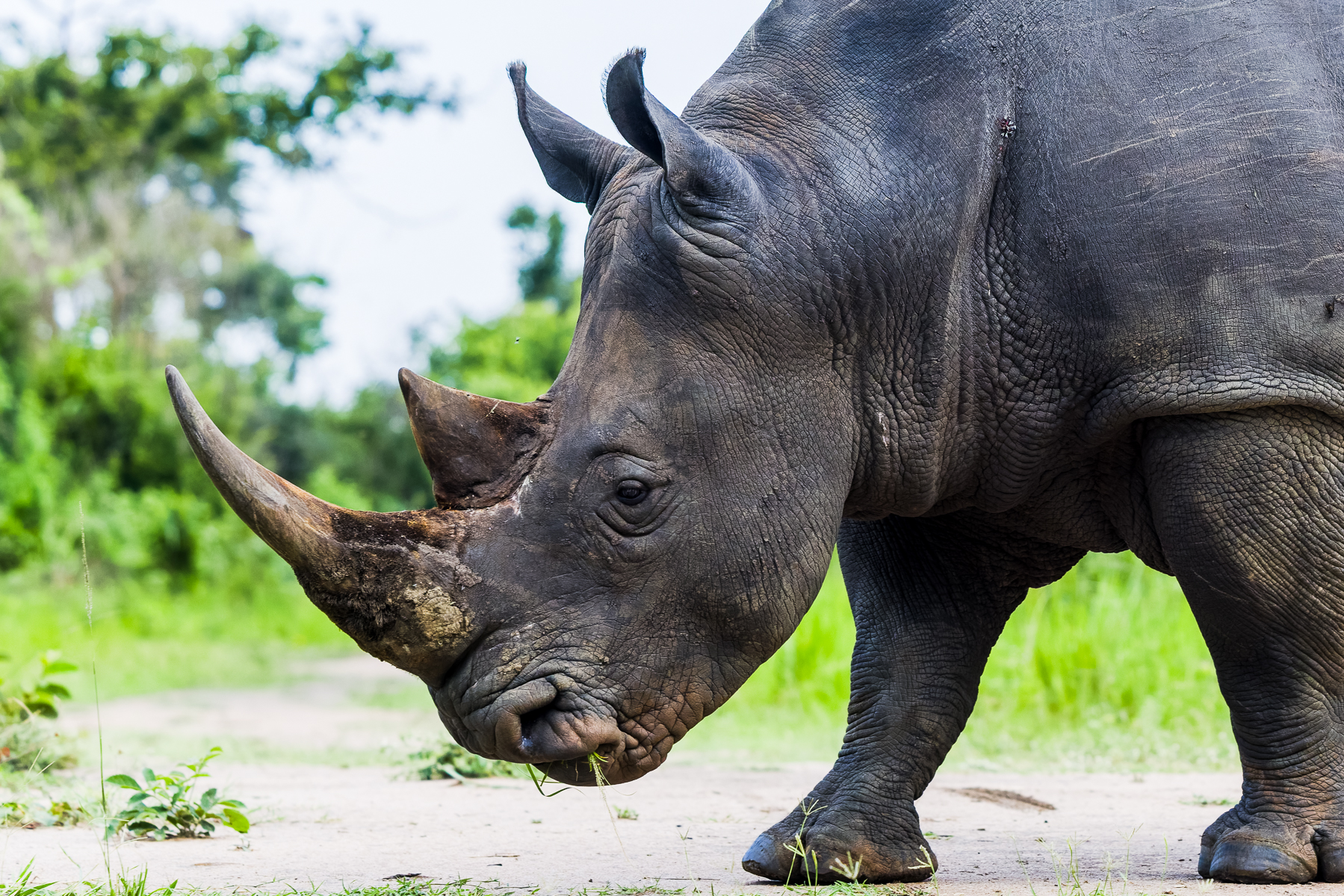
Close-up of a Southern White Rhino showing the rhino's characteristic two horns: the front used mainly for defence, dominance battles and sometimes digging. While the rear used only for fighting and defence (image by Virginia Wilde)
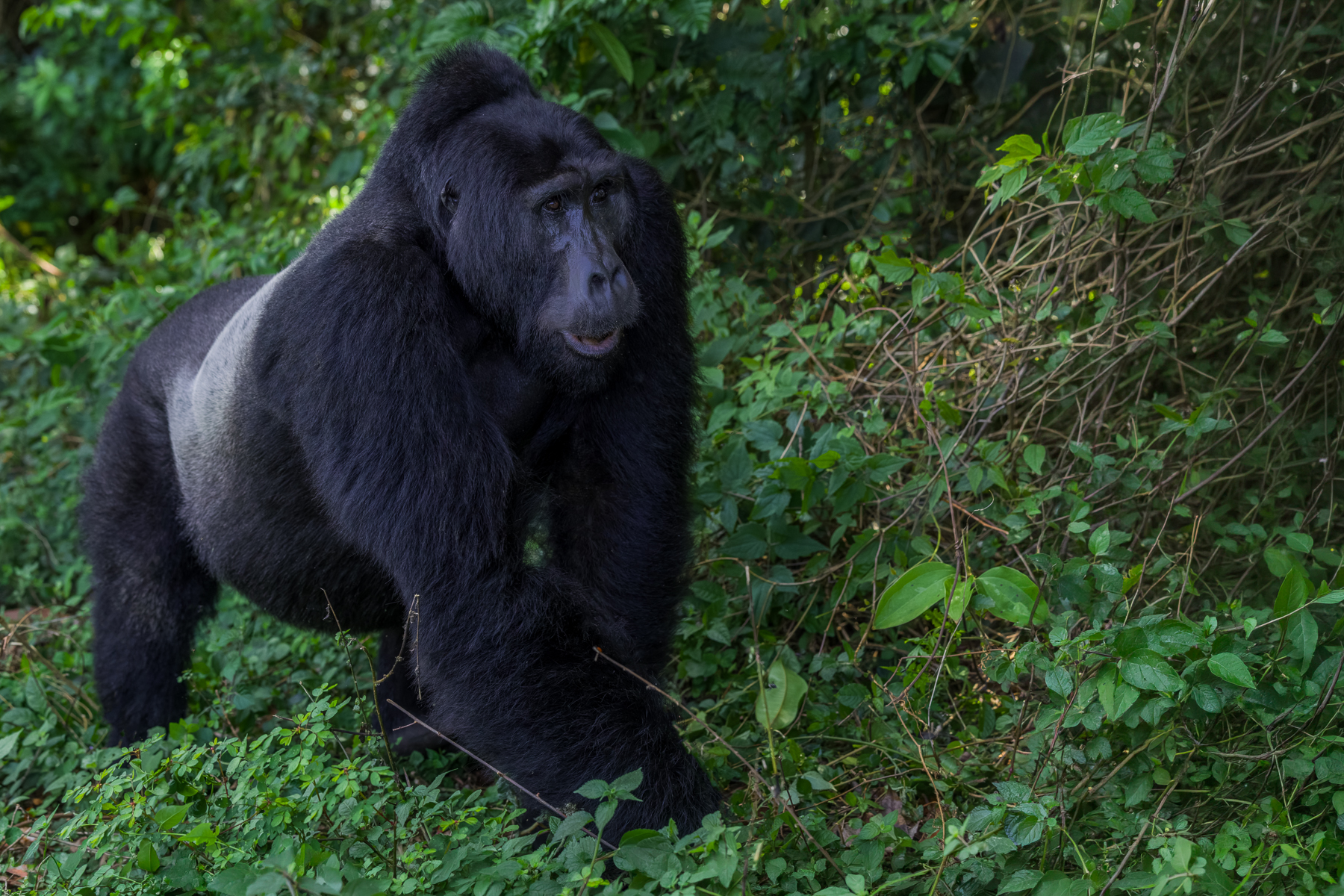
A Silverback Mountain Gorilla emerges from the bushes in Uganda's Bwindi Impenetrable Forest. At full size, male Mountain Gorillas can weigh up to 180kg - an extraordinary amount of muscle to encounter in the rainforest (image by Virginia Wilde)
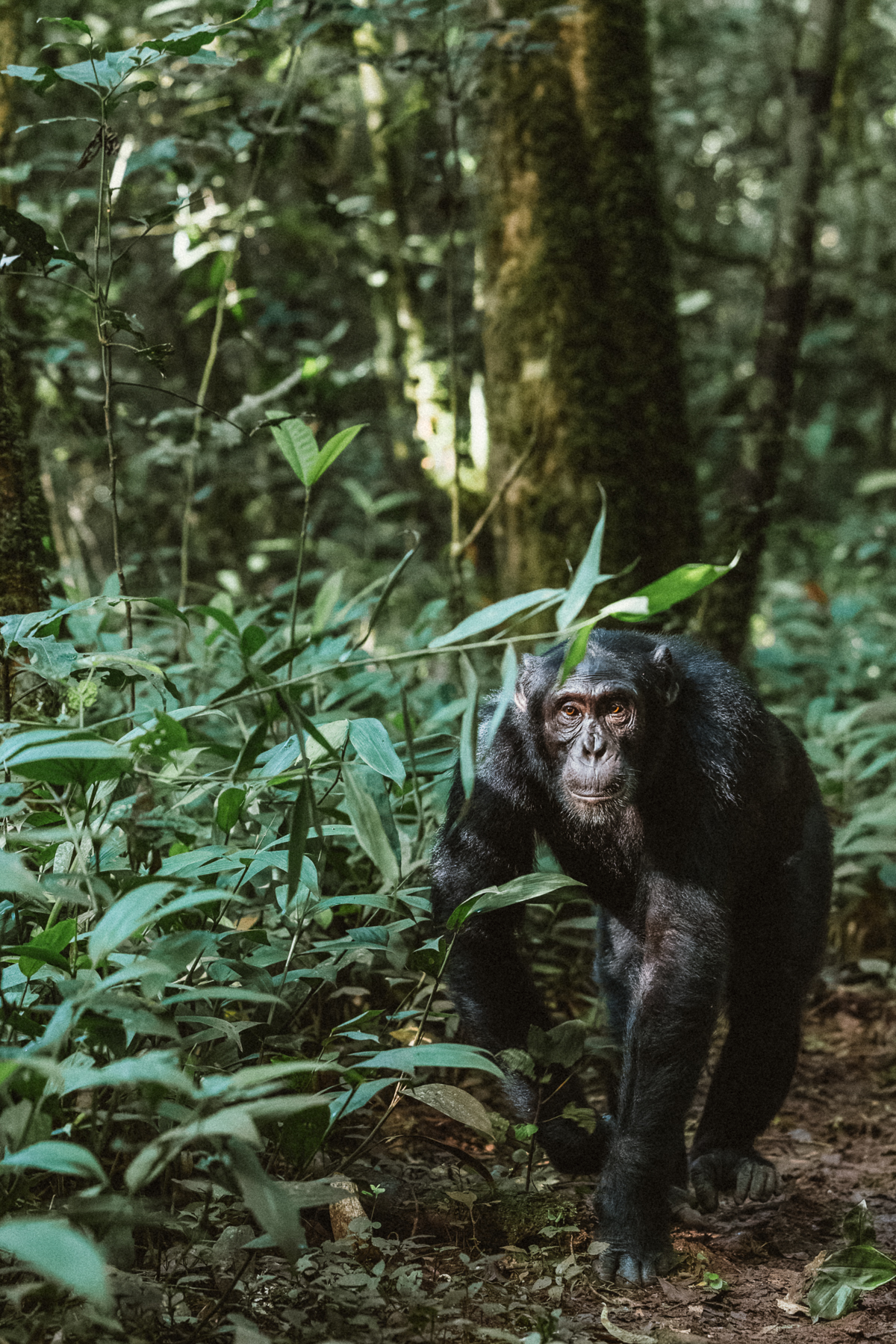
A mature Eastern Chimpanzee pads through the forest - part of a procession of chimps that passed us in Uganda's Kibale National Park (image by Virginia Wilde)
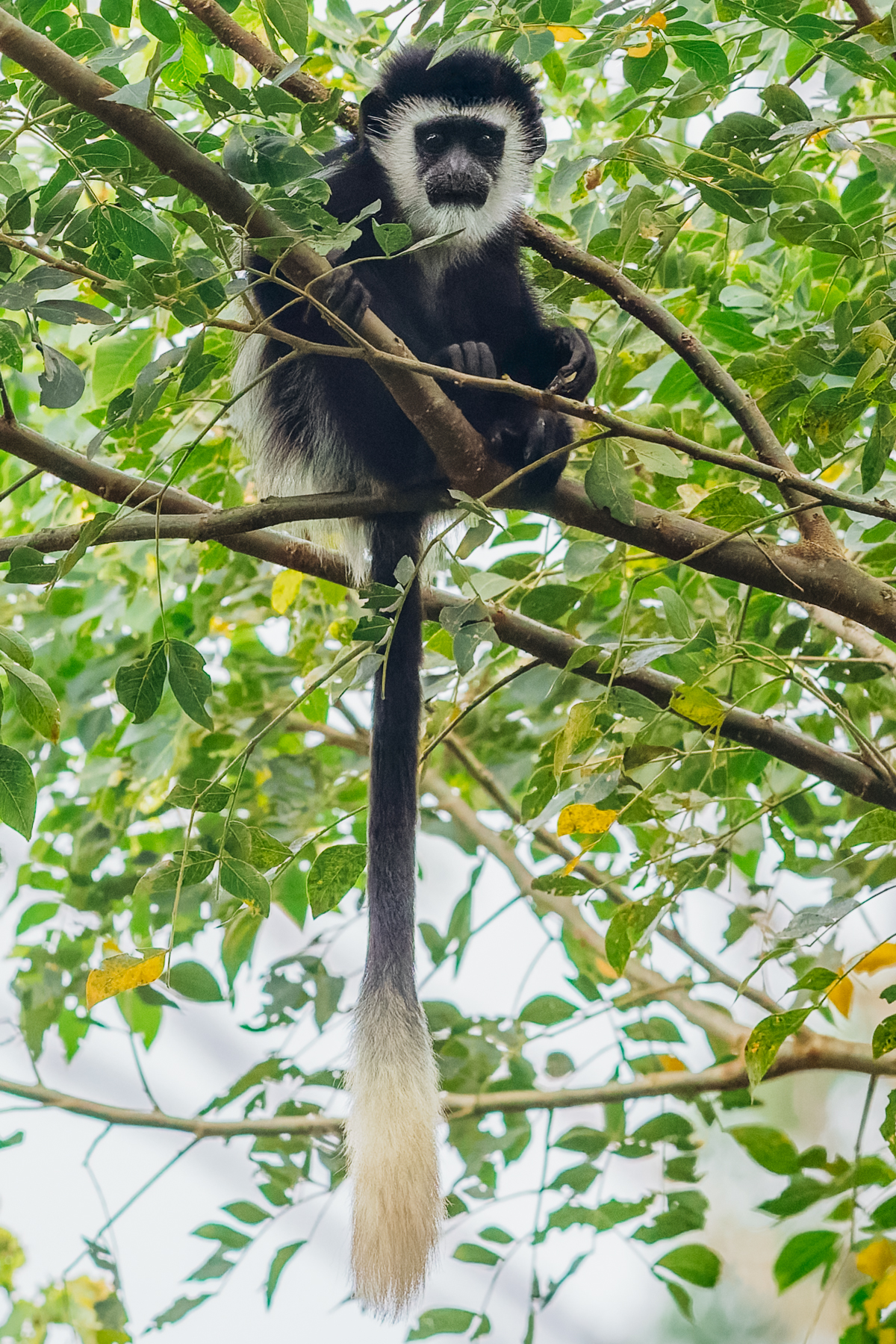
Aww! Here's looking back at you, kid! An infant Black-and-White Colobus Monkey stares back in curiosity from the trees (image by Virginia Wilde)

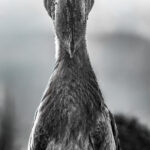



A Shoebill lords over the Mabamba Swamp, on the northern shores of Lake Victoria. The hooked tip, visible here, on the end of the Shoebill's bill is an important part of its hunting equipment, serving as a fish-grabber and cutting tool, while helping to decapitate prey (image by Virginia Wilde)
e Striking Common Blue Charaxes Butterfly has spectacular blue wings that are produced by microscopic structures that reflect light - rather than by blue pigment alone. The false eyespots underneath add another layer of defence, potentially confusing predators (image by Virginia Wilde)
A member of the Kanyantare Chimpanzee family, calling from the trees in Kibale, Uganda. Chimpanzees are wonderfully charismatic to photograph (image by Virginia Wilde)
African Shoebills often stand with their wings spread to cool themselves, while also deliberately shading their eggs and chicks in hot weather. Shoebills are genuinely an ancient evolutionary lineage - splitting from the ancestors of their closets living relatives - the Pelicans and Hamerkops - tens of millions of years ago (image by Virginia Wilde)
Quite probably the most adorable Rhino ever seen on a Wild Images tour: a two-day-old Southern White Rhino newborn stands wobbly beside its mum in Ziwa Rhino Sanctuary (image by Virginia Wilde)
There's no doubt that this Tree Pangolin Pango-pup was one of the cutest animals this year's Uganda tour group had ever seen. Set to be released into the wild a few weeks after we'd seen it, this two-week old pup was born at Uganda's Pangolin Rescue Centre after its mum was found vulnerable to trafficking (image by Virginia Wilde)
A Silverback Mountain Gorilla emerges from the green maze of Bwindi's Impenetrable Forest. Mountain Gorillas have unique nose-prints, much like human fingerprints (image by Virginia Wilde)
Clutching a single yellow flower and his mother's back, a juvenile Mountain Gorilla is carried through the undergrowth in Uganda's Bwindi Impenetrable Forest. This youngster is estimated to be around three-years-old, an age when young Gorillas are still very dependent on their mothers (image by Virginia Wilde)
A Painted Emperor Butterfly on a leaf in Uganda's Kibale National Park. Uganda is an extraordinary country for butterflies, with around 1,470 species currently recorded (image by Virginia Wilde)
The forest's answer to a morning commute. Chimpanzees travel both on the ground and through the canopy, using their knuckle-walking gait on the forest floor and their long arms for climbing when the route goes upwards (image by Virginia Wilde)
Echuya Twa mum Mugabirwe hugs her infant daughter while wearing traditional forest headwear. The Echuya Twa (or Batwa) are a distinct - but heavily marginalised - indigenous community living on the edges of the Echuya Forest Reserve in the Kisoro and Kabale districts of southwestern Uganda (image by Virginia Wilde)
Red-tailed Monkeys must be among the sweetest-faced of all primates, with the heart-shaped patch of white fur under their nose and sweeping white cheek fur (image by Virginia Wilde)
An animated Black-and-White Colobus Monkey shows off its favourite feature: that enormous, white-tipped tail. It acts as a counterweight when leaping between branches: essentially a built-in aerial stabiliser (image by Virginia Wilde)
The forest in Bwindi comes with its own climbing frame. This juvenile Mountain Gorilla has found the perfect spot to hang out and have a snack (image by Virginia Wilde)
One of Uganda's magnificent Southern White Rhinos, a subspecies introduced to Kenya after its native Northern White and Eastern Black Rhinos were hunted to extinction. Built like a tank, this Rhino is determined to take up the whole road (image by Virginia Wilde)
Silverback Mountain Gorilla Kavuyo strips bark from a branch, while sat just a few metres away from us in fields by the Bwindi Impenetrable Forest (image by Virginia Wilde)
The Great Blue Turaco is one of Africa's largest Turacos, reaching around 70cm in length. Turacos are surprisingly poor fliers for such spectacular birds. They prefer moving through the canopy by running and hopping between branches (image by Virginia Wilde)
Women of the Echuya Twa dance and sing while wearing traditional foliage hats, symbolising their deep spiritual connection to the forest (image by Virginia Wilde)
Male Village Weavers can spend hours constructing and rebuilding nests, using their bills and feet to knot and weave vegetation into a surprisingly strong structure - before convincing a female that his skills are up to scratch (image by Virginia Wilde)
An Eastern Chimpanzee from the Kanyantare family strides along the paths of the Kibale National Park in western Uganda. Kibale is the world's best destination for viewing chimpanzees in the wild, holding a population of roughly 1,500 (image by Virginia Wilde)
The Tree Pangolin's curved claws are serious digging tools, used to rip apart termite mounds and ant nests, before they sweep up insects with their incredibly long, sticky tongue (image by Virginia Wilde)
Echuya Twa women perform the traditional song and dance 'Inanga Nyamunini' - which praises the things that the forest provides: honey, medicinal plants and small game (image by Virginia Wilde)
st World of the Chimpanzee.' An Eastern Chimpanzee can move though trees and cover ground surprisingly quickly. Here, a troop member leads the way in Uganda's Kibale National Park (image by Virginia Wilde)
When you've been asked to look natural, but you're secretly posing for your Tinder profile. A male Eastern Chimpanzee displays his muscles in Uganda's Kibale Forest (image by Virginia Wilde)
Uganda gave us some incredible sunrises, particularly when the mist shrouded the valleys (image by Virginia Wilde)
If the gothic film director Tim Burton were to invent a bird, it would surely look like the Shoebill. Part sinister, part cartoonish and completely prehistoric-looking, it's hard to believe it was designed by evolution (image by Virginia Wilde)
An Echuya Twa woman beams after showing us some traditional crafts in Uganda (image by Virginia Wilde)
A splendid Grey-Crowned Crane's golden crown is actually a fan of stiff, hair-like feathers. Both males and females have them, and they are believed to help with courtship and for communication with other cranes (image by Virginia Wilde)
A juvenile L'Hoest's Monkey makes eye contact in Uganda's Bwindi Impenetrable Forest. L'Hoest's live in small, female-dominated groups and sleep sitting upright, grabbing a branch for support (image by Virginia Wilde)
Stunning Silverback Mountain Gorilla Kavuyo strides over to feast on the best leaves in Uganda's Bwindi Impenetrable Forest. Silverbacks are mature male gorillas, typically around 12 years or older, who lead and protect their family groups - deciding when and where the group moves, feeds and rests (image by Virginia Wilde)
Chimpanzees are wonderfully charismatic to photograph - and sometimes maddening. But when they gave us a clear view, the portraits were wonderful (image by Virginia Wilde)
Golden Monkeys are little blazes of colour in Uganda's misty mountain forests. Found only in the Virunga volcanic mountain range - a chain of eight major volcanoes stretching across Uganda, Rwanda and the Democratic Republic of Congo - these primates live in lively social groups, communicating with a rich repertoire of calls and facial expressions (image by Virginia Wilde)
A juvenile Golden Monkey. Currently completing a degree in Monkey Business. The syllabus includes climbing, stealing snacks, avoiding trouble and keeping up with everyone else (image by Virginia Wilde)
Looking like a pinecone that grew legs and developed an adorable personality. Tree Pangolins are covered in overlapping scales made of keratin, and when threatened they can curl into an almost impenetrable ball (image by Virginia Wilde)
A female African Paradise Flycatcher calls to her chick, in the gardens of our lodge near Uganda's Bwindi Impenetrable Forest (image by Virginia Wilde)
The Ugandan Highlands can look more like waves than hills, with clouds pooling in the valleys below. Every layer seems to reveal another ridge beyond it (image by Virginia Wilde)
African Shoebills often stand with their wings spread to cool themselves, while also deliberately shading their eggs and chicks in hot weather. Shoebills are genuinely an ancient evolutionary lineage - splitting from the ancestors of their closets living relatives - the Pelicans and Hamerkops - tens of millions of years ago (image by Virginia Wilde)
The introduction of Southern White Rhino into Uganda -whose Rhinos had become functionally extinct in the 1980s - has become one of this country's conservation success stories (image by Virginia Wilde)
An Eastern Chimpanzee from the Kanyantare family strolls past our group, maintaining eye contact with each of us. Chimpanzees maintain complex social relationships, remembering who is friend, rival, ally. And, occasionally, who is a nuisance (image by Virginia Wilde)
Two days old, already unmistakenly a Rhino - tiny horn buds oversized ears and built like a miniature tank. This infant was the newest Southern White Rhino on the reserve at Ziwa Rhino Sanctuary (image by Virginia Wilde)
Mountain Gorillas use their huge hands for climbing, feeding and moving through dense vegetation. Although this one looks as if he's simply contemplating life (image by Virginia Wilde)
A Southern White Rhino mother and her rapidly-growing calf, already looking like a formidable double act. Southern White Rhino calves stay close to their mums for 2-3 years both for protection and learning the important business of eating grass (image by Virginia Wilde)
A Tree Pango-pup showing the tongue that will enable it to reach deep into ant and termite nests. Pangolins tongues can be 16 inches (40cm) long when fully extended! (image by Virginia Wilde)
Getting airborne, when you are a Shoebill, is no mean feat. Yet its 2.4 metre wingspan is perfectly suited to low flight across the papyrus swamps and wetlands of East Africa (image by Virginia Wilde)
A young chimpanzee - believed to be around two years old -pauses mid-climb in Kibale's forest canopy. Chimpanzees have opposable big toes as well as opposable thumbs, giving the, four gripping limbs to climb, hang and balance (image by Virginia Wilde)
High above the ground, a Leopard settles into the fork of an Acacia tree, its powerful forelimbs draped over the branch (image by Virginia Wilde)
Olive-bellied Sunbirds often manifest as just a flash of scarlet, turquoise and green in Uganda's forests and gardens. The male's brilliant colours are especially striking when their iridescent feathers catch the light, while that long, slender bill is perfectly suited to probing flowers for nectar (image by Virginia Wilde)
A puddling aggregation of African Caper White Butterflies in Uganda's Queen Elizabeth National Park. Caper Whites can undertake large-scale migrations, with impressive numbers on the wing at the same time (image by Virginia Wilde)
A Black-and-White Colobus displays the thick white mantle that can aid its balance when leaping through trees. Male Colobus have a spectacular dawn chorus of deep, roaring calls, helping neighbouring groups maintain spacing (image by Virginia Wilde)
Silverback Mountain Gorilla Kavuyo, of the Binyindo family, tucks into some tasty branches in Uganda's Bwindi Impenetrable Forest (image by Virginia Wilde)
A Southern White Rhino mother and her year-old calf, already looking like a formidable double act. Southern White Rhino calves stay close to their mums for 2-3 years both for protection and learning the important business of eating grass (image by Virginia Wilde)
Echuya Twa man George shows the way to a traditional forest look-out to scan for prey: an essential way of life when this community centred their lives around hunting and gathering (image by Virginia Wilde)
Shoebills - part prehistoric-looking Swamp Lord, part ancient statue - are one of Africa's most extraordinary birds. Their enormous shoe-shaped bill is perfectly adapted for catching large prey, including lungfish, catfish and even waterbirds. Shoebills can also stand remarkably still for very long periods before making a lightning-fast strike (image by Virginia Wilde)
Nothing says fine dining like eating an entire branch. Mountain Gorillas are primarily herbivores and can spend hours each day stripping leaves, stems and shoots from the vegetation around them - with around 32kg of food needed each day for an adult male (image by Virginia Wilde)
The Cabbage Tree Emperor Caterpillar is one spiky-looking larva. Designed to repel and confuse predators, I think he's doing a great job at this (image by Virginia Wilde)
This Eastern Chimpanzee has the face of someone who has cancelled every plan and feels absolutely no guilt about it. Chimpanzees spend a lot of time resting between bouts of feeding, travelling and socialising (image by Virginia Wilde)
A Speckled Mousebird feasts on a ripe guava in our lodge garden near Uganda's Kibale Forest. These highly social birds are mainly frugivorous, also feeding on flowers and nectar (image by Virginia Wilde)
A female Mountain Gorilla emerges from the bushes on the edge of Uganda's Bwindi Impenetrable Forest. Females usually remain with their birth group until adolescence, then transfer to another group - often several times during their lives - preventing inbreeding (image by Virginia Wilde)
The Lungfish is the Shoebill's idea of fast food: catch it, clamp it, swallow it. That enormous bill can seize surprisingly large prey, while the sharp hooked tip keeps a slippery fish firmly under control (image by Virginia Wilde)
Apparently, this is the best seat in the forest, and he's not giving it up! A member of the Kanyantare Chimpanzee family shows why hanging around is actually a perfectly sensible way to spend an afternoon (image by Virginia Wilde)
Eye-to-eye with a beautiful young female Leopard, resting in a tree in Uganda's Queen Elizabeth National Park (image by Virginia Wilde)
A prehistoric-looking Shoebill dives for its favourite lungfish, using their huge bill as a fishing net, scooping up prey rather than stabbing it (image by Virginia Wilde)
The large-chinned faces of Grey-cheeked Mangabeys can give them an intense, suspicious expression. Some taxonomists treat the Ugandan form as a separate species - but it is not widely accepted as such (image by Virginia Wilde)
A Red-tailed Monkey uses a broken tree trunk as a look-out post. This species' striking white cheek whiskers and red tail make it one of Uganda's most distinctive forest primates (image by Virginia Wilde)
'How long can I hide behind here, before she sees me?' A Golden Monkey appears to be taking sneaky looks from behind a tree trunk, while foraging for leaves and berries (image by Virginia Wilde)
A more senior Eastern Chimpanzee from the Kanyantare family guards some berries, which it then started tucking into, in Uganda's Kibale National Park (image by Virginia Wilde)
A Southern White Rhino showcasing its incredible horn. The horn isn't bone and is not attached to its skull like an antler. It grows from the skin as a dense mass of keratin fibres and is worn down, broken and shaped over a Rhino's lifetime, making every horn slightly different (image by Virginia Wilde)
A Black-and-White Colobus displays the spectacular white mantle that may make this monkey fly. The long, fringe of hair, together with the huge tail, is thought to help them control their leaps through the forest - rather than having a built-in parachute (image by Virginia Wilde)
An adorable Tree Pangolin and her two-week-old Pangopup. This female was rescued from a vulnerable location with a high risk of poaching and trafficking. After a few weeks bonding in the safe haven of Uganda's Pangolin Rescue Centre, the pair were on course to be released deep into another area of the forest (image by Virginia Wilde)
A juvenile Eastern Chimpanzee, believed to be around five years old, scratches under his nose in Uganda's Kibale Forest. Chimps have remarkably human-like hands, with opposable thumbs and sensitive fingertips used to explore, manipulate and find food (image by Virginia Wilde)
This Tree Pangolin pup was utterly charming - all overlapping scales, tiny head and surprisingly determined little movements. Watching it scamper around its mother was an unbelievable sight (image by Virginia Wilde)
That expression suggests someone has just interrupted a very important lunch! Black-and-White Colobus are built for life in the treetops - with a spectacular white mantle that helps it balance as it moves through the canopy (image by Virginia Wilde)
A magnificent Mountain Gorilla rests among the lush vegetation of Uganda's Bwindi Impenetrable Forest. A new census is expected to show the number of wild Mountain Gorillas has passed 1,100, which would be a remarkable conservation success story for a species that brushed extinction, with only 250 remaining in the early 1980s (image by Virginia Wilde)
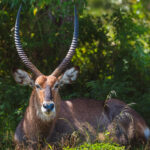
The incredible sweeping horns of Uganda's domestic Ankole Longhorn cattle, which can approach 1.8 metres in length. The horns aren't just ornamental: blood circulates through them, helping the cows dissipate heat in the summer (image by Virginia Wilde)
The Shoebill's version of a warm-up before take-off... Those spectacular wings are built for surprisingly powerful flight, but getting airborne is serious business when you're this big (image by Virginia Wilde)
Golden Monkeys must be among the most striking of forest primates. They have broad, almost cartoonish rounded cheeks, with a golden-orange mantle and cheeks contrasting with their blackish face and crown (image by Virginia Wilde)
A transfixed-looking Blue Monkey, high in trees in Uganda's Bwindi Impenetrable Forest. Blue Monkeys have an elaborate alarm calling system, with different vocalisations for different types of predator (image by Virginia Wilde)
This L'Hoest's Monkey tucks into a forest snack under the canopy of a single leaf. L'Hoest's Monkeys have cheek pouches which they use to stuff food into while foraging on the forest floor - before moving somewhere safer to eat it (image by Virginia Wilde)
We had the real privilege of being the first wildlife photographers to visit this two-day-old baby Southern White Rhino. Baby rhinos can walk within hours of birth, and their horn is only a tiny nub, developing gradually into the impressive adult form from compressed keratin fibres (image by Virginia Wilde)
Mother Chimpanzee: doing the navigating, walking and carrying. Juvenile Chimp: supervising. Chimpanzee youngsters are dependent on their mums for years, learning where to go and how to negotiate life in the forest by watching them (image by Virginia Wilde)
At three-years-old, this Chimpanzee juvenile has decided that the forest floor is optional. Fortunately, chimps are perfectly built for climbing, with long arms and feet that can grip branches like hands (image by Virginia Wilde)
The strikingly colourful tale of a Red-tailed Monkey, hanging down from a branch. And those cheeks aren't just for looking cute - Red-tailed Monkeys have enormous cheek pouches that can hold as much food as their stomachs (image by Virginia Wilde)
A wide-eyed Golden Monkey gazes open-mouthed at the antics of fellow troop members, as they manoeuvre through the trees in Uganda's Mgahinga Gorilla National Park (image by Virginia Wilde)
The gorgeous colours of a Golden Monkey perched high in the mountain forest of Mgahinga, Uganda. Endemic to the Virunga region, these endangered primates are particularly dependent on bamboo (image by Virginia Wilde)
The sunrise turns the mist orange over hills near Uganda's Kibale Forest (image by Virginia Wilde)
Mountain Gorillas are the gentle giants of Uganda's forests. Bathed in shafts of dappled light, this male's powerful frame contrasts with his thoughtful expression, hinting at the remarkable intelligence of these Great Apes (image by Virginia Wilde)
The Hadada Ibis has surprisingly beautiful wings. Its otherwise sombre brown plumage catches the light with metallic green, purple and bronze iridescence, particularly across the flight feathers (image by Virginia Wilde)
The magnificent lyre-shaped horns of a male Uganda Kob: one of Uganda's most characteristic savanna mammals and featuring on the nation's coat of arms (image by Virginia Wilde)
Twilight colours turn the misty fields purple, just after sunrise on hills near Uganda's Kibale National Park (image by Virginia Wilde)
'I've been waiting here for a loooong time! Will she ever come back?' Chimpanzees are extraordinarily expressive, with their faces uncannily human-like (image by Virginia Wilde)
Someone clearly told the funniest joke in the Swamp. At least the Shoebill thought so! This is a typical expression for a creature that looks less like a bird and more like something that escaped from the Jurassic (image by Virginia Wilde)
A small pride of Lions rest in a Candelabra euphorbia tree, giving them respite from ground-dwelling flies and the heat. Lions in Uganda's Queen Elizabeth National Park frequently haul themselves up into these giant, cactus-like trees (image by Virginia Wilde)
Close-up of a Southern White Rhino showing the rhino's characteristic two horns: the front used mainly for defence, dominance battles and sometimes digging. While the rear used only for fighting and defence (image by Virginia Wilde)
A Silverback Mountain Gorilla emerges from the bushes in Uganda's Bwindi Impenetrable Forest. At full size, male Mountain Gorillas can weigh up to 180kg - an extraordinary amount of muscle to encounter in the rainforest (image by Virginia Wilde)
A mature Eastern Chimpanzee pads through the forest - part of a procession of chimps that passed us in Uganda's Kibale National Park (image by Virginia Wilde)
Aww! Here's looking back at you, kid! An infant Black-and-White Colobus Monkey stares back in curiosity from the trees (image by Virginia Wilde)


The first thing you notice about a Silverback Mountain Gorilla is not his face. It is the sheer amount of Gorilla.
Sitting just a few feet away, on the forest floor, he seems to occupy an absurd amount of space.
The hands are huge, the size of dinner plates; the forearms thick with muscle; the vast, domed head sunk low between hulking shoulders. This is an animal built on a scale designed to make other primates, including humans, feel puny.
And nothing really prepares you for how it feels when this – the most magnificent of Great Apes – brushes past you. Not the photographs. Not the documentaries. Because when the Silverback shifts his weight and locks eyes with you, it’s as if the forest itself is rearranged.
Our close encounters with these dominant males, in two different Mountain Gorilla families, were undoubtedly one of the highlights of what was an incredibly varied and, at times, deeply moving Wild Images tour.
We were, after all, in Uganda, a disarmingly beautiful country that seems to have been assembled from several different Africa’s.
In the space of a few days, we moved from papyrus wetlands and the dripping forests of the Albertine Rift to open savannah, meadows alive with clouds of butterflies, and volcanic landscapes – each with its own cast of enchanting wildlife.
Against this backdrop came a remarkable succession of powerful and sometimes surreal encounters.
Down in the swamp, the Shoebill: all living stone and prehistoric menace. In the forests of Kibale, the capricious Chimpanzees: capable of turning a quiet forest into a cacophony in seconds. There was a Gorilla infant clutching a tiny yellow flower like a treasured possession, and an elegant female Leopard draped over branches in soft morning light.
Among the eleven species of primate we saw, the wide-cheeked Golden Monkeys were also notable highlights: bright flashes of russet and gold fur leaping through the bamboo. Then there was the Pangolin pup, almost unbearably cute and delicate-looking, despite its armoured body.
And who could forget our on-foot encounter with a two-day-old Southern White Rhino, its horn no more than a barely formed nub, wobbling like a tiny white tank beside its mother on legs still new to the world.
We also had the privilege of meeting members of the Echuya Twa community, whose ancestral relationship with the forests of western Uganda stretches back for generations.
By the end of the tour, no-one was in any doubt that Uganda is not only a primate paradise, but also one of Africa’s great landscape and wildlife surprises.
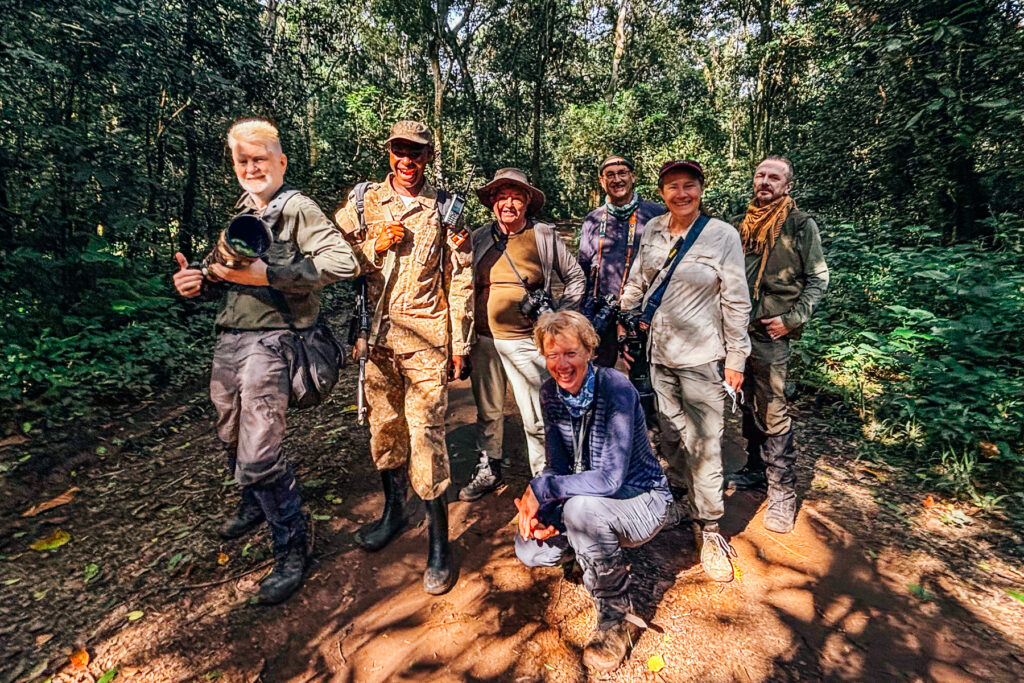
Our wonderful 2026 Uganda tour members, following an incredible Chimpanzee tracking session in Kibale National Park (image by Virginia Wilde)
The Tour Begins: From Lake Victoria to the Swamp in Search of Shoebill – Africa’s Most Prehistoric-looking Bird
Our adventure began in Entebbe, a peninsula city on the northern shores of Lake Victoria and home to Uganda’s main international airport. Lake Victoria is both Africa’s largest lake by surface area and the world’s largest tropical lake, shared by Uganda, Kenya and Tanzania.
Originally a fishing village, Entebbe developed as an administrative centre during the colonial period and remains an important gateway to Uganda. It is also an unusually green town, with mature trees, gardens and wetlands surrounding the peninsula.
With some of the group who had arrived early, we explored the city’s Botanical Gardens – famous for their tropical vegetation that was used as a backdrop for the 1940s Johnny Weissmuller Tarzan movies. Here, we shared a beer as a pair of African Clawless Otters swam past and we had our first glimpses of Black-and-White Colobus and Vervet Monkeys.
Once the whole group had assembled, we met our wonderful local driver and guide Paul, who would stay with us for our whole trip. Together, we drove the 90 minutes to our lodge beside the Mabamba Swamp, a large 2,424-hectare wetlands on the northern shores of Lake Victoria.
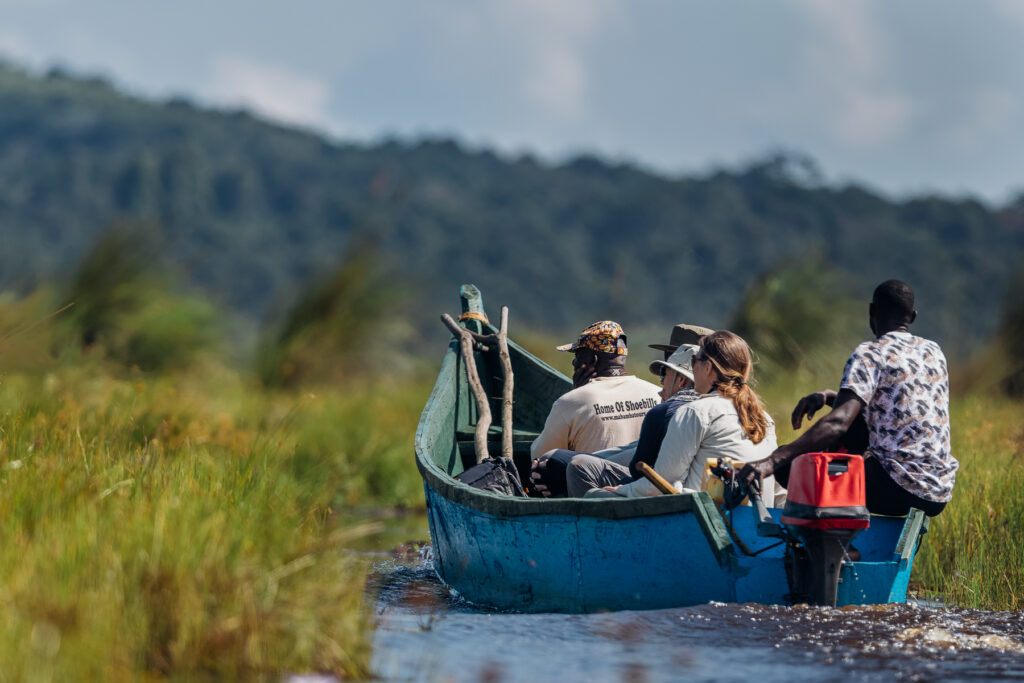
Motoring out into the Mabamba Swamp to find Shoebills in Uganda (image by Virginia Wilde)
Mabamba is dominated by papyrus and supports more than 300 recorded bird species. It is a particularly important habitat for the endangered Shoebills, with the extensive wetland providing an abundant supply of lungfish, one of their principal prey.
Our lodge itself was set in 40 acres of indigenous hilltop forest overlooking the wetlands and provided an excellent introduction to Uganda’s smaller wildlife, being particularly good for butterflies. In these grounds, we found our first Red-tailed Monkeys and woodland birds such as the striking Great Blue Turaco.
The following morning, we headed out into the swamp at first light, piling into two motorized but comfortable wooden canoes, with boatmen who stopped the engine to thread silently through the reeds, using punting poles, whenever a Shoebill was spotted.
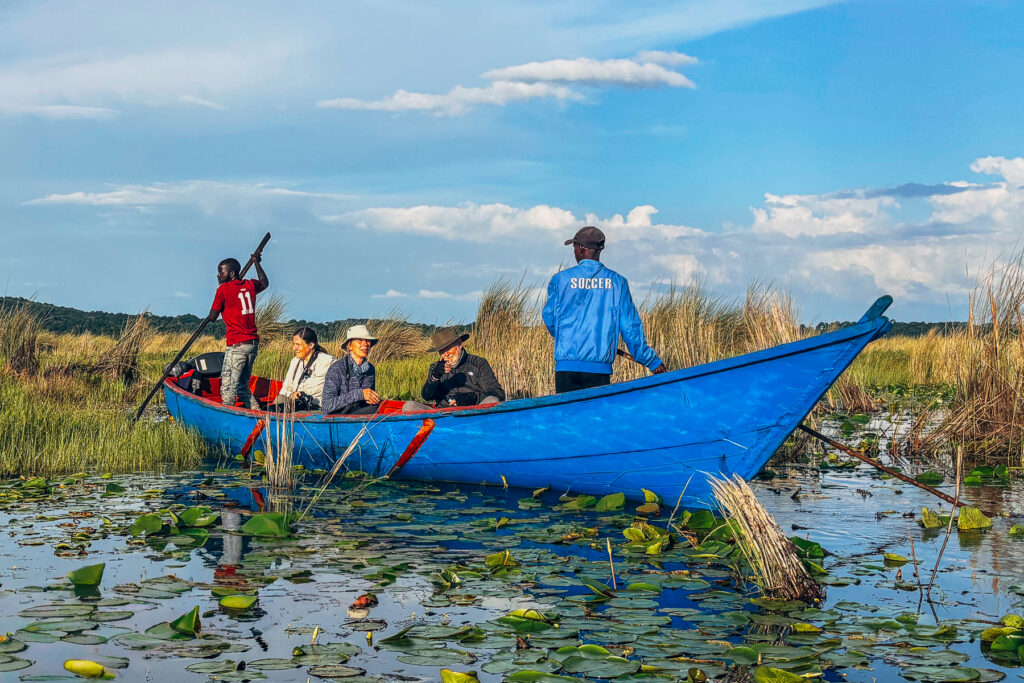
Punting through the reeds in search of Shoebills in Uganda’s Mabamba Swamp (image by Virginia Wilde)
In the swamp, there was plenty to see along the way: Woodland and Pied Kingfisher, Marabou Stork, African Marsh Harrier and Fish Eagle, Hadada Ibis, Marsh Widowbird, African Swamphen and Red-chested Sunbird among many others.
It took less than half an hour to find our first Shoebill. For almost all of us, this was our first encounter with this wonderfully surreal species, whose numbers in the wild stand at less than 5,000. We spent the rest of the morning observing and photographing this magnificently odd bird from close range as it moved slowly through the swamp, scanning for prey.
Few birds look quite so prehistoric as the Shoebill. Its hulking 1.2 metre height, huge bill, broad head and deliberate movements give it the unmistakable air of a dinosaur that somehow made it into the modern world.
The Shoebill’s pale eyes give it a fixed pterodactyl-like stare, while its ability to stand completely motionless among the papyrus – waiting to strike at prey with remarkable speed – makes it look less like a living bird than a statue that has somehow come to life.
Despite their appearance, Shoebills are not Storks but the sole surviving members of their own distinct family, with Pelicans and Herons among its closest relatives.
Shoebills have a surprisingly brutal approach to family planning: although two or three chicks may hatch, usually only one survives, with the older chick outcompeting by starving or even killing its younger siblings.
We returned for our second Shoebill session after lunch, almost immediately finding a new individual. This time, we watched it hunt. With a sudden, lightning-fast splash, it plunged into the water, emerging with a Lungfish which it tossed into the air and swallowed in a fluid movement.
During our final hour on the water, we tracked down another Shoebill and managed some lovely close-up images as it moved through the papyrus. Back by the swamp harbour, we photographed some huge flocks of Vieillot’s Black Weaver and Village Weaver as they busied themselves building nests.
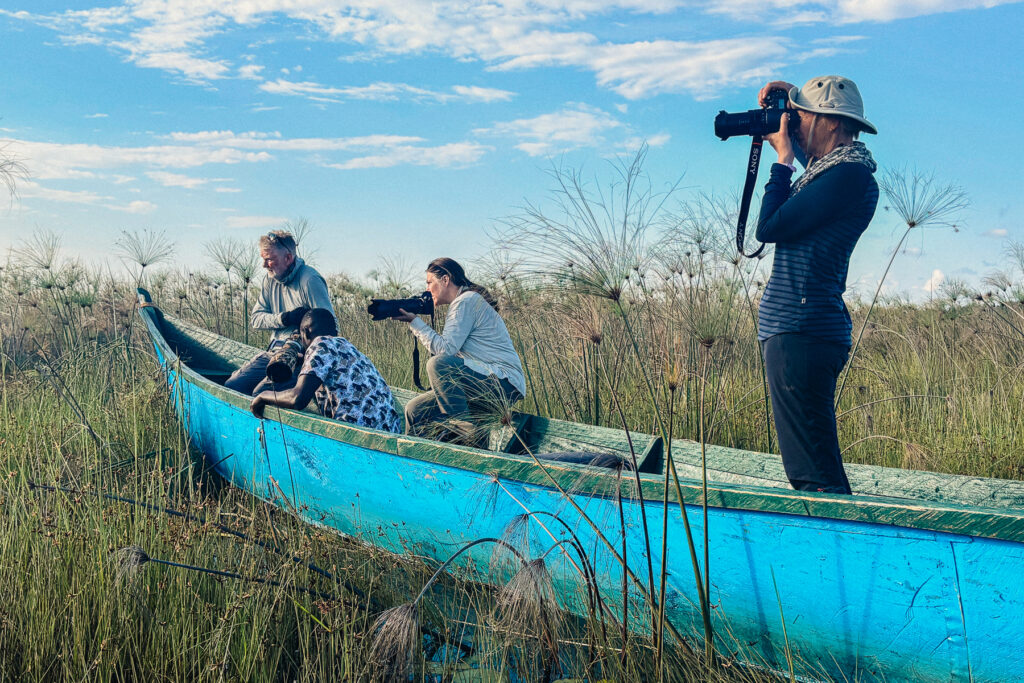
What a wonderful afternoon we had on the Mabamba Swamp, photographing Shoebills in the papyrus from wooden boats (image by Virginia Wilde)
That evening, our lodge owner, Elaine, had arranged for a local choir of schoolchildren to practice their traditional song and dance routines in the grounds, to raise money for books and school materials.
Their performance was so enchanting and inspiring that we were all charmed by their enthusiasm and talent. It was a great introduction to the song culture of Uganda that we witnessed throughout our journey.
Golden Monkeys of the Bamboo Forest: Russet Flashes of Fur in a Sea of Green
The following morning, we left the swamp and the Shoebills behind and set off west, towards Kisoro and the Virunga volcanoes. It was a long day on the road, but the landscape changed dramatically as we climbed into south-western Uganda: flat wetlands giving way to steep green hills with a final spectacular approach to Lake Mulehe and the volcanic peaks beyond.
En route, we stopped for a buffet lunch bursting with local dishes and juices to choose from. Several of the meadows we passed contained Palm-nut Vultures and Grey Crowned Cranes, giving us the opportunity to stop and photograph Uganda’s national bird.
Elegant, long-legged and improbably regal, these cranes are famed for their extravagantly feathered golden crowns and displays of affection.
By the time we reached Lake Mulehe Safari Lodge, we were looking across a very different Uganda: a volcanic landscape dominated by the three peaks of Mgahinga National Park: Muhabura, Gahinga and Sabyinyo. This scenic lodge, above the shores of Lake Mulehe, would be our base for the next stage of the trip.
Our target here was one of Uganda’s most distinctive primates: the endangered Golden Monkey. Restricted to the Albertine Rift, these striking, orange-coated monkeys occur in Uganda only in Mgahinga Gorilla National Park.
All night I watched the weather forecast for our trekking day, which looked increasingly ominous. Heavy rain was predicted, so we headed off early, hoping for a reprieve. After a lively cultural dance performance and a briefing from our trekking team – complete with male and female porters, armed guards and our head guide – we started the climb.
Mgahinga has one large, habituated troop of around 80 Golden Monkeys, with a second, smaller troop being habituated for conservation and research. Sometimes the main troop is close to the trekking centre; sometimes they roam deep into the forest, making the group considerably harder to find.
But on this particular morning, the monkeys were a long way up.
It took around two hours of taxing hiking to reach them, with some steep sections and enough mud to make the going interesting. Just as we were beginning to run out of steam, the forest opened into a clearing – and there they were!
At first we noticed just two Golden Monkeys, nestled in the trees. But before long, a larger troop of Golden Monkeys was spreading through the vegetation, moving rapidly between the bamboo and trees.
Their colouring was spectacular: rich orange fur against foliage so intensely green it looked almost artificial.
Golden Monkeys have strikingly broad, almost cartoonish rounded cheeks, with a golden-orange mantle and cheeks contrasting with their blackish face and crown.
There were infants among the troop, scrambling through the branches as the adults fed, climbed and vanished into the vegetation. Photographing them, on the other hand, was a challenge. One second a perfect face filled the viewfinder; the next, there was nothing but leaves. Golden Monkeys are constantly on the move!
We had a memorable hour with these rare primates before reluctantly starting the long trek back down. By then, the rain had arrived in earnest, hammering down on us as we manoeuvred around the worst of the mud. At least the forecast had kept its worst until we had finished our photography.
The climb had brought other rewards, too. Our trekking team had been superb, especially one female porter, Jennifer, and we were very happy to tip them generously for their kindness and help. Every so often, the forest opened to reveal spectacular views across the volcanic landscape.
Our driver-guide, Paul, had also found a Jackson’s Chameleon for us in the trees near the car park. Sadly, we never got to see it. A local villager, apparently motivated by a traditional belief that these three-horned reptiles bring bad luck, had hurled it into the bushes before we could get close.
Two members of our group, who had visited Uganda several years earlier, had decided to skip the Golden Monkey trek in favour of an additional Gorilla trek with a family they had encountered previously. They rejoined us for lunch that afternoon, by which time the rain had done its worst.
The afternoon was deliberately slower, with time to explore the grounds of Lake Mulehe Safari Lodge and enjoy its spectacular setting above the lake – a welcome pause after our morning in the mountains.
A Morning with the Batwa People of Echuya
After breakfast, we left Lake Mulehe and headed north towards Echuya Forest. The landscape gradually changed from the volcanic hills around Kisoro to a densely forested ridge, with morning light burning off the mist over the hills – a view we couldn’t resist stopping to photograph.
By mid-morning we had reached Echuya and were met by community representatives Marcy and Elizabeth, who would lead us through the forest with George, a Batwa man with a great sense of humour.
Batwa communities lived in, and around, these forests for generations as hunter-gatherers, relying on the woodland for food, medicine and materials – and maintaining a deep spiritual relationship with it. That way of life was shattered when their ancestral forests were turned into protected conservation areas.
Bwindi and Mgahinga became national parks in 1991, and Echuya was also placed under formal forest protection. Batwa communities were displaced without their free, prior and informed consent, leaving many landless and living in poverty on the margins of their former homeland.
Yet our welcome here was anything but sombre. We were met by singing and dancing before George and Elizabeth led us into the forest to show us how the Batwa traditionally lived.
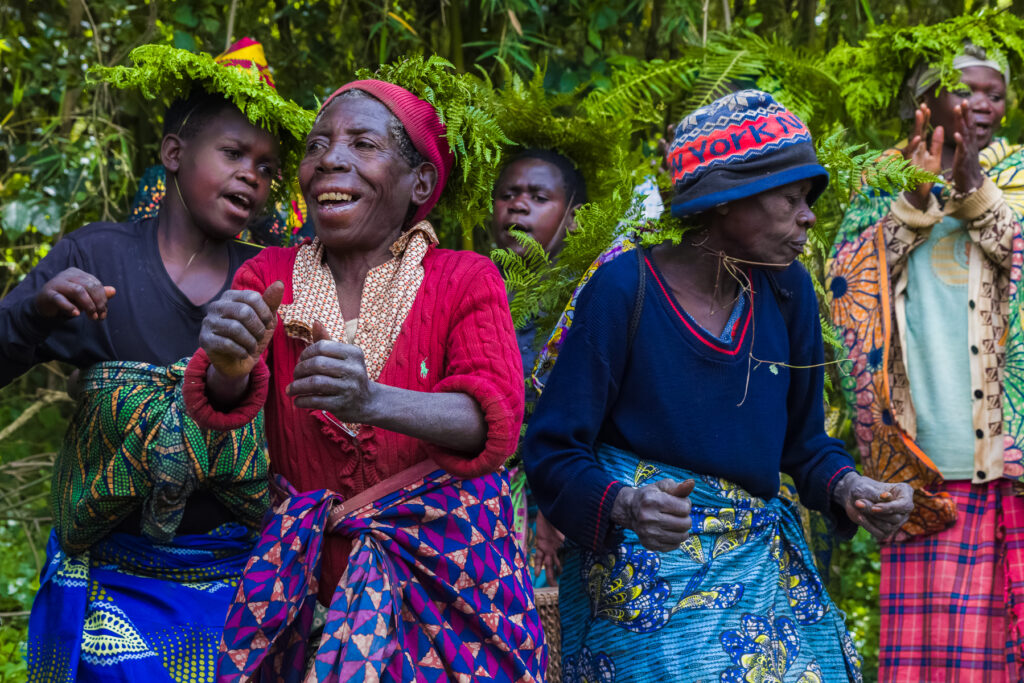
Echuya Twa women perform the traditional song and dance ‘Inanga Nyamunini’ – which praises the things that the forest provides: honey, medicinal plants and small game (image by Virginia Wilde)
The morning became a remarkably hands-on lesson in forest life. We saw forest homes and learned how they were constructed; watched fire being made without modern equipment; tried our hands at firing traditional bows and arrows; and saw George demonstrate how ropes were used in the forest.
What made the experience particularly interesting was the depth of knowledge; the forest was not simply somewhere to live. It provided food, materials, medicine and shelter, while particular places and practices carried spiritual significance.
Traditional Batwa life is based largely on hunting and gathering, with wild plants, honey and small game forming part of the diet. Historical accounts also record that Gorillas were considered taboo and were not hunted.
There was a poignancy to seeing these traditions demonstrated inside a forest that their forefathers once inhabited freely. The Batwa have not simply lost a landscape; they lost access to a way of life built around it.
Before we left, we made a substantial donation of grain and other food supplies to the community – enough, we were told, to provide food for around a month. Our visit ended as it had begun, with singing and dancing and laughter shared between us.
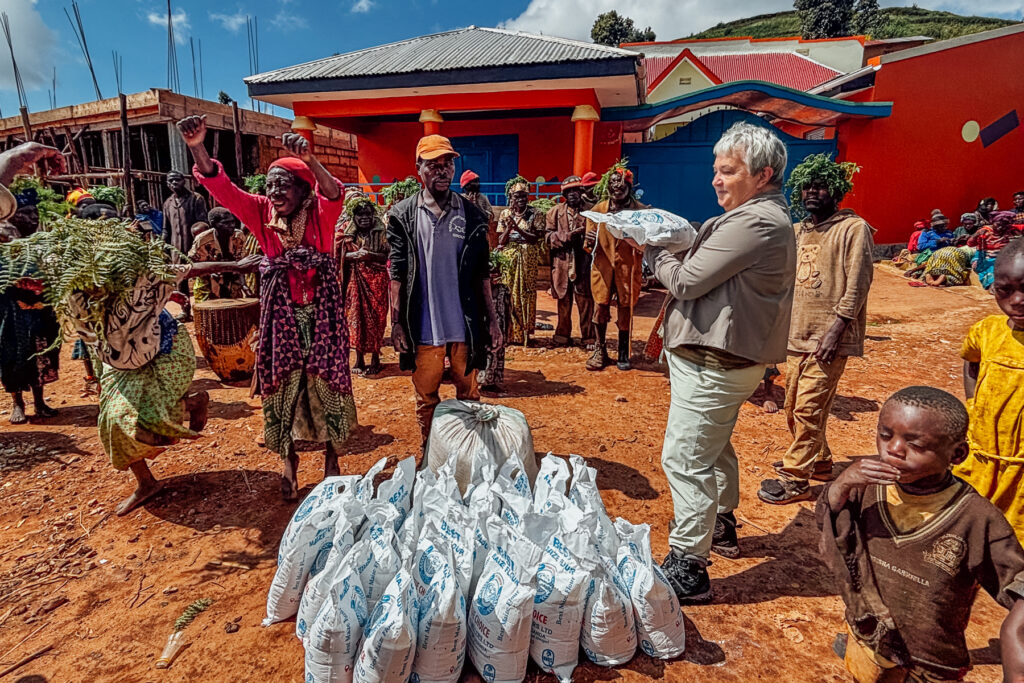
Tour member Ann helps to hand a month’s worth of food to members of the displaced Echuya Twa community in Uganda (image by Virginia Wilde)
The Giants of Bwindi: Into the World of the Mountain Gorilla
Leaving the Batwa of Echuya behind, we pressed on towards Buhoma, one of the sectors on the western edge of Bwindi Impenetrable National Park: a vast tract of montane rainforest and one of Uganda’s most important strongholds for Mountain Gorillas.
The drive, via the Ruhija sector, is one of the most scenic approaches to Buhoma, and as we cruised through the forest, we began seeing more wildlife in the trees.
A Blue Monkey appeared against the blue mountain backdrop, followed by Black-and-white Colobus moving through the canopy. They were fleeting sightings, but a good indication that we had entered one of Uganda’s great primate heartlands.
We continued towards Buhoma, where we would spend the next three nights at the ‘Ride 4 a Woman’ centre, a community organisation established in 2009 by Evelyne Habasa and her husband Denis Rubalema.
What began with four bicycles rented to tourists has grown into a much broader initiative supporting women from villages around Bwindi through employment, microfinance, education, agriculture and other community projects.
The centre employs local women in sewing and weaving, and the products they make are sold to visitors, creating an income that stays within the community. Today, around 300 women from 11 villages are members.
It was a particularly fitting place to stay on the eve of our Gorilla treks. Bwindi’s wildlife attracts visitors from around the world; ‘Ride 4 a Woman’ is one example of how some of that tourism can benefit the people living alongside the forest.
Arriving in the late afternoon, we spent time either relaxing, watching some of the community women perform traditional dances, or doing some light birding in the lodge grounds, with Rosy-patched Bush Shrike, Red-billed Fire Finch and an African Paradise Flycatcher feeding her chick all worthy photographic subjects.
The following morning began very early, heading to the Buhoma Park Headquarters for our trekking briefing straight after breakfast. A lively traditional dance performance got us underway before we collected our walking poles and set off with our guides and porters into the forest.
We had been allocated to the Rushegura family, one of Buhoma’s established habituated groups. Rushegura, a sizable group of around 17 Gorillas, including Silverbacks, Blackbacks, females and youngsters, was formed in 2002 when a small group of Gorillas broke away from Mubare, the first Gorilla family in Bwindi to be habituated for tourism.
More than two decades later, this breakaway family was still ranging through the steep forest above Buhoma and now contains the largest number of members.
Uganda is home to roughly half of the world’s estimated 1,060 Mountain Gorillas, split between the isolated forests of Bwindi and the Virunga Massif, which straddles Uganda, Rwanda and the Democratic Republic of Congo.
Yet these greatest of Great Apes remain vulnerable to the hazards of living in a crowded and complex world. Bwindi has seen deaths from snares and human conflict; in neighbouring Mgahinga, four members of the Hirwa family were killed by lightning in 2020.
Yet the population continues to grow, and rangers told us that the new Bwindi census is expected to show a substantial increase on the 2018 count, which would herald a major success for conservation.
On our first Gorilla trek, the apes had moved unusually high into the forest – something our guides said happens only every couple of months – although we only discovered the extent of the climb once we were on the trail.
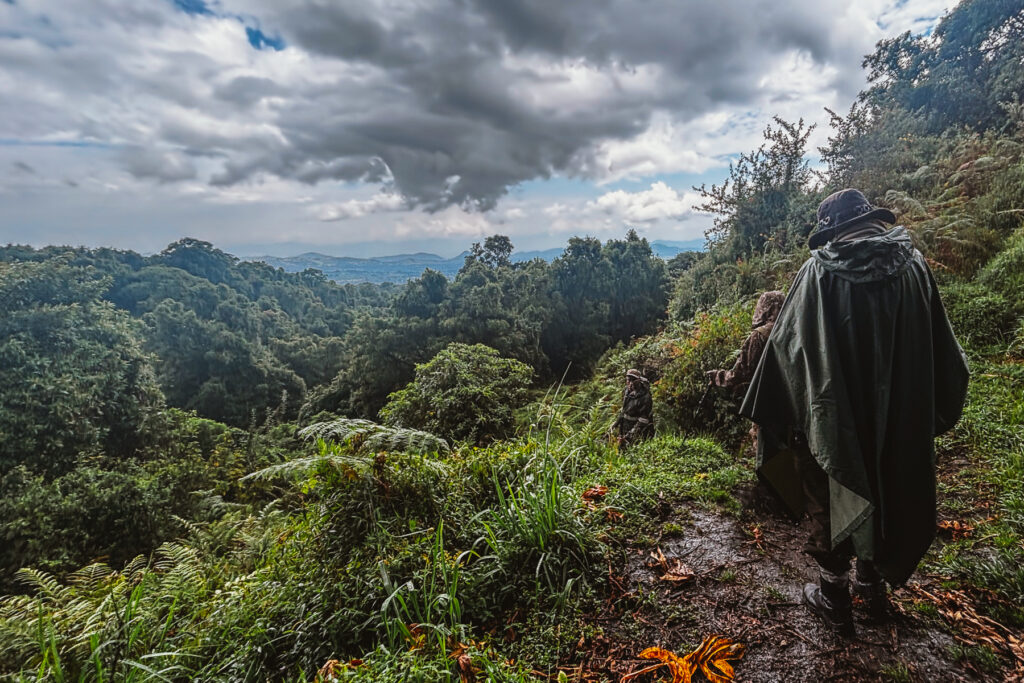
Our first Gorilla trek was our toughest hike day, but all very manageable. And the views – not to mention the Gorillas – were outstanding (image by Virginia Wilde)
For more than two hours, we hiked upwards. The trail became steeper and the undergrowth thicker, until in places we were hauling ourselves upwards using branches.
Our porters were superb, helping many of us through the vegetation and over the toughest sections. Every so often the forest opened to reveal the mountains beyond, but mostly we were deep in the undergrowth, still climbing, with no idea quite how much further we had to go.
Eventually, we reached the Gorillas. And suddenly the mammoth climb seemed entirely worthwhile.
There, in a small clearing, lay the Rushegura leader, Silverback Kabukojo, and two younger Blackbacks. At close range, the scale of a Mountain Gorilla is difficult to take in: the breadth of the shoulders, the enormous hands, the weight of the head and the sheer bulk of the animal.
Kabukojo moved towards us and then brushed past so close that I instinctively held my breath. For a few seconds, there was nothing to do but let him pass.
We climbed higher to try and find the rest of the group, although the dense undergrowth made photography almost impossible. Gorillas that were only metres away could disappear completely behind leaves and branches. That was part of the fascination: you could be looking directly at a Gorilla one moment and have no idea where it had gone the next.
And this was not a staged encounter. We were watching a habituated family going about its ordinary business: feeding, moving through the forest, climbing and interacting with one another, with only our permitted hour to observe them. The Ugandan Wildlife Authority allows one hour with a habituated family after the trek to find them.
Then came the moment I had been hoping for. A mother appeared with her juvenile riding on her back, a tiny yellow flower clutched in its hand. It was there for only a moment before the pair disappeared back into the vegetation. Just metres away, most of us were able to photograph another juvenile shimmying up a tree.
We stayed with the family for as long as we could, before resting for a picnic lunch and beginning the long descent. After an hour of trekking downwards, the rain arrived in earnest. When we finally reached the bottom of the trail – with Paul ready with our Landcruiser for us to hop into – we were soaked, tired, and ready for some coffee!
It had been a hard trek, but standing a few metres from a Mountain Gorilla, watching it behave simply as a Gorilla, was worth every muddy step.
Pangolins: Meeting one of Africa’s Most Extraordinary Little Mammals
That afternoon, we visited the nearby Pangolin Rescue Centre, founded by conservationist Moses Arineitwe.
This sanctuary rescues pangolins from poaching and trafficking, rehabilitates them and, where possible, returns them to the forest – with 177 Pangolins rescued over the past decade.
The centre also helps former hunters and traffickers develop alternative livelihoods, such as beekeeping, fishing and farming.
Guided by the wonderful Joseph, and, rather incredibly, his dog Kanga – trained to guard the Pangolins and sit nearby to keep them company – we walked through farmland and woodland before meeting three current residents, all Tree Pangolins.
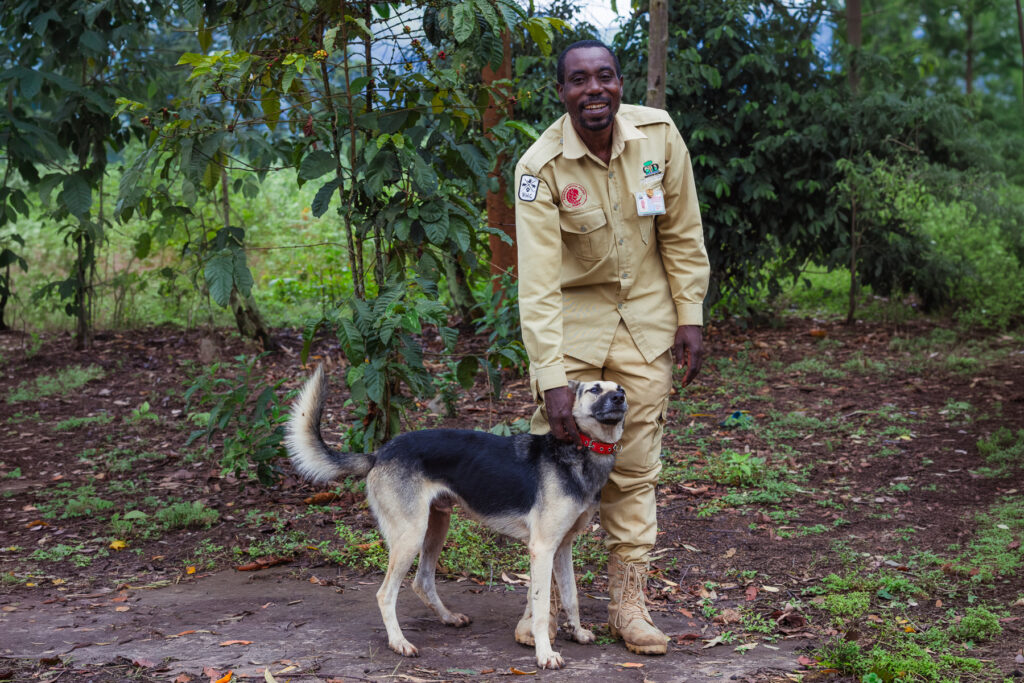
Pangolin Rescue Centre manager Joseph and his incredible dog, Kanga, trained to not only guard rescued Pangolins, but to gently keep them company on quiet days (image by Virginia Wilde)
One small male immediately stole the show, scampering around a vegetable garden before scaling a small acacia shrub with remarkable speed for such an armoured little animal.
But the real star was to come. A recent arrival was a female who had been rescued after being found very unwell and in a location that left her vulnerable to trafficking.
Just a few days after she was brought into the sanctuary, she had given birth to a Pango-pup. By the time we visited at the end of May, this infant was still only a few weeks old.
We were all mesmerised, watching this pair at close quarters as the mother moved around with her tiny, scaly passenger. The pup was utterly charming – all overlapping scales, tiny head and surprisingly determined little movements.
Pangolins are notoriously elusive in the wild, so to be able to watch one at such close range was special enough. To see a mother with a newborn was something else entirely. Along with everyone else, I was completely spellbound and smitten.
After what seemed like the shortest 15 minutes ever, we were duty-bound to leave them in peace.
They would remain at the sanctuary for several more weeks, before being released into a deep part of the forest where they will hopefully be safe from humans.
After Gorillas in the morning, a newborn Pangolin in the afternoon was a perfect way to spend a day in Bwindi.
Our Second Gorilla Family: Silverback Kavuyo at Close Quarters
Our second Gorilla trek was deliberately easier. After yesterday’s nearly three-hour climb in search of Rushegura, we were relieved to learn that the Binyindo family was ranging much closer to the trail.
May is normally a terrific month for wildlife photography in Uganda. The country is intensely green, butterflies are everywhere and many birds are in breeding plumage; most importantly, the cloud cover usually gives us the soft, even light that rainforest photography demands.
Today, however, the sun was blazing, throwing hard shadows and brutal contrast through the forest. However, we did our best with what proved to be a wonderful wild Gorilla encounter.
Led by our guide Sam, we walked across farmland and onto the forest edge, where two female Gorillas were feeding from a favoured bush. We settled down to watch them when a sudden burst of rustling announced the Silverback.
With an immense physical presence, Kavuyo emerged from the vegetation and settled just a few metres away. He began feeding with extraordinary force, the tearing of leaves and snapping of branches surprisingly loud at such close range.
A younger female continued feeding nearby until he suddenly lunged at her, driving her from the bush with a sharp bite. She squealed and defecated in fear before retreating.
It was a stark glimpse of Gorilla hierarchy. For all the grooming and play, the Silverback’s authority is constantly being enforced.
We could have watched Kavuyo for hours, but, with our allotted time nearly up, we took a short walk through the undergrowth to find more of the Gorilla family. There were more moments of interaction, including one female that gave my ankle a playful tug as I passed – unexpected and briefly alarming.
Finally, our time was up, and we trekked back through the farm fields, waving to smiling kids, with the satisfaction of a wonderful – and photographic encounter with Mountain Gorillas.
Following our boxed lunch and an ice-cream stop, most of us returned to the lodge for a rest. A few of us, however, headed out again for a forest walk in search of L’Hoest’s Monkeys.
What was meant to be a short outing turned into a much longer exploration, with some superb macro photographic opportunities along the way. Butterflies and insects appeared everywhere, while early sightings of Red-tailed Monkeys kept us hopeful.
After around two hours, we finally found the L’Hoest’s. They were worth the wait: quiet, watchful animals moving through the forest, and a fitting final encounter after a day that had ranged from a Silverback a few metres away to butterflies almost too small to notice.
We finished with a browse through local mask and woodcarving shops before returning for dinner and some jokes about one of the lodge’s slightly unusual sponge-cake desserts.
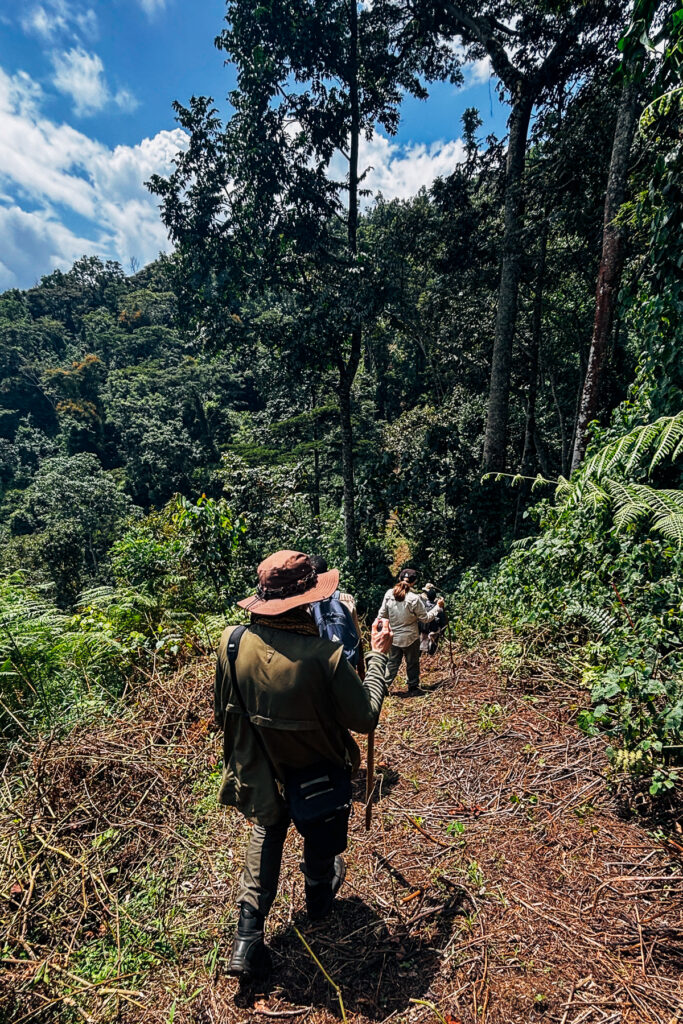
The forest views while Gorilla trekking could be incredible. How amazing to walk above the trees! (image by Virginia Wilde)
Leopards and Lions: When a Transfer Day becomes a Safari
We left Buhoma early, beginning the long drive north towards Kibale National Park. Rather than taking the most direct route, we veered west to cross Queen Elizabeth National Park, giving us a taste of Uganda’s savannah before returning to the forests.
As we drove, the Rwenzori Mountains accompanied us across the horizon, their enormous ridgeline stretching for some 120 kilometres along the Uganda–DRC border. Among them, Mount Stanley – the highest massif – rises to 5,109 metres, making the range one of Africa’s great mountain systems.
What makes the Rwenzori particularly extraordinary is their setting: they rise almost on the Equator, yet their highest peaks still carry permanent snow and glaciers. Those distant white summits, suspended above the green hills of western Uganda, were an extraordinary sight.
Pressing on through Queen Elizabeth National Park, we found a good selection of savannah wildlife: Ugandan Kob, Warthog, Olive Baboon, African Buffalo, African Savannah Elephant, Waterbuck and Hippo.
The early-morning light was beautiful, and then we found a female Leopard draped across the branches of a tree. We were able to get quite close before she climbed down and disappeared into the bushes, giving us some lovely opportunities to photograph her.
Paul then lowered the roof of our Land Cruiser, turning it into a proper safari vehicle, just in time for the birding to get going.
Among the highlights were Double-toothed Barbet, Long-crested Eagle, White-winged Chat, Tawny Eagle, Yellow-throated Longclaw, White-backed, Lappet-faced and Palm-nut Vultures, Speckled Mousebird, Hamerkop, Brown Snake Eagle, African Fish Eagle, Senegal Thick-knee, Grey-backed Fiscal and Broad-billed Roller, amongst many others.
Just further on, Paul spotted four Lions tucked deep into the sprawling branches of a Candelabra Euphorbia. They were remarkably well hidden – quite how he spotted them, I have no idea – and it took some patience to pick out the shapes of the Lions among the foliage.
The road itself provided a little drama too. We had two punctures, the first near the Lions and the second later down the road, giving Paul plenty of opportunity to demonstrate his tyre-changing skills. We, meanwhile, took advantage of the delay for ice creams and soft drinks.
Tyre repaired, we stopped briefly at the official Equator mark point, to pose for group photos.
By late afternoon, we finally reached Isunga Lodge, beautifully positioned on the edge of Kibale Forest. Built by Scottish couple Gerry and Karen, who moved to Uganda in 2014, it was humming with birds and was easily the favourite lodge of our tour.
Set among the crater lakes, with Kibale Forest below and, on a clear day, views towards the Rwenzori Mountains, Lake George and Queen Elizabeth National Park, its setting was hard to beat.
The lodge has just eight cottages scattered through the grounds, giving it a wonderfully peaceful, low-key feel. Several of us discovered that getting to our rooms involved quite a walk downhill, but after such a long day on the road, we were happy to make the effort.
We arrived in time for a delicious dinner, then finally collapsed into bed.
Chimpanzees of Kibale: The Charismatic Kanyantare Family
We left early for our first Chimpanzee trek, heading into Kibale Forest as the day was getting light. At the park headquarters, we were very quickly briefed and allocated the Kanyantare family, and suddenly we had our target.
Our guide, Seth, was excellent from the outset. Once we had found the Chimpanzees, he arranged for us to stay on and do a second session almost back-to-back, giving us an unusually long stretch of time with the family and, for much of it, the forest almost to ourselves.
We soon heard why Chimpanzees are such extraordinary animals. One of the dominant males began hammering his hands against a tree trunk, producing a huge, resonant bang before launching into a series of deafening calls. We found juveniles playing in the branches above as other family members moved through the trees around us.
Then we began to move with them, turning the session into ‘Walking with Chimpanzees’. The family group travelled along the forest trails, and we followed, sometimes getting ahead and waiting for them to come towards us, sometimes standing aside as a procession passed between us.
The males chased one another through the trees, juveniles shrieked and played, and at times the whole group dissolved into a tangle of arms, legs and branches.
Chimpanzees are wonderfully charismatic to photograph – and sometimes maddening. A face would appear perfectly between the leaves and vanish before the camera was ready; hands and feet emerged from the foliage; a beautifully lit Chimpanzee would turn away at precisely the wrong moment. But when they gave us a clear view, the portraits were wonderful.
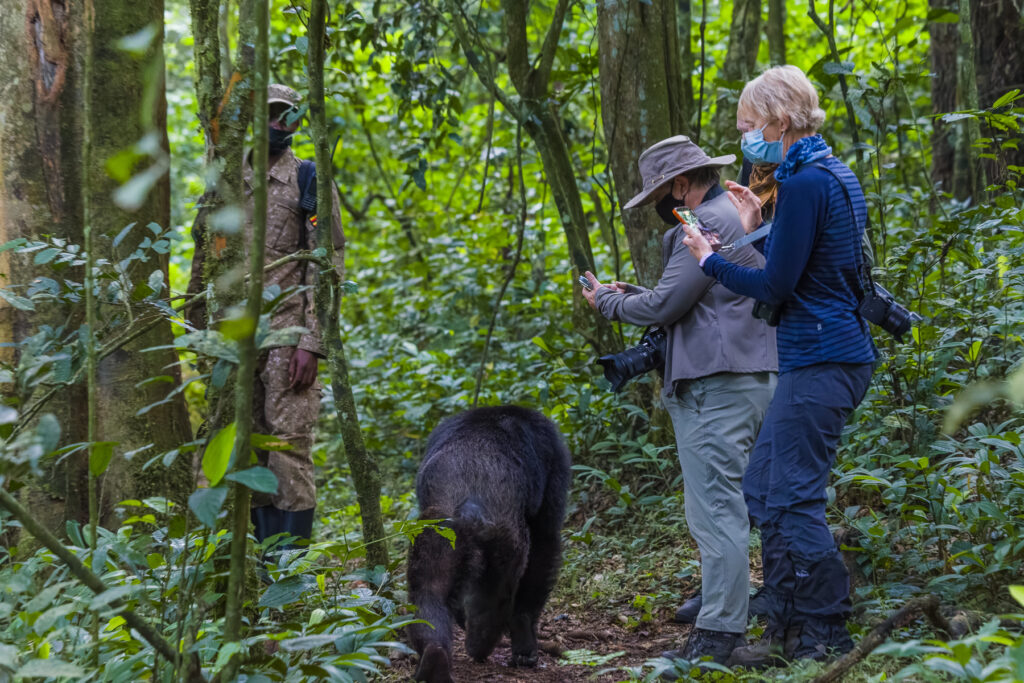
Chimpanzees are incredible primates to spend time with. Sometimes, they would walk within touching distance of us, totally undisturbed by our presence (image by Virginia Wilde)
The forest felt unusually quiet during our visit for another reason. Uganda was dealing with an outbreak of Bundibugyo virus disease, an Ebola virus disease, following imported infections linked to the Democratic Republic of Congo.
The confirmed Ugandan cases were in Kampala and Wakiso rather than the wildlife areas we were visiting, and there was no documented community transmission in Uganda at the time.
Tourism had nevertheless thinned noticeably, and we often encountered very few other visitors on the trails. We felt safe throughout, and the lack of crowds gave us an unusually intimate experience of the forest.
Between our first two sessions, we stopped at the Kibale café, run by Paul’s company, to give young local people opportunities and experience in hospitality. Coffee was welcome, but the fresh juices were the real attraction, although the ginger was strong and I could barely finish it!
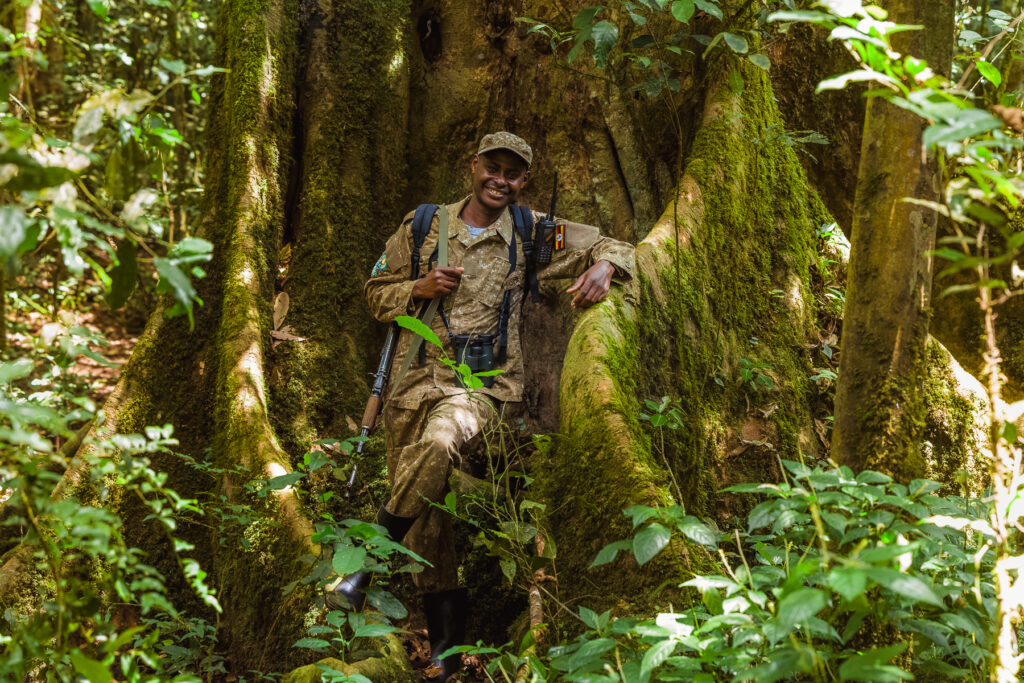
Introducing Seth, one of the incredible local guides who made our 2026 Uganda tour so successful. Seth guided us through three Chimpanzee treks in Kibale National Park (image by Virginia Wilde)
That afternoon, we browsed more local mask and souvenir shops, and also encountered an unexpectedly large procession of Arsenal supporters, celebrating their Premier League win.
The following morning, we were back with the Kanyantare Chimpanzees. This time, the family had moved further into the forest, so it took longer to find them, but the rewards were greater. We eventually came across a large gathering, perhaps 30 Chimpanzees, including an old male lying in the vegetation, mothers with tiny babies and a lively collection of juveniles.
The youngsters were irresistible: pulling one another from trees, chasing each other through the branches and generally making their own entertainment. When the family moved into a clearing, we suddenly had much better views and some of the best Chimpanzee photography of the trip.
By now, several members of the group were declaring the Chimpanzees their favourite animals of the entire tour. It was easy to see why. Their faces, hands and expressions are uncannily familiar, but their behaviour remains completely unpredictable.
After lunch at the beautiful rainforest café, some of us headed out for a swamp walk. It turned out to be considerably longer and muddier than expected, particularly across the wetland platforms, and after two Chimpanzee sessions we were beginning to feel the effort.
Still, there were rewards: a Great Blue Turaco, a Black-and-white Colobus with an infant and Red-tailed Monkeys all gave us decent photographic opportunities.
Back at our lodge in Isunga, we finally slowed down, enjoying the views across Kibale and doing some relaxed bird photography with the Mousebirds and Sunbirds around the lodge.
That evening, the lodge laid out a candlelit dinner in the garden. Even then there was wildlife to photograph: a beautifully marked blue-banded bee appeared among the flowers before we sat down to eat.
By the end of our three sessions, the Kanyantare family had given us three completely different encounters, and it was easy to see why they had won so many admirers.
Ziwa Rhino Sanctuary: Walking with Giants
After an incredible breakfast, including the lodge’s excellent shakshuka and home-made bread, we pressed on towards Ziwa Rhino Sanctuary, in Nakasongola District, north-west of Kampala.
Ziwa was established in 2005 as part of Uganda’s effort to bring Rhinos back from extinction. Uganda was historically home to the Northern White Rhino and Eastern Black Rhino, but both were wiped out by poaching and insecurity by the early 1980s.
Ziwa’s Rhino recovery programme instead began with six Southern White Rhinos, a subspecies introduced to Uganda from Kenya and the USA – and has since become a remarkable conservation success.
In March this year, rhinos from Ziwa were reintroduced to northern Uganda for the first time in 43 years – a remarkable full-circle moment for a species that had been hunted out of the country.
We arrived in time for a buffet lunch before heading out in the late afternoon for our first walking session. Our guide was Sharif, Ziwa’s head ranger, and what followed was one of those wildlife experiences that is almost impossible to appreciate until you are actually there in the thick of it.
The first challenge was photography. The rhinos moved through long grass that frequently obscured their legs, leaving only horns, ears, or the enormous curve of a back visible above the vegetation.
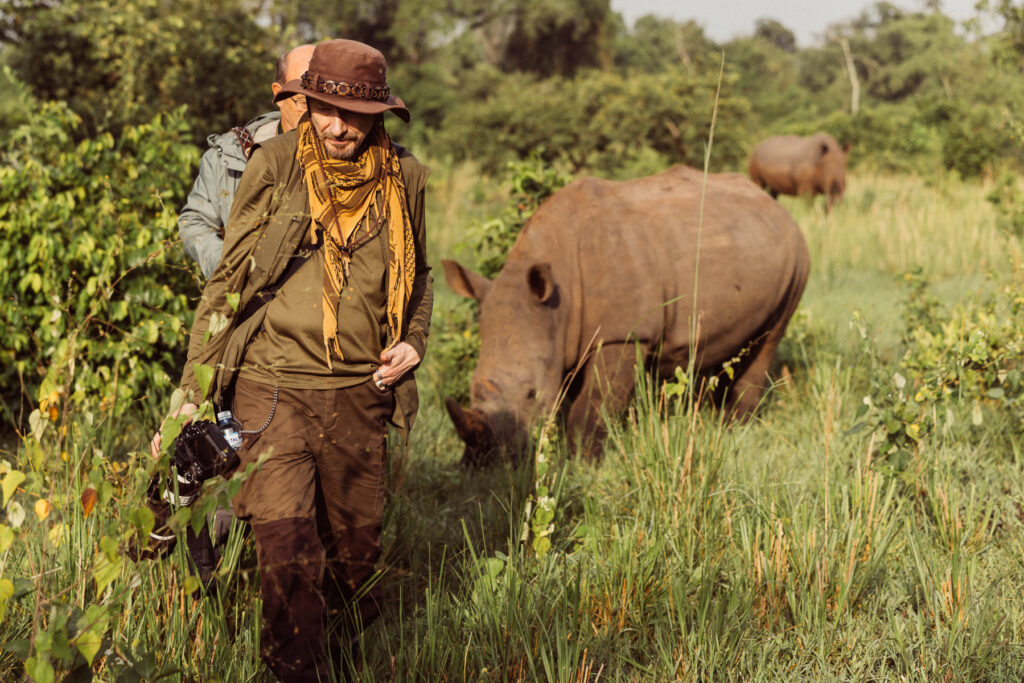
We loved this year’s ‘Walking With Rhinos’ encounters at Uganda’s incredible Ziwa Rhino Sanctuary – where conservationists have achieved incredible success in reintroducing Rhinos to the wild (image by Virginia Wilde)
But then we began to realise just how close we were. One by one, the rhinos emerged into a clearing, and suddenly there were as many as nine moving around us, with four at one point fitting into the same frame. We had expected to see rhinos; none of us had expected to be right among them.
Walking on foot alongside these enormous animals was extraordinary. They seemed almost prehistoric: huge, armour-plated bodies moving with surprising purpose through the grass, like something from a lost world.
Yet despite their immense size, they were remarkably unconcerned by our presence. We moved carefully with the ranger, giving them space while they grazed, wandered and occasionally crossed surprisingly close to us.
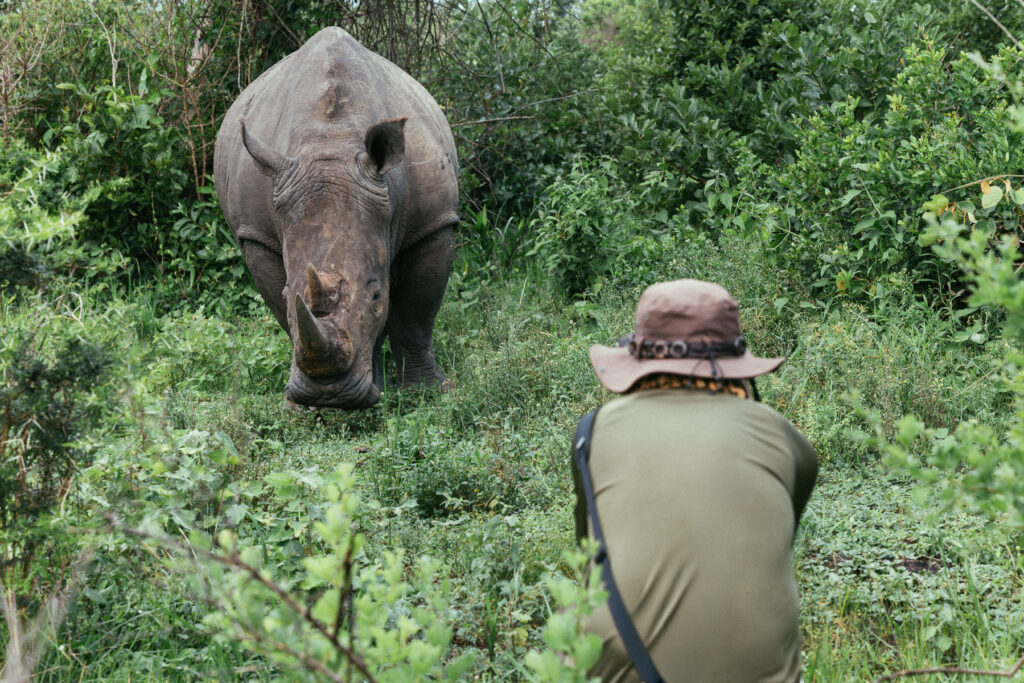
Our ranger at Ziwa Rhino Sanctuary made sure we were safe with the very relaxed Southern White Rhinos, enabling clients to get close-up images (image by Virginia Wilde)
The encounter lasted around 90 minutes, and we finally left the Rhinos as the sun dropped towards the horizon and they continued grazing in the meadow. It was already an exceptional end to the day, but Ziwa had plenty more wildlife to offer: Ugandan Kob, Vervet Monkeys and an endearing family of Warthogs all added to the afternoon.
Back at the lodge that evening, dinner was accompanied by a different kind of wildlife spectacle. The lights attracted clouds of moths and flying termites that seemed almost magnetically drawn to illumination. It was a suitably atmospheric end to a day spent immersed in wildlife.
We had only an hour for our final Rhino walk the following morning, but somehow Sharif managed to make it even more extraordinary. I had mentioned to him that there was one thing I would particularly love to see before we left: a Rhino infant. And, boy, did Sharif deliver.
He let us visit a two-day-old Southern White Rhino, and we were privileged to be the first visitors to see it, apart from the rangers. It was the most perfect little tank imaginable – all enormous feet, folds, curiosity and wobbling determination – staying close to its mother and older sister in a clearing. At only two days old, it was still finding its feet, moving uncertainly beside the adults.
At one point, the mood changed as a male Rhino approached, and the mother immediately stepped between the male and her calf, her huge body forming a wall around the youngster. She stood her ground, looking distinctly as though she was prepared to charge if necessary. The male hesitated before slowly backing away, and the tension dissolved as quietly as it had appeared.
For the photographers, there was one final challenge: the grass. We found ourselves climbing onto tree stumps and any other slightly elevated ground we could find, trying to gain a clear view above the vegetation.
It was hardly a conventional wildlife photography technique, but when your subject is a two-day-old Rhino hiding behind a wall of grass, you use whatever altitude you can get.
Eventually we had to leave Ziwa and begin the drive back towards Entebbe for our afternoon flights. There was just enough time for a final lunch in a shopping arcade, followed by increasingly reluctant goodbyes.
It had been an extraordinary journey: from Shoebills in the papyrus swamps to Golden Monkeys in the bamboo, Gorillas in the forests of Bwindi, Chimpanzees in Kibale and, finally, a two-day-old Rhino in the grasslands of Ziwa. Uganda had delivered far more than we had hoped for. And more than a few encounters that will stay with us for a very long time.
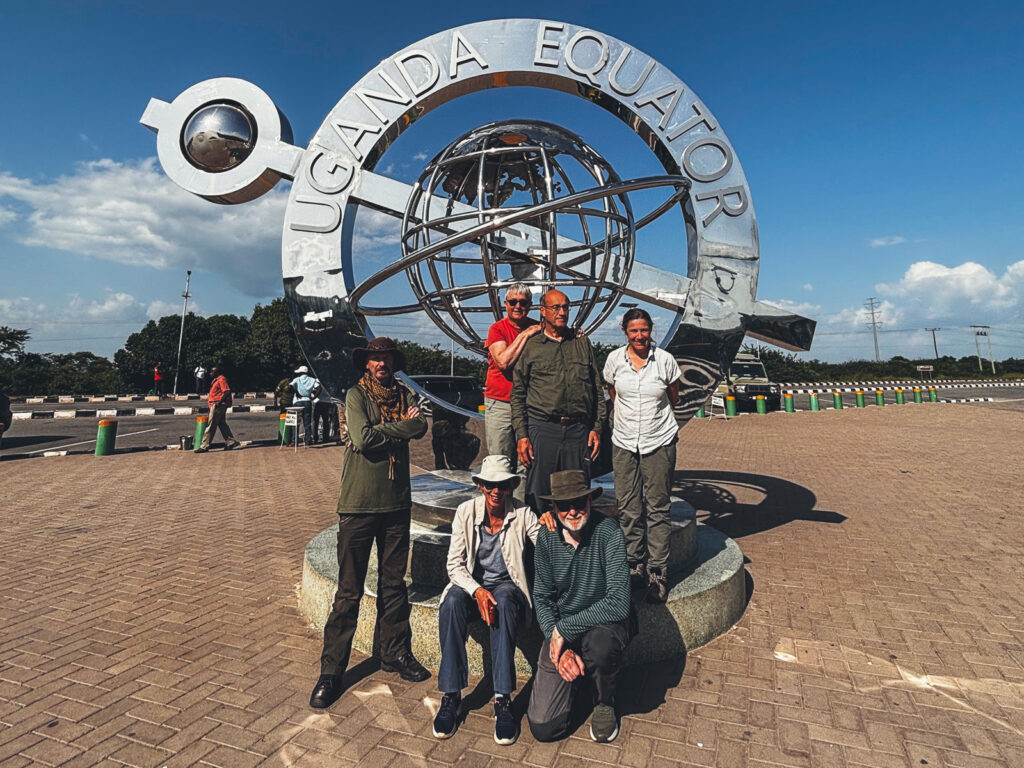
This year’s brilliant Uganda tour members at the official Equator line (image by Virginia Wilde)
Virginia Wilde
Virginia Wilde lives in Edinburgh with her two children, Esme and Albie. Virginia is a photojournalist with a life-long passion for wildlife and the natural world. She spent years working in conflict zones such as Afghanistan and Libya – but has returned to her love of nature and is now based in Scotland. Virginia has […]