
Asia (including its islands)
MONGOLIA’S FORGOTTEN REINDEER HERDERS: The Tsaatan Nomads of Hovsgol

Portrait of a young Tsaatan boy (image by Inger Vandyke)

A Tsaatan shaman who threatened to hypnotise our group with the 'spirit of the Taiga' to make us return one day (image by Inger Vandyke)

A Tsaatan man returns home with milk and tea (image by Inger Vandyke)

Portrait of Tsegtseg, the only female shaman in Mongolia's eastern Taiga (image by Inger Vandyke)

On migration from the summer pastures (image by Inger Vandyke)

Portrait of a Tsaatan man in his winter home (image by Inger Vandyke)

Prayer flags adorning a shamanic Ovoo worship site (image by Inger Vandyke)

A young Tsaatan boy leading his reindeer back to the community (image by Inger Vandyke)

Upwards view of golden Daurian Larches in the Taiga (image by Inger Vandyke)

Intentional camera blur abstract of the Daurian Larch trees in the Taiga forests of northern Mongolia (image by Inger Vandyke)

Herding yaks in the snowy landscapes of the Darkhad Depression in northern Mongolia (image by Inger Vandyke)

Portrait of Tsegtseg, the only female shaman in the eastern Taiga of Mongolia (image by Inger Vandyke)

Tsaatan children are experts at riding Reindeer (image by Inger Vandyke)

A Yak mother feeding her calf in the snow (image by Inger Vandyke)

A reindeer stag takes a rest under a rainbow in northern Mongolia (Stock image)

The breathtaking landscapes of the Taiga (image by Inger Vandyke)

Portrait of a young Tsaatan boy and his Reindeer (image by Inger Vandyke)

Tsaatan children are raised with their reindeer from birth (image by Inger Vandyke)

Close up of a sleeping reindeer (image by Inger Vandyke)

Fruits of the Taiga forest include wild blueberries, cranberries, leaves and mosses. Food for both humans and reindeer (image by Inger Vandyke)

An elderly Tsaatan lady dwarfed by a large male reindeer (image by Inger Vandyke)

A young Tsaatan or Dukha reindeer herder boy with his reindeer in the fields of northern Mongolia (Stock image)

The Tsaatan treat their reindeer as family and only use them for milk products. Meat is hunted. (Image by stock)

The Tsaatan fashion souvenirs out of local green stone and reindeer antlers (image by Inger Vandyke)

Mongolia's landscapes are both vast and breathtakingly beautiful (image by Inger Vandyke)

Aerial view of the large Ovoo site on a mountain pass in Mongolia's Darkhad Depression (image by Inger Vandyke)

Autumnal deciduous Dorian Larches at the start of the vast Taiga region in northern Mongolia (image by Inger Vandyke)

A female shaman holds a drumstick fashioned out of reindeer fur and bone. She uses this with a tamtam drum to summons the forest gods (image by Inger Vandyke)

A young Tsaatan boy with his two reindeer near the tepee tents of his community (image by Inger Vandyke)

A young Tsaatan boy sitting on a stool of reindeer antlers (Image by stock)

A typical Tsaatan Tepee tent (image by Inger Vandyke)

The Tsaatan nomads of Mongolia raise their children with their reindeers from birth (image by Inger Vandyke)

Even young Tsaatan girls are tasked with herding reindeer (image by Inger Vandyke)

A Tsaatan man stands outside the framework of his newly constructed Tepee tent (image by Inger Vandyke)

Building a large Tepee tent goes surprisingly fast (image by Inger Vandyke)

Summer storage area for the Tsaatan nomads of Mongolia (image by Inger Vandyke)

A baby reindeer around five to six months old (image by Inger Vandyke)

An elderly Tsaatan headman brings his reindeer in from grazing (image by Inger Vandyke)

A Tsaatan head man prepares to saddle one of his reindeer (image by Inger Vandyke)

Portrait of an elderly Tsaatan lady and her favourite reindeer (image by Inger Vandyke)

An elderly Tsaatan man rides his reindeer out of his camp in northern Mongolia (Stock image)

Symbols of a shaman at a large Ovoo site on a mountain pass in the remote Darkhad Depression of northern Mongolia (image by Inger Vandyke)

An elderly Tsaatan woman bringing her reindeer in from grazing (image by Inger Vandyke)

A young Tsaatan boy aged about four, with his reindeer of the same age (image by Inger Vandyke)

Michelle loving her time riding a reindeer (image by Inger Vandyke)

A large Ovoo worshipping site on a mountain pass in Mongolia's Darkhad Depression (image by Inger Vandyke)

Portrait of an elderly Mongolian nomad woman near Tsaagan Nuur (image by Inger Vandyke)

Portrait of a Tsaatan woman in the Taiga (image by Inger Vandyke)

The famous Uushig Deer Stones are possibly Mongolia's oldest and most ornate (image by Inger Vandyke)

A young Tsaatan girl laughs with her Reindeer (image by Inger Vandyke)

Portrait of Tsegtseg with her drum in the forest (image by Inger Vandyke)

The detailed back of a female shaman's coat (image by Inger Vandyke)

Milking reindeer is an art (image by Inger Vandyke)

The Ovoo site of Toon Brigade in the snowy landscapes of remote Mongolia (image by Inger Vandyke)
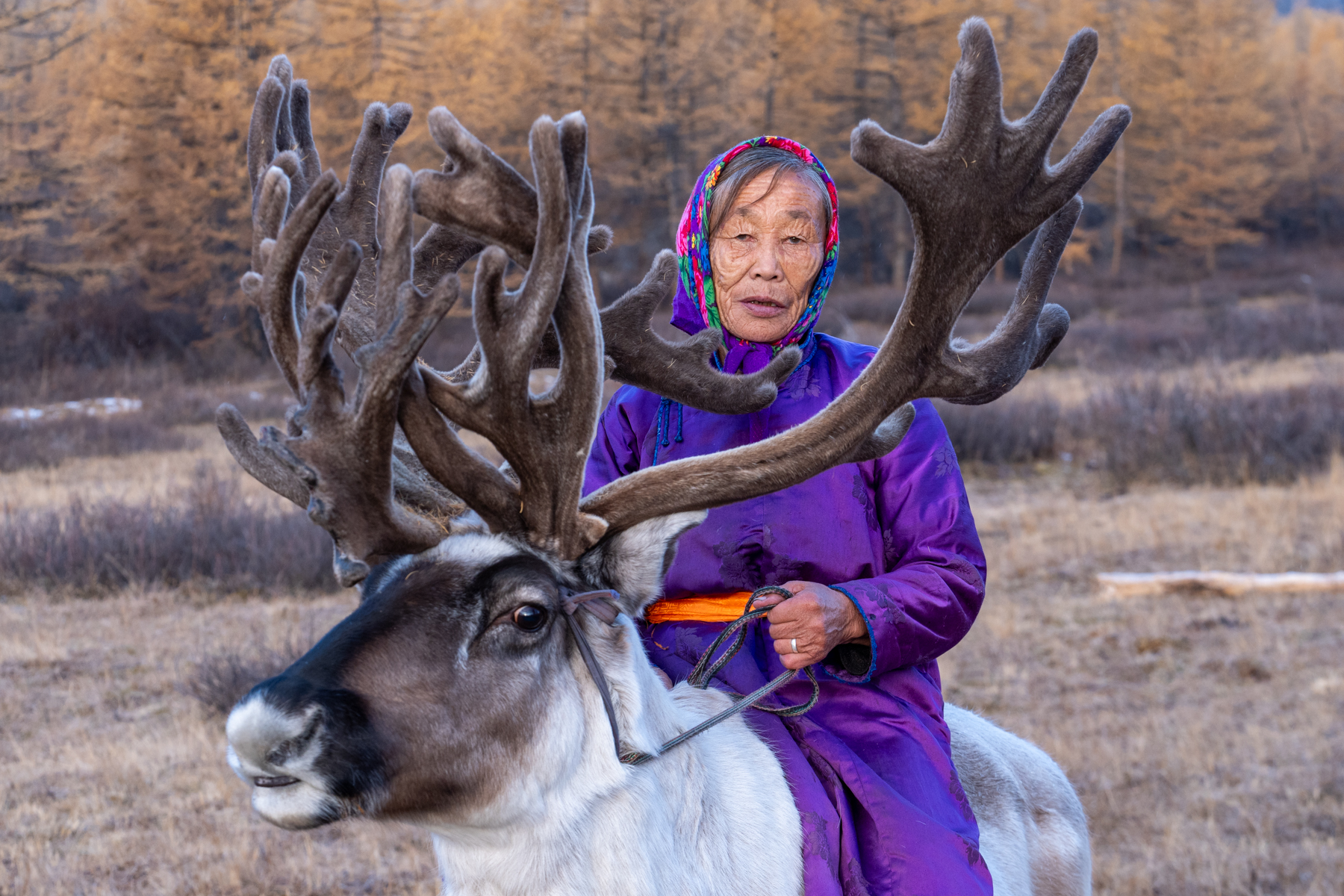
A prominent elderly Tsaatan lady riding her reindeer (image by Inger Vandyke)

A secondary shaman of the Darkhad, holding a tiny gold shaman sculpture (image by Inger Vandyke)

Early morning in the Dorian Larches of the Taiga with a Mongolian horse (image by Inger Vandyke)

On migration the reindeers keep quite a fast pace! (image by Inger Vandyke)

Milking reindeer not only brings milk to drink but also yoghurt, curds and cheese (image by Inger Vandyke)

A young Tsaatan lady smiling with her reindeer (image by Inger Vandyke)

Portrait of an elderly shaman's wife (image by Inger Vandyke)

Tsaagan Nuur in remote northern Mongolia (image by Inger Vandyke)

A nomadic Tsaatan man outside the log cabin he will use to shelter from the harsh northern Mongolia winter (image by Inger Vandyke)

The Tsaatan will sometimes leave offerings of reindeer antlers to the forest shamans (image by Inger Vandyke)

Safe in his father's arms, a young Tsaatan boy pouts when posing for photos (image by Inger Vandyke)

The only megalith at Uushig with a human face (image by Inger Vandyke)

Portrait of a prominent Tsaatan elder and shaman (image by Inger Vandyke)

Taiga sunsets are unforgettable (image by Inger Vandyke)

Portrait of a shaman's wife (image by Inger Vandyke)

Tsaatan Reindeer Nomads on the move, bringing their herds down from their summer pastures (image by Inger Vandyke)

A young Tsaatan boy at the entrance to his Tepee tent (image by Inger Vandyke)


Portrait of a young Tsaatan boy (image by Inger Vandyke)
A Tsaatan shaman who threatened to hypnotise our group with the 'spirit of the Taiga' to make us return one day (image by Inger Vandyke)
A Tsaatan man returns home with milk and tea (image by Inger Vandyke)
Portrait of Tsegtseg, the only female shaman in Mongolia's eastern Taiga (image by Inger Vandyke)
On migration from the summer pastures (image by Inger Vandyke)
Portrait of a Tsaatan man in his winter home (image by Inger Vandyke)
Prayer flags adorning a shamanic Ovoo worship site (image by Inger Vandyke)
A young Tsaatan boy leading his reindeer back to the community (image by Inger Vandyke)
Upwards view of golden Daurian Larches in the Taiga (image by Inger Vandyke)
Intentional camera blur abstract of the Daurian Larch trees in the Taiga forests of northern Mongolia (image by Inger Vandyke)
Herding yaks in the snowy landscapes of the Darkhad Depression in northern Mongolia (image by Inger Vandyke)
Portrait of Tsegtseg, the only female shaman in the eastern Taiga of Mongolia (image by Inger Vandyke)
Tsaatan children are experts at riding Reindeer (image by Inger Vandyke)
A Yak mother feeding her calf in the snow (image by Inger Vandyke)
A reindeer stag takes a rest under a rainbow in northern Mongolia (Stock image)
The breathtaking landscapes of the Taiga (image by Inger Vandyke)
Portrait of a young Tsaatan boy and his Reindeer (image by Inger Vandyke)
Tsaatan children are raised with their reindeer from birth (image by Inger Vandyke)
Close up of a sleeping reindeer (image by Inger Vandyke)
Fruits of the Taiga forest include wild blueberries, cranberries, leaves and mosses. Food for both humans and reindeer (image by Inger Vandyke)
An elderly Tsaatan lady dwarfed by a large male reindeer (image by Inger Vandyke)
A young Tsaatan or Dukha reindeer herder boy with his reindeer in the fields of northern Mongolia (Stock image)
The Tsaatan treat their reindeer as family and only use them for milk products. Meat is hunted. (Image by stock)
The Tsaatan fashion souvenirs out of local green stone and reindeer antlers (image by Inger Vandyke)
Mongolia's landscapes are both vast and breathtakingly beautiful (image by Inger Vandyke)
Aerial view of the large Ovoo site on a mountain pass in Mongolia's Darkhad Depression (image by Inger Vandyke)
Autumnal deciduous Dorian Larches at the start of the vast Taiga region in northern Mongolia (image by Inger Vandyke)
A female shaman holds a drumstick fashioned out of reindeer fur and bone. She uses this with a tamtam drum to summons the forest gods (image by Inger Vandyke)
A young Tsaatan boy with his two reindeer near the tepee tents of his community (image by Inger Vandyke)
A young Tsaatan boy sitting on a stool of reindeer antlers (Image by stock)
A typical Tsaatan Tepee tent (image by Inger Vandyke)
The Tsaatan nomads of Mongolia raise their children with their reindeers from birth (image by Inger Vandyke)
Even young Tsaatan girls are tasked with herding reindeer (image by Inger Vandyke)
A Tsaatan man stands outside the framework of his newly constructed Tepee tent (image by Inger Vandyke)
Building a large Tepee tent goes surprisingly fast (image by Inger Vandyke)
Summer storage area for the Tsaatan nomads of Mongolia (image by Inger Vandyke)
A baby reindeer around five to six months old (image by Inger Vandyke)
An elderly Tsaatan headman brings his reindeer in from grazing (image by Inger Vandyke)
A Tsaatan head man prepares to saddle one of his reindeer (image by Inger Vandyke)
Portrait of an elderly Tsaatan lady and her favourite reindeer (image by Inger Vandyke)
An elderly Tsaatan man rides his reindeer out of his camp in northern Mongolia (Stock image)
Symbols of a shaman at a large Ovoo site on a mountain pass in the remote Darkhad Depression of northern Mongolia (image by Inger Vandyke)
An elderly Tsaatan woman bringing her reindeer in from grazing (image by Inger Vandyke)
A young Tsaatan boy aged about four, with his reindeer of the same age (image by Inger Vandyke)
Michelle loving her time riding a reindeer (image by Inger Vandyke)
A large Ovoo worshipping site on a mountain pass in Mongolia's Darkhad Depression (image by Inger Vandyke)
Portrait of an elderly Mongolian nomad woman near Tsaagan Nuur (image by Inger Vandyke)
Portrait of a Tsaatan woman in the Taiga (image by Inger Vandyke)
The famous Uushig Deer Stones are possibly Mongolia's oldest and most ornate (image by Inger Vandyke)
A young Tsaatan girl laughs with her Reindeer (image by Inger Vandyke)
Portrait of Tsegtseg with her drum in the forest (image by Inger Vandyke)
The detailed back of a female shaman's coat (image by Inger Vandyke)
Milking reindeer is an art (image by Inger Vandyke)
The Ovoo site of Toon Brigade in the snowy landscapes of remote Mongolia (image by Inger Vandyke)
A prominent elderly Tsaatan lady riding her reindeer (image by Inger Vandyke)
A secondary shaman of the Darkhad, holding a tiny gold shaman sculpture (image by Inger Vandyke)
Early morning in the Dorian Larches of the Taiga with a Mongolian horse (image by Inger Vandyke)
On migration the reindeers keep quite a fast pace! (image by Inger Vandyke)
Milking reindeer not only brings milk to drink but also yoghurt, curds and cheese (image by Inger Vandyke)
A young Tsaatan lady smiling with her reindeer (image by Inger Vandyke)
Portrait of an elderly shaman's wife (image by Inger Vandyke)
Tsaagan Nuur in remote northern Mongolia (image by Inger Vandyke)
A nomadic Tsaatan man outside the log cabin he will use to shelter from the harsh northern Mongolia winter (image by Inger Vandyke)
The Tsaatan will sometimes leave offerings of reindeer antlers to the forest shamans (image by Inger Vandyke)
Safe in his father's arms, a young Tsaatan boy pouts when posing for photos (image by Inger Vandyke)
The only megalith at Uushig with a human face (image by Inger Vandyke)
Portrait of a prominent Tsaatan elder and shaman (image by Inger Vandyke)
Taiga sunsets are unforgettable (image by Inger Vandyke)
Portrait of a shaman's wife (image by Inger Vandyke)
Tsaatan Reindeer Nomads on the move, bringing their herds down from their summer pastures (image by Inger Vandyke)
A young Tsaatan boy at the entrance to his Tepee tent (image by Inger Vandyke)


|
Sunday 26th September –
Wednesday 6th October 2027 Leaders: Julie-Anne Davies and a local cultural guide |
11 Days | Group Size Limit 7 |
MONGOLIA’S FORGOTTEN REINDEER HERDERS PHOTOGRAPHY TOURS WITH WILD IMAGES
For thousands of years, the Tsaatan people have lived in the remote, deep forests and tundras of northern Mongolia. With only around 200 people, they are an Inuit culture considered one of the smallest ethnic minorities in the world.
Moving from pasture to pasture every seven to ten weeks, this tiny community of nomadic reindeer herders is one of the few remaining tribes of its kind.
Native to Russian Siberia and Mongolia’s northernmost province of Khovsgol, Tsaatan herders depend on their reindeer for nearly every aspect of survival, as well as their cultural and spiritual identity.
But as modern development reaches their remote habitat, their ancient traditions now risk dying out. The introduction of a conservation area (which has restricted the Tsaatan from traditional hunting) in 2012, illegal mining, and climate change have all added pressure on these special people, forcing many of them to move to towns and abandon their traditional nomadic lifestyle with their reindeer herds.
This tour takes you to the heart of the Taiga forest in northern Mongolia, where we camp alongside a family of traditional Tsaatan people for several days, learning how they care for their reindeer and survive the harsh winters in this spectacular region.
After leaving the remote town of Murun, we will drive to the Darkhad Valley trailhead in 4WD vehicles. Along the way, we will see some of the most pristine landscapes in the world, gaze upon spectacular views, see stunning wild horses, yaks, and golden eagles, and meet incredible local people who will welcome you into their home with open arms and talk to us about the joys and hardships of nomadic life in Mongolia.
From there, we will trek to a family of herders living in a wild forest region called Tengis Shishegt, near the border between Mongolia and Russia. Reindeer outdo horses in this wild terrain, and they have allowed the Tsaatan to evade many of the upheavals that have historically afflicted people in the lowlands, from Genghis Khan to Communism.
The last remaining Tsaatan are spread across 30 households in this area, and visiting them is like witnessing something magical. A relationship between humans and animals that has stood the test of time, and a culture with a deep respect for the earth and all its gifts.
Originally from the Russian region of Tuva, the Tsaatan people live on the border of Mongolia and Russia in a boreal forest area called the taiga.
The taiga is the largest biome on Earth after the oceans; it is a snow forest (in winter) or swamp forest (in summer) that forms a border between the Arctic tundra and the grasslands.
You can find taiga in any of the world’s northernmost countries, including Russia, Mongolia, the Nordic countries in Europe, Canada and the US (Alaska). The taiga is actually the world’s second-largest biome (apart from the ocean), which is crazy considering I had never even heard of it before my trip to Mongolia.
While the taiga may seem cold and unforgiving, it’s the perfect place for the reindeer the Tsaatan have grown to love and care for like family. And where their reindeer thrive, they thrive.
The Tsaatan and their reindeer have an incredible symbiotic relationship, each dependent on the other for survival. Without the reindeer, the Tsaatan could never survive in the taiga, and without the Tsaatan, the reindeer would die off at the paws of wolves.
The Tsaatan use their reindeer for dairy products (including milk, yoghurt, and cheese) and transportation, while the reindeer rely on the Tsaatan for safety and protection from predators. This symbiotic relationship requires the Tsaatan to live as nomads, moving with their reindeer as they graze on a very specific kind of Arctic moss.
The taiga extends from Mongolia into Russia, and in the past, the Tsaatan migrated freely between the two countries. However, Russia’s involvement in World War II ended that lifestyle. Consequently, food shortages and fear of having their reindeer claimed by the government forced many Tsaatan to move permanently to Mongolia.
Although the Tsaatan have lived exclusively in Mongolia for almost 70 years, they still speak their native language, Tuvan, making communication difficult for visitors without skilled translators. Very few of them even speak Mongolian.
Life For the Tsaatan
The Tsaatan people live almost completely off the land, sleeping in Ortz, or tepees made from long, skinny tree trunks with a waterproof canvas covering stretched around them. They make beds from logs, heat their homes with a wood-fired stove, and get their sustenance entirely from reindeer. The Tsaatan consider their reindeer as part of the family, so they rarely eat reindeer for meat.
Every few weeks, a family sends a member into town to buy supplies and food they can’t get at camp. Typical purchases would be flour, rice, vegetables, or clothes.
A typical day for Tsaatan people includes waking up, lighting the stove and then heading out to milk their reindeer. After milking, the families gather in their tepees and make milk tea and breakfast on the stove. After breakfast, the families let their reindeer loose, and a few people work together to herd them away from camp to their grazing area, where they graze all day.
During the day, families hang out together drinking tea and tending to different household tasks such as making yoghurt, cheese, and bread, hunting for meat, or gathering berries from the woods (in the summer).
In the evening, Tsaatan families go out to get the reindeer from their grazing area and herd them back to camp, where they are tethered for the night. After dinner, they will do a final night check of the reindeer before going to bed.
The Tsaatan typically move camp up to seven to eight times a year on migration. This massive task involves packing all of their belongings (tepees, stoves, pots, utensils, clothes, etc.) on the backs of their reindeer so they can move to more favourable grazing grounds.
The culture of Shamanism in the Tsaatan Reindeer Herders.
Shamanism, one of the oldest religious beliefs in the world, is still widely practised by the Tsaatan reindeer herders in Mongolia. Essentially, it underpins the close relationship Mongolian people share with nature and Tengrism (sky worship). Tengrists believe the sky, earth, nature and the spirits of their ancestors guard and bless all people. The Shamanistic practices among the Tsaatan are thought to be the oldest in the country. They not only worship their Shaman, but also have many mystical holy books and use many different treatises in daily life, including those for hunting and for calling or banishing the rain.
We hope to meet a Tsaatan shaman on our tour to meet Mongolia’s reindeer herders.
Uushig Deer Stones
Located on the south-eastern side of rocky Mount Uushig, 17 km west of Murun, the Uushig Deer Stone area includes several square burials and 14 deer stones in a single area, depicting different figures that date back to the Bronze Age. The Uushig deer stones are said to be the most clearly depicted deer stones in Mongolia. The deer stones are aligned from north to south in a single column. Each stone is between three and twenty metres distant from the next and is made of tetrahedral granite. The stones depict a deer, an arch, a shield, a horse, a knife, the moon, the sun, and a mirror-figured belt. A total of 109 deer figures, along with some human figures, are carved on 14 different stones at Uushig, and visiting them on our Mongolia reindeer herder photography tour will give us a snapshot of the ancient ways of these special people.
Accommodation & Road Transport
Road transport is by 4WD vehicles.
Our fully supported camps include beds with mattresses and bedding inside a shared traditional Ortz (or Tepee tent). We will provide a shared toilet tent. Camp cooks will supply delicious meals.
Please note that minimal washing facilities will be available at the nomad camp. We can provide a bucket of water for simple washing every couple of days.
Except for the supported camps around the Tsaatan people, accommodation is in comfortable lodges, hotels, and guest houses.
IMPORTANT NOTE: The ability to ride horses is essential on this expedition. The distances in the Taiga are too long to trek, and a Mongolian horse will be provided to help us access the Tsaatan. Mongolian horses are generally quiet and sturdy to ride. A horseback guide will be provided for each rider on the expedition.
Pack horses will carry luggage and our camp to the nomad camps.
Walking
This tour involves walking in sometimes muddy and boggy conditions over relatively flat ground.
Climate
The Hovsgol region lies very close to the border between Mongolia and Russia, and we can expect cool days, with temperatures between freezing and 10C. During the nights, the temperatures may drop to below zero.
Photographic Highlights
- A journey into the spectacular Tsagaan Nuur region on the western shores of Lake Hovsgol to meet some of the last remaining 300 reindeer herders called Tsaatan, or Dukha, living deep in the boreal Taiga forests
- A true, partly on foot (part horse-riding) adventure with pack horses in the wildest regions of northern Mongolia
- Learn about Tsaatan way of life, including milking reindeer and also riding a reindeer (if personal weight allows)
- Excursions in reindeer herder camps at sunrise and sunset to enjoy the best light of day for photography
- Meet a visiting Tsaatan shaman and learn about the most traditional form of shamanism in Mongolia
- Visit ancient shamanic Ovoo sites on mountain passes and in the boreal forests of the Taiga
- Learn how the Tsaatan survive through their special relationship with reindeer and how they forage for food in the Taiga
- A local guide who is knowledgeable about the natural and human history of northern Mongolia
- An adventurous drive north from Ulaanbaatar with photography stops for scenery, wildlife and people
- Explore the ancient Deer Stones of Uushig
- Visit Mongolian nomads en-route to the Tsaatan
OUTLINE ITINERARY
- Day 1: Morning tour start at Ulaanbaatar airport. Sightseeing and photography in the city.
- Day 2: Drive to Murun, with photo stops en route.
- Day 3: Drive to remote Tsagaan Nuur, with photo stops en route.
- Day 4: Drive a short distance to the boreal forests and ride Mongolian horses to the Tsataan reindeer herders' camp.
- Days 5-7: With the Tsataan reindeer herders.
- Day 8: Last morning with the herders, then return to Tsagaan Nuur.
- Day 9: Return to Murun, with stops en route.
- Day 10: Return to Ulaanbaatar with stops en route.
- Day 11: Morning tour end at Ulaanbaatar airport.
To see a larger map, click on the square-like ‘enlarge’ icon in the upper right of the map box.
To see (or hide) the ‘map legend’, click on the icon with an arrow in the upper left of the map box.
To change to a satellite view, which is great for seeing the physical terrain (and for seeing really fine details by repetitive use of the + button), click on the square ‘map view’ icon in the lower left corner of the ‘map legend’.
PRICE INFORMATION
Wild Images Inclusions: Our tour prices include transportation, accommodations, meals and entrance fees.
Our tour prices also include all tips for local guides, drivers, camp staff and accommodation/restaurant staff. We also include payments to local people who are willing to be photographed.
Deposit: 20% of the total tour price. Our office will let you know what deposit amount is due, in order to confirm your booking, following receipt of your online booking form.
TO BOOK THIS TOUR: Click here (you will need the tour dates)
2027: provisional prices £3790, $5200, €4440, AUD7270. Ulaanbaatar/Ulaanbaatar.
Single Supplement: 2027: £80, $120, €100, AUD160.
If you are travelling alone, the single supplement will not apply if you are willing to share a room and there is a room-mate of the same sex available.
The single supplement relates to the nights in Ulaanbaatar.
This tour is priced in US Dollars. Amounts shown in other currencies are indicative.
MONGOLIA’S FORGOTTEN REINDEER HERDERS PHOTOGRAPHY TOUR: DETAILED ITINERARY
Mongolia Reindeer Herders: Day 1
Our Mongolia reindeer herder photography tour will begin this morning at Ulaanbaatar’s Chinggis Khan Airport. Transfers to the hotel will be provided, and we will then enjoy an excursion to the Gandan Monastery, Sukhbaatar Square, and Zaisan Hill before returning to our hotel for a welcome dinner. Overnight: Bayangol Hotel.
Mongolia Reindeer Herders: Day 2
After an early breakfast, we will begin our journey north in 4WD vehicles towards the city of Murun for an overnight stay at a hotel. During this full-day journey, we will stop for photo breaks and to stretch our legs.
Mongolia Reindeer Herders: Day 3
Today we will take the last road leg of our journey to the remote settlement of Tsagaan Nuur, the last access point to the eastern stretch of the Taiga home to the Tsataan, or Dukha, reindeer herders of northern Mongolia. We will overnight at a simple guesthouse.
Mongolia Reindeer Herders: Day 4
At the entrance to the boreal forests, we will prepare for our ride north with pony handlers and pack horses. Once we have found a family to stay with, we will set up camp in a traditional “Ortz” or Tsaatan tepee tent within the Tsaatan community.
Mongolia Reindeer Herders: Days 5-7
Using our camp as a base, we will live alongside the Tsataan reindeer herders, learning how they milk their reindeer and make butter and yoghurt. We will learn how these nomadic people live in the coldest region of Mongolia, dividing their time between summer grazing grounds and winter sheltering camps, hunting for meat, foraging for forest fruits, and seeking guidance from shaman spirits.
Mongolia Reindeer Herders: Day 8
On our last morning with the Tsataan reindeer herders, we will pack up our camp and ride horses out of the forest, leaving enough time to drive back to Tsagaan Nuur for an overnight at our guesthouse.
Mongolia Reindeer Herders: Day 9
Leaving Tsagaan Nuur, we will drive back to Murun, the provincial centre of Hovsgol, making various photography stops, including one to view the ancient Deer Stones at Uushig. These monoliths are believed to date back to the Bronze Age. We will overnight at a hotel in Murun.
Mongolia Reindeer Herders: Day 10
On the last full day of our tour, we will drive back to Ulaanbaatar, broken only by short stops for photography.
Mongolia Reindeer Herders: Day 11
Our Mongolia’s Forgotten Reindeer Herders photography tour will end this morning with our departure from Ulaanbaatar airport.
Mongolia’s Forgotten Reindeer Herders: The Tsaatan Nomads of Hovsgol Tour Report 2024
Deep in the northern part of Mongolia, close to the Russian border and Lake Baikal, lies the Darkhad Depression, a stunning and vast valley dotted with lakes that are fed by high mountains on every side. It is a region of boreal forest that is also known as the Taiga, the second largest biome on […]
View Report
Other Wild Images Tours for People Photography
Asia (including its islands)
April-May 2027
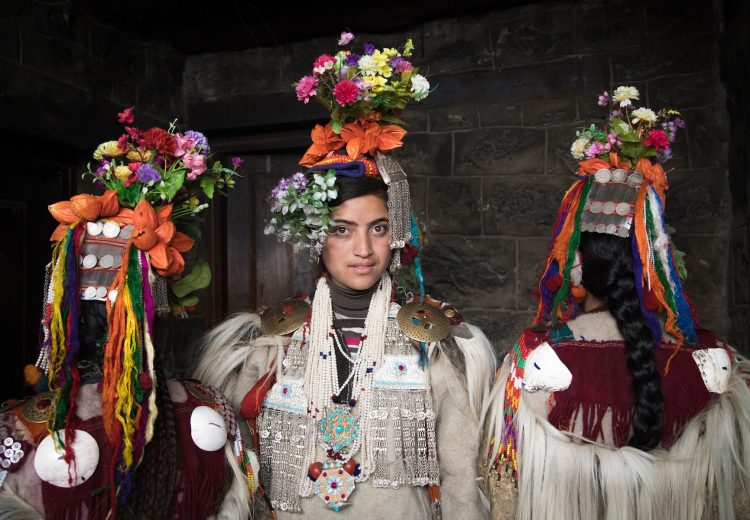
PEOPLE OF LADAKH, INDIA: The spectacular, hidden tribal people of the Indian Himalaya

Asia (including its islands)
May 2028
Private: TIBETAN SICHUAN – Hidden Buddhist Treasures of Kham and Lhasa
Asia (including its islands)
September 2028