
Algeria: The Tuaregs of the Algerian Sahara Tour Report 2026
31 July 2026
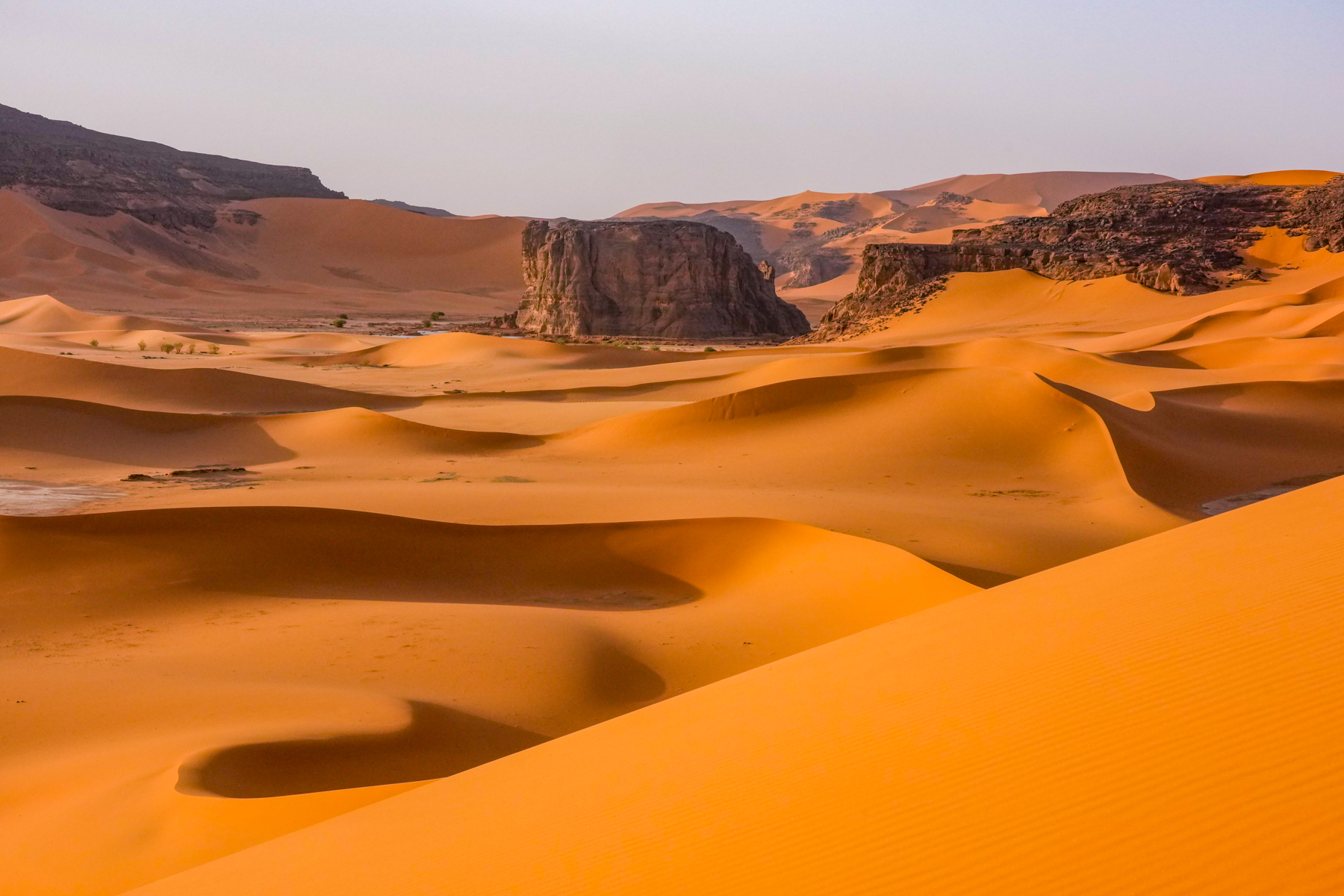
Moulenaga landscape (image by Inger Vandyke)
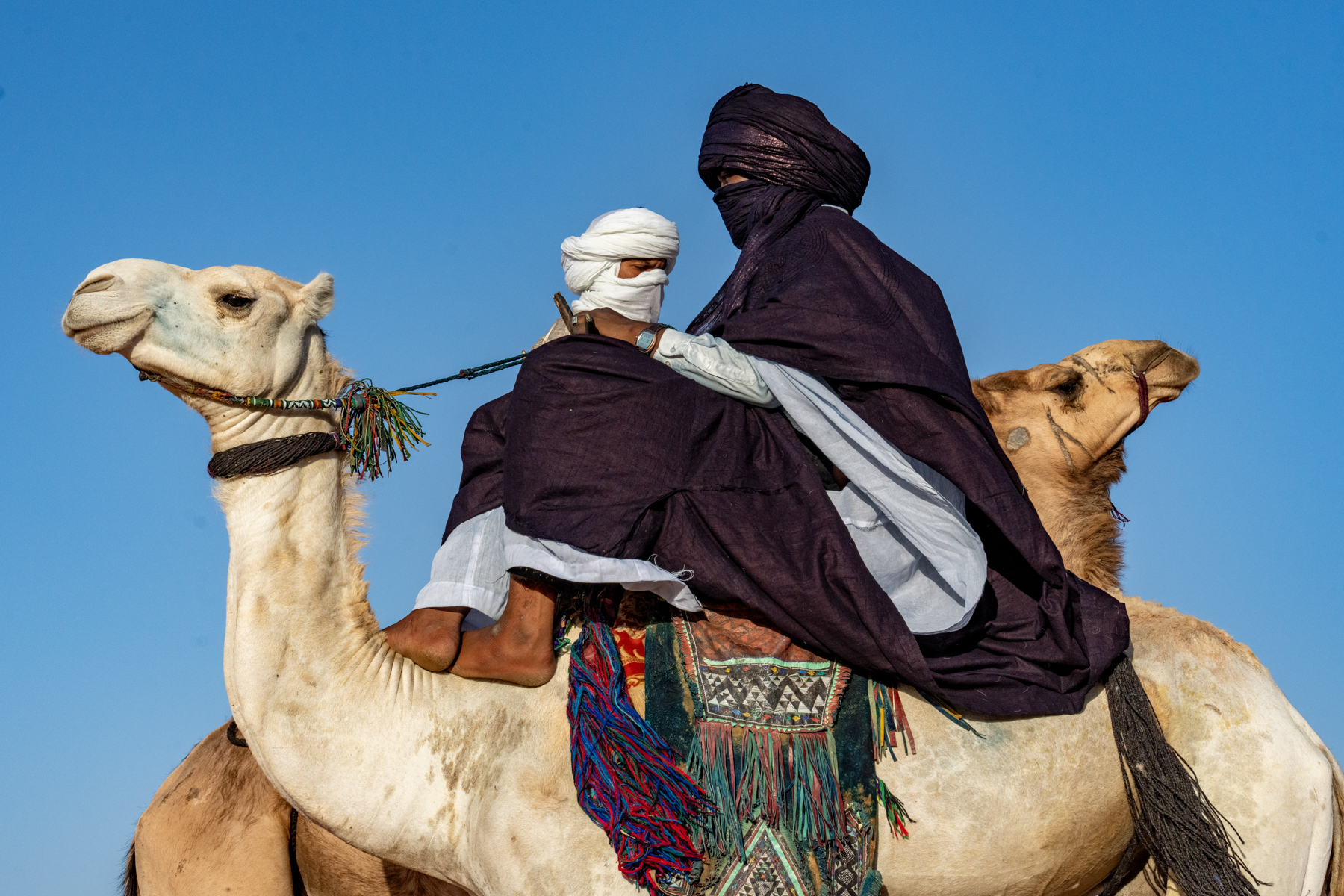
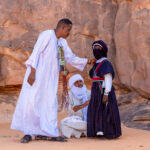
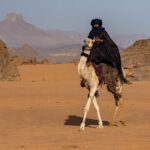
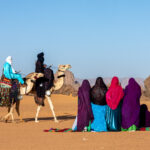
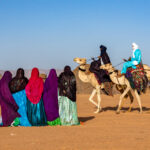
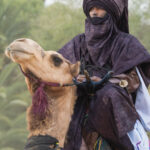
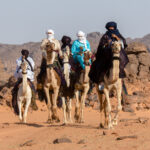
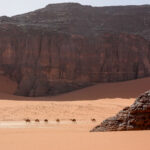
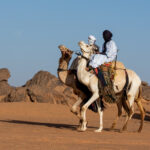
Tuareg camel riders (image by Inger Vandyke)
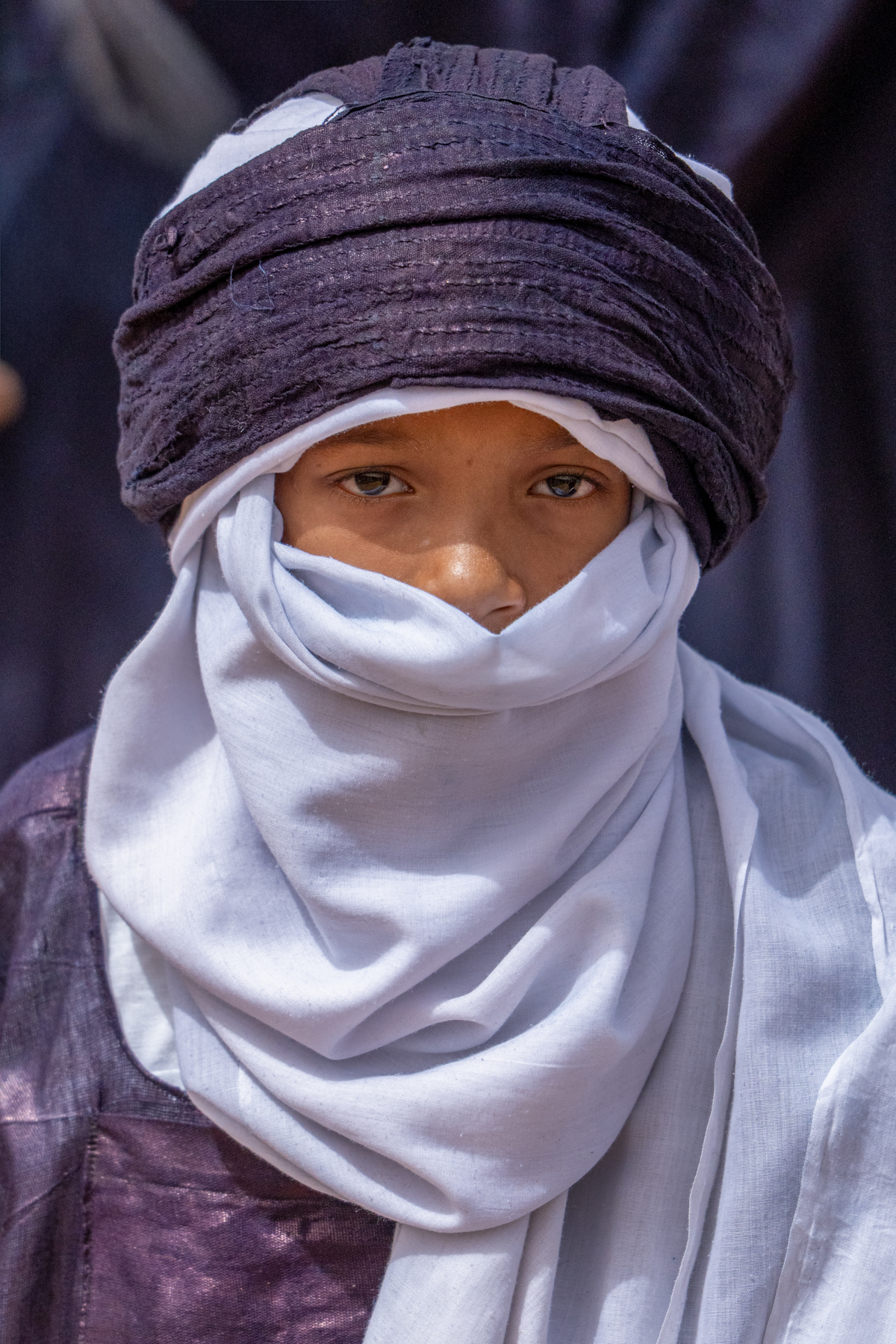
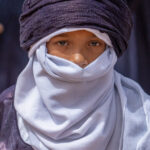
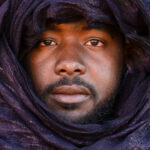
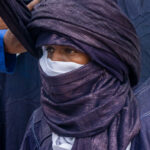
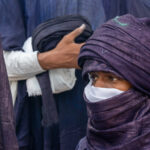
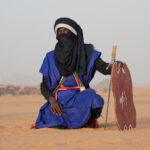
Tuareg boy in indigo Algeria (image by Inger Vandyke)
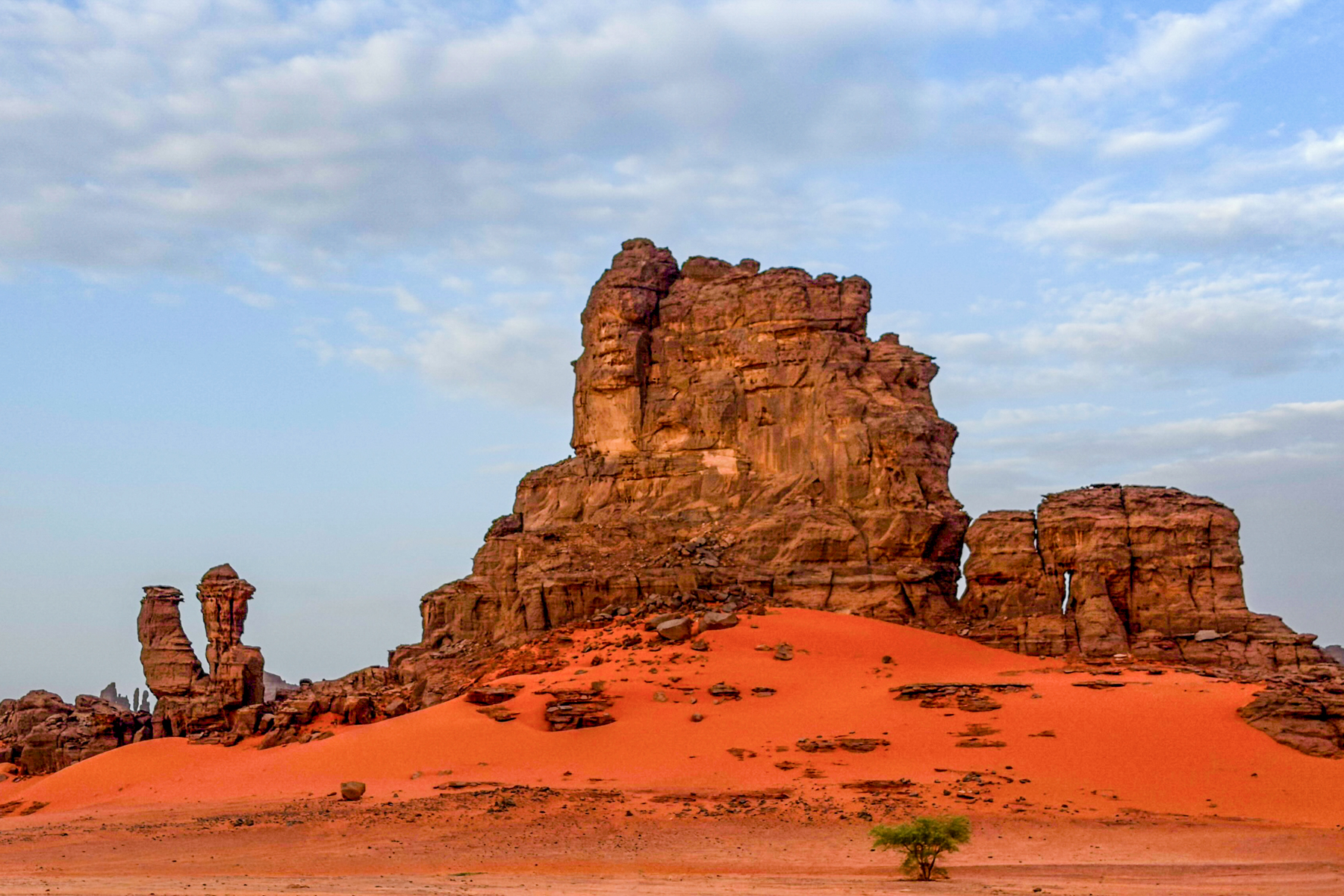
Red sands of Tadrart Rouge (image by Inger Vandyke)
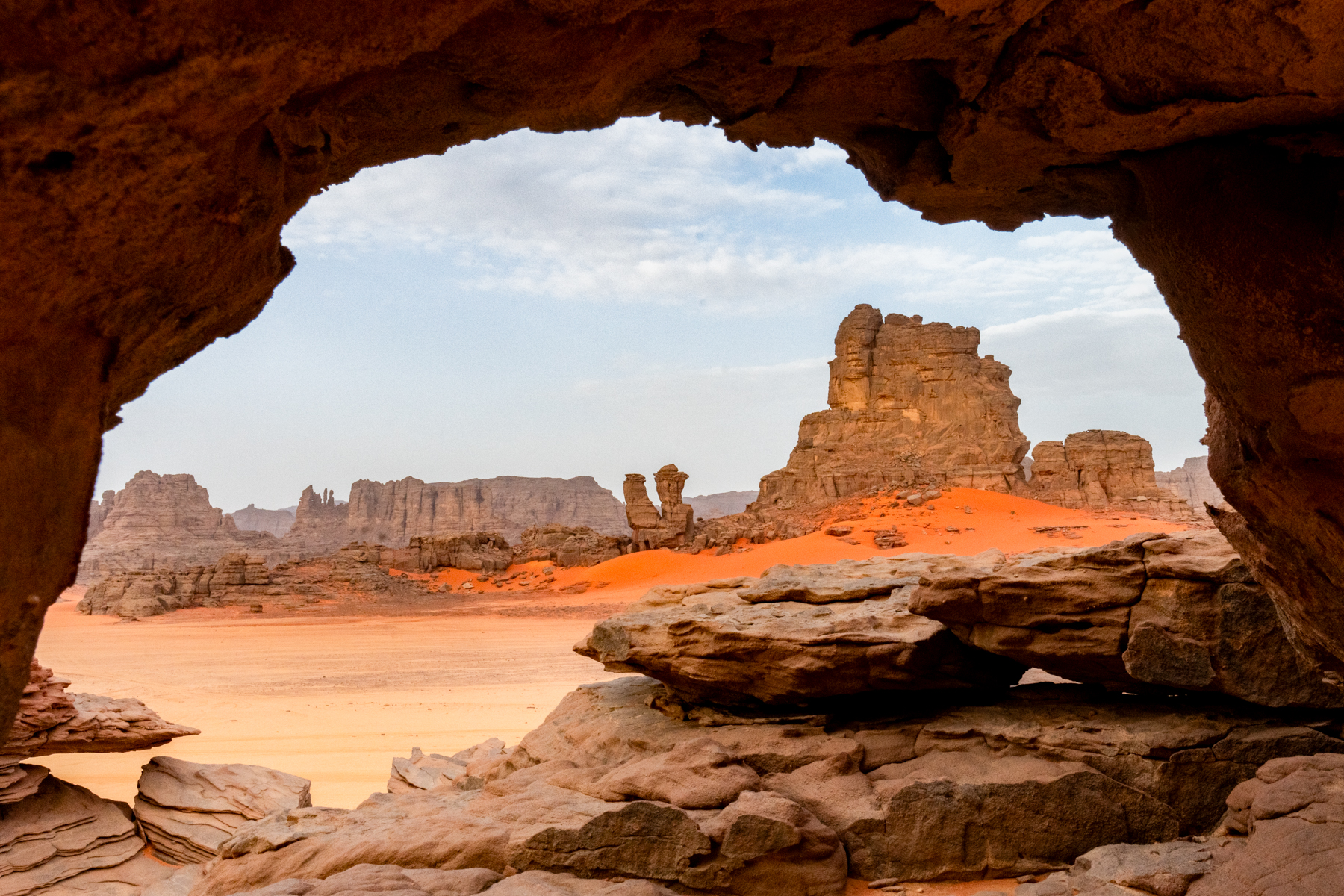
Le Cirque landscapes (image by Inger Vandyke)
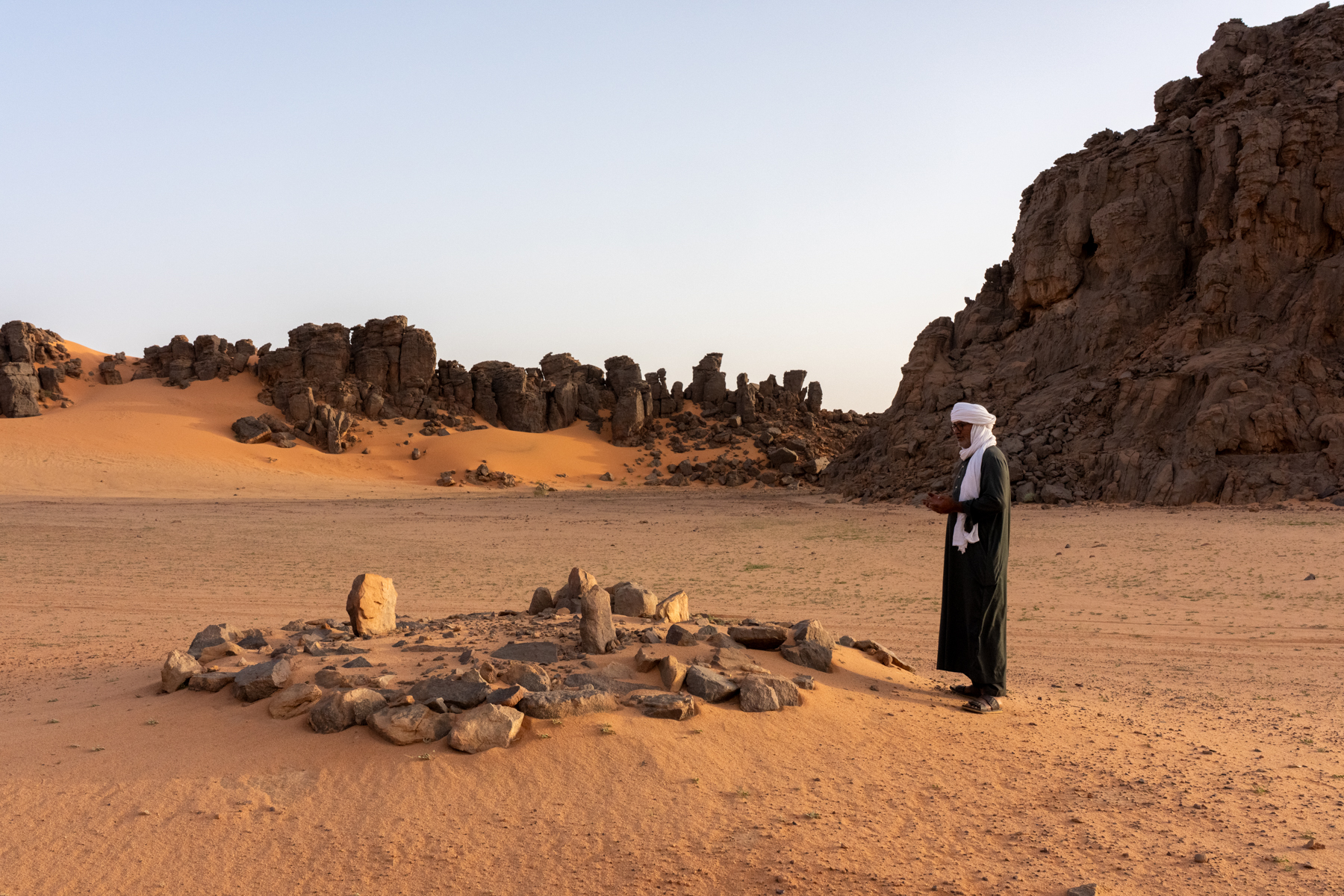
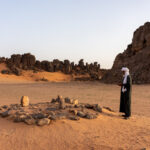
Ghawen's grave (image by Inger Vandyke)
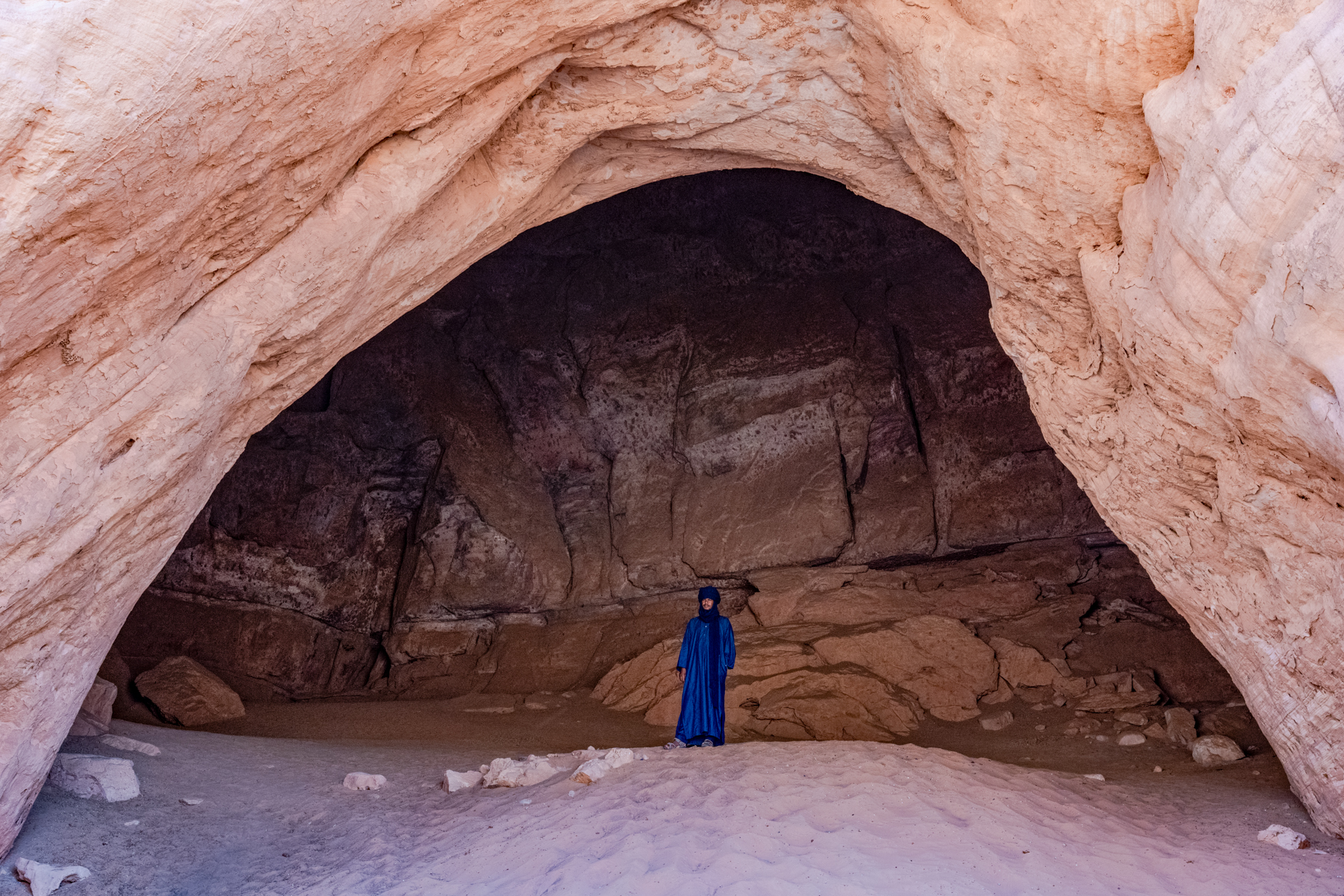
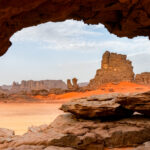
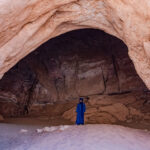
Aldenj cave is the largest in Tadrart (image by Inger Vandyke)
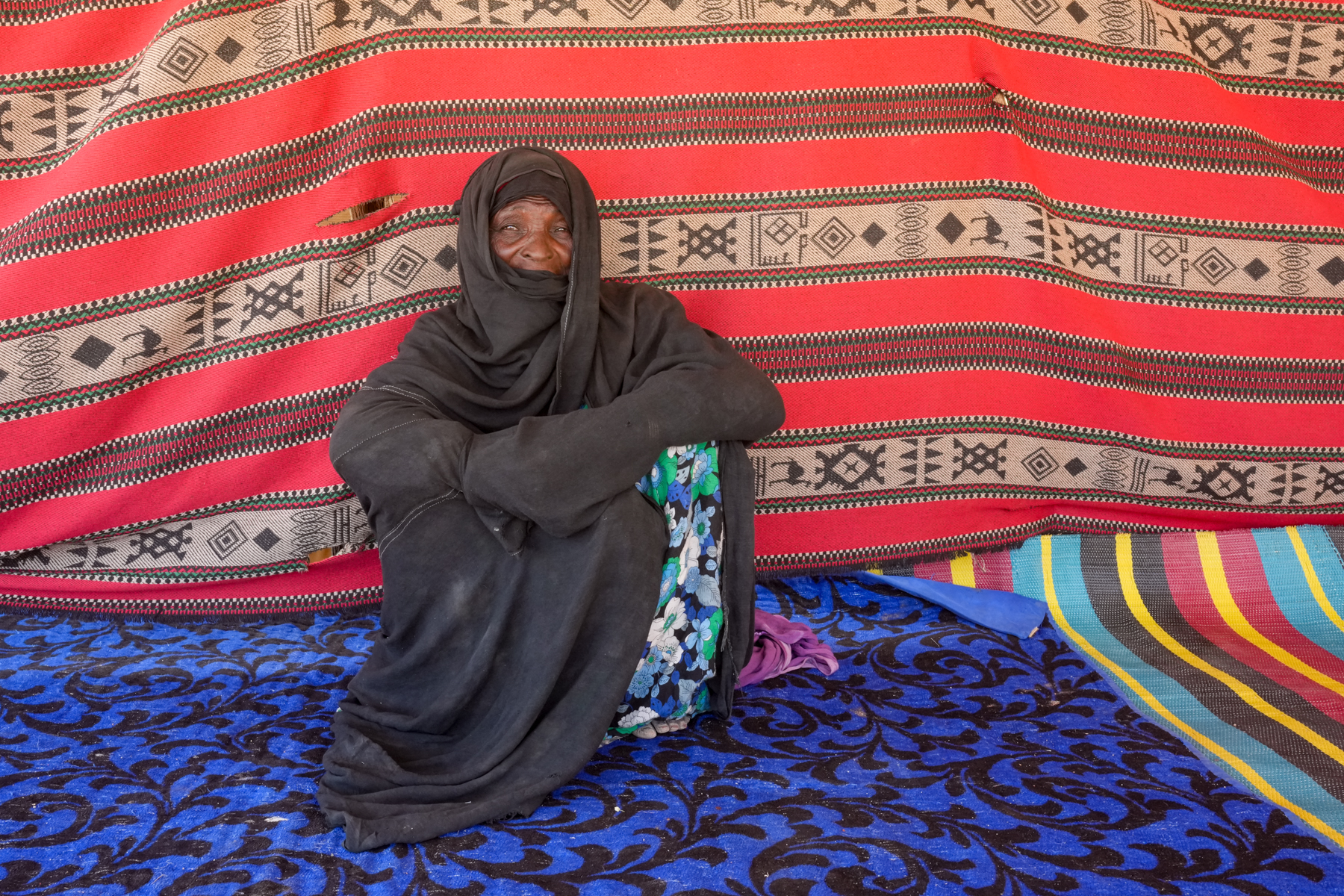
The tents may have been modernized but Tuareg touches are everywhere in nomadic Tuareg camps (image by Inger Vandyke)
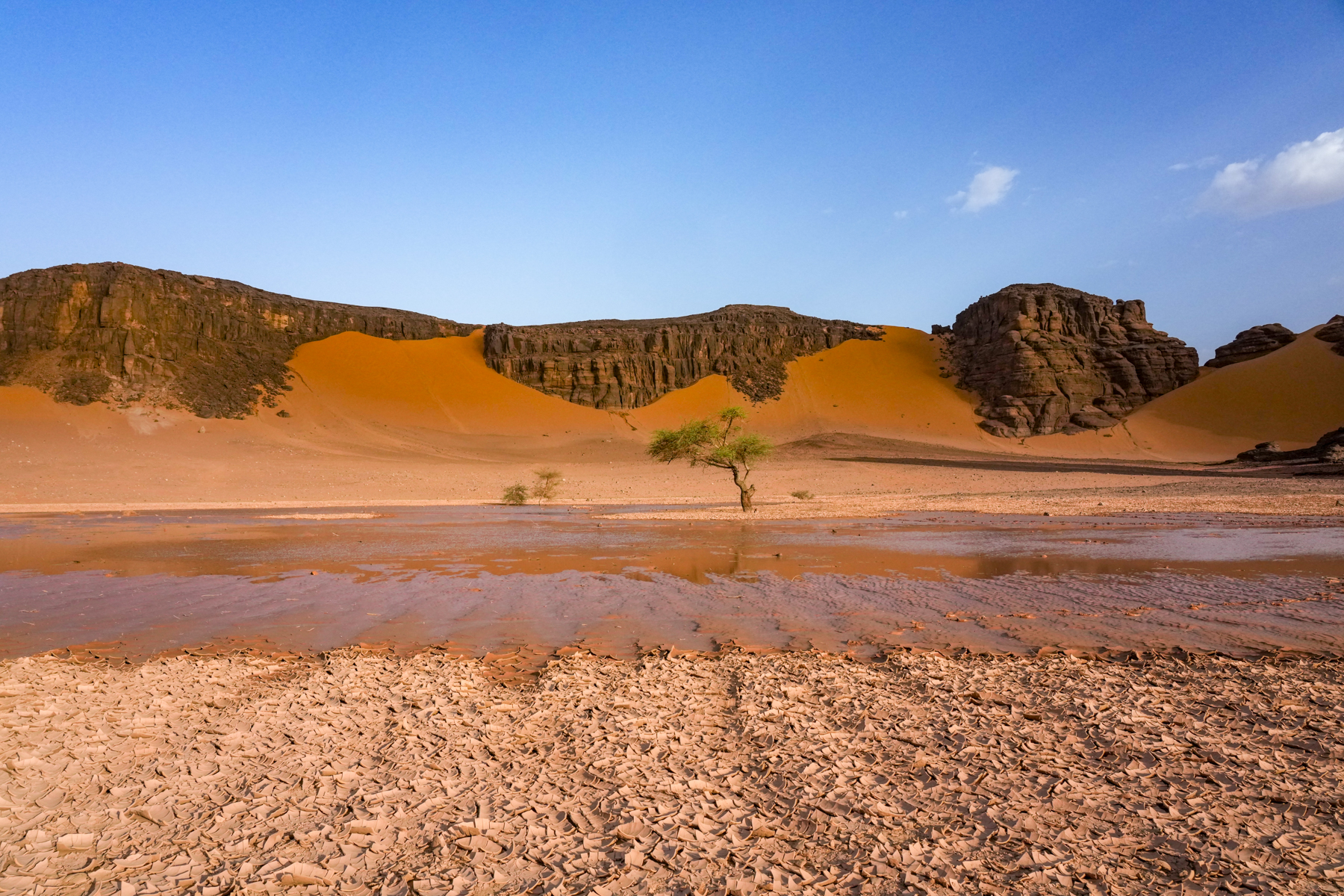
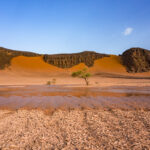
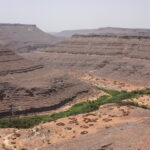
Water in Tadrart! (image by Inger Vandyke)
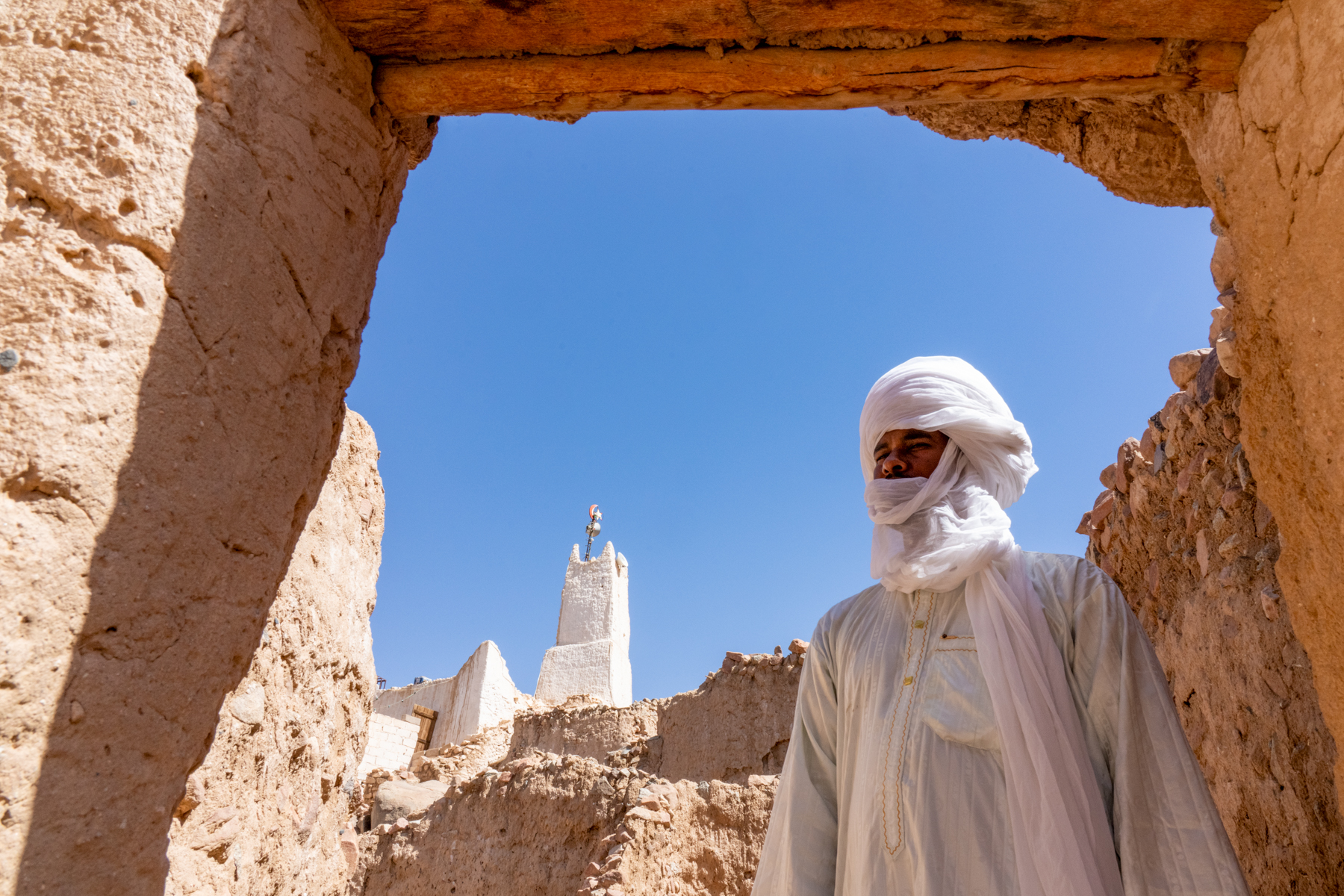
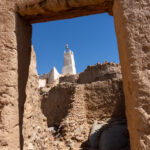
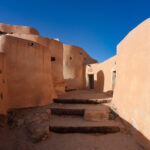
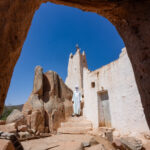
The tiny mud mosque in Zalouaz is the only example of Sudano-Sahelian architecture in Djanet (image by Inger Vandyke)
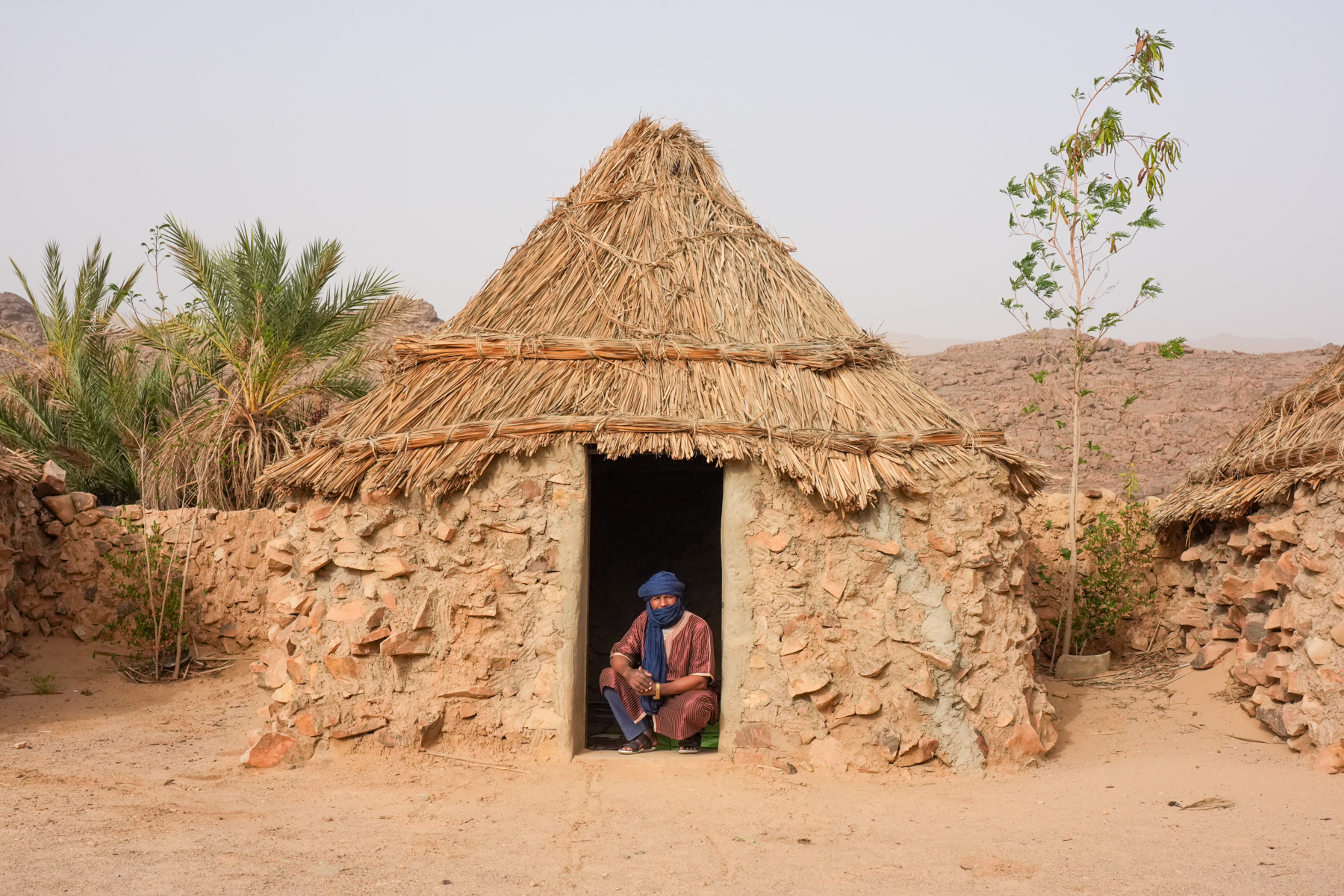
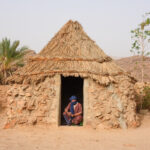
In the door of a traditional Tuareg stone house (image by Inger Vandyke)
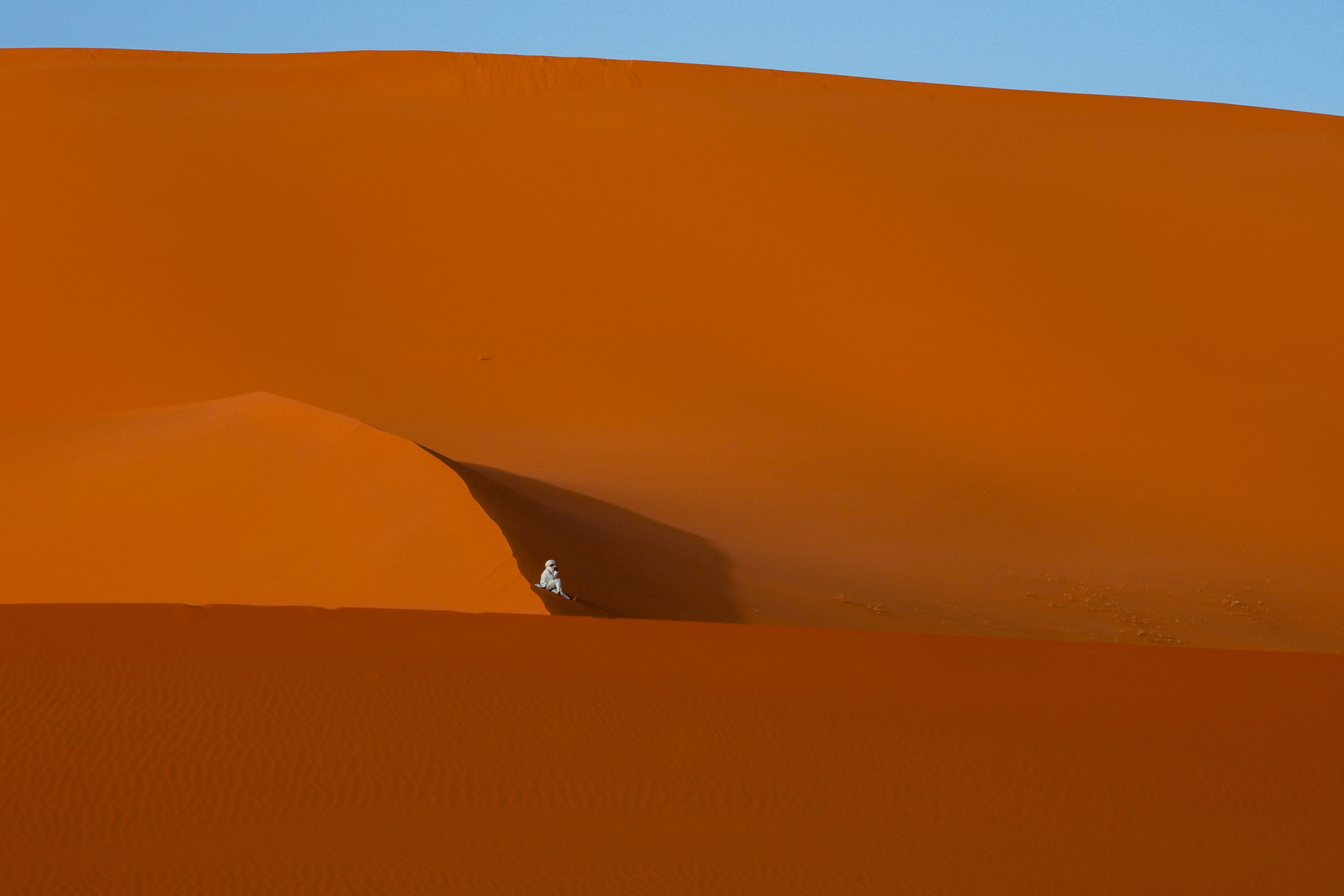
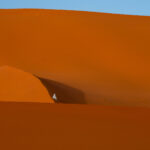
Dwarfed by the gigantic dunes of Tin Merzouga (image by Inger Vandyke)
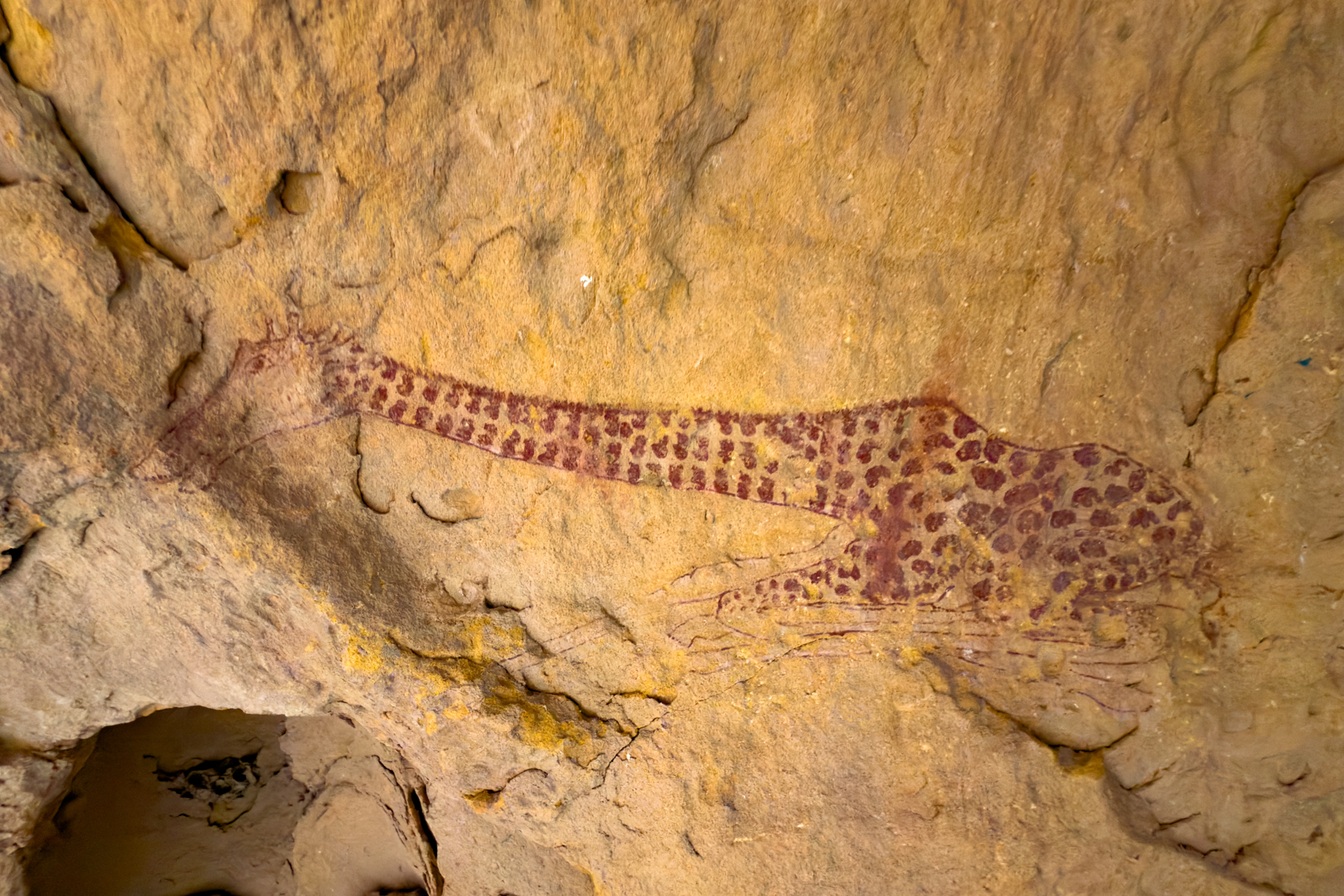
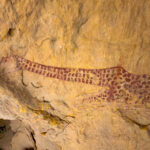
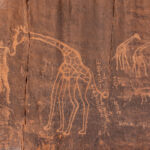
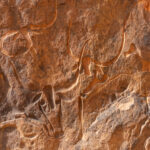
Giraffe painting in Tadrart (image by Inger Vandyke)
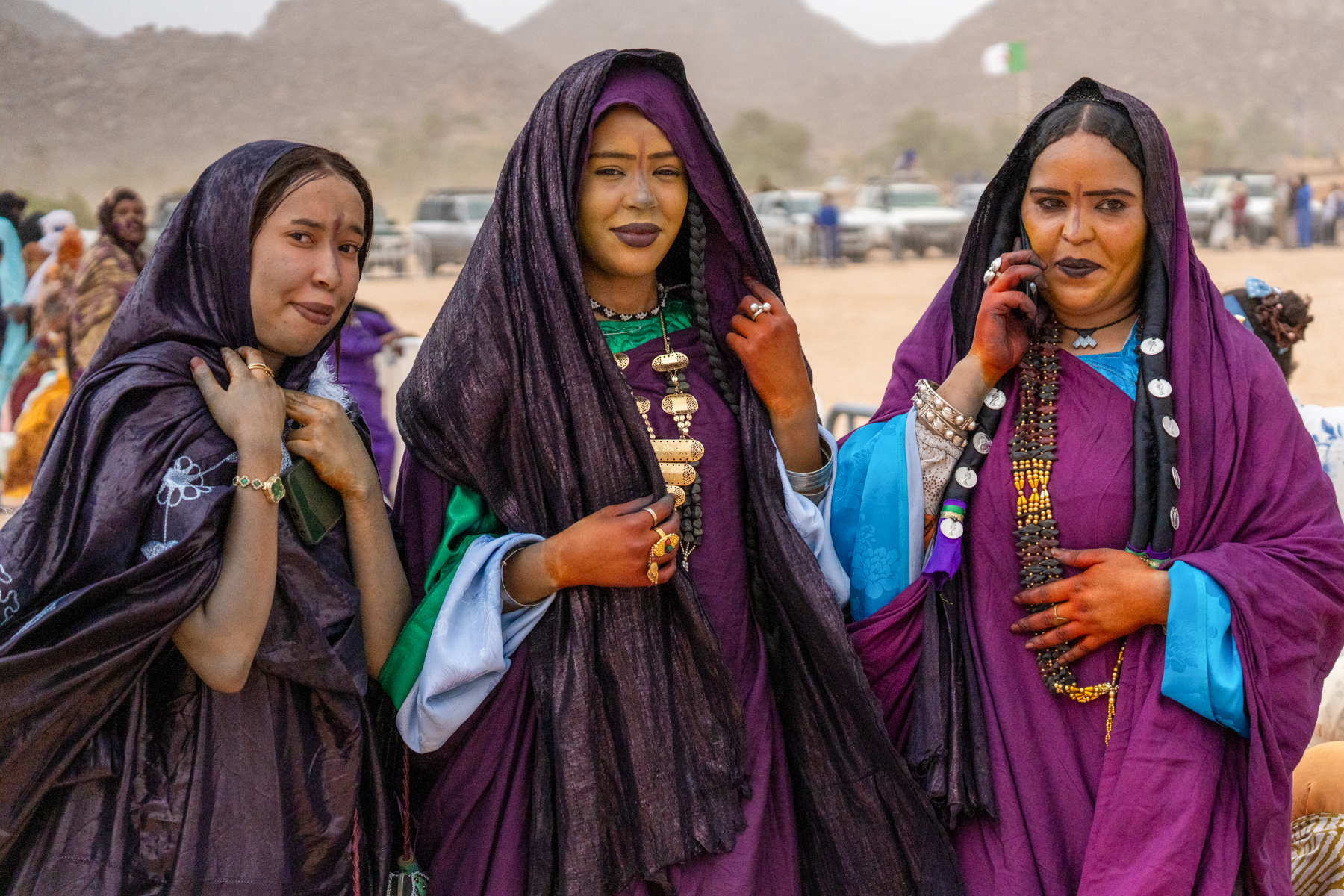
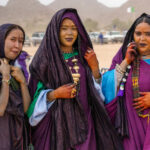
Tuareg women of Sebiba (image by Inger Vandyke)
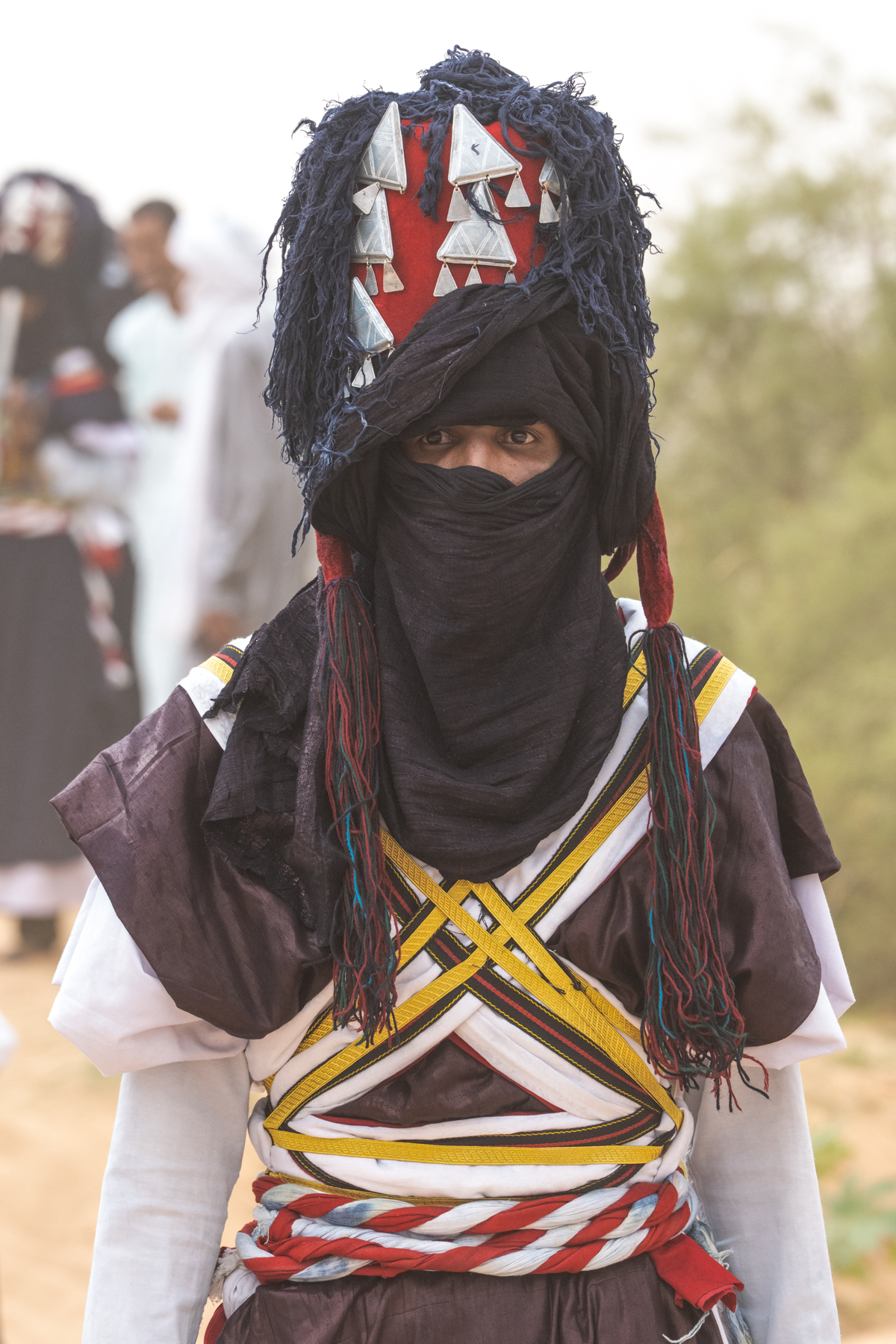
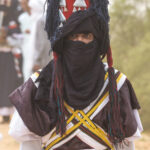
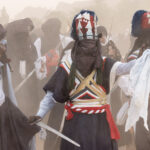
Sabiba warrior (image by Inger Vandyke)
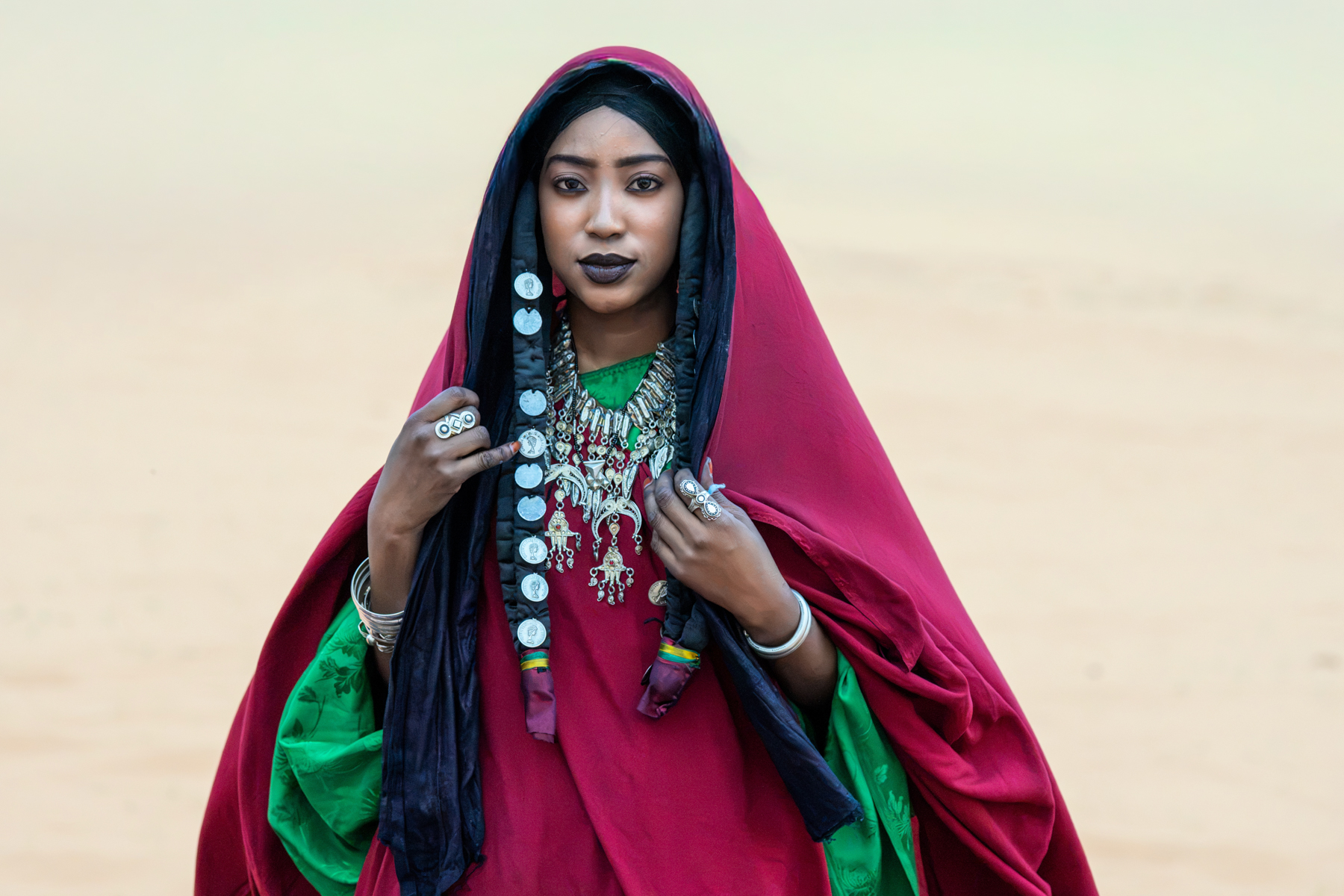
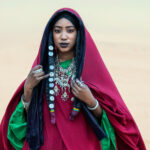
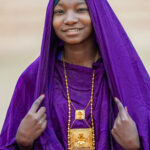
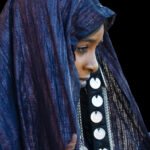
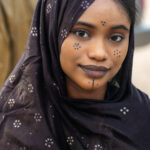
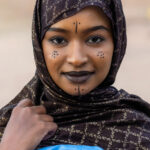
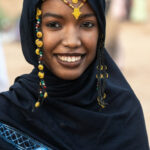
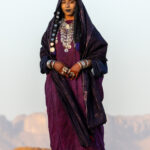
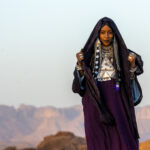
Hauntingly beautiful Tuareg girl in the desert of southern Algeria (image by Inger Vandyke)
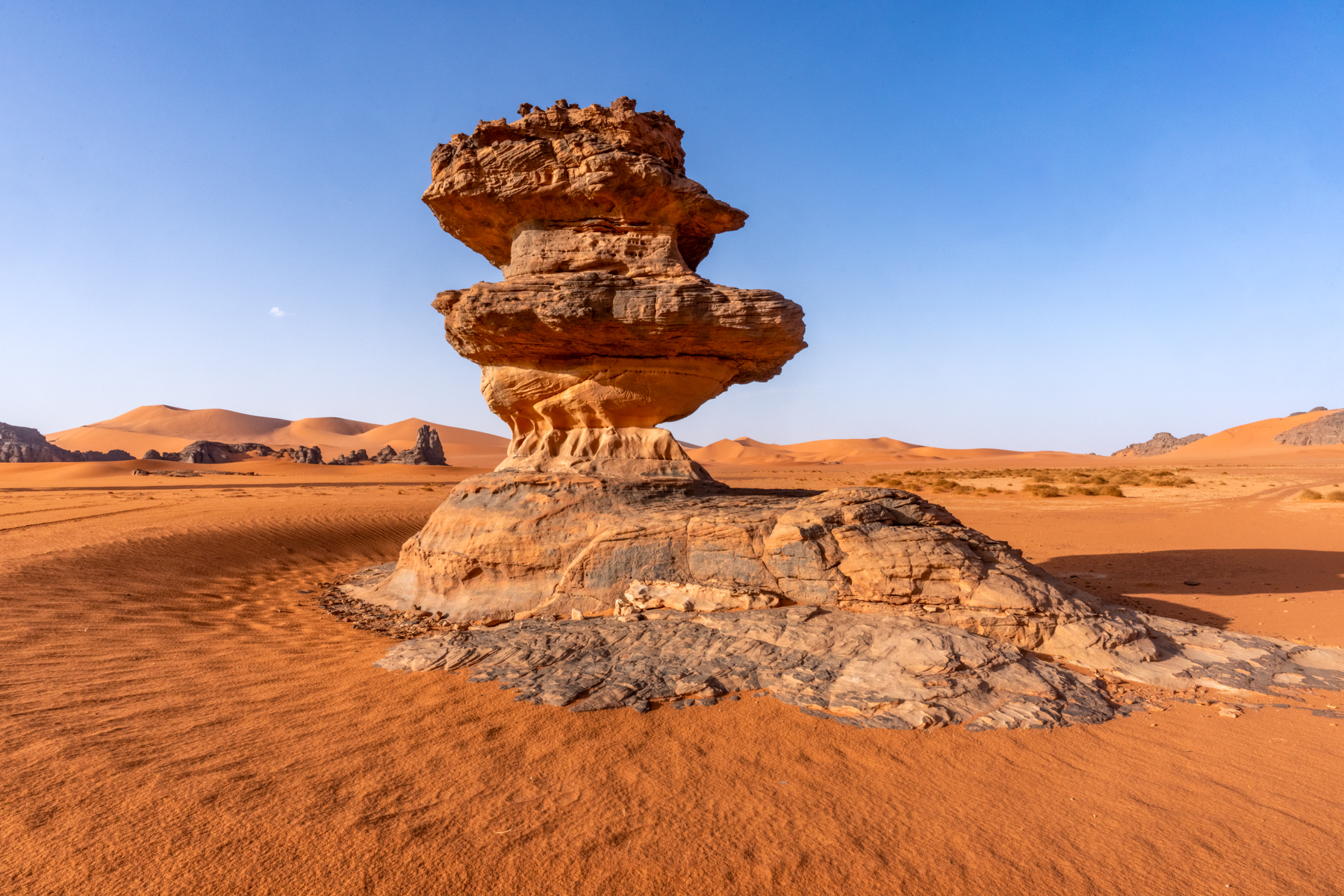
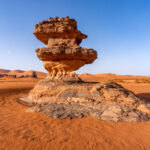
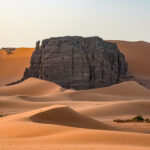
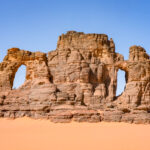
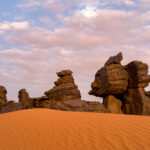
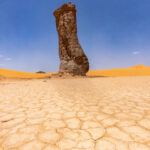
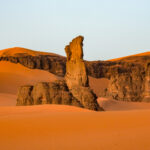
Wind-eroded rock pillar in Tadrart (image by Inger Vandyke)
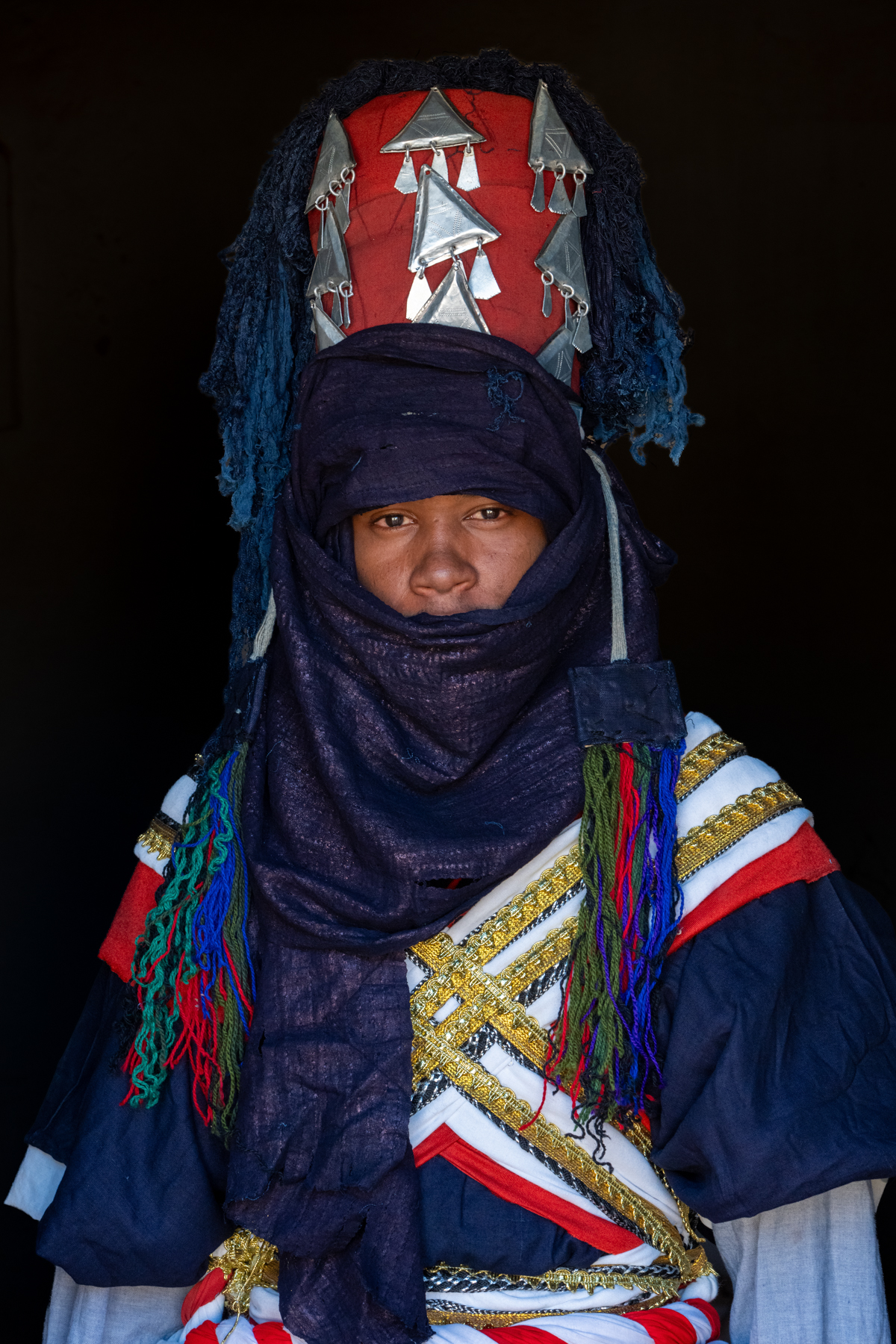
Sebiba warrior (image by Inger Vandyke)
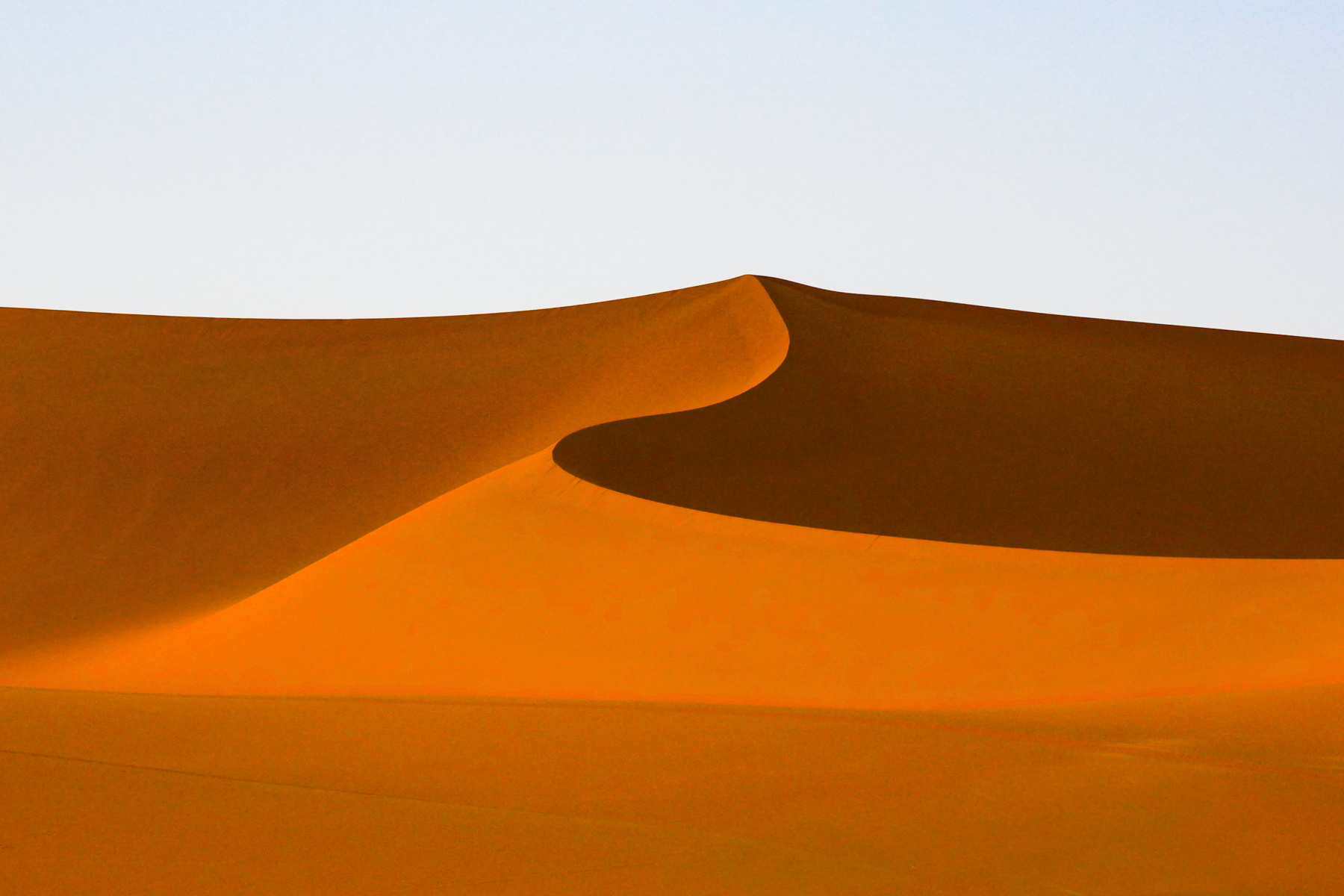
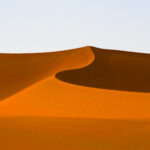
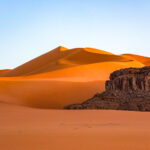
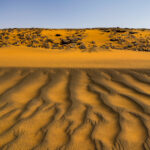
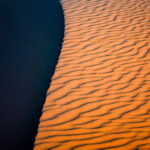
The sensual dunes of the Sahara (image by Inger Vandyke)
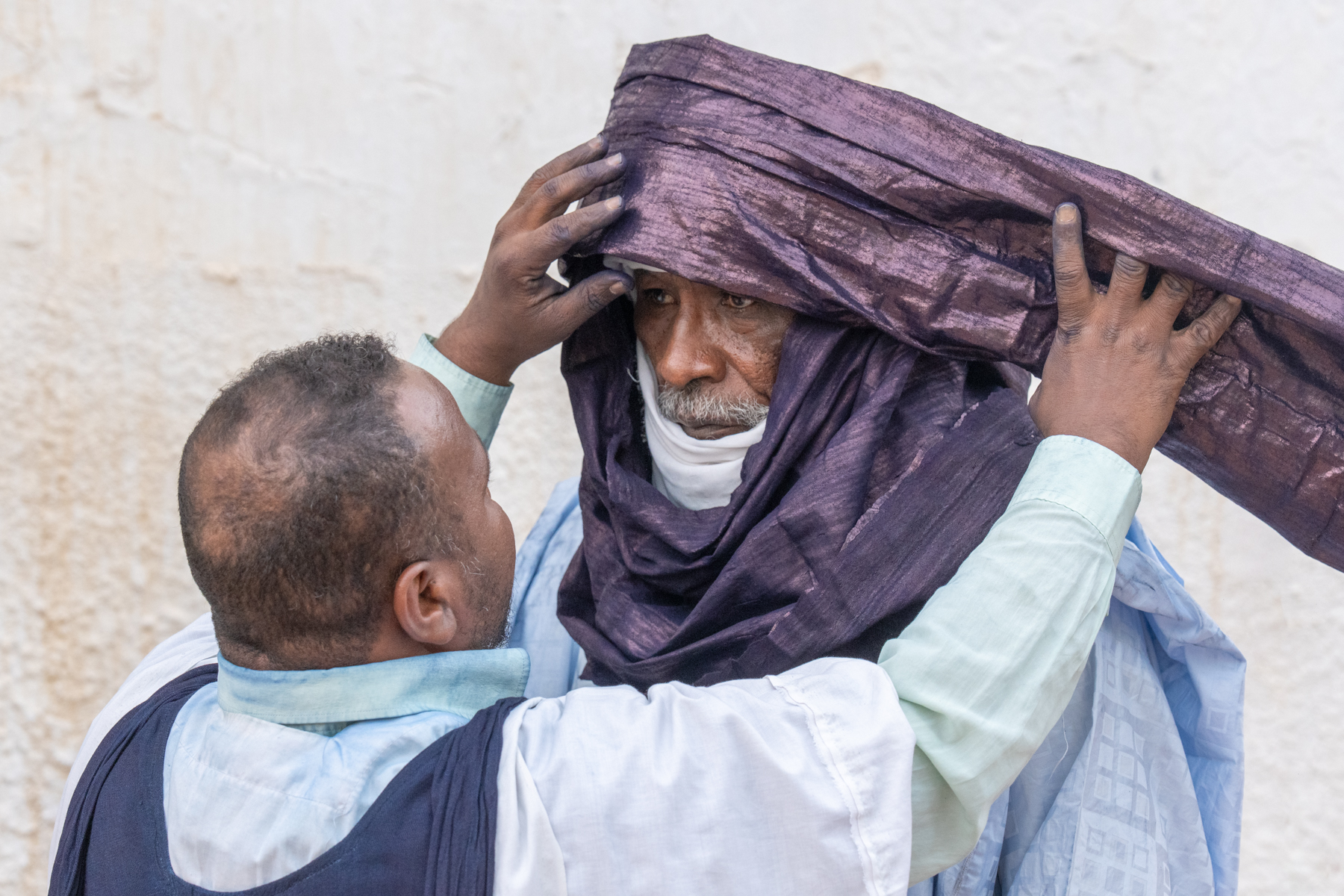
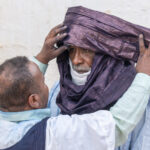
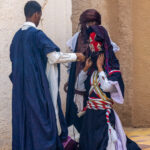
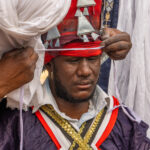
Dressing an elder (image by Inger Vandyke)
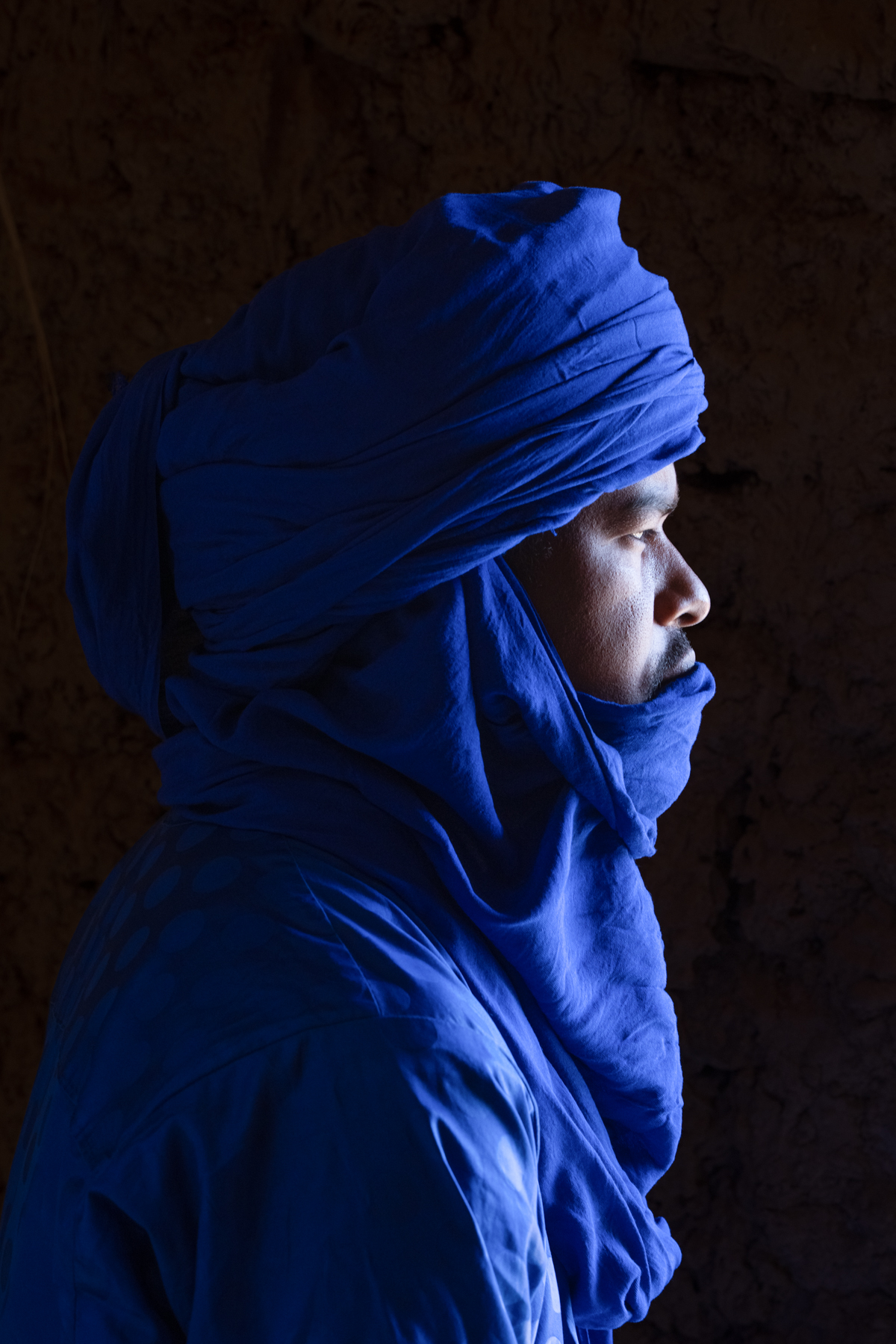
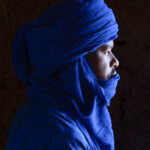
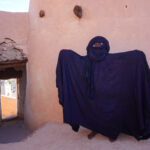
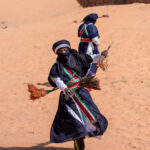
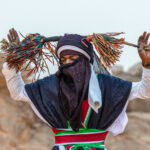
The Blue Men of the Desert (image by Inger Vandyke)
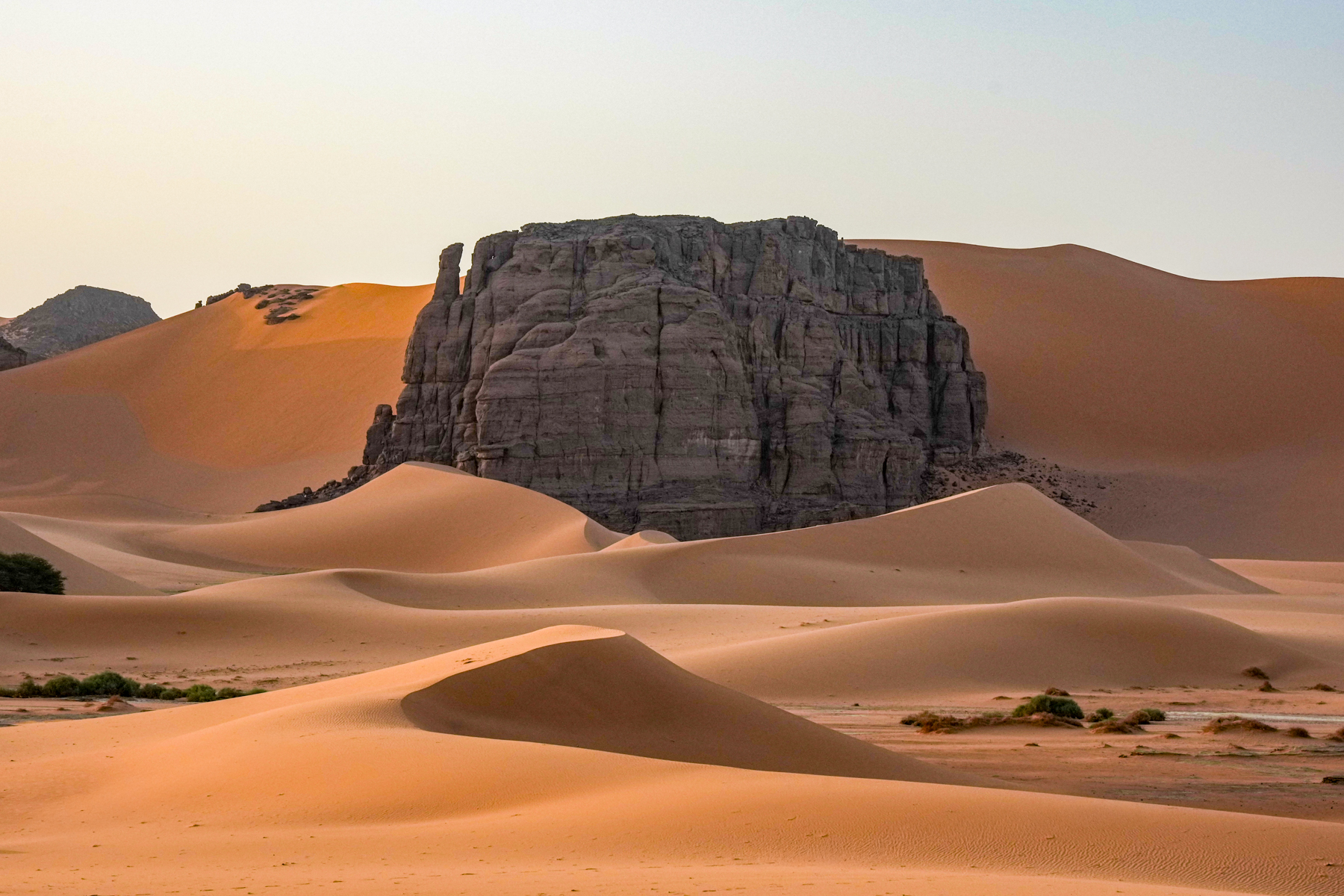
Beautiful landscapes of Tadrart Rouge (image by Inger Vandyke)
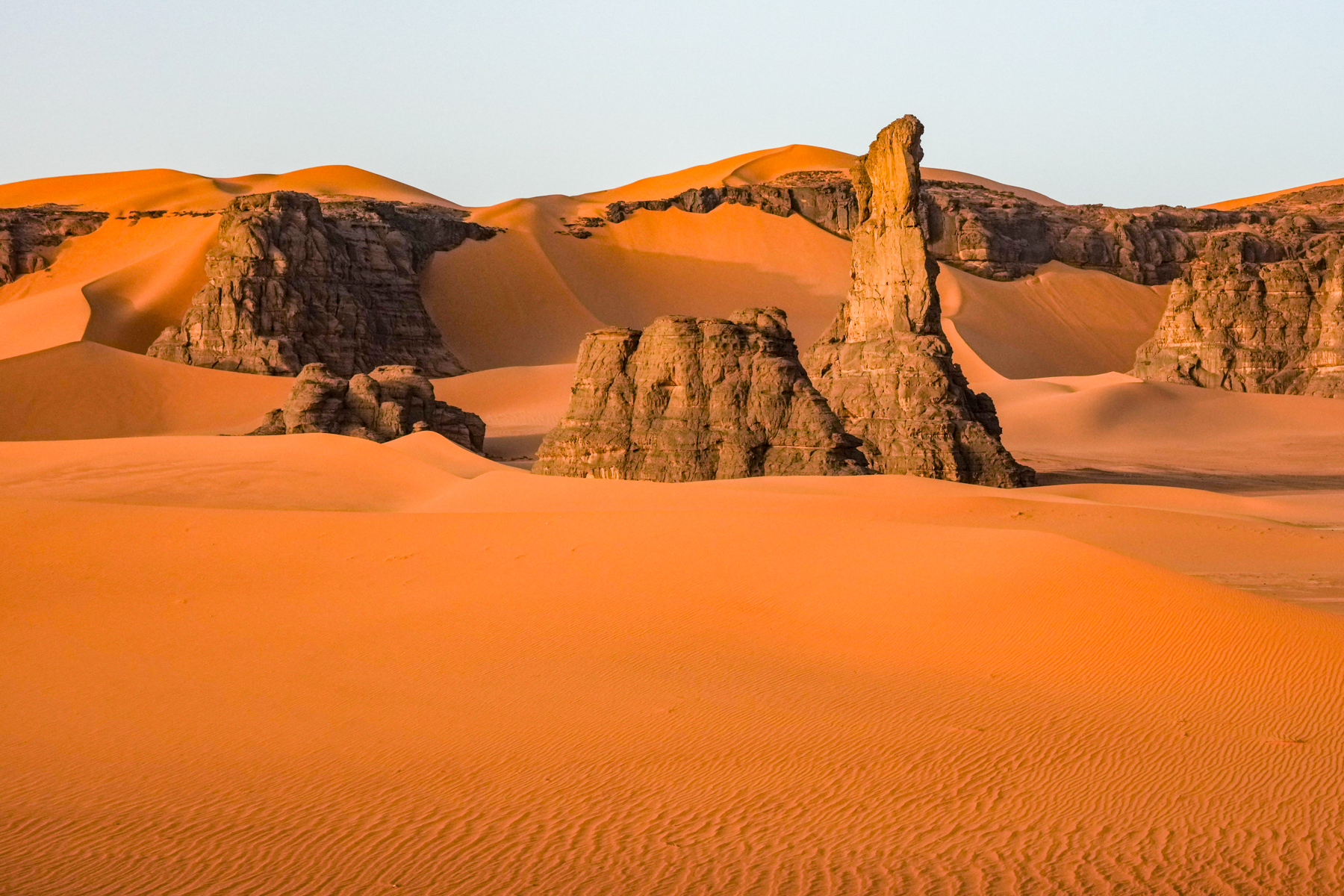
Moulenaga rock pillar (image by Inger Vandyke)
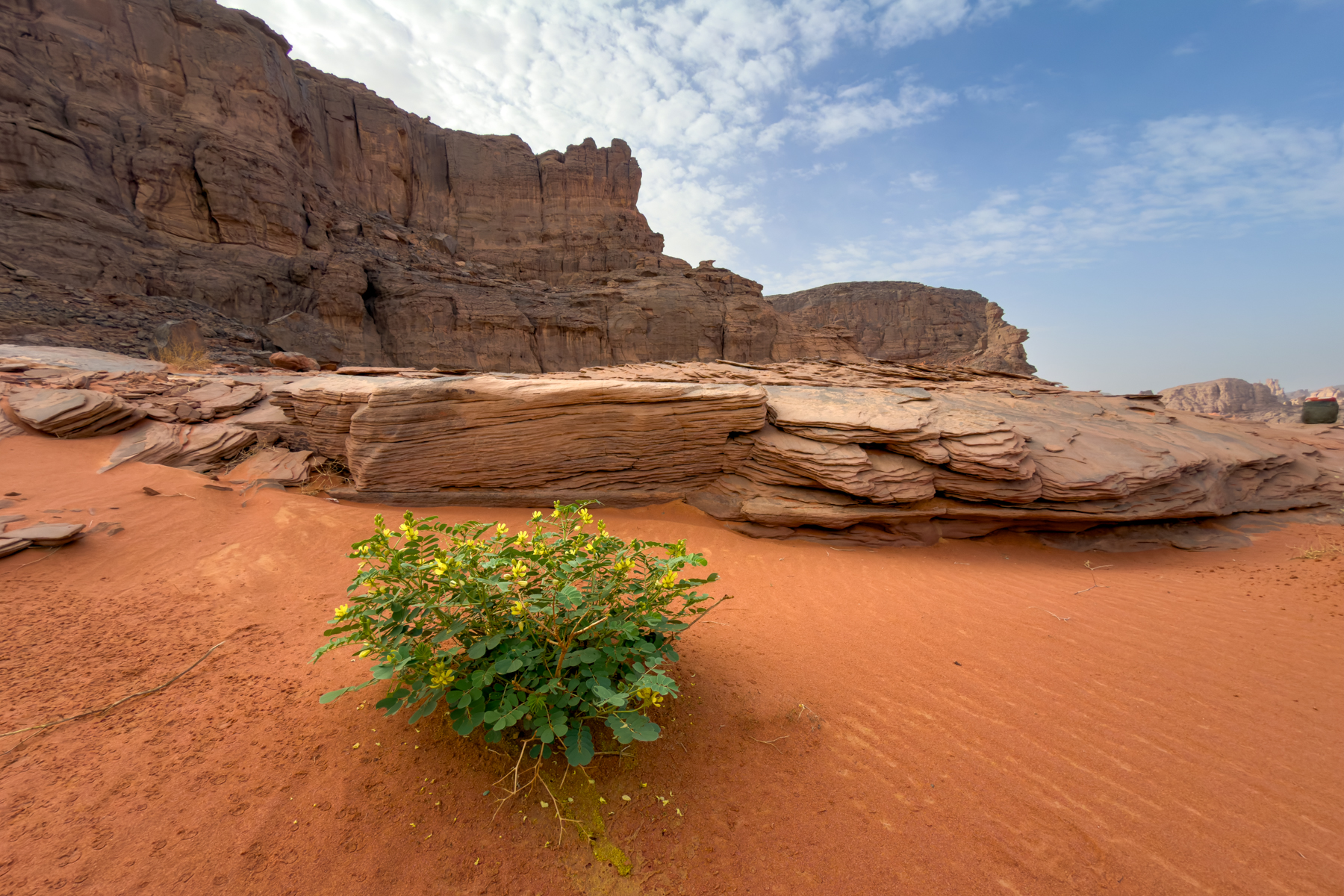
Senna italica, or Adjrdjar in Tuareg, is used to fatten up camels (image by Inger Vandyke)
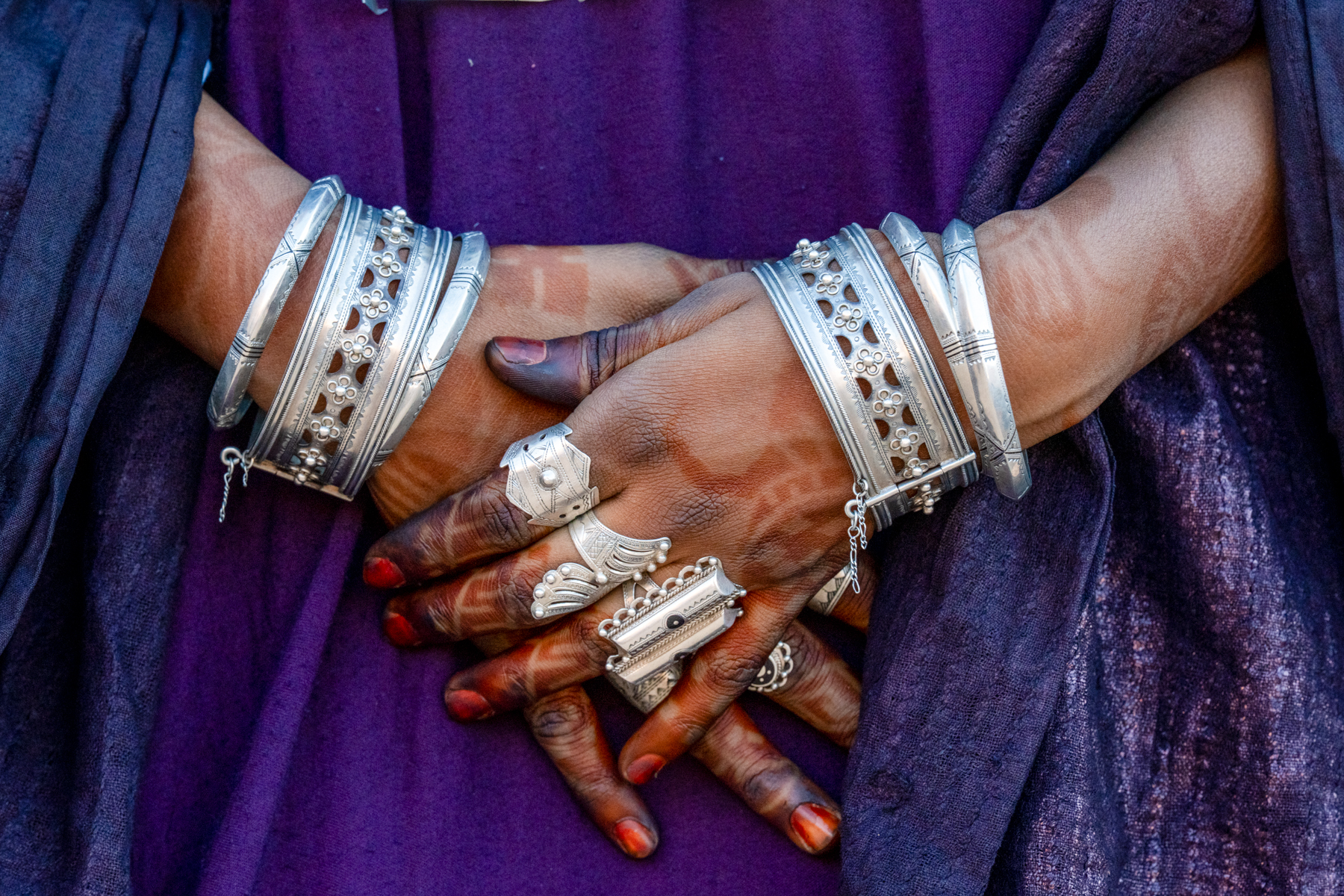
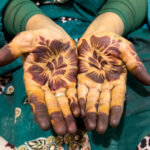
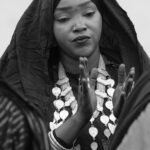
The hands of a Tuareg girl, adorned with silver, indigo and henna (image by Inger Vandyke)
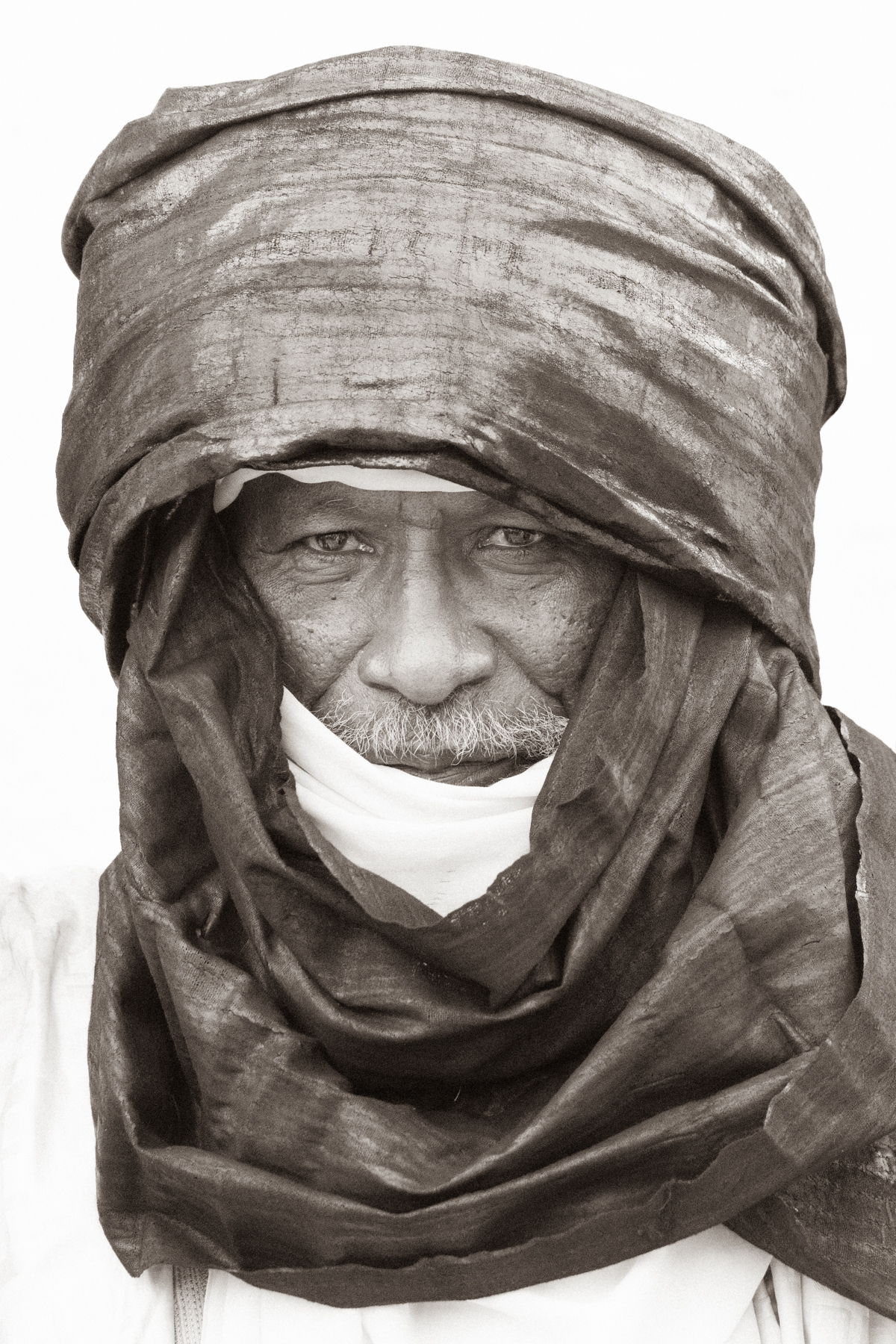
El Mirhan elder (image by Inger Vandyke)
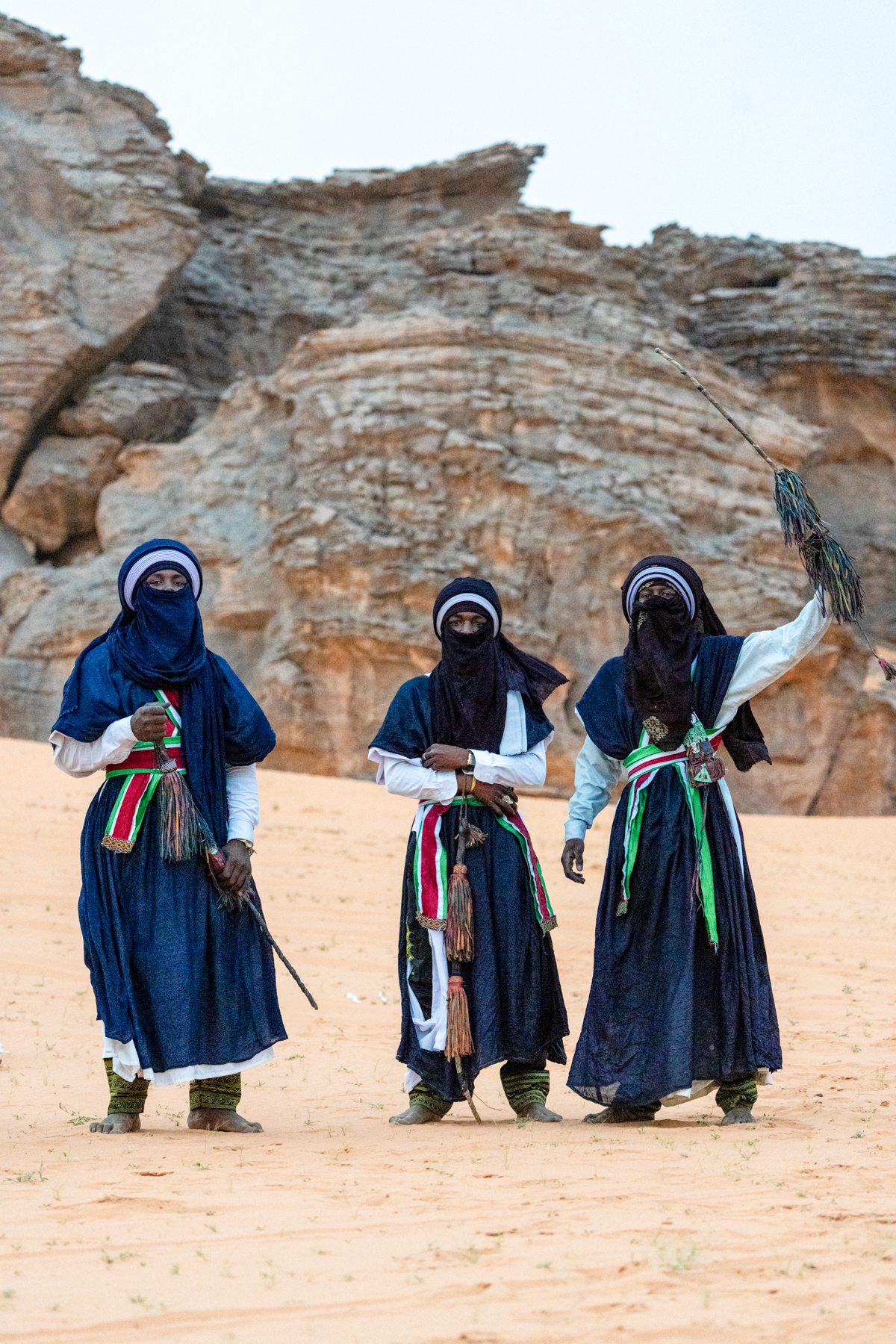
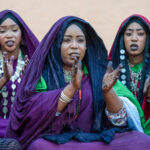
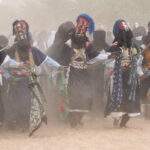
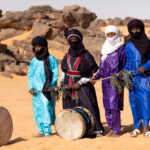
Tahamat dancers (image by Inger Vandyke)
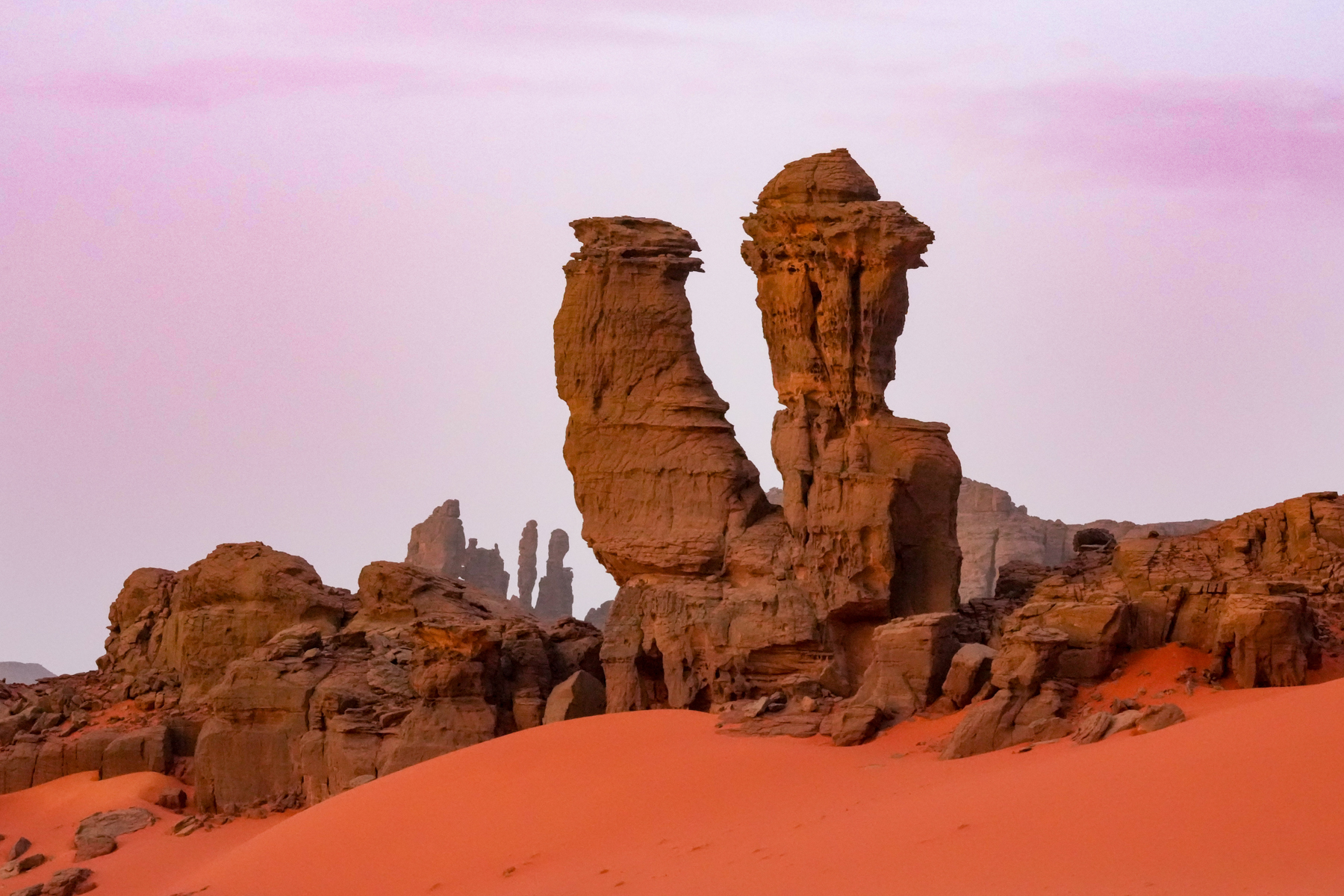
The stunning rock formations of Le Cirque in the blush of a new day (image by Inger Vandyke)
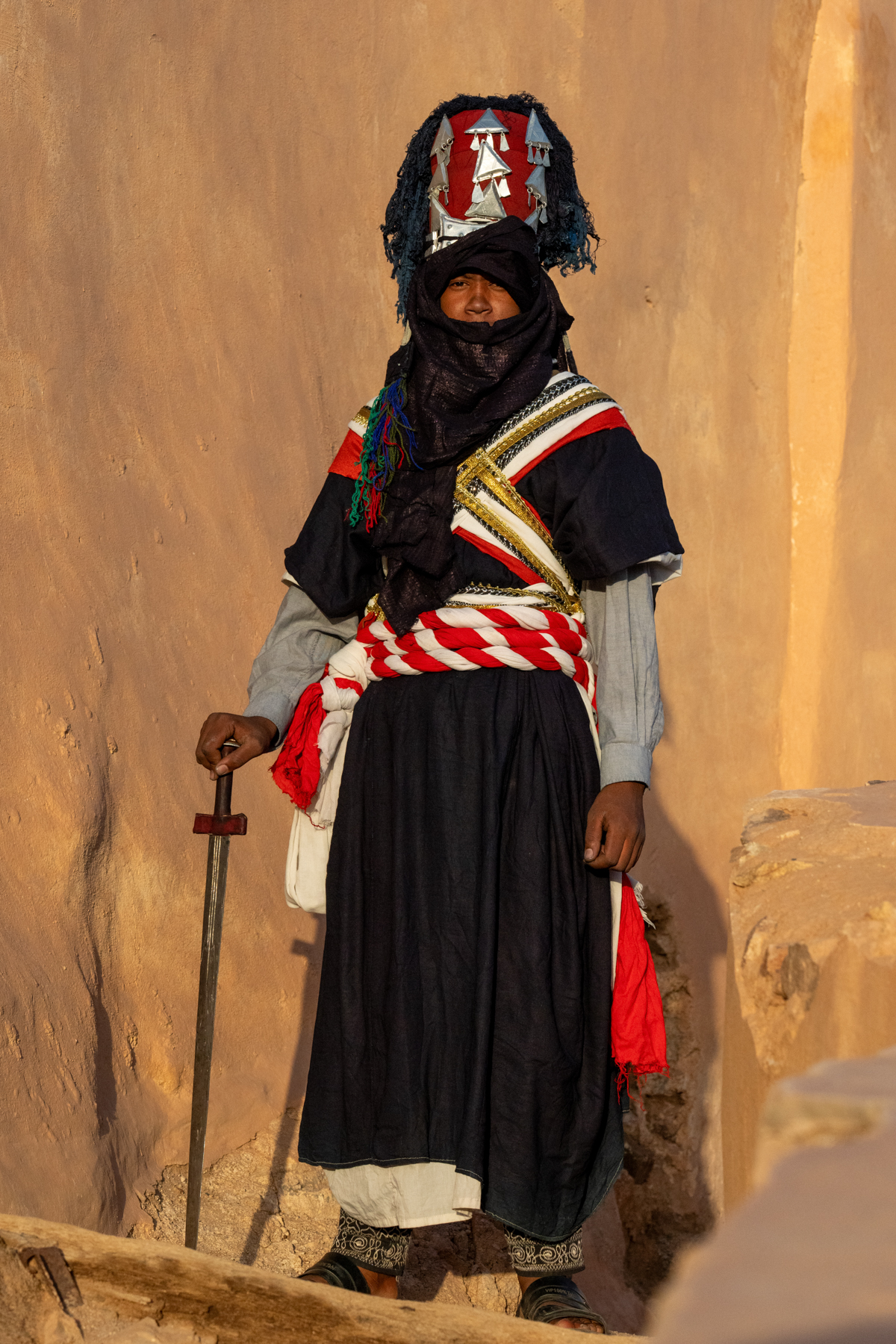
Sabiba warrior in Taghorfit (image by Inger Vandyke)
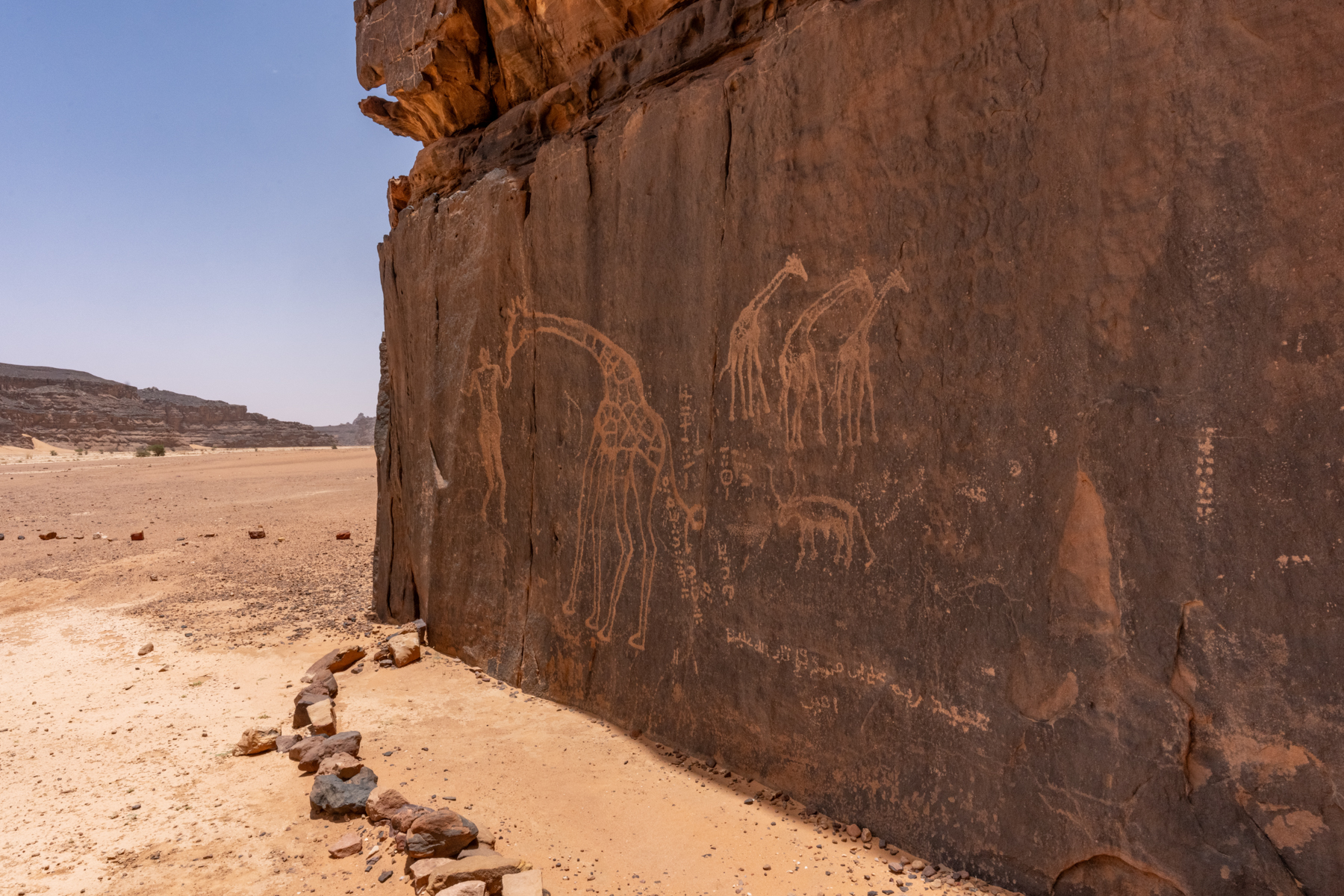
The view from Wan Ahar to the desert (image by Inger Vandyke)
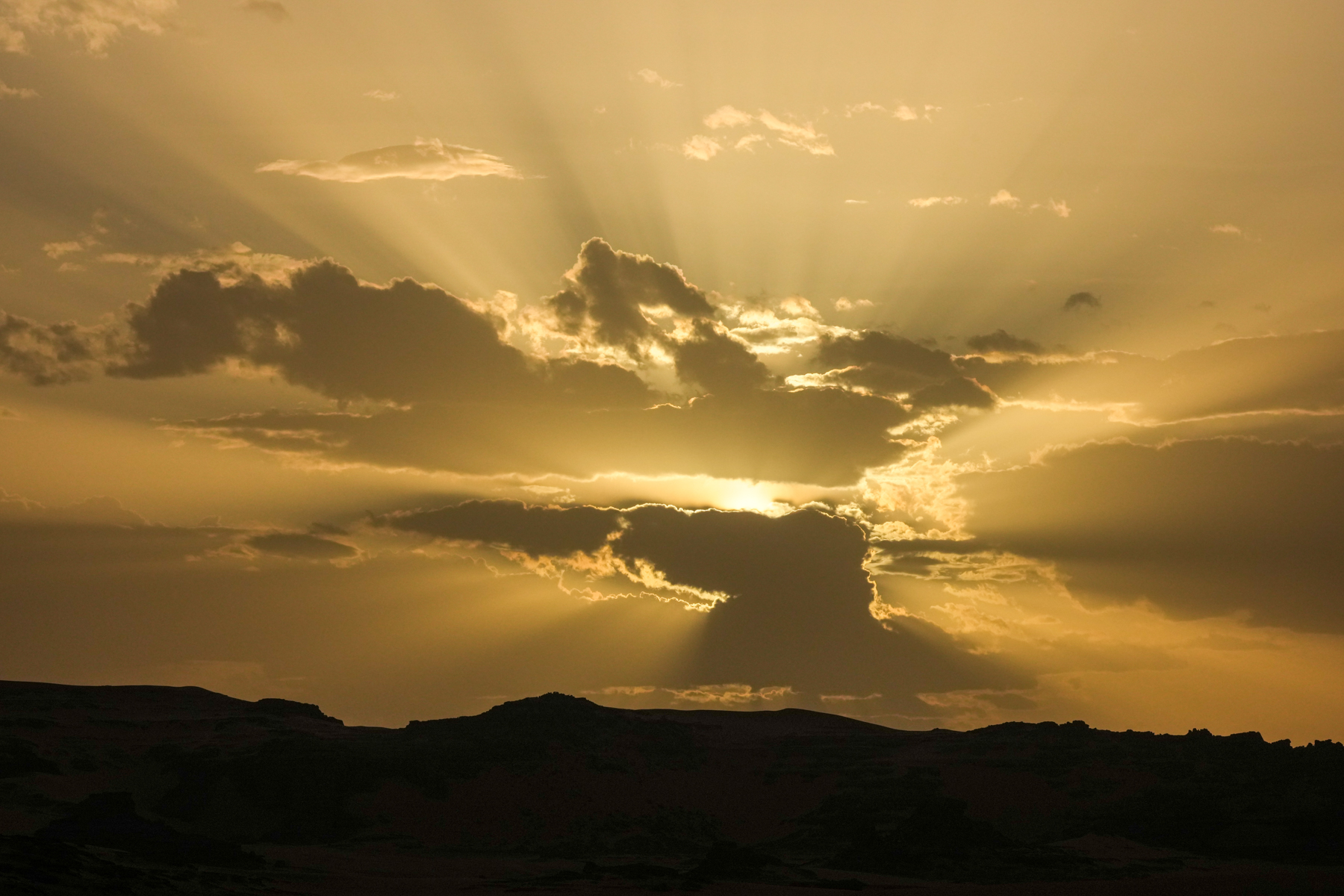
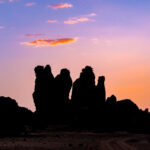
Desert sunset (image by Inger Vandyke)
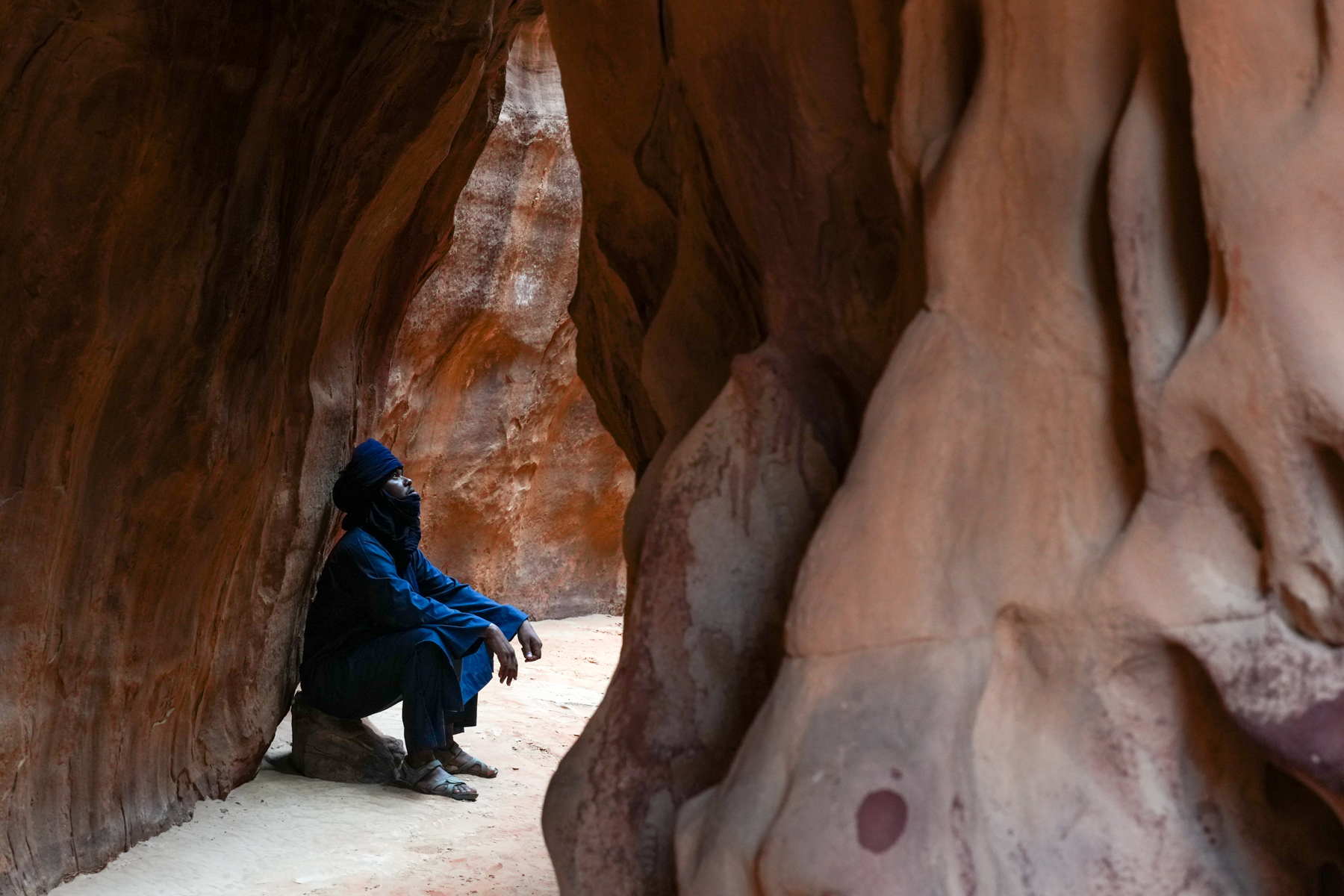
No one knows and understands the Sahara like Tuareg people (image by Inger Vandyke)
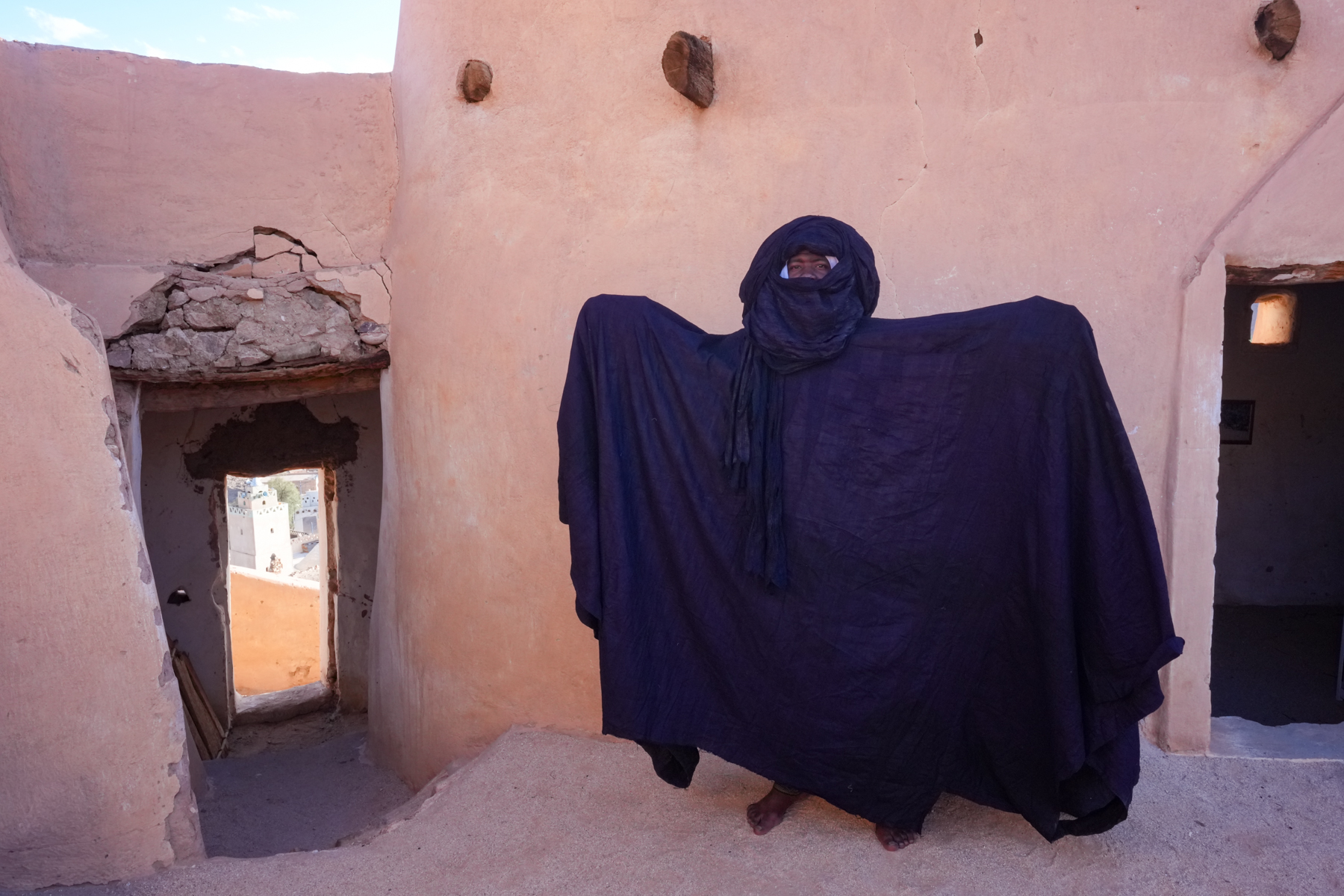
Tuareg 'bat' dancer at Taghorfit (image by Inger Vandyke)
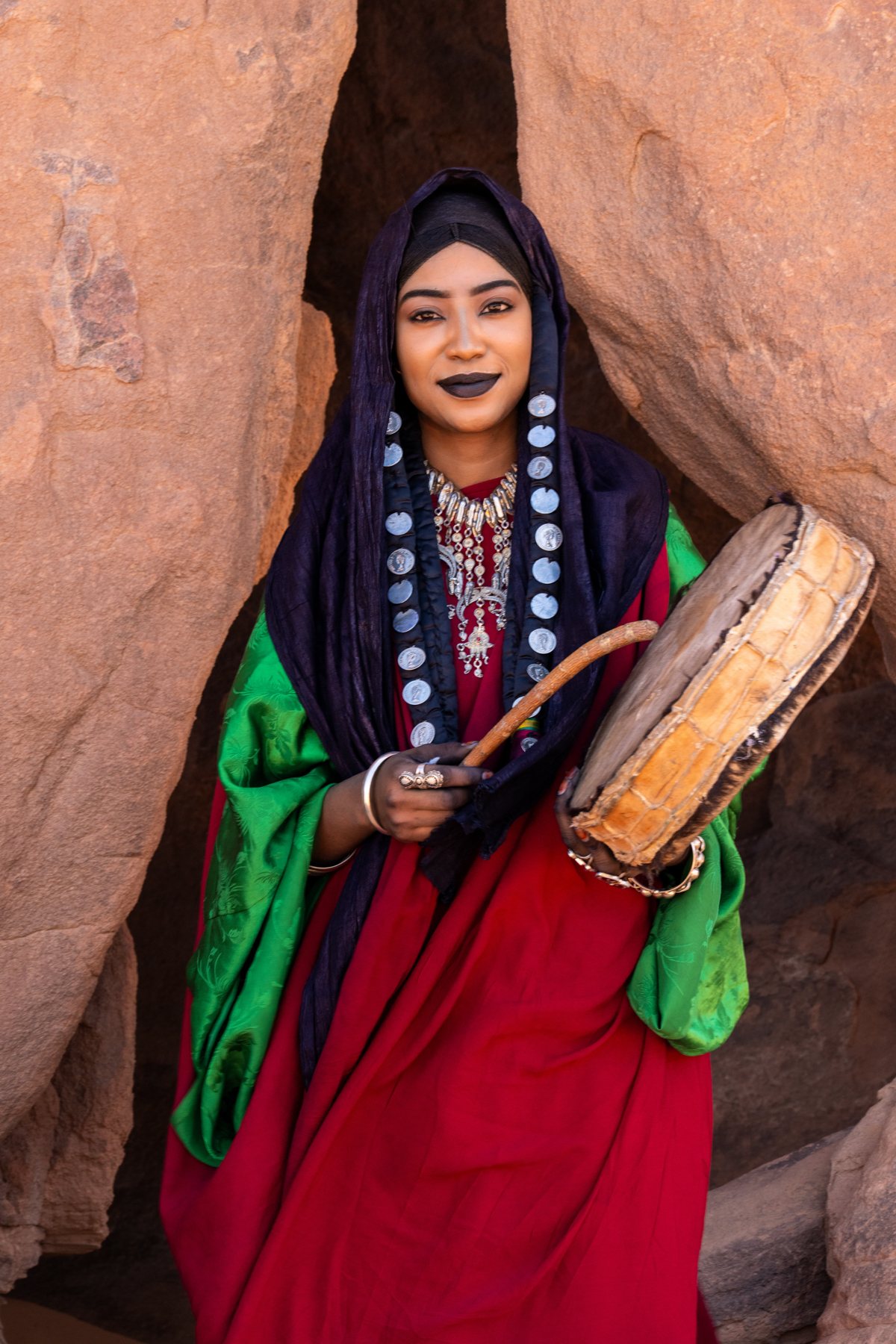
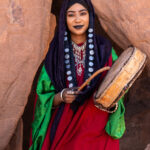
Beautiful Tuareg girl with Tinde drum at a ceremony of Tahamat in the desert(image by Inger Vandyke)
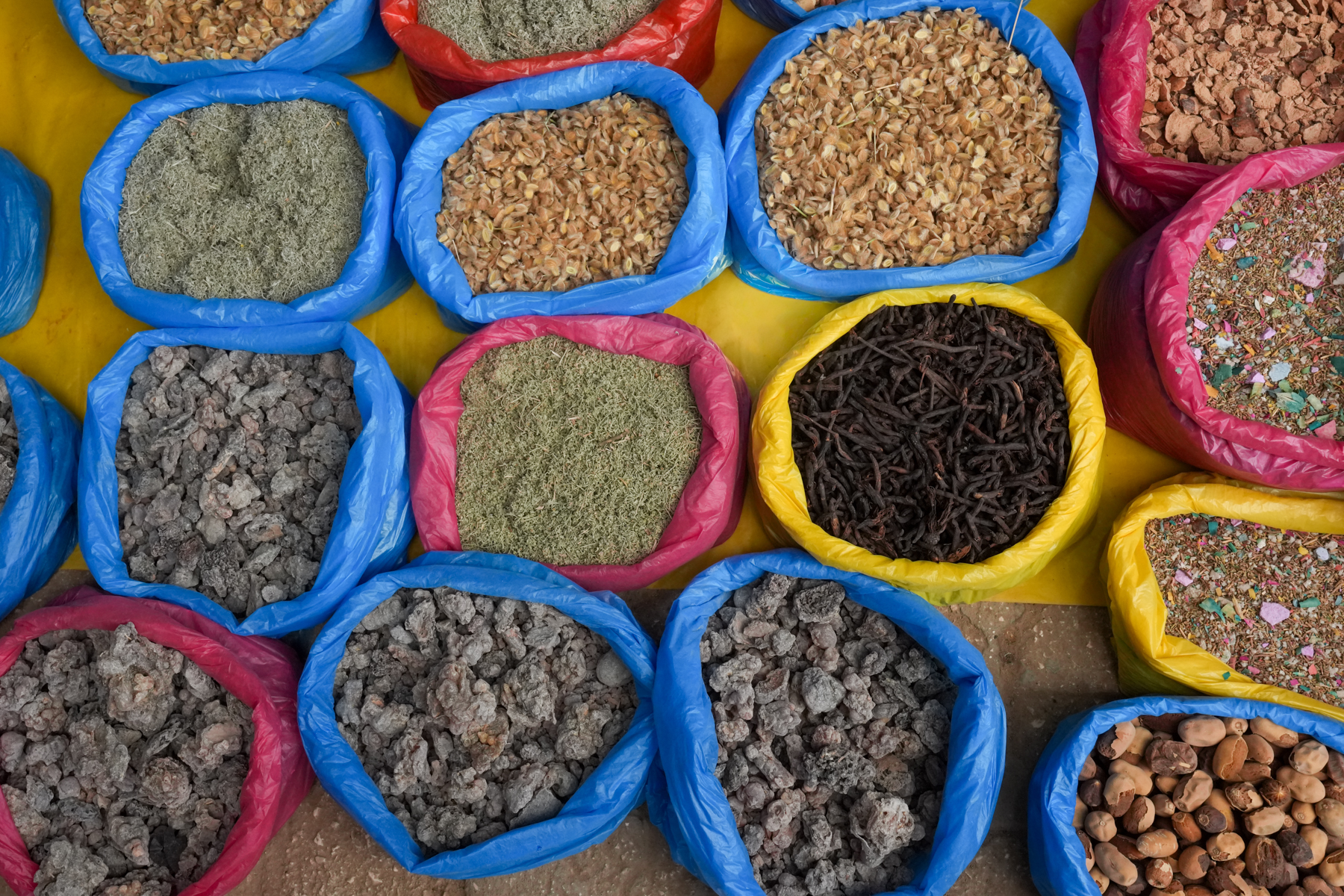
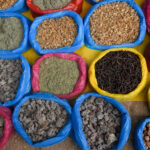
Traditional medicines for sale in the souk of Djanet (image by Inger Vandyke)
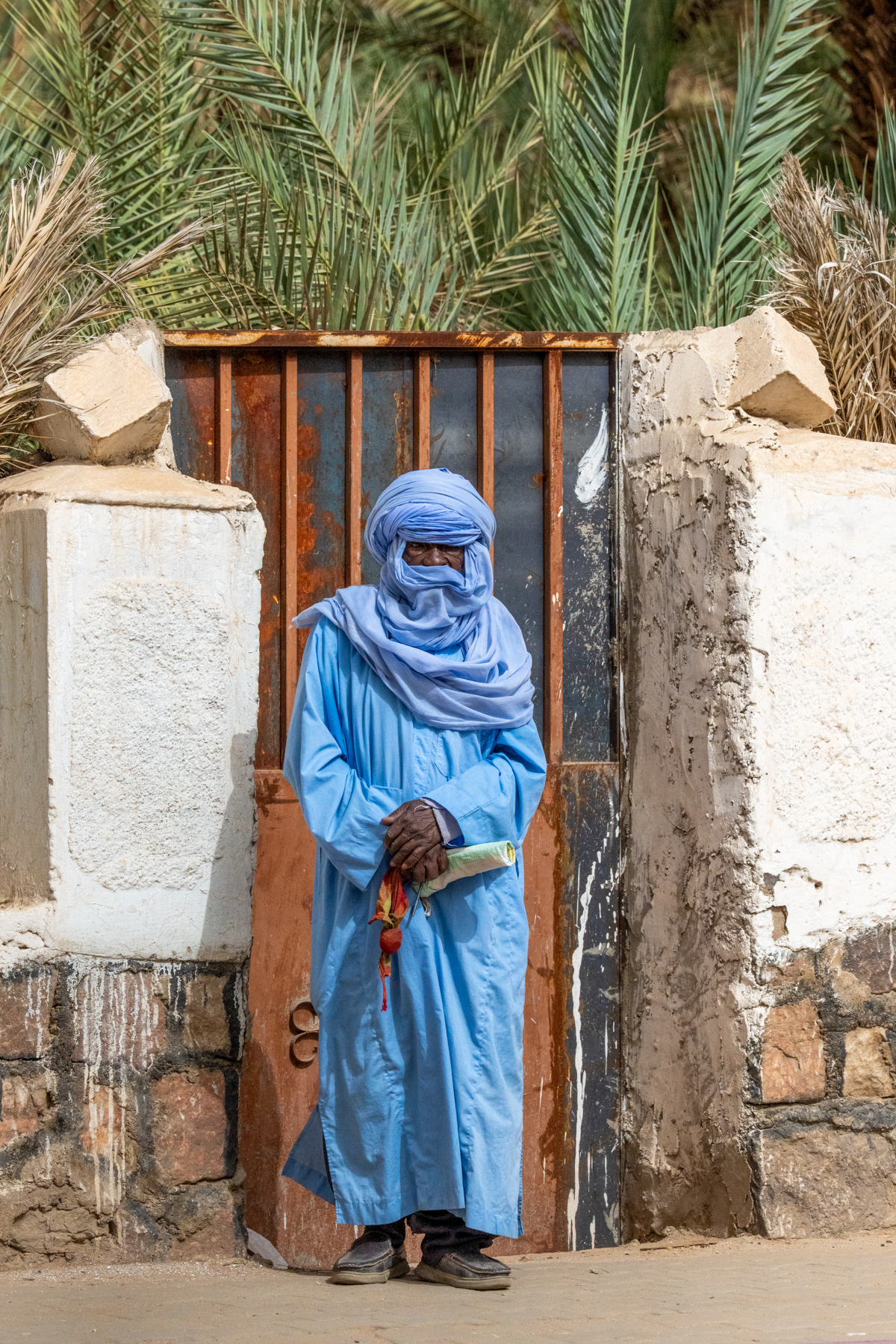
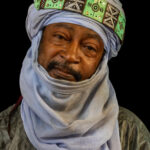
Elderly Tuareg man of Djanet (image by Inger Vandyke)
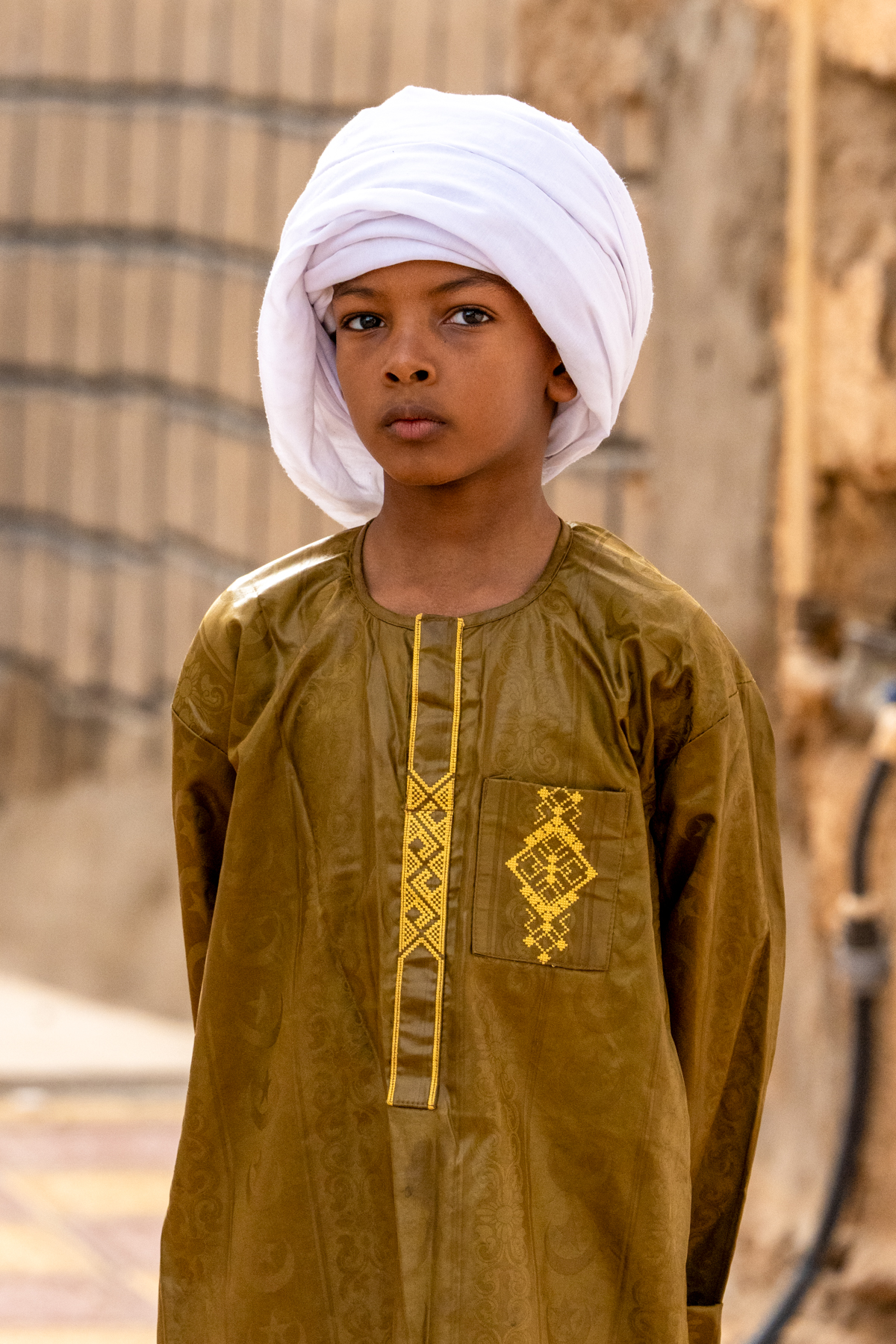
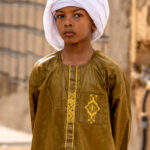
Young Tuareg boy (image by Inger Vandyke)
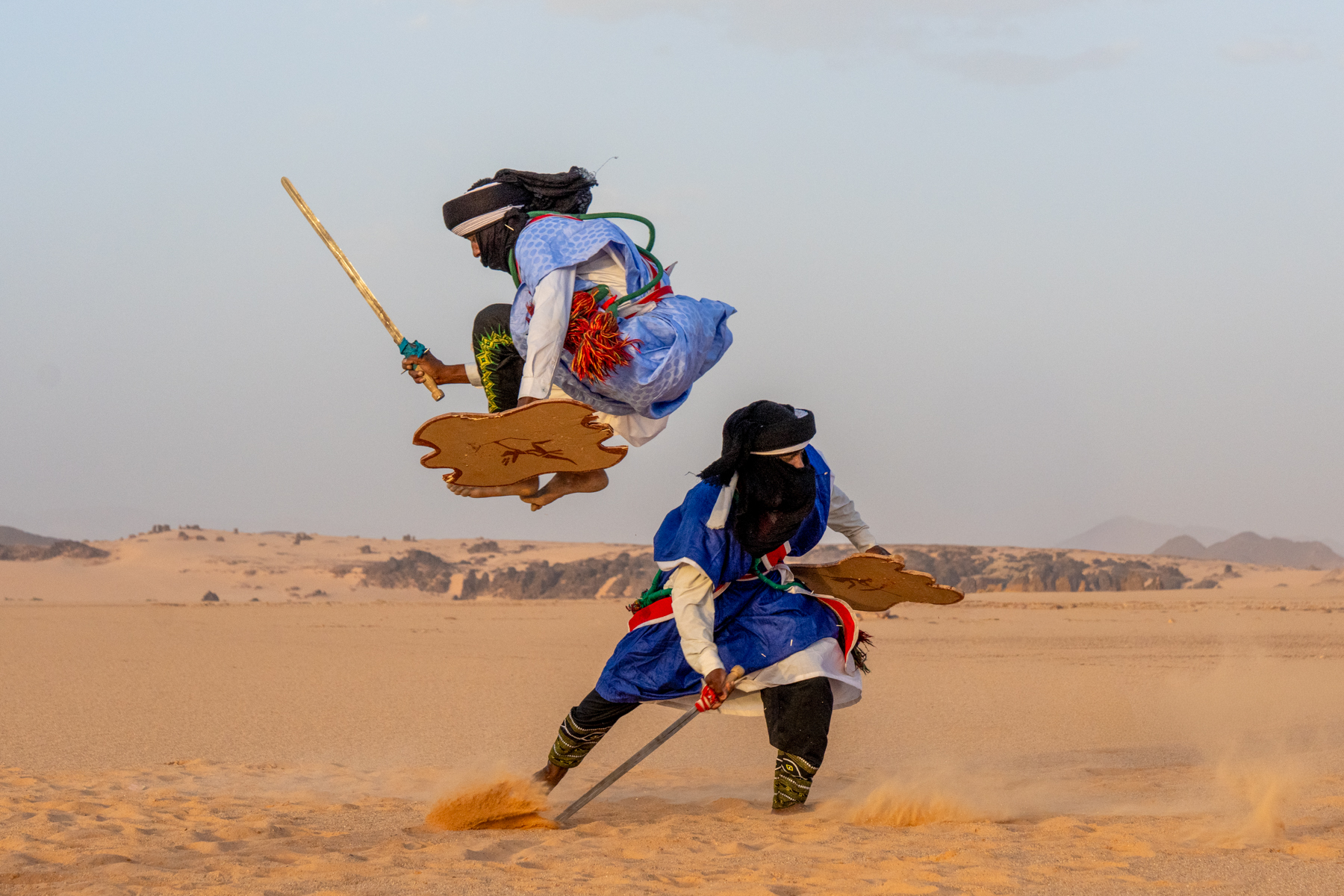
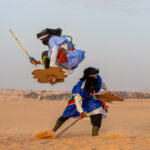
Aroukas flying Tuareg warriors (image by Inger Vandyke)
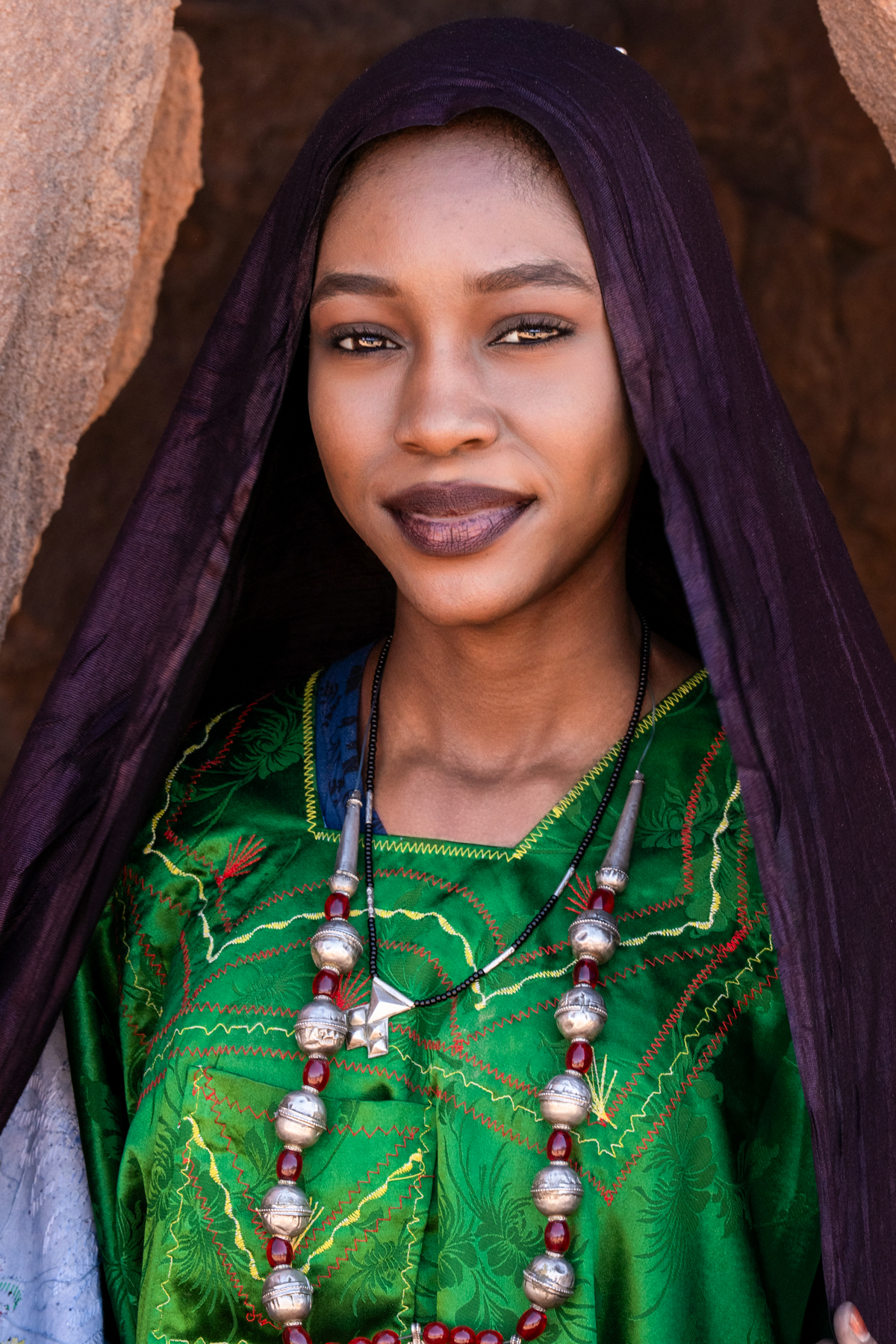
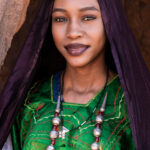
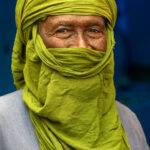
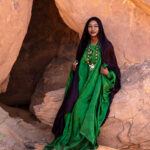
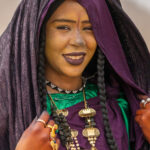
Beautiful Tuareg girl in green (image by Inger Vandyke)
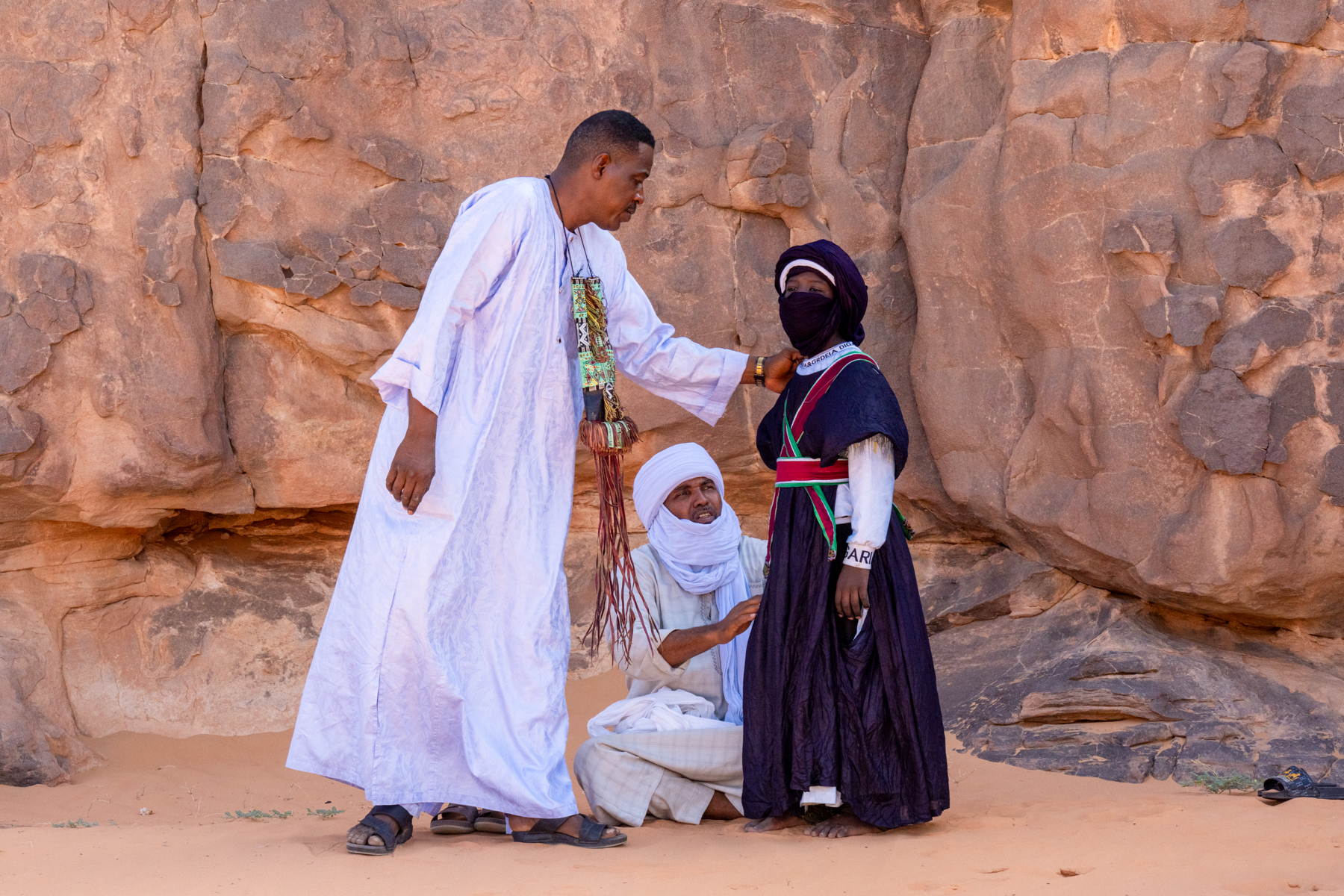
Men prepare a young Tuareg boy for a ceremony of Tahamat (image by Inger Vandyke)
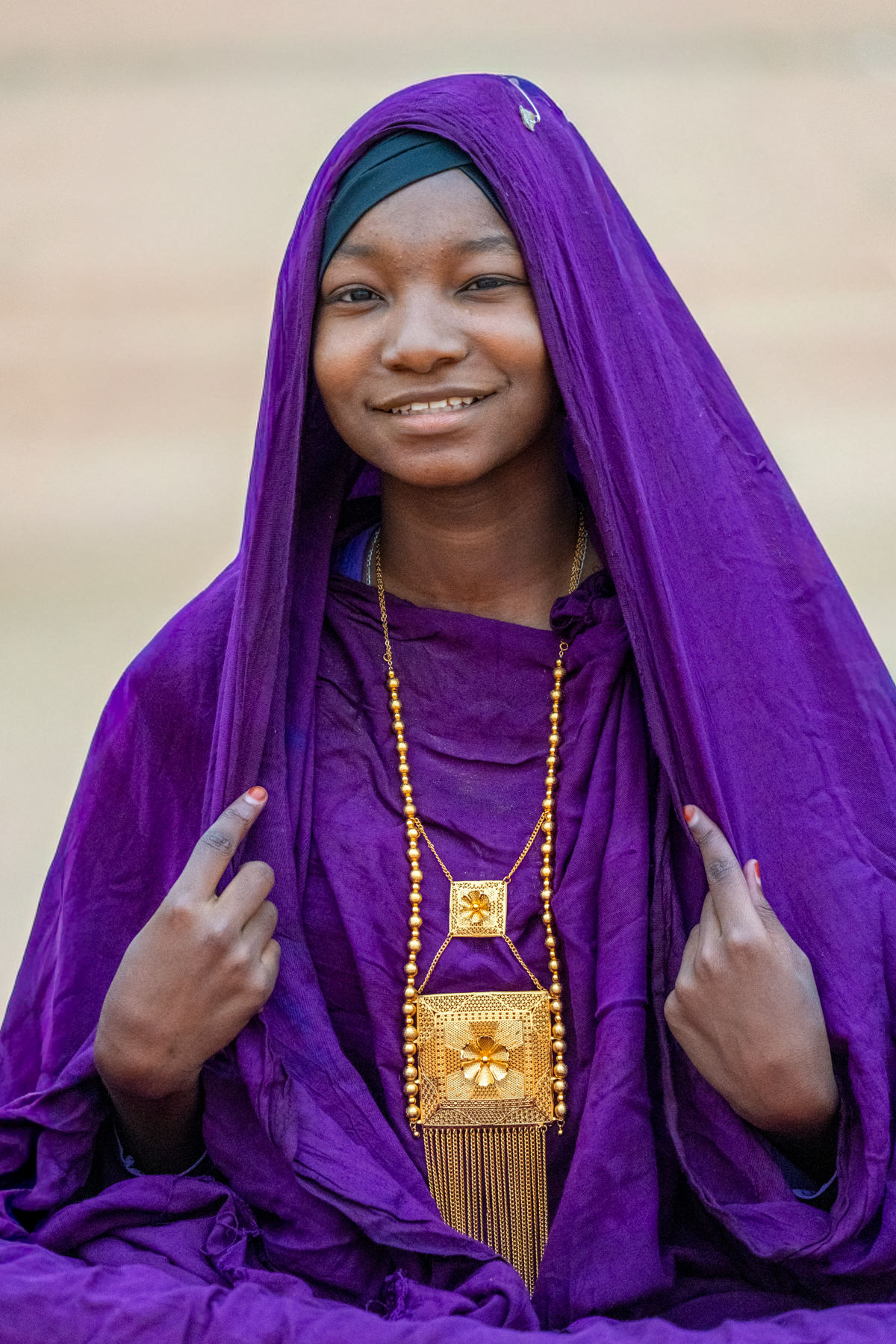
Smiling Tuareg girl at Tahamat (image by Inger Vandyke)
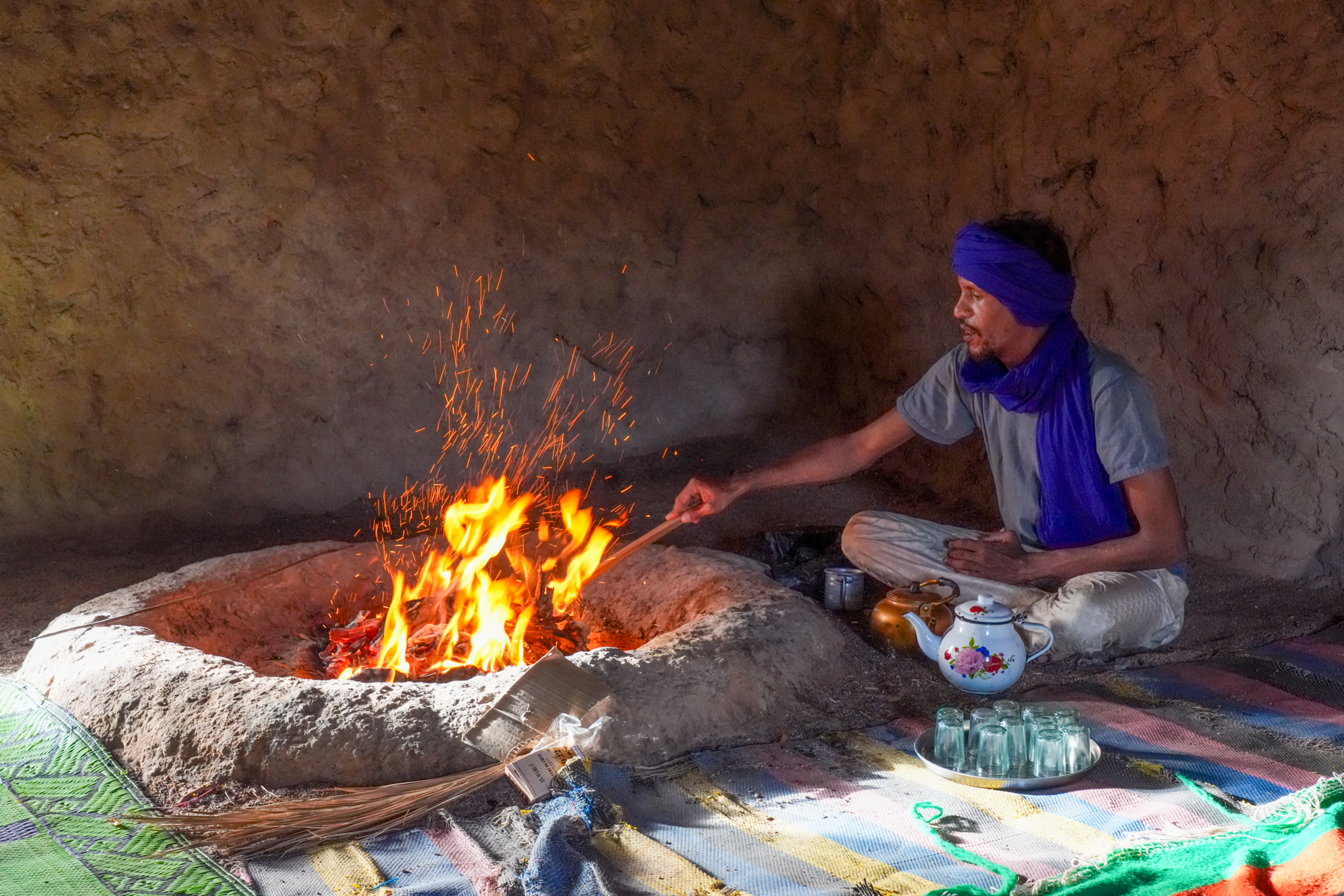
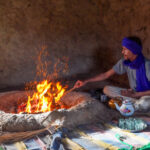
Baking taghella (image by Inger Vandyke)
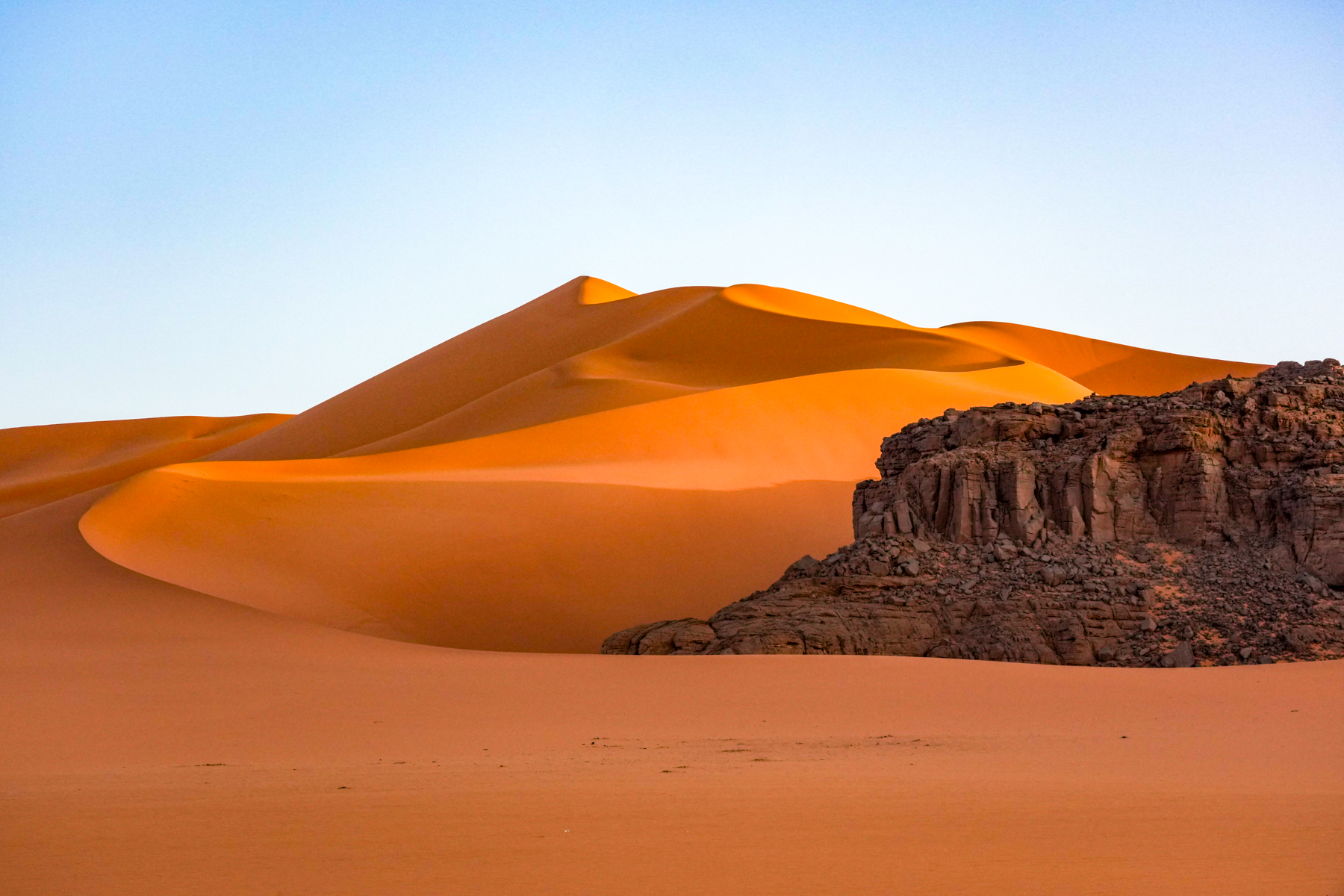
Tinmerzouga landscape (image by Inger Vandyke)
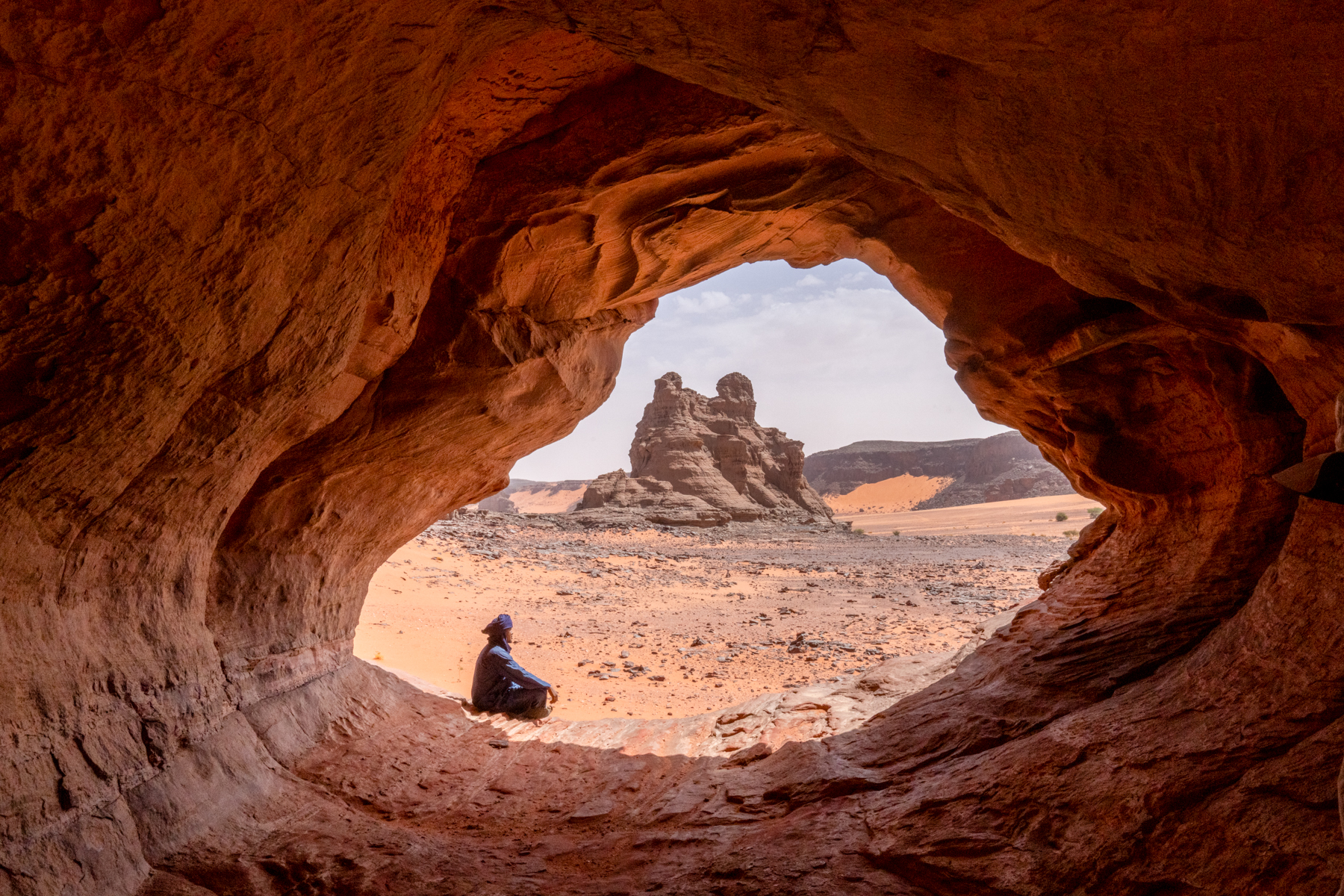
Tuareg people worship their desert home. Their presence lends both perspective and a regal presence to the stunning landscapes of Tadrart (image by Inger Vandyke)
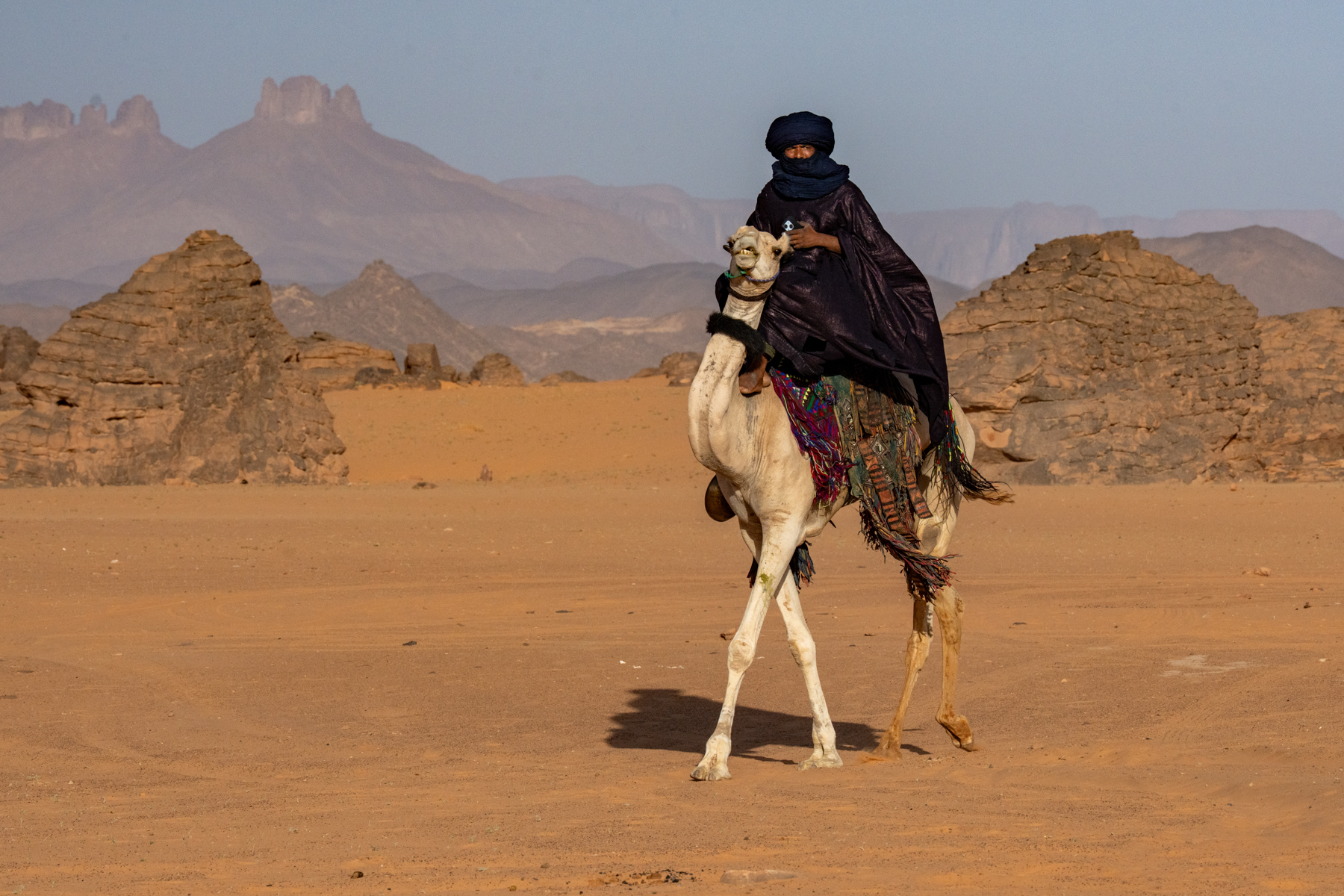
Tuareg man on camel (image by Inger Vandyke)
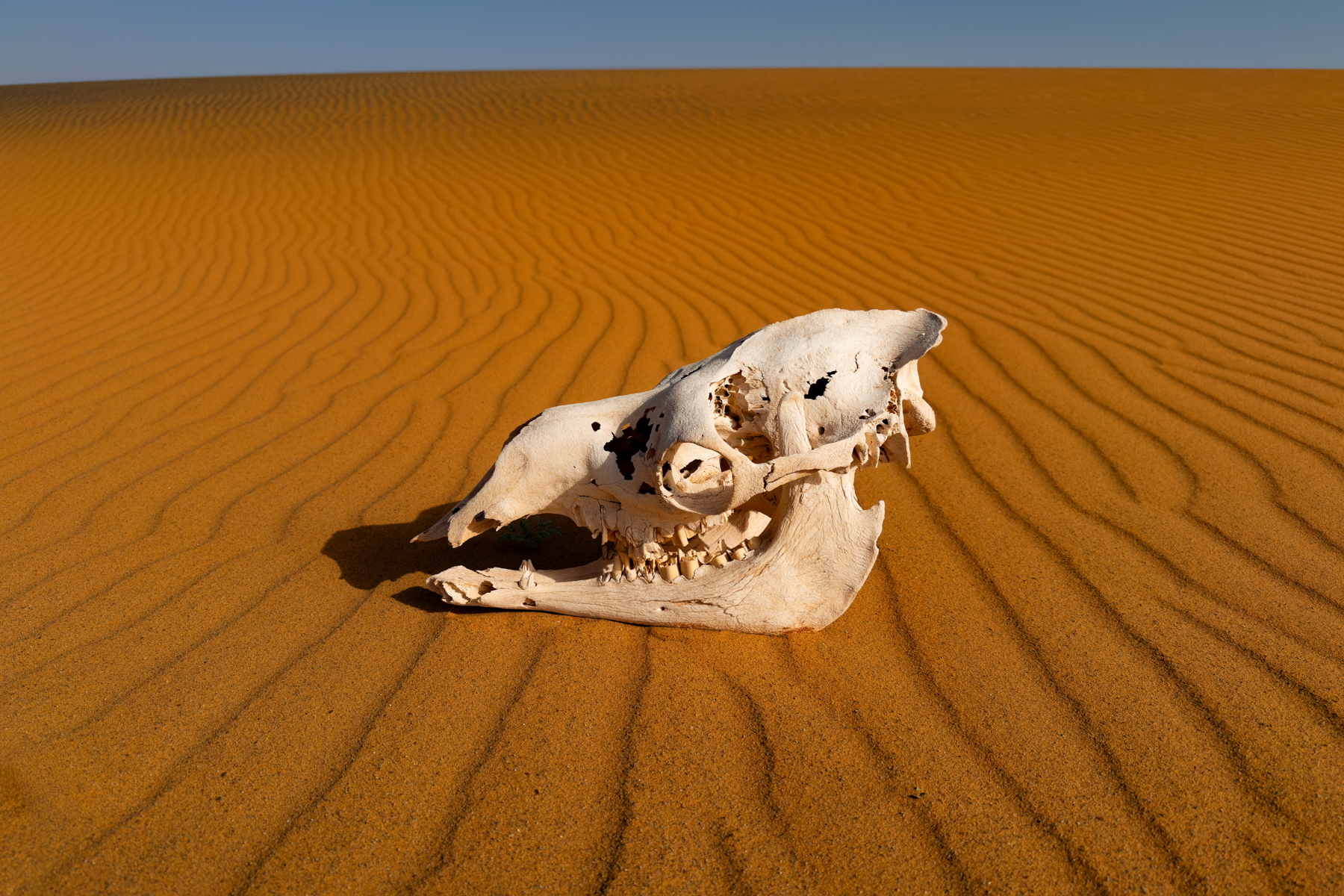
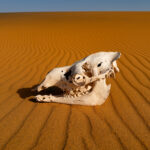
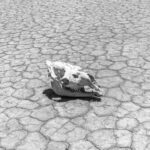
Camel skull (image by Inger Vandyke)
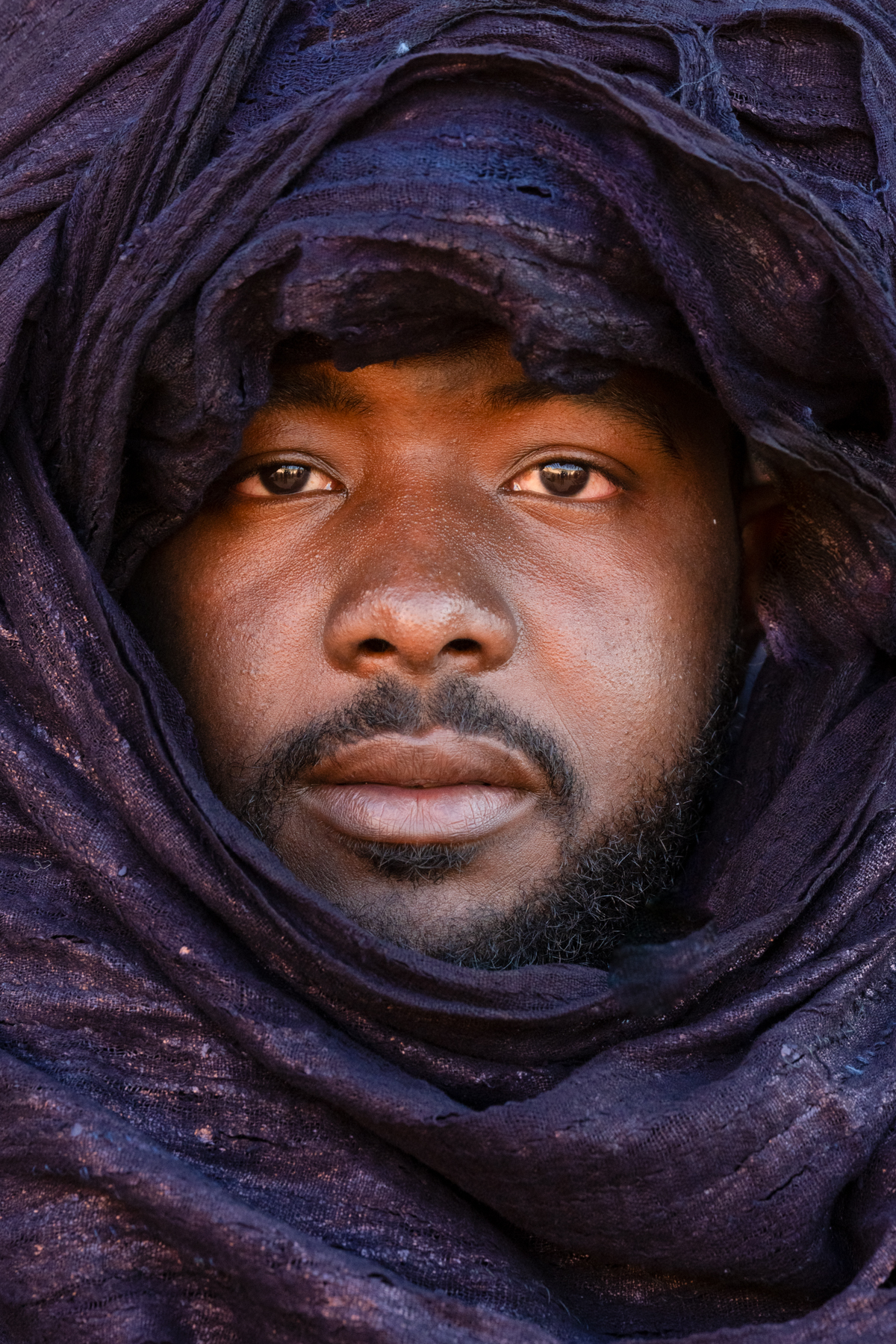
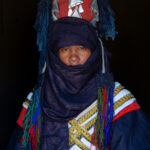
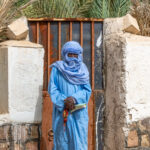
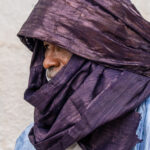
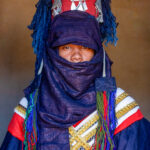
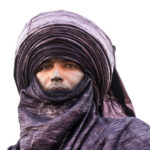
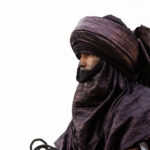
Tuareg man wrapped in indigo (image by Inger Vandyke)
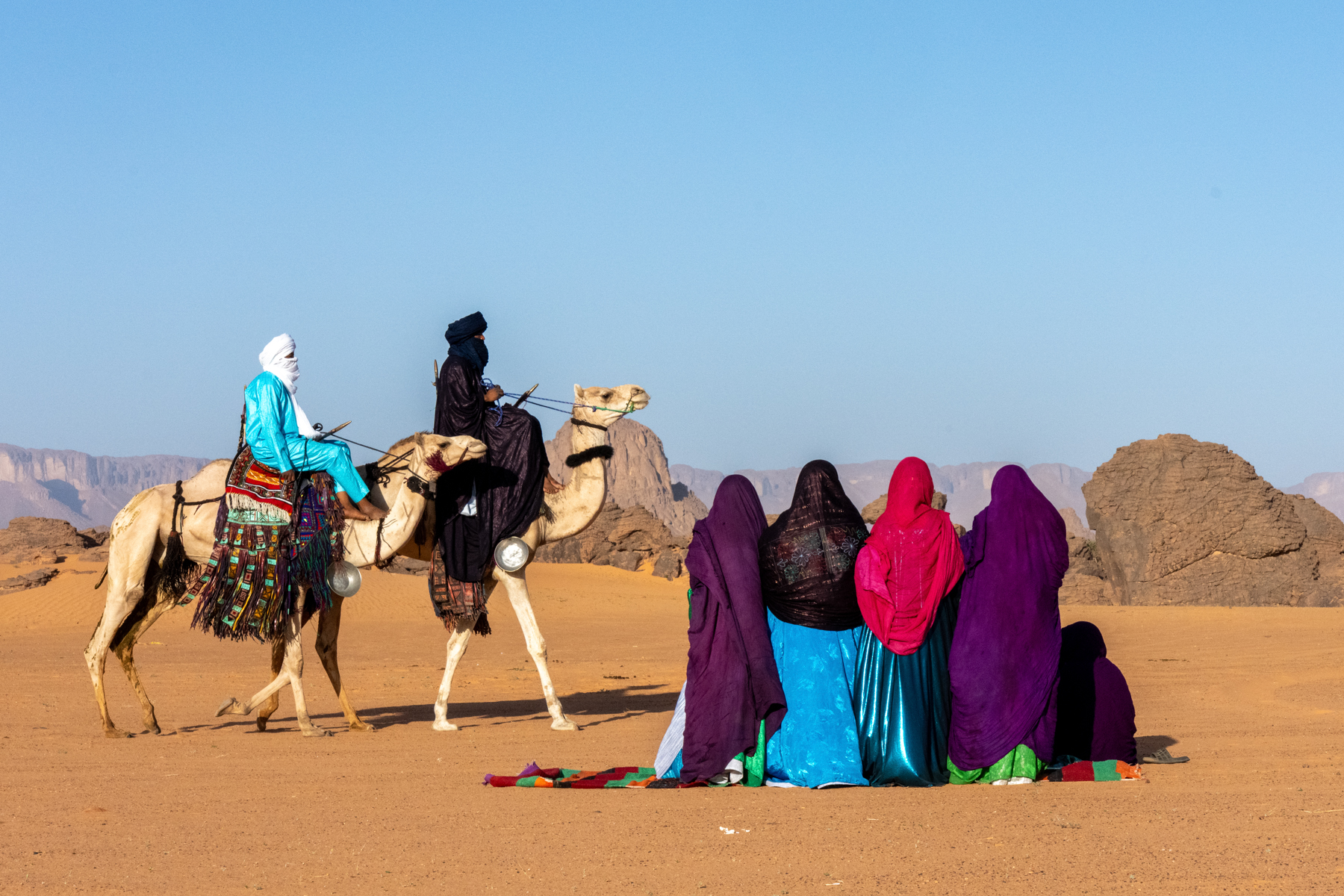
Camel dance (image by Inger Vandyke)
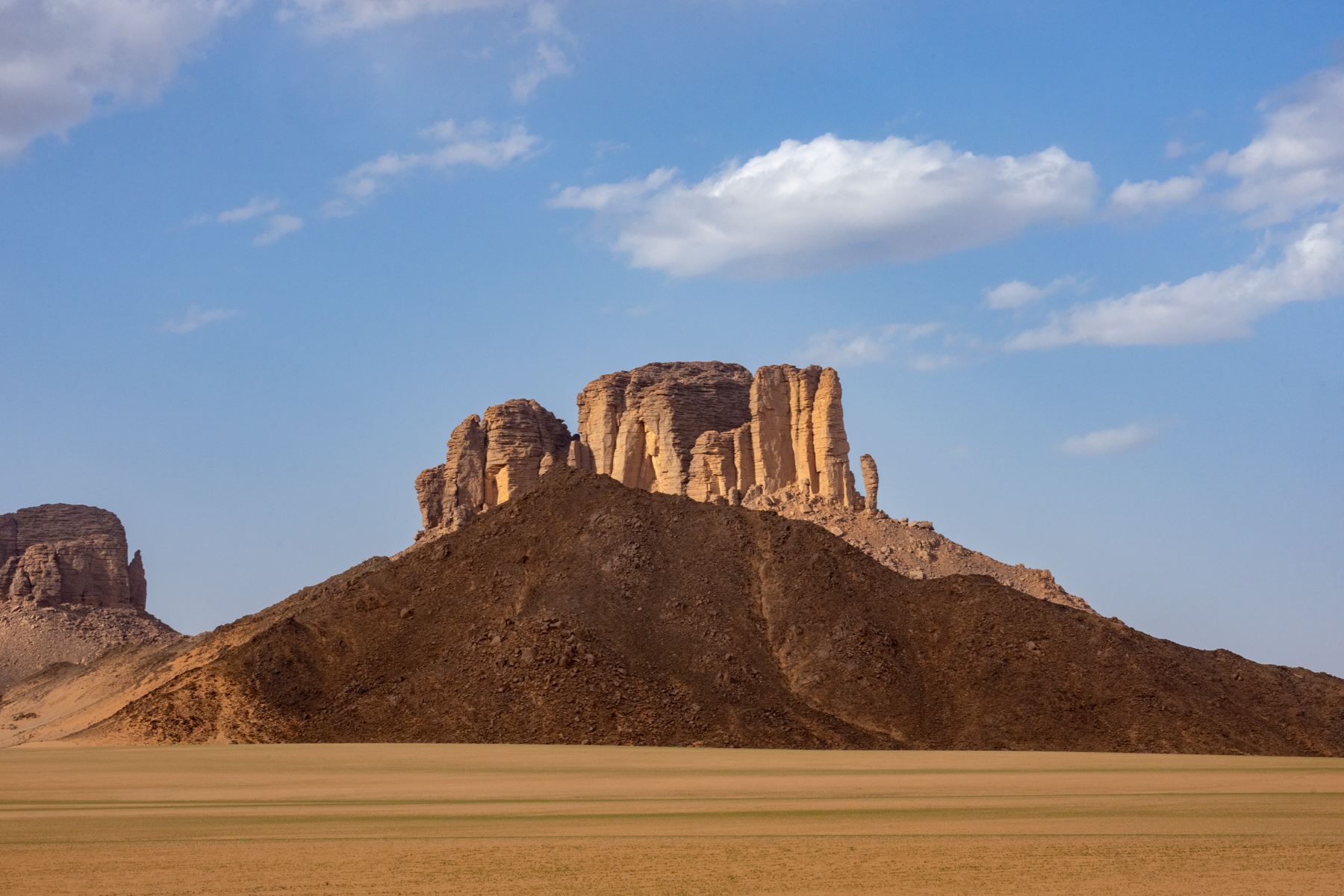
Tassili landscape after rain (image by Inger Vandyke)
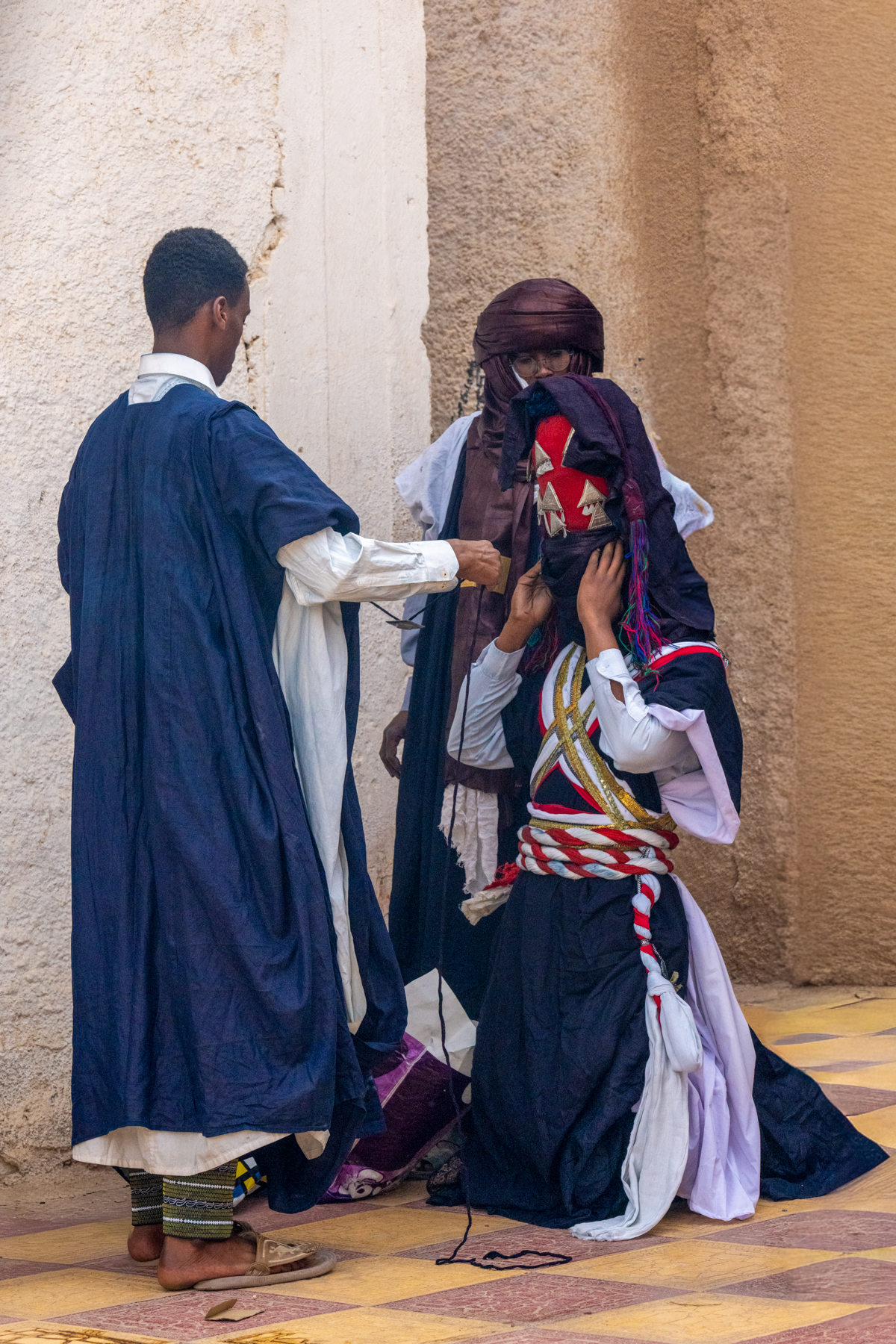
Preparing for Sabiba (image by Inger Vandyke)
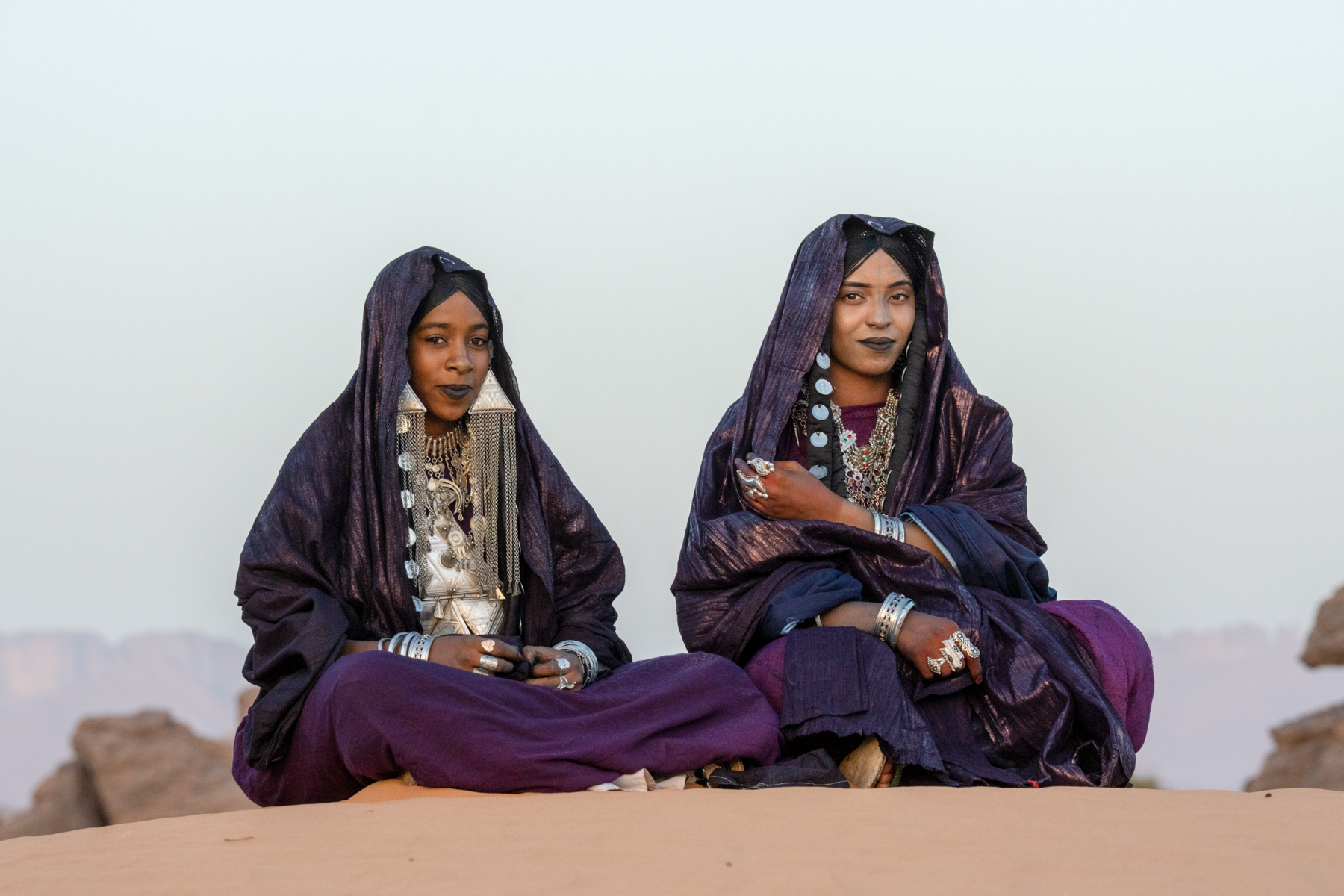
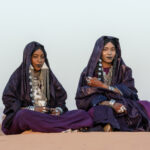
Beautiful Tuareg girls adorned in indigo and silver in the desert (image by Inger Vandyke)
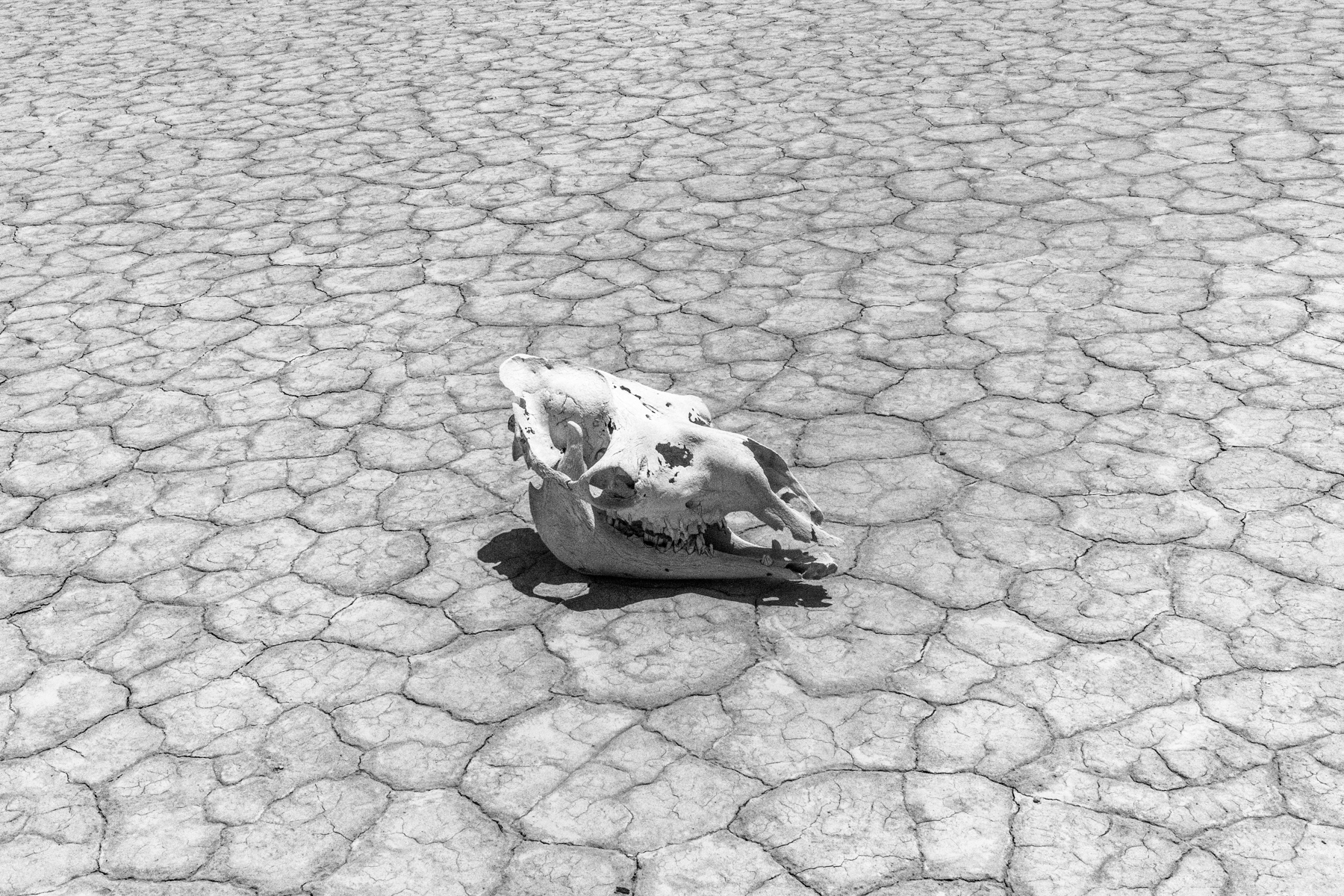
Camel skull (image by Inger Vandyke)
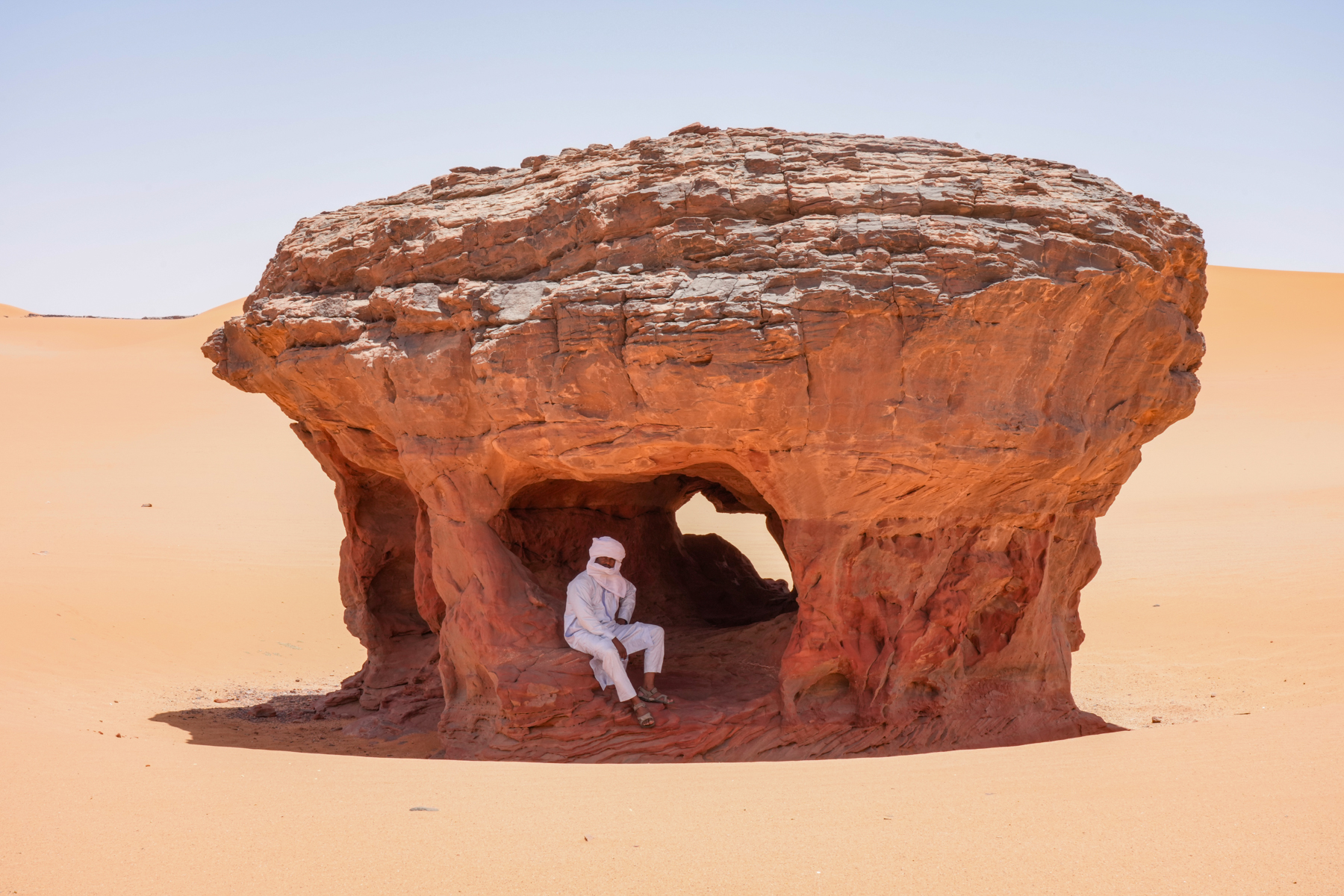
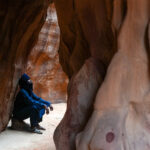
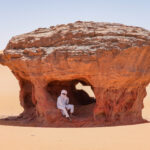
The rock pillars of Tadrart are sometimes able to swallow humans! (image by Inger Vandyke)
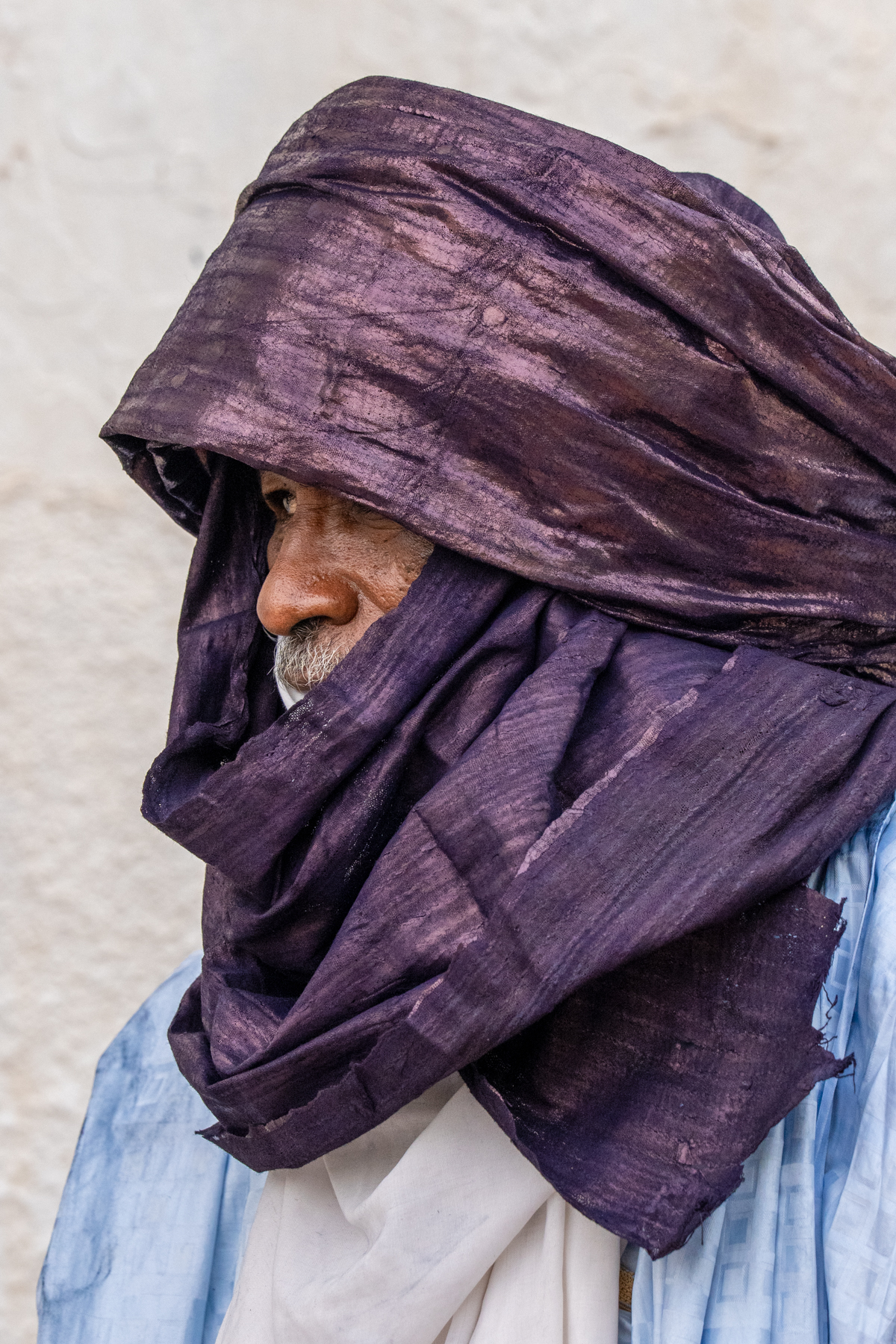
Side portrait of an El Mirhan Tuareg elder (image by Inger Vandyke)
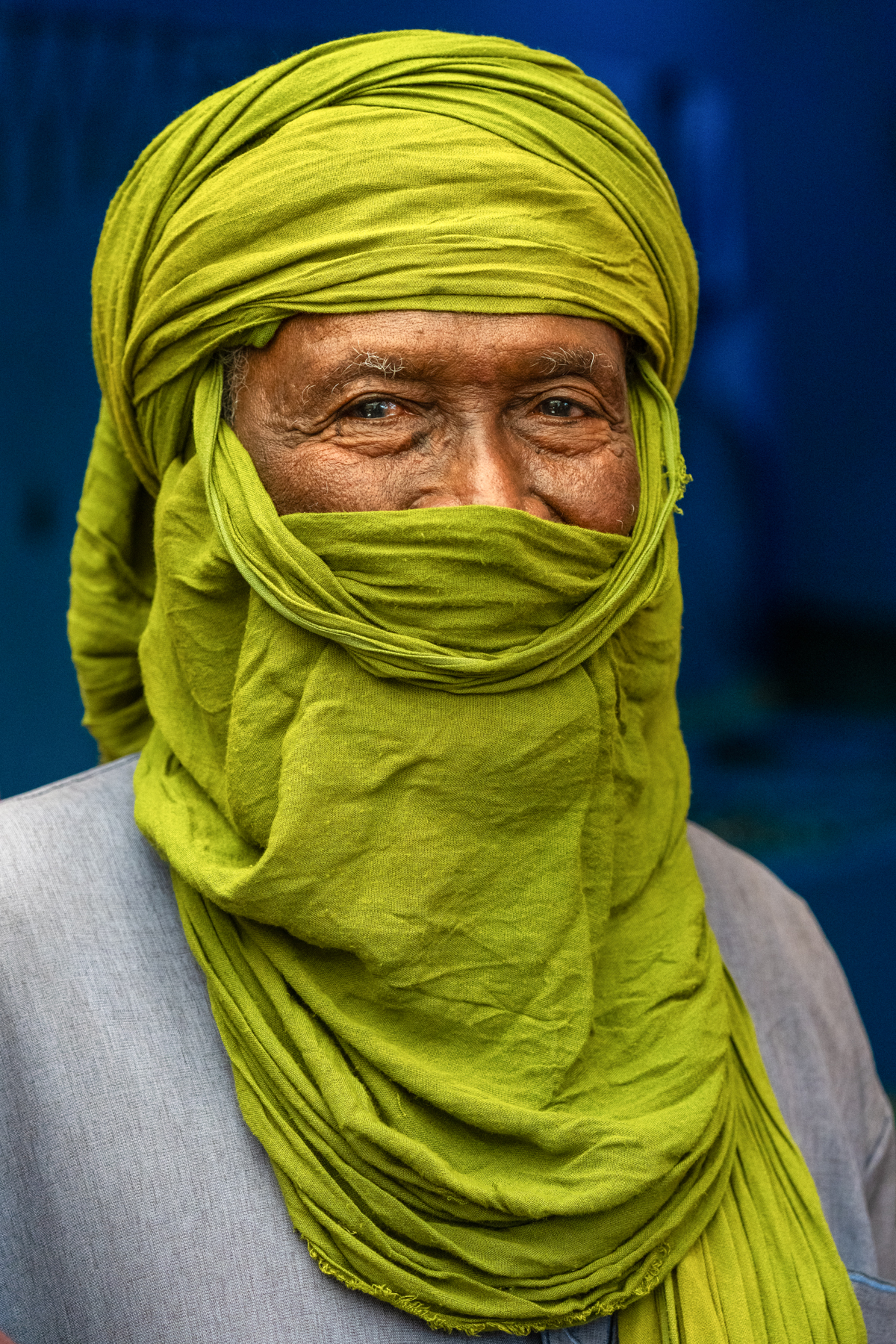
Portrait of an elderly Tuareg man in the souk of Djanet (image by Inger Vandyke)
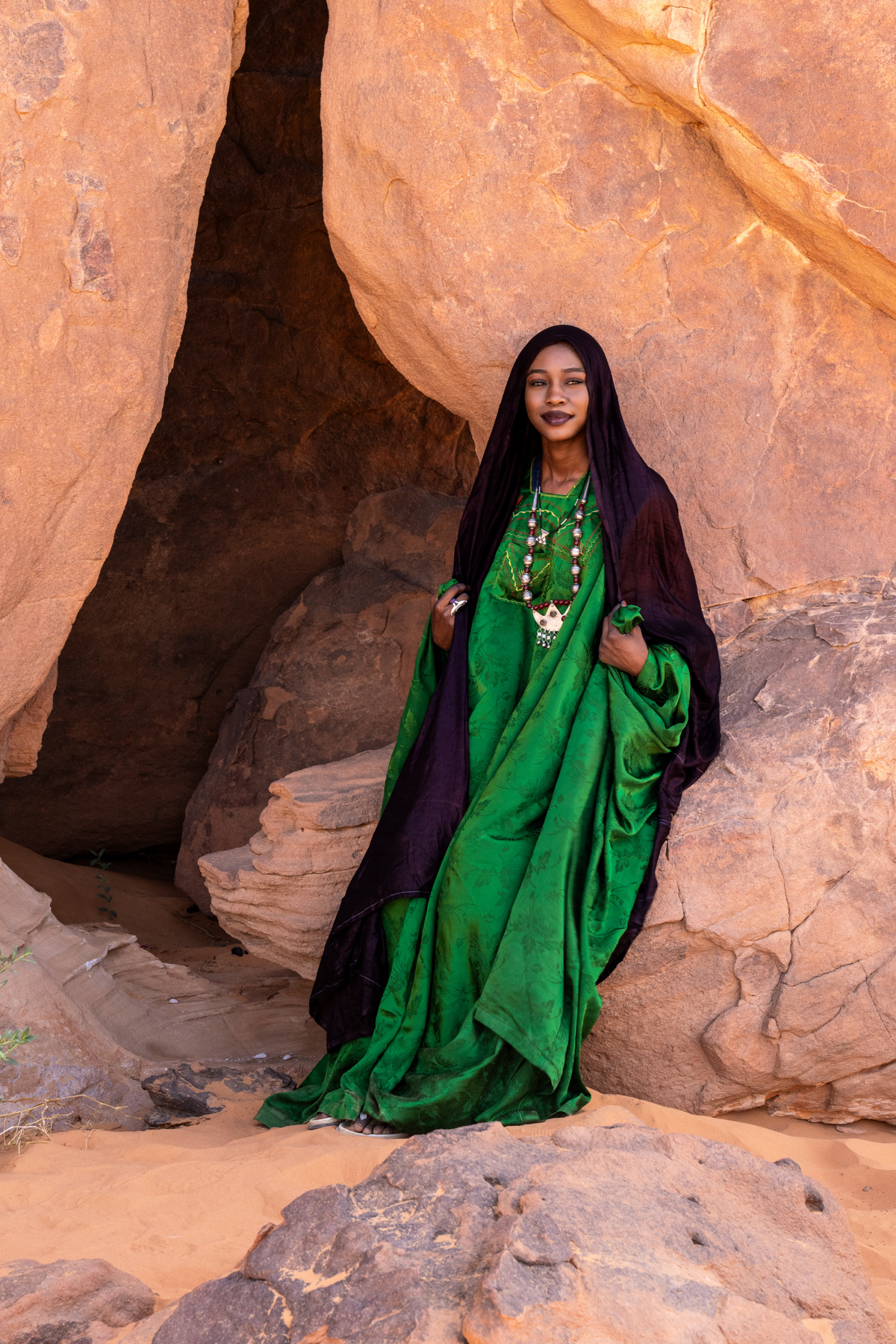
Tuareg women are truly incredibly beautiful (image by Inger Vandyke)
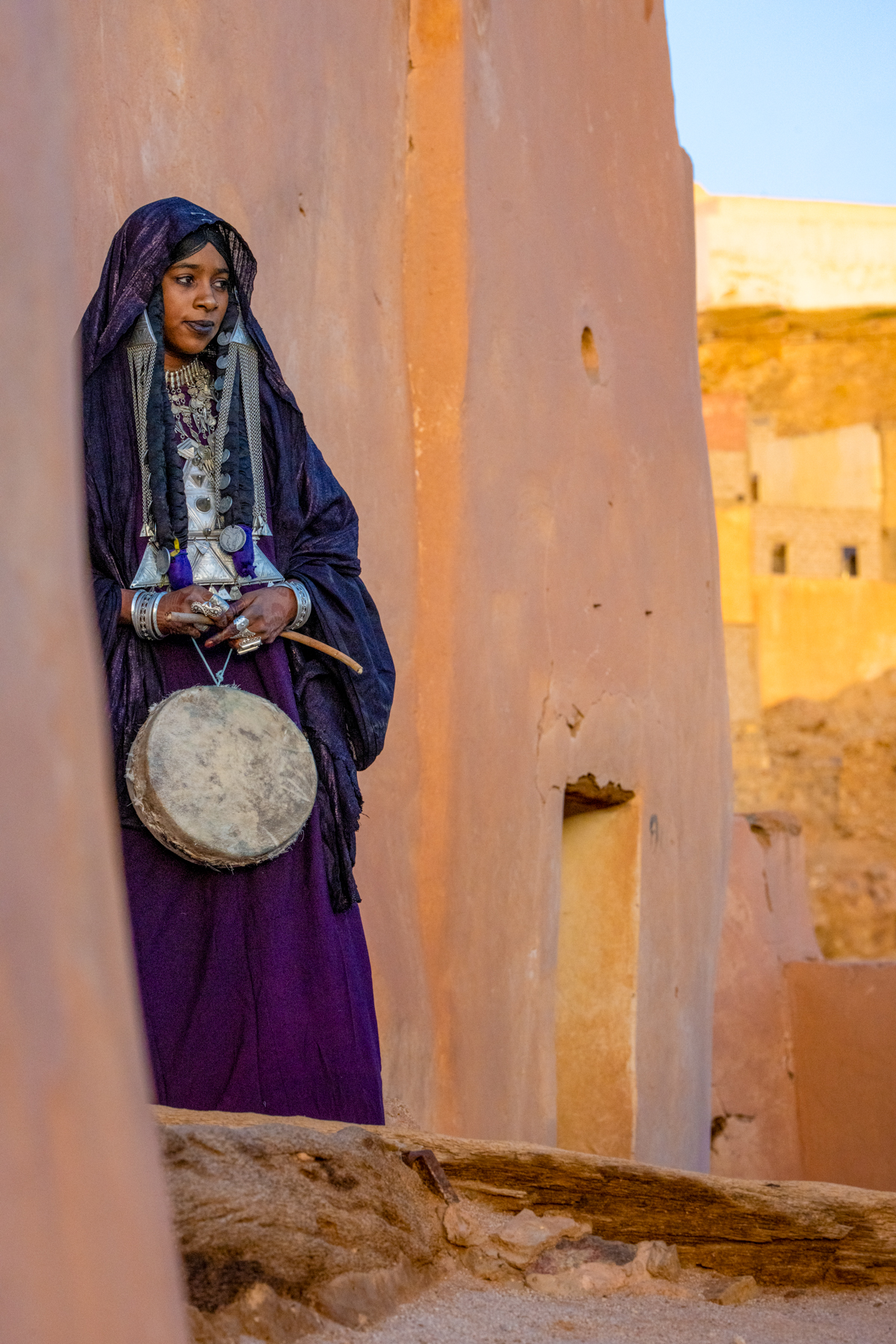
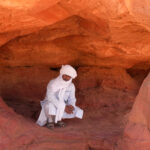
Enjoying a quiet moment (image by Inger Vandyke)
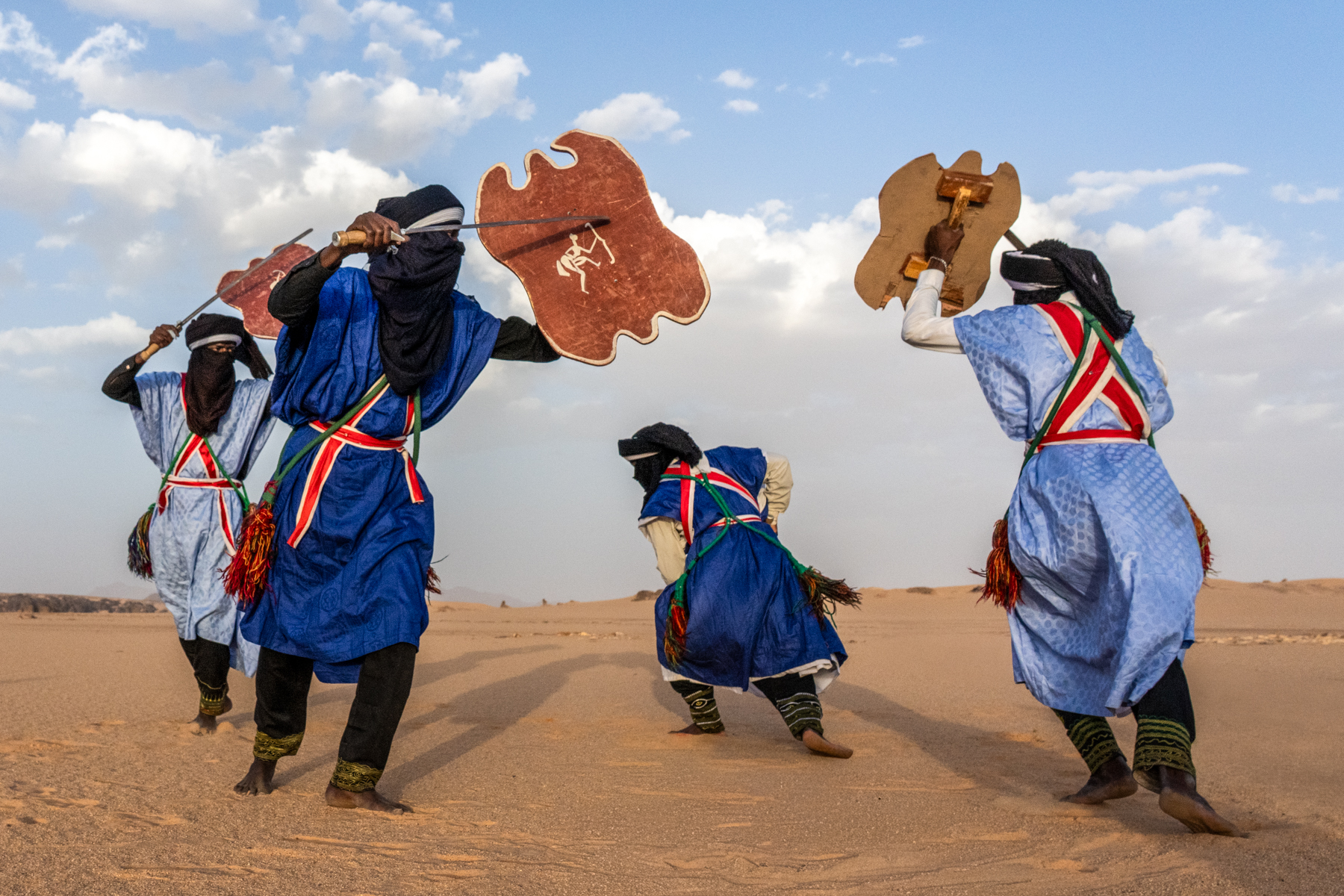
Aroukas sword fighters (image by Inger Vandyke)
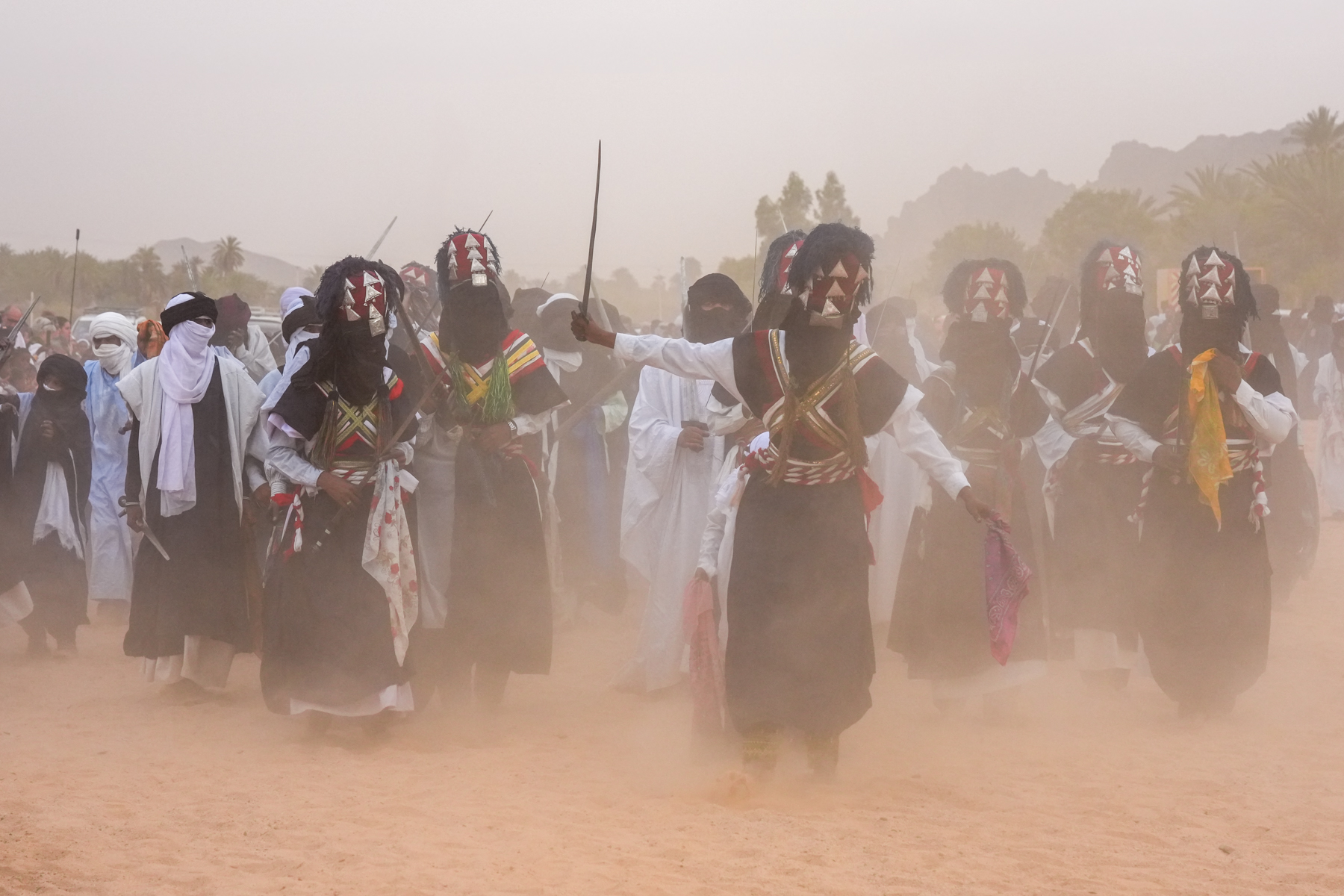
Sabiba (image by Inger Vandyke)
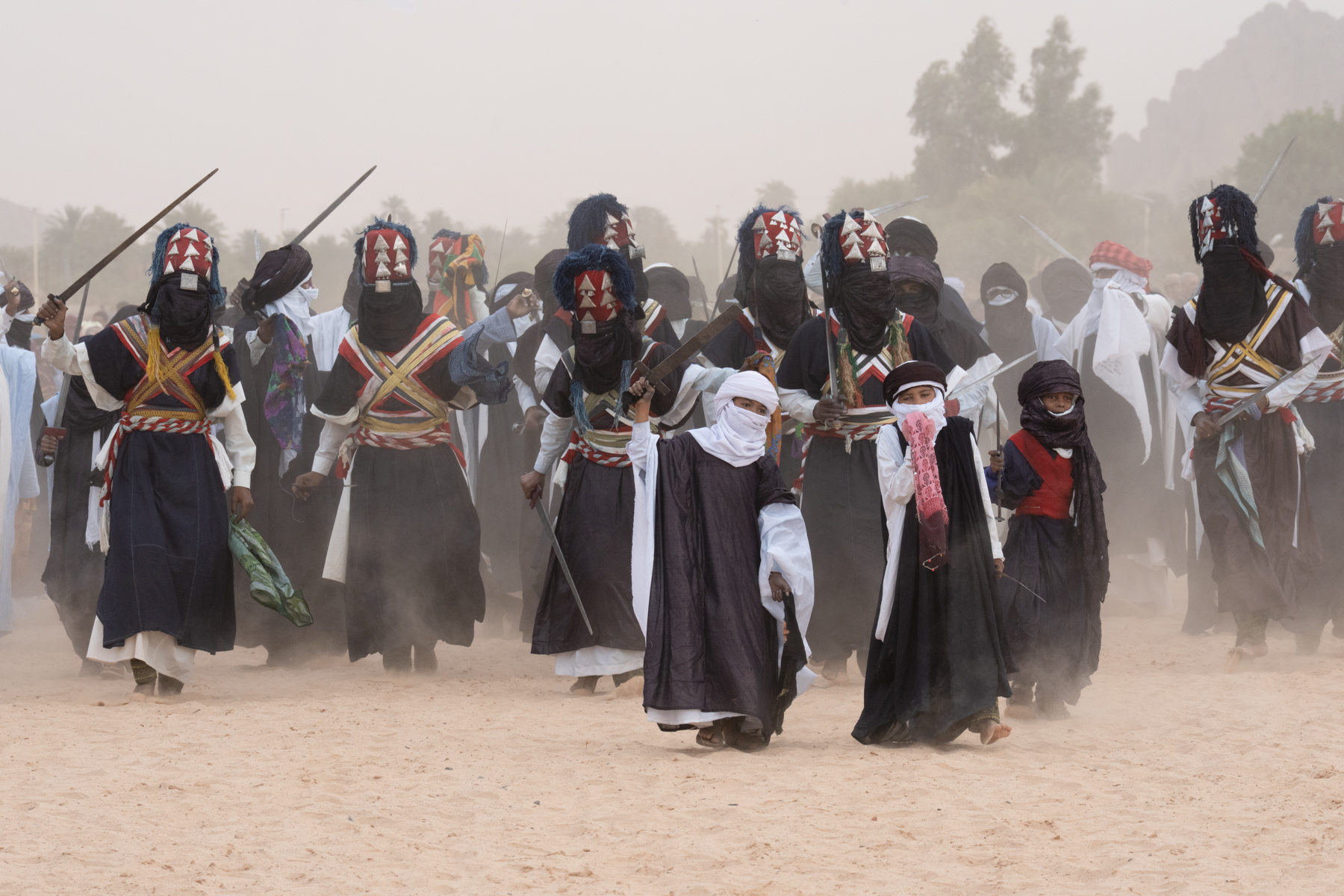
Sabiba warriors at the festival (image by Inger Vandyke)
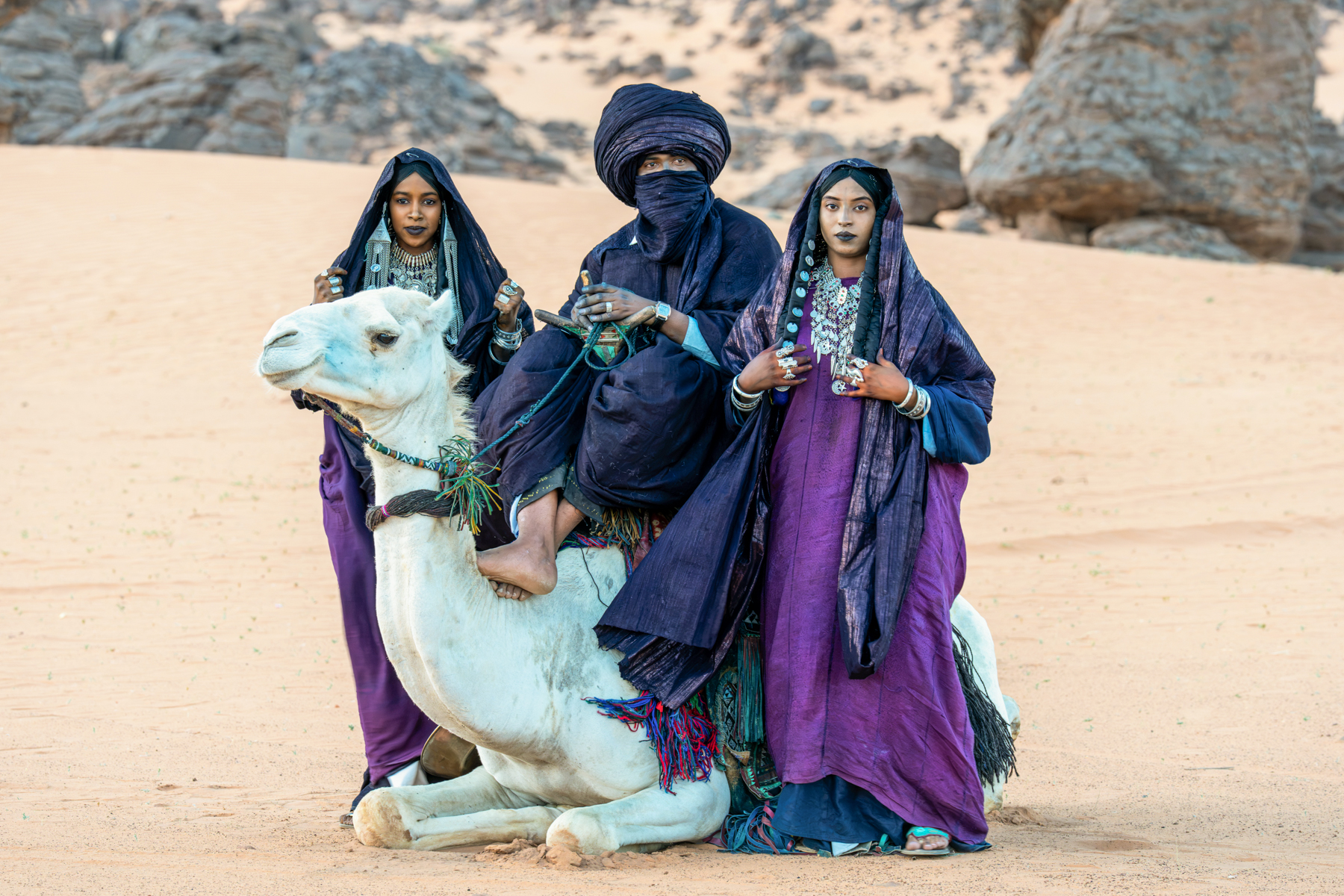
Tuareg people with camel in the desert near Djanet (image by Inger Vandyke)
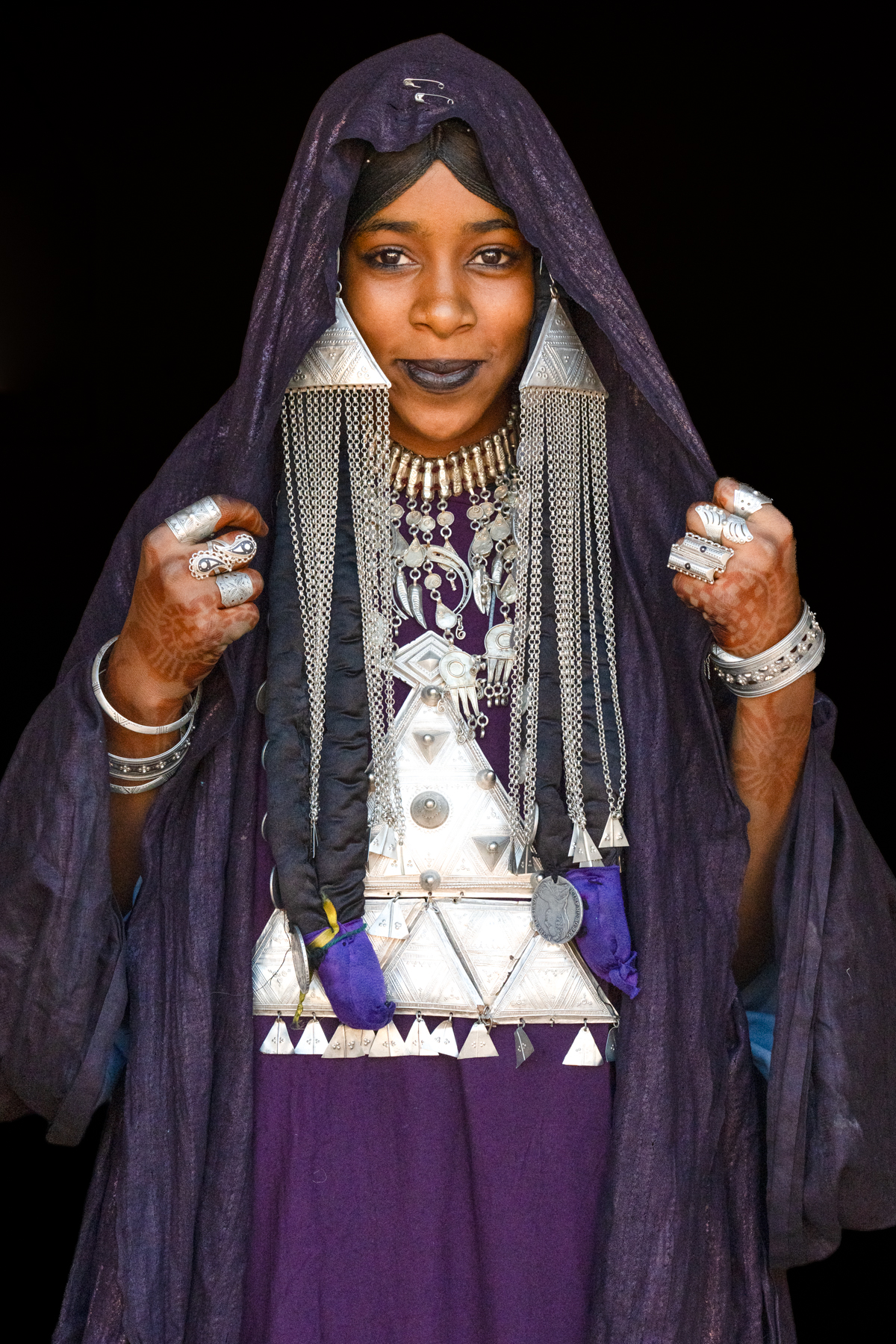
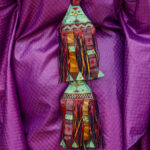
The breathtaking beauty of traditional Tuareg decoration (image by Inger Vandyke)
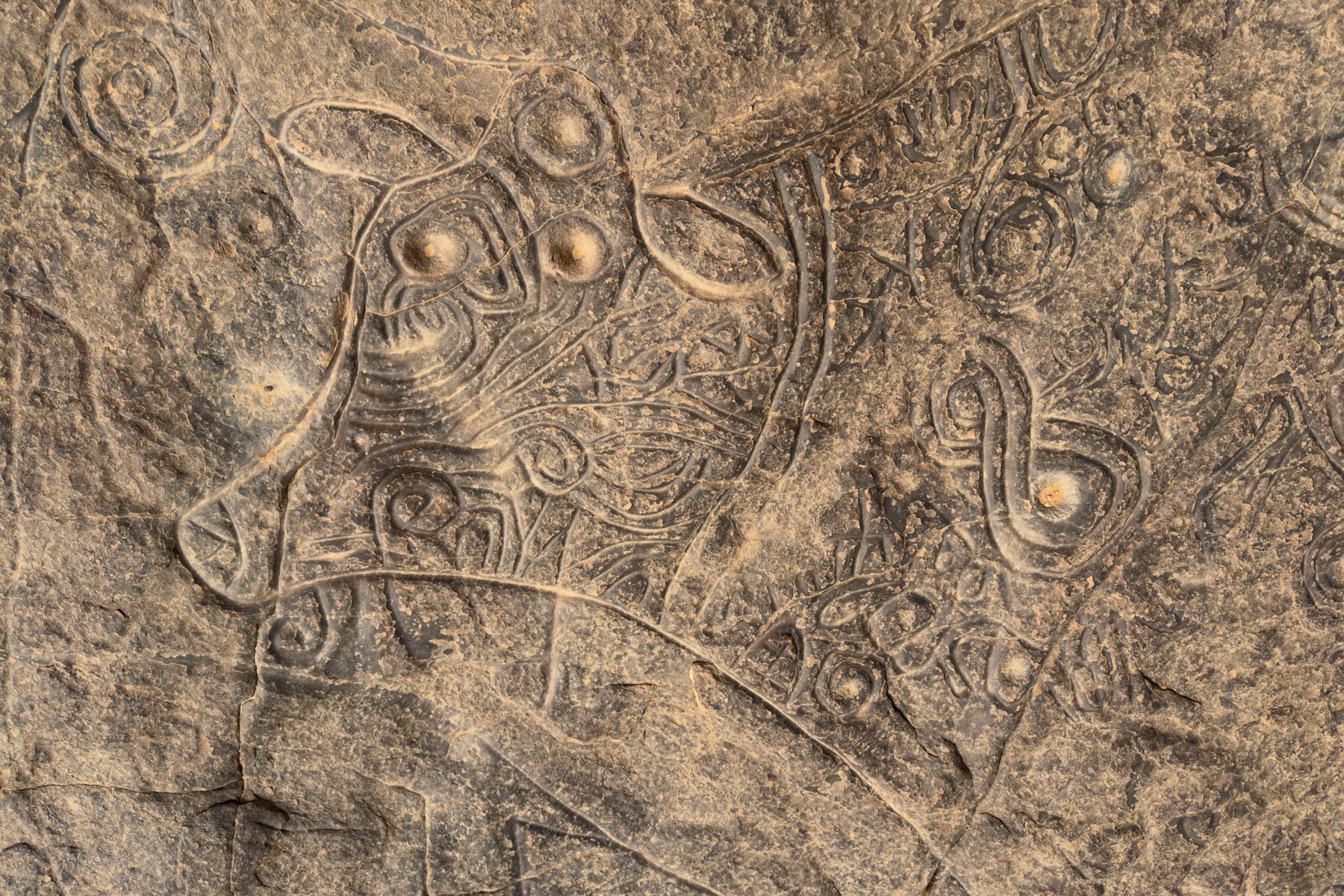
Cow engravings at Tin Taghirt (image by Inger Vandyke)
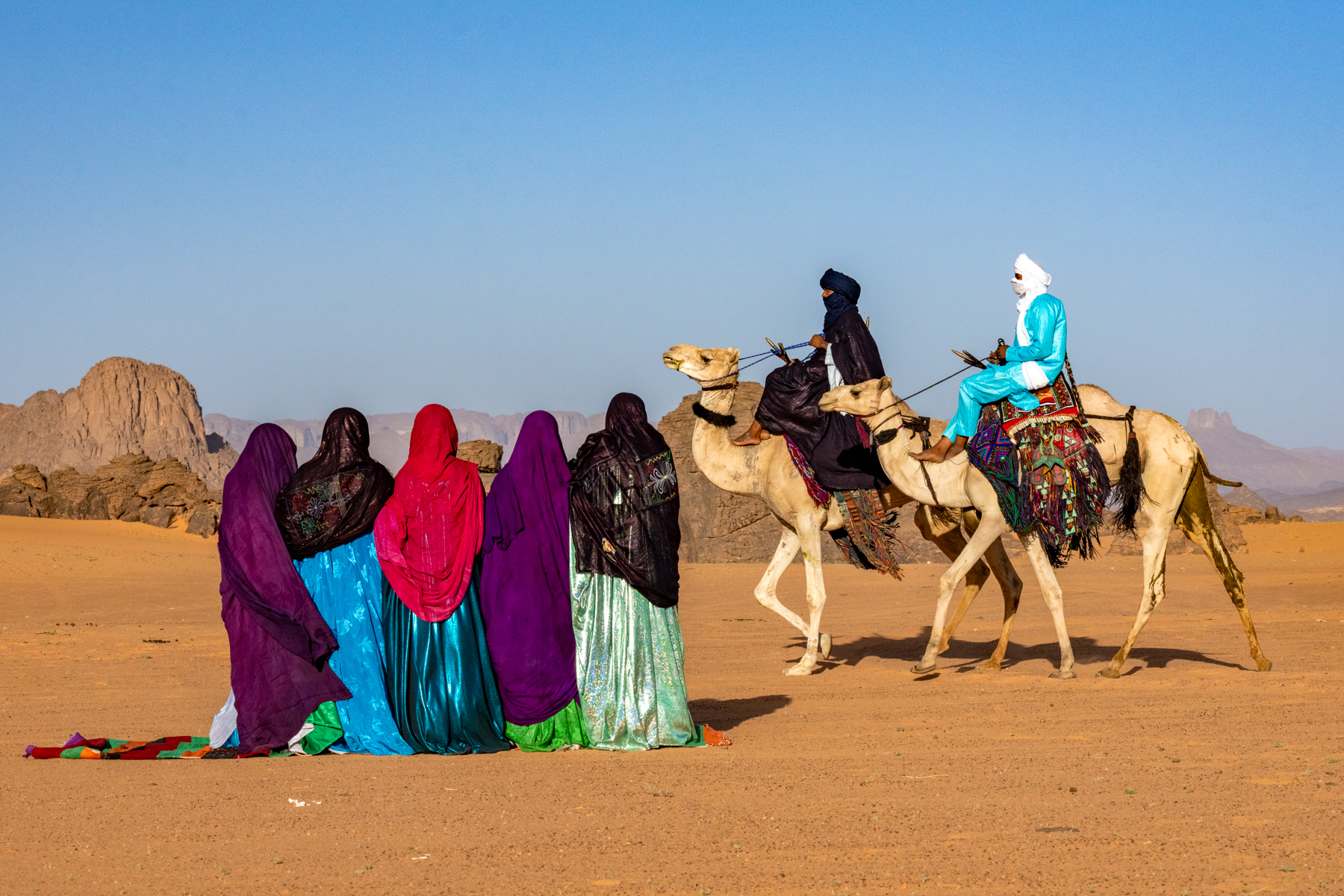
Camel dancing in the desert (image by Inger Vandyke)
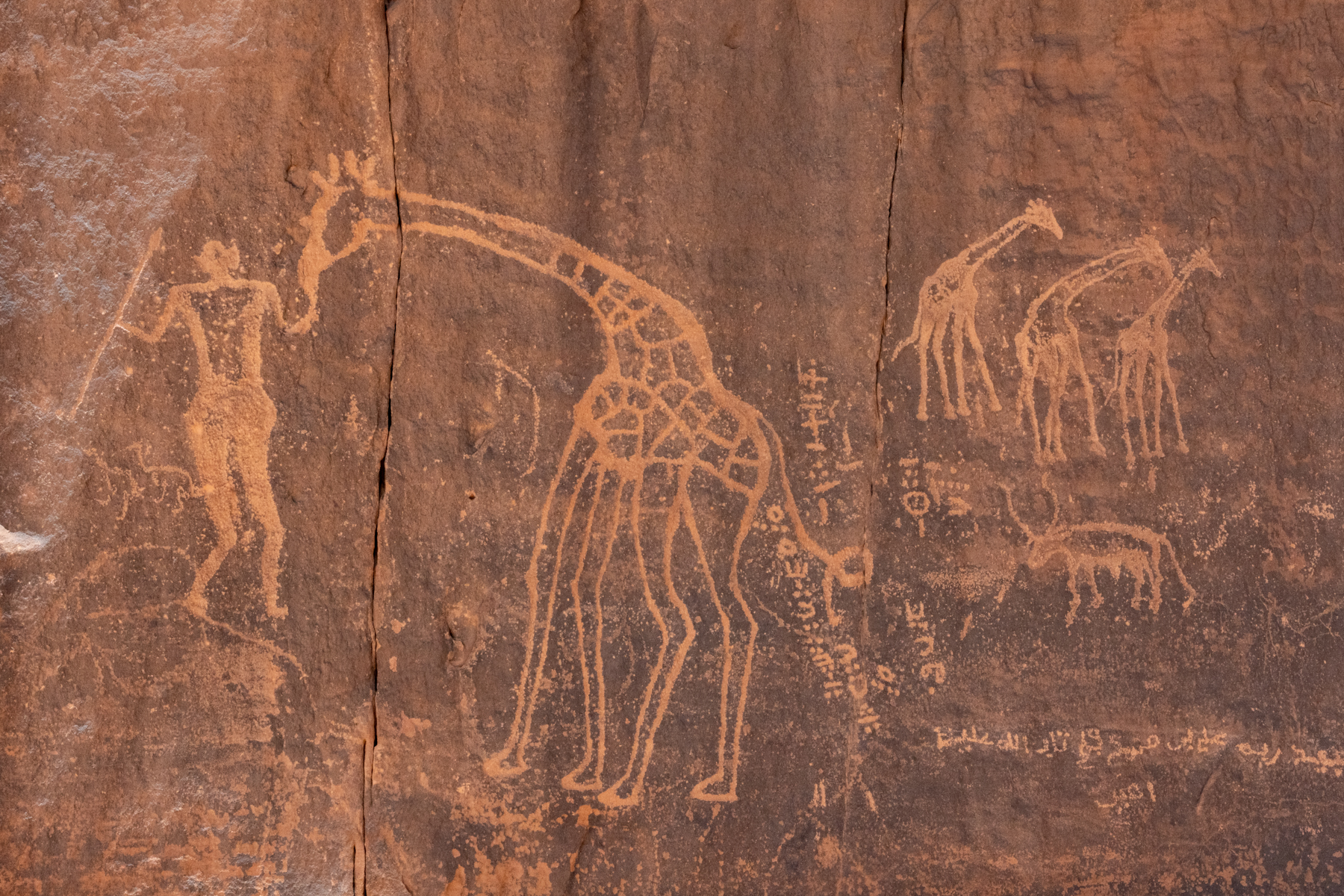
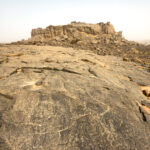
Wan Ahar is perhaps the most famous engraving site of Tadrart Rouge (image by Inger Vandyke)
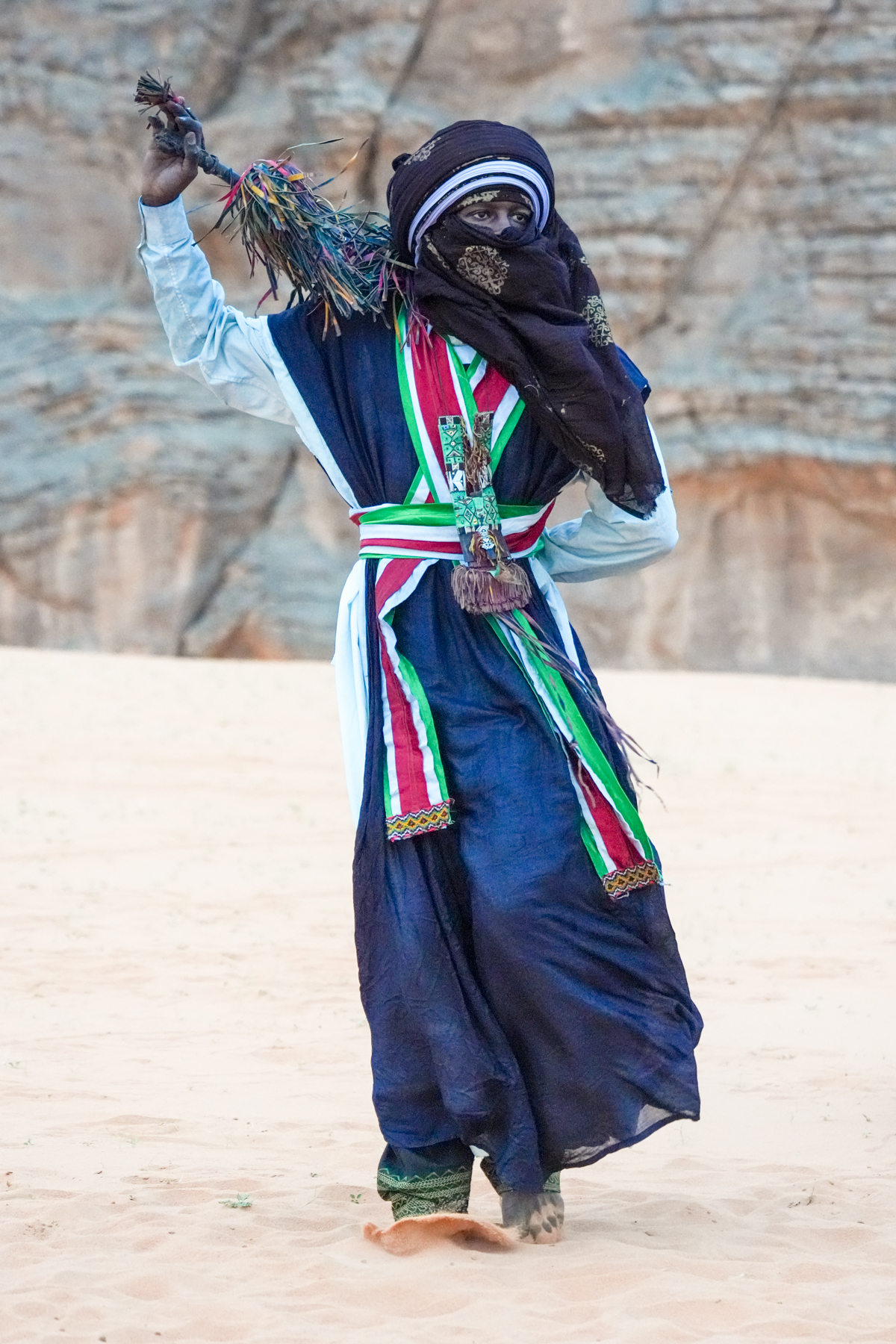
Tahamat warrior (image by Inger Vandyke)
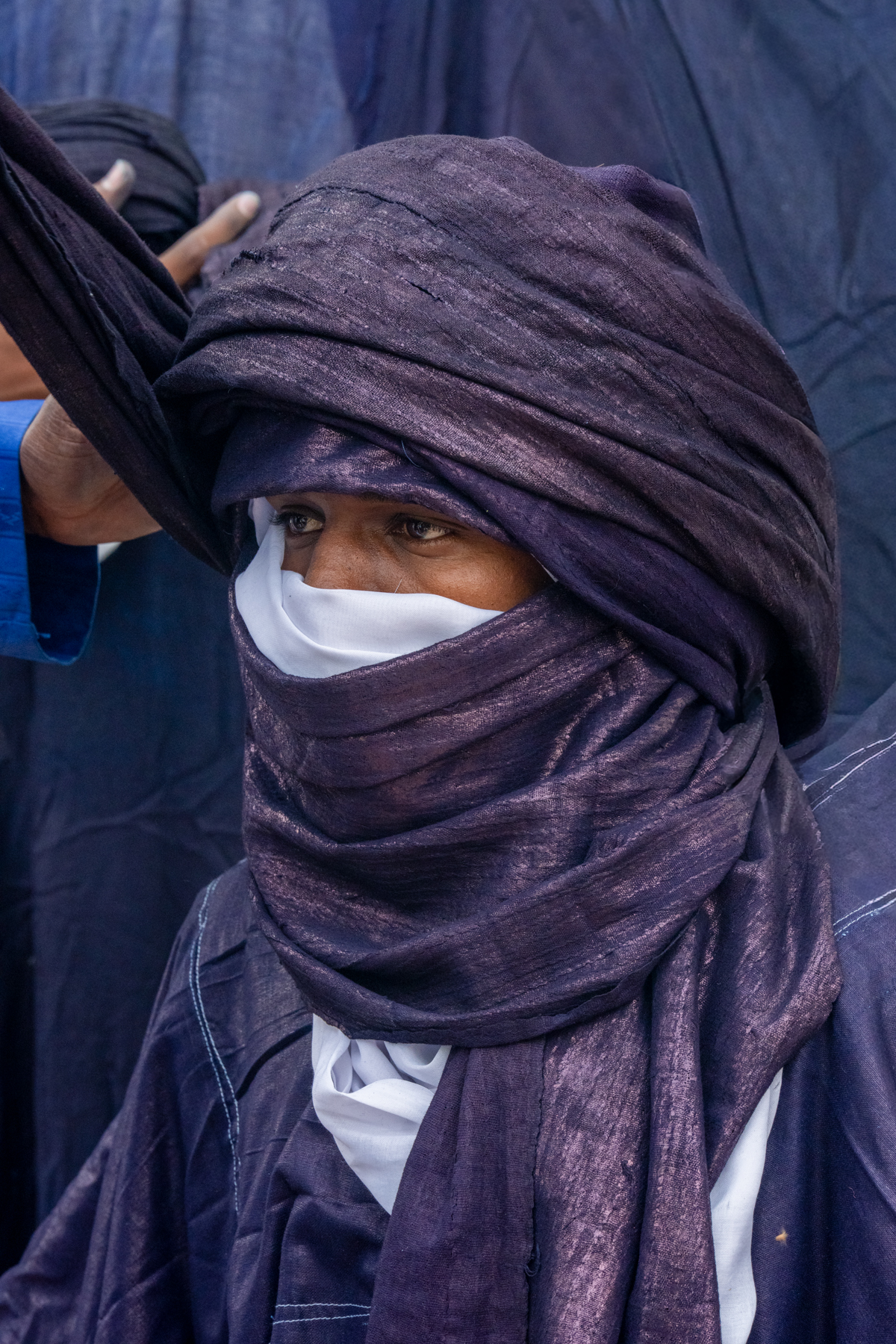
Wrapping tagelmust (image by Inger Vandyke)
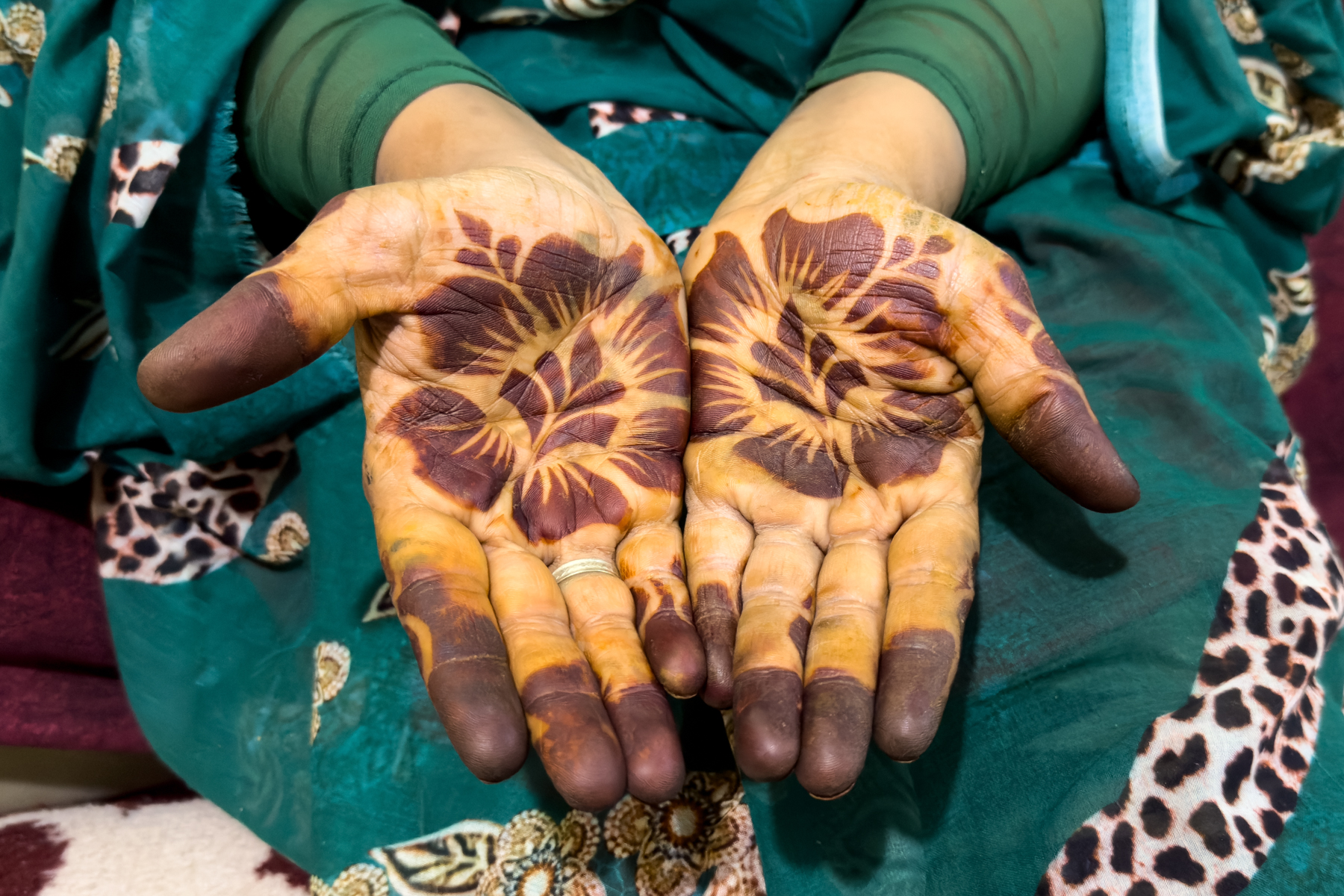
Hands decorated with henna (image by Inger Vandyke)
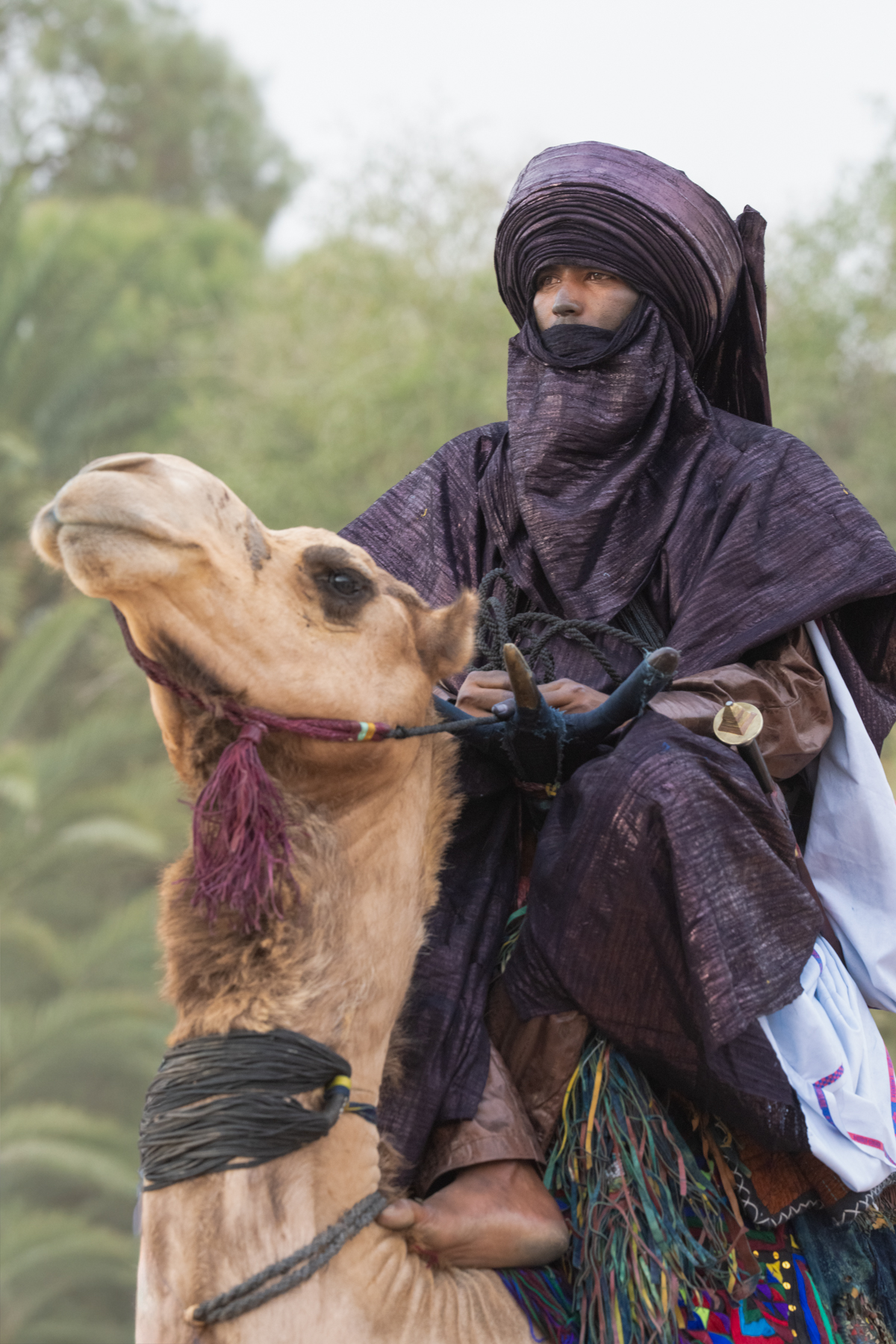
Tuareg camel rider at Sebiba (image by Inger Vandyke)
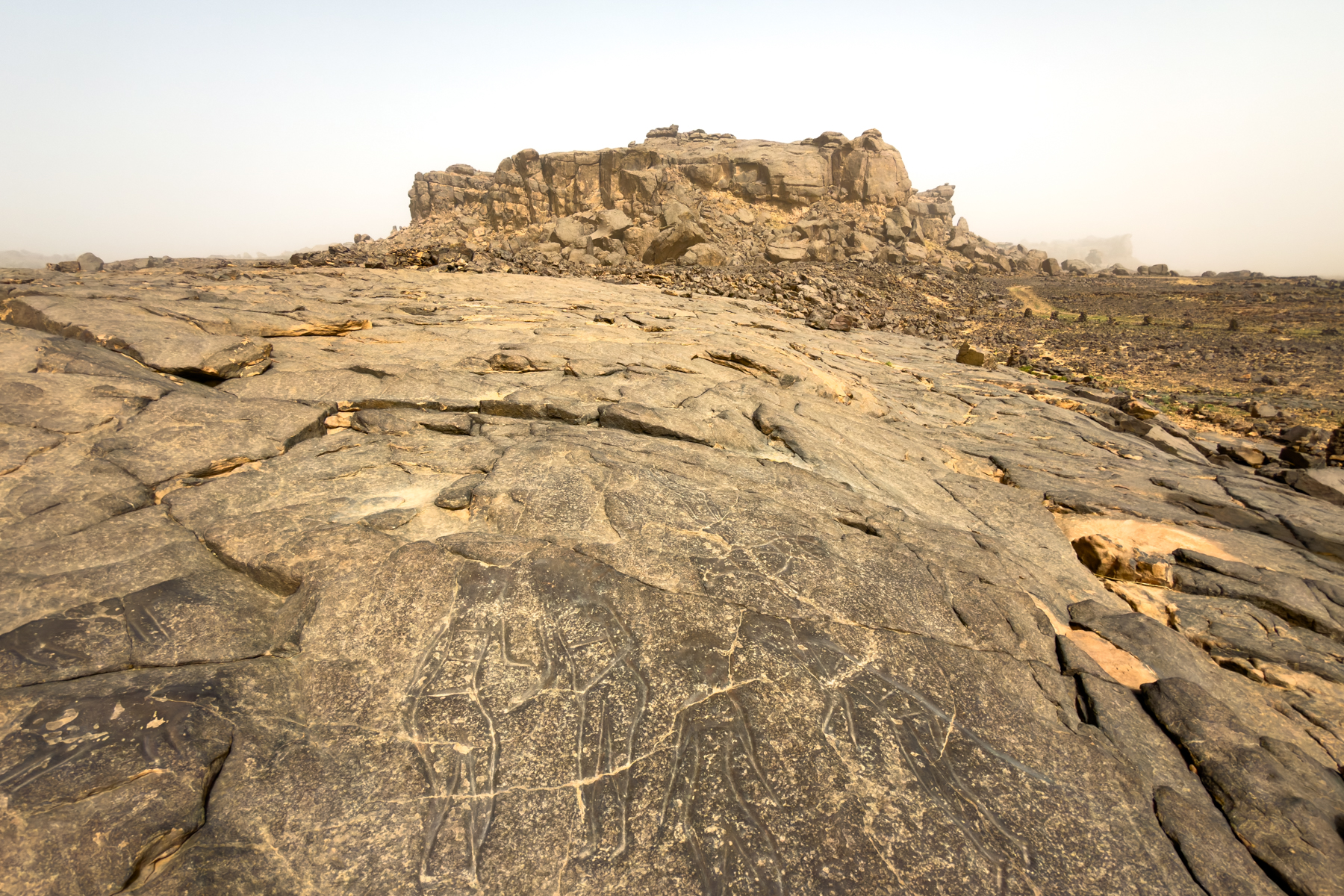
Human engravings at Tin Taghirt (image by Inger Vandyke)
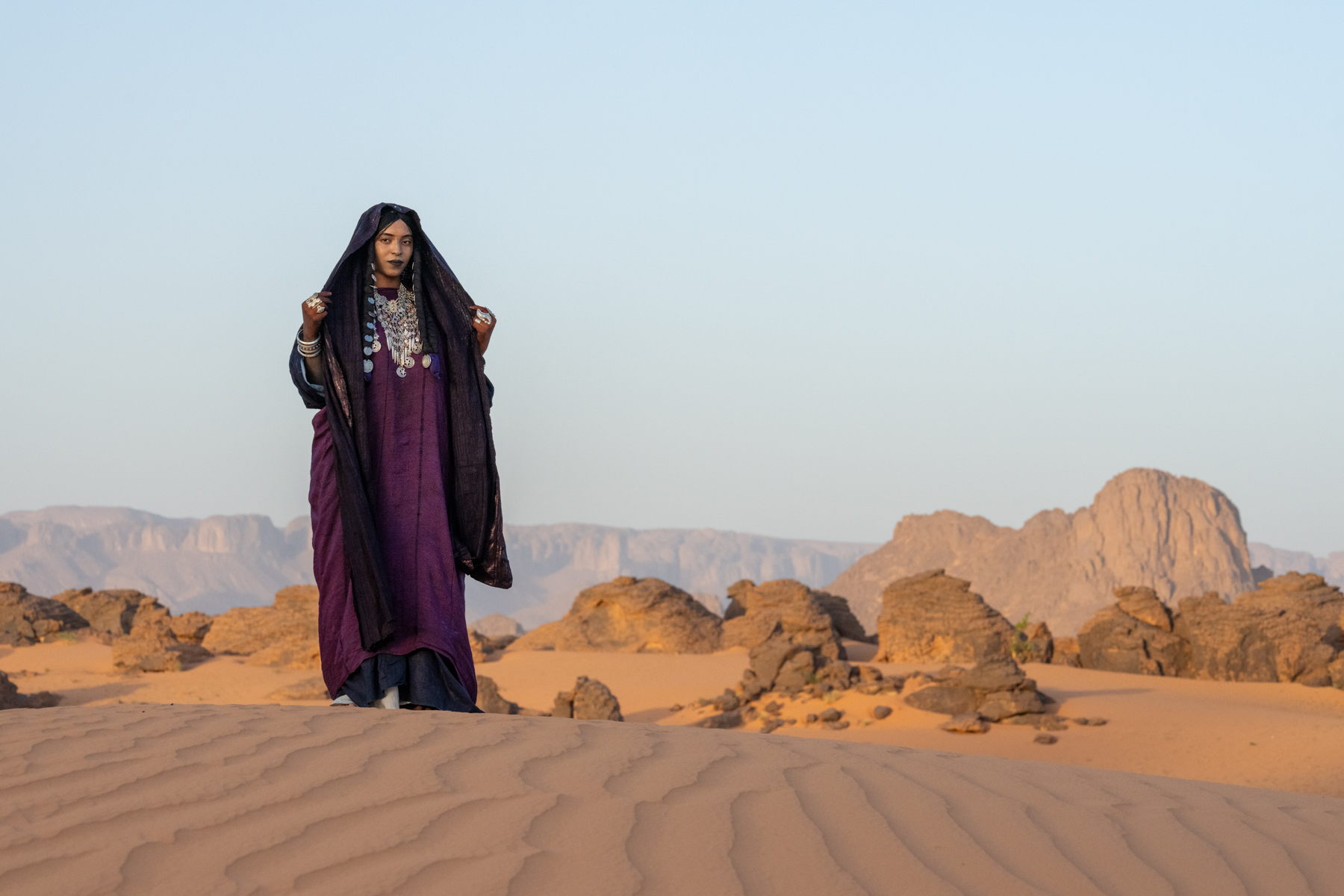
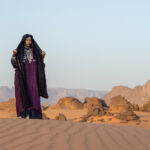
Beautiful Tuareg girl in the dunes (image by Inger Vandyke)
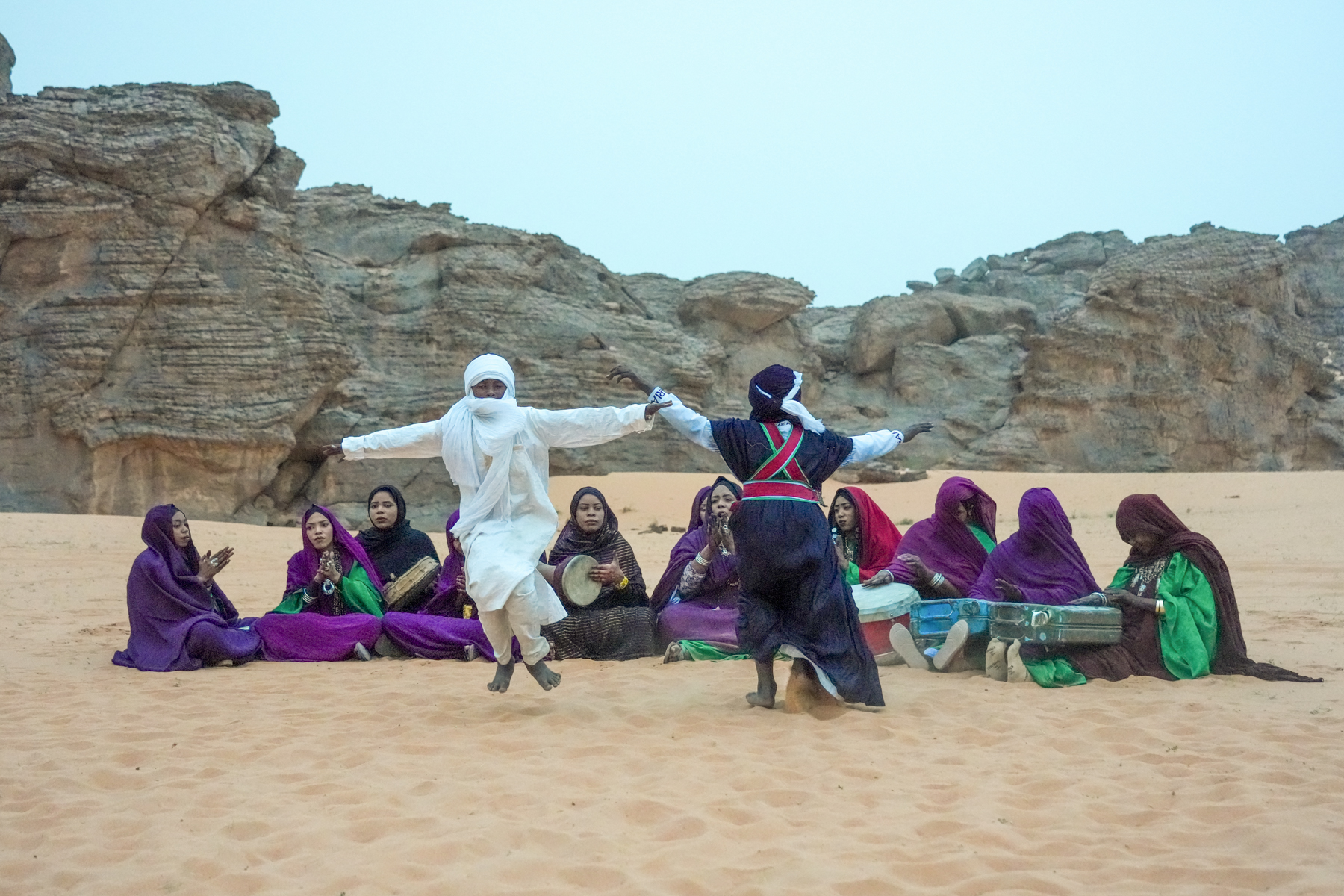
Tahamat ceremony (image by Inger Vandyke)
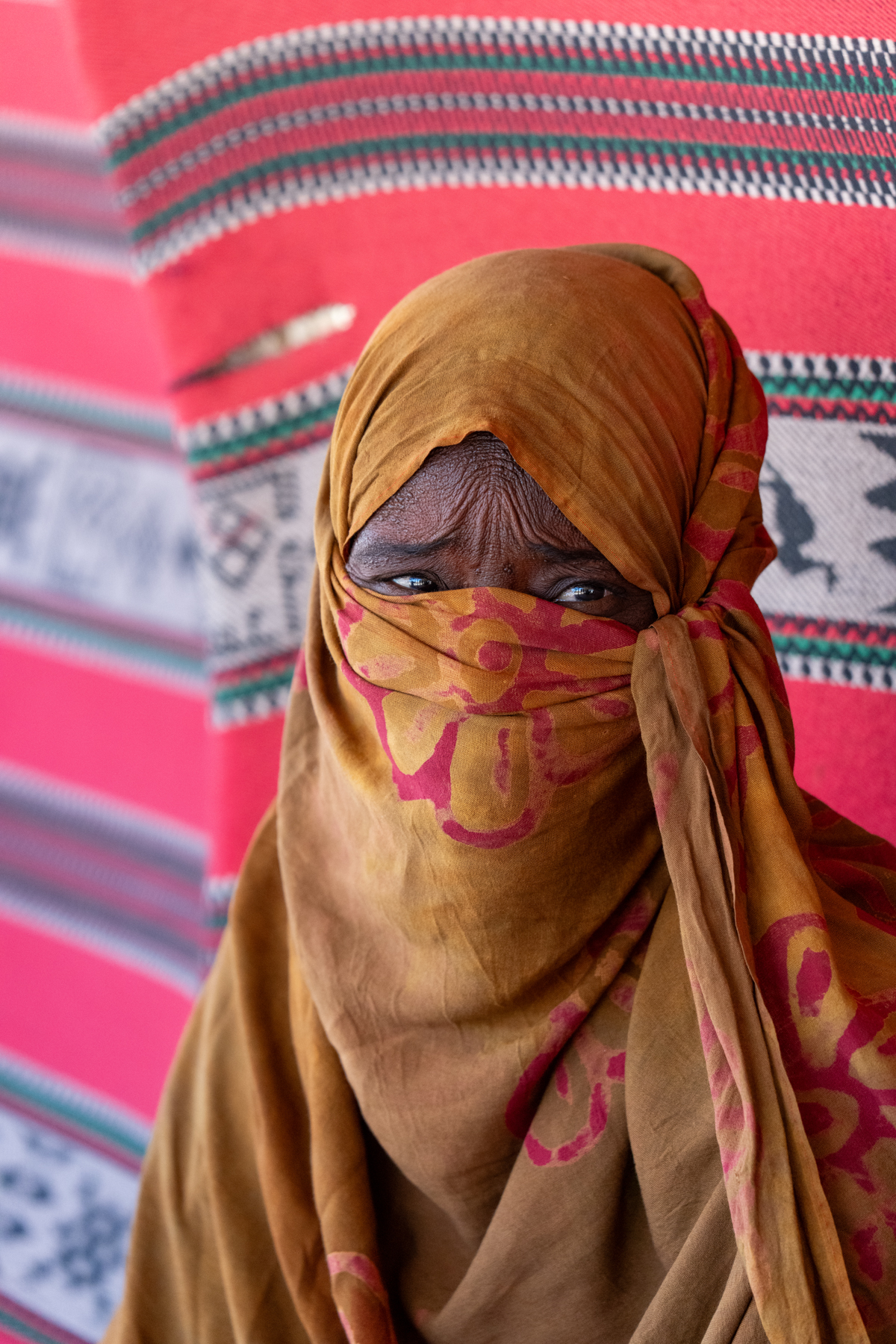
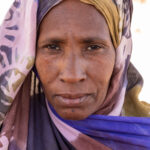
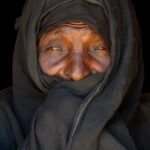
The wondrous wrinkles of time. Portrait of a nomadic Tuareg woman whose frown wrinkles disappeared in a smile when we shared laughs in her camp (image by Inger Vandyke)
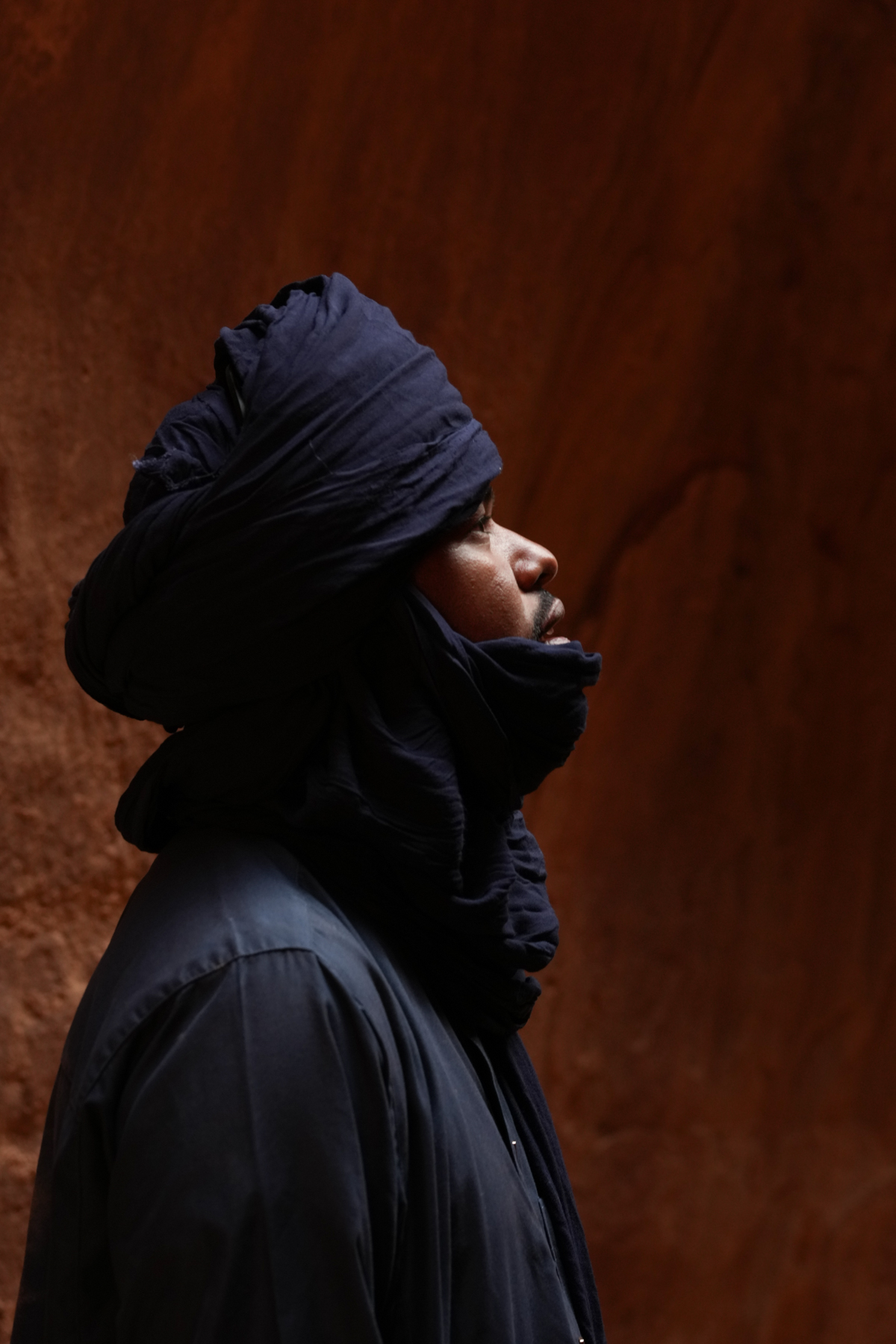
A quiet moment of thought in beautiful light (image by Inger Vandyke)
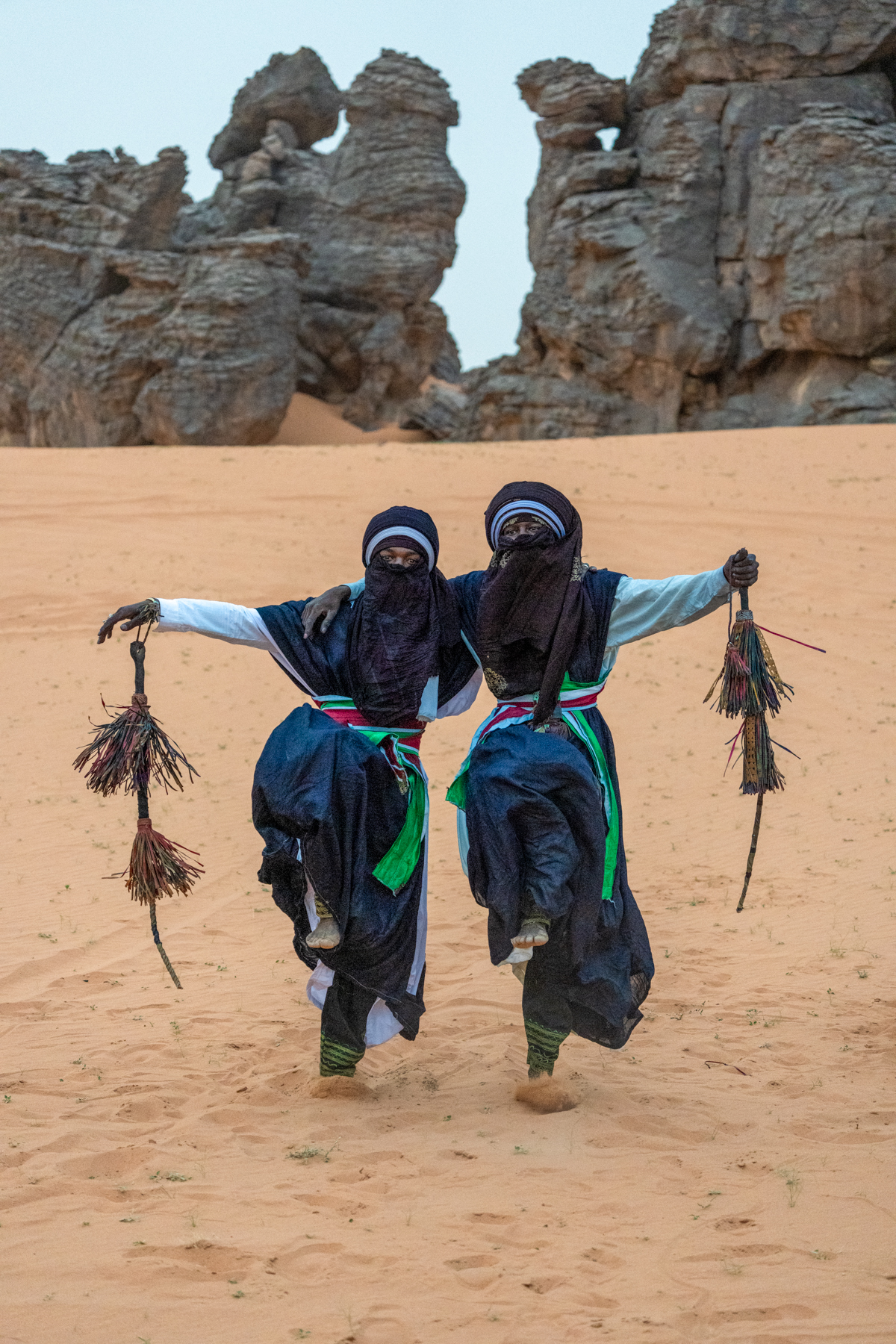
Tahamat dancers (image by Inger Vandyke)
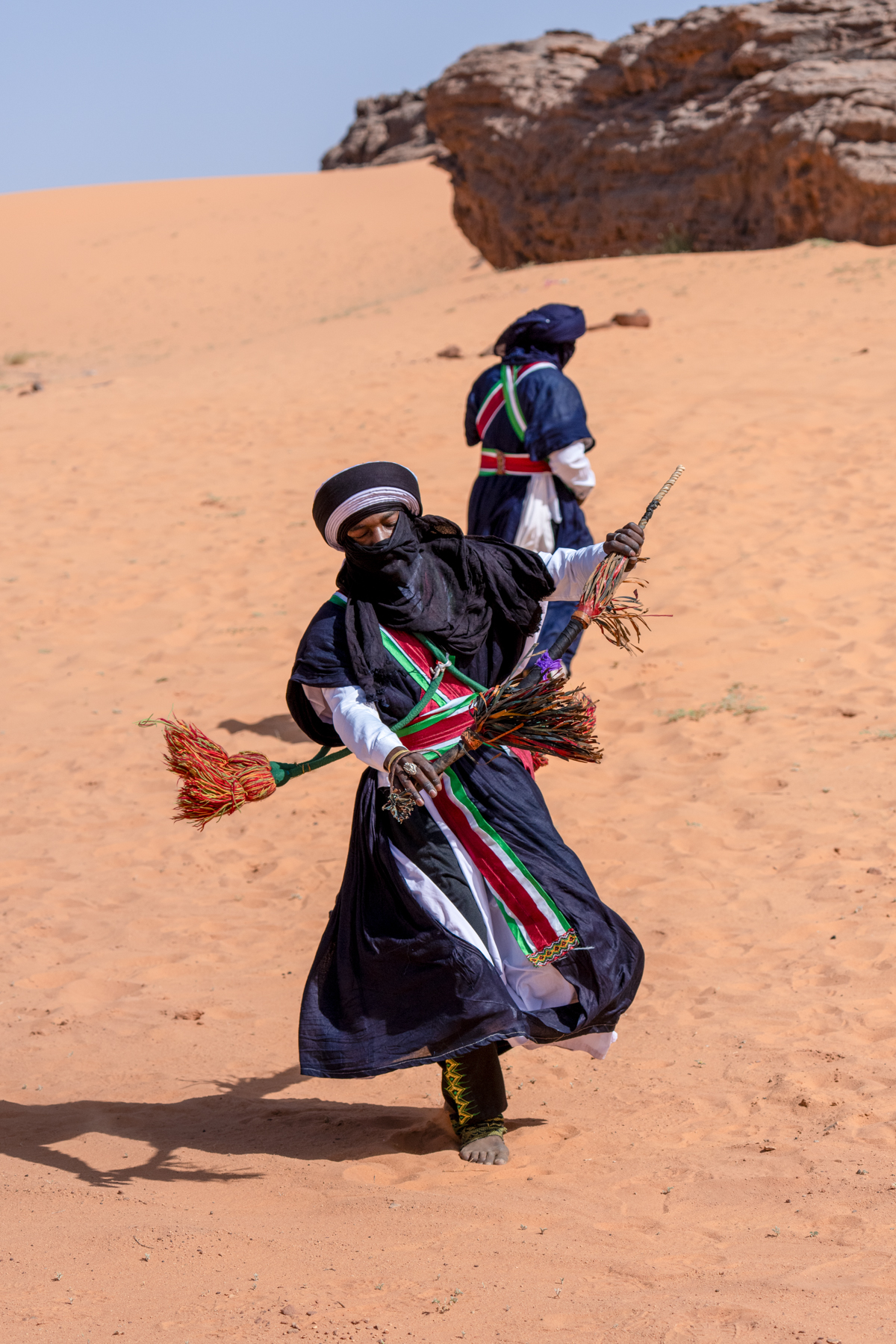
Tahamat dancers in the desert (image by Inger Vandyke)
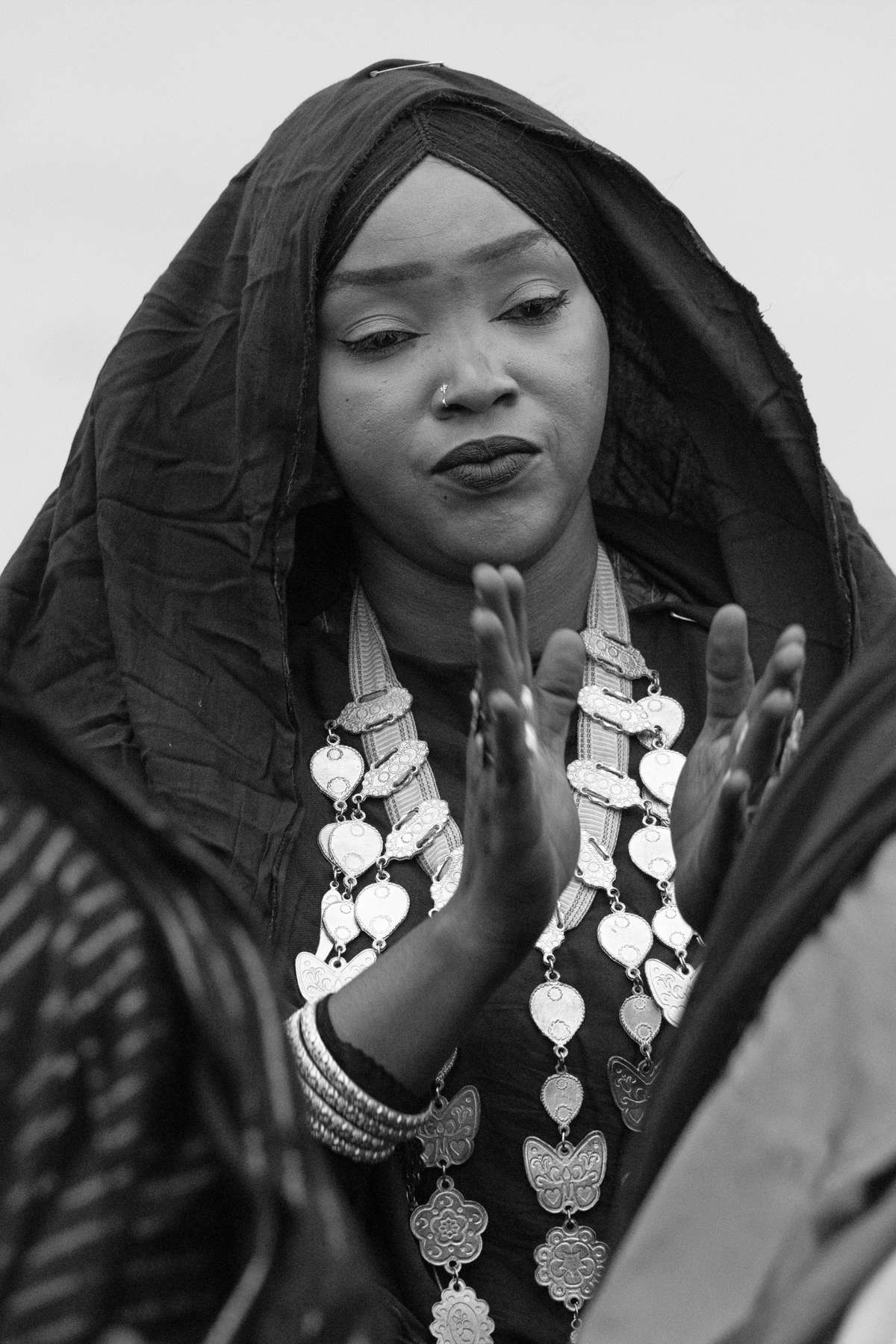
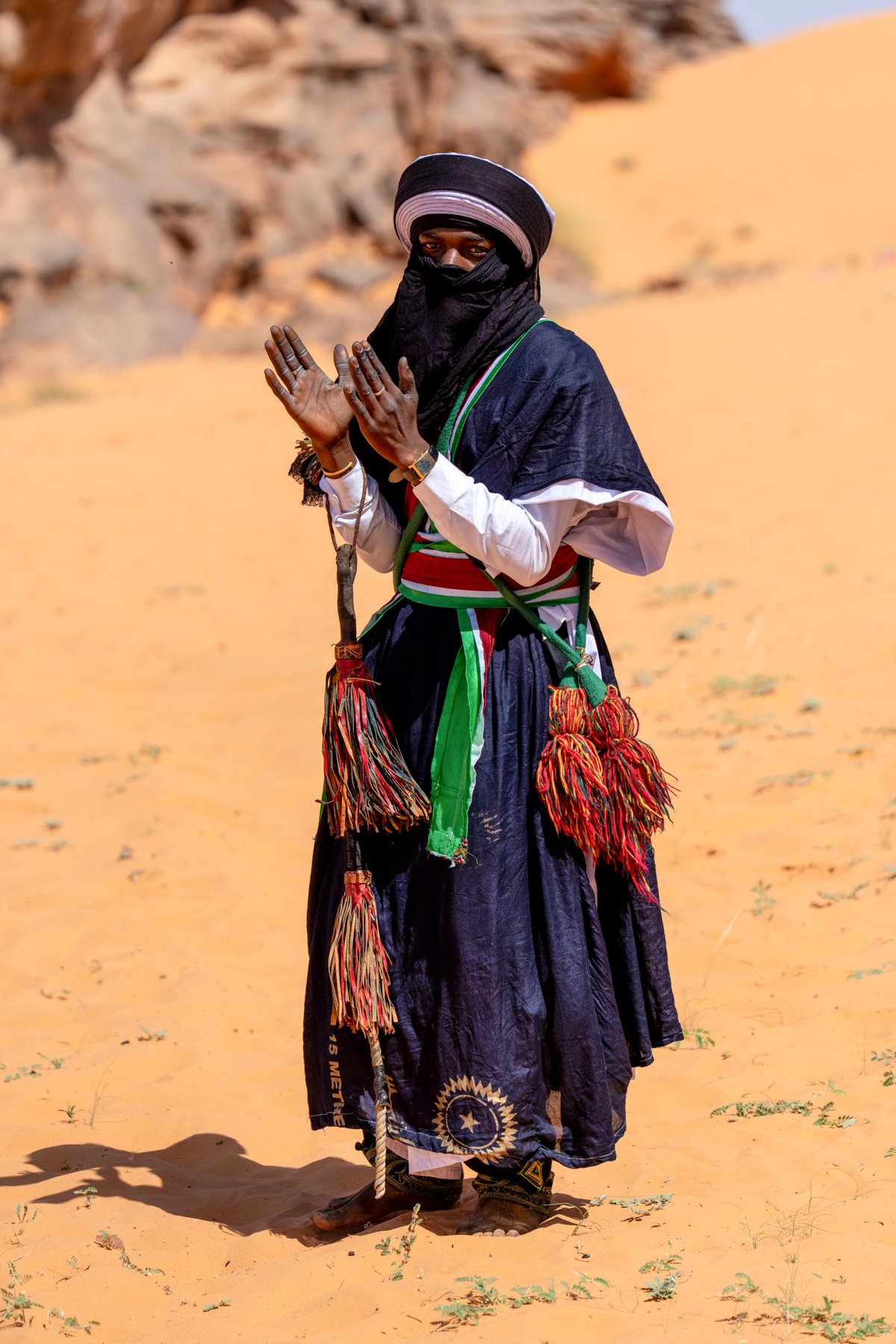
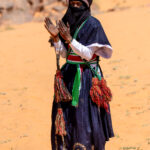
A Tuareg woman clapping her hands at a ceremony of Tahamat in the desert (image by Inger Vandyke)
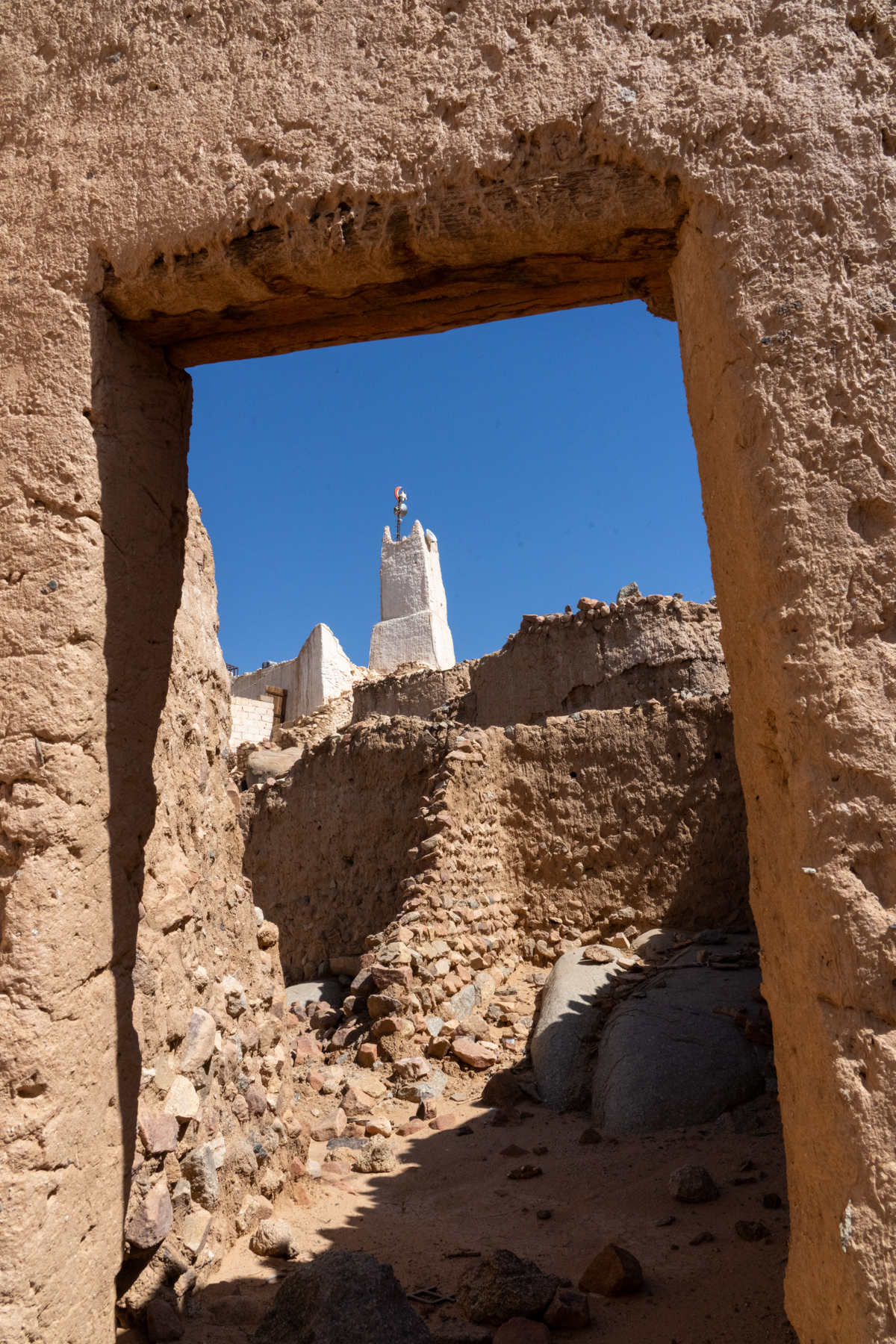
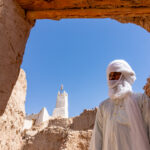
The tiny mud mosque of Zalouaz seen through a stone doorway of the K'Sour (image by Inger Vandyke)
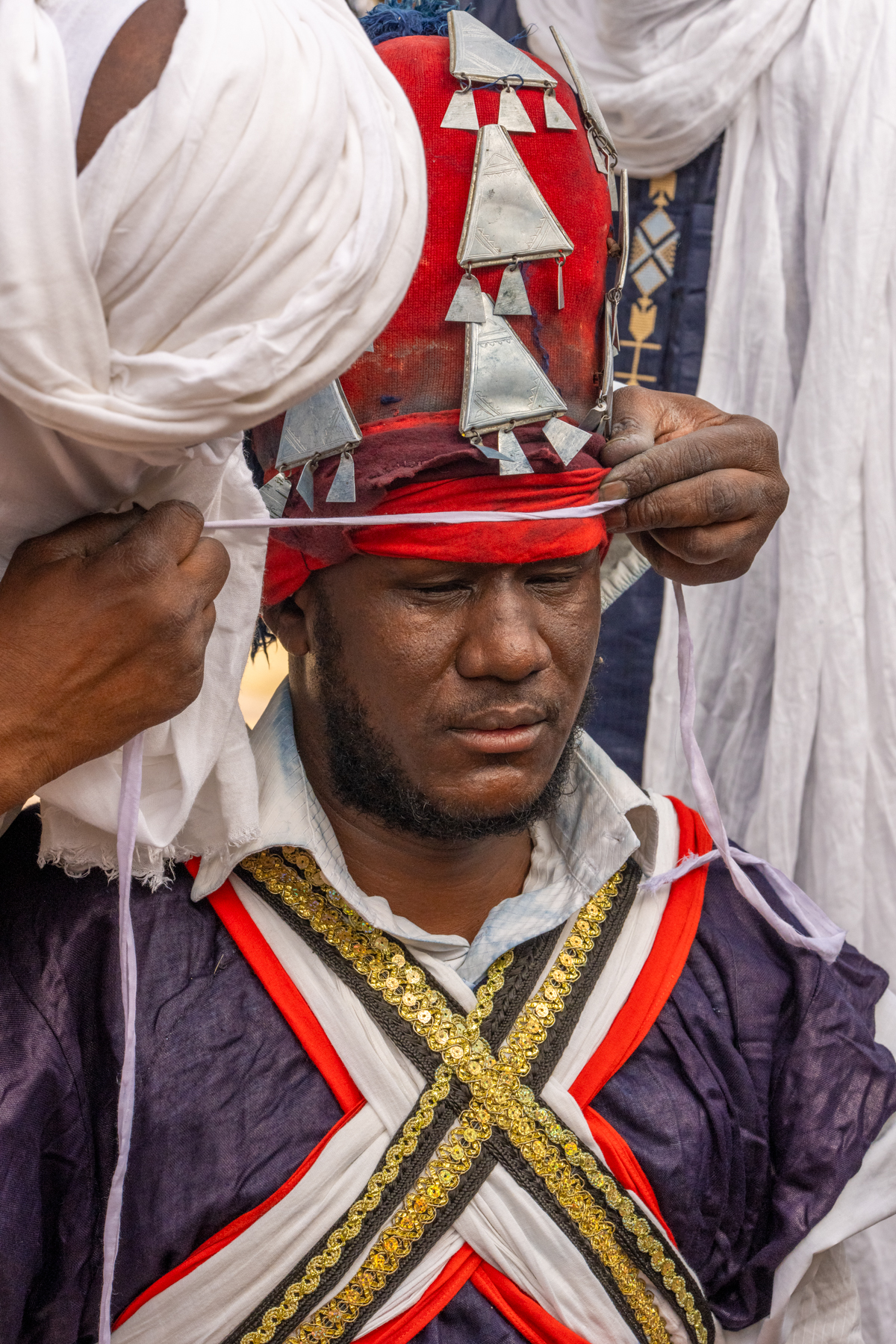
A Sabiba warrior being dressed in the preparation session for Al Mirhan (image by Inger Vandyke)
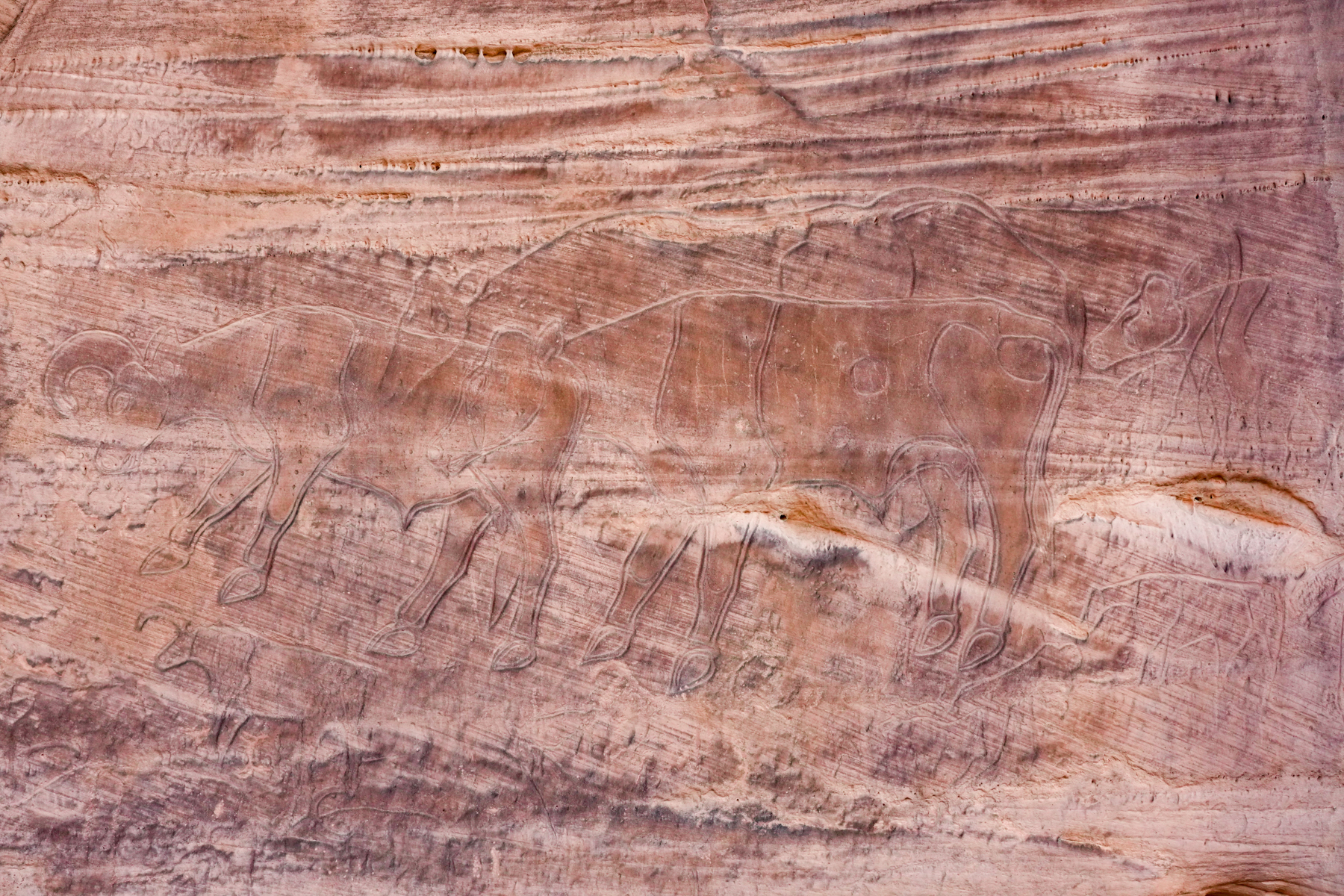
Elbirj cow engravings in Tadrart (image by Inger Vandyke)
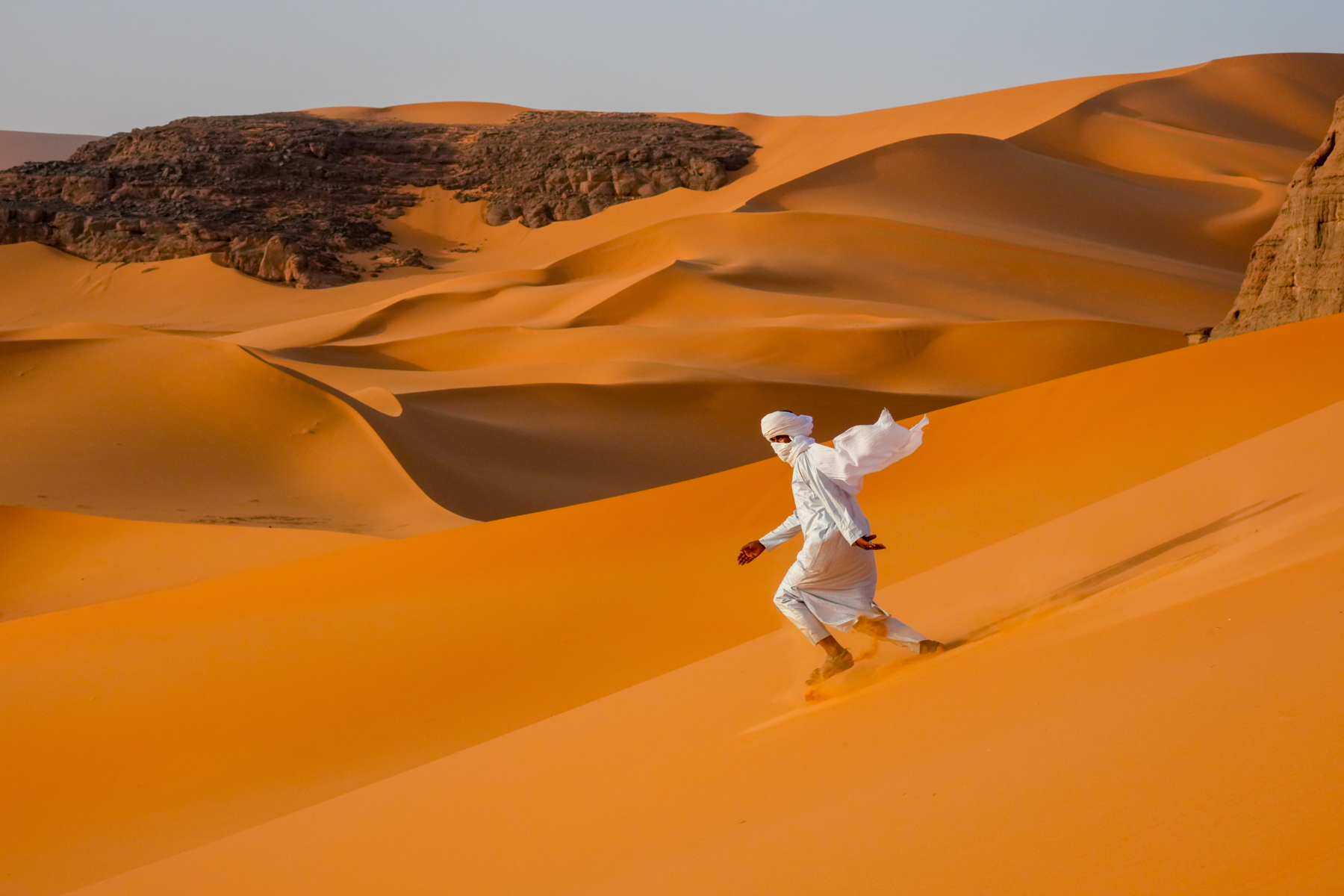
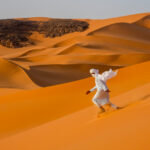
Flying Tuareg. There's no better way to descend the dunes of Moulenaga than running! (image by Inger Vandyke)
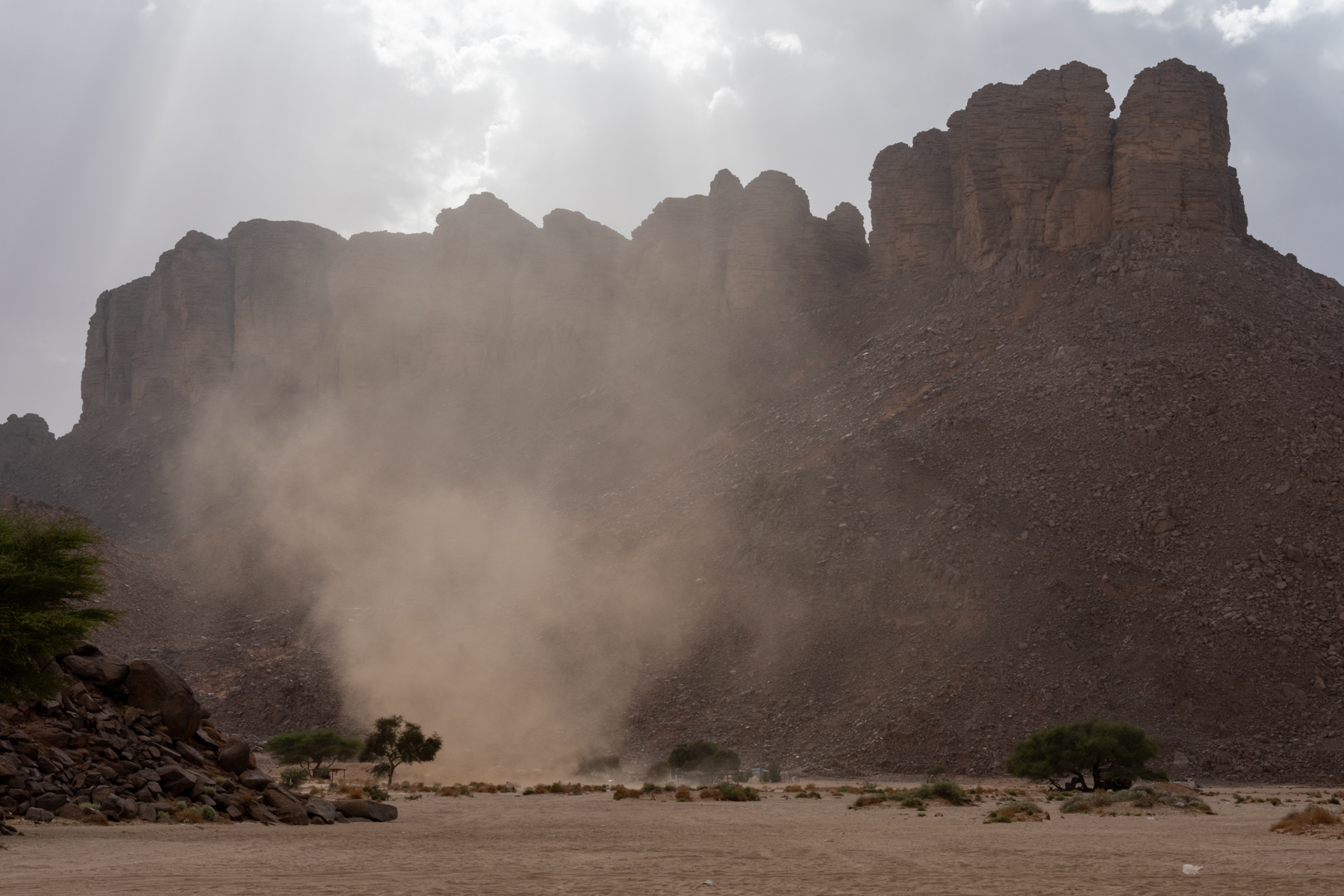
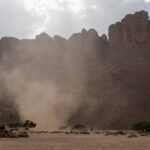
Dust storm at a nomadic Tuareg camp (image by Inger Vandyke)
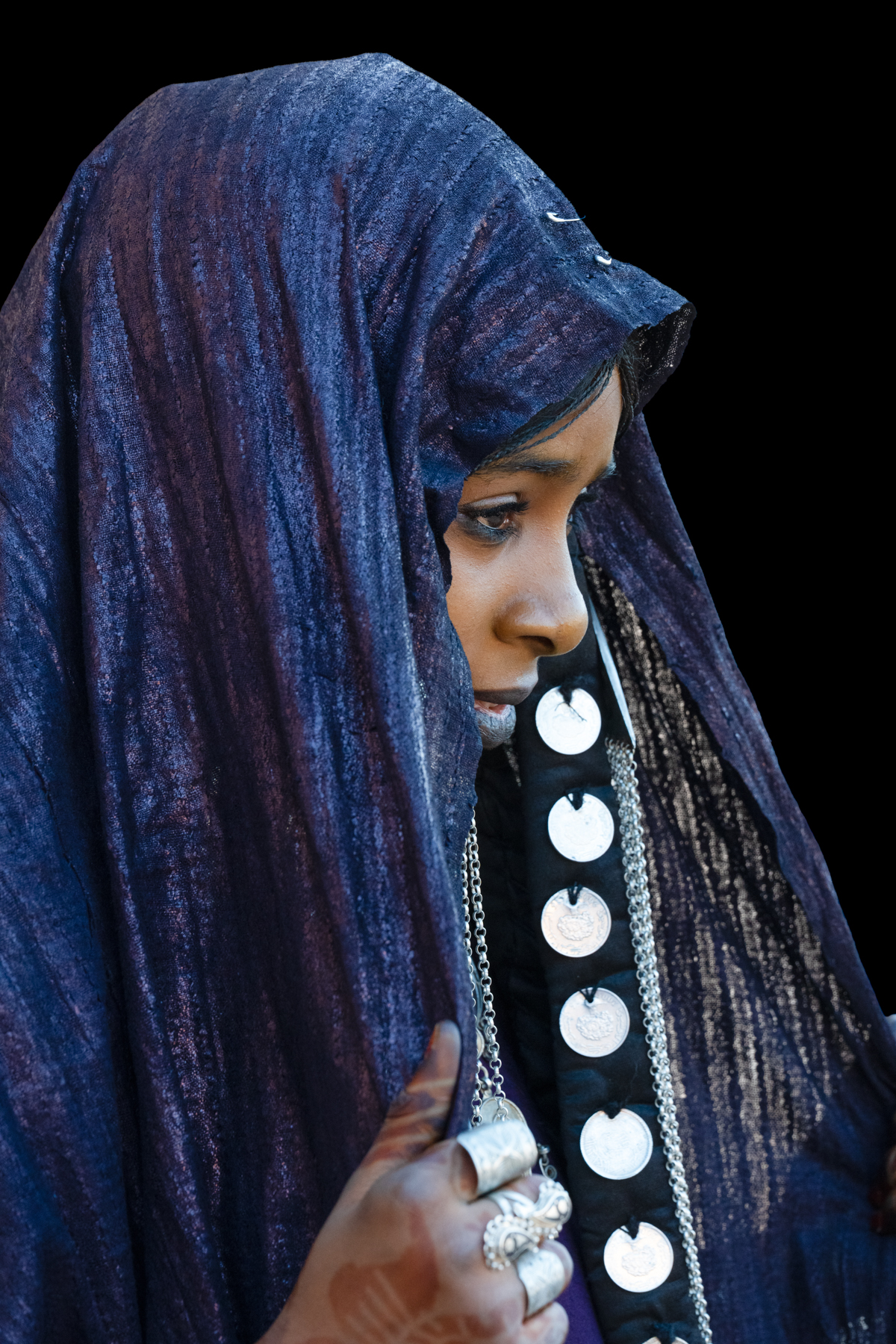
Beautiful Tuareg girl (image by Inger Vandyke)
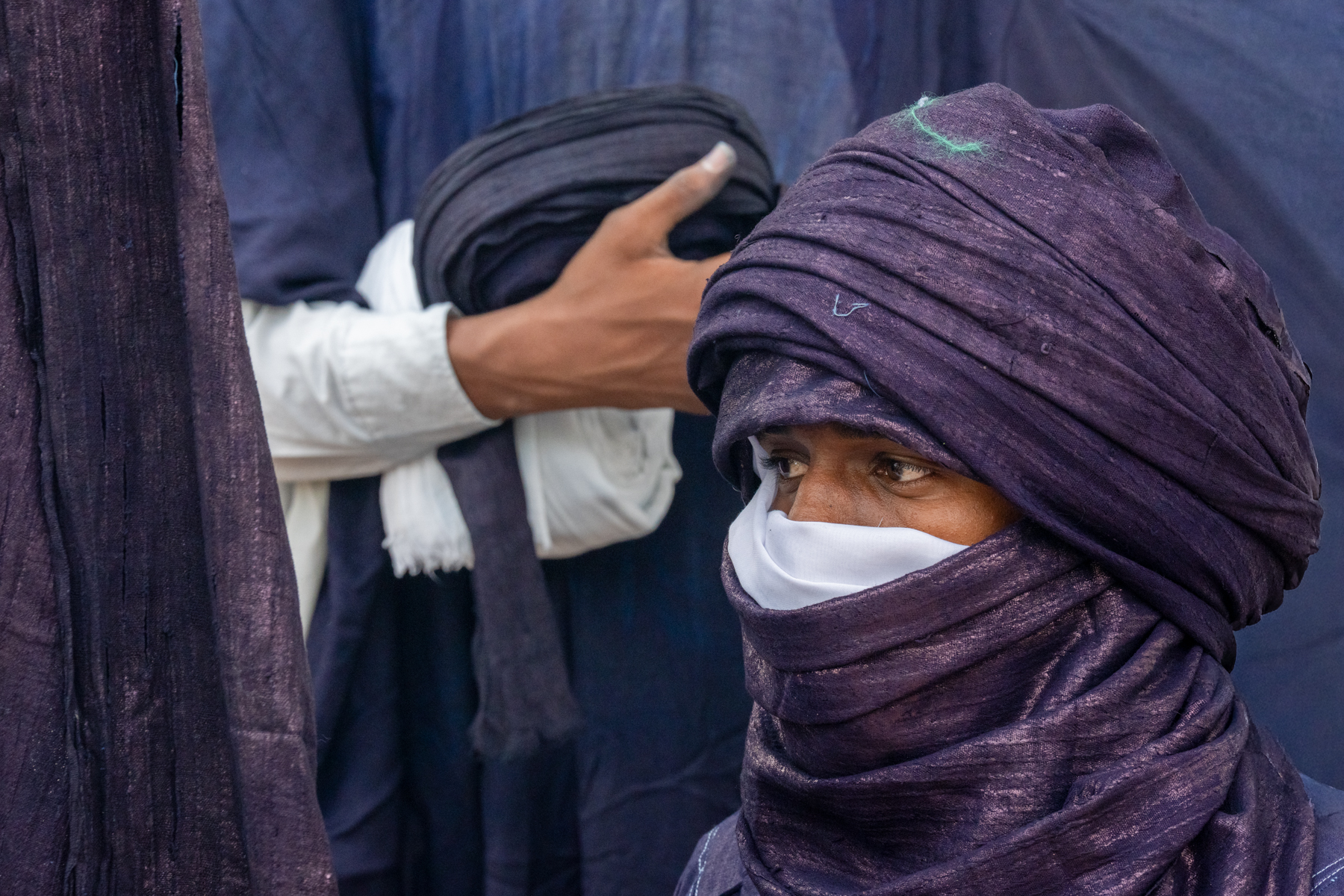
Wrapped in indigo at the preparation session for Al Mirhan warriors in Sebiba (image by Inger Vandyke)
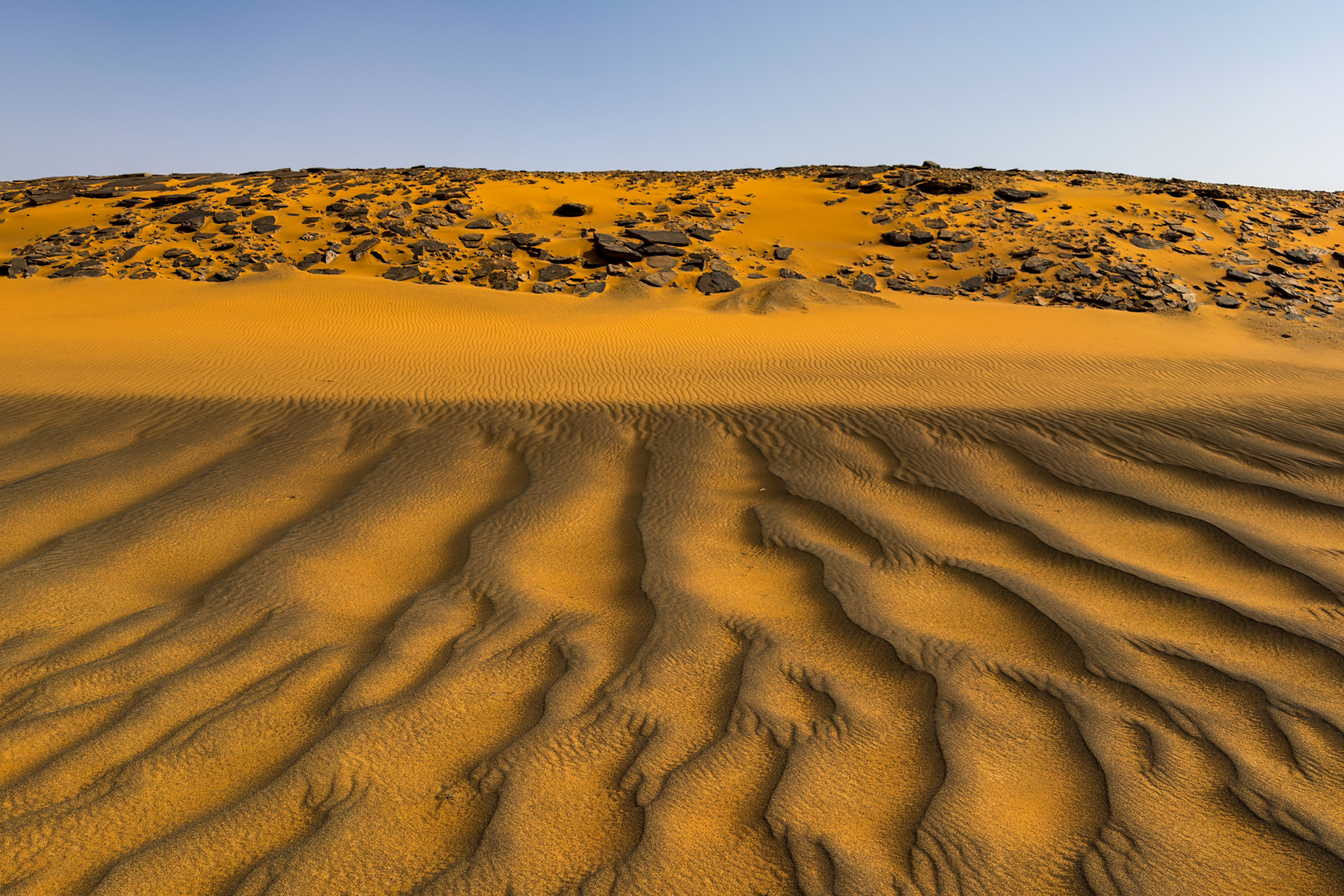
Black sand ripples at Adjalati (image by Inger Vandyke)
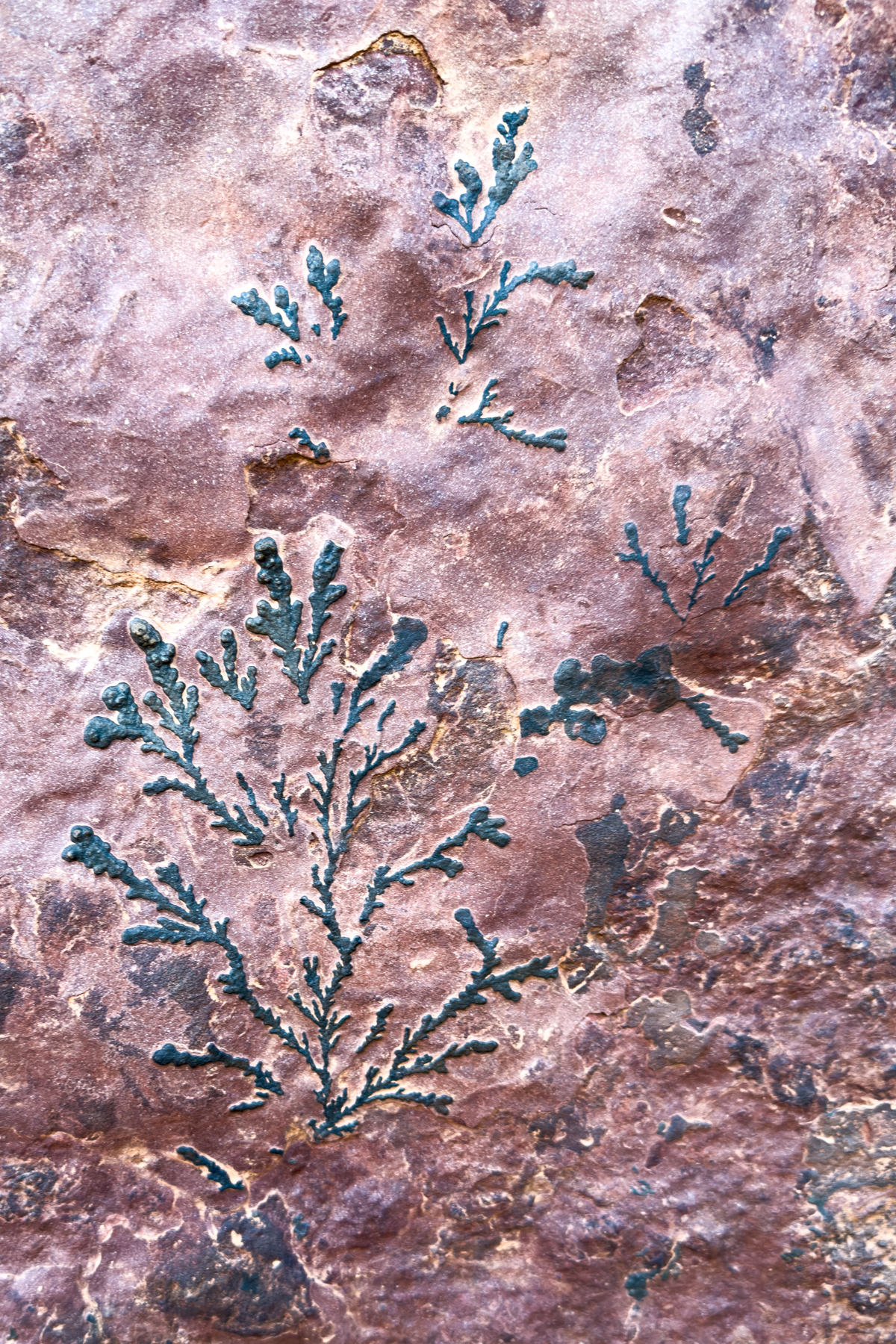
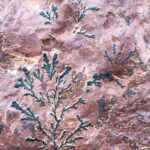
Plant fossils in Tadrart (image by Inger Vandyke)
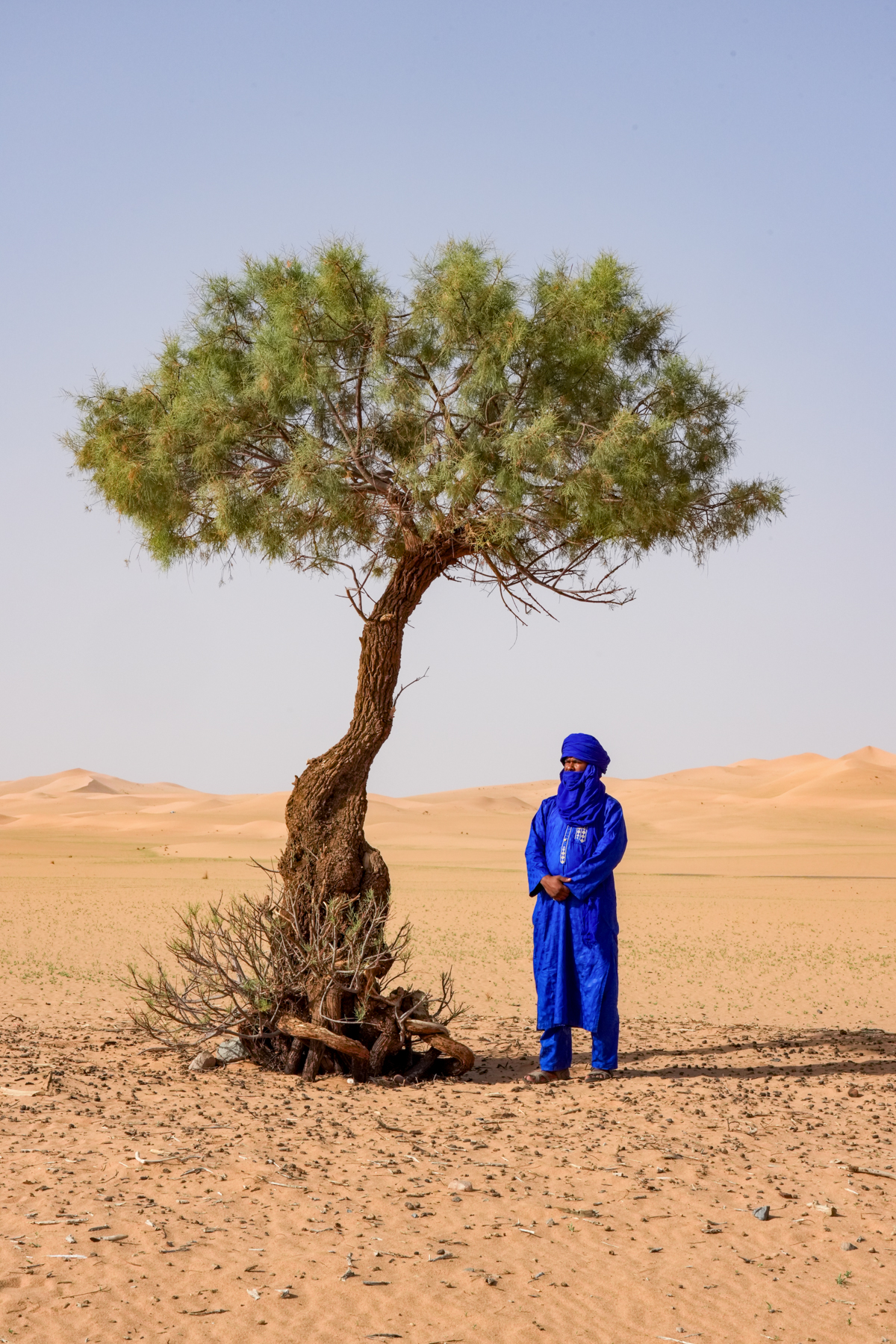
Teachers of the desert - ancient trees and the guardian of ancient wisdom (image by Inger Vandyke)
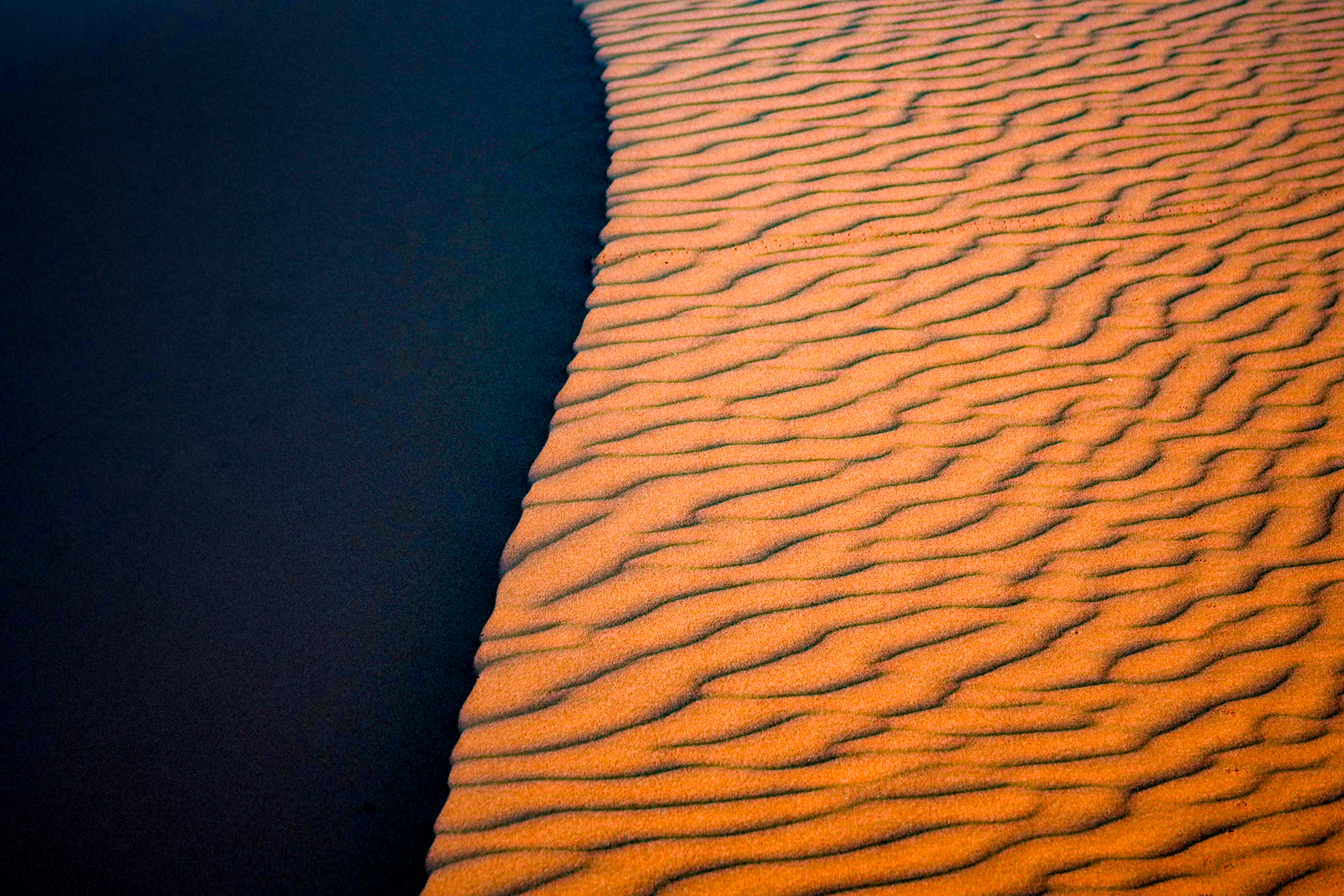
Ripple effect (image by Inger Vandyke)
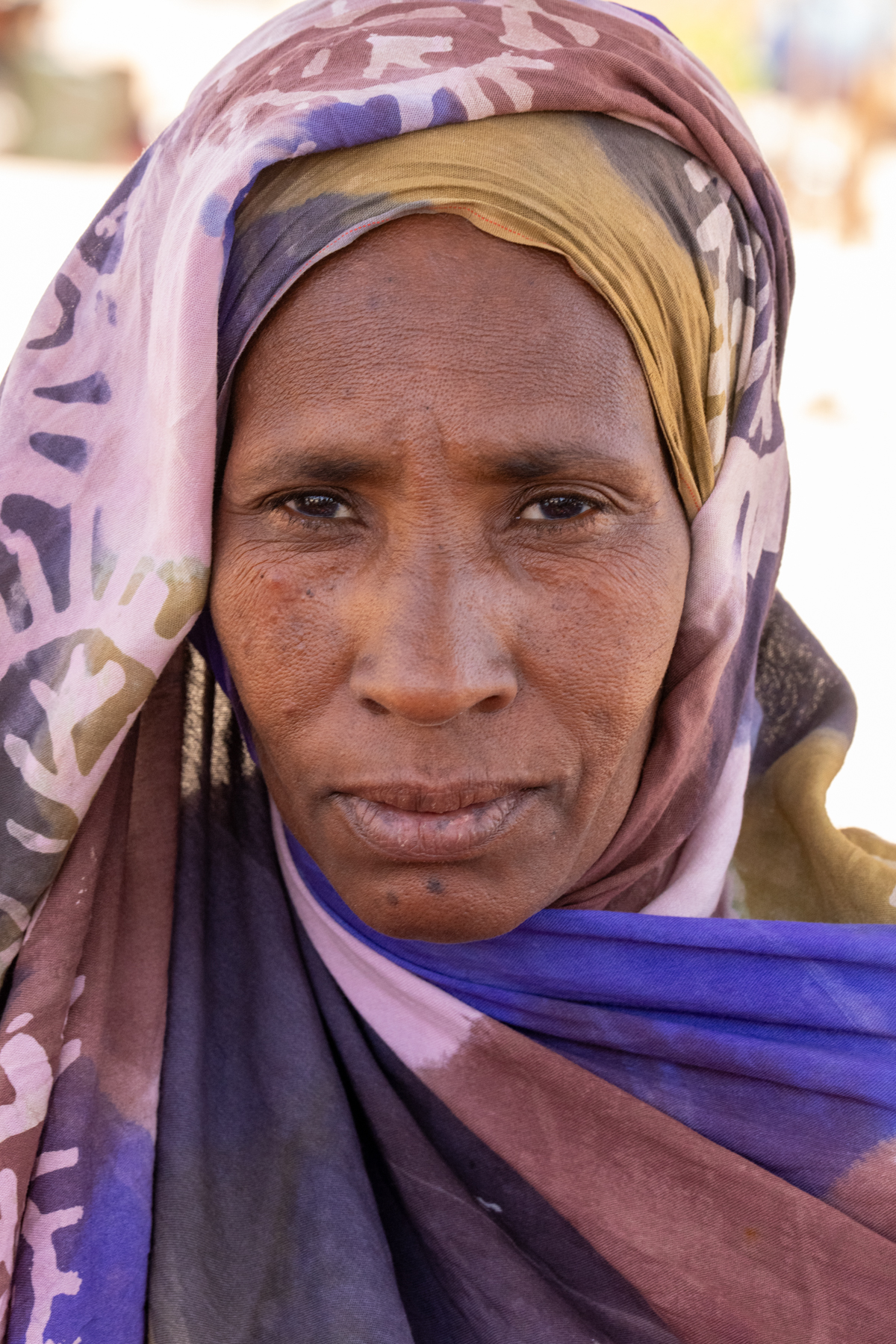
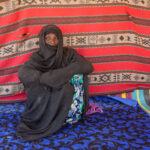
Portrait of nomadic Tuareg woman (image by Inger Vandyke)
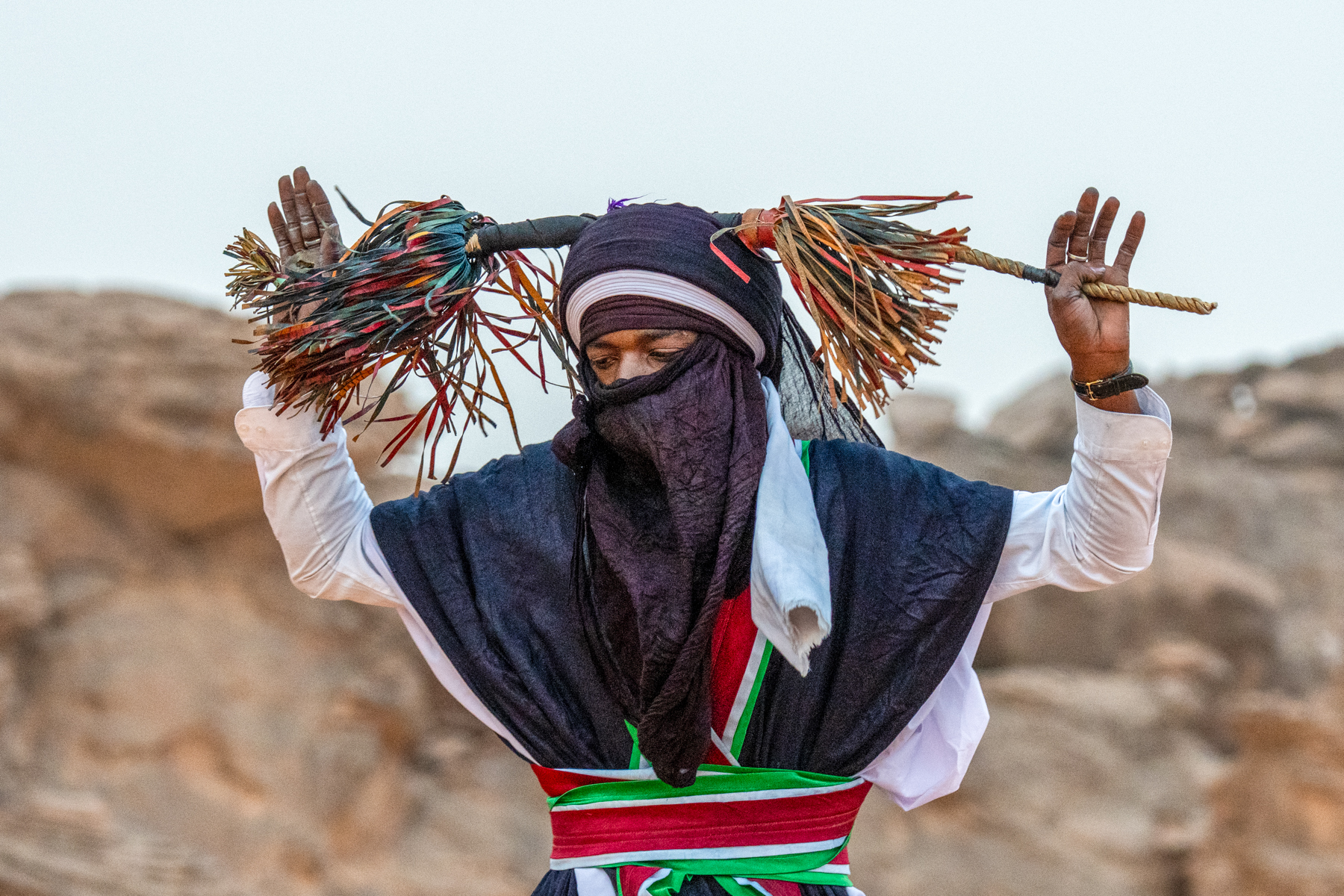
Tahamat dancer (image by Inger Vandyke)
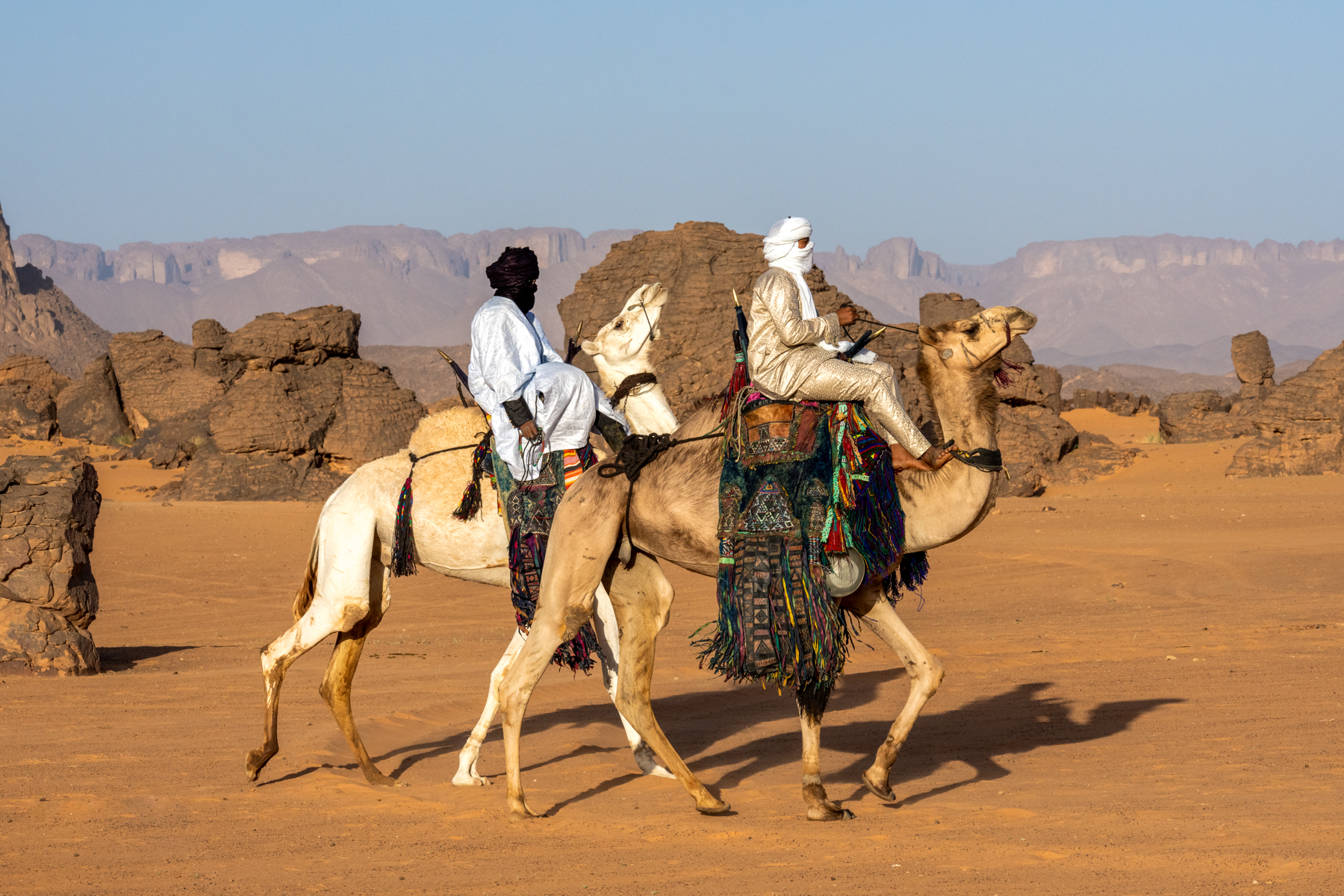
Tuareg men at camel dance (image by Inger Vandyke)
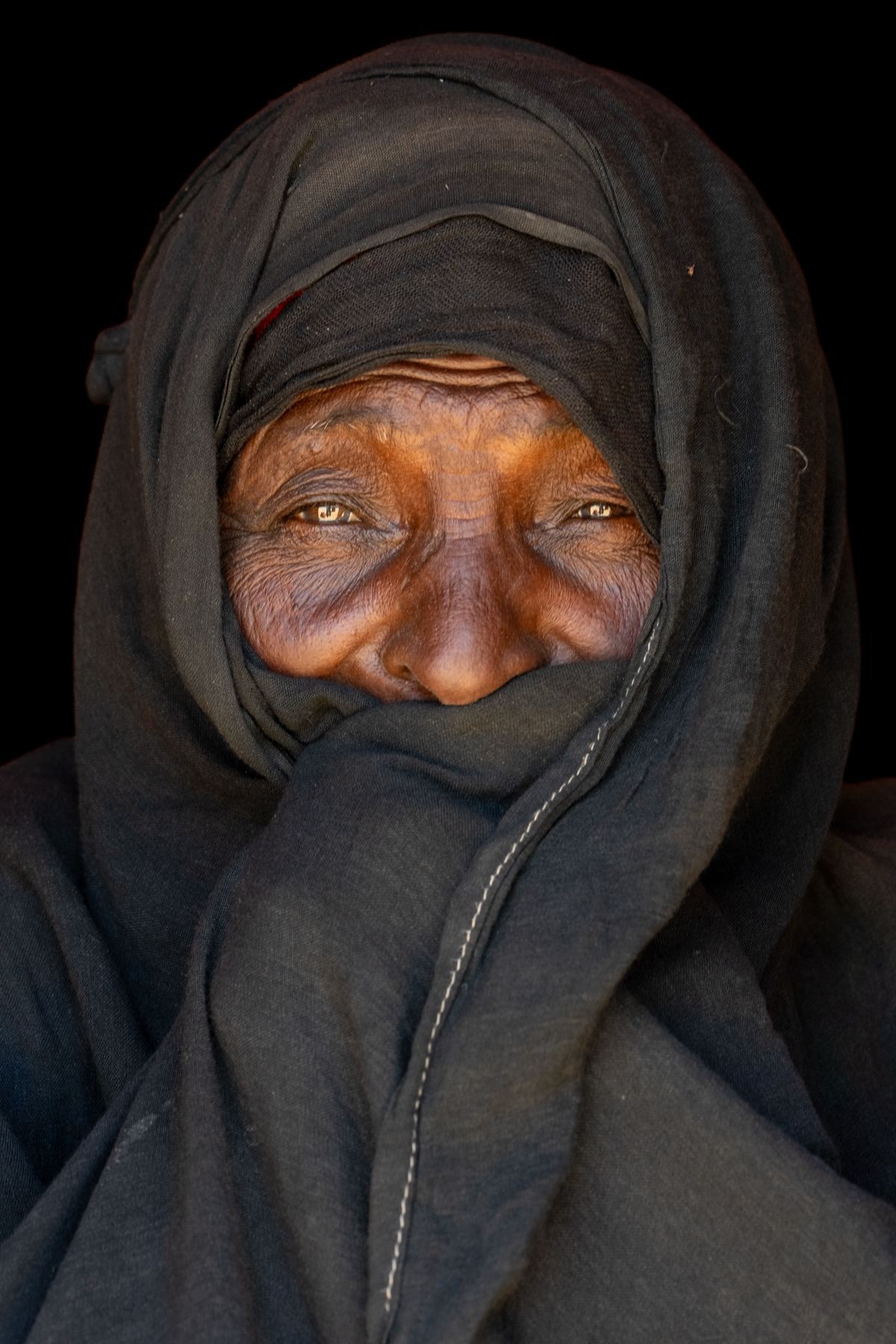
Desert matriarch of a nomadic Tuareg family (image by Inger Vandyke)
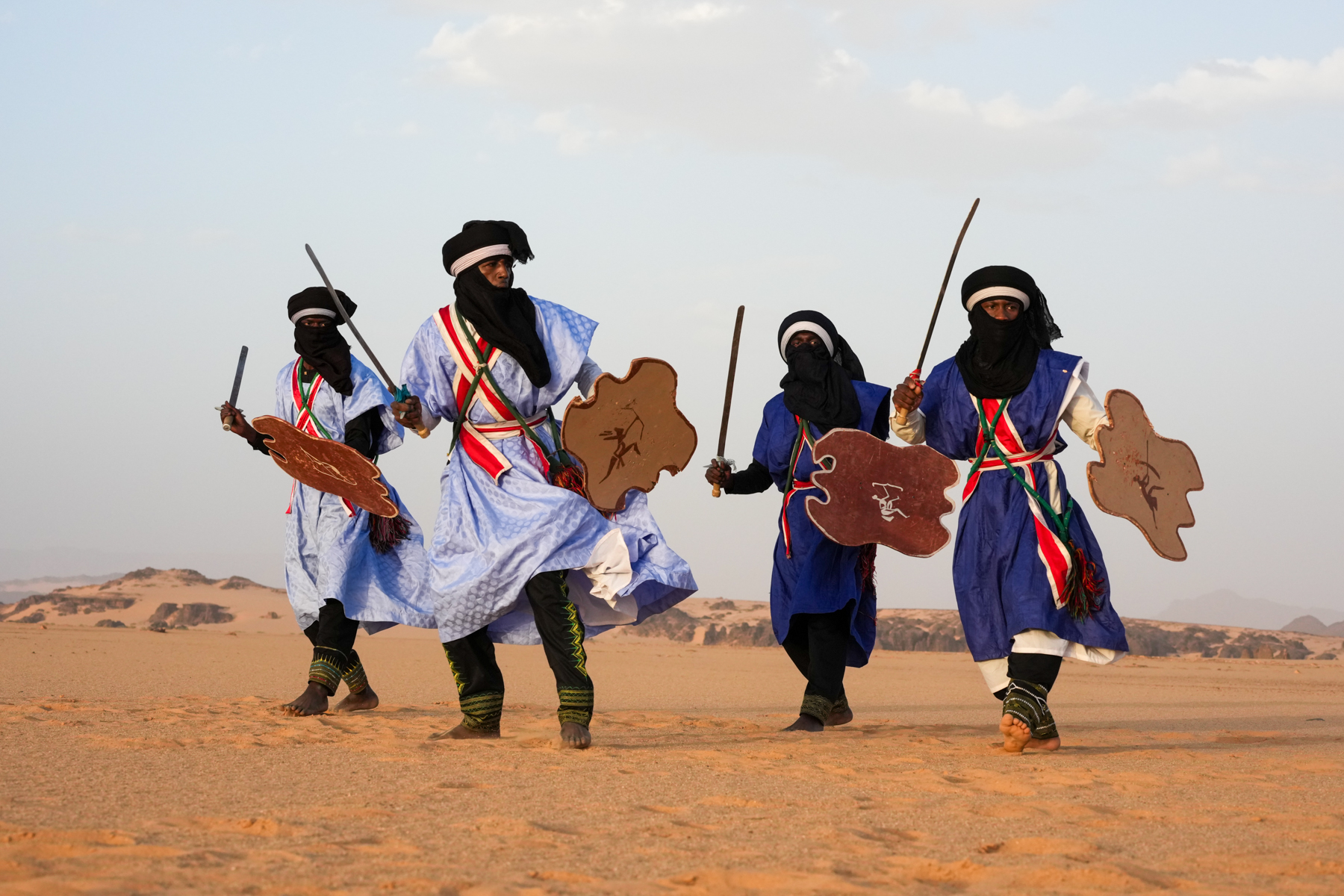
Aroukas warriors (image by Inger Vandyke)
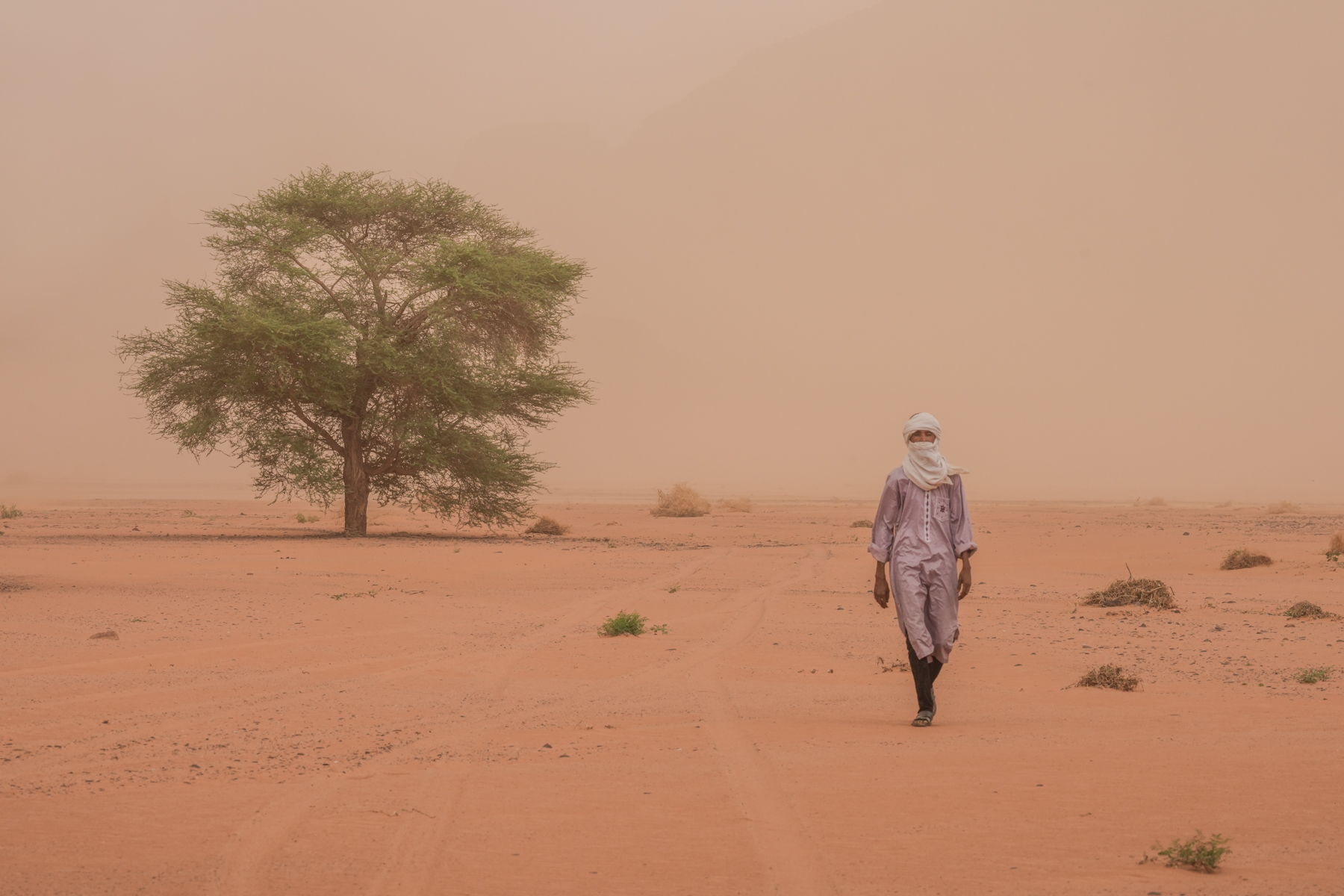
One of our desert expedition team leaves his siesta under a shady tree to return to our camp in a dust storm (image by Inger Vandyke)
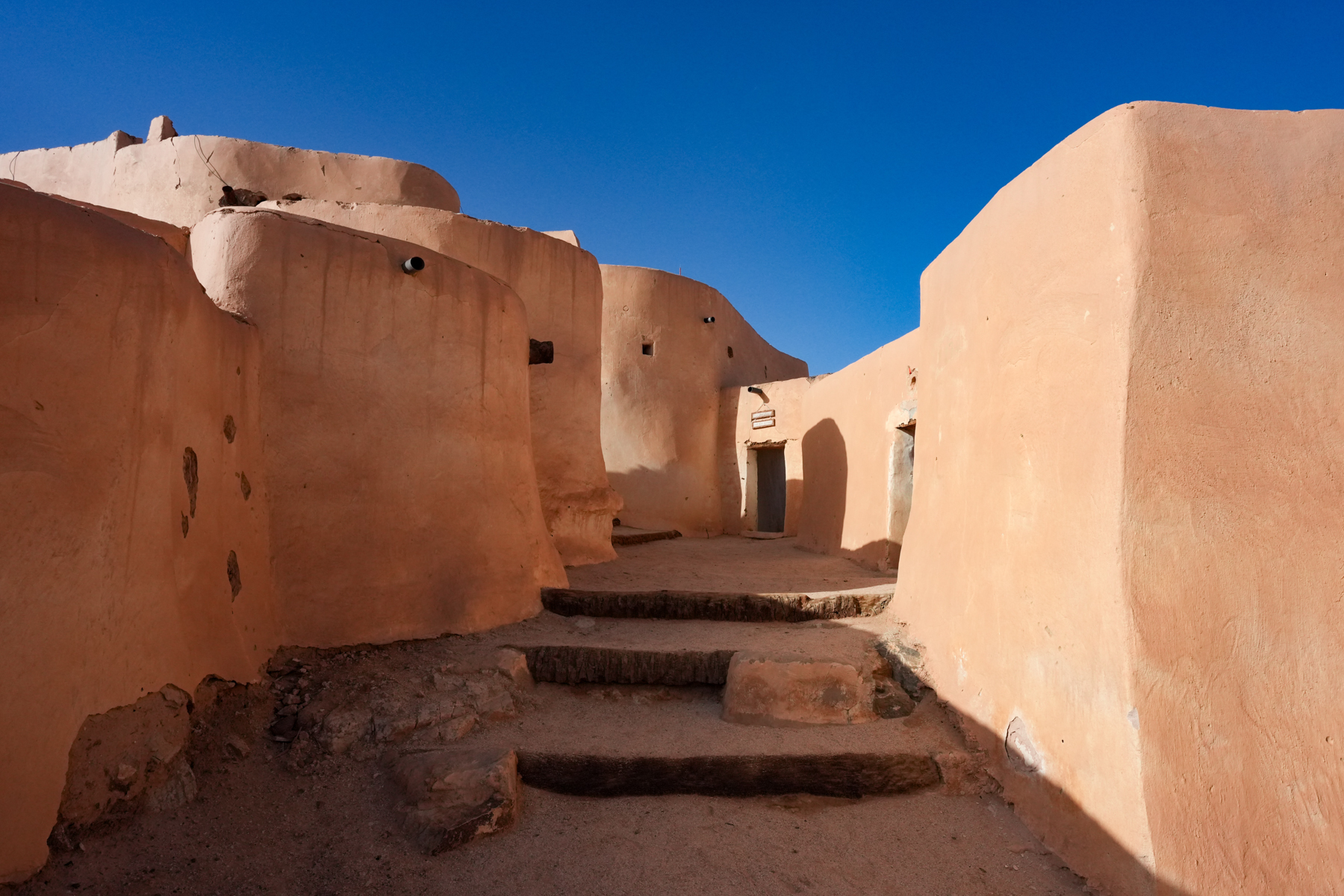
Taghorfit (image by Inger Vandyke)
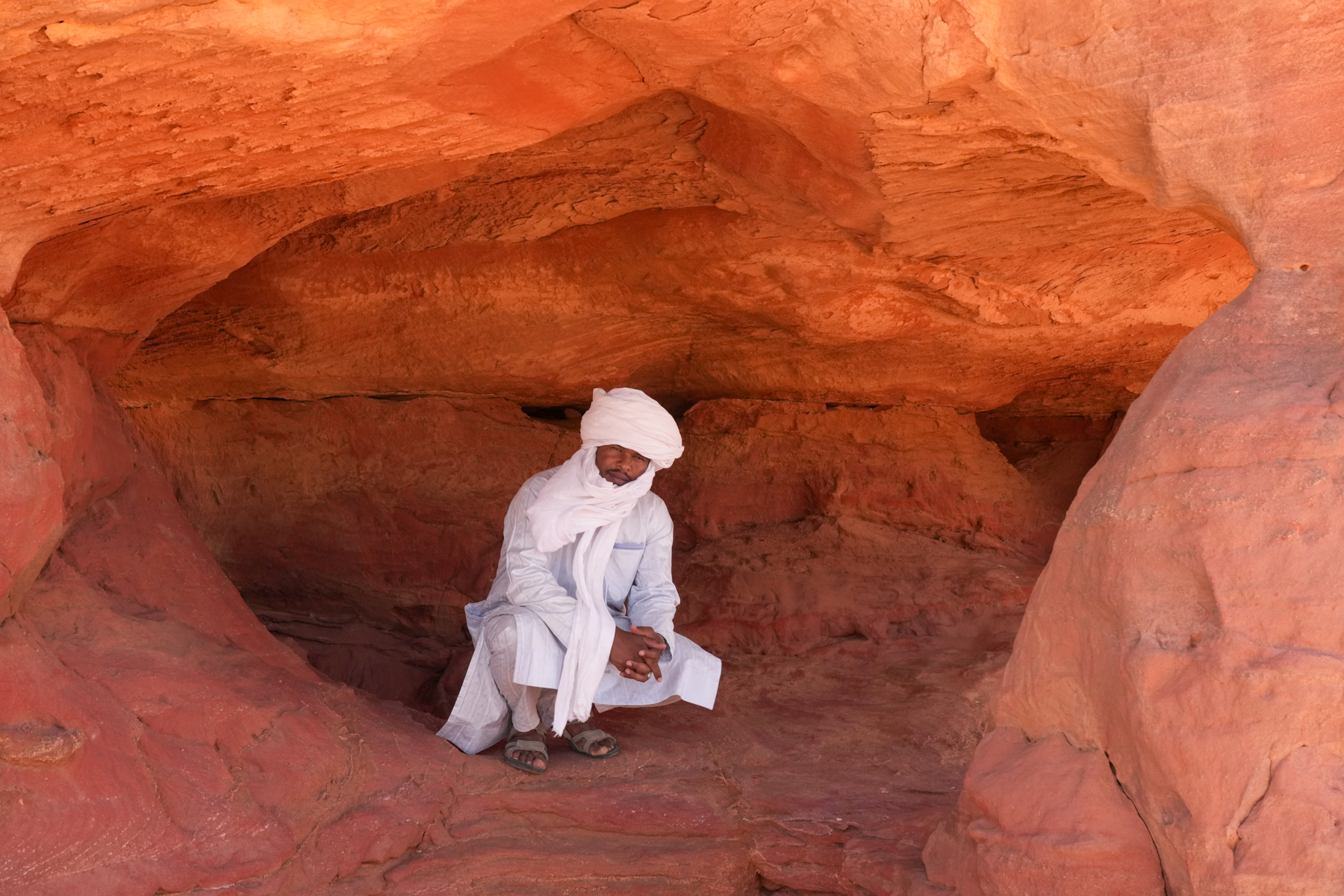
Our guide, Youssef, giving scale to the base cave in a rock pillar (image by Inger Vandyke)
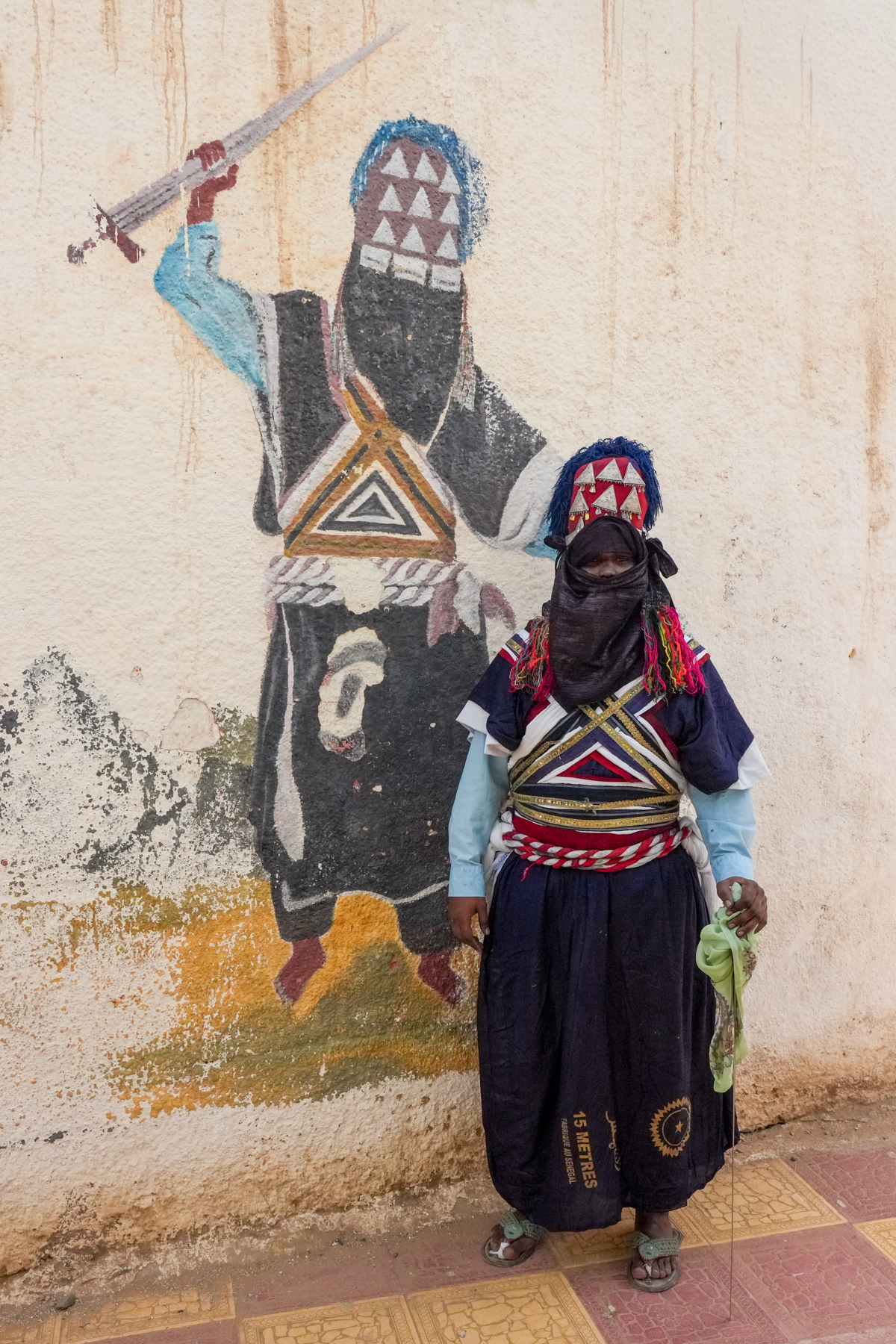
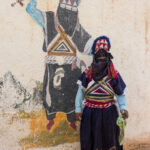
Real life and art Sabiba warriors (image by Inger Vandyke)
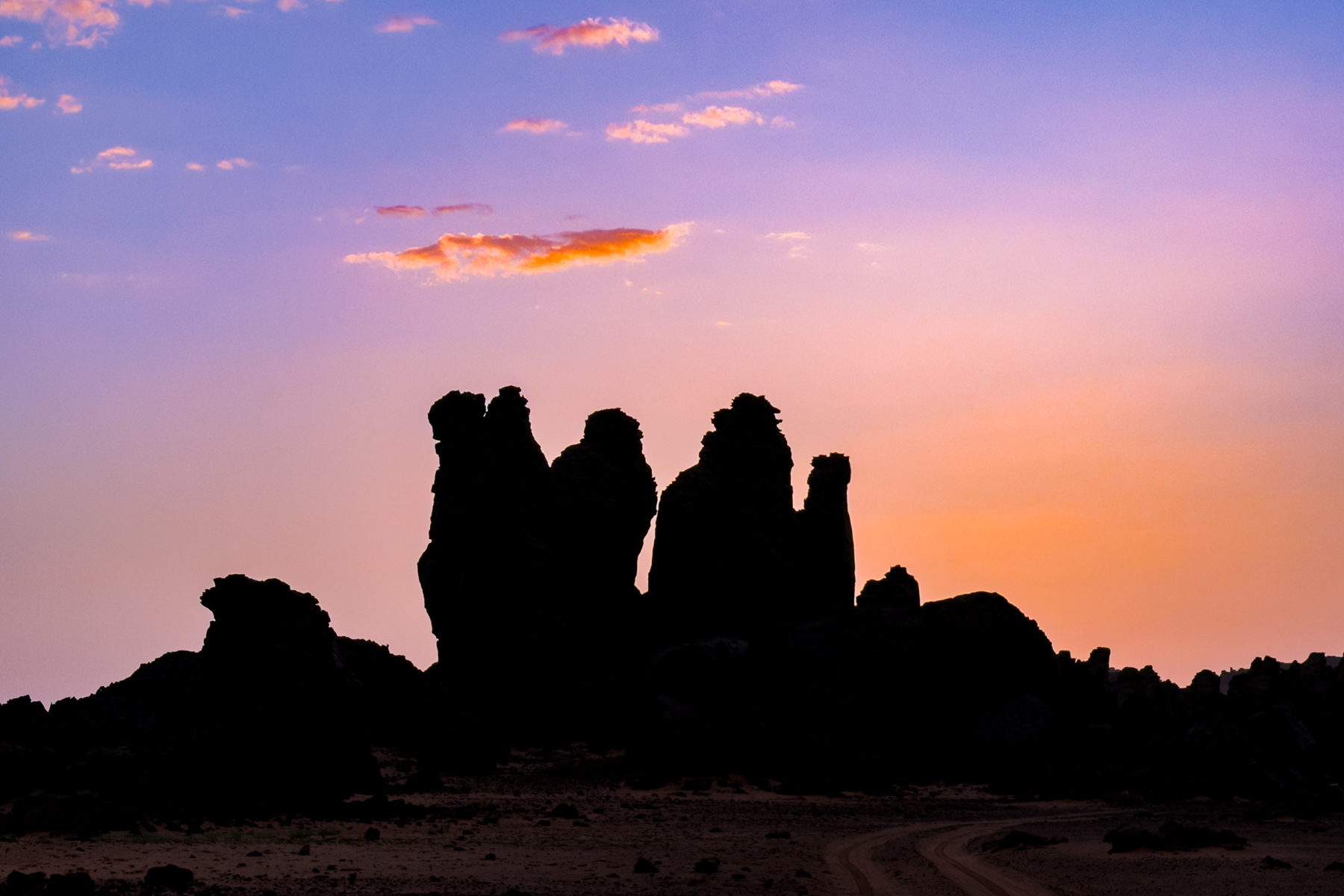
Adayk at dusk (image by Inger Vandyke)
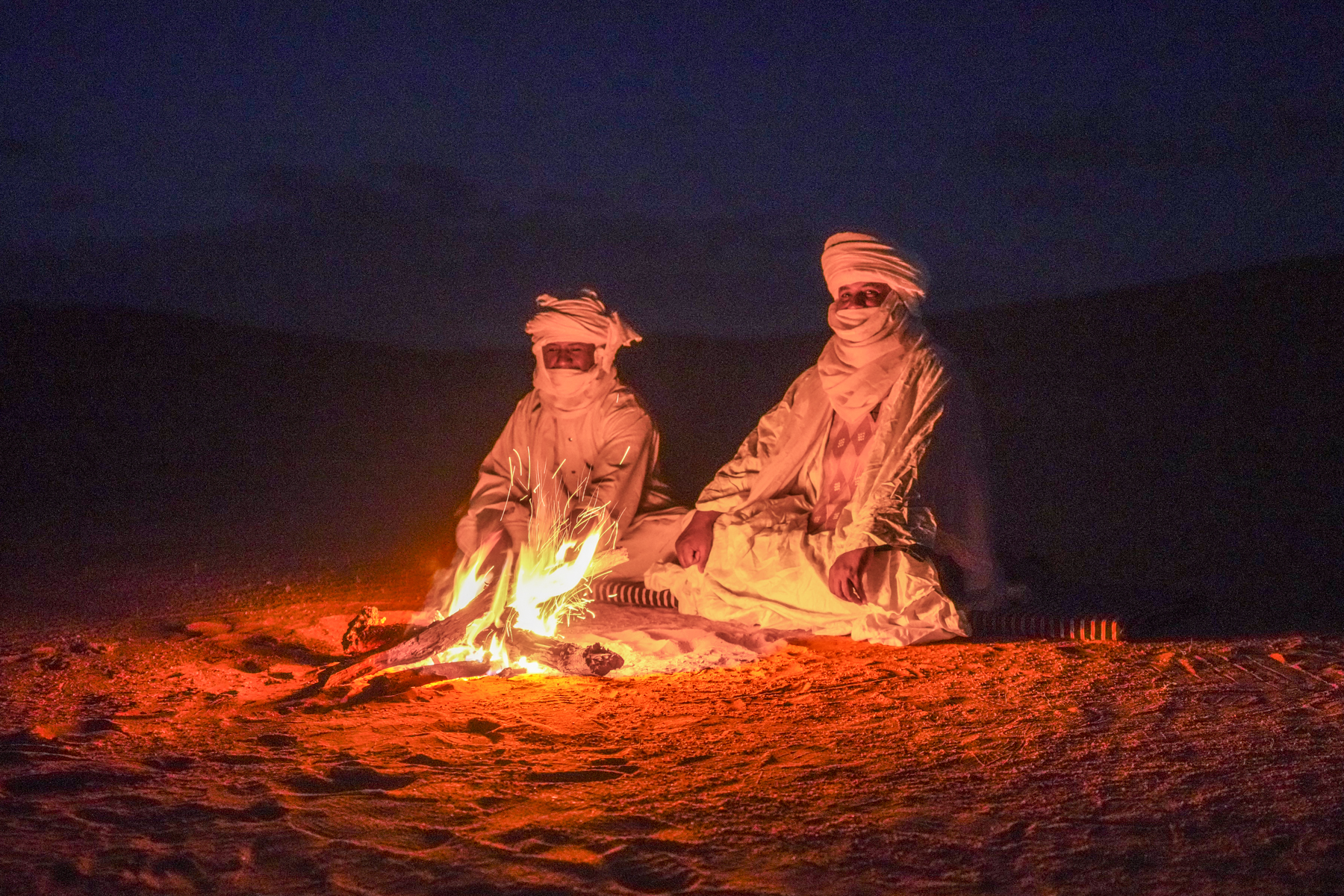
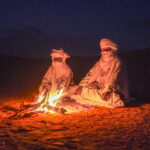
Tuareg men around our campfire (image by Inger Vandyke)
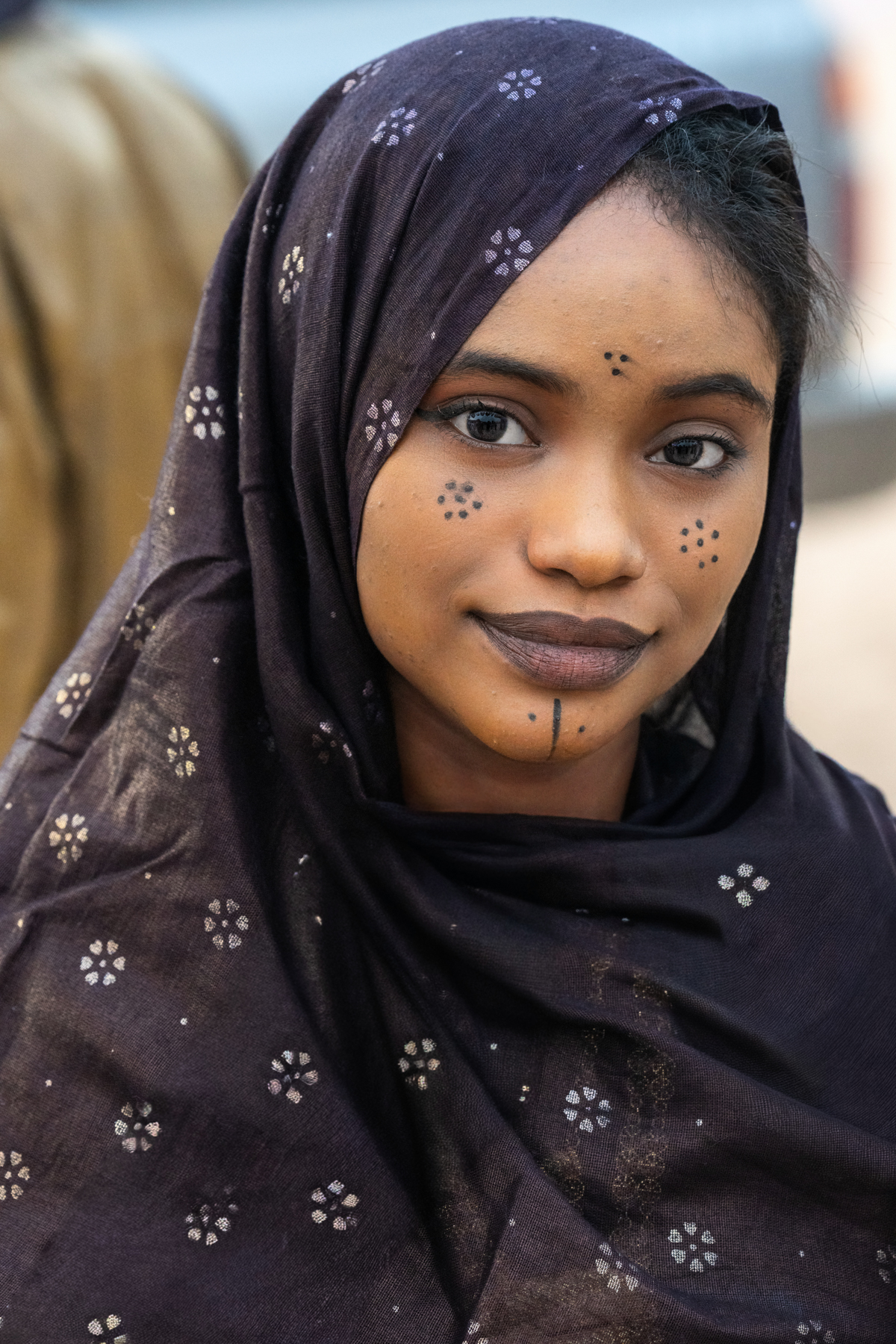
Traditional ochre and kohl makeup (image by Inger Vandyke)
Youssef and Pete inside the Cathedral of Tadrart (image by Inger Vandyke)
Sabiba (image by Inger Vandyke)
Wind eroded pillar at Le Cirque (image by Inger Vandyke)
Desert sunrise (image by Inger Vandyke)
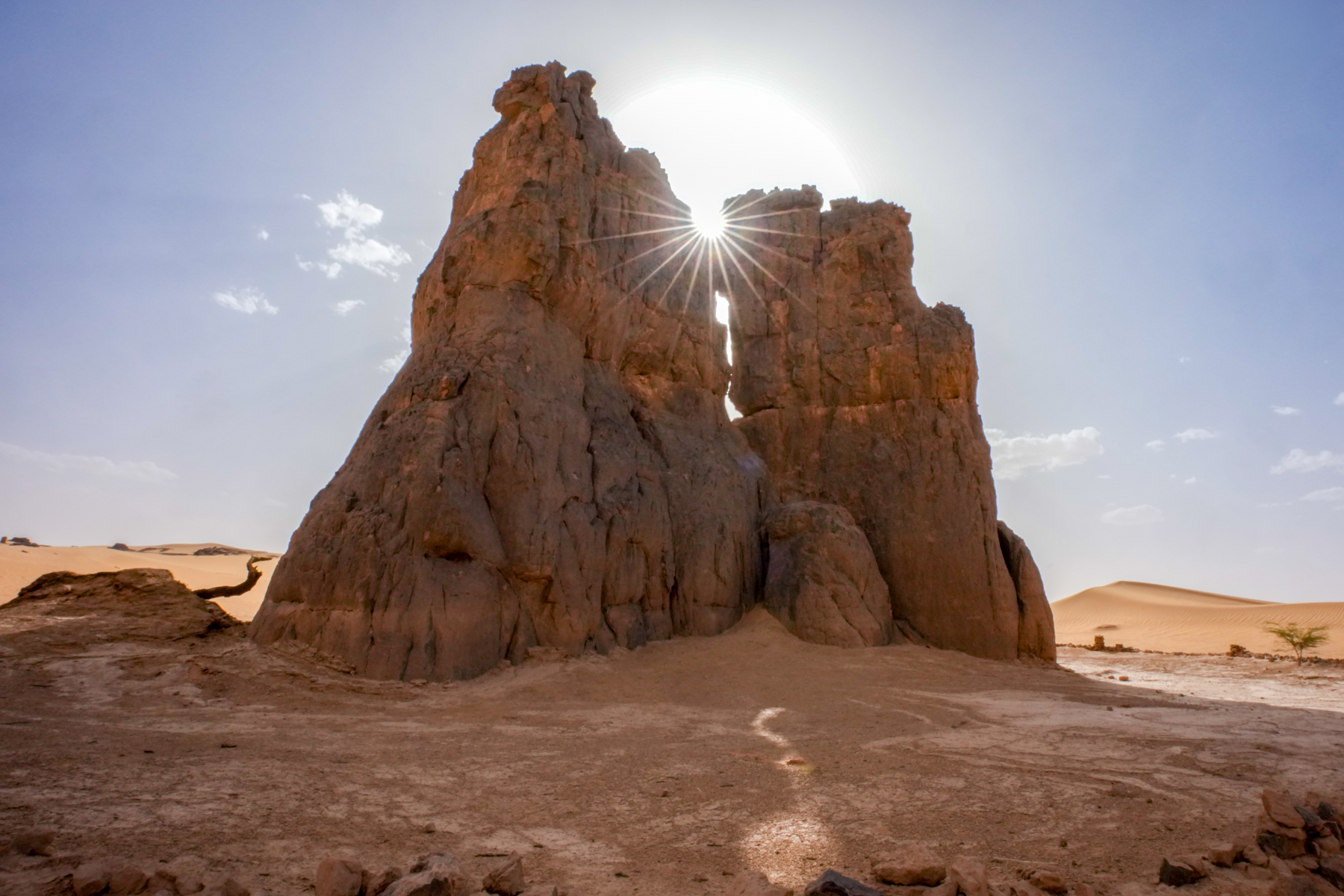
Sunburst at La Vache (image by Inger Vandyke)
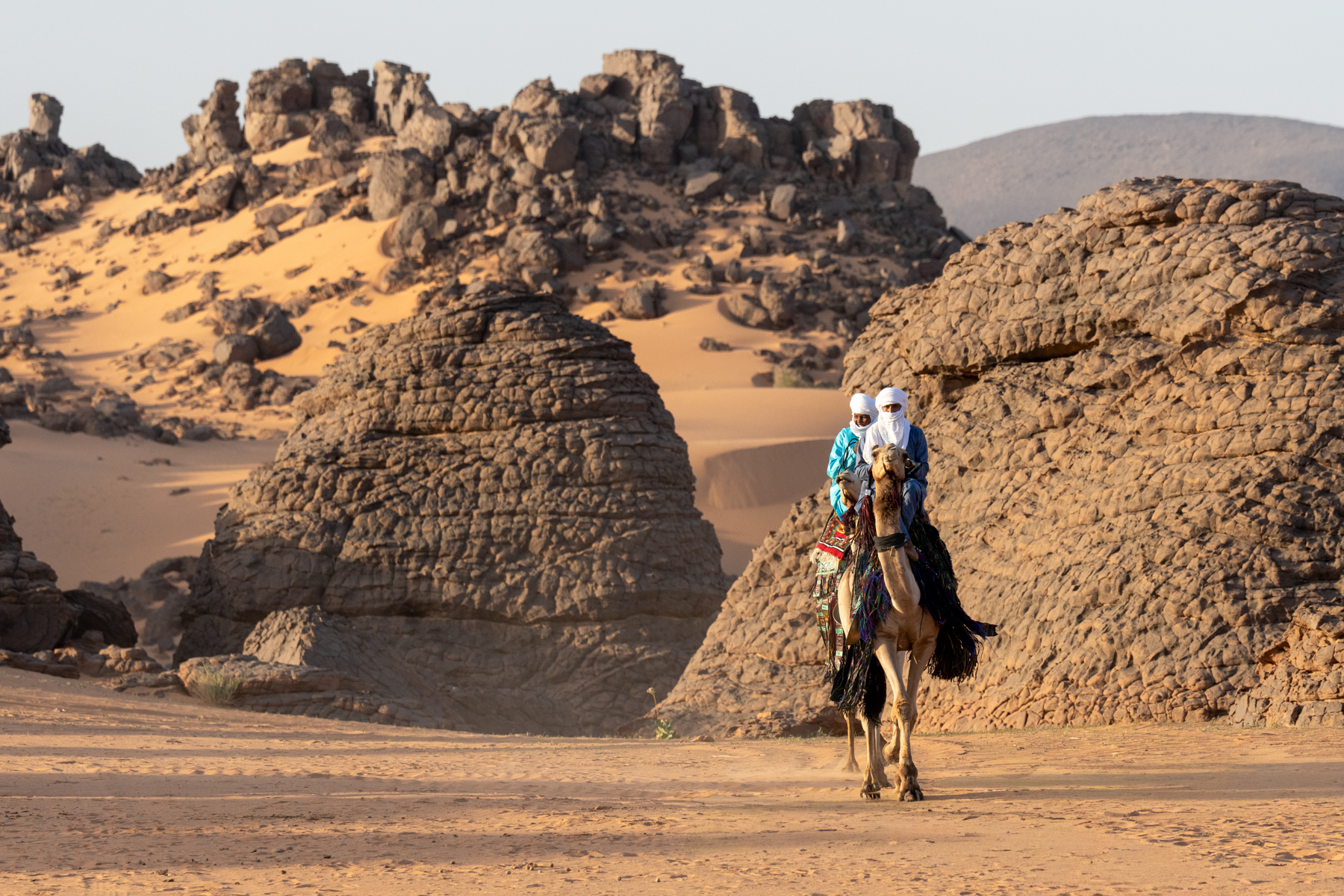
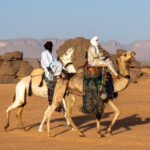
Tuareg men riding camels in the desert (image by Inger Vandyke)
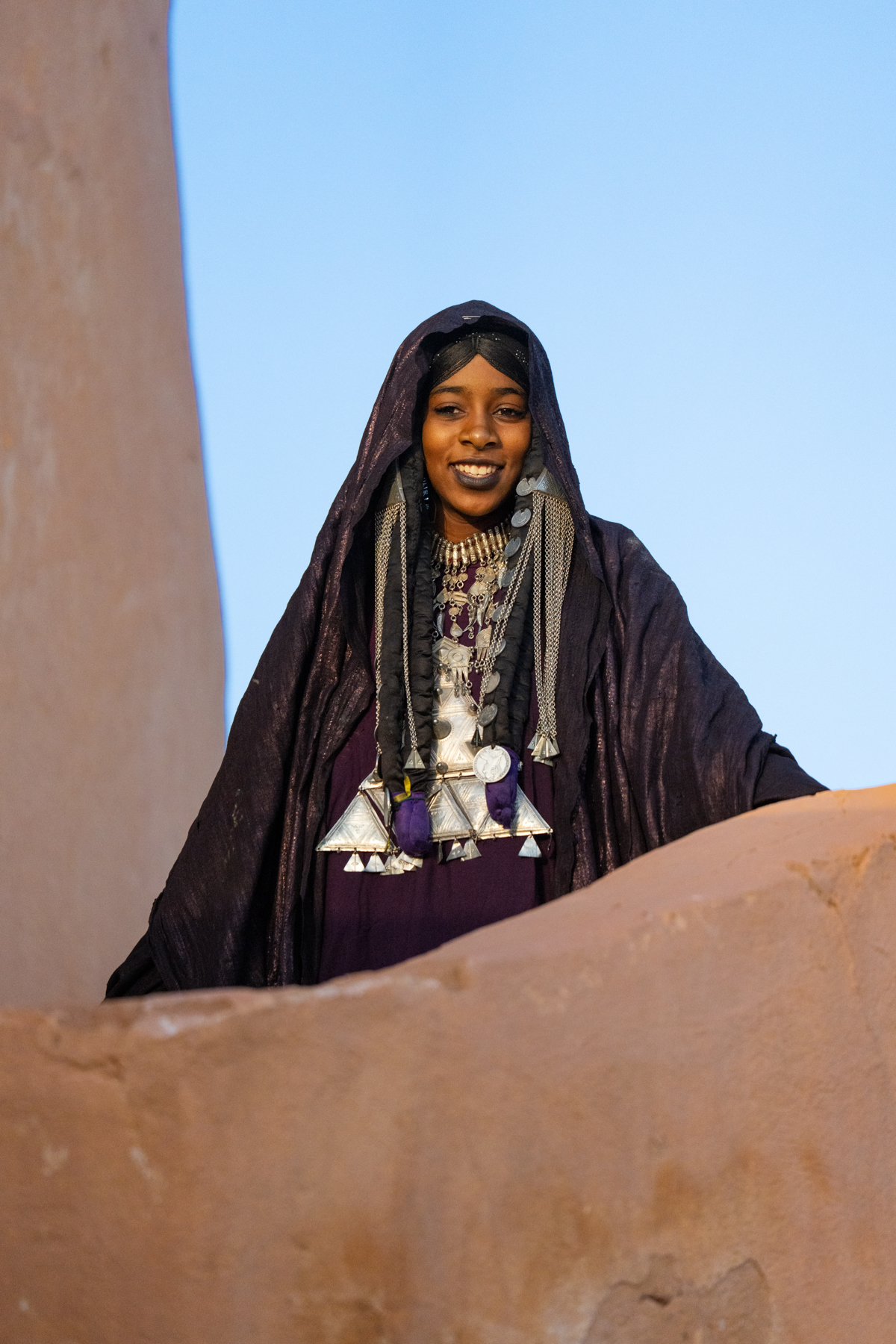
Smiling Tuareg girl at Taghorfit (image by Inger Vandyke)
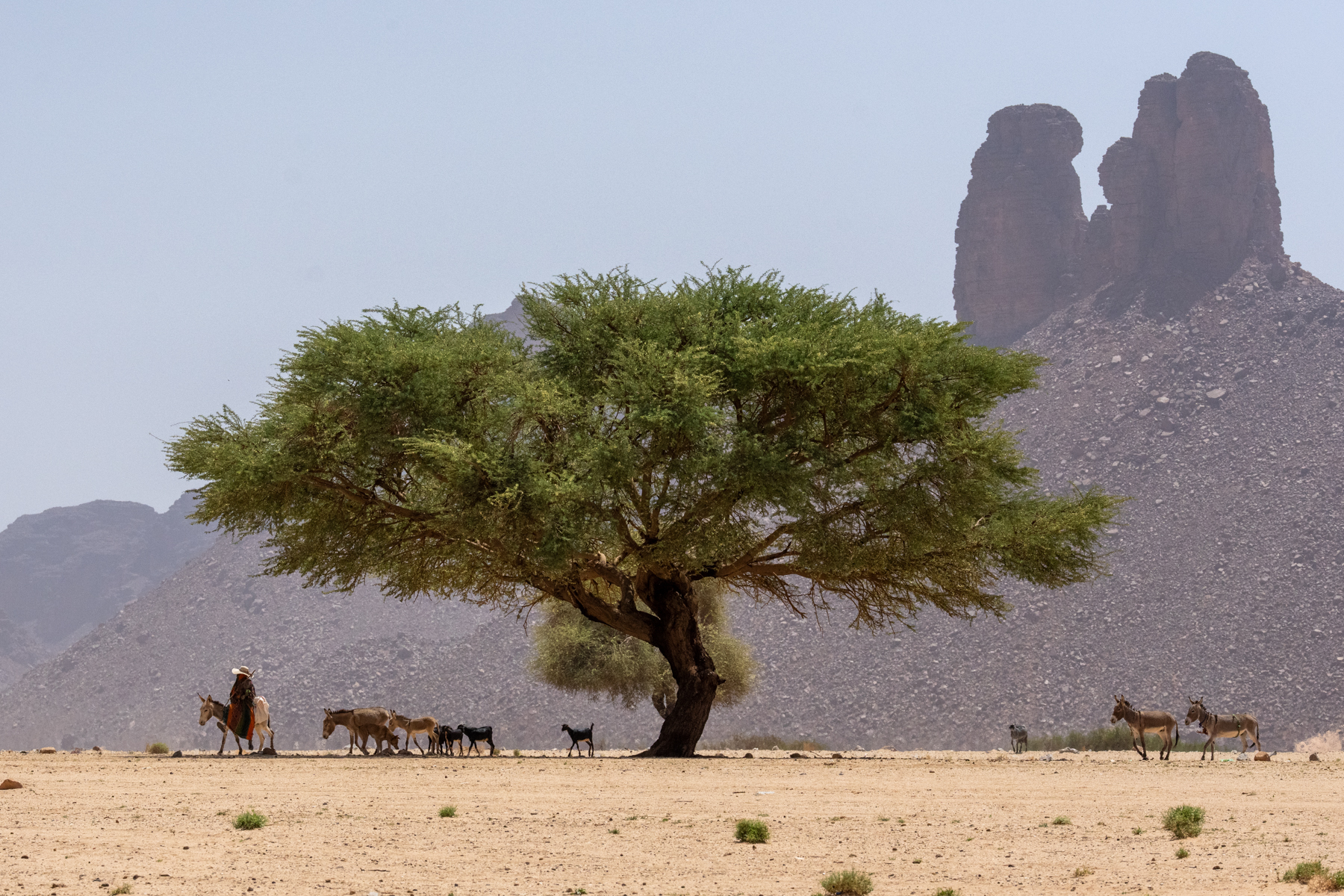
Tuareg nomads in Tassili (image by Inger Vandyke)
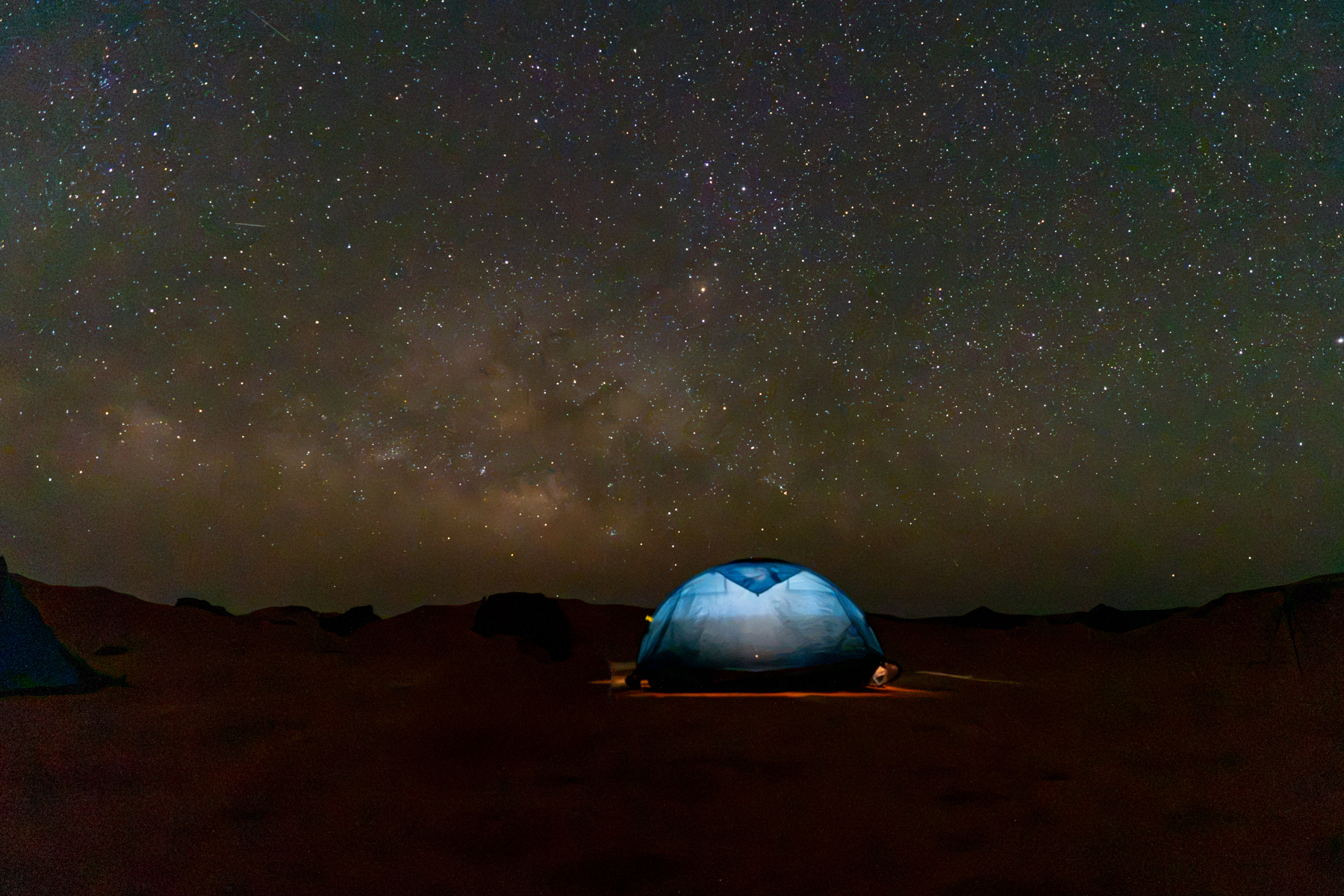
Camped under the stars (image by Inger Vandyke)
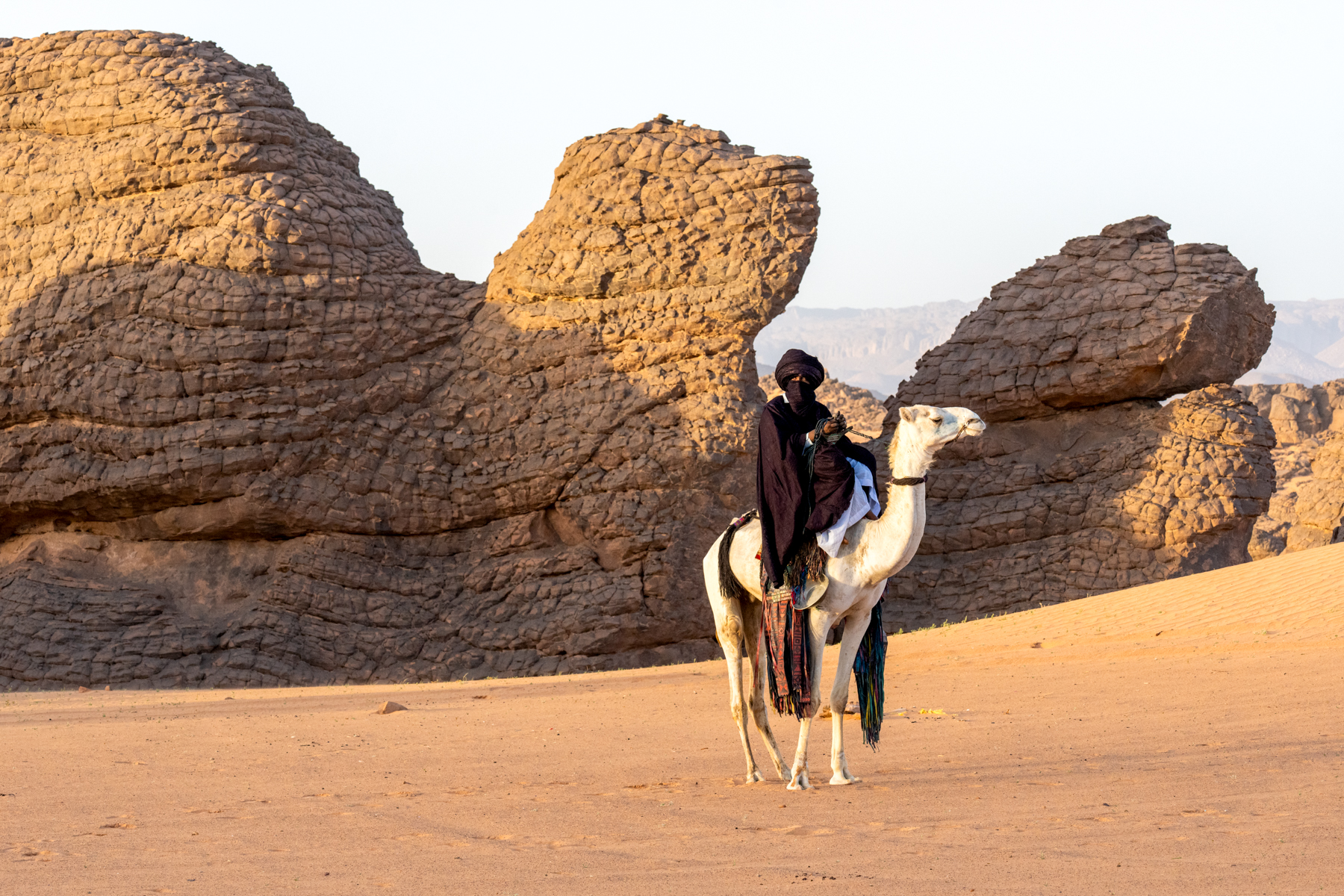
Tuareg cameleer in desert (image by Inger Vandyke)
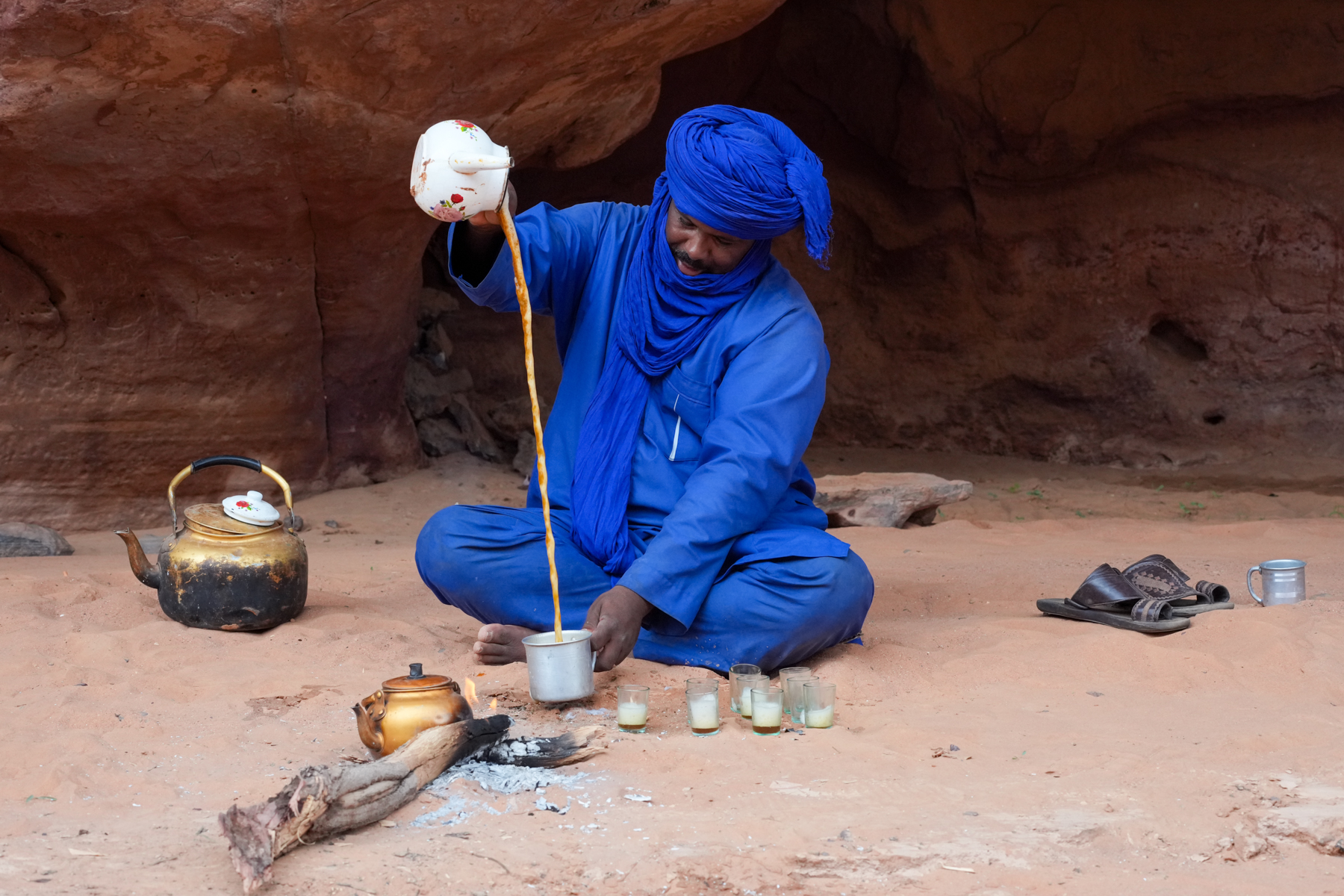
Tea in the Sahara (image by Inger Vandyke)
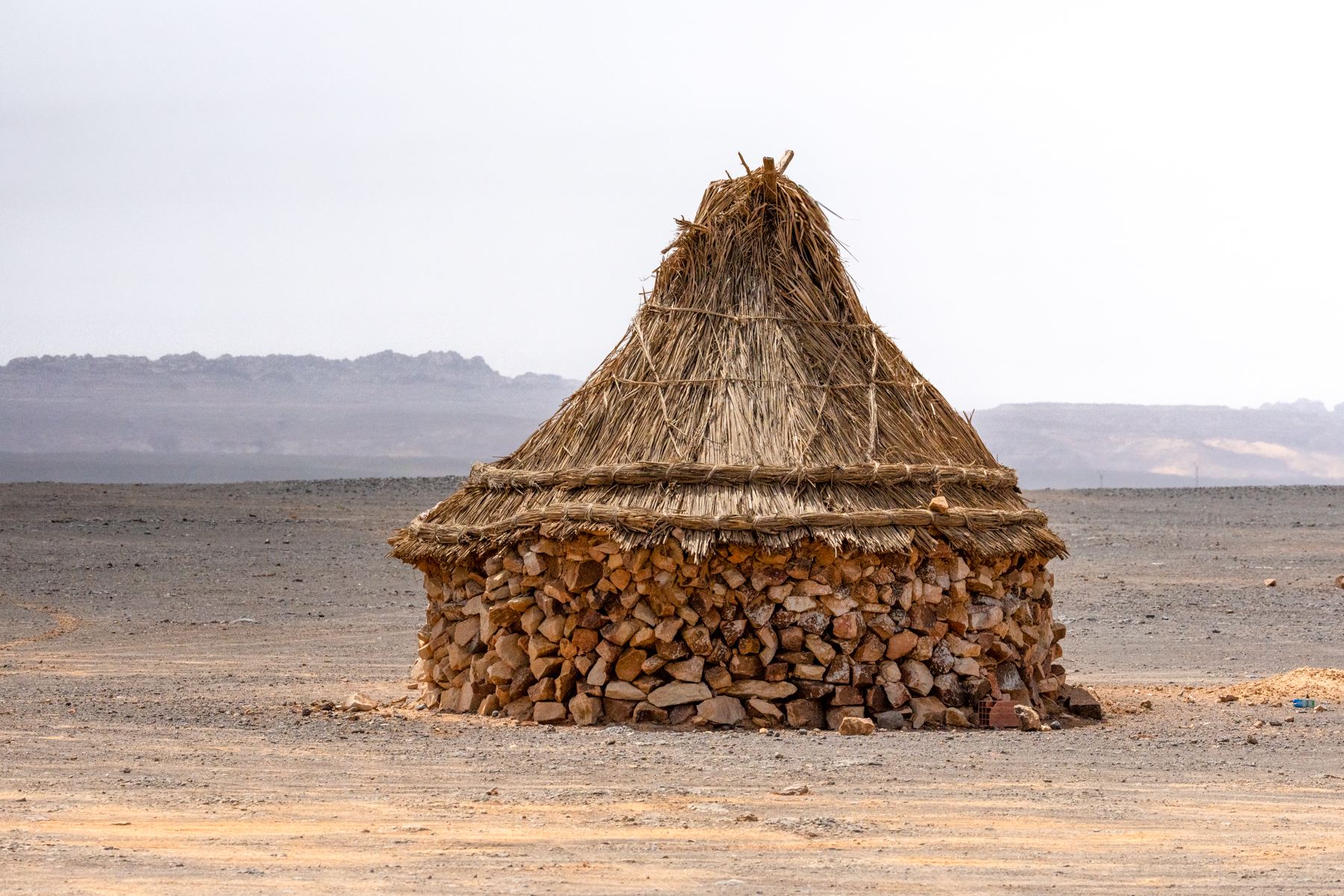
Ikabar stone house (image by Inger Vandyke)
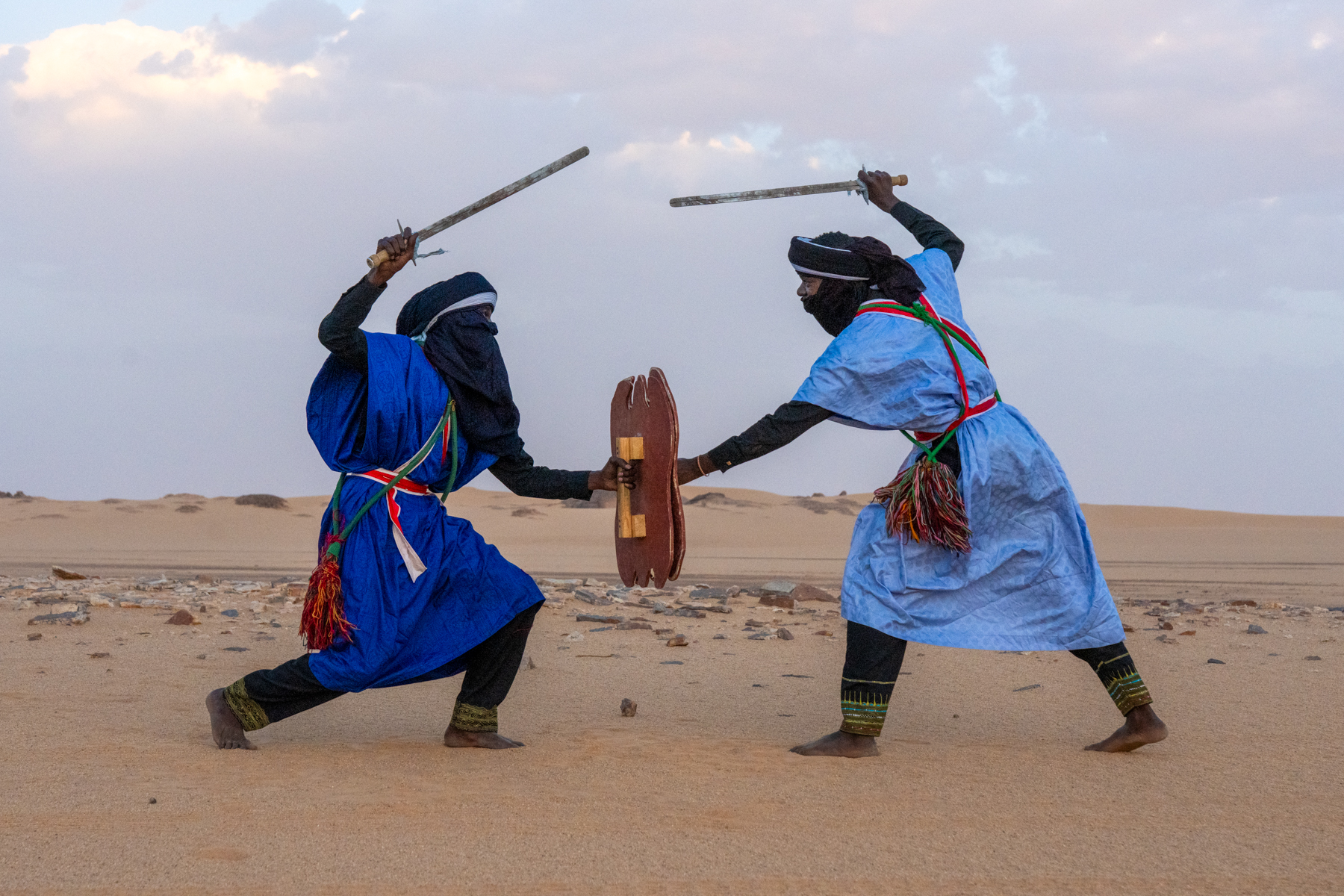
Aroukas warriors engage in a mock sword battle at sunset in the desert (image by Inger Vandyke)
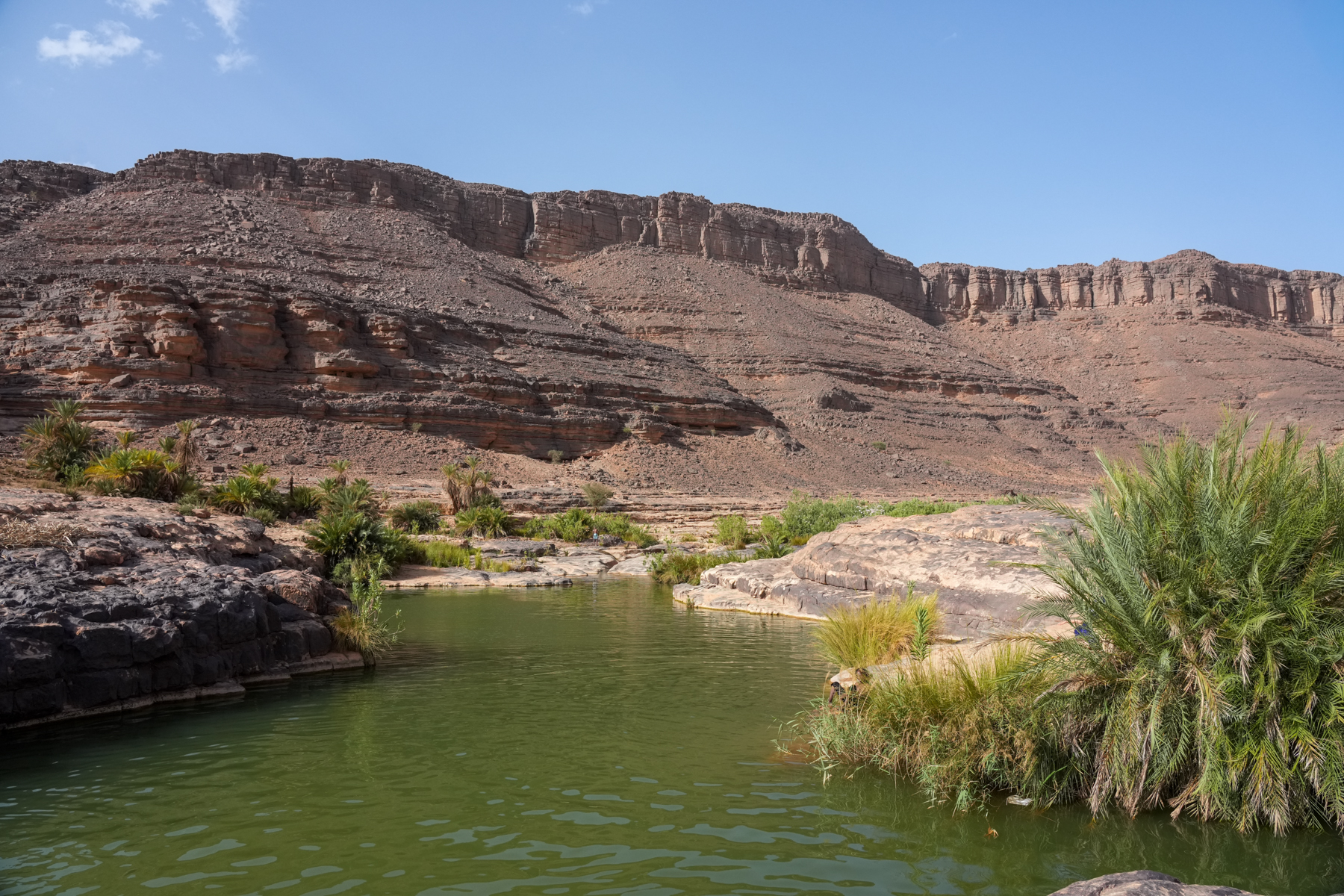
In Telat swimming hole at Ihrir (image by Inger Vandyke)
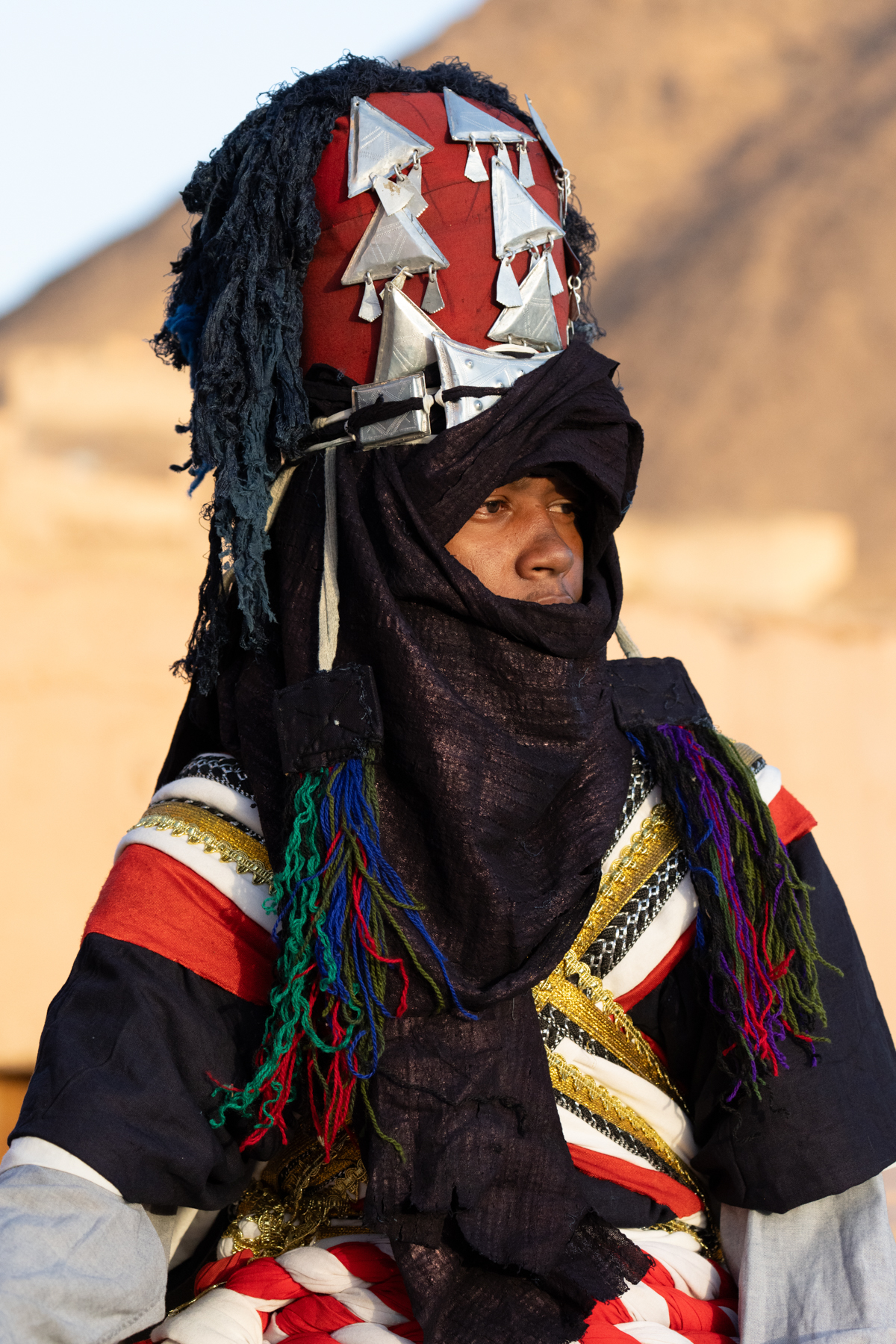
Sabiba warrior at sunset during a private shoot at the stunning K'Sour of Taghorfit (image by Inger Vandyke)
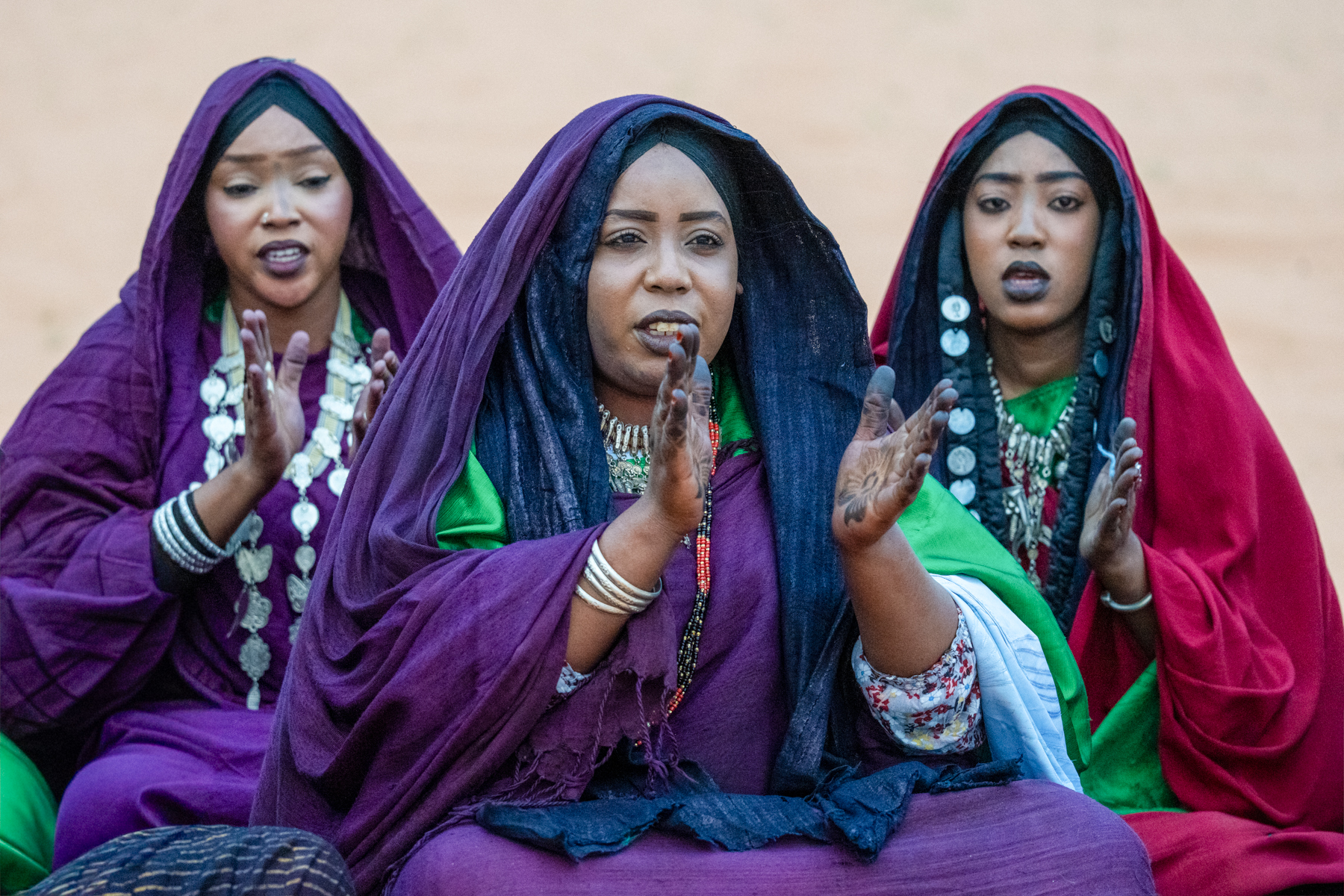
Tuareg women singing at Tahamat (image by Inger Vandyke)
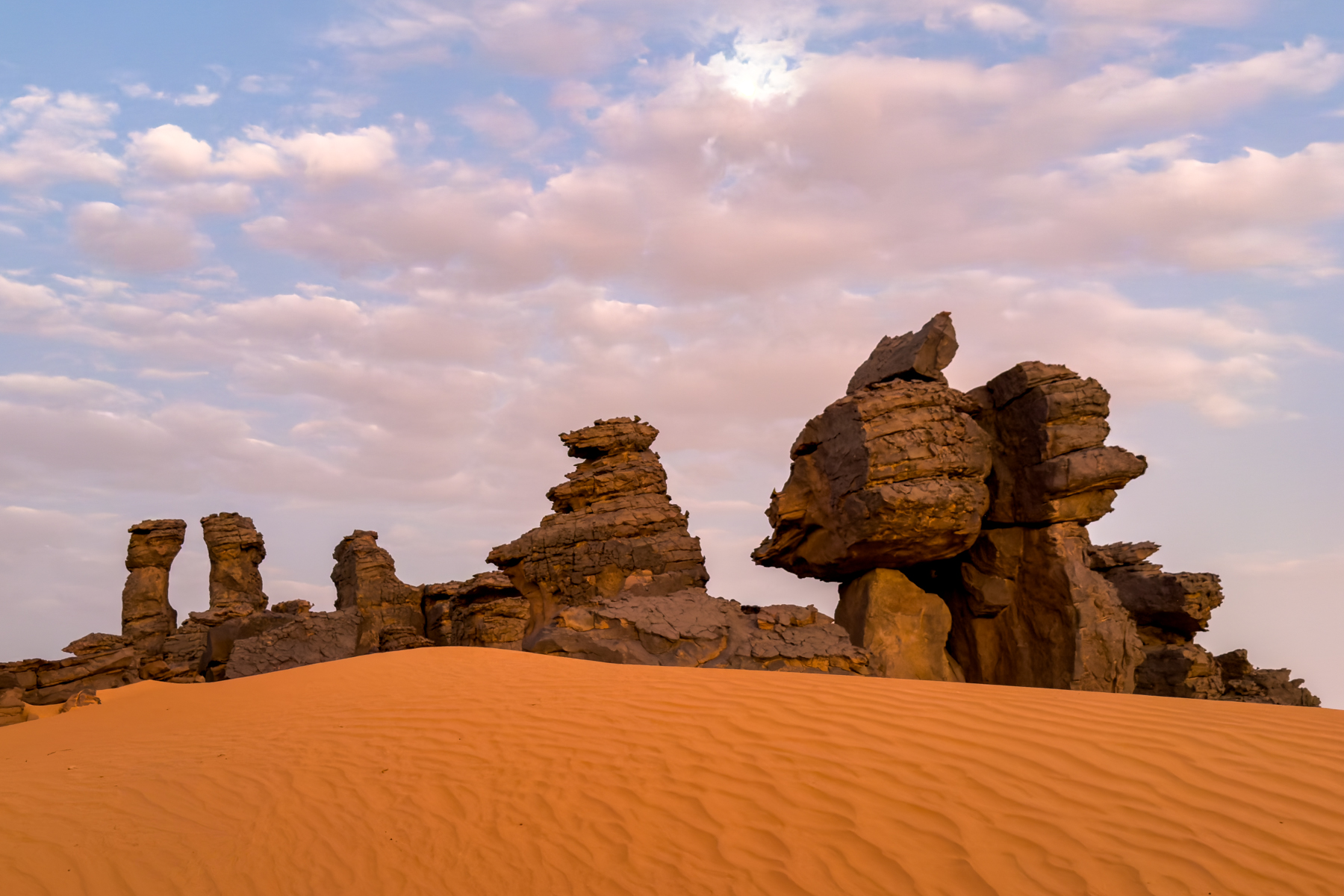
Adayk landscape (image by Inger Vandyke)
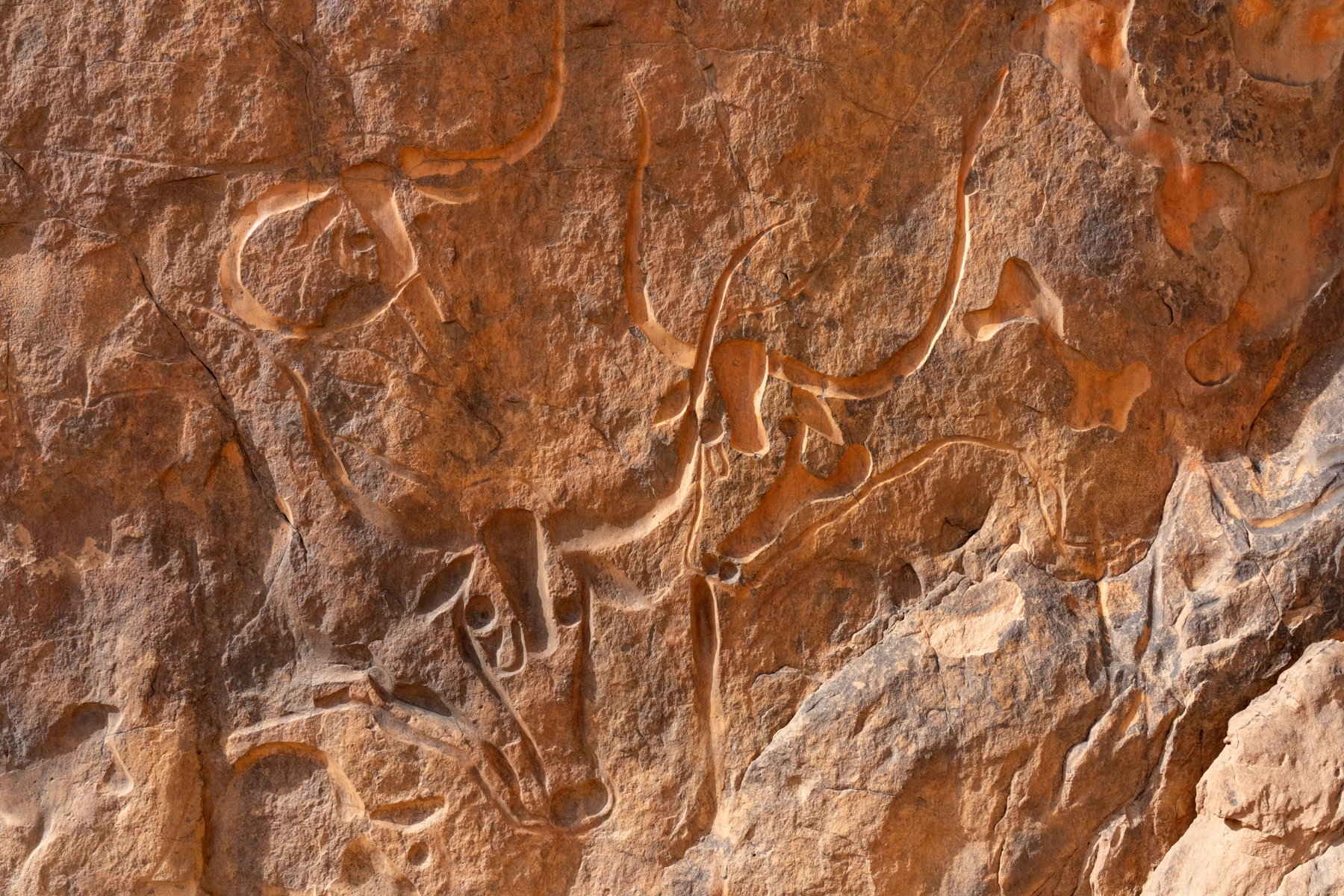
Crying Bulls (image by Inger Vandyke)
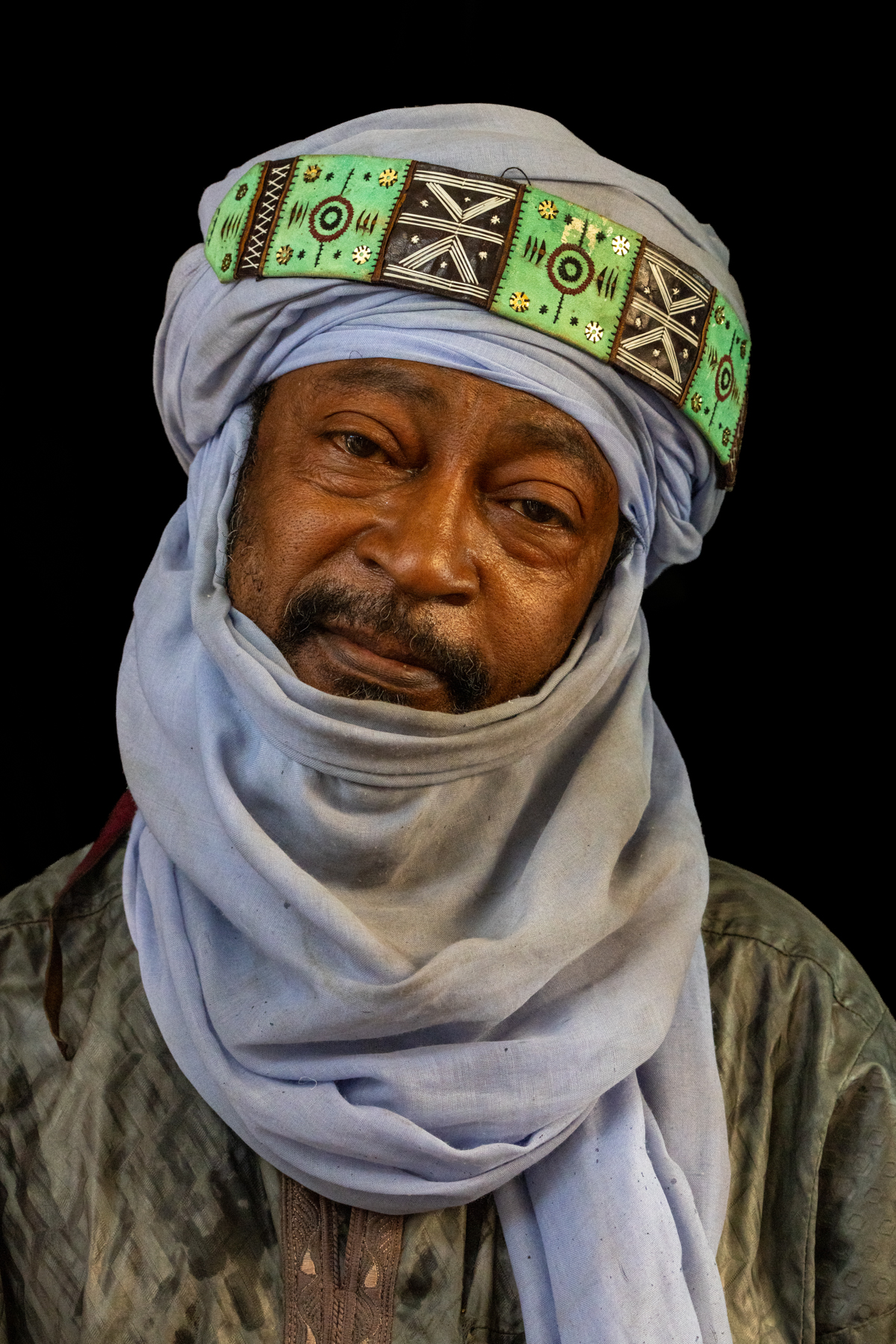
Portrait of a Tuareg blacksmith (image by Inger Vandyke)
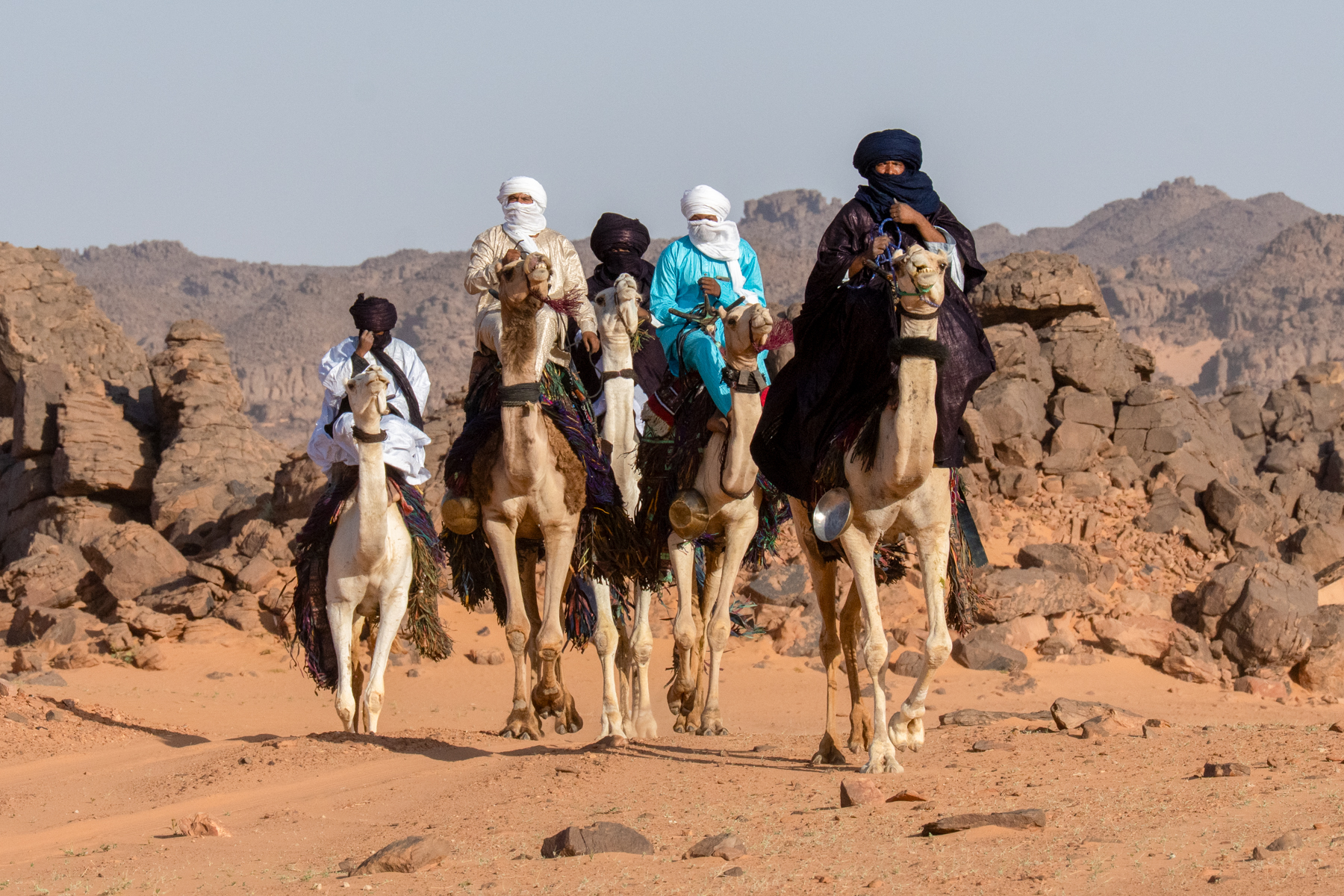
Tuareg men arrive for a camel dance (image by Inger Vandyke)
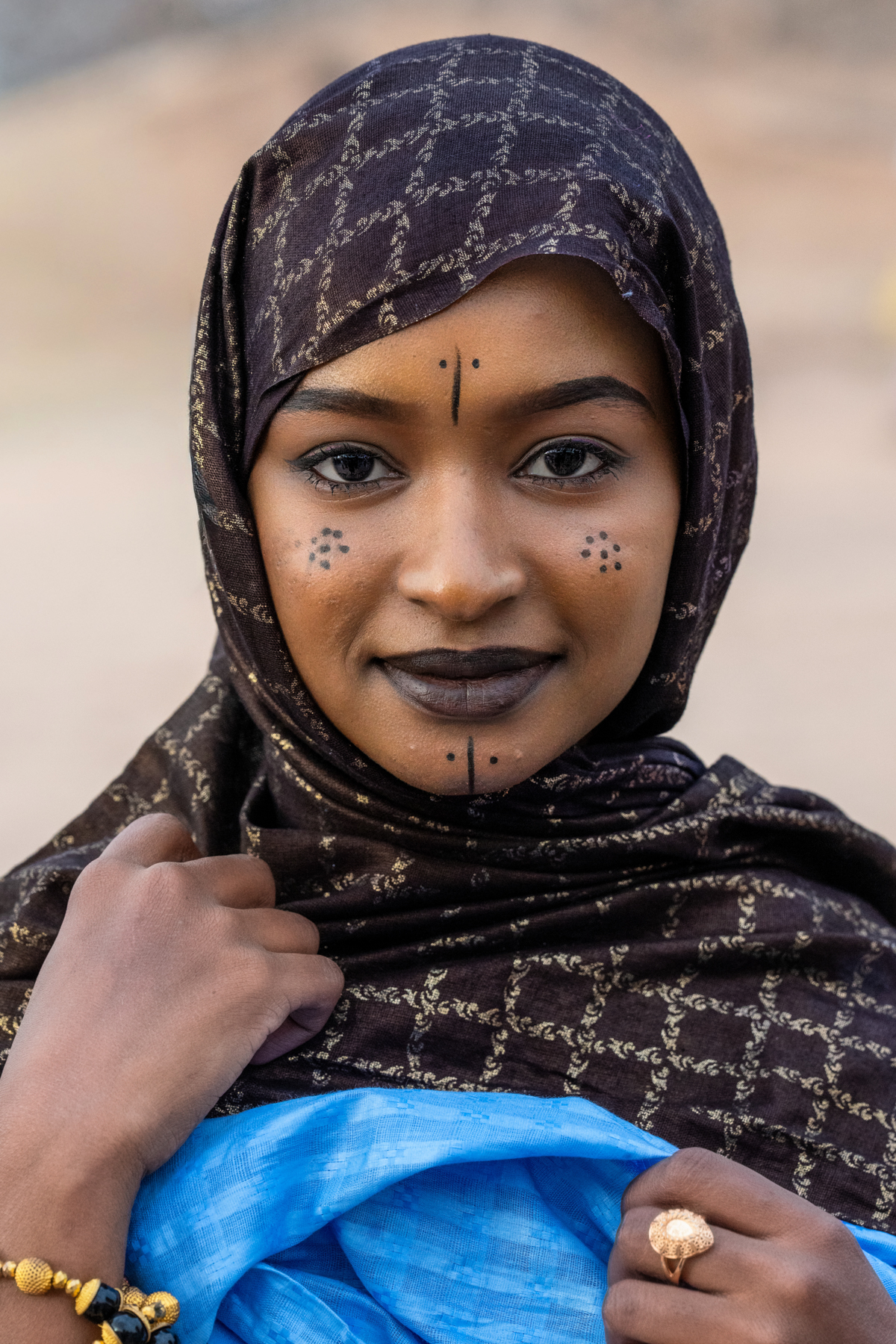
Traditionally, face makeup for Tuareg women involved yellow ochre foundation with markings created in black kohl (image by Inger Vandyke)
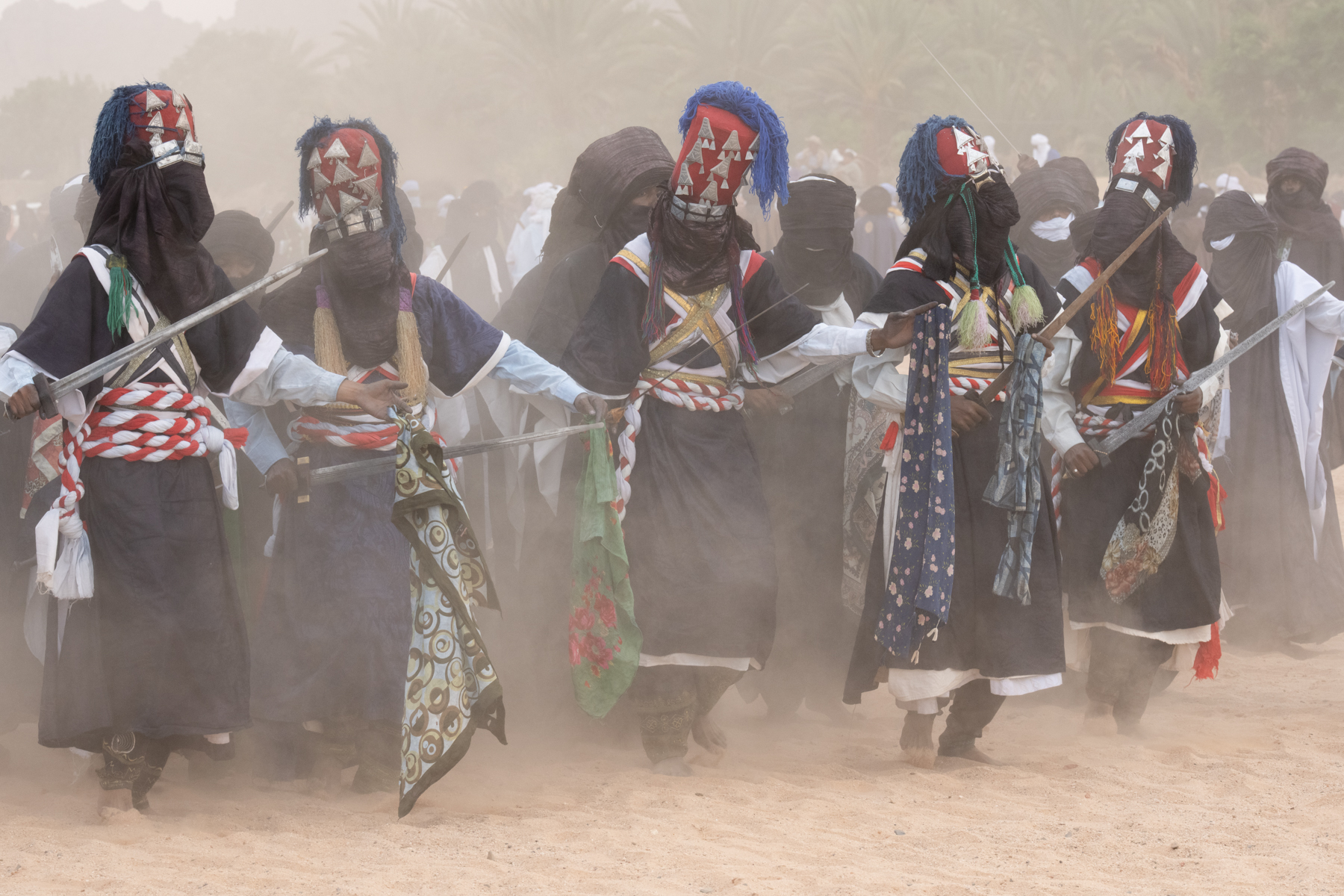
Sabiba (image by Inger Vandyke)
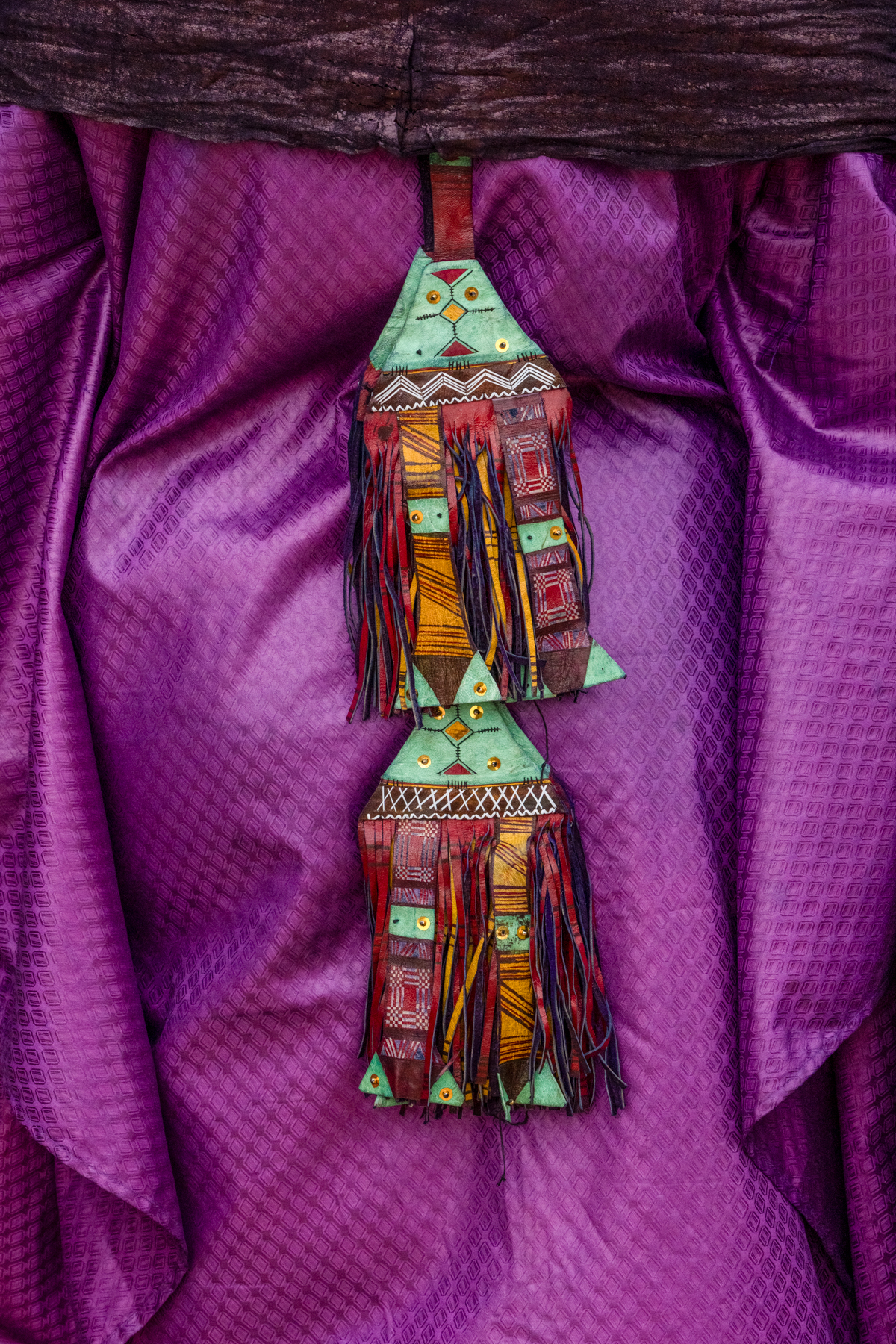
Dress detail of Tuareg women (image by Inger Vandyke)
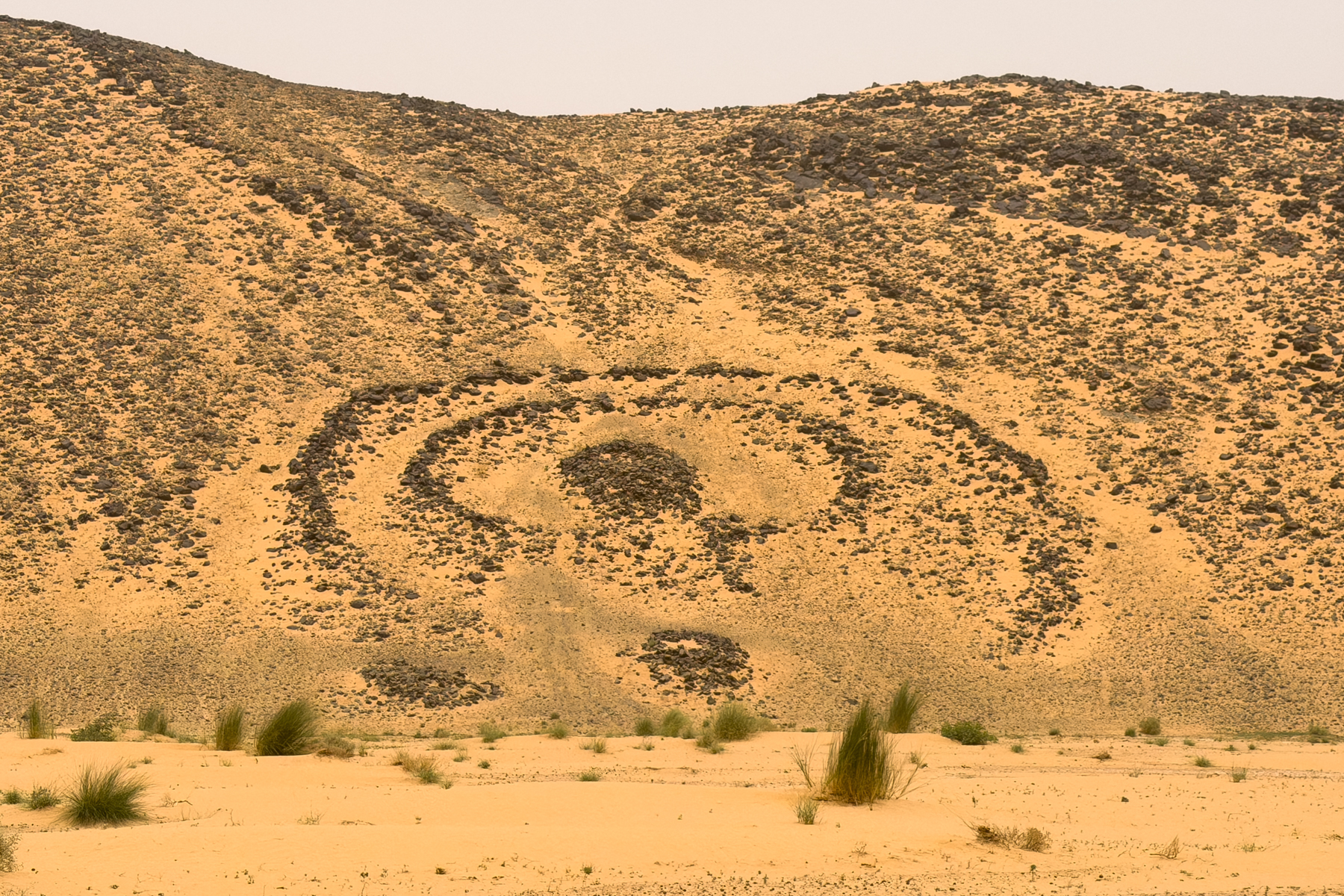
Ancient grave site in the Sahara (image by Inger Vandyke)
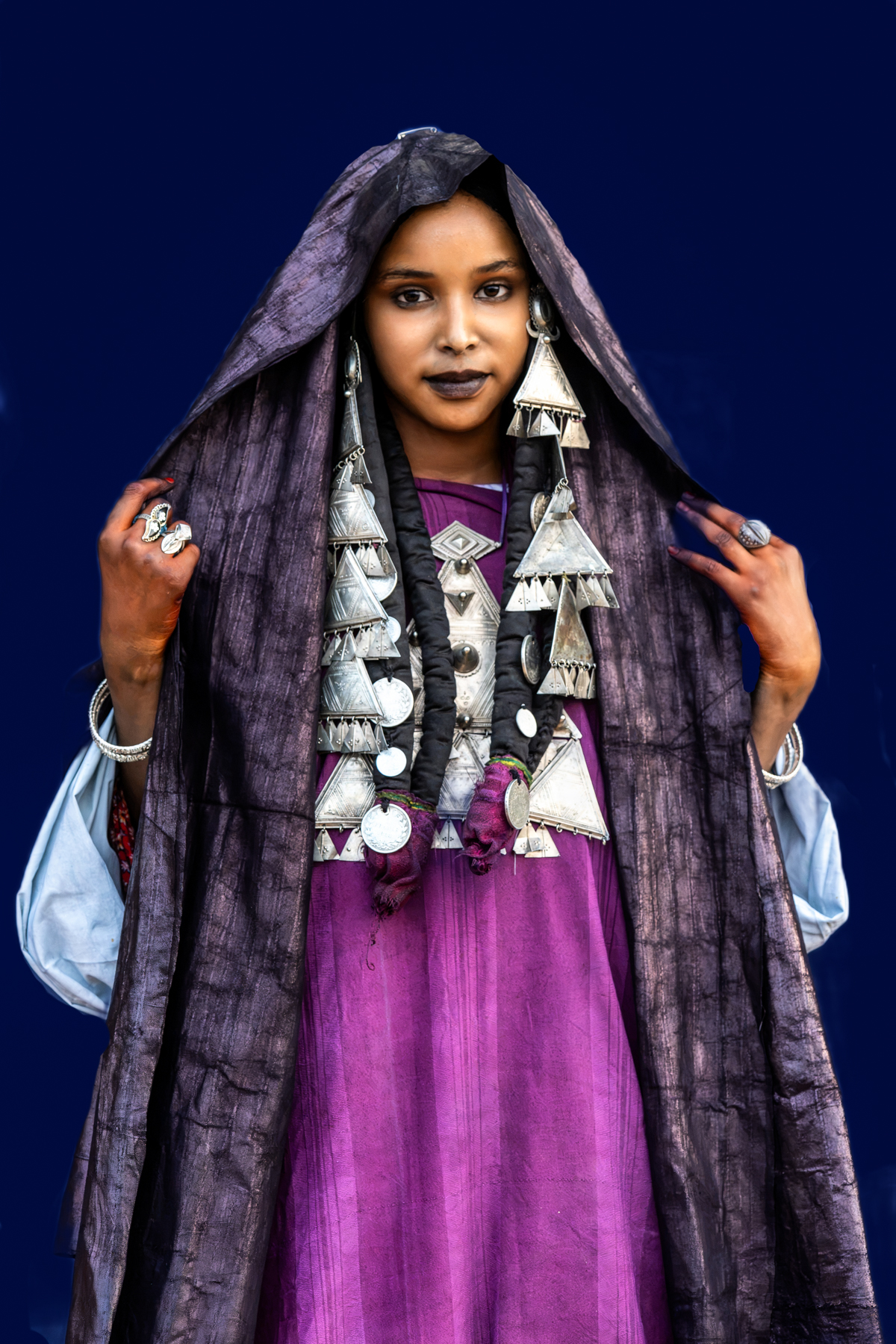
Young Tuareg girl in silver and indigo (image by Inger Vandyke)
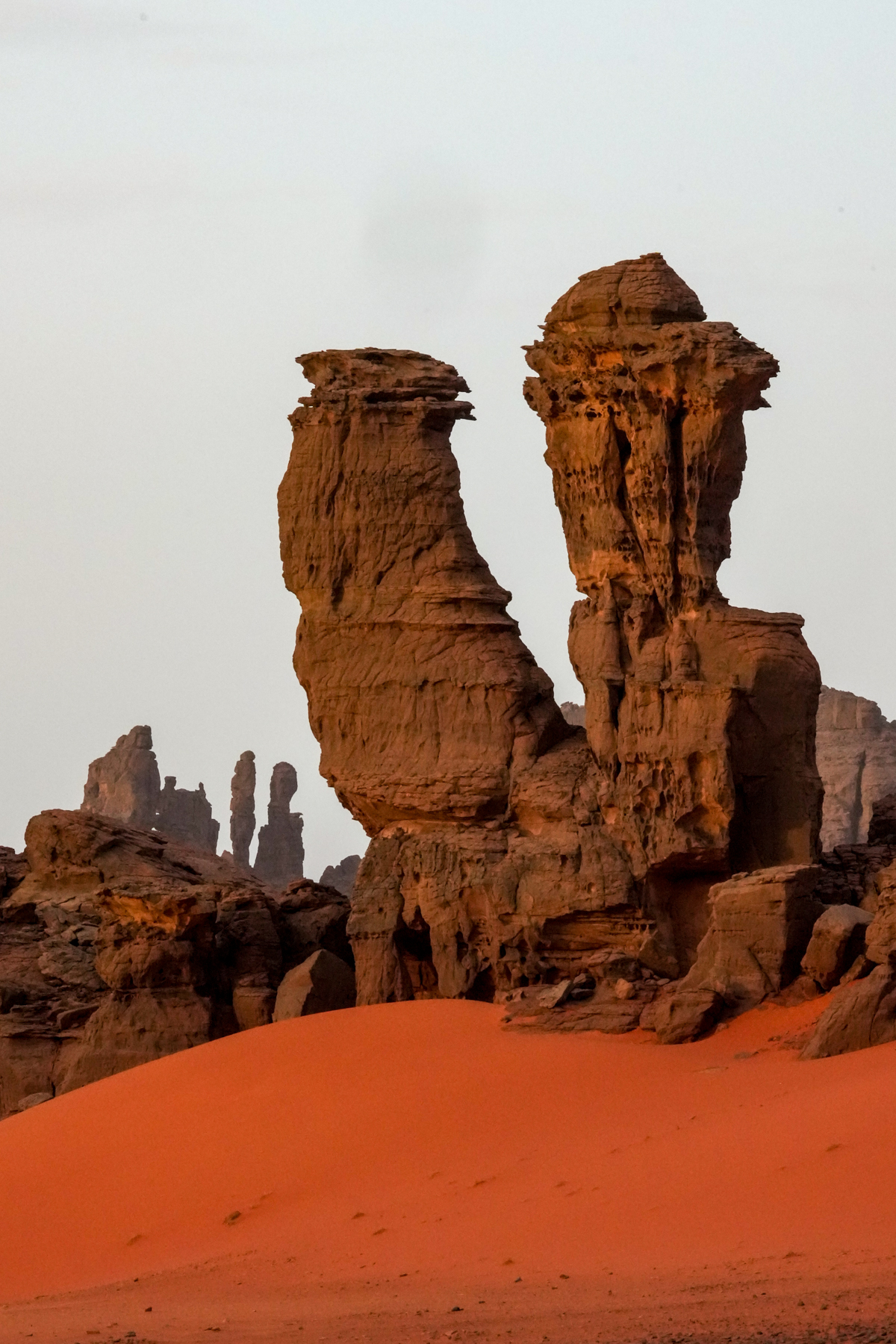
Le Cirque (image by Inger Vandyke)
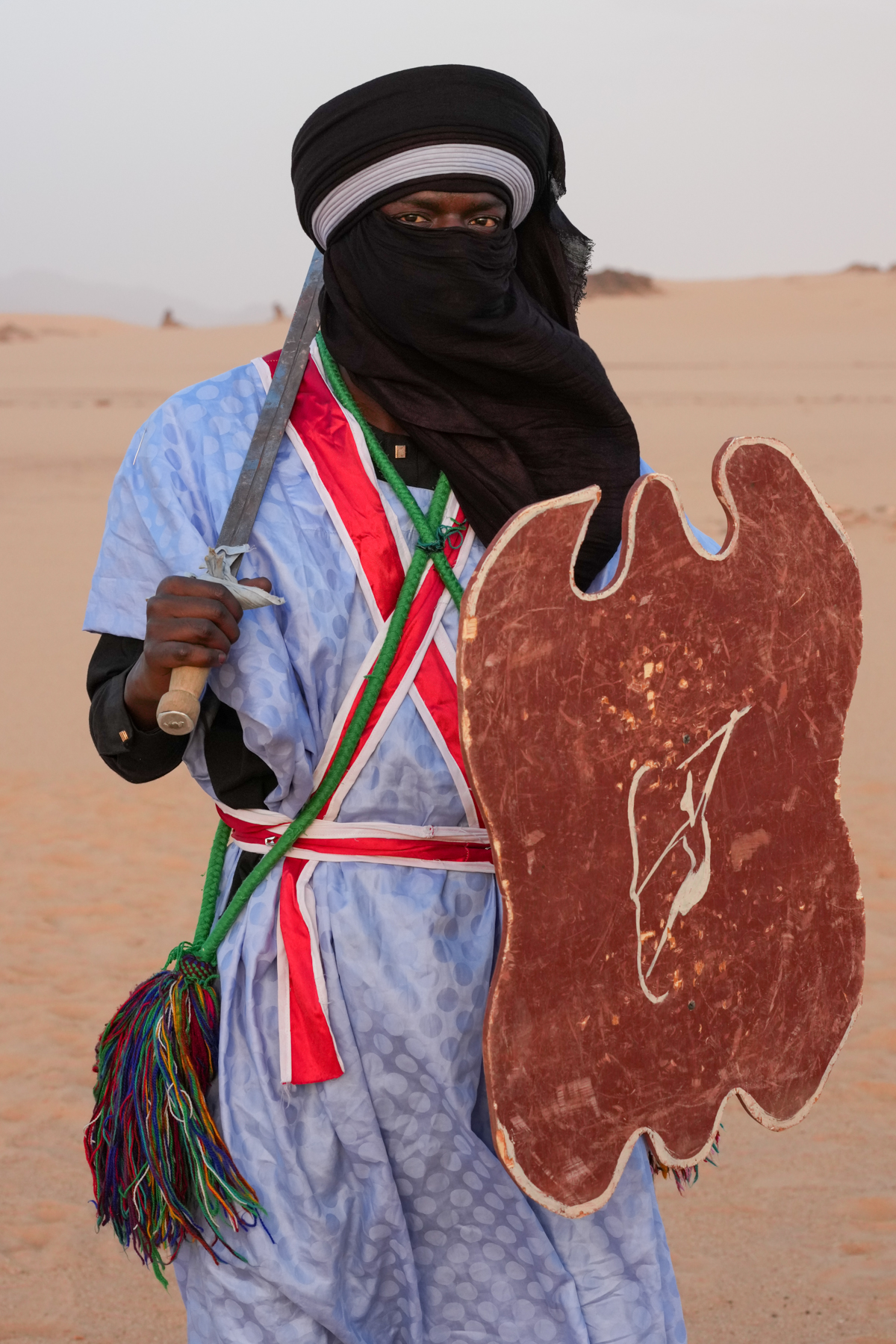
Aroukas warrior (image by Inger Vandyke)
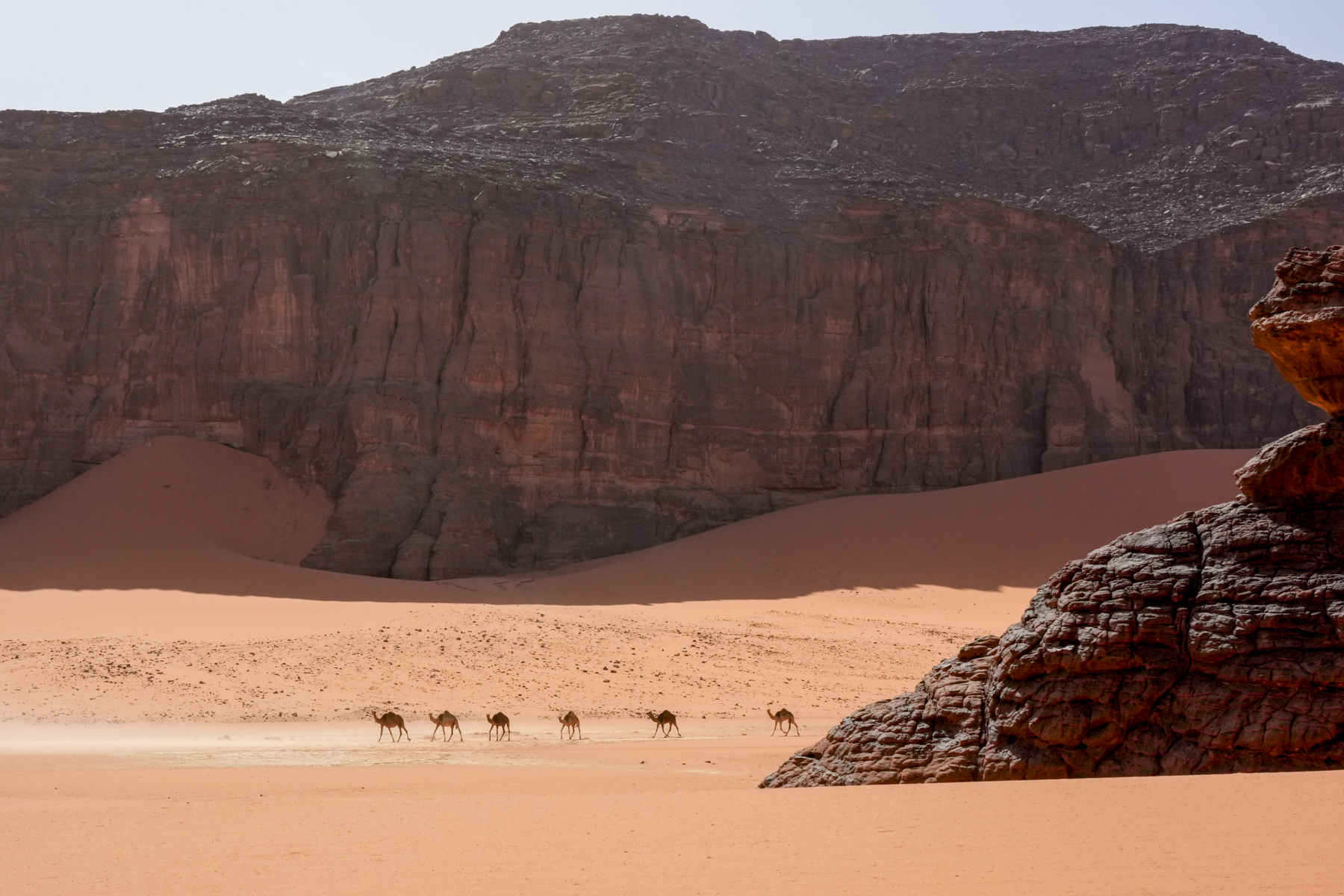
A herd of camels near the cathedral of Tadrart (image by Inger Vandyke)
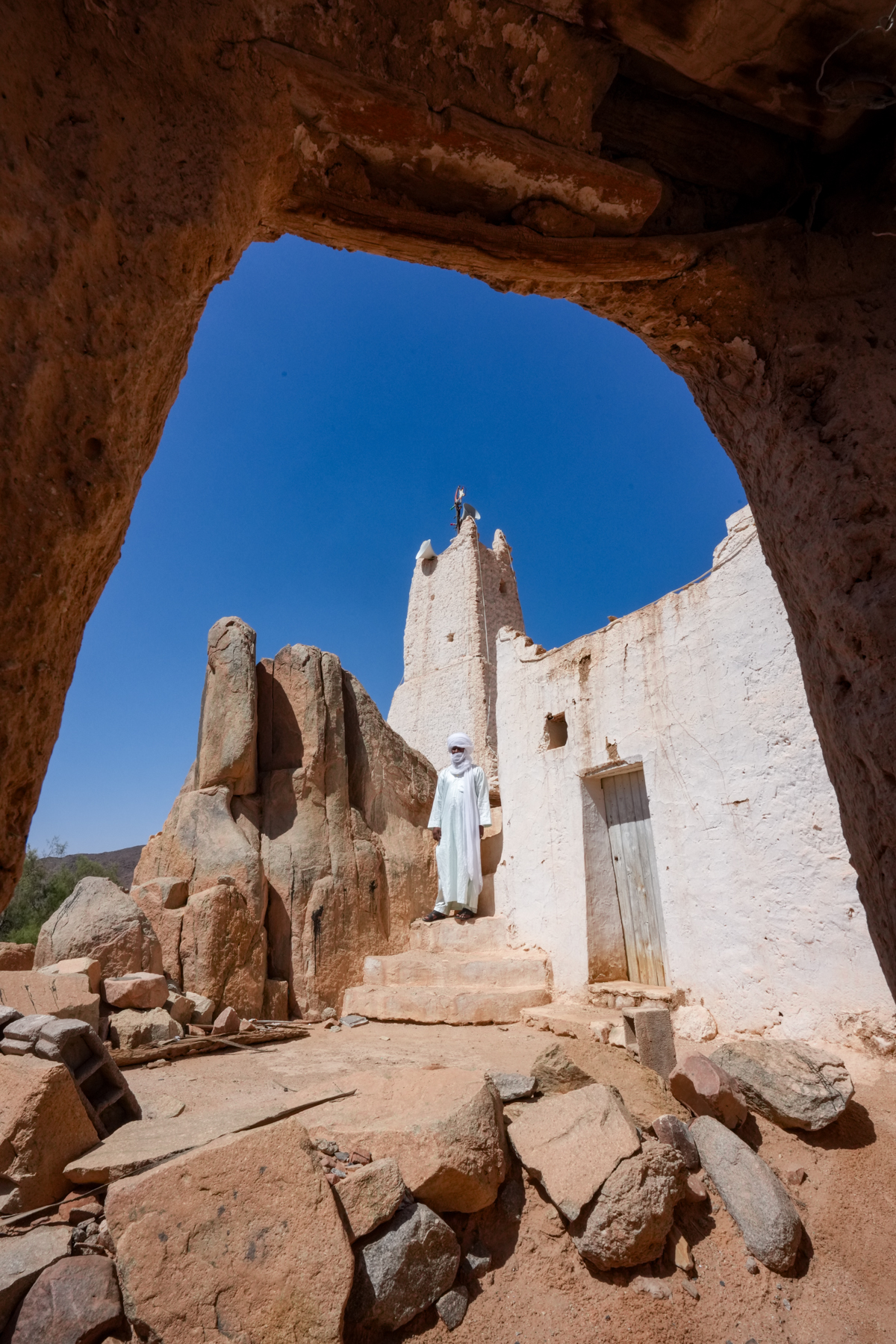
Stairway to the heavens. Ascending to the roof of the mud mosque in Zalouaz (image by Inger Vandyke)
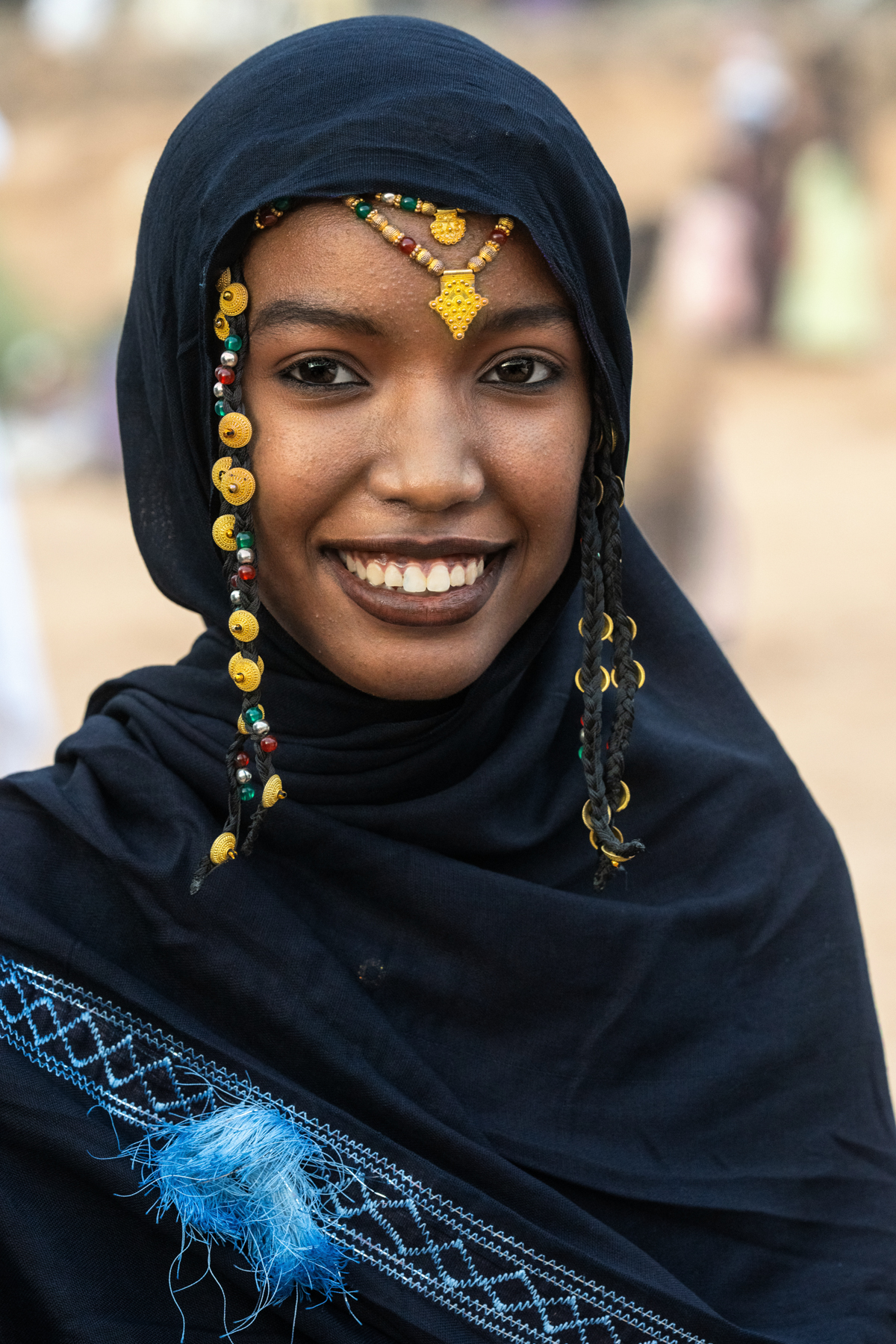
Tuareg girl adorned in gold for Sabiba (image by Inger Vandyke)
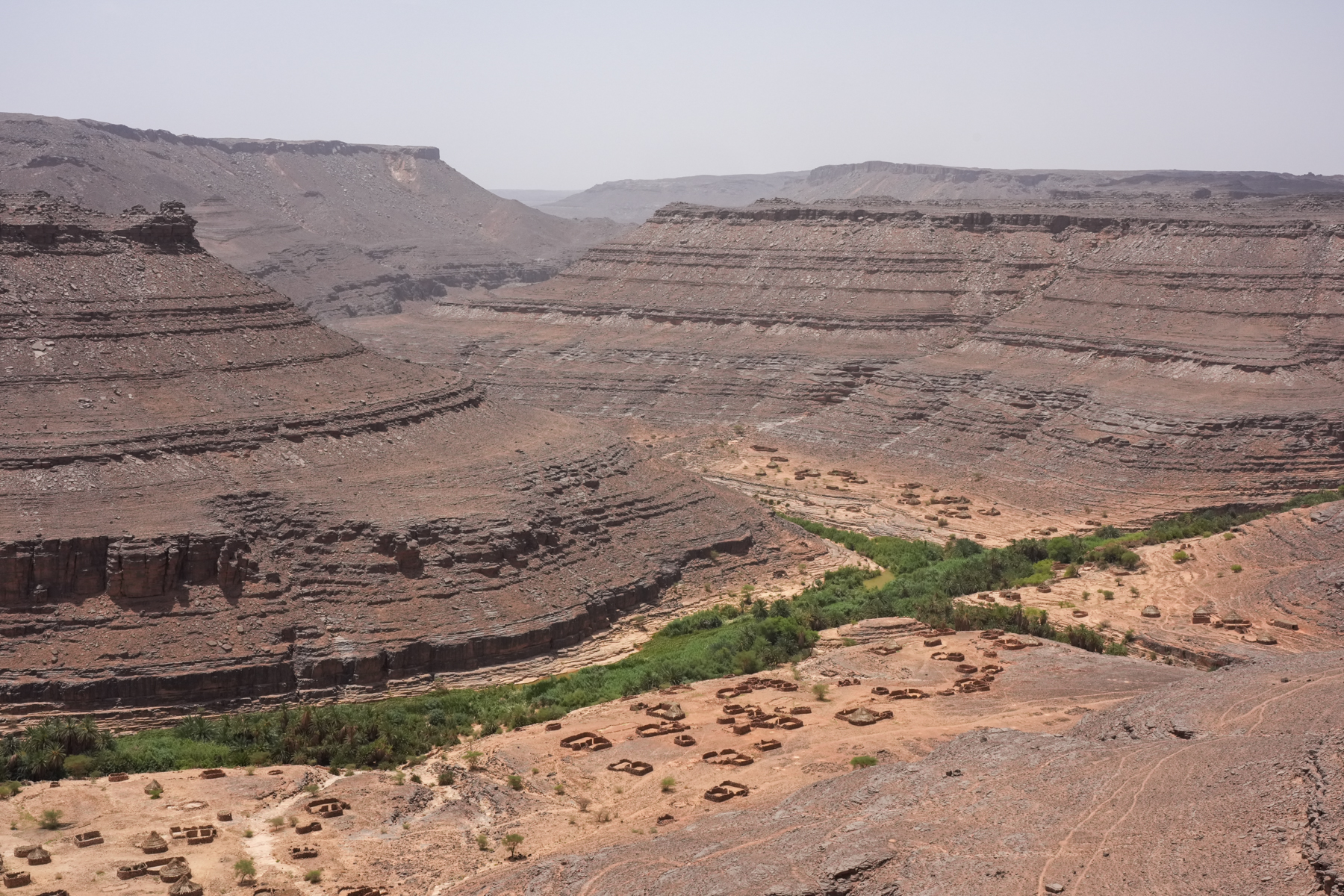
Ancient town of Idarwen (image by Inger Vandyke)
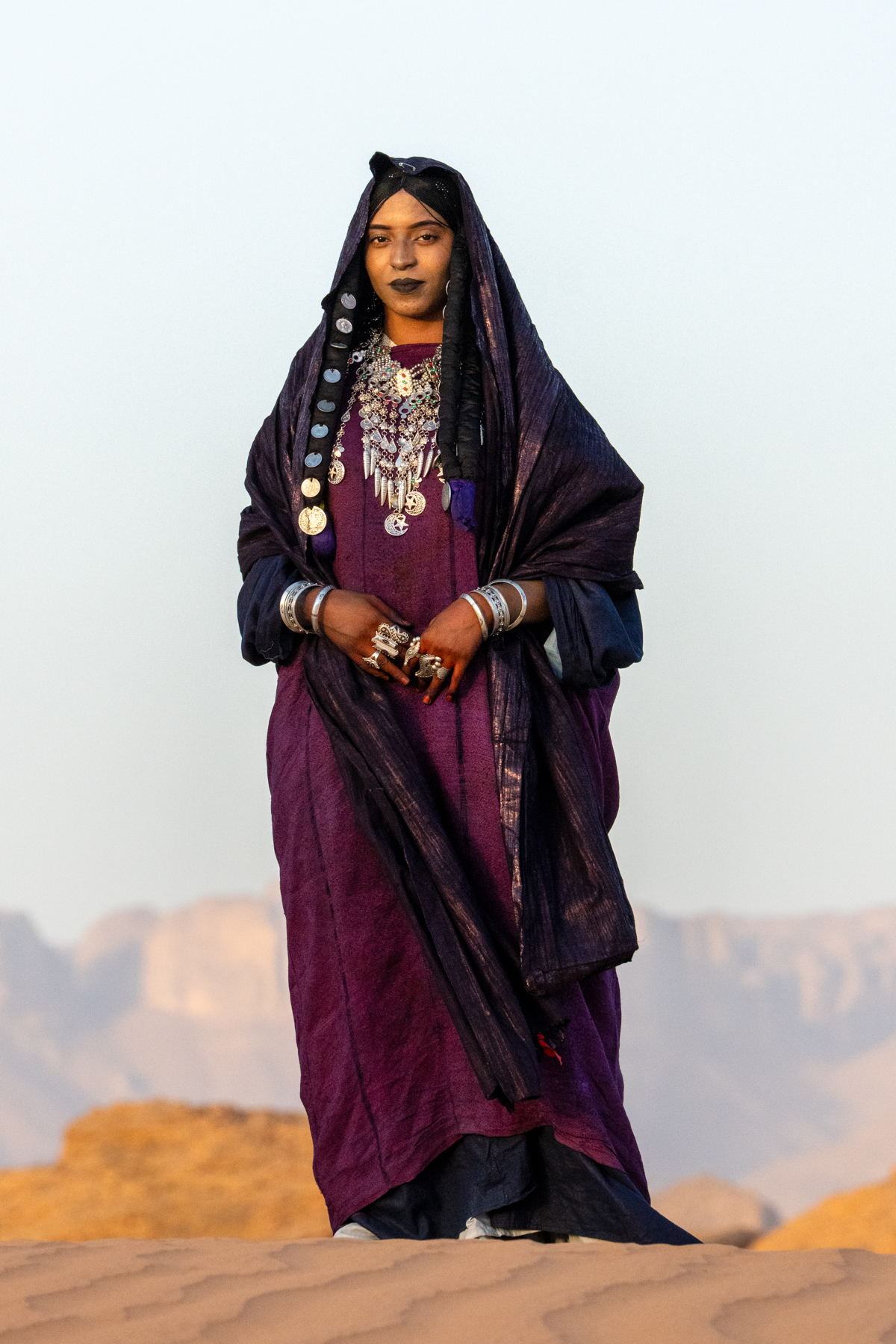
Tuareg girl in the desert (image by Inger Vandyke)
Tahamat dancer (image by Inger Vandyke)
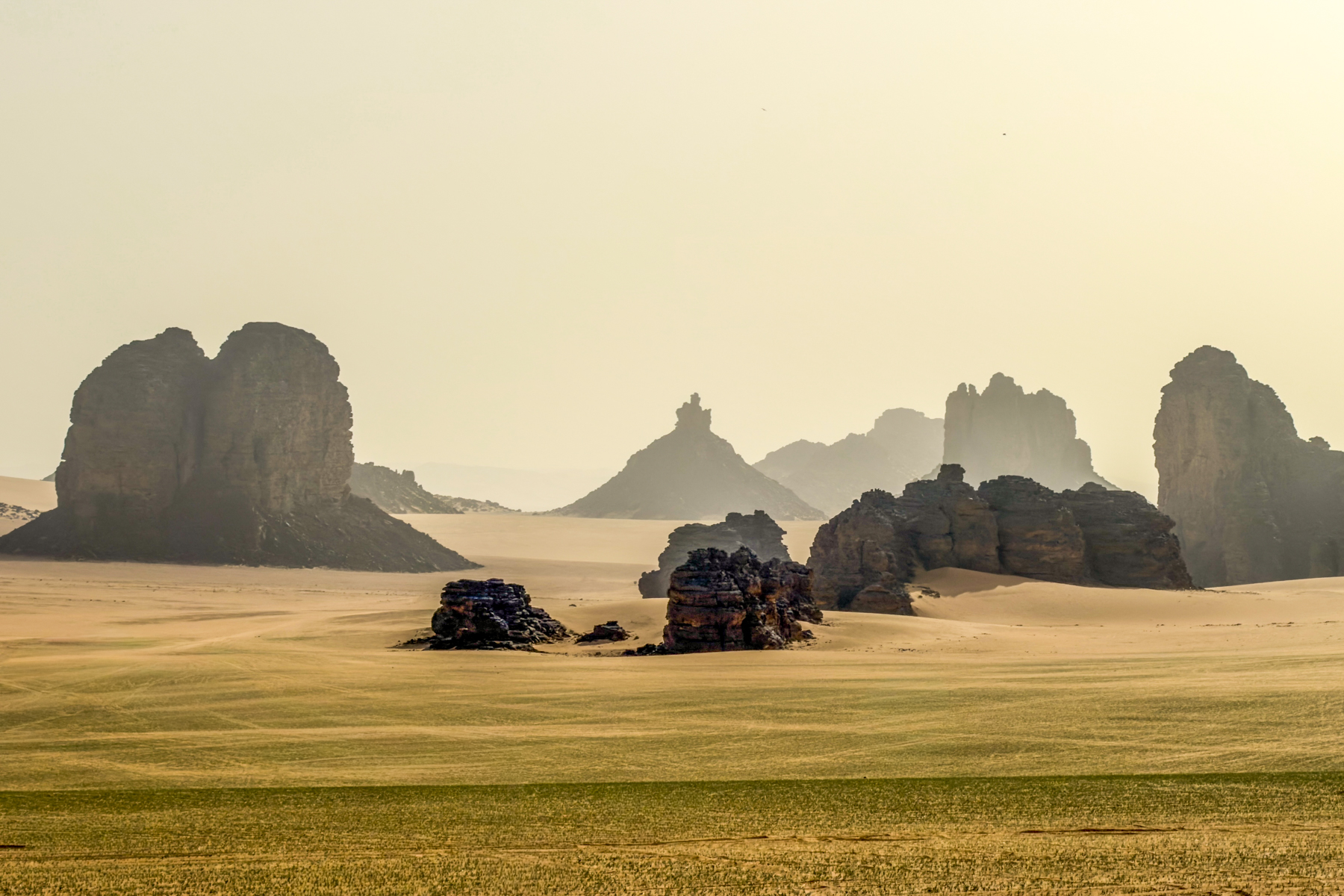
The Molar of Adjahil (image by Inger Vandyke)
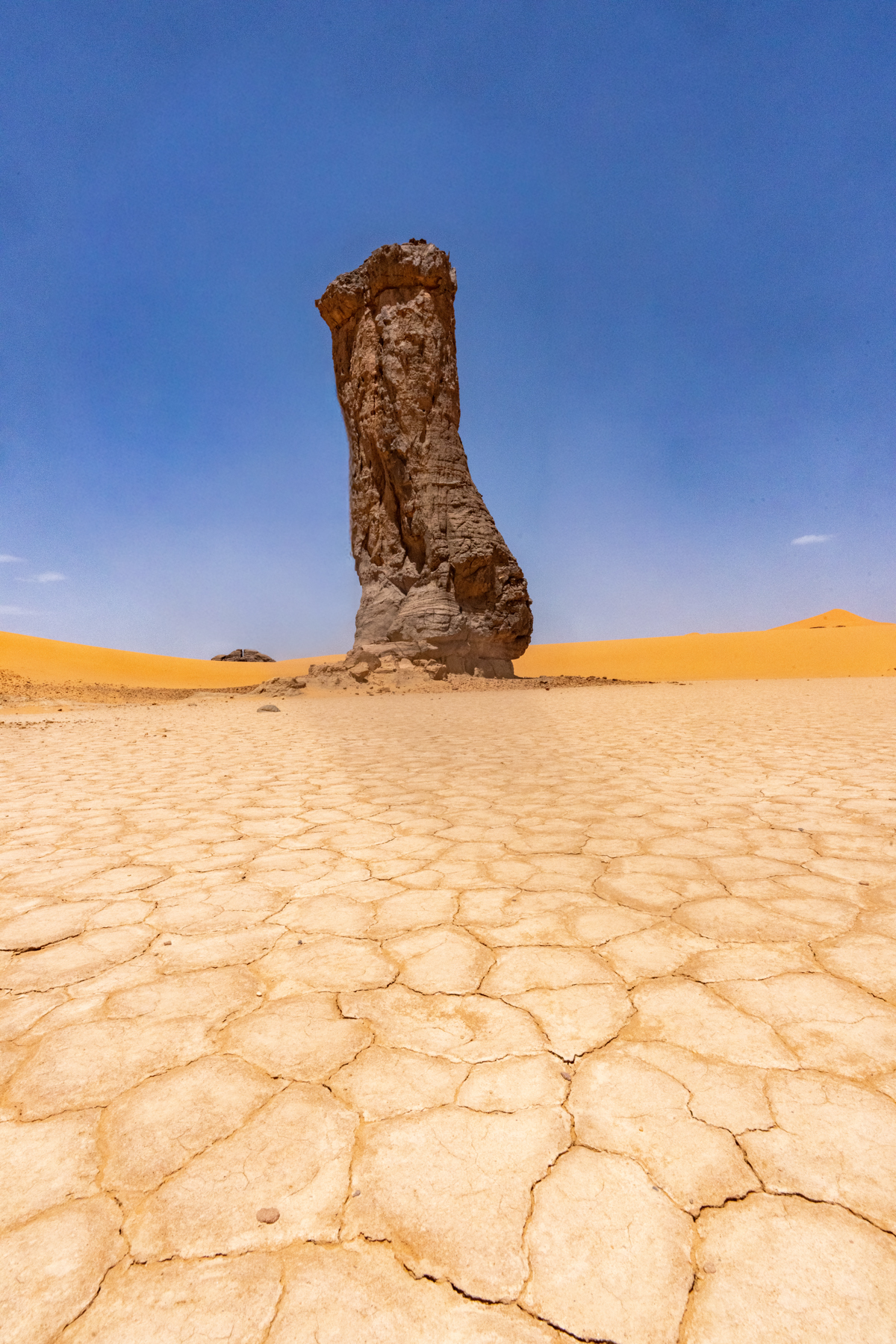
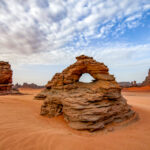
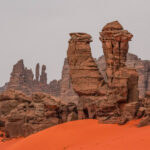
Tadrart rock pillar (image by Inger Vandyke)
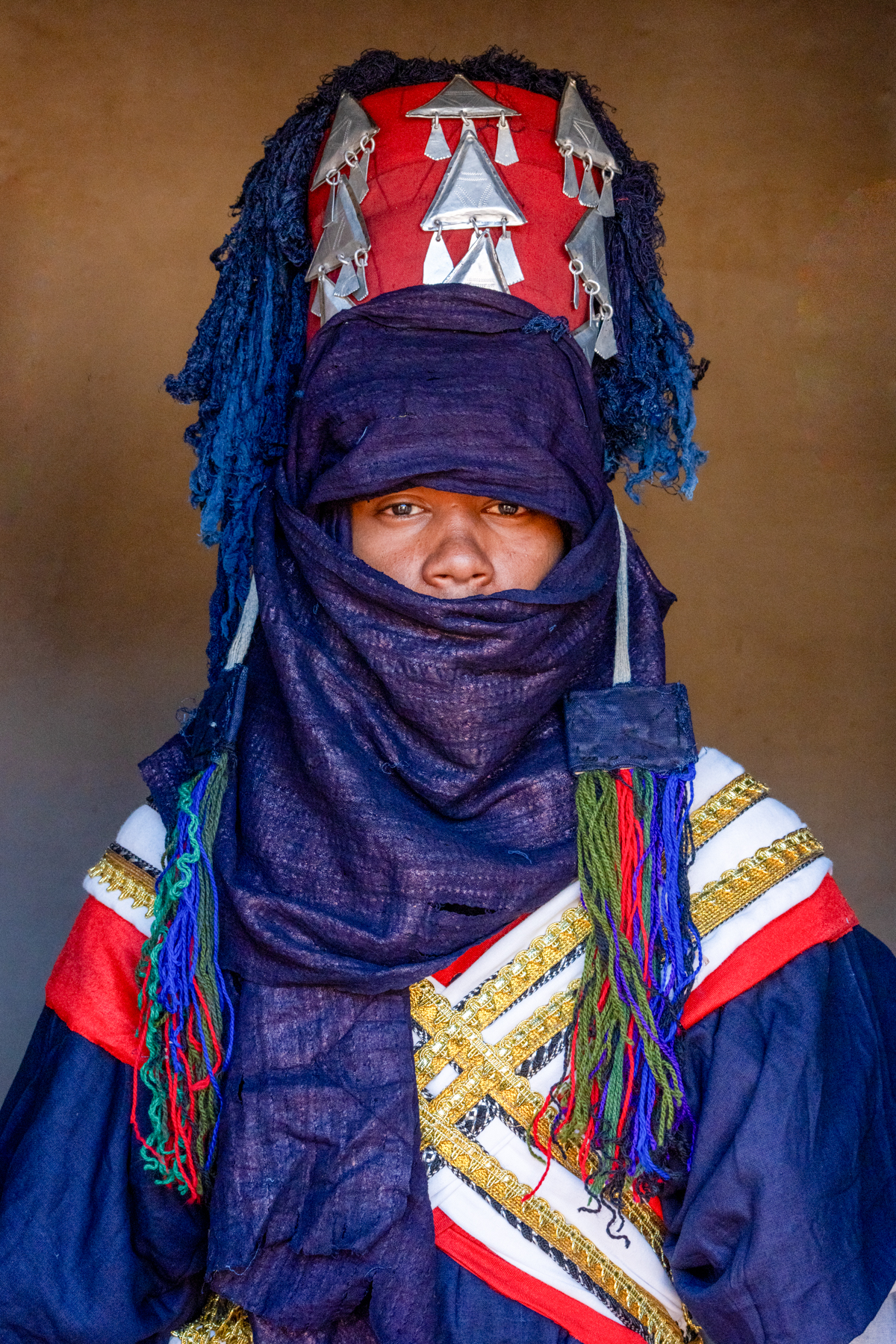
Portrait of a Sabiba warrior (image by Inger Vandyke)
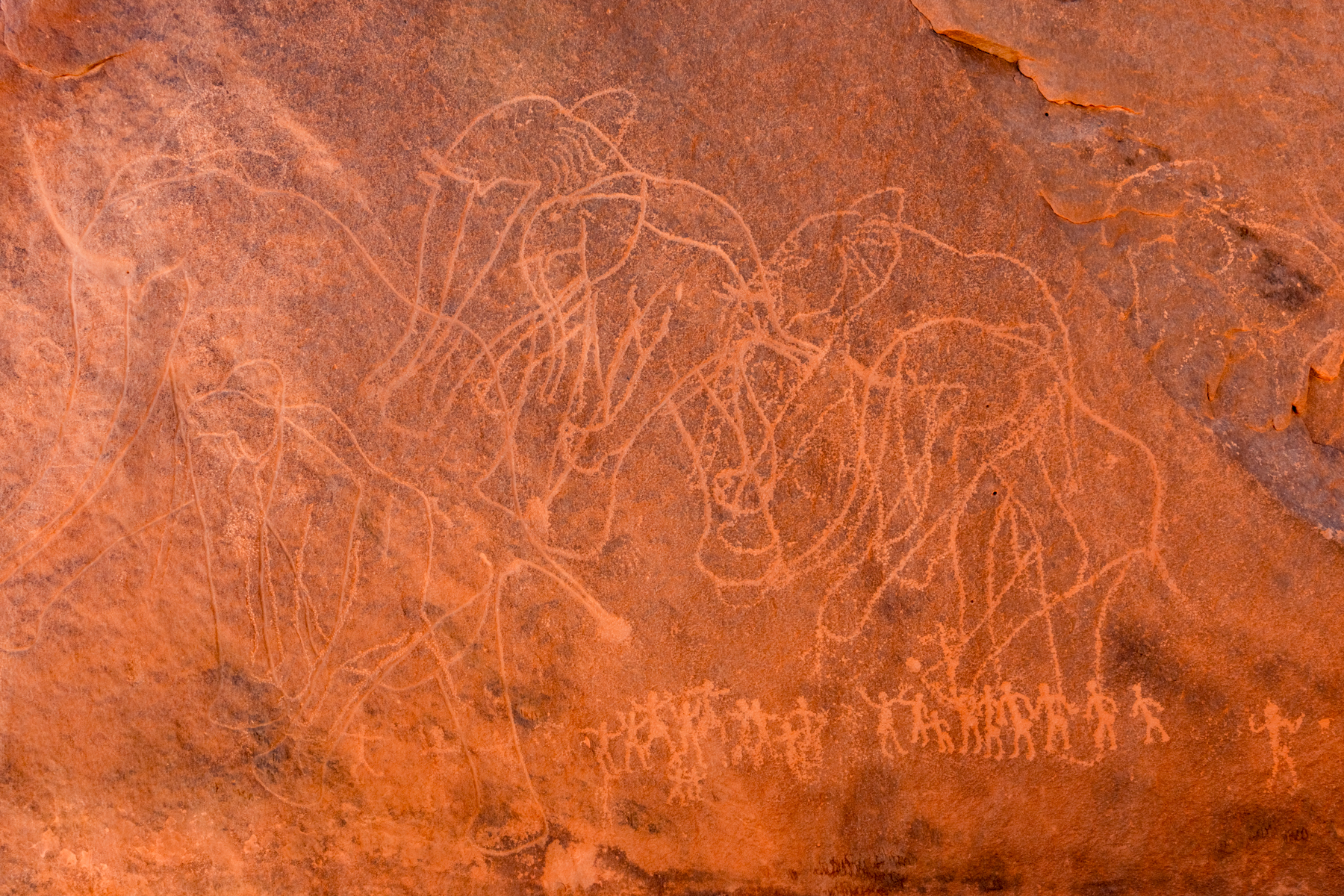
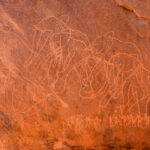
Elephant engravings at Tadrart (image by Inger Vandyke)
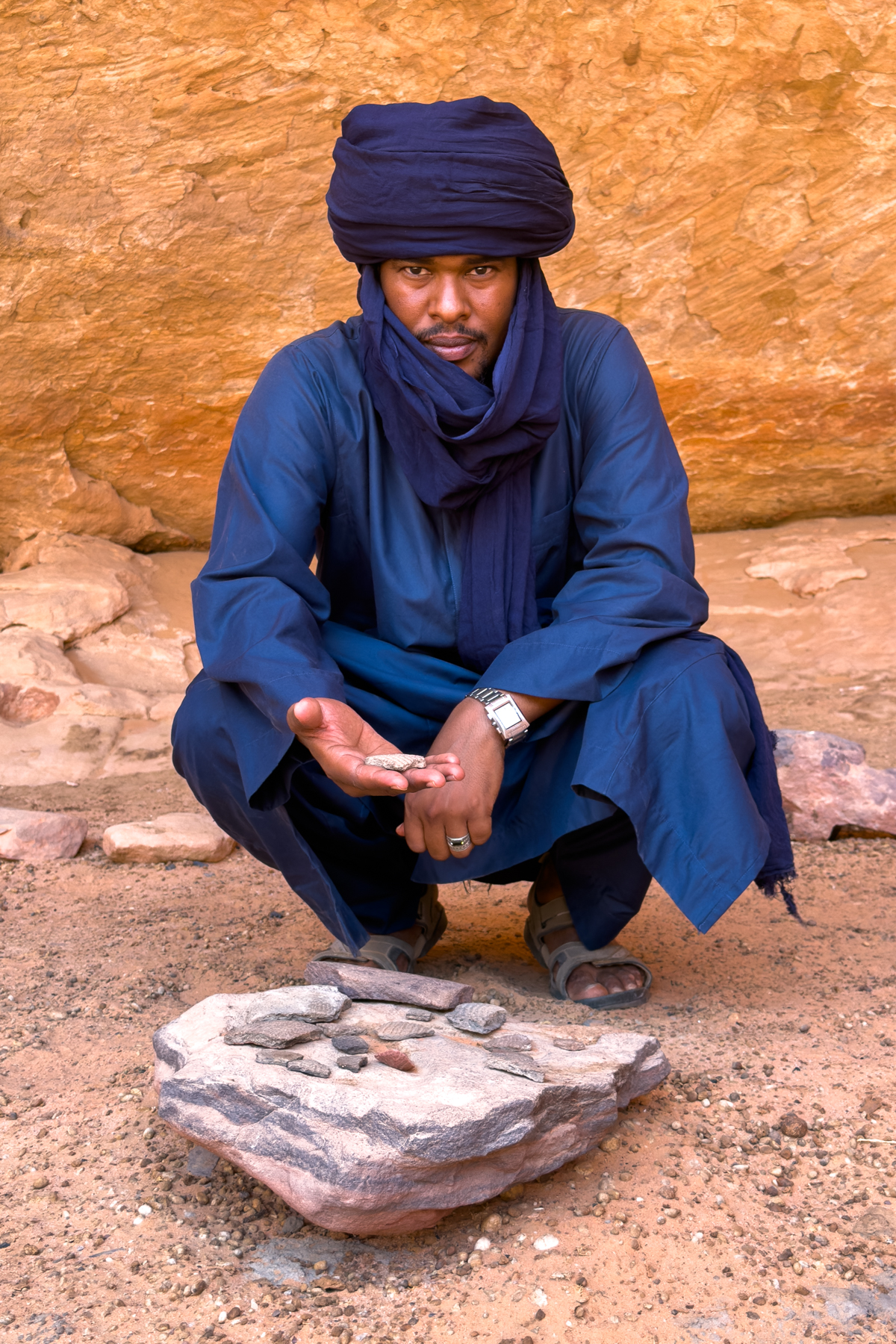
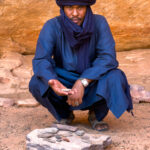
Exploring ceramic fragments at Aldenj (image by Inger Vandyke)
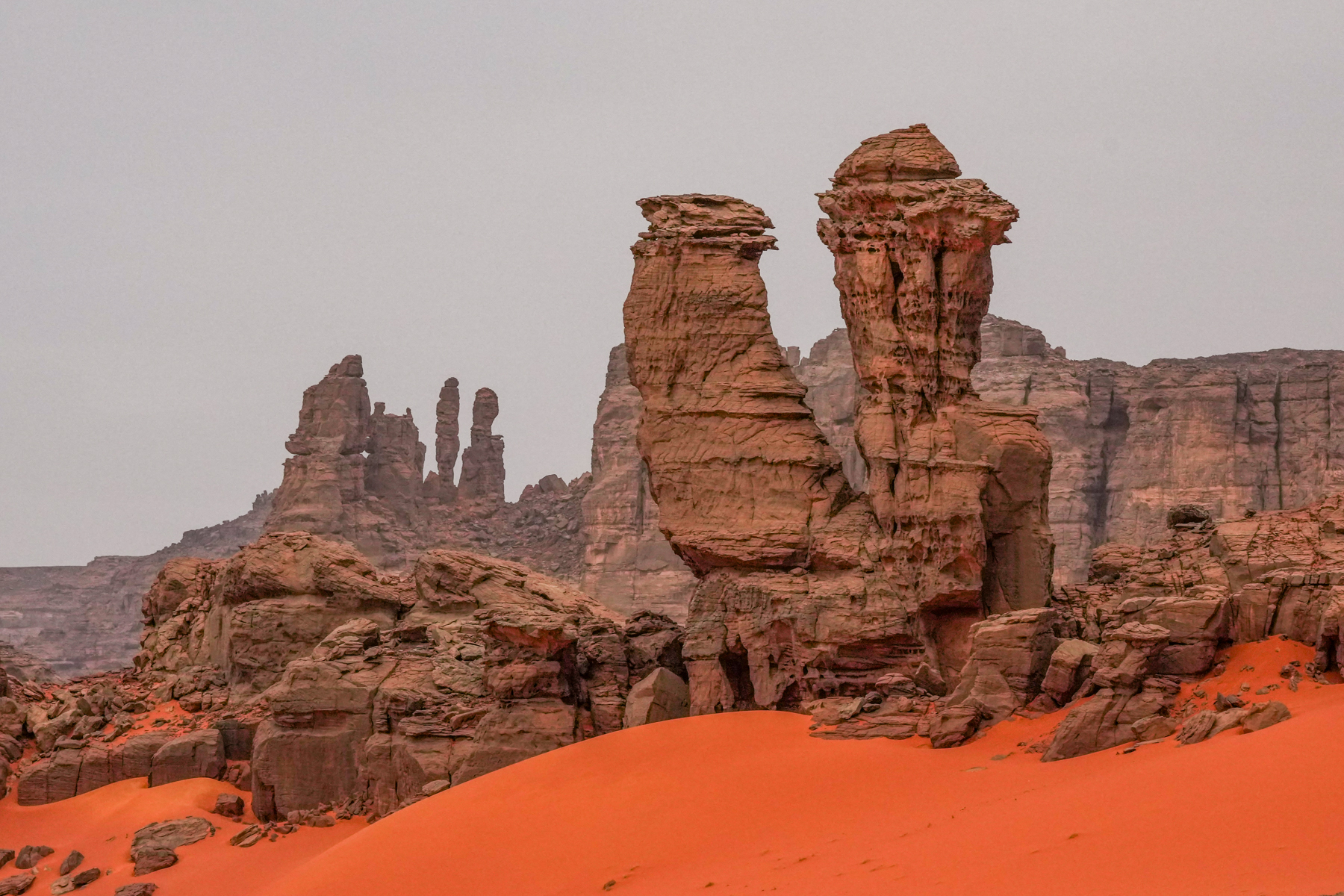
The dramatic landscapes of Le Cirque in Tadrart Rouge (image by Inger Vandyke)
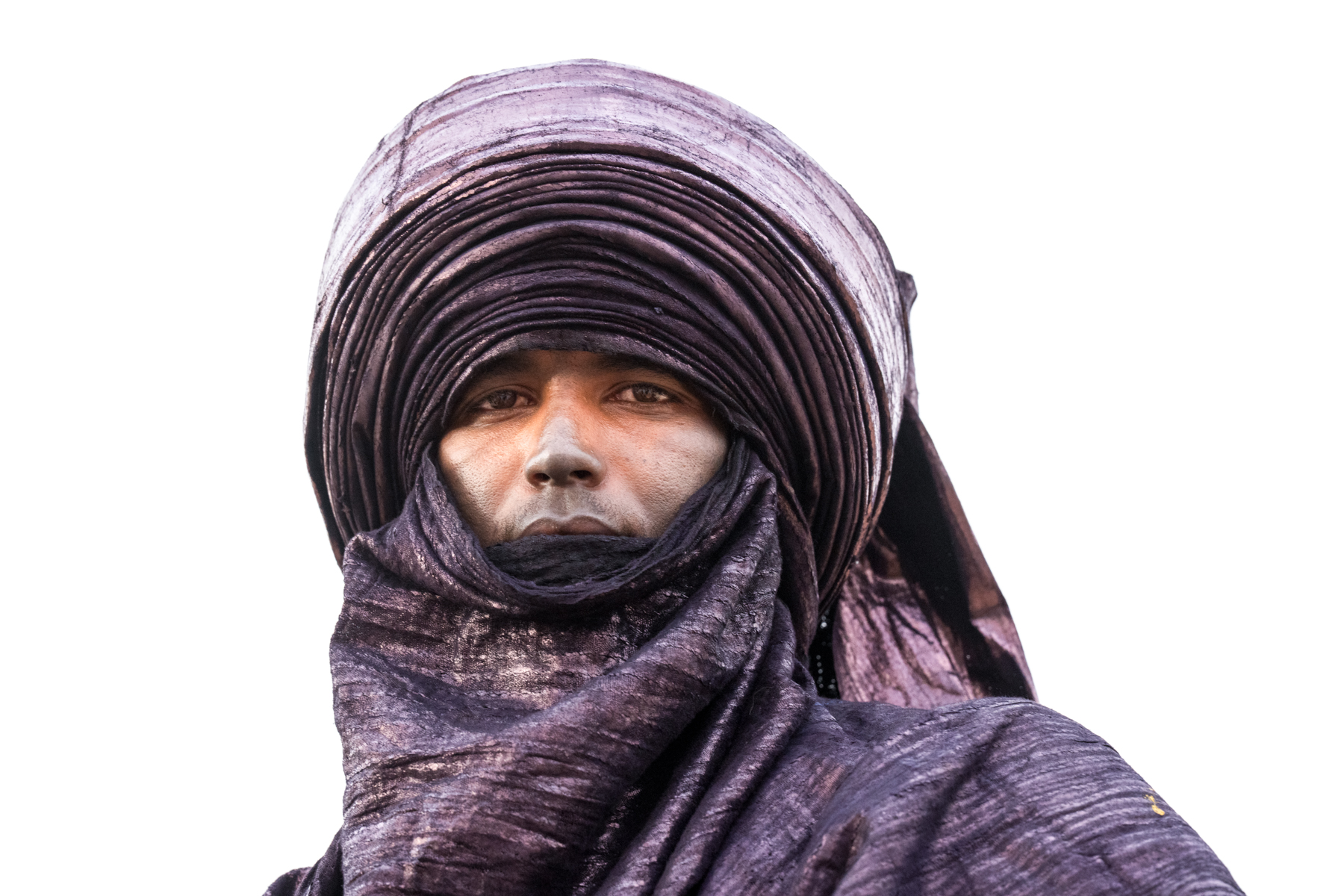
Tuareg man in indigo (image by Inger Vandyke)
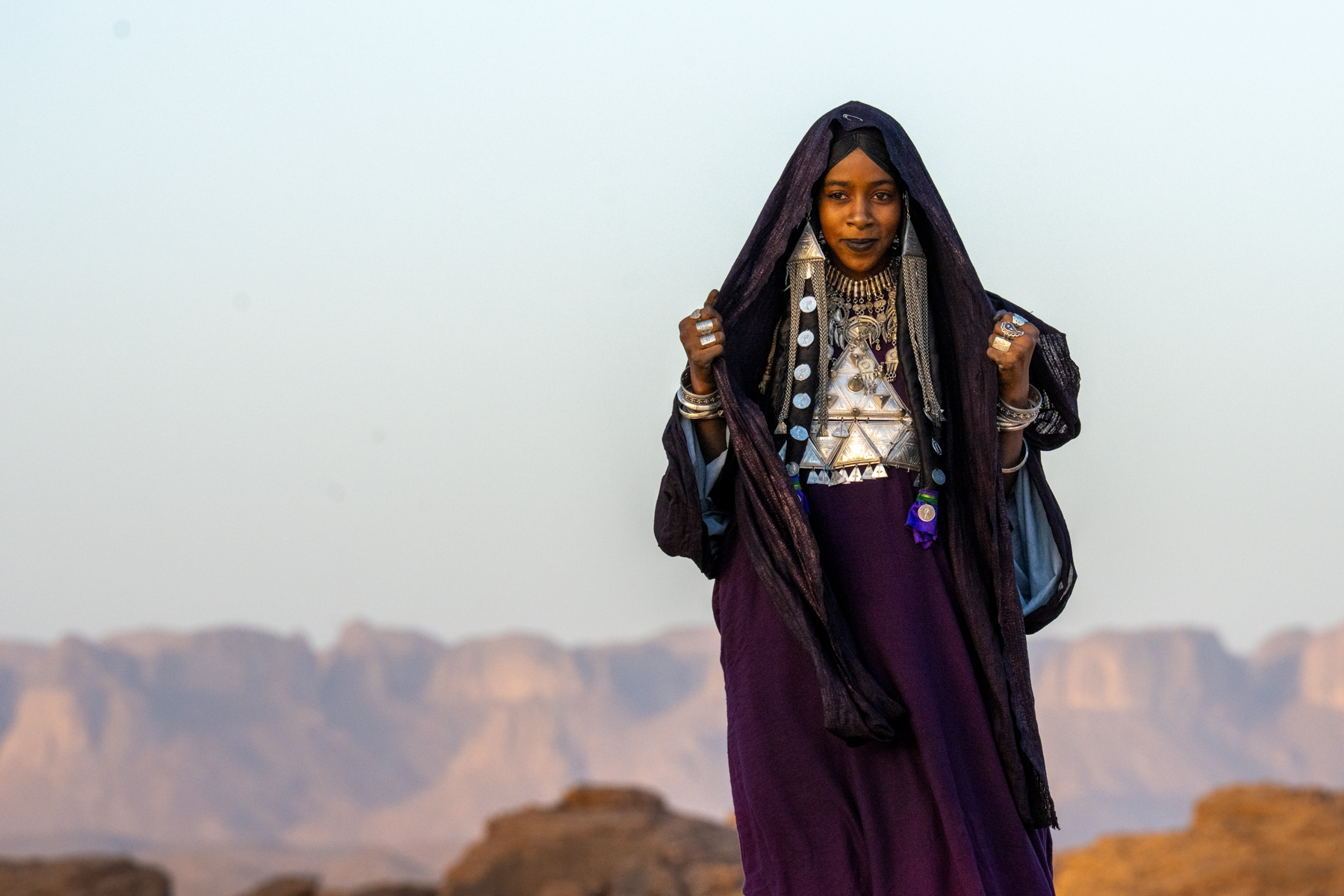
Desert beauty (image by Inger Vandyke)
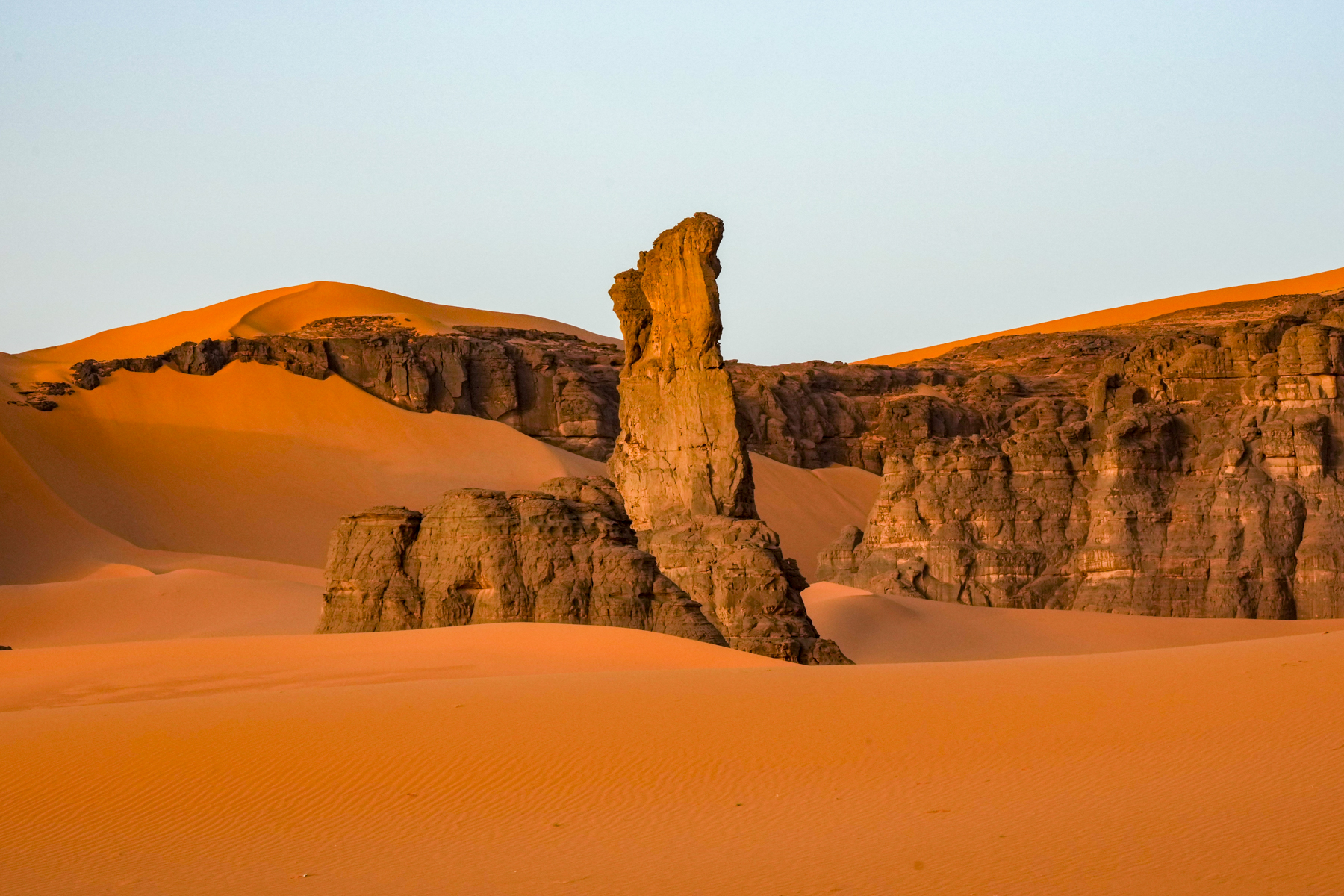
Moulenaga pillar (image by Inger Vandyke)
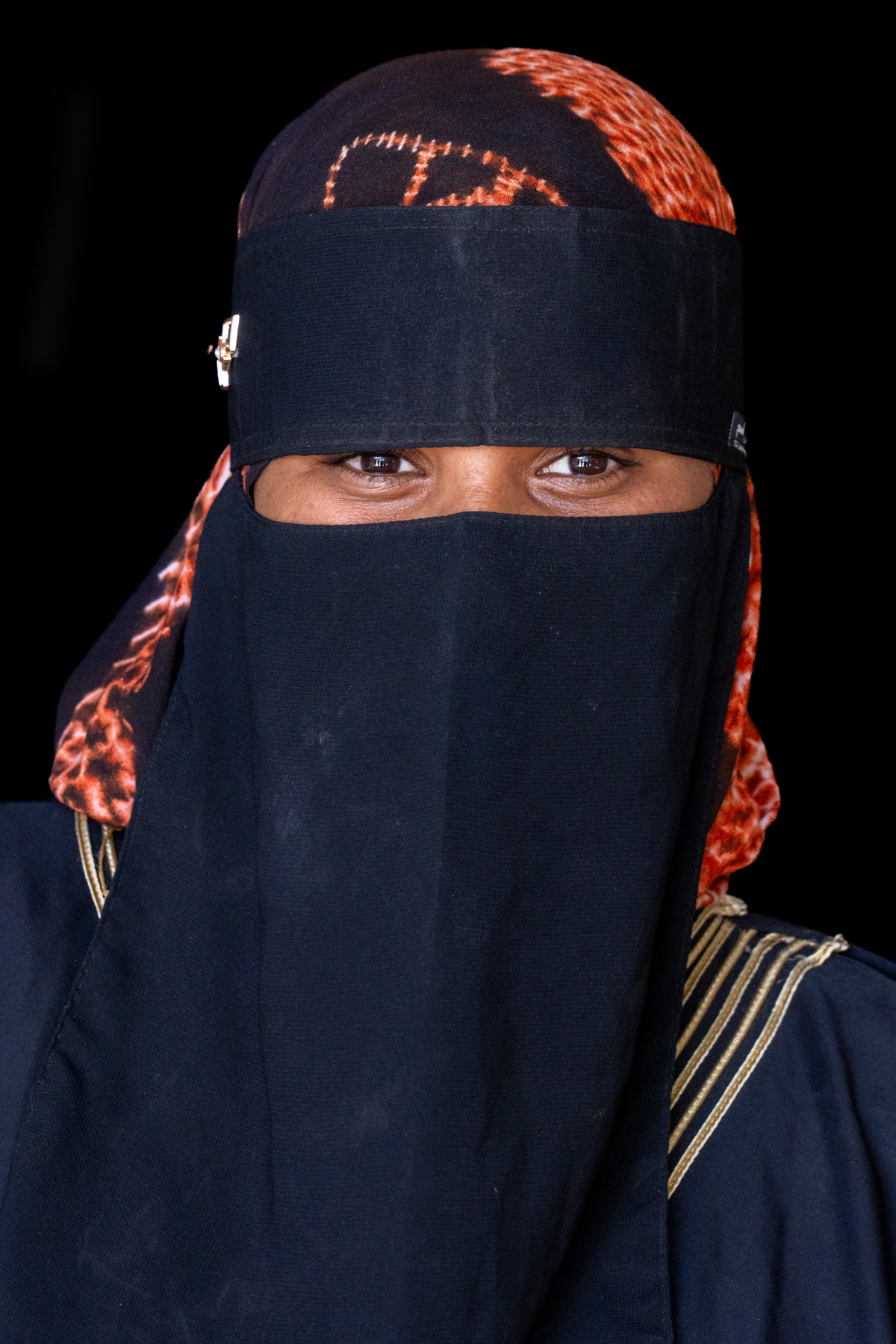
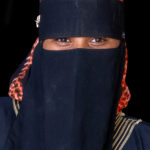
Woman in Niqab at the souk of Djanet (image by Inger Vandyke)
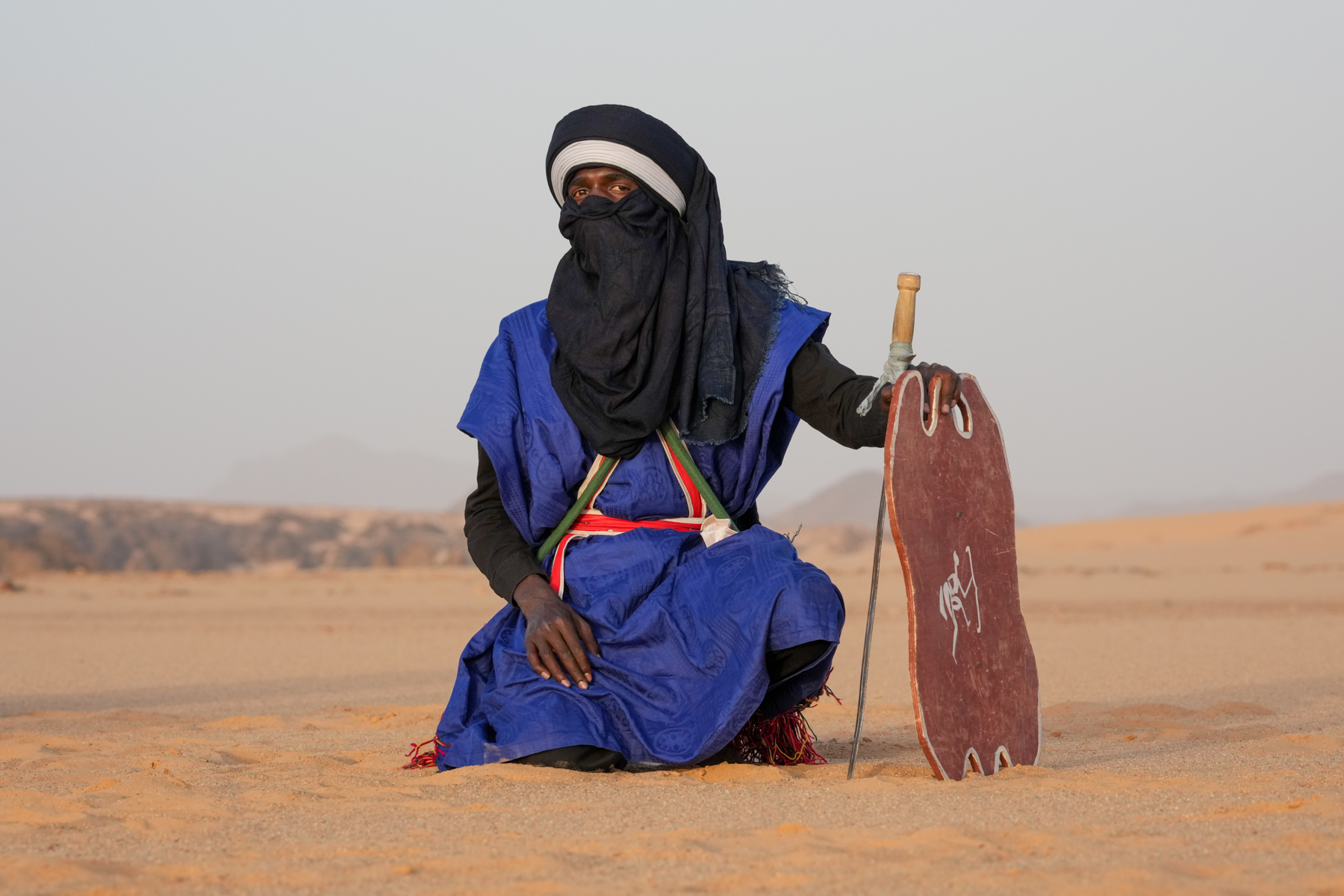
Aroukas warrior (image by Inger Vandyke)
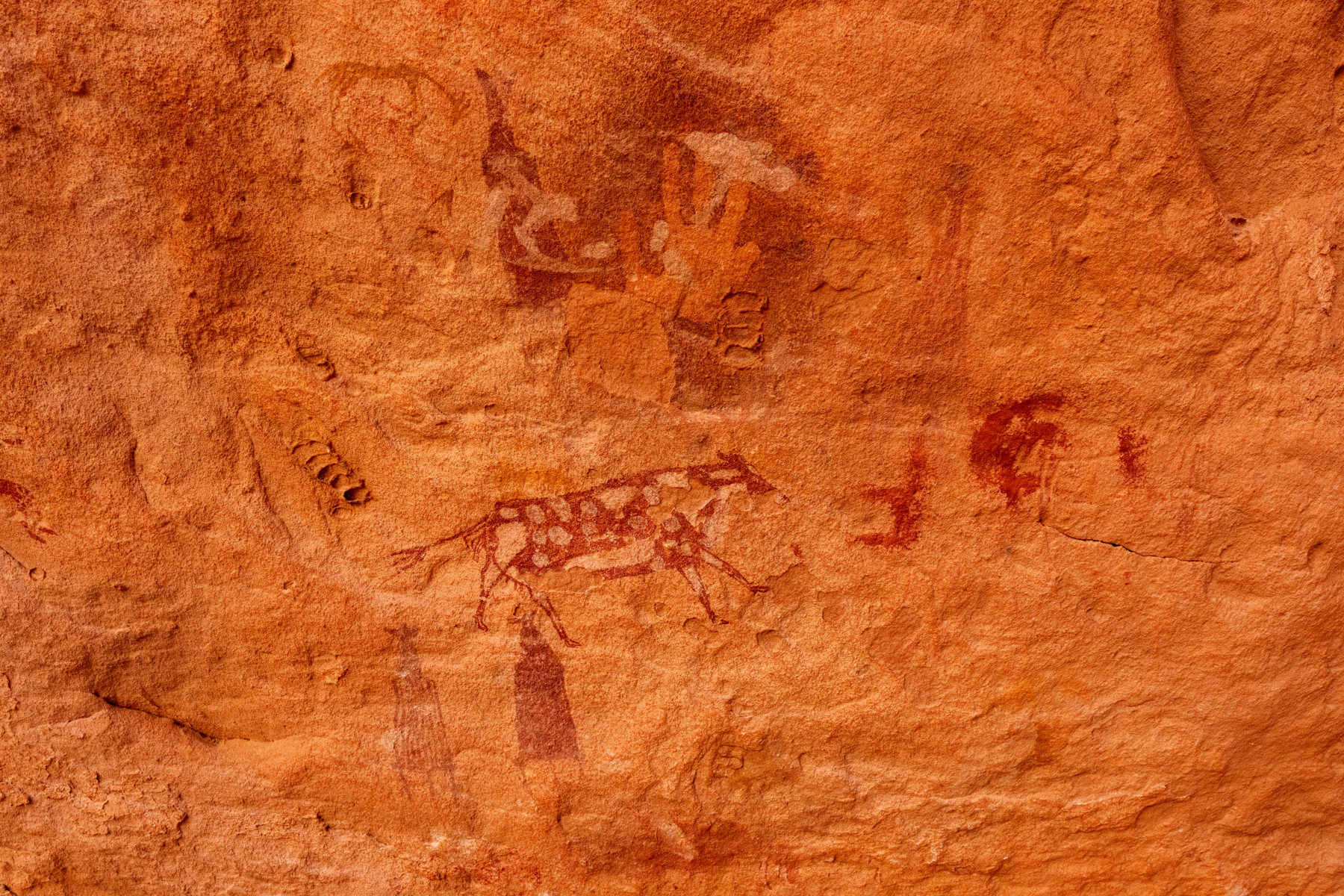
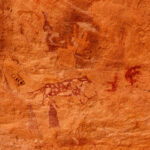
Cave paintings of mixed eras in Tadrart (image by Inger Vandyke)
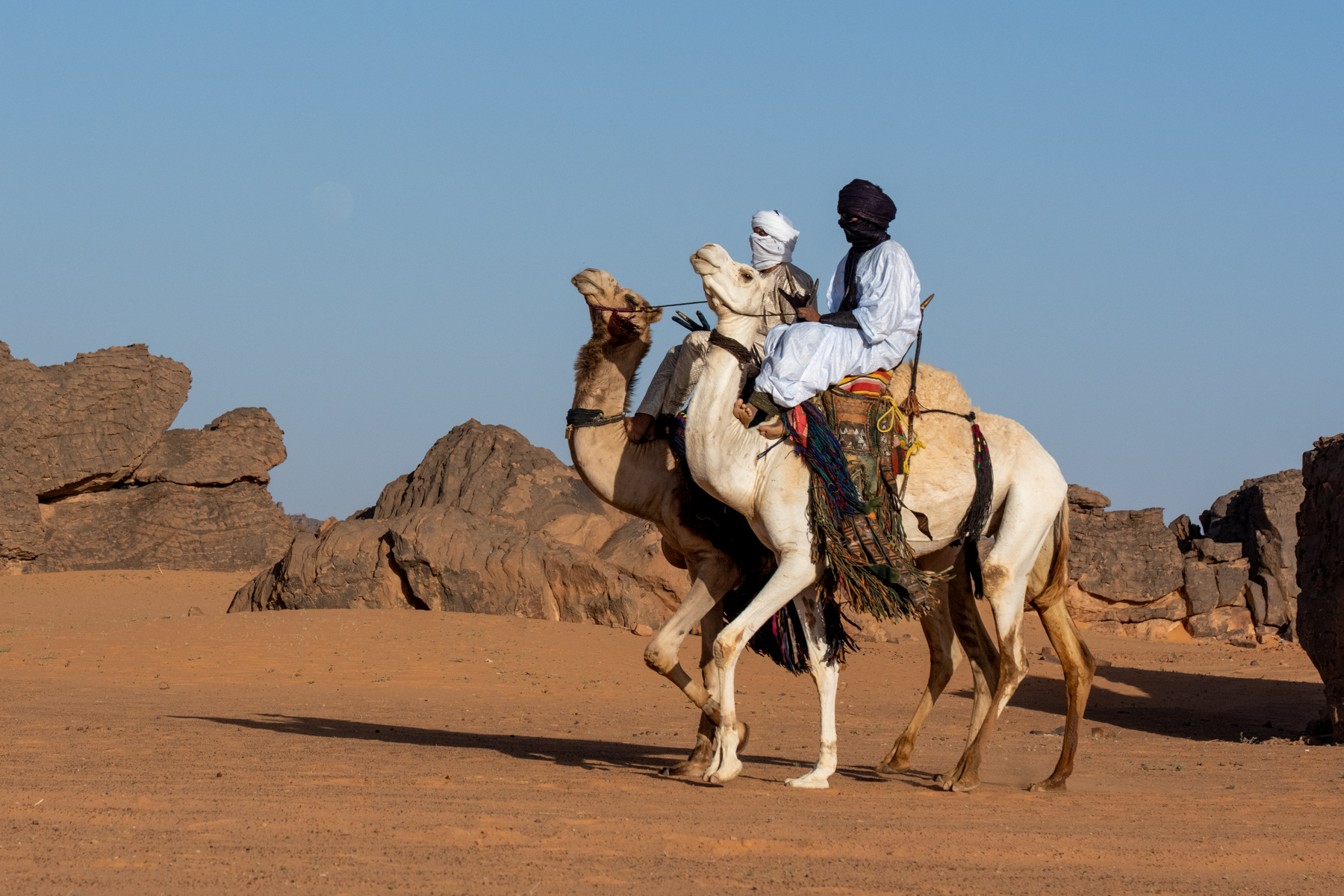
Tuareg men arrive on camels to a camel dancing ceremony (image by Inger Vandyke)
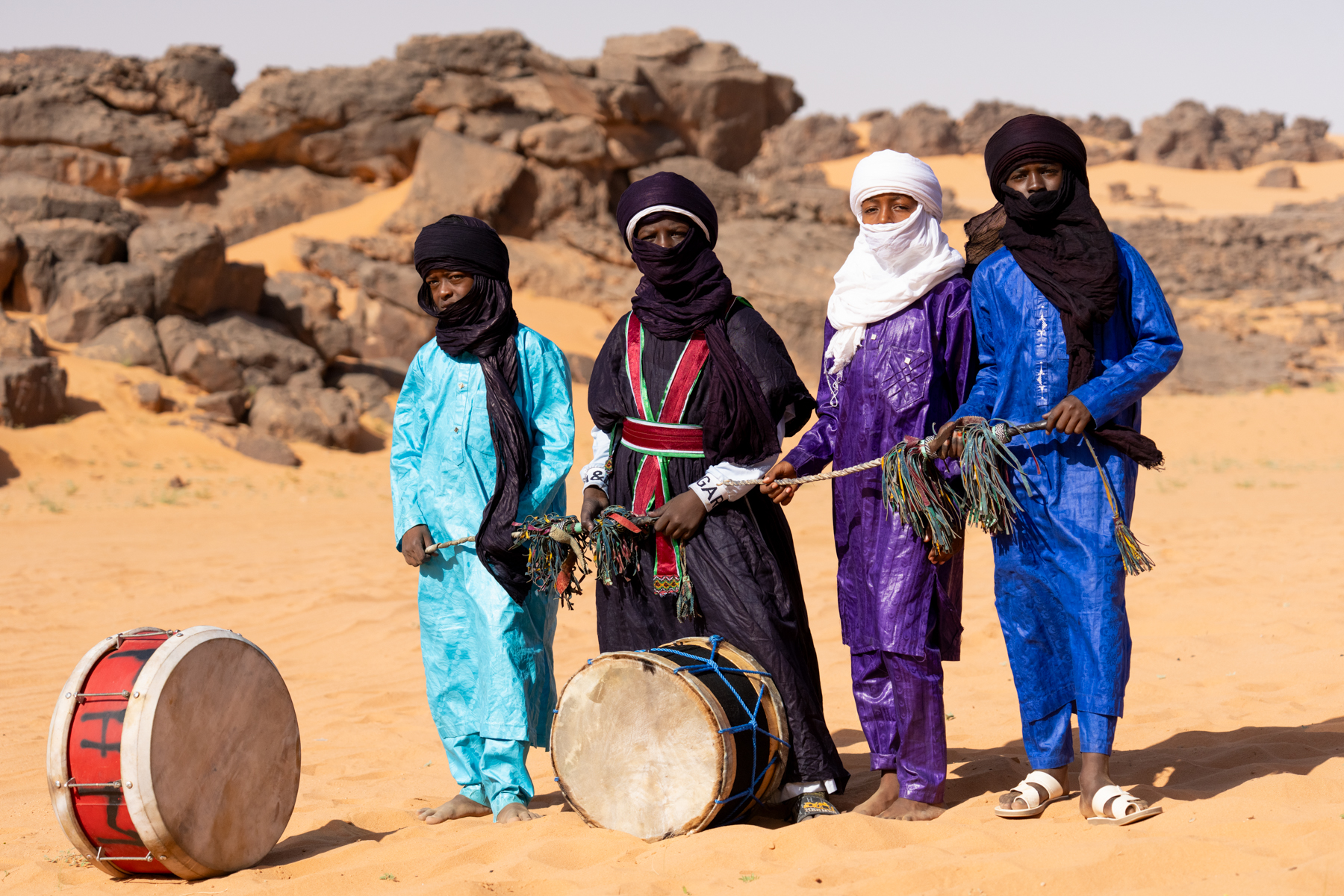
Young Tuareg boys ready for a ceremony of Tahamat in the desert (image by Inger Vandyke)
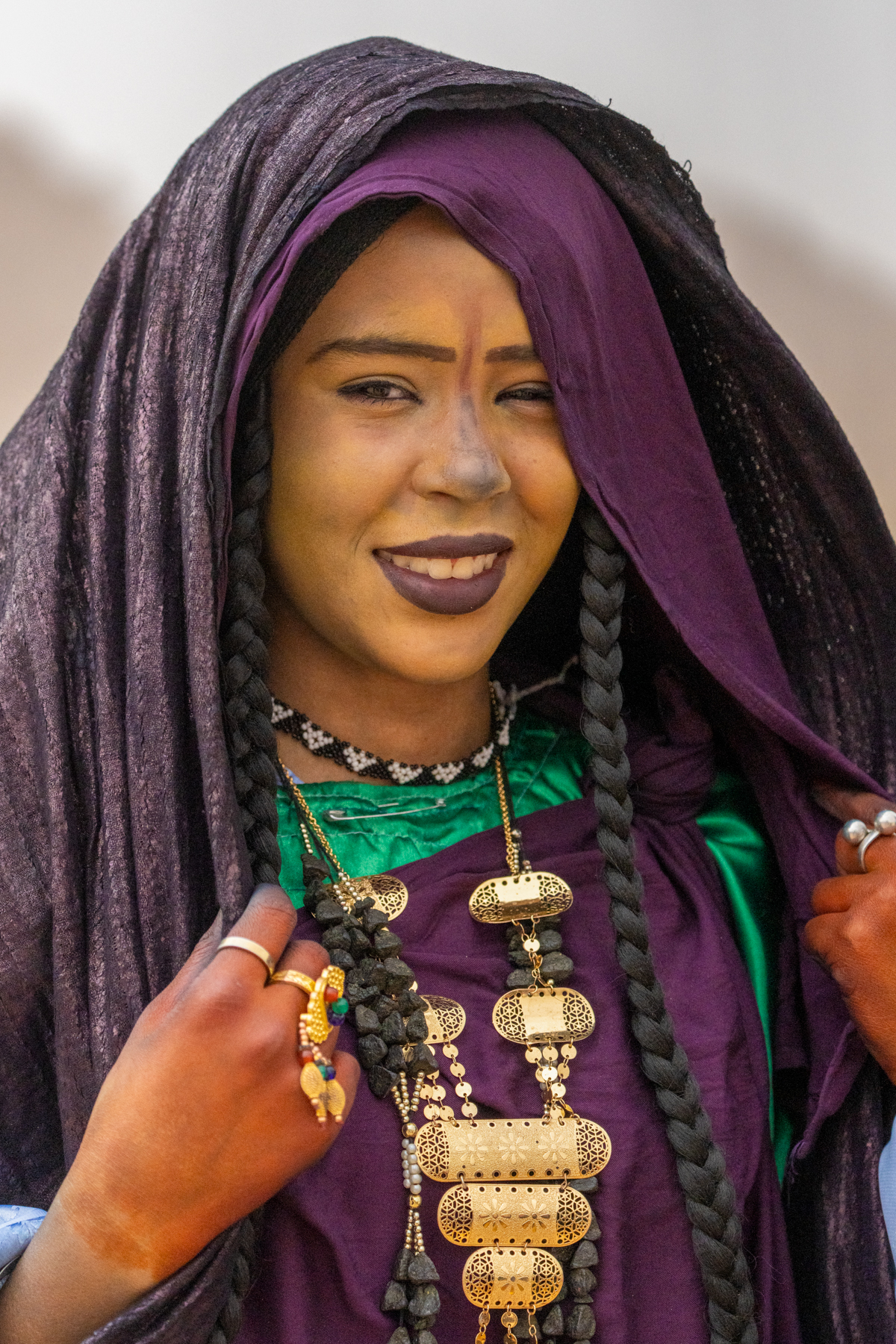
Tuareg woman with ochre makeup (image by Inger Vandyke)
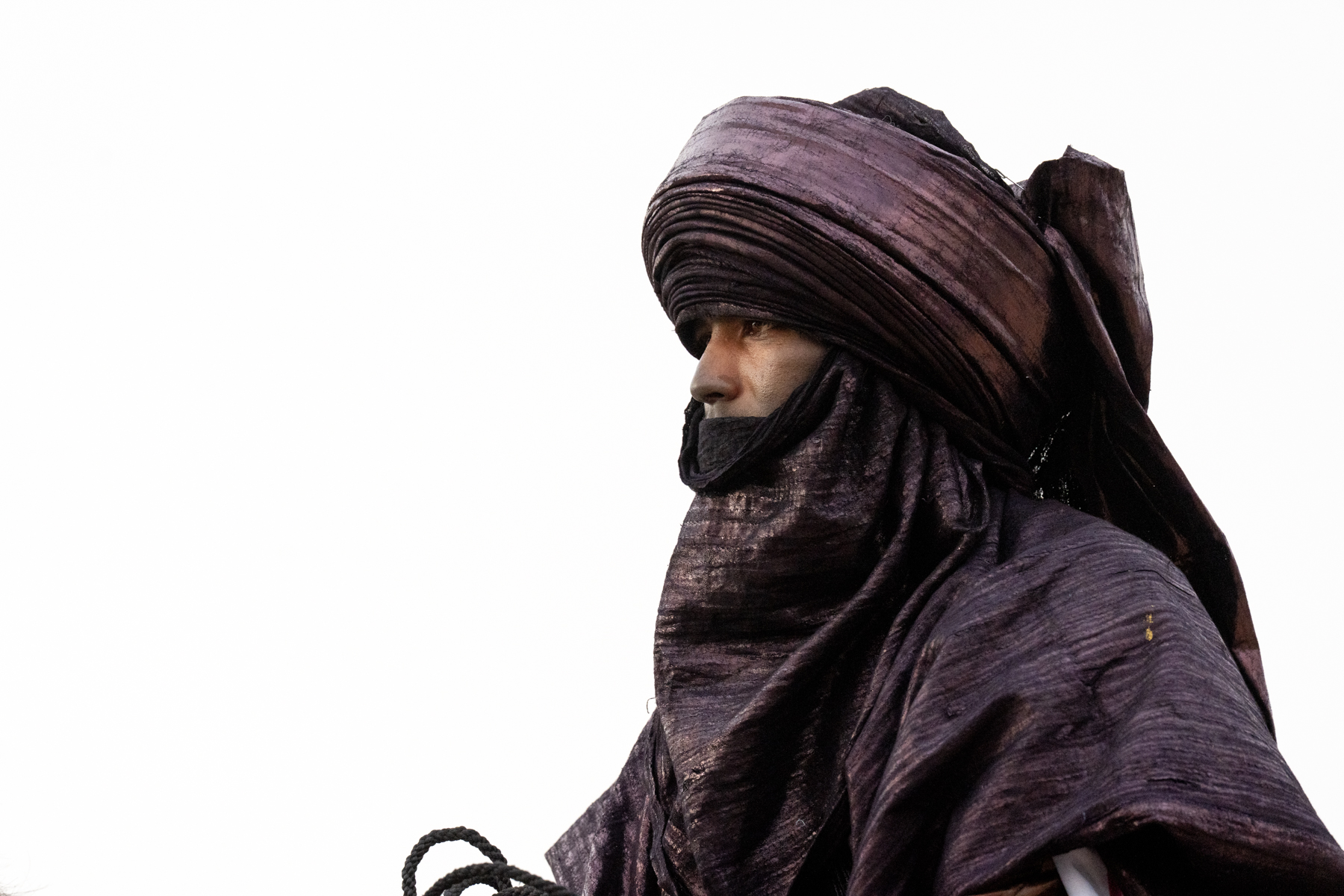
Side portrait of Tuareg man with indigo tagelmust (image by Inger Vandyke)
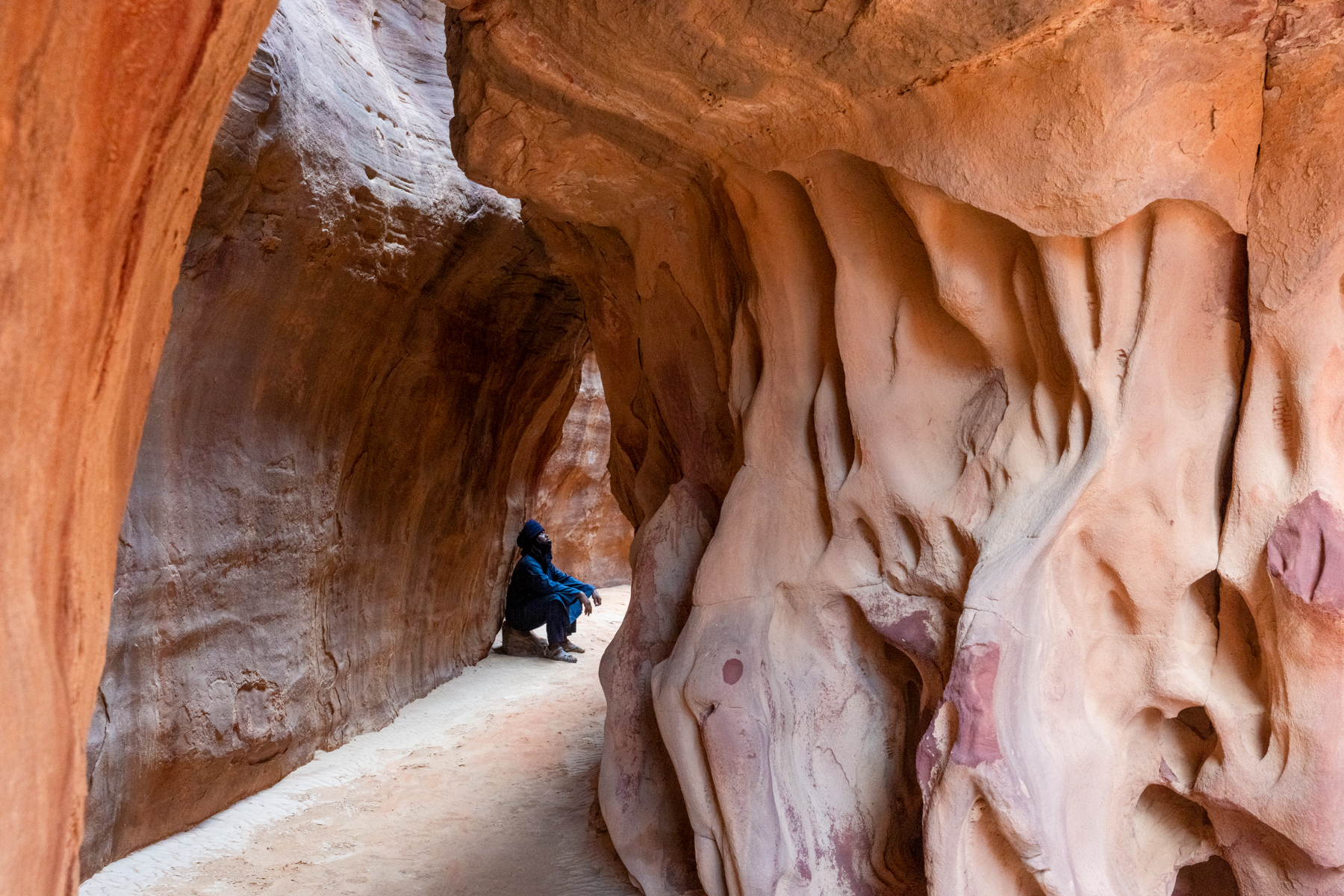
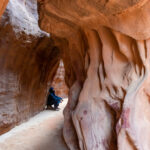
Inside the caverns of Le Cirque (image by Inger Vandyke)
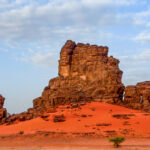
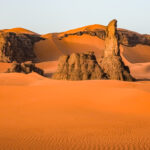

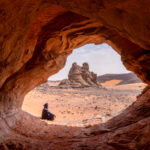
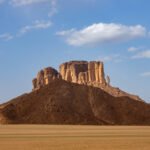
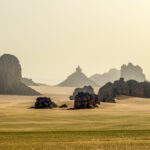


Moulenaga landscape (image by Inger Vandyke)
Tuareg camel riders (image by Inger Vandyke)
Tuareg boy in indigo Algeria (image by Inger Vandyke)
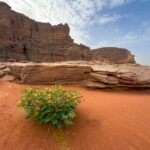
Red sands of Tadrart Rouge (image by Inger Vandyke)
Le Cirque landscapes (image by Inger Vandyke)
Ghawen's grave (image by Inger Vandyke)
Aldenj cave is the largest in Tadrart (image by Inger Vandyke)
The tents may have been modernized but Tuareg touches are everywhere in nomadic Tuareg camps (image by Inger Vandyke)
Water in Tadrart! (image by Inger Vandyke)
The tiny mud mosque in Zalouaz is the only example of Sudano-Sahelian architecture in Djanet (image by Inger Vandyke)
In the door of a traditional Tuareg stone house (image by Inger Vandyke)
Dwarfed by the gigantic dunes of Tin Merzouga (image by Inger Vandyke)
Giraffe painting in Tadrart (image by Inger Vandyke)
Tuareg women of Sebiba (image by Inger Vandyke)
Sabiba warrior (image by Inger Vandyke)
Hauntingly beautiful Tuareg girl in the desert of southern Algeria (image by Inger Vandyke)
Wind-eroded rock pillar in Tadrart (image by Inger Vandyke)
Sebiba warrior (image by Inger Vandyke)
The sensual dunes of the Sahara (image by Inger Vandyke)
Dressing an elder (image by Inger Vandyke)
The Blue Men of the Desert (image by Inger Vandyke)
Beautiful landscapes of Tadrart Rouge (image by Inger Vandyke)
Moulenaga rock pillar (image by Inger Vandyke)
Senna italica, or Adjrdjar in Tuareg, is used to fatten up camels (image by Inger Vandyke)
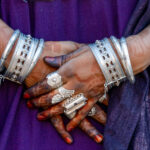
The hands of a Tuareg girl, adorned with silver, indigo and henna (image by Inger Vandyke)
El Mirhan elder (image by Inger Vandyke)
Tahamat dancers (image by Inger Vandyke)
The stunning rock formations of Le Cirque in the blush of a new day (image by Inger Vandyke)
Sabiba warrior in Taghorfit (image by Inger Vandyke)
The view from Wan Ahar to the desert (image by Inger Vandyke)
Desert sunset (image by Inger Vandyke)
No one knows and understands the Sahara like Tuareg people (image by Inger Vandyke)
Tuareg 'bat' dancer at Taghorfit (image by Inger Vandyke)
Beautiful Tuareg girl with Tinde drum at a ceremony of Tahamat in the desert(image by Inger Vandyke)
Traditional medicines for sale in the souk of Djanet (image by Inger Vandyke)
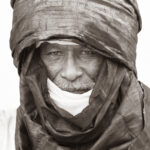
Elderly Tuareg man of Djanet (image by Inger Vandyke)
Young Tuareg boy (image by Inger Vandyke)
Aroukas flying Tuareg warriors (image by Inger Vandyke)
Beautiful Tuareg girl in green (image by Inger Vandyke)
Men prepare a young Tuareg boy for a ceremony of Tahamat (image by Inger Vandyke)
Smiling Tuareg girl at Tahamat (image by Inger Vandyke)
Baking taghella (image by Inger Vandyke)
Tinmerzouga landscape (image by Inger Vandyke)
Tuareg people worship their desert home. Their presence lends both perspective and a regal presence to the stunning landscapes of Tadrart (image by Inger Vandyke)
Tuareg man on camel (image by Inger Vandyke)
Camel skull (image by Inger Vandyke)
Tuareg man wrapped in indigo (image by Inger Vandyke)
Camel dance (image by Inger Vandyke)
Tassili landscape after rain (image by Inger Vandyke)
Preparing for Sabiba (image by Inger Vandyke)
Beautiful Tuareg girls adorned in indigo and silver in the desert (image by Inger Vandyke)
Camel skull (image by Inger Vandyke)
The rock pillars of Tadrart are sometimes able to swallow humans! (image by Inger Vandyke)
Side portrait of an El Mirhan Tuareg elder (image by Inger Vandyke)
Portrait of an elderly Tuareg man in the souk of Djanet (image by Inger Vandyke)
Tuareg women are truly incredibly beautiful (image by Inger Vandyke)
Enjoying a quiet moment (image by Inger Vandyke)
Aroukas sword fighters (image by Inger Vandyke)
Sabiba (image by Inger Vandyke)
Sabiba warriors at the festival (image by Inger Vandyke)
Tuareg people with camel in the desert near Djanet (image by Inger Vandyke)
The breathtaking beauty of traditional Tuareg decoration (image by Inger Vandyke)
Cow engravings at Tin Taghirt (image by Inger Vandyke)
Camel dancing in the desert (image by Inger Vandyke)
Wan Ahar is perhaps the most famous engraving site of Tadrart Rouge (image by Inger Vandyke)
Tahamat warrior (image by Inger Vandyke)
Wrapping tagelmust (image by Inger Vandyke)
Hands decorated with henna (image by Inger Vandyke)
Tuareg camel rider at Sebiba (image by Inger Vandyke)
Human engravings at Tin Taghirt (image by Inger Vandyke)
Beautiful Tuareg girl in the dunes (image by Inger Vandyke)
Tahamat ceremony (image by Inger Vandyke)
The wondrous wrinkles of time. Portrait of a nomadic Tuareg woman whose frown wrinkles disappeared in a smile when we shared laughs in her camp (image by Inger Vandyke)
A quiet moment of thought in beautiful light (image by Inger Vandyke)
Tahamat dancers (image by Inger Vandyke)
Tahamat dancers in the desert (image by Inger Vandyke)
A Tuareg woman clapping her hands at a ceremony of Tahamat in the desert (image by Inger Vandyke)
The tiny mud mosque of Zalouaz seen through a stone doorway of the K'Sour (image by Inger Vandyke)
A Sabiba warrior being dressed in the preparation session for Al Mirhan (image by Inger Vandyke)
Elbirj cow engravings in Tadrart (image by Inger Vandyke)
Flying Tuareg. There's no better way to descend the dunes of Moulenaga than running! (image by Inger Vandyke)
Dust storm at a nomadic Tuareg camp (image by Inger Vandyke)
Beautiful Tuareg girl (image by Inger Vandyke)
Wrapped in indigo at the preparation session for Al Mirhan warriors in Sebiba (image by Inger Vandyke)
Black sand ripples at Adjalati (image by Inger Vandyke)
Plant fossils in Tadrart (image by Inger Vandyke)
Teachers of the desert - ancient trees and the guardian of ancient wisdom (image by Inger Vandyke)
Ripple effect (image by Inger Vandyke)
Portrait of nomadic Tuareg woman (image by Inger Vandyke)
Tahamat dancer (image by Inger Vandyke)
Tuareg men at camel dance (image by Inger Vandyke)
Desert matriarch of a nomadic Tuareg family (image by Inger Vandyke)
Aroukas warriors (image by Inger Vandyke)
One of our desert expedition team leaves his siesta under a shady tree to return to our camp in a dust storm (image by Inger Vandyke)
Taghorfit (image by Inger Vandyke)
Our guide, Youssef, giving scale to the base cave in a rock pillar (image by Inger Vandyke)
Real life and art Sabiba warriors (image by Inger Vandyke)
Adayk at dusk (image by Inger Vandyke)
Tuareg men around our campfire (image by Inger Vandyke)
Traditional ochre and kohl makeup (image by Inger Vandyke)
Youssef and Pete inside the Cathedral of Tadrart (image by Inger Vandyke)
Sabiba (image by Inger Vandyke)
Wind eroded pillar at Le Cirque (image by Inger Vandyke)
Desert sunrise (image by Inger Vandyke)
Sunburst at La Vache (image by Inger Vandyke)
Tuareg men riding camels in the desert (image by Inger Vandyke)
Smiling Tuareg girl at Taghorfit (image by Inger Vandyke)
Tuareg nomads in Tassili (image by Inger Vandyke)
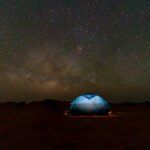
Camped under the stars (image by Inger Vandyke)
Tuareg cameleer in desert (image by Inger Vandyke)
Tea in the Sahara (image by Inger Vandyke)
Ikabar stone house (image by Inger Vandyke)
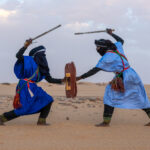
Aroukas warriors engage in a mock sword battle at sunset in the desert (image by Inger Vandyke)
In Telat swimming hole at Ihrir (image by Inger Vandyke)
Sabiba warrior at sunset during a private shoot at the stunning K'Sour of Taghorfit (image by Inger Vandyke)
Tuareg women singing at Tahamat (image by Inger Vandyke)
Adayk landscape (image by Inger Vandyke)
Crying Bulls (image by Inger Vandyke)
Portrait of a Tuareg blacksmith (image by Inger Vandyke)
Tuareg men arrive for a camel dance (image by Inger Vandyke)
Traditionally, face makeup for Tuareg women involved yellow ochre foundation with markings created in black kohl (image by Inger Vandyke)
Sabiba (image by Inger Vandyke)
Dress detail of Tuareg women (image by Inger Vandyke)
Ancient grave site in the Sahara (image by Inger Vandyke)
Young Tuareg girl in silver and indigo (image by Inger Vandyke)
Le Cirque (image by Inger Vandyke)
Aroukas warrior (image by Inger Vandyke)
A herd of camels near the cathedral of Tadrart (image by Inger Vandyke)
Stairway to the heavens. Ascending to the roof of the mud mosque in Zalouaz (image by Inger Vandyke)
Tuareg girl adorned in gold for Sabiba (image by Inger Vandyke)
Ancient town of Idarwen (image by Inger Vandyke)
Tuareg girl in the desert (image by Inger Vandyke)
Tahamat dancer (image by Inger Vandyke)
The Molar of Adjahil (image by Inger Vandyke)
Tadrart rock pillar (image by Inger Vandyke)
Portrait of a Sabiba warrior (image by Inger Vandyke)
Elephant engravings at Tadrart (image by Inger Vandyke)
Exploring ceramic fragments at Aldenj (image by Inger Vandyke)
The dramatic landscapes of Le Cirque in Tadrart Rouge (image by Inger Vandyke)
Tuareg man in indigo (image by Inger Vandyke)
Desert beauty (image by Inger Vandyke)
Moulenaga pillar (image by Inger Vandyke)
Woman in Niqab at the souk of Djanet (image by Inger Vandyke)
Aroukas warrior (image by Inger Vandyke)
Cave paintings of mixed eras in Tadrart (image by Inger Vandyke)
Tuareg men arrive on camels to a camel dancing ceremony (image by Inger Vandyke)
Young Tuareg boys ready for a ceremony of Tahamat in the desert (image by Inger Vandyke)
Tuareg woman with ochre makeup (image by Inger Vandyke)
Side portrait of Tuareg man with indigo tagelmust (image by Inger Vandyke)
Inside the caverns of Le Cirque (image by Inger Vandyke)


It is quite something to pioneer a new destination for photography tourism. Algeria was always going to be a very special trip for me on a personal level. The Tuareg people were my first African culture I spent any time with, and that was many years ago, when, as an adventurous 19-year-old, I decided to visit southern Algeria to trek and see the rock art. A group of Tuareg nomads took me under their wing during my trek, and the time I spent with them altered my world for the better.
Fast forward to three years ago, and after a long period of closure, I returned. I cried when I arrived in Djanet. When my lovely guide asked why I was crying, I simply replied: “I never thought I’d be able to come back here! I am so happy to return!” It was during that trip that I hatched the idea of leading a cultural photography expedition with the Tuareg people, strictly on terms they felt comfortable with. Between my guide and I we crafted an itinerary and we started to make plans.
This year it happened, and what an extraordinary experience it turned out to be. Not only did we explore many aspects of Tuareg culture, we learned about their use of medicinal plants, how they located water, but we also stayed inside traditional stone houses, we met isolated nomadic Tuareg, explored life in oases and visited the 3,000-year-old celebration of Sabiba, which is now recognised by UNESCO for its Intangible Cultural Heritage of Humanity.
I met my group at the airport in Algiers for the overnight flight to Djanet. After our flight ran late, we arrived at 0230 and went straight to our hotel to sleep.
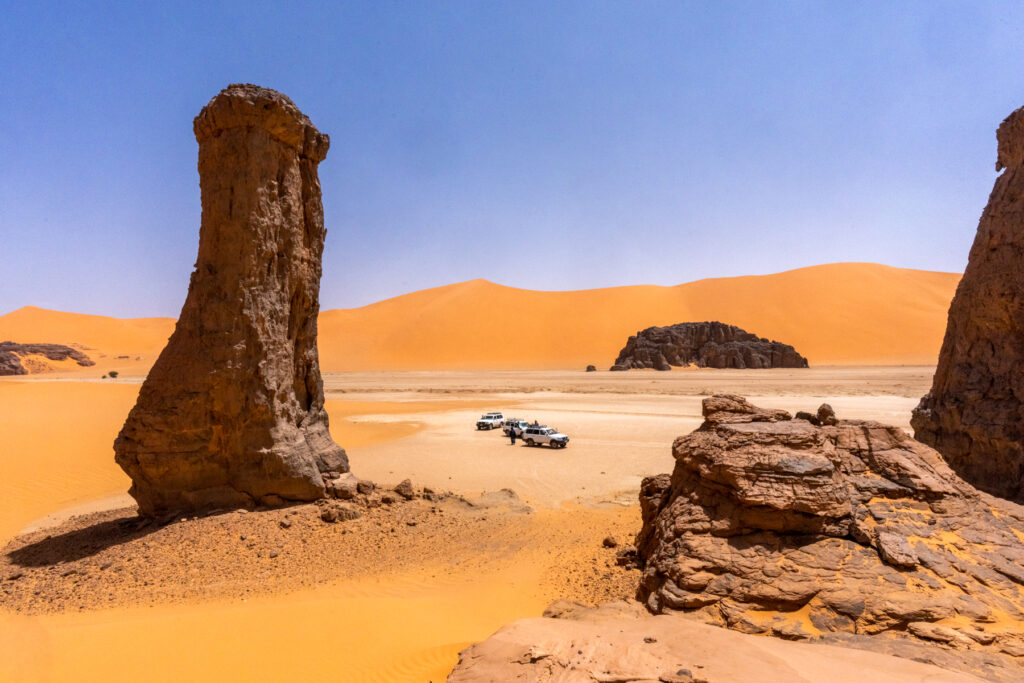
Our expedition vehicles at a stunning clay pan with rock pillars in Tadrart Rouge (image by Inger Vandyke)
“Let’s leave for the desert early. We’ll have tea”
Around mid-afternoon that day, we left for the Sahara directly around Djanet. Our first stop was the ancient giraffe carvings of Tegharghart, and on the walk there I spotted a medicinal plant the Tuareg call Arelechim, which is used to stop wounds from bleeding. Once we arrived at the giraffes, we took off our shoes and gently padded around them. Although these examples had been worn by the winds and sands of time, they were a sign of the ancient wildlife that once roamed this part of Africa.
From there we drove over to La Vache, or the Crying Bulls. It is probably one of the most mysterious engraving sites in the area of Djanet, but it’s a wonderfully photogenic place, so we lingered here taking landscape photos of the rocks and dunes before heading over to our first traditional Tuareg tea.
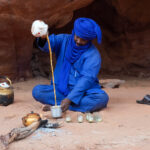
Tea in the Sahara
The Tuareg love tea, and it is traditional to drink three cups of it when you have a break. The Tuareg tea ceremony is a deeply symbolic Saharan ritual. The host brews green tea, sugar, and mint three times in a small teapot over an open fire. Each of the three cups represents a different stage of life, traditionally interpreted as: the first is bitter like death, the second is strong like life, and the third is sweet like love. The preparation is just as deliberate as the drinking. The host pours the tea from a height to aerate it, creating a delicate, frothy foam, which is considered a mark of well-poured tea. The entire process can take over an hour, acting as an essential framework for socialising, hospitality, and patience in the desert.
For us, it was an ideal way to while away the time until the golden light of sunset began.
Tea in the Sahara (video by Inger Vandyke)
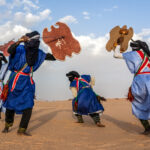
Aroukas – traditional Tuareg Sword Fighting
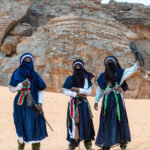
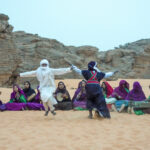
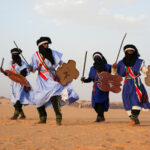
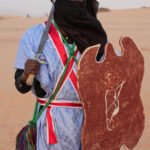
When we finally finished up with tea, I took the group to their first Tuareg cultural ceremony in the desert. We met up with a group of energetic young Tuareg men to witness a private Aroukas ceremony, a display of traditional sword fighting said to date back centuries. Until sunset, we watched mock fighting and ‘flying Tuaregs’ as some of the guys leapt over the heads of their opponents in battle! The backdrop was traditional drumming and singing by Tuareg musicians. What a breathtaking afternoon to start our trip!
Tadrart Rouge – Algeria’s Desert Wonderland
We returned to our hotel for dinner and packing our gear. The next morning we left for the stunning desert realm of Tadrart Rouge, surely one of the most spectacular corners of the Sahara.
We drove southeast, stopping at the famous road junction connecting southern Algeria with its neighbours, Libya and Niger. Of course we had a ‘before’ group photo at it as we all geared up for a tantalising four, shower-less, days of crossing Tadrart.
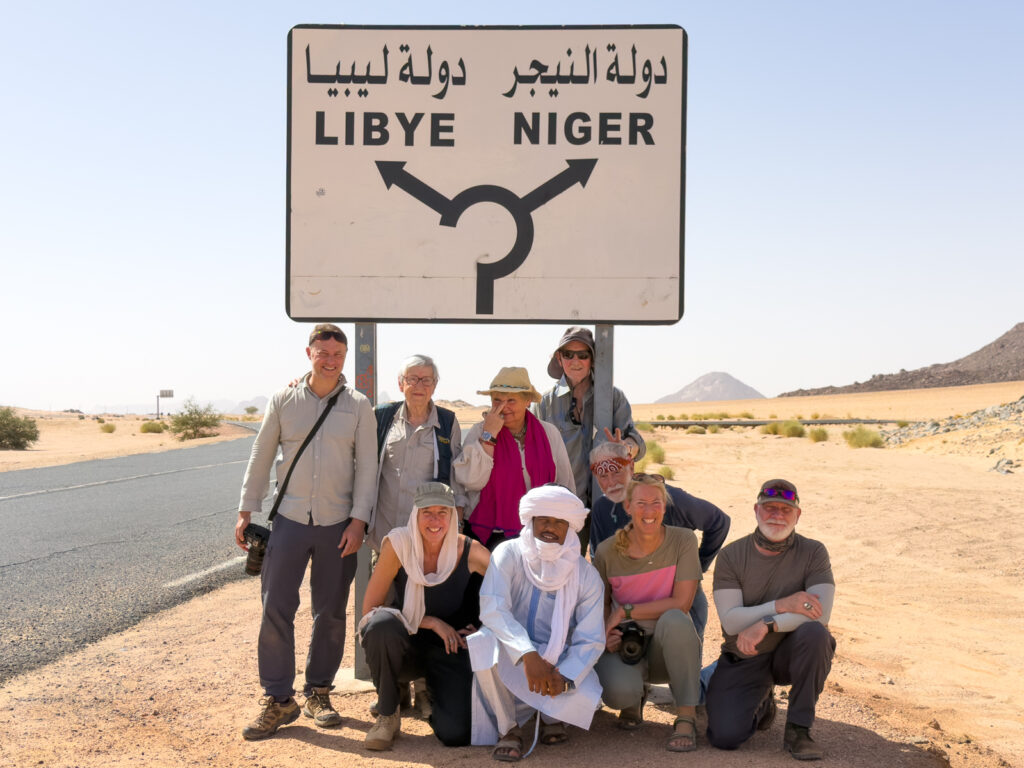
Our group all looking fresh and ready for five days in the desert. We stopped at the famous road junction sign for obligatory tourist shots (image by Inger Vandyke)
We then entered the reserve via the gravel road in Elbirj and, after arriving in time for lunch and a siesta, we began making our way slowly through the desert.
“Will we see any wildlife here?” I replied, “Unlikely. Tadrart is completely dry and virtually lifeless”. Well, my estimates were completely wrong! Recent rains had sprung Tadrart into life, so it was astonishing to see drying pools and track jackals in the sand.
Our first stops were the rock art sites of Elbirj, where we were treated to some breathtakingly detailed engravings of cows and a cave of hunters. These set the scene for a rock art odyssey in the coming days that eventually led us to rarely visited sites with remnant pottery fragments and artistry dating back to the Round Head era (12000BC).
The Sahara tells its stories in stone, and during our time in Tadrart, we visited prolific fossil sites, engravings, elaborate paintings and remote grave sites.
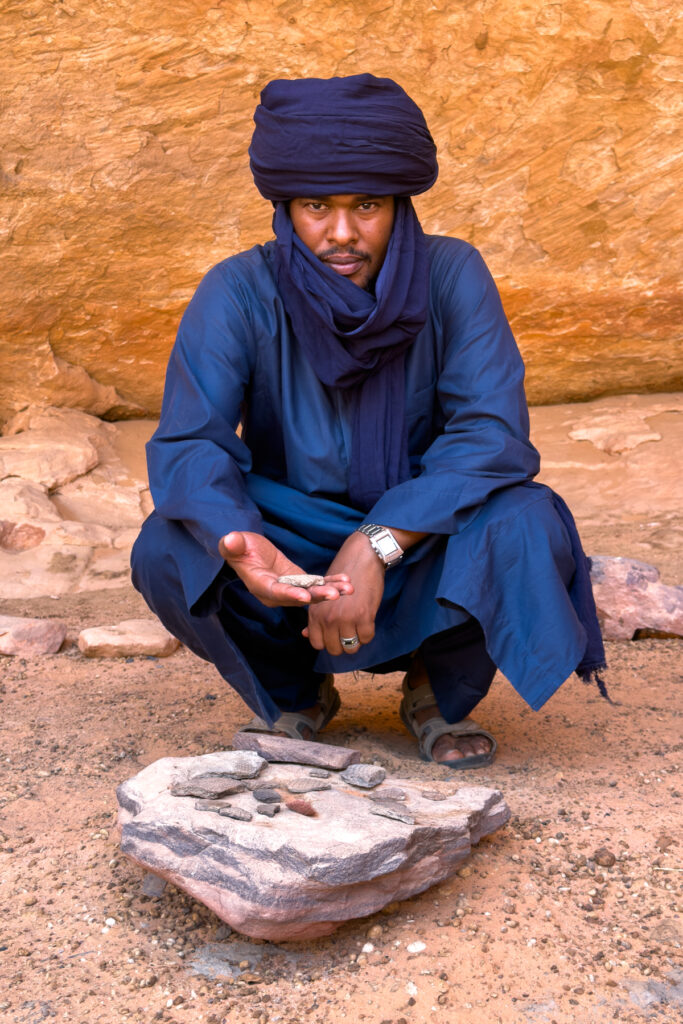
Exploring ceramic fragments at Aldenj (image by Inger Vandyke)
Wildlife was way more abundant than any of us expected. On our first night in the desert, we sat and watched the crescent moon set behind distant mountains and, as we watched a couple of Solifuges raid our camp to prey on moths attracted to our lights I decided we should try and do a night walk to look for creatures. This yielded two scarab species and our first sightings of Cheeseman’s Gerbils. At one point, we saw a diurnal gerbil try to bury itself under some of our feet as we packed up camp! The following evening was even more incredible as we had jackals and gerbils both wandering around in our camp. That night we could hear a Pharaoh Eagle Owl calling from the nearby rocky hills. Elsewhere, we saw a variety of lizards, including our first Uromastyx, or Thorny-tailed Lizard, which is used in Tuareg traditional medicine to treat liver complaints. Notable birds included White-crowned and Isabelline Wheatears, as well as a Barbary Falcon (a subspecies of Peregrine).
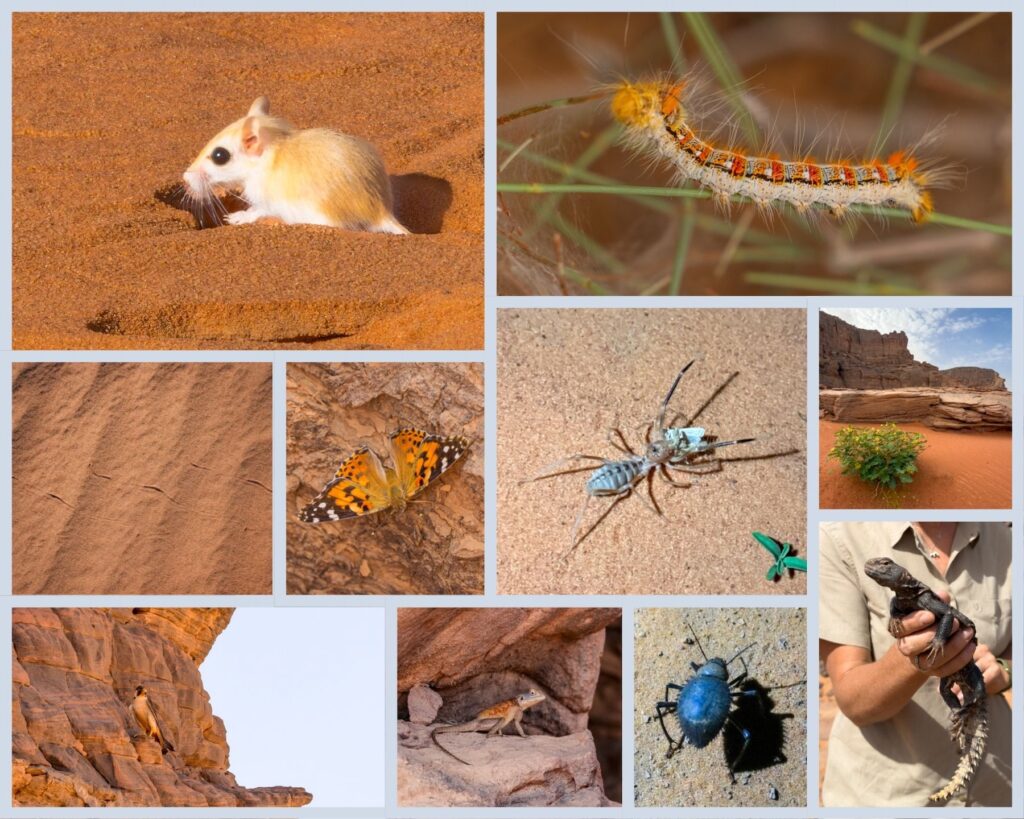
Desert wildlife included Cheeseman’s Gerbil, the caterpillars and butterflies of the world’s greatest butterfly migration (Painted Ladies), tracks of a Sidewinder snake, solifuge, medicinal plants, Barbary Falcon, lizards and scarab beetles (images by Inger Vandyke, Katie Hustler and Sabine Kretschmer)
Perhaps the most surprising wildlife phenomenon we encountered was the gigantic migration of Painted Lady Butterflies across the desert. This multi-generational migration is actually the largest insect migration on the planet, and there we were, right in the middle of it in the Sahara!
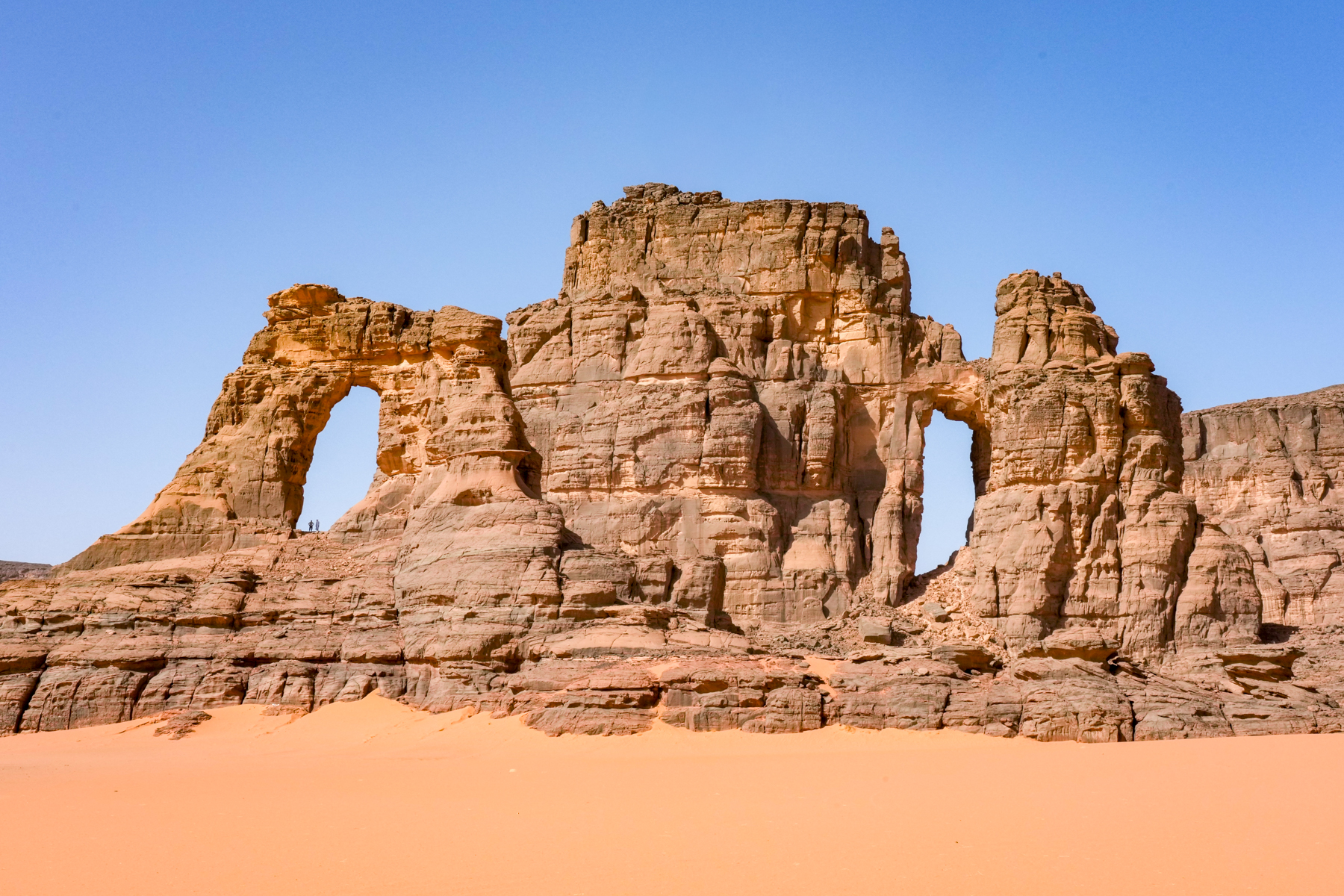
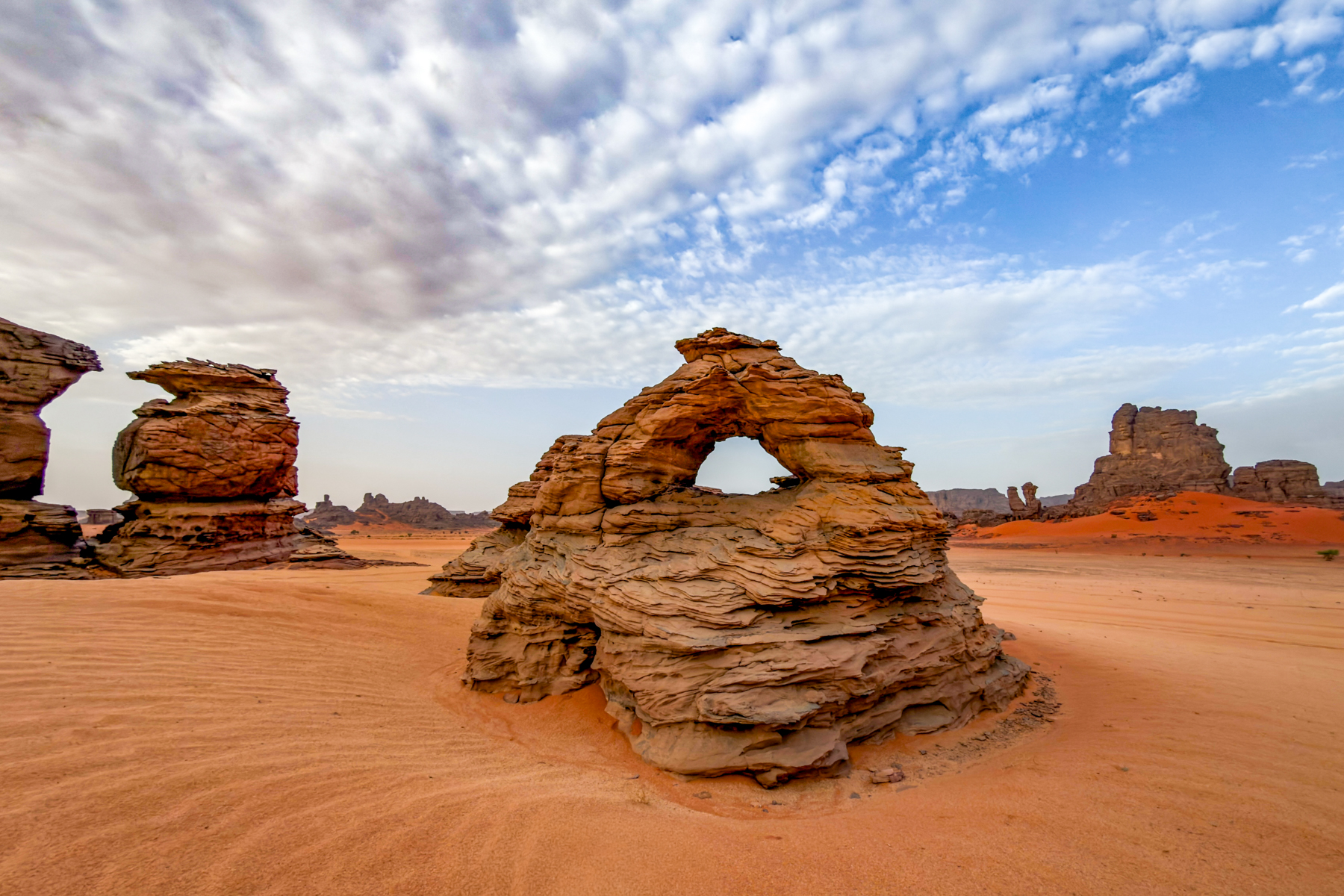
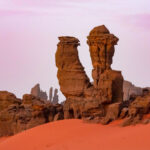
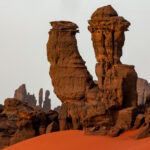
Over five full days in Tadrart, we enjoyed thrilling drives over gigantic sand dunes, traverses of clay pans with sculpted rock pillars, needle-like rocks pointing into the air, caves, cathedrals and arches.
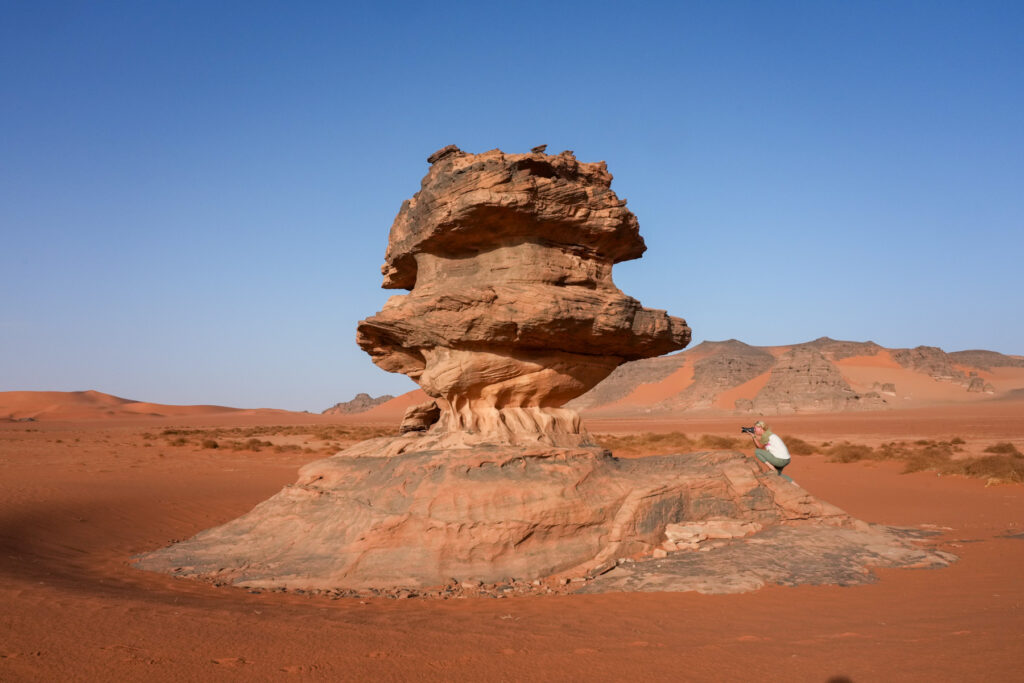
Sabine photographing one of Tadrart’s most beautiful pillars (image by Inger Vandyke)
Our Tuareg team became incredible models and sat patiently for us to take photos of them in beautiful locations, such as the chasms of Le Cirque and the twin arches. Their presence lent a regal air to our adventures and gave some of the gigantic rock features a sense of scale.
We were also delighted to see domestic dromedary camels wandering through the desert as we arrived at the gigantic rock arches of the Cathedral. A small group of camels walked a large circle around our parked cars, offering us a wild perspective on the dramatic scenery.
Sadly, across Africa, this year’s intense heat has caused many camels to die, and, indeed, in Tadrart we found the skeleton of one that hadn’t made it through a previous summer. I kindly asked if we could take the skull of it to use in photos, and our guides said it was OK. We nicknamed him “Kevin” and found him a spot in one of our cars where he wouldn’t get damaged by the rough drives. He also turned out to be a great model on the clay pans and in the dunes until we finally said goodbye to him at Adjalati, the black dunes of Tadrart’s exit.
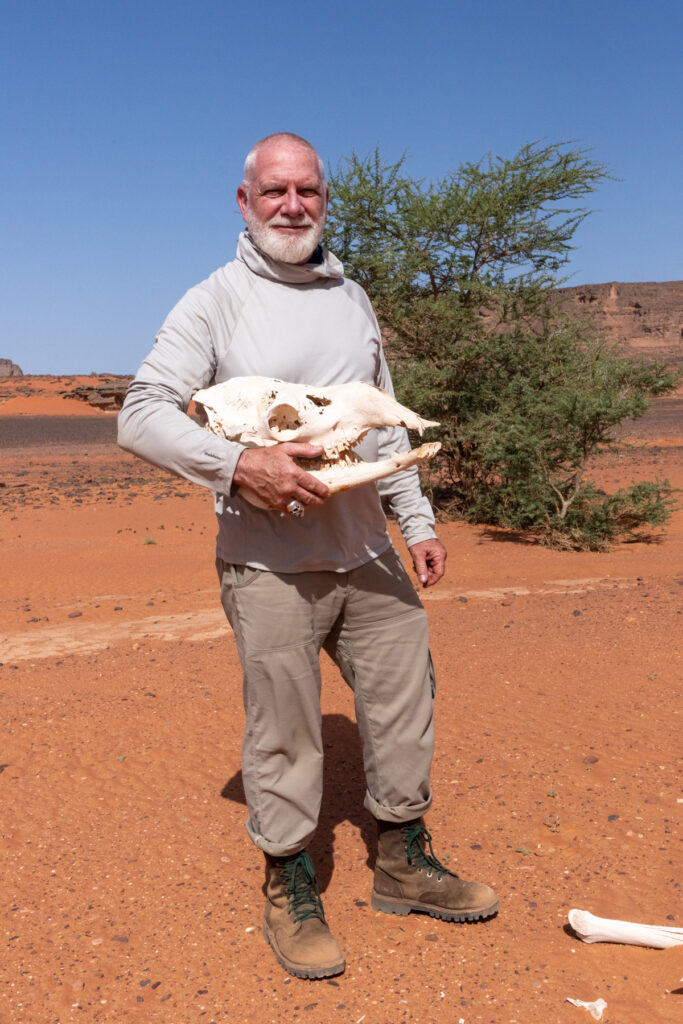
Guest Pete with “Kevin” after we found him in the Sahara (image by Inger Vandyke)
As we left Tadrart, we stopped at a fascinating chasm of multi-layered slate rocks. For centuries Tuareg people have collected chalk here for their children to use on slates in Koranic schools. Amongst that chalk we also found mineralised rocks and beautiful fossils of tiny leaves.
It was sad to exit, even though a sandstorm plagued our last full afternoon and overnight camp in the reserve. We stopped to take some ‘after’ shots of the group before heading back to Djanet for much-needed showers, a rest and dinner.
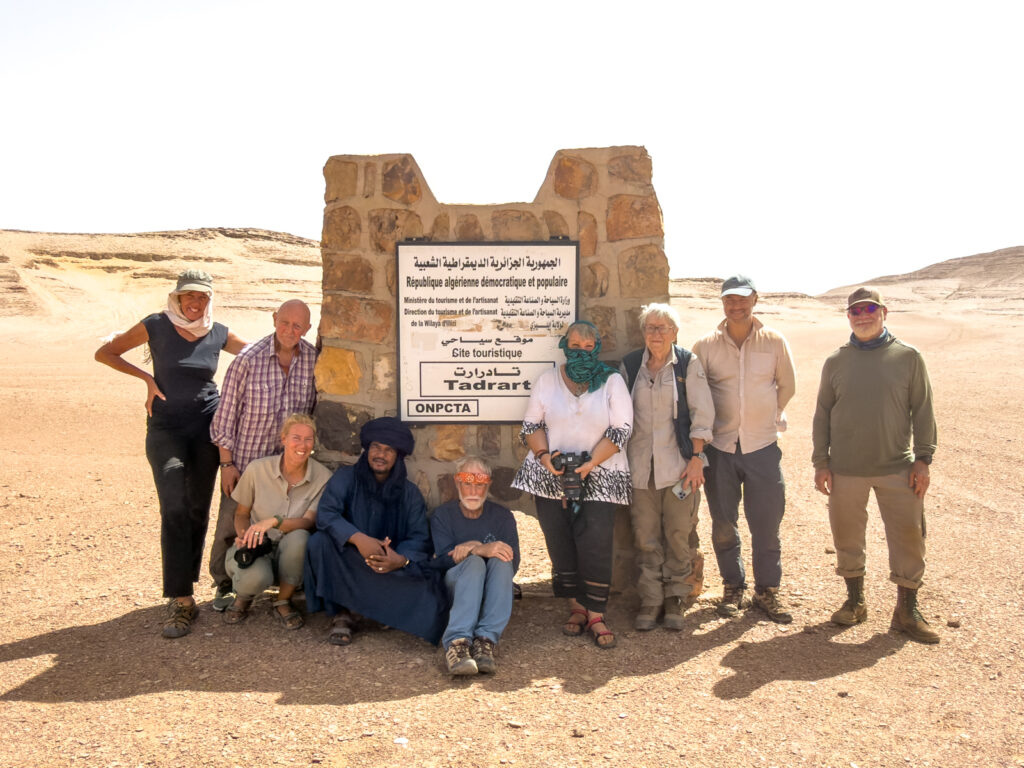
After Tadrart and on our way to Djanet for a much-needed shower after five days in the desert (image by Inger Vandyke)
Exploring Djanet’s ancient K’Sours
The following day we went off to explore the three ancient K’Sours, or stone fortresses, and our first stop was at Adjahil, the only one that still has permanent residents. Sadly, a fire in the past year had ripped through the date palms adjacent to it, imbuing it with an eerie air. Couple that with the fact that no people were around, and it felt like it was more deserted than its reputation.
We then went off to enjoy the oldest and least maintained K’Sour of Zalouaz. Buried on a hillside adorned with large granite rocks, Zalouaz is home to Djanet’s only example of Sudano-Sahelian architecture. Deep in the labyrinth of rocky alleys, at the heart of this ancient fort, lies a tiny yet beautiful mud mosque. After we left the Koranic school at the base of the fort, we began to catch glimpses of it through ancient doorways fashioned from stone and date palm wood. Youssef kindly posed for our photos again in what turned out to be an impromptu, spectacular photo shoot of the various ancient K’Sour buildings, the mosque and the elaborately designed and decorated gate to Zalouaz towards the end.
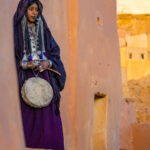
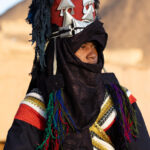
Later that day, as the sun was setting, we climbed to the summit of Taghorfit, the best-preserved and most spectacular K’Sour of Djanet, with its terracotta walls and ancient stone walkways, for our first true private photo shoot of the trip. Once we reached the top of Taghorfit, we photographed our first Tuareg women in Indigo, a Sebiba warrior, and a Sebiba ‘bat’ dancer in the doorways and against the stone walls of this beautiful space. As the sun set, we slowly wandered back down with our models, stopping to photograph them against the stunning backdrop of Taghorfit in beautiful golden light.
Blacksmiths and Silversmiths
During our ‘town day’, we took some time to visit Djanet’s souk for the first time, where we met our first Tuareg blacksmiths and silversmiths, fashioning jewellery, knives, bookmarks, and ornaments, mostly from silver. It gave us a chance to see what they had before taking a break from shopping to think about what we’d purchase, then return in a few days. Tuaregs are known for their extraordinary craftsmanship in silver and leather, so it was wonderful to wander through the numerous tiny shops, chat with creators, and buy things directly from the people who had made them.
To have a break from it all, I surprised my group with a barbecue lunch and swim at a pool in a private garden just outside town. The cool-off and lovely food was welcomed by all!
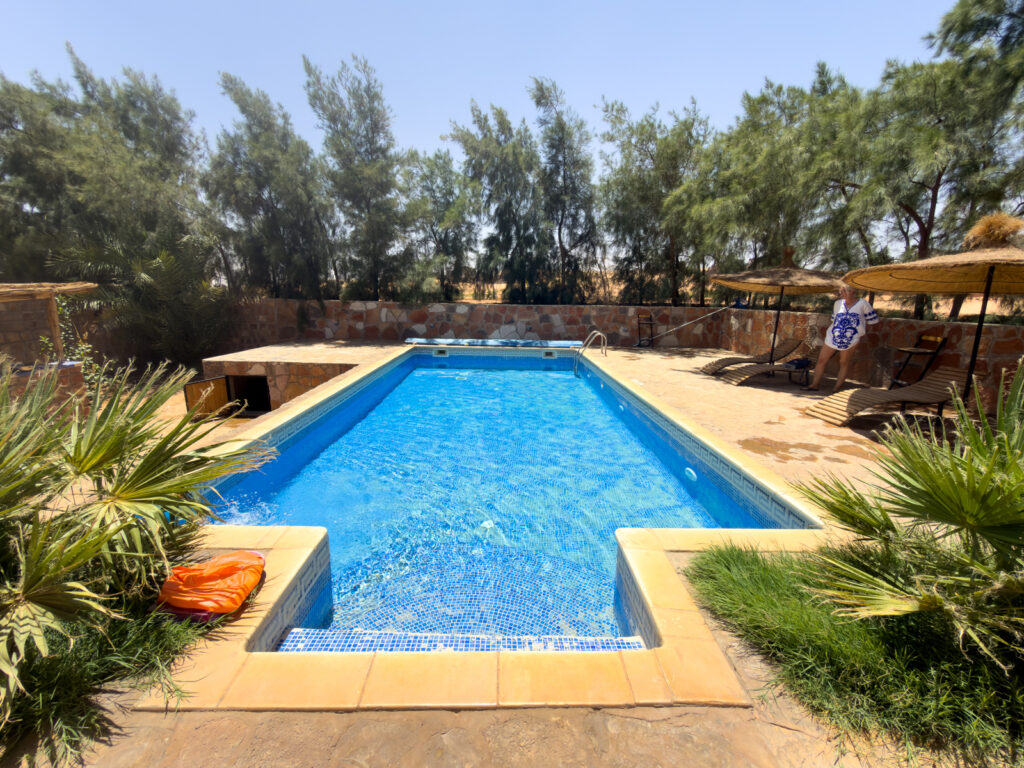
Swimming pool for a much-needed cool off (image by Inger Vandyke)
Visiting Tuareg Nomads, Ikabar and Exploring Oasis Life
The following day, we returned to the desert to learn what life is like for the ever-diminishing number of nomadic Tuareg living in the Algerian Sahara. As we entered a stunning stretch of desert, lined with dramatic stone peaks, we saw our first nomads. A woman on the back of a donkey was returning to camp with her herd of sheep and goats. We loosely followed her trail, which led us to a Tuareg nomadic camp. Over the years, water has dried up in many parts of the Sahara, forcing many Tuareg people to move to towns. Despite this, there are still tiny communities of Tuareg who choose silence and wisdom over progress, technology and economics. Years ago, Tuareg nomads took me under their wing during a long trek across the desert. I hadn’t seen any for over 35 years. It felt incredible to return to them.
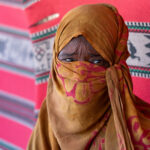
We weren’t the first outside visitors to meet this community. As we arrived, the women met us in the shade of the trees and immediately brought out some of their desert handicrafts for us to sell. They kindly let us take photos and at one point we met two of them, Telramis and Mabrouka, for portraits in their tents. Eventually we left and had our siesta a short distance away, under the shade of a large desert acacia.
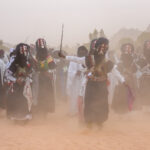
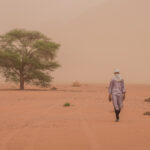
Shortly before we left the community, we watched in awe as a whirlwind of dust and sand encircled their tents. It served as stark evidence of the toughness of life with these people and their willingness to survive in the desert.
We drove a few miles down the road, making a brief stop to photograph the landscapes before finding a place in an envelope of dunes to camp for the night. As it turned out, our campsite also had an ancient past. One of the first things we found there was an old grinding stone with a pestle, which we left where we found it out of respect and reverence for this beautiful place that allowed us to sleep under the stars in silence.
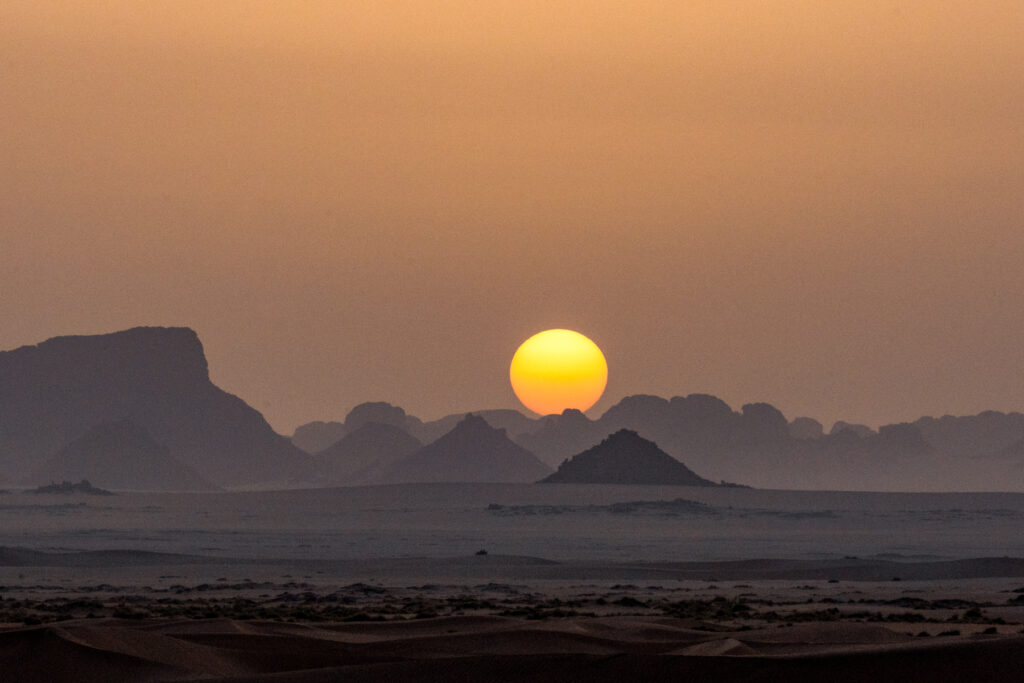
Desert sunrise (image by Inger Vandyke)
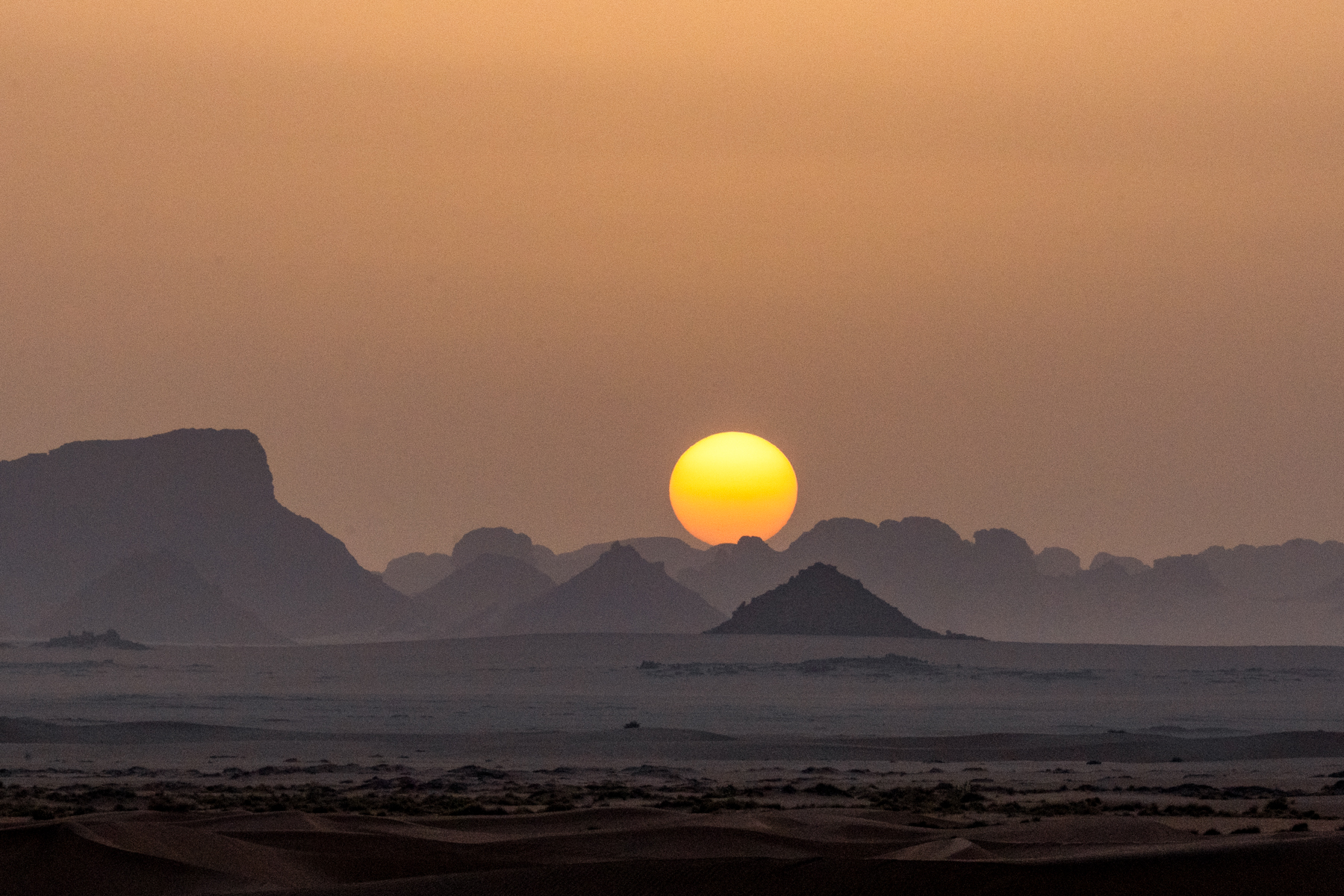
The next morning, most of us were up to photograph the sunrise over distant mountains. As we all sat in silence, watching a mesmerising yellow sun rise, it was hard not to lose ourselves in this stunning desert world.
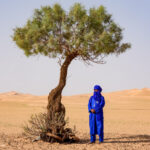
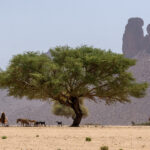
Our drive out to the road from our desert camp took us over dunes and what seemed like lifeless expanses of desert until I spotted a single gnarly acacia, its roots exposed from years of wind, standing like a sentinel on a gravel plain. We stopped and kindly asked Youssef if he’d mind standing with it to take photos, and these simple yet elegant pictures were a favourite moment for many of us that morning.
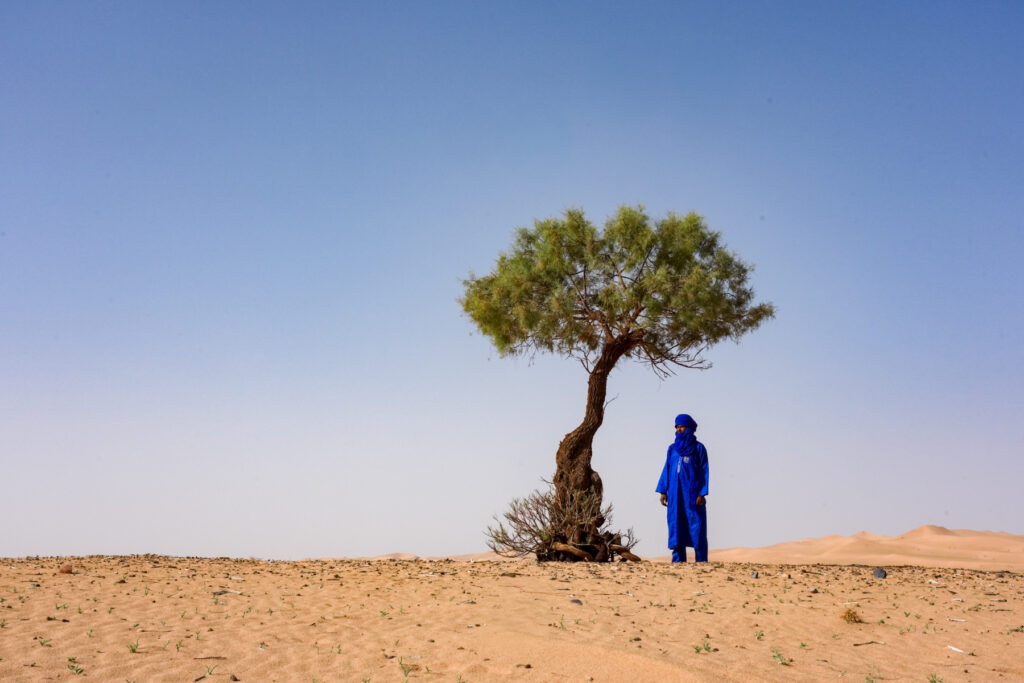
Youssef standing with a wind-sculpted tree in the desert (image by Inger Vandyke)
After we hit the tar road, we made our way to the tiny, well-curated Admer Museum in the tiny town of Bordj el Haoues. The museum had a variety of educational displays on the nature, anthropology, archaeology and history of the southern Algerian desert. The breadth of information it contained was wonderful considering its remote location. We left a generous donation to it before leaving for the oases town of Ihrir.
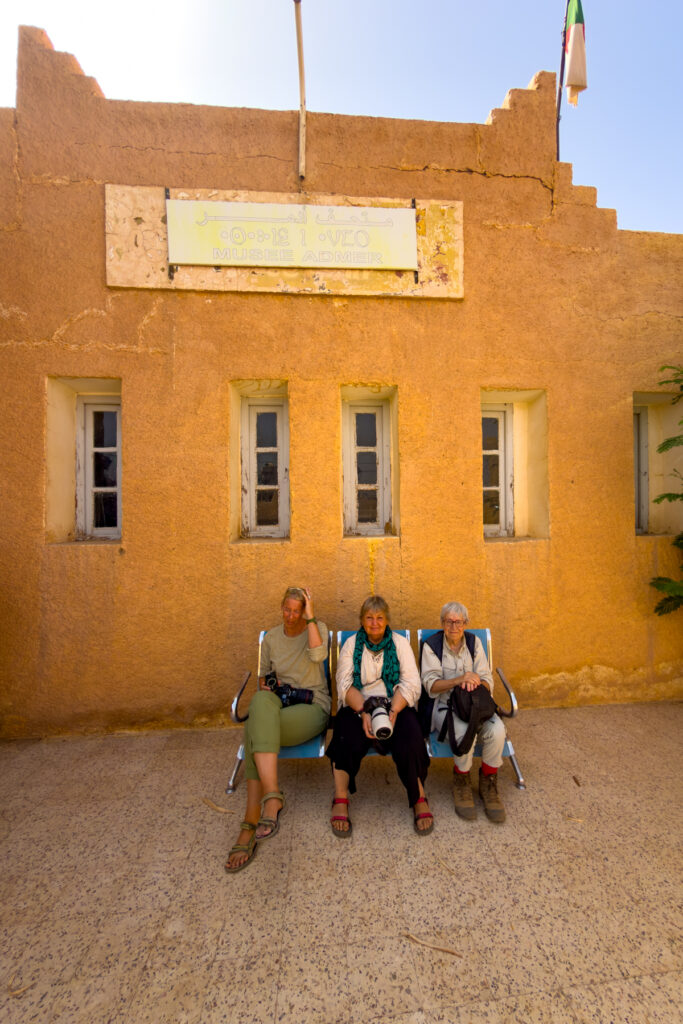
Sabine, Katie and Myriam outside Bordj El Haoues Admer Museum (image by Inger Vandyke)
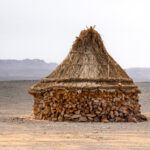
Shortly after, we began to see our first Ikabar, or Tuareg stone houses. Constructed by men, these houses serve as a more permanent shelter for Tuareg people when they are not living in towns or their traditional nomadic tents. Constructed from mud and stone with thatched roofs woven from date palm fronds, they are both strong and provide shelter from the heat, sand, dust and rain.
We stopped to visit the breathtaking village of Ikabar, centuries old and still used by Tuareg nomads as homes during the seasonal date harvest. It was buried deep in a canyon lined with layered rocks and the green palms adorning the canyon floor. After photographing this incredible place, we drove to Ihrir, where we were pleasantly surprised to discover that our overnight stay would be at an Ikabrane camp with a central building at its heart. We settled in for lunch and a siesta inside the large Ikabar in the centre of the complex.
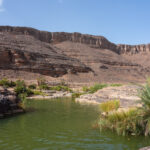
After lunch we drove through the town to a spring-fed oasis called In Talat. Its waters were the source of the Ihrir River, and after a short walk across a rocky riverbed, a few of us joined some locals and other tourists for a swim in this magnificent place.
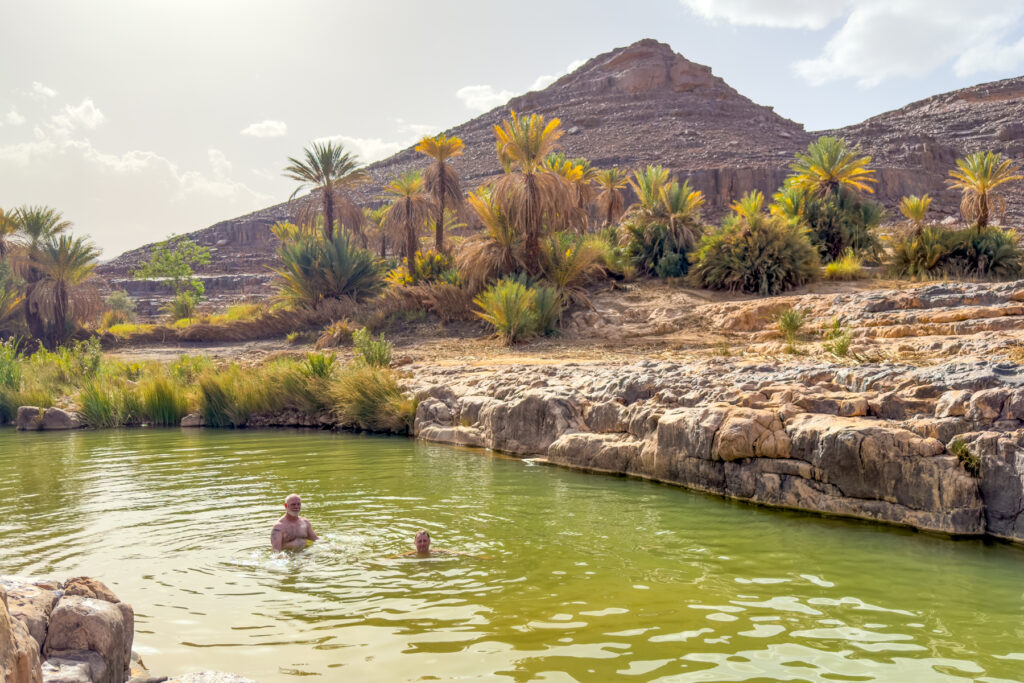
Pete and James swimming at the oasis of In Telat (image by Inger Vandyke)
Returning to our camp, I could smell the lovely wood smoke of our cook’s oven inside our main Ikabar. He was making the traditional Tuareg bread, or Taghella, over open coals. As we chatted around our table, the sun set, and we were served a dinner of Taghella with meat stew under the stars before staying overnight in the individual Ikabars we had been assigned to, like hotel rooms.
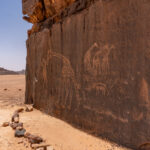
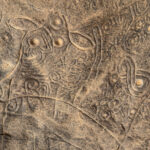
The following morning, we drove out to the most prolific rock engraving site we would see on the entire expedition, Tin Taghirt, with its incredible engravings of everything from antelope and bulls to ostriches, elephants, rhinos, and even people. Padding around this place in our bare feet, we felt at times like we were walking on a living history. The diversity of engraving subjects left us all in awe.
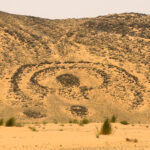
From there we went to Tikoubawine, or “The Swords”, where we saw our first large ancient rock grave with its concentric circles laid out on a low-slung hill. We drove slowly from there to the place where we rested, stopping to photograph the beautiful landscapes and film our expedition vehicles as they made their way through a dramatic, vast rock chasm.
Driving through a gigantic rock chasm in Tikoubawine (video by Inger Vandyke)
While we rested, we seemed to be surrounded again by the Painted Lady migration, and a few of us found bushes where their hungry caterpillars were feeding to help produce the next wave of butterflies to go on their massive journey.
When we finally stopped, we drove out of Tikoubawine, stopping to visit a lovely rock art site featuring a series of red-ochre dancers.
Tahamat
We had been plagued by another sandstorm that afternoon, and as we arrived near Djanet, we were meant to have a private Tahamat ceremony in the desert. As it turned out a calamitous series of events made this shoot more difficult than we anticipated – the dust storm arrived with rain, the performers ran late, the light became difficult and by the time everyone got there, we were left to photograph it all in very trying conditions. I quickly rallied around and organised a second one for a time when the conditions were better. Before we all left for Djanet, we did manage to get some nice photographs, despite the bad light.
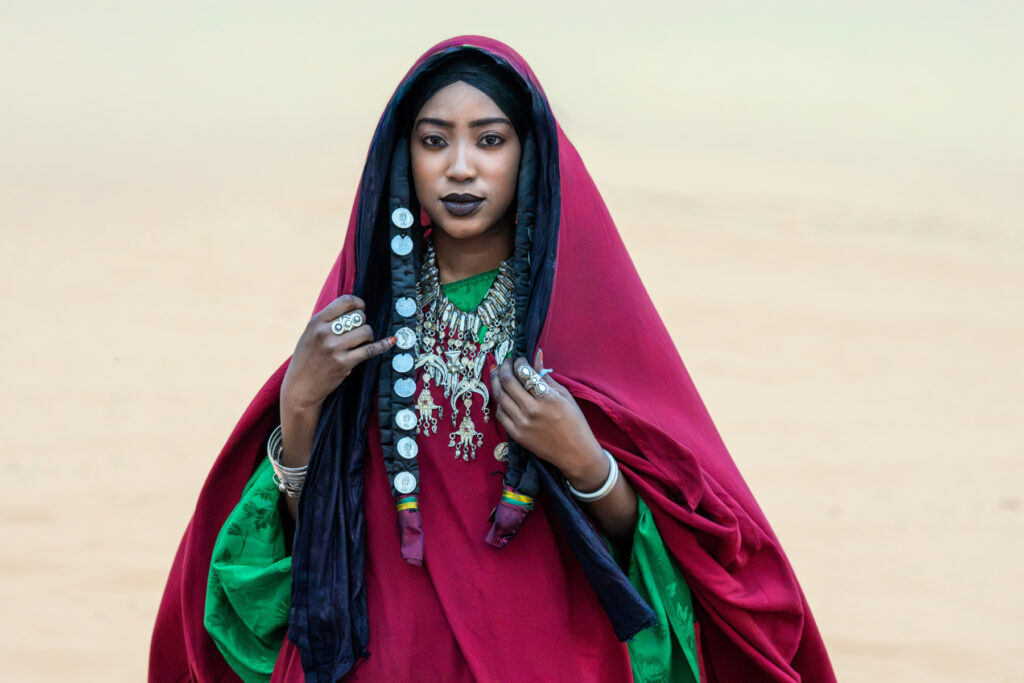
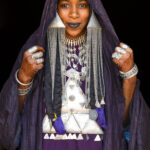
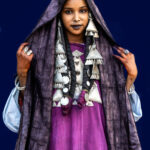
Hauntingly beautiful Tuareg girl in the desert of southern Algeria (image by Inger Vandyke)
Sabiba
For over three thousand years, the Tuareg people of Djanet have celebrated Sabiba, and this large festival was the key driver behind us setting the dates for this expedition.
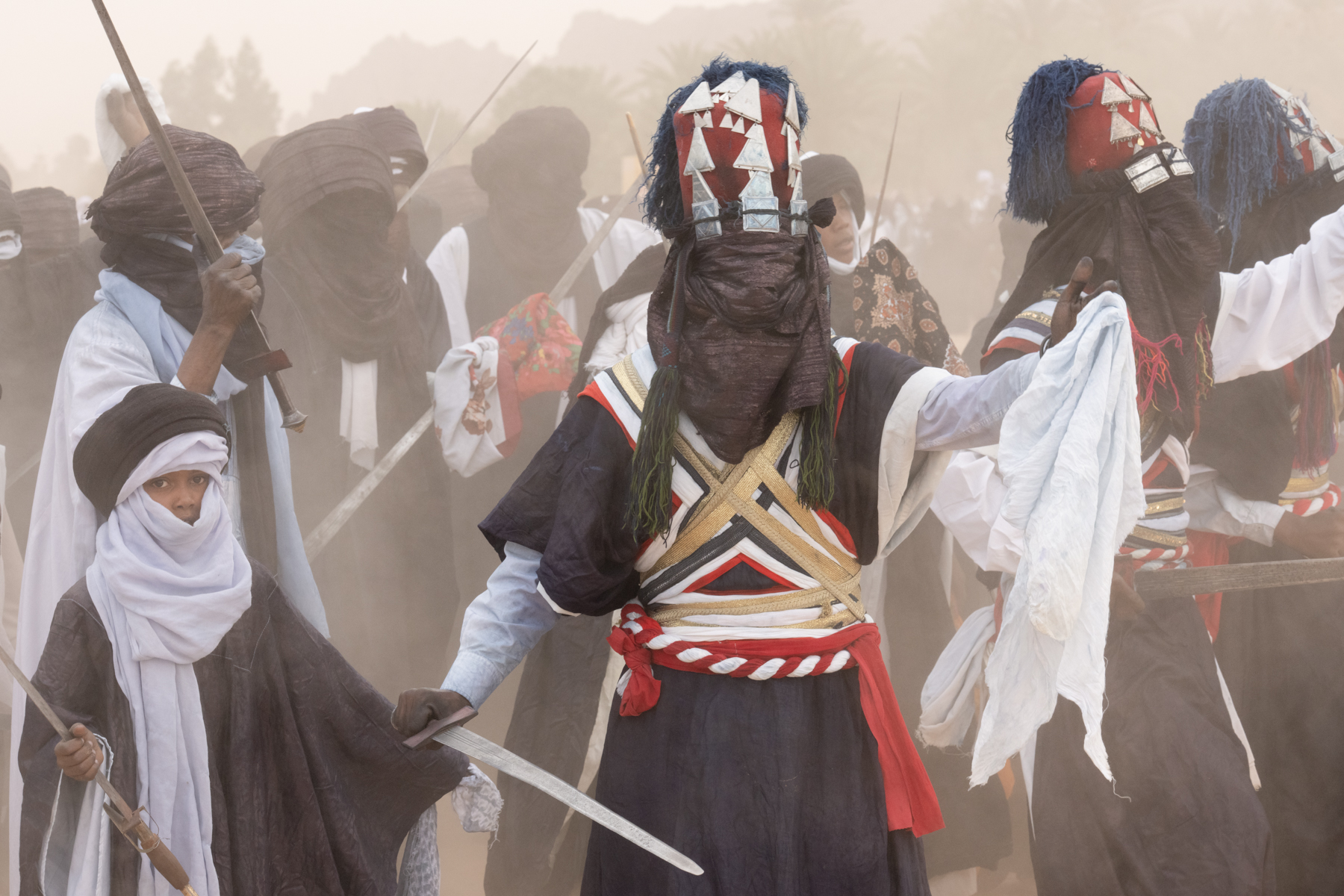
The ritual and ceremonies of Sabiba are practised by two communities living in Djanet during ten days in the first month of the Islamic lunar calendar. Male dancers and female singers compete for the right to represent their communities during a nine-day contest called Timoulawine. The chosen winners take part in the Sabiba ritual and ceremonies the next day. The male dancers, dressed as warriors, and the female singers walk to a place called Loghya for the ritual performance. Once there, the male dancers parade and present their weapons, then stand in a ritual circle rattling their swords continuously as the women sing traditional songs to the rhythm of the tambourine. At the end of the day, the participants disperse. Knowledge of rituals and ceremonies is transmitted directly from older to younger members. Local craftspeople produce and repair the uniforms, weapons, jewellery and musical instruments required for the ritual and ceremonies. The Sabiba ritual and ceremonies are an important marker of cultural identity for Tuareg people living in the Algerian Sahara.
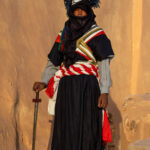
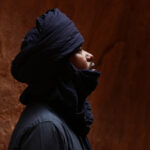
We headed to the festival after an early breakfast as we wanted to photograph the preparation of the El Mirhan warriors. While this was fascinating, sadly we were joined by throngs of tourists and some extremely unethical ‘photographers’ who were utterly disrespectful of the situation we were in, and were especially culturally insensitive towards the local Tuareg people, who ended up being as frustrated with them as we were. Despite these challenges, it was still fascinating to see the warriors being carefully dressed in their battle gear and elders being carefully wrapped in indigo for the event.
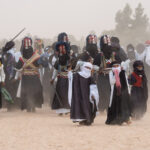
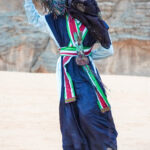
The morning session of Sabiba was lovely, as always, and it gave us a few chances to photograph the roaming lines of warriors and the beautifully dressed Tuareg women singing and playing drums to encourage the men of their clan. The finale of the morning was the otherworldly display of Tuareg ‘bat dancer’ men displaying their generous indigo robes with the help of assistants.
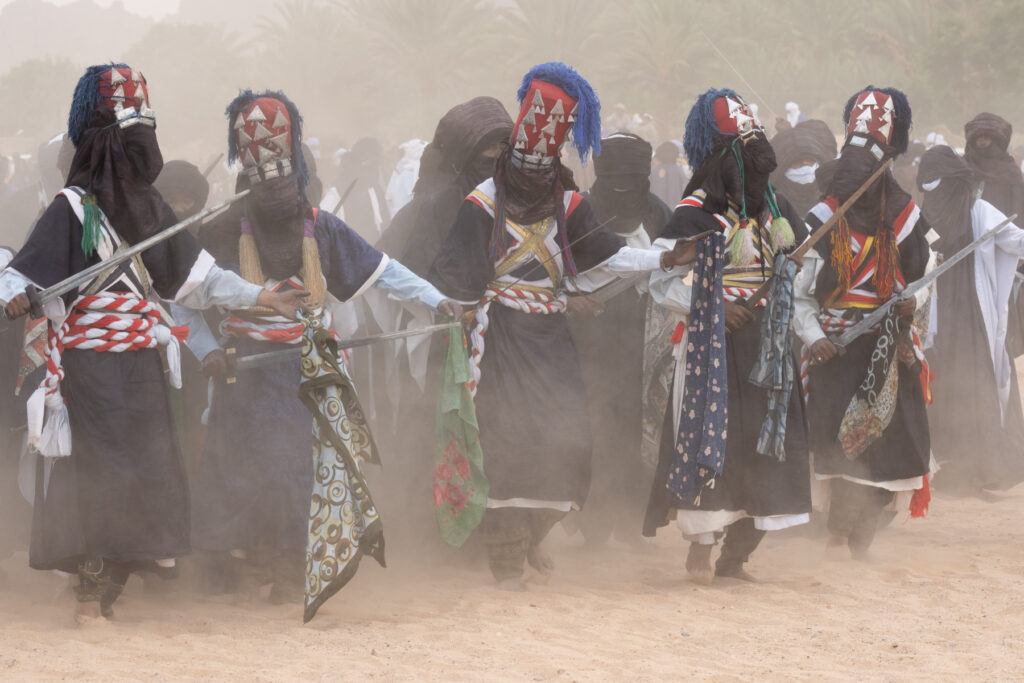
Sabiba (image by Inger Vandyke)
At lunch we were blessed to join them all privately. Segregated into groups of men and women, the men in our group went and joined warriors and elders for food, accompanied by serious discussion of politics and the organisation of Sabiba.
I went with the women in our group to join the beautiful Tuareg women for a meal. While dining on delicious local food, fresh milk and sweet tea, we learned how Tuareg women apply ‘Anila’ or henna on their hands for important events. We were also blessed to listen to a lovely Algerian artist sing Tuareg lullabies to the little girls who sat enthralled, listening with us.
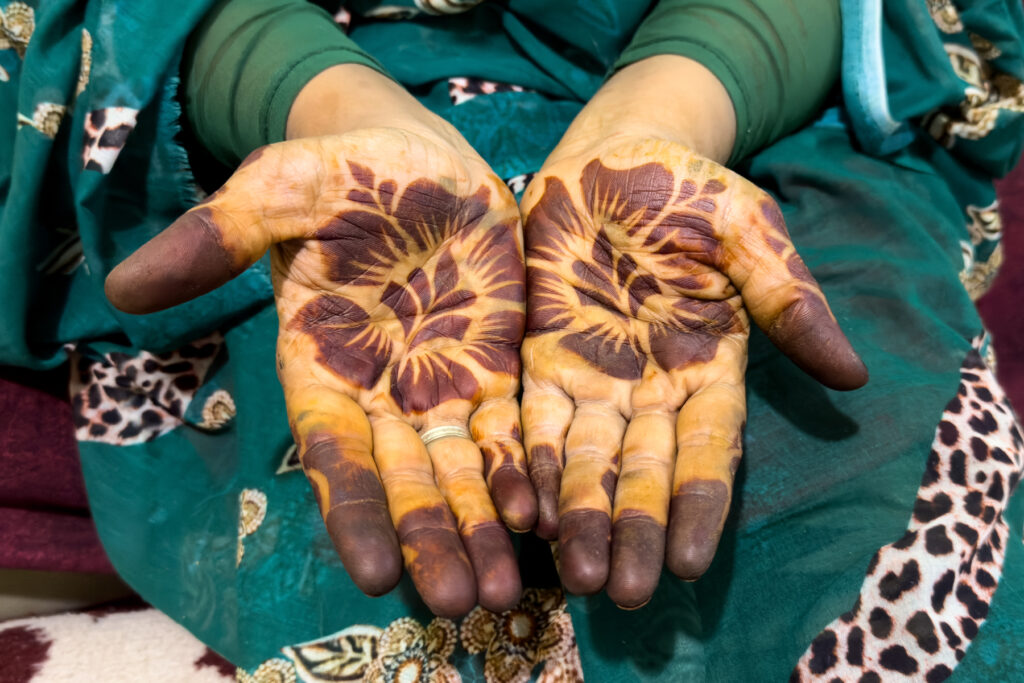
The beautiful outcome of stencilling with henna on the hands of a Tuareg lady (image by Inger Vandyke)
We had a short break at the hotel, then returned to the festival’s afternoon session. This time, many more tourists had arrived; the warriors were performing in the dust, and towards sunset, four magnificent Tuareg warriors arrived on camels, their indigo robes flowing in the light breeze.
After a huge and tiring day, we all had a sleep-in and some leisurely shopping in the town the following morning.
Adayk – The Forests of Stone
That afternoon we returned to the desert, this time to the spectacular rock formations of Adayk, or the Forests of Stone. This region is relatively close to Djanet and is home to rock art sites, archaeological bases, the ancient grave of Ghawen, and some truly beautiful rocky desert landscapes.
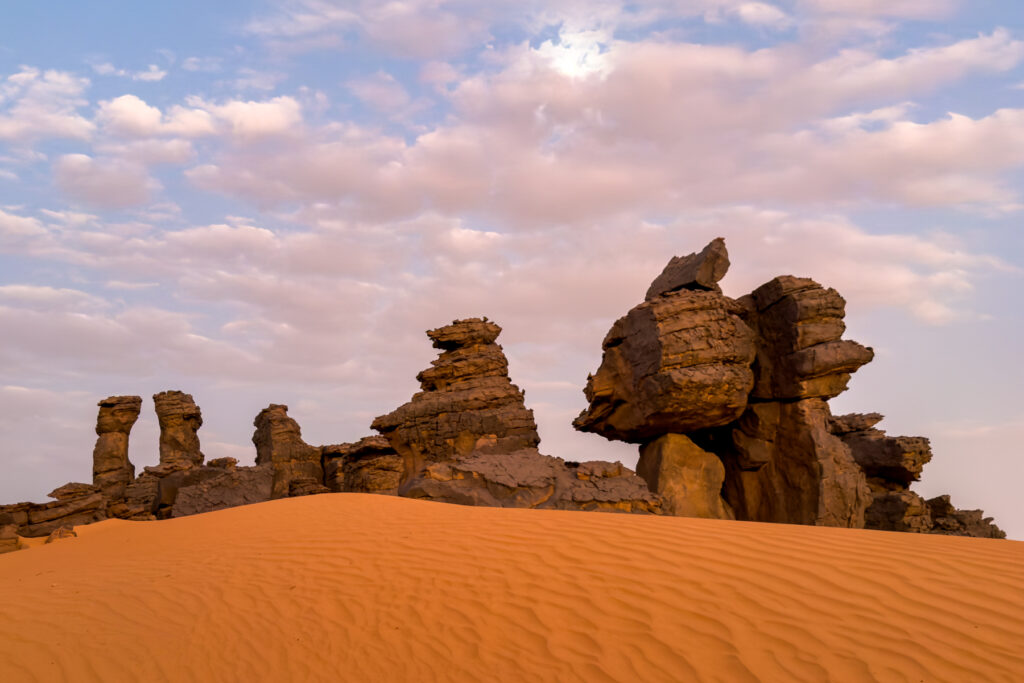
Adayk landscape (image by Inger Vandyke)
It was the day before my birthday, and our Tuareg team organised an evening of Mechaoui, earth-cooked lamb, for dinner and music from a famous local music group, L’Oud. To my surprise, they also organised a cake with large sparklers, and L’Oud sang “Happy Birthday” to me in Tuareg language. What an incredibly special way to celebrate! Years ago, my 20th birthday passed without ceremony in the Algerian Sahara. Who could have told the 20-year-old me that I would celebrate my birthday again in such a memorable way in the desert with Tuareg people, great friends, wonderful food and a million stars.
Celebrating my birthday in the desert with traditional Mechaoui and music from famous Djanet group L’Oud (video by Inger Vandyke)
Tahamat Revisited
The following day, we went off to see our rescheduled Tahamat ceremony, in much better lighting conditions (at the beginning). It was lovely to finally witness this beautiful ceremony, with Tuareg men twirling to the music of local women singing and drumming. We stayed until the light became too harsh for photography, before going back to the hotel for our final siesta in the Sahara.
Camel Dancing in the Desert
On our penultimate day of the expedition, we went to the desert near Djanet for our last private shoot: an incredible camel dance complete with five riders and a small group of brightly dressed Tuareg women to drum and sing for the dancers. Against a backdrop of golden desert light, we were honoured to photograph these beautifully adorned dancers with their elaborately decorated camels, riding around the women nearby.
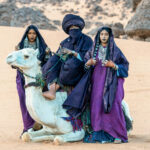
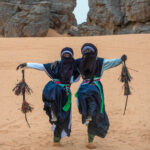
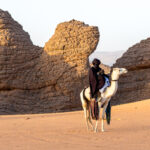
At the end of it, we photographed two stunning Tuareg girls in their indigo finery in the dunes, and then, finally, with one of the camel riders and his camel.
What an incredible end to this inaugural expedition for Tuareg culture!
It was time to say goodbye to our mesmerising desert odyssey, our newfound Tuareg friends and the lovely town of Djanet. We returned to our hotel after the camel dance to rest, shower, pack up and head to the airport for our ‘red-eye’ flight to Algiers.
Southern Algeria will always remain a very special place for me for so many reasons, and I just added another one – the chance to gently share the world of Tuareg people with a group of very special guests.
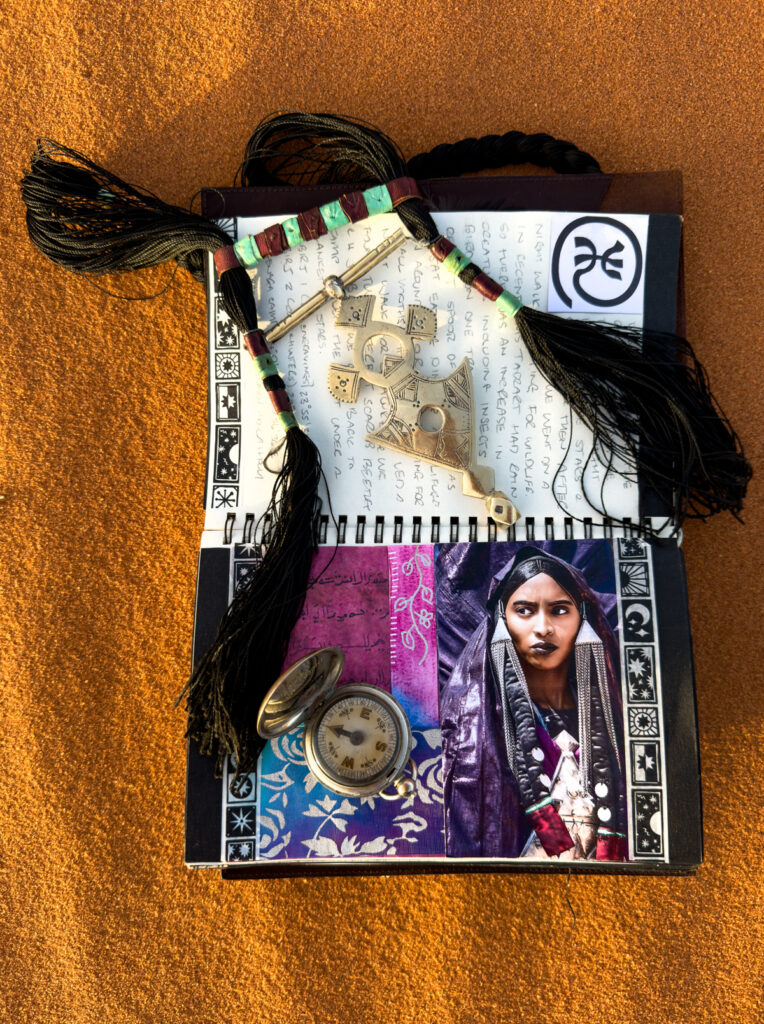
Diary of the desert (image by Inger Vandyke)
Inger Vandyke
Australian professional wildlife photojournalist and expedition leader Inger Vandyke now lives in the Forest of Bowland in northern England with her partner and fellow Wild Images photographer Mark Beaman. Inger has a long-established photographic career publishing images and stories in over 30 publications worldwide.