
Tanzania: Wildlife Spectacular Tour Report 2026
14 July 2026
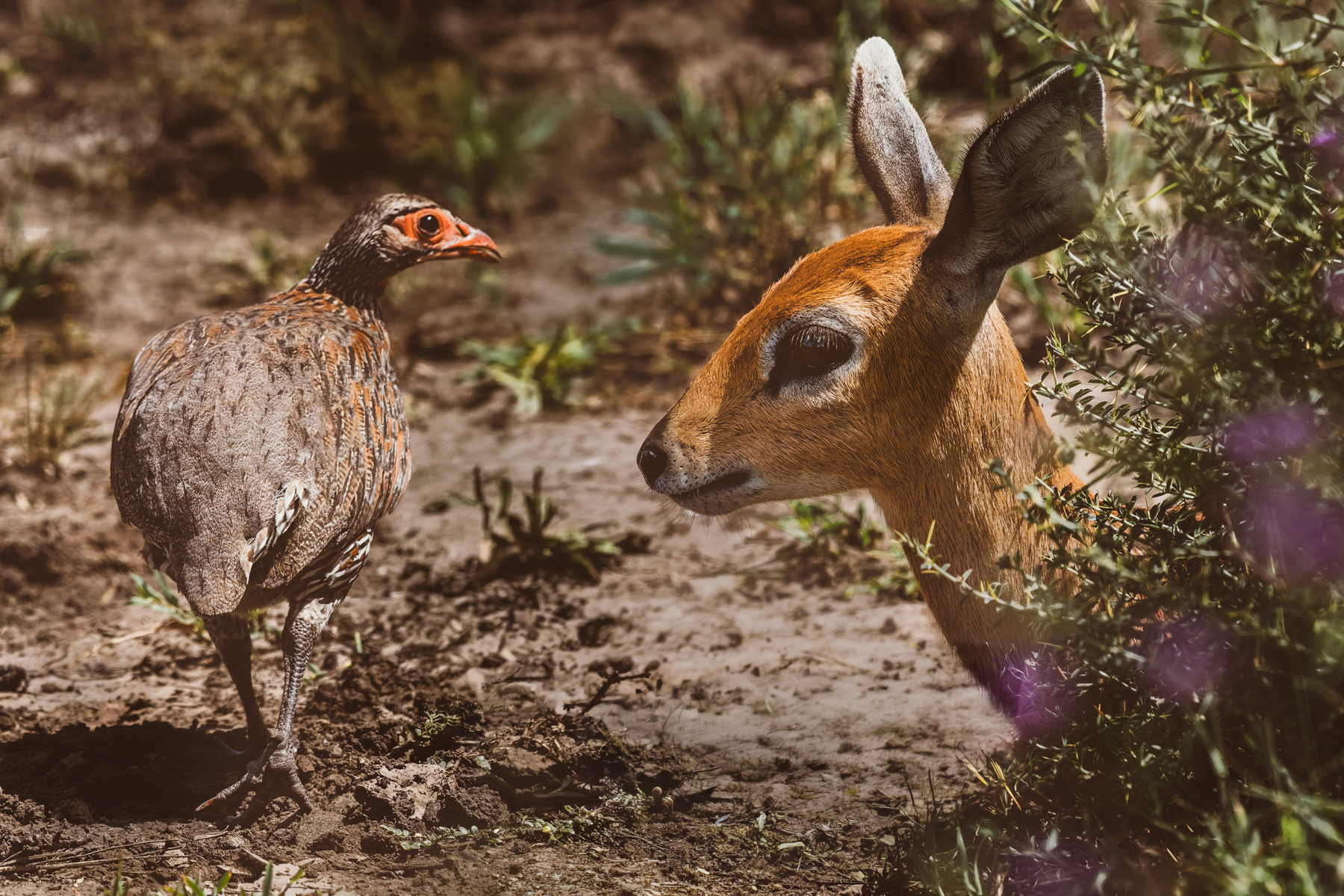
An unlikely meeting between a Grey-breasted Spurfowl and a Kirks Dik Dik in the Tanzanian bush. Both rely on stillness and camouflage
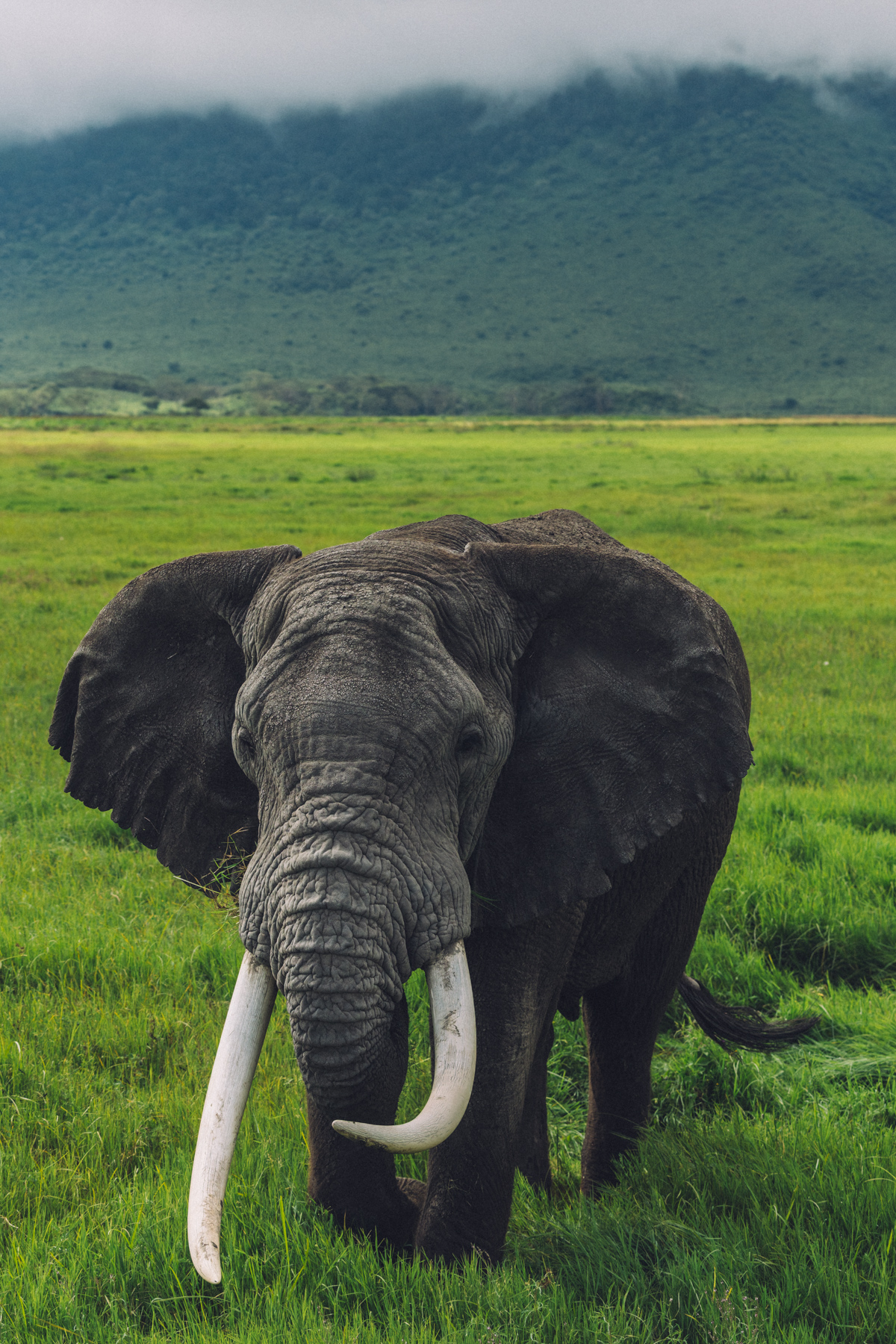
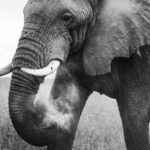
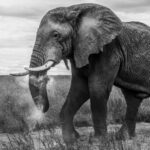
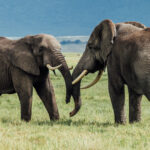
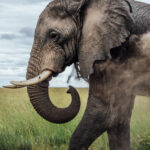
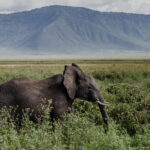
An old bull Elephant - probably over 40 years old - displays remarkably large tusks. Bulls carrying ivory of this size are now tragically uncommon because decades of poaching disproportionately removed the largest-tusked Elephants (image by Virginia Wilde)
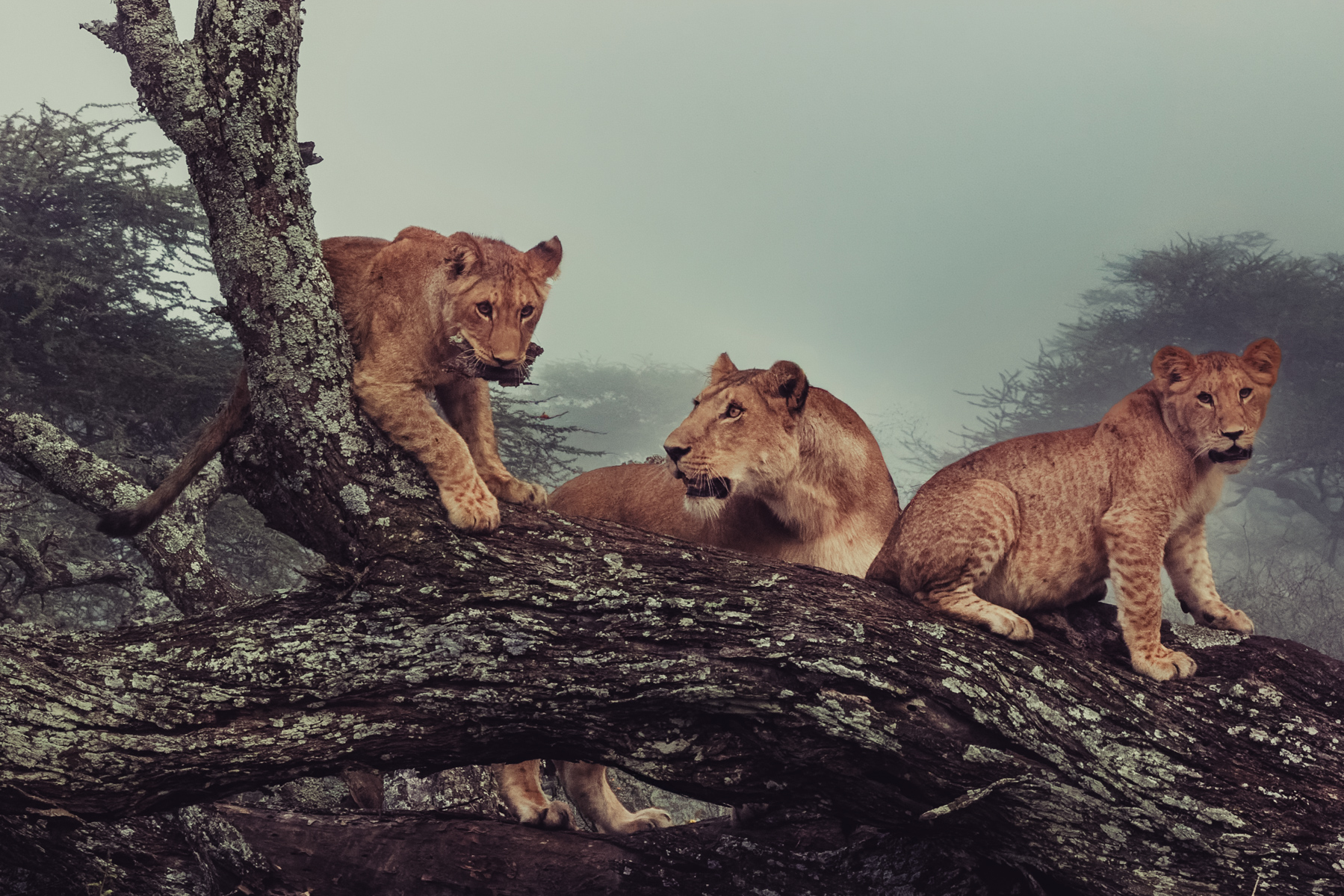
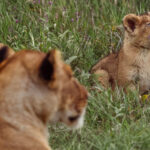
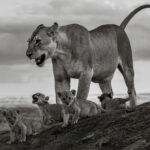
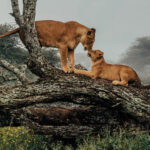
A Lioness supervises as her cubs turn a fallen tree into an adventure playground, on a misty morning in Tanzania's Ndutu region (image by Virginia Wilde)
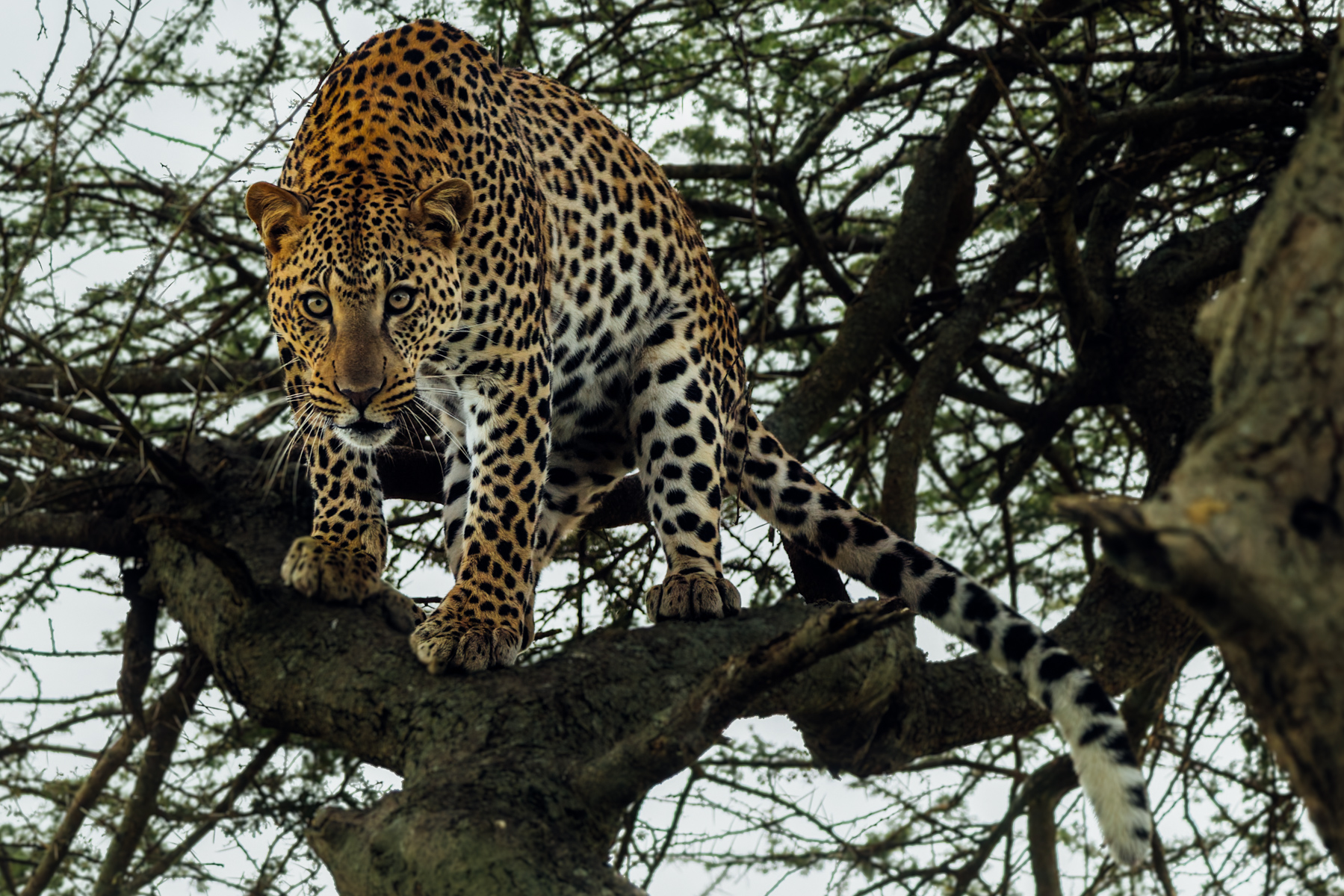
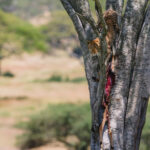
A Leopard surveys the Serengeti from the branches of an Acacia tree. Powerful shoulders and flexible ankles allow them to climb headfirst up a tree and descend headfirst again; something few large cats can manage (image by Virginia Wilde)
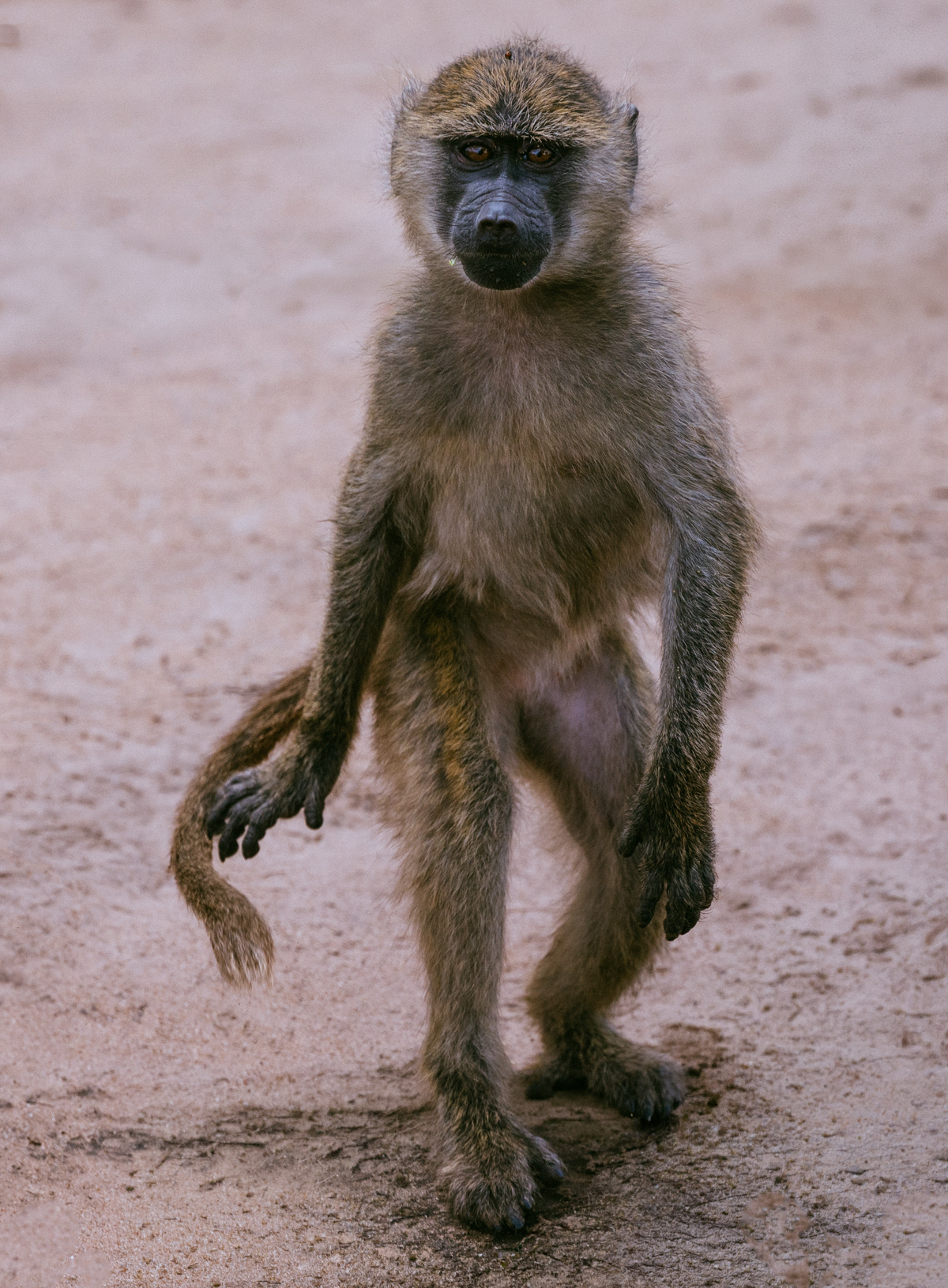
Every troop has one that insists on doing things differently. For one uplifting moment, this particular Olive Baboon is convinced it's a Human (image by Virginia Wilde)
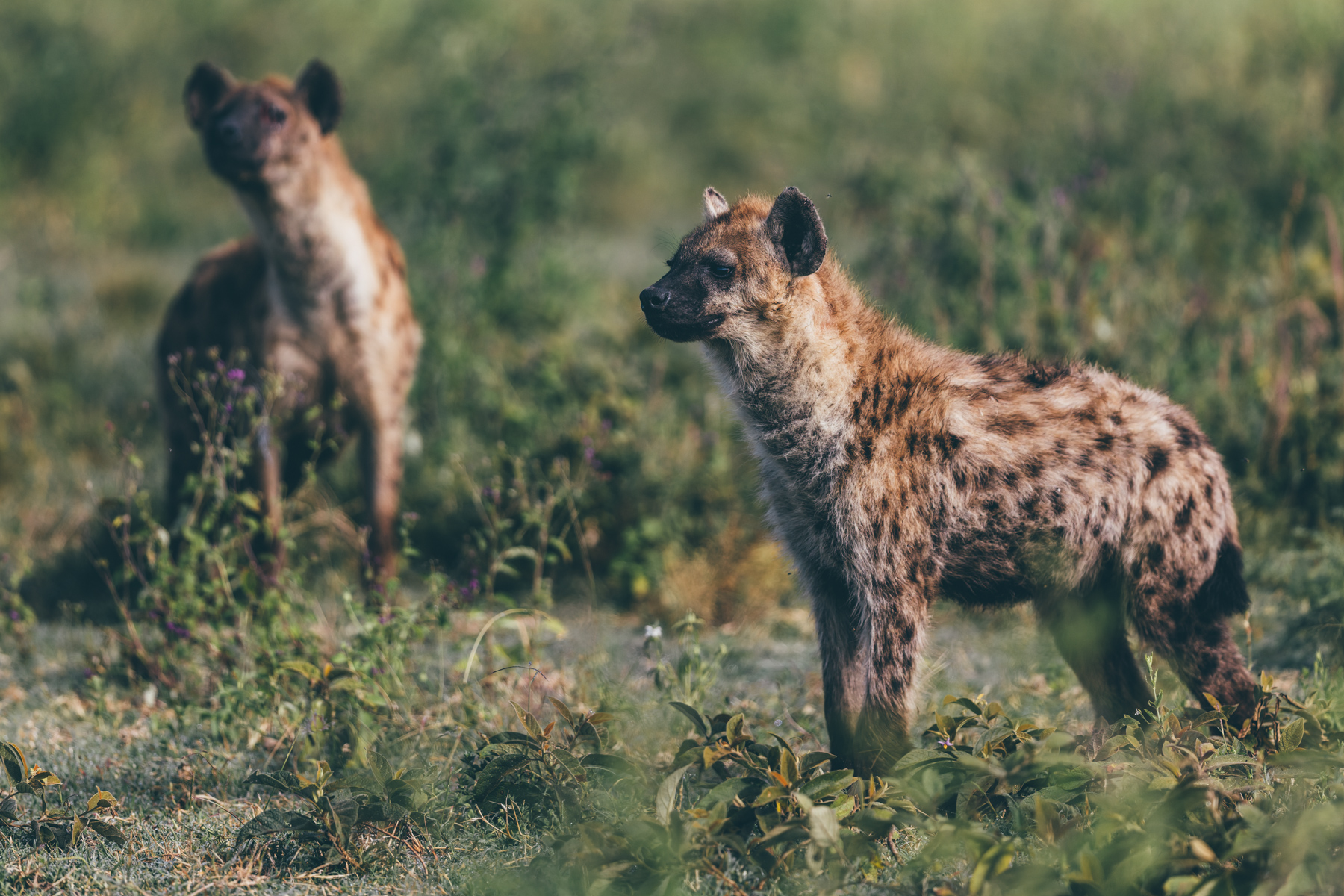
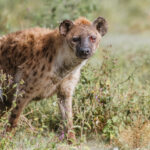
Spotted Hyenas live in some of the most coplex societies in the animal kingdom. A single clan can number more than 80 individuals, led by dominant females (image by Virginia Wilde)
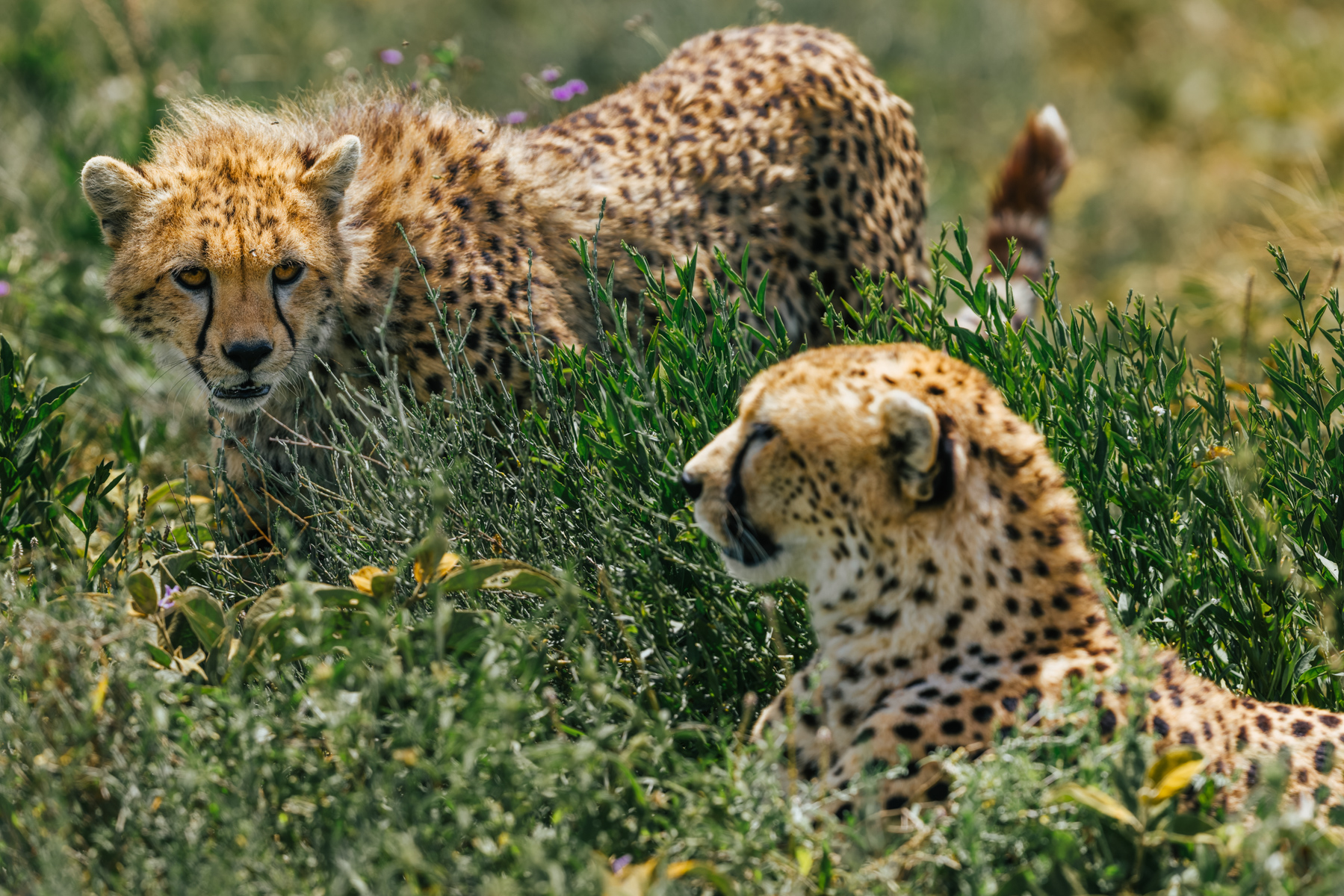
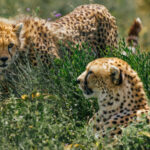
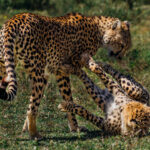
The cub watches; the mother watches everything else. Young Cheetahs spend up to 18 months learning by observation before becoming independent (image by Virginia Wilde)
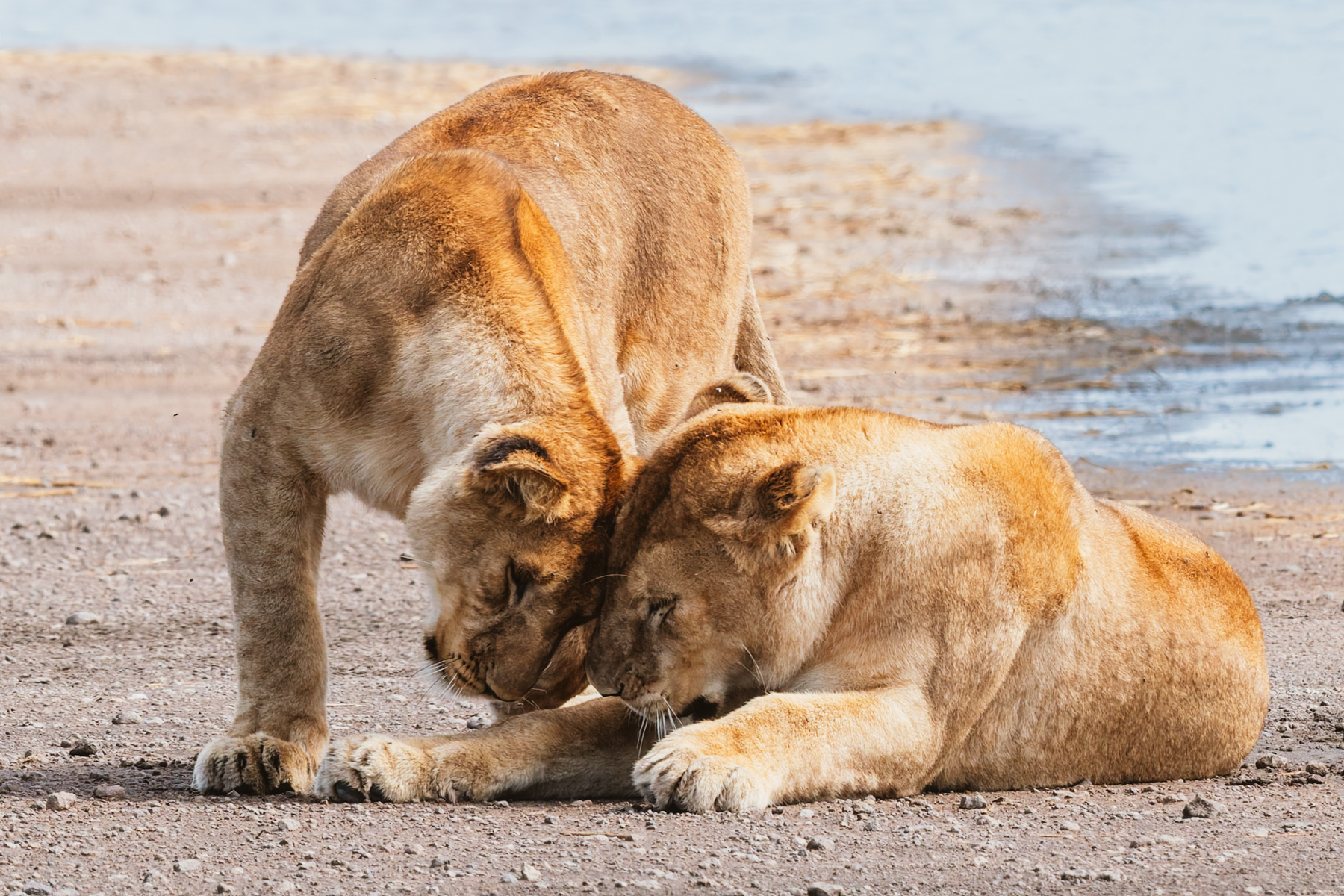
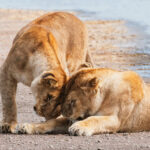
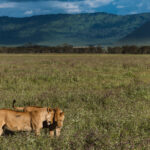
A pair of Lionesses greet each other by a lake in Tanzania's Ndutu region. Lions are highly social felines who display affection to reinforce trust and build group cohesion (image by Virginia Wilde)
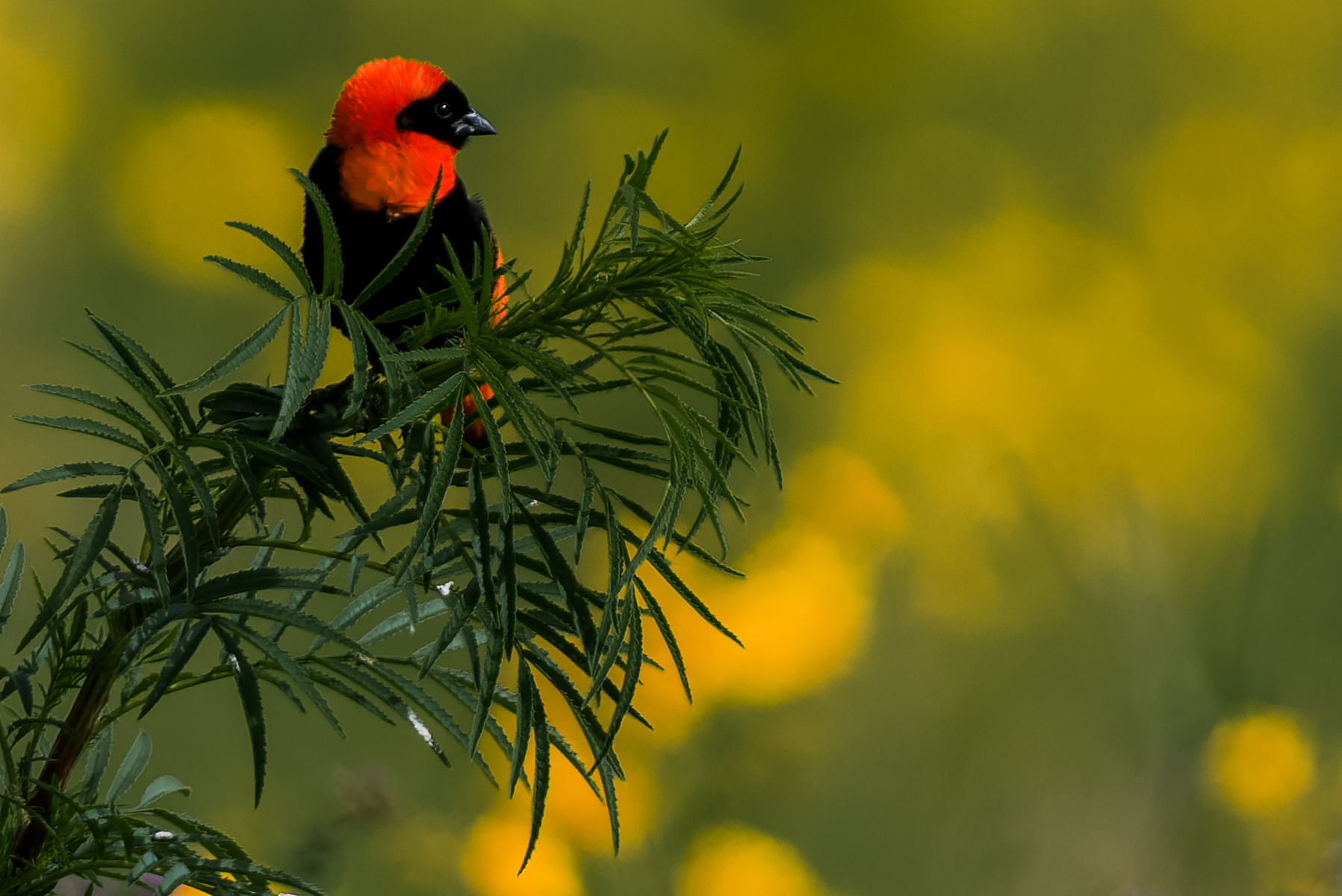
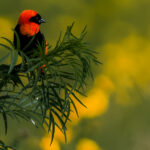
A Southern Red Bishop rests for a moment in the grasslands of Tanzania's Ngorongoro Crater (image by Virginia Wilde)
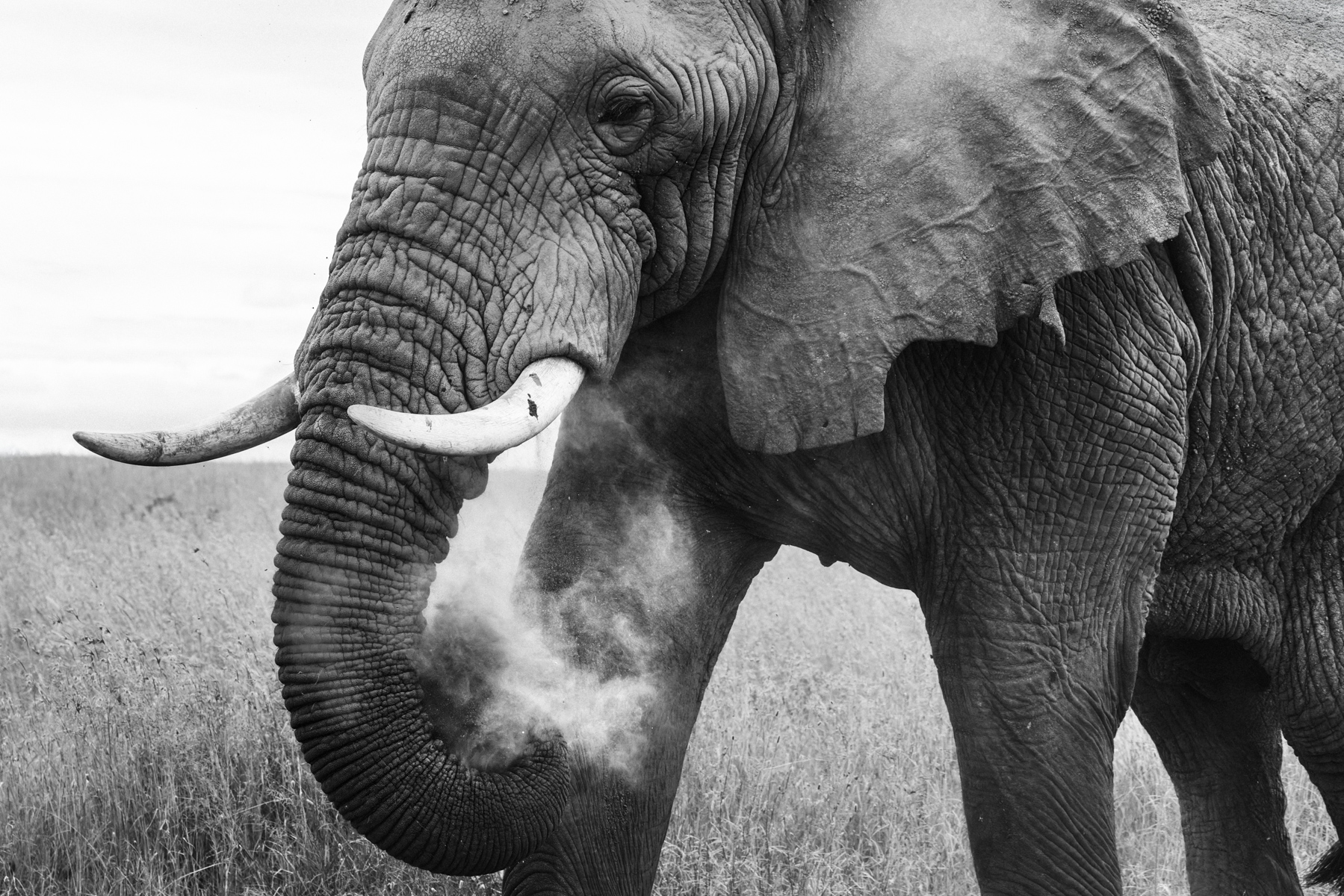
A bull African Savanna Elephant gives himself a thorough dusting in Tanzania's Ngorongoro Crater. Dust is both nature's answer to sunscreen and an effective insect repellent (image by Virginia Wilde)
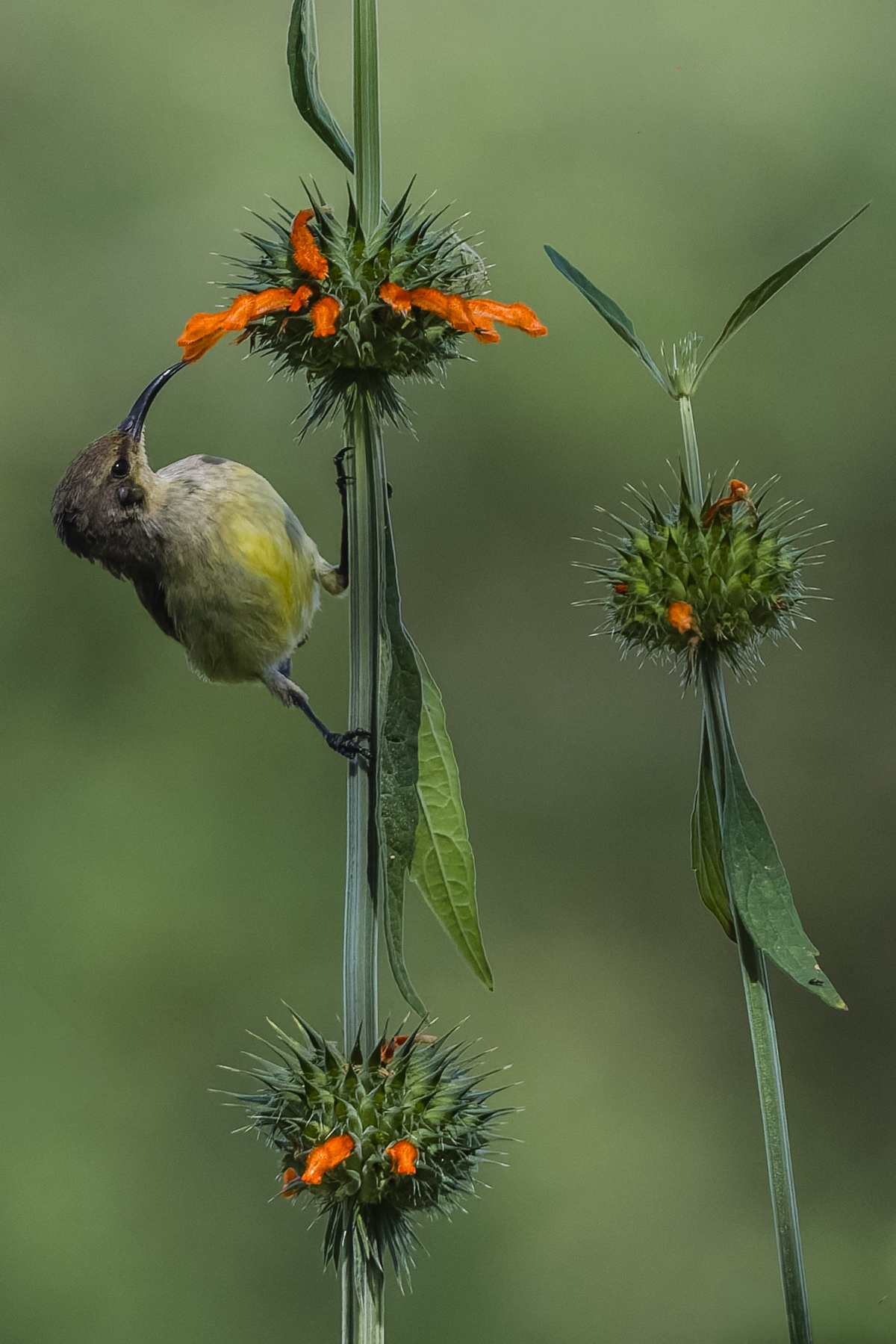
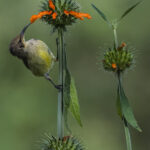
A female Variable Sunbird sups on the nectar-rich flowers of Lion's Ear (Leonotis nepetifolia). The bird's slender, curved bill is perfectly adapted for reaching deep into the orange tubular blooms (image by Virginia Wilde)
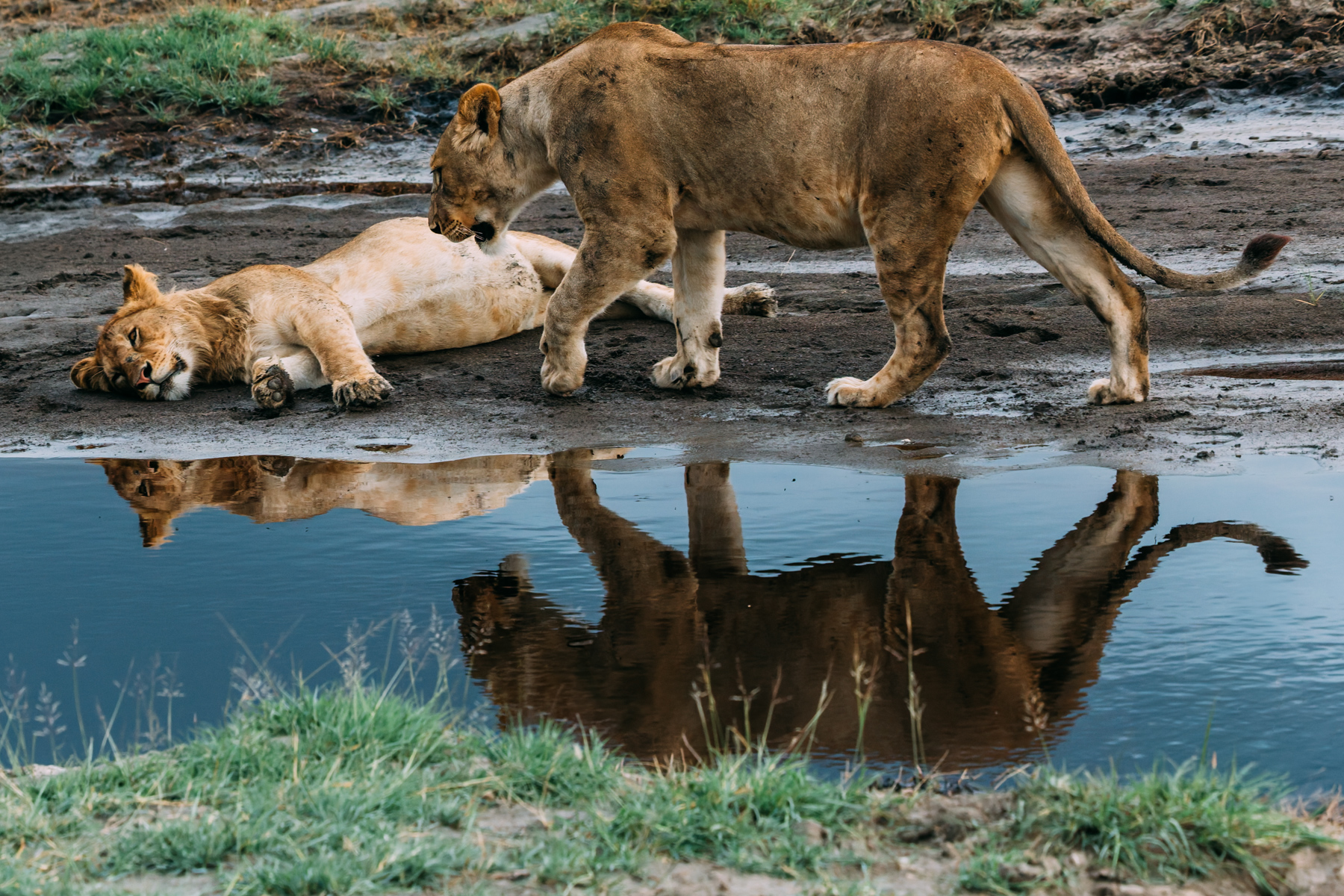
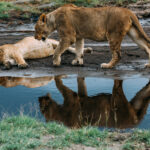
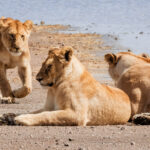
Even Africa's most formidable predator has off-duty hours. Lots of them, if you are a male lion, like this sleeping juvenile. In Ndutu, a Lioness checks on her drowsy companion (image by Virginia Wilde)
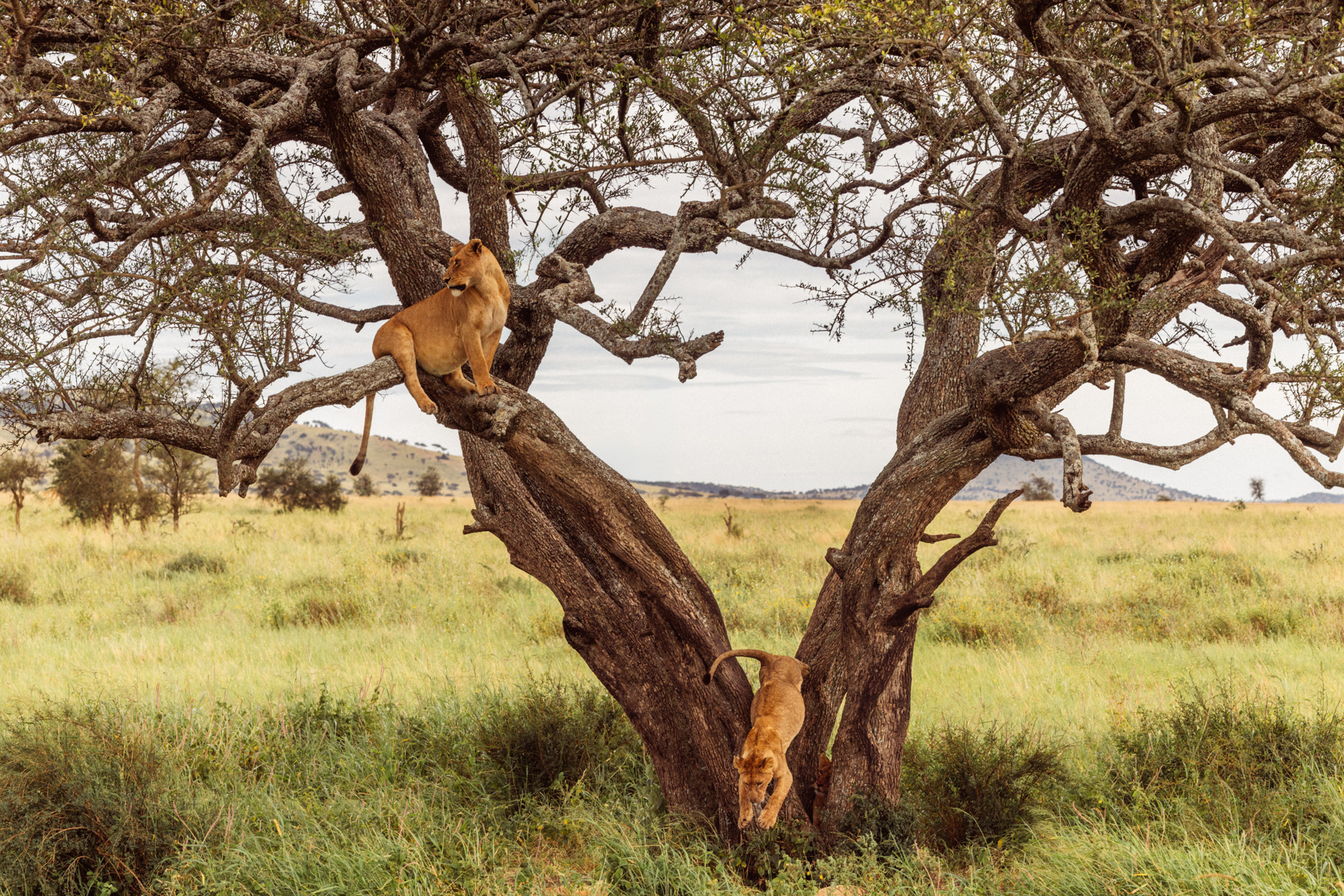
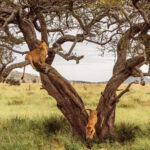
There are estimated to be as many as 4,000 African Lions living in the Serengeti ecosystem, spread across approximately 300 different prides. This makes it one of the largest and most significant Lion populations anywhere in the world. Here, a cub decides he's had enough of this particular tree (image by Virginia Wilde)
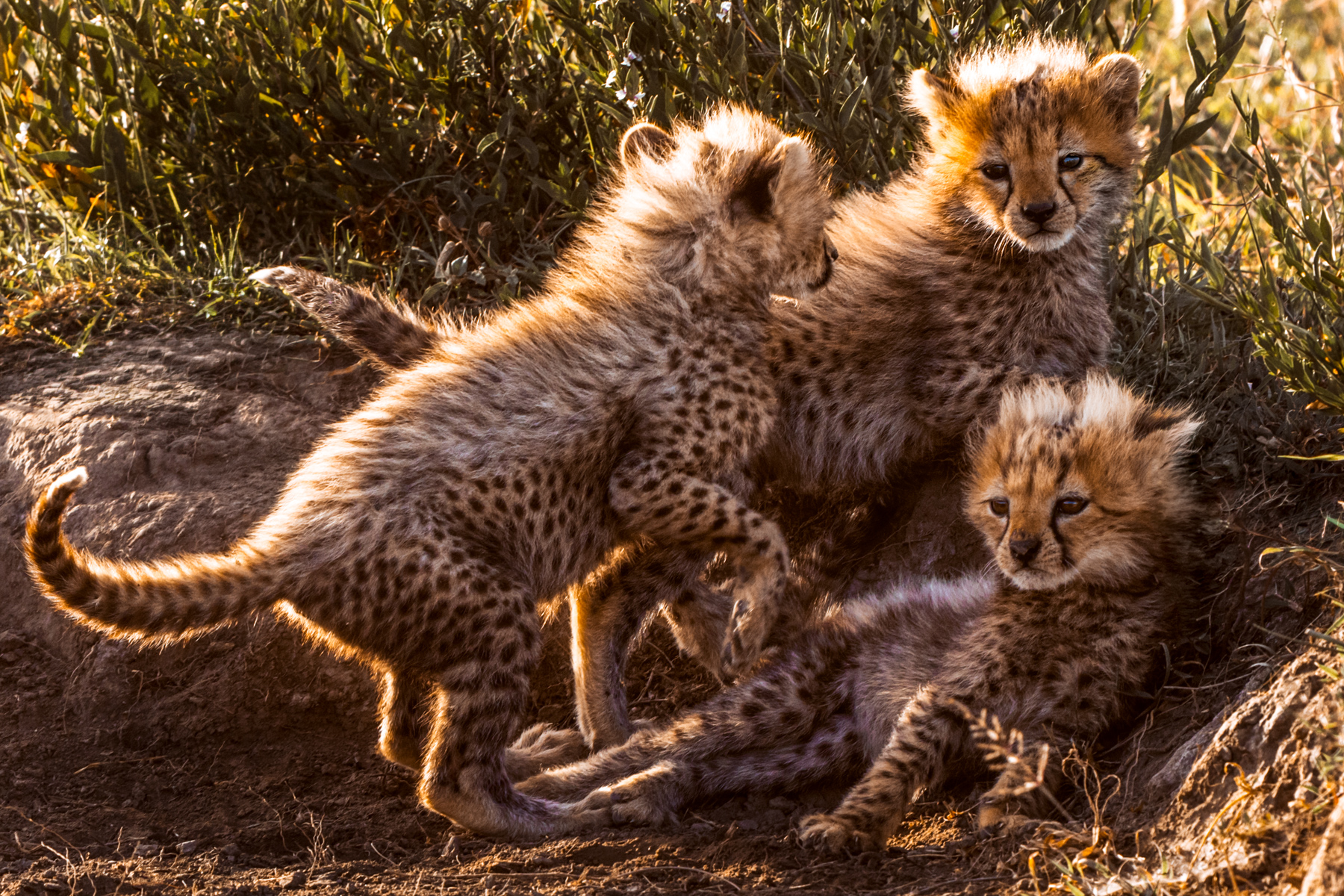
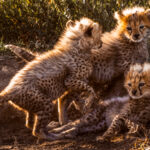
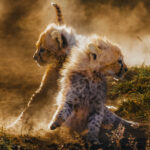
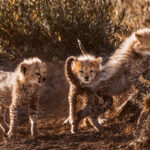
These adorable six-week-old Cheetah cubs tumble around, displaying their fluffy white mantles as they play. This special coat - unique to Cheetah infants - helps to disguise them among the grasses of the Serengeti; a small but vital advantage in a world filled with predators (image by Virginia Wilde)
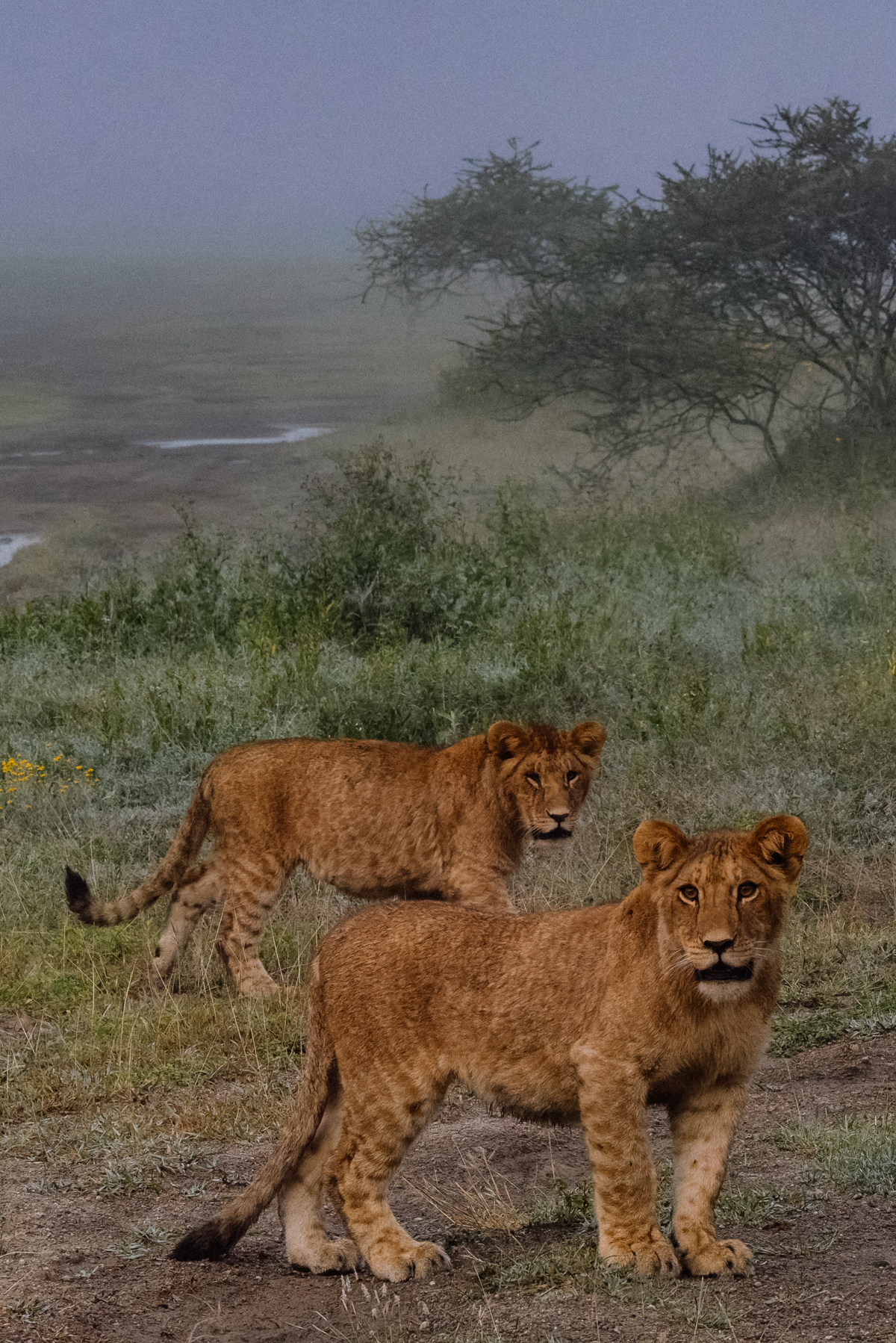
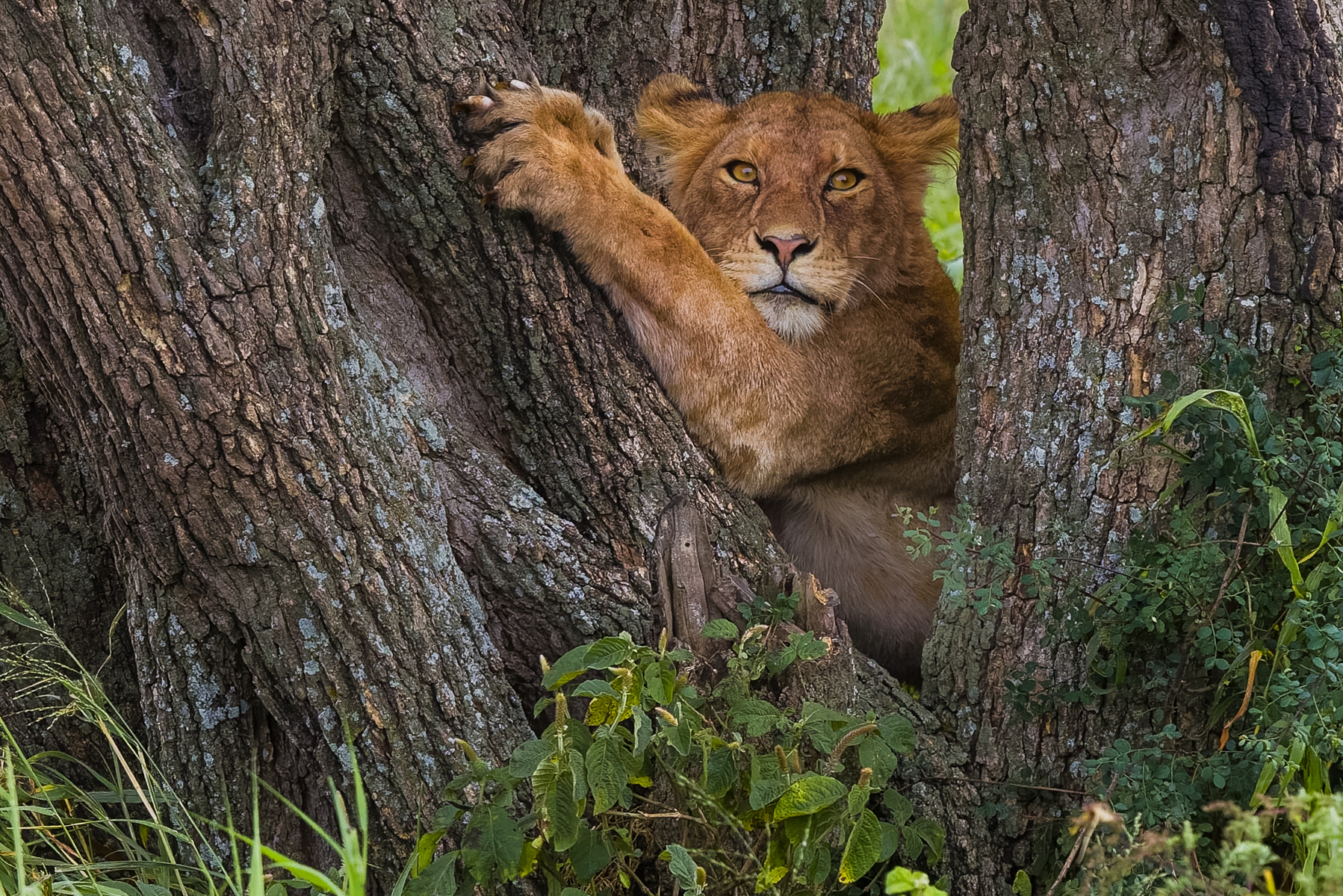
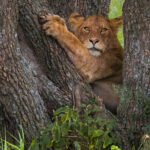
Sheltered in the fork of a weathered tree, a young Lion's gaze appears piercing (image by Virginia Wilde)
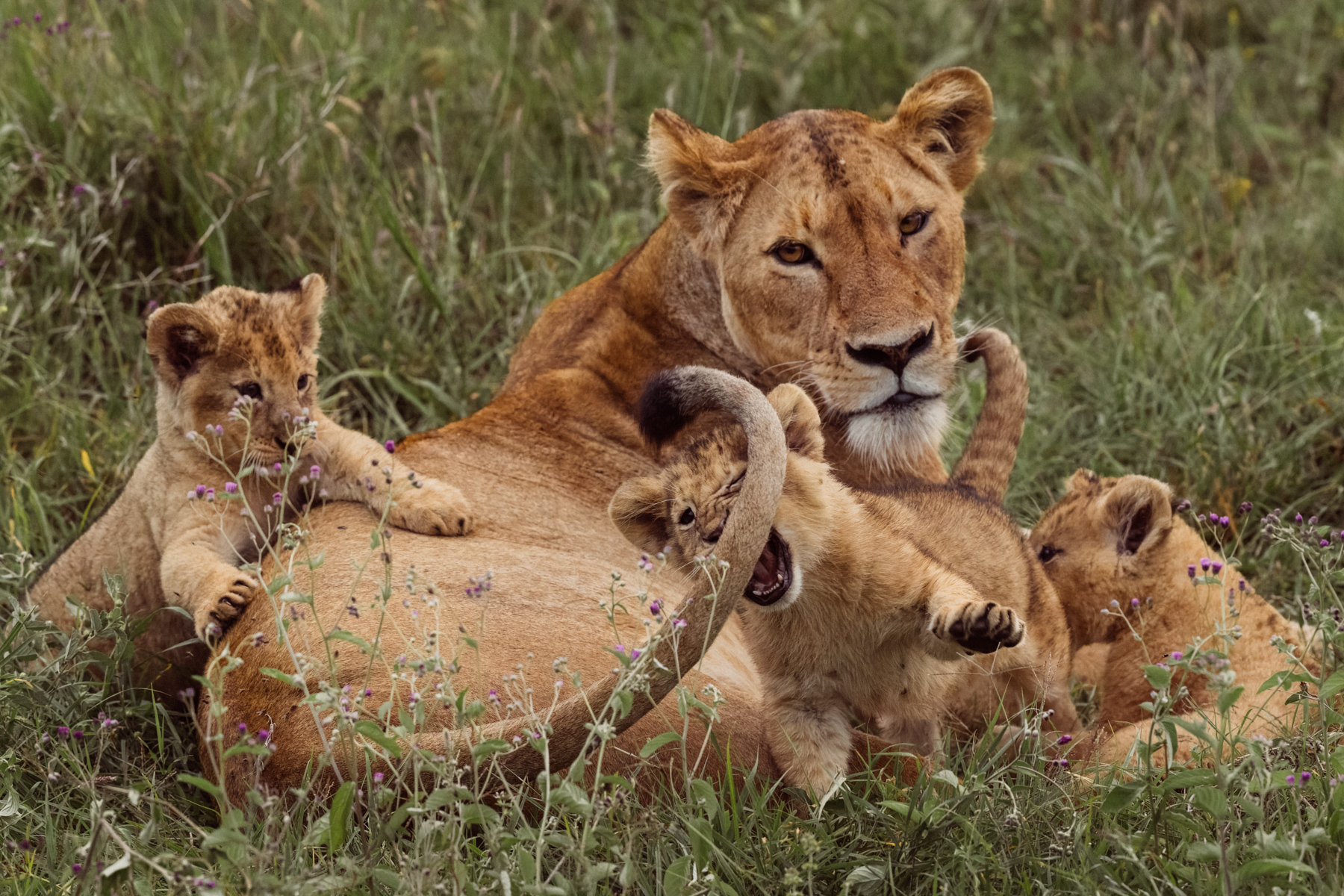
"Mum! Your tail started it!" Lion cubs spend much of their day wrestling and pouncing, rehearsing the skills that will one day bring down antelope (image by Virginia Wilde)
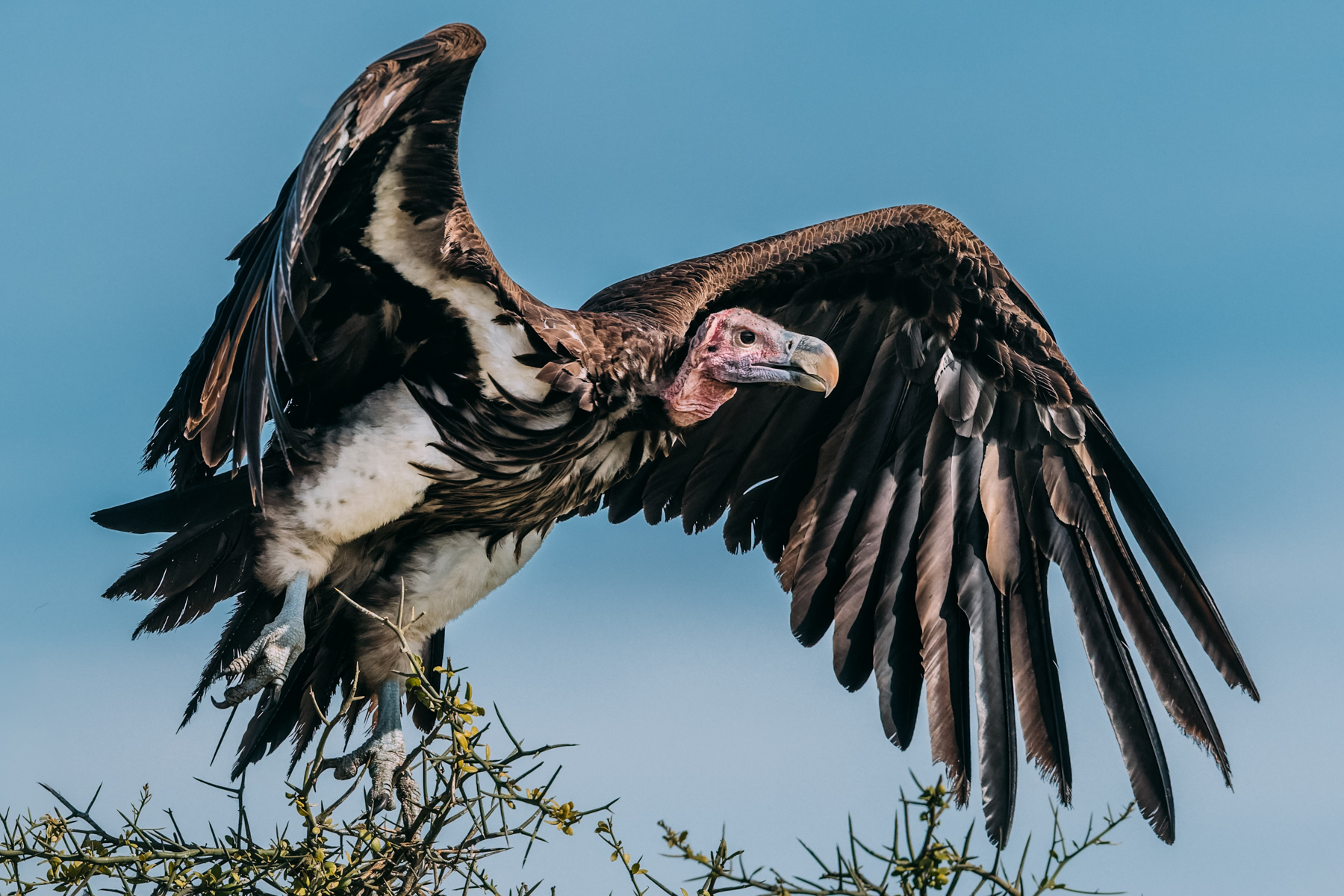
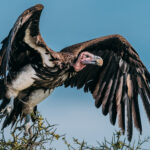
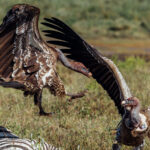
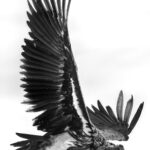
The Lappet-faced Vulture is not the prettiest bird on the savannah - until it opens its wings. Then it's impossible to ignore (image by Virginia Wilde)
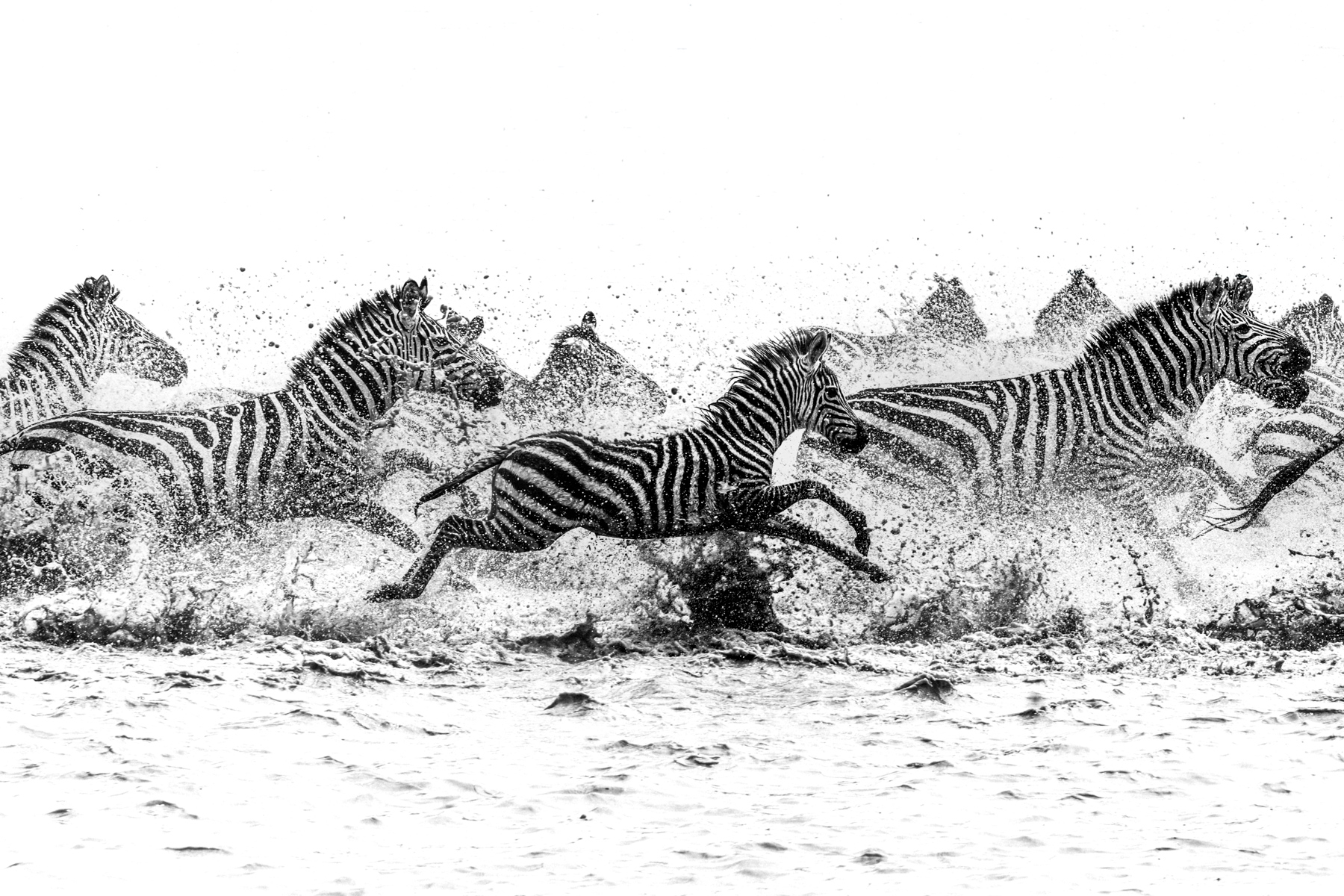
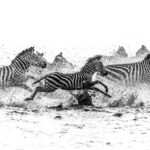
The Great Migration at its most kinetic: a torrent of spray and Zebra, one river, no room for hesitation (image by Virginia Wilde)
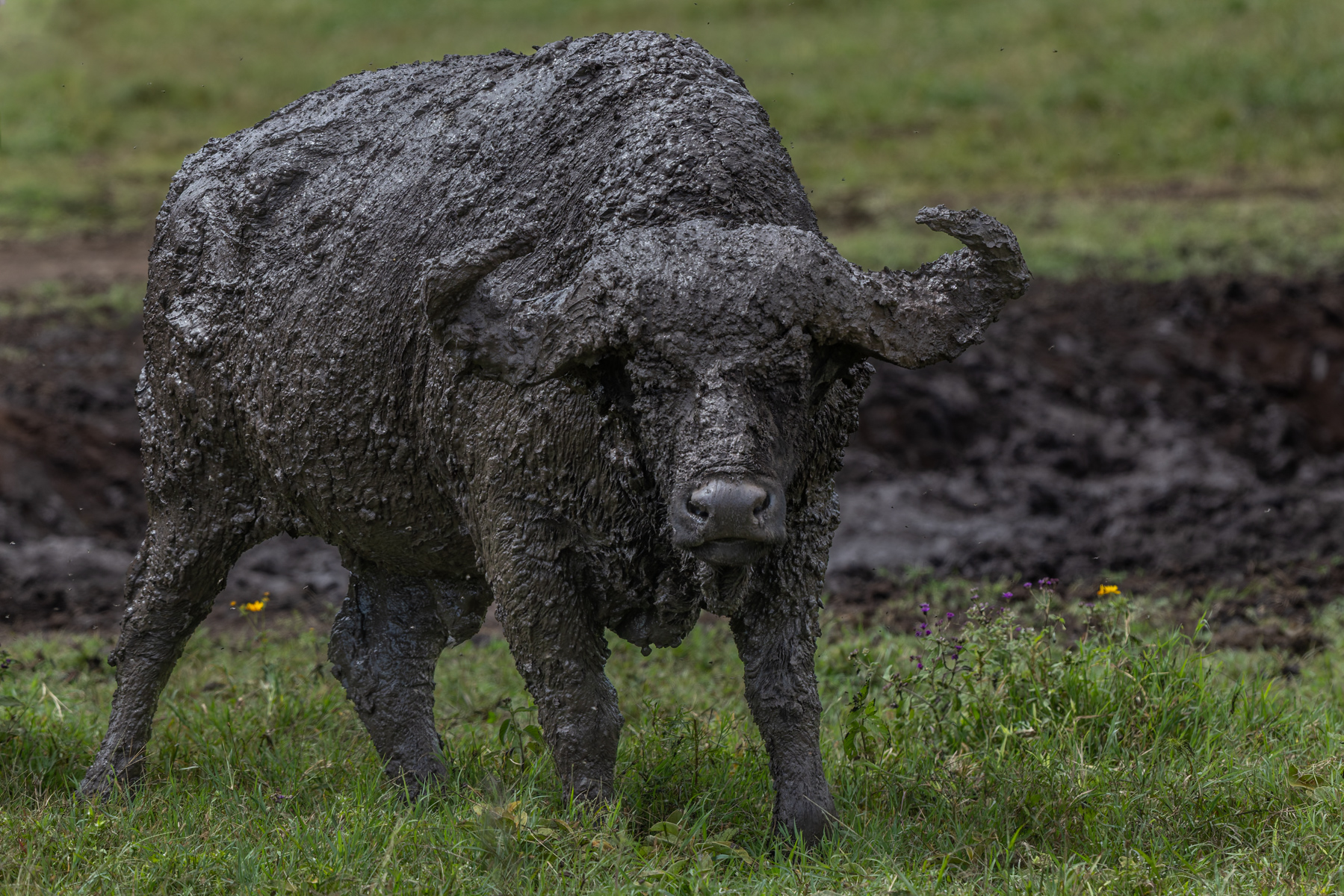
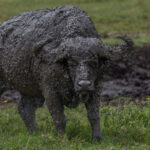
"I meant to look like this!" A Cape Buffalo wears his mud bath with unmistakable confidence. And in his view, the heavier the coating, the better (image by Virginia Wilde)
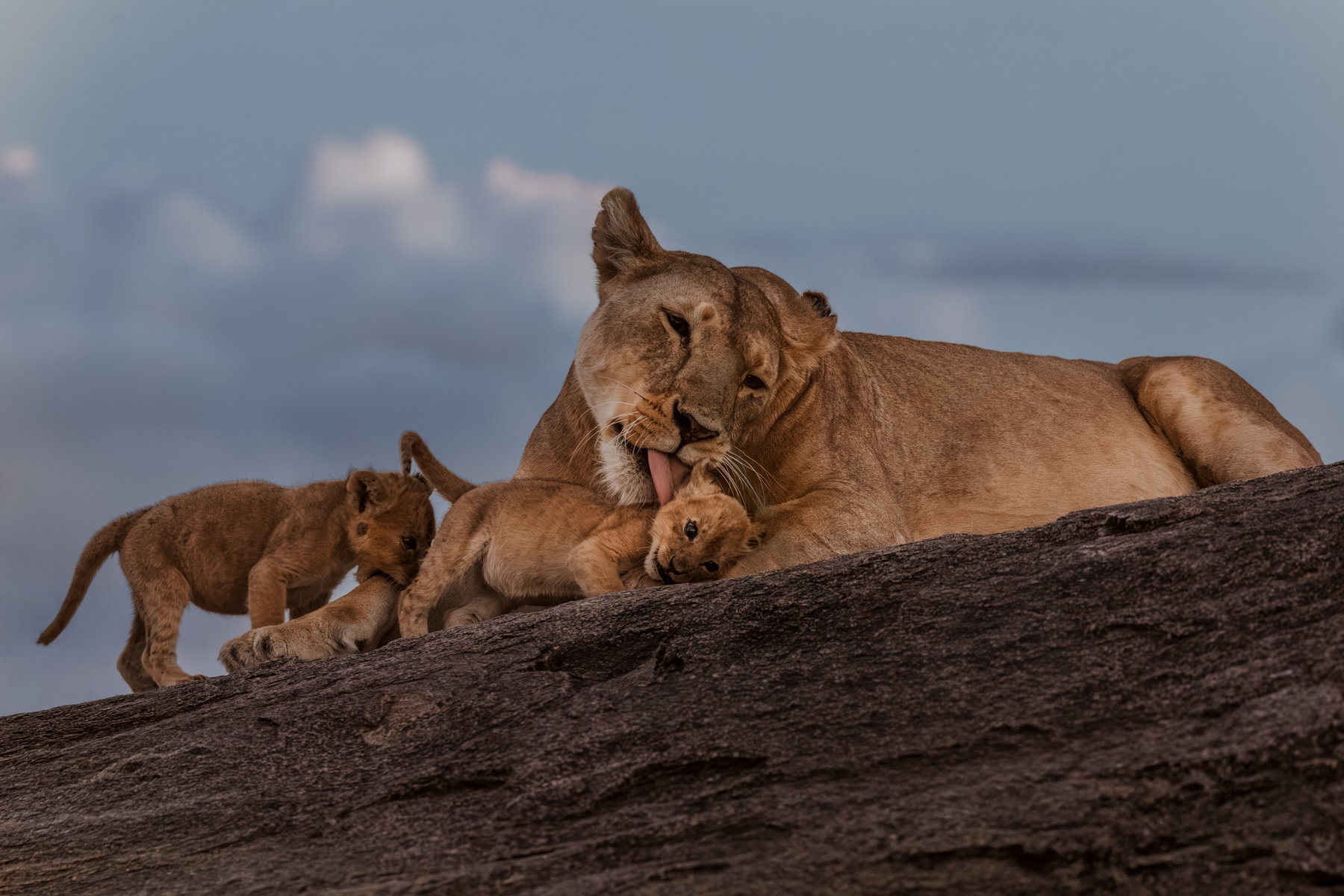
Bathtime on one of the Serengeti's rocky kopjes. Judging by this cub's expression, it seems as if he isn't entirely convinced the wash from mum was necessary (image by Virginia Wilde)
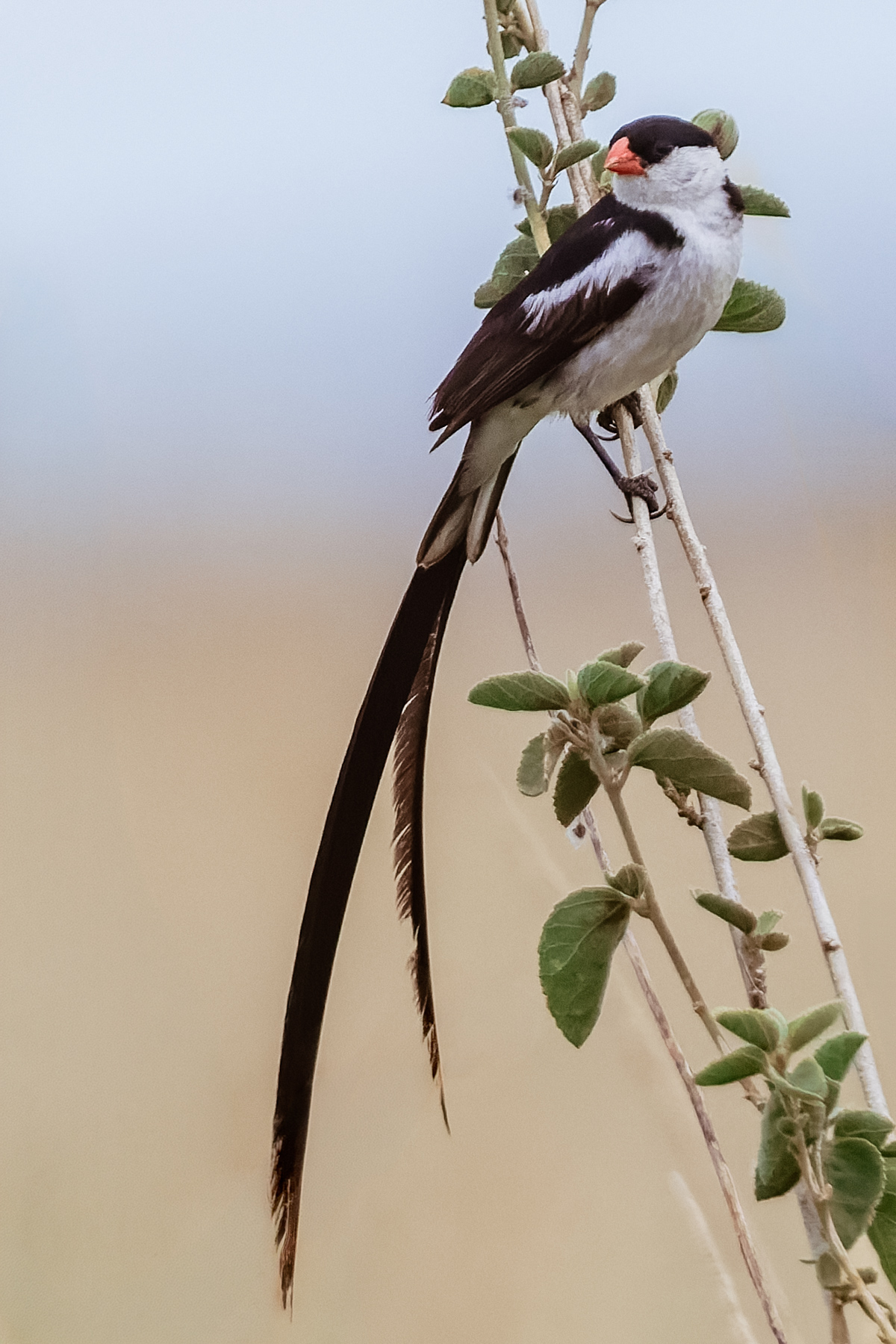
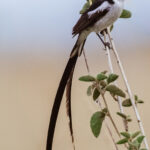
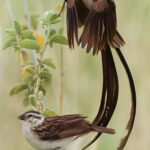
Swaying in the breeze, a Pin-tailed Whydah - with his breeding season striking long tail - clings to a shrub in Tanzania's Serengeti (image by Virginia Wilde)
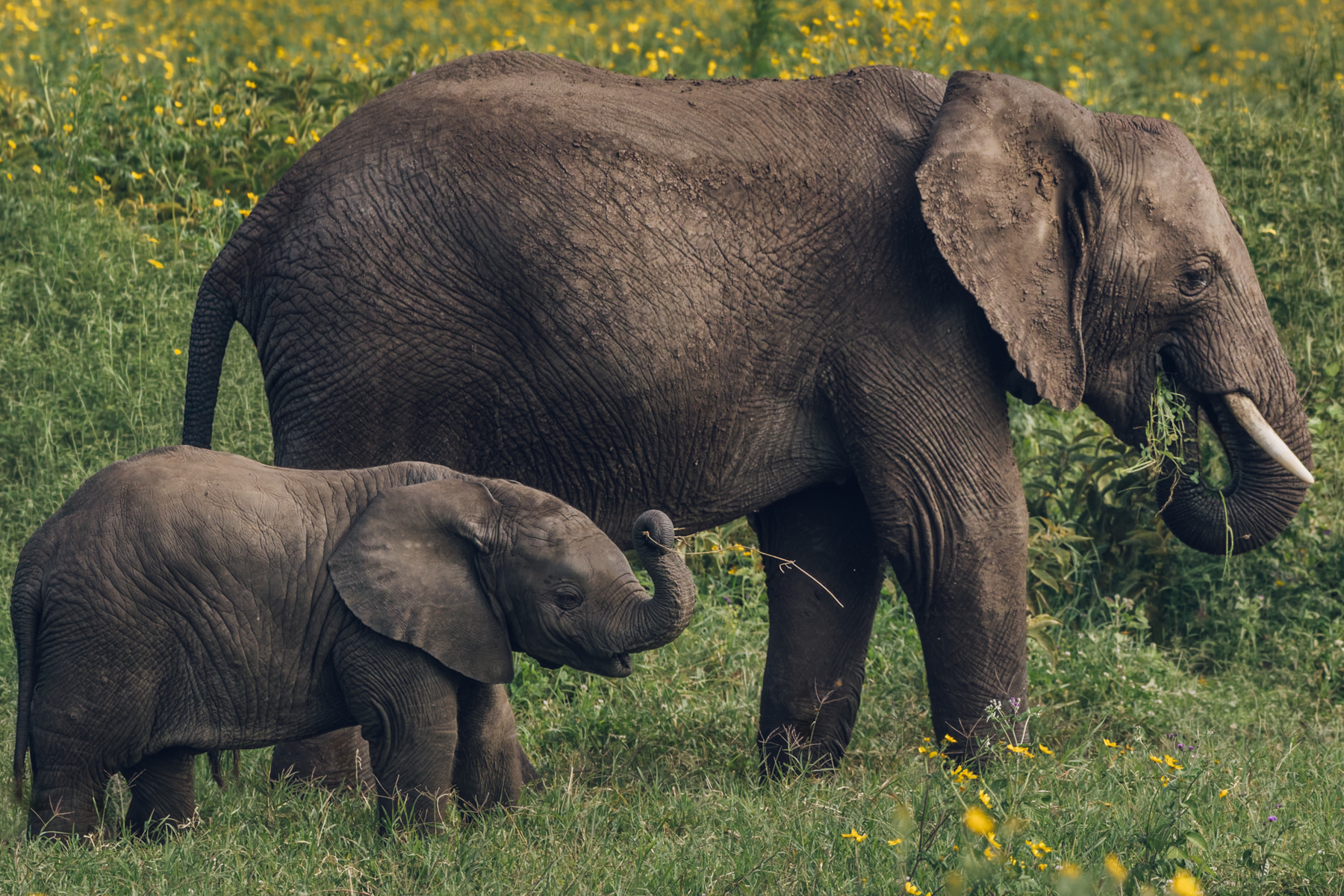
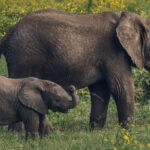
Small trunk. Big attitude. An Elephant calf accompanies its mother through the spring flush of Tanzania's Ngorongoro Crater (image by Virginia Wilde)
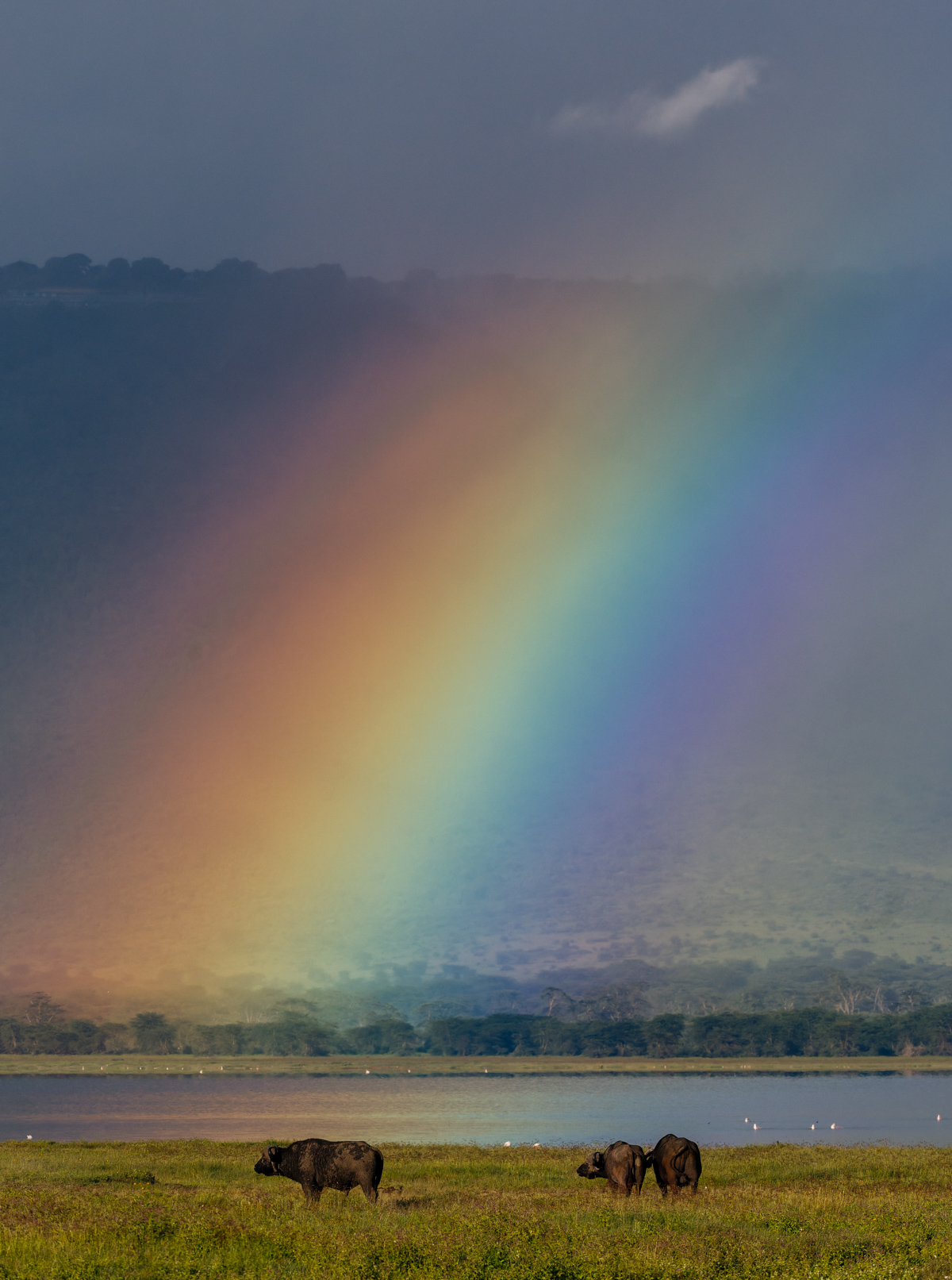
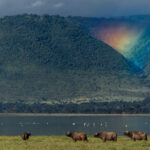
A passing shower and bright afternoon sun combine to paint Tanzania's Ngorongoro Crater with a vivid rainbow. The buffalo carried on regardless (image by Virginia Wilde)
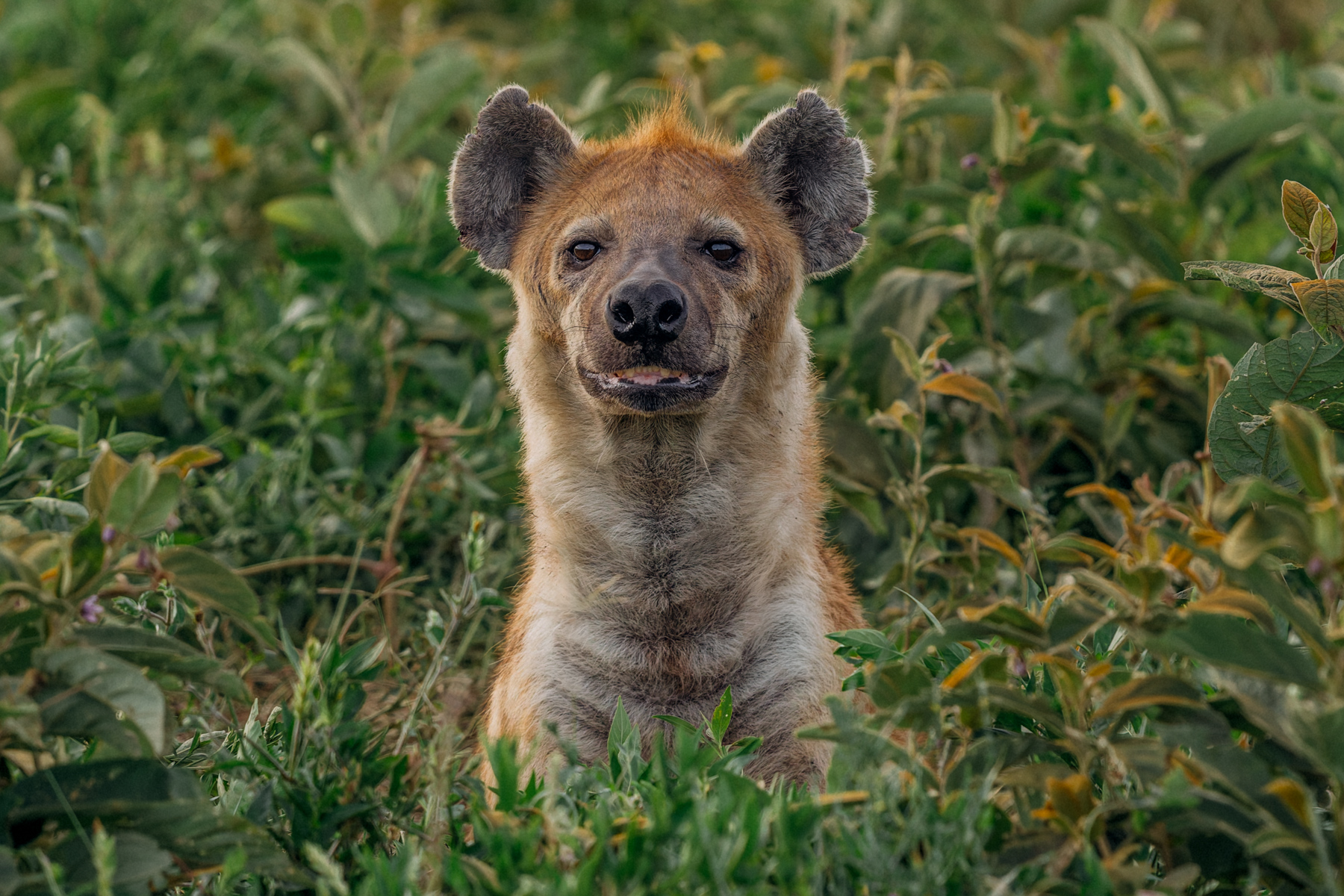
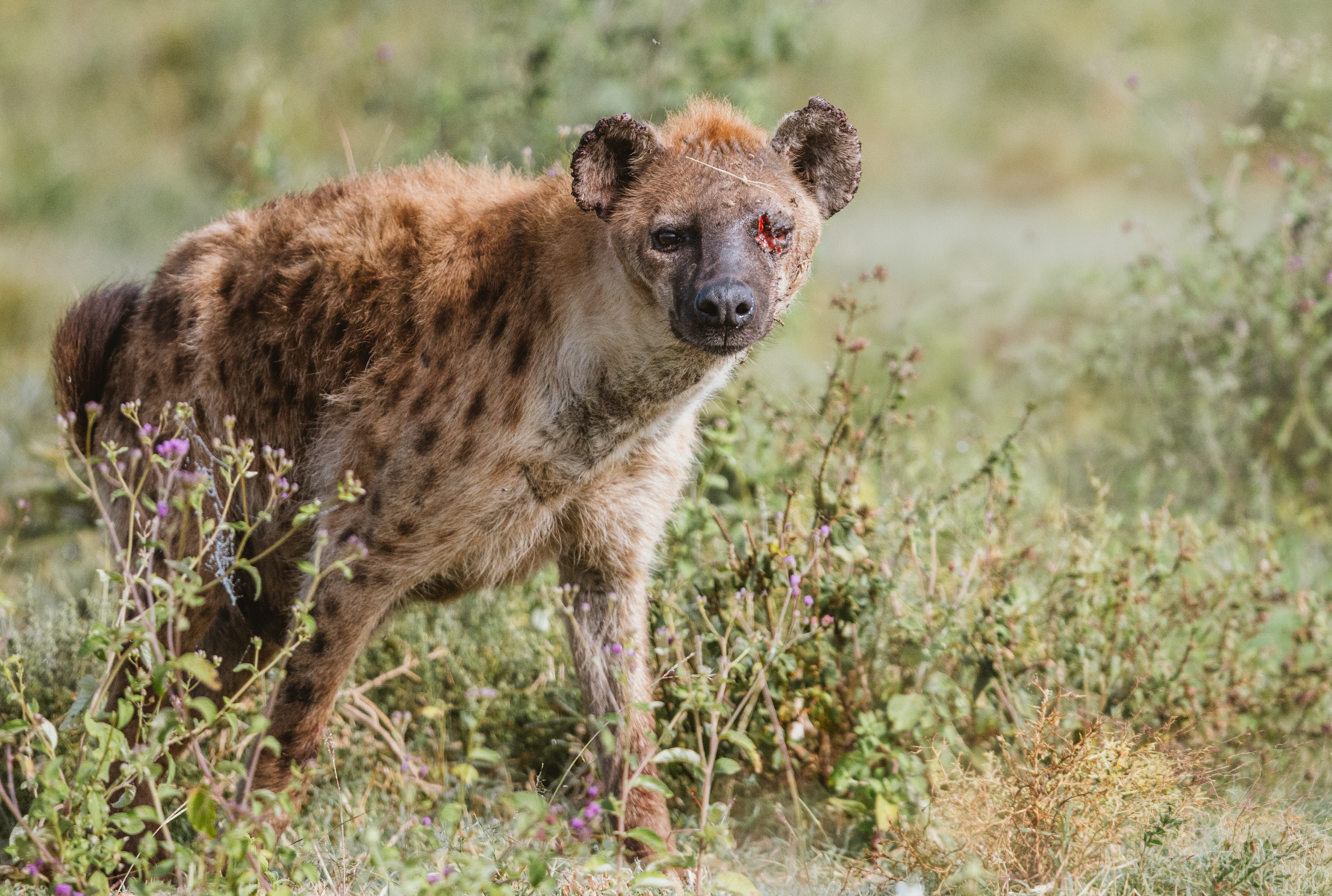
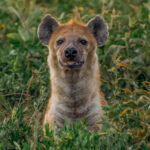
Aww, I never thought you belonged among Africa's famous 'Ugly Five' (consisting of the Warthog, Wildebeest, Marabou Stork, Lappet-faced Vulture and - yes - the Spotted Hyena.) Don't worry Hyena. To me, you're a handsome animal indeed (image by Virginia Wilde)
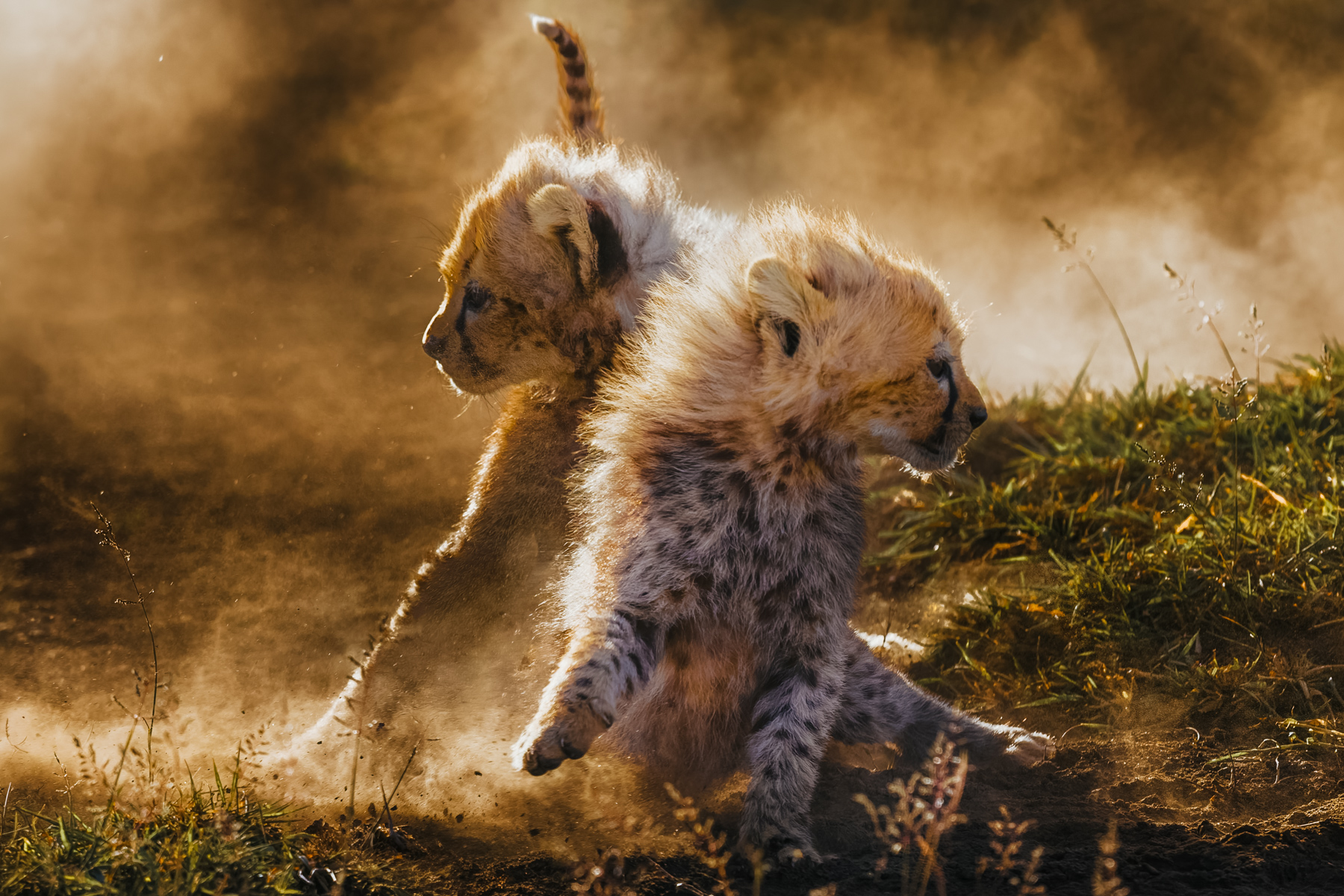
Cheetah cubs pause briefly - frozen in time in this image - as the dust made by them tearing around their corner of the Serengeti, like crazy cats, forms clouds around them (image by Virginia Wilde)
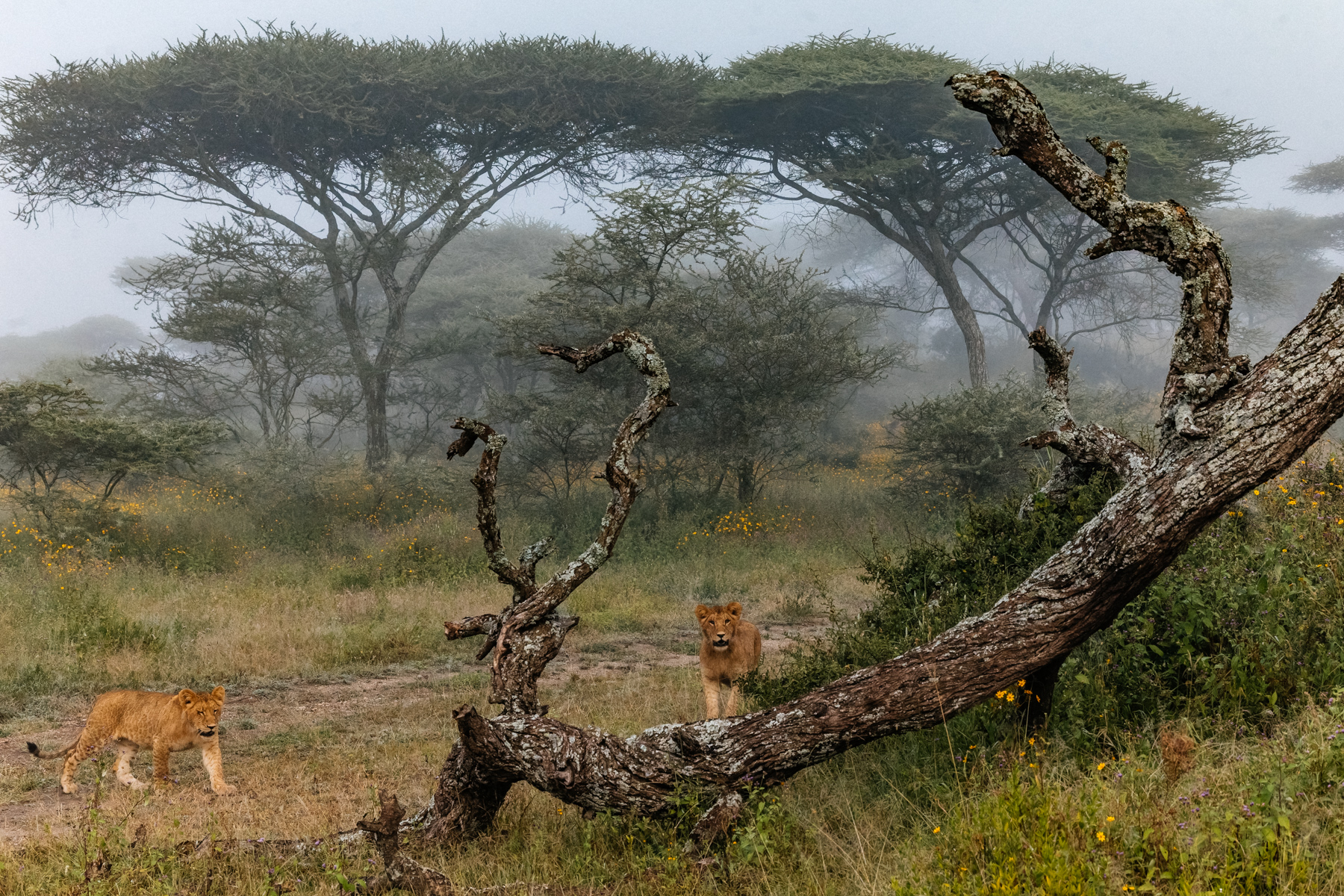
Lion cubs thread their way through fallen acacias as the last of the morning's mist hangs over the green-season grass (image by Virginia Wilde)
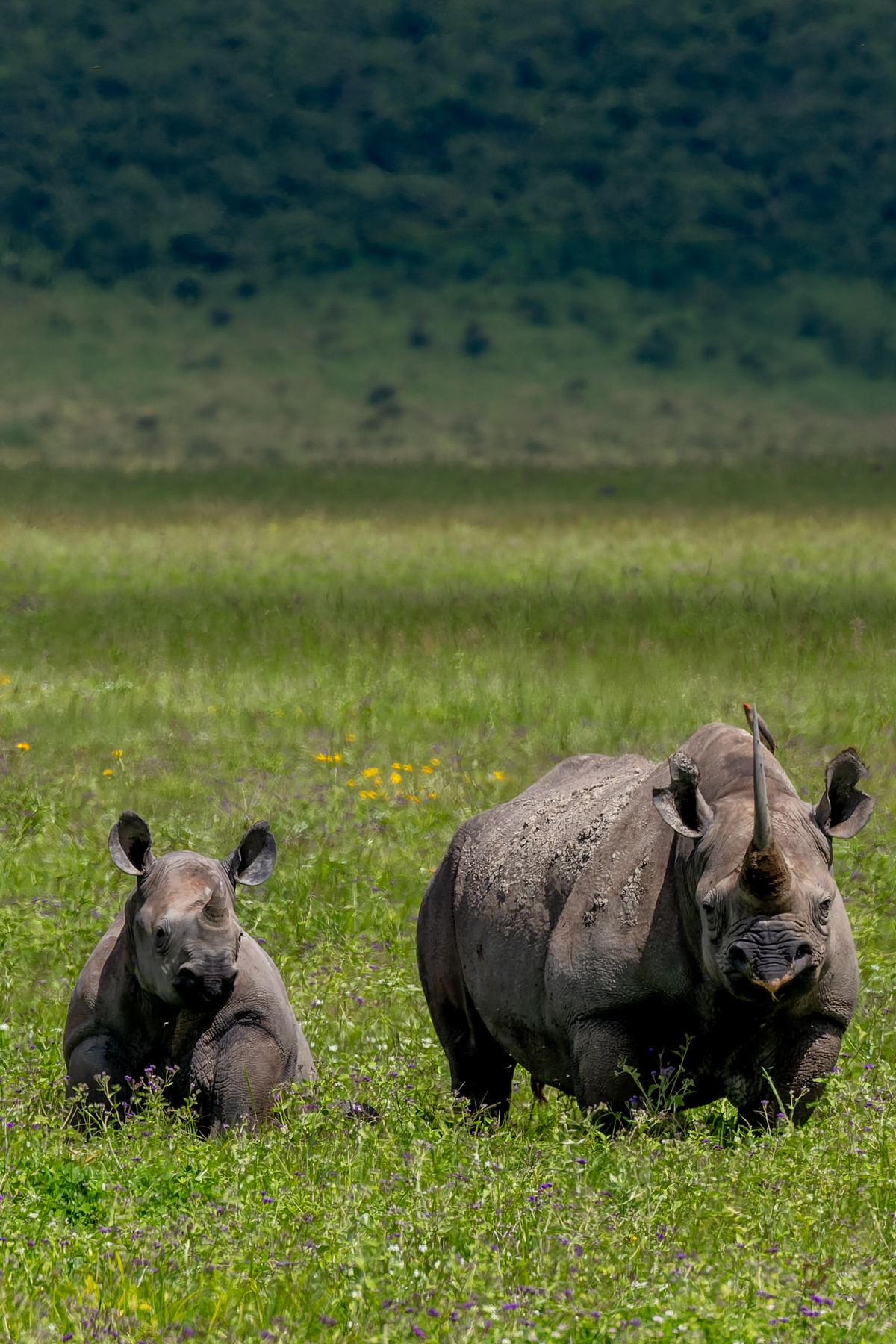
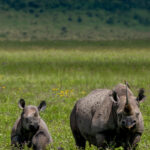
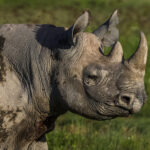
Portrait of an Eastern Black Rhino and her calf, of approximately 15 months old, in Tanzania's Ngorongoro Crater (image by Virginia Wilde)
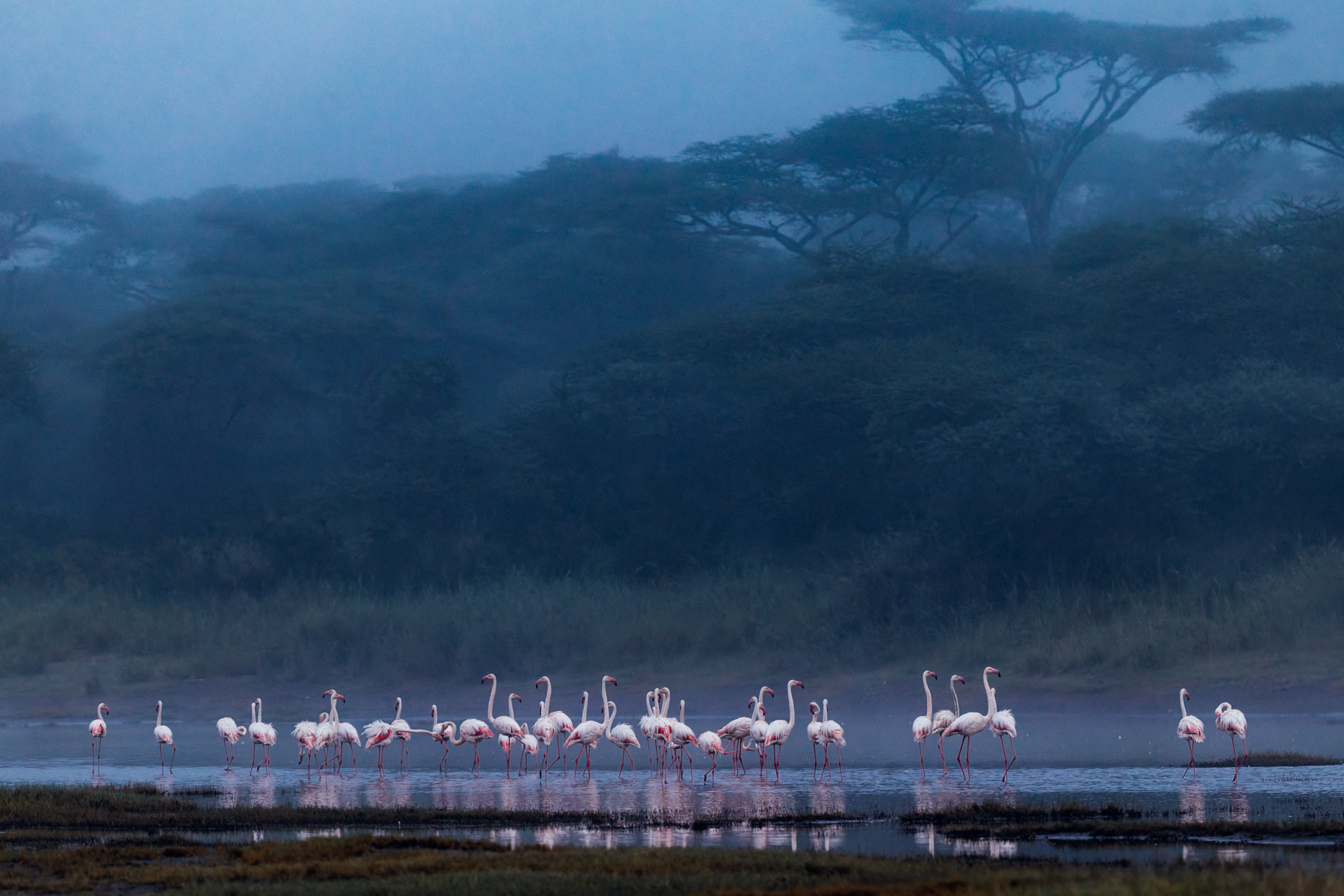
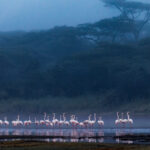
Greater Flamingos feed and preen in the cold blue light of dawn, taken on a misty morning in Tanzania's Ndutu region (image by Virginia Wilde)
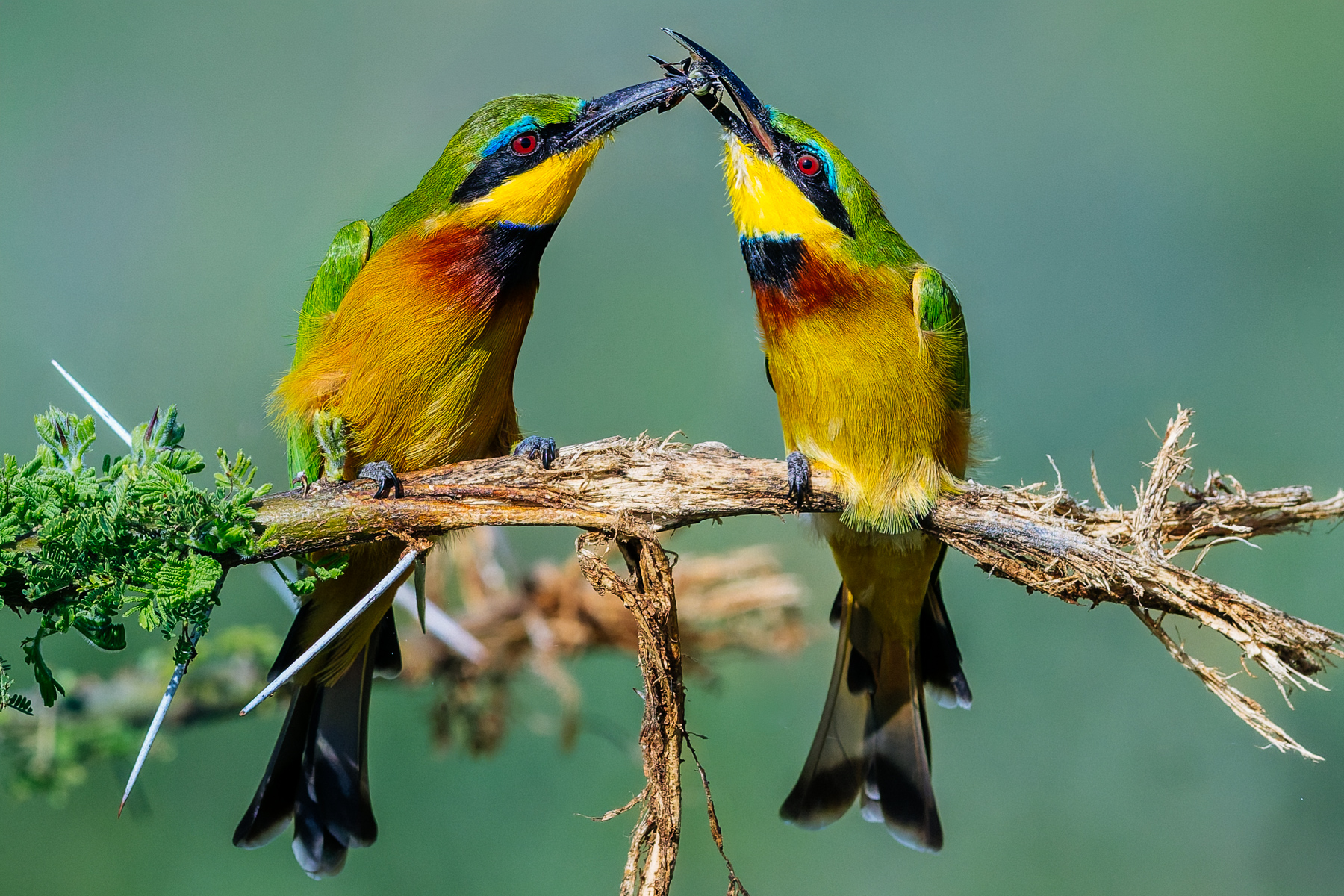
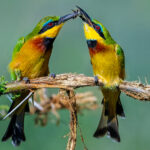
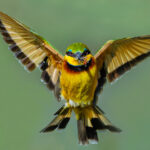
A male Little Bee-eater presents a freshly-caught insect to his partner; one of the species' most charming courtship rituals (image by Virginia Wilde)
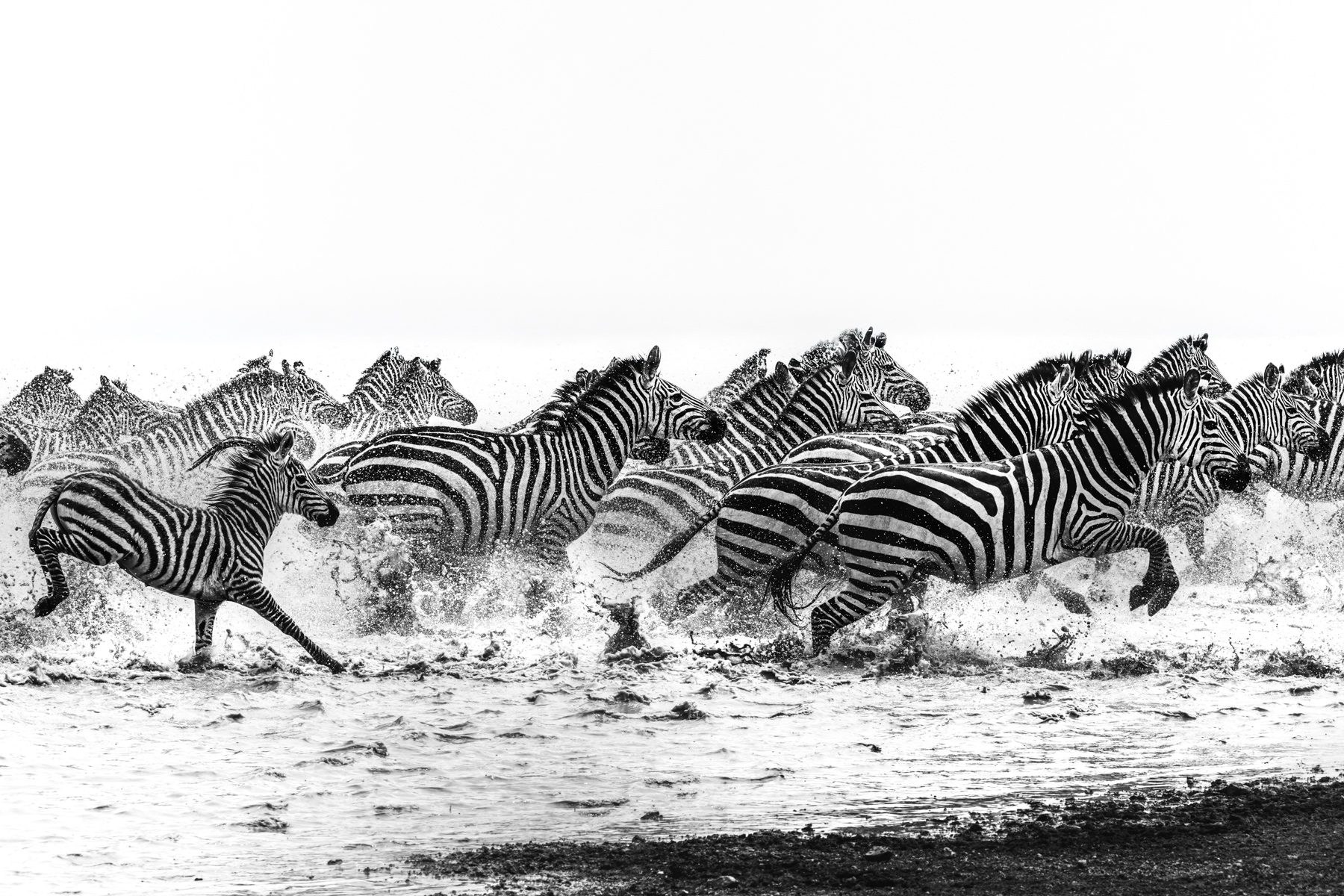
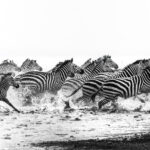
Stripes, spray and split-second decisions; the beautiful chaos of a Zebra herd on the move in the Lion-stronghold of Tanzania's Ndutu region (image by Virginia Wilde)
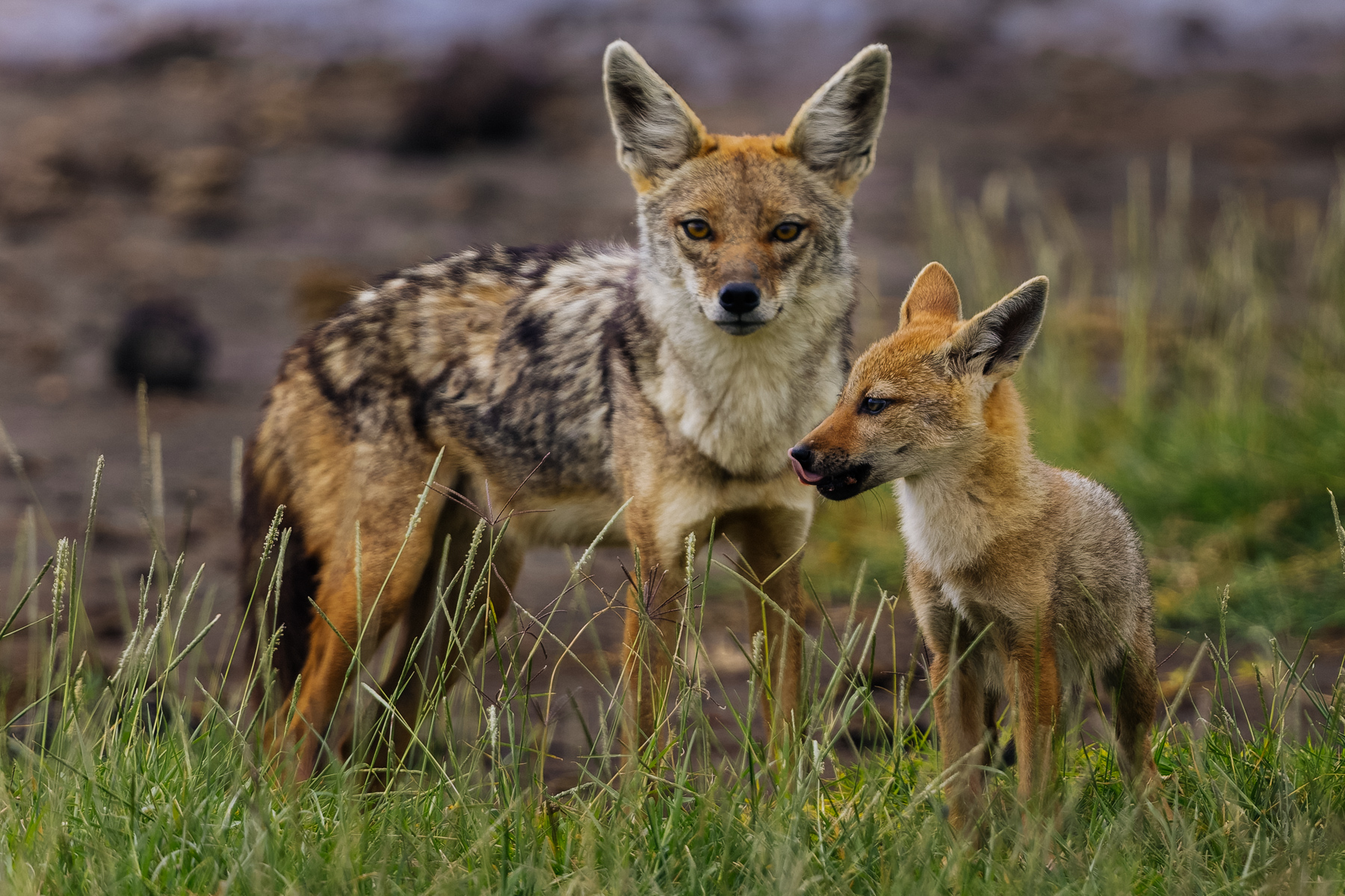
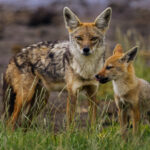
A Black-backed Jackal stands guard over its inquisitive pup. Jackals are among Africa's most devoted canids, with both parents sharing hunting and pup-care duties (image by Virginia Wilde)
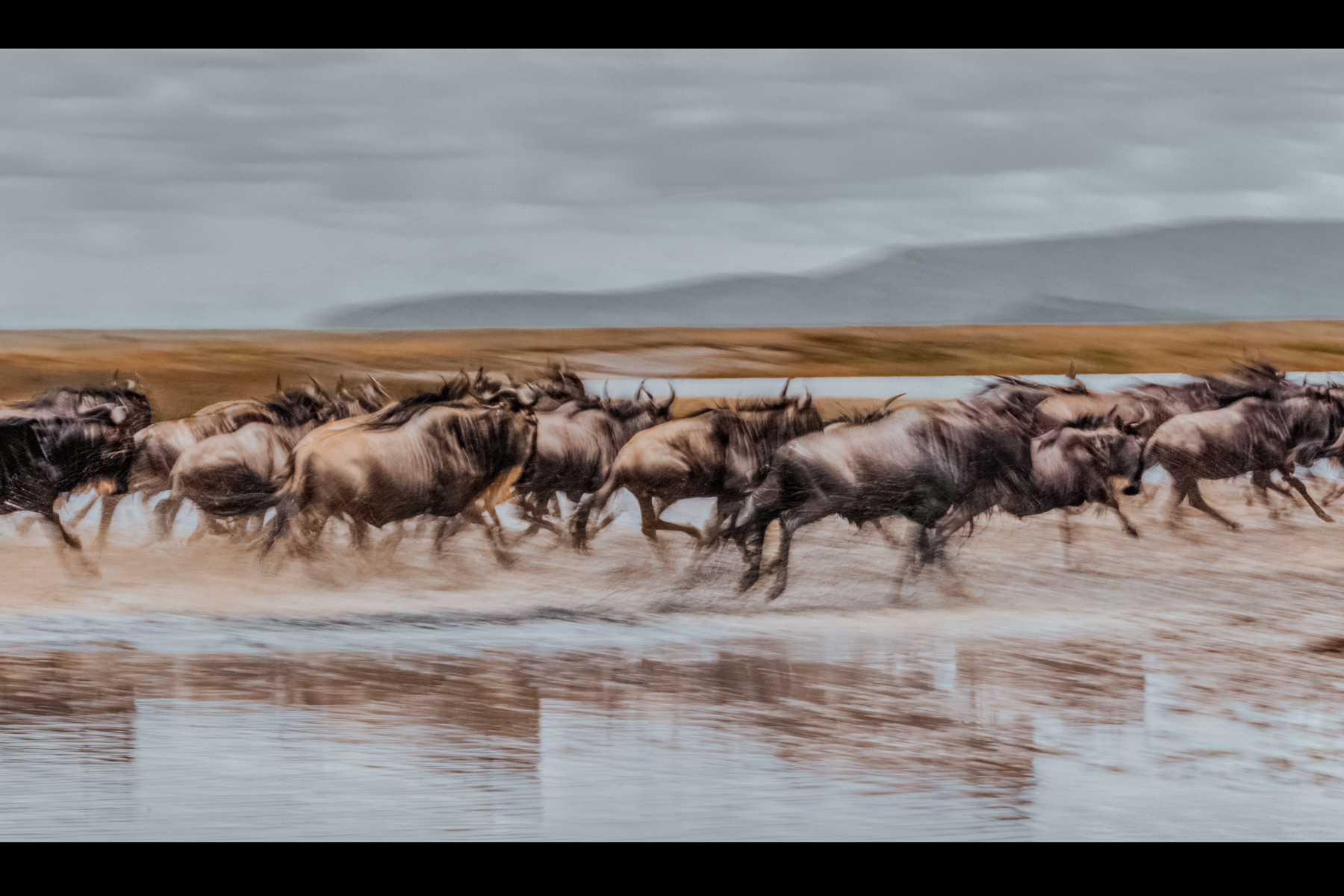
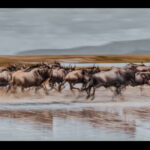
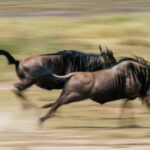
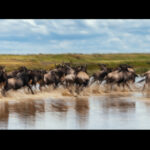
One of the great things about the sheer abundance of wildlife in northern Tanzania is that you can experiment with all sorts of abstract photographic techniques with herds. Here, Wildebeest tear across a river (image by Virginia Wilde)
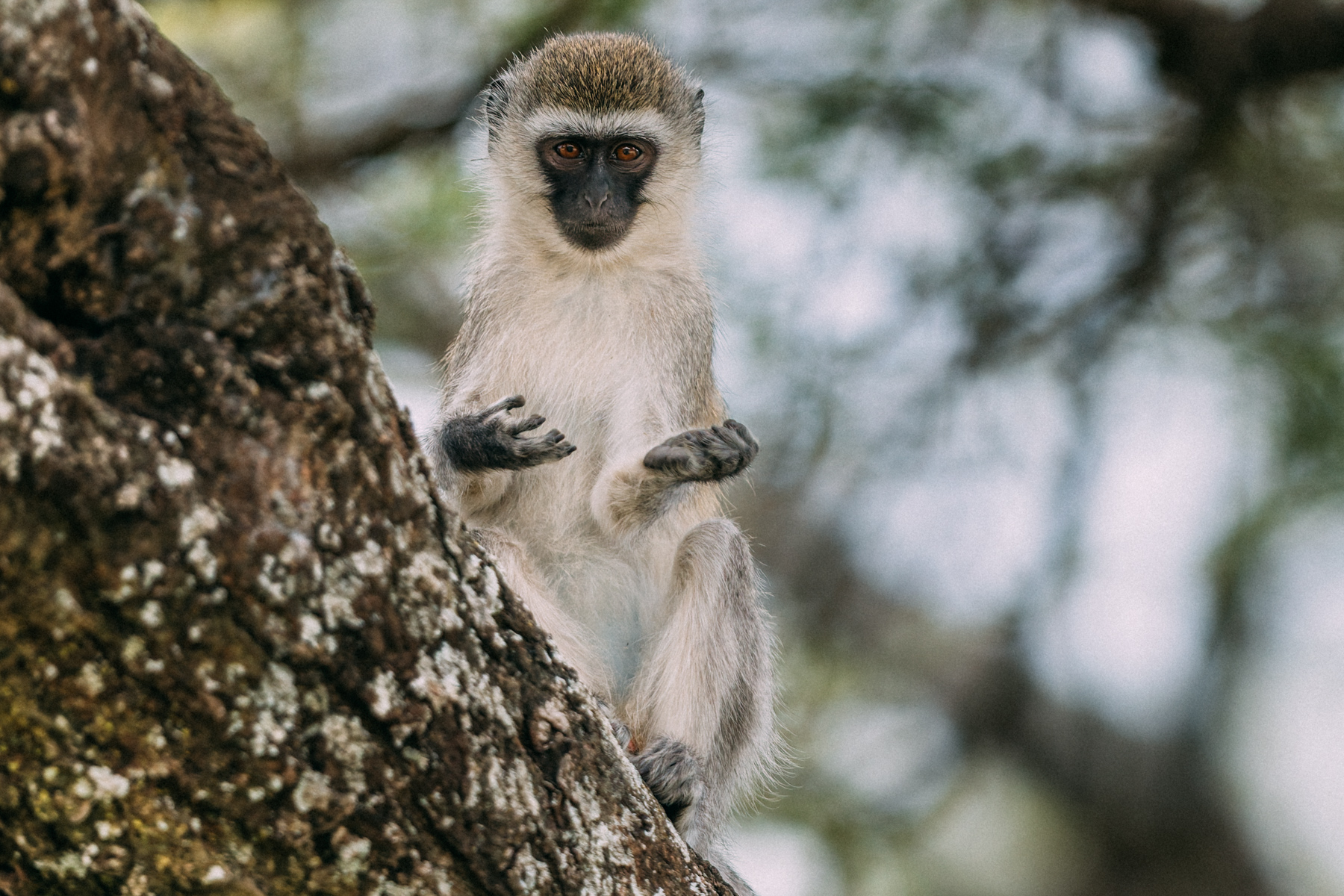
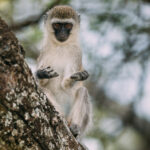
Inquisitive juvenile Vervet Monkeys are often the first to investigate unfamiliar sights. This youngster has a stare that appears almost questioning (image by Virginia Wilde)
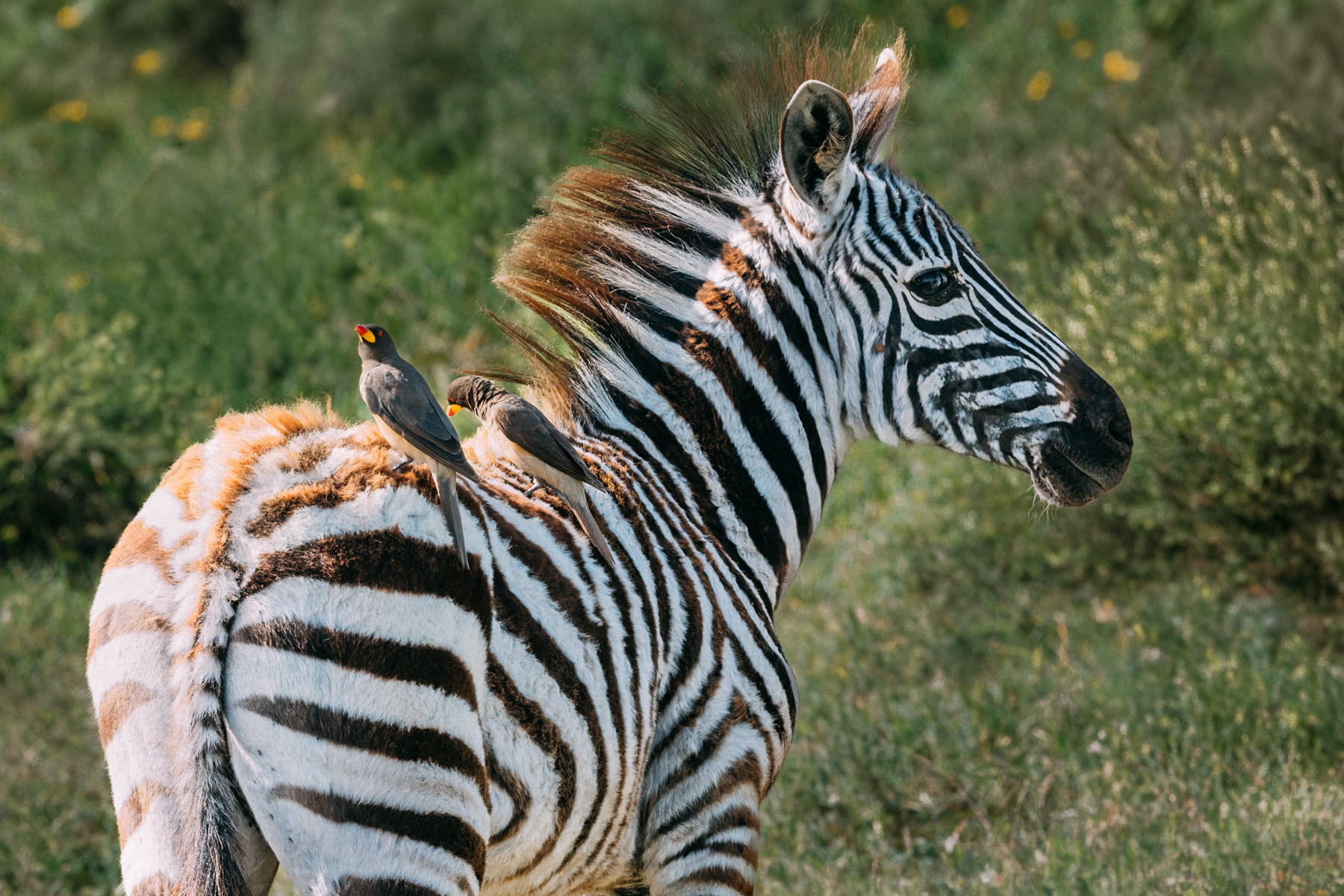
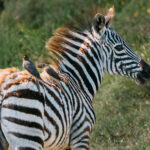
This Plains Zebra foal barely acknowledged its passengers. Oxpeckers are so closely associated with large mammals that they may spend most of the day riding, feeding and moving with the same herd (image by Virginia Wilde)
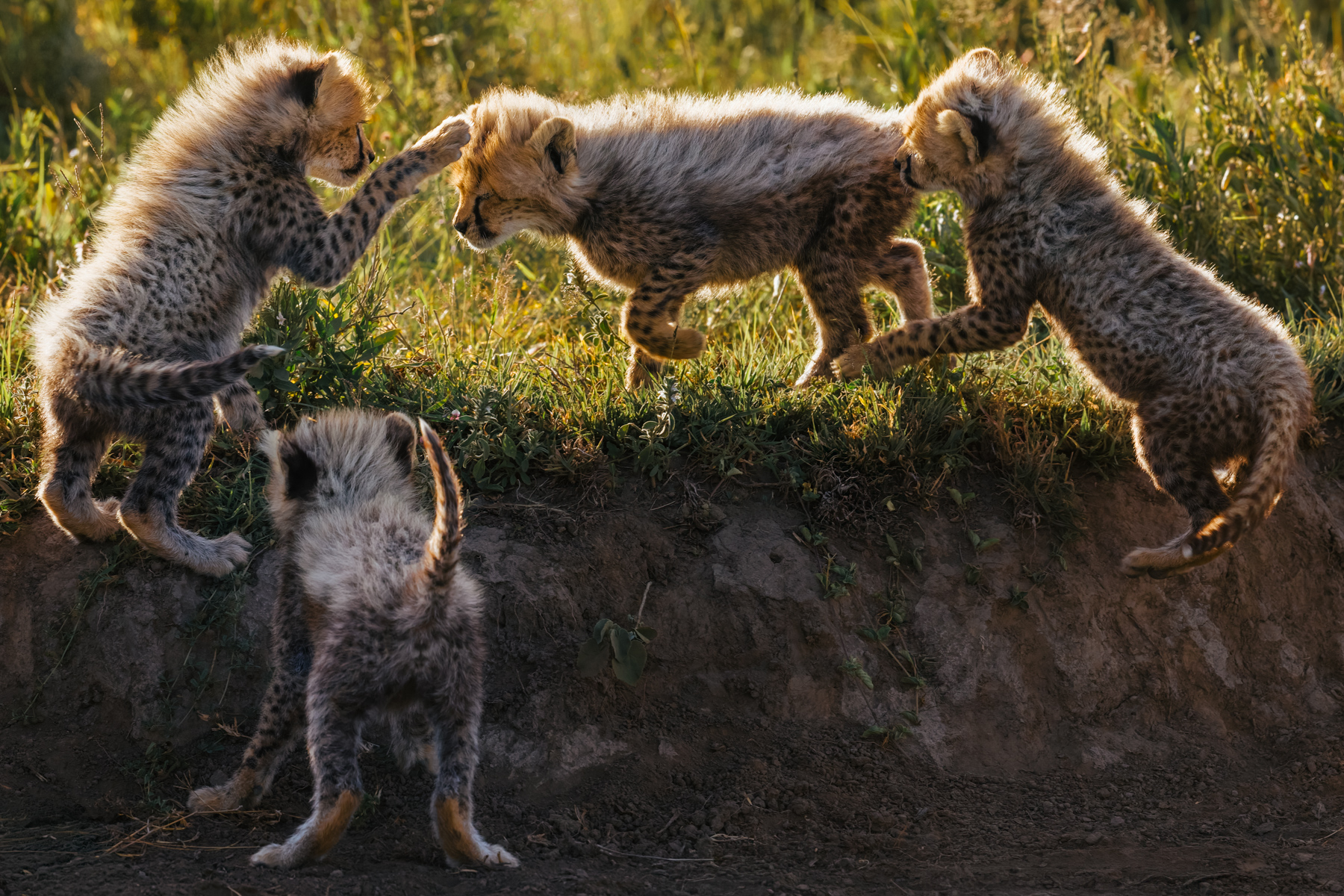
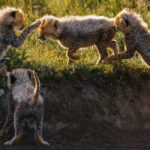
"I'll push him from the rear and you thwack him on the head. Got it, right!" To see four Cheetah cubs play in this golden light felt special indeed. Cheetah populations have plummeted over the last century. And up to 90% of cubs die before reaching independence, predated by Lion, Leopard and Spotted Hyena (image by Virginia Wilde)
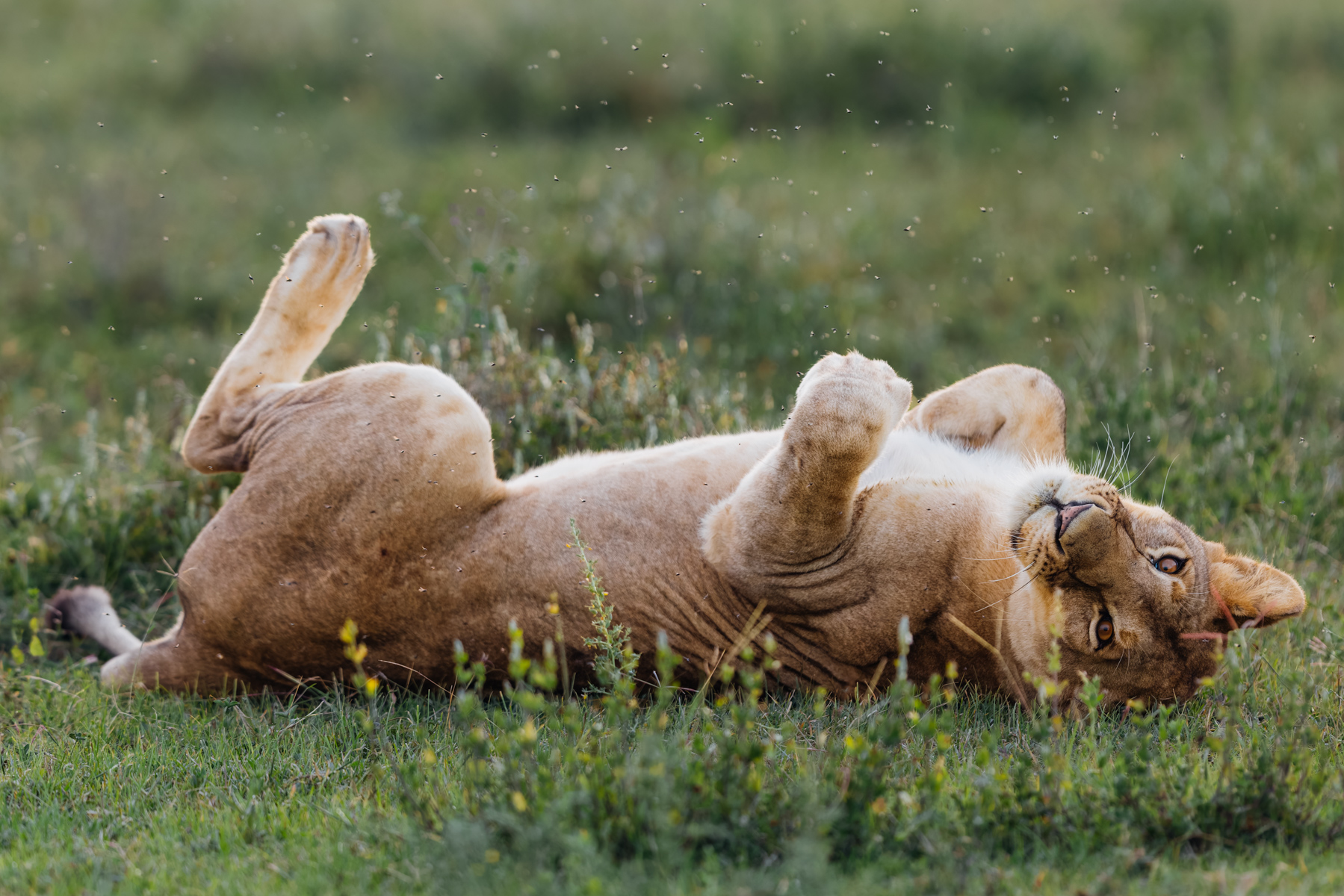
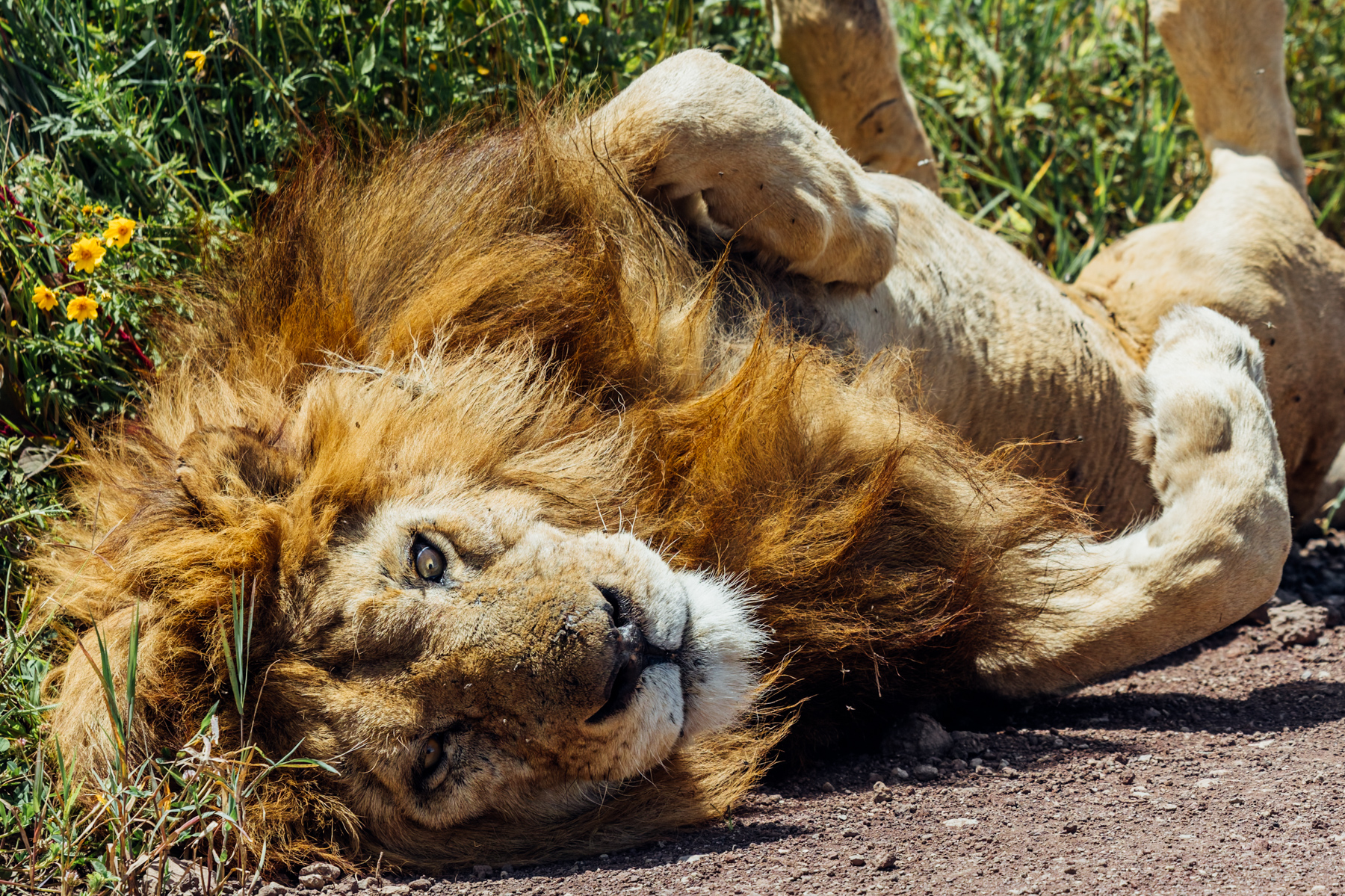
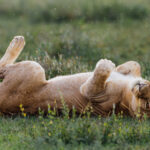
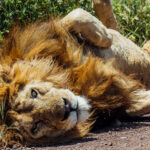
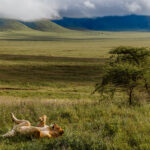
Not every moment is regal. A Lioness indulges in one of the savannah's greatest pleasures: a vigorous roll in the grass (image by Virginia Wilde)
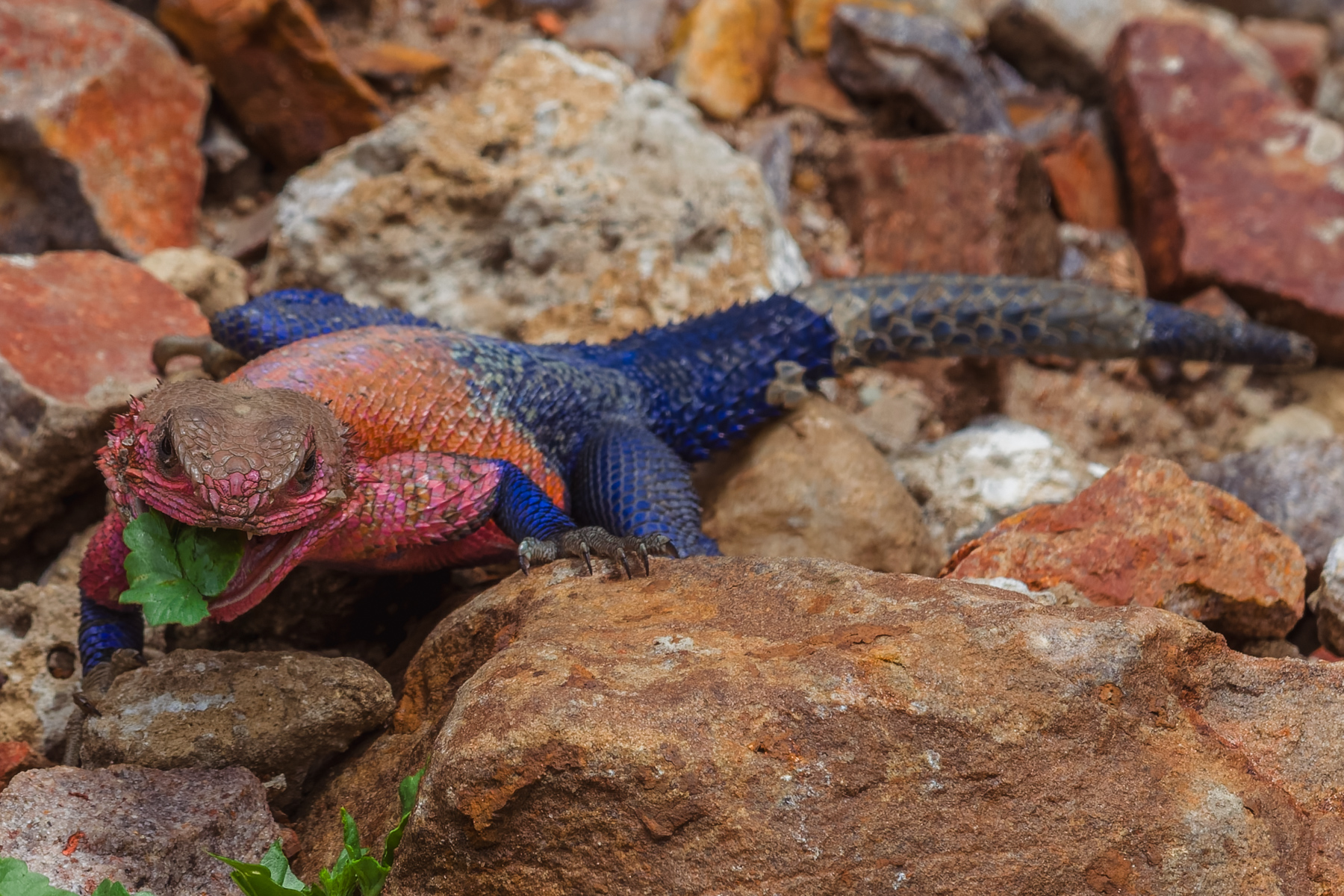
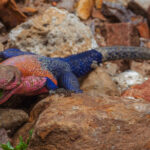
This male Mwanza Flat-headed Rock Agama looks like its run amok at a paint shop. Agama lizards are famous for their remarkable, rapid colour changes (image by Virginia Wilde)
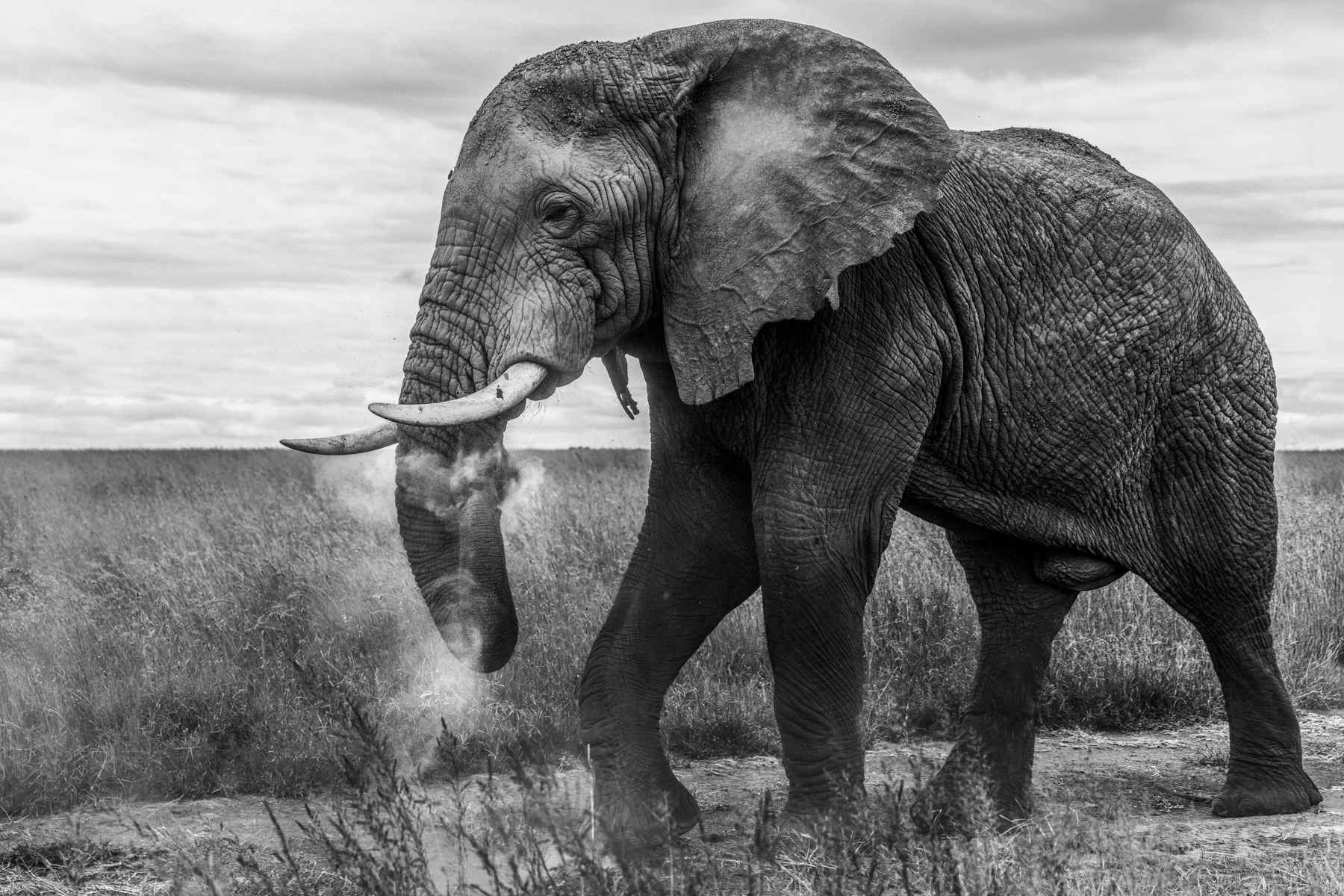
No spa. No sunscreen. Just several kilos of finely powdered Serengeti (image by Virginia Wilde)
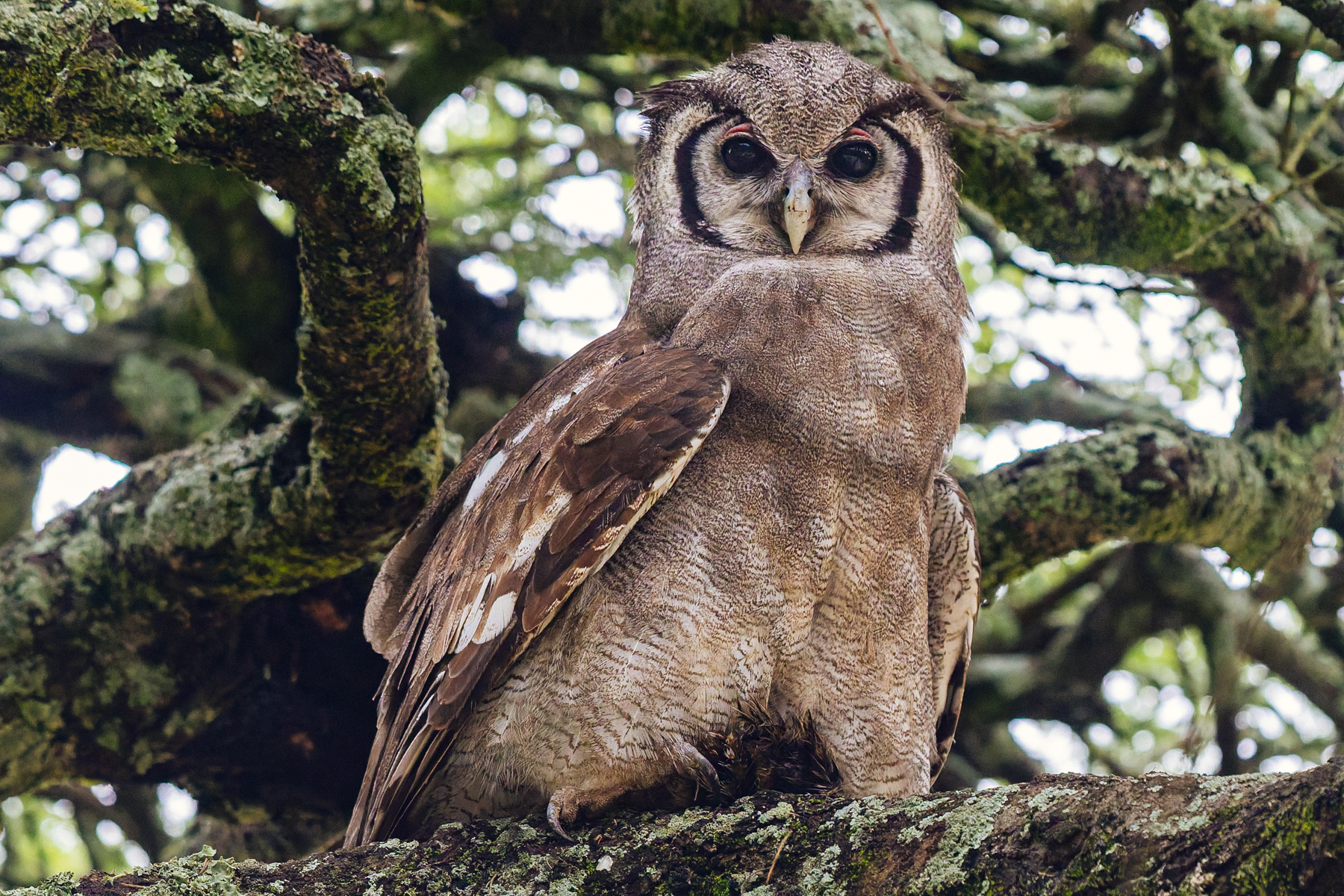
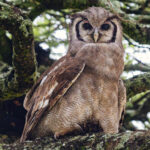
As Africa's largest owl, the Verreaux's Eagle Owl is always a prized sighting. Standing up to 66cm tall, their wingspan approaches 1.5 metres (image by Virginia Wilde)
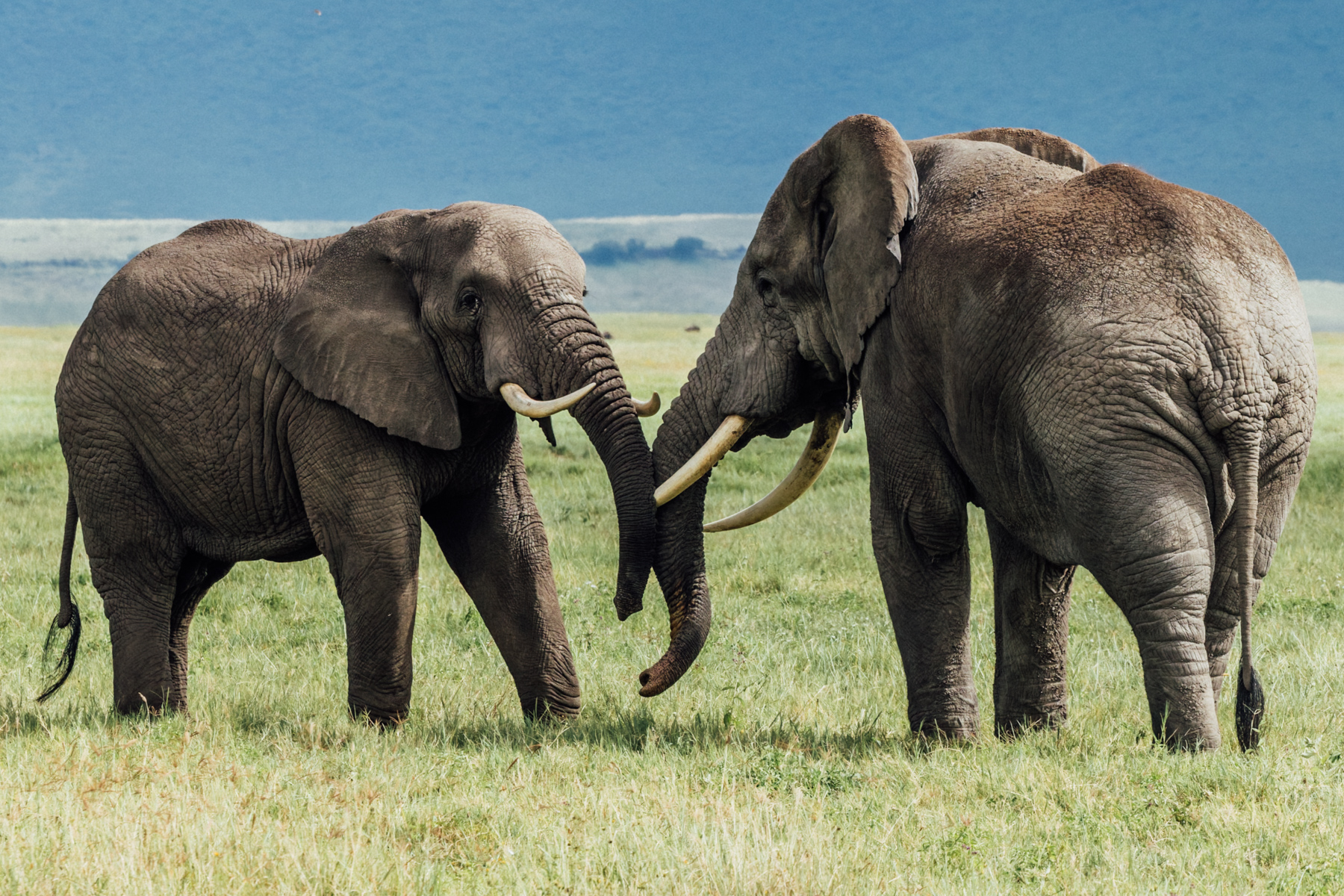
The Elephant equivalent of 'How've you been?' The Elephant's trunk serves as nose, hand and voice all in one - used to smell, feed, drink and communicate (image by Virginia Wilde)
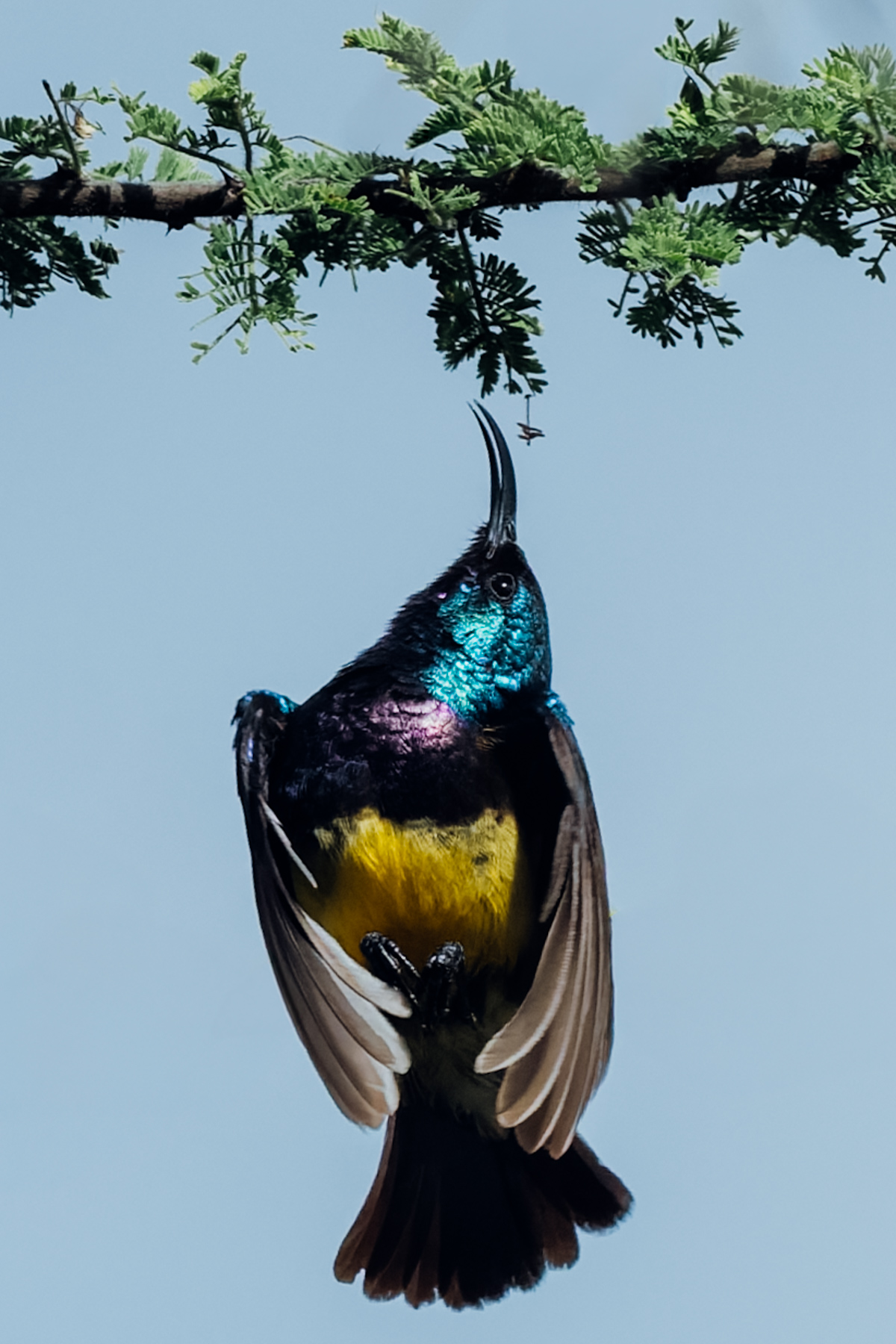
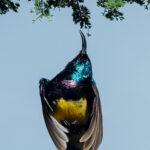
A male Variable Sunbird showcases its beautiful iridescent plumage as it searches for nectar and small insects (image by Virginia Wilde)
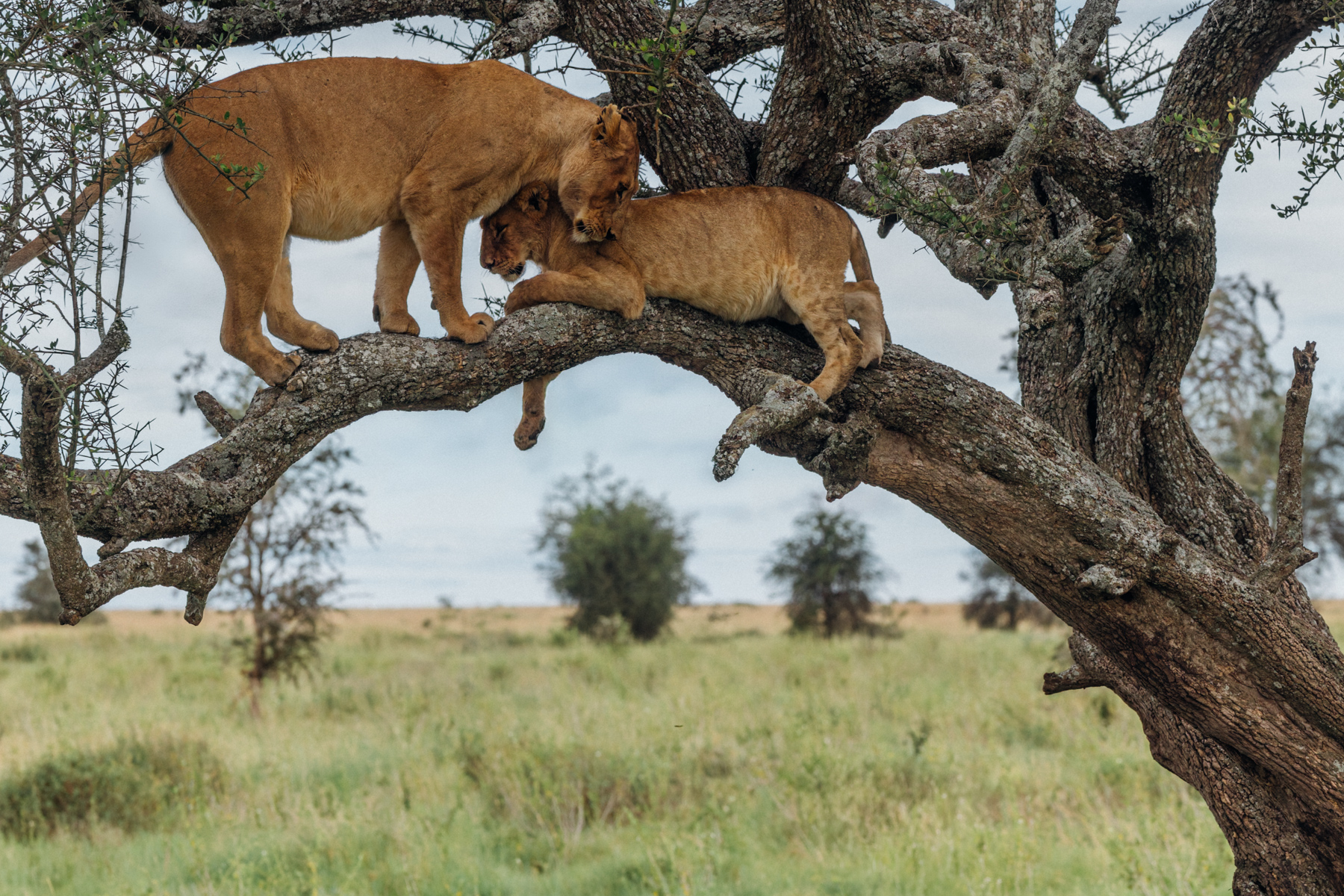
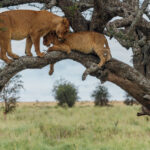
It looks like a tender moment between a Lioness and her cub. But we watched this pair for ages - and actually the cub got stuck up the tree. Eventually his mum helped to guide him safely down. Like Lion, like Human (image by Virginia Wilde)
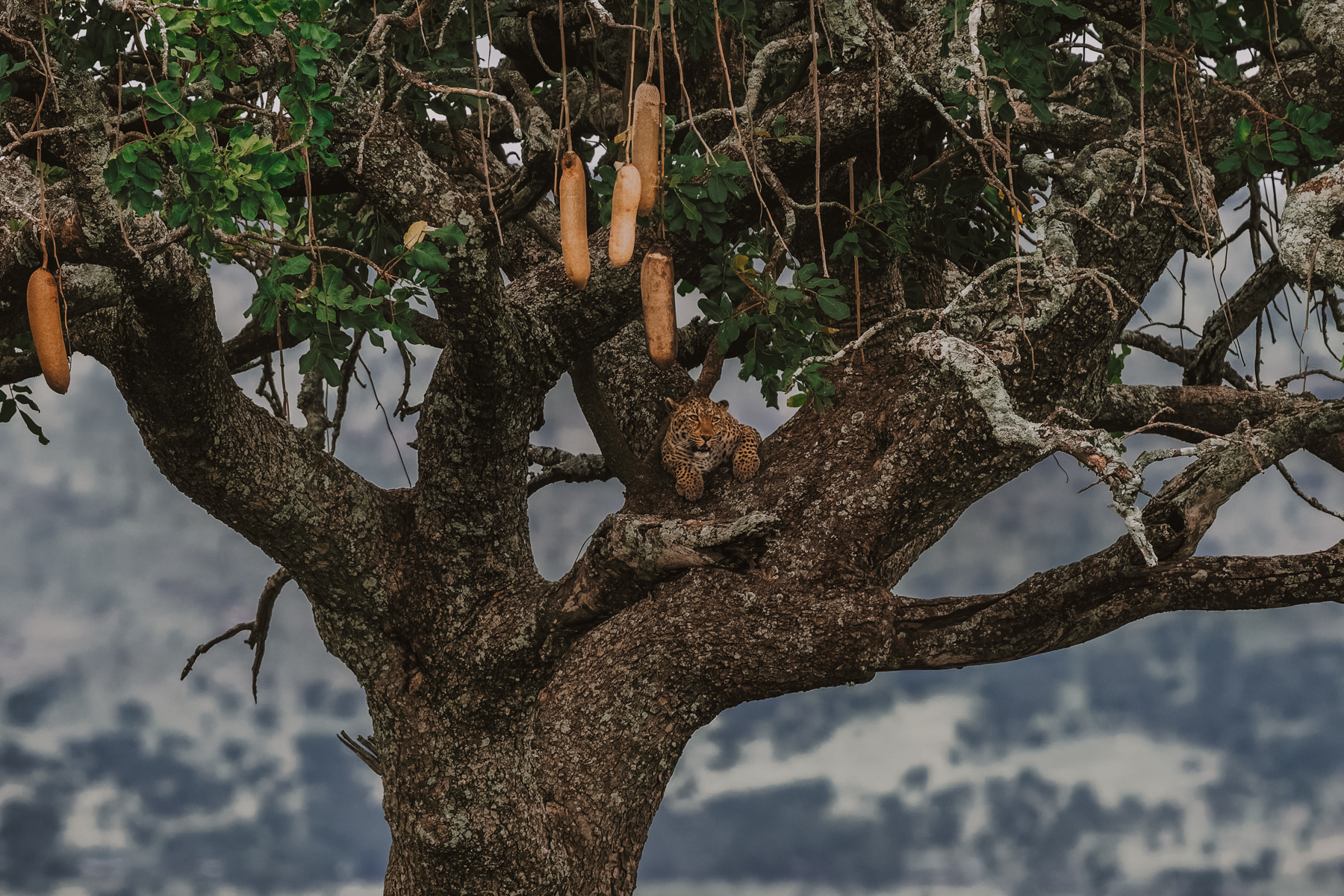
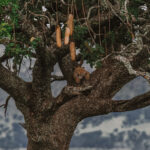
A Leopard rests in the branches of a Serengeti Sausage Tree, almost disappearing in the tangle of bark and shadow (image by Virginia Wilde)
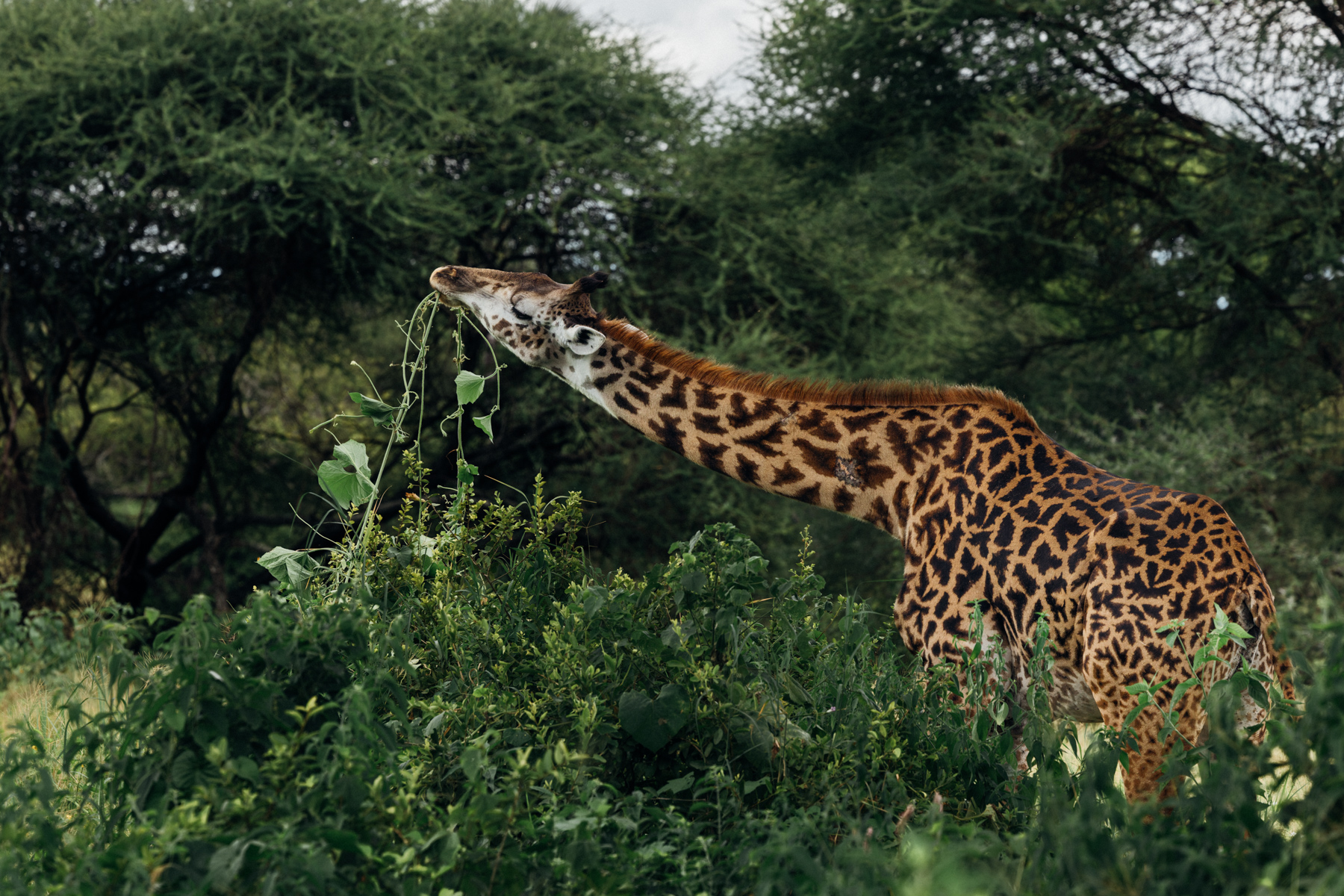
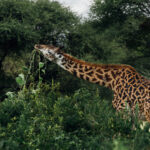
A Masai Giraffe feeds in the woodlands of northern Tanzania. A giraffes' dark, prehensile tongue can reach almost 50cm (20 inches) allowing it to strip leaves from thorny acacia branches, while avoiding most of the spines (image by Virginia Wilde)
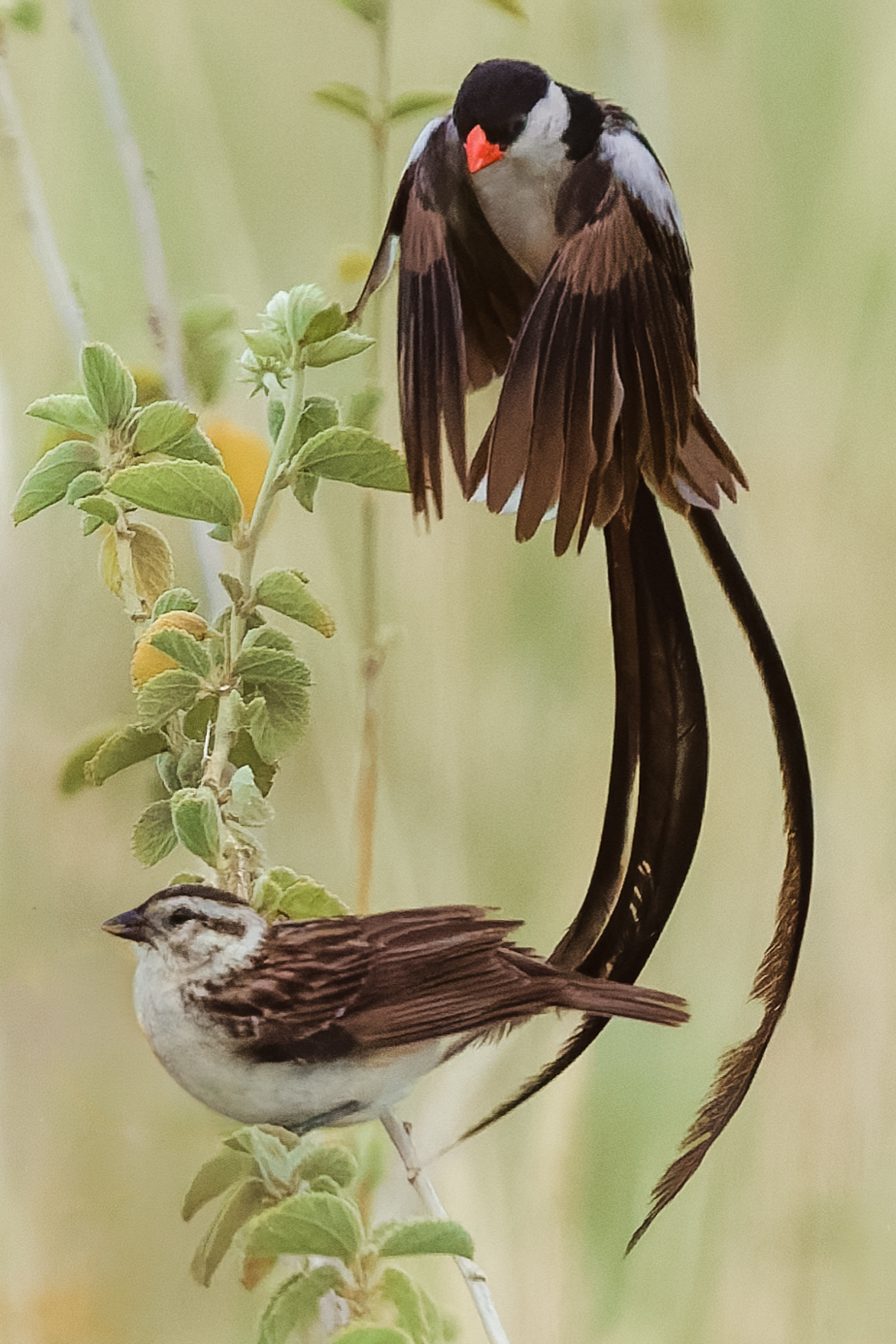
Evolution occasionally abandons restraint. The Pin-tailed Whydah's streaming tail is the result of generations of female choice. The male's tail can grow to several times the length of its body. It's spectacular to look at, but hardly an advantage unless you're trying to impress a mate (image by Virginia Wilde)
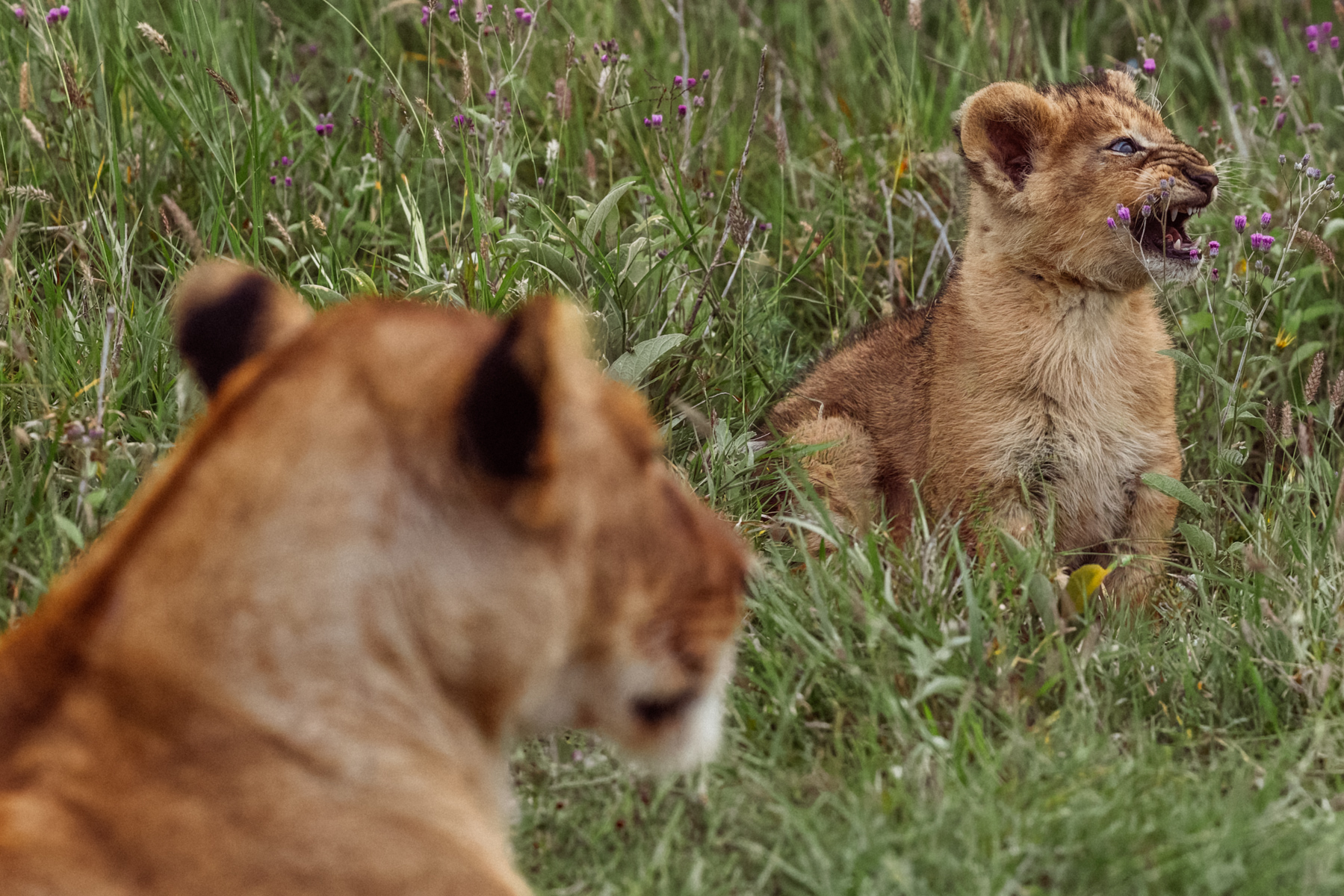
Every fearsome Lion starts somewhere. Today's nemesis: a patch of purple flowers (image by Virginia Wilde)
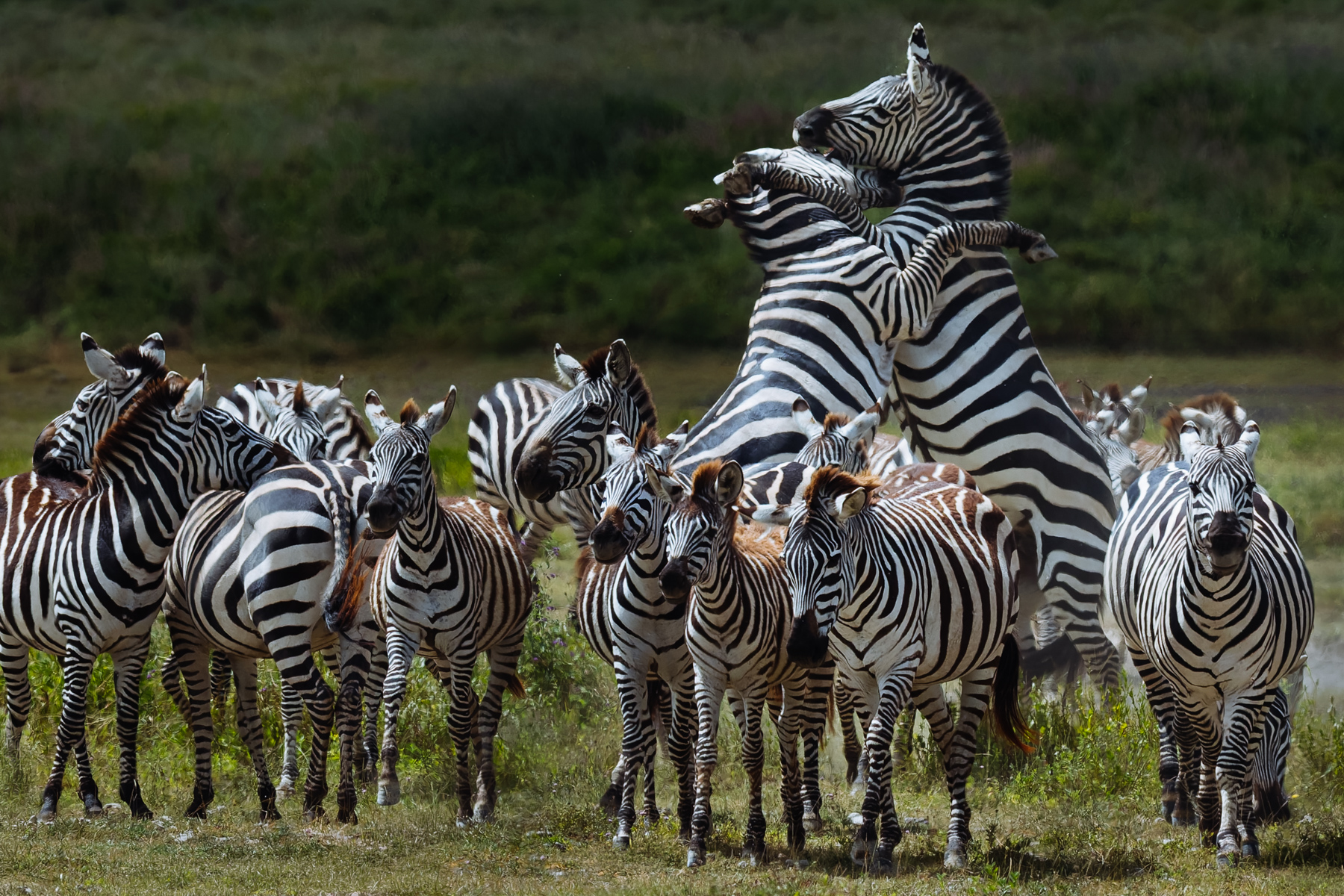
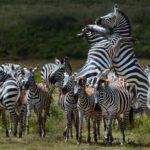
A pair of Zebra stallions rear up during a sparring contest on Tanzania's Ndutu plains. These frequent bouts help to establish dominance and defend breeding rights (image by Virginia Wilde)
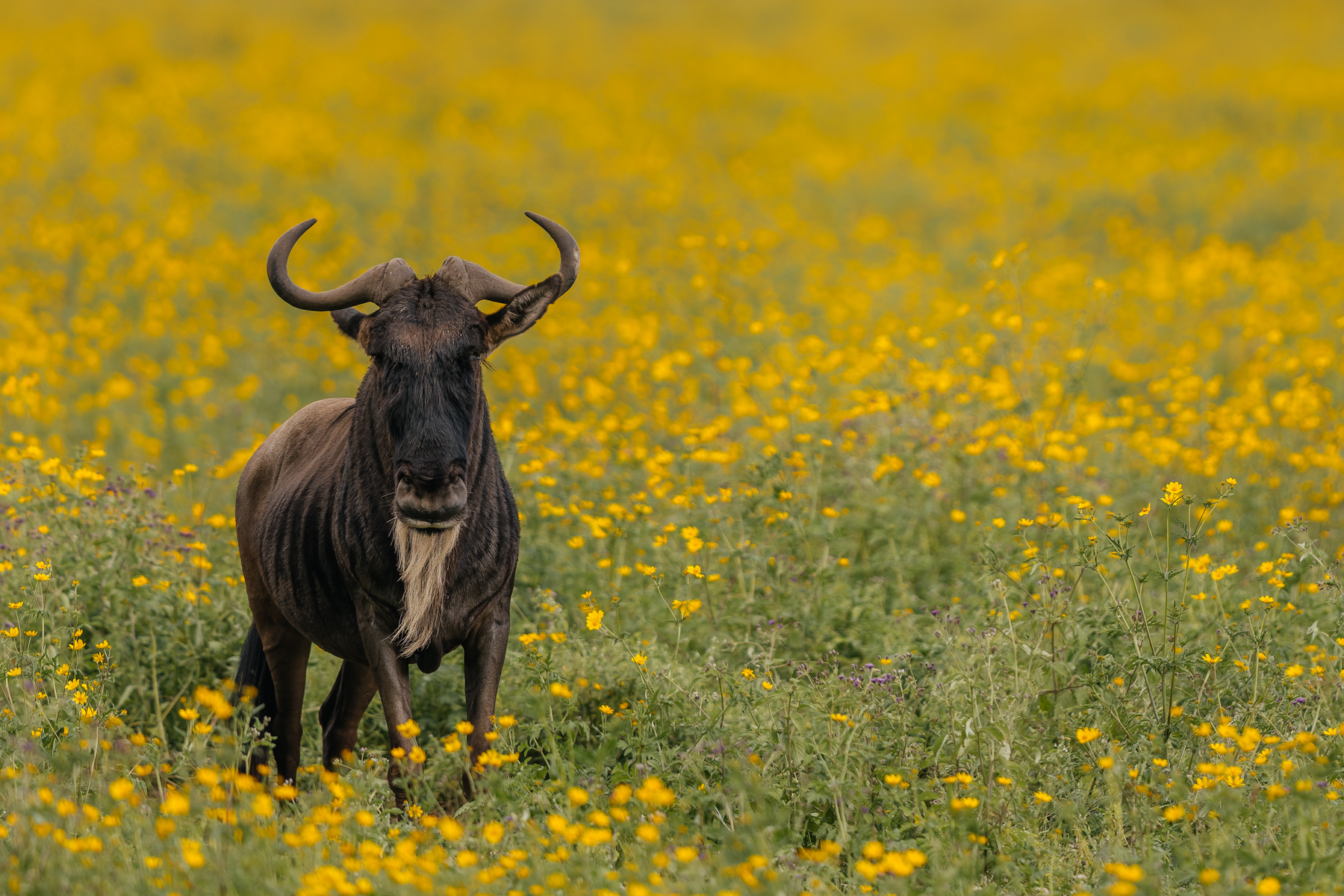
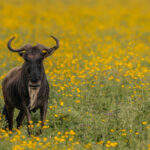
Golden blooms stretch to the horizon as a Western White-bearded Wildebeest (A subspecies of the Blue Wildebeest) stands still in a sea of flowers in Tanzania's Ngorongoro Crater (image by Virginia Wilde)
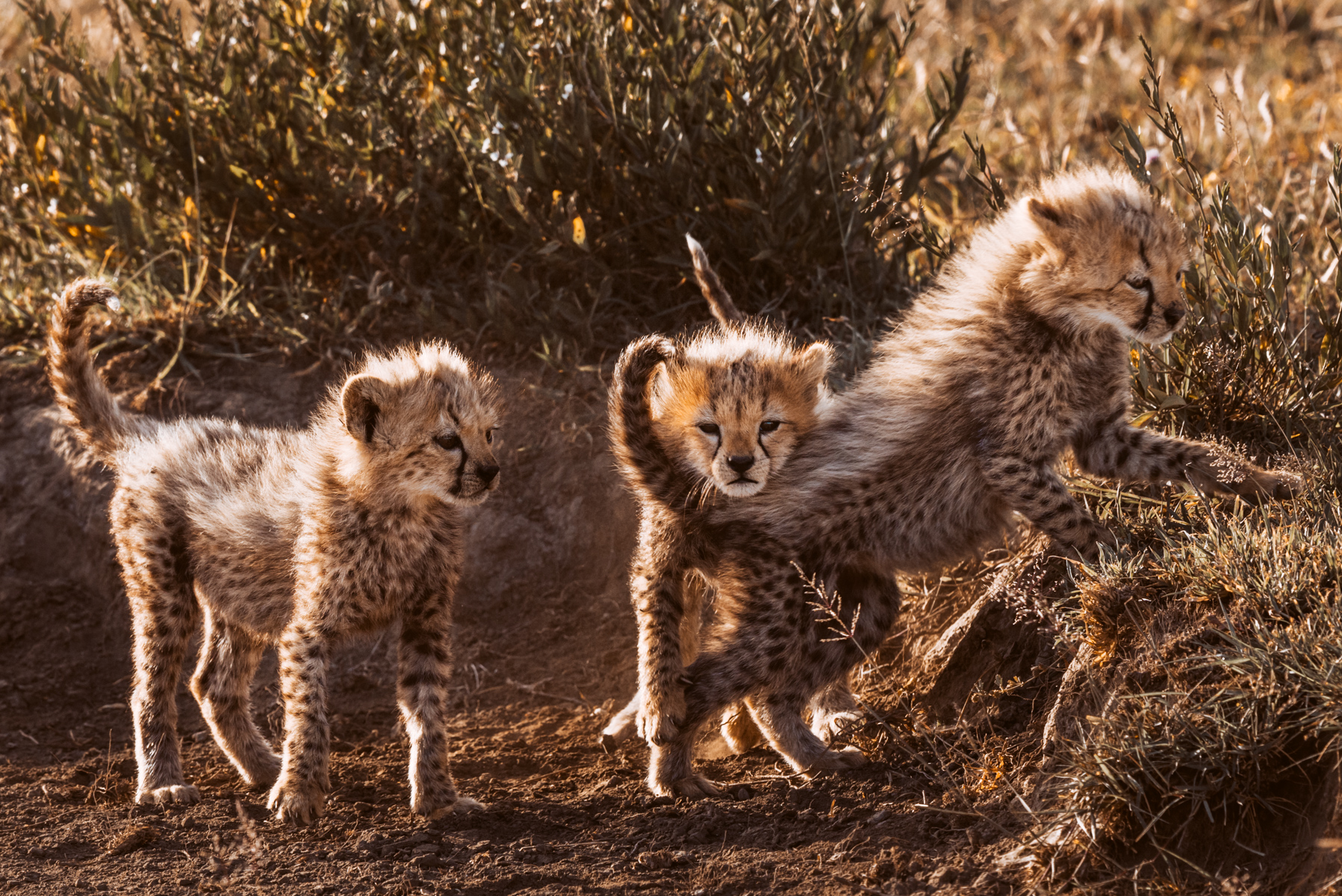
Cheetah cubs spend their first weeks learning through play. Judging by this scene, that includes discovering the structural strength of your brothers and sisters (image by Virginia Wilde)
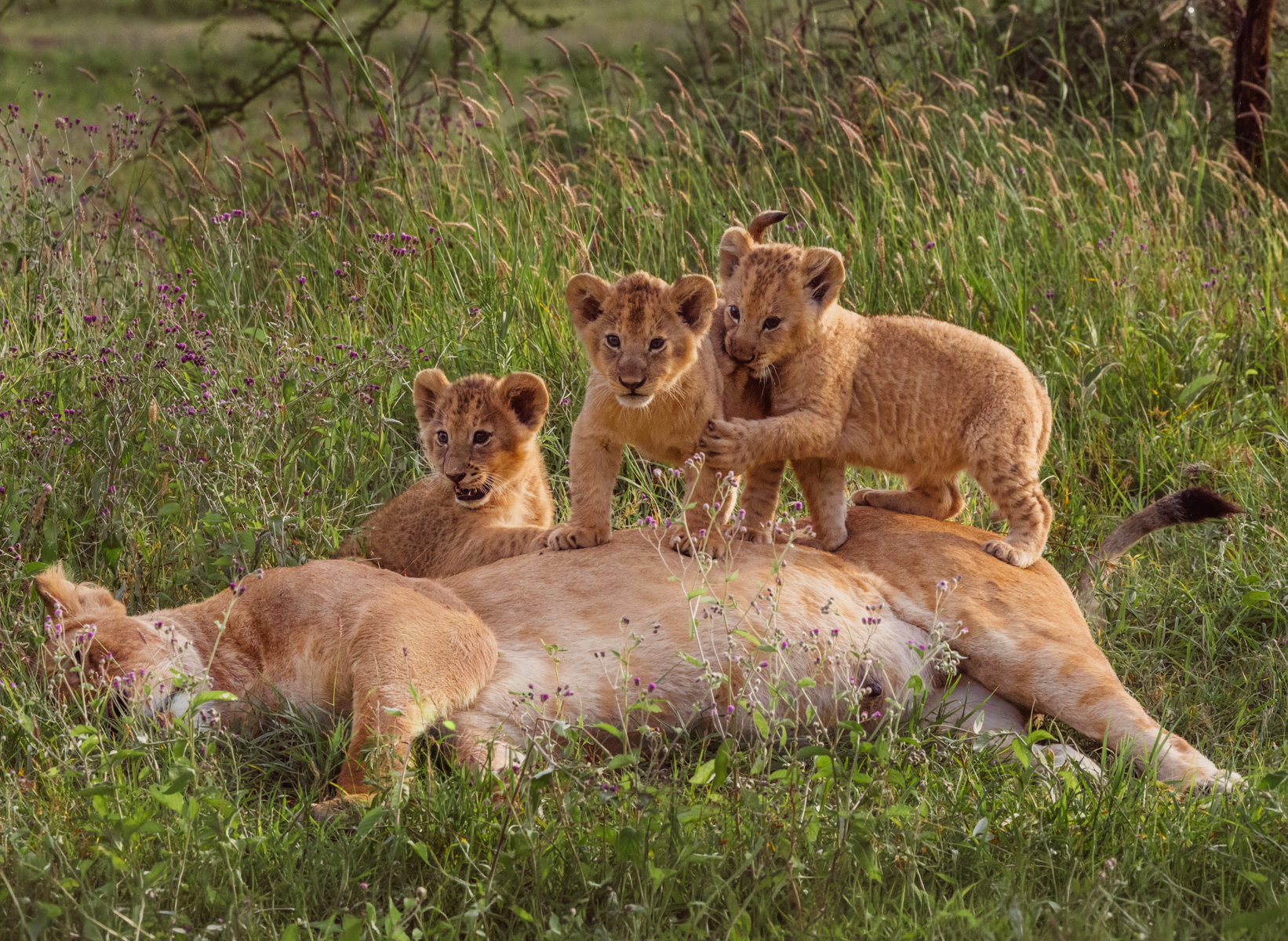
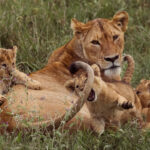
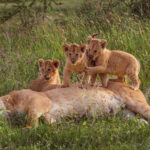
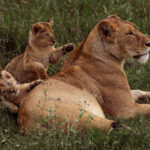
Triplet Lion cubs stand on their resting mum - who clearly wishes today's alarm clock had not gone off in her corner of the Ngorongoro Crater (image by Virginia Wilde)
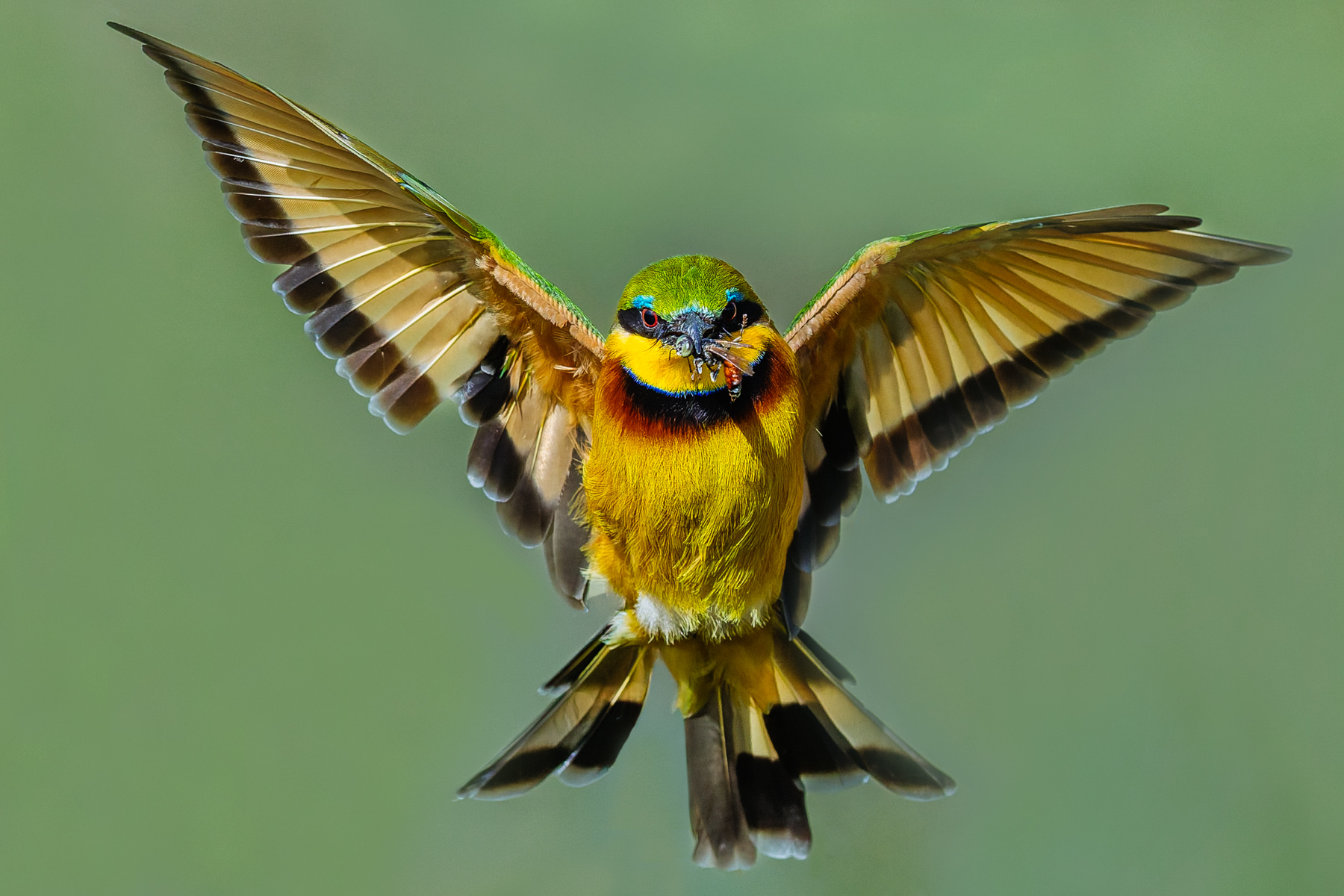
One of Africa's smallest hunters - a Little Bee-eater returns with breakfast in Tanzania's Ngorongoro Crater (image by Virginia Wilde)
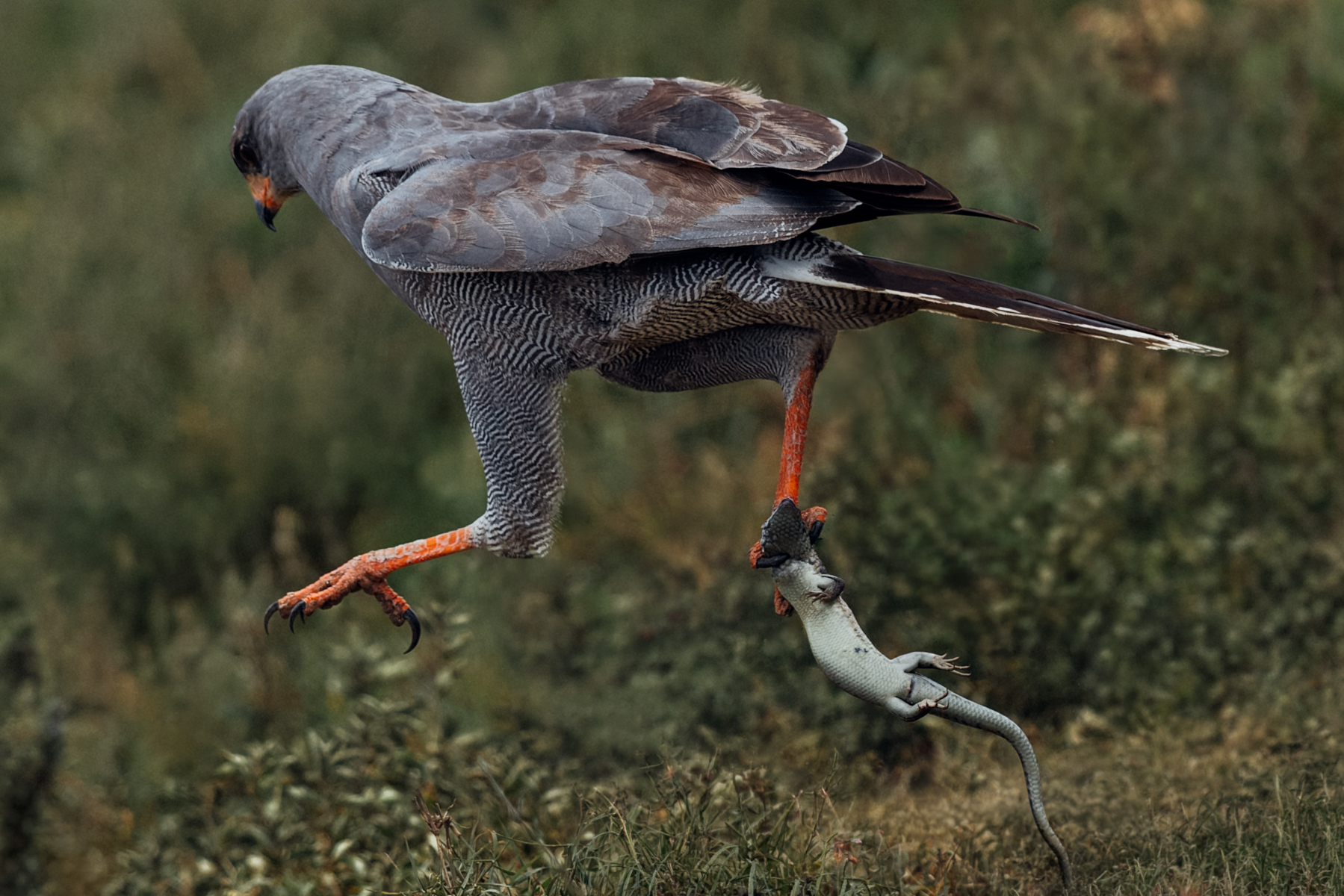
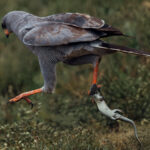
A Dark Chanting Goshawk strides off with its lizard prey clutched in its talons. Goshawks are sometimes known as 'the psychopaths' of the raptor world for their intense and ruthless ambush predatory hunting style (image by Virginia Wilde)
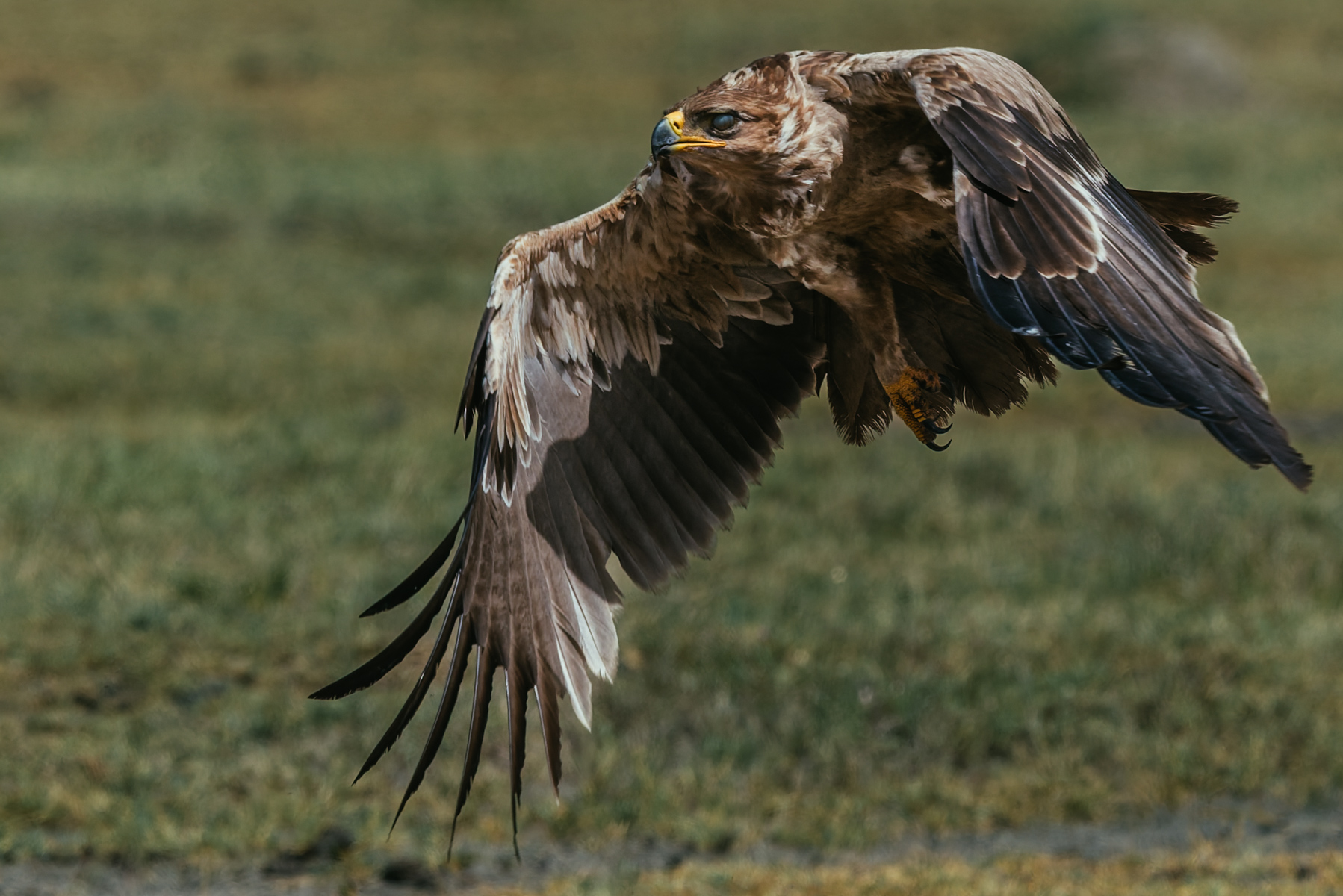
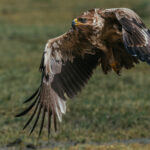
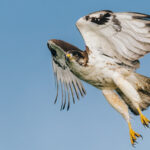
A Tawny Eagle's eyesight is among the sharpest in the animal kingdom, allowing it to detect the slightest movement far below. It thrives by reading the landscape as carefully as the wind (image by Virginia Wilde)
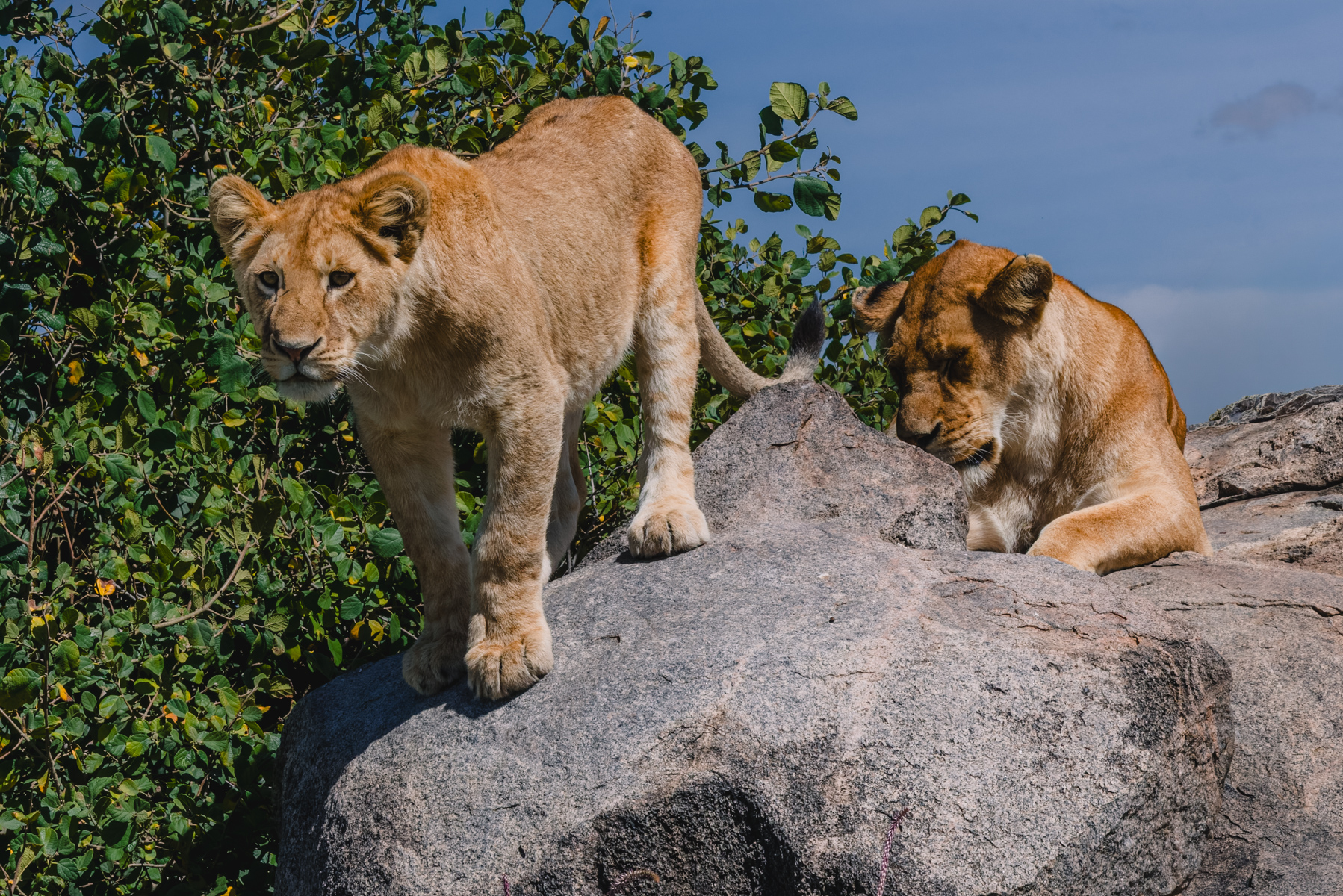
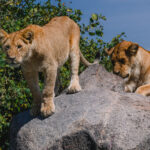
"Shall I leap from this rock? Or climb down more carefully?" A young Lion does what every young child does: weigh up his chances of injury against the fun of jumping off high stuff (image by Virginia Wilde)
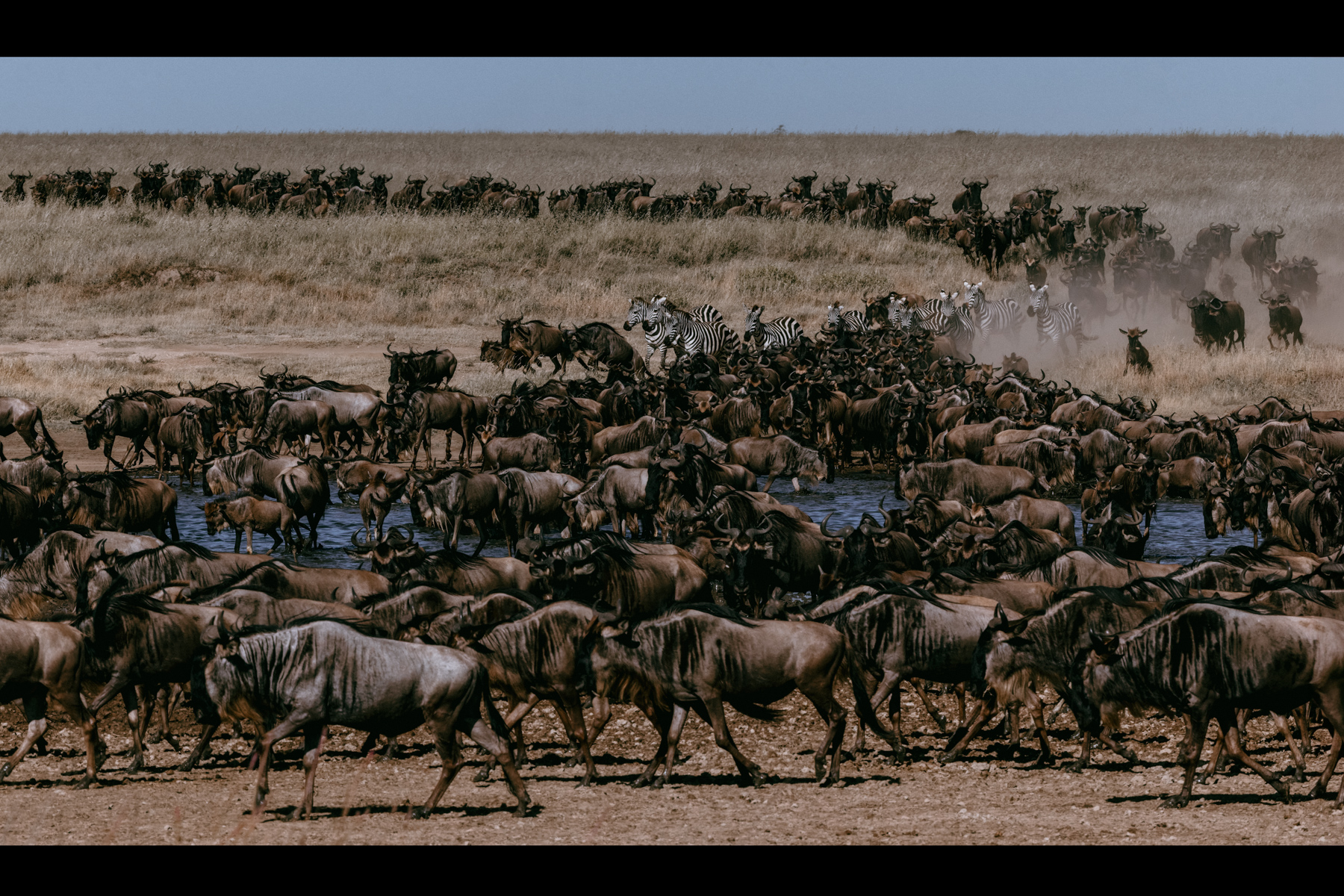
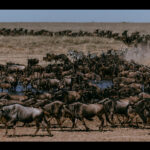
The great Migration is anything but orderly. Dust, noise and sheer numbers turn even a simple drink into chaos. And imagine trying to find your family in this lot. Somehow, they usually do (image by Virginia Wilde)
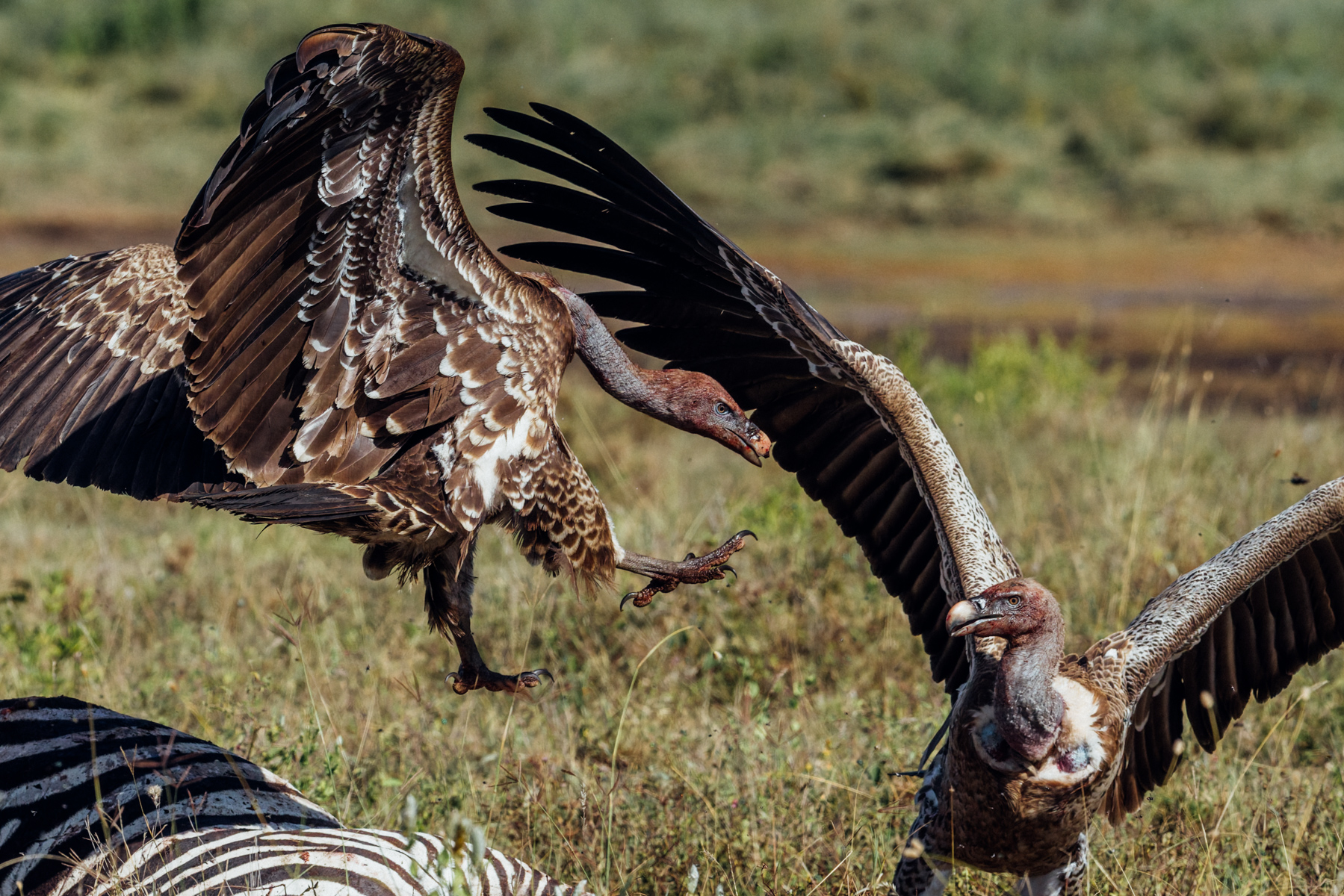
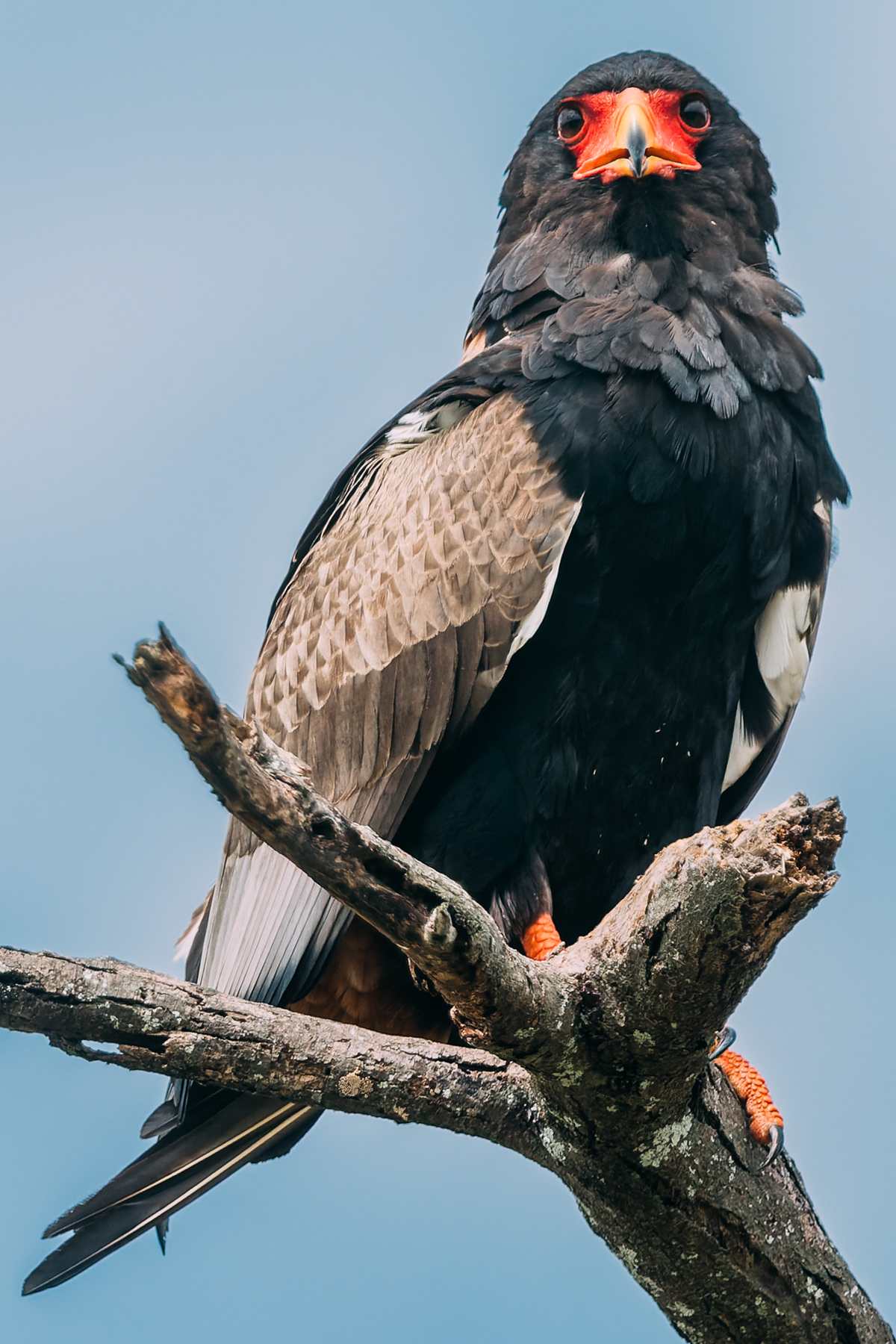
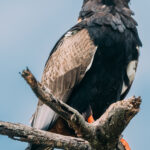
I've always loved Bateleur Eagles. Their name 'bateleur' translates to 'street performer', 'juggler' or 'acrobat' - due to their incredibly gymnastic displays and rocking moves in-flight (image by Virginia Wilde)
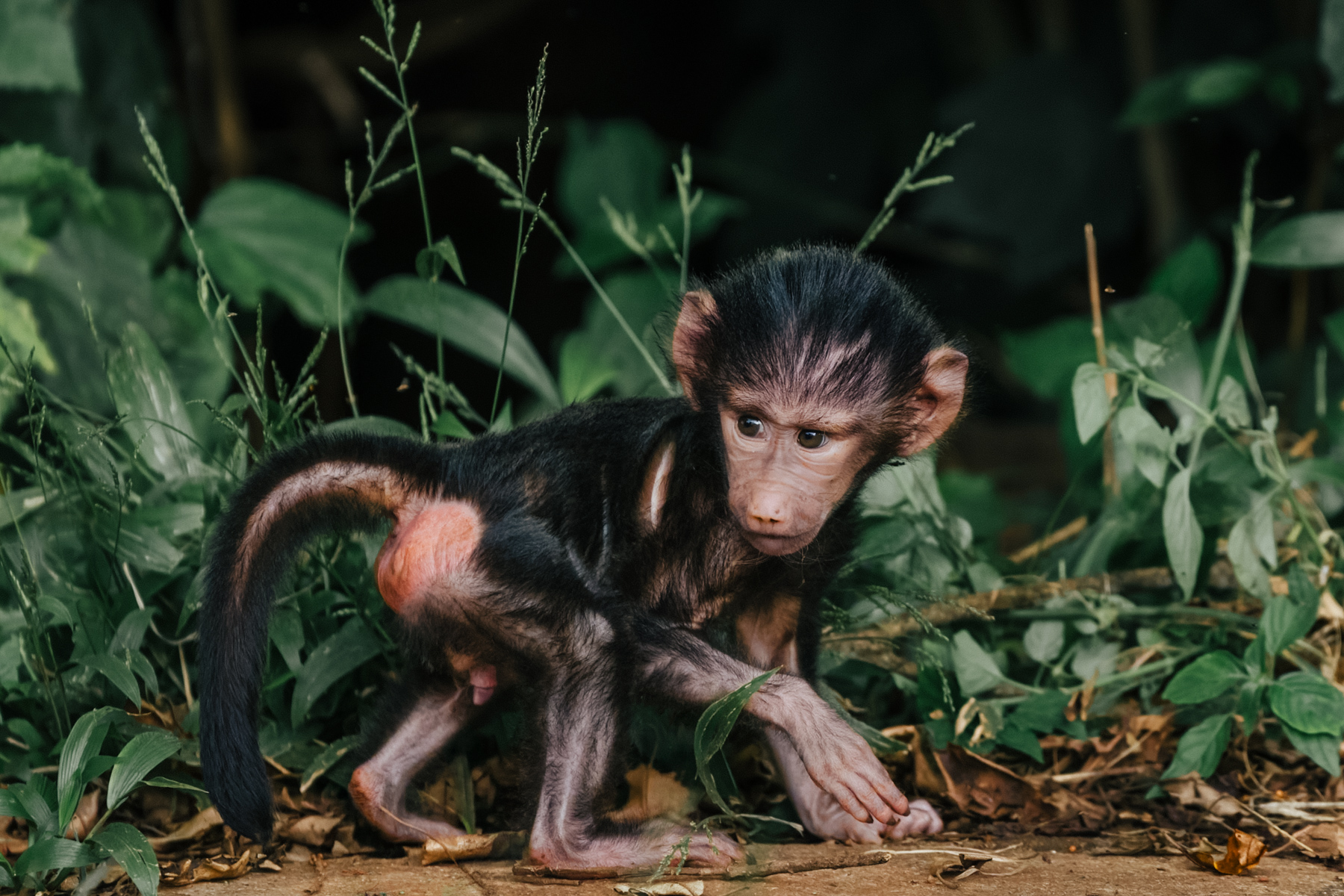
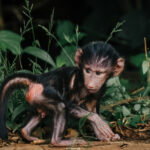
Infant Olive Baboons are all ears and oversized feet. Growing into them takes some time (image by Virginia Wilde)
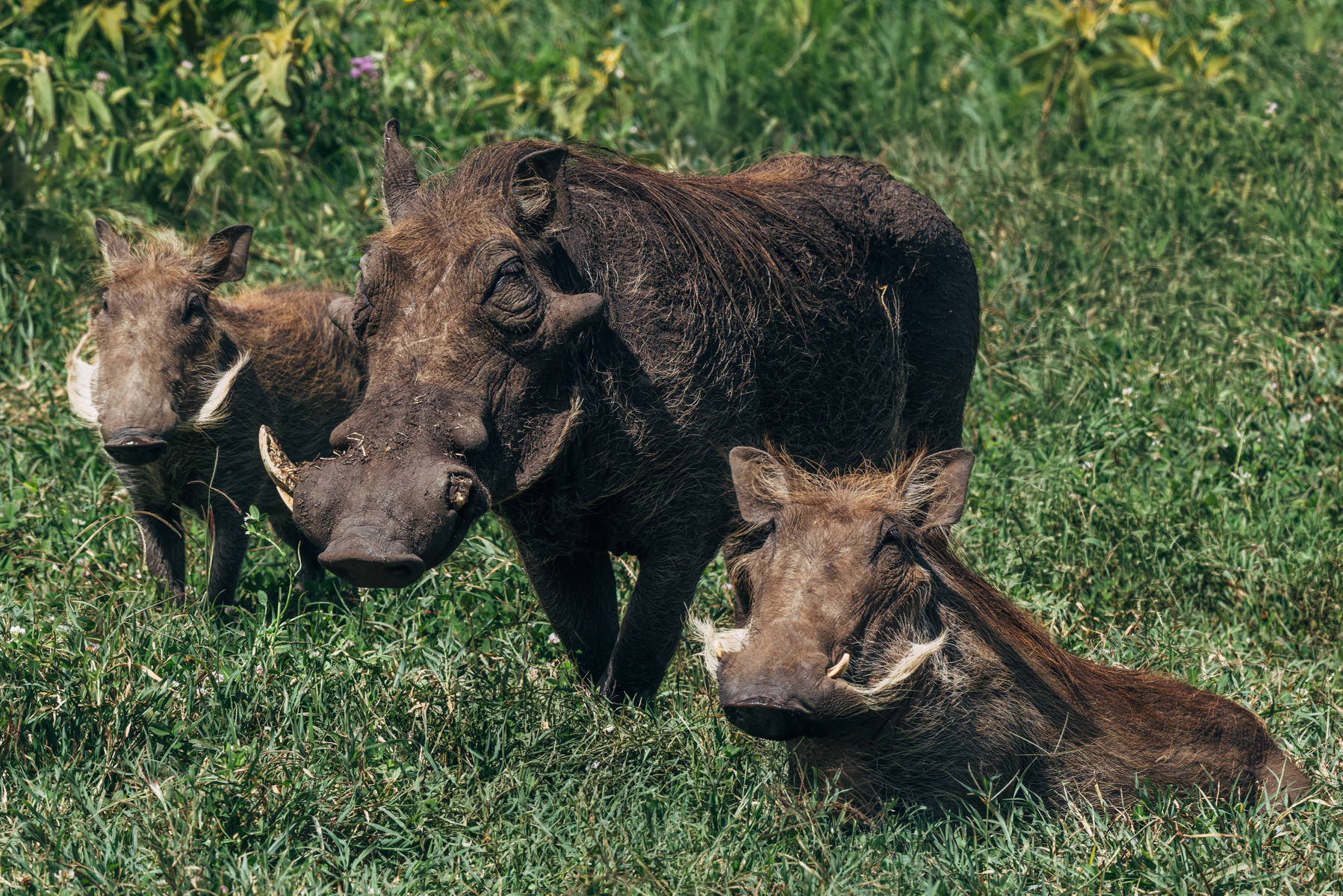
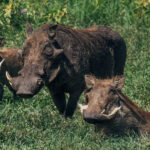
Warthogs may not win any beauty contests, but they are among Africa's most successful survivors. A sow will often reverse into her burrow, so she can face outward, giving any unwelcome visitor a sharp encounter with her tusks (image by Virginia Wilde)
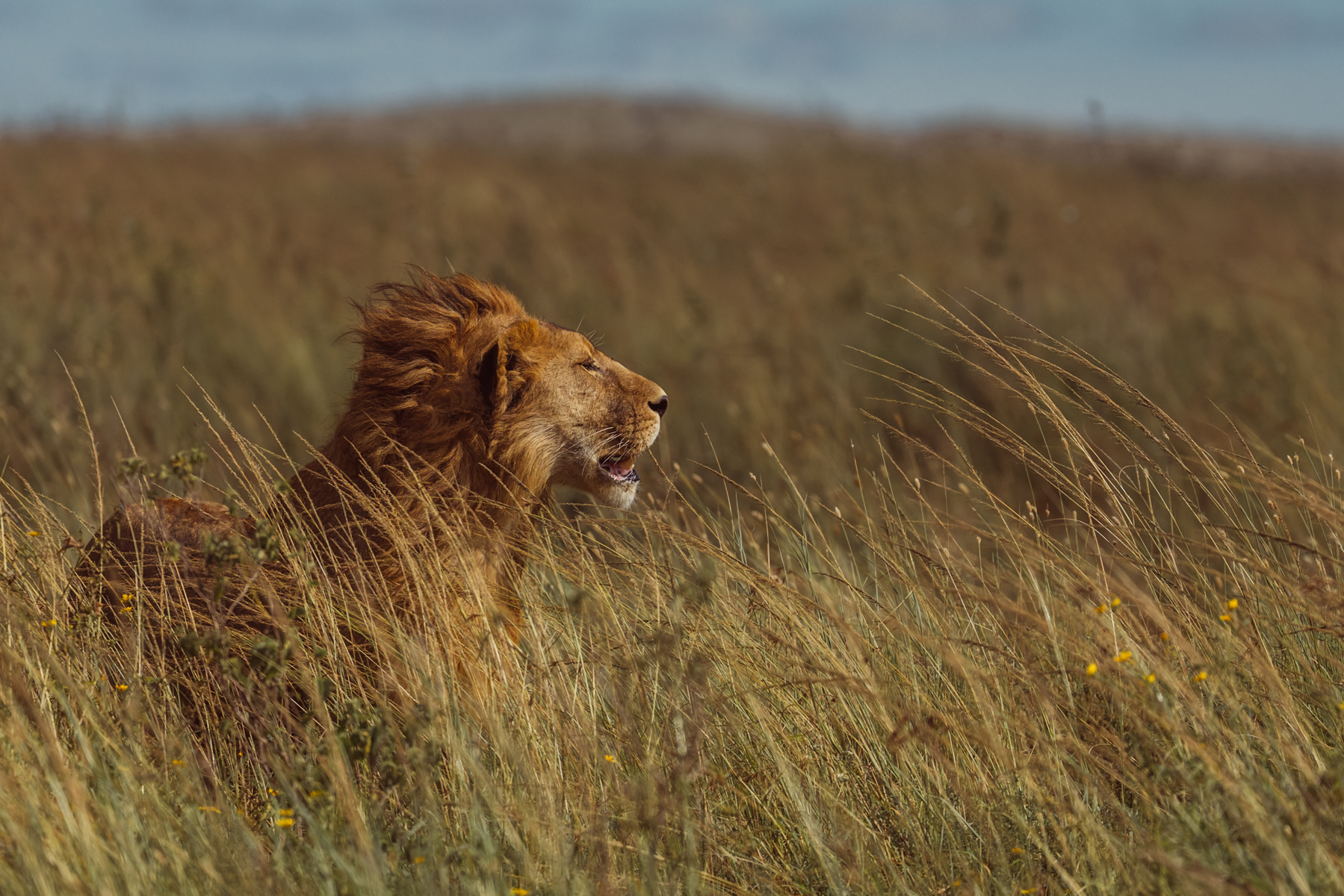
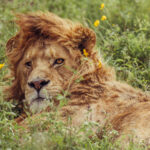
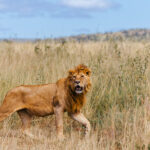
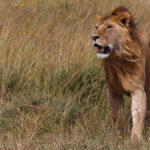
'One day, young Lion, this grassland will be yours for the taking.' A handsome male Lion - his face too young to be scarred from battles of dominance - surveys his home in the Serengeti (image by Virginia Wilde)
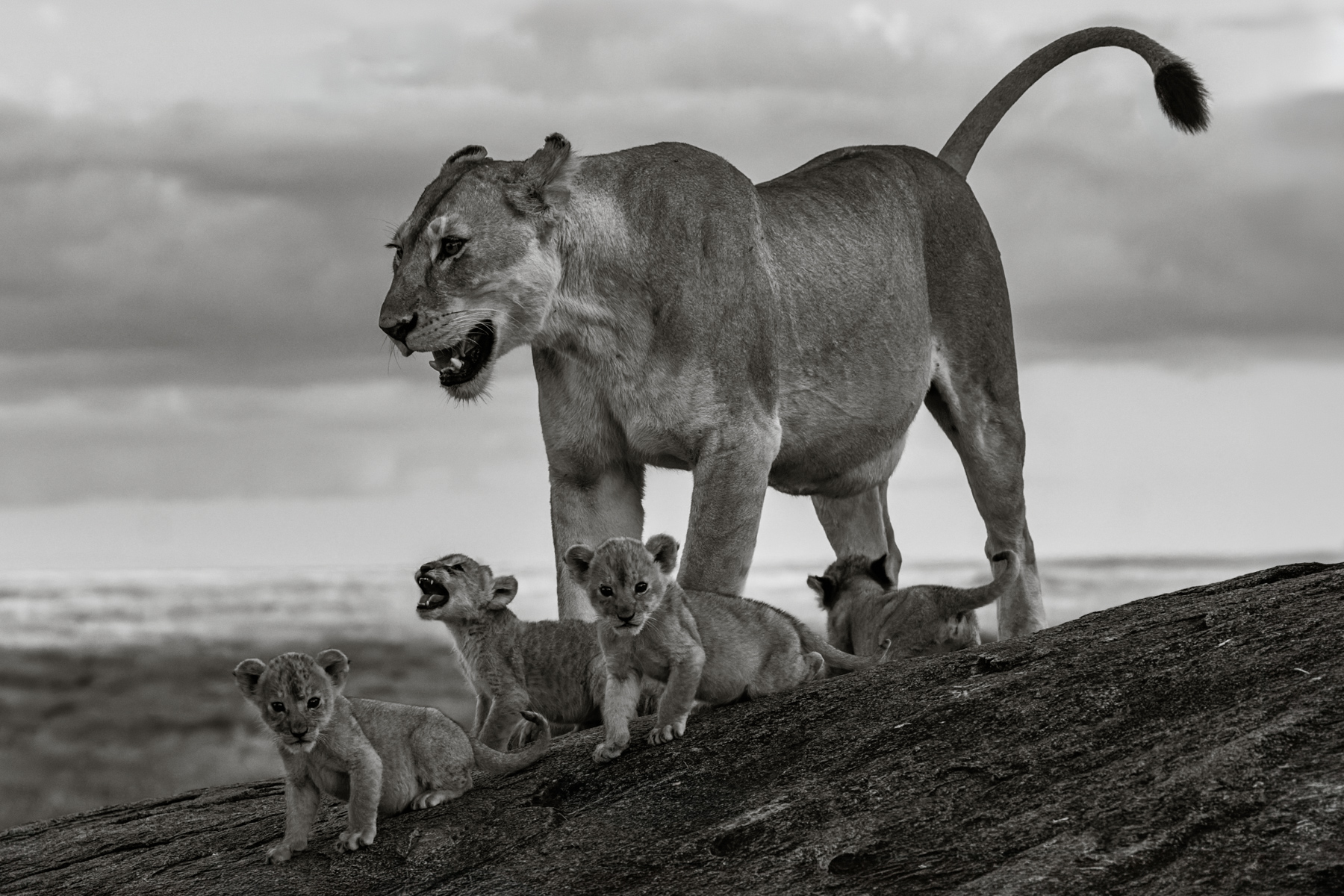
Barely five weeks' old, these lion cubs venture out from the safety of their den in an area of the Serengeti known as Utafiti Rock, under the watchful gaze of their mother (image by Virginia Wilde)
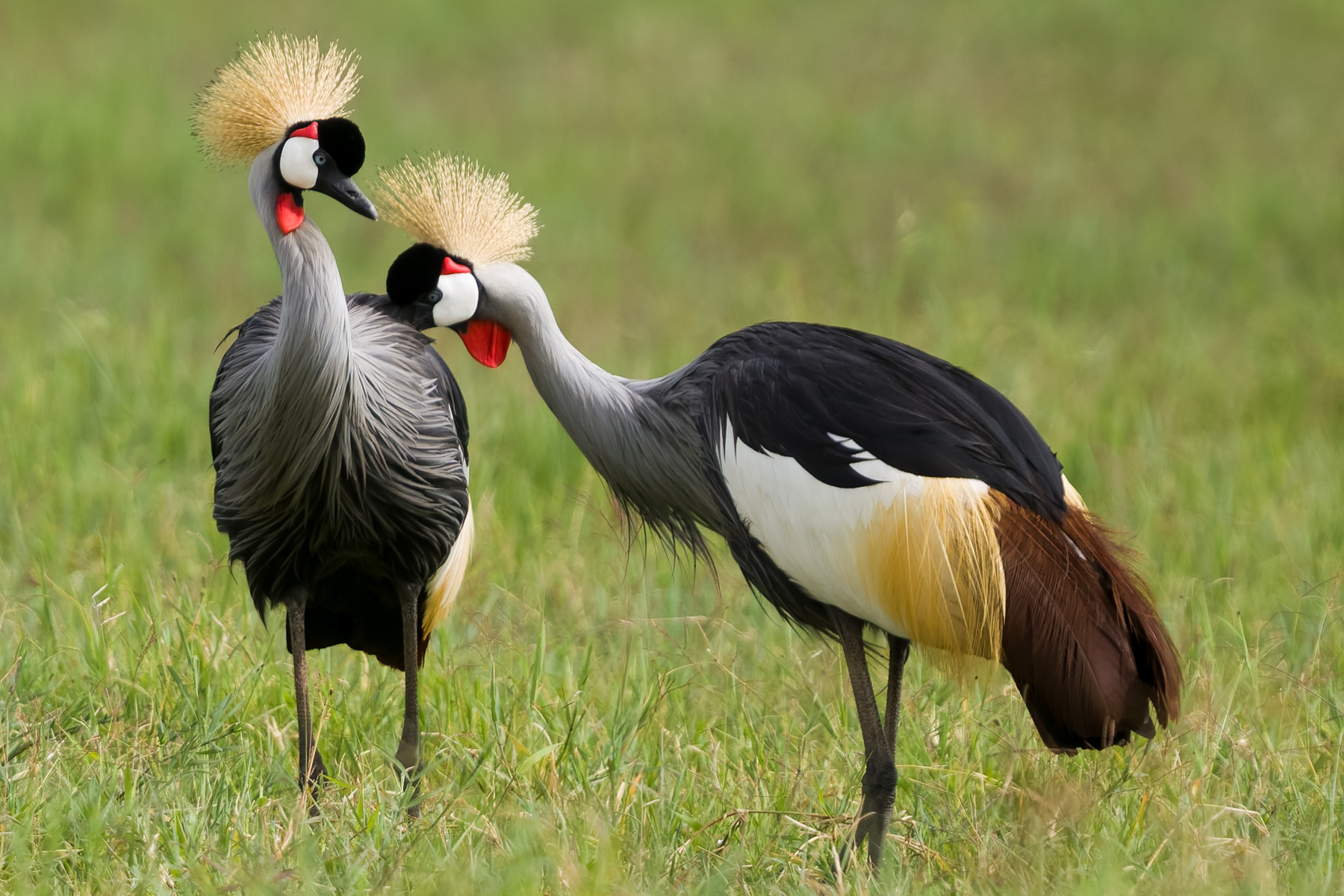
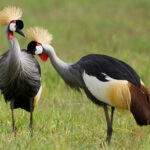
The Grey-Crowned Crane wears Africa's most extravagant hairstyle. Courtship, however, is all about the quieter gestures (image by Virginia Wilde)
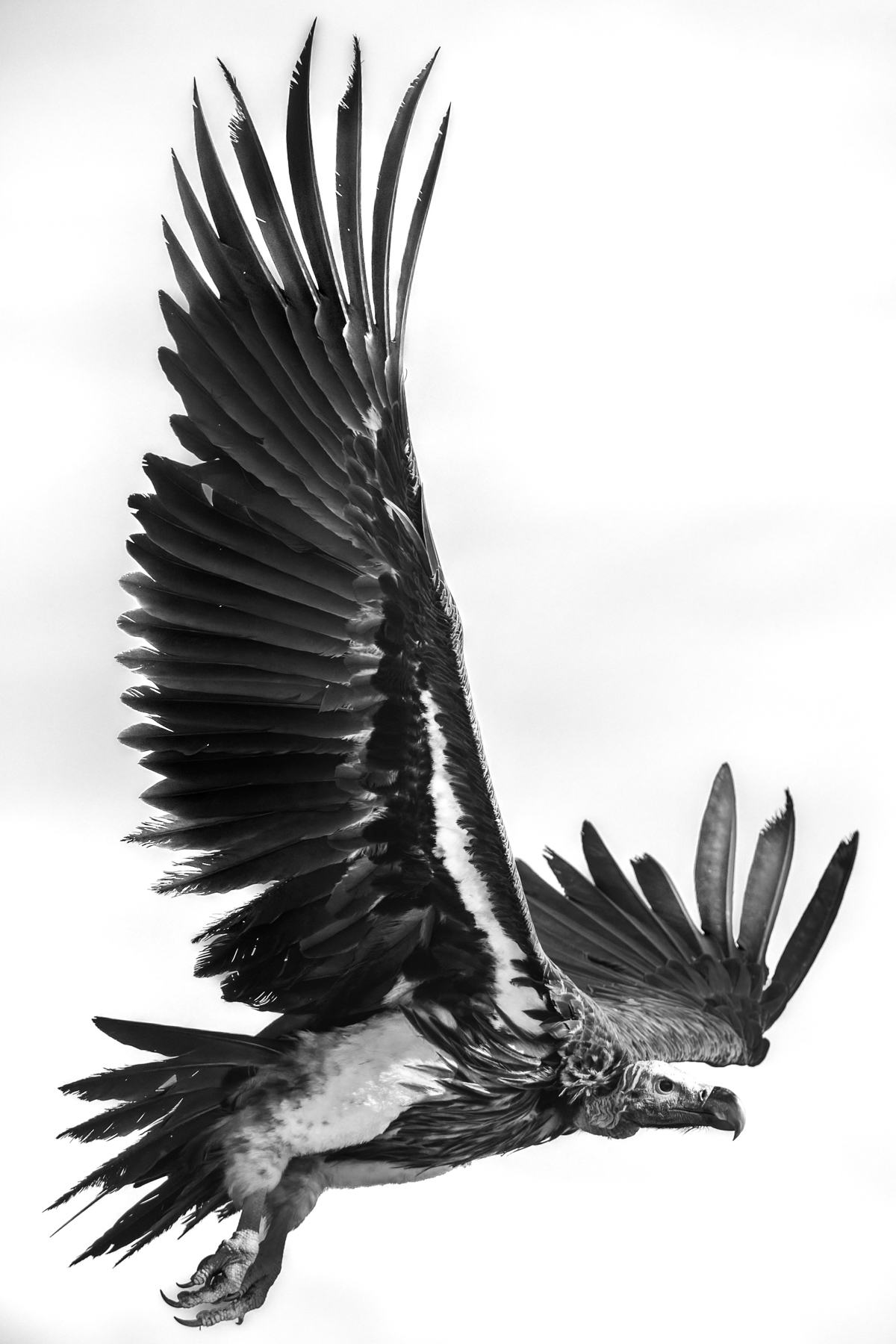
A Lappet-faced Vulture, Africa's largest and most powerful vulture, banks overhead. With a wingspan approaching 2.9 metres, it dominates the skies above the Serengeti (image by Virginia Wilde)
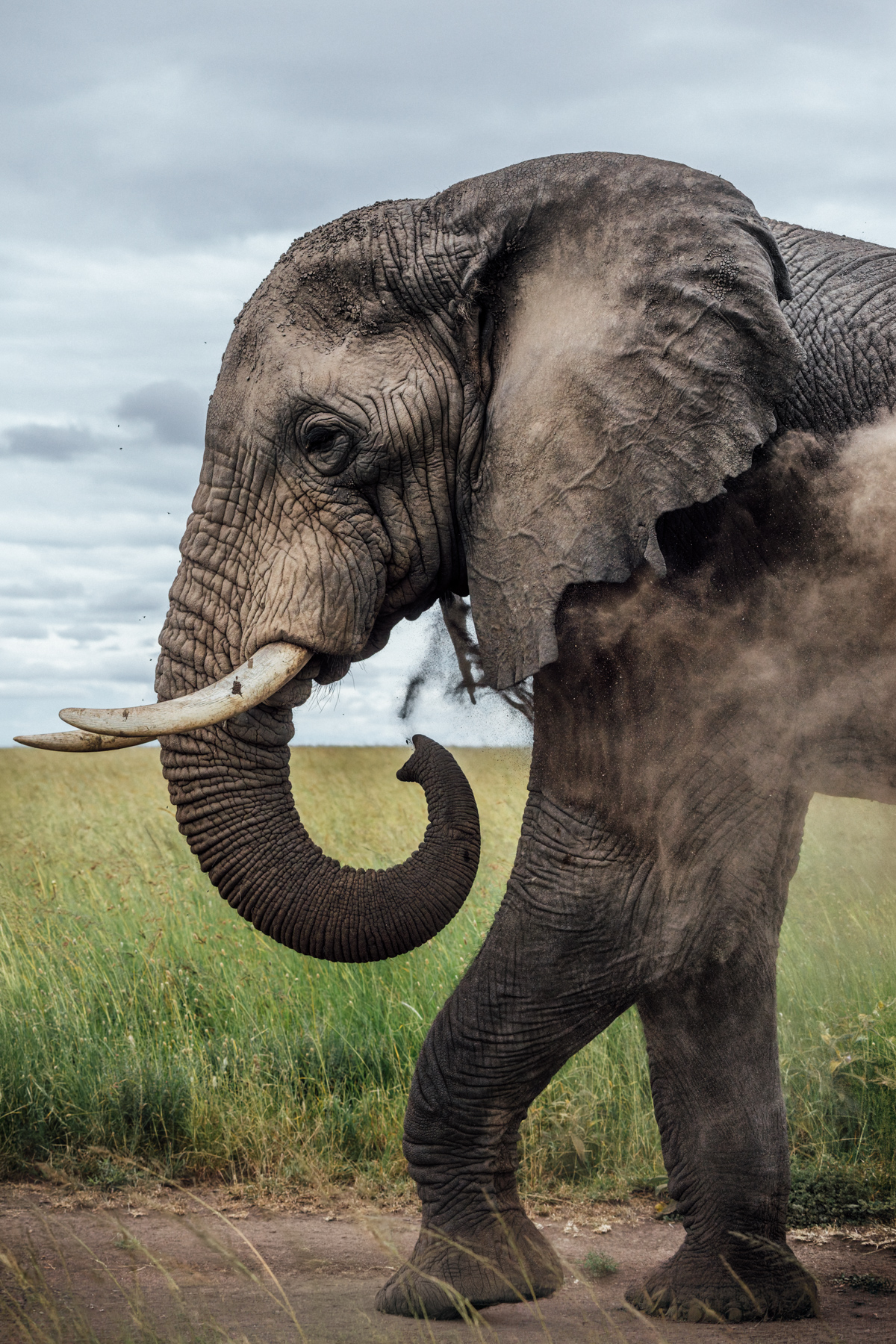
An African Elephant can lift well over 250 kg with its trunk - yet it's sensitive enough to pick up a single blade of grass. Few animals combine brute strength and such remarkable dexterity. The dust cloud isn't for show. It helps to protect the skin from biting insects
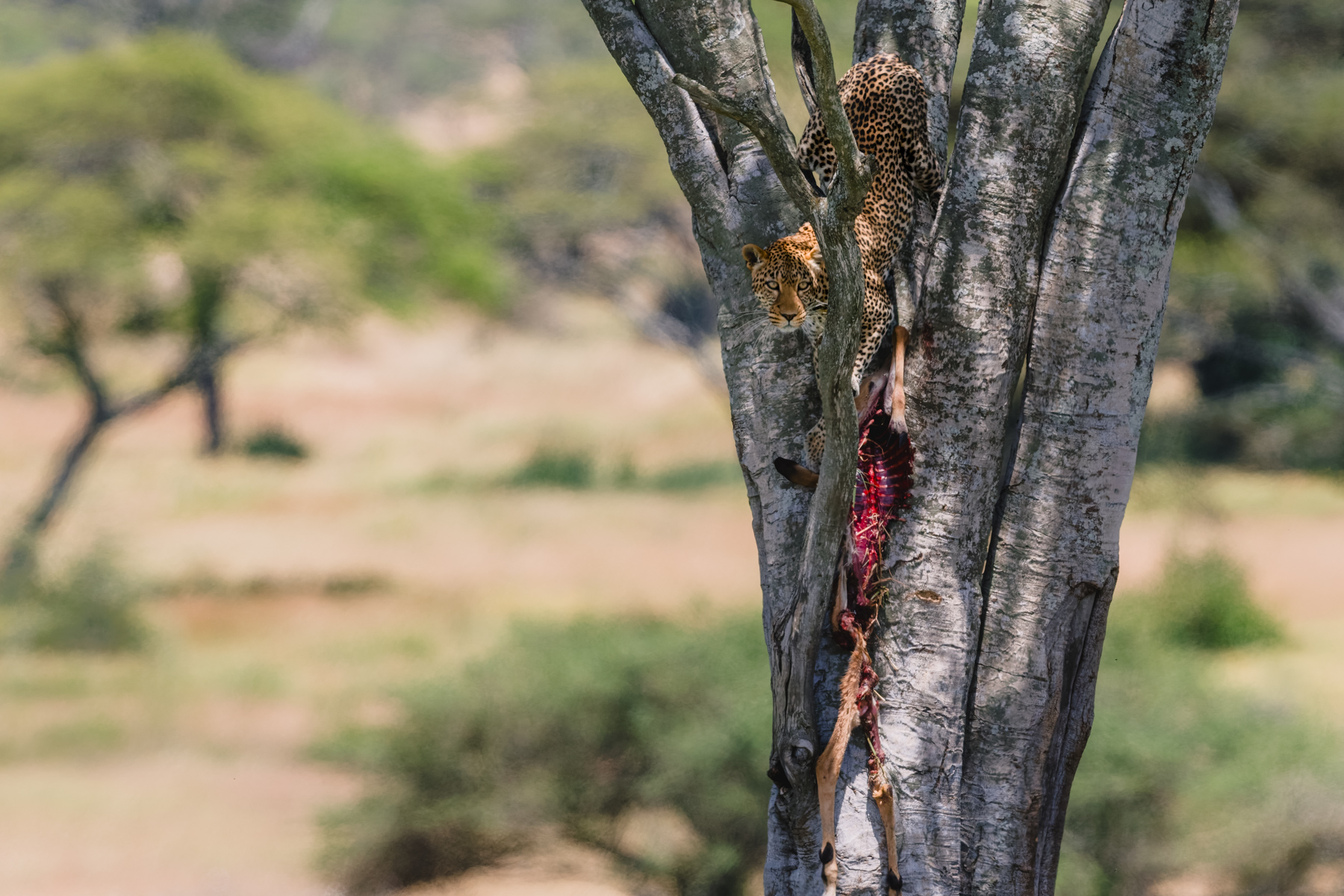
The hardest part isn't always catching the impala - it's dragging it up into the tree. Leopards hide their kills off the ground and as high up as they can, to protect the food from scavengers (image by Virginia Wilde)
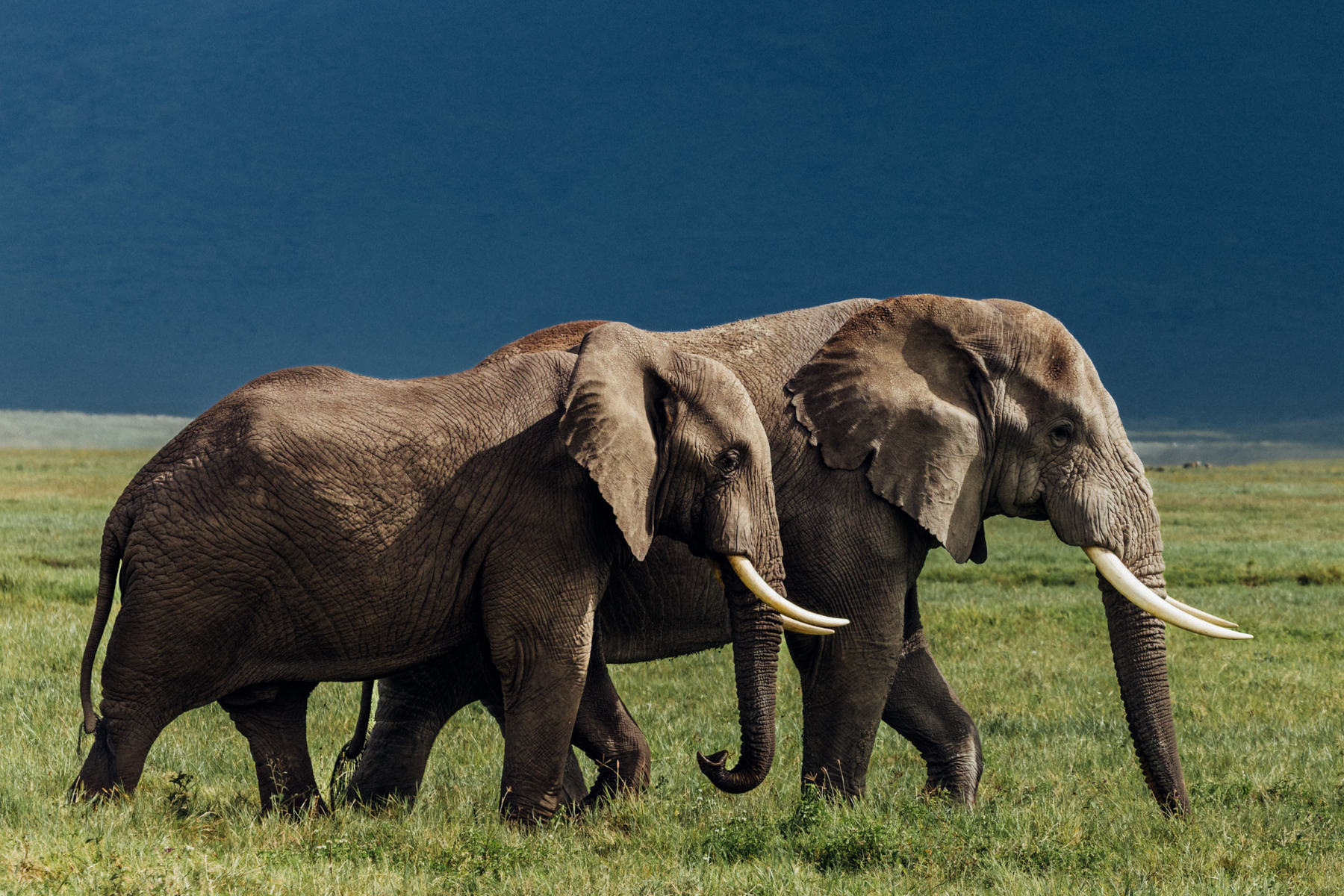
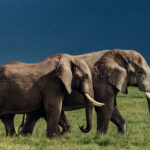
Two bull Elephants stride across the floor of the Ngorongoro Crater, where rich volcanic soils nourish permanent grasslands. Some of Tanzania's finest surviving Tuskers still roam this remarkable natural amphitheatre (image by Virginia Wilde)
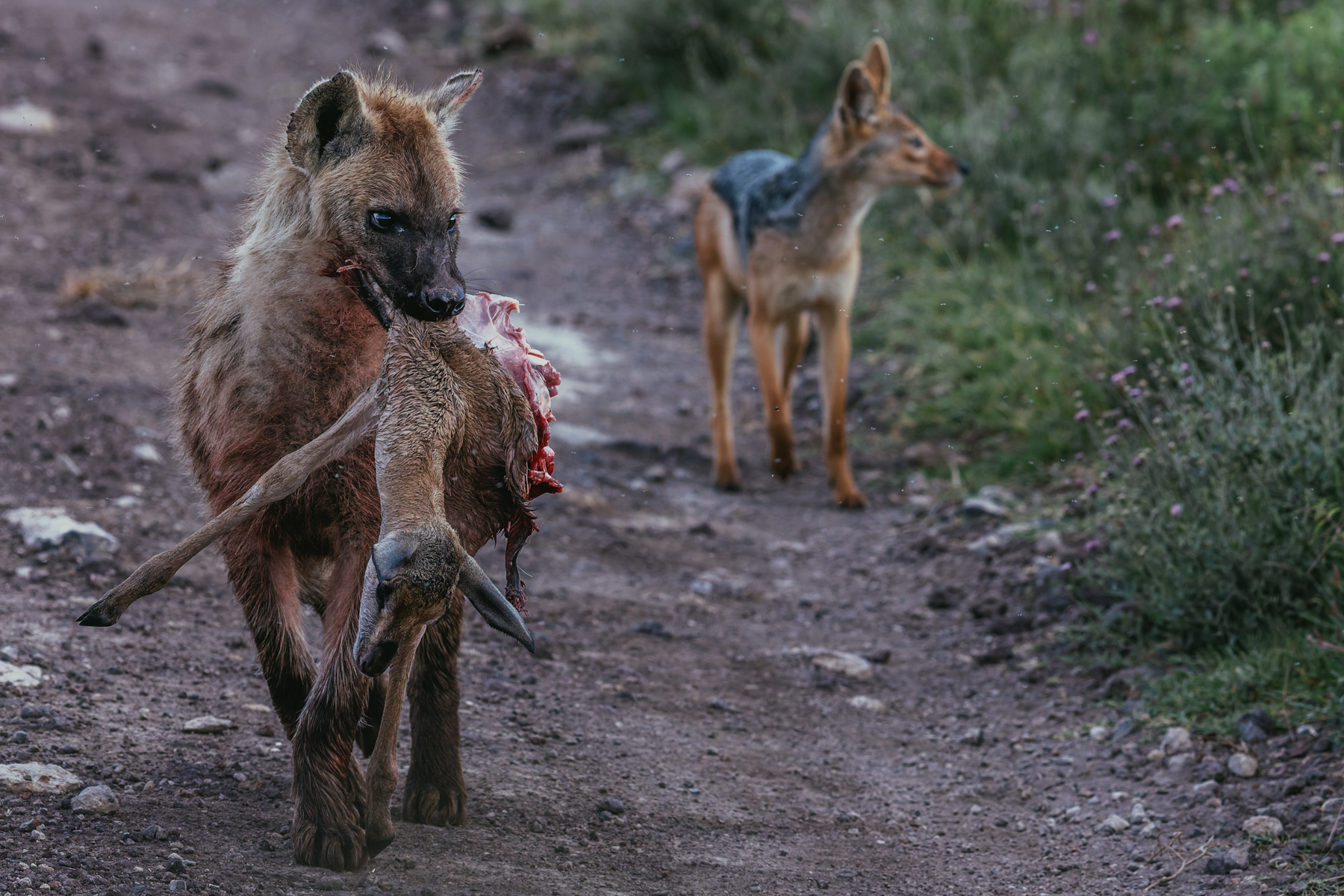
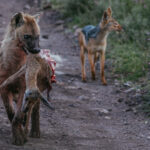
A Spotted Hyena heads off with its prized carcass of a Thomson's Gazelle, while a hopeful Black-backed Jackal trails behind. Jackals often shadow larger predators and scavengers, ready to snatch any scraps left behind (image by Virginia Wilde)
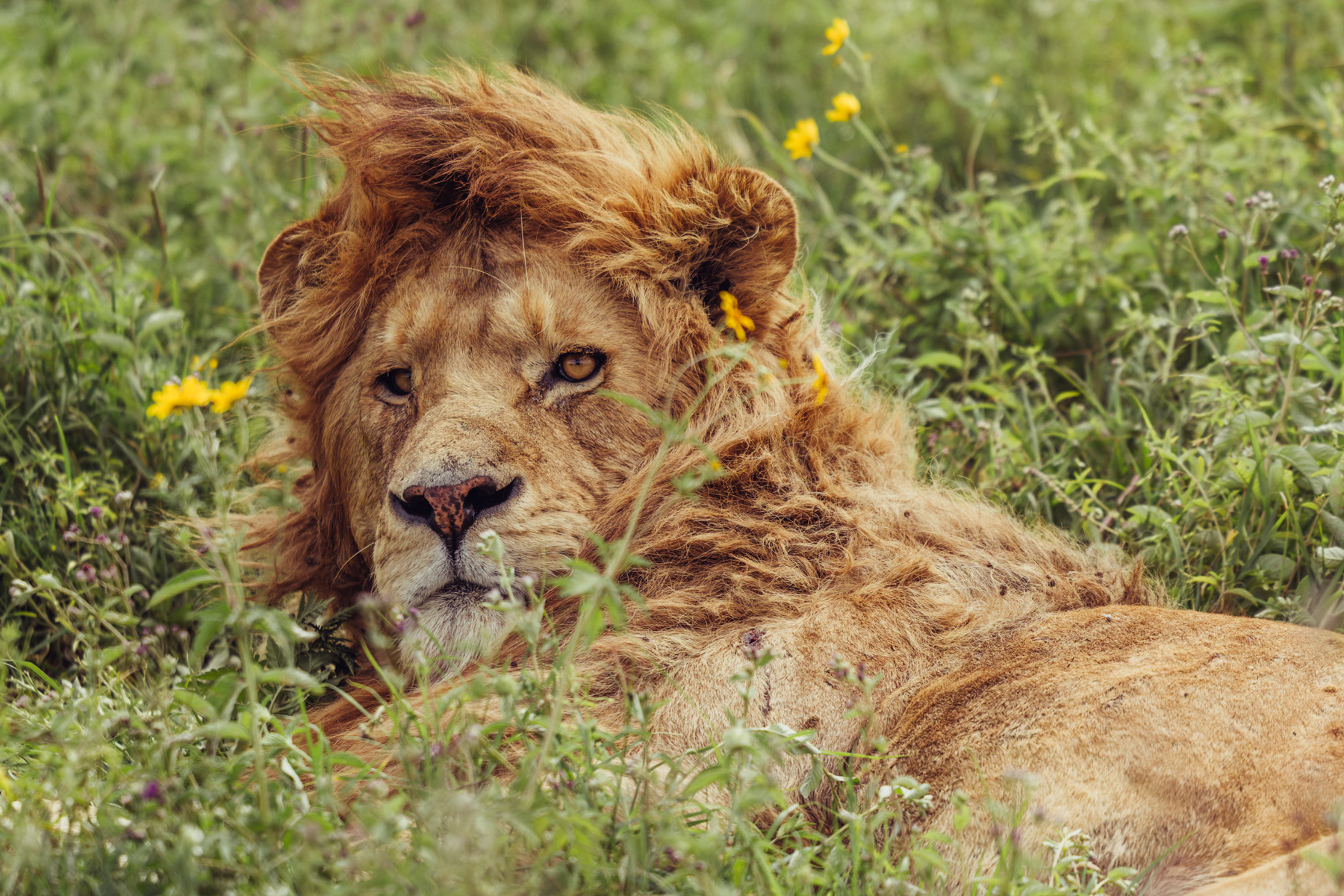
Among the wildflowers of the Ngorongoro Crater, a young male Lion rests with half of his attention still on the world (image by Virginia Wilde)
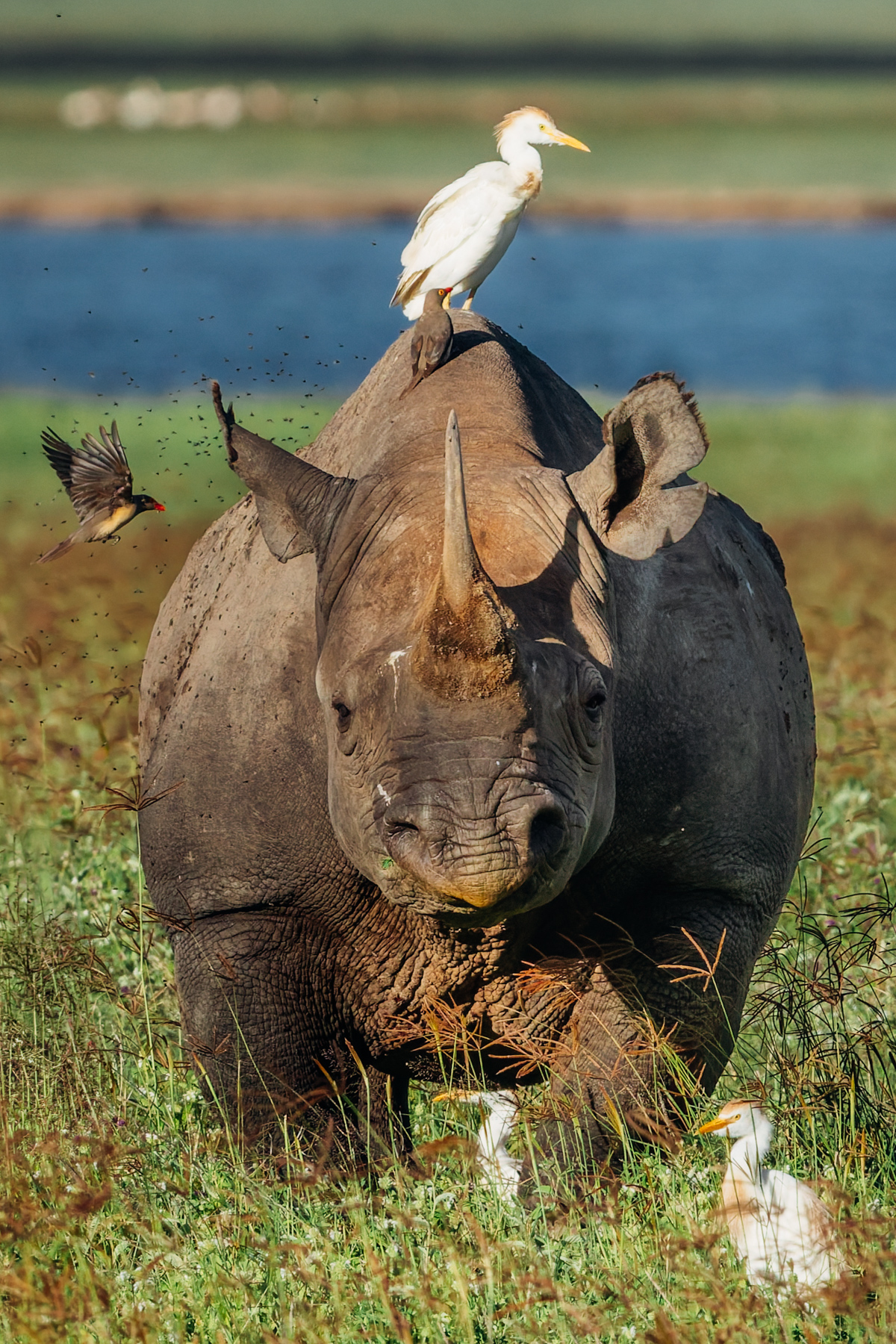
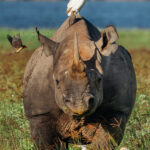
An Eastern Black Rhino carries an entire community. Oxpeckers hunt ticks, while Cattle Egrets seize insects disturbed by every thunderous step (image by Virginia Wilde)
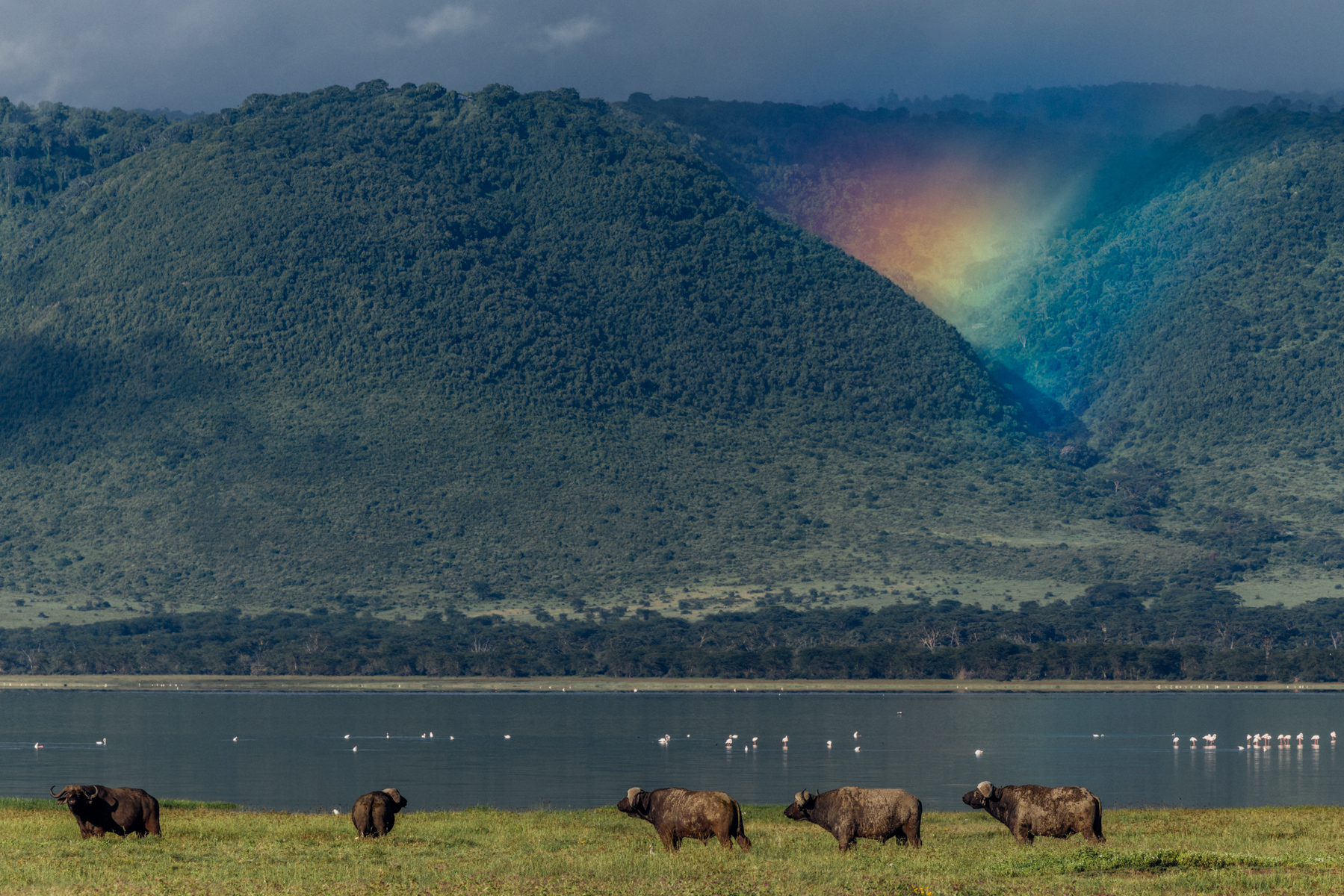
A herd of Cape Buffalo graze beside Lake Magadi in Tanzania's Ngorongoro Crater, while a passing rain shower creates a beautiful rainbow in a dip around the crater's forested rim (image by Virginia Wilde)
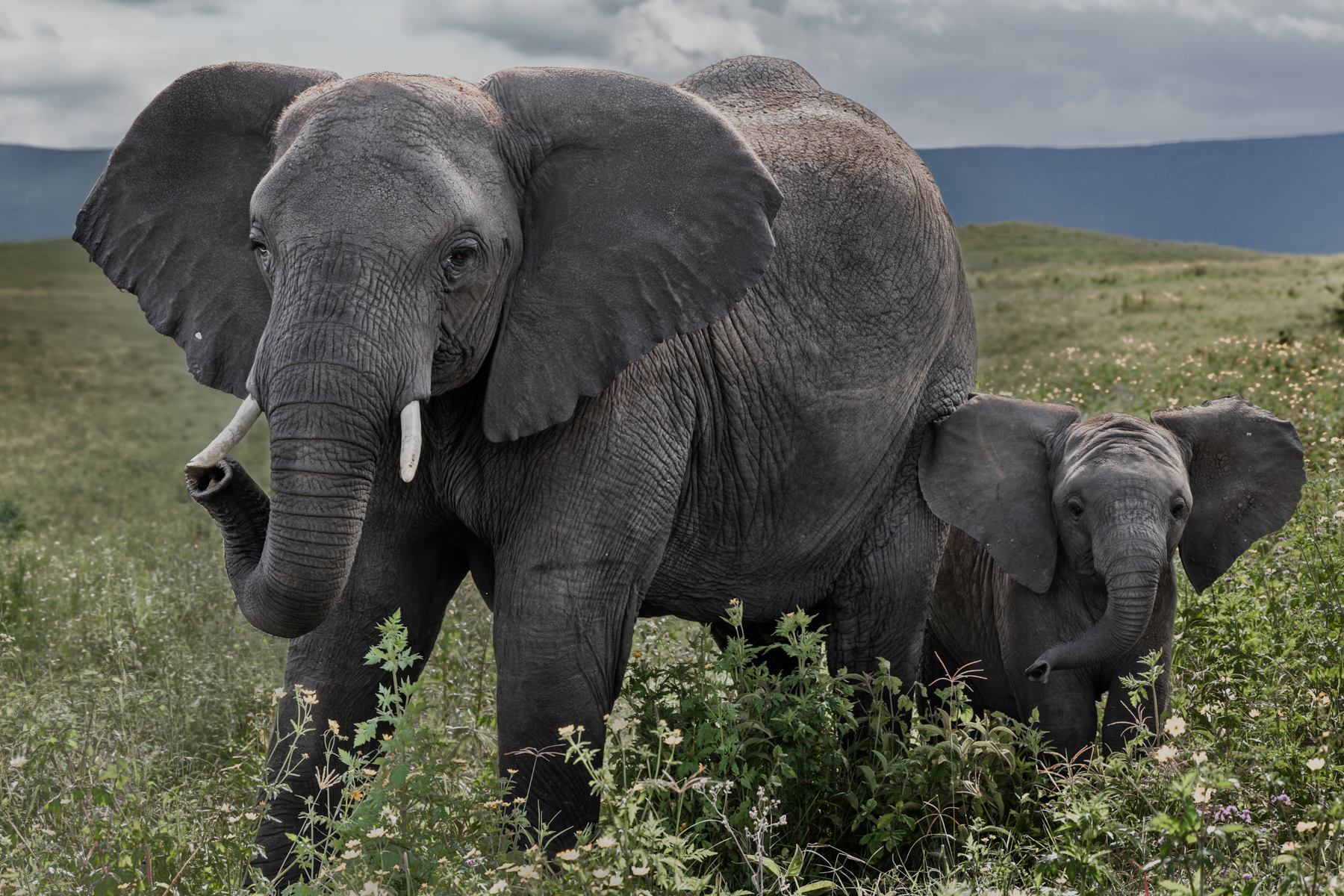
Mum has this covered. For now, this Elephant calf is quite happy to let someone else keep an eye on things (image by Virginia Wilde)
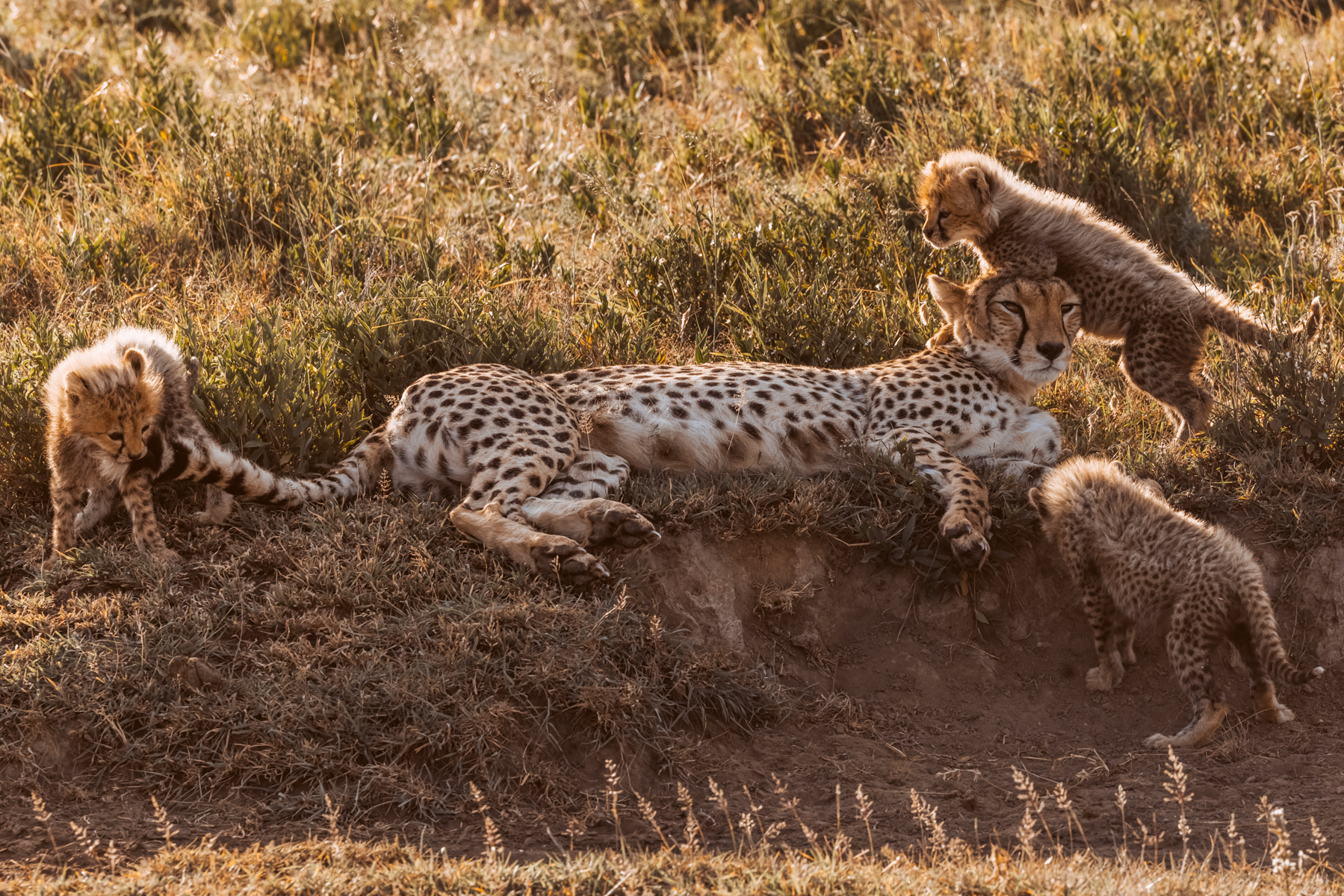
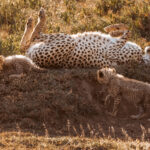
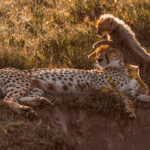
To Cheetah cubs, mum's body represents equal parts nursery, playground and jungle gym. And if you find a Cheetah mother enjoying a peaceful lie-down, her cubs probably haven't found her yet (image by Virginia Wilde)
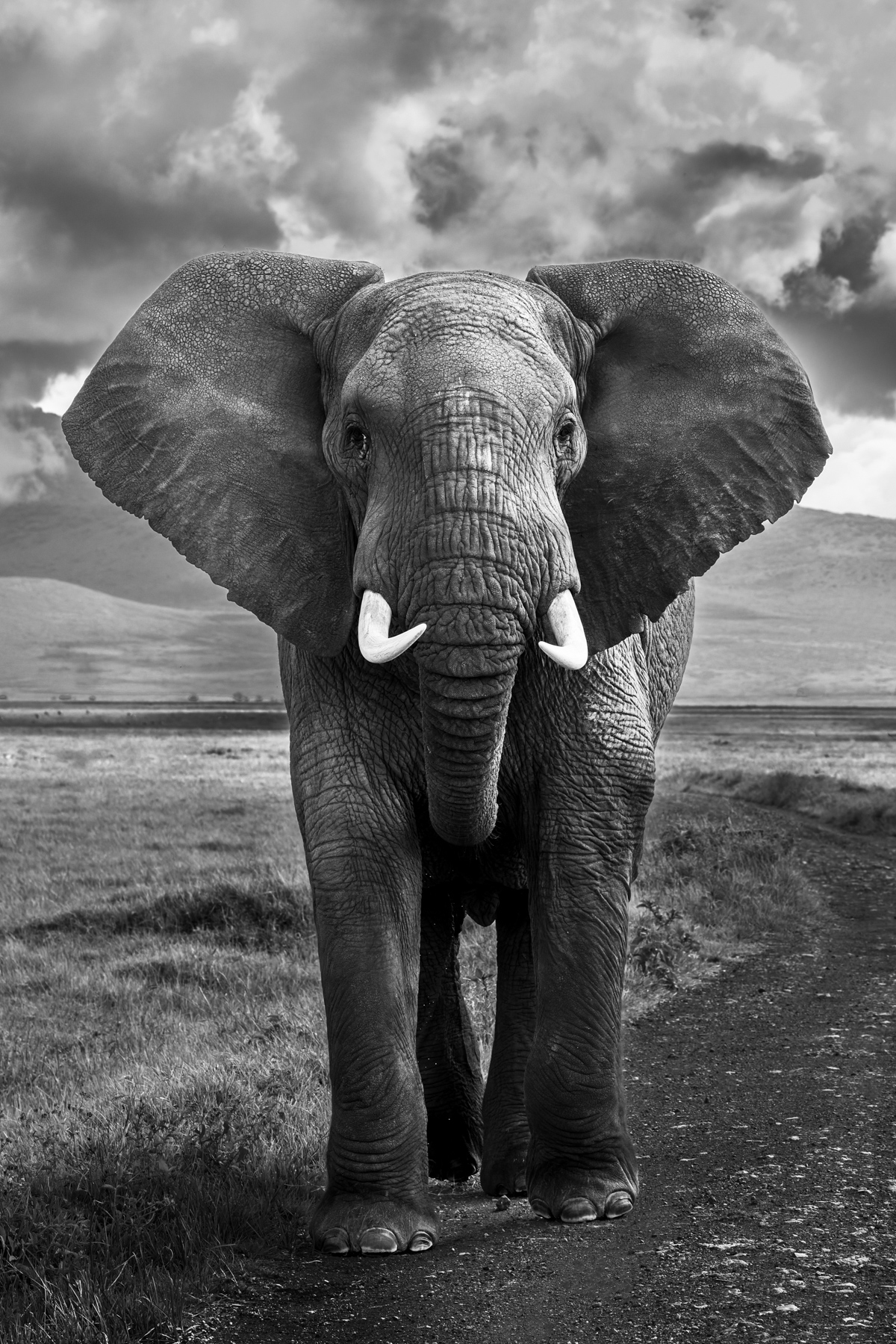
Tanzania's Ngorongoro Crater is one of the best places in Africa to encounter wild elephants. This bull African Savanna Elephant (also known as an African Bush Elephant) paused just long enough to have his portrait taken, before continuing on his way (image by Virginia Wilde)
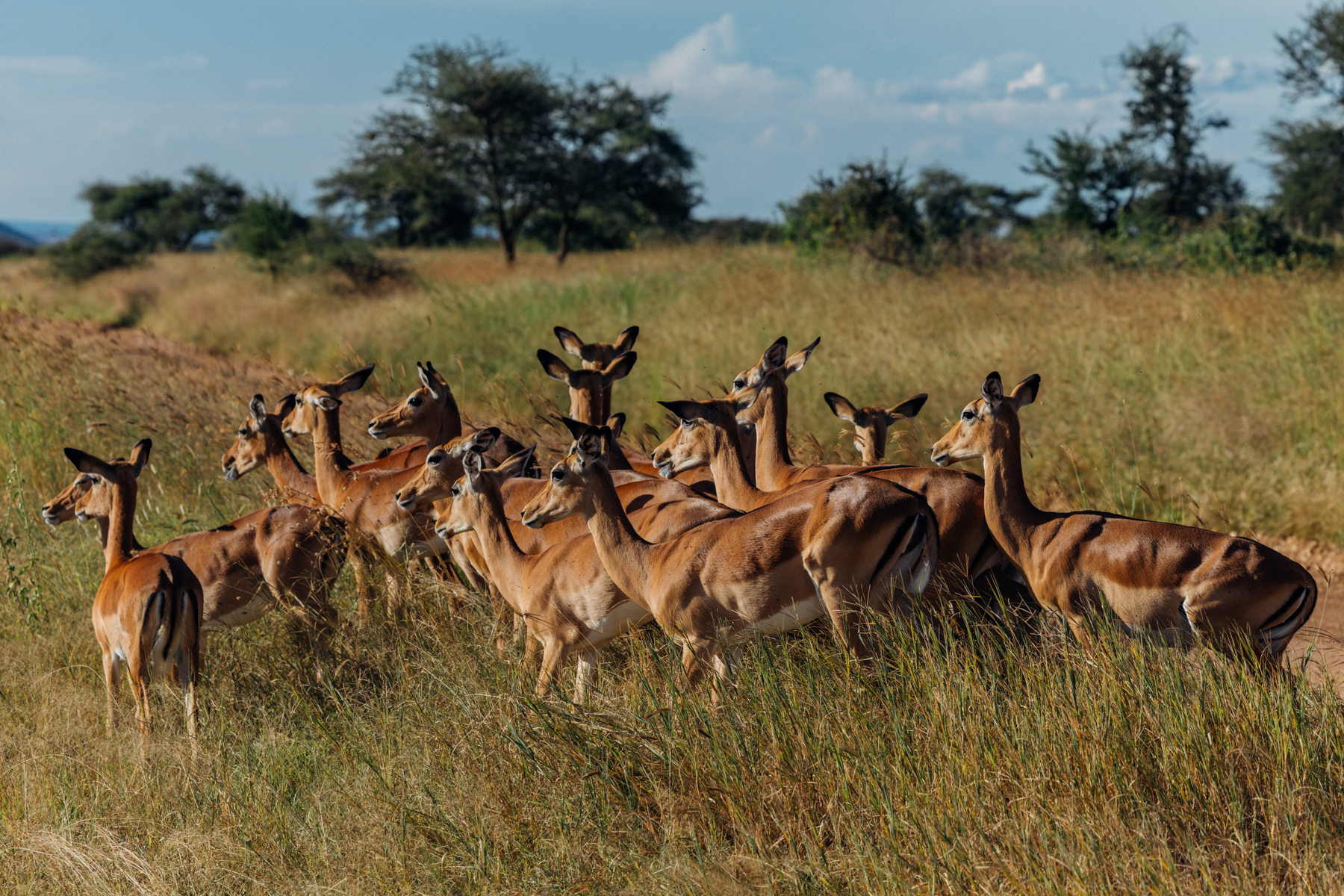
Graceful they may be, but Impalas survive through constant vigilance. Their large ears can swivel independently to pinpoint the faintest sound (image by Virginia Wilde)
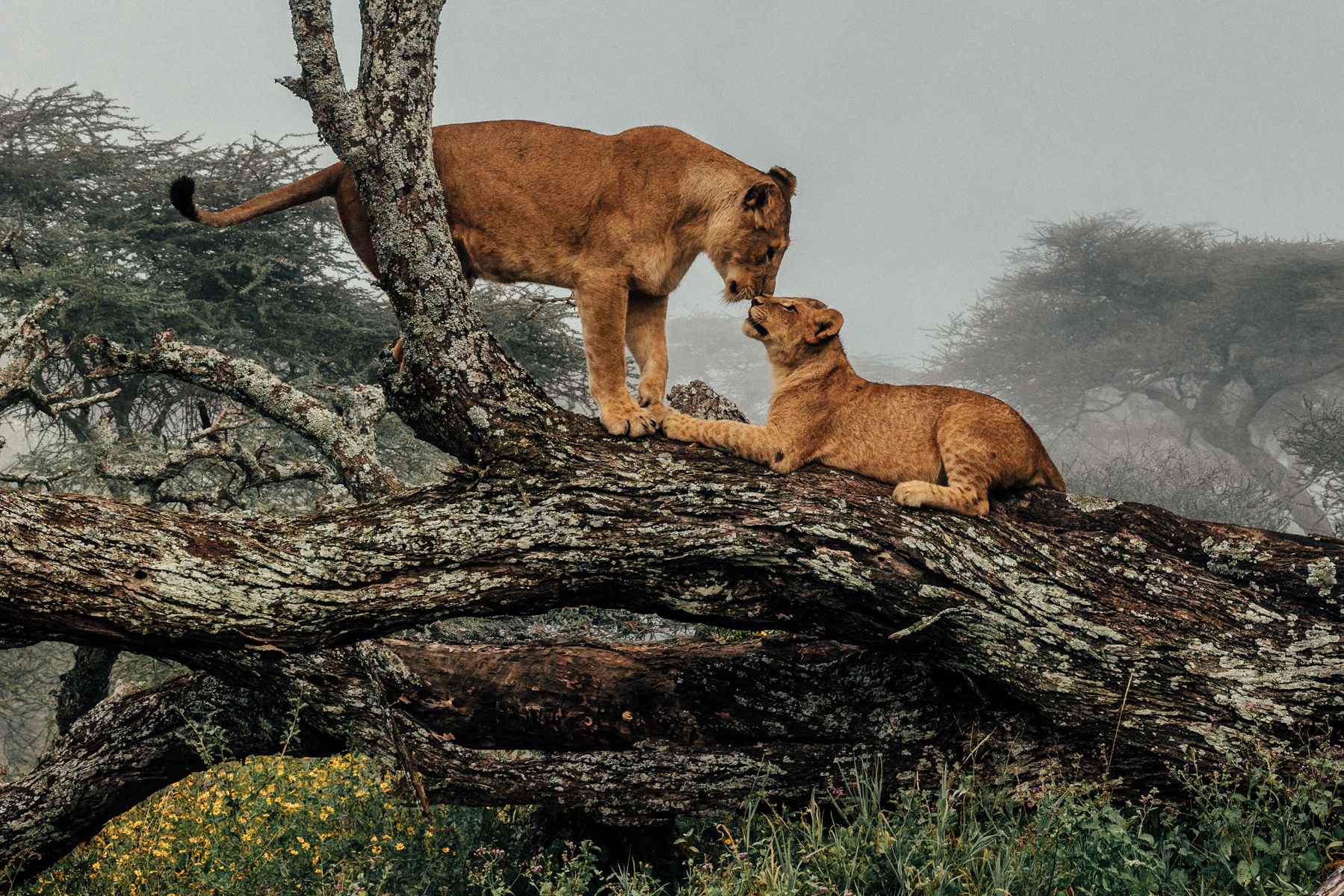
A tender moment between a Lioness and her cub. Encountering this lion family, on a misty morning among the gnarled trees of Tanzania's Ndutu region, was one of my favourite wildlife encounters of this year (image by Virginia Wilde)
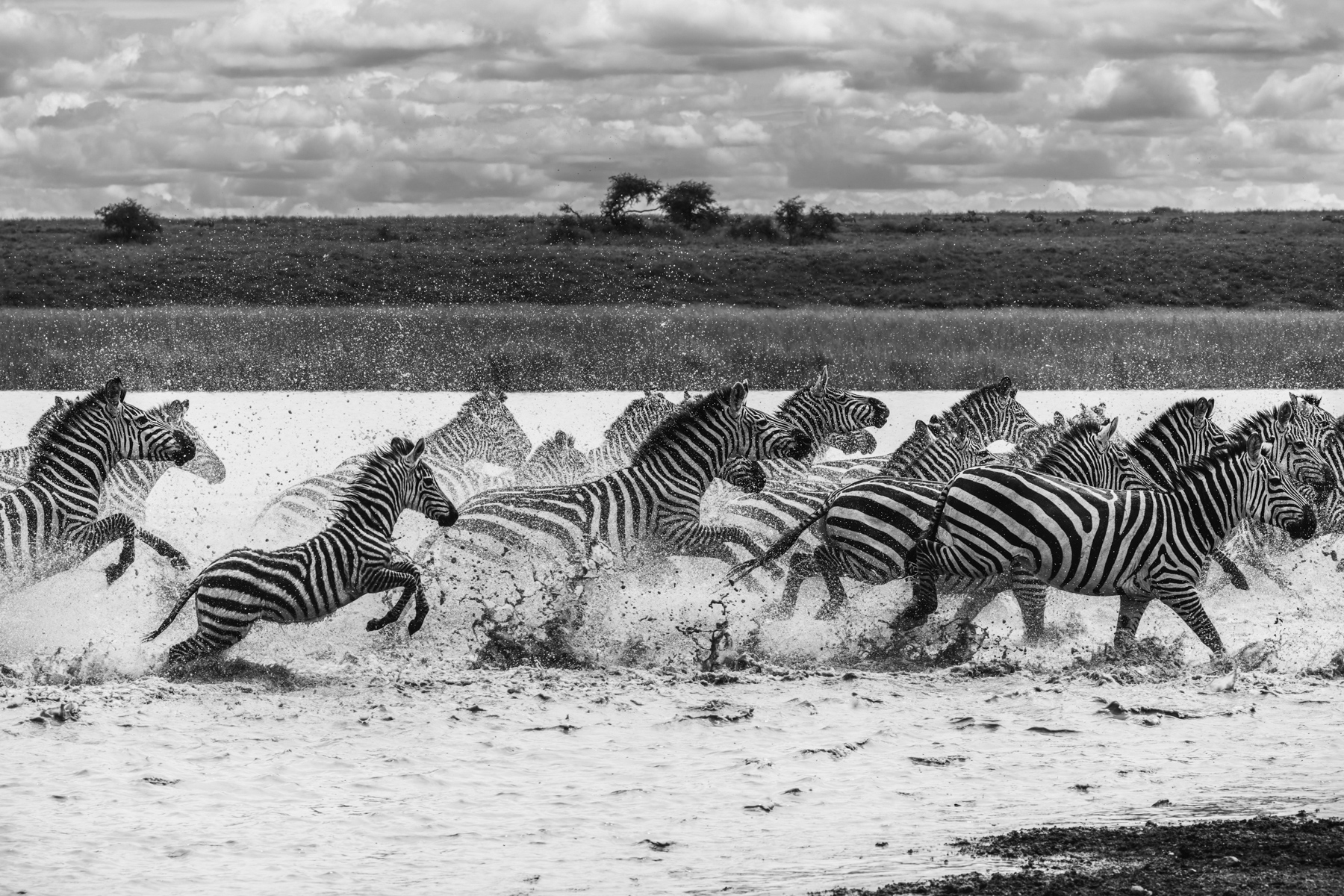
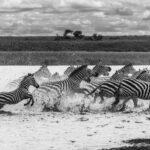
Spray flies as Plains Zebra thunder across the shallows in Ndutu, Tanzania. Their bold stripes may also help to confuse predators when the herd is on the move (image by Virginia Wilde)
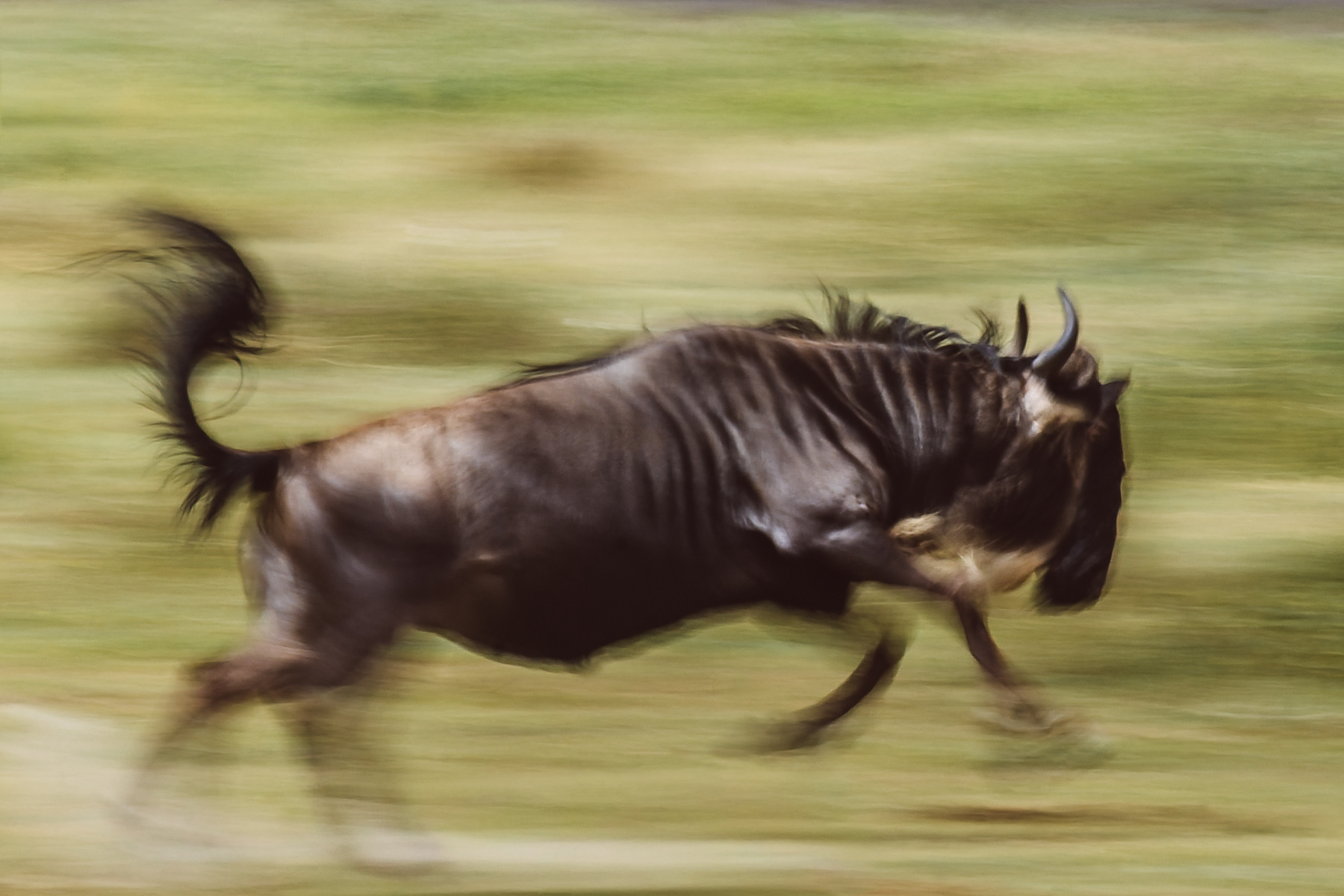
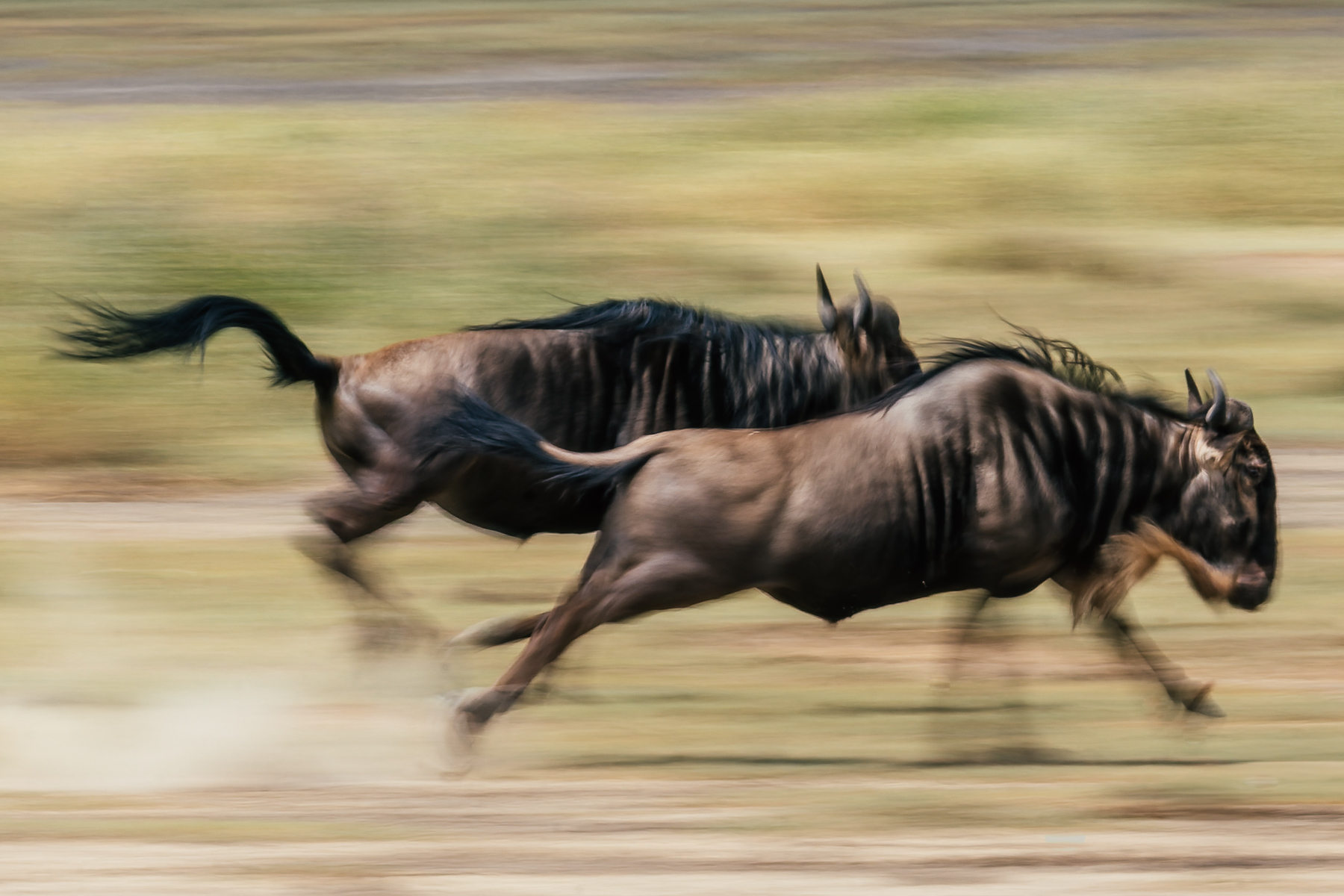
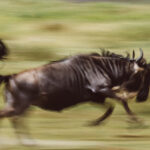
Built for endurance rather than elegance, Wildebeest cover hundreds of kilometres each year in search of fresh grazing. Occasionally, endurance gives way to exhilaration - and the plains become a blur of flying hooves and dust (image by Virginia Wilde)
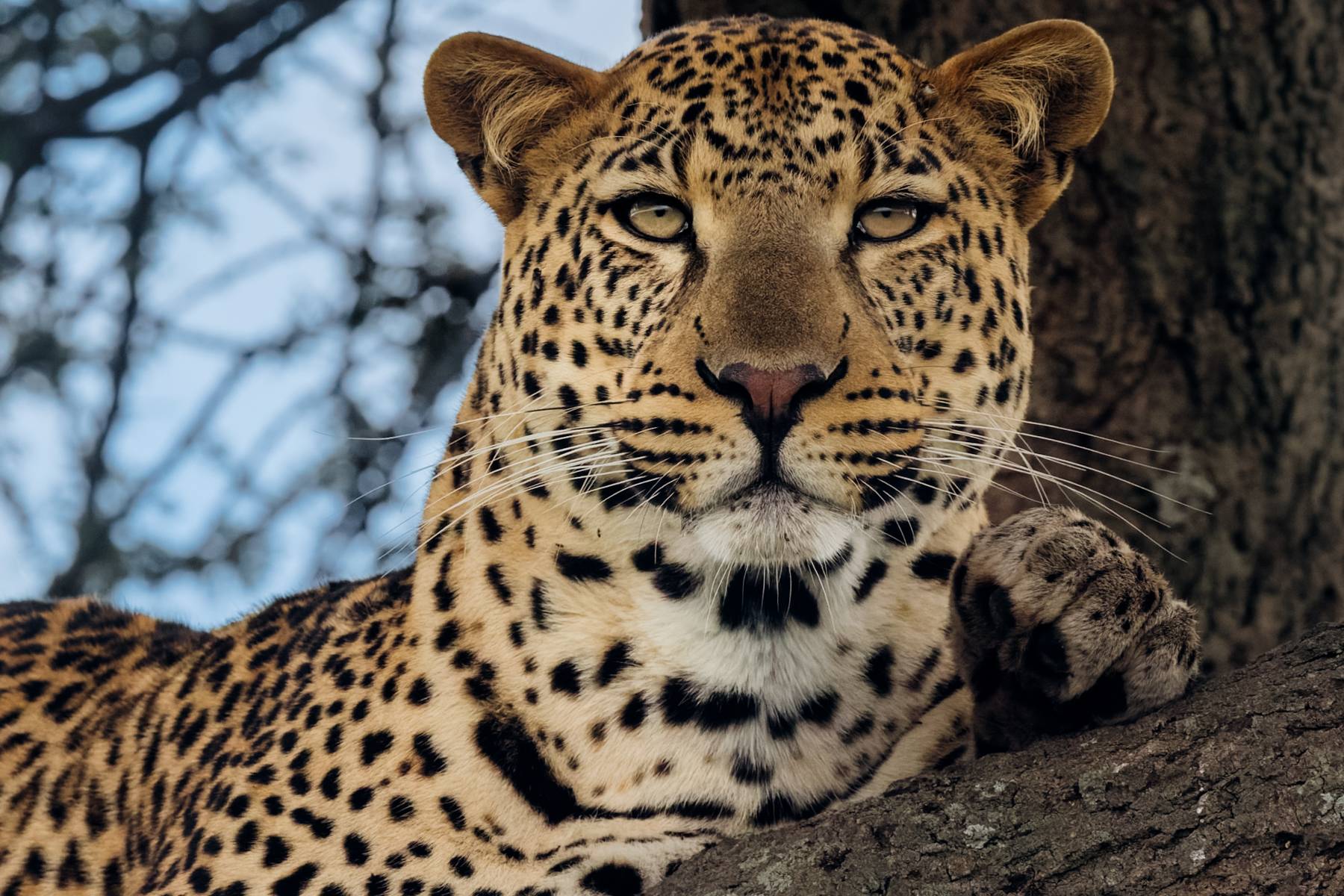
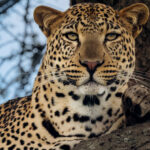
Leopards spend much of their lives unseen. So when one looks back, it is difficult to tear your eyes away. We found this female in an Acacia tree on our first afternoon in Ndutu, Tanzania (image by Virginia Wilde)
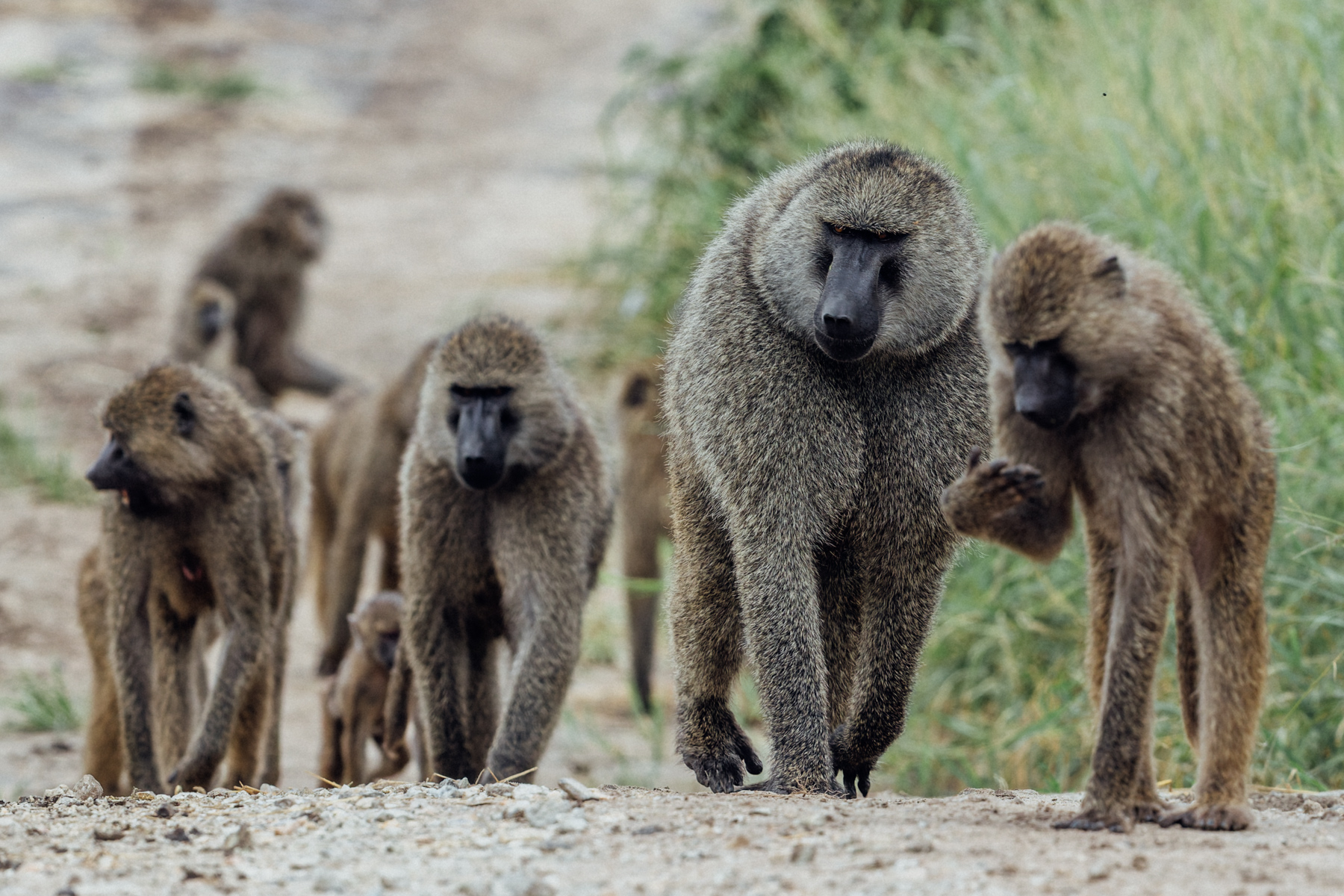
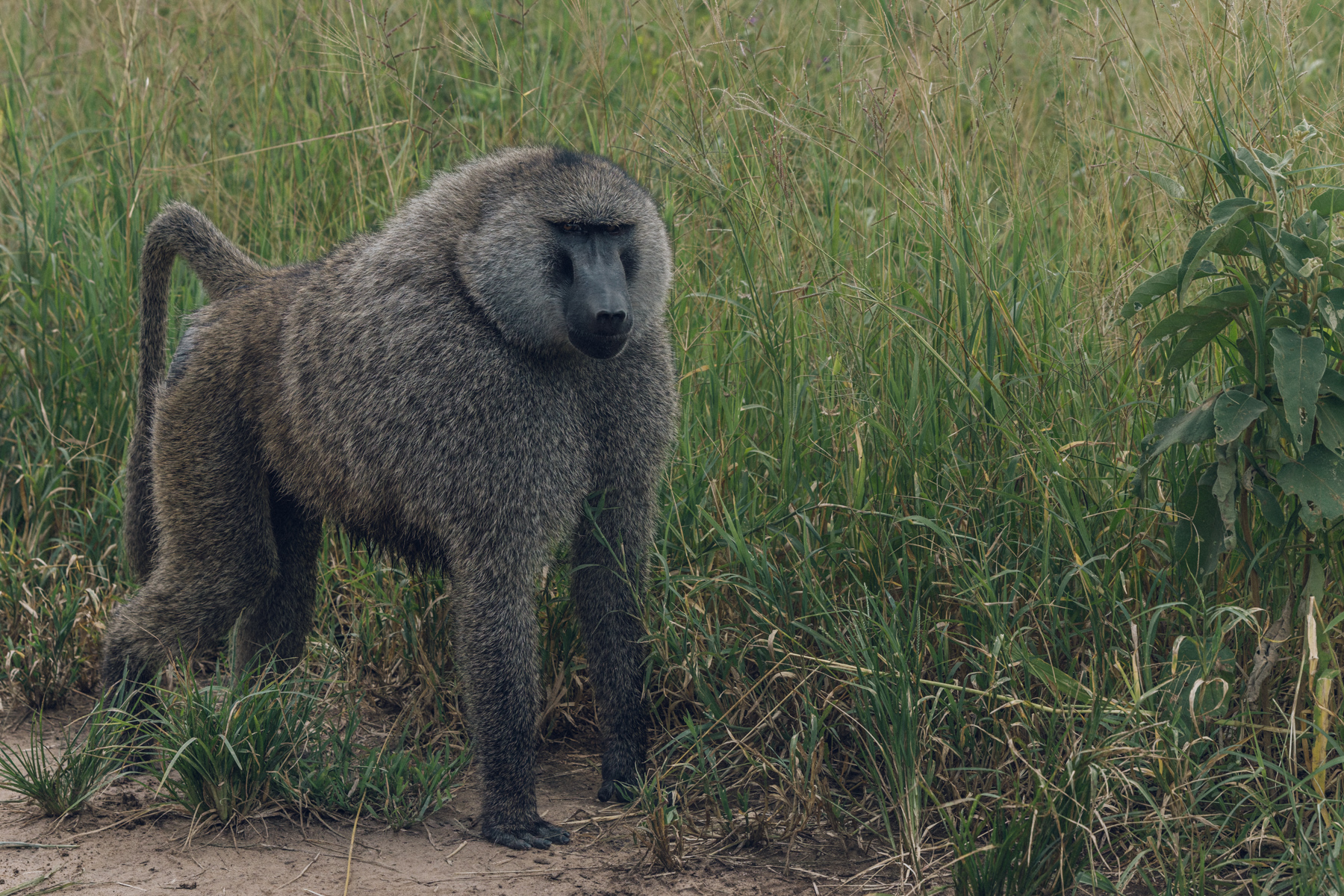
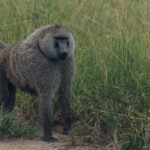
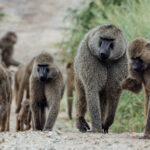
A troop of Olive Baboons on their morning commute in Tarangire National Park, Tanzania. The dominant male towers over many of his peers (image by Virginia Wilde)
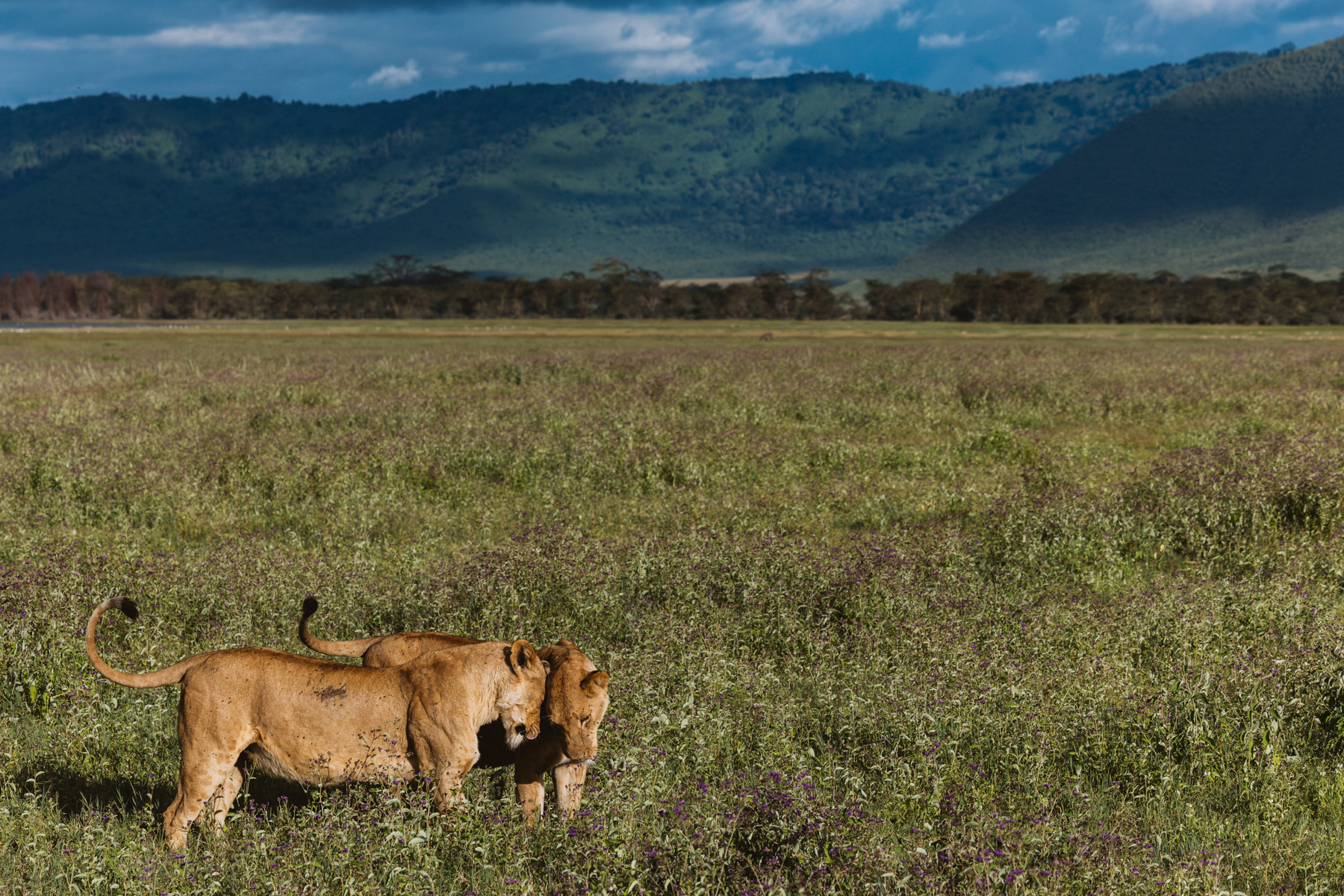
Lionesses hunt together, raise each other's cubs and defend the pride as a team. Affection isn't unusual - it's their co-operation and strong bonds that make these cats so successful (image by Virginia Wilde)
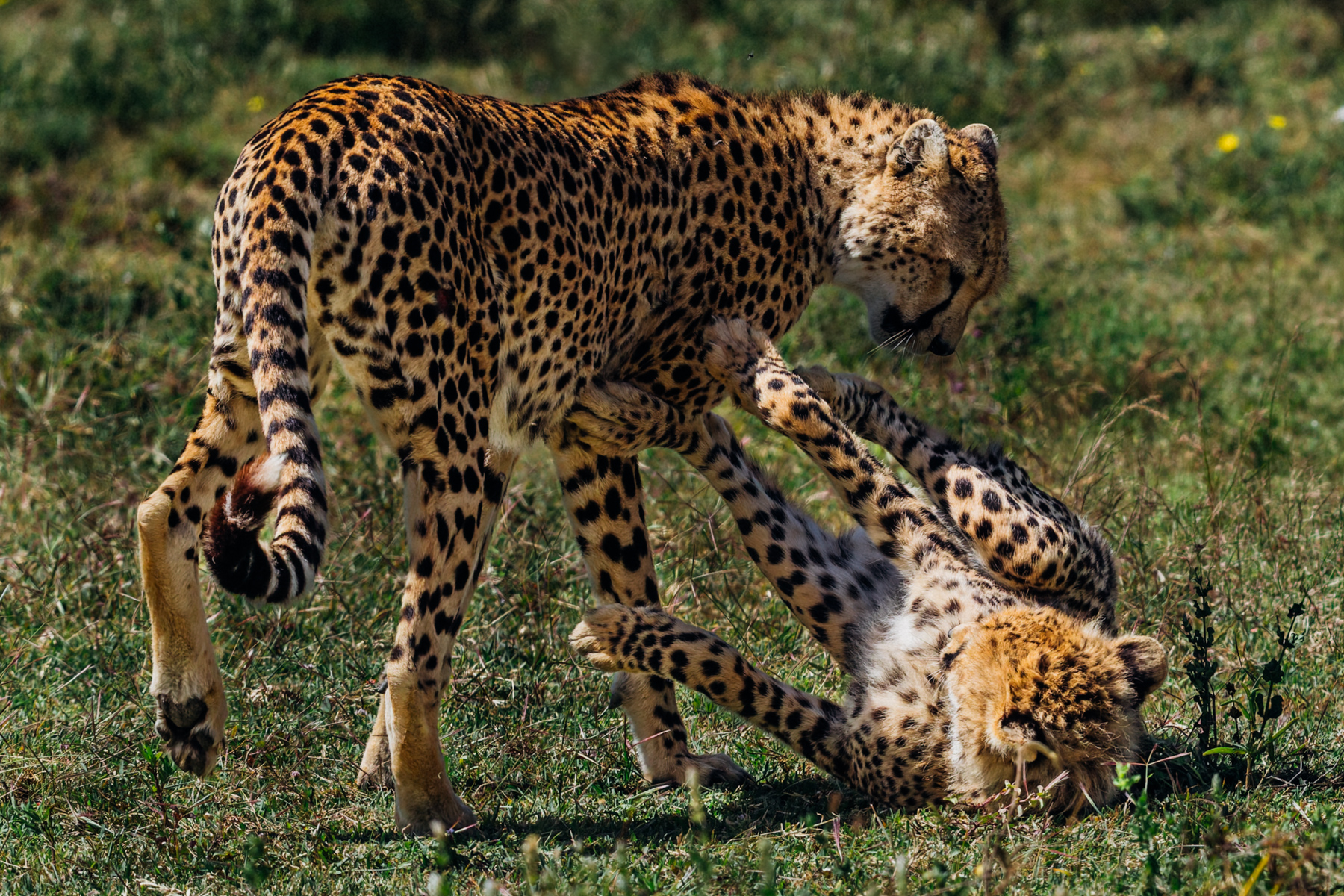
For a Cheetah cub, every passing leg is an invitation to play - and every patient mother knows it (image by Virginia Wilde)
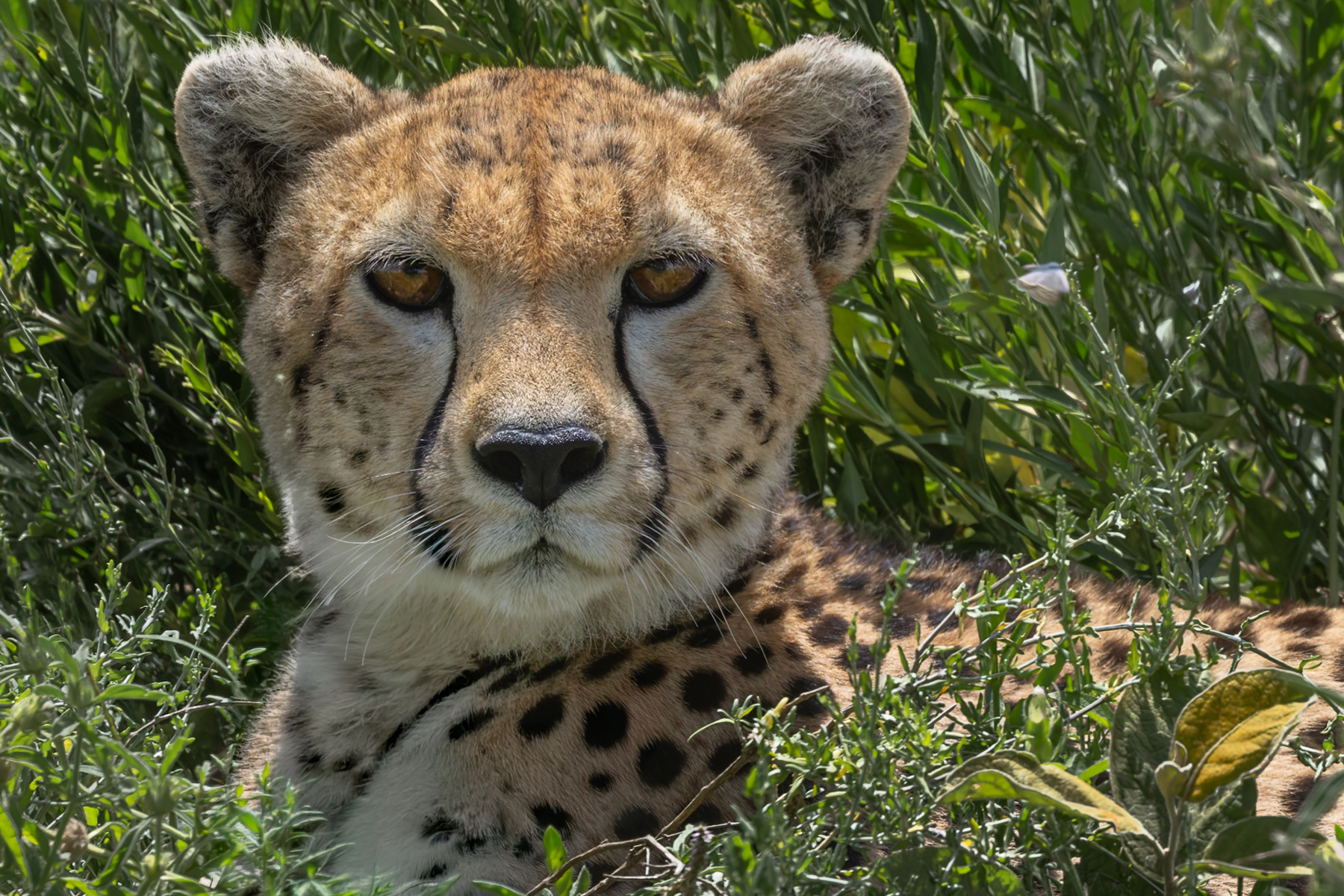
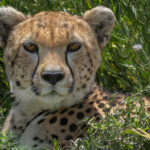
Portrait of a female Cheetah. These cats' famous black 'tear marks' help to reduce glare in bright sunlight, sharpening its focus as it scans the plains (image by Virginia Wilde)
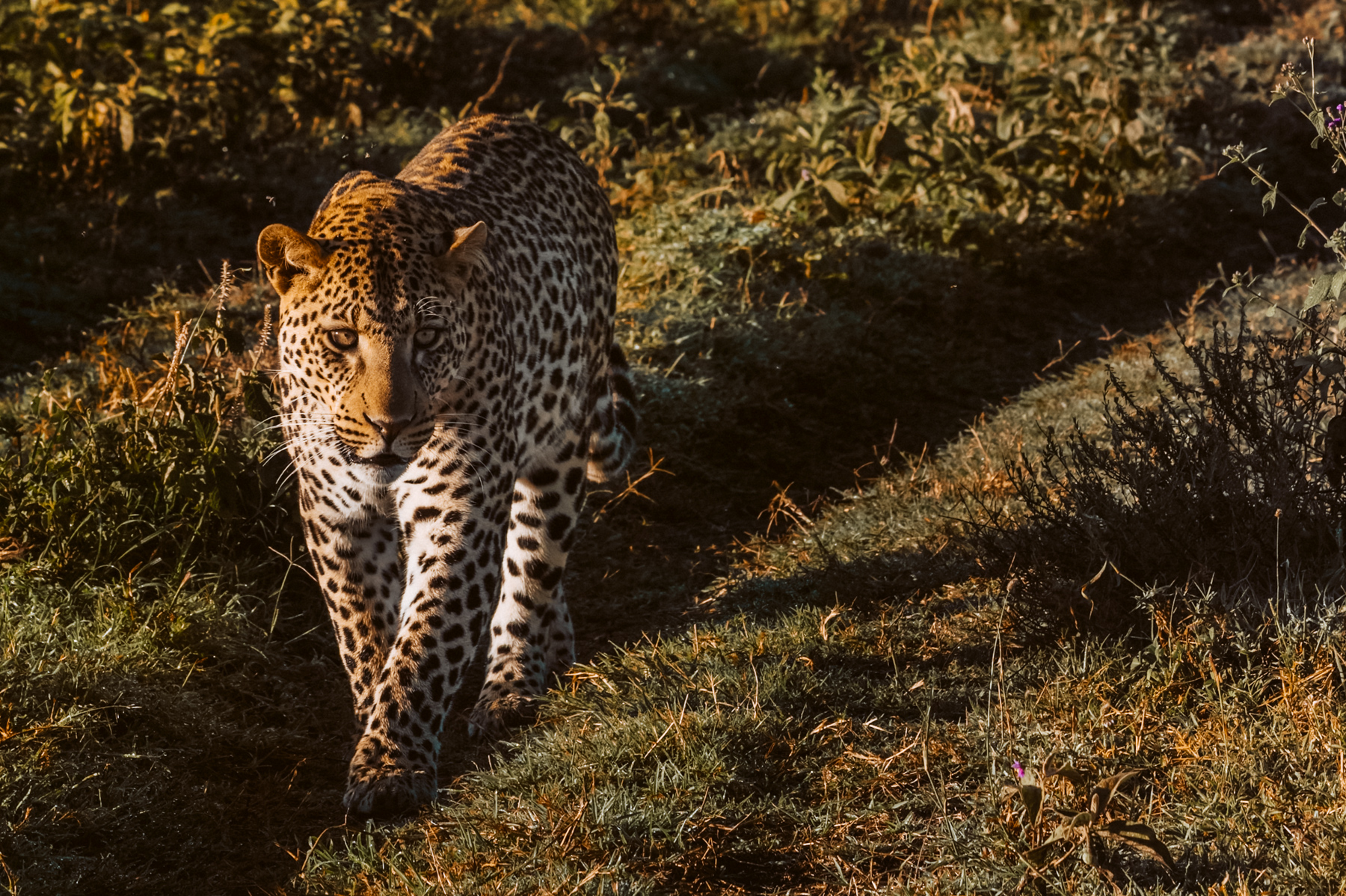
There are approximately 1,000 Leopards in the Serengeti National Park ecosystem, serving as a crucial stronghold since Leopard populations are declining across most of Africa (image by Virginia Wilde)
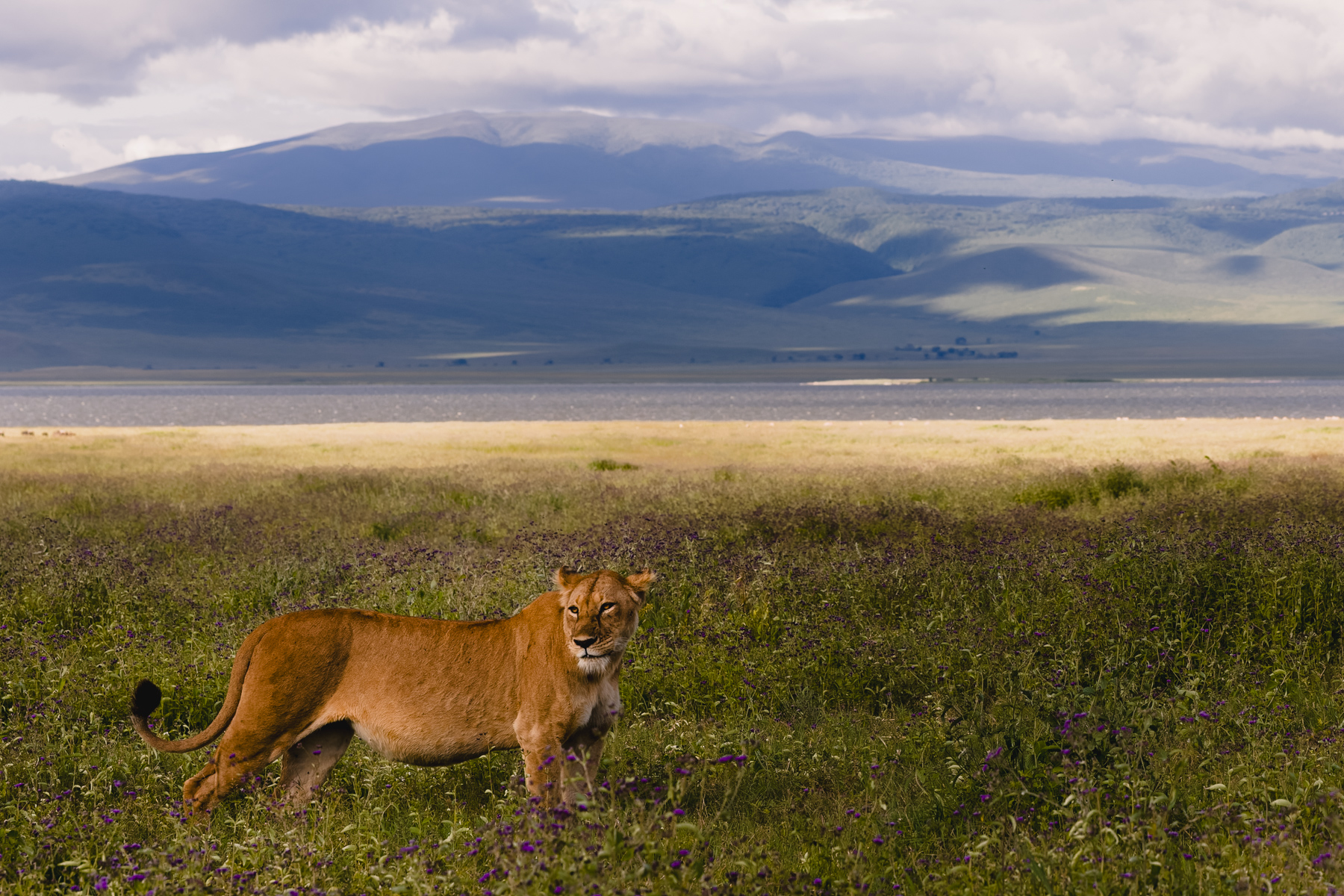
A Lioness crosses the flower-filled plains of Tanzania's Ngorongoro Crater, with the crater walls forming a natural amphitheatre around her. It's one of the few places in Africa where predators and prey live year-round within the world's largest intact volcanic caldera (image by Virginia Wilde)
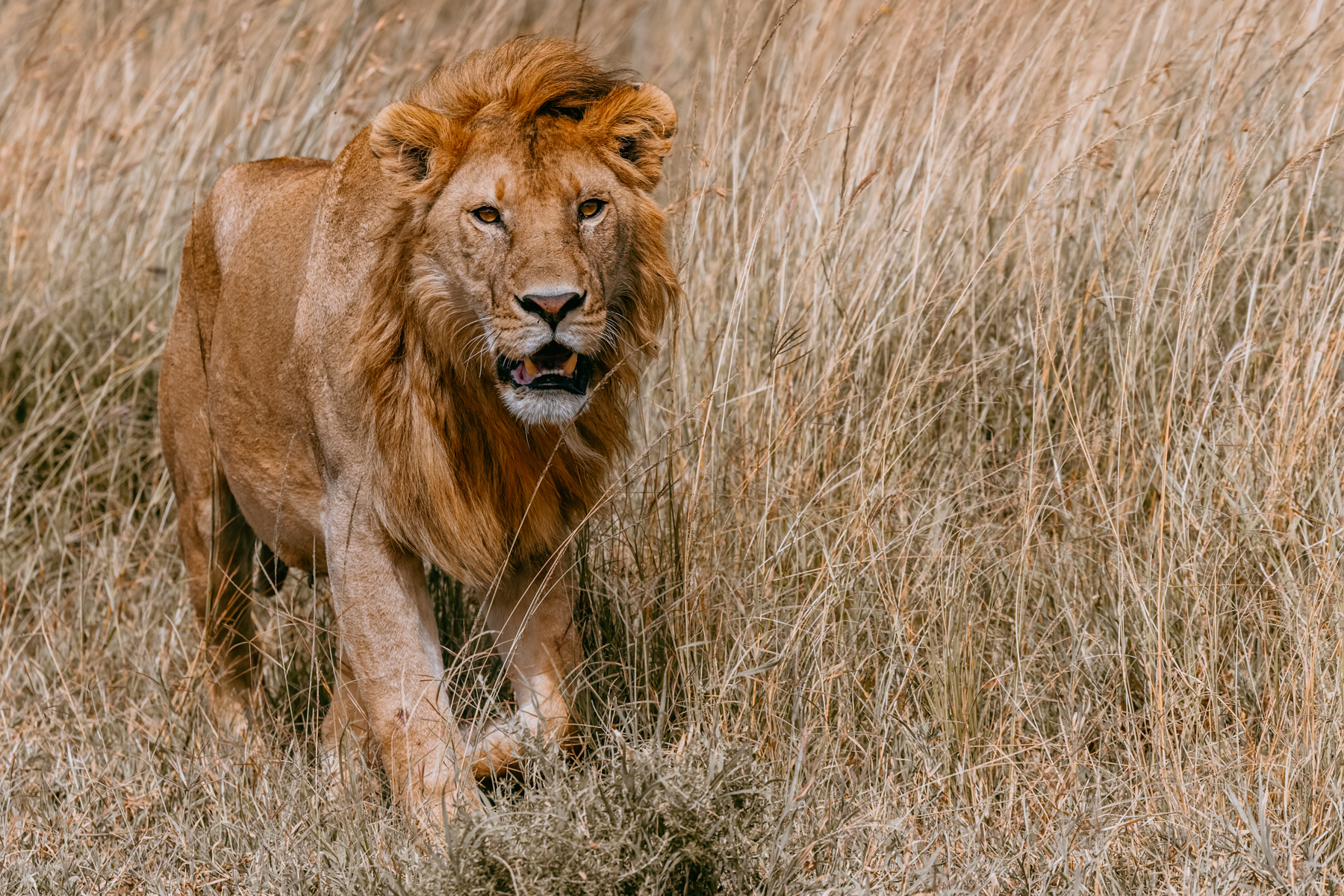
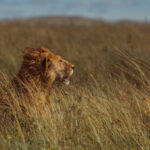
A young male Lion emerges from the long grass of the Serengeti. A Lion's mane continues to develop for four or five years, gradually darkening and thickening as the animal reaches full maturity (image by Virginia Wilde)
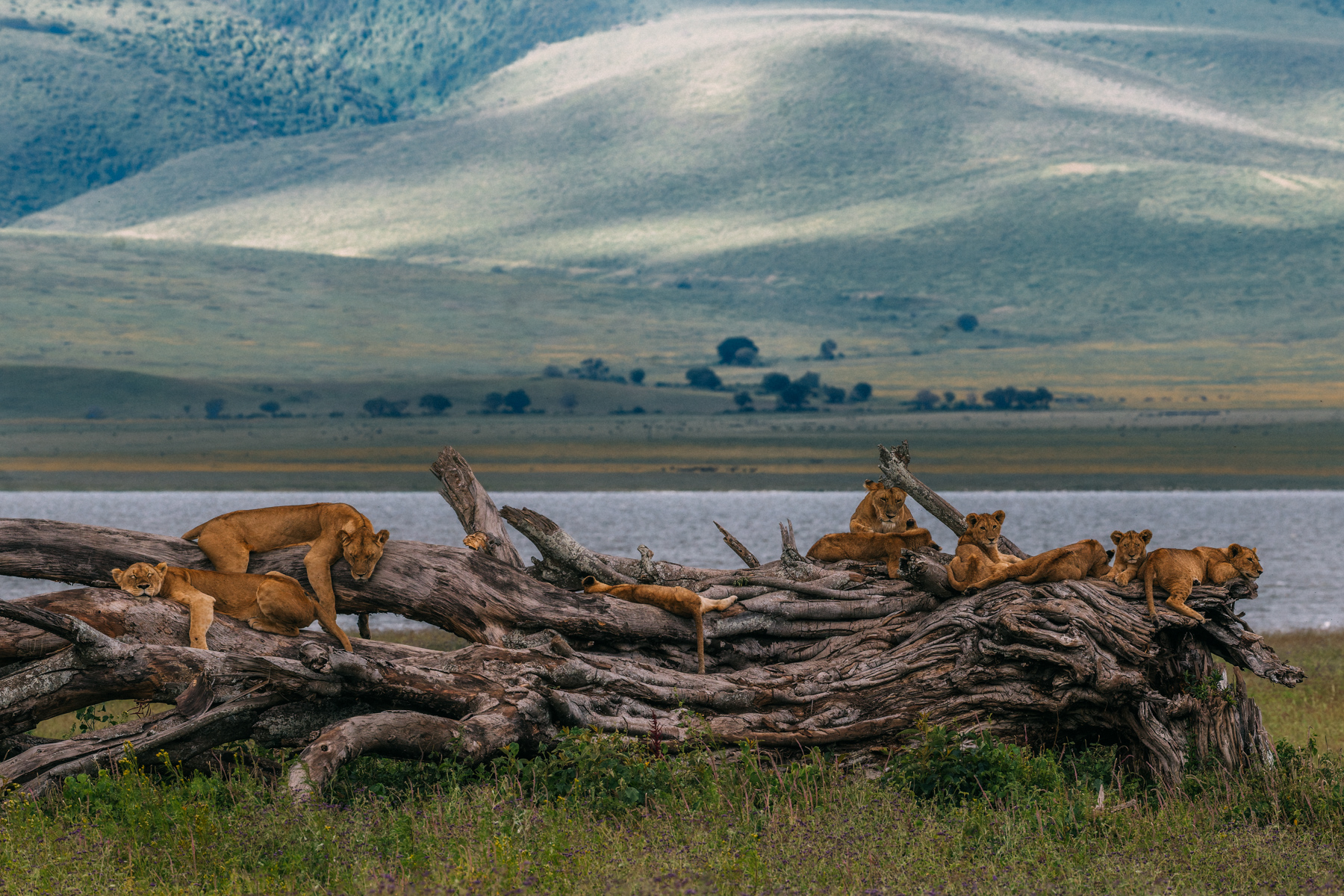
The Lions of the Ngorongoro Crater live in one of Africa's most enclosed ecosystems. Surrounded by the Crater walls, every waterhole, track and comfortable resting place - like this fallen tree - becomes part of a world of familiarity (image by Virginia Wilde)
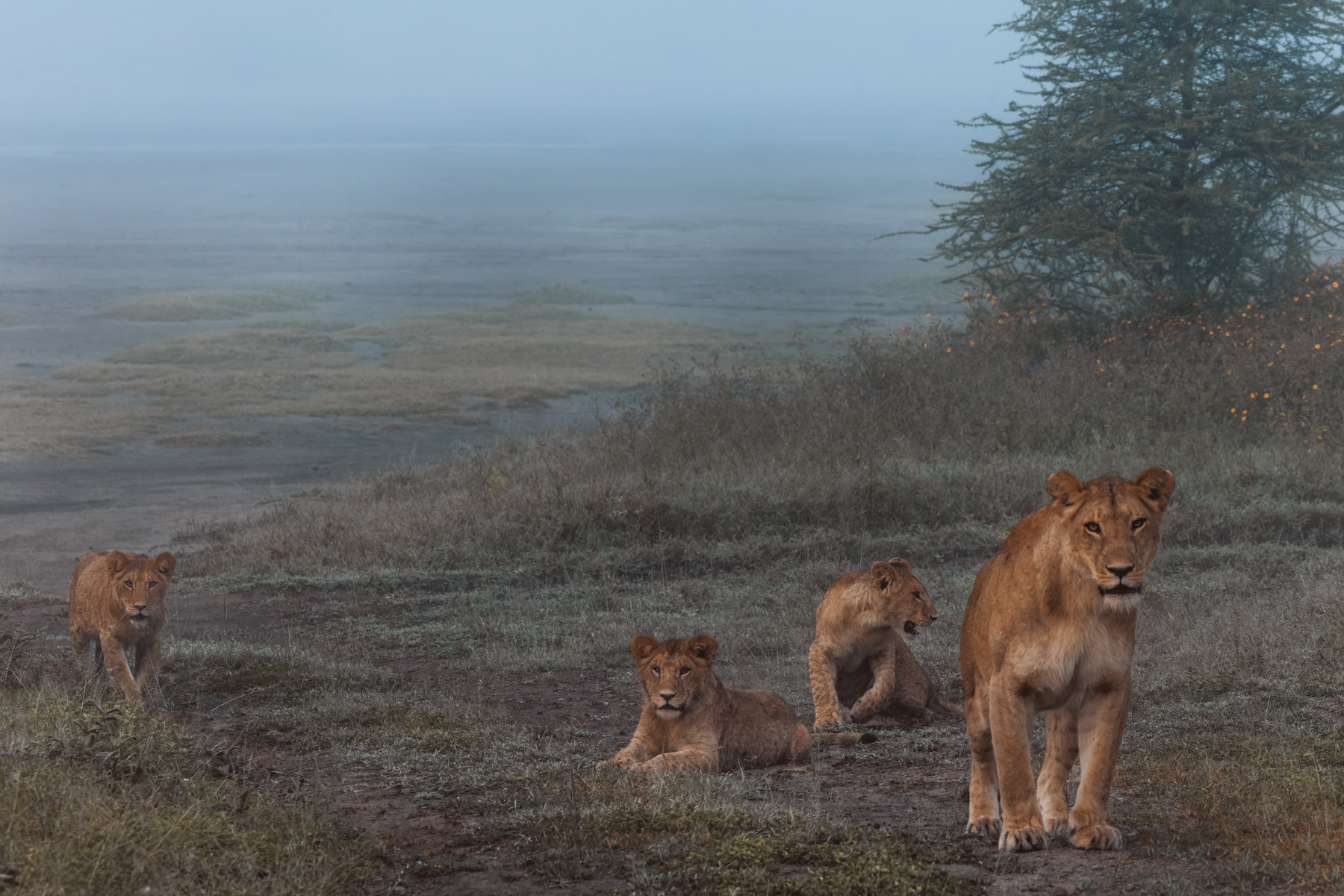
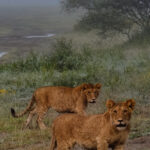
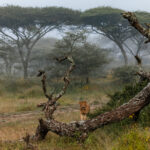
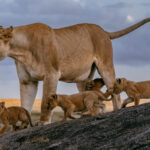
On a cool, misty morning in Tanzania's Ndutu, we found this Lioness with her three healthy cubs, on their first patrol of the day (image by Virginia Wilde)
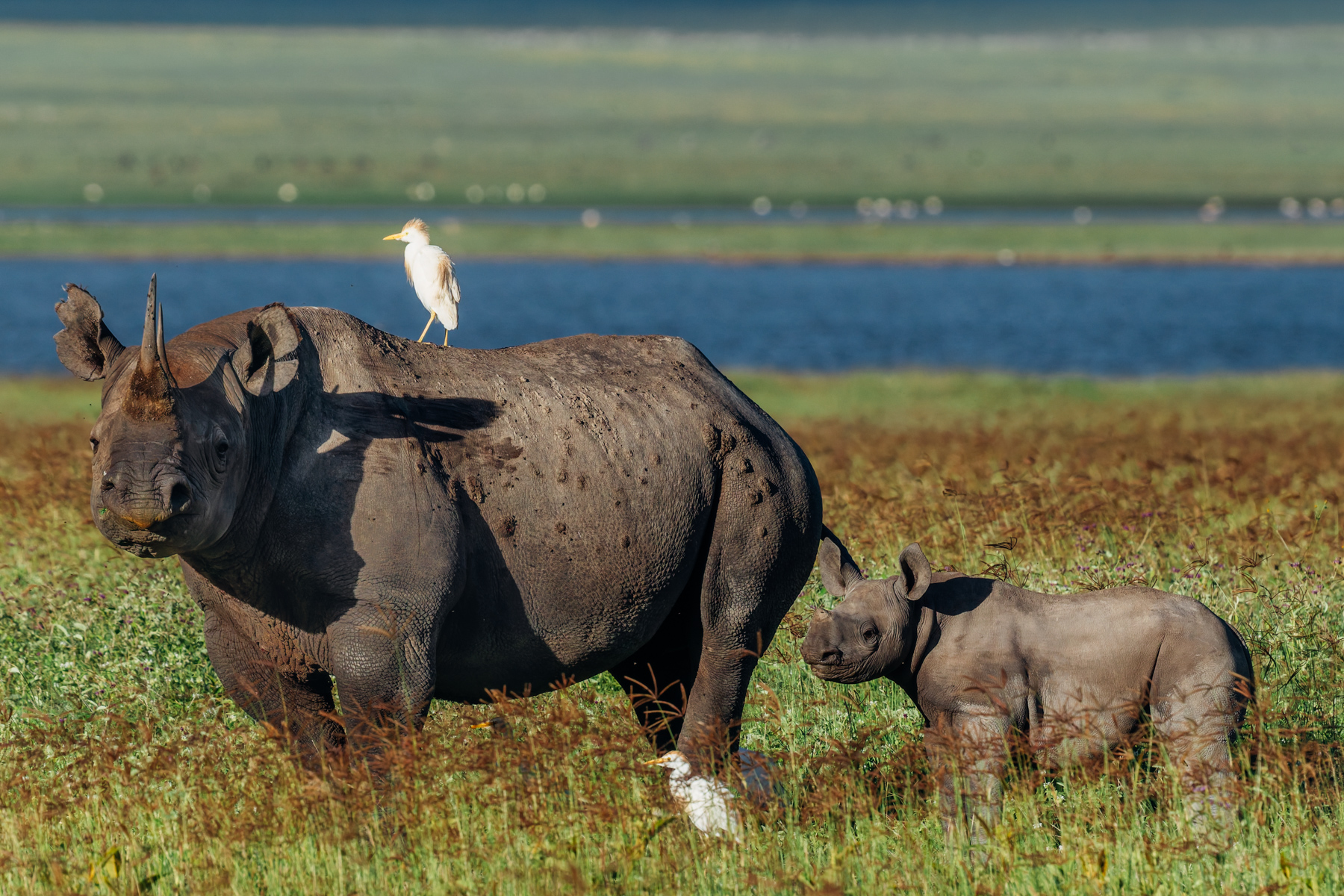
Barely more than a thousand Eastern Black Rhinos remain in the wild, making every sighting (and every calf) a conservation success story. Even the egrets seem keen to escort the next generation, here in Tanzania's Ngorongoro Crater (image by Virginia Wilde)
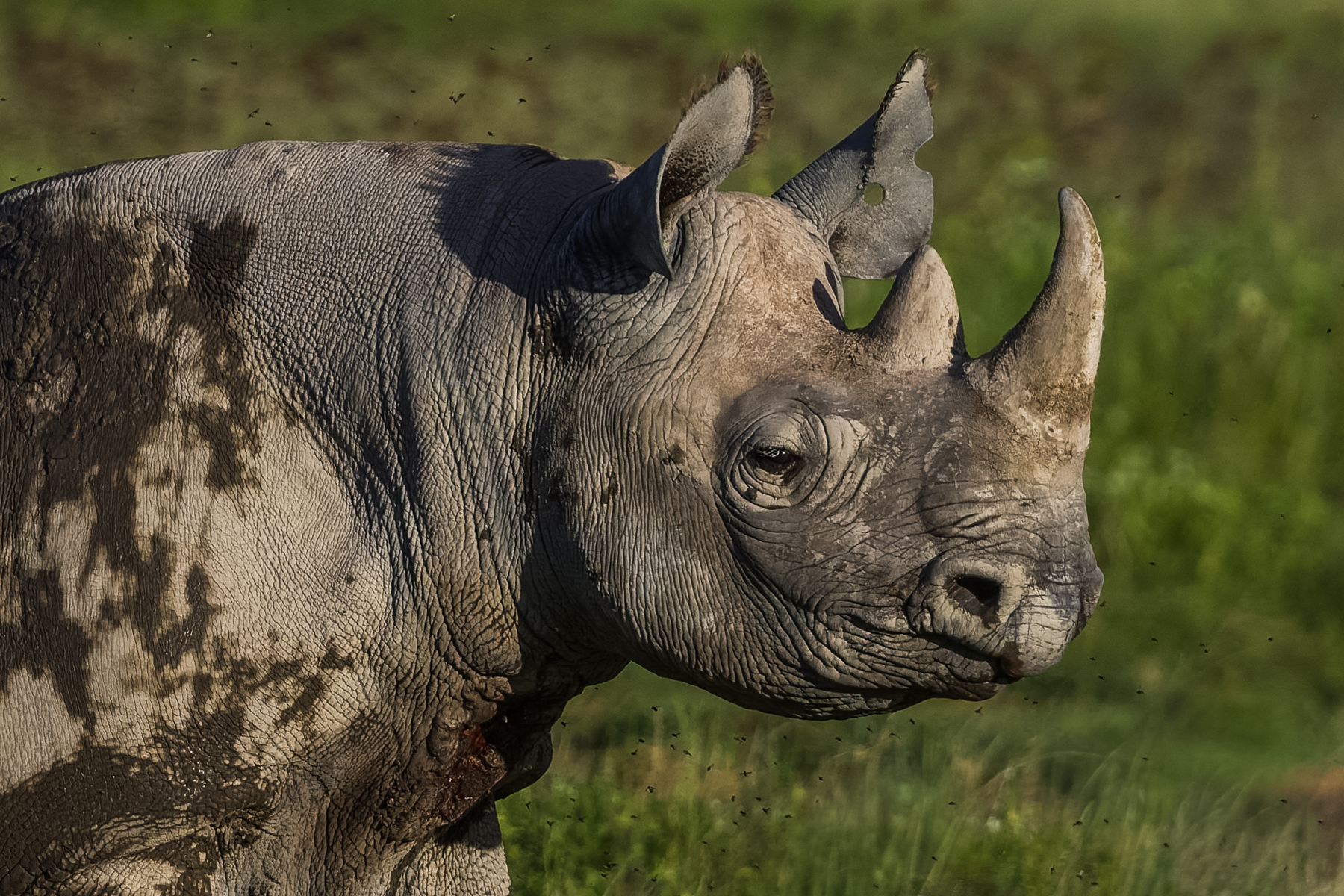
Portrait of an Eastern Black Rhinoceros - one of Africa's most endangered large mammals. Once numbering around 70,000 across Africa, Eastern Black Rhino numbers fell to fewer than 400 by the mid 19980s, before intensive protection helped populations to slowly climb again (image by Virginia Wilde)
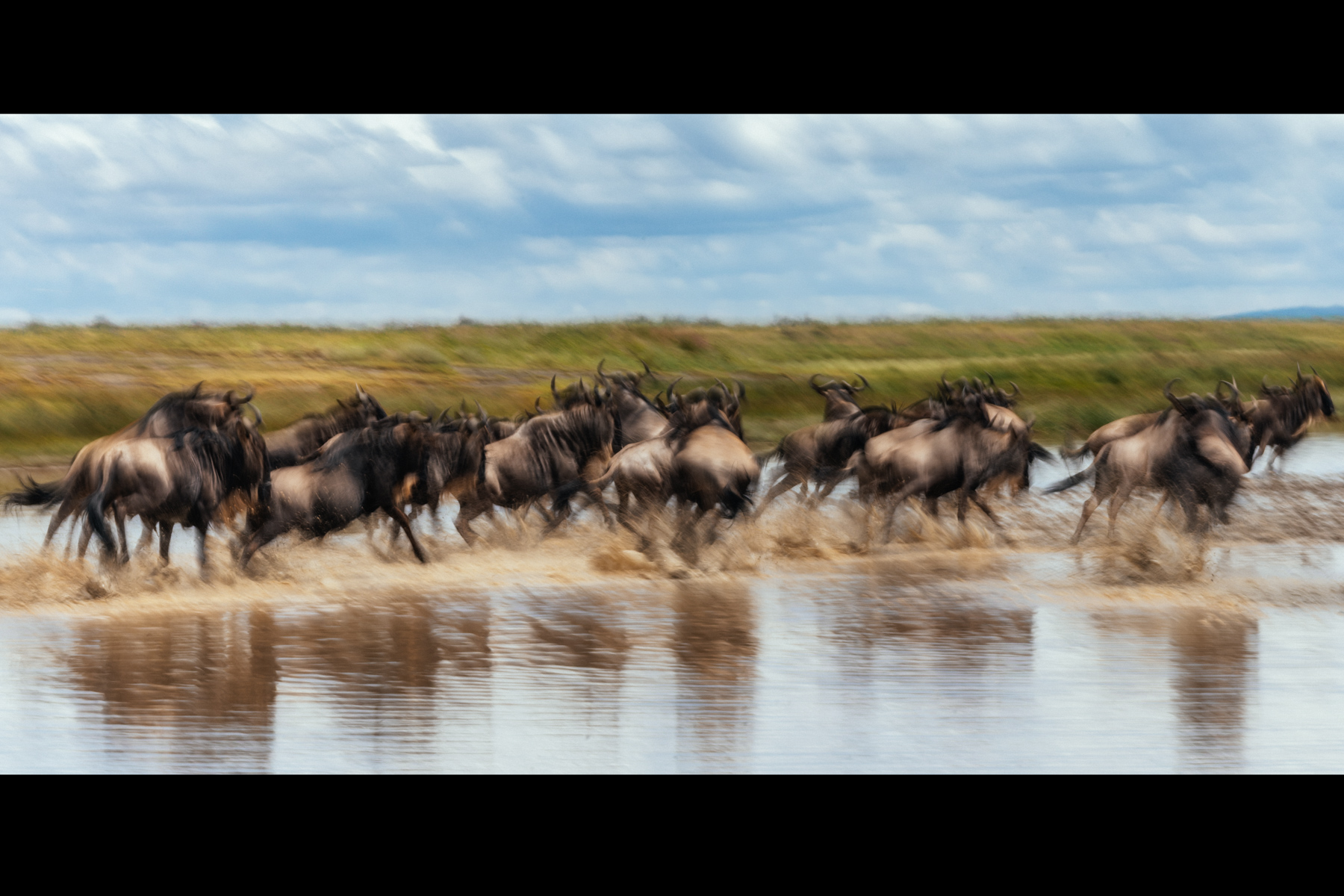
For Wildebeest, momentum is contagious. A few break into a run, and within moments the whole herd seems to agree that this is now an excellent idea (image by Virginia Wilde)
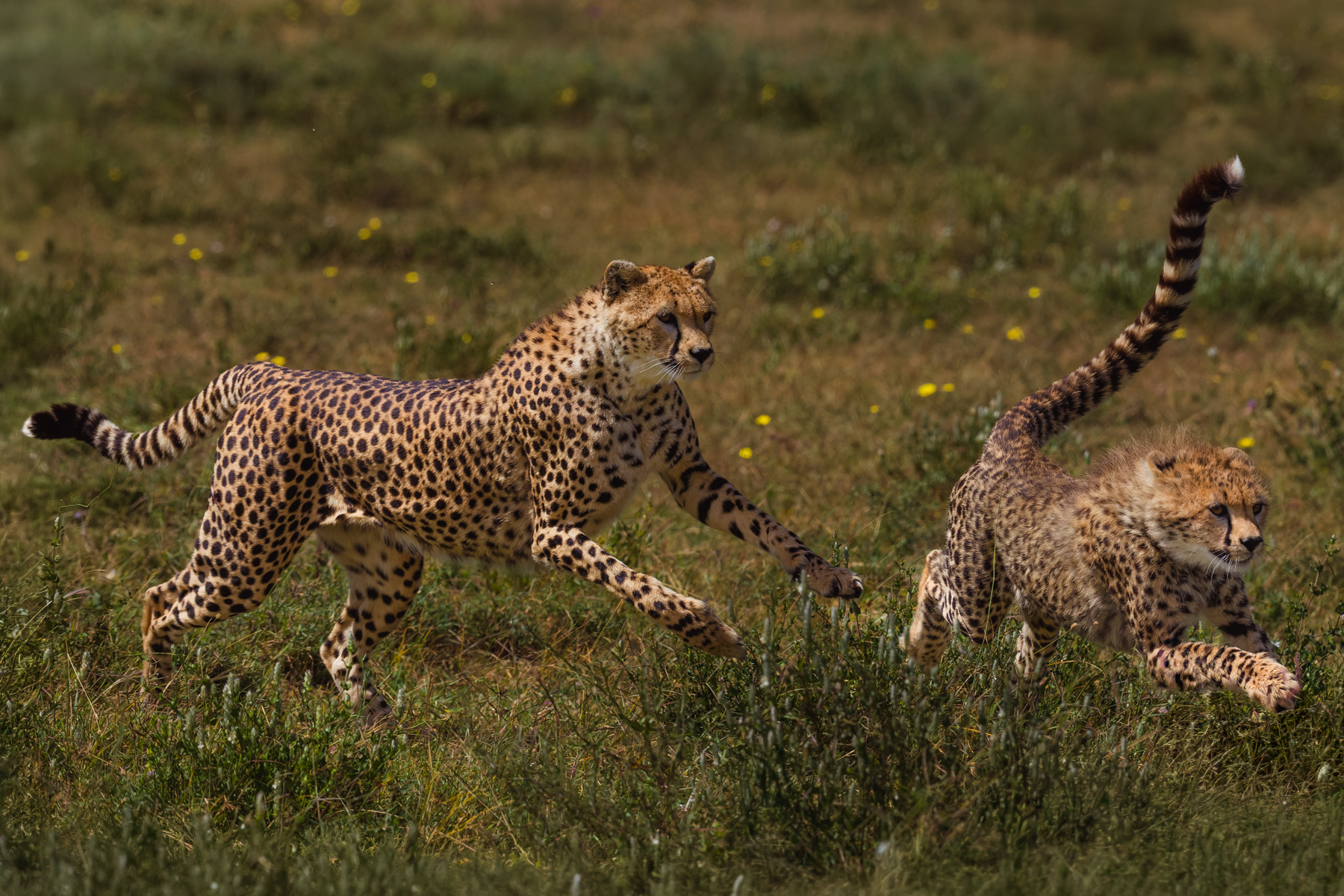
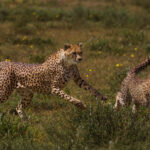
Run Cheetah, run! A mother Cheetah chases her female cub on the short grasses of Tanzania's Ndutu plains - teaching her vital hunting skills (image by Virginia Wilde
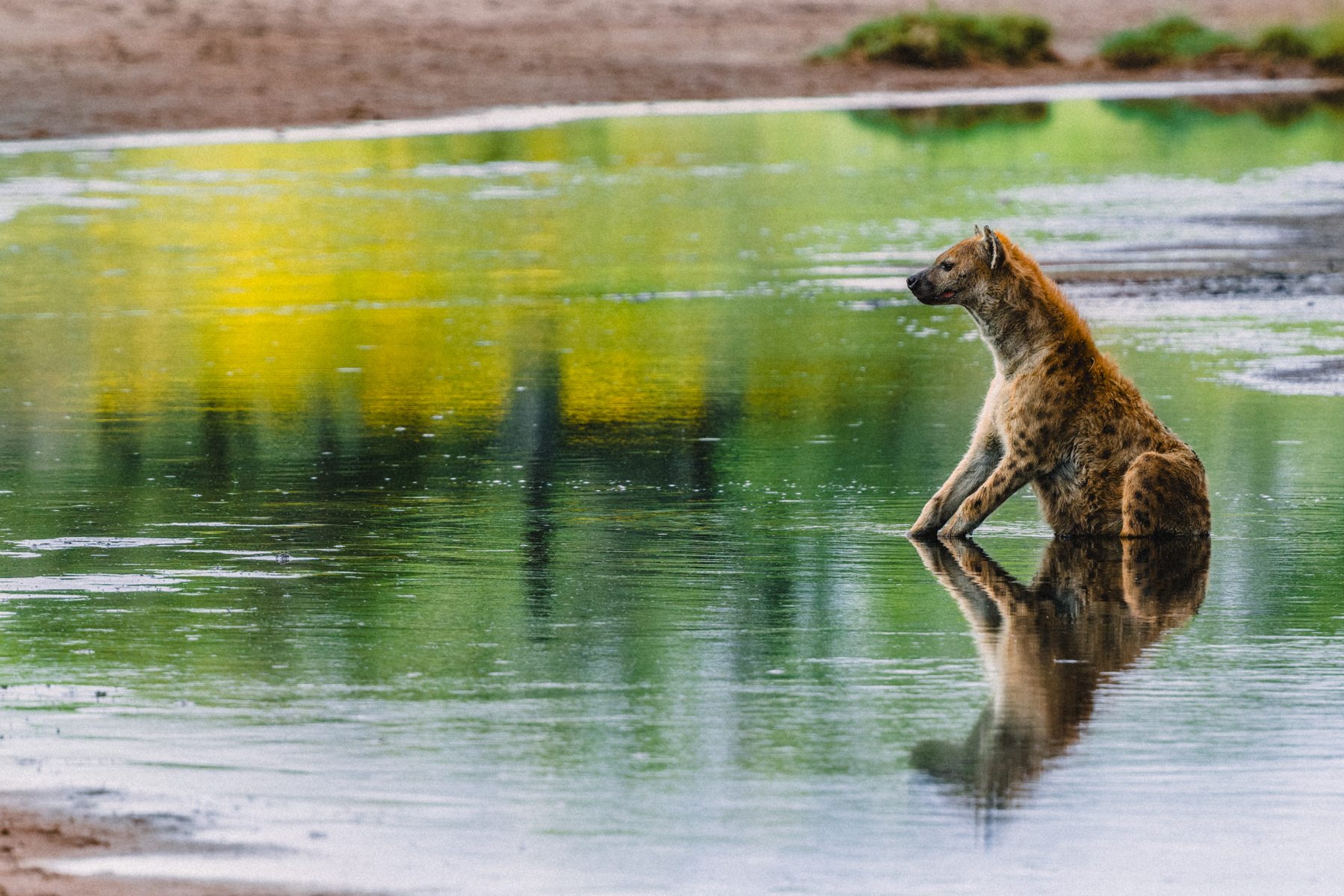
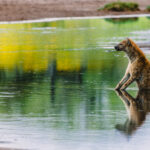
Not every hyena is on the hunt. Despite being built for endurance, even they know when it's time to stop and cool their paws. This shallow river is a Spotted Hyena's equivalent of a paddling pool (image by Virginia Wilde)
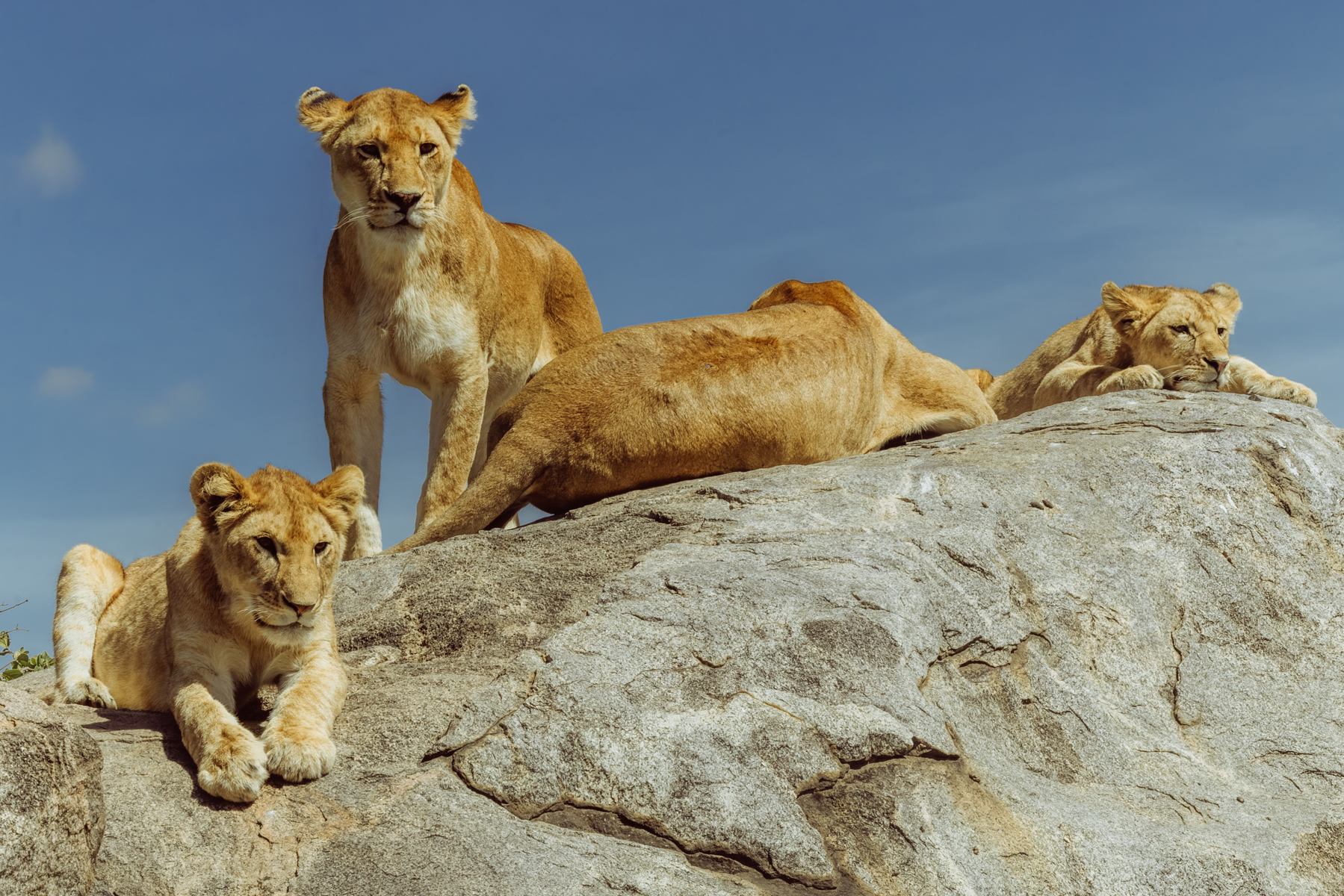
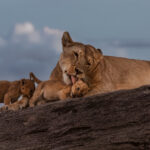
Every family gathering has one member who refuses to sit down for the photograph. One Lioness keeps watch while the rest of the pride relaxes on a sun-warmed granite kopje in the Serengeti (image by Virginia Wilde)
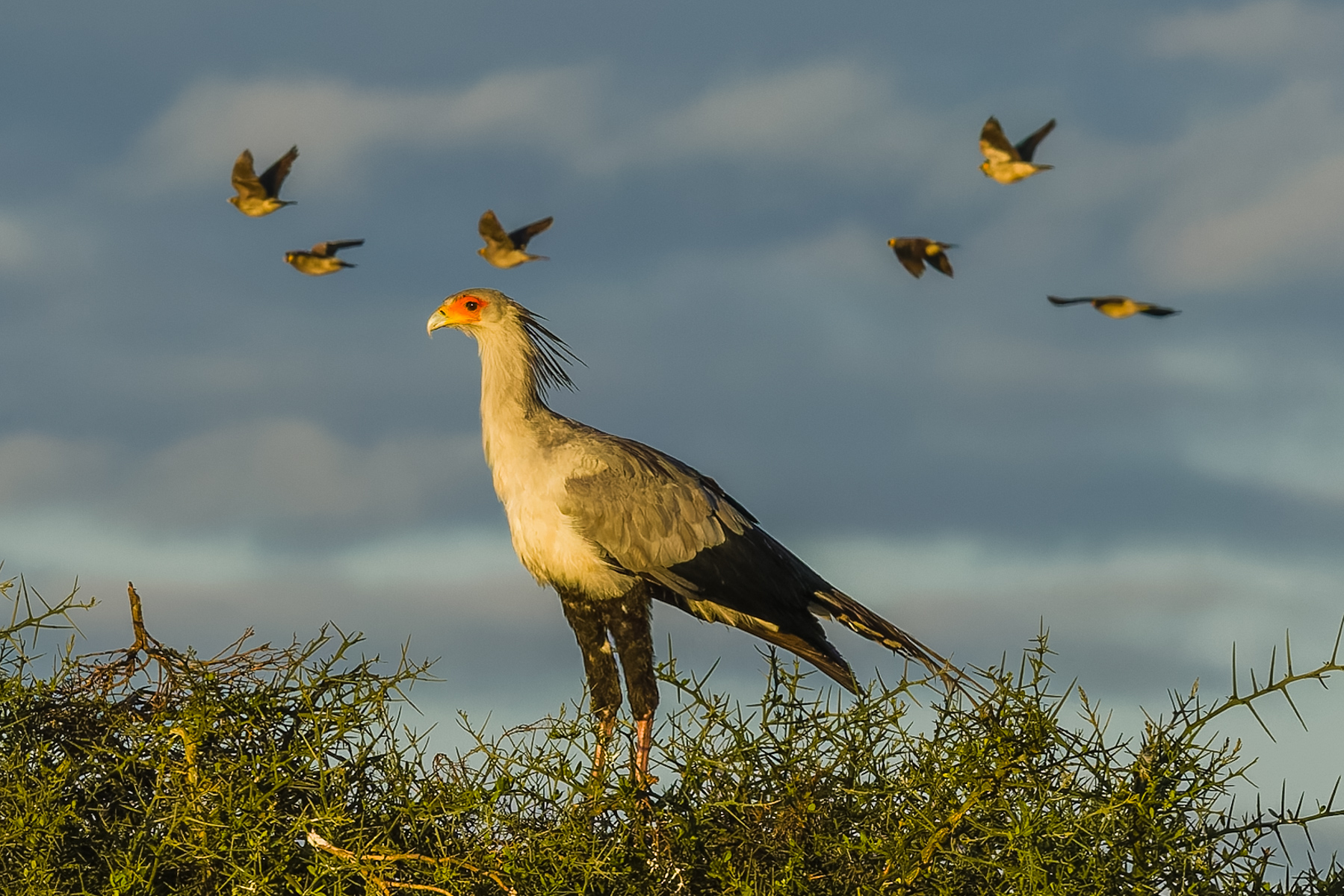
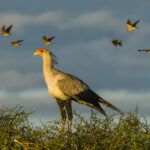
Some lovely light falls upon a Secretary Bird - renowned as one of Africa's weirdest birds. It struts around the savannah with the head of an eagle and the legs of a stork. In reality, it is a bird of prey (with a snake-killing prowess) and in a family all to itself (image by Virginia Wilde)
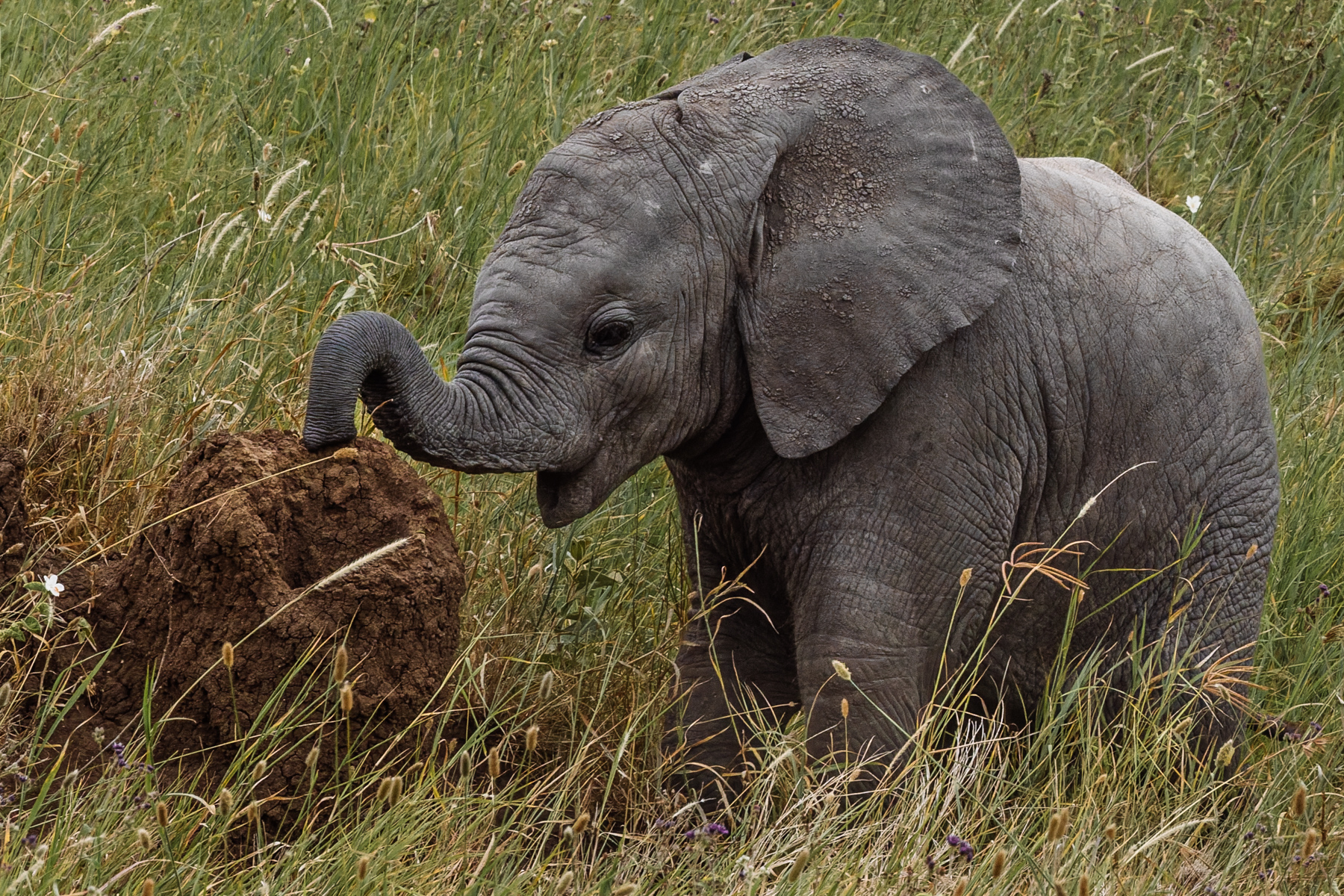
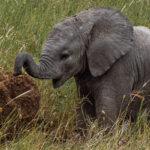
Every toddler has questionable hobbies. This one's happened to involve Elephant dung. Their trunks are as much sensory organs as they are tools - able to detect scents from remarkable distances (image by Virginia Wilde)
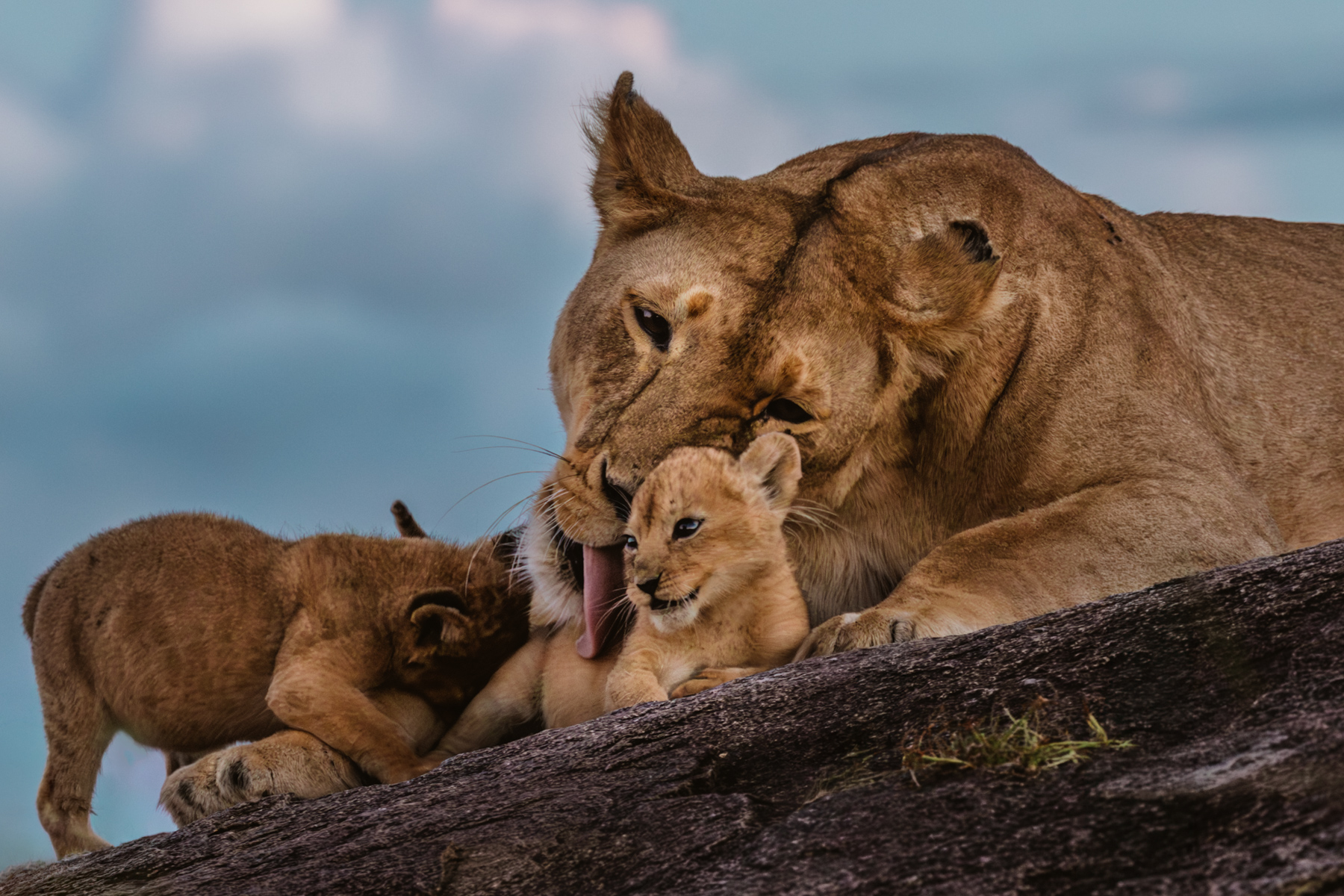
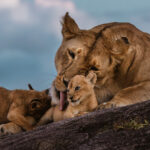
The granite kopjes of the central Serengeti have watched over Lions for millennia. There, cool crevices and elevated ledges provide Lionesses with sheltered places to raise young cubs. On Utafiti Rock, this cub's fiercest encounter was with its mother's rasping tongue (image by Virginia Wilde)
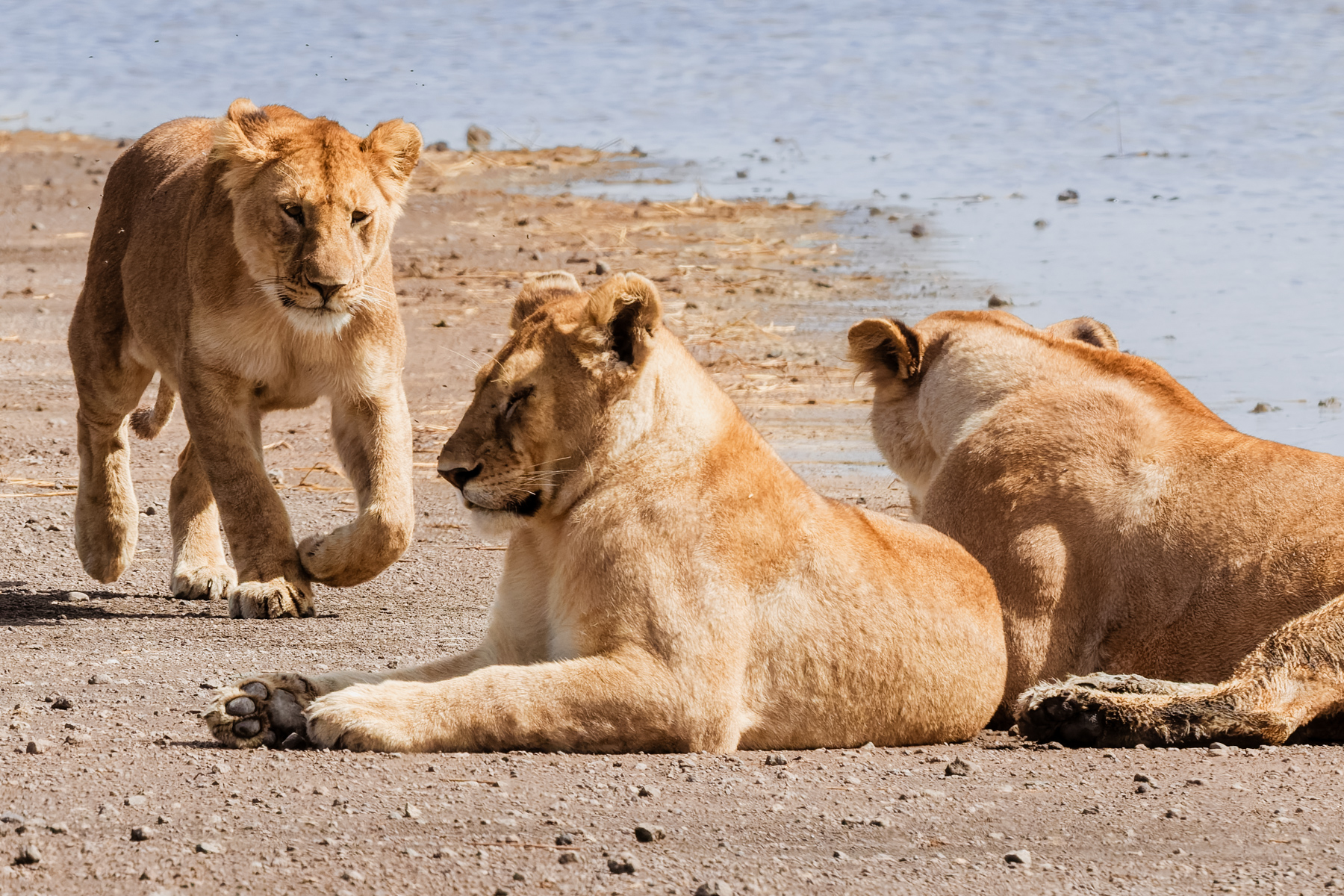
Lionesses are the permanent members of a pride, while males usually come and go. Daughters often remain with their mothers for life, creating prides that can span several generations (image by Virginia Wilde)
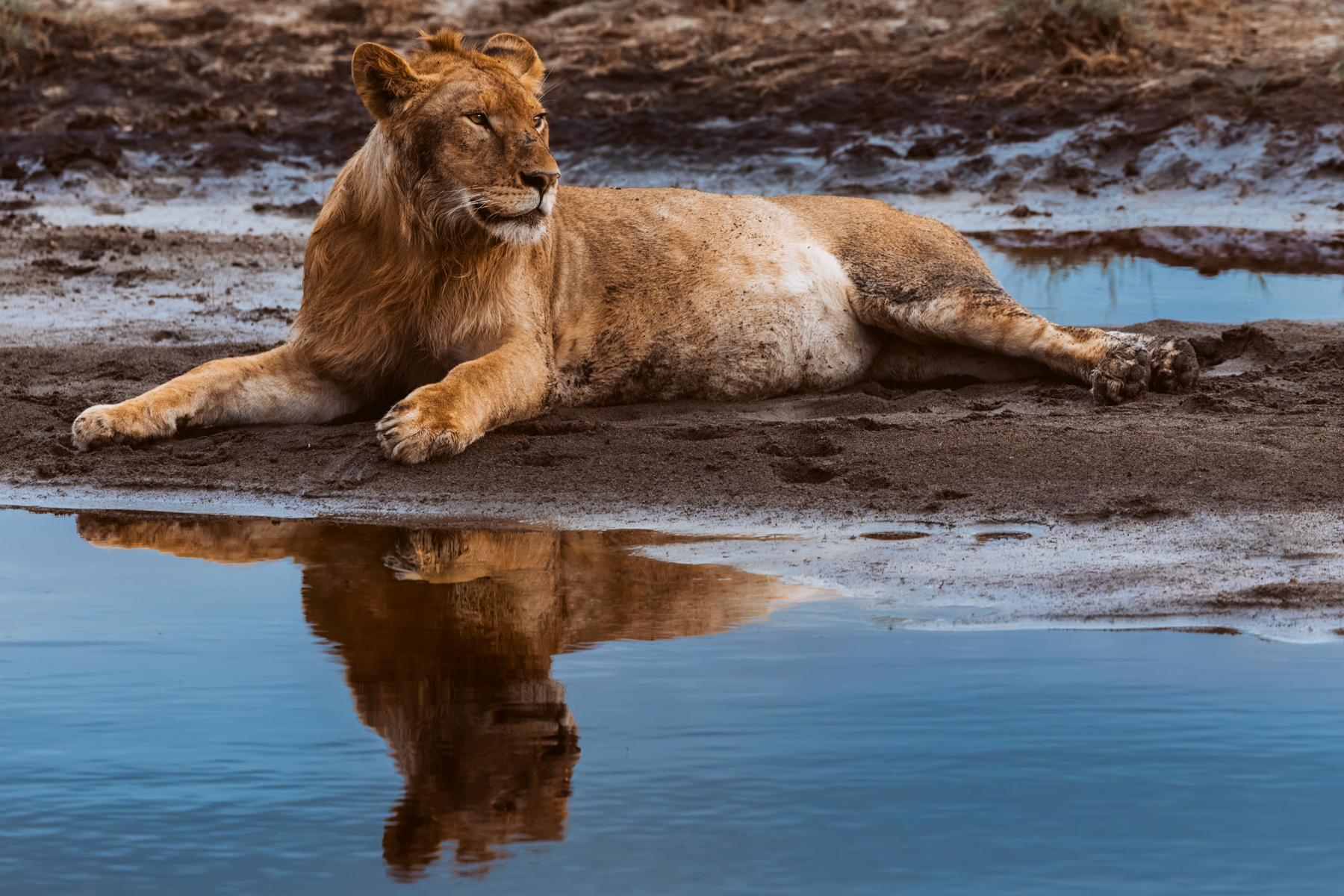
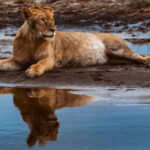
'Mirror, mirror on the wall, Who is the fairest and most handsome young Lion of them all?' Well, you, young Sir. A juvenile Lion is reflected in a pool as dusk falls in Ndutu (image by Virginia Wilde)
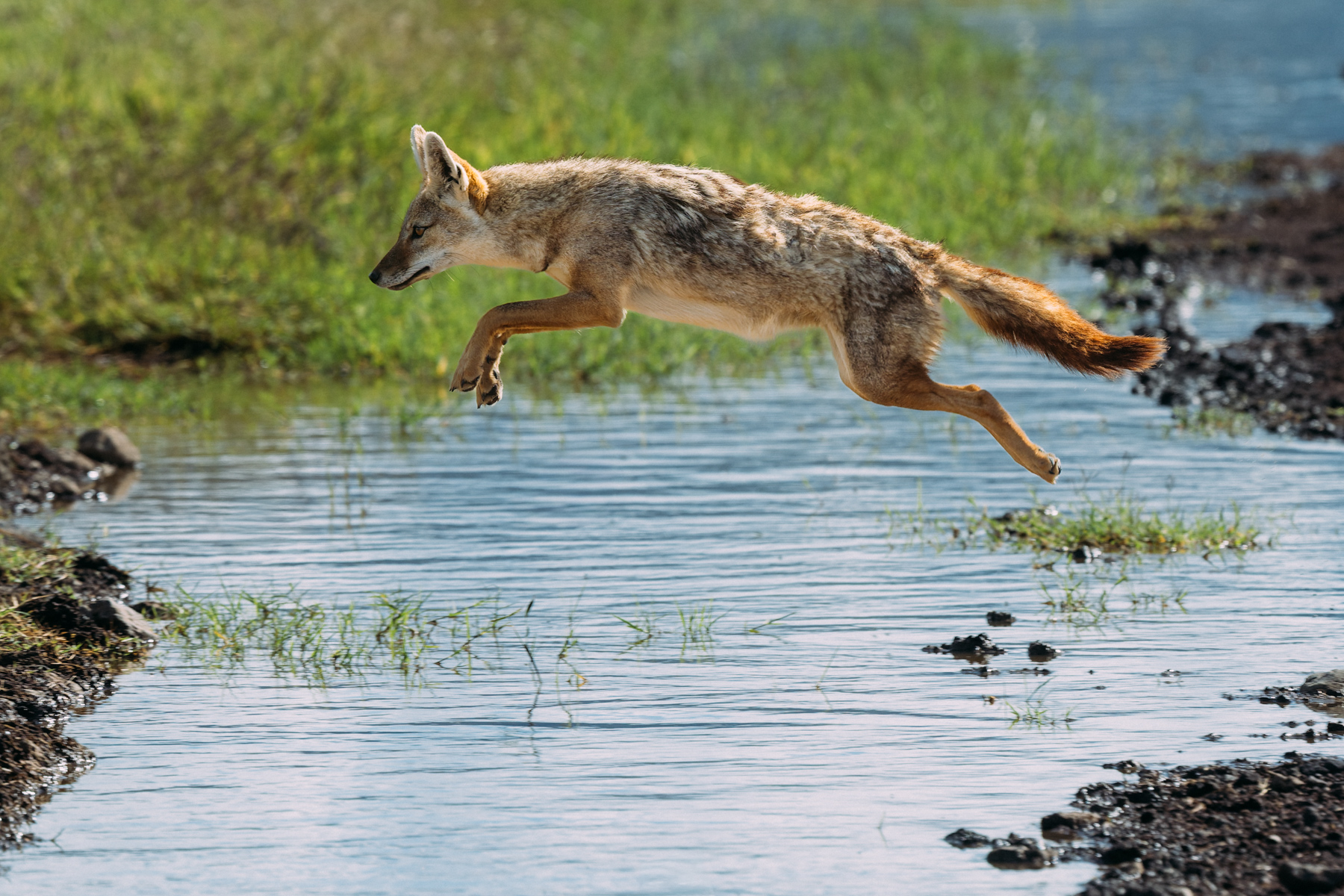
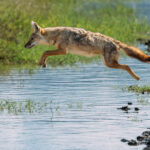
An African Golden Wolf takes the direct route across a flooded track in Tanzania's Ngorongoro Crater. Wet feet are clearly not part of the plan (image by Virginia Wilde)
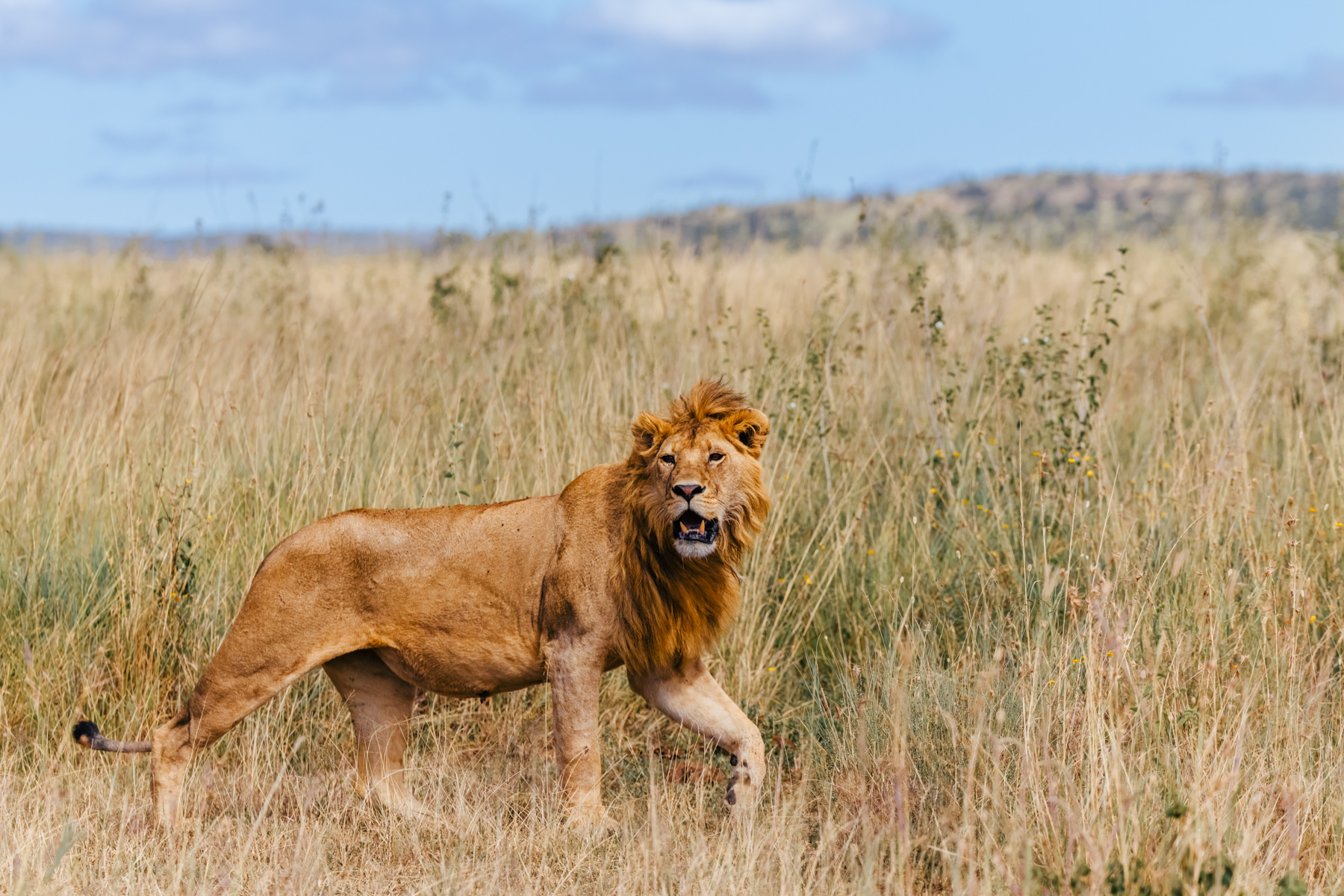
A young male Lion pauses to assess his surroundings. Lions may look unhurried, but they're constantly gathering information through sight, scent and sound (image by Virginia Wilde)
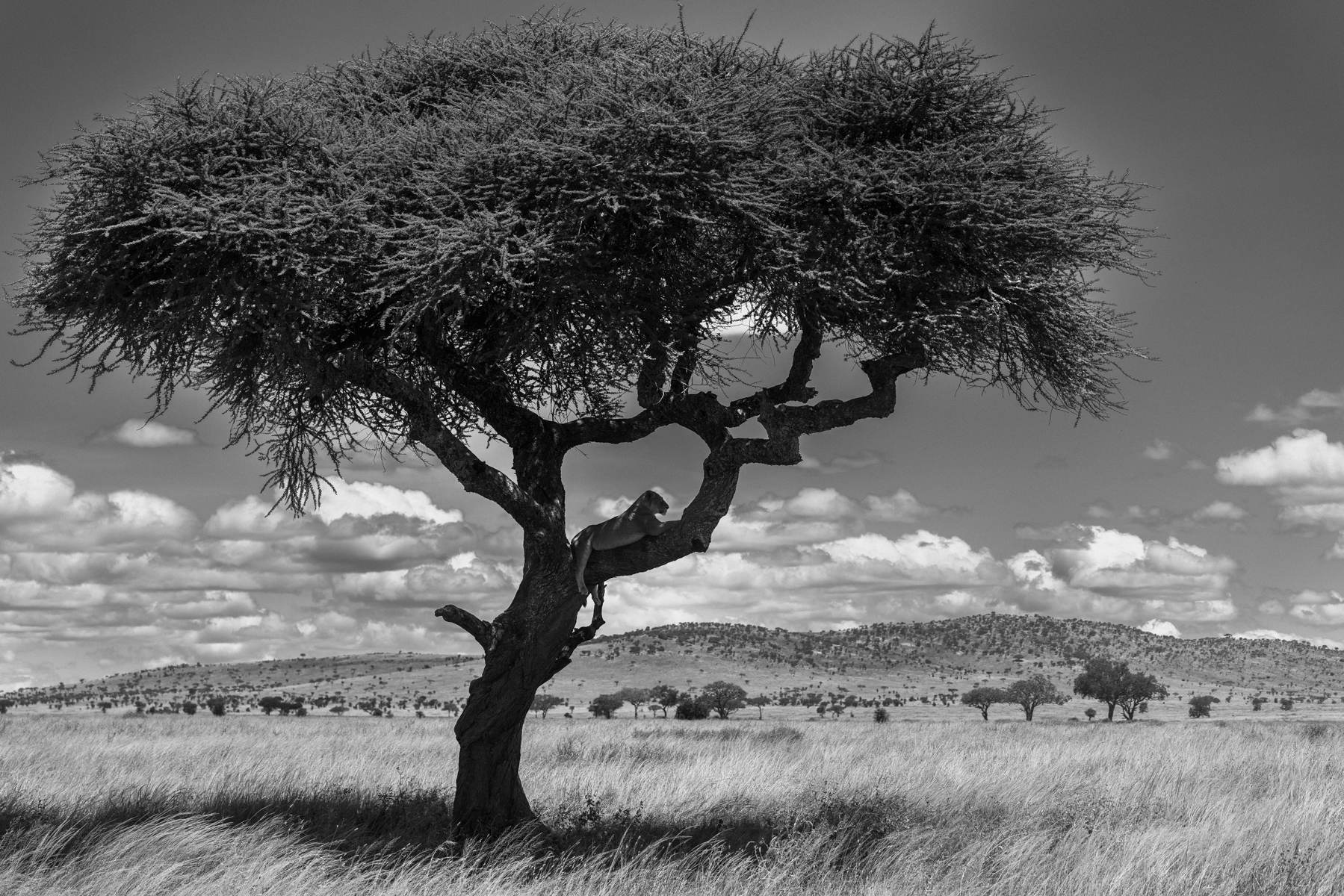
An Acacia tree isn't the first place you'd expect to find a Lion. Tree-climbing is a learned behaviour rather than an instinct, and in some parts of East Africa it has become a speciality. It's thought that shade, flies and a safe viewpoint play a part (image by Virginia Wilde)
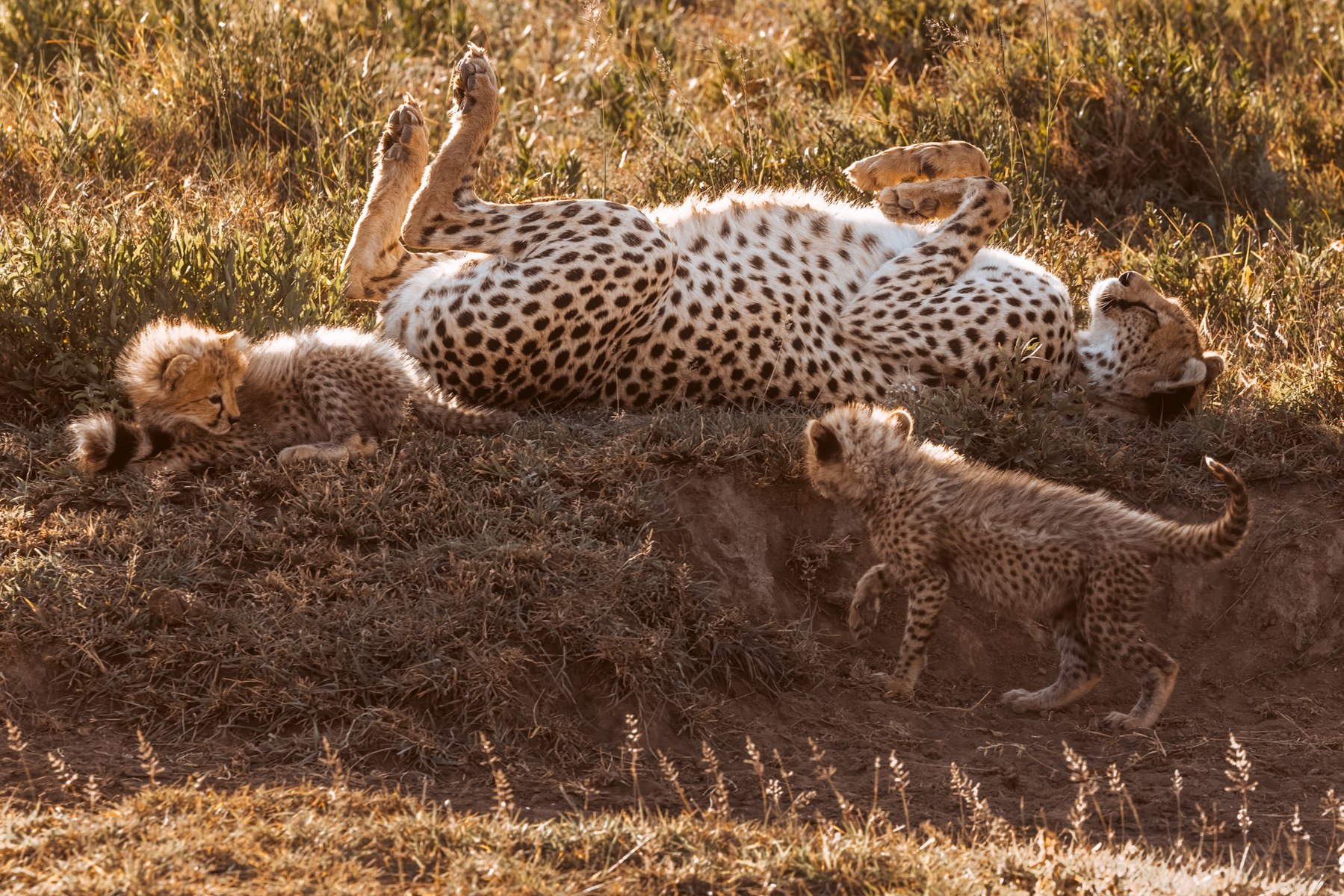
A Cheetah mother will usually stay with her cubs for 16-20 months, teaching them everything from stalking techniques to recognising danger. Which is why she sometimes needs to rest (image by Virginia Wilde)
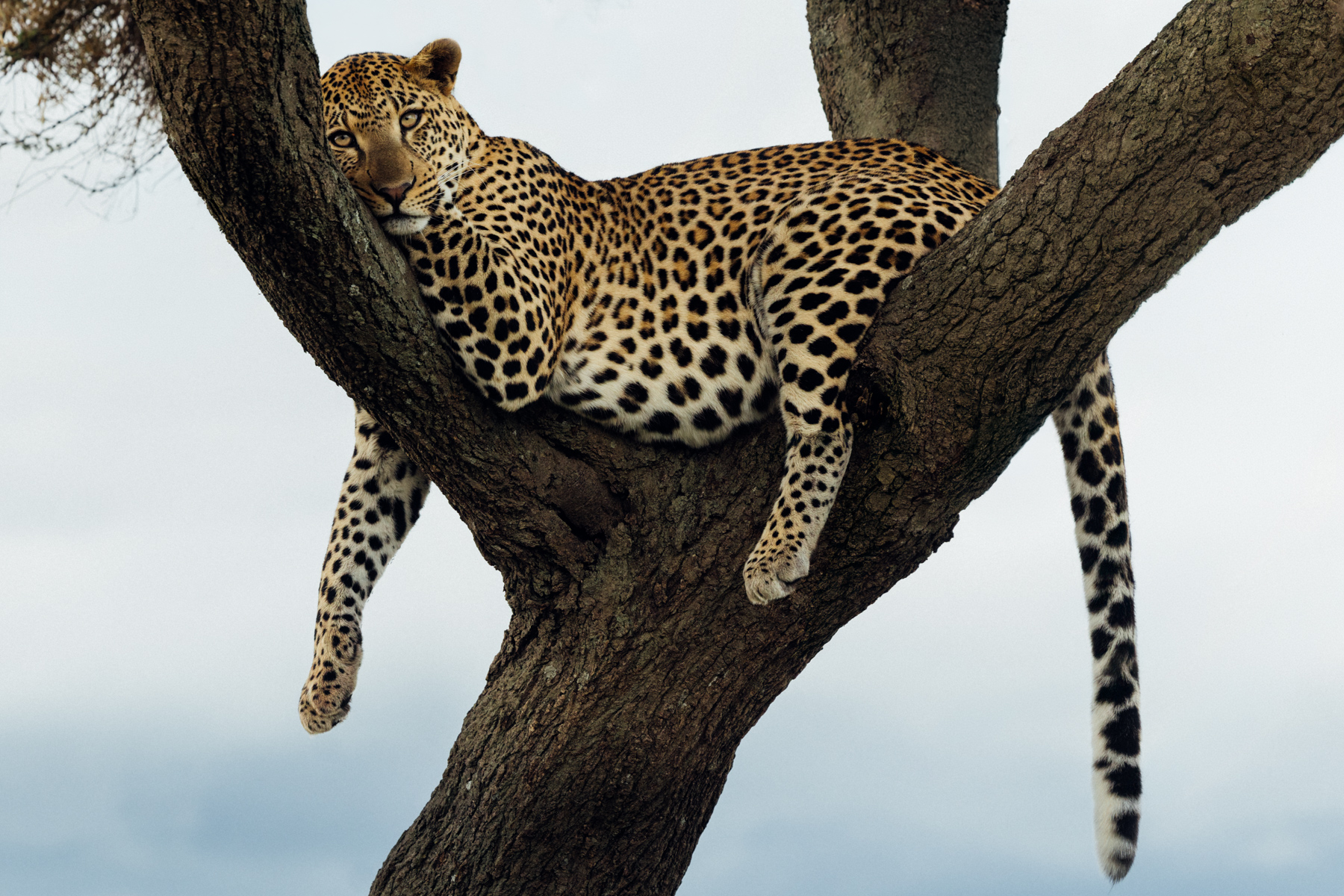
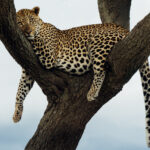
Draped across the branches of an Acacia tree, as if it were an armchair, we found this stunning Leopard. We searched for this particular cat for hours (until we found her in this tree) never forgetting that Leopards are usually hiding in plain sight (image by Virginia Wilde)
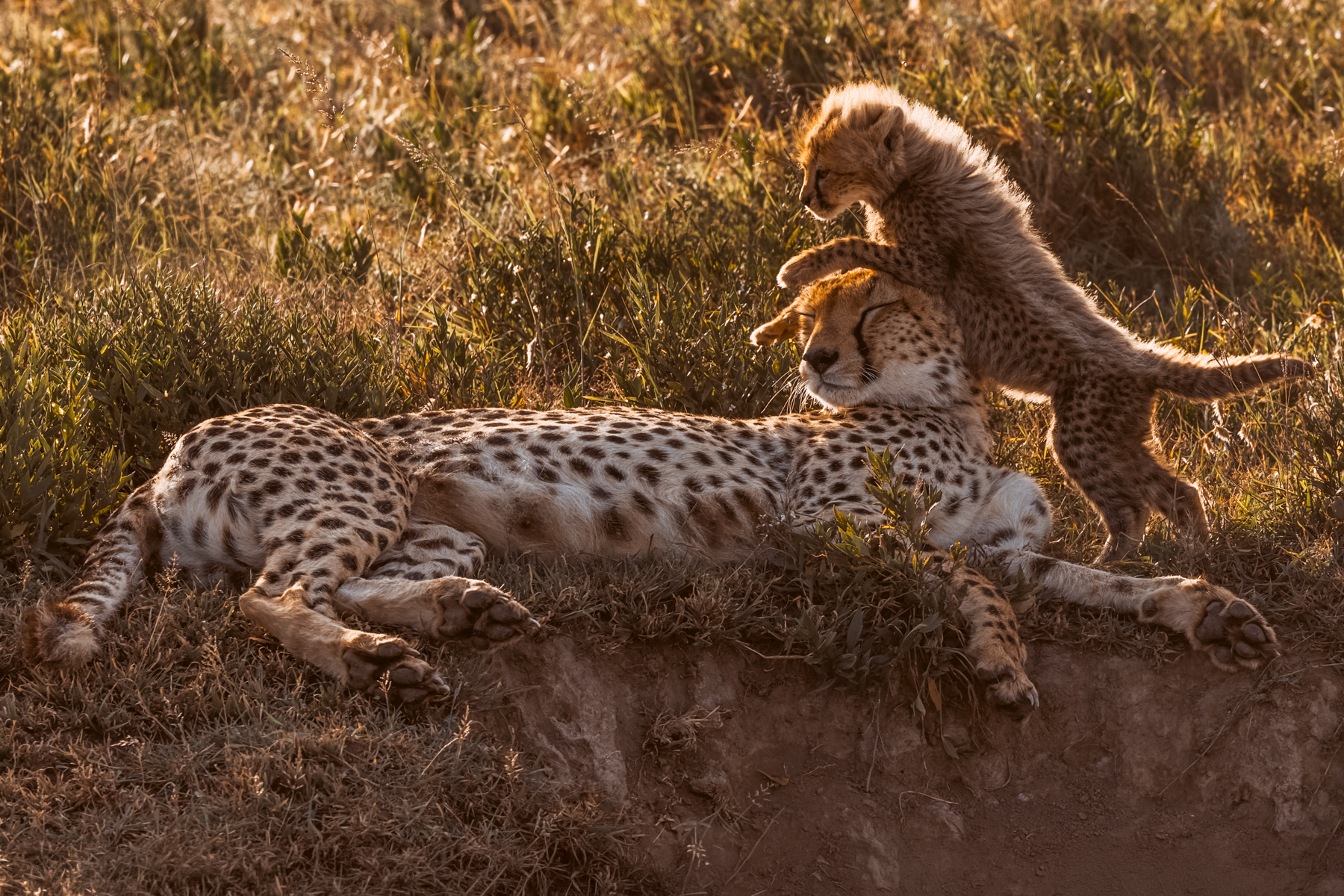
"I love you, but I am not a climbing frame." How many times have I said this to my own kids? At least I have wine. But life is the same for this Cheetah mum, who very patiently tolerates her cub bouncing repeatedly on her head (image by Virginia Wilde)
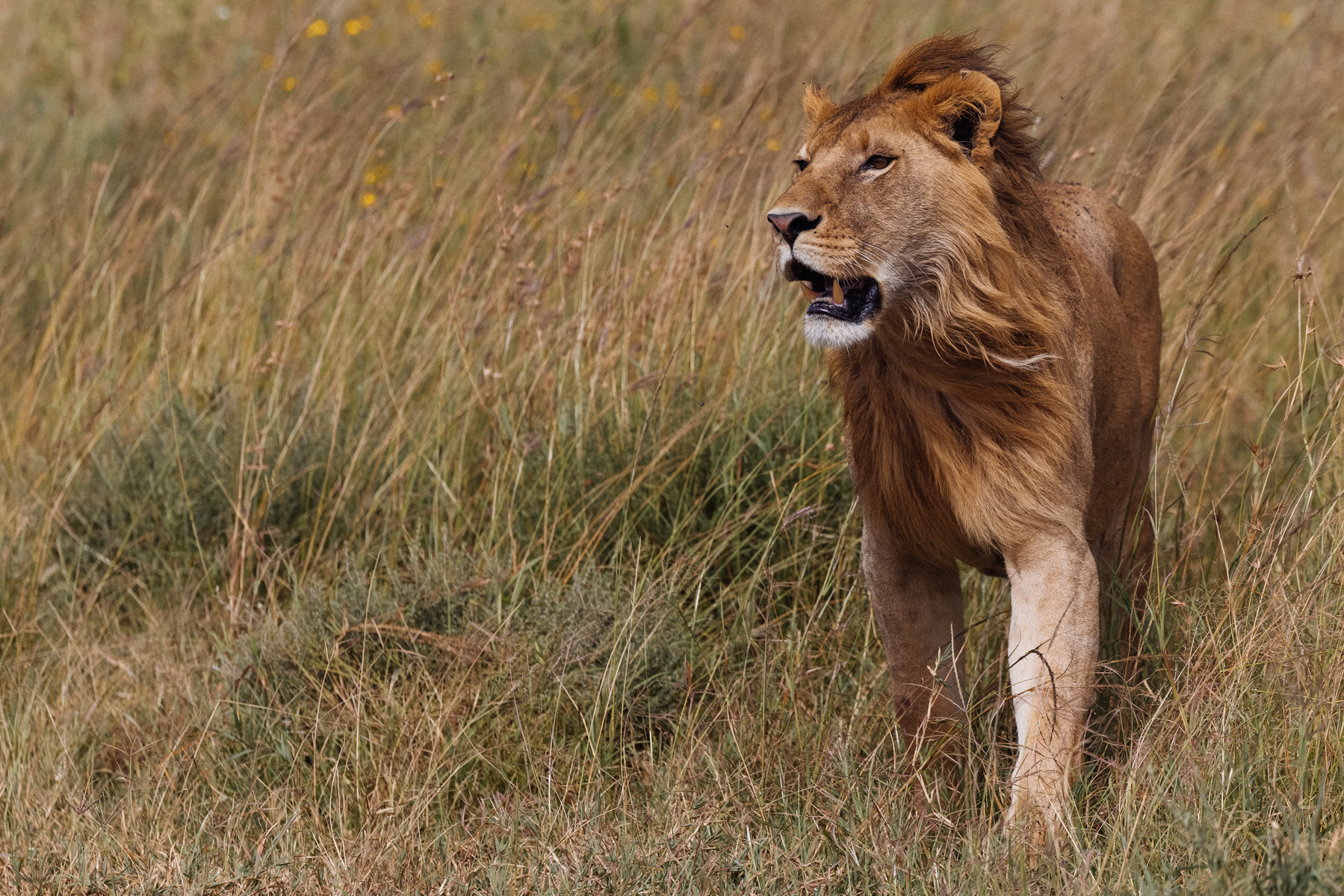
For a young male Lion such as this one, his greatest battles often lie ahead. Before he has a chance to rule a pride, he must first survive life as a nomad, avoiding older males while searching for allies and opportunity (image by Virginia Wilde)
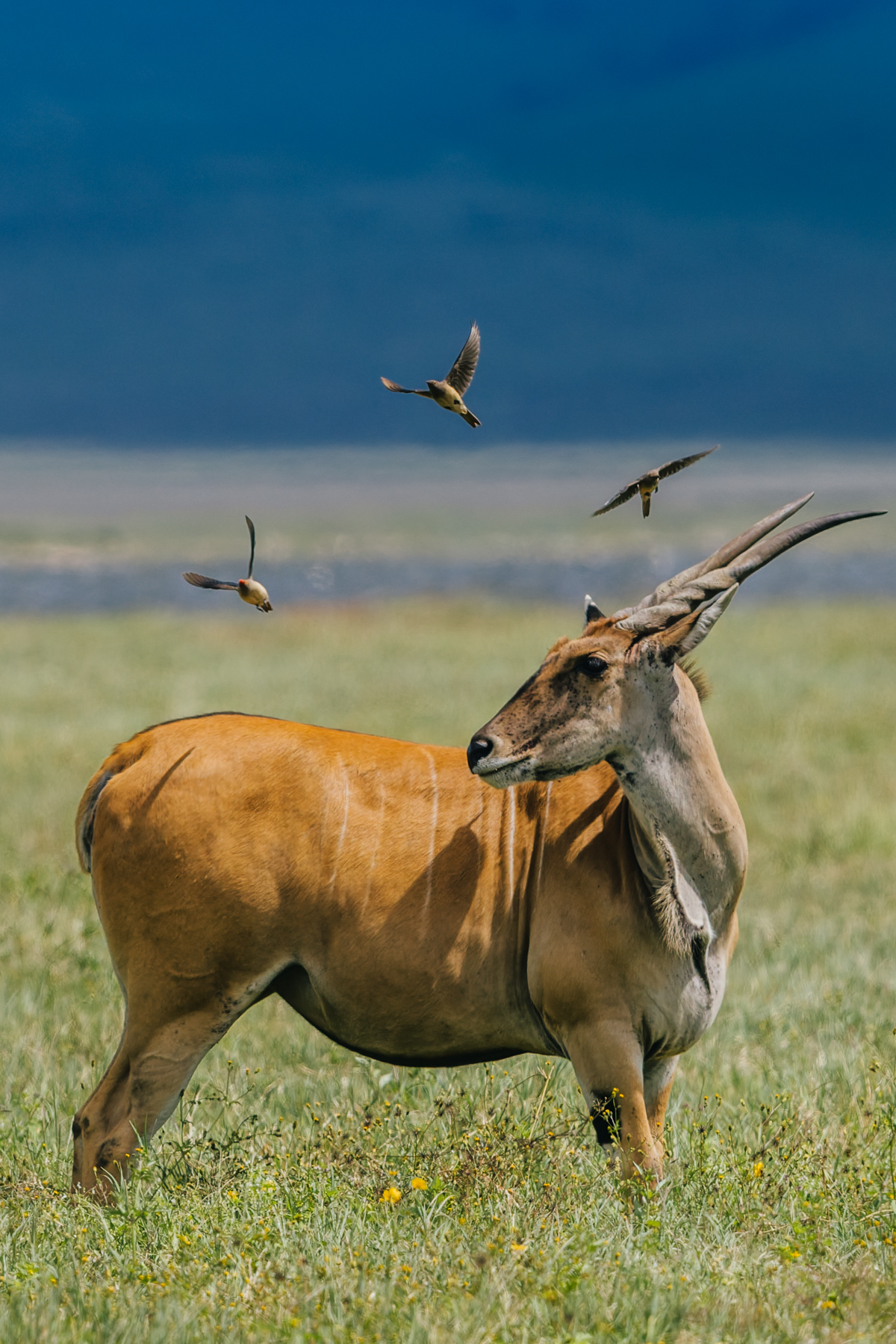
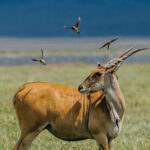
To these swallows, a Common Eland is a mobile buffet with horns. They pick off the insects disturbed as the eland moves through the grass, turning the herbivore into an unwitting hunting assistant (image by Virginia Wilde)
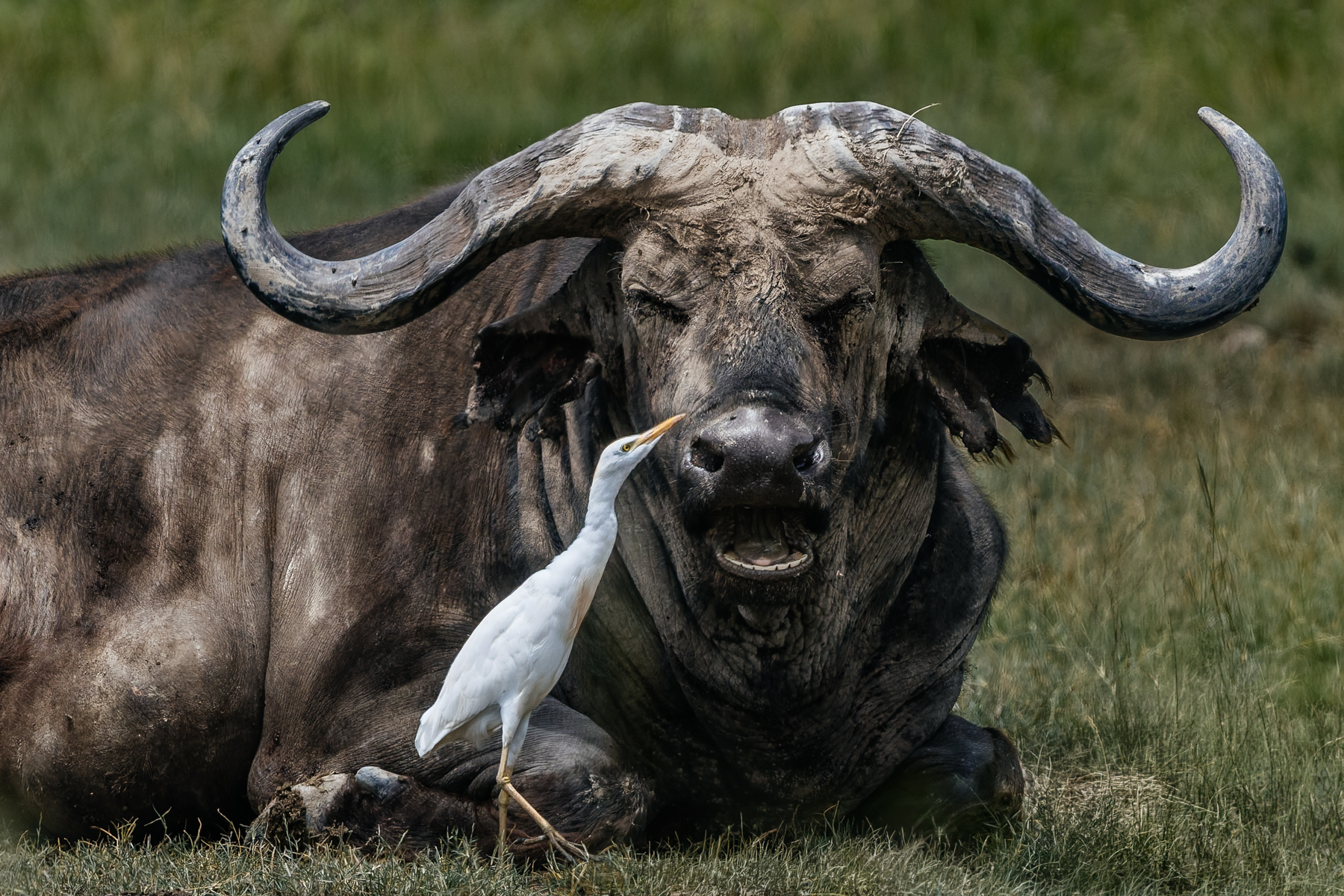
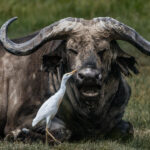
The African Cape Buffalo looks built for battle; the Cattle Egret behaves as though it owns the place. This egret gives a buffalo the full inspection in the Ngorongoro Crater (image by Virginia Wilde)
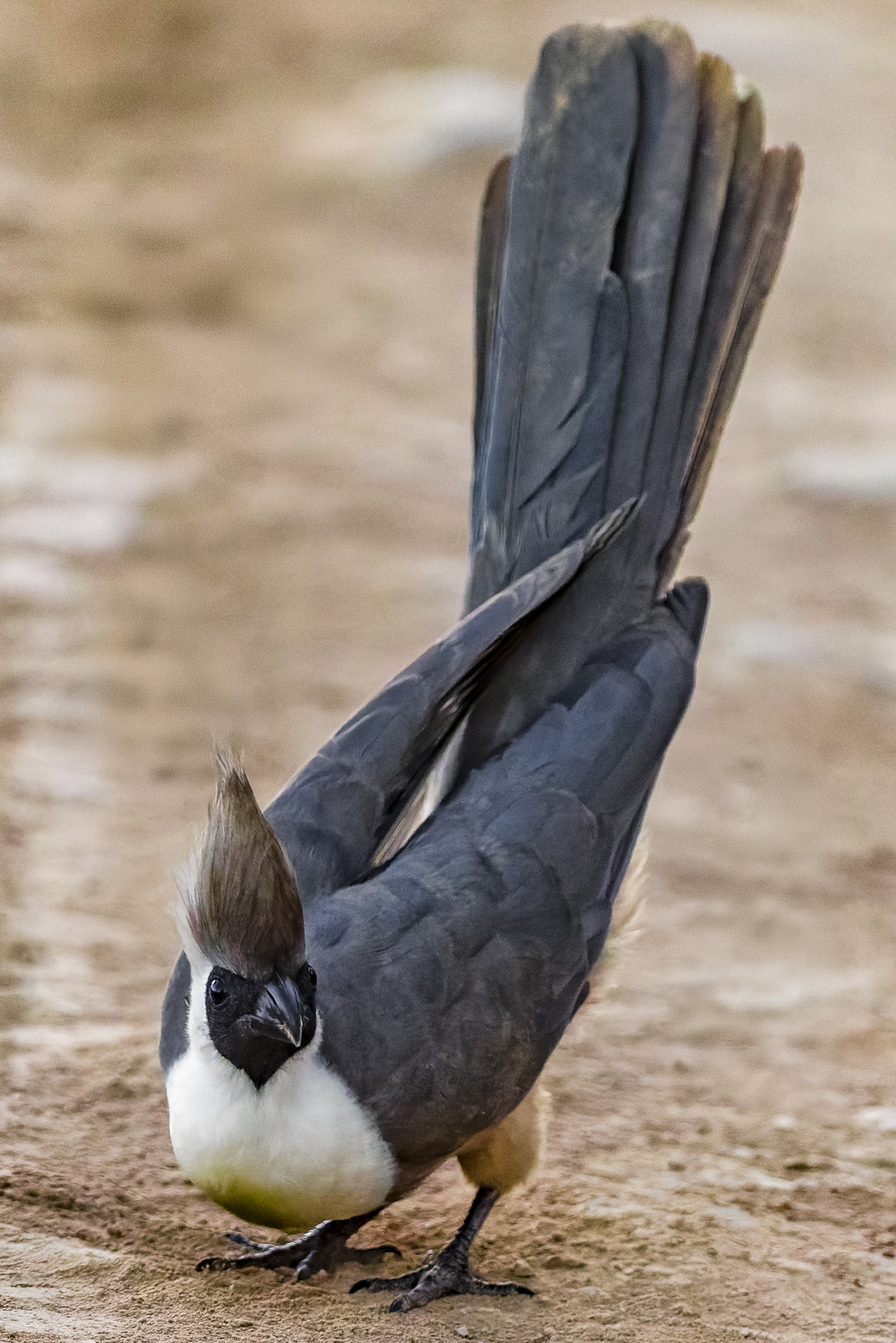
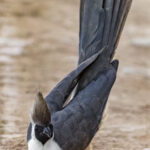
A Bare-faced Go-Away Bird in a characteristic bowing display. Despite their ungainly appearance on the ground, Go-Away Birds are agile climbers, using their strong feet to scramble effortlessly through the canopy in search of fruit and leaves (image by Virginia Wilde)
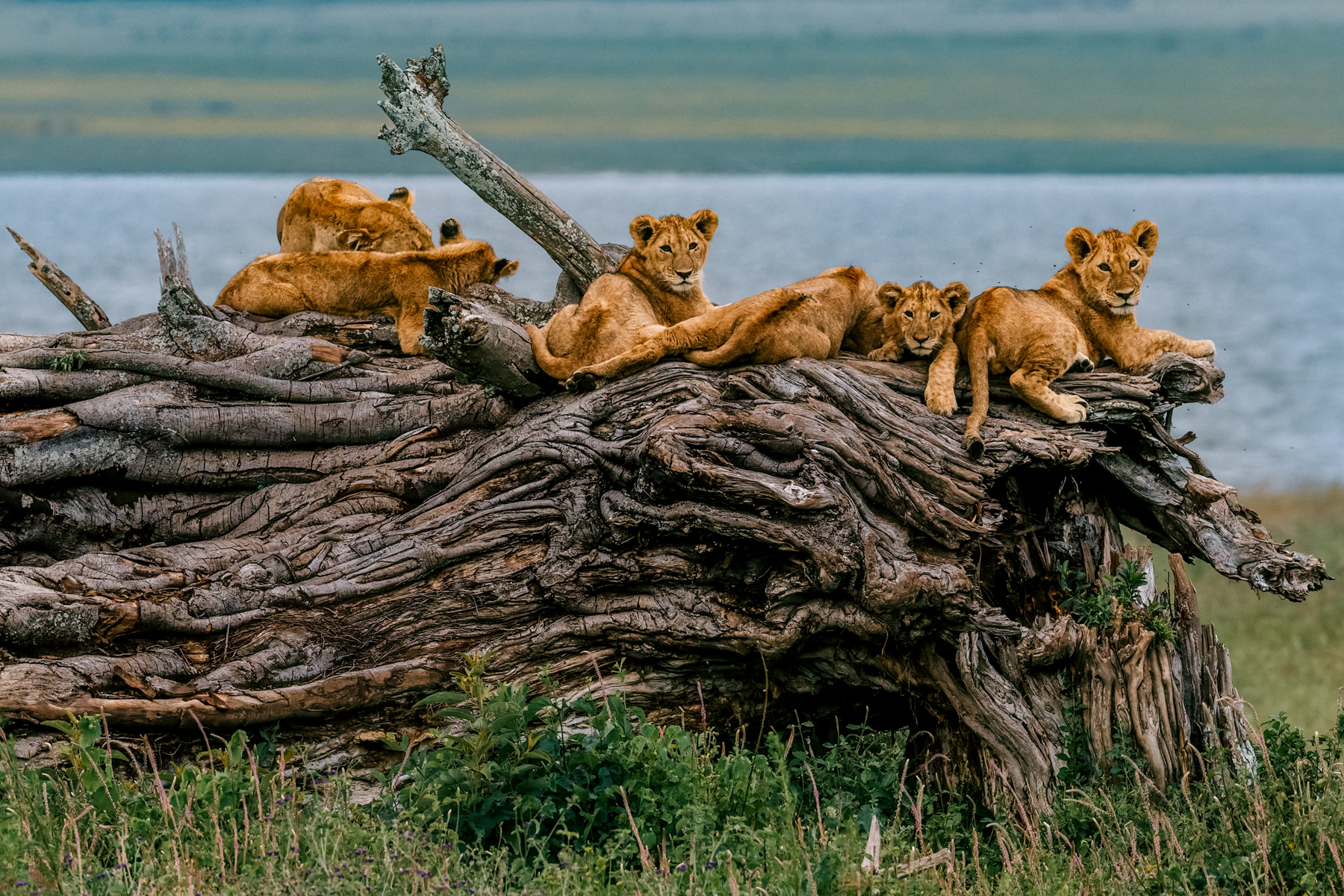
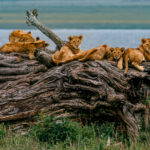
Five Lion cubs rest by their mum on the twisted bark of a gnarled fallen tree. We happened across this scene as dusk fell in Tanzania's natural amphitheatre - the Ngorongoro Crater (image by Virginia Wilde)
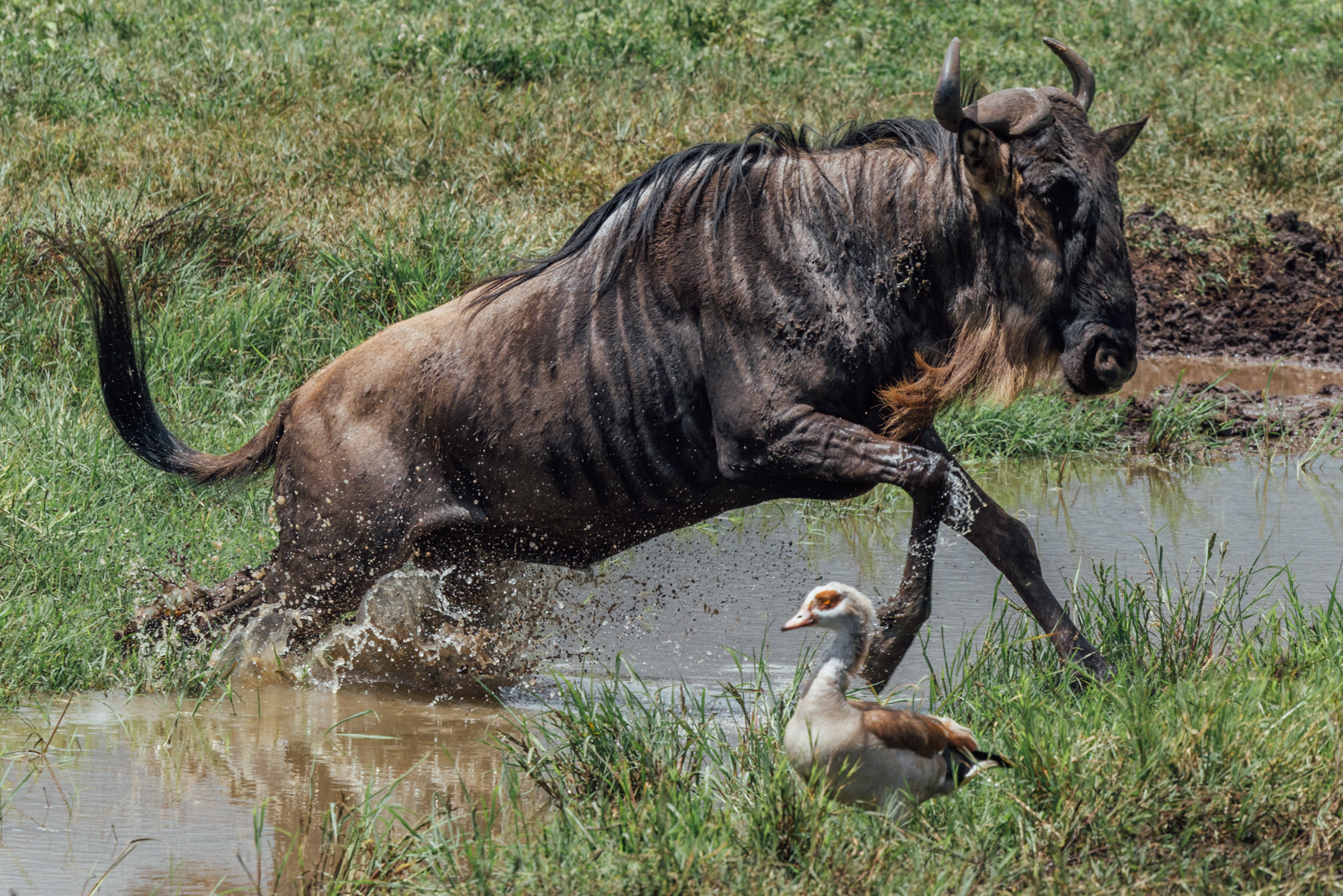
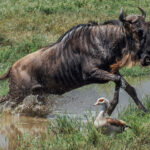
An Egyptian Goose hurries out of the way of a White-bearded Wildebeest, just two of thousands of animals and birds that throng around a watering hole in Tanzania's Ngorongoro Crater (image by Virginia Wilde)
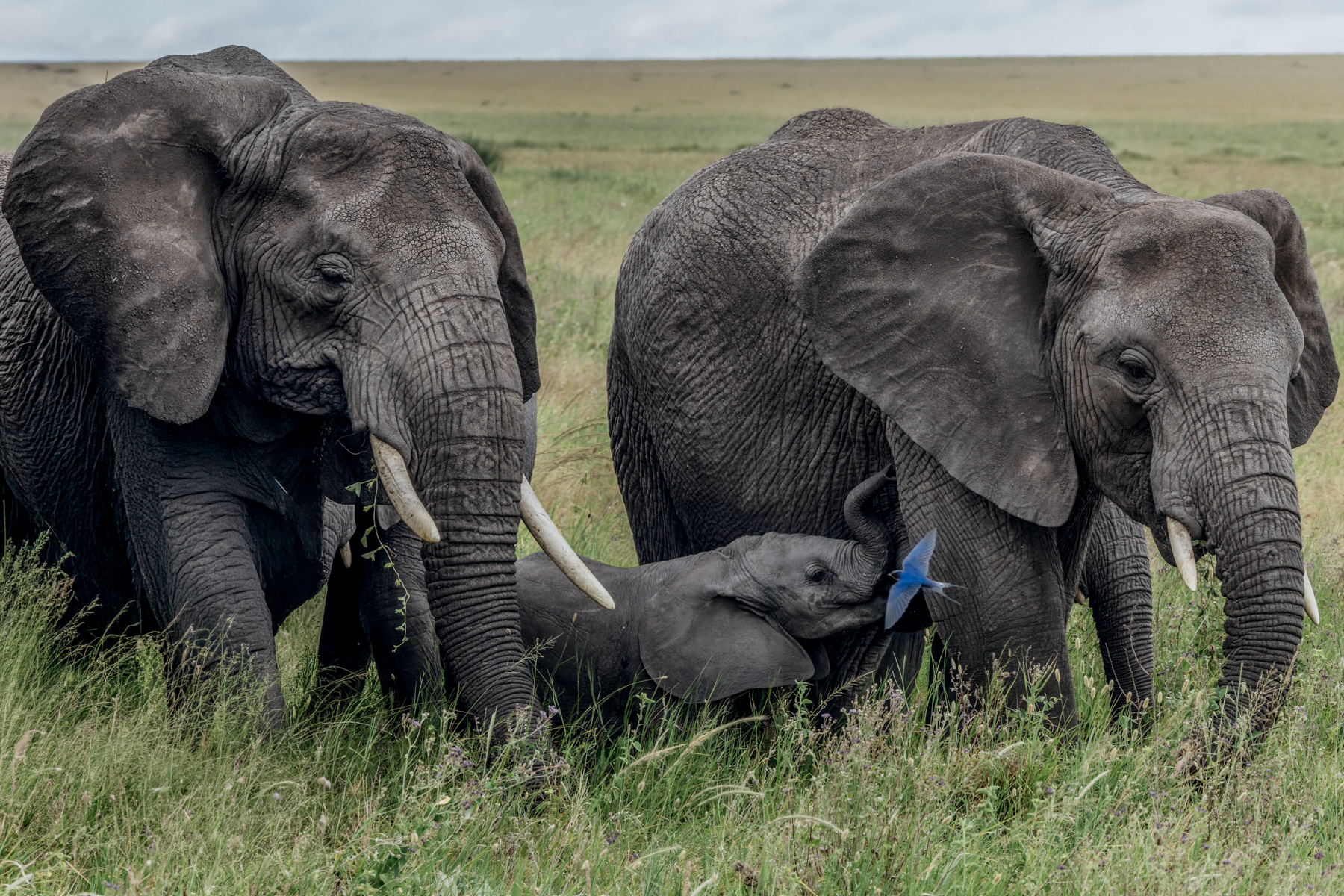
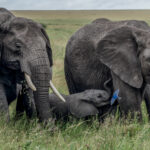
What a lovely moment as a Barn Swallow swoops in front of an infant African Savanna Elephant. This young calf raises its trunk, as if in joy. Elephants take years to master the use of their trunks, which contain around 40,000 muscles (image by Virginia Wilde)
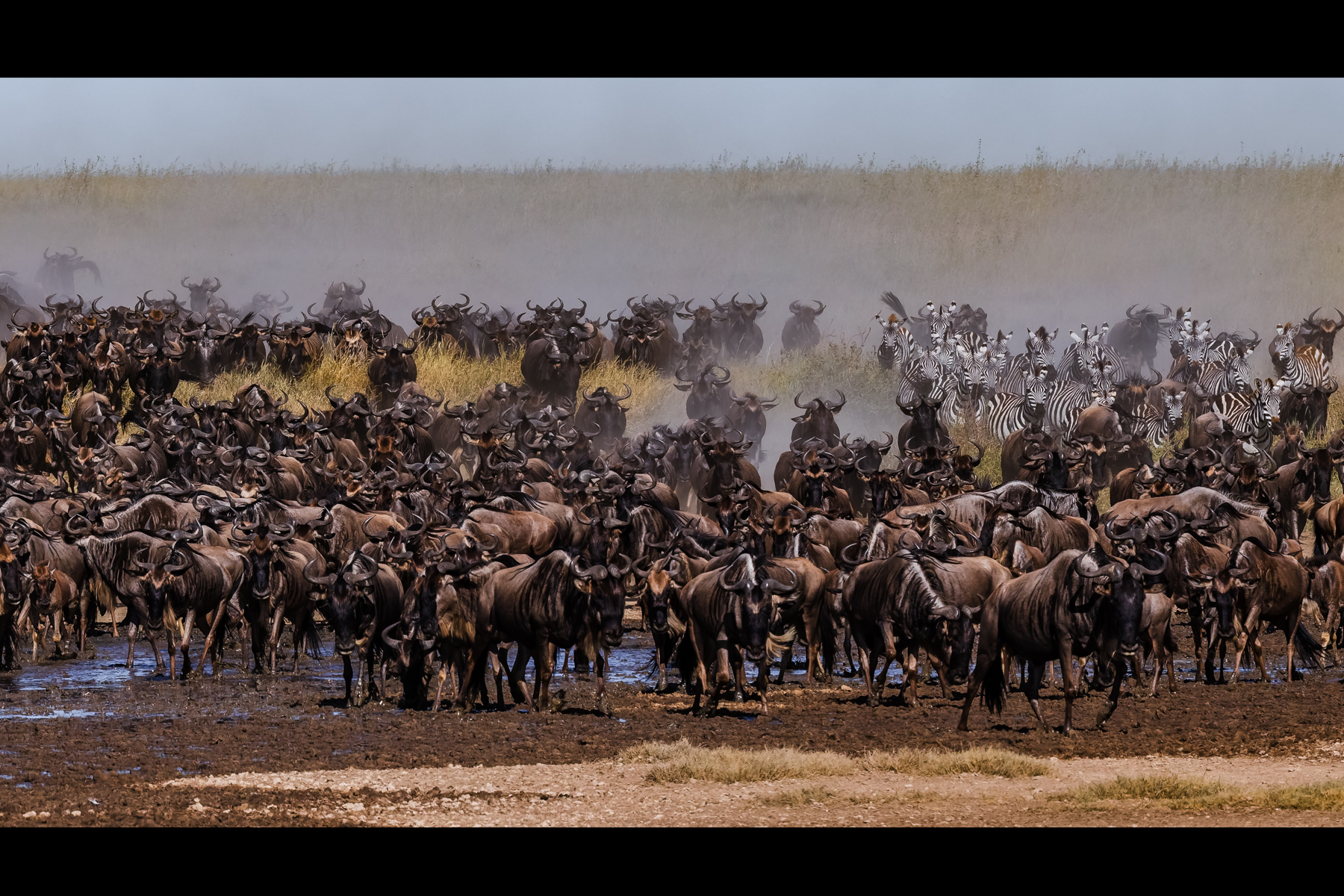
Rush hour on the Serengeti. Nobody's giving way, everyone's thirsty, and patience is in short supply. Just a snapshot of the chaos of the Great Migration (image by Virginia Wilde)
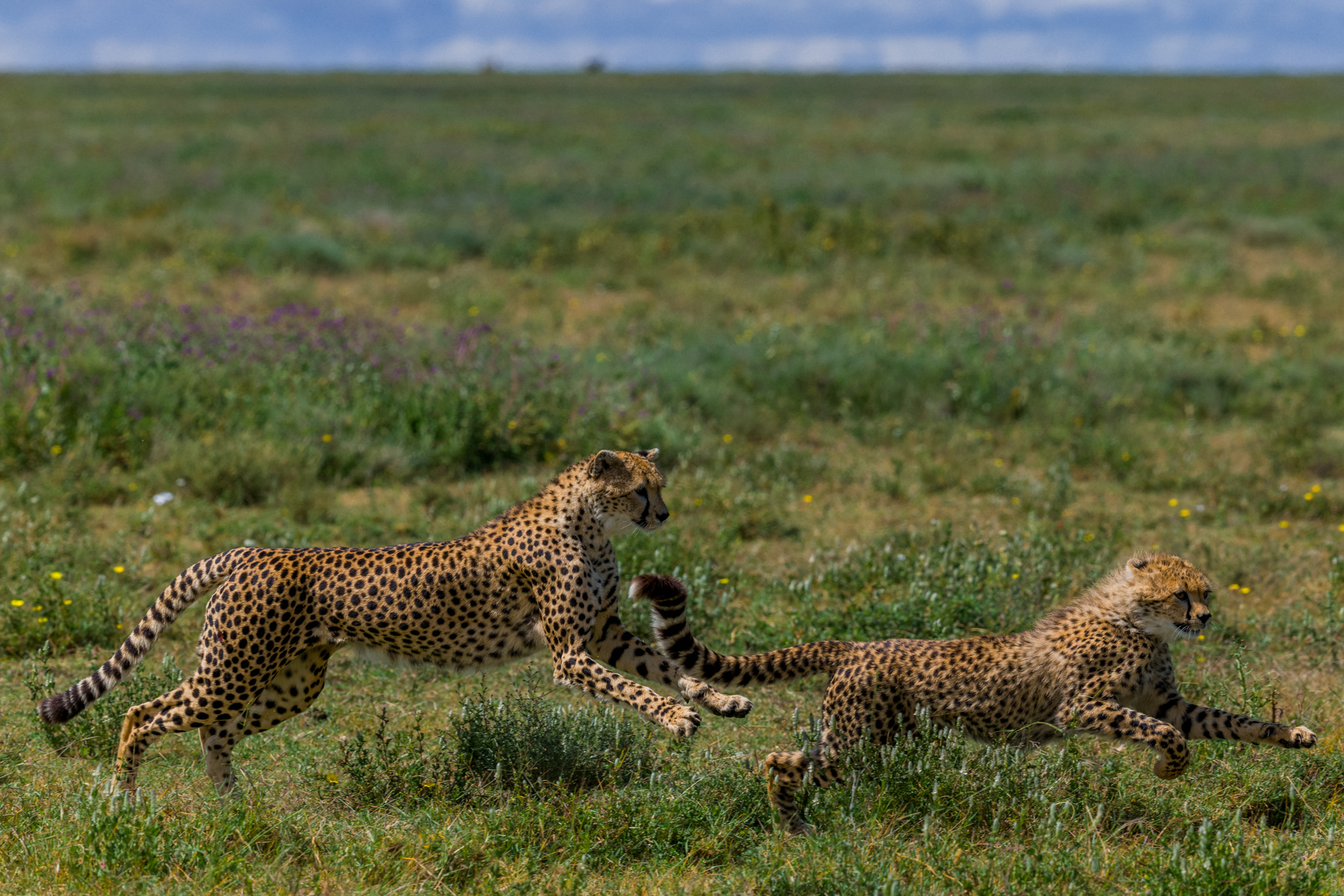
'Last one back to the den, loses!' Even the world's fastest land mammal has to start somewhere. By joining in on the chase, a Cheetah mum helps her cub develop the speed and agility needed to catch prey (image by Virginia Wilde)
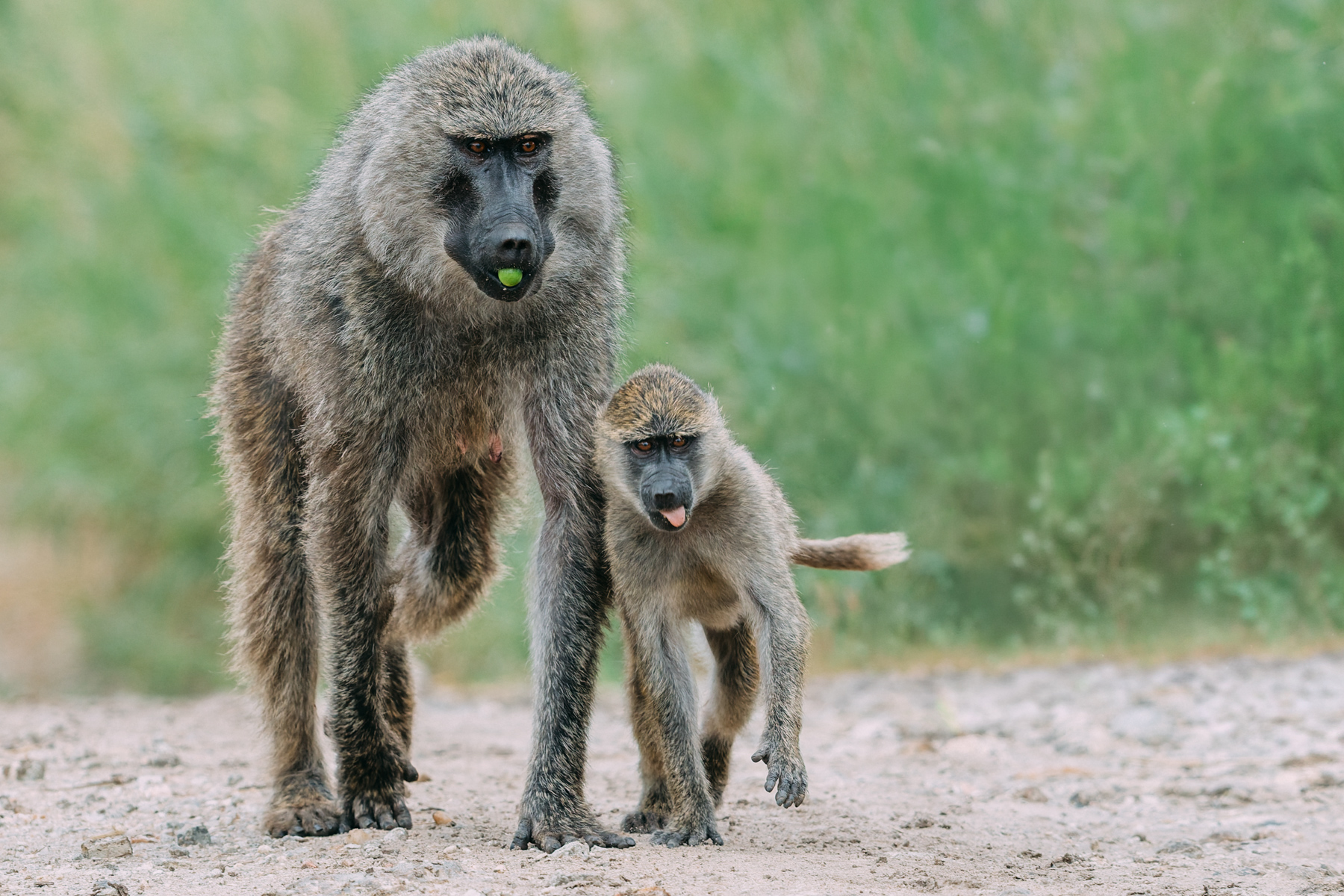
Young Olive Baboons spend years shadowing their mothers, learning everything from what to eat to the rules of troop life. It's one of the longest childhoods on the African plains. But judging by this infant's tongue, concentration may still be a work in progress (image by Virginia Wilde)
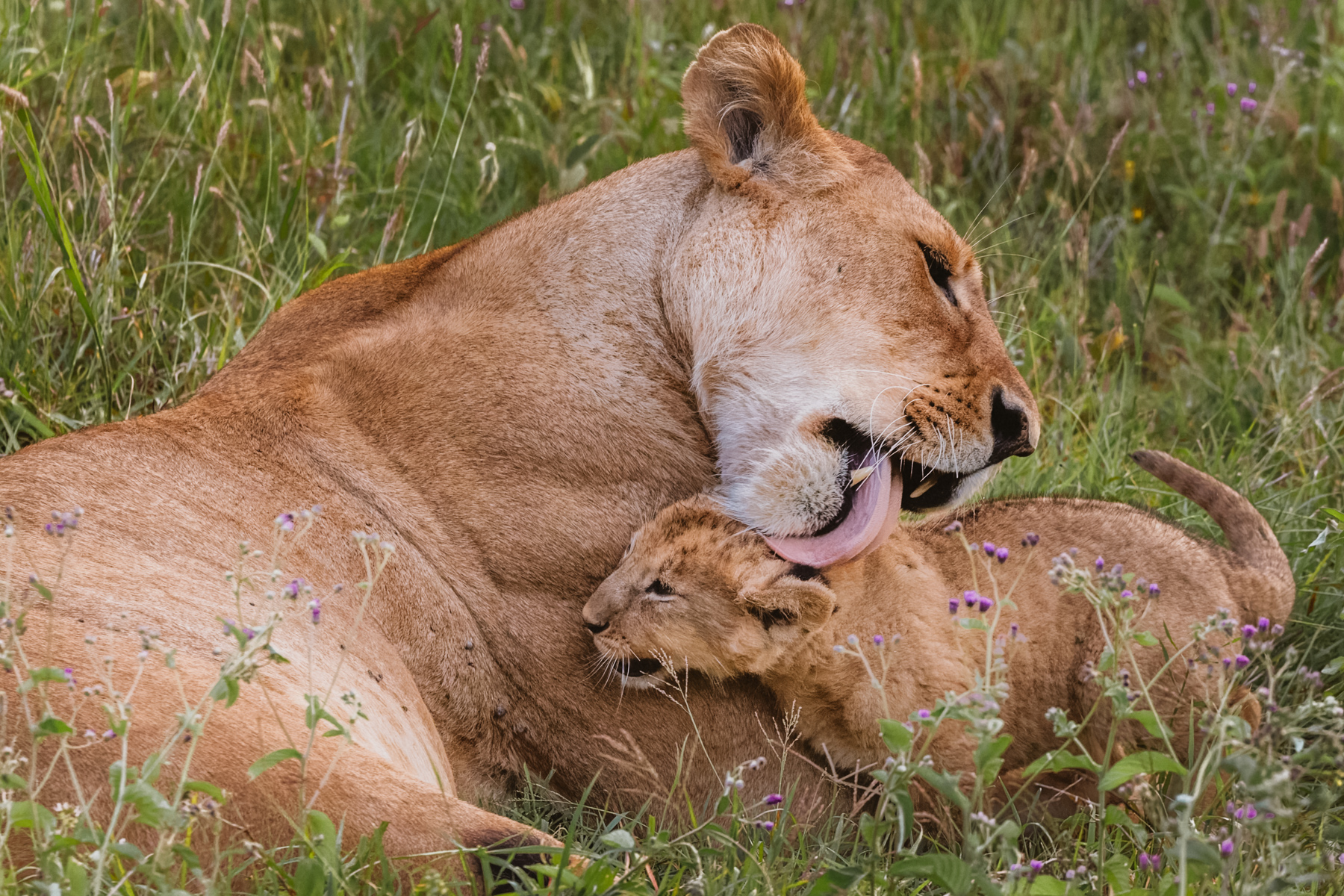
Grooming stimulates circulation, removes dirt and parasites and helps keep young cubs healthy during their most vulnerable months. And probably feels pretty good for this youngster, too (image by Virginia Wilde)
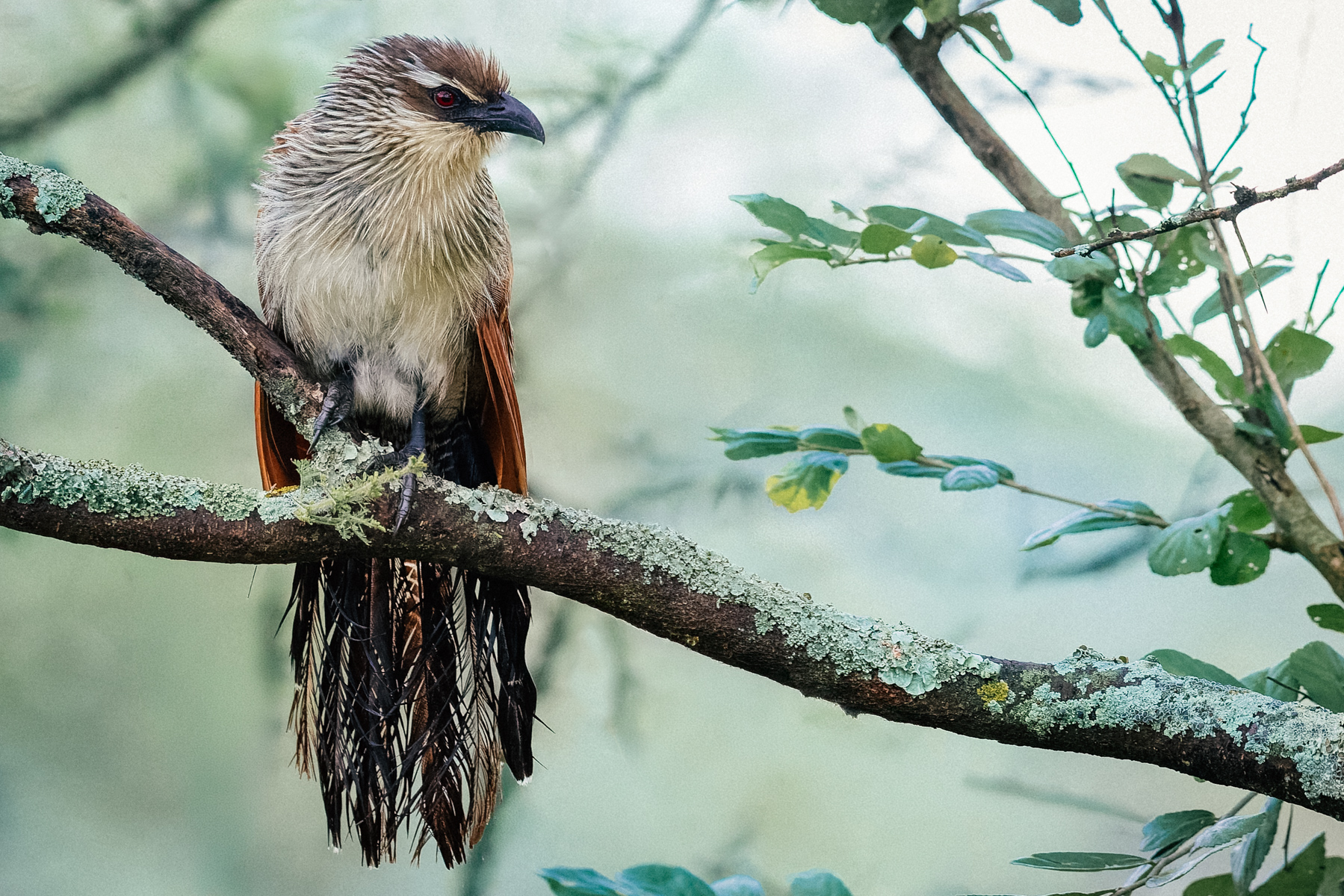
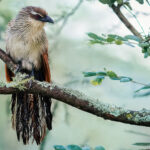
A White-browed Coucal pauses briefly enough for a photograph. These secretive birds spend most of their time hunting insects, reptiles and small mammals in dense vegetation (image by Virginia Wilde)
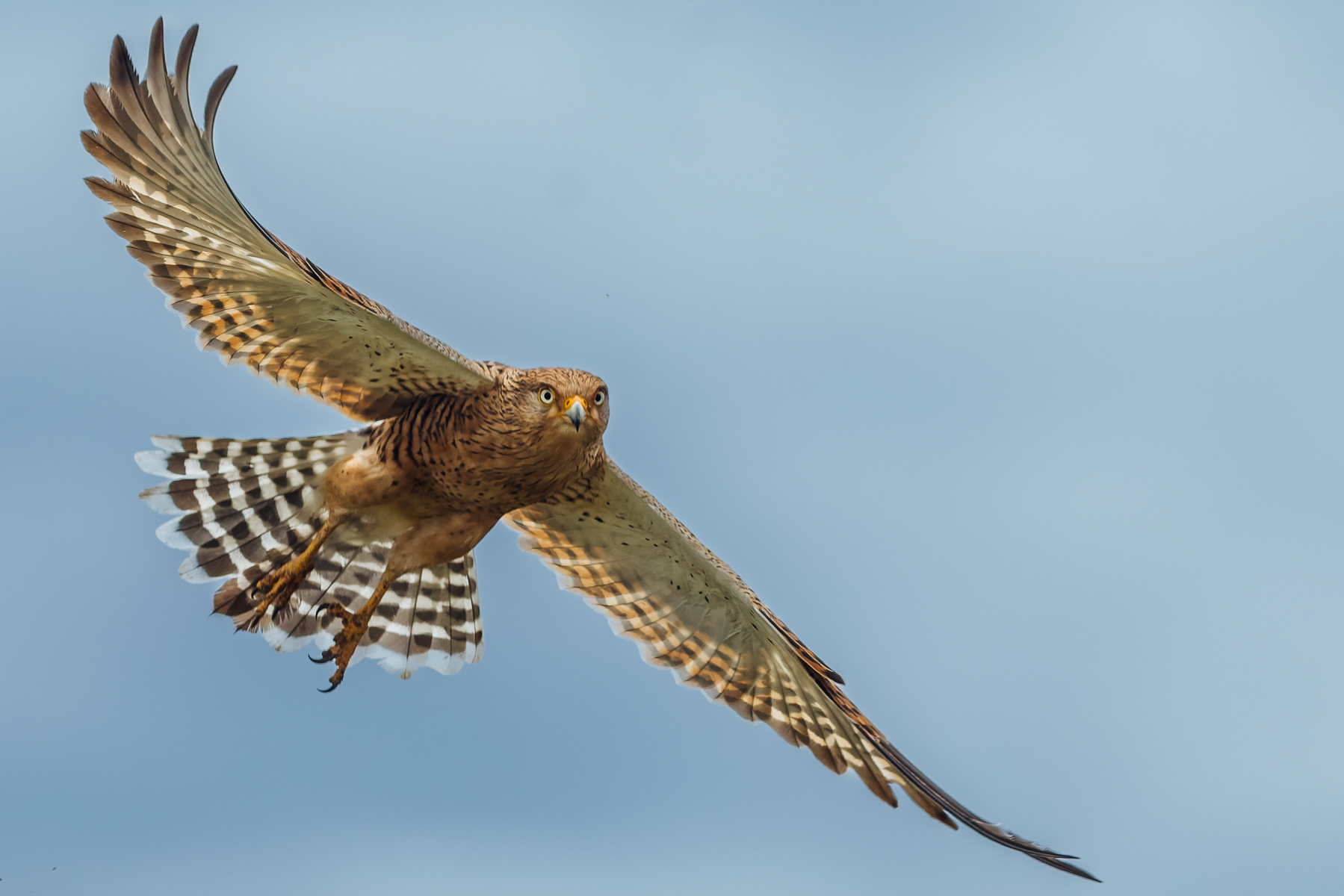
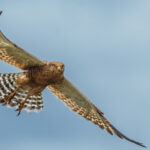
The largest kestrel in Africa, this Greater Kestrel usually hunts from exposed perches, dropping swiftly onto rodents, lizards and large insects (image by Virginia Wilde)
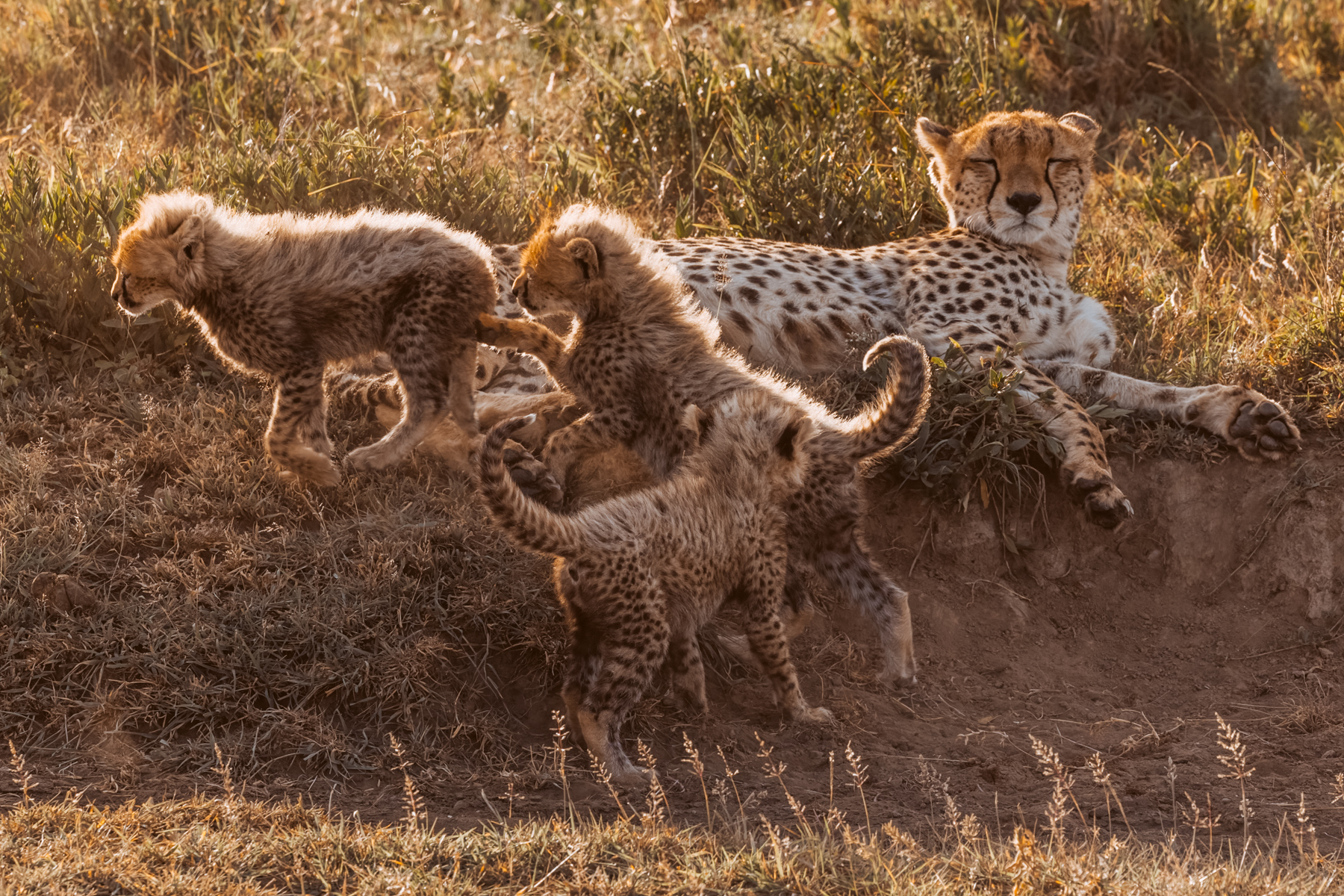
While her cubs run themselves ragged, this Cheetah mum takes five minutes for herself. The cubs are all curiosity and chaos; their mother has clearly mastered the art of selective attention (image by Virginia Wilde)
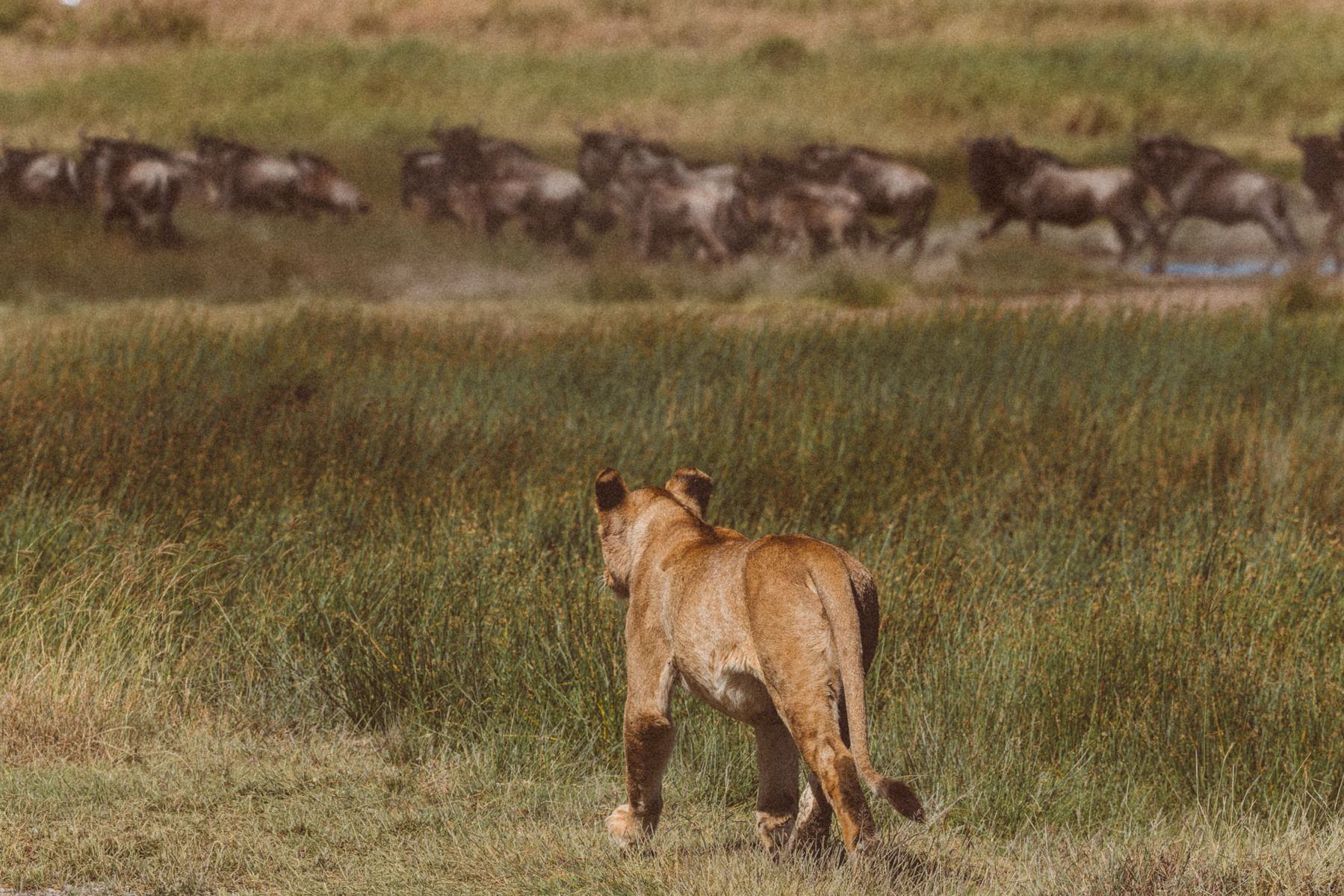
As a wave of Wildebeest in the Great Migration ran right past the noses of some dozing male Lions, we groaned. Only the Lionesses were alert enough to make a casual attempt at a hunt (image by Virginia Wilde)
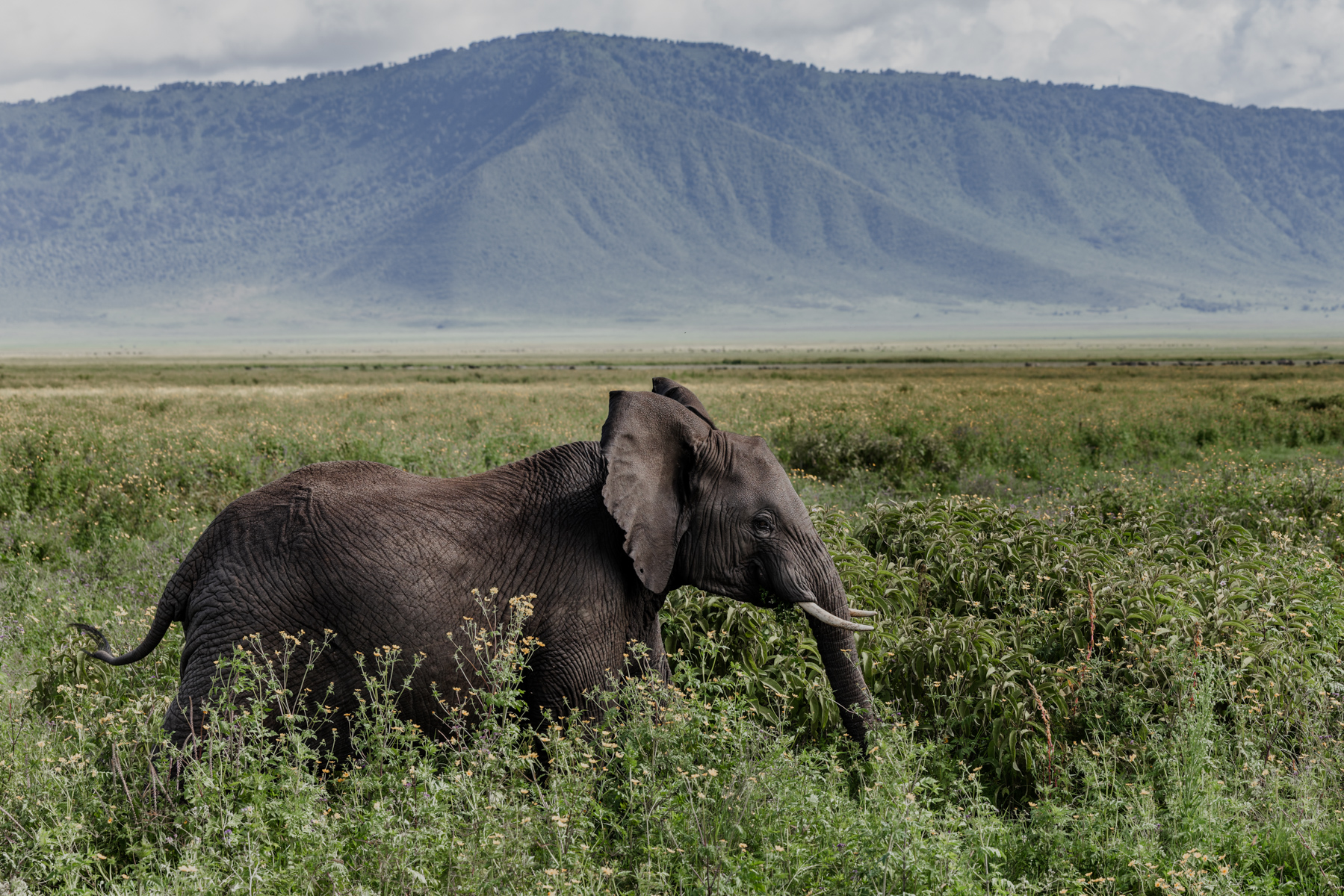
A juvenile African Elephant browses on the lush floor of the Ngorongoro Crater. The crater's fertile volcanic soils support one of Africa's highest concentrations of large mammals (image by Virginia Wilde)
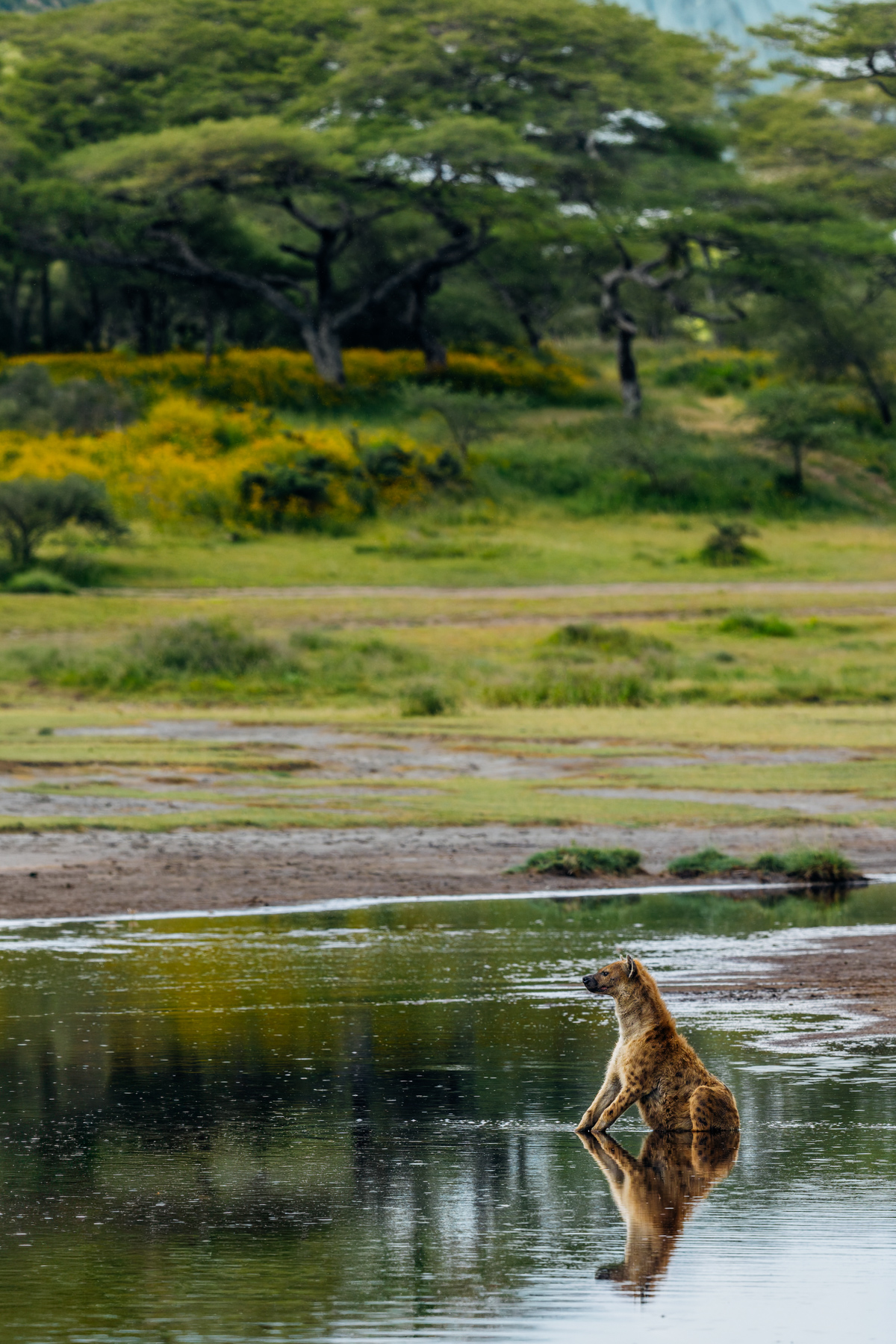
This tranquil moment with a Spotted Hyena was actually one of my favourite scenes in Ndutu. Here, Tanzania's most misunderstood predator takes a quiet break. Spotted Hyenas live in complex social clans led by powerful females (image by Virginia Wilde)
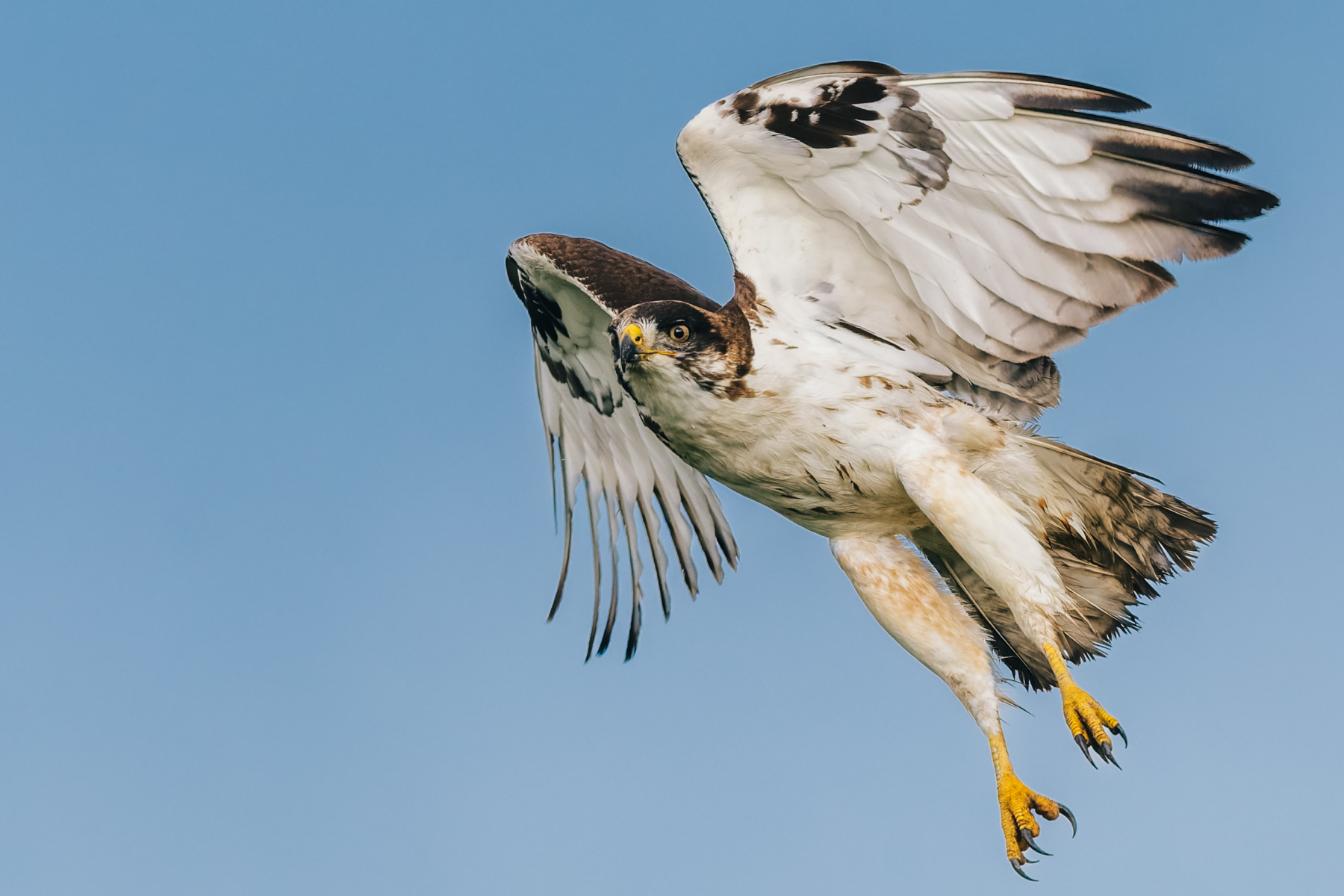
A sleek Augur Buzzard soars over the Serengeti, looking for prey in the grasslands below (image by Virginia Wilde)
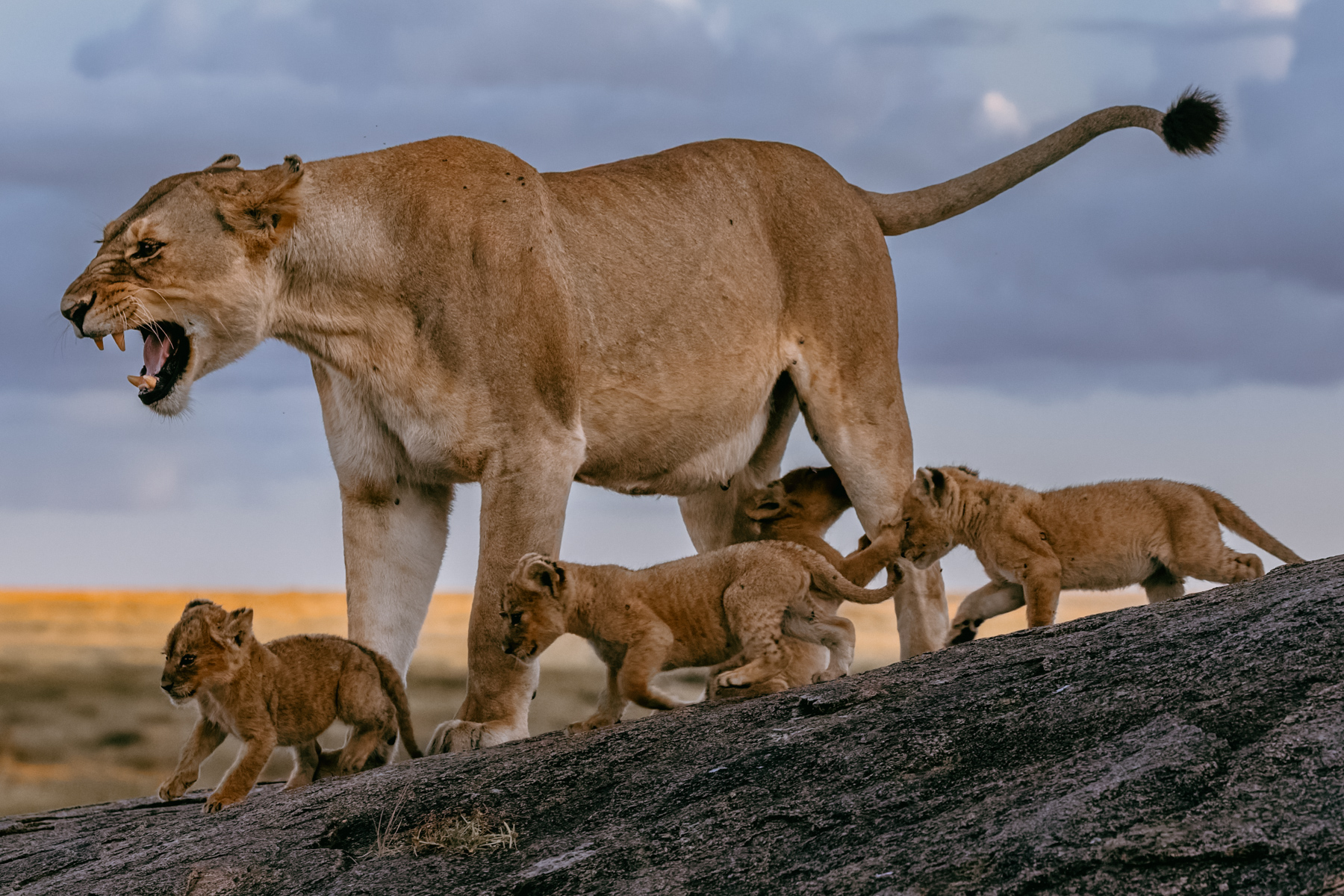
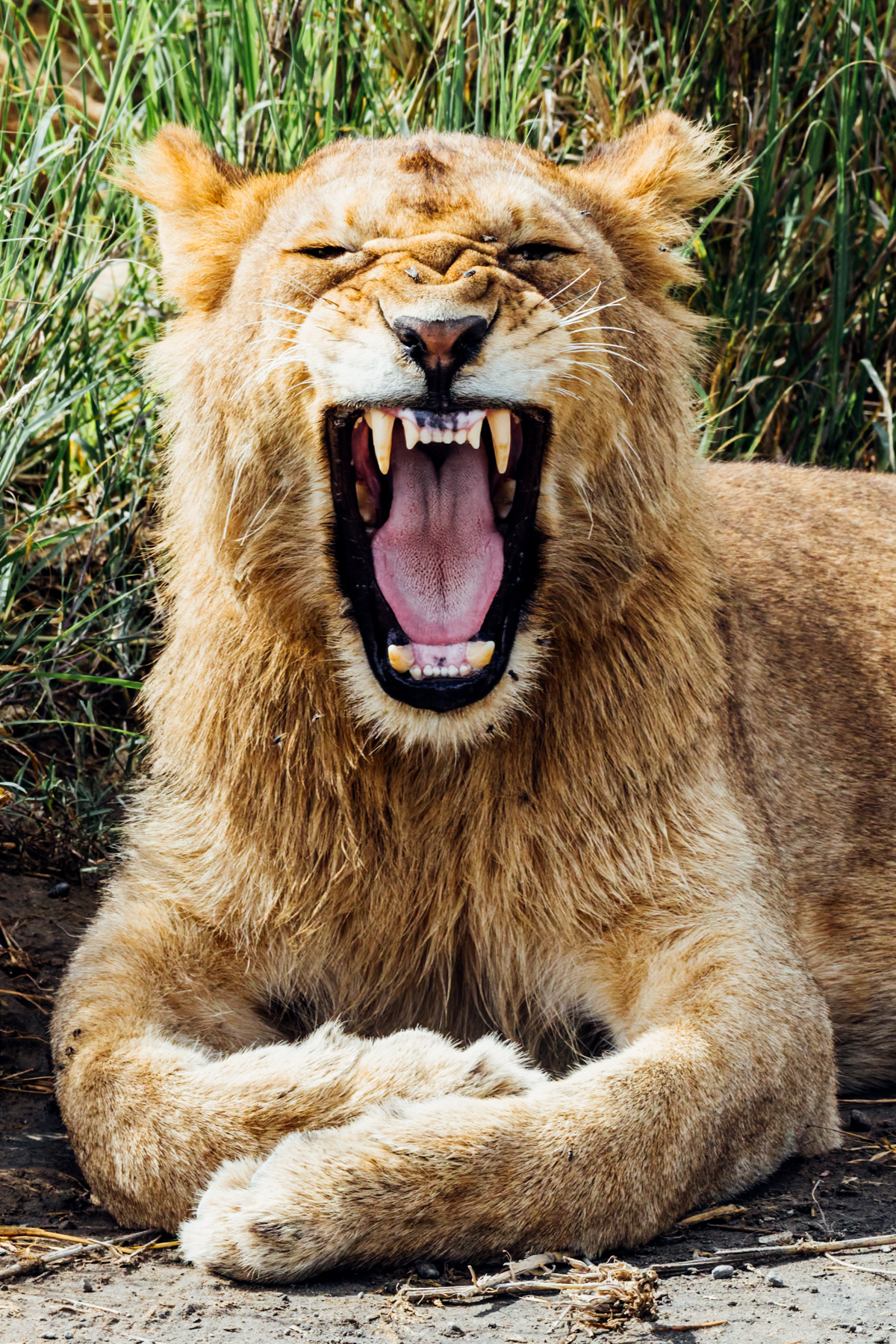
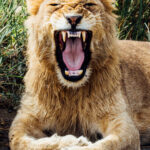
A flash of teeth isn't always aggression. Lionesses often use facial expressions, growls and snarls to discipline cubs or maintain order within the pride (image by Virginia Wilde)
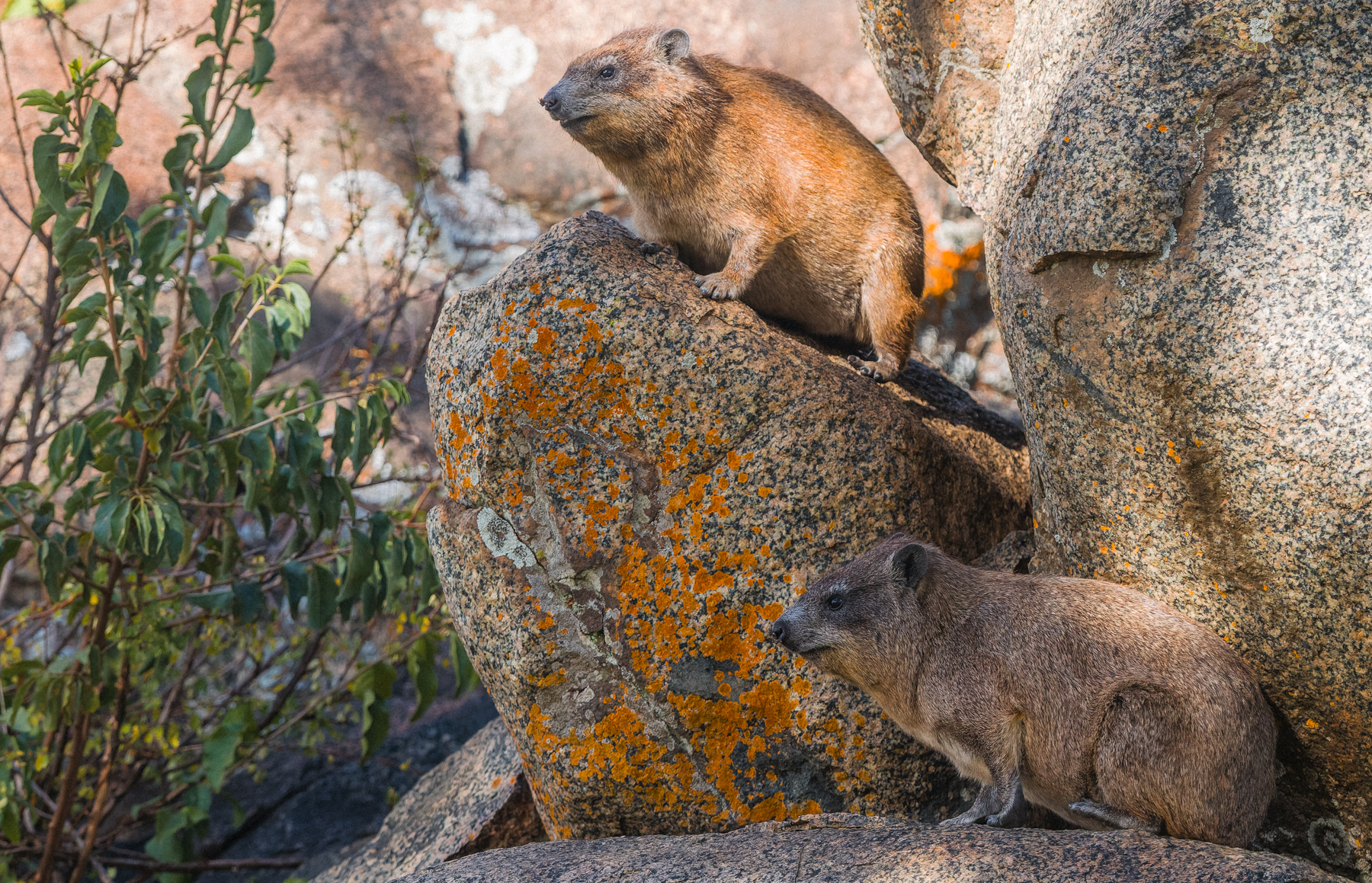
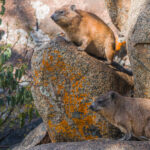
A pair of Rock Hyrax - famed as the closest living land relatives to the Elephant - claim this patch of Serengeti rock as their own. Despite adapting to look like small rodent herbivores, Hyrax have actually kept many foundational Elephant-like traits (image by Virginia Wilde)
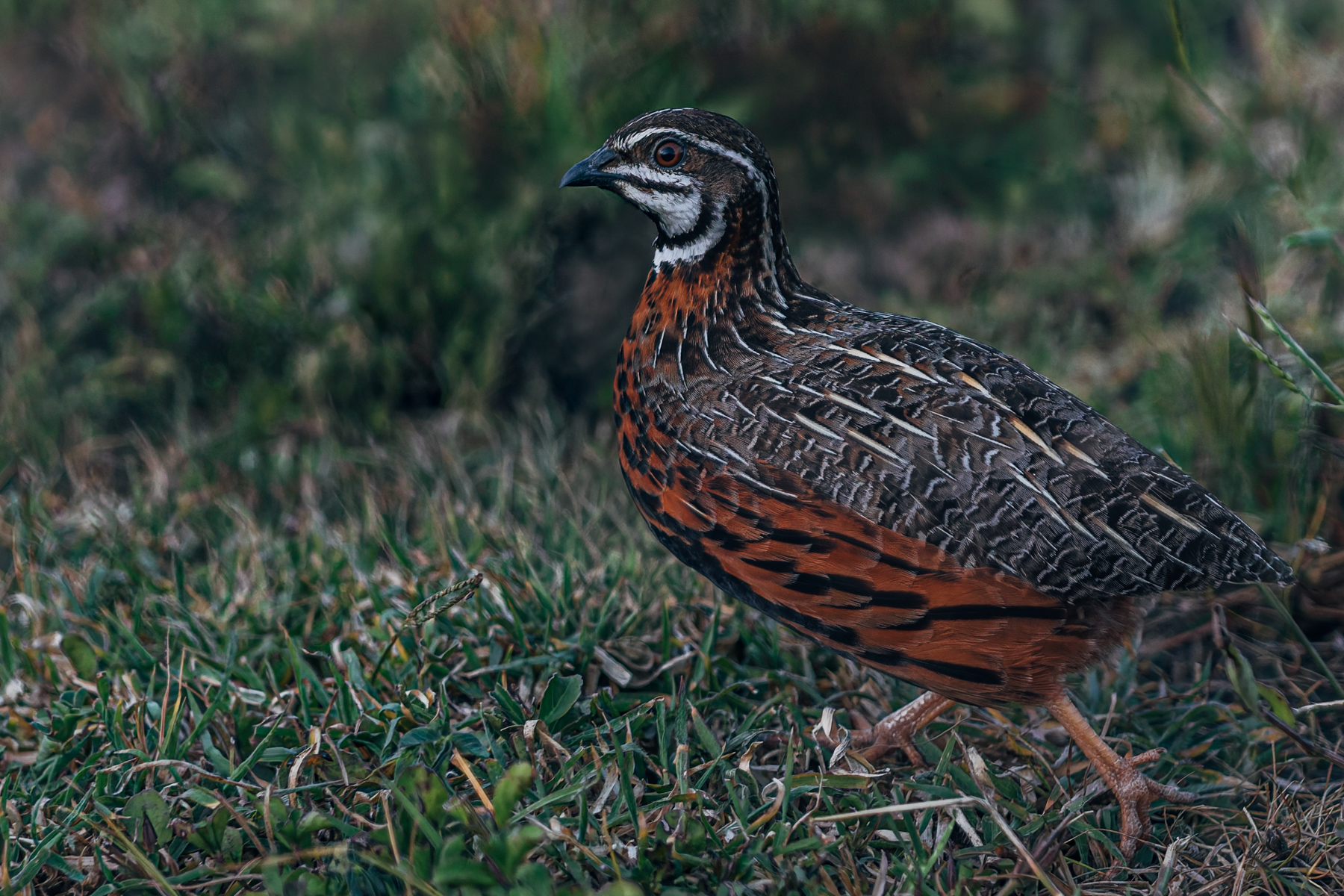
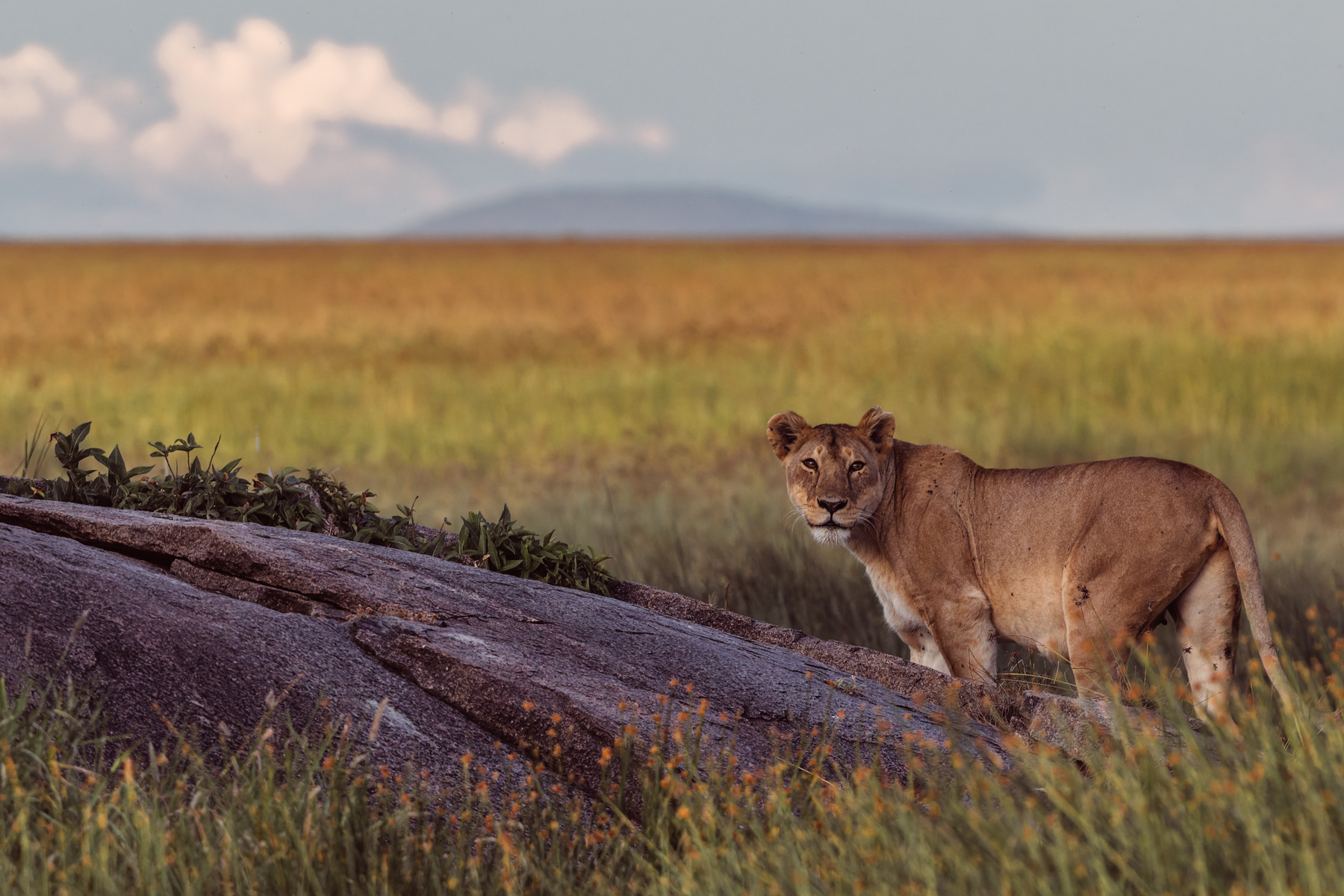
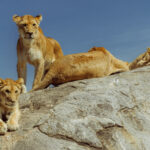
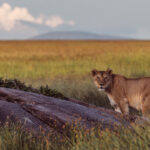
kopjes. These rocky outcrops are among the oldest features in the landscape, but Lions value them for thoroughly practical reasons; somewhere cool to rest, somewhere high to watch and somewhere cubs can quickly hide (image by Virginia Wilde)
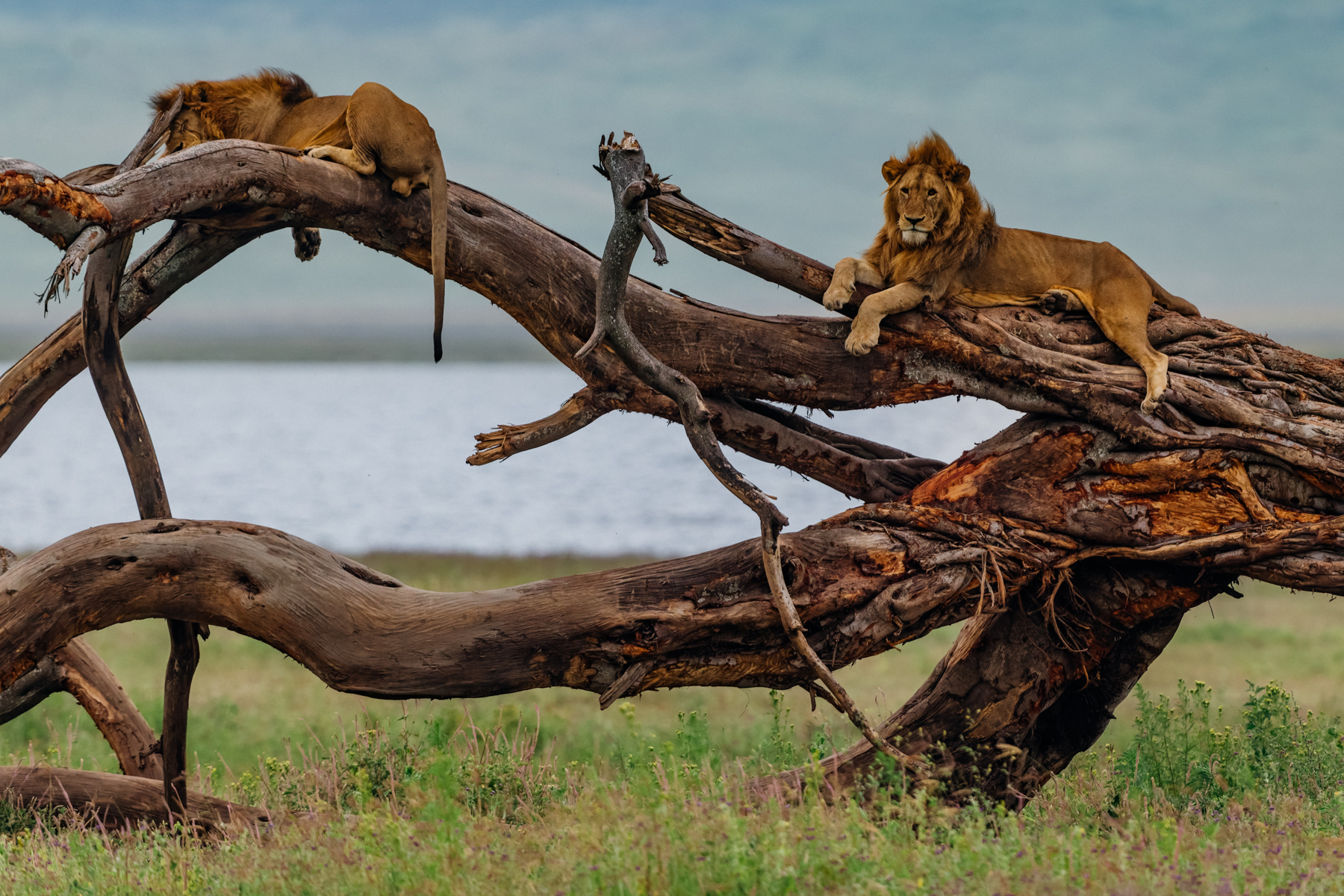
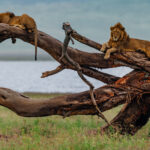
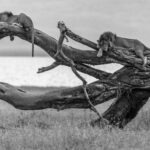
Not all Kings choose thrones of stone. These two male Lions have claimed a weathered tree with panoramic views across the meadows and rivers of the Ngorongoro Crater (image by Virginia Wilde)
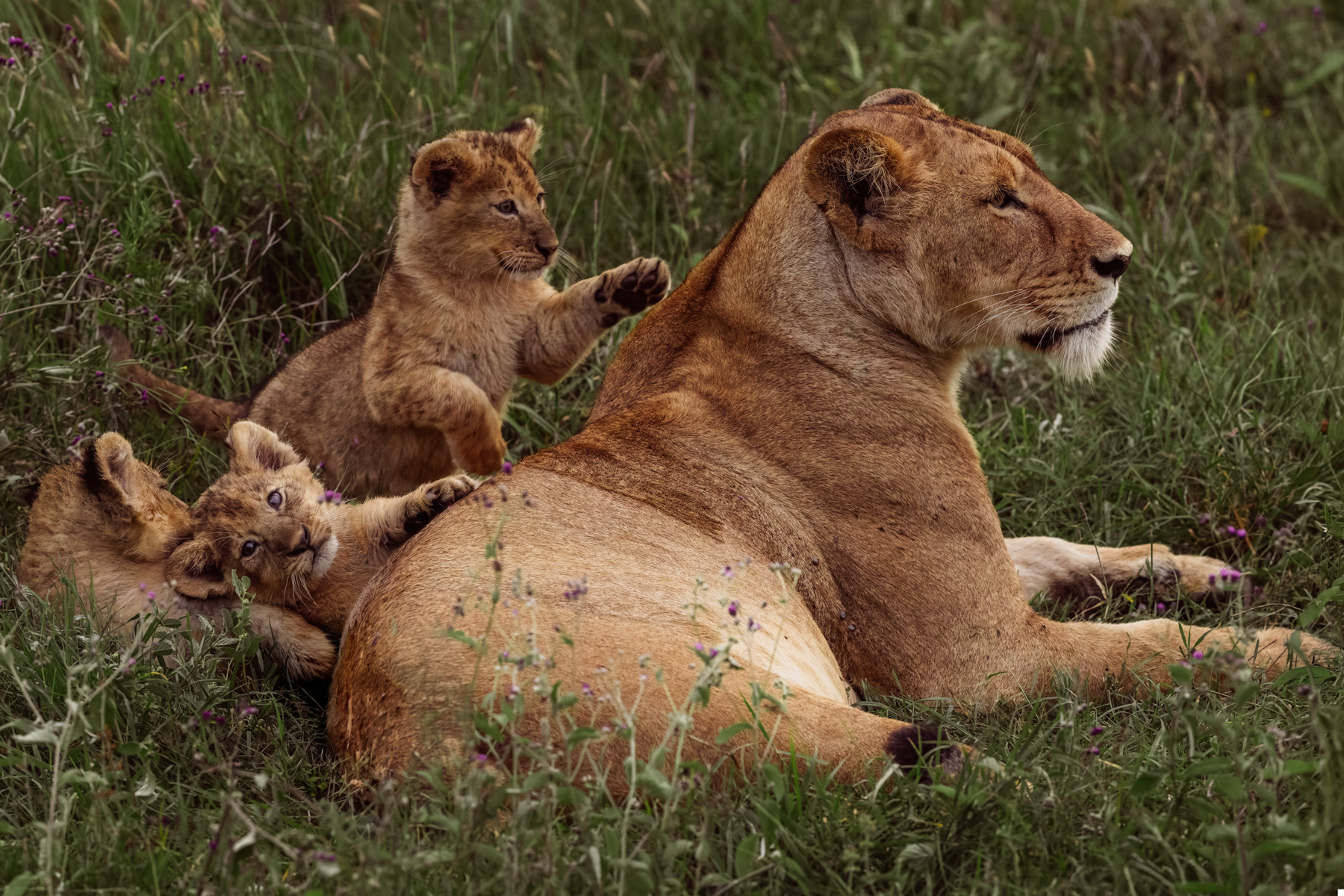
A Lion cub looks as if it's smiling broadly, just before it pounces on its mum. We watched these three cubs play for more than an hour after the sun rose in Tanzania's Ngorongoro Crater (image by Virginia Wilde)
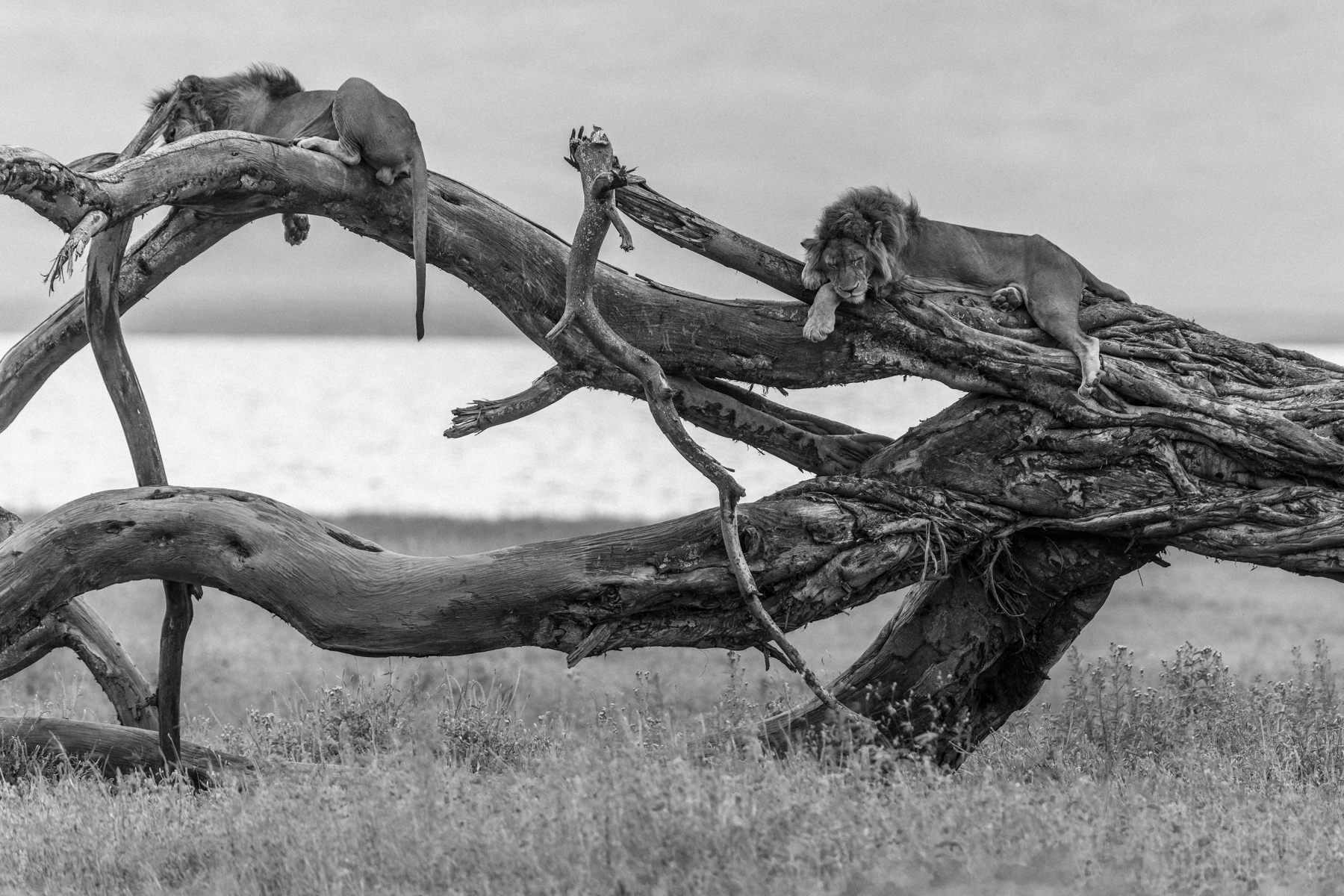
Years of wind and weather twisted this fallen tree into an extraordinary shape. But on this particular evening, it served as a perfect sanctuary for two male Lions escaping the heat and the bite of Tsetse flies (image by Virginia Wilde)
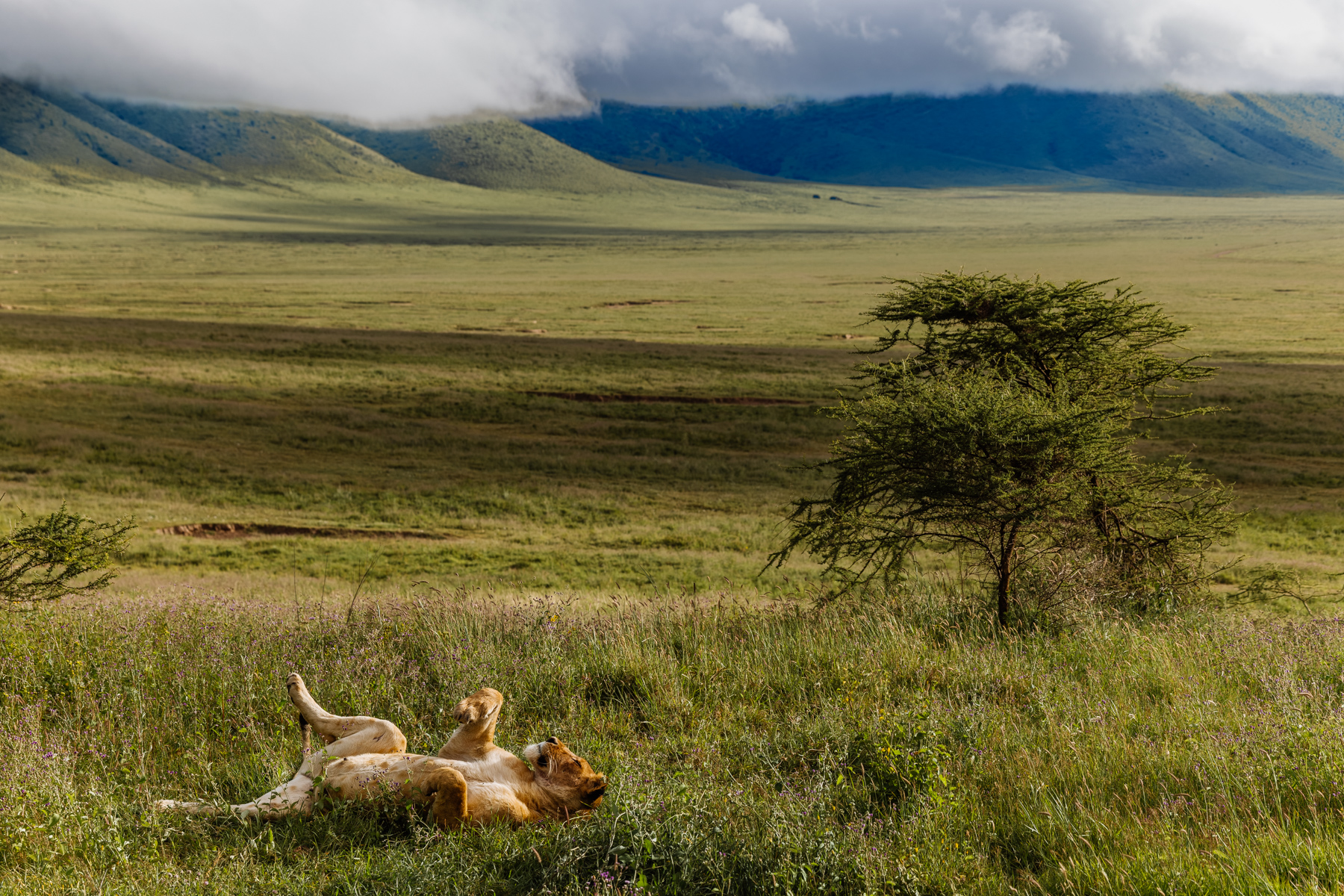
Not every moment in the life of a lion is dramatic. Sometimes the morning's biggest decision is whether to roll to the other side. And for this lioness, comfort clearly outweighs dignity (image by Virginia Wilde)
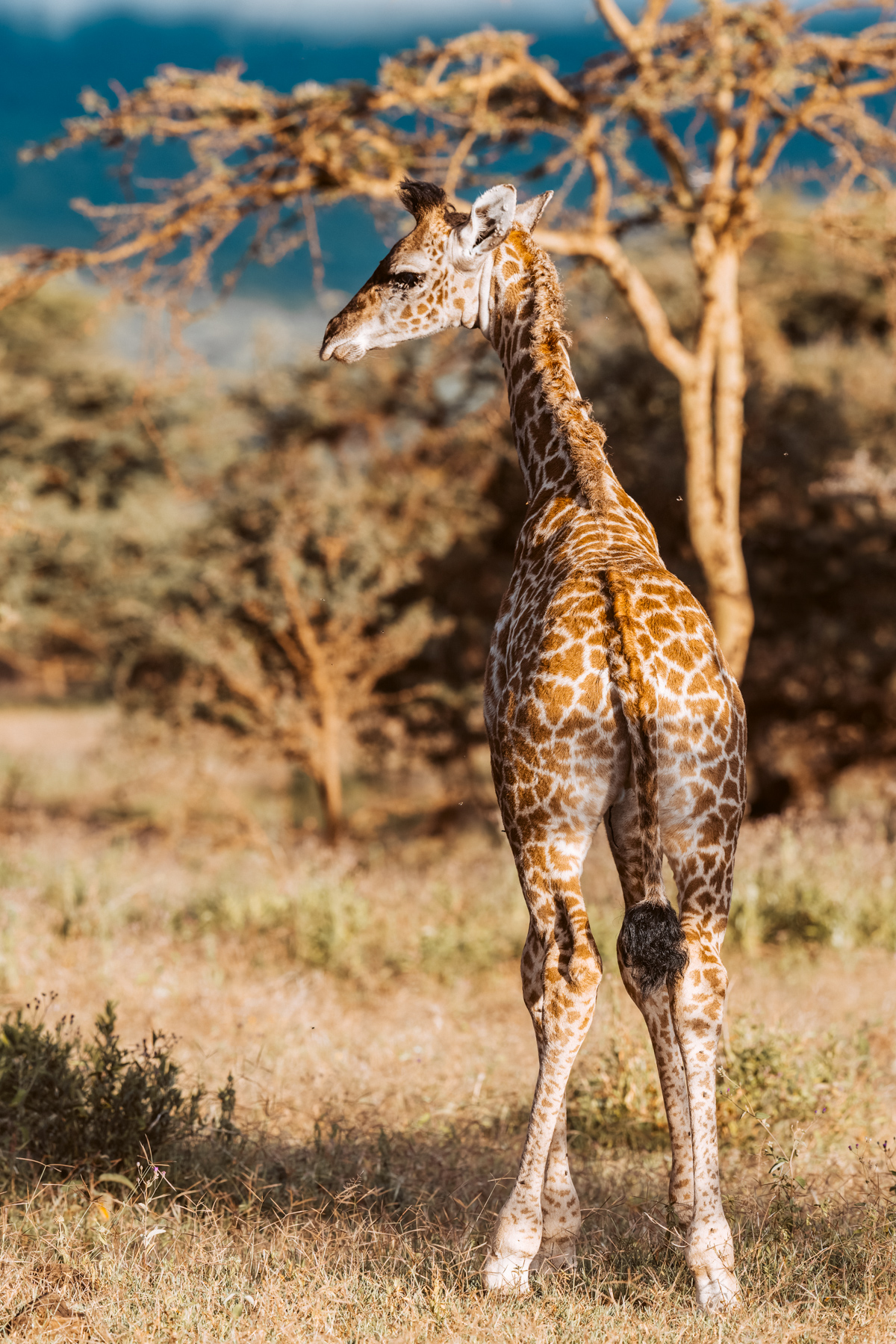
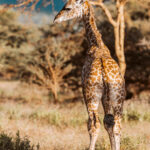
A juvenile Masai Giraffe pauses in the grass of Ndutu, in the Serengeti, before gathering storm clouds release a cascade of heavy rain (image by Virginia Wilde)
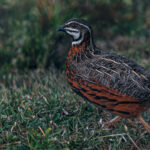


An unlikely meeting between a Grey-breasted Spurfowl and a Kirks Dik Dik in the Tanzanian bush. Both rely on stillness and camouflage
An old bull Elephant - probably over 40 years old - displays remarkably large tusks. Bulls carrying ivory of this size are now tragically uncommon because decades of poaching disproportionately removed the largest-tusked Elephants (image by Virginia Wilde)
A Lioness supervises as her cubs turn a fallen tree into an adventure playground, on a misty morning in Tanzania's Ndutu region (image by Virginia Wilde)
A Leopard surveys the Serengeti from the branches of an Acacia tree. Powerful shoulders and flexible ankles allow them to climb headfirst up a tree and descend headfirst again; something few large cats can manage (image by Virginia Wilde)
Every troop has one that insists on doing things differently. For one uplifting moment, this particular Olive Baboon is convinced it's a Human (image by Virginia Wilde)
Spotted Hyenas live in some of the most coplex societies in the animal kingdom. A single clan can number more than 80 individuals, led by dominant females (image by Virginia Wilde)
The cub watches; the mother watches everything else. Young Cheetahs spend up to 18 months learning by observation before becoming independent (image by Virginia Wilde)
A pair of Lionesses greet each other by a lake in Tanzania's Ndutu region. Lions are highly social felines who display affection to reinforce trust and build group cohesion (image by Virginia Wilde)
A Southern Red Bishop rests for a moment in the grasslands of Tanzania's Ngorongoro Crater (image by Virginia Wilde)
A bull African Savanna Elephant gives himself a thorough dusting in Tanzania's Ngorongoro Crater. Dust is both nature's answer to sunscreen and an effective insect repellent (image by Virginia Wilde)
A female Variable Sunbird sups on the nectar-rich flowers of Lion's Ear (Leonotis nepetifolia). The bird's slender, curved bill is perfectly adapted for reaching deep into the orange tubular blooms (image by Virginia Wilde)
Even Africa's most formidable predator has off-duty hours. Lots of them, if you are a male lion, like this sleeping juvenile. In Ndutu, a Lioness checks on her drowsy companion (image by Virginia Wilde)
There are estimated to be as many as 4,000 African Lions living in the Serengeti ecosystem, spread across approximately 300 different prides. This makes it one of the largest and most significant Lion populations anywhere in the world. Here, a cub decides he's had enough of this particular tree (image by Virginia Wilde)
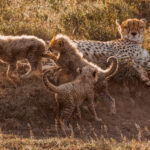
These adorable six-week-old Cheetah cubs tumble around, displaying their fluffy white mantles as they play. This special coat - unique to Cheetah infants - helps to disguise them among the grasses of the Serengeti; a small but vital advantage in a world filled with predators (image by Virginia Wilde)
Sheltered in the fork of a weathered tree, a young Lion's gaze appears piercing (image by Virginia Wilde)
"Mum! Your tail started it!" Lion cubs spend much of their day wrestling and pouncing, rehearsing the skills that will one day bring down antelope (image by Virginia Wilde)
The Lappet-faced Vulture is not the prettiest bird on the savannah - until it opens its wings. Then it's impossible to ignore (image by Virginia Wilde)
The Great Migration at its most kinetic: a torrent of spray and Zebra, one river, no room for hesitation (image by Virginia Wilde)
"I meant to look like this!" A Cape Buffalo wears his mud bath with unmistakable confidence. And in his view, the heavier the coating, the better (image by Virginia Wilde)
Bathtime on one of the Serengeti's rocky kopjes. Judging by this cub's expression, it seems as if he isn't entirely convinced the wash from mum was necessary (image by Virginia Wilde)
Swaying in the breeze, a Pin-tailed Whydah - with his breeding season striking long tail - clings to a shrub in Tanzania's Serengeti (image by Virginia Wilde)
Small trunk. Big attitude. An Elephant calf accompanies its mother through the spring flush of Tanzania's Ngorongoro Crater (image by Virginia Wilde)
A passing shower and bright afternoon sun combine to paint Tanzania's Ngorongoro Crater with a vivid rainbow. The buffalo carried on regardless (image by Virginia Wilde)
Aww, I never thought you belonged among Africa's famous 'Ugly Five' (consisting of the Warthog, Wildebeest, Marabou Stork, Lappet-faced Vulture and - yes - the Spotted Hyena.) Don't worry Hyena. To me, you're a handsome animal indeed (image by Virginia Wilde)
Cheetah cubs pause briefly - frozen in time in this image - as the dust made by them tearing around their corner of the Serengeti, like crazy cats, forms clouds around them (image by Virginia Wilde)
Lion cubs thread their way through fallen acacias as the last of the morning's mist hangs over the green-season grass (image by Virginia Wilde)
Portrait of an Eastern Black Rhino and her calf, of approximately 15 months old, in Tanzania's Ngorongoro Crater (image by Virginia Wilde)
Greater Flamingos feed and preen in the cold blue light of dawn, taken on a misty morning in Tanzania's Ndutu region (image by Virginia Wilde)
A male Little Bee-eater presents a freshly-caught insect to his partner; one of the species' most charming courtship rituals (image by Virginia Wilde)
Stripes, spray and split-second decisions; the beautiful chaos of a Zebra herd on the move in the Lion-stronghold of Tanzania's Ndutu region (image by Virginia Wilde)
A Black-backed Jackal stands guard over its inquisitive pup. Jackals are among Africa's most devoted canids, with both parents sharing hunting and pup-care duties (image by Virginia Wilde)
One of the great things about the sheer abundance of wildlife in northern Tanzania is that you can experiment with all sorts of abstract photographic techniques with herds. Here, Wildebeest tear across a river (image by Virginia Wilde)
Inquisitive juvenile Vervet Monkeys are often the first to investigate unfamiliar sights. This youngster has a stare that appears almost questioning (image by Virginia Wilde)
This Plains Zebra foal barely acknowledged its passengers. Oxpeckers are so closely associated with large mammals that they may spend most of the day riding, feeding and moving with the same herd (image by Virginia Wilde)
"I'll push him from the rear and you thwack him on the head. Got it, right!" To see four Cheetah cubs play in this golden light felt special indeed. Cheetah populations have plummeted over the last century. And up to 90% of cubs die before reaching independence, predated by Lion, Leopard and Spotted Hyena (image by Virginia Wilde)
Not every moment is regal. A Lioness indulges in one of the savannah's greatest pleasures: a vigorous roll in the grass (image by Virginia Wilde)
This male Mwanza Flat-headed Rock Agama looks like its run amok at a paint shop. Agama lizards are famous for their remarkable, rapid colour changes (image by Virginia Wilde)
No spa. No sunscreen. Just several kilos of finely powdered Serengeti (image by Virginia Wilde)
As Africa's largest owl, the Verreaux's Eagle Owl is always a prized sighting. Standing up to 66cm tall, their wingspan approaches 1.5 metres (image by Virginia Wilde)
The Elephant equivalent of 'How've you been?' The Elephant's trunk serves as nose, hand and voice all in one - used to smell, feed, drink and communicate (image by Virginia Wilde)
A male Variable Sunbird showcases its beautiful iridescent plumage as it searches for nectar and small insects (image by Virginia Wilde)
It looks like a tender moment between a Lioness and her cub. But we watched this pair for ages - and actually the cub got stuck up the tree. Eventually his mum helped to guide him safely down. Like Lion, like Human (image by Virginia Wilde)
A Leopard rests in the branches of a Serengeti Sausage Tree, almost disappearing in the tangle of bark and shadow (image by Virginia Wilde)
A Masai Giraffe feeds in the woodlands of northern Tanzania. A giraffes' dark, prehensile tongue can reach almost 50cm (20 inches) allowing it to strip leaves from thorny acacia branches, while avoiding most of the spines (image by Virginia Wilde)
Evolution occasionally abandons restraint. The Pin-tailed Whydah's streaming tail is the result of generations of female choice. The male's tail can grow to several times the length of its body. It's spectacular to look at, but hardly an advantage unless you're trying to impress a mate (image by Virginia Wilde)
Every fearsome Lion starts somewhere. Today's nemesis: a patch of purple flowers (image by Virginia Wilde)
A pair of Zebra stallions rear up during a sparring contest on Tanzania's Ndutu plains. These frequent bouts help to establish dominance and defend breeding rights (image by Virginia Wilde)
Golden blooms stretch to the horizon as a Western White-bearded Wildebeest (A subspecies of the Blue Wildebeest) stands still in a sea of flowers in Tanzania's Ngorongoro Crater (image by Virginia Wilde)
Cheetah cubs spend their first weeks learning through play. Judging by this scene, that includes discovering the structural strength of your brothers and sisters (image by Virginia Wilde)
Triplet Lion cubs stand on their resting mum - who clearly wishes today's alarm clock had not gone off in her corner of the Ngorongoro Crater (image by Virginia Wilde)
One of Africa's smallest hunters - a Little Bee-eater returns with breakfast in Tanzania's Ngorongoro Crater (image by Virginia Wilde)
A Dark Chanting Goshawk strides off with its lizard prey clutched in its talons. Goshawks are sometimes known as 'the psychopaths' of the raptor world for their intense and ruthless ambush predatory hunting style (image by Virginia Wilde)
A Tawny Eagle's eyesight is among the sharpest in the animal kingdom, allowing it to detect the slightest movement far below. It thrives by reading the landscape as carefully as the wind (image by Virginia Wilde)
"Shall I leap from this rock? Or climb down more carefully?" A young Lion does what every young child does: weigh up his chances of injury against the fun of jumping off high stuff (image by Virginia Wilde)
The great Migration is anything but orderly. Dust, noise and sheer numbers turn even a simple drink into chaos. And imagine trying to find your family in this lot. Somehow, they usually do (image by Virginia Wilde)
I've always loved Bateleur Eagles. Their name 'bateleur' translates to 'street performer', 'juggler' or 'acrobat' - due to their incredibly gymnastic displays and rocking moves in-flight (image by Virginia Wilde)
Infant Olive Baboons are all ears and oversized feet. Growing into them takes some time (image by Virginia Wilde)
Warthogs may not win any beauty contests, but they are among Africa's most successful survivors. A sow will often reverse into her burrow, so she can face outward, giving any unwelcome visitor a sharp encounter with her tusks (image by Virginia Wilde)
'One day, young Lion, this grassland will be yours for the taking.' A handsome male Lion - his face too young to be scarred from battles of dominance - surveys his home in the Serengeti (image by Virginia Wilde)
Barely five weeks' old, these lion cubs venture out from the safety of their den in an area of the Serengeti known as Utafiti Rock, under the watchful gaze of their mother (image by Virginia Wilde)
The Grey-Crowned Crane wears Africa's most extravagant hairstyle. Courtship, however, is all about the quieter gestures (image by Virginia Wilde)
A Lappet-faced Vulture, Africa's largest and most powerful vulture, banks overhead. With a wingspan approaching 2.9 metres, it dominates the skies above the Serengeti (image by Virginia Wilde)
An African Elephant can lift well over 250 kg with its trunk - yet it's sensitive enough to pick up a single blade of grass. Few animals combine brute strength and such remarkable dexterity. The dust cloud isn't for show. It helps to protect the skin from biting insects
The hardest part isn't always catching the impala - it's dragging it up into the tree. Leopards hide their kills off the ground and as high up as they can, to protect the food from scavengers (image by Virginia Wilde)
Two bull Elephants stride across the floor of the Ngorongoro Crater, where rich volcanic soils nourish permanent grasslands. Some of Tanzania's finest surviving Tuskers still roam this remarkable natural amphitheatre (image by Virginia Wilde)
A Spotted Hyena heads off with its prized carcass of a Thomson's Gazelle, while a hopeful Black-backed Jackal trails behind. Jackals often shadow larger predators and scavengers, ready to snatch any scraps left behind (image by Virginia Wilde)
Among the wildflowers of the Ngorongoro Crater, a young male Lion rests with half of his attention still on the world (image by Virginia Wilde)
An Eastern Black Rhino carries an entire community. Oxpeckers hunt ticks, while Cattle Egrets seize insects disturbed by every thunderous step (image by Virginia Wilde)
A herd of Cape Buffalo graze beside Lake Magadi in Tanzania's Ngorongoro Crater, while a passing rain shower creates a beautiful rainbow in a dip around the crater's forested rim (image by Virginia Wilde)
Mum has this covered. For now, this Elephant calf is quite happy to let someone else keep an eye on things (image by Virginia Wilde)
To Cheetah cubs, mum's body represents equal parts nursery, playground and jungle gym. And if you find a Cheetah mother enjoying a peaceful lie-down, her cubs probably haven't found her yet (image by Virginia Wilde)
Tanzania's Ngorongoro Crater is one of the best places in Africa to encounter wild elephants. This bull African Savanna Elephant (also known as an African Bush Elephant) paused just long enough to have his portrait taken, before continuing on his way (image by Virginia Wilde)
Graceful they may be, but Impalas survive through constant vigilance. Their large ears can swivel independently to pinpoint the faintest sound (image by Virginia Wilde)
A tender moment between a Lioness and her cub. Encountering this lion family, on a misty morning among the gnarled trees of Tanzania's Ndutu region, was one of my favourite wildlife encounters of this year (image by Virginia Wilde)
Spray flies as Plains Zebra thunder across the shallows in Ndutu, Tanzania. Their bold stripes may also help to confuse predators when the herd is on the move (image by Virginia Wilde)
Built for endurance rather than elegance, Wildebeest cover hundreds of kilometres each year in search of fresh grazing. Occasionally, endurance gives way to exhilaration - and the plains become a blur of flying hooves and dust (image by Virginia Wilde)
Leopards spend much of their lives unseen. So when one looks back, it is difficult to tear your eyes away. We found this female in an Acacia tree on our first afternoon in Ndutu, Tanzania (image by Virginia Wilde)
A troop of Olive Baboons on their morning commute in Tarangire National Park, Tanzania. The dominant male towers over many of his peers (image by Virginia Wilde)
Lionesses hunt together, raise each other's cubs and defend the pride as a team. Affection isn't unusual - it's their co-operation and strong bonds that make these cats so successful (image by Virginia Wilde)
For a Cheetah cub, every passing leg is an invitation to play - and every patient mother knows it (image by Virginia Wilde)
Portrait of a female Cheetah. These cats' famous black 'tear marks' help to reduce glare in bright sunlight, sharpening its focus as it scans the plains (image by Virginia Wilde)
There are approximately 1,000 Leopards in the Serengeti National Park ecosystem, serving as a crucial stronghold since Leopard populations are declining across most of Africa (image by Virginia Wilde)
A Lioness crosses the flower-filled plains of Tanzania's Ngorongoro Crater, with the crater walls forming a natural amphitheatre around her. It's one of the few places in Africa where predators and prey live year-round within the world's largest intact volcanic caldera (image by Virginia Wilde)
A young male Lion emerges from the long grass of the Serengeti. A Lion's mane continues to develop for four or five years, gradually darkening and thickening as the animal reaches full maturity (image by Virginia Wilde)
The Lions of the Ngorongoro Crater live in one of Africa's most enclosed ecosystems. Surrounded by the Crater walls, every waterhole, track and comfortable resting place - like this fallen tree - becomes part of a world of familiarity (image by Virginia Wilde)
On a cool, misty morning in Tanzania's Ndutu, we found this Lioness with her three healthy cubs, on their first patrol of the day (image by Virginia Wilde)
Barely more than a thousand Eastern Black Rhinos remain in the wild, making every sighting (and every calf) a conservation success story. Even the egrets seem keen to escort the next generation, here in Tanzania's Ngorongoro Crater (image by Virginia Wilde)
Portrait of an Eastern Black Rhinoceros - one of Africa's most endangered large mammals. Once numbering around 70,000 across Africa, Eastern Black Rhino numbers fell to fewer than 400 by the mid 19980s, before intensive protection helped populations to slowly climb again (image by Virginia Wilde)
For Wildebeest, momentum is contagious. A few break into a run, and within moments the whole herd seems to agree that this is now an excellent idea (image by Virginia Wilde)
Run Cheetah, run! A mother Cheetah chases her female cub on the short grasses of Tanzania's Ndutu plains - teaching her vital hunting skills (image by Virginia Wilde
Not every hyena is on the hunt. Despite being built for endurance, even they know when it's time to stop and cool their paws. This shallow river is a Spotted Hyena's equivalent of a paddling pool (image by Virginia Wilde)
Every family gathering has one member who refuses to sit down for the photograph. One Lioness keeps watch while the rest of the pride relaxes on a sun-warmed granite kopje in the Serengeti (image by Virginia Wilde)
Some lovely light falls upon a Secretary Bird - renowned as one of Africa's weirdest birds. It struts around the savannah with the head of an eagle and the legs of a stork. In reality, it is a bird of prey (with a snake-killing prowess) and in a family all to itself (image by Virginia Wilde)
Every toddler has questionable hobbies. This one's happened to involve Elephant dung. Their trunks are as much sensory organs as they are tools - able to detect scents from remarkable distances (image by Virginia Wilde)
The granite kopjes of the central Serengeti have watched over Lions for millennia. There, cool crevices and elevated ledges provide Lionesses with sheltered places to raise young cubs. On Utafiti Rock, this cub's fiercest encounter was with its mother's rasping tongue (image by Virginia Wilde)
Lionesses are the permanent members of a pride, while males usually come and go. Daughters often remain with their mothers for life, creating prides that can span several generations (image by Virginia Wilde)
'Mirror, mirror on the wall, Who is the fairest and most handsome young Lion of them all?' Well, you, young Sir. A juvenile Lion is reflected in a pool as dusk falls in Ndutu (image by Virginia Wilde)
An African Golden Wolf takes the direct route across a flooded track in Tanzania's Ngorongoro Crater. Wet feet are clearly not part of the plan (image by Virginia Wilde)
A young male Lion pauses to assess his surroundings. Lions may look unhurried, but they're constantly gathering information through sight, scent and sound (image by Virginia Wilde)
An Acacia tree isn't the first place you'd expect to find a Lion. Tree-climbing is a learned behaviour rather than an instinct, and in some parts of East Africa it has become a speciality. It's thought that shade, flies and a safe viewpoint play a part (image by Virginia Wilde)
A Cheetah mother will usually stay with her cubs for 16-20 months, teaching them everything from stalking techniques to recognising danger. Which is why she sometimes needs to rest (image by Virginia Wilde)
Draped across the branches of an Acacia tree, as if it were an armchair, we found this stunning Leopard. We searched for this particular cat for hours (until we found her in this tree) never forgetting that Leopards are usually hiding in plain sight (image by Virginia Wilde)
"I love you, but I am not a climbing frame." How many times have I said this to my own kids? At least I have wine. But life is the same for this Cheetah mum, who very patiently tolerates her cub bouncing repeatedly on her head (image by Virginia Wilde)
For a young male Lion such as this one, his greatest battles often lie ahead. Before he has a chance to rule a pride, he must first survive life as a nomad, avoiding older males while searching for allies and opportunity (image by Virginia Wilde)
To these swallows, a Common Eland is a mobile buffet with horns. They pick off the insects disturbed as the eland moves through the grass, turning the herbivore into an unwitting hunting assistant (image by Virginia Wilde)
The African Cape Buffalo looks built for battle; the Cattle Egret behaves as though it owns the place. This egret gives a buffalo the full inspection in the Ngorongoro Crater (image by Virginia Wilde)
A Bare-faced Go-Away Bird in a characteristic bowing display. Despite their ungainly appearance on the ground, Go-Away Birds are agile climbers, using their strong feet to scramble effortlessly through the canopy in search of fruit and leaves (image by Virginia Wilde)
Five Lion cubs rest by their mum on the twisted bark of a gnarled fallen tree. We happened across this scene as dusk fell in Tanzania's natural amphitheatre - the Ngorongoro Crater (image by Virginia Wilde)
An Egyptian Goose hurries out of the way of a White-bearded Wildebeest, just two of thousands of animals and birds that throng around a watering hole in Tanzania's Ngorongoro Crater (image by Virginia Wilde)
What a lovely moment as a Barn Swallow swoops in front of an infant African Savanna Elephant. This young calf raises its trunk, as if in joy. Elephants take years to master the use of their trunks, which contain around 40,000 muscles (image by Virginia Wilde)
Rush hour on the Serengeti. Nobody's giving way, everyone's thirsty, and patience is in short supply. Just a snapshot of the chaos of the Great Migration (image by Virginia Wilde)
'Last one back to the den, loses!' Even the world's fastest land mammal has to start somewhere. By joining in on the chase, a Cheetah mum helps her cub develop the speed and agility needed to catch prey (image by Virginia Wilde)
Young Olive Baboons spend years shadowing their mothers, learning everything from what to eat to the rules of troop life. It's one of the longest childhoods on the African plains. But judging by this infant's tongue, concentration may still be a work in progress (image by Virginia Wilde)
Grooming stimulates circulation, removes dirt and parasites and helps keep young cubs healthy during their most vulnerable months. And probably feels pretty good for this youngster, too (image by Virginia Wilde)
A White-browed Coucal pauses briefly enough for a photograph. These secretive birds spend most of their time hunting insects, reptiles and small mammals in dense vegetation (image by Virginia Wilde)
The largest kestrel in Africa, this Greater Kestrel usually hunts from exposed perches, dropping swiftly onto rodents, lizards and large insects (image by Virginia Wilde)
While her cubs run themselves ragged, this Cheetah mum takes five minutes for herself. The cubs are all curiosity and chaos; their mother has clearly mastered the art of selective attention (image by Virginia Wilde)
As a wave of Wildebeest in the Great Migration ran right past the noses of some dozing male Lions, we groaned. Only the Lionesses were alert enough to make a casual attempt at a hunt (image by Virginia Wilde)
A juvenile African Elephant browses on the lush floor of the Ngorongoro Crater. The crater's fertile volcanic soils support one of Africa's highest concentrations of large mammals (image by Virginia Wilde)
This tranquil moment with a Spotted Hyena was actually one of my favourite scenes in Ndutu. Here, Tanzania's most misunderstood predator takes a quiet break. Spotted Hyenas live in complex social clans led by powerful females (image by Virginia Wilde)
A sleek Augur Buzzard soars over the Serengeti, looking for prey in the grasslands below (image by Virginia Wilde)
A flash of teeth isn't always aggression. Lionesses often use facial expressions, growls and snarls to discipline cubs or maintain order within the pride (image by Virginia Wilde)
A pair of Rock Hyrax - famed as the closest living land relatives to the Elephant - claim this patch of Serengeti rock as their own. Despite adapting to look like small rodent herbivores, Hyrax have actually kept many foundational Elephant-like traits (image by Virginia Wilde)
kopjes. These rocky outcrops are among the oldest features in the landscape, but Lions value them for thoroughly practical reasons; somewhere cool to rest, somewhere high to watch and somewhere cubs can quickly hide (image by Virginia Wilde)
Not all Kings choose thrones of stone. These two male Lions have claimed a weathered tree with panoramic views across the meadows and rivers of the Ngorongoro Crater (image by Virginia Wilde)
A Lion cub looks as if it's smiling broadly, just before it pounces on its mum. We watched these three cubs play for more than an hour after the sun rose in Tanzania's Ngorongoro Crater (image by Virginia Wilde)
Years of wind and weather twisted this fallen tree into an extraordinary shape. But on this particular evening, it served as a perfect sanctuary for two male Lions escaping the heat and the bite of Tsetse flies (image by Virginia Wilde)
Not every moment in the life of a lion is dramatic. Sometimes the morning's biggest decision is whether to roll to the other side. And for this lioness, comfort clearly outweighs dignity (image by Virginia Wilde)
A juvenile Masai Giraffe pauses in the grass of Ndutu, in the Serengeti, before gathering storm clouds release a cascade of heavy rain (image by Virginia Wilde)


There can be few places on Earth more tender and violent than Northern Tanzania amid the flood of the Great Migration: Africa’s great gathering of horn, tooth and talon – all engine, muscle and memory – surging across the plains as it has for more than a million years.
For in a world that feels increasingly curated and diminished, there is something deeply reassuring about a place that still overflows with life: a thronging tide of beasts in a landscape stretched to its proper proportions; untamed, unapologetic, and with all notions of restraint abandoned.
Here, infants – predator and prey – are thrown in at the deep end. There are quiet, nurturing moments, as well as frantic ones.
Against this compelling background, this year’s Wild Images tour to the Serengeti and the majestic Ngorongoro Crater was one that barely paused for breath in the quality of its wildlife encounters.
The numbers alone were extraordinary: 115 Lions, ten Cheetahs, five Leopards, 26 different mammals and more than 120 bird species (although statistics like these will always yield to the emotional heft of actual wildlife moments).
We saw month-old Lion cubs blinking in the morning light in the Ngorongoro caldera; a Cheetah shepherding her four cubs in the Serengeti at sunset and Zebra exploding through floodwater, their reflections shattered into silver. We had the heart-stopping moment of an ‘almost’ Lion hunt, and a Leopard dragging a carcass up a tree – before silently melting from view.
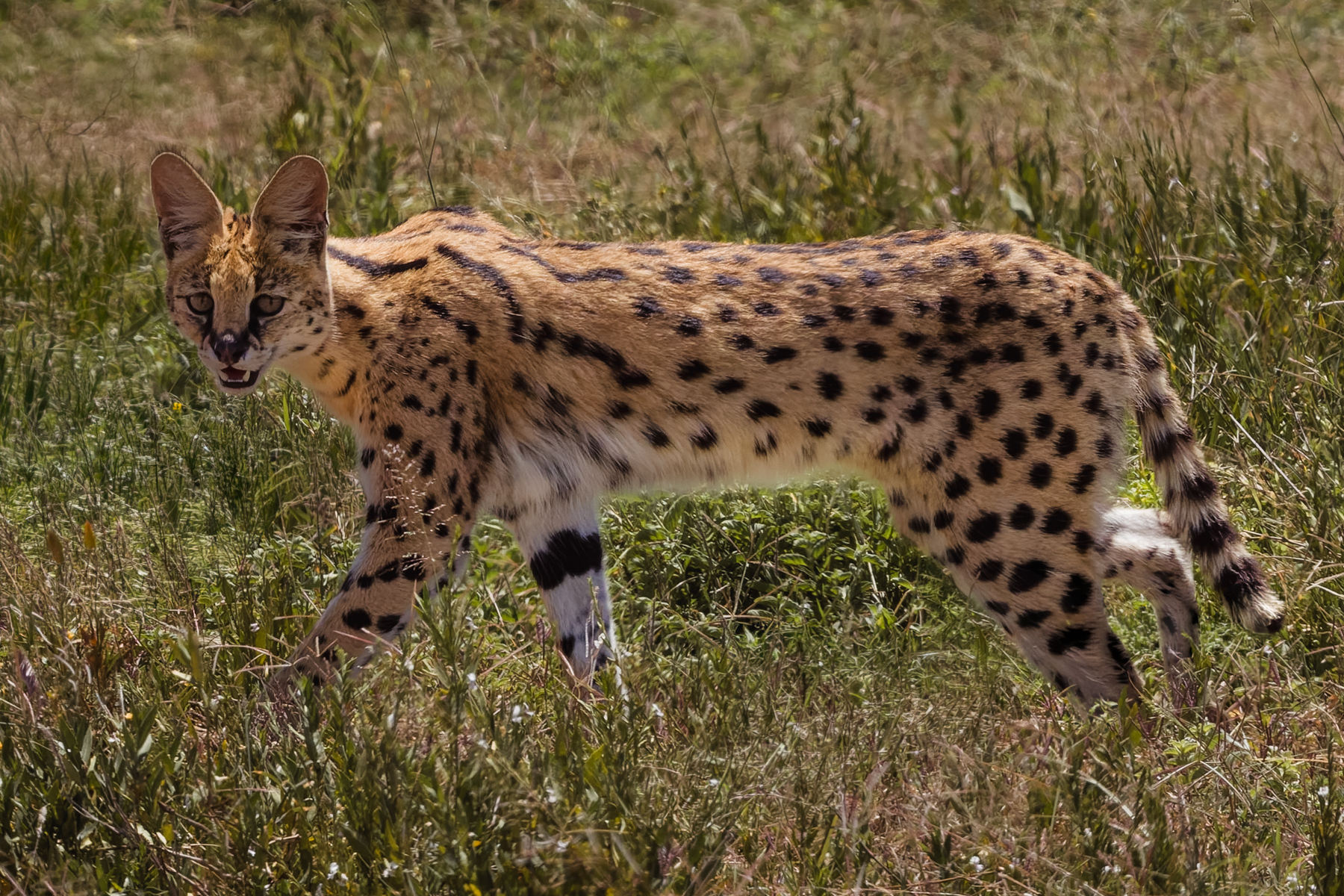
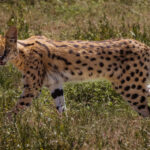
Then there were the quieter encounters. Elephants enveloped in clouds of ochre dust; three mist-soaked Lion cubs scrambling over a fallen tree in Ndutu. A critically endangered Eastern Black Rhinoceros rubbing horns with its calf; a Serval ghosting through the grass.
For bird-lovers, we had eight species of diurnal raptor, including a Dark Chanting Goshawk seizing its lizard prey and prized sightings of Freckled Nightjar, Helmeted Quail, Fischer’s Lovebird and Verreaux’s Eagle Owl.
Not to mention the eternally comical sight of male Jackson’s Widowbirds catapulting themselves into the air, before floating down – like a child’s handmade toy parachute dropped over the banisters – as they strived to impress a female.
Even during our lunch breaks, this profusion of life rarely stopped. We’d look up from our sandwiches to see Vultures spiralling on invisible currents; a Secretary Bird stalking with prehistoric intent. For a wildlife photographer, it’s hard to imagine a richer canvas.
We arrived in April, when the herds of the Great Migration ‘should’ have been pressing north from Ndutu. But Wildebeest don’t really listen to ‘should’. They pause, scatter, double back, wheel around and – at some point – drift onwards again, following rain that may have fallen many miles away.
Watching them was like watching weather. Columns of Wildebeest, Antelope and Zebra appeared on the horizon in impossible numbers – and either thundered towards us or dissolved into the heat haze and reformed somewhere else; their movement a private conversation between rain, grass and instinct.
For me, this perpetual movement is the Serengeti’s greatest trick. It doesn’t simply offer memorable wildlife encounters; it quietly dismantles your expectations of what an unhindered ecosystem can look like.
Only afterwards, back at home, do you realise how unusual it is to spend time in a wild landscape that feels so gloriously, almost improbably, alive.
—————————————————————————————————————-
Arrival in Arusha: Gateway to some of Africa’s Greatest Parks
After flying into Kilimanjaro Airport, our tour began in bustling Arusha, which enjoys mild temperatures, despite lying only a few degrees south of the Equator.
Nestled beneath the broad slopes of Mount Meru – coffee plantations on one side, volcanic highlands on the other – Arusha’s Jacaranda-lined avenues, thronging markets, art emporiums, and roadside stalls hint at the energy of a city that has grown alongside Tanzania’s thriving safari industry.
We enjoyed dinner in our beautiful garden lodge, keen to begin our 12 full safari days on a route often described as Africa’s greatest safari circuit.
It would take us west through Baobab country in Tarangire, up to the cool highlands surrounding Ngorongoro, across to the archaeological landscapes of Oldupai Gorge and finally onto the vast Serengeti, before returning via the grasslands of Ndutu.
So much more than simply a passage between national parks, our Wild Images tour was an 800 km journey – sustained by coffee, picnic lunches and as much good humour as we could muster – through landscapes connected by geology, rainfall, evolution and one of the greatest wildlife movements on Earth.
—————————————————————————————————————————
Tarangire National Park: Giants Among Giants
Leaving Arusha early in the morning, we once again, this year, had to forgo a visit to the shores of Lake Manyara National Park, where parts of the park remained waterlogged after heavy flooding in March.
But our alternative – a visit to Tarangire National Park – was no lowly substitute. Here, towering Baobab trees and scattered Acacias dominate a gently rolling landscape threaded by the mighty Tarangire River, supporting a large population of Elephants and a huge variety of birdlife.
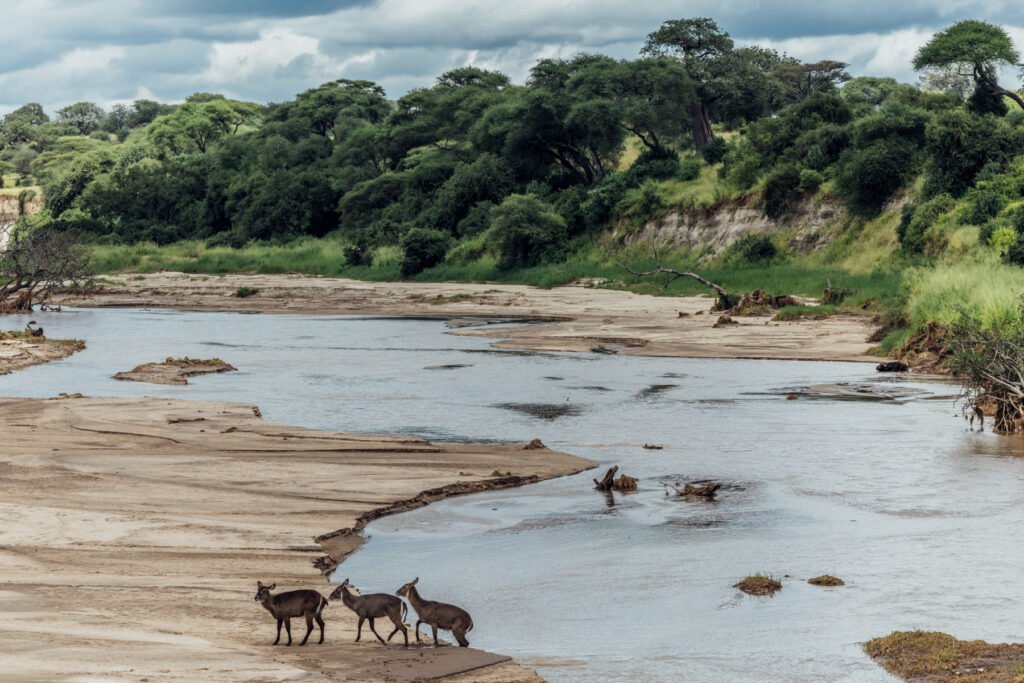
A trio of Waterbuck cross the occasionally-mighty Tarangire River, in Tarangire National Park, Tanzania (image by Virginia Wilde)
Our highlights included a charismatic troop of Olive Baboons, complete with an impressively large dominant male; herds of African Elephants; Masai Giraffe, and a host of antelope and mongoose species.
And within five minutes of pulling through the park gates, we had our best Bateleur Eagle sighting of the tour. Before long, striking Grey-crowned Cranes, African Scops Owl, Northern Red-billed Hornbill and both African Sacred and Hadada Ibis were added to the bird sighting list.
Tarangire provided a gentle overture to what would come later, with a softness to the green season (which had arrived a little early this year) that disappears during the drier months. We enjoyed a picnic lunch under the cool shade of trees, as Waterbuck and Elephants grazed in the distance below.
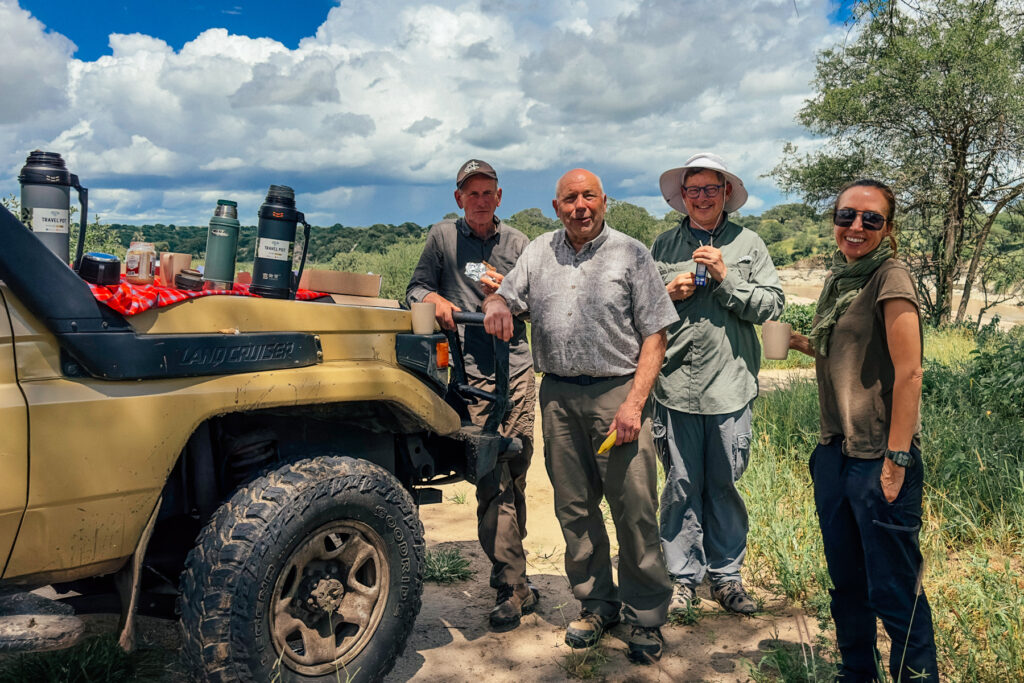
Tour members enjoy a coffee break in Tarangire National Park, at the start of our Tanzanian journey (image by Virginia Wilde)
A quick sidenote here on the absolute force of nature that was our driver/ co-guide, Exaud (known to many as ‘Eggy’.) What Eggy doesn’t know about rescuing other safari vehicles from waterlogged roads, reading the landscape, spotting wildlife and even fixing an entire gas station’s broken pumps (in the time it took me to buy the group some Colas) isn’t worth knowing.
He is, quite simply, one of the finest guides in Africa – and good company to boot. How lucky we were to have him on the tour and as a regular Wild Images guide!
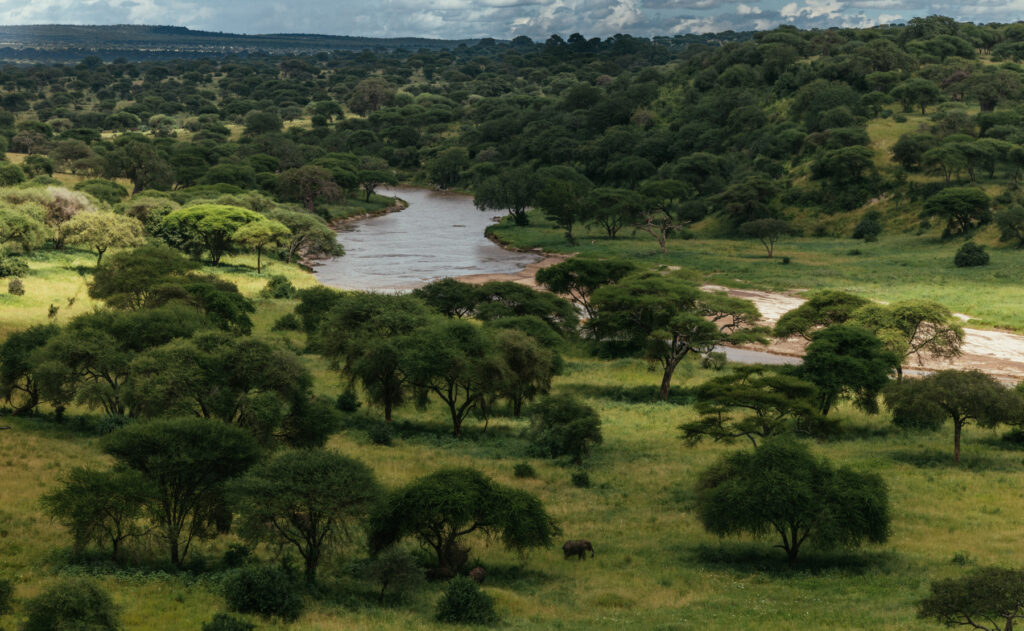
Mighty Elephants are dwarfed by the Tarangire River. This waterway is the Tarangire National Park’s only permanent river – and its lifeblood during the long dry season (image by Virginia Wilde)
Leaving Tarangire, the road climbed steadily through the fertile volcanic highlands towards the Ngorongoro Conservation Area. As we neared the gates, our vehicle was targeted by the most impressively brazen troop of Baboon bandits many of us had ever encountered.
A slightly ajar window and – despite our 20mph speed – swoosh, Fagin’s band of pickpockets had snaffled a banana.
Inside the park, our road continued snaking upwards until we finally reached our viewpoint, a staggering look down at one of Africa’s most astonishing landscapes: the Ngorongoro Crater.
This vast natural amphitheatre – more than 2,200 metres above sea-level – is the world’s largest intact volcanic caldera. Its floor supports one of Africa’s highest densities of large mammals; its grasslands, forests, marshes and soda lake combining to create an exceptionally rich wildlife sanctuary. Few places compress so much life into such a relatively compact space.
Trying to take photographs of the crater with a wide-angled lens just doesn’t do it justice. At the viewpoint, I waited for a break in the clouds to try and get a decent image. But the scale of the crater doesn’t translate well to still photography. It has to be seen to be believed.
That night, we ate dinner and rested in our stunning lodge, built into the side of the crater rim, as heavy rain ricocheted off our balconies.
————————————————————————————————————————–
Into the Ngorongoro Crater: All Manner of Life in Africa’s Natural Amphitheatre
Leaving before sunrise – after persuading the lodge staff to serve us a particularly early breakfast each morning – we settled into a routine that would shape the next three days.
We were invariably the first vehicle through the crater gates each morning and, more often than not, the last to climb back out of the crater in the evening. With wildlife as numerous as this – and with four of the Big Five visible each day (only the Leopard eluded us here) – there was always another reason to stay until the very last moment we were permitted.
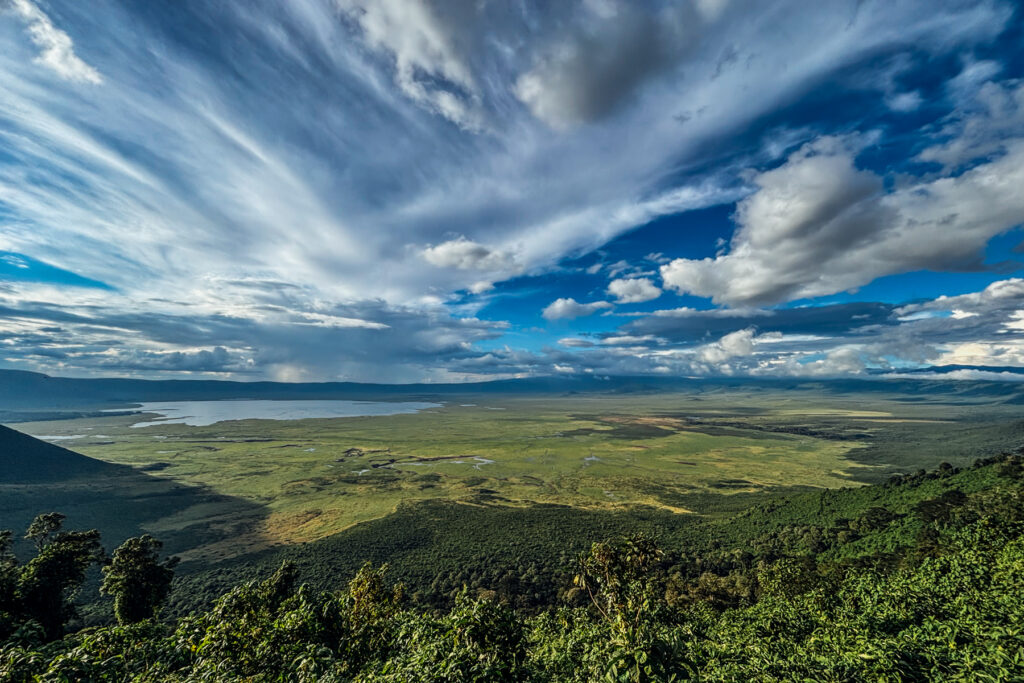
The mighty Ngoronogoro Crater: one of Africa’s wonders, holding one of the highest densities of large mammals on Earth (image by Virginia Wilde)
Each dawn began with the twisting descent through the forest from the crater rim. On our first morning, the road at first disappeared into thick mist. Further down, the cloud gradually thinned, revealing the lush caldera floor below.
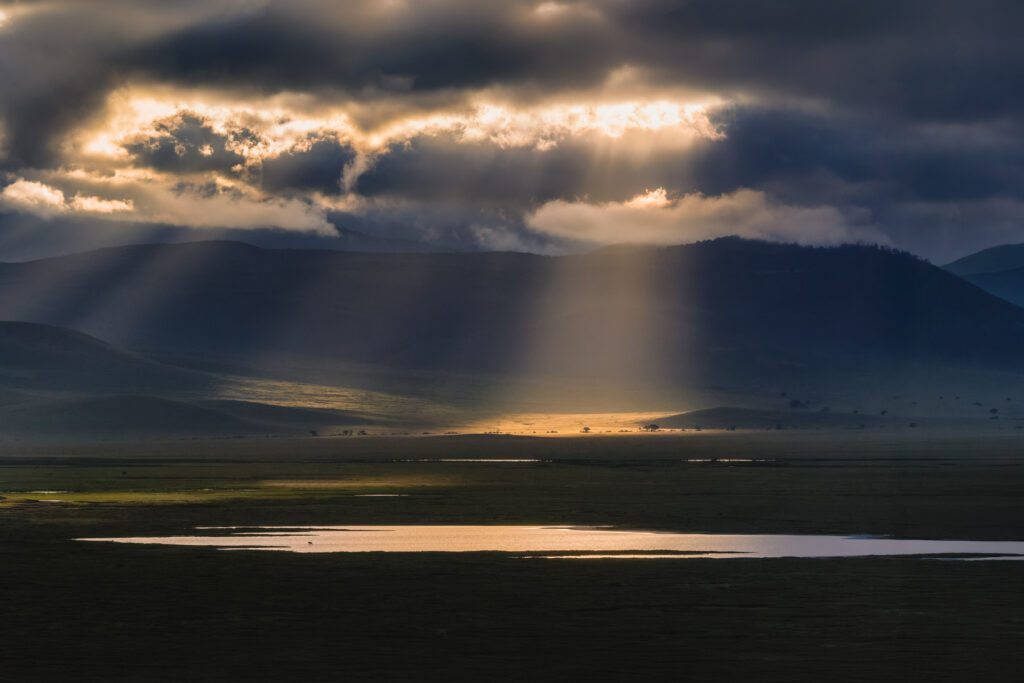
Warm sunlight streams through moody clouds over the Ngorongoro Crater. Like an ‘Africa in miniature’ this natural caldera contains one of the highest densities of large mammals on Earth (image by Virginia Wilde)
Along the shore of the crater’s highly alkaline Lake Magadi, Greater Flamingos, Great White Pelicans and Grey Crowned Cranes fed beneath dark, threatening skies. Suddenly, the clouds parted.
Sunlight spilt across the crater, and a vivid rainbow arched over the rim – while African Cape Buffalo grazed below, surrounded by purple and yellow wildflowers and clearly far less impressed than us by the spectacle overhead.
Each day, we had coffee or lunch beside one of the smaller crater lakes, with Hippos grunting in the shallows. Before long, we had acquired a regular companion; a solitary Marabou Stork who appeared each day by our picnic table, watching every sandwich with quiet concentration.
Clearly he had concluded that picnic theft required considerably less effort than scavenging carrion.
Although our days in the crater were full of wildlife moments, the following were some of our favourite encounters:
Tiny Lion Cubs on the Crater Rim
Although we had almost 30 Lion sightings in our time in the crater alone, our first cub encounter was one of the most memorable of the tour. We’d actually had a glimpse of a nursing Lioness on our first morning – spotting her as she strolled down the descent road.
But it wasn’t until the following morning that we realised that she had hidden her three cubs inside a concrete culvert beneath that same stretch of paving.
This narrow tunnel served as an unlikely nursery, but an effective one, concealing the cubs from passing males while giving their mother an uninterrupted view across the grasslands below.
On each of our second and third mornings, the Lioness lay in roughly the same place – and when the first sunlight reached the crater floor, three small heads appeared from the tunnel and tumbled onto a patch of flowers.
Soon, the cubs had forgotten all about caution. One launched itself at its mother’s tail. Another scrambled across her shoulders while the third seemed happiest disappearing beneath her chest before ambushing whichever sibling happened to pass.
The Lioness accepted it all with extraordinary patience. Every so often she reached out a forepaw to draw an adventurous cub back towards her for mandatory grooming.
At one point, on hearing a noise in the crater, she was immediately alert. Cubs back under the road, she headed down towards the Wildebeest and Gazelles, driven either by hunger or a desire to find out whether her young were still safe in their bunker.
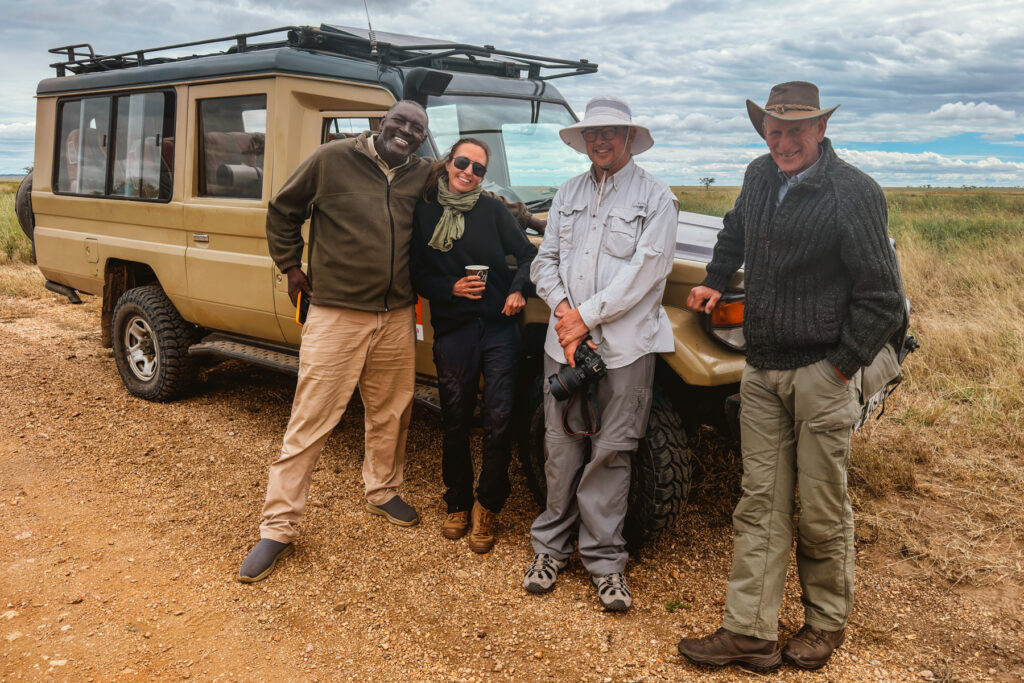
Tour members enjoy a coffee break in the Ngorongoro Crater, with our brilliant driver/co-guide Exaud (image by Virginia Wilde)
A Sea of Horns and Hooves
The crater never seemed more impressive than when viewed from its highest meadows. Several times, while traversing the caldera’s backbone road, in search of Serval, we switched off the engine and allowed ourselves to be surrounded by vast herds of grazing herbivores.
During these sensory times, columns of Blue Wildebeest enveloped our vehicle, while Plains Zebra threaded between them. Thomson’s Gazelles occupied every other open space, while Cape Buffalo stood in dark clusters, many of them still coated in drying mud. In between, Cattle Egrets and Barn Swallows grouped or swooped, and Warthogs occasionally darted out, tails held aloft like TV aerials.
From the height of this high road, the herds – many with calves or foals – merged into one another until individual animals were almost impossible to pick out. Occasionally we’d drive past Common Eland or Topi, standing atop termite mounds scanning the grasslands. And the odd Coke’s Hartebeest wandered through the herds with its unmistakably sloping back.
Throughout it all, the constant movement drew the eye. No single species dominated the scene; it was the collective movement – of swishing manes and tails, and the sound of grass being pulled up, and the clicking of hooves – that made being among the herds so mesmeric and absorbing.
Anarchy Among the Scavengers
On our second morning, we found ourselves surrounded by a clan of Spotted Hyenas. One spirited individual had custody of half a carcass of an infant Thomson’s Gazelle, proudly holding her prize aloft. But ownership proved highly negotiable. Every few seconds, another hyena charged in, forcing her into a twisting, awkward run with the carcass swinging from her jaws.
Several Black-backed Jackals followed a few metres behind, wisely avoiding the argument and waiting for gravity, or bad luck, to provide their share.
Later that afternoon we watched a pair of African Wolves hunted quietly through the short grass, stopping every few paces to listen before moving on. After the noise and disorder of the hyenas, the wolves’ measured progress was notable.
Elephants: The Giants of the Crater
In the Ngorongoro Crater, African Savanna Elephants were never difficult to find. The caldera’s approximately 100 square mile area supports around 300 individuals, many being large, older bulls, famous for carrying exceptionally heavy tusks.
Seeing these great bulls among family groups of calves and seemingly preternaturally empathetic mothers made for some rewarding photography.
Whether these bulls qualified officially as big tuskers was beside the point. They were magnificent old elephants, with deeply creased hides, torn ears and tusks worn smooth through decades of use.
Rare Eastern Black Rhino: The Ranger’s Gift
For our entire time in the crater, we’d struggled to get close enough to an Eastern Black Rhino for a decent photograph. Frustratingly, all of our attempts were very-long telephoto images at best, with the Rhinos keeping their calves well away from the crater’s roads, in meadows we were unable to reach.
But that changed on our last afternoon, when we stopped to attempt some very distant images of a Rhino lost in a heat haze, but instead ended up photographing Lesser Masked Weavers, carrying strips of straw and grass to weave their nests.
The crater’s new Head Ranger pulled over in his vehicle, turned to me and said: “And how is the Queen here doing?” before declaring that he would take us to see the Rhinos – when all the other vehicles had left the crater.
Sure enough, at the 6 pm turn-out time, he led us along ranger-only tracks to get within 20 metres of several Eastern Black Rhinos – one of the world’s most critically endangered Rhinos (with numbers of barely more than 1,000 left the wild) – feeding on open grassland, including two females with young calves.
Among them was an individual known as ‘Vicky’, a 54-year-old believed to be the oldest Eastern Black Rhino now living in the wild. She fed steadily throughout our visit, indifferent to our small group of fascinated wildlife photographers watching from a respectful – but much closer – distance.
Widowbirds and Raptors – The Crater’s Astonishing Birdlife
Although none of this year’s tour members would call themselves dedicated birders, it was impossible not to be fascinated by the abundance of birdlife in the crater.
Long-crested Eagles, Brown Snake Eagles, Black-chested Snake Eagles and Augur Buzzards were fairly regular sightings, while we were also accompanied by Lilac-breasted Rollers, Magpie Shrikes, Silverbirds, Northern Anteater-chats and the odd Kori Bustard.
Around a wetland stream, a Malachite Kingfisher flashed low over the water, and we took time out to photograph both Cinnamon-chested and Little Bee-eaters.
By far the most entertaining, however, were the widowbirds. Watching Jackson’s Widowbirds repeatedly launch themselves above the grass before floating slowly back to earth is an eternally spellbinding sight.
Yet this elaborate courtship display is much easier to admire than to photograph. I have scores of blurry attempts to capture an image – all of them terrible.
Just as the sheer scale of the Great Migration is almost impossible to encapsulate in an image, Jackson’s Widowbirds go into my mental filing cabinet under ‘far better to experience than attempt to effectively photograph.’
Other bird species around us – the Fan-tailed Widowbirds and Pin-tailed Whydahs – seemed equally convinced that their persistence would eventually impress the females.
Crater Kings on a Fallen Tree
To several in the group, our finest Lion sighting of the tour came on the final evening in the crater when we found a small pride – two magnificent males, two lionesses and six cubs – lying sprawled across an ancient fallen tree. Its gnarled trunk – weathered and polished by years of wind and water – made for a fantastically characterful throne.
Bit by bit, the cubs and adult Lions opened their eyes. One cub clambered towards the Lioness, who responded by opening a single eye, before deciding the interruption required no further action.
Watching the evening light fade blue and indigo, as this pride rested on one of the most impressively twisted trees I’ve ever seen, made for some lovely images.
Our time in the crater was so memorable that it was hard not to feel a twinge of sadness when we had to finally leave. Especially when our lodge’s serving team and chefs presented us with a cake and a song (with beautiful harmonies) on our last evening.
———————————————————————————————————
Inside a Maasai Boma: Culture and Connection in the Ngorongoro Conservation Area
Leaving our lodge first thing in the morning, we paused several times to photograph the crater again from the rim, before pressing on to a nearby Maasai boma (a traditional Maasai homestead) where we enjoyed some time with members of the Maasai community.
We were welcomed by Freddie, the son of the local chief. Privately educated, he spoke candidly about his ambition to raise funds for both the village, health clinic and the school, using tourism to support projects that would otherwise be difficult to finance.
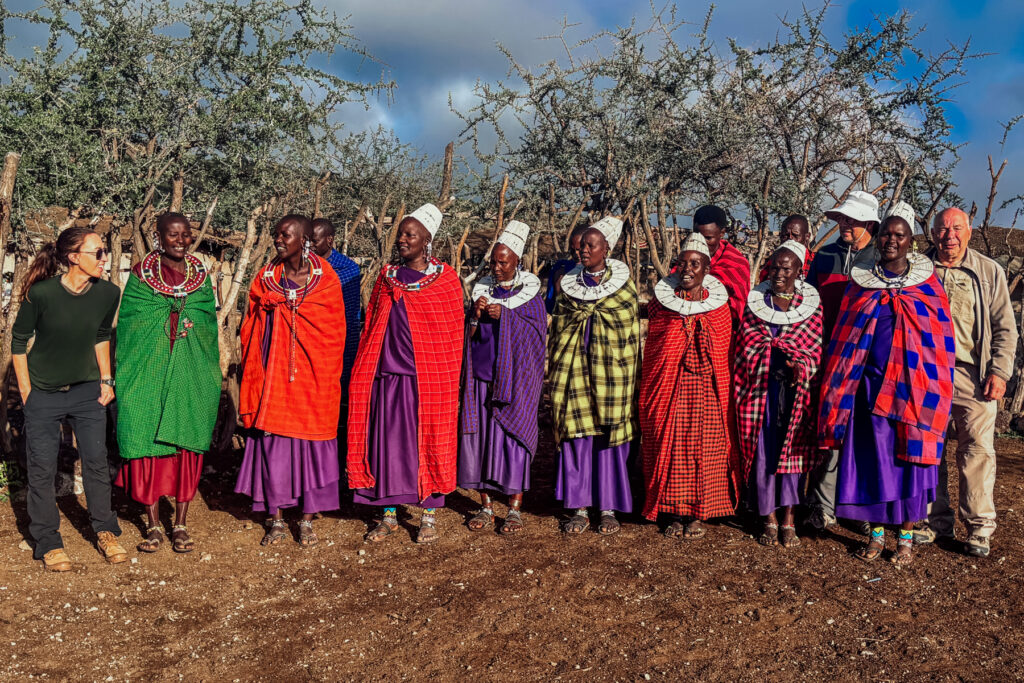
Maasai women demonstrate how to sing and dance properly – while a small group of tour members attempt to join the merriment (image by Virginia Wilde)
Our visit began with traditional singing and dancing, followed by a demonstration of how fire can be made with nothing more than dry wood sticks, focused breath and determination.
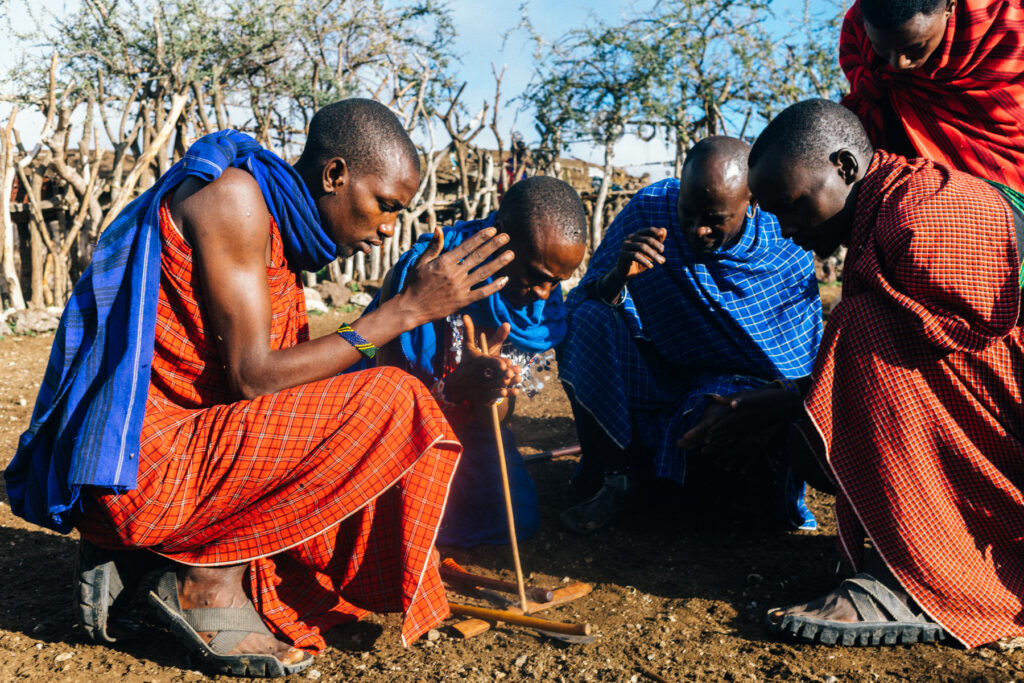
Maasai men demonstrate the traditional art of making fire outside their boma – a fenced, family homestead where people and livestock live side by side (image by Virginia Wilde)
Goats occupied the centre of the village, giving way to the female-constructed family homes (built from mud, branches and cattle dung). Inside, the huts were simple, dark and surprisingly cool, built from materials gathered almost entirely from the surrounding landscape.
Like many Maasai villages, the boma has adapted to tourism. Visitors are invited to experience aspects of traditional life, while the sale of handmade jewellery and wood carvings provides an important source of income for local families.
Several members of our group returned with beautifully crafted souvenirs and the satisfaction of knowing the money went directly to the community.
Whether or not these cultural visits resonate with you is a matter of personal preference. For most of us, spending time laughing and engaging with the Maasai, chatting to Freddie, hearing about the challenges facing his community and seeing daily life for these semi-nomadic pastoralists beyond the wildlife reserves added a valuable perspective to our journey through northern Tanzania.
———————————————————————————————————–
Oldupai Gorge: At the Cradle of Humankind
Leaving the Maasai boma behind, we continued west across the open plains towards Oldupai Gorge (formerly known as Olduvai Gorge). Remarkably, we barely passed a single other vehicle for the entire journey, the road stretching across empty grassland plains before eventually snaking towards the Serengeti.
Oldupai Gorge became famous through the pioneering excavations of Louis and Mary Leakey, whose discoveries of early hominin fossils, including Homo habilis and Paranthropus boisei (together with some of the world’s oldest stone tools) transformed our understanding of human evolution. Although the celebrated fossil “Lucy” was unearthed later in Ethiopia, these Tanzanian discoveries helped establish East Africa as the cradle of humankind.
For somewhere of such extraordinary significance, the museum was one of the most tranquil places we visited during the entire journey, and we had it entirely to ourselves.
A warm breeze drifted through the museum courtyard as we wandered quietly around the exhibits before George, our guide, gave a concise introduction to the Leakeys’ work, noting that few hominin discoveries since have matched the significance of those made during the Leakeys’ pioneering 1950-1970 excavations.
Enjoying a coffee break – supplied cheerfully, as always, by Exaud – by the vehicle in the shade, we then wiled away almost an hour photographing sunbirds feeding among the flowering shrubs in the museum garden.
Variable Sunbirds were easiest to photograph, hovering briefly before disappearing into the next blossom. The occasional Scarlet-chested Sunbird flashed metallic crimson whenever they caught the light. Baglafecht Weavers moved more deliberately through the branches, occasionally pausing just long enough for a photograph.
Photographing nectar-feeding birds is an exercise in patience. More often than not, the bird had departed before the shutter fired, leaving only an empty flower in the frame. Every so often, however, timing and luck came together for a fraction of a second.
As we continued towards the Serengeti, our first Lappet-faced Vulture drifted overhead, its immense wings held effortlessly on the thermals. A short while later we reached Naabi Hill Gate, the eastern entrance to the Serengeti, where Eggy completed the permit paperwork as the rest of us enjoyed lunch beneath the Acacias, looking out across the seemingly endless plains that would be our home for the next stage of the journey.
——————————————————————————————————————-
The Mighty Serengeti: Where the Horizon Moves
After three days in the Ngorongoro Crater, the Serengeti felt almost disorientating. While the crater concentrates wildlife into one remarkable bowl, the Serengeti scatters it across a landscape so vast it is almost impossible to comprehend.
The grassland plains seem to roll on without interruption, broken only by the movement of the massive herds, granite kopjes and the occasional wooded area of flat-topped Acacia trees, while ribbons of road disappearing into the distance.
April is one of the most rewarding times to visit the Serengeti, full of colour, infants and remarkable skies. This year, the long rains had transformed the plains into an extraordinary sweep of green, with endless grasses rippling towards the horizon.
The vanguard herds of the Great Migration had already begun forging north, although the fresh grazing drew many animals back towards Ndutu once again.
For the next three nights we stayed at Serengeti Serena Lodge, its circular thatched cottages blending naturally into the rocky hillside. After dark, guests have to be escorted between their rooms and the restaurant because lions and leopards occasionally wander through the unfenced grounds.
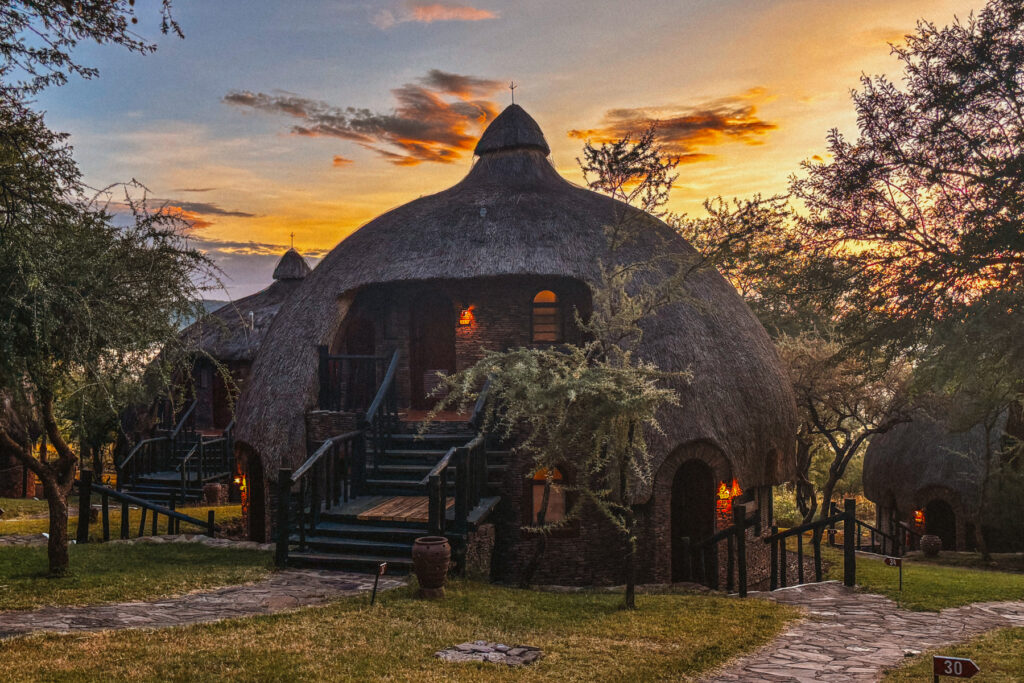
Our cottages in our Serengeti lodge were these traditional thatched ‘rondavels’ – stone-built domes that look like something from ‘The Shire’ in ‘The Hobbit.’ (image by Virginia Wilde)
In the daytime, tiny Kirk’s dik-diks grazed peacefully on the lawns, apparently believing that there is security to be found among the hum of human habitation.
We spent the next three nights exploring the central Serengeti, heading south to the central plains but also travelling east towards the Gol Kopjes (famous rocky outcrops loved by big cats) and Utafiti Rock.
We’d barely even reached Naabi Hill Gate – our entrance point to the Serengeti – on our first afternoon, before the first ranks of the Great Migration came into view.
Long files of White-bearded Wildebeest crossed the plains, some almost single file, others several animals deep. Whenever they reached a road crossing or shallow stream, the day’s self-selected leaders broke into a run; the movement rippling through the herd in seconds.
Zebra mingled among them, Thomson’s gazelles bounded alongside, while fresh columns of beast emerged from the heat haze until it became impossible to tell where one herd ended and another began.
Together, more than 1.3 million Wildebeest, around a quarter of a million Zebra and hundreds of thousands of Gazelles follow the rains in an almost continuous clockwise circuit through the Serengeti ecosystem.
The journey is costly – around 250,000 Wildebeest and 30,000 Zebra die each year from predation, drowning, exhaustion and thirst – but the migration endures, sustained by the birth of hundreds of thousands of calves each wet season
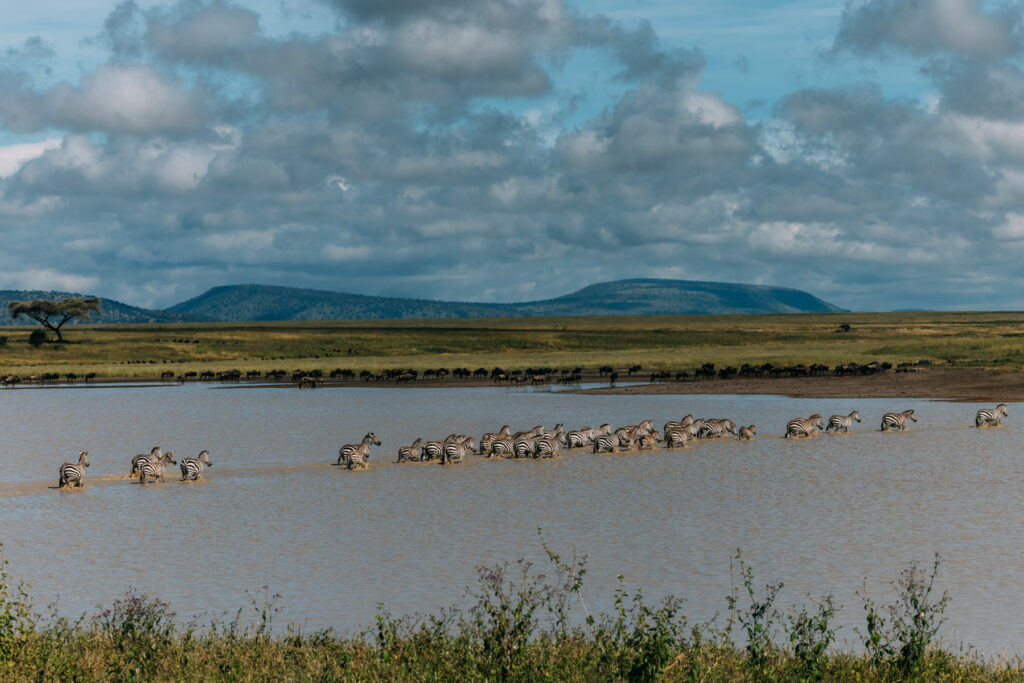
One of many river crossings these Zebra will make on the Great Migration. More than 200,000 Zebra travel alongside 1.5 million Wildebeest – trekking a cyclical distance of up to 800 miles across the Serengeti-mara Ecosystem (image by Virginia Wilde)
Inside the park, the wildlife scarcely relented. A Dark Chanting Goshawk crossed the track carrying a large lizard in its talons before disappearing into the grass. Golden jackals hunted beside the road, ostriches wandered between the grazing herds and Verreaux’s Eagle-Owls watched from roadside trees.
Progress was often dictated by wildlife rather than roads. More than once we waited while hundreds of Wildebeest and Zebra crossed ahead of us.
It felt oddly familiar, rather like pausing for sheep on a Welsh country lane, except these herds showed no sign of ending.
Just as in the Ngorongoro Crater, we had some wonderful wildlife encounters in our Serengeti days. Here are some of our favourites:
Four Cheetah Cubs Play as the Sun Goes Down
Our first afternoon in the Serengeti took us east towards the Gol Kopjes, where, lying on grass between the rocks, we spotted a female Cheetah resting with four cubs!
At perhaps seven weeks old, they still wore the distinctive silver mantle that helps conceal these infant cats in the grass – before speed becomes their greatest defence. Few cheetah mothers raise four cubs to this age; most litters are whittled down within the first few weeks by predators, exposure or simple bad luck.
Other safari vehicles arrived, watched for a few minutes – or even more – and drove on. We stayed.
For almost four hours, very little changed. A cub stretched occasionally, another rolled onto its back, their mother lifted her head briefly before settling again. The grass moved more than the cats did.
But just as the sun was going down, the first cub stirred and, within moments, the family came to life. They wrestled, throwing up clouds of dust. They clambered over their mother and launched themselves onto her shoulders – before tumbling off the other side.
One repeatedly treated its mother’s head as a springboard, while she accepted every ambush with remarkable patience, pausing only to groom whichever cub happened to stay still long enough.
As the sun dropped lower, the cubs’ silver mantles glowed against the dust of the plains – one of the rewards of being forced to shoot against the backlit sun.
Yet we had to leave: the lodge was still a two-hour drive away – there are rules about being out in the Serengeti after dark – and we reluctantly left the Cheetah family behind.
Last Light at Utafiti Rock
Within five minutes of attempting to press on, we stumbled on a small pride of Lions just waking up and lit by beautiful golden light. We took a quick snap and journeyed onwards, past Utafiti Rock, where one Lioness stood watch from the granite while another rested below.
As we briefly stopped to photograph them, a tiny cub – no more than a few weeks old at most – appeared above the rocks. Eggy rushed us to the back of the rock for a better view, where one tiny cub became four. They hurried towards their mother, weaving between her legs before climbing over her forelegs and settling at her feet. We photographed until our autofocuses began to hunt in the failing light.
Finally deciding we must leave right now, we drove to our lodge in darkness, picking out the retreating shape of a honey badger while Verreaux’s Eagle-Owls ghosted silently through the headlights in search of prey.
By the time we finally reached the lodge, dinner was already underway.
Our First Leopards
Despite a lot of searching, the Serengeti never quite gave us the Leopard we wanted.
We had one decent sighting of a Leopardess (annoyingly, half obscured by a tree branch) dragging an impala up an Acacia tree, before losing grip and sending the carcass crashing back to the ground – while another lay barely visible Leopard draped across the branches above.
A third Leopard rested in a distant tree, beyond the reach of any useful lens. Yet these were fleeting encounters, rather than photographic triumphs.
Lions, by contrast, seemed determined to be seen. One morning, a magnificent young male walked slowly through grass almost as tall as himself, his darkening mane framing a face still untouched by the scars that would inevitably come with age.
He paused just long enough for a portrait before melting back into the plains. In other areas of the Serengeti we saw sub-adult males resting on rocks and whole sleeping pride on the Gol Kopjes.
The Cub Who Couldn’t Climb
Despite leaving particularly early one morning to reach Utafiti Rock again, the tiny cubs we’d seen on our first evening remained hidden.
By the time we arrived, their rightfully cautious mother had tucked them safely into the granite while Steppe Eagles, Tawny Eagles and Lappet-faced Vultures prowled above, hoping for an easy cub meal.
It was a reminder that for young cubs, surviving the first few weeks can be as challenging as anything they will face later in life.
Thankfully, another pride had proved rather less secretive. Driving along a row of trees, we spotted a Lioness resting high in an Acacia, while four nearly grown cubs lingered on the ground below.
Tree-climbing lions are well known in this part of the Serengeti, a learned behaviour believed to result from the desire for shade and relief from biting flies.
One cub eventually climbed up beside its mother. Coming down proved rather more complicated. Halfway to the ground it froze, clinging to the trunk while its mother patiently shifted lower through the branches as if demonstrating the route.
After several anxious minutes the youngster finally backed its way down, greeted by some thoroughly unimpressed siblings.
A Procession of Elephants Cross the Plains
The busiest place in the Serengeti on our second afternoon was nowhere near another vehicle. It was in the middle of an Elephant herd.
On realising that we were driving right into the path of a large herd, we switched off the vehicle engines to just enjoy the moment as more than fifty animals swayed past us – with some of these giants close enough to reach out and touch.
There were Elephant calves tucked beneath their mothers, adolescents leaning into one another and the older cows feeding as they walked. Before long, these Elephants had surrounded us, so close that individual eyelashes, cracked tusks and mud-caked skin replaced the wider landscape.
The last to pass was a huge bull, walking alone behind the family and repeatedly throwing clouds of dust across his shoulders. He occupied the road entirely, and for a few moments we were simply awed spectators.
Nine Lions and an ‘Almost’ Hunt
Our final morning ended much as it had begun, surrounded by the Great Migration. We stopped repeatedly to photograph long files of Wildebeest and Zebra as they broke into a run across the plains, before pressing on towards Naabi Hill Gate.
Only then did we realise where they were heading.
A pride of nine lions lay beside a shallow stream – four male Lions and five Lionesses – directly in the path of the leading animals. We were certain a hunt was about to unfold!
Instead, the first Wildebeest stopped abruptly, barely twenty metres from the pride. More animals piled in behind until hundreds stood motionless, every eye fixed on the Lions. The listless males scarcely acknowledged them. They had clearly eaten well.
For almost fifteen minutes the stand-off continued before a single Zebra finally turned away, leading the herd on a wide diagonal around the pride. Only then did two Lionesses rise and give a brief attempt at a chase, abandoning the effort almost as soon as it had begun.
The migration closed ranks and moved on as though nothing had happened. A few minutes later, we did the same, sad to leave this region of the Serengeti behind.
————————————————————————————————————————–
On to Ndutu: Where the Short Grass Draws Predators
The Serengeti may be more famous, but wildlife photographers have long held a particular affection for Ndutu – a region that straddles the boundary between the southern Serengeti National Park and the Ngorongoro Conservation Area in northern Tanzania.
During the green season, its rich volcanic soils produce nutritious short grass that draws the Great Migration back onto the southern plains. Lions, Cheetahs and Leopards follow close behind, and the open country makes them far easier to spot – and photograph – than in the longer grass further north. We had allowed ourselves four nights here, hoping our luck with Leopards would finally change.
The road south shimmered beneath the midday heat, forming mirages as distant grassland repeatedly dissolved into convincing lakes before resolving once again into open plains.
A Serval slipped through the grass near Naabi Hill Gate, pausing just long enough for everyone to lift their cameras before disappearing as quietly as it had arrived. We also found the Cheetah family once more, though now they were little more than pale dots far out on the plains, a reminder that the Serengeti’s strict off-road rules sometimes leave the finest sightings beyond photographic reach.
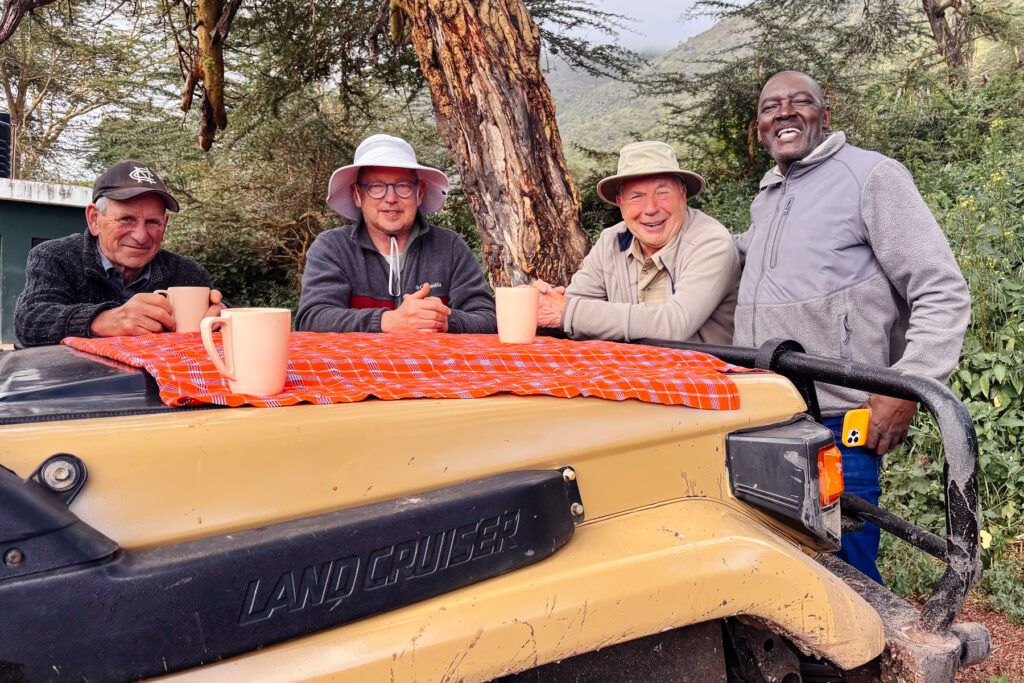
Tour members enjoy a coffee break in Ndutu with our lovely driver /co-guide Exaud, aka ‘Eggy’ (image by Virginia Wilde)
On leaving the park, we encountered two more Cheetahs, one melting into thick cover, the other sitting in the open by a shrub, panting heavily after what had clearly been a demanding morning.
Unlike the Serengeti, carefully managed off-road driving is permitted in Ndutu, allowing drivers to position vehicles with far greater flexibility while still respecting the wildlife. For photographers, it transforms what is possible.
Our first afternoon offered a perfect example. We’d followed a passing report of a Leopard, seen earlier that morning. Eggy refused to give up his search of the scattered Acacias along the shifting boundary between the Serengeti and Ndutu.
More than an hour passed before this persistence was rewarded. A stunning female Leopard lay stretched across the branch of an acacia in beautiful late-afternoon light, perfectly placed for photography and close enough to reward every patient minute of the search.
Reaching camp still demanded one final challenge. Recent rains had turned the river crossing to our Ndutu lodge into deep mud, with reports of some unlucky vehicles stuck in the mire for days. Luckily for us, we had Eggy, who picked his route carefully through the waterlogged tracks and delivered us safely to Ndutu Safari Lodge just before darkness.
Independent, welcoming and famous for its morning banana bread, Ndutu Safari Lodge quickly became everyone’s favourite. Returning for lunch between drives was a luxury we had not enjoyed since leaving Arusha, while evenings ended looking out at the campfire backed by towering trees. The resident genets, despite much anticipation, remained frustratingly elusive.
A Leopard at First Light
Just as dawn broke the following morning, we drove straight past Lake Ndutu – often the location for beautiful flamingo sunset shots – returning instead to the Acacia tree where we had left the Leopard the previous evening. It was a slight gamble. Sunrise over the lake is one of Ndutu’s classic spectacles, but I was hoping this cat would not have gone far.
Sure enough, the Leopard was rolling in the dew and golden morning light beneath the same tree. She watched us approach without the slightest concern before strolling past the vehicle at remarkably close quarters, pausing briefly before slowly heading back to her favourite tree and jumping up to snooze again in the branches. This 20-minute encounter was wonderful to photograph. And for most of the group, it was the finest Leopard encounter they’d ever had.
Searching for Cheetahs – Charmed by a Mother and her Daughter
In Ndutu, the Cheetahs really made us work for them. We spent much of our first full afternoon criss-crossing the short-grass plains, scanning the horizon, but (despite a fleeting sighting of Bat-eared Fox by a Hyena den, a lone roaring Lioness and a pretty Harlequin Quail) the drive was Cheetah-less.
The following morning we tried again, joining forces with two other safari vehicles to widen the search. Eventually Eggy’s radio crackled into life. Another guide had found the female and her nearly full-grown daughter we had been hoping for.
For almost two hours the pair stretched, groomed one another and occasionally broke into playful chases, the daughter still behaving like a cub despite being almost independent. We left without witnessing the hunt we’d hoped for, but with a far more intimate glimpse into the quieter side of Cheetah family life.
Lions in the Mist
Our third morning in Ndutu was undoubtedly our tour’s most atmospheric. Heavy mist drifted across the plains, softening the Acacias into silhouettes, while flamingos stood almost motionless on the lake. Spotted Hyaenas emerged briefly before fading back into the haze, and a pair of Verreaux’s Eagle-Owls remained perched and wide awake well after sunrise.
Then a lioness appeared with three cubs. Perhaps seven months old, they climbed onto the trunk of a fallen tree, still soaked with dew, greeting their mother before settling above the grass.
For a few precious minutes they gambolled, bumped against one another and sat quietly above the dew-soaked grass before jumping down and melting back into the undergrowth. Watching cubs play in a fog-filled wood made for one of our favourite encounters of the tour.
Hidden Valley – A Thunder of Hooves
From the misty plains we headed towards Hidden Valley, where long files of Zebra and Wildebeest converged on the seasonal watercourses.
Rather than waiting for the herds to come to us, we drove ahead and photographed them as they splashed through the shallows below, using either very fast shutter speeds to capture the spray, or slow shutter speeds to turn blurred stripes and pounding hooves into images that conveyed movement rather than simply freezing it.
Hidden Valley quickly became one of my favourite corners of Ndutu. From the plateau above, the plains spread out beneath us, long files of zebra and wildebeest steadily converging on the seasonal watercourses below.
The crossings were only part of the spectacle. A freshly killed zebra lay nearby, already surrounded by vultures, Tawny Eagles and Marabou Storks, each newcomer scattering the birds already feeding before the jostling began all over again – and allowing for some excellent raptor shots.
Not far away, a pride of Lions rested with conspicuously full bellies, while a lone Lioness waited lower down the bank. The Zebra knew exactly where she was. Again and again the herd edged towards the crossing, paused, turned away and gathered once more, until a lead mare finally broke the deadlock and guided them towards a safer crossing farther downstream.
After the Storm, a Fiery Sky
A heavy electrical storm swept across the plains on our final afternoon in Ndutu, forcing us to shelter beside a stand of reeds while rain hammered against the roof of the vehicle.
When it finally passed, the western sky caught fire, bands of crimson and violet reflected across the flooded grassland. Pressing on, we passed three young male lions, sitting perfectly mirrored in the still water.
The final obstacle of Ndutu was the muddy river crossing into the lodge. With just enough momentum to avoid becoming another stranded vehicle, Eggy powered us cleanly through – with Freckled Nightjar and Von der Decken’s Hornbill rounding off the evening.
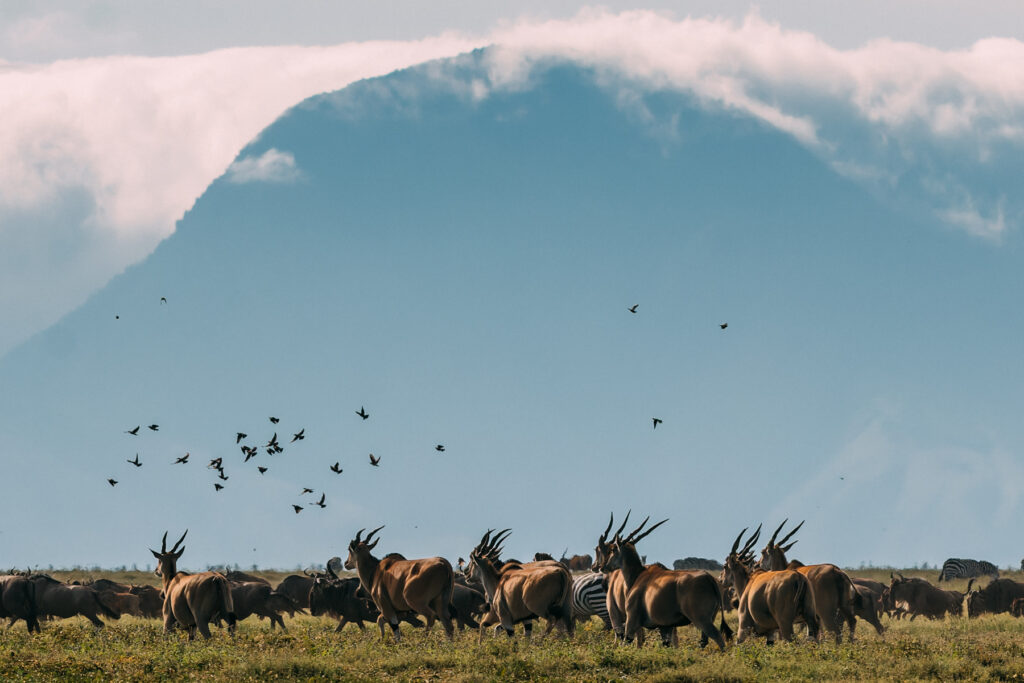
Morning light catches herds of Topi, Wildebeest and Zebra against the towering wall of the volcanic Ngorongoro Highlands, while in Tanzania’s Ndutu region (image by Virginia Wilde)
The Road Back to Arusha Through Birding Bushes and Maasai Country
We left Ndutu the following morning, crossing rolling pasture dotted with Maasai herders and some sparring Giraffes before climbing towards the Rift Valley escarpment.
Every so often, a roadside bush would persuade us to stop, and suddenly we were photographing a host of colourful birds – Red-billed Queleas, Blue-capped Cordon-bleus, Capped Wheatears, barbets, sunbirds, larks and bishops – before setting off again.
After lunch near Lake Manyara in a courtyard of butterflies, we returned to Arusha and the familiar surroundings of Arusha Serena Hotel, where the tour officially concluded after breakfast the following morning.
Several of us then made one final excursion into town, visiting the Cultural Heritage Centre, one of East Africa’s largest collections of African art, sculpture and cultural artefacts, before everyone finally drifted away – waving goodbye to Eggy – towards flights home.
This Tanzania tour had been a real heavyweight in terms of incredible encounters. Few journeys manage to combine such consistently rewarding photography with so much memorable wildlife behaviour, from beginning to end. For good reason, it ranks among the finest wildlife tours I have ever led.
Virginia Wilde
Virginia Wilde lives in Edinburgh with her two children, Esme and Albie. Virginia is a photojournalist with a life-long passion for wildlife and the natural world. She spent years working in conflict zones such as Afghanistan and Libya – but has returned to her love of nature and is now based in Scotland. Virginia has […]