
Costa Rica: The Forest Jewel of Central America Tour Report 2025
11 June 2025
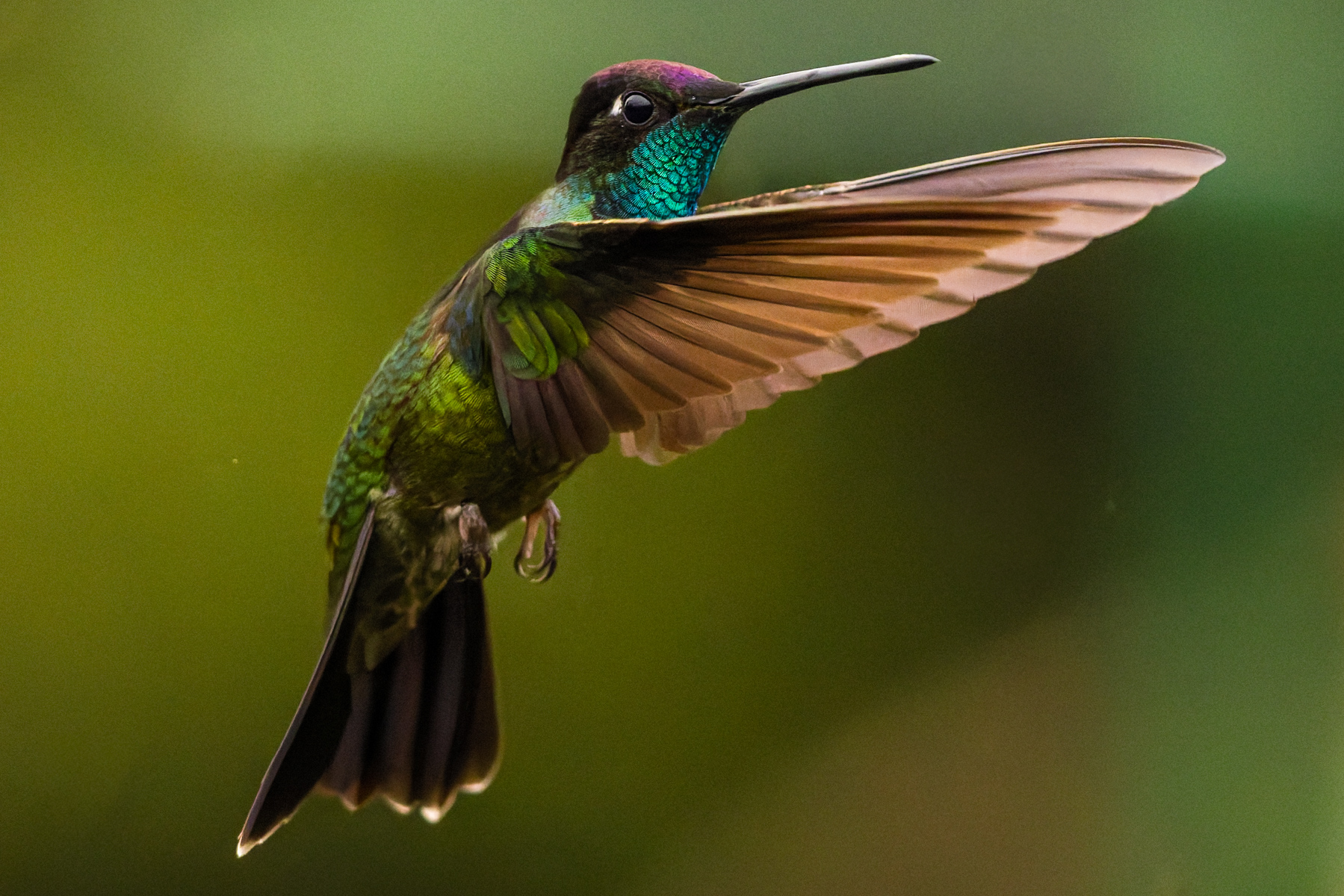
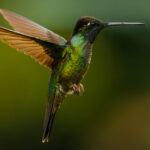
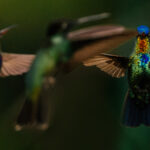
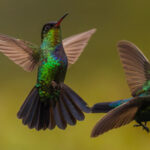
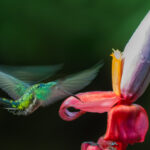
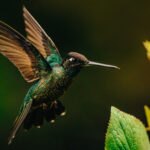
Sideways on, male Talamancas have a dark green gloss and dull head. But when they turn their heads, there's a flash of metallic turquoise chin and gorget, and a striking violet crown (image by Gin Wilde)
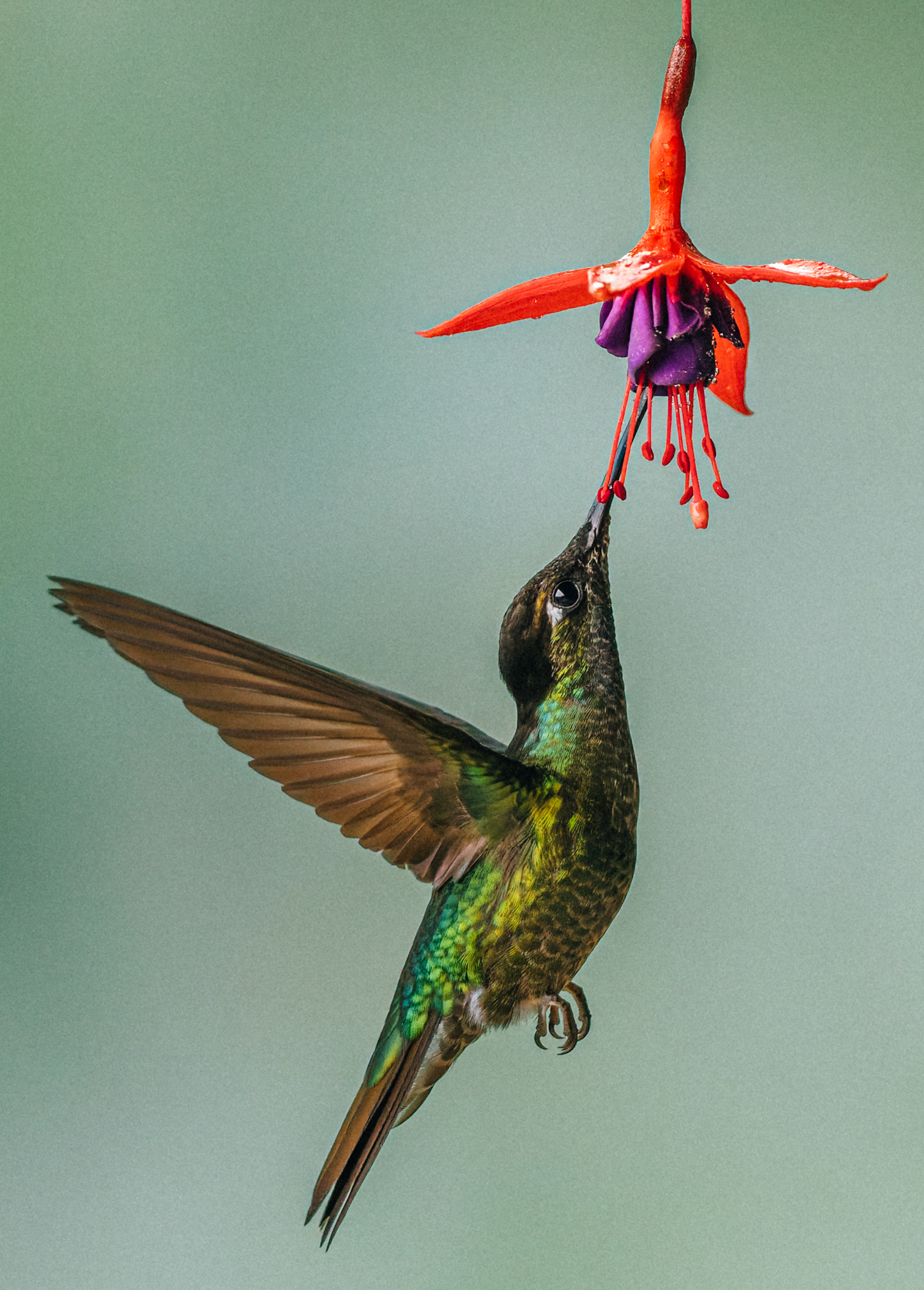
Talamanca Hummingbirds are found in Costa Rica and Panama. Females forage by trap-lining; visiting a circuit of flowering plants again and again (image by Gin Wilde)
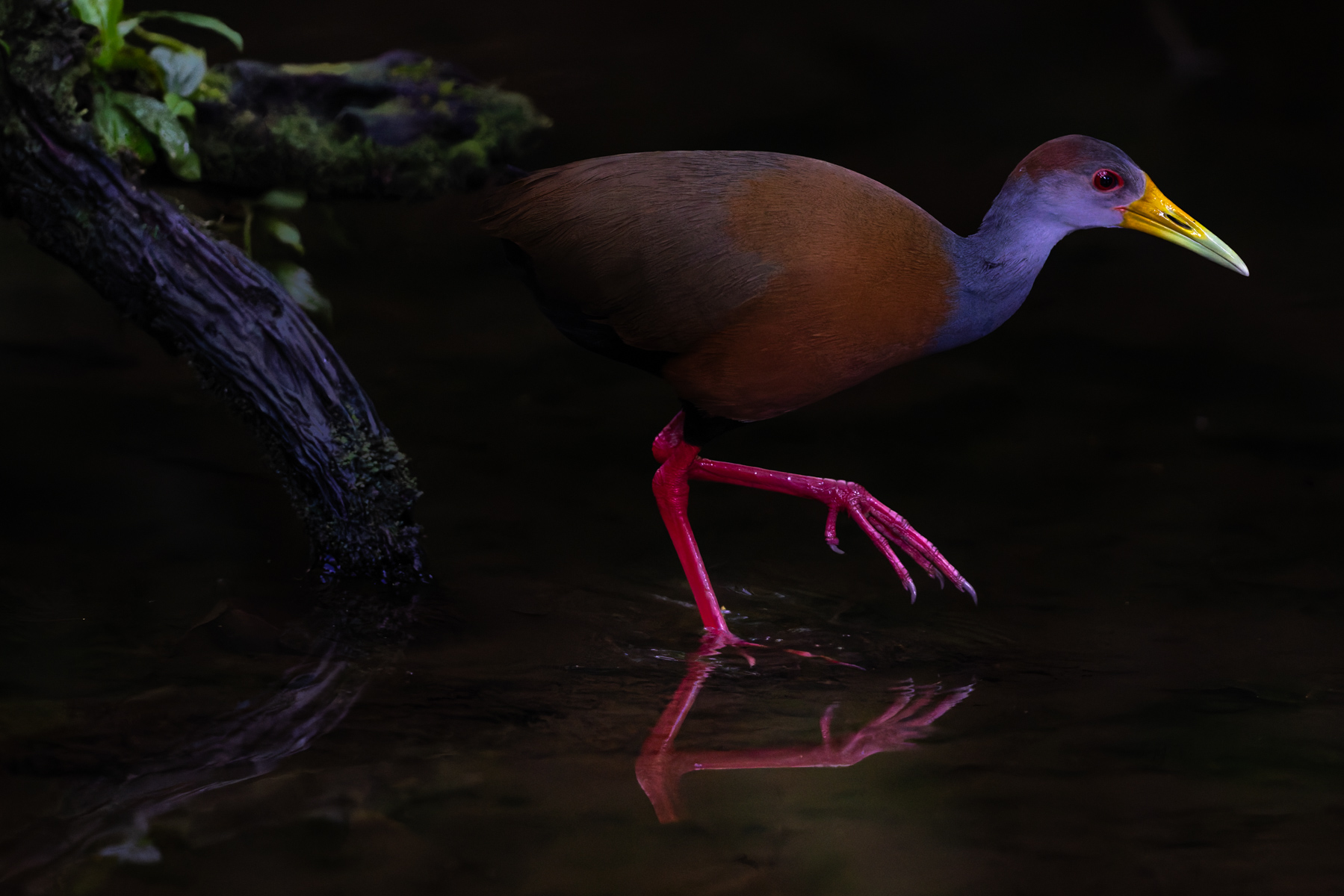
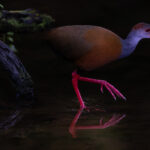
A shaft of light hits the head and bill of a striking Russet-naped Wood Rail, as it gently picks its way through shallow water in Costa Rica's Heredia Province (image by Gin Wilde)
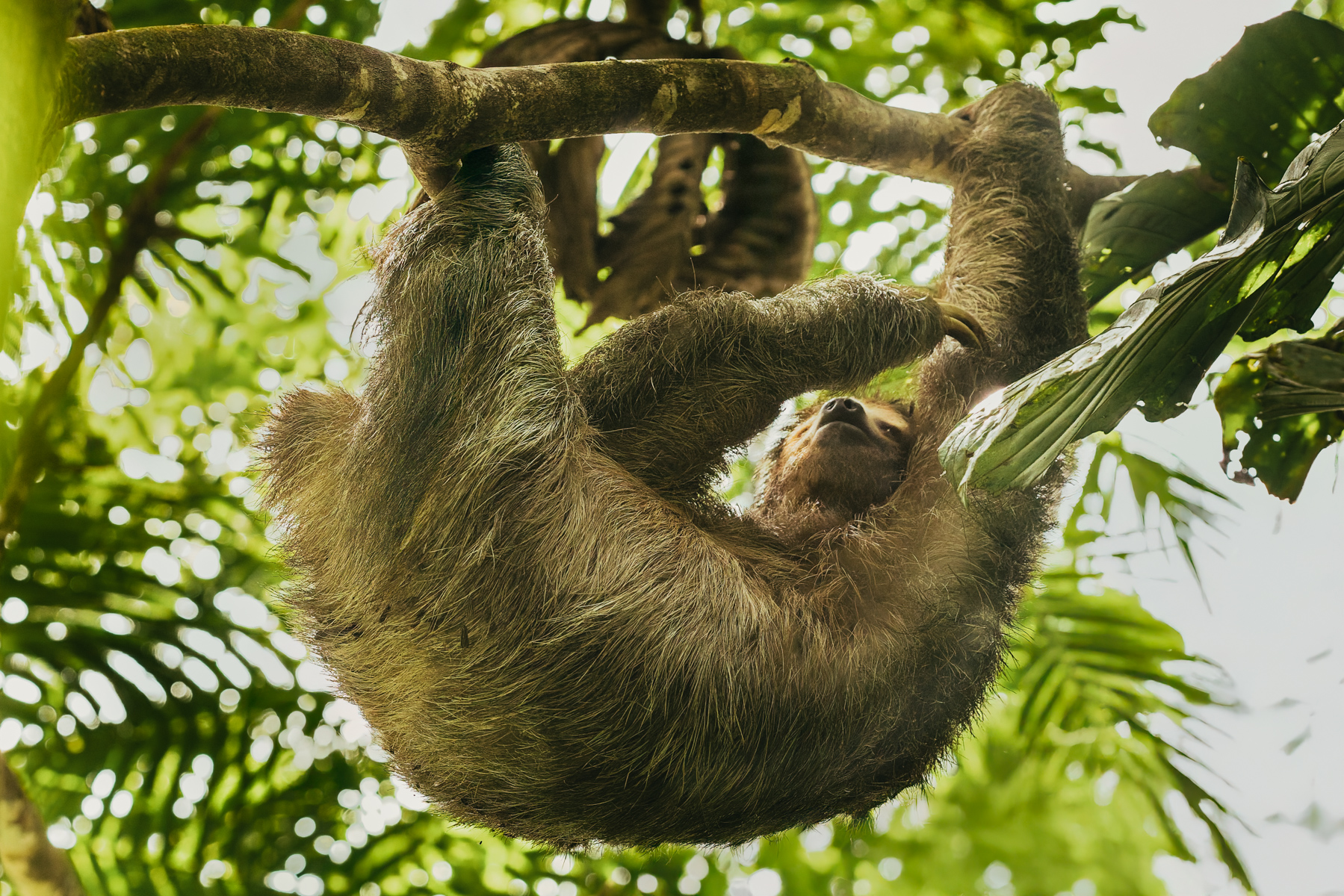
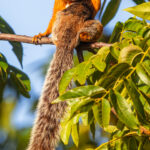
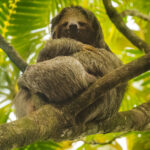
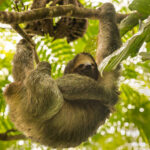
The tree-dwelling Three-toed Sloth is famously one of the slowest moving mammals on Earth, with an average speed of just 0.15 mph. Here, one has a morning scratch in Alajuela Province, Costa Rica (image by Gin Wilde)
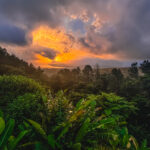
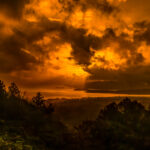
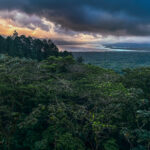
On this year's tour in Costa Rica, it rained. It really bucketed it down. But then the rain cleared and this sunset - over the mid-altitude lowlands - took our breaths away (image by Gin Wilde)
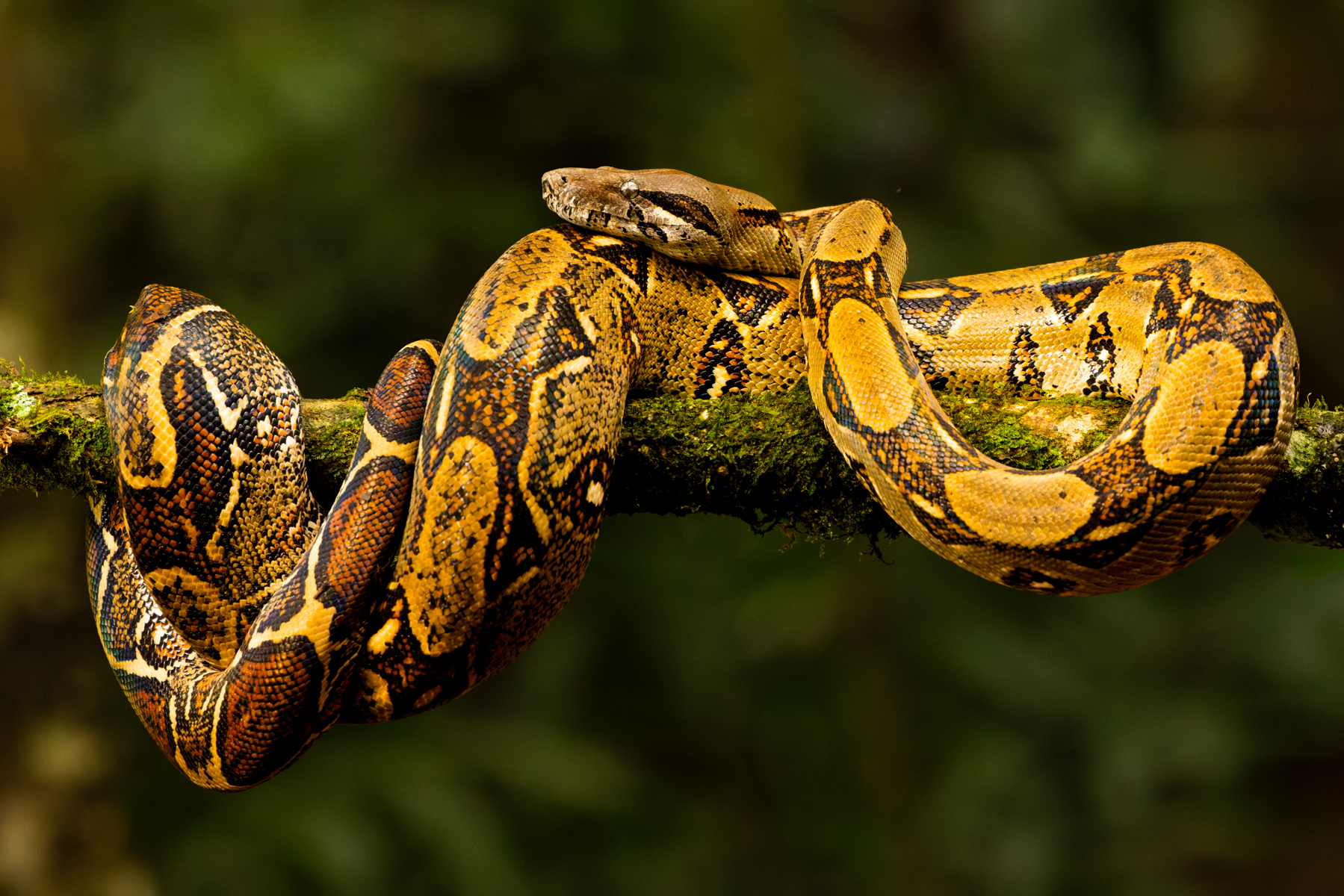
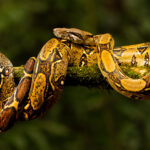
I've never seen a Boa Imperator (constrictor) in real life before. And I wasn't prepared for quite how stunning these snakes are; simply mesmerising animals (image by Gin Wilde)
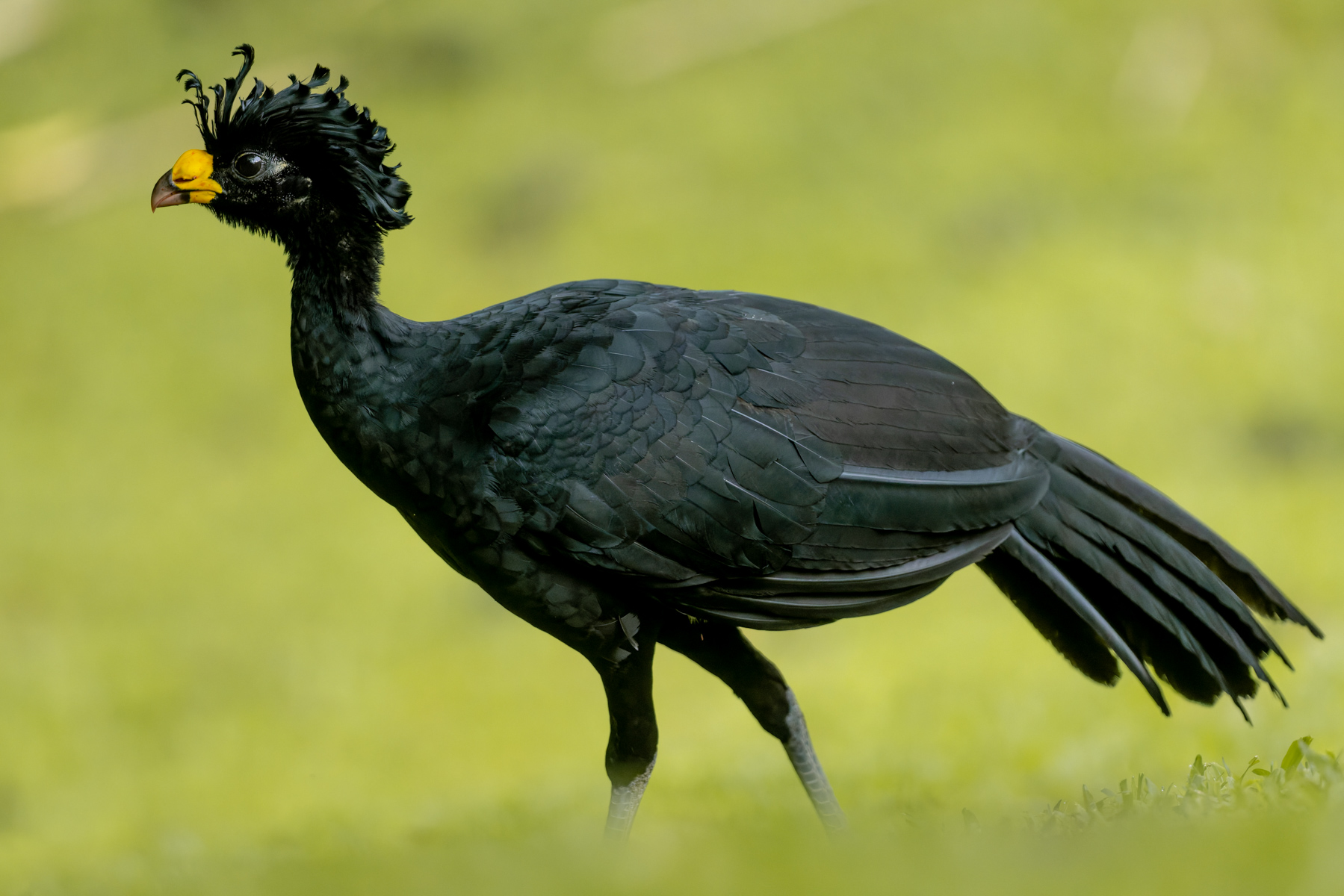
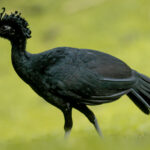
A male Great Curassow strutted around the gardens of the Arenal Observatory Lodge, after spending the morning singing high in the canopy: a surprisingly low-pitched, booming sound (image by Gin Wilde)
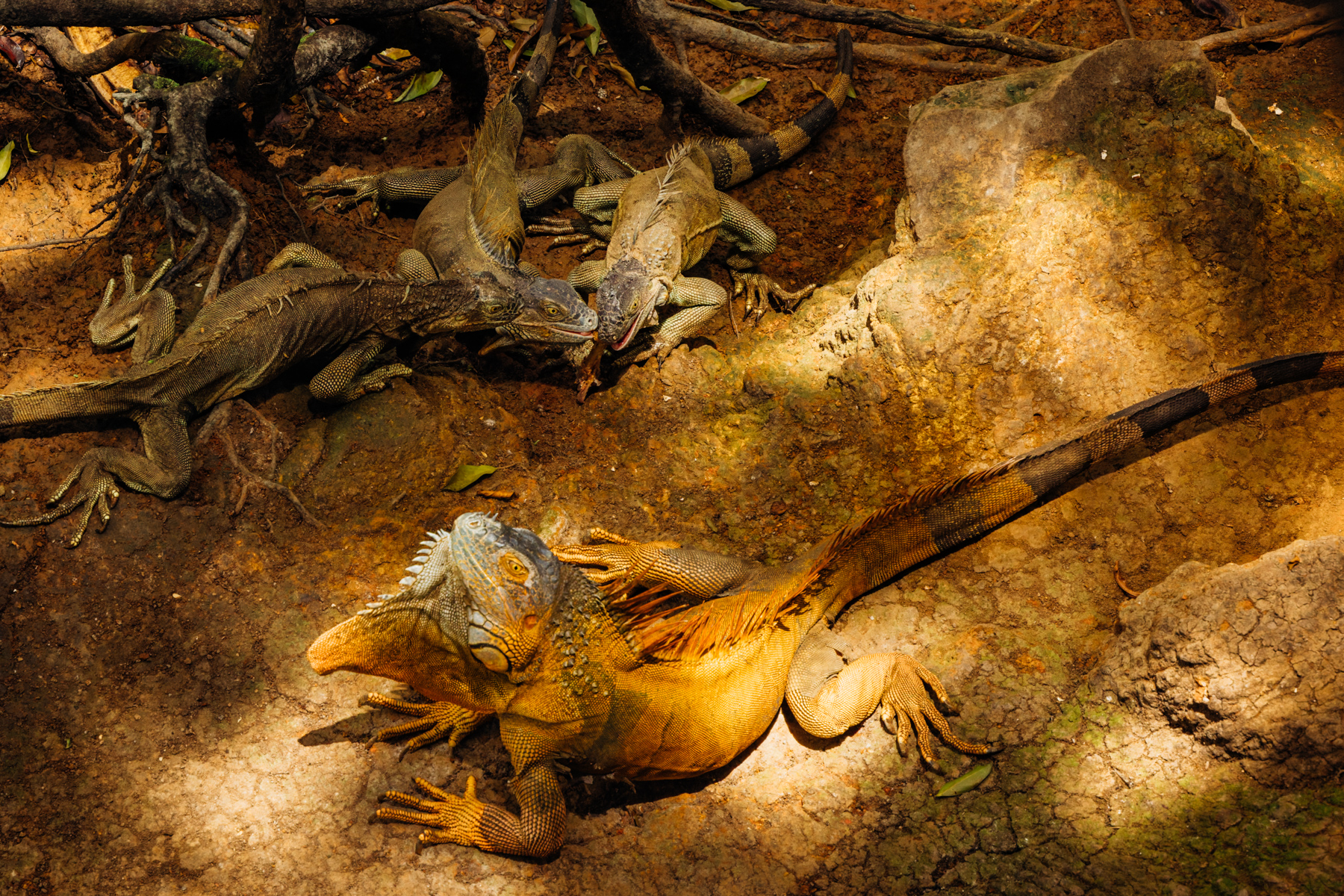
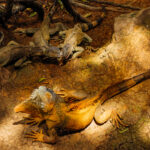
All of these iguanas are Green Iguanas, showing that not all members of the species are actually green. Many Green Iguanas are rust-coloured or even grey (image by Gin Wilde)
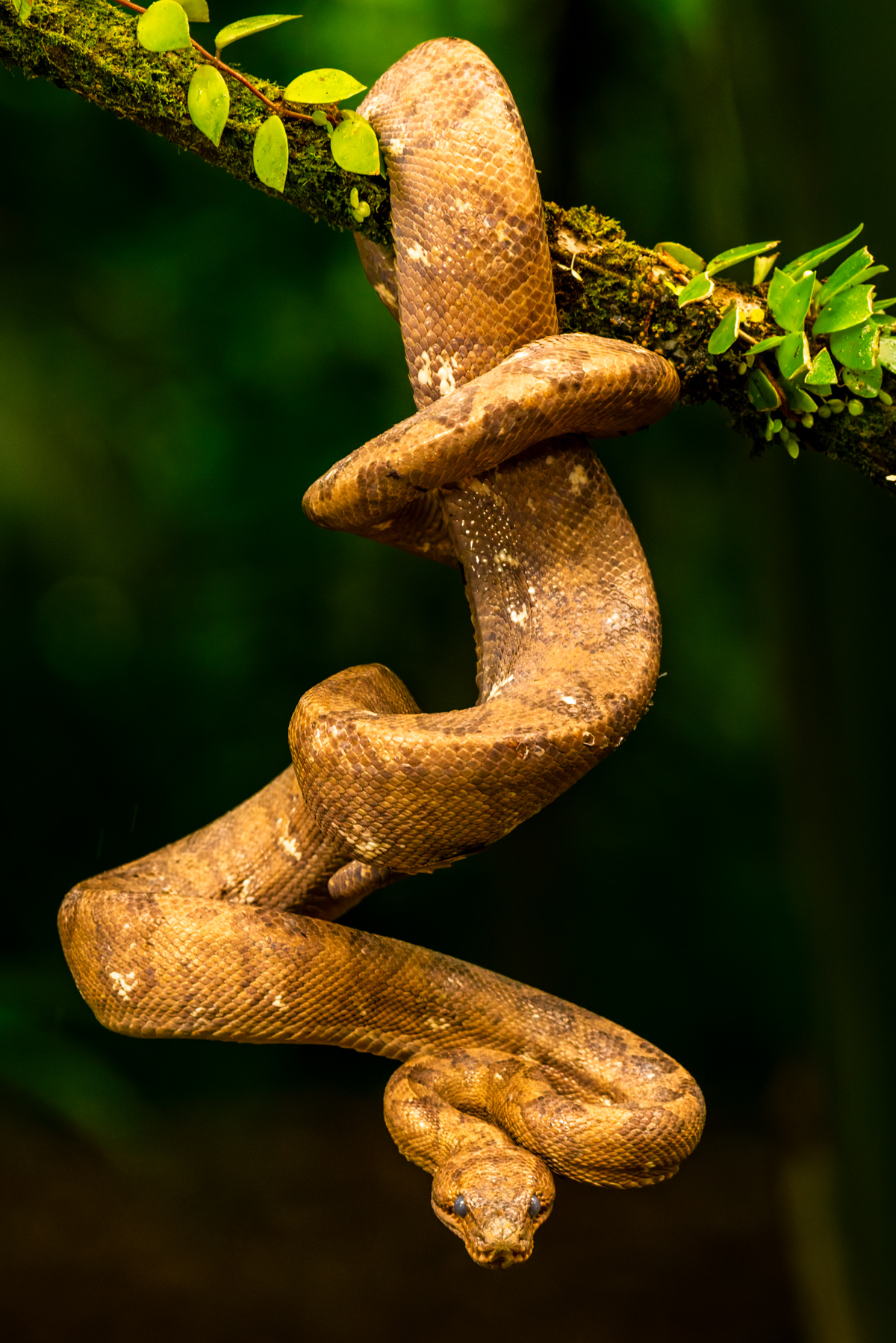
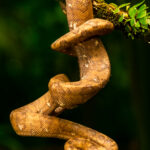
This piercing eyed Annulated Tree Boa - a non-venomous constrictor found in Central and South America - is a medium-build beauty of a boa (image by Gin Wilde)
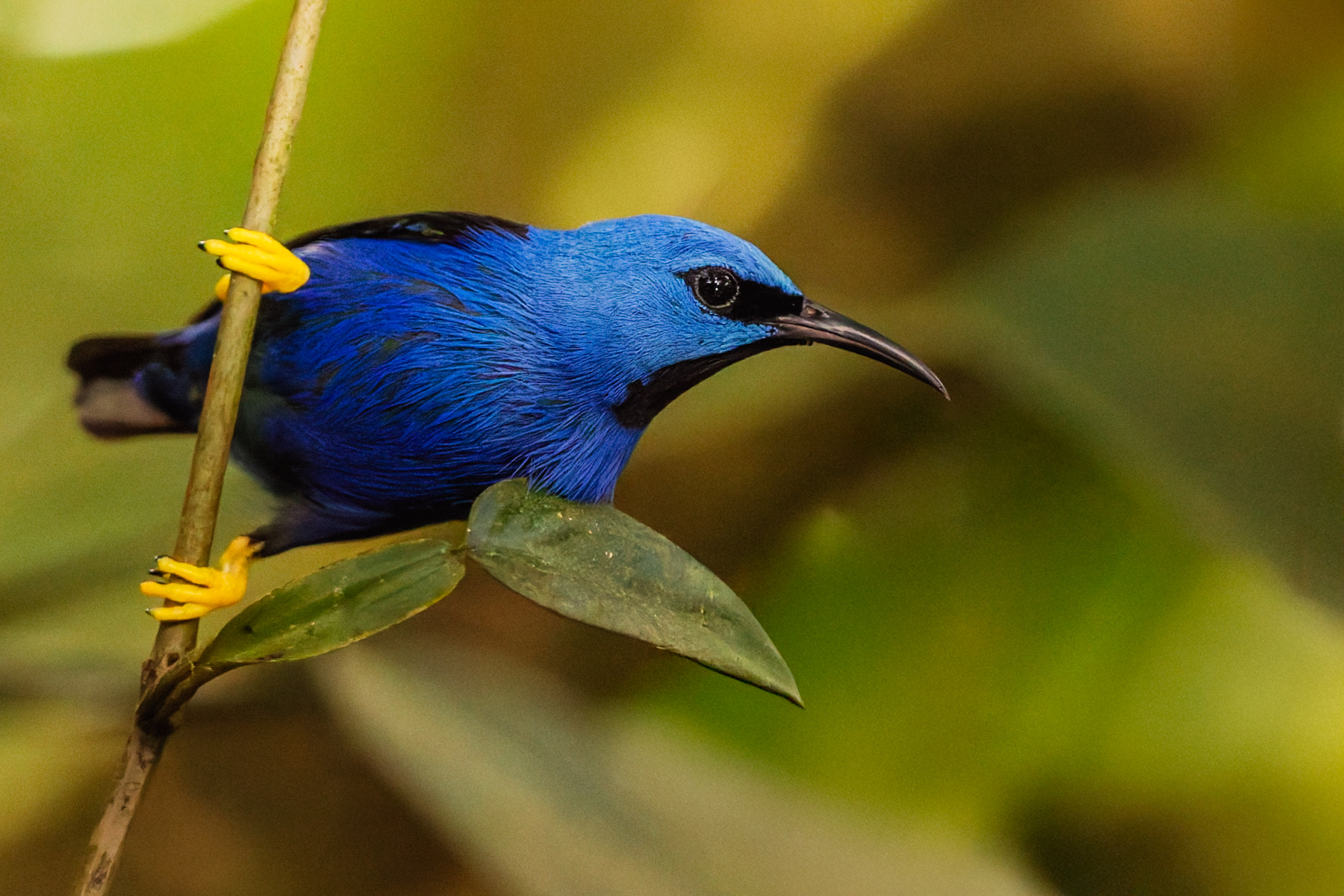
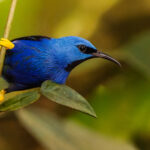
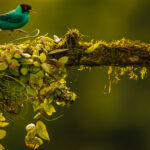
Portrait of a male Shining Honeycreeper; a flash of cobalt blue in the Costa Rican rainforests (image by Gin Wilde)
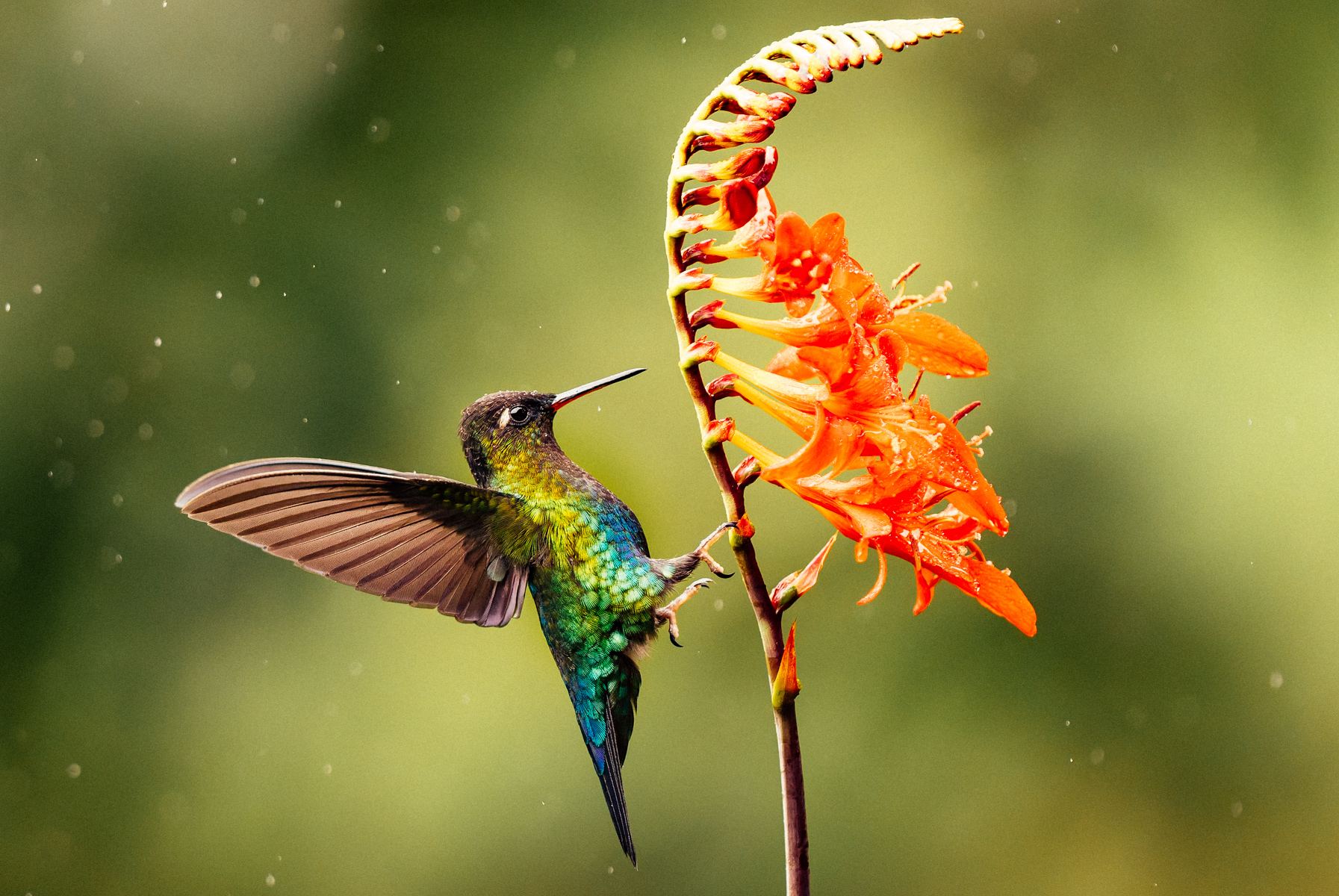
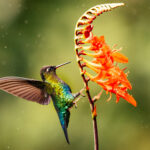
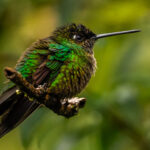
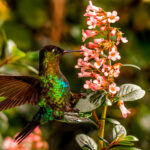
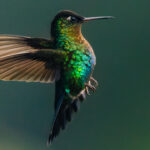
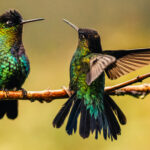
Often designated as 'the world's most beautiful hummingbird', the Fiery Throated Hummingbird's plumage is a riot of shimmering rainbow colours. They are endemic to the cloud forests of Costa Rica and western Panama (image by Gin Wilde)
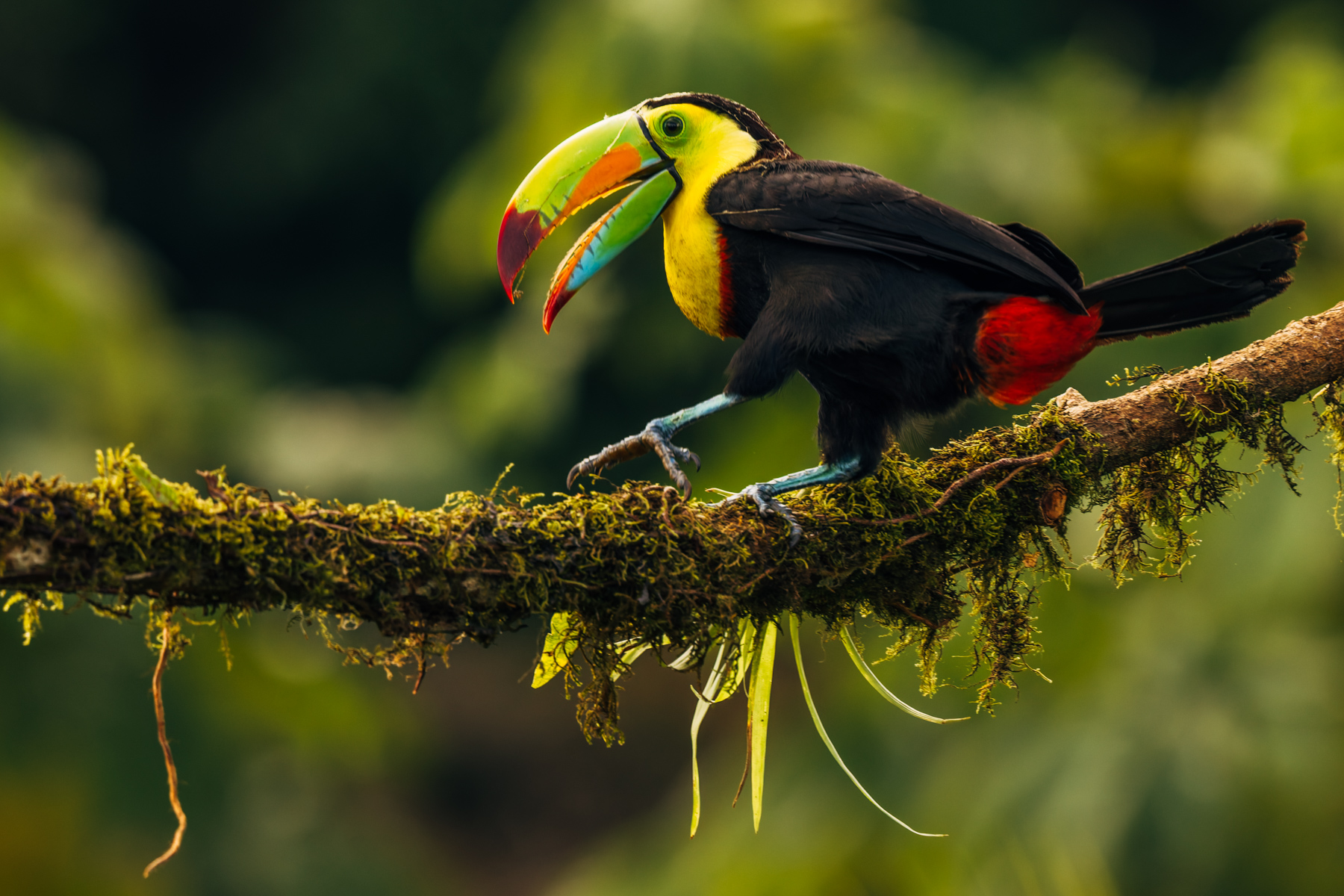
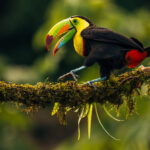
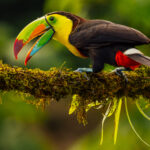
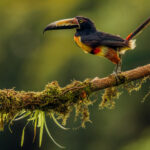
The charismatic Keel-billed Toucan is always a joy to see! Toucans often 'duel' with each other using their bills to throw fruit into each other's mouths (image by Gin Wilde)
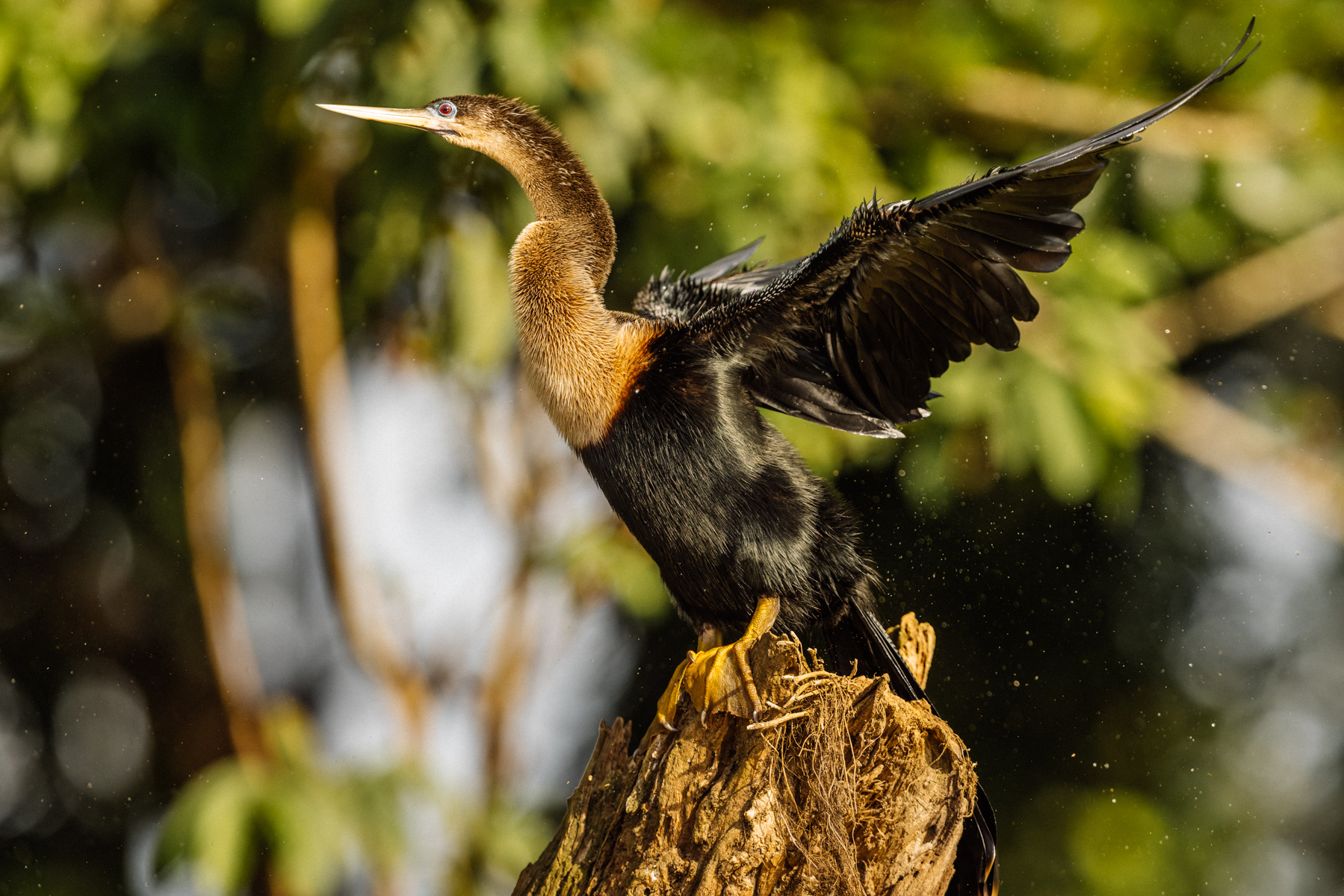
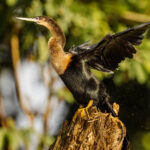
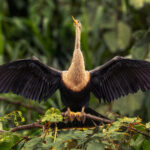
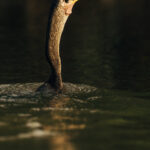
A female Anhinga prepares to dry her wings, after a morning spent fishing in the Cano Negro wetlands (image by Gin Wilde)
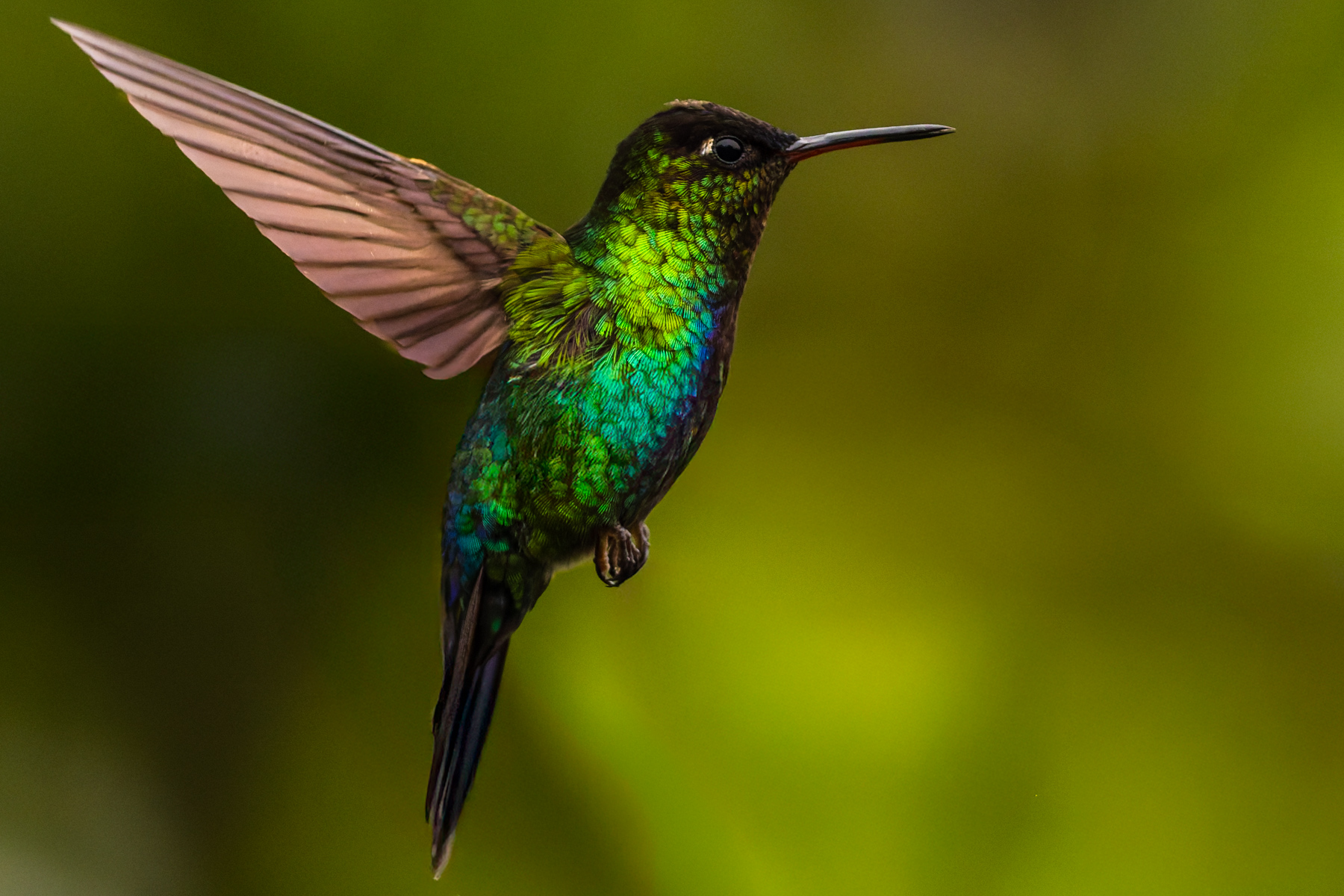
It's hard to imagine ever tiring of the Fiery-throated Hummingbird - one of the world's most beautiful and dynamic hummingbirds (image by Gin Wilde)
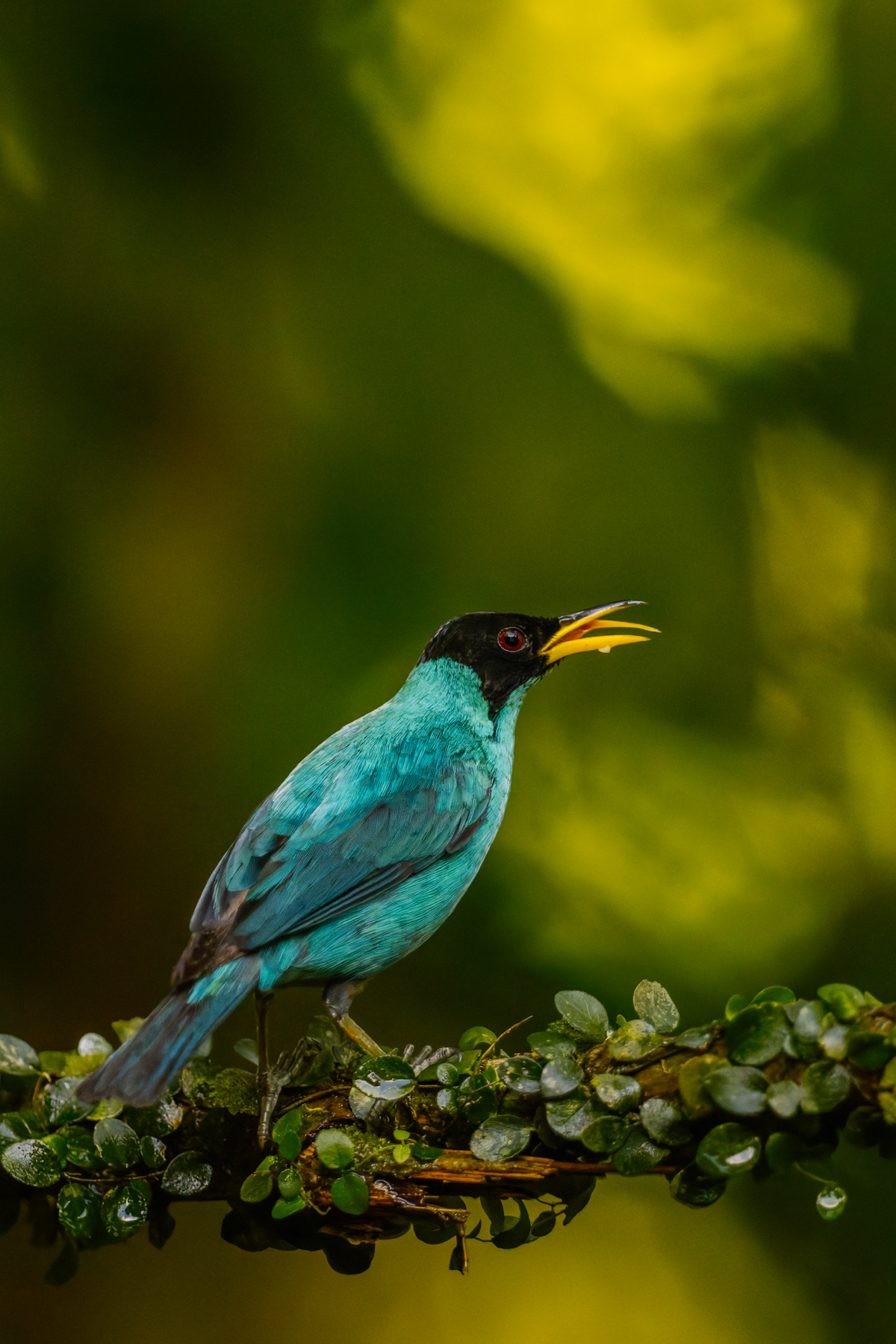
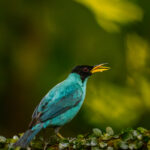
The wonderful turquoise colouration of the male Green Honeycreeper make it a favourite among forest bird lovers (image by Gin Wilde)
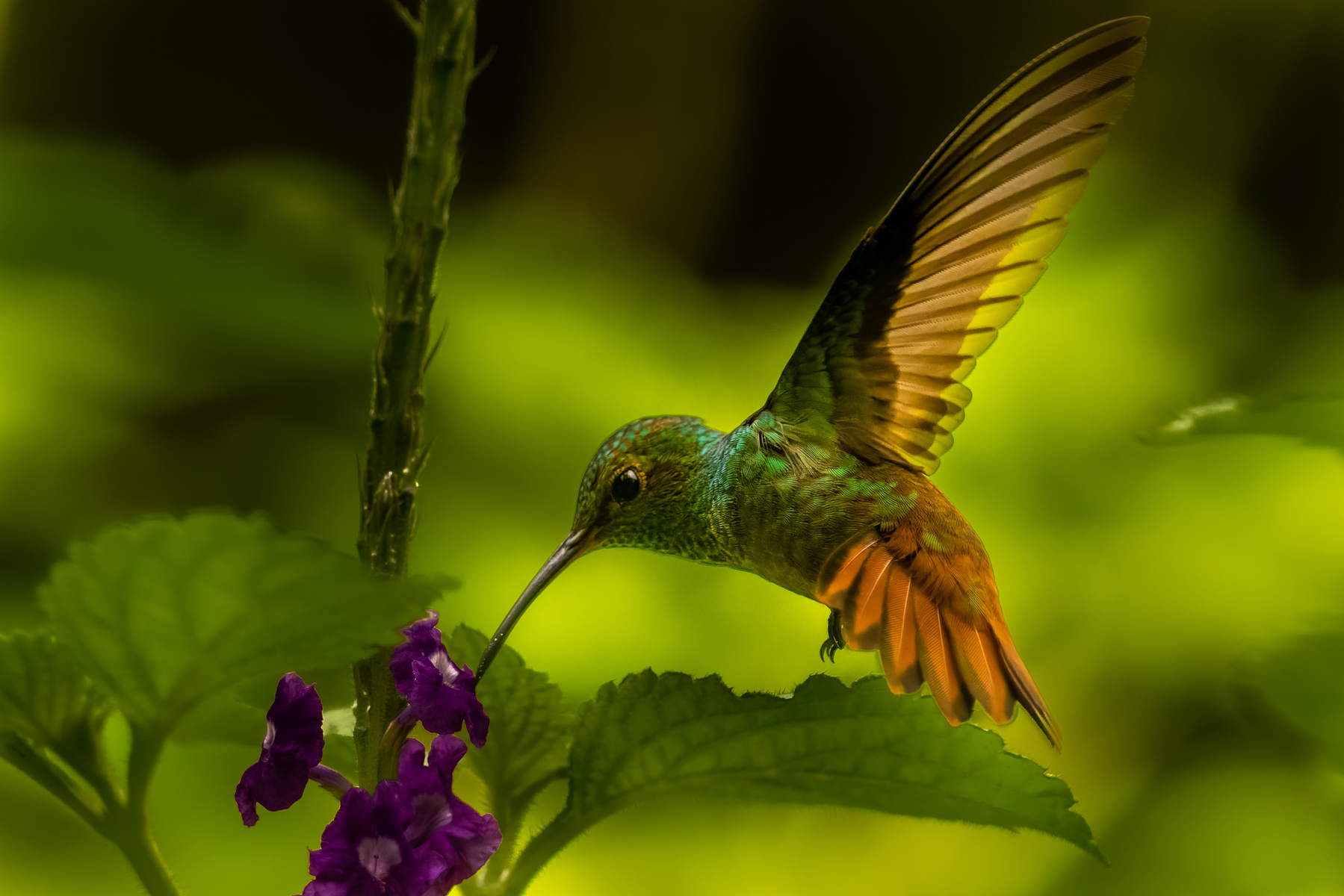
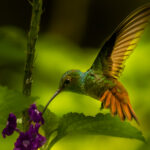
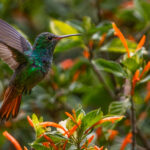
A Rufous-tailed Hummingbird sips nectar from a flower near the Aranel Volcano, Costa Rica. The Rufous is extremely territorial and aggressive at flower patches, often chasing away other birds and insects (image by Gin Wilde)
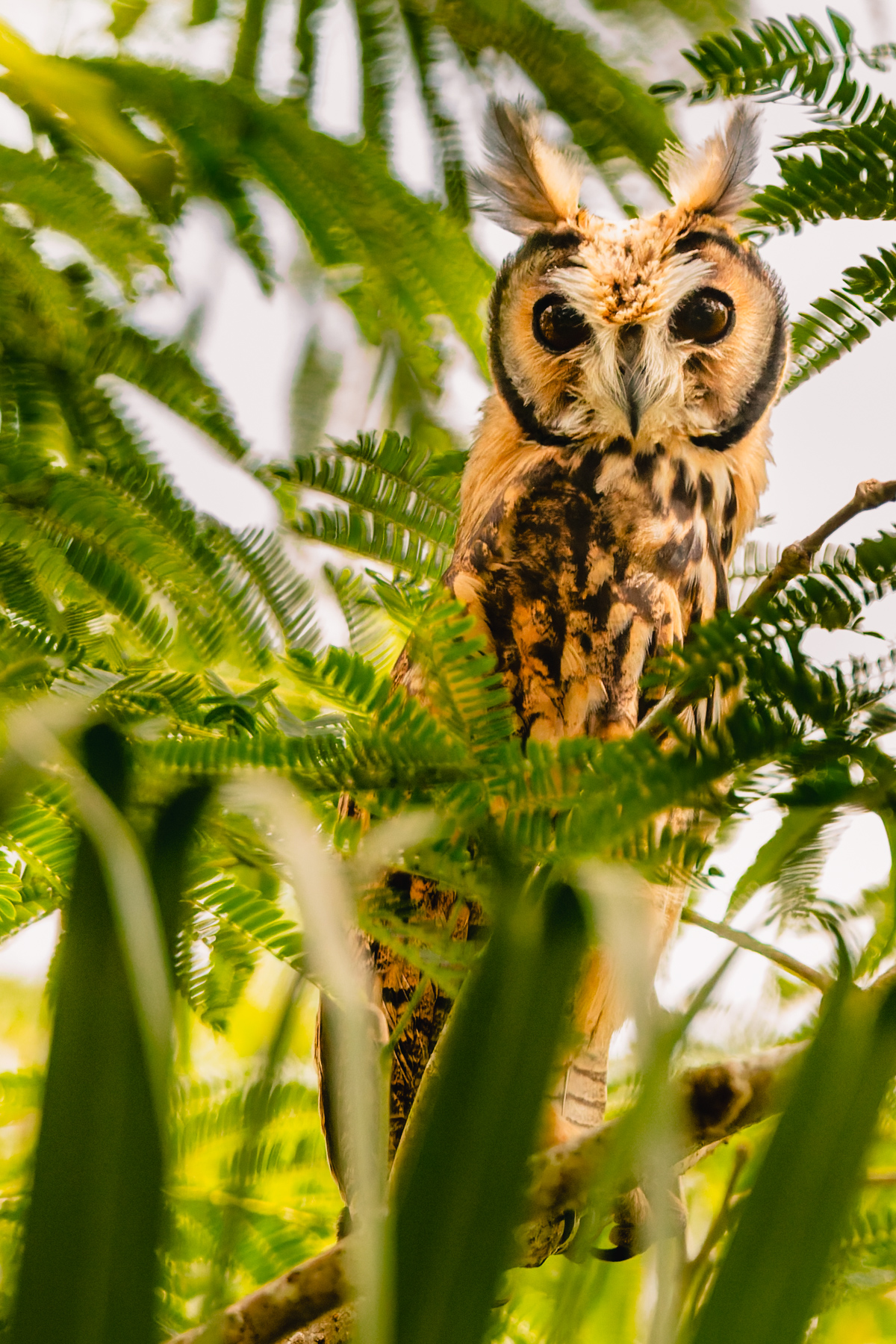
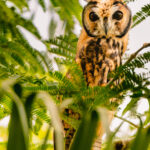
A juvenile Striped Owl - characterised by its large ear tufts and cinnamon-coloured eyes - waits for its mother to return with food (image by Gin Wilde)
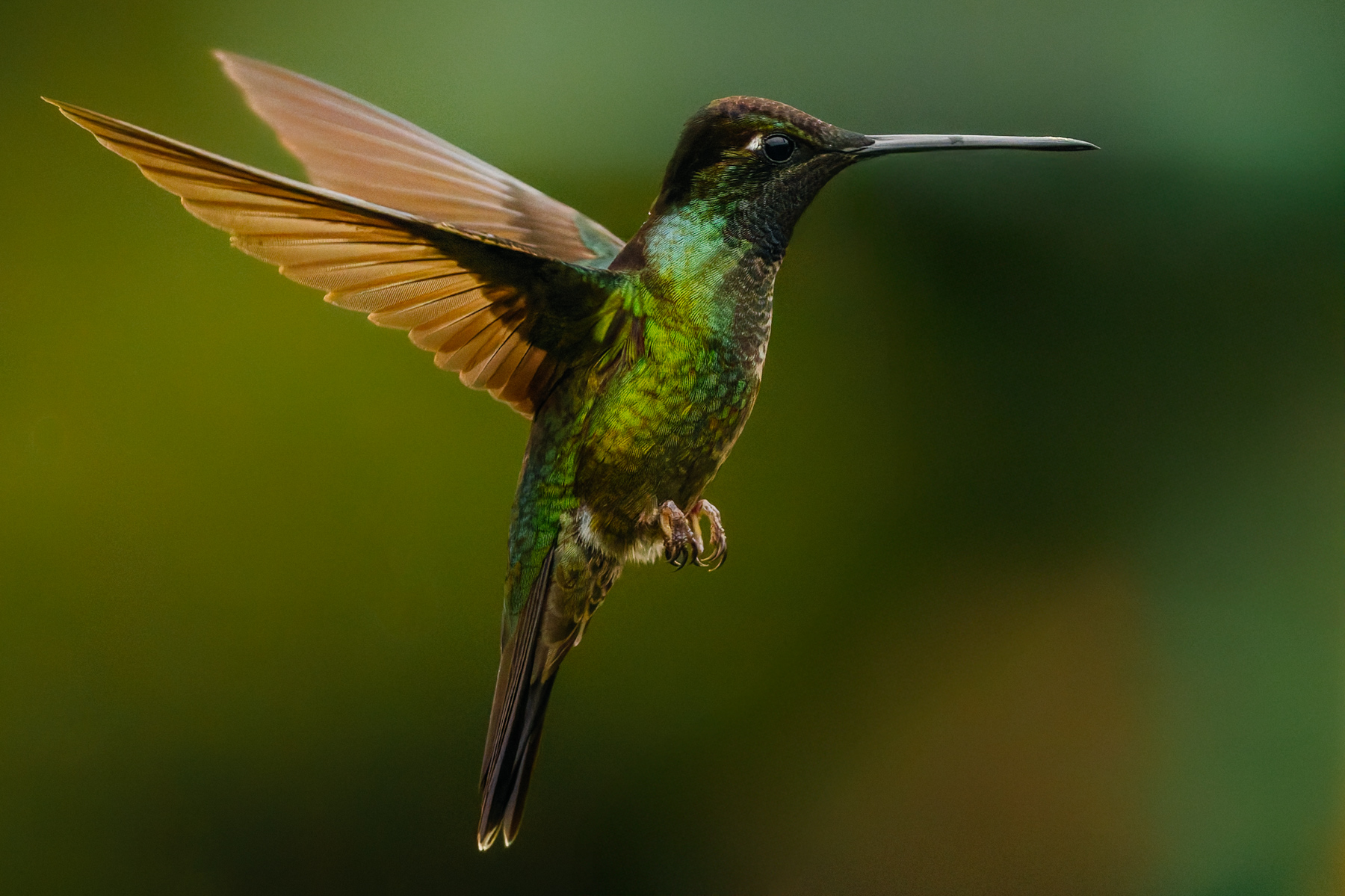
Portrait of a male Talamanca Hummingbird. Seen from the side, male Talamanca's have a black head and chin, with a green gloss. But when the light hits - and at the right angle - this becomes a violet blue topped by a striking purple crown (image by Gin Wilde)
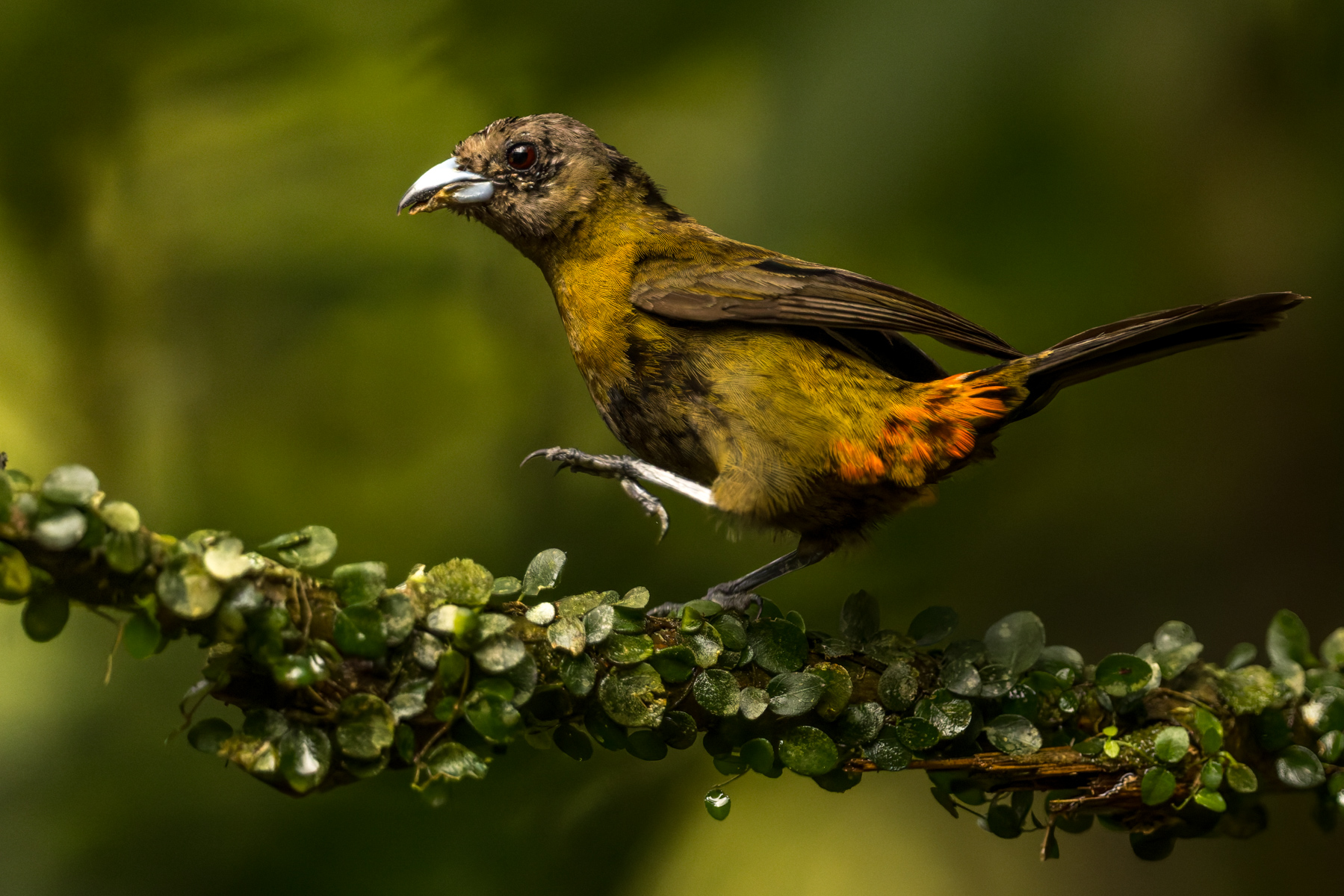
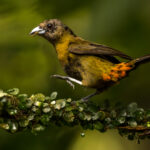
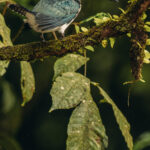
The female Scarlet-rumped Tanager eschews the striking black and red plumage of the male. But her olive and orange colouration, together with her pale blue beak, makes for a nonetheless beautiful bird (image by Gin Wilde)
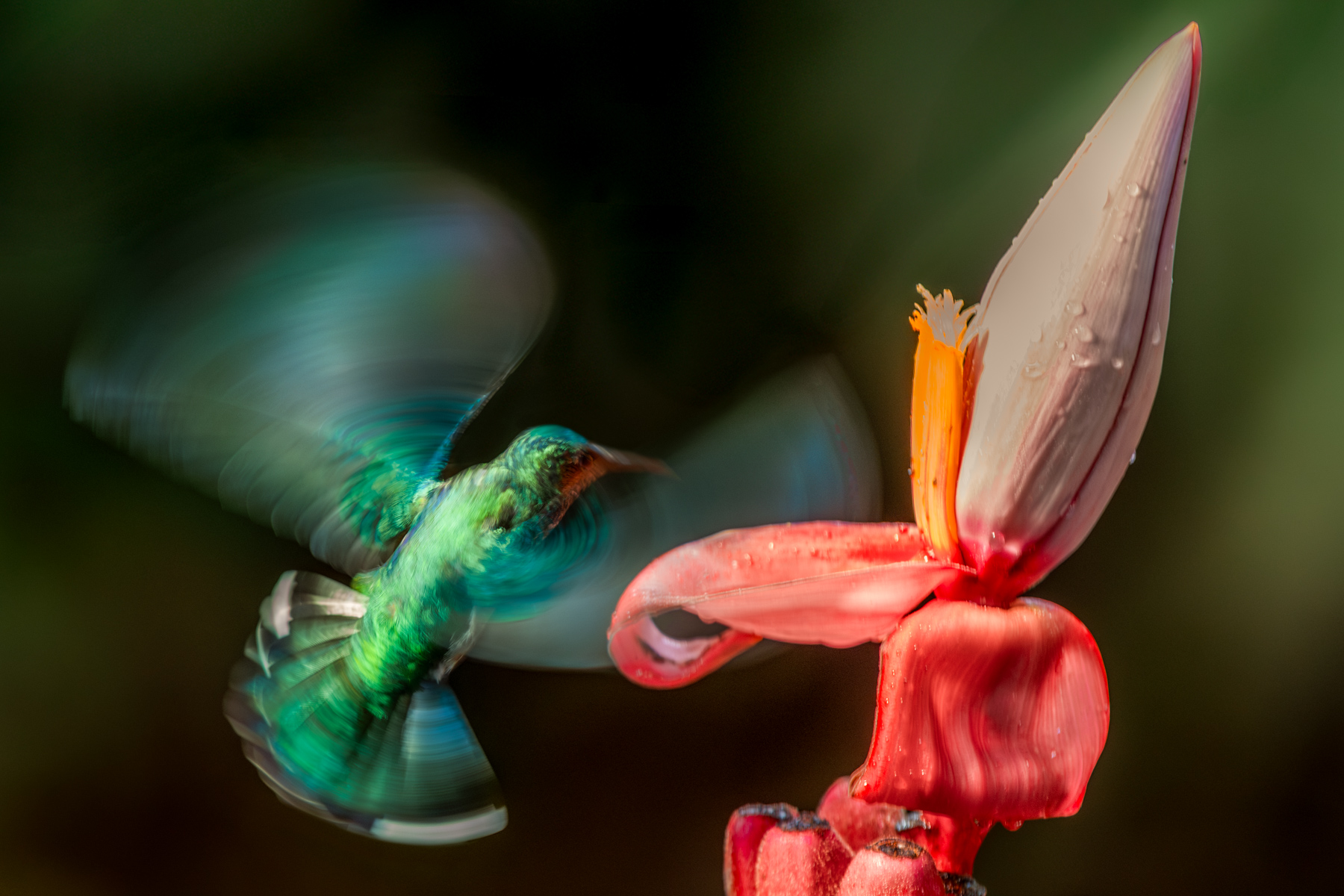
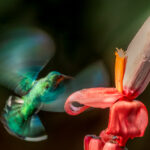
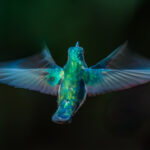
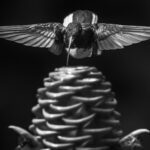
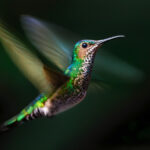
The whirligig motion of a hummingbird's wings is something to behold; rotating in a figure-of-eight pattern, allowing them to fly in all directions and generate lift to hover. This bird is Green Crowned Brilliant, taken at a shutter speed of 1/100 (image by Gin Wilde)
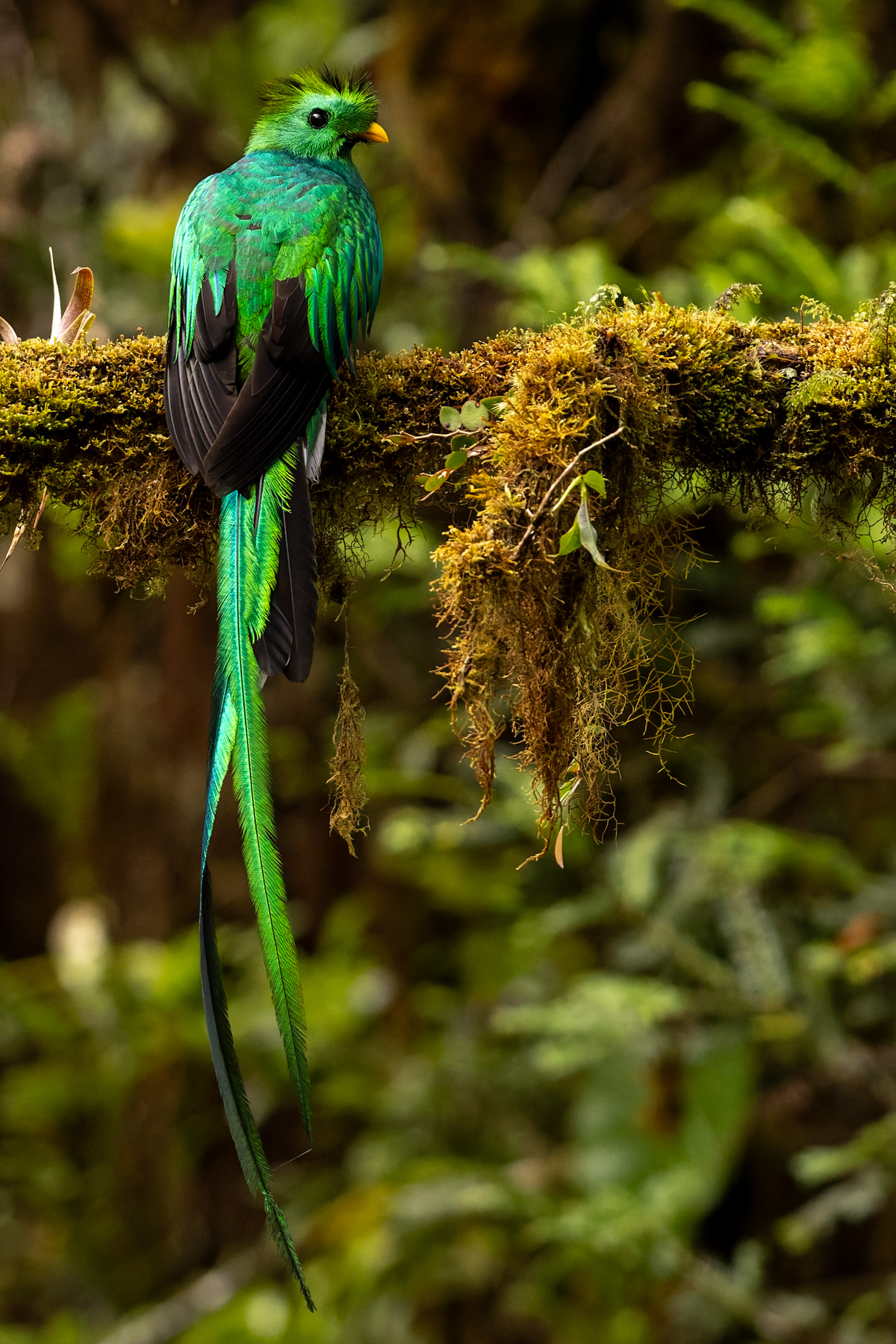
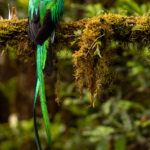
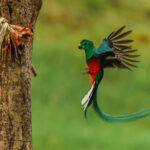
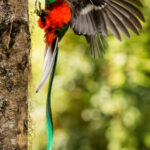
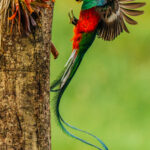
Portrait of a male Resplendent Quetzal, showing those immensely beautiful tail feathers (image by Gin Wilde)
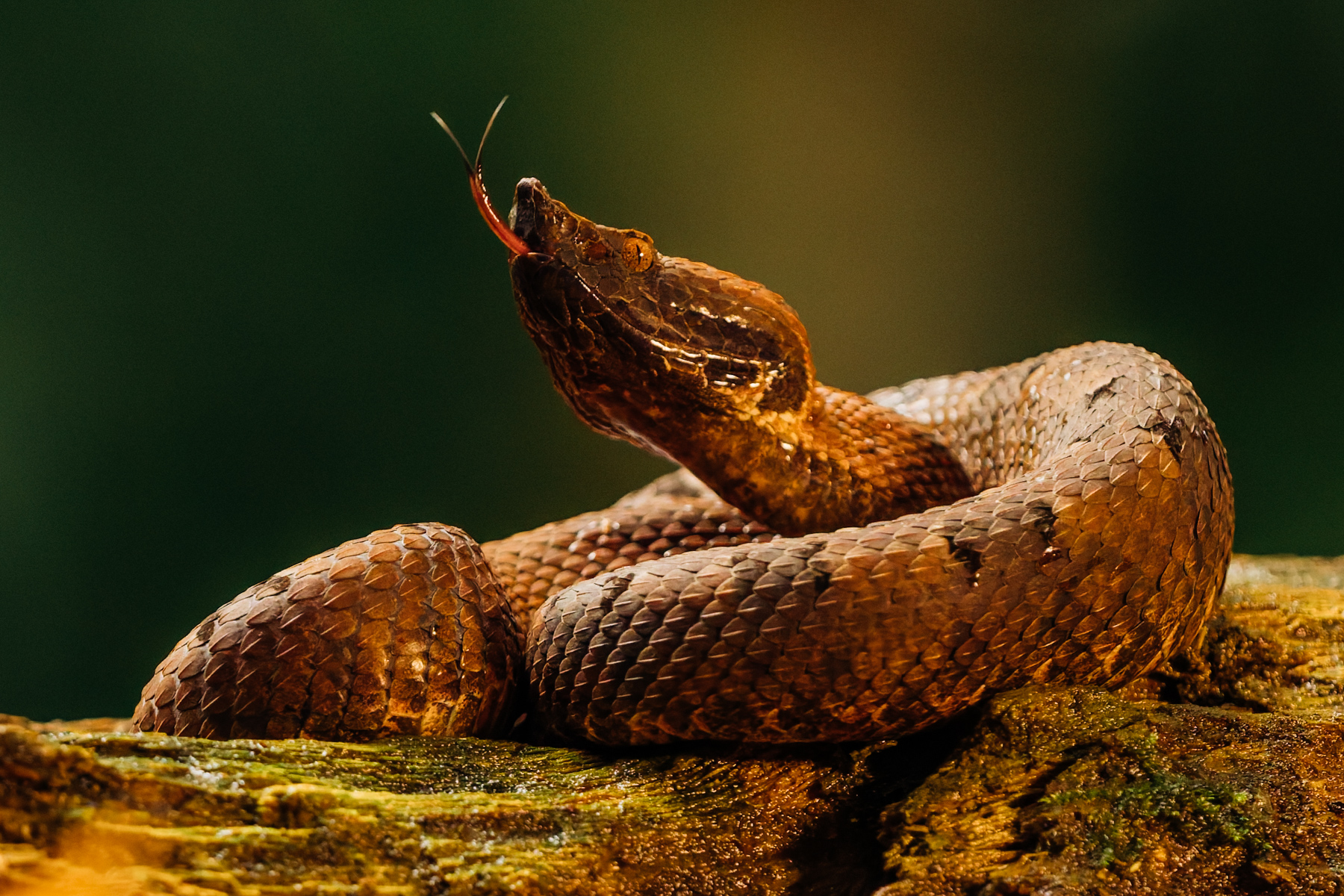
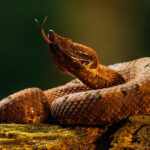
Tasting the air, a Hognosed Pit Viper in the Heredia Province of Costa Rica (image by Gin Wilde)
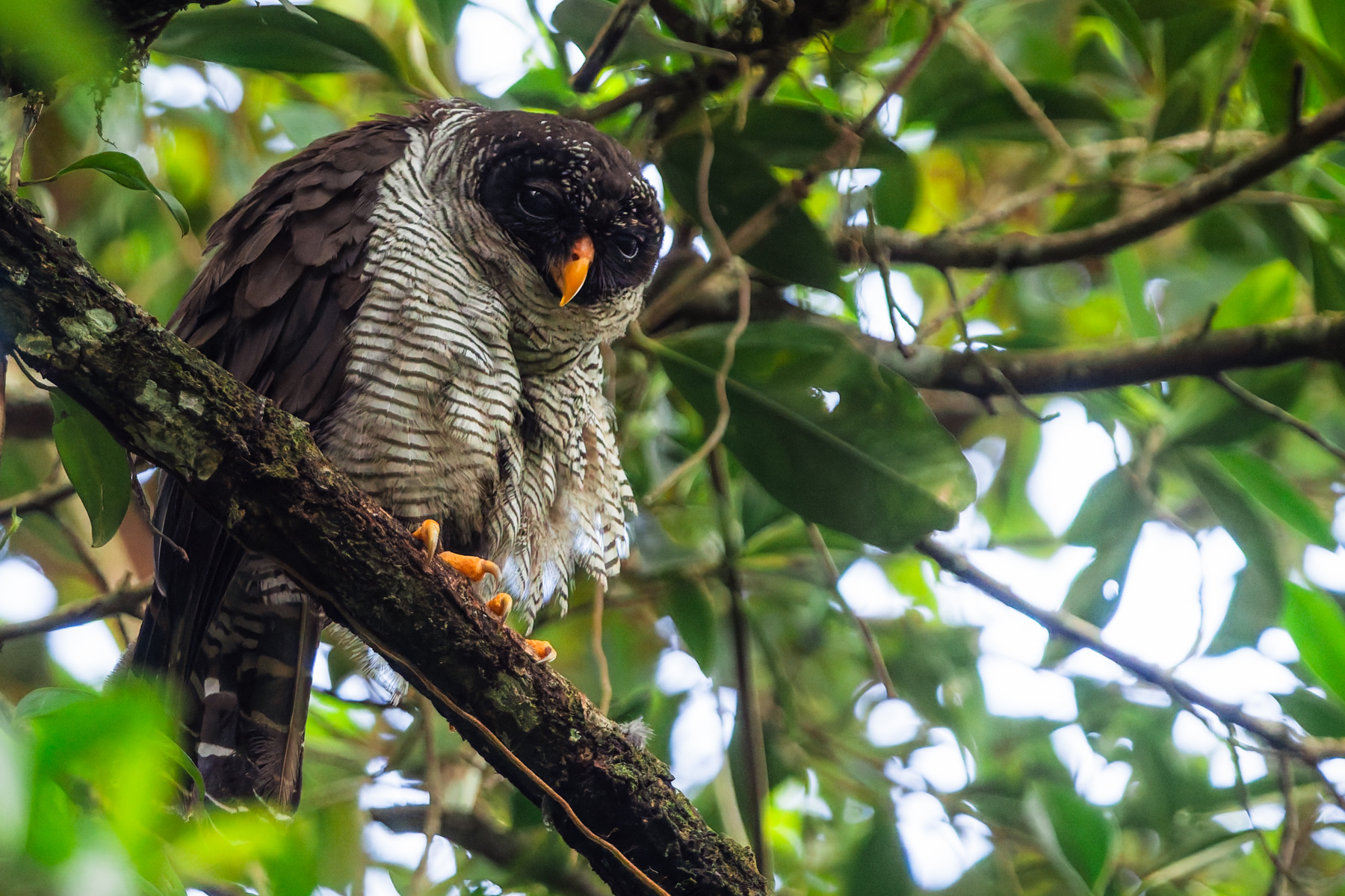
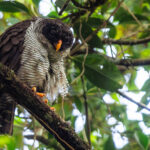
This wonderfully charismatic Black and White Owl, roosting in the mid-altitude forests near Arenal Volcano. Males seduce females in the breeding season through a display of wing flapping and elaborate acrobatic flights (image by Gin Wilde)
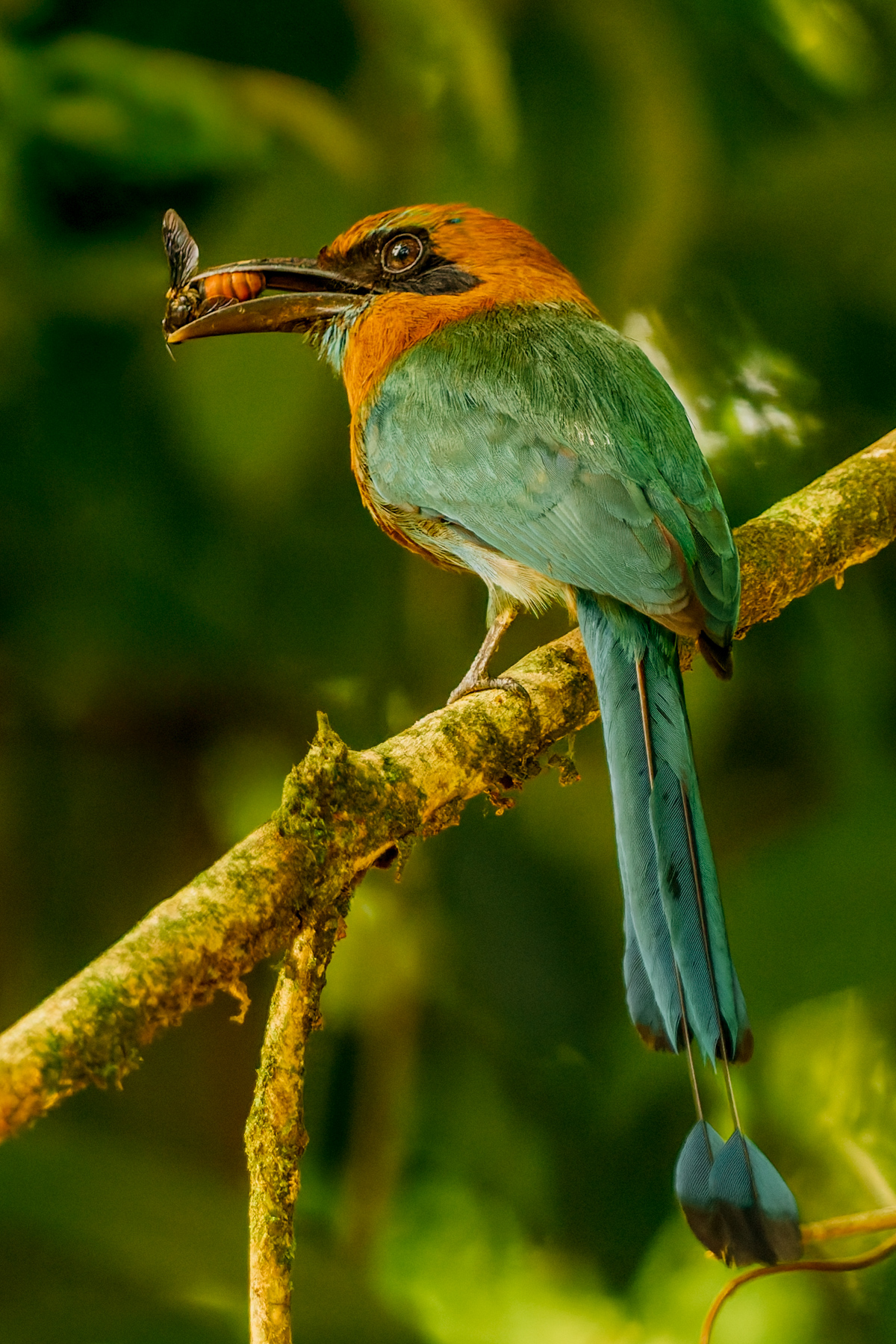
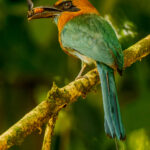
A Broad-billed Motmot gobbles its insect prey, in the lowland forests of Costa Rica (image by Gin Wilde)
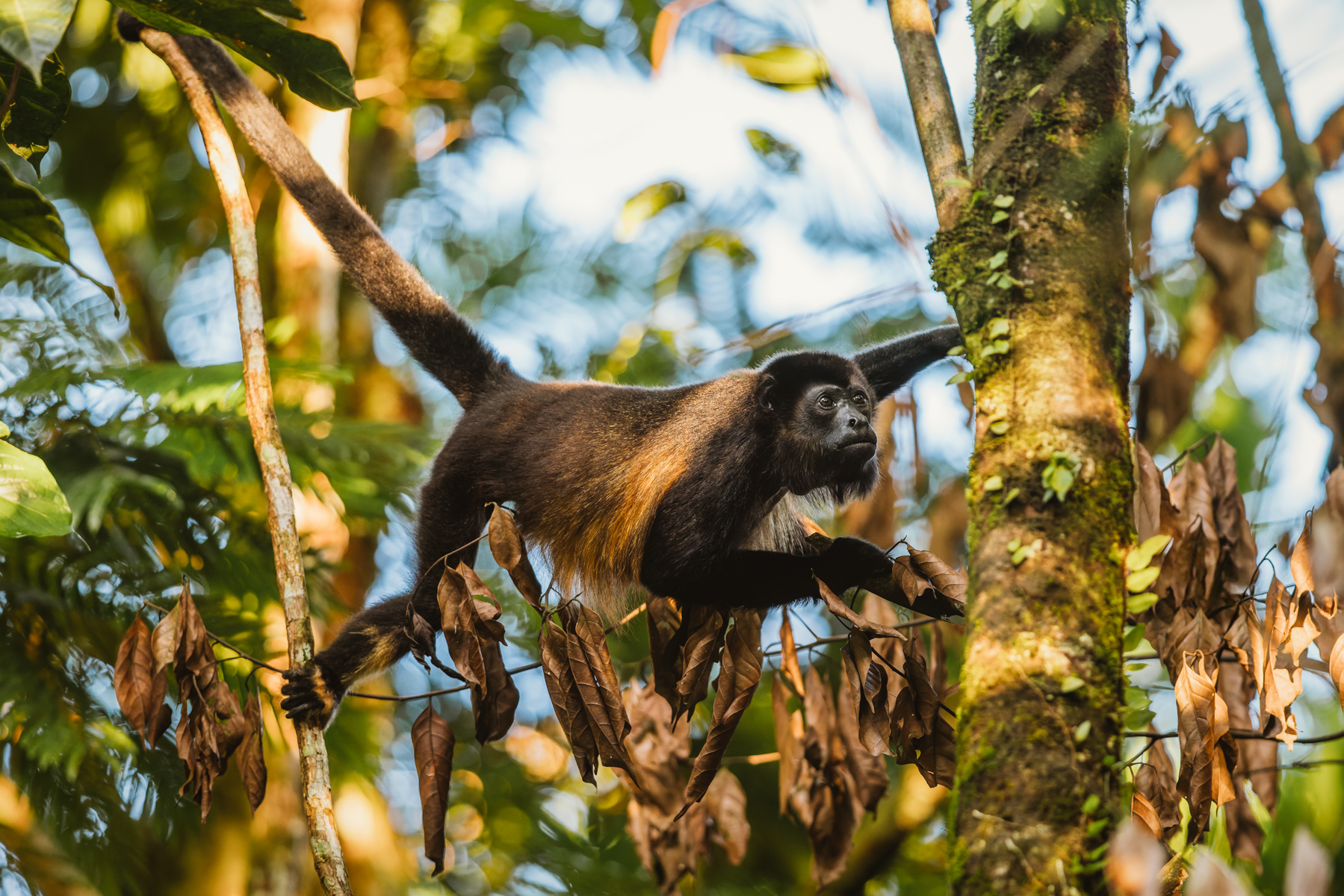
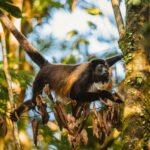
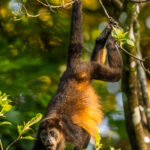
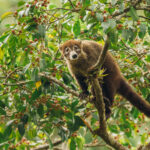
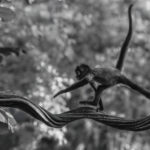
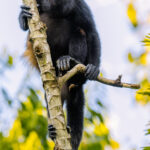
A male Mantled Howler Monkey swings through trees in Costa Rica's Heredia Province. This species of New World monkey takes its 'mantled' name from the long guard hairs on its side (image by Gin Wilde)
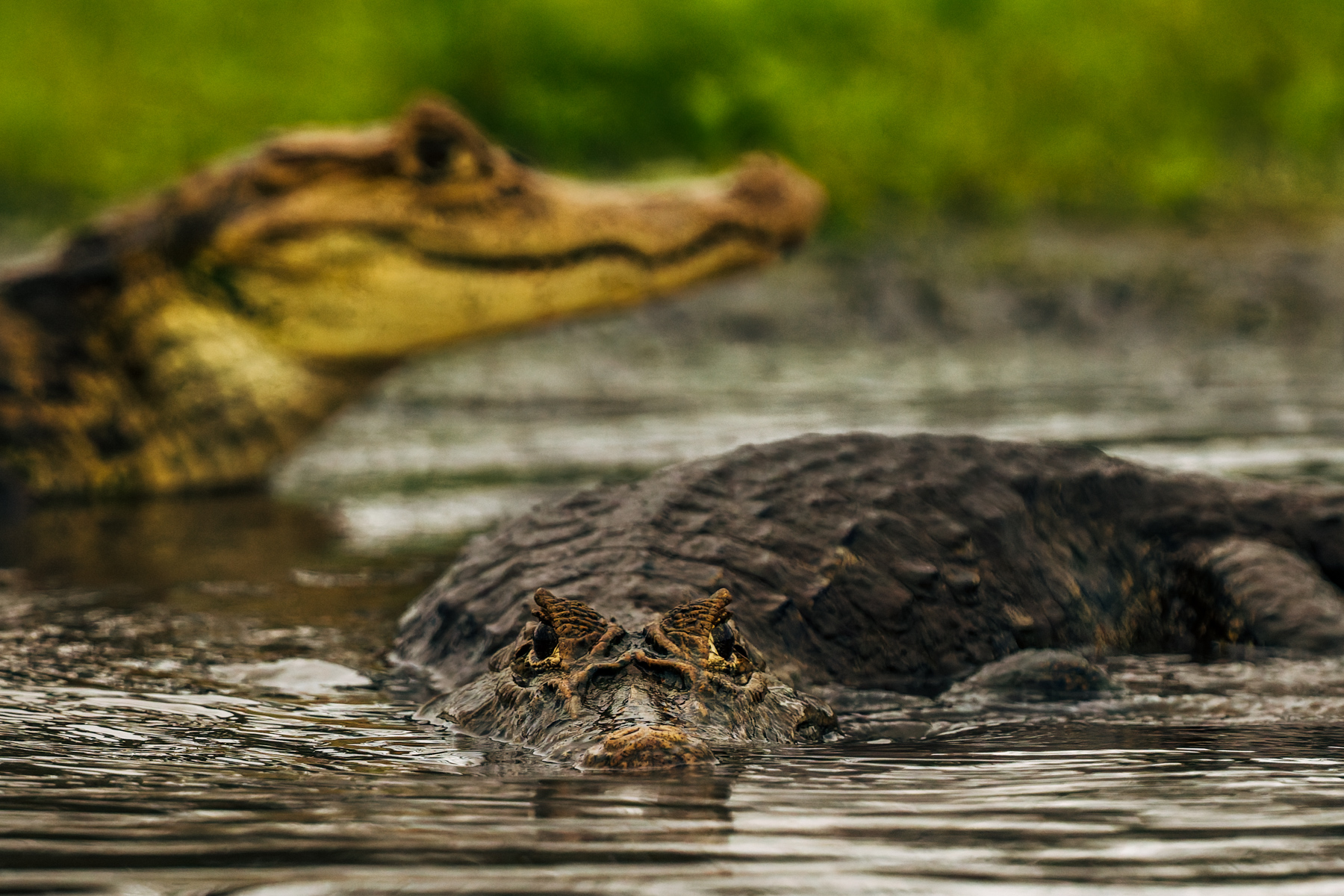
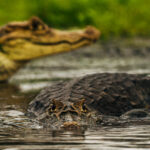
'Don't worry, pal, I've got your back...' A Spectacled Caiman eyes us from the lagoons of Cano Negro - shadowed by his back-up bouncer (image by Gin Wilde)
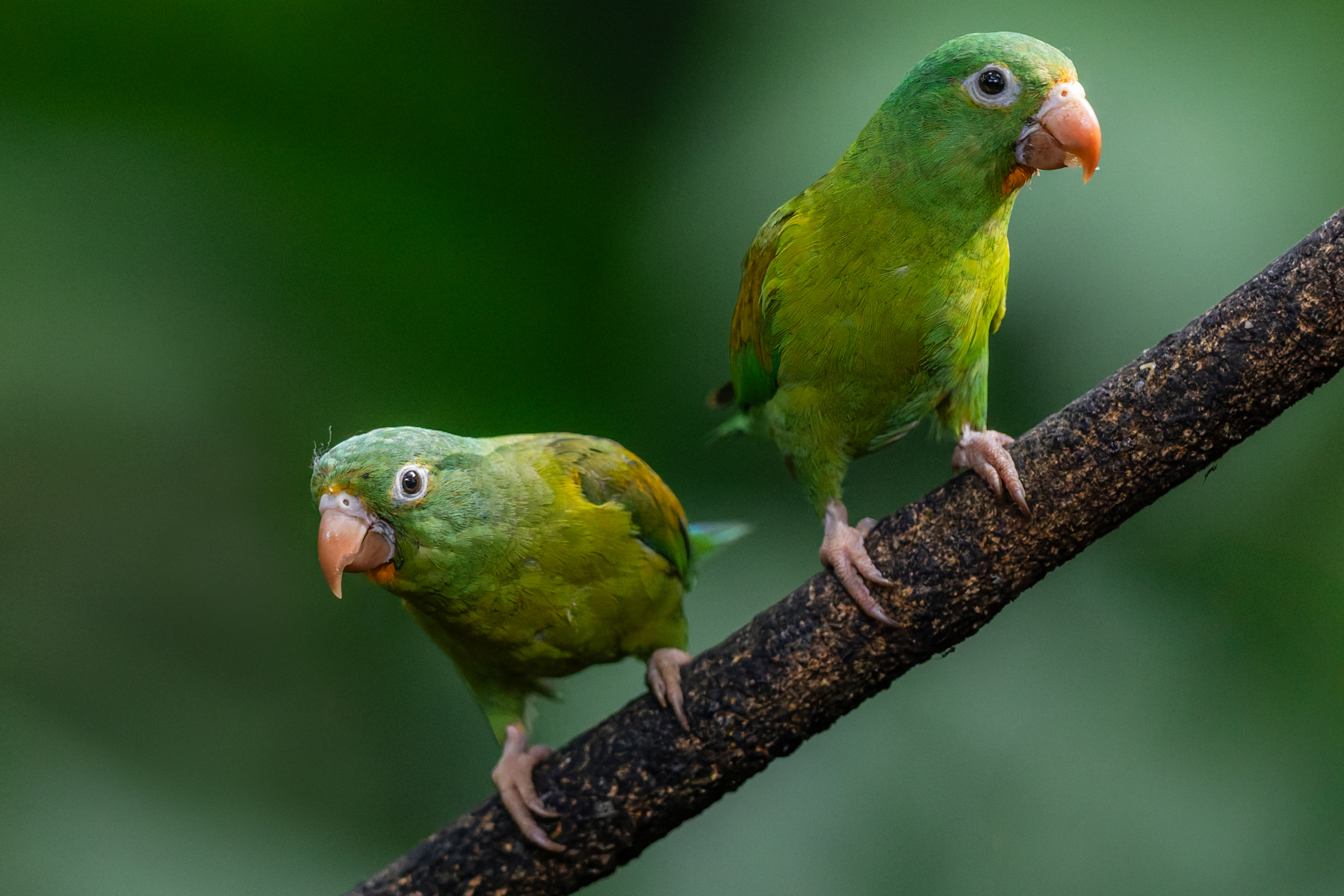
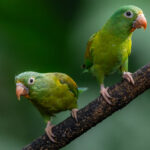
A pair of curious Orange-chinned Parakeets survey the goings on of the birds in the gardens of Laguna del Lagarto, Costa Rica (image by Gin Wilde)
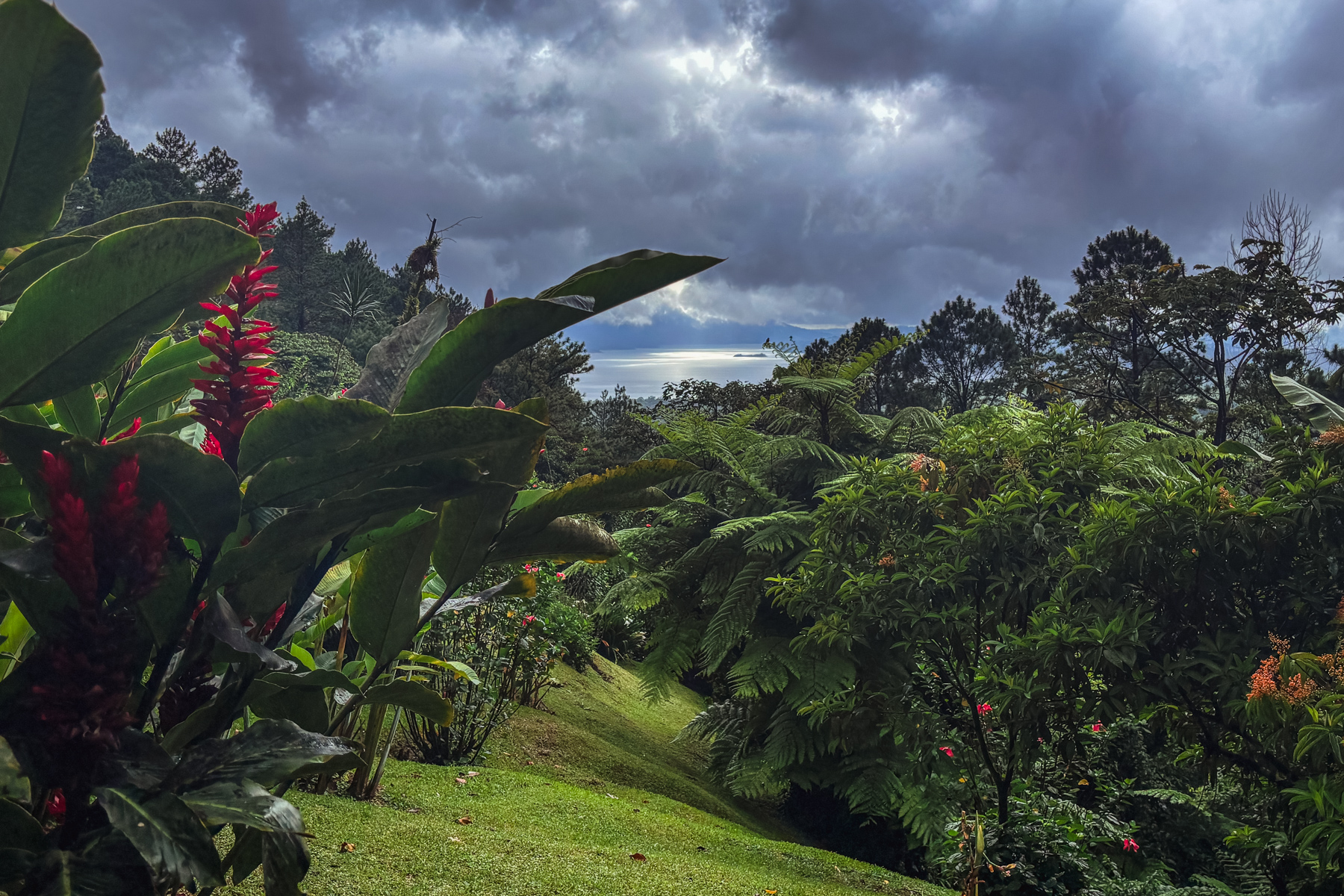
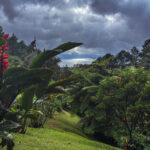
Despite the thunderstorms, the gardens at Arenal Observatory Lodge - looking out to the shores of Lake Arenal - can be wonderful to go birding in (image by Gin Wilde)
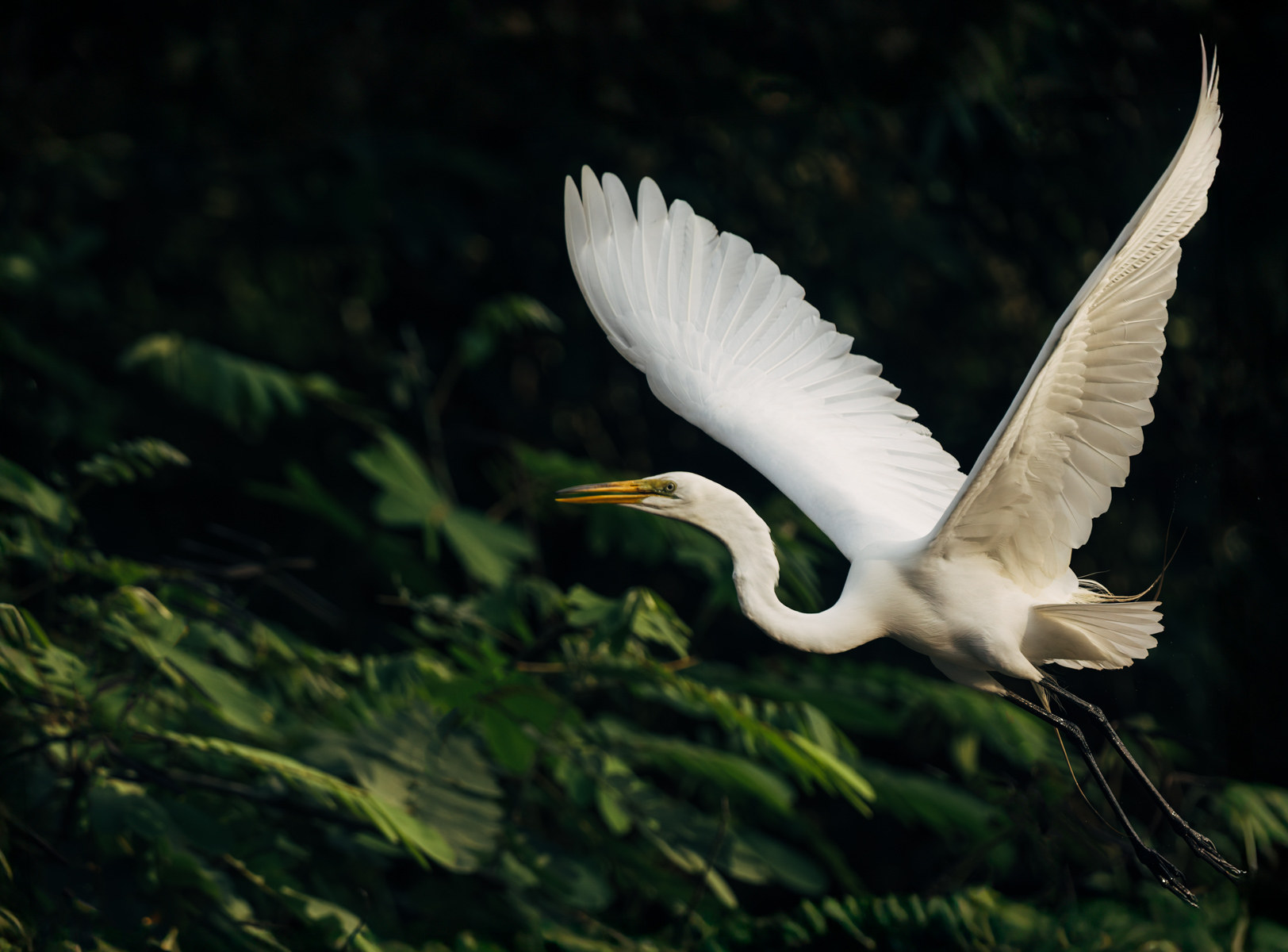
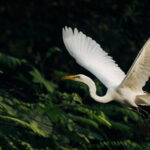
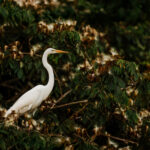
Like a ghostly beauty emerging from the shadows, the Great White Egret is a strikingly graceful bird (image by Gin Wilde)
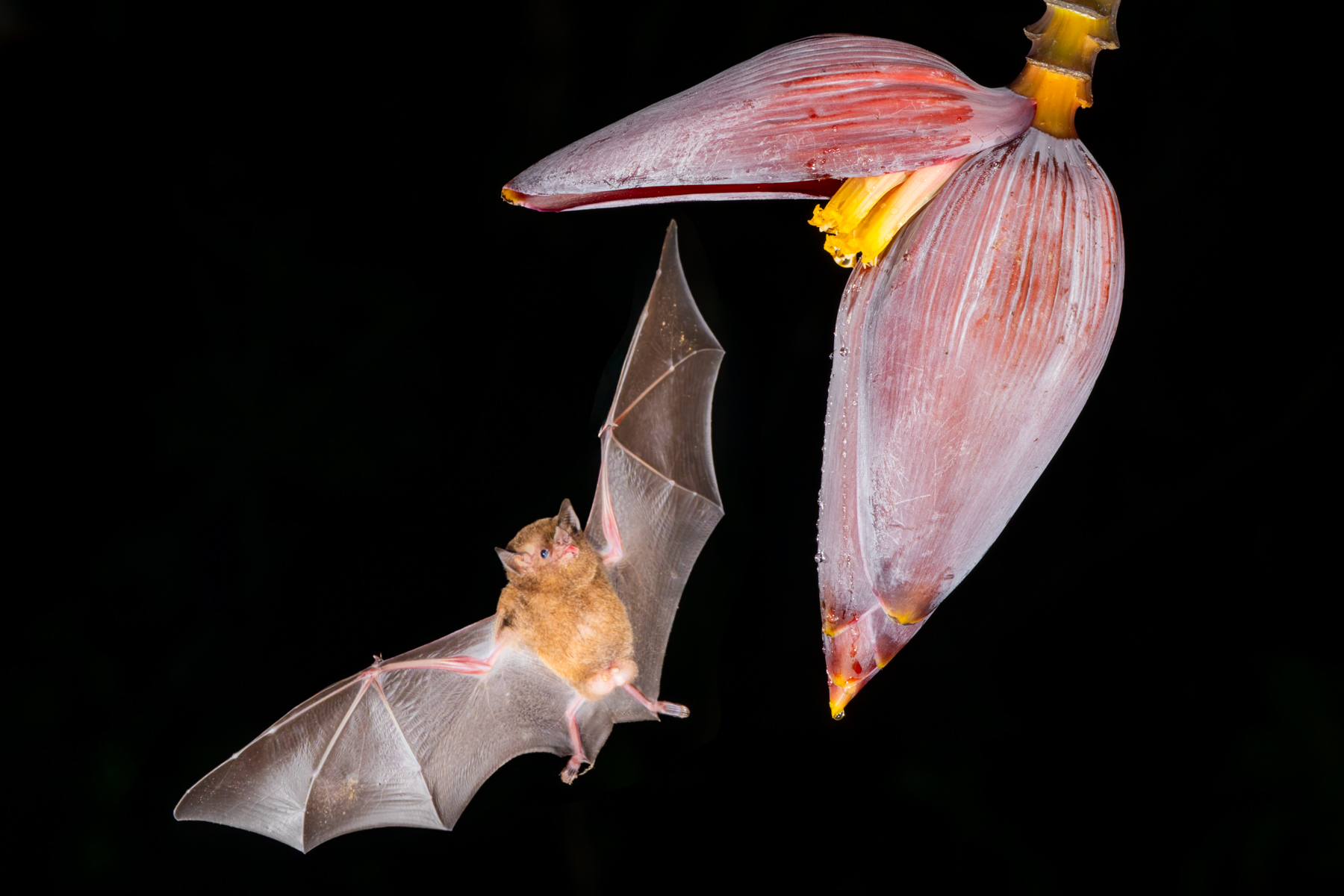
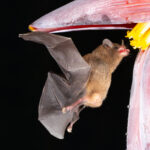
'Tongue out if you're hungry for nectar!' Orange Nectar Bats in Costa Rica were observed using a unique feeding mechanism that's never been seen in any other animal - allowing them to pull liquid against gravity using a pumping mechanism (image by Gin Wilde)
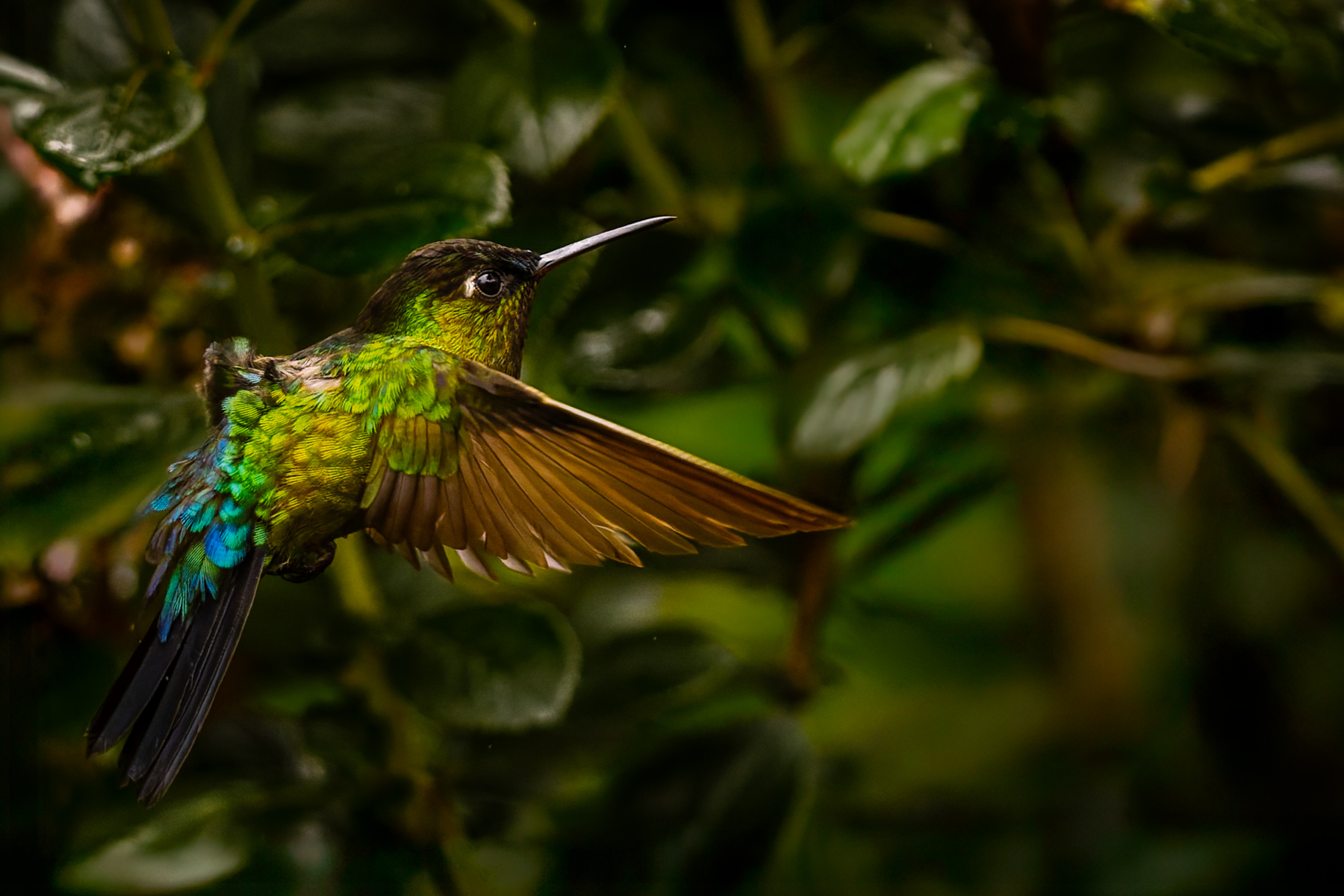
A feather ruffled Fiery-throated Hummingbird darts through the undergrowth in the cloud forests of Costa Rica (image by Gin Wilde)
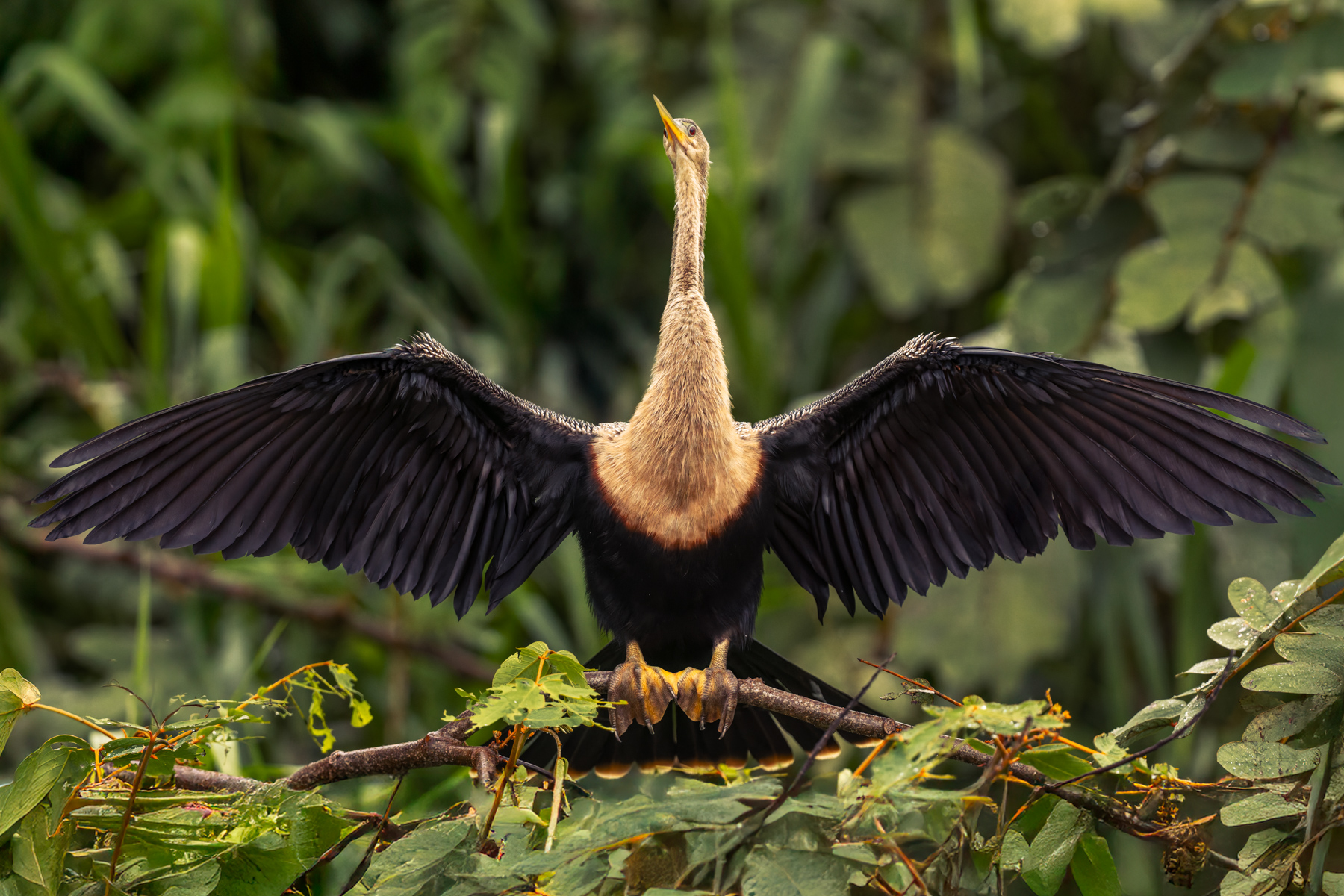
A female Anhinga dries her wings in the Cano Negro Wildlife Reserve, Costa Rica. The word 'anhinga' comes from the Brazilian Tupi language and means 'devil bird' or 'snake bird' (image by Gin Wilde)
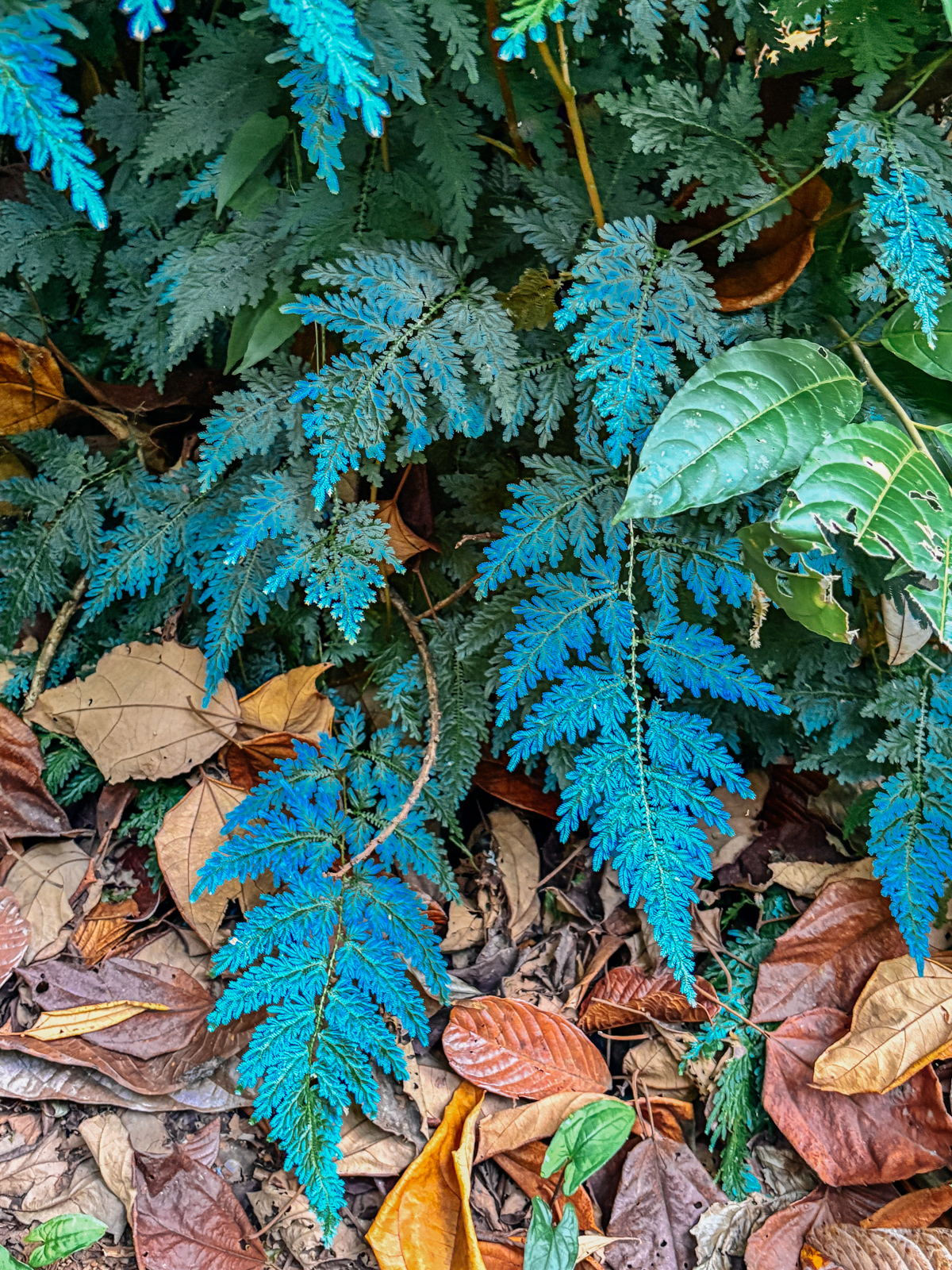
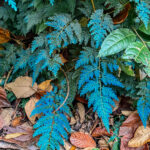
The strong blue colour on these Selaginall leaves is caused by inteference at two layers in the epidermis that refract light (image by Gin Wilde)
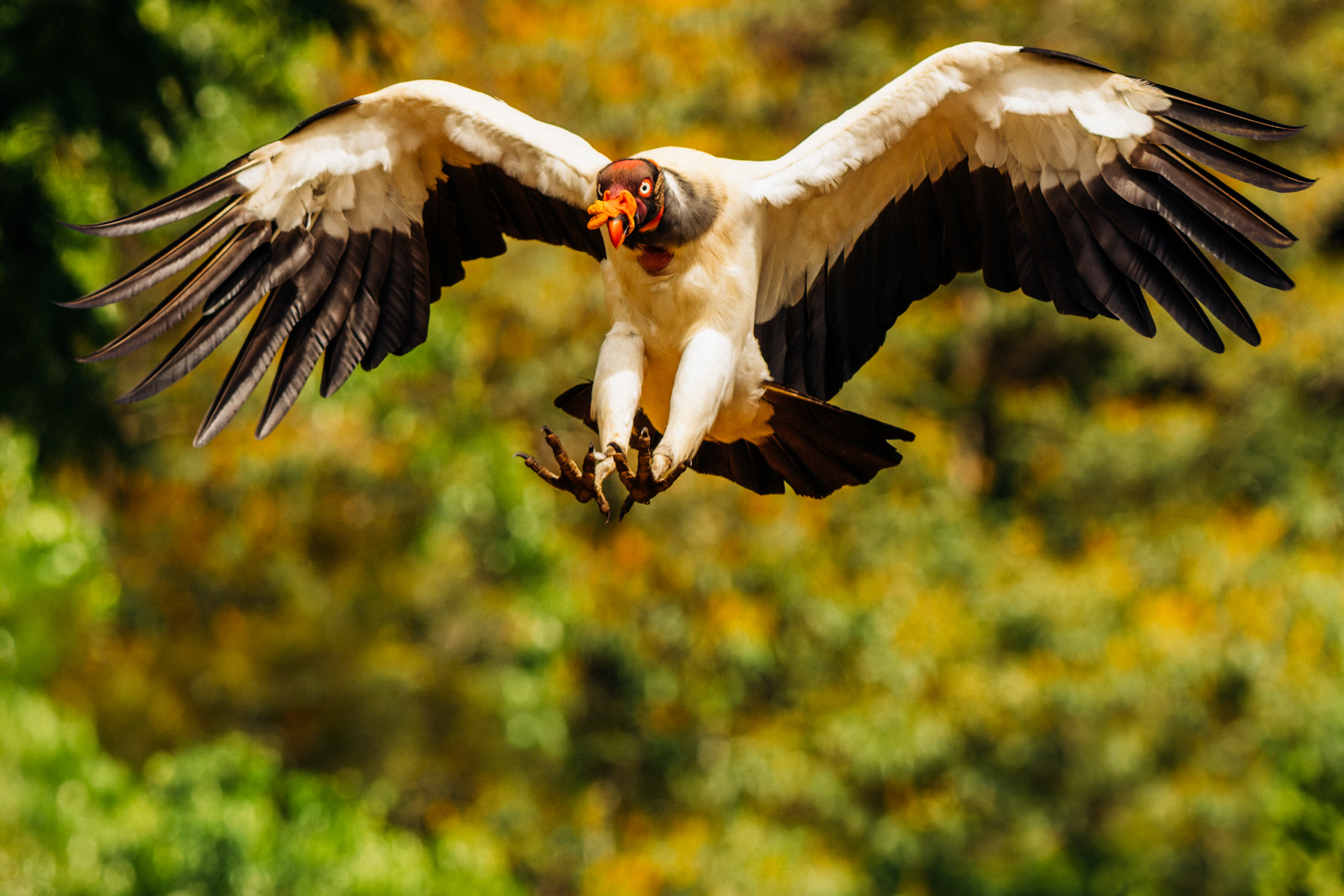
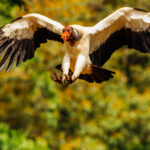
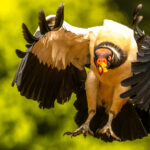
An impressive King Vulture swoops down to feed at Laguna del Lagarto, Costa Rica. King Vultures are one of the largest New World Vultures, second only to Condors (image by Gin Wilde)
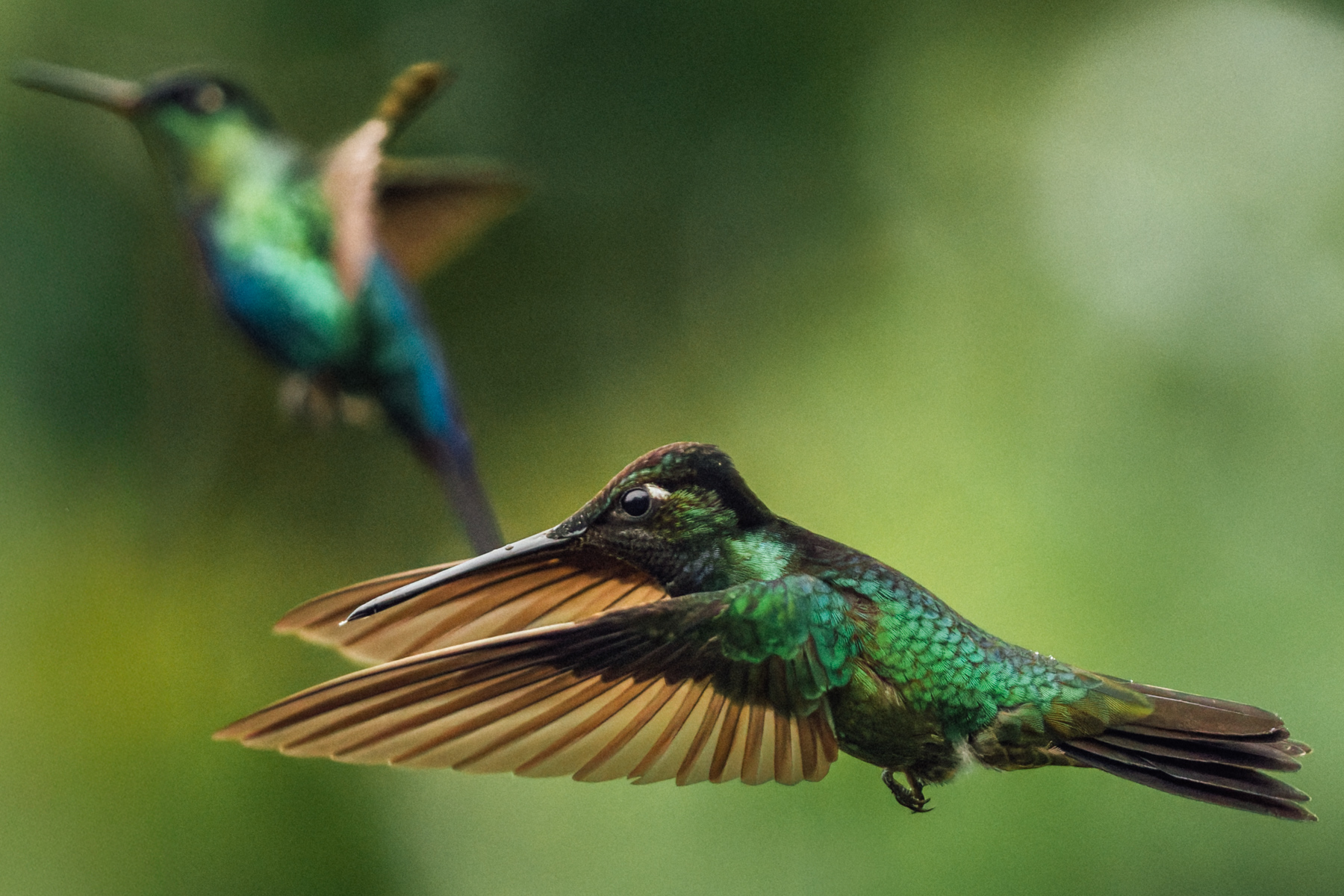
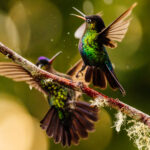
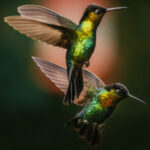
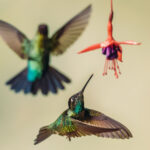
It's easy to be bedazzled by the richness of the greens and blues that characterise photography in Costa Rica. Here, a Talamanca hummingbird is backdropped by a Fiery-throated hummer (image by Gin Wilde)
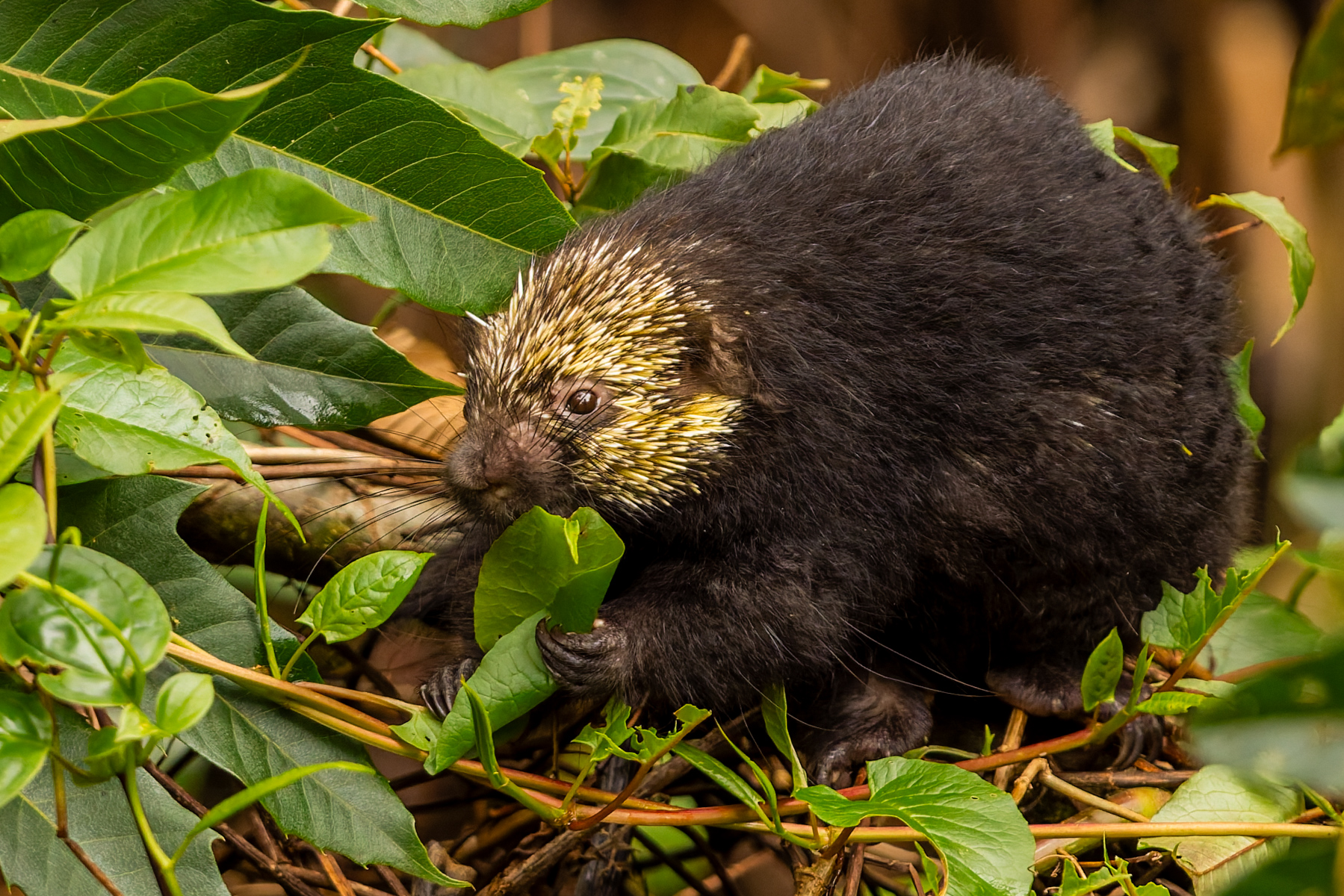
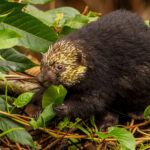
A Mexican Hairy Dwarf Porcupine chows down on a leaf right next to one of our guest's chalets, feasting in daylight despite being mostly nocturnal as a species (image by Gin Wilde)
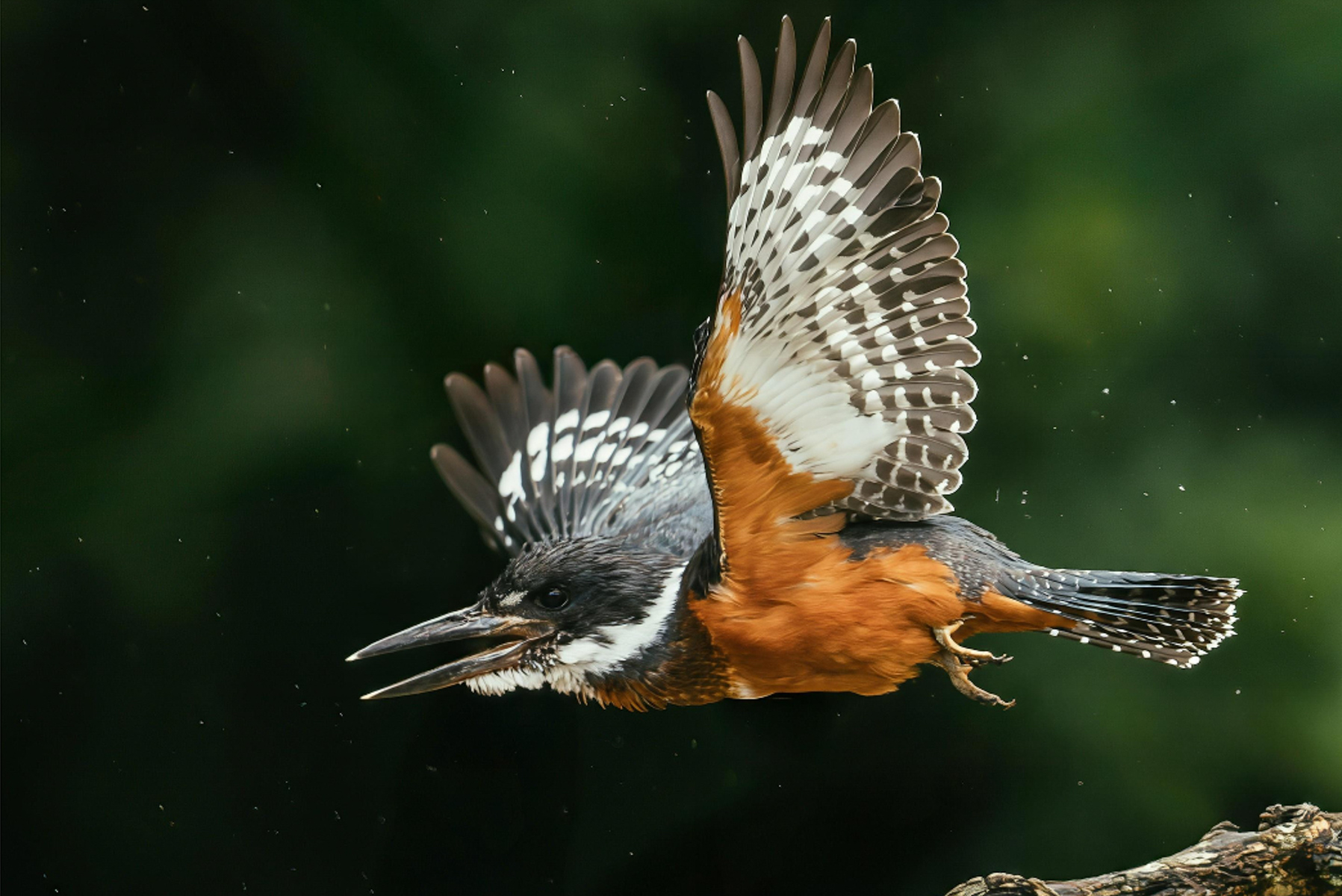
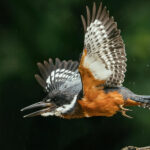
A Ringed Kingfisher takes flight after gobbling a fish in its riverine home in the Cano Negro Wildlife Reserve, Costa Rica (image by Gin Wilde)
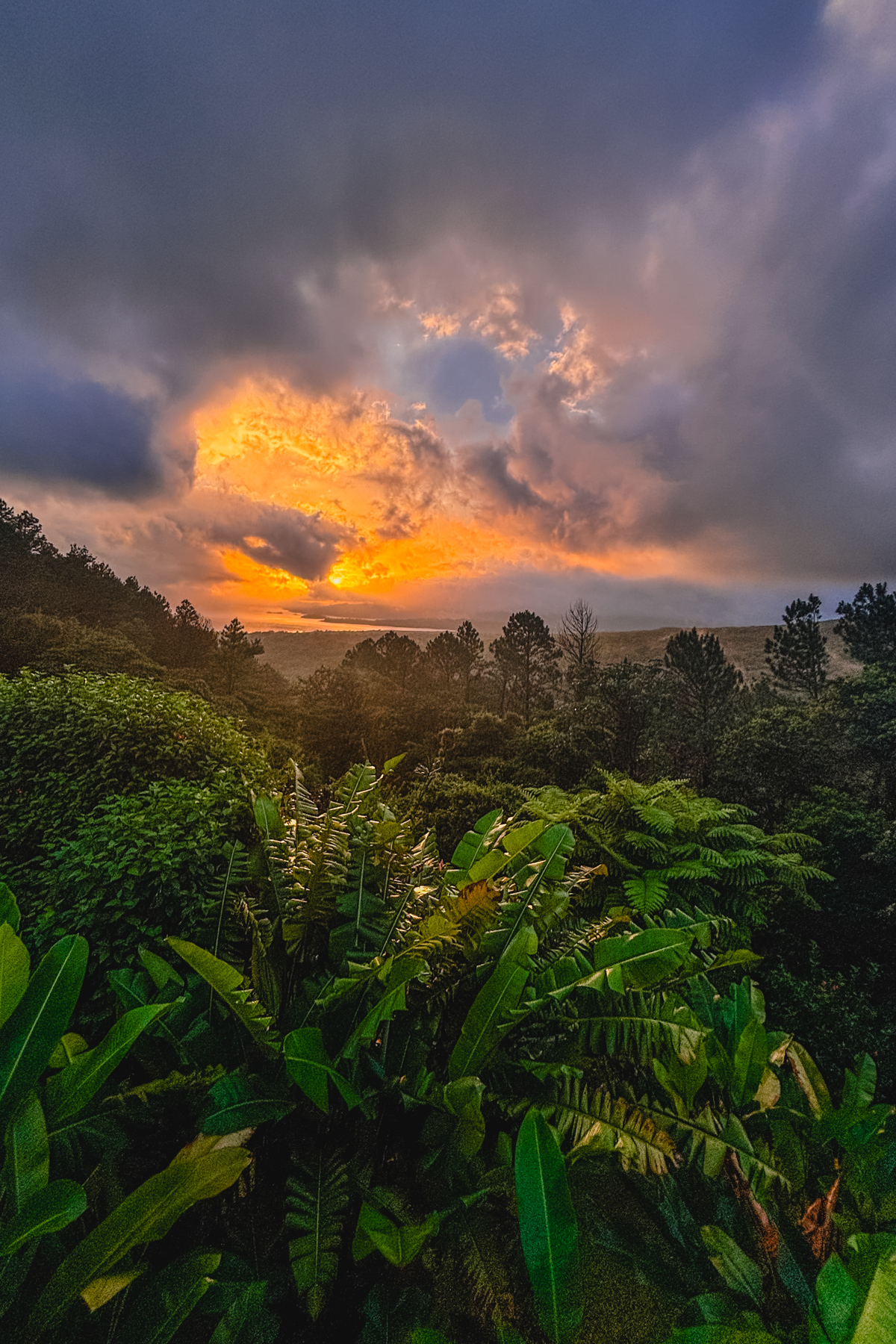
Sometimes the thunderstorms gave way to stunning sunset skies - like this at Arenal Observatory Lodge (image by Gin Wilde)
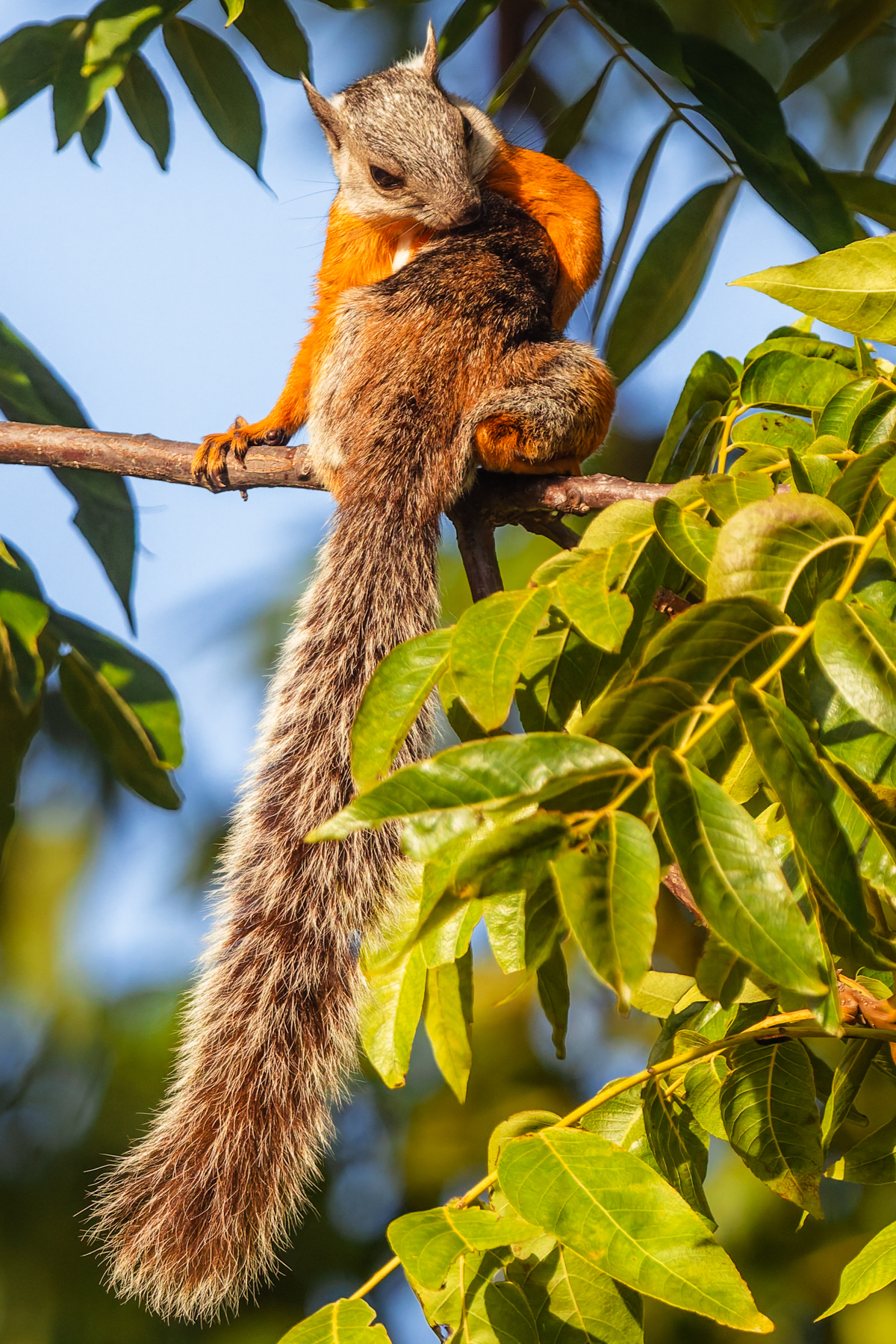
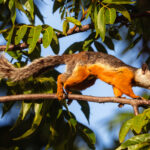
A handsome Variegated Squirrel - this one a riot of colour in the trees of Costa Rica's Heredia Province (image by Gin Wilde)
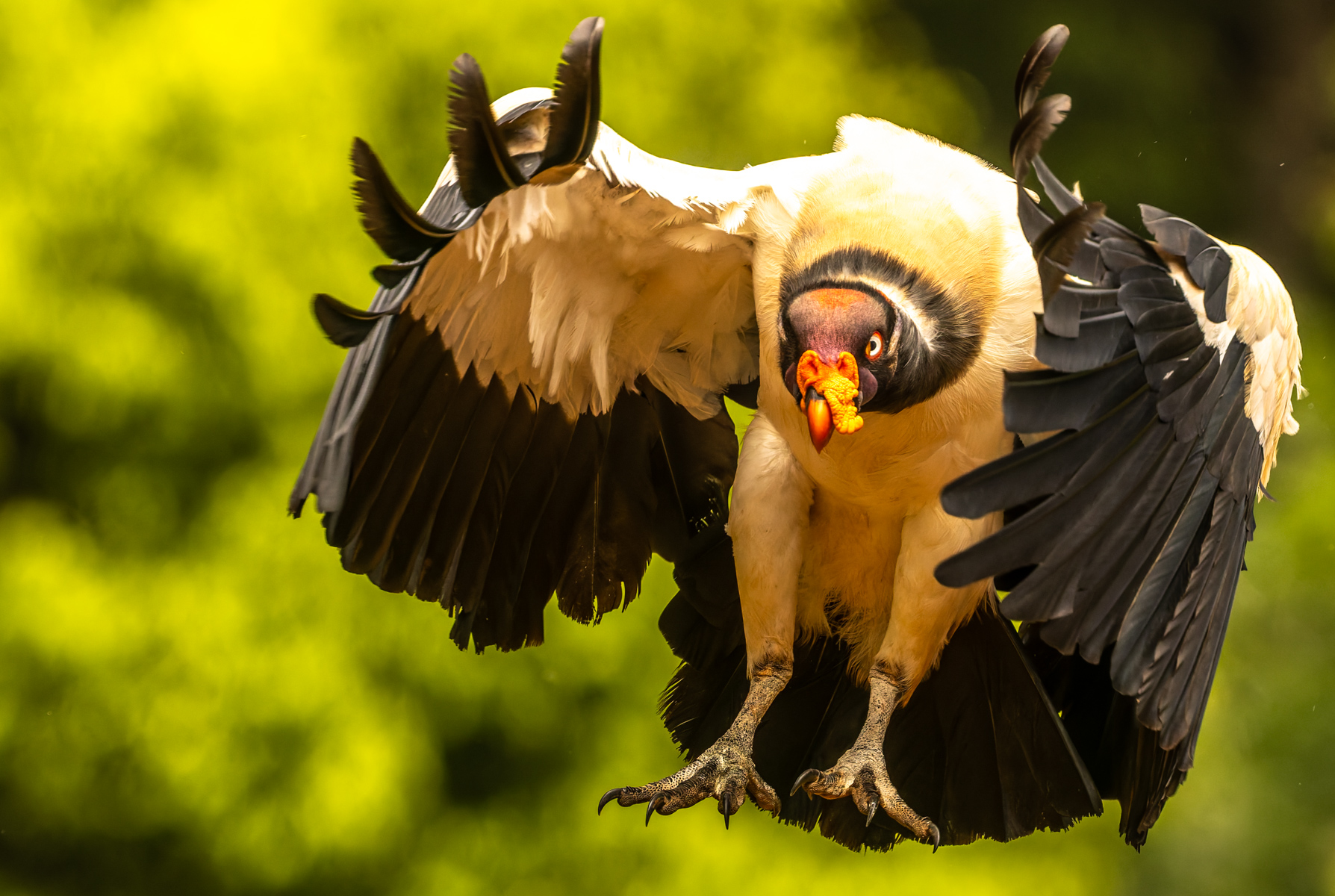
A regal looking King Vulture swoops in for a carcass in Costa Rica's Heredia Province. These vultures live predominantly in tropical lowland forest and were believed, in Mayan mythology, to carry messengers between humans and gods (image by Gin Wilde)
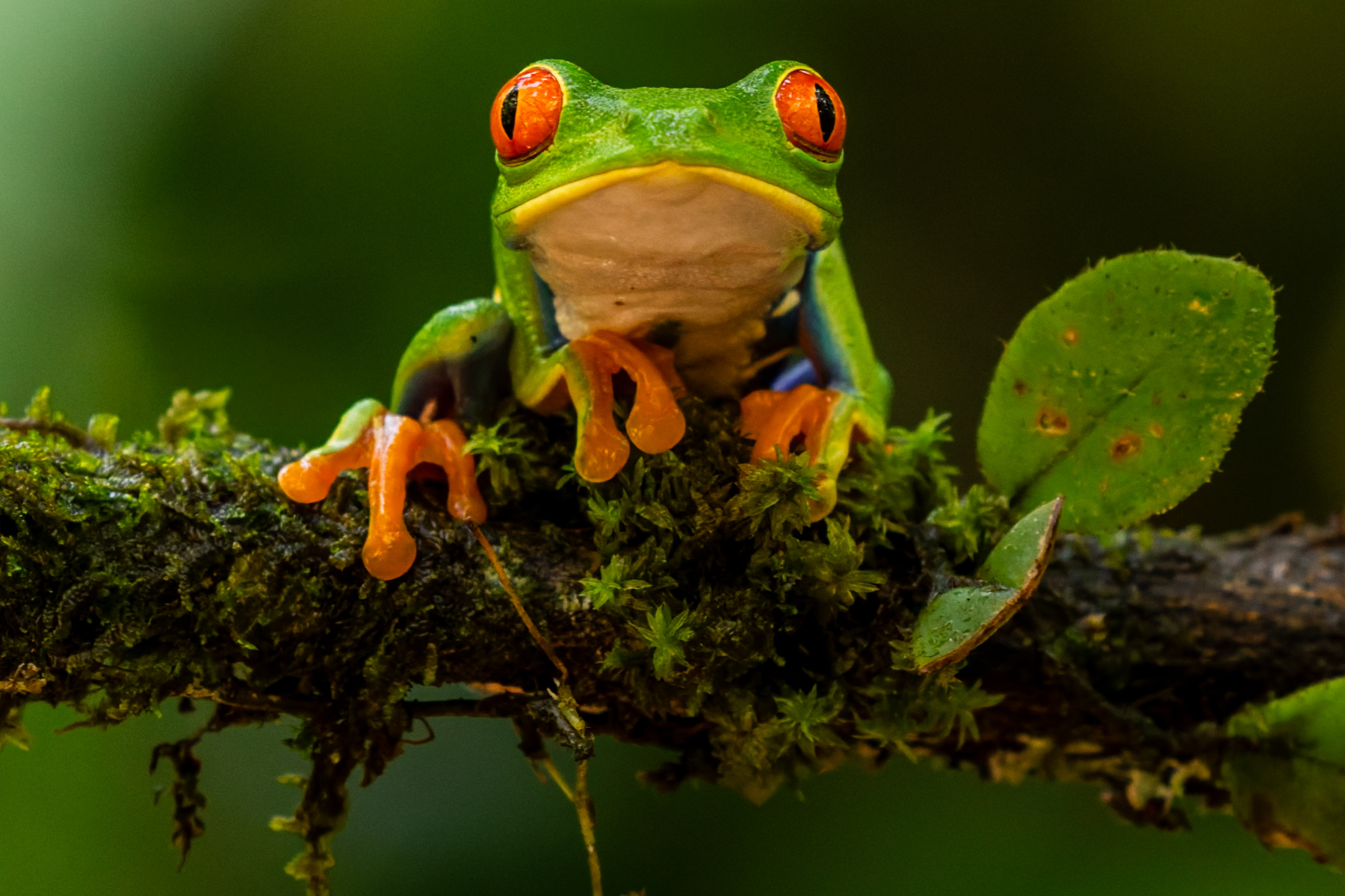
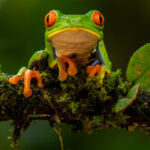
Portrait of a Red-eyed Tree Frog. If a child could paint a frog, surely it would look like this! (image by Gin Wilde)
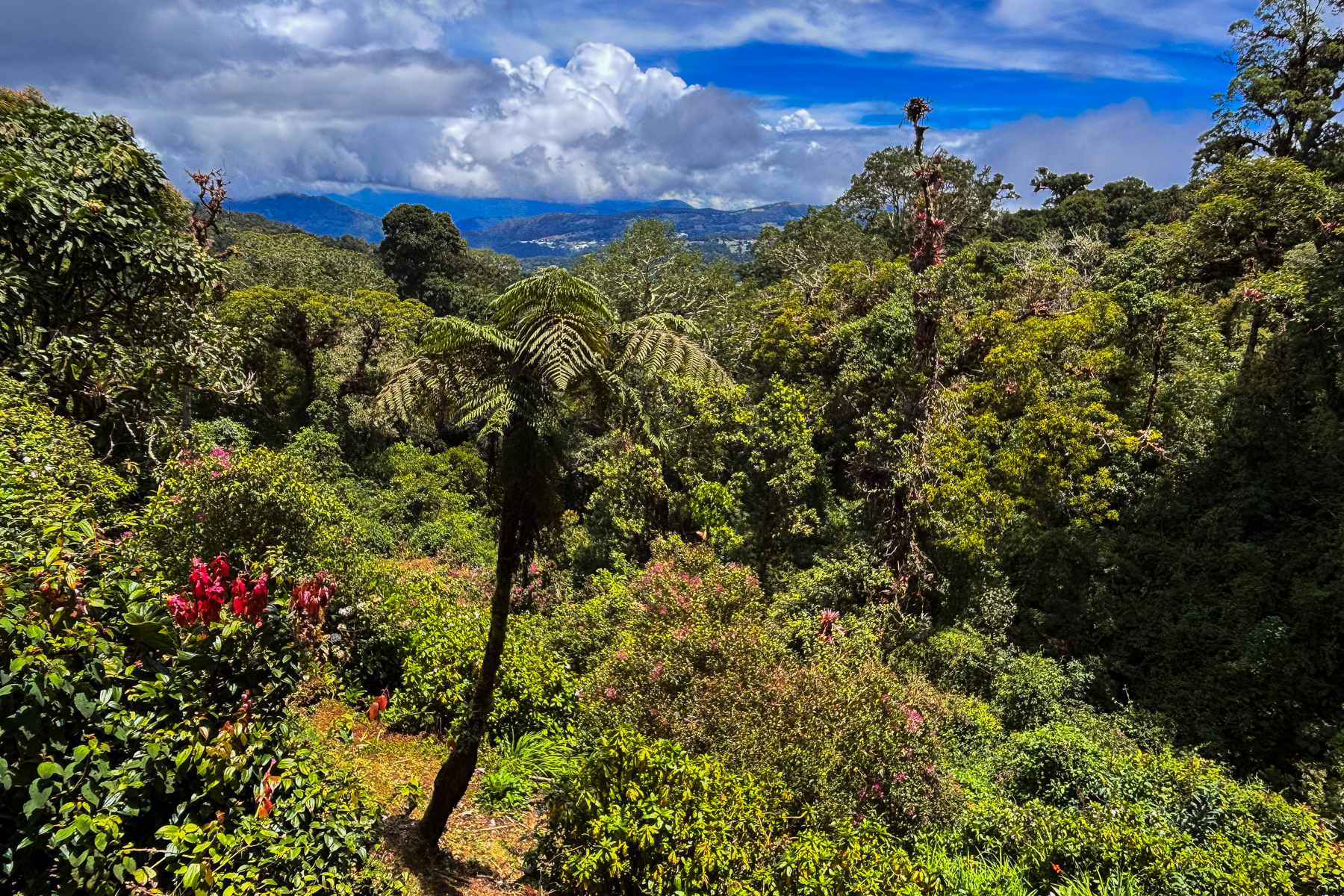
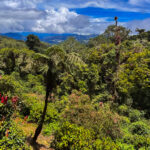
The gloriously verdant view from my private chalet at Paraiso Quetzal Lodge, Costa Rica (image by Gin Wilde)
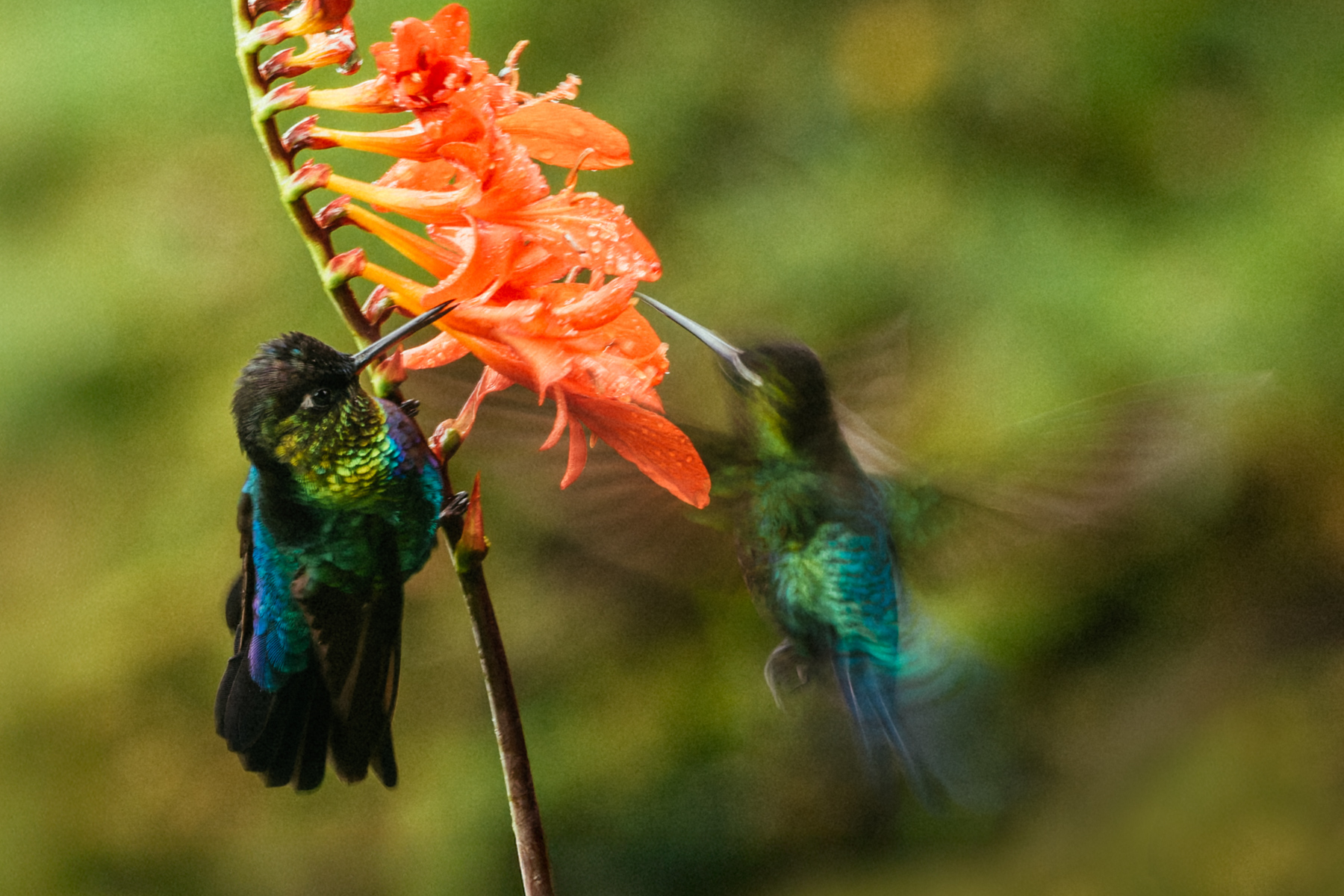
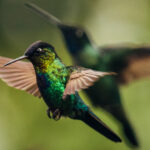
'Mirage of a Hummingbird'. A Fiery-throated Hummingbird hovers so quickly that it appears almost as a colourful apparition, next to its more stationary companion (image by Gin Wilde)
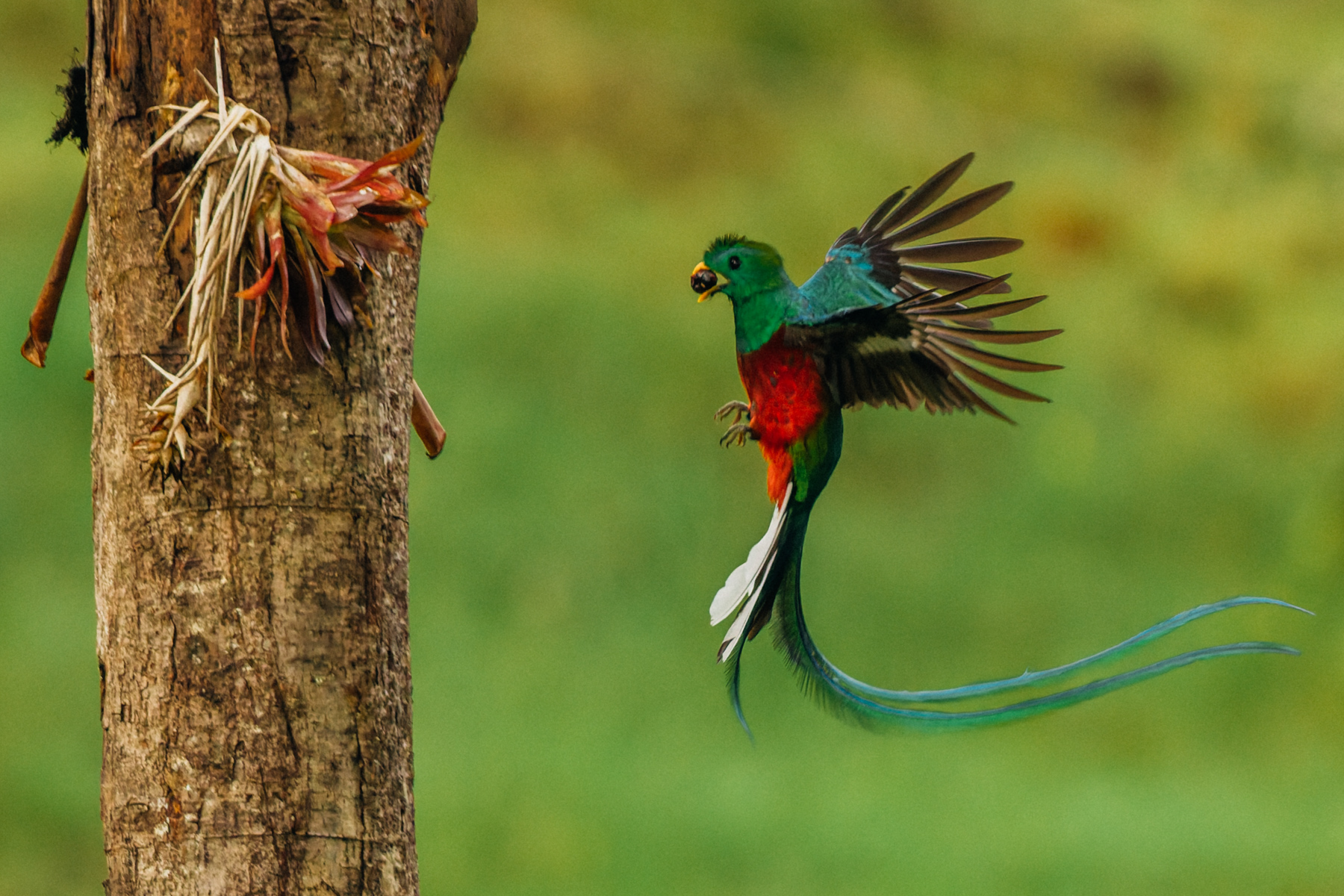
During breeding season (our time in Costa Rica) male Resplendent Quetzals grow elongated upper tail feathers that form a long flowing train of iridescent turquoise streamers (image by Gin Wilde)
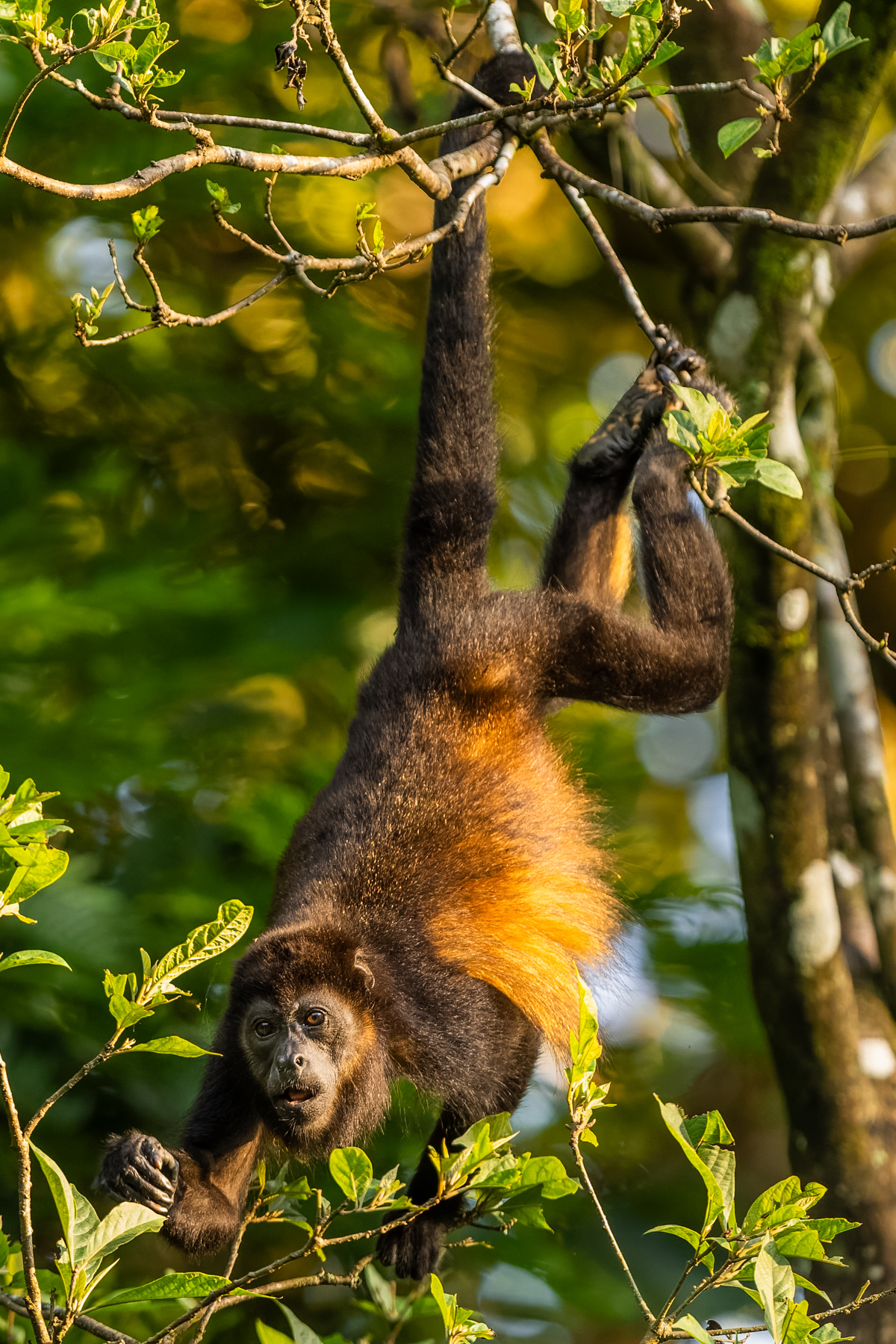
'Hang on, I can reach the best leaves, I know I can!' A Mantled Howler Monkey - the loudest monkey in Costa Rica - stretches to grab leaves in its treetop home (image by Gin Wilde)
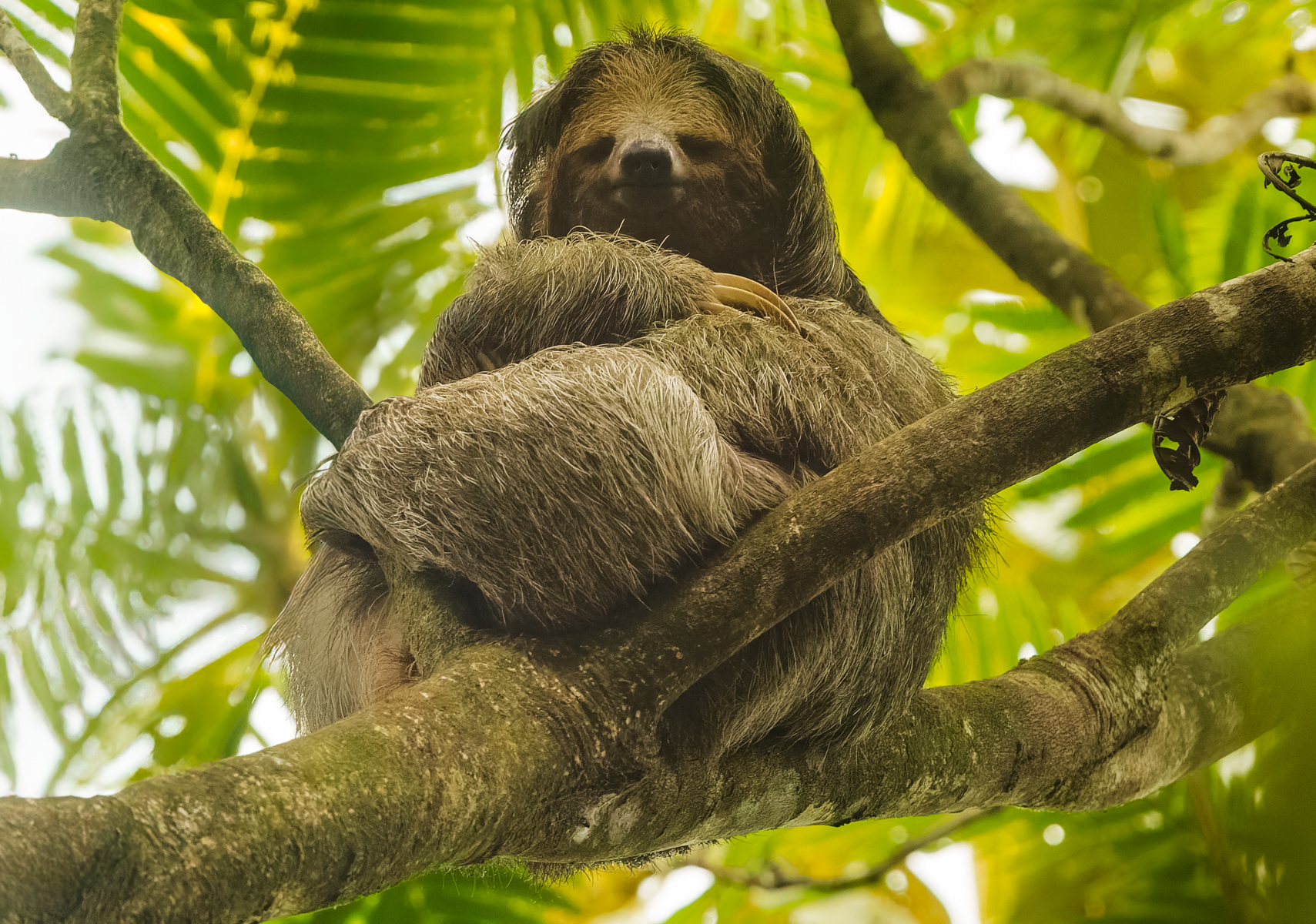
This Three-toed Sloth bears a passing resemblance to Yoda, wrapped in a cloak. Although seemingly cuddly, the fur of sloths is host to green algae, which helps them camouflage into trees as well as provide them with nutrients (image by Gin Wilde)
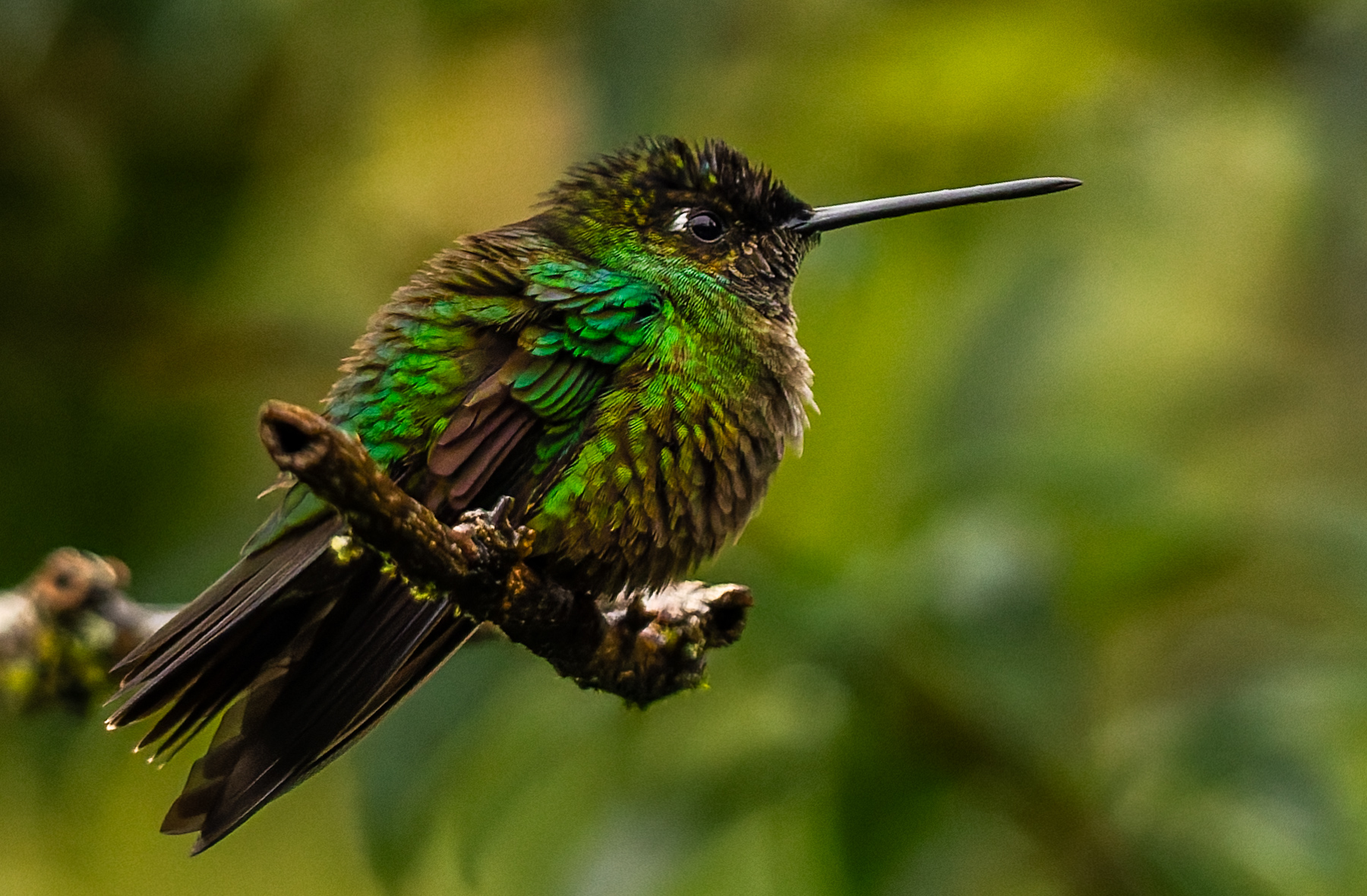
A Talamanca hummingbird, juvenile and with feathers puffed up after a tropical thunderstorm, enjoys a break from the rain (image by Gin Wilde)
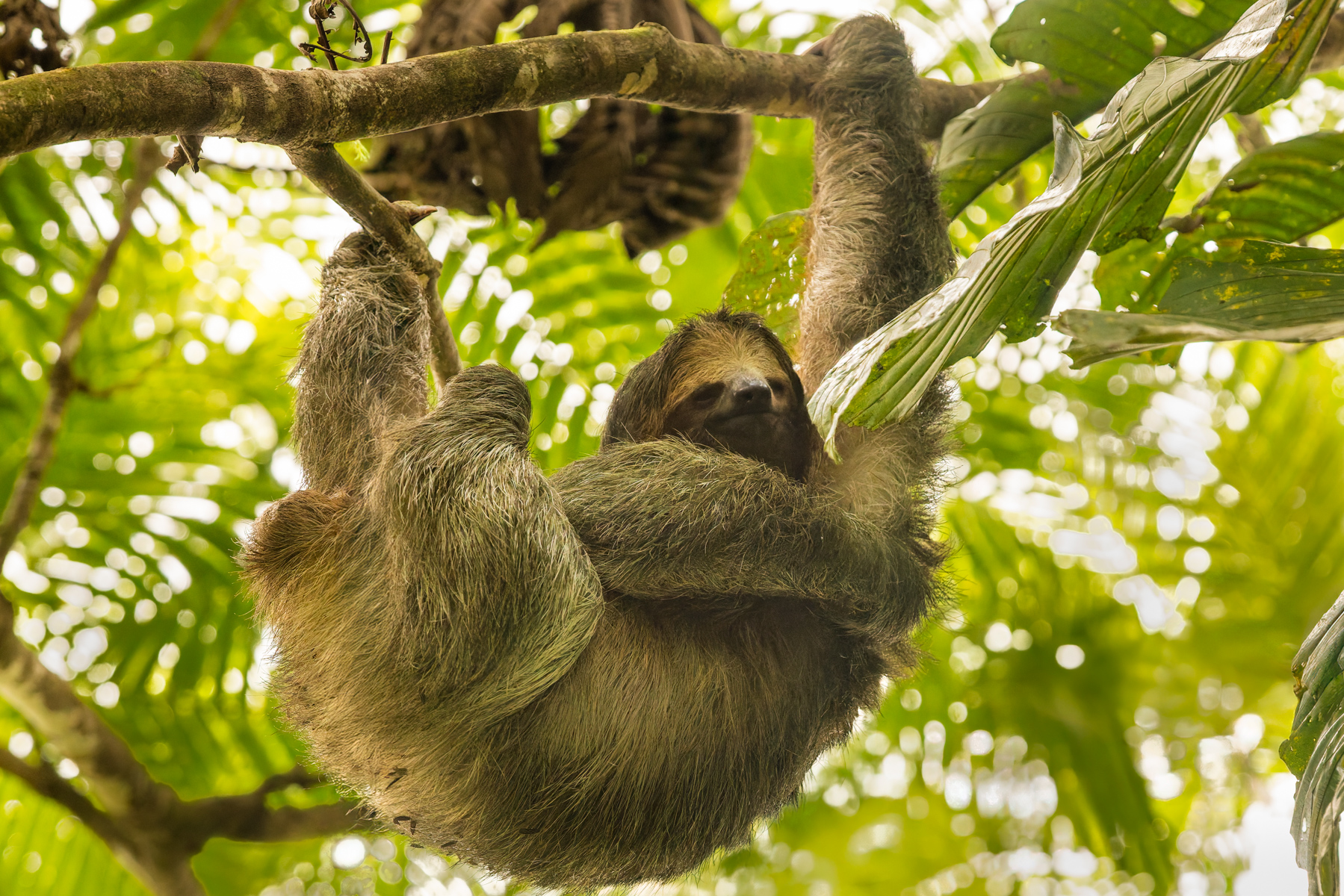
Enjoying a morning scratch and hanging from a branch with its muscular forearms, a Three-toed Sloth contemplates its arboreal existence (image by Gin Wilde)
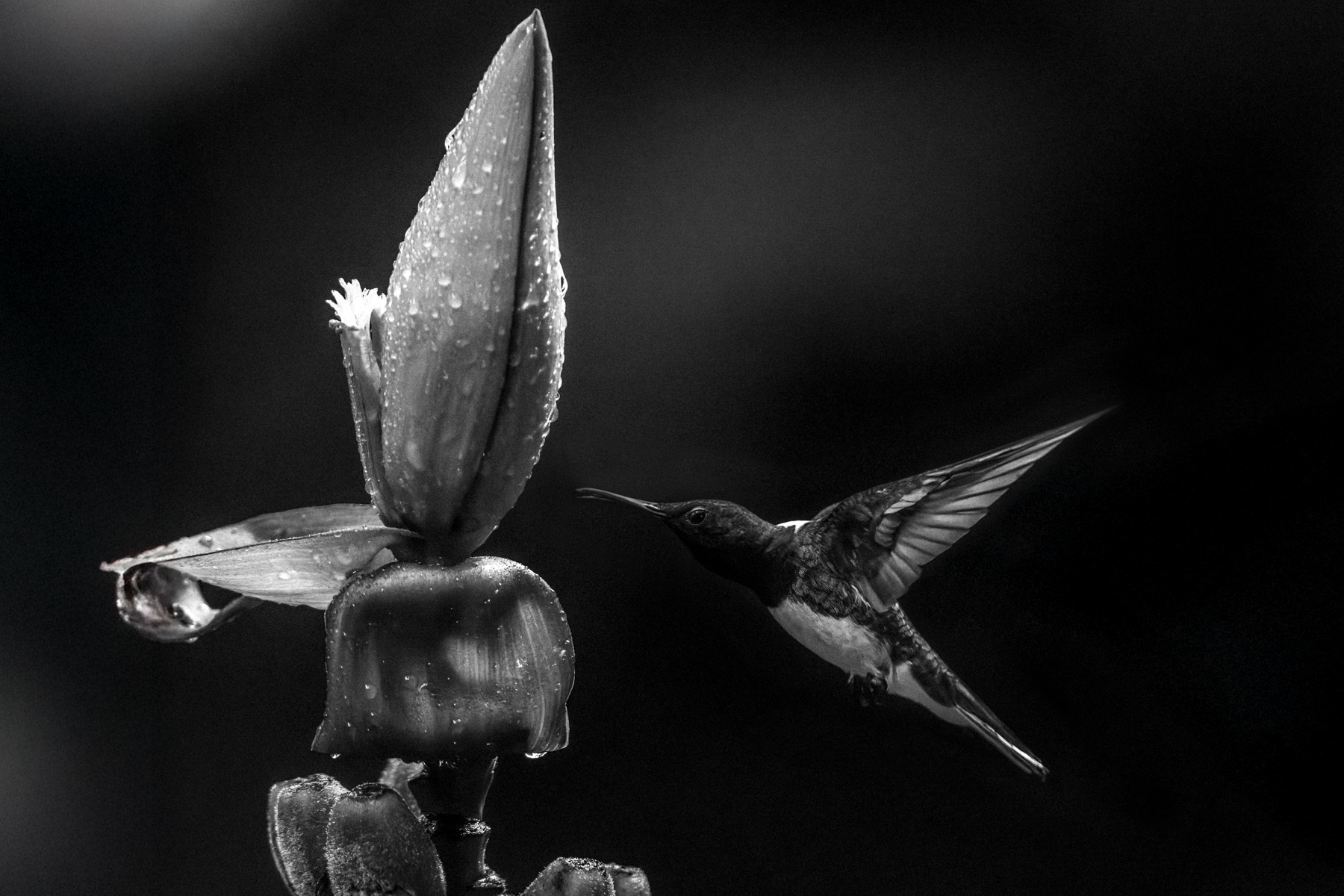
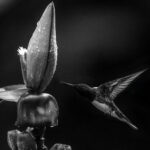
Black-and-white portrait of a White-necked Jacobin. It's a wrench to forgo the colours of Costa Rica, but the iridescence of many hummingbirds can make for striking black-and-white images (image by Gin Wilde)
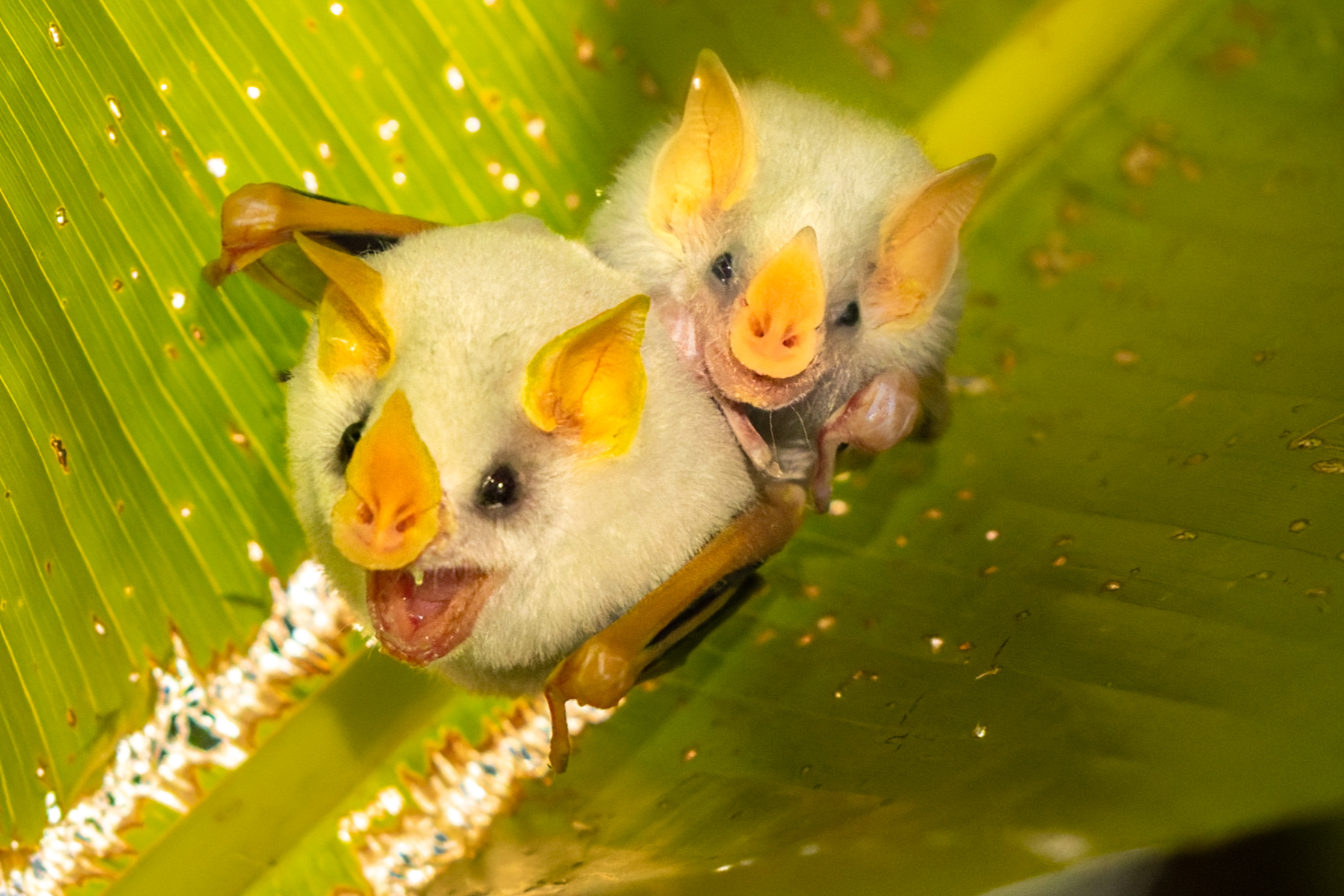
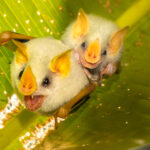
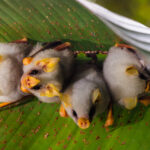
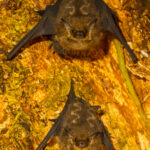
A Honduran White Bat and her juvenile are expressive and a treat to see, roosting on the underside of leaves that they adapt using a serrated technique, so they can cling on tight (image by Gin Wilde)
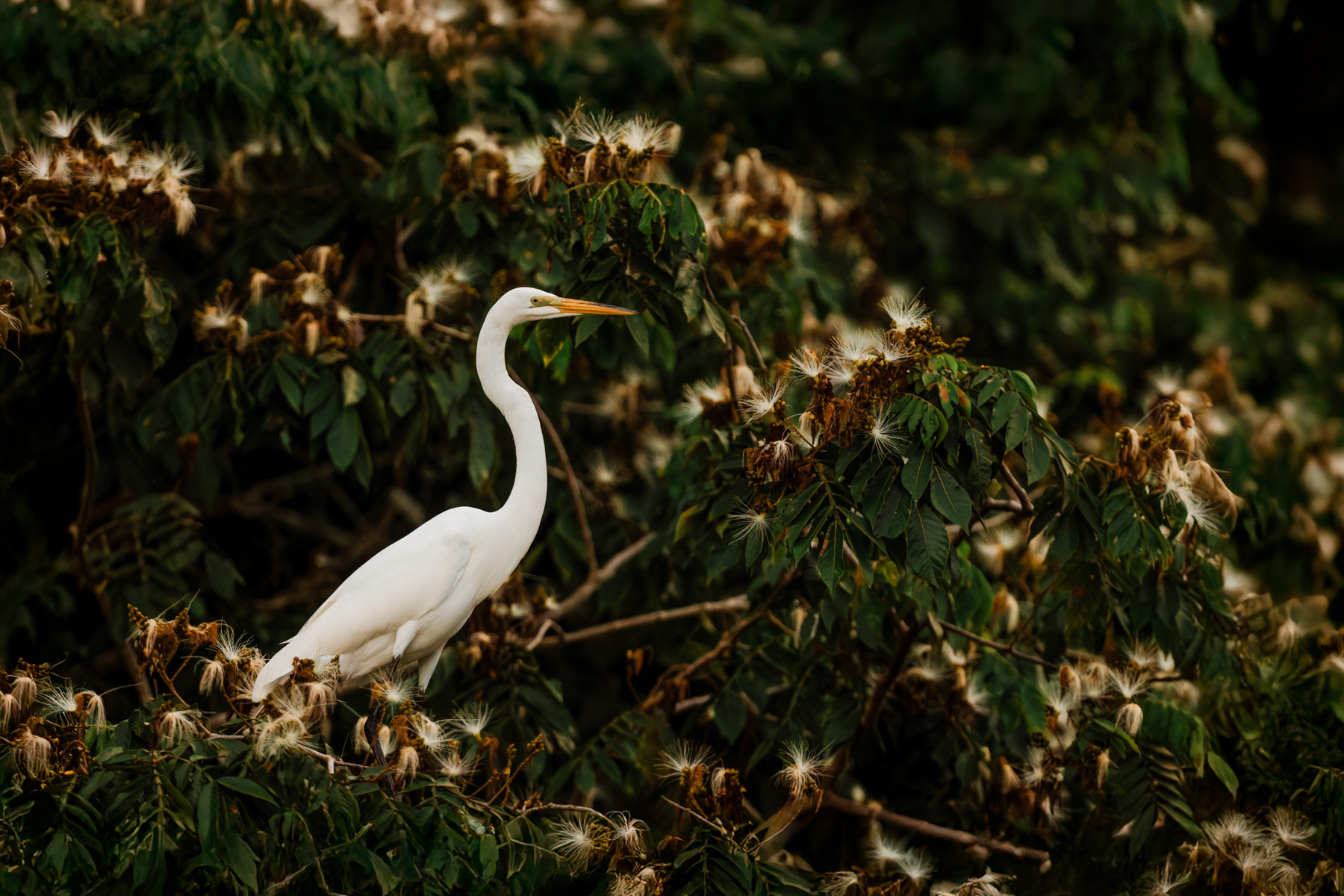
A stately-looking Great White Egret looks down at the river below in the Can Negro Wildlife Reserve, Costa Rica (image by Gin Wilde)
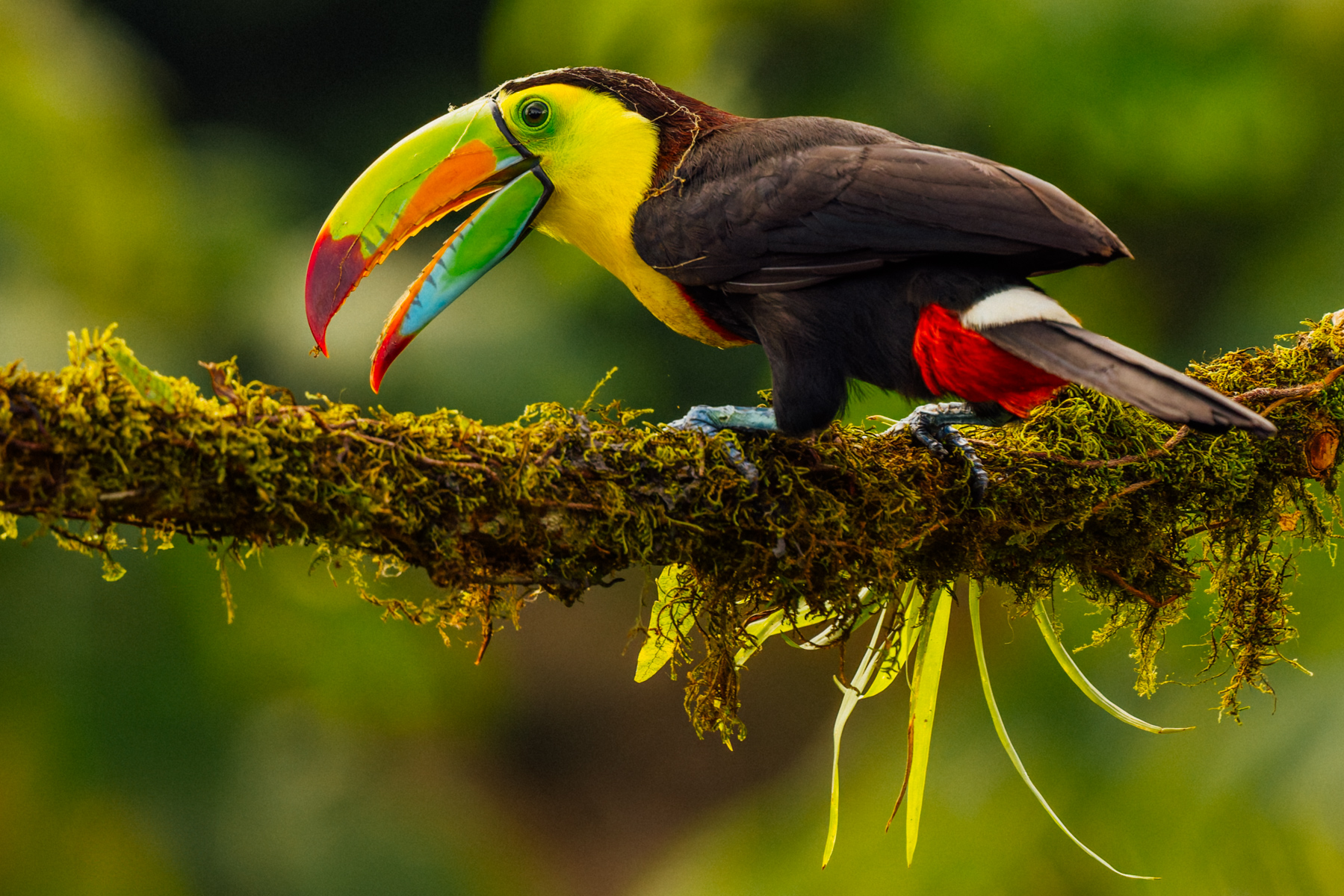
The Keel-billed Toucan - also known as the Rainbow-billed Toucan - is famed for its colourful bill, which makes up about one third of its body length! (image by Gin Wilde)
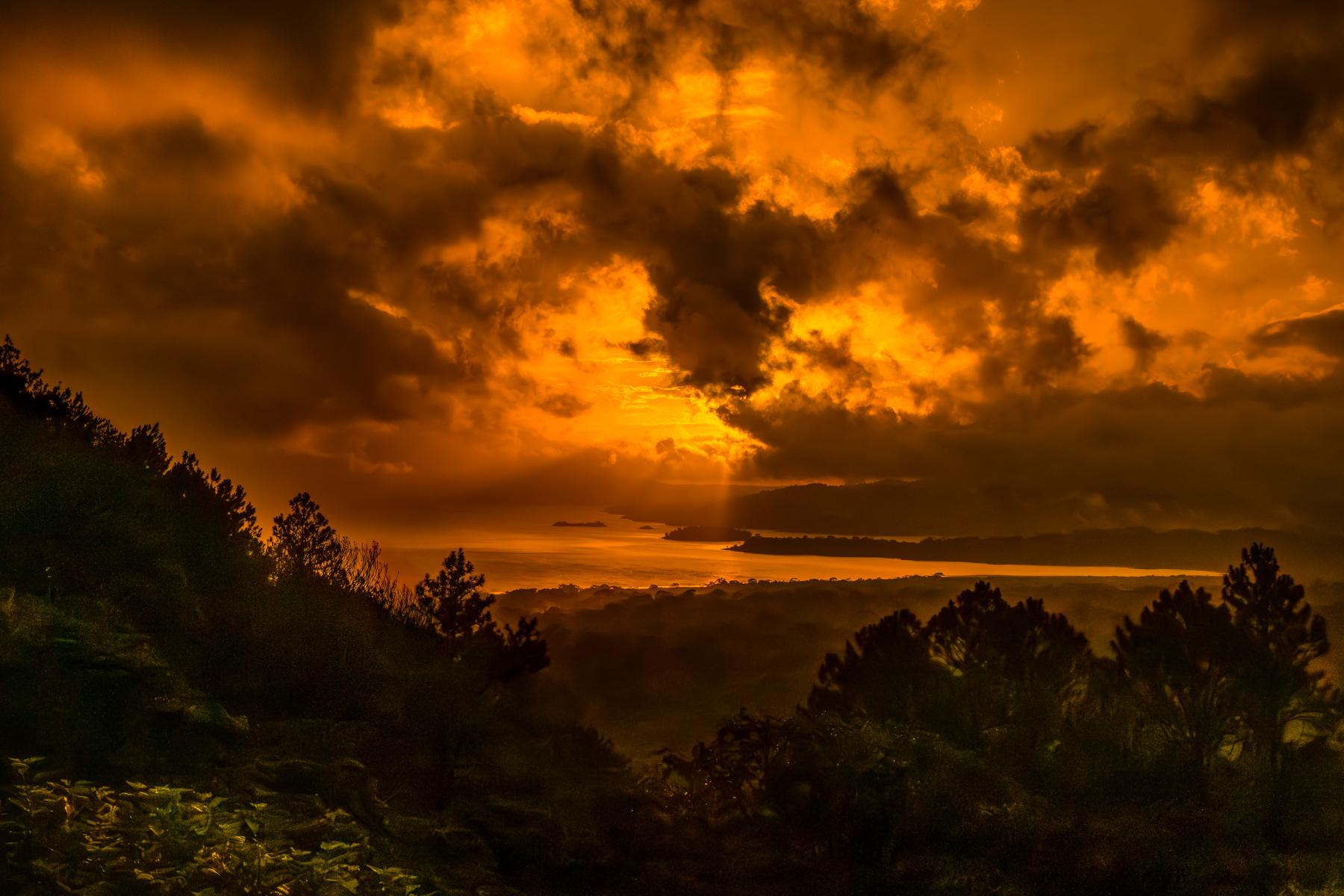
On this year's tour in Costa Rica, it rained. It really bucketed it down. But then the rain cleared and this sunset - over the mid-altitude lowlands - took our breaths away (image by Gin Wilde)
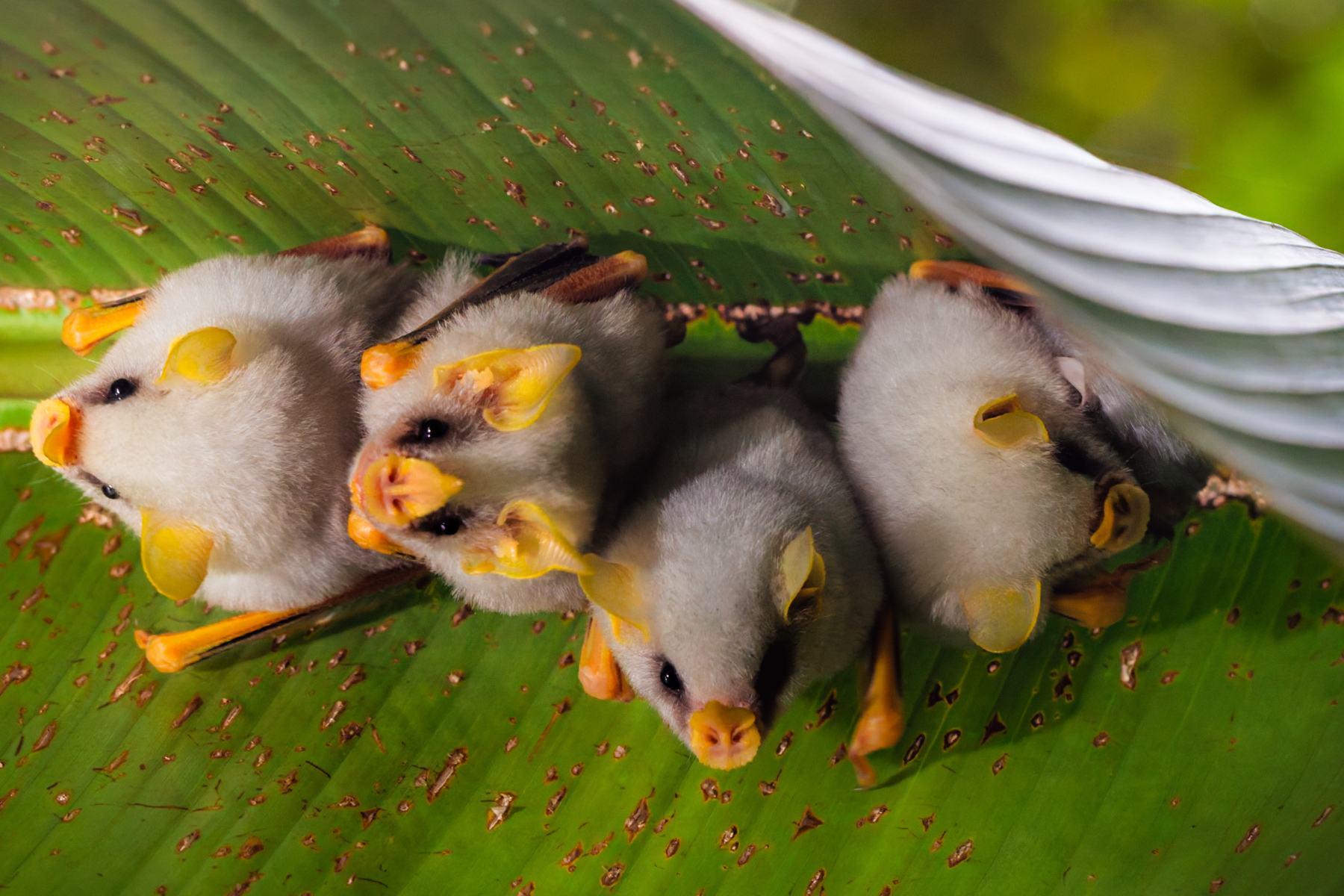
If you can find cuter bats than these Honduran White Bats, then I'd like to see them! These entirely white bats - found only in six of the estimated 1,300 bat species - construct 'tents' out of understory plant leaves by strategically cutting the leaf ribs with their teeth (image by Gin Wilde)
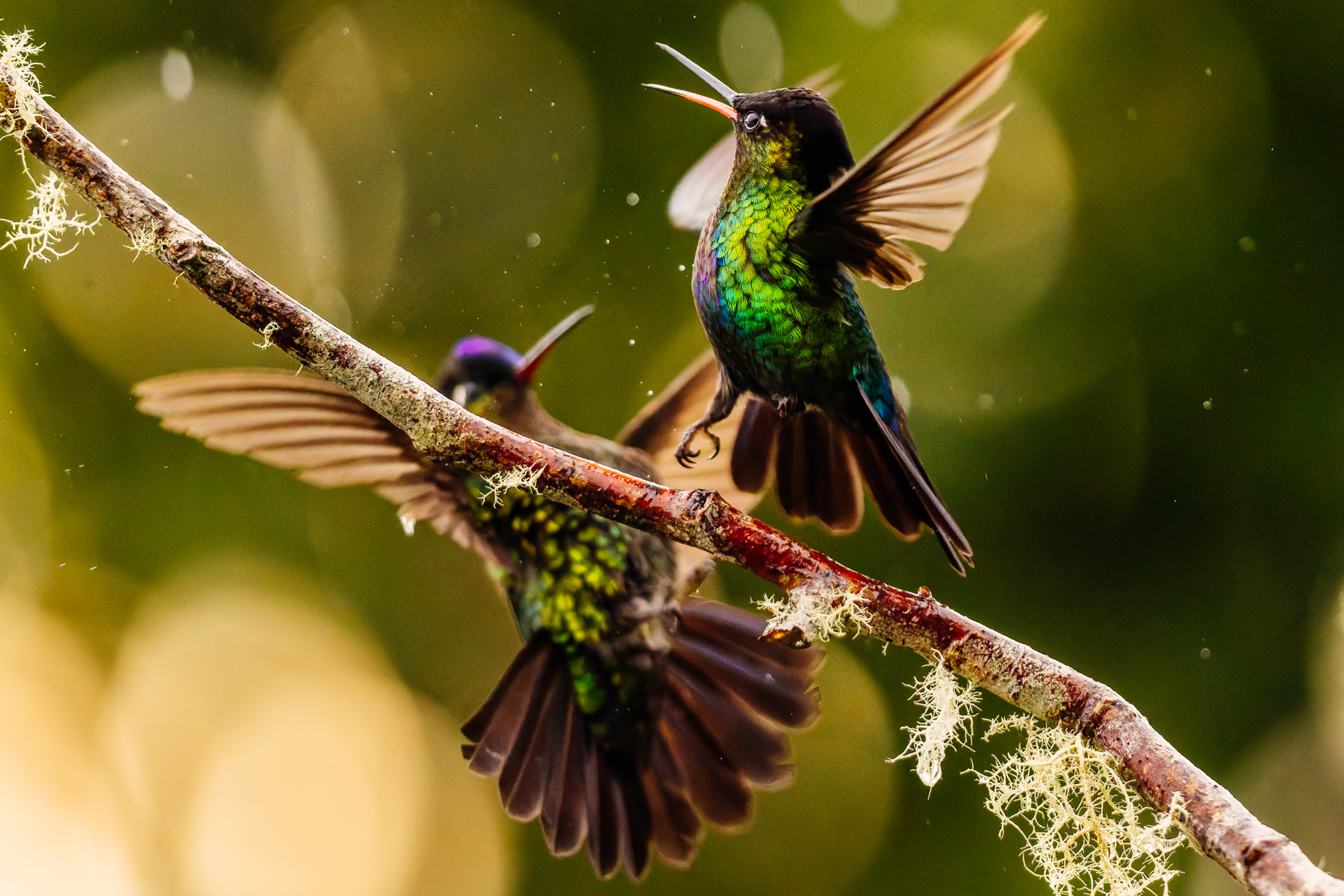
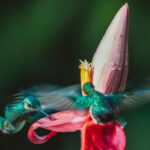
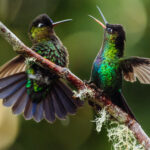
'Fight Club, Hummingbird-style!' Fiery-throated Hummingbirds are known for their fierce defence of their favoured patch of flowers (image by Gin Wilde)
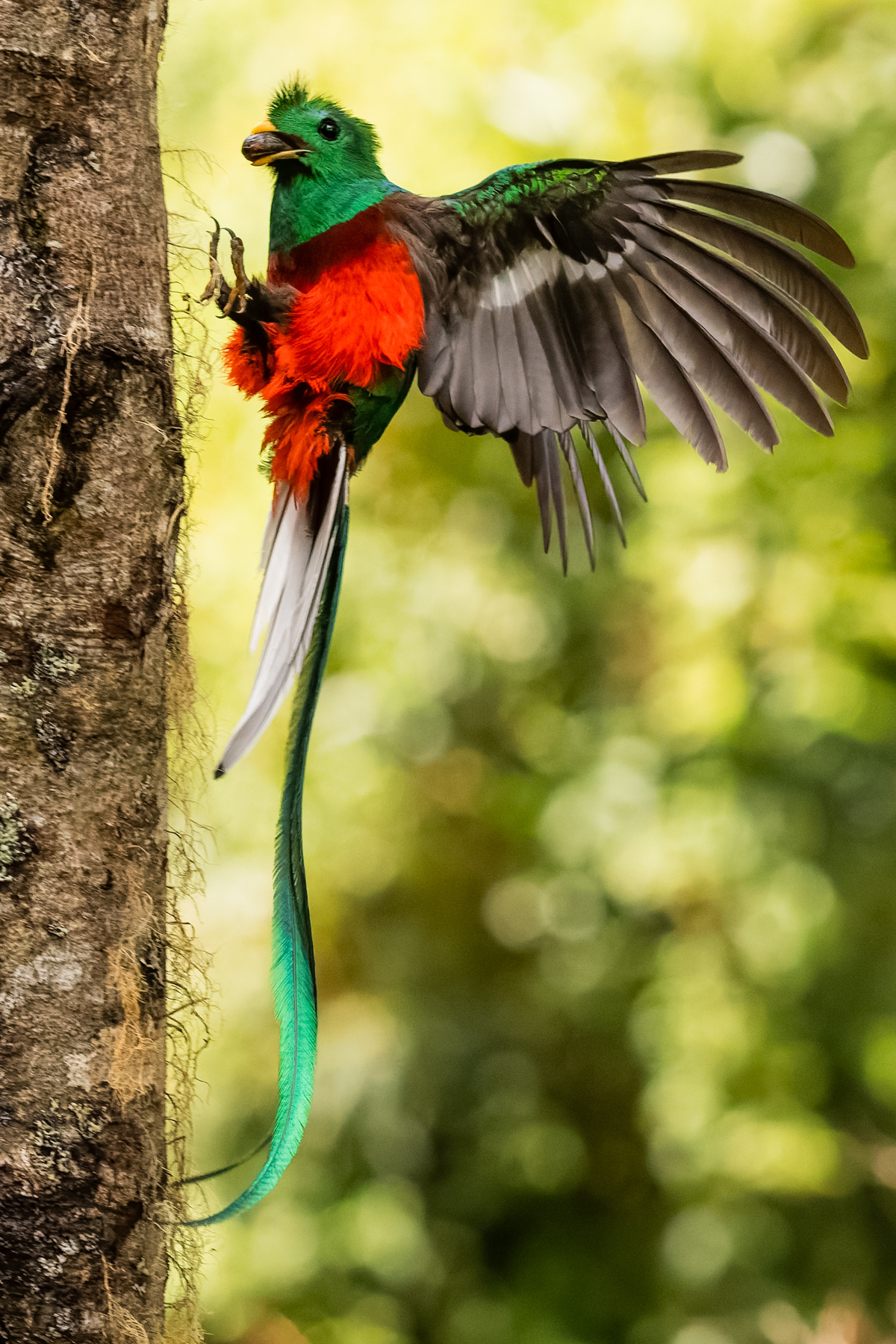
Prize of the rainforest, the majestic tail feathers of the male Resplendent Quetzal are on display as it brings wild avocado and fig to its nest. The Resplendent Quetzal is the largest Trogon, with tail streamers are up to a metre long (image by Gin Wilde)
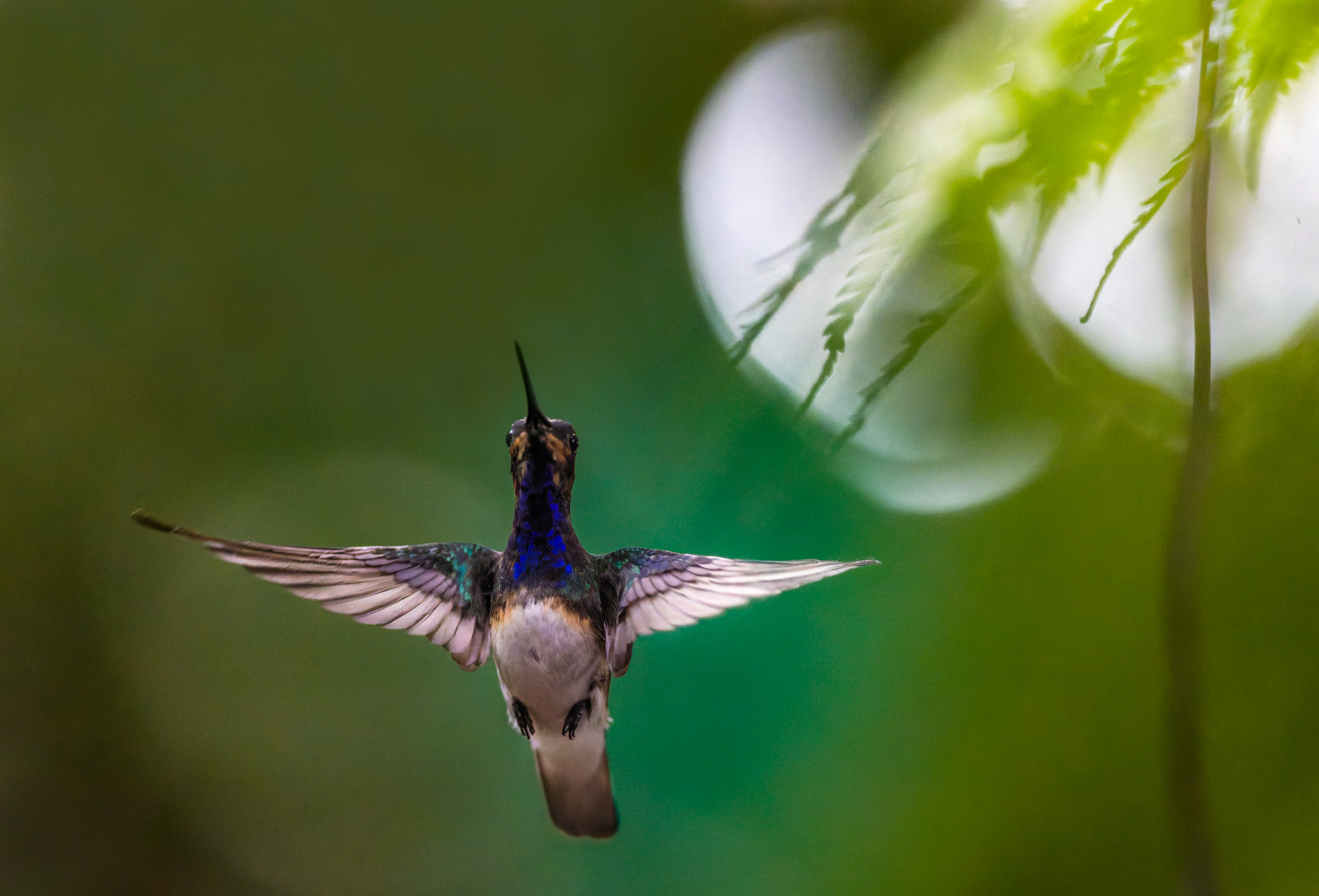
A male White-necked Jacobin hovers near light dappled saplings in the Alajuela Province of Costa Rica (image by Gin Wilde)
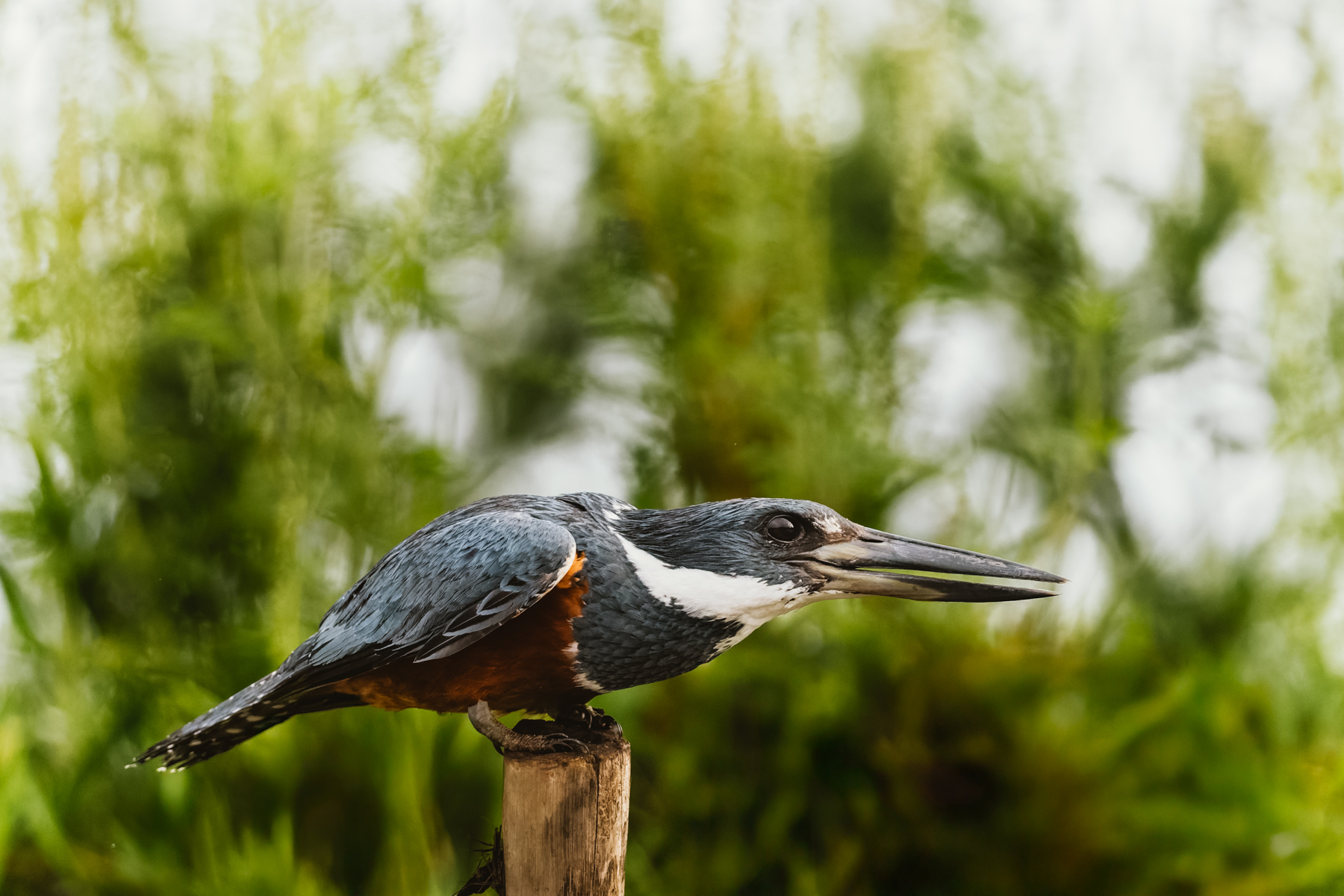
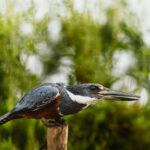
The largest Kingfisher in Costa Rica (and the Americas)- the Ringed Kingfisher (image by Gin Wilde)
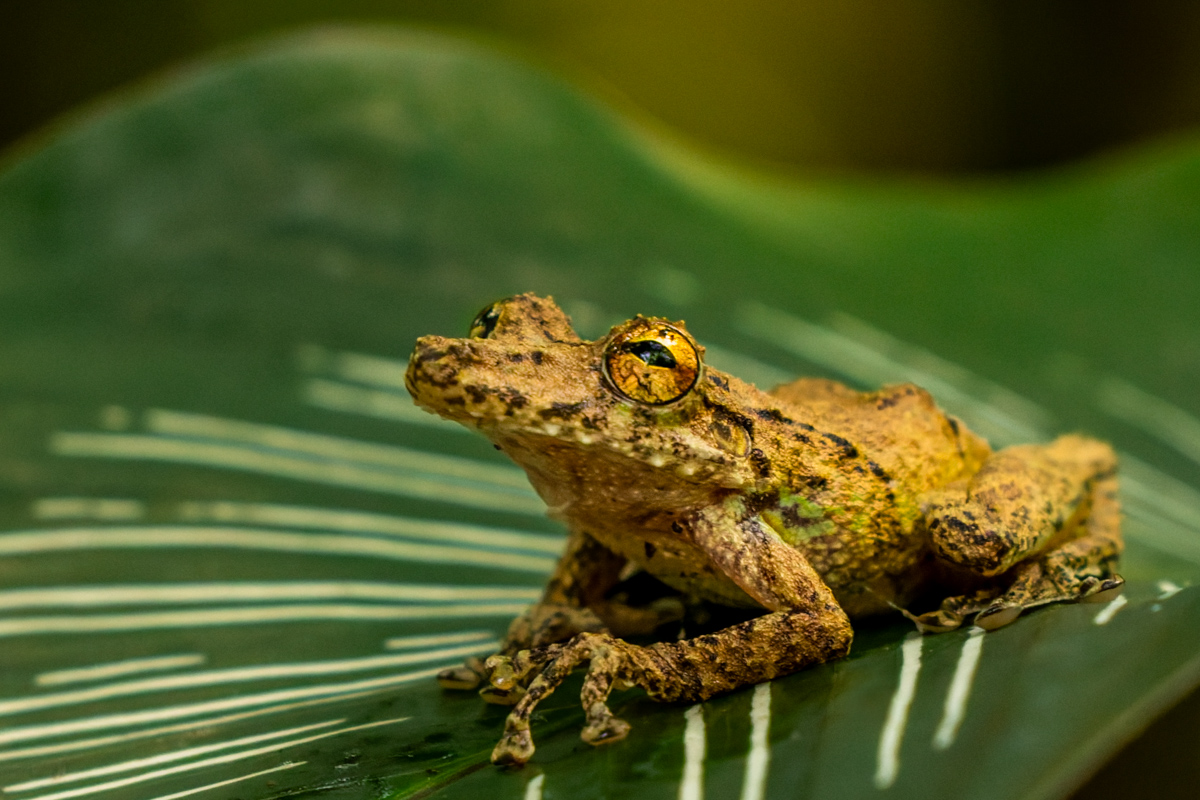
Boulenger's Frog (image by Gin Wilde)
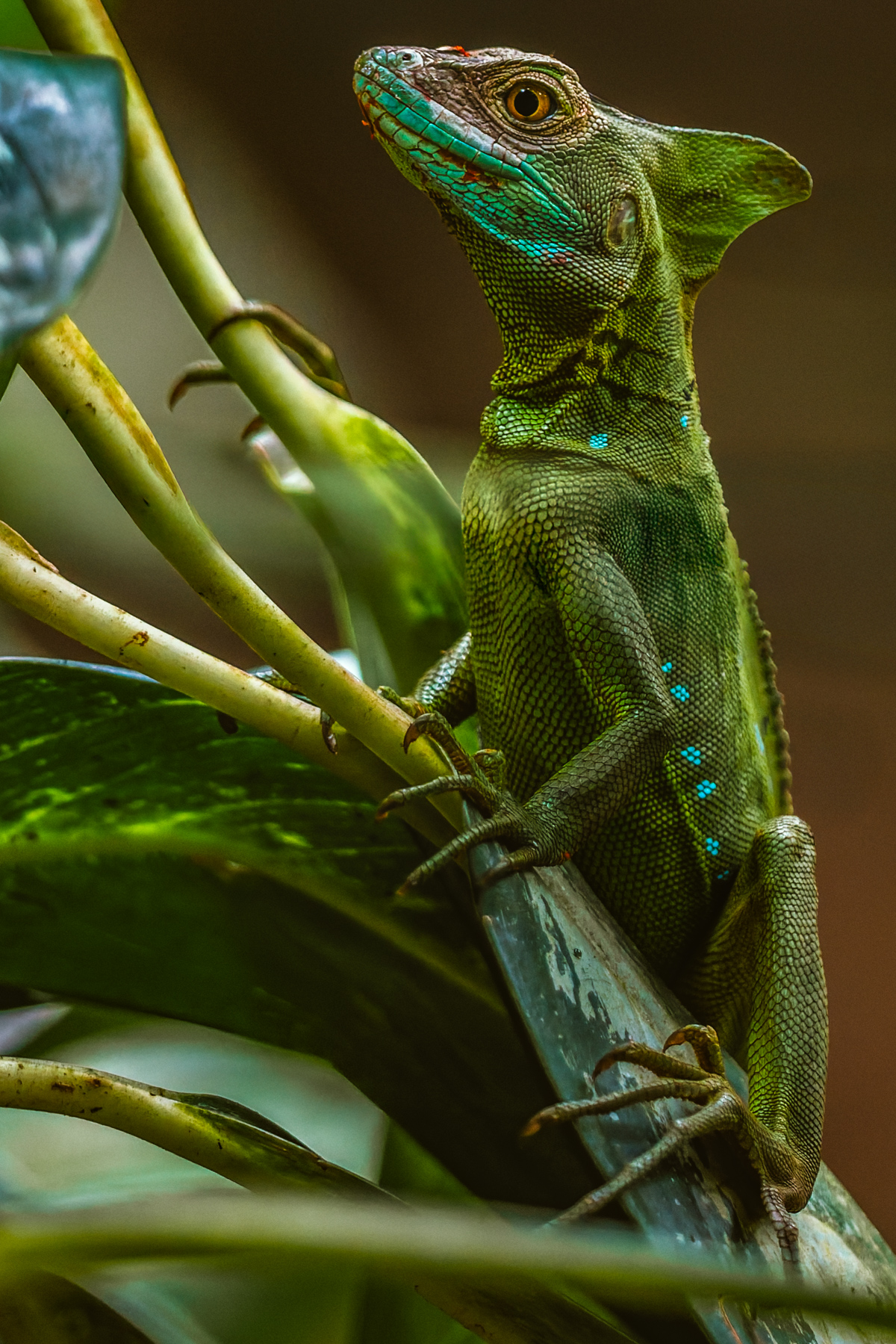
This curious Emerald Basilisk Lizard happily sat on a leaf by this year's tour members, as we drank local beer. Basilisks are also known as 'Jesus Christ Lizards' for their incredible ability to run on water (image by Gin Wilde)
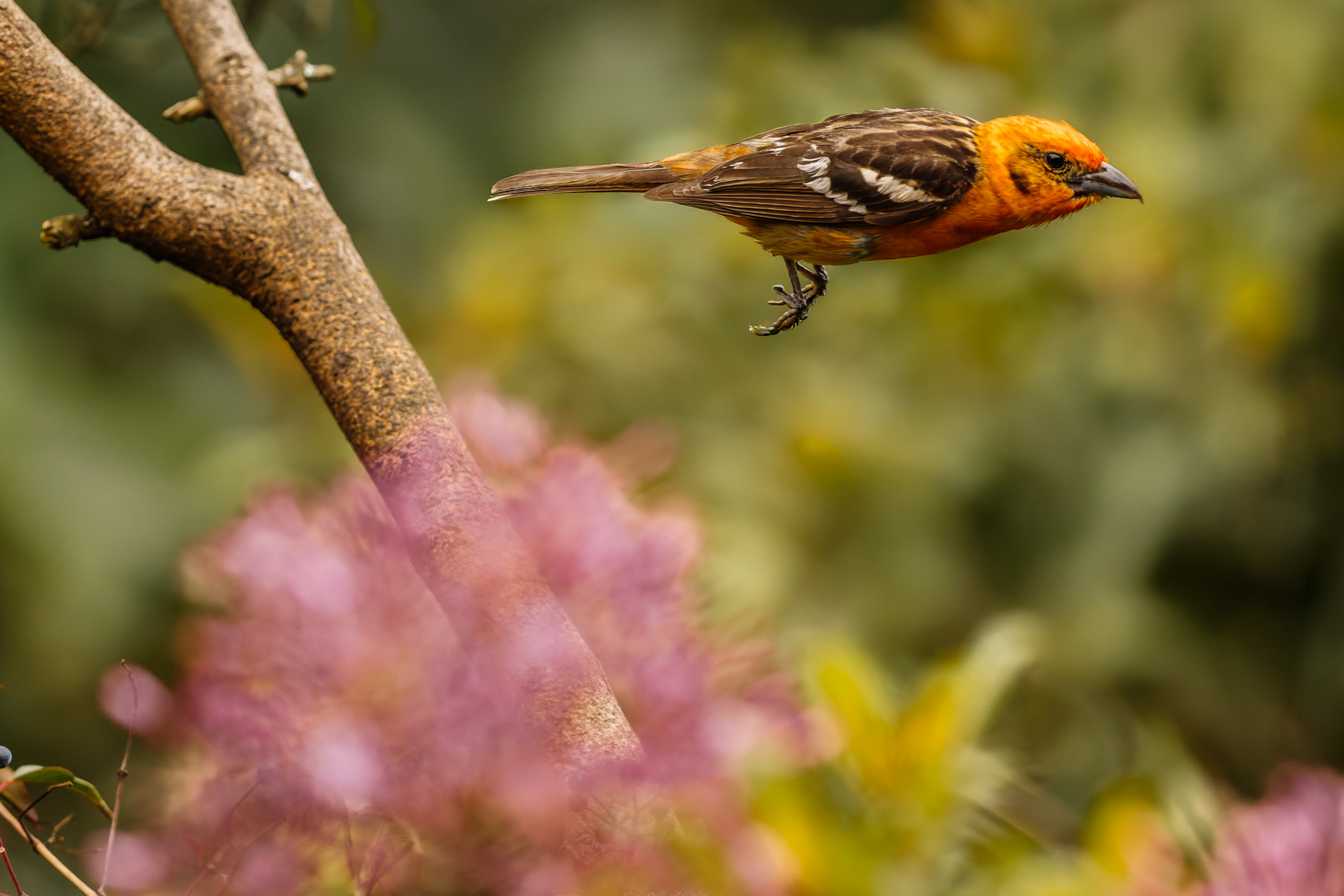
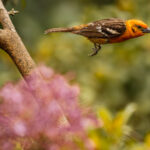
Captured mid-air, a male Flame-coloured Tanager darts through the flowery undergrowth in search of berries and insects to feast on (image by Gin Wilde)
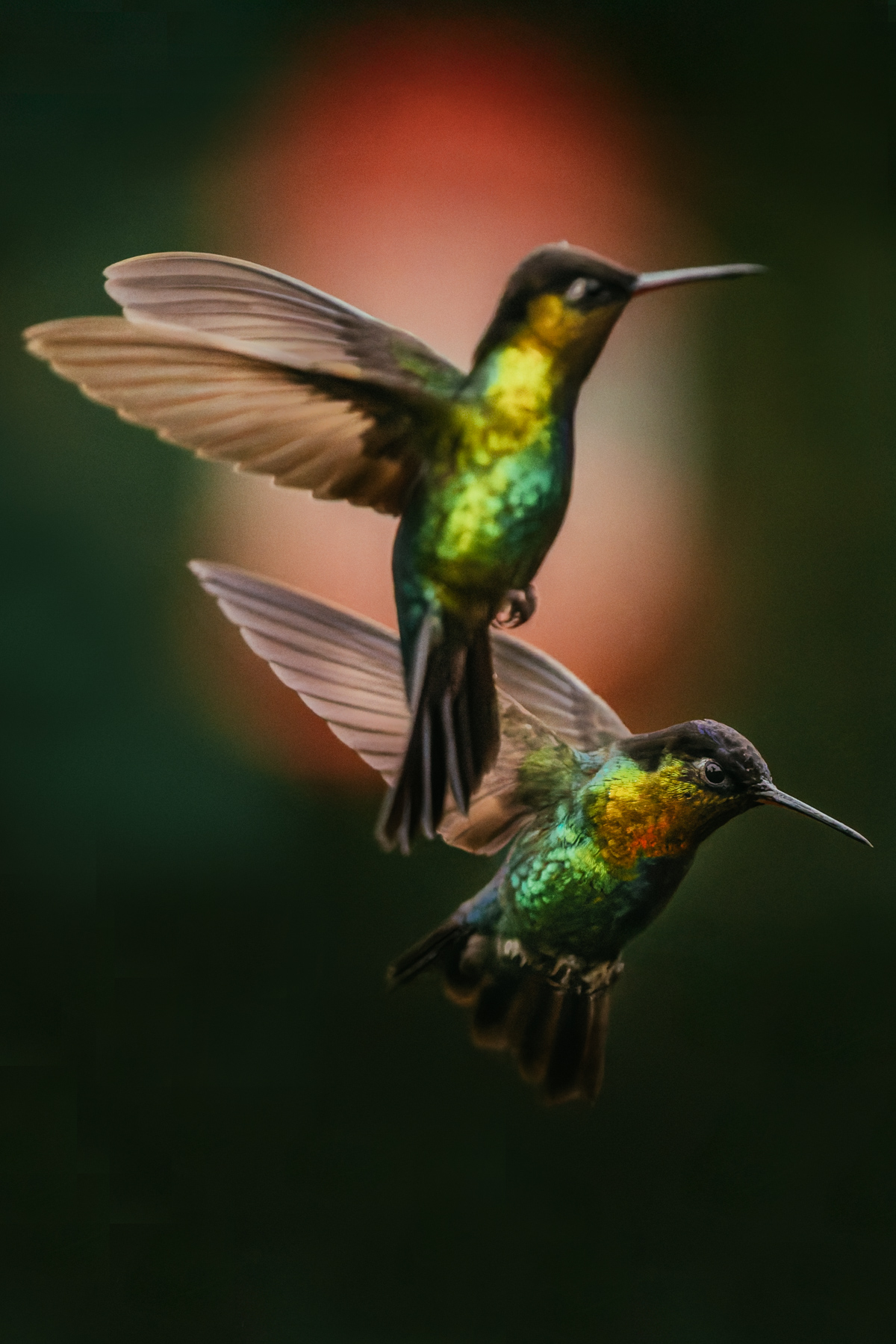
For lovers of artistic bird photography, Costa Rica offers a myriad of opportunities. Here, Fiery-throated Hummingbirds against a hanging nectar feeder (image by Gin Wilde)
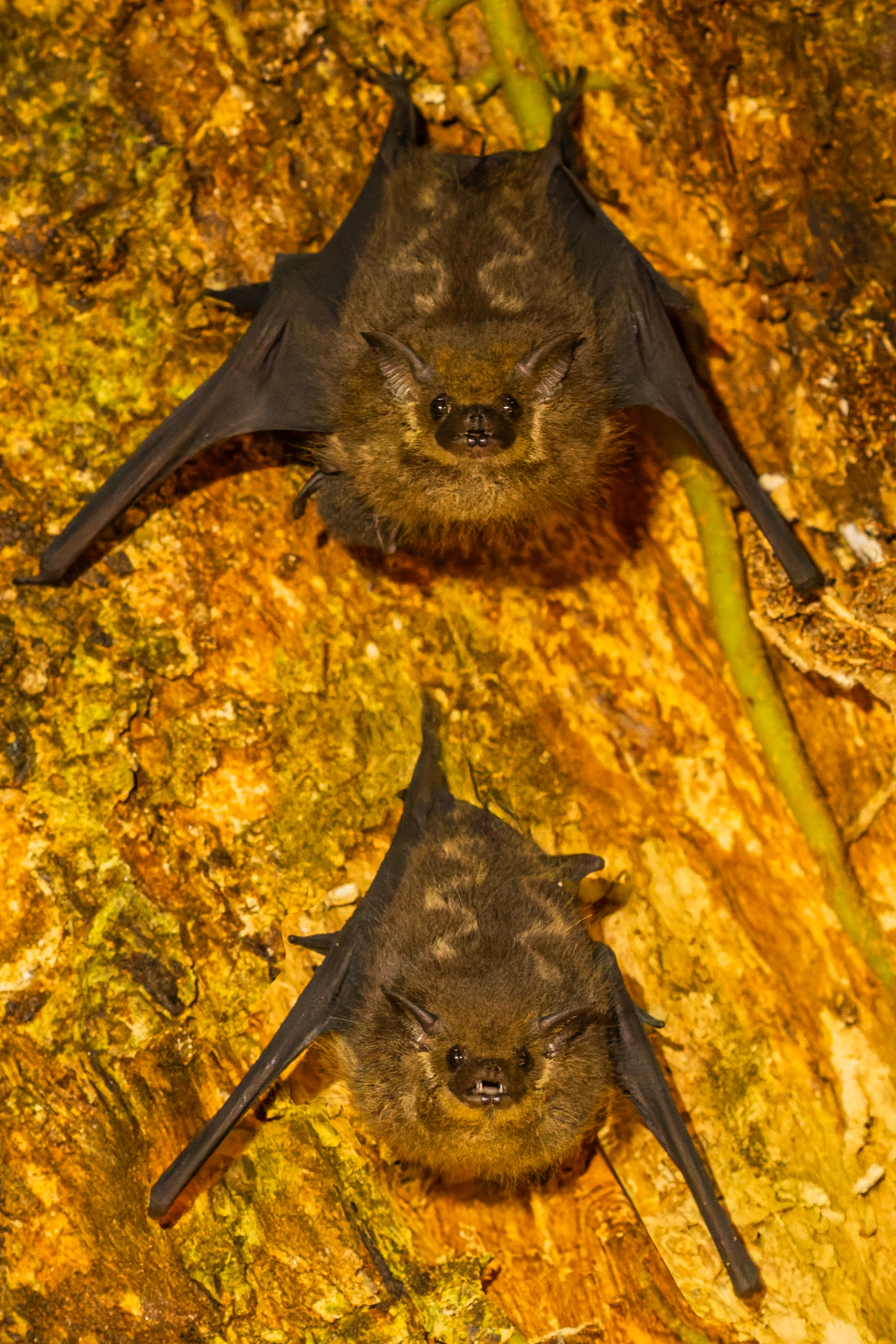
Two Lesser White-lined Bats roost close together, with their lightning bolt stripes visible in their back fur (image by Gin Wilde)
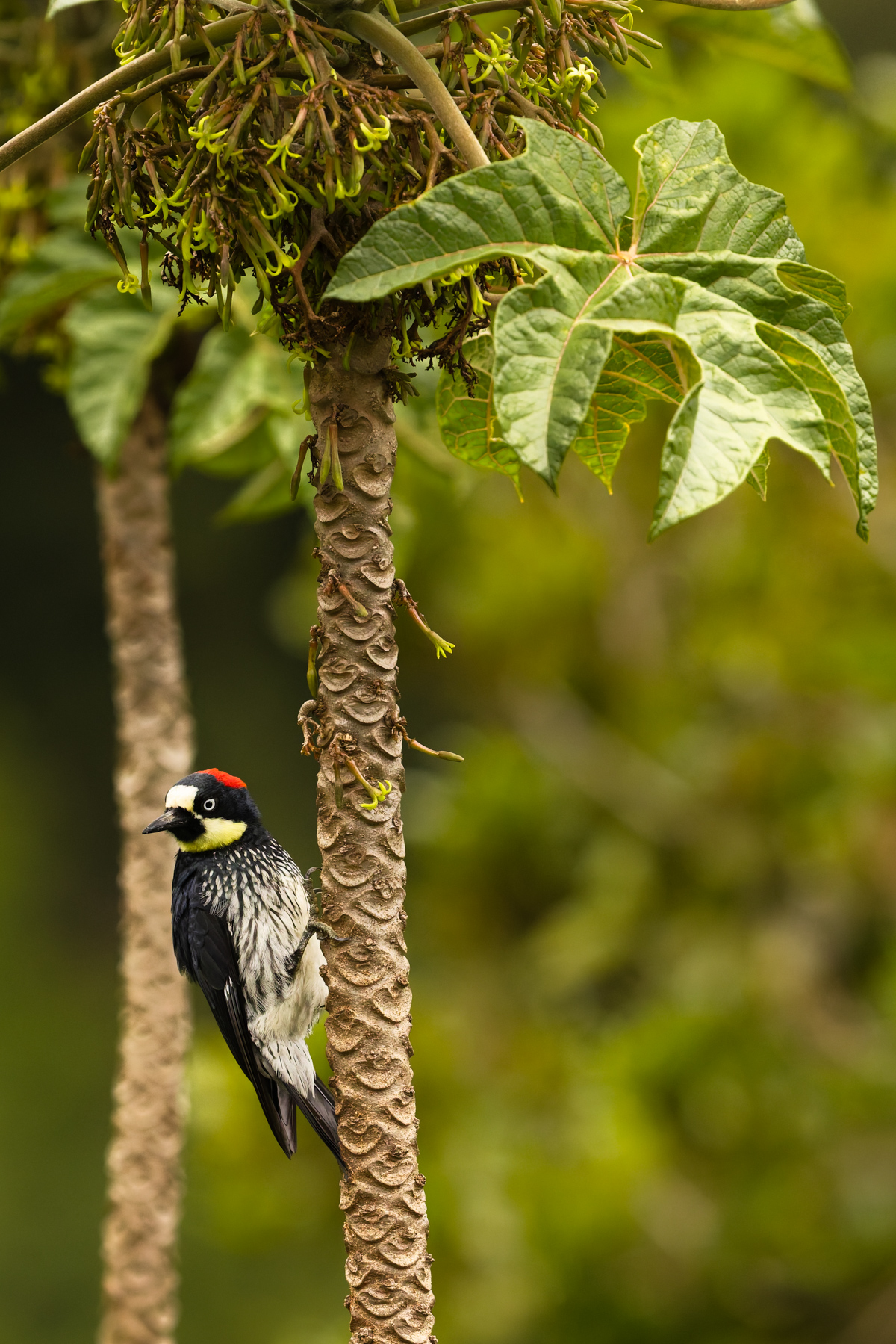
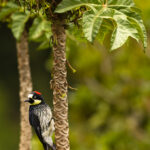
A handsome Acorn Woodpecker - one of 14 woodpecker species in Costa Rica. Acorn Woodpeckers are well known for stashing large numbers of acorns in telephone poles and tree trunks (image by Gin Wilde)
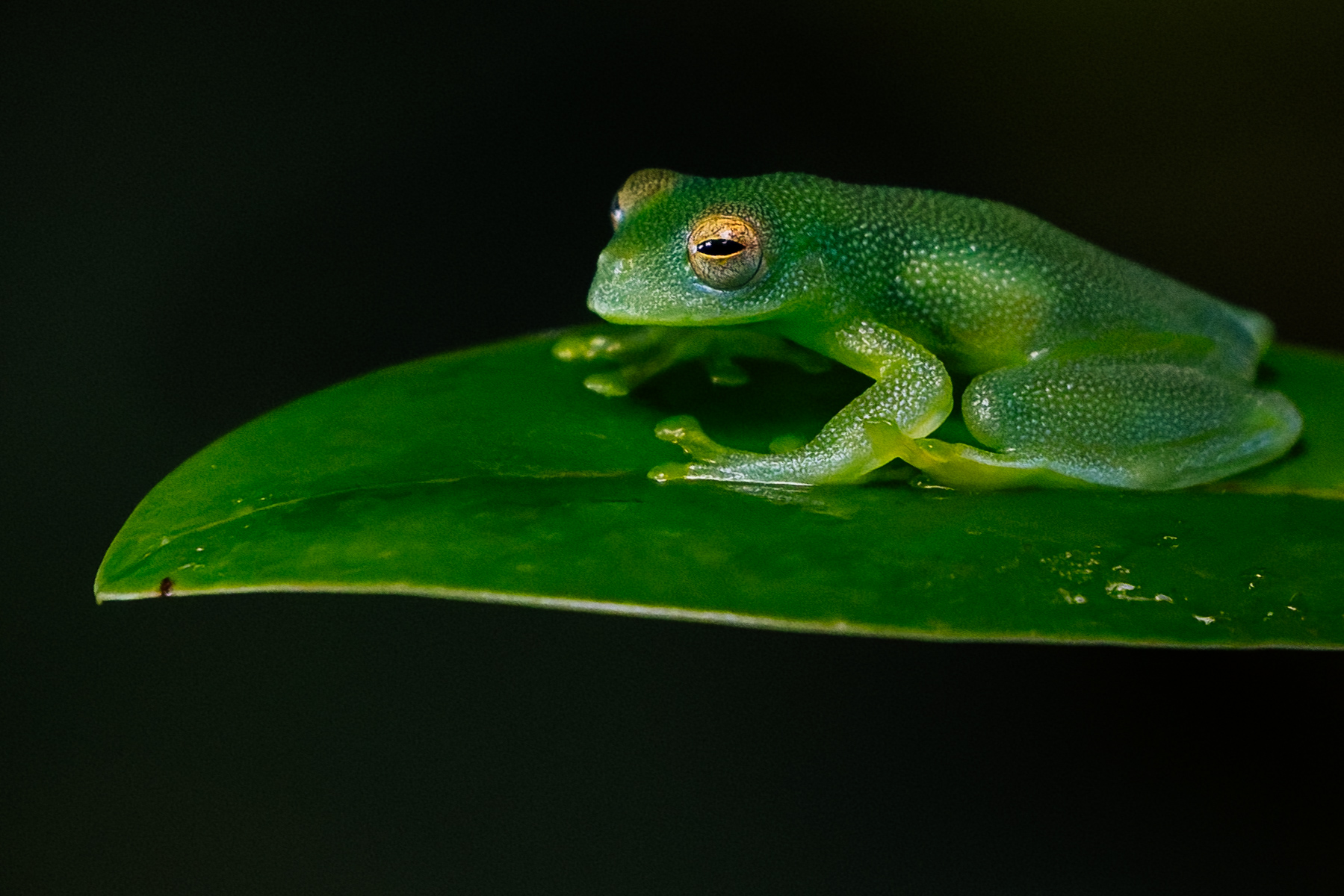
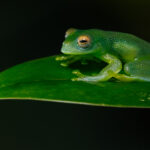
Found throughout the humid lowlands of Costa Rica, Honduras, Nicaragua and Panama, the Granular Glass Frog is named due to its skin's granular texture (image by Gin Wilde)
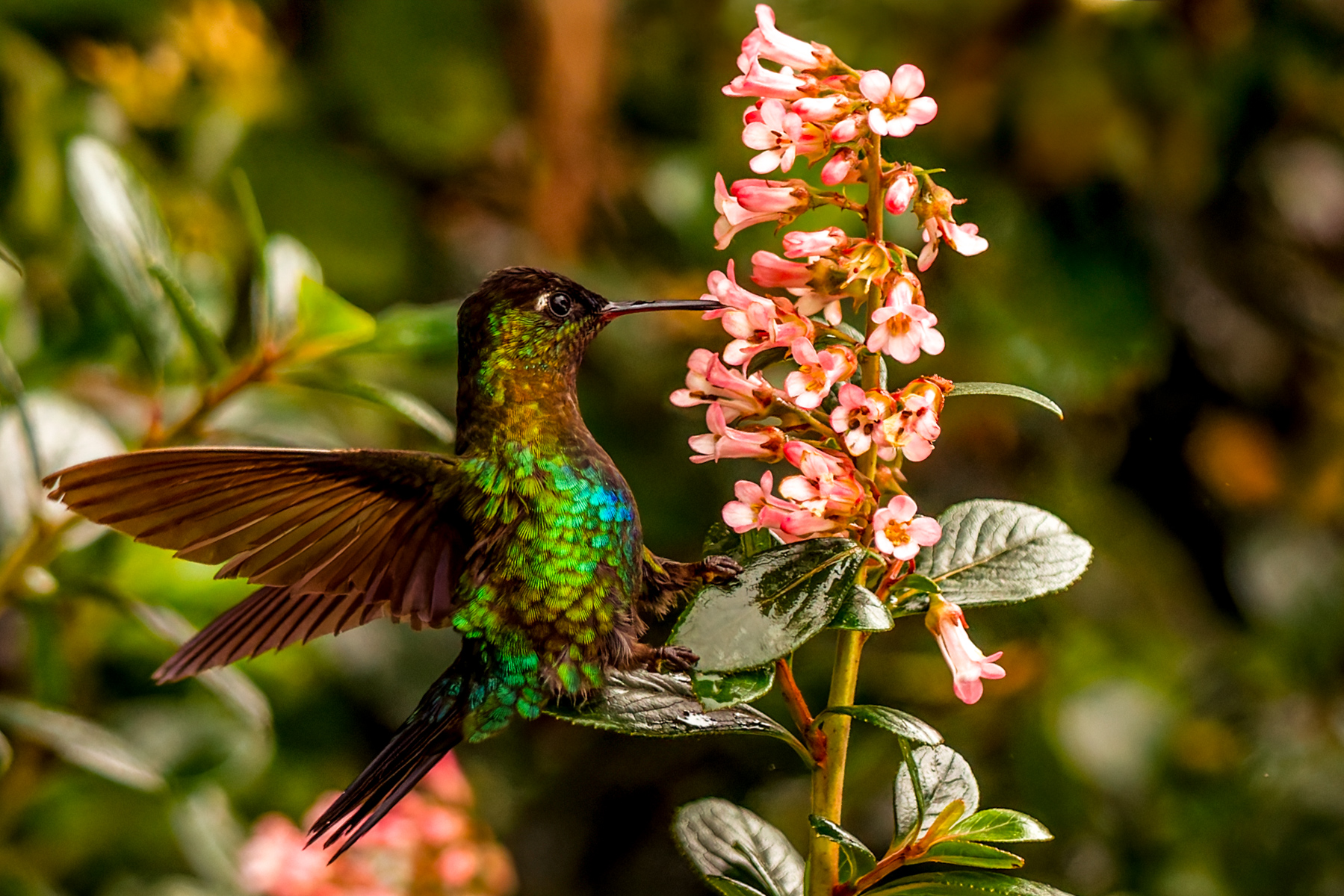
Few birds rival the spectacular iridescence of the Fiery-throated Hummingbird. Found only in the cloud forests of Costa Rica and western Panama, this bird alone warrants a trip to Central America (image by Gin Wilde)
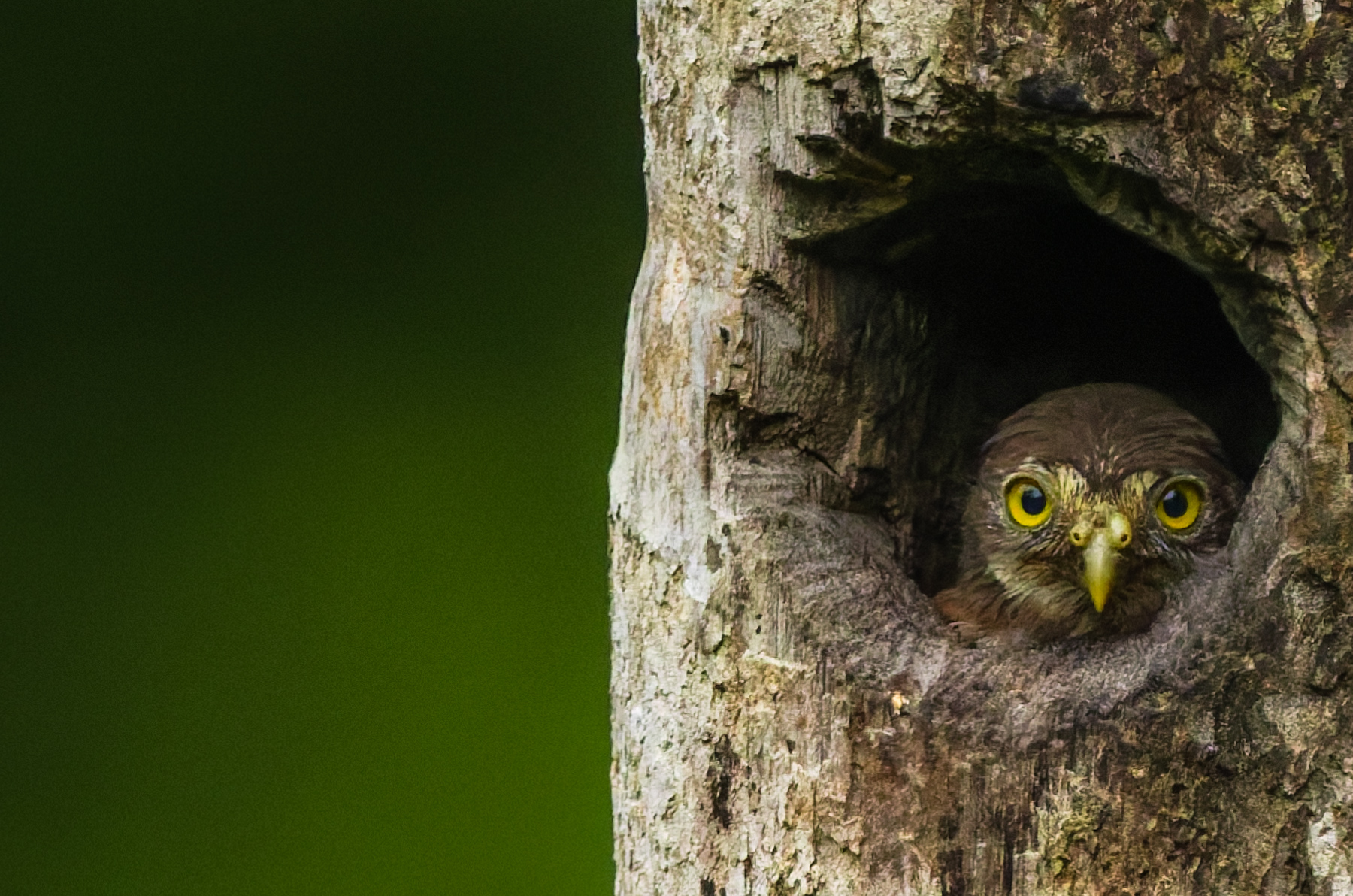
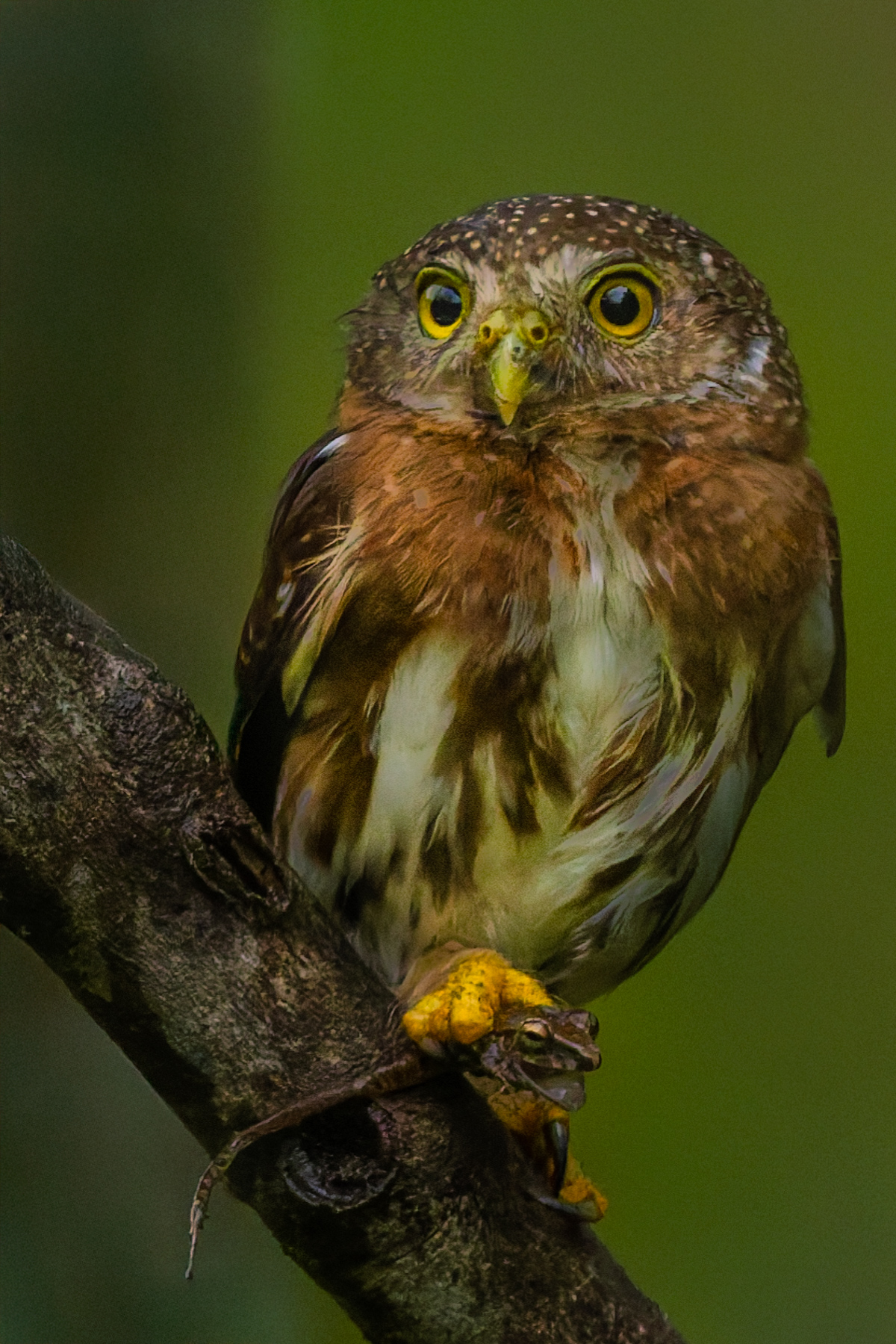
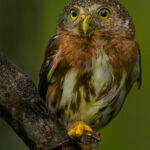
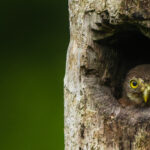
A Costa Rican Pygmy owlet waits patiently for its parents to bring back food, soon to leave the nest as it grows in size (image by Gin Wilde)
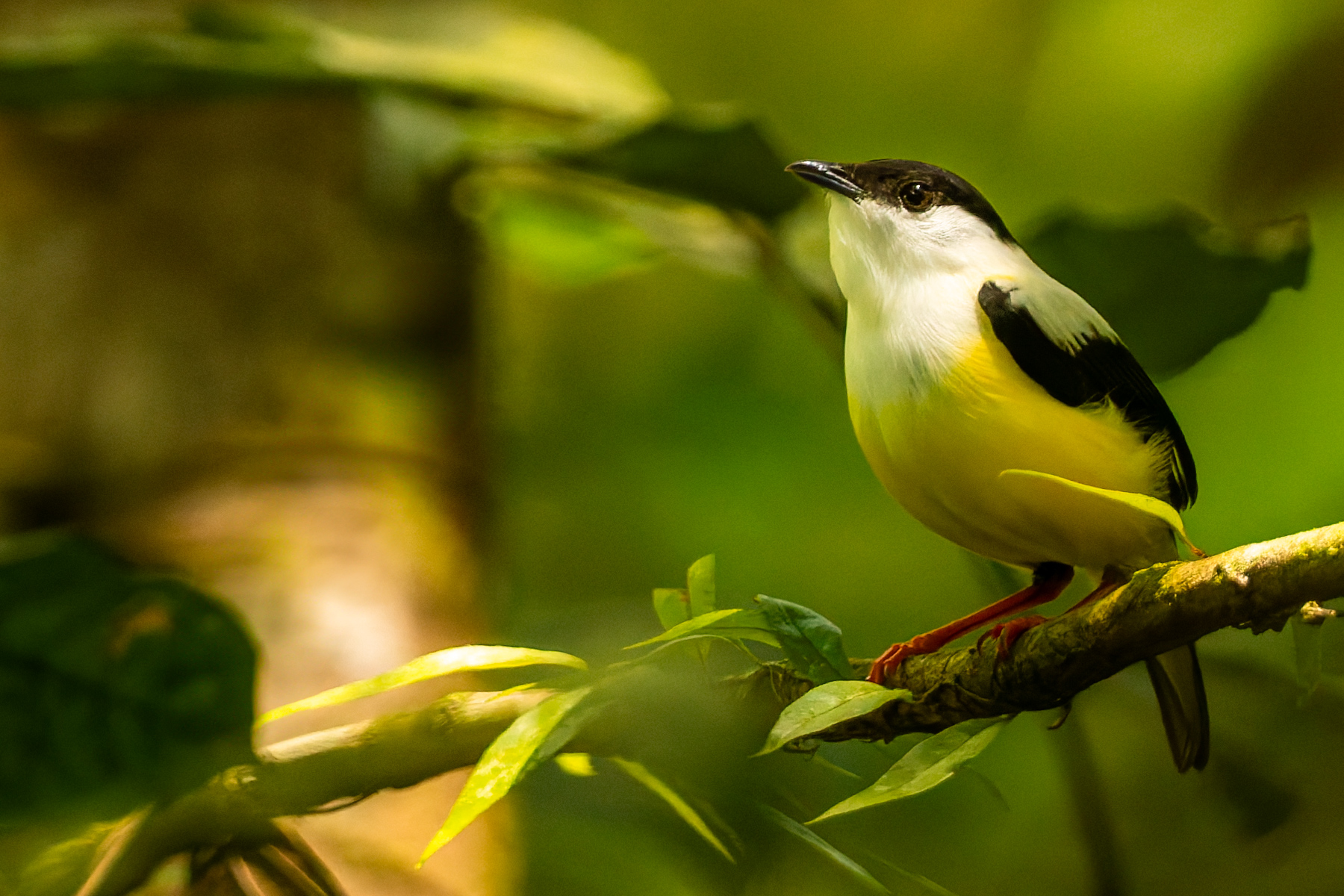
If you happen across a lek for White-collared Manakin - mostly through hearing the unmistakenly loud clicking sound males make - do stay a while. So challenging to photograph, but such lovely chunky birds (image by Gin Wilde)
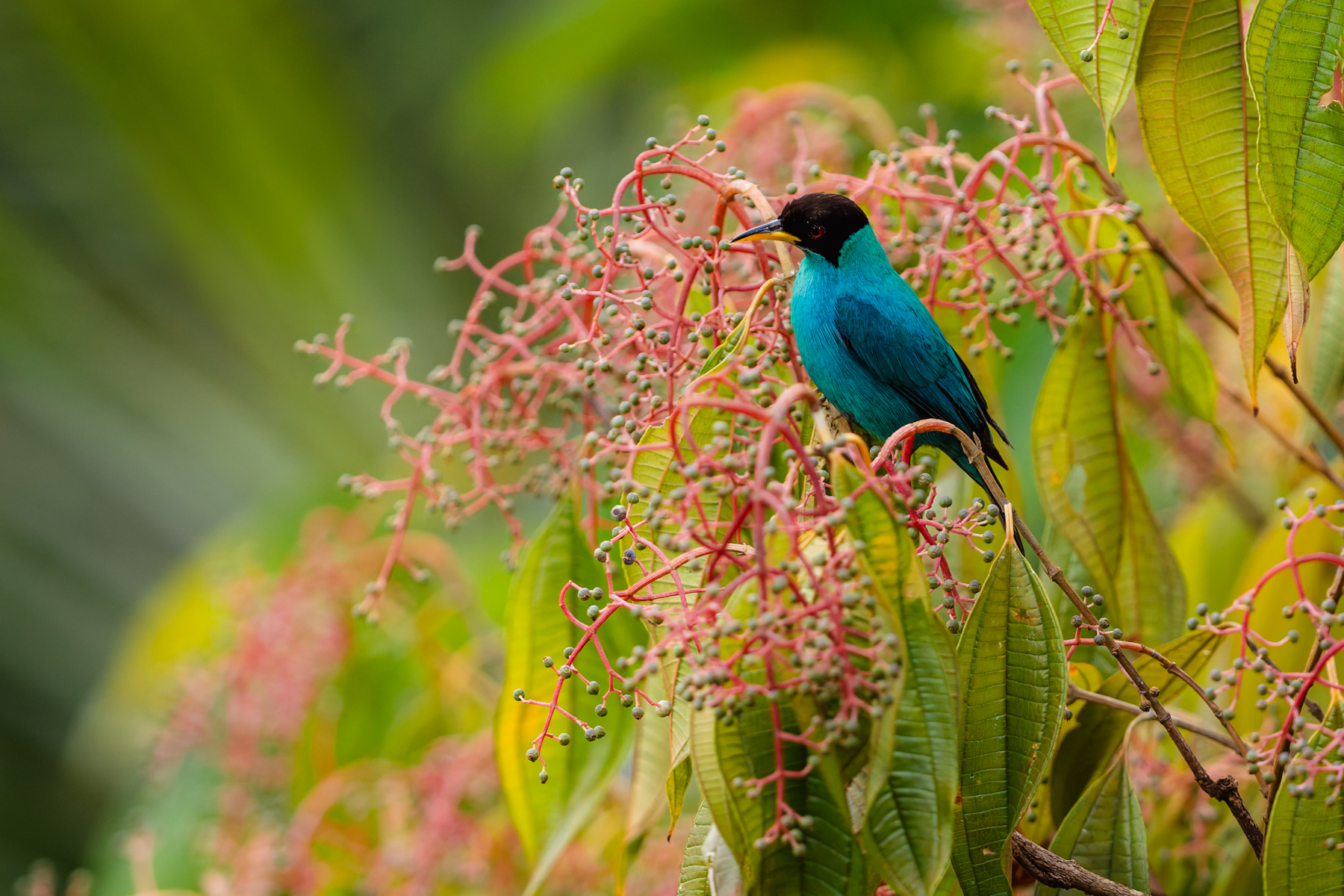
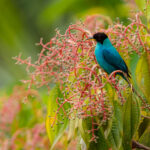
The colours of Costa Rica are endlessly joyful. Here, a male Green Honeycreeper - sporting its turquoise plumage - stands out against the green and pink of its tropical plant home (image by Gin Wilde)
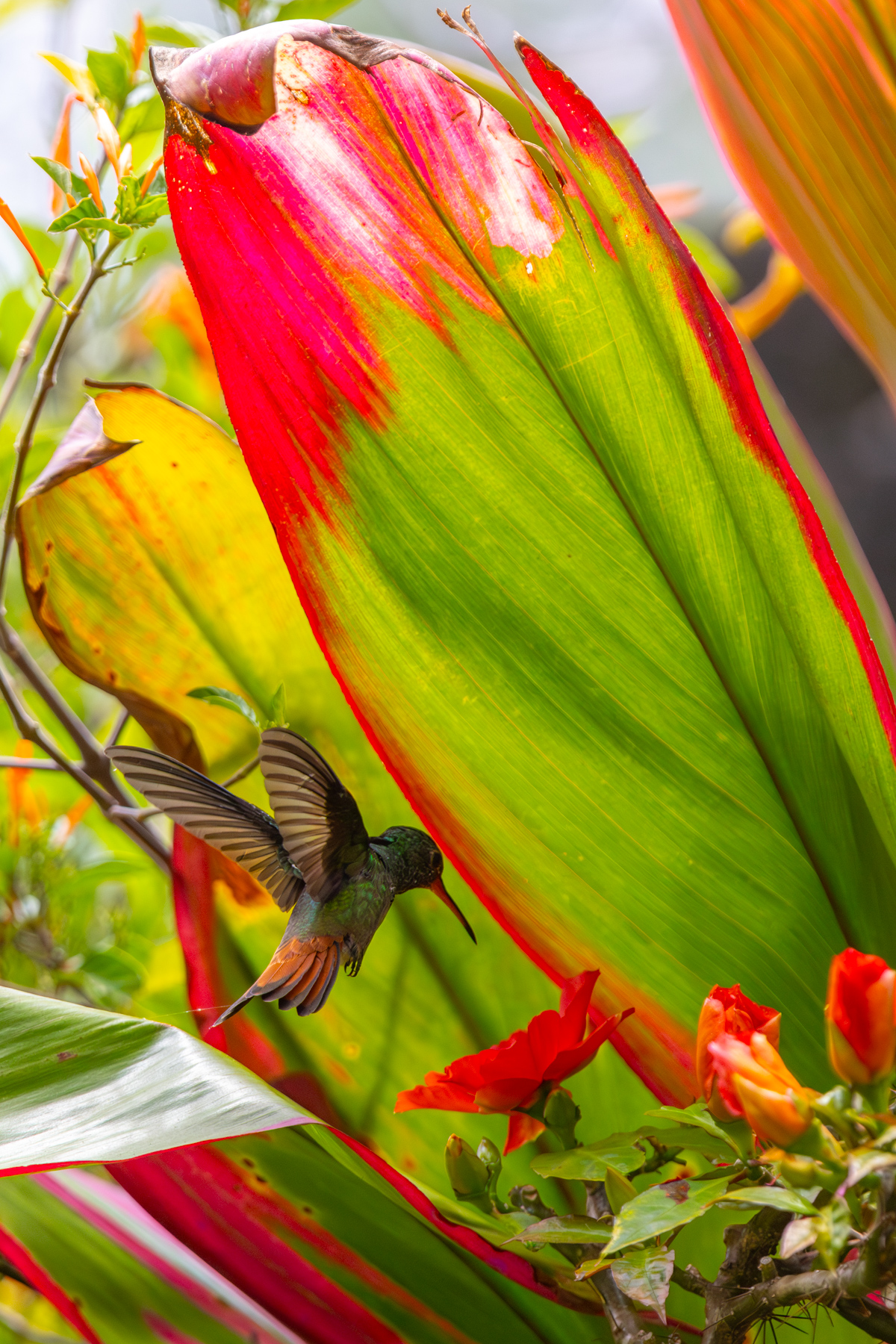
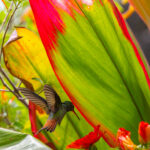
A Rufous-tailed Hummingbird dwarfed by the leaves of a tropical Ti plant in the wonderful gardens of the Hotel Bougainvillea, near San Jose (image by Gin Wilde)
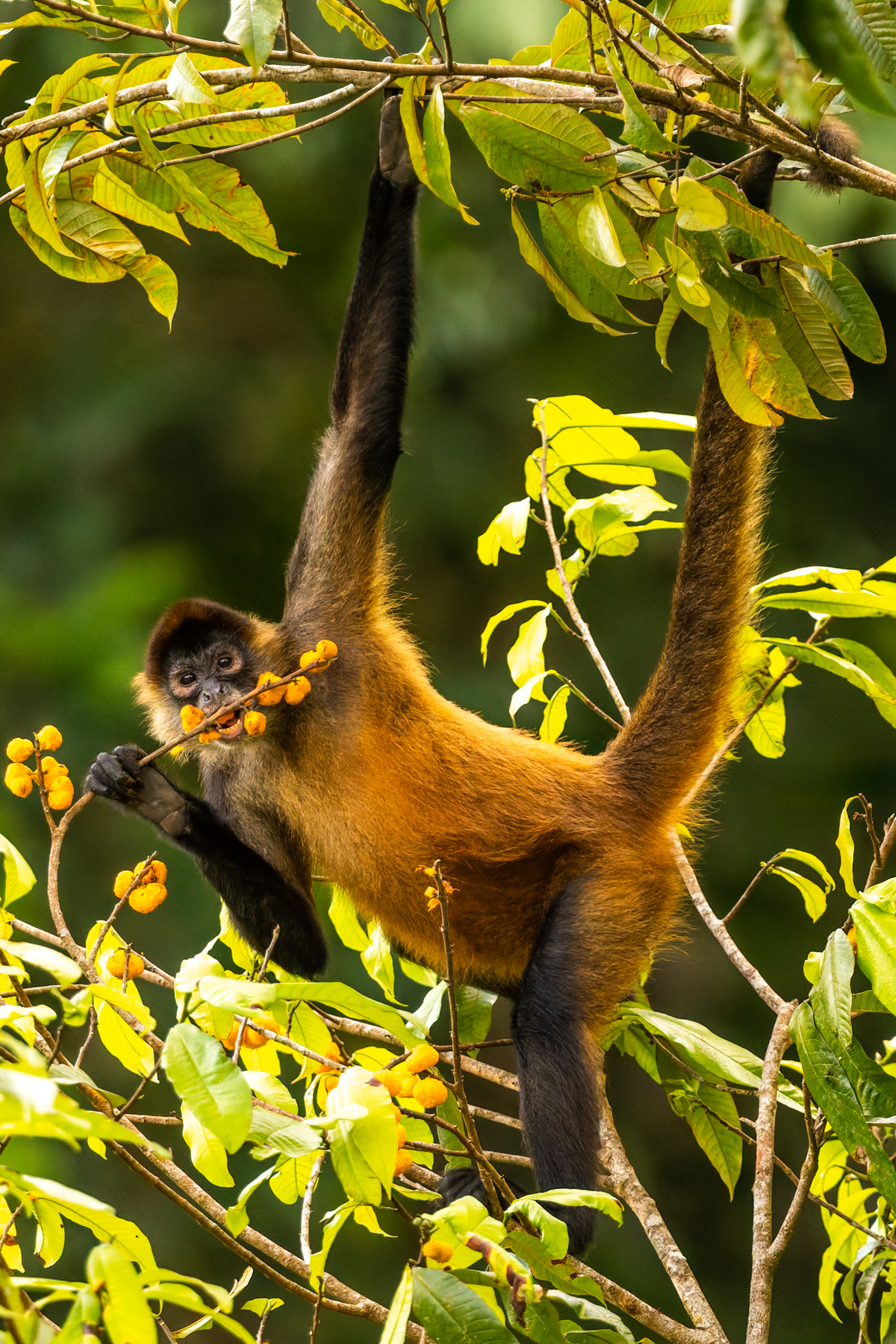
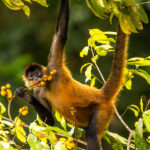
Spider Monkeys are considered one of the most expressive - and agile limbed - of all primates. Costa Rica is home to the Geoffrey's (or Black-handed) Spider Monkey, an increasingly endangered species (image by Gin Wilde)
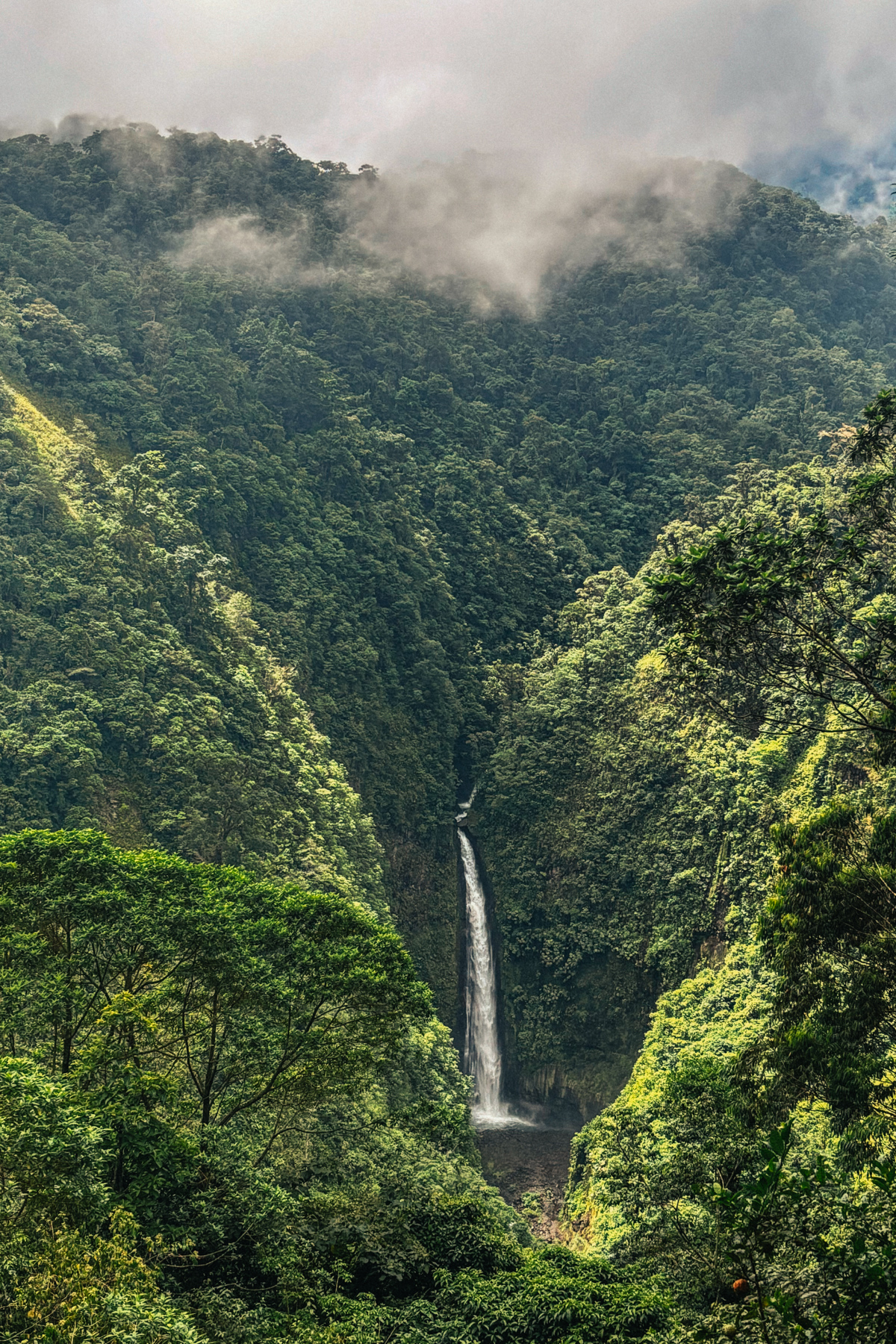
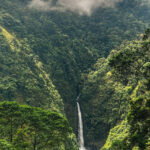
We drank coffee, while photographing so many tropical birds and hummingbirds, at a viewpoint overlooking the San Fernando Waterfall (image by Gin Wilde)
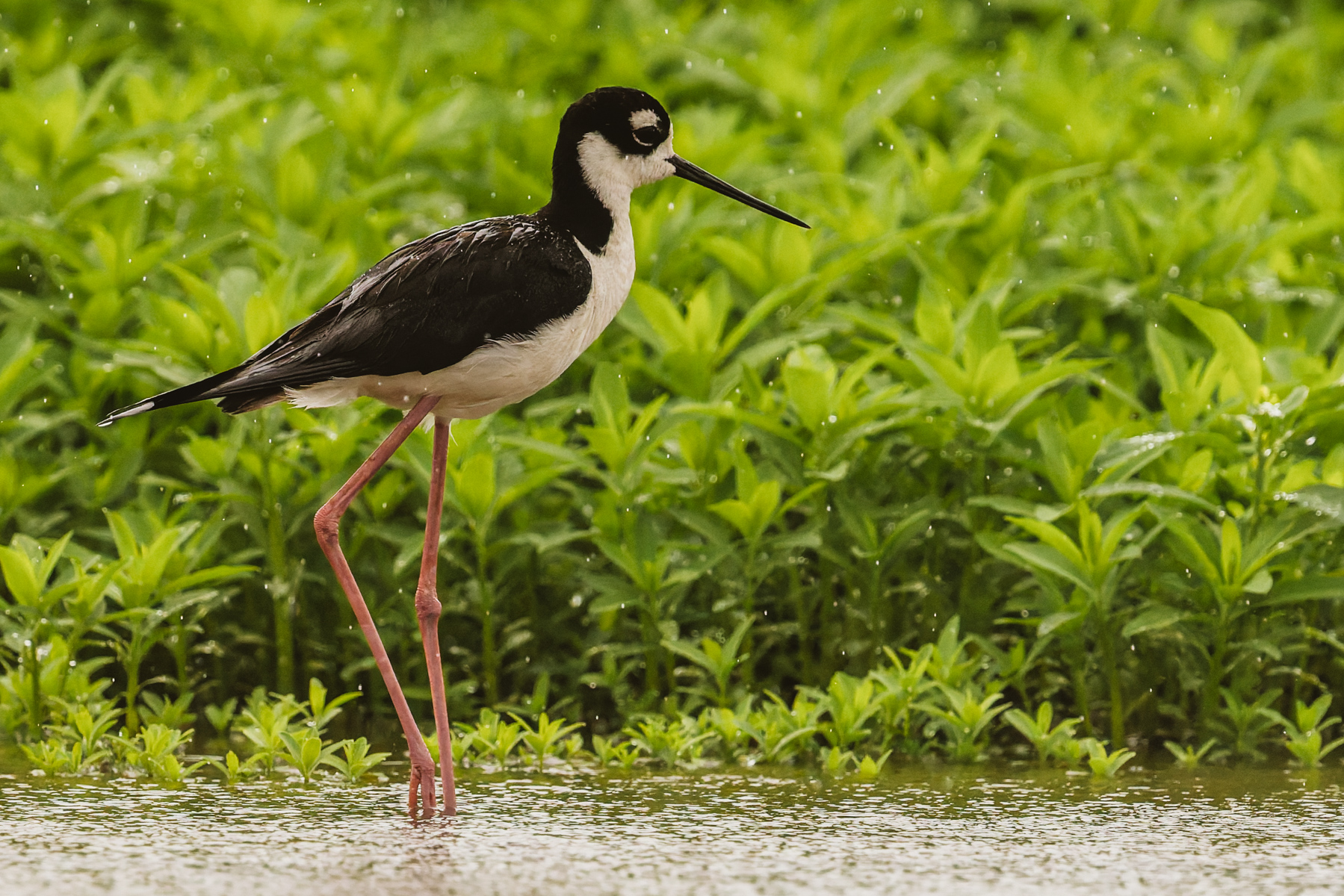
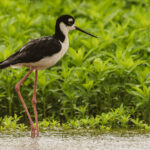
A delicate-legged Black-necked Stilt wades through the shallow waters in the Cano Negro wetlands (image by Gin Wilde)
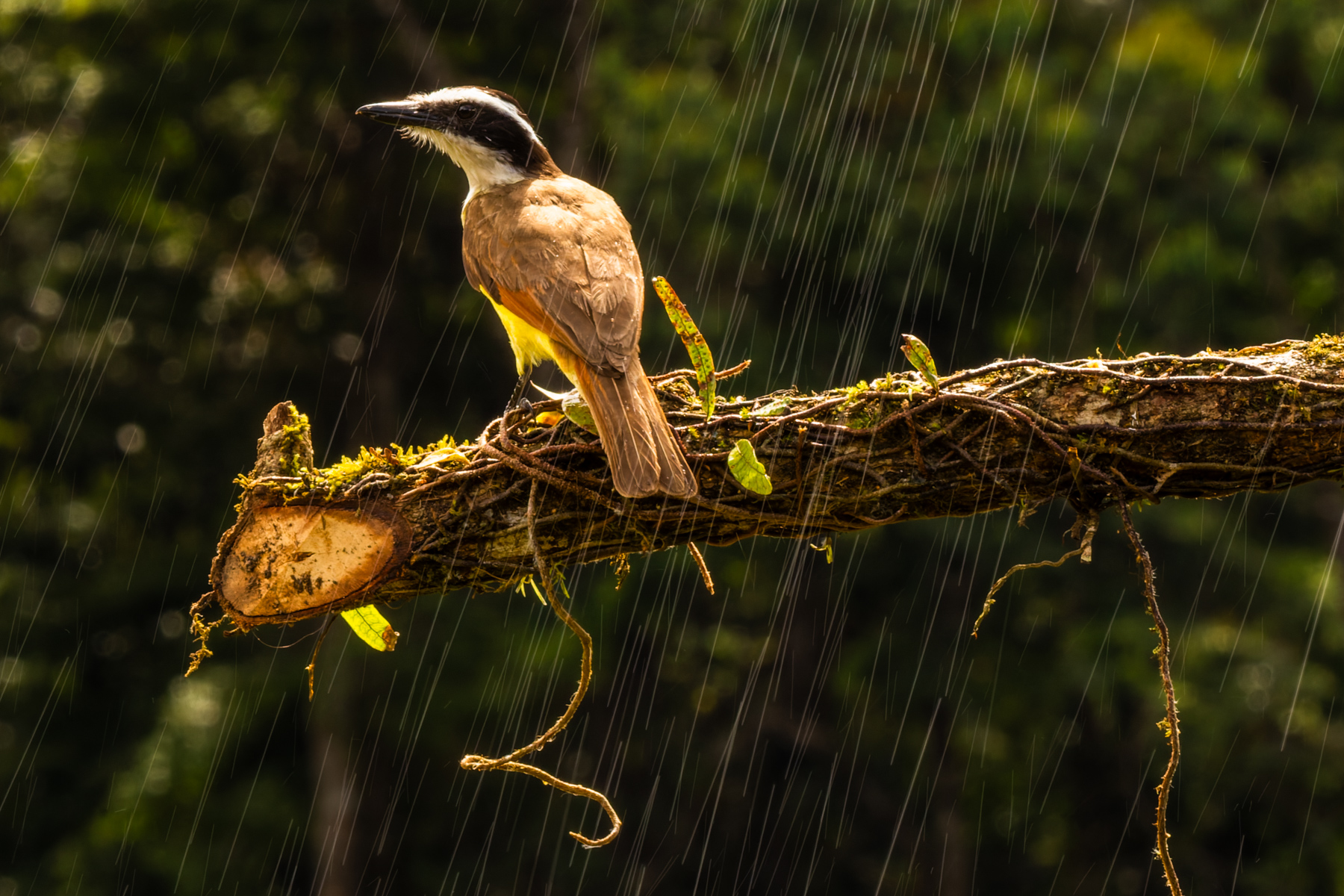
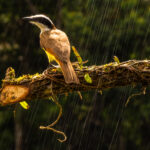
A Great Kiskadee enjoying a cool-down from sprinklers at Laguna del Lagarto, in Costa Rica (image by Gin Wilde)
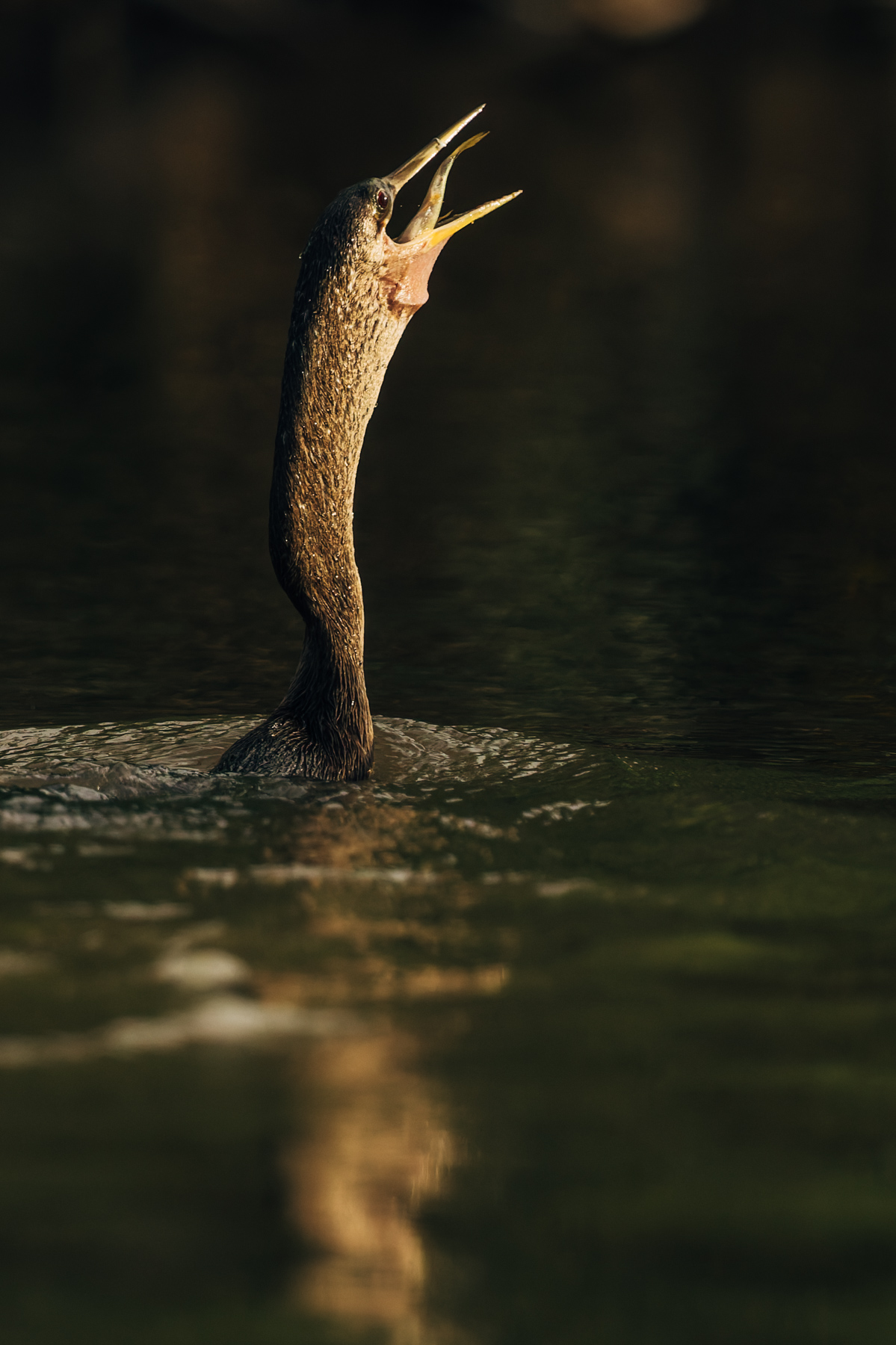
'And down the hatch it goes!' A female Anhinga swallows a fish whole in the Cano Negro Wildlife Reserve (image by Gin Wilde)
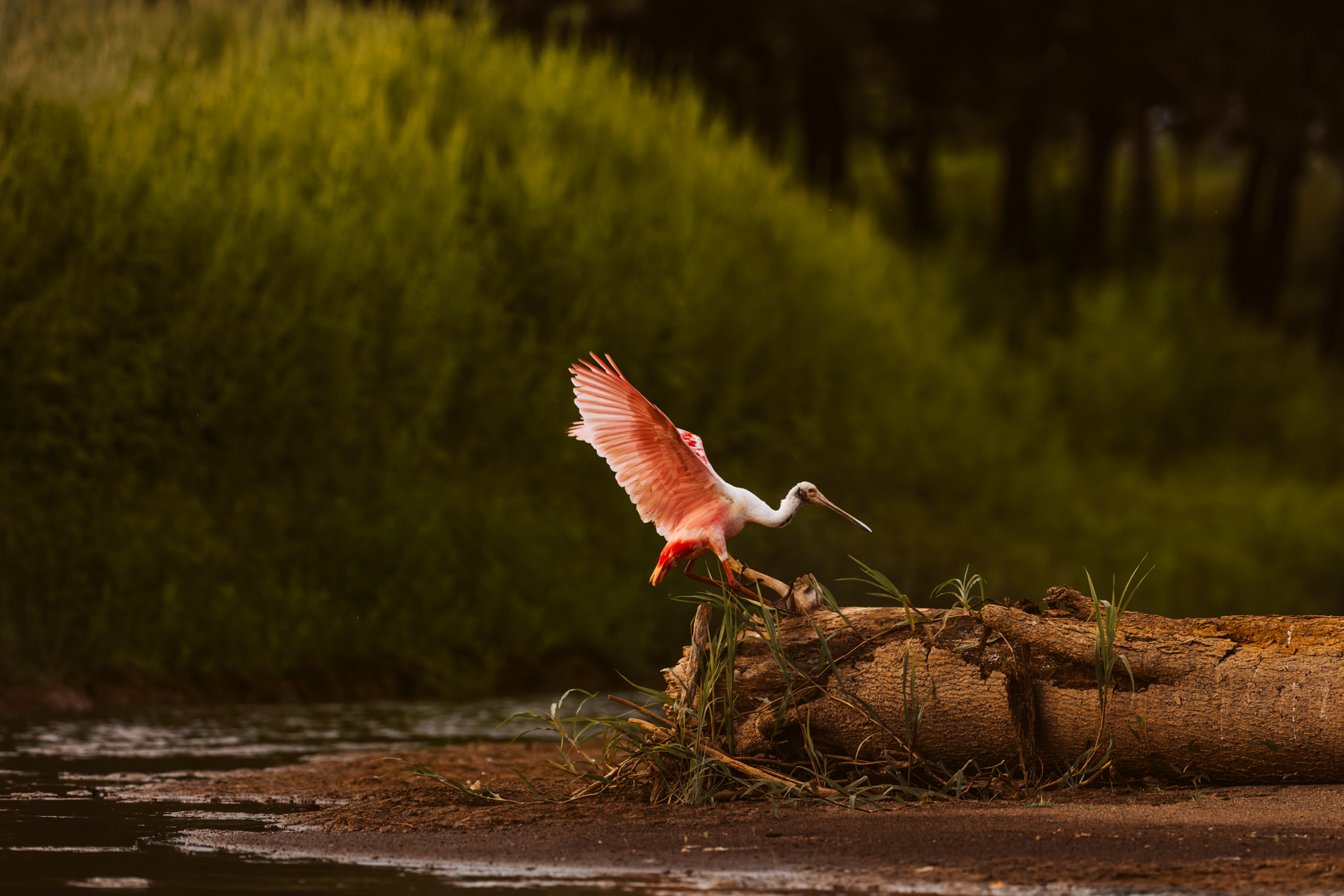
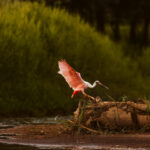
The flamboyant Roseate Spoonbill, taken in Cano Negro Wildlife reserve, near the border with Nicaragua (image by Gin Wilde)
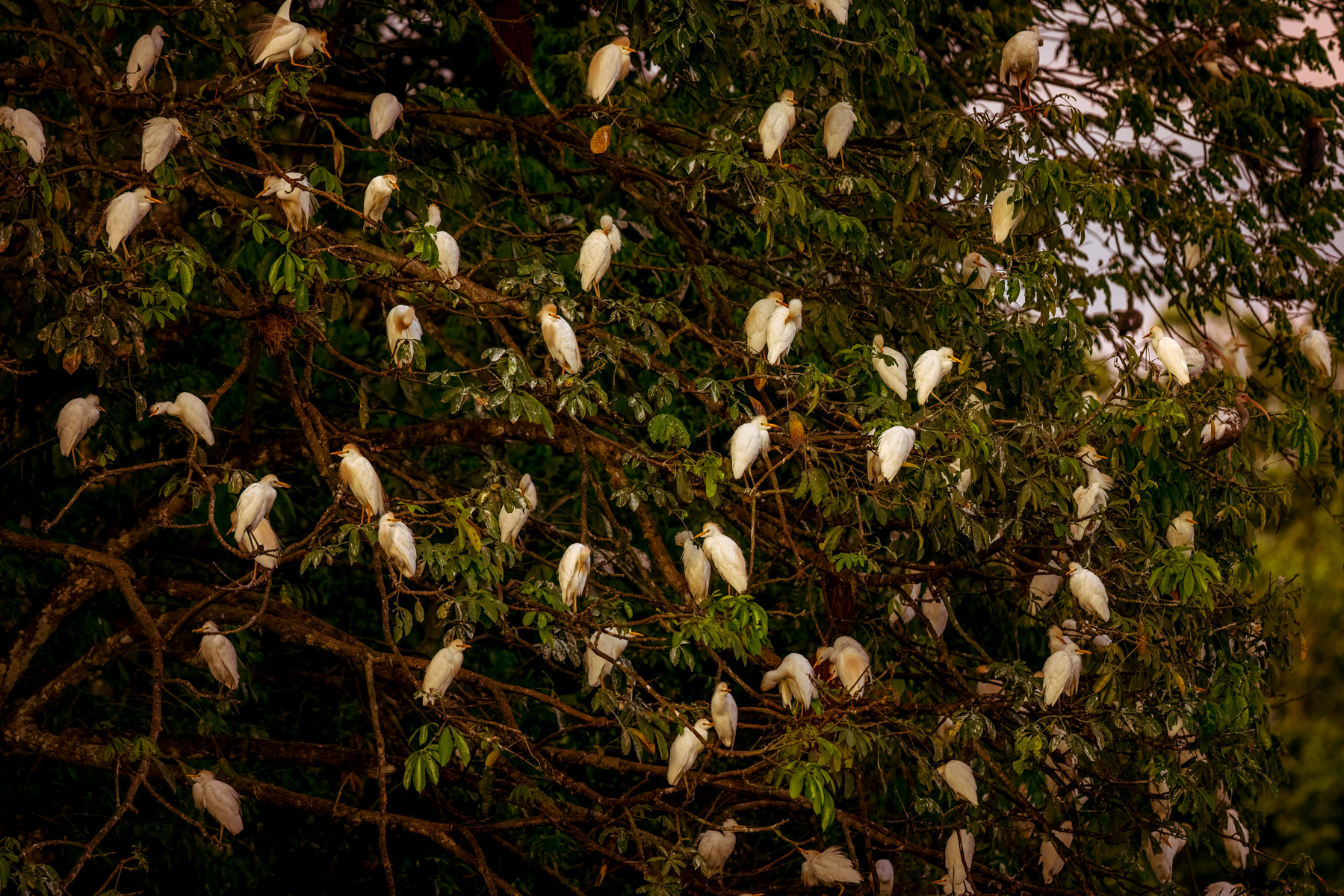
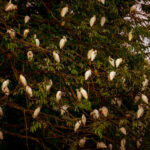
One of those sights that never fail to enchant me on birding cruises: a tree of egrets (here, Cattle Egrets) roosting communally (image by Gin Wilde)
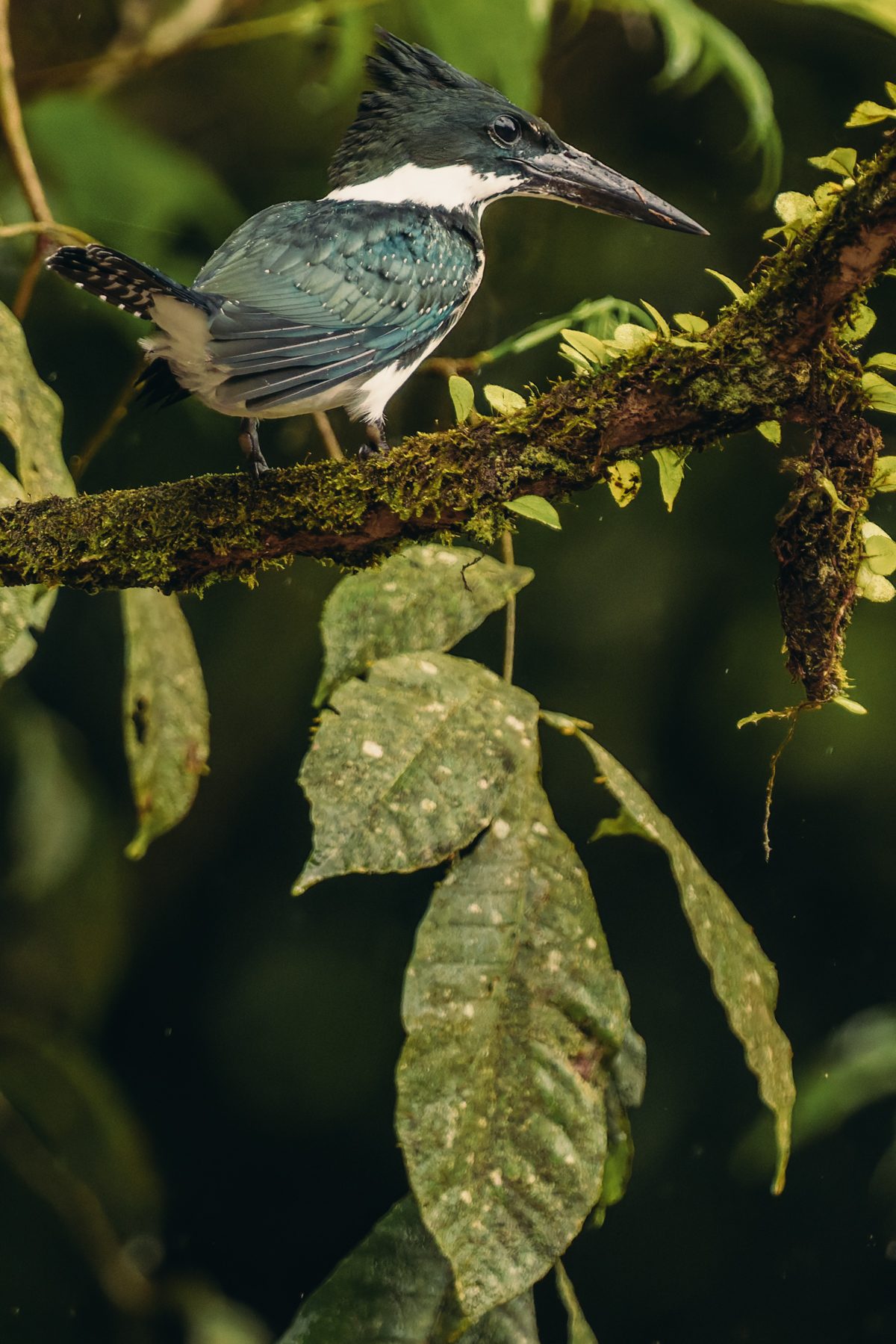
The female Amazon Kingfisher is a handsome bird, with oily-green and white plumage and a tufted head (image by Gin Wilde)
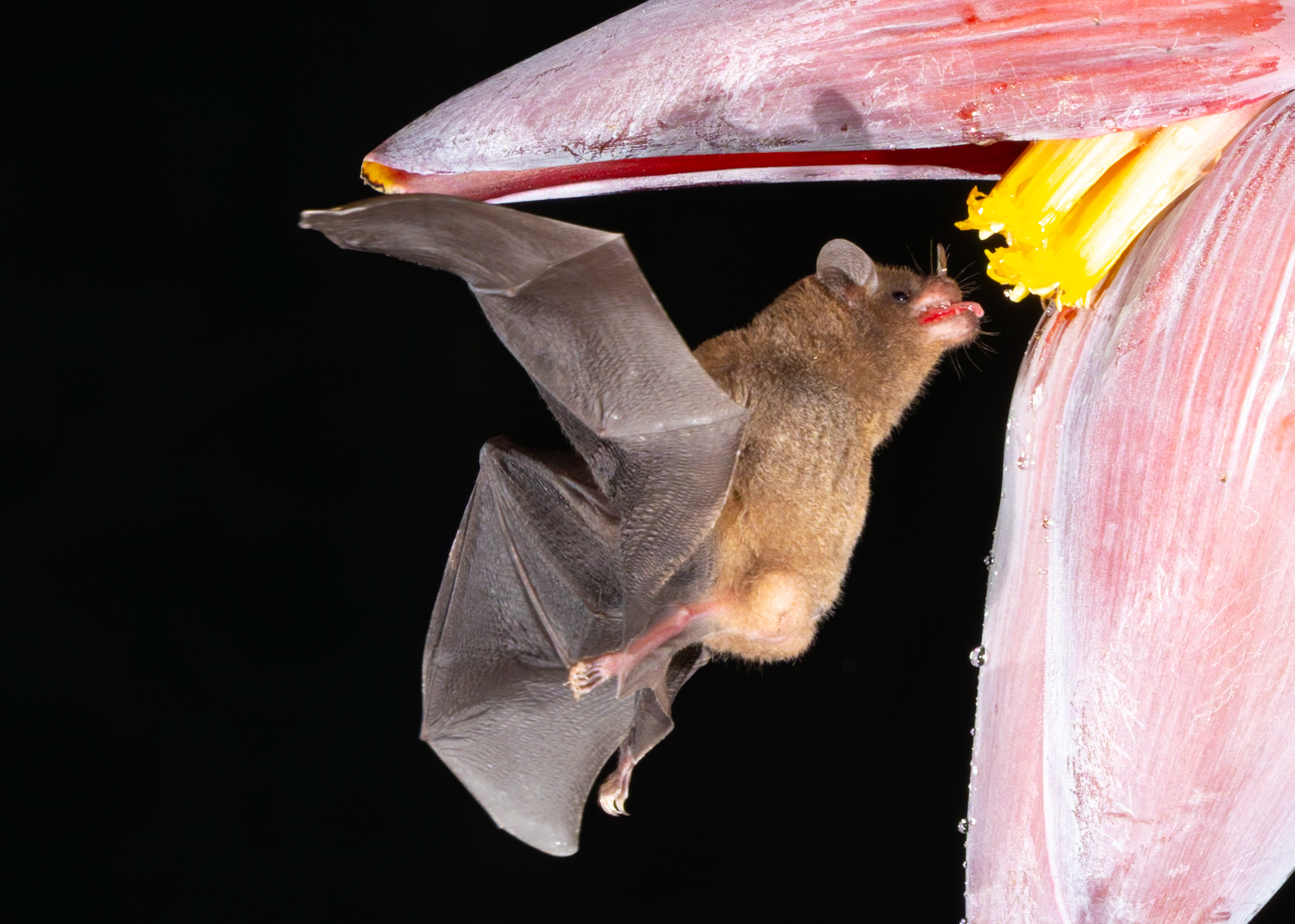
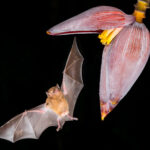
'Just...about...to reach...my drink...' An Orange Nectar Bat sticks out its tongue to drink from a flower. A process that, in real time, took a fraction of a second (image by Gin Wilde)
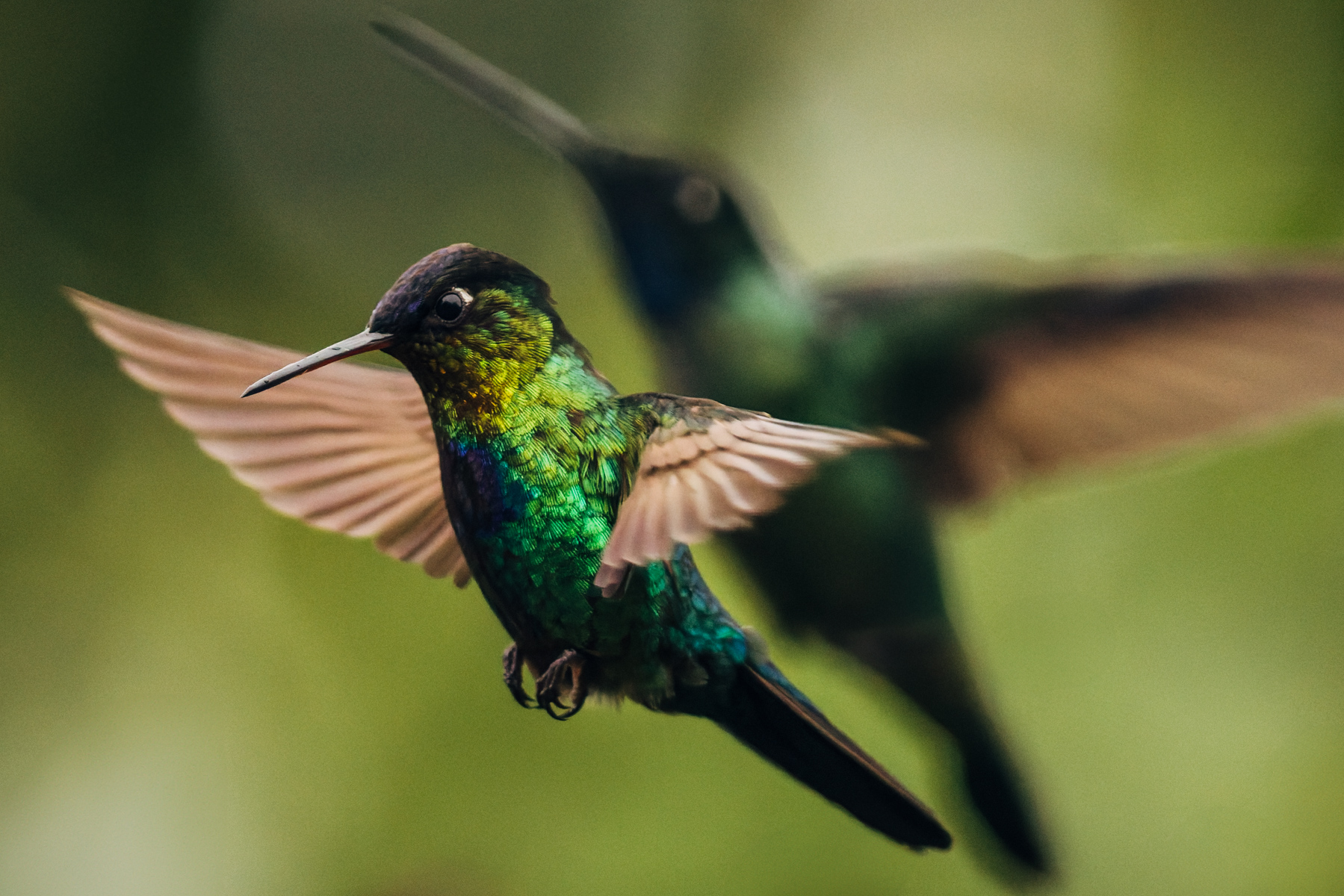
'Sky dance of the Fiery-throated Hummingbird'. Pictured with a 'shadow' bird behind (image by Gin Wilde)
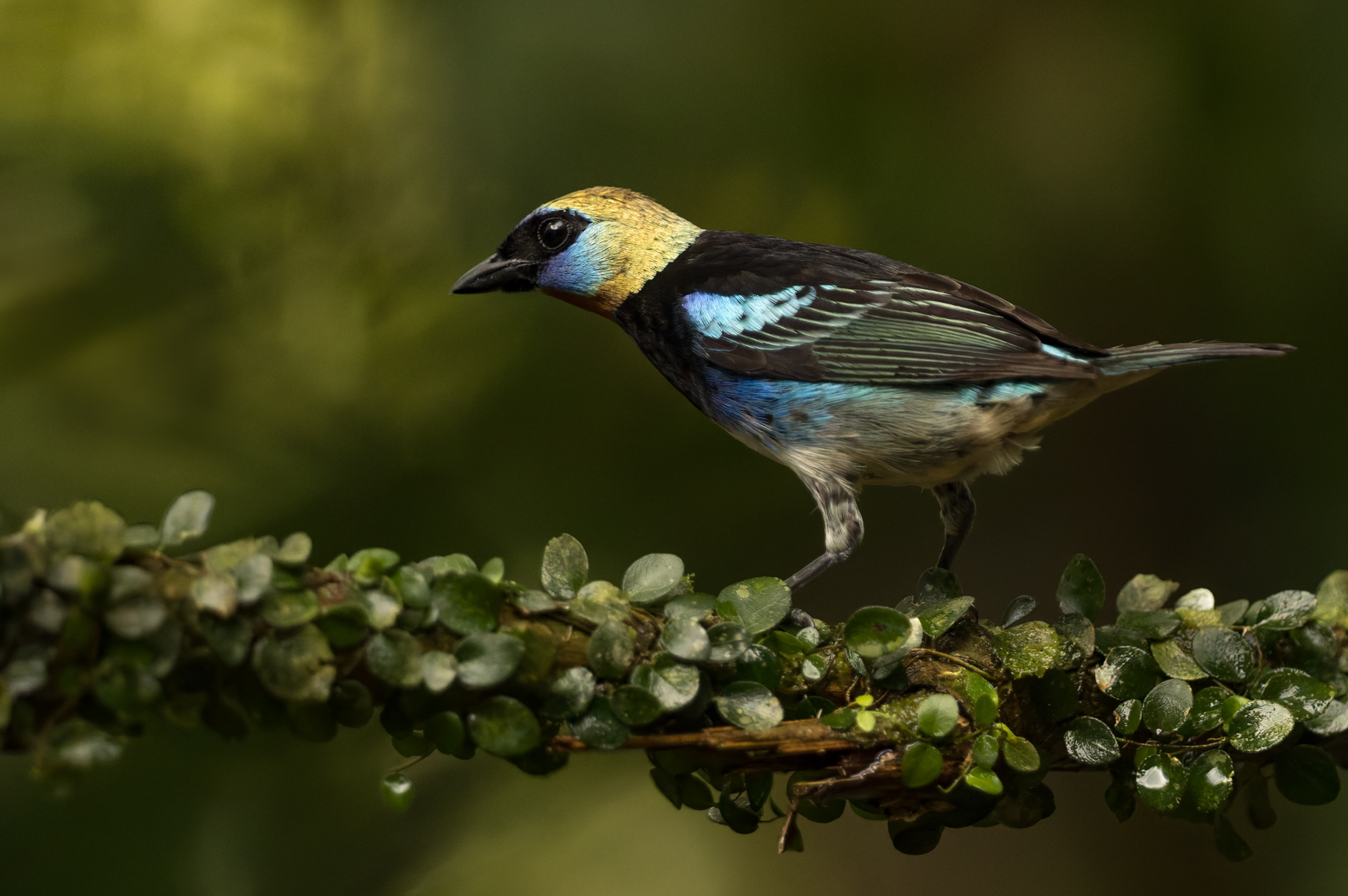
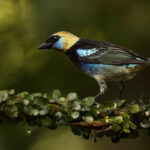
My first glimpse of this Golden-hooded Tanager was just a flash of shining gold in the undergrowth. But what a stunning bird it is! (image by Gin Wilde)
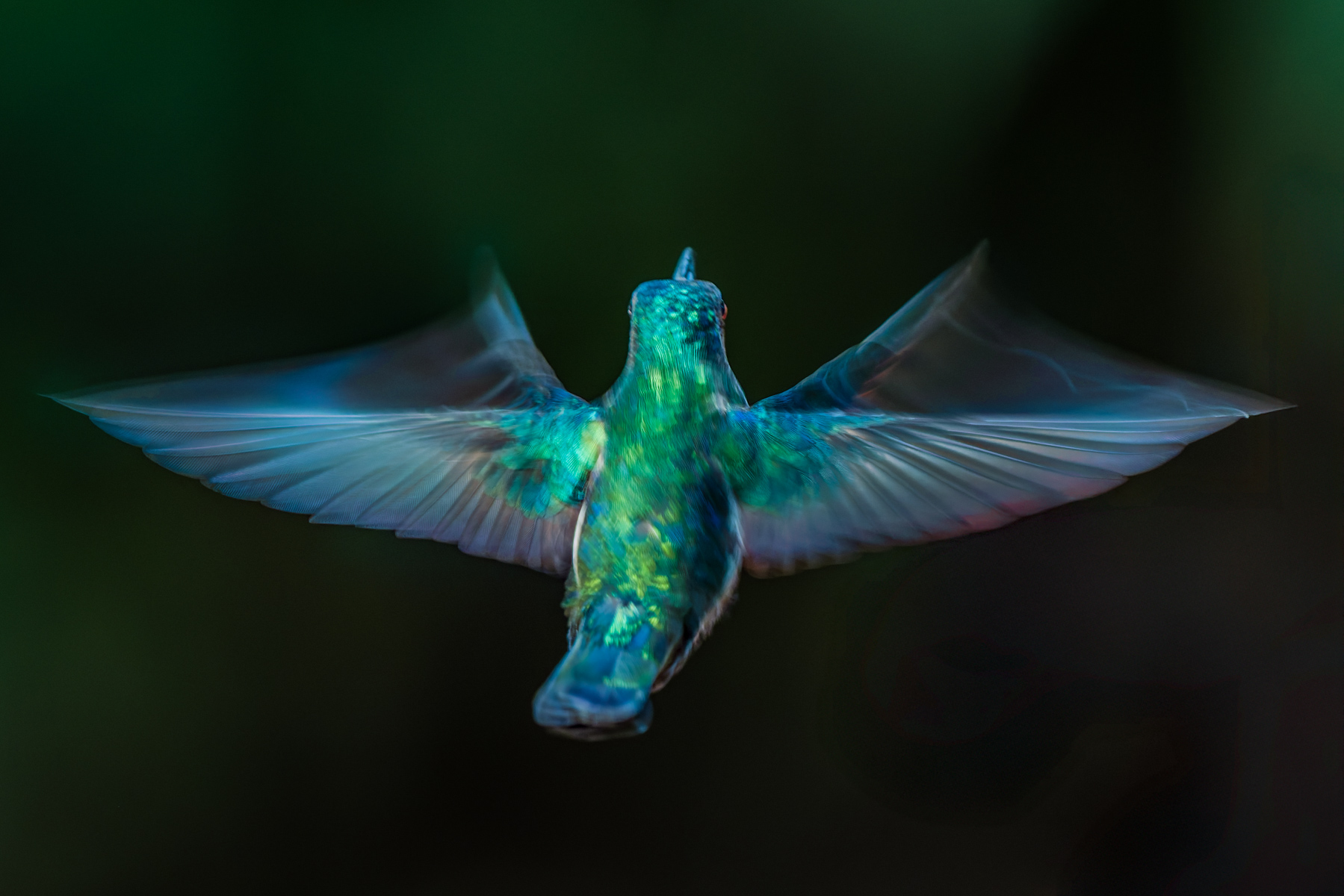
Hand-holding a camera to capture movement in a hummingbird (such as this female White-necked Jacobin) at a shutter speed of 1/100 - but without resulting in a totally blurry image - requires some patience. But can result in compelling images (image by Gin Wilde)
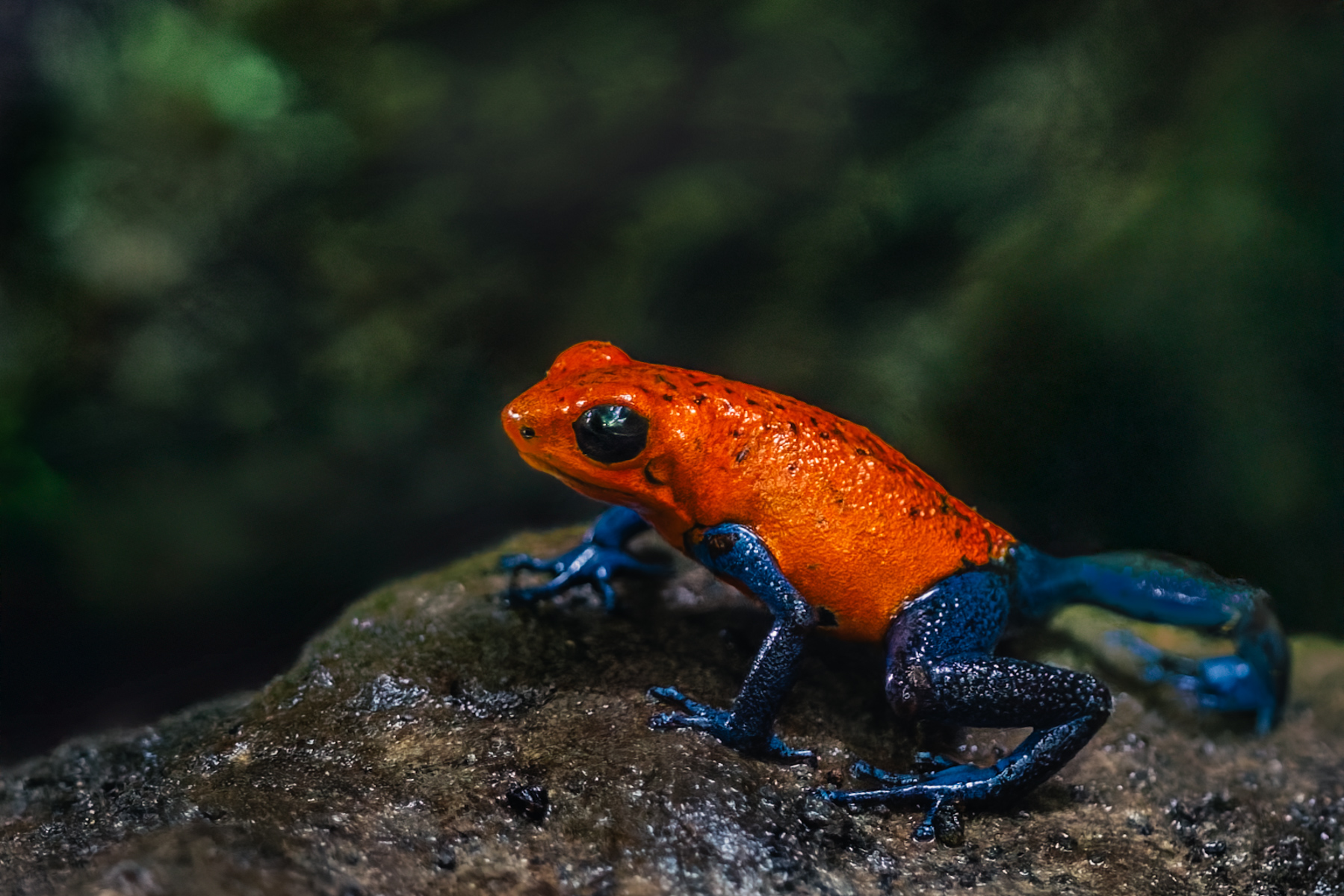
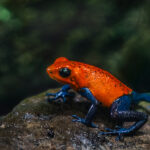
The Strawberry Poison Dart Frog is also known as the Blue Jeans Frog. No prizes for guessing how it got its name... (image by Gin Wilde)
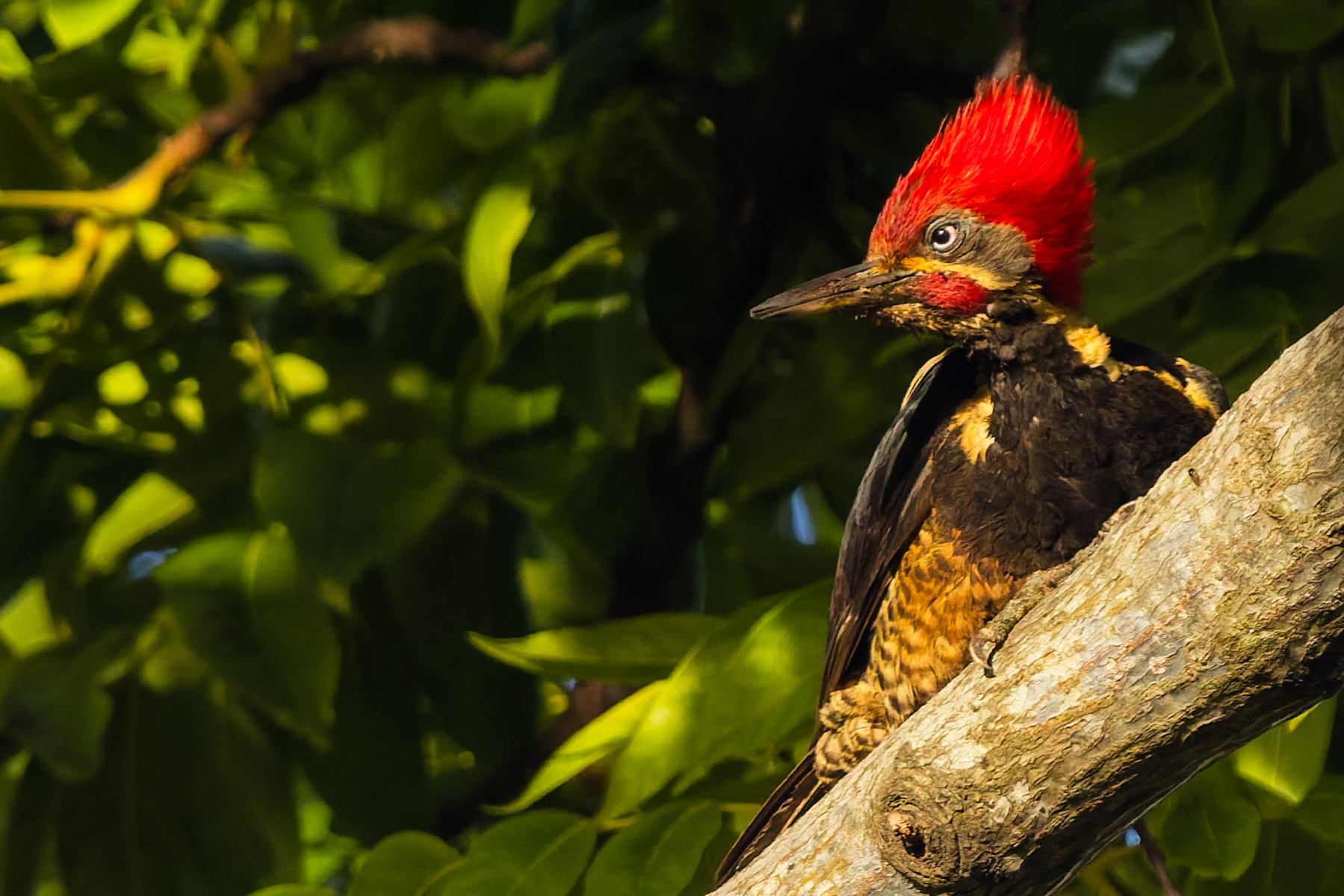
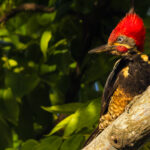
With more than a passing resemblance to the 'Woody Woodpecker' cartoon bird, the wonderful red crest of the Lineated Woodpecker gives it a striking appearance (image by Gin Wilde)
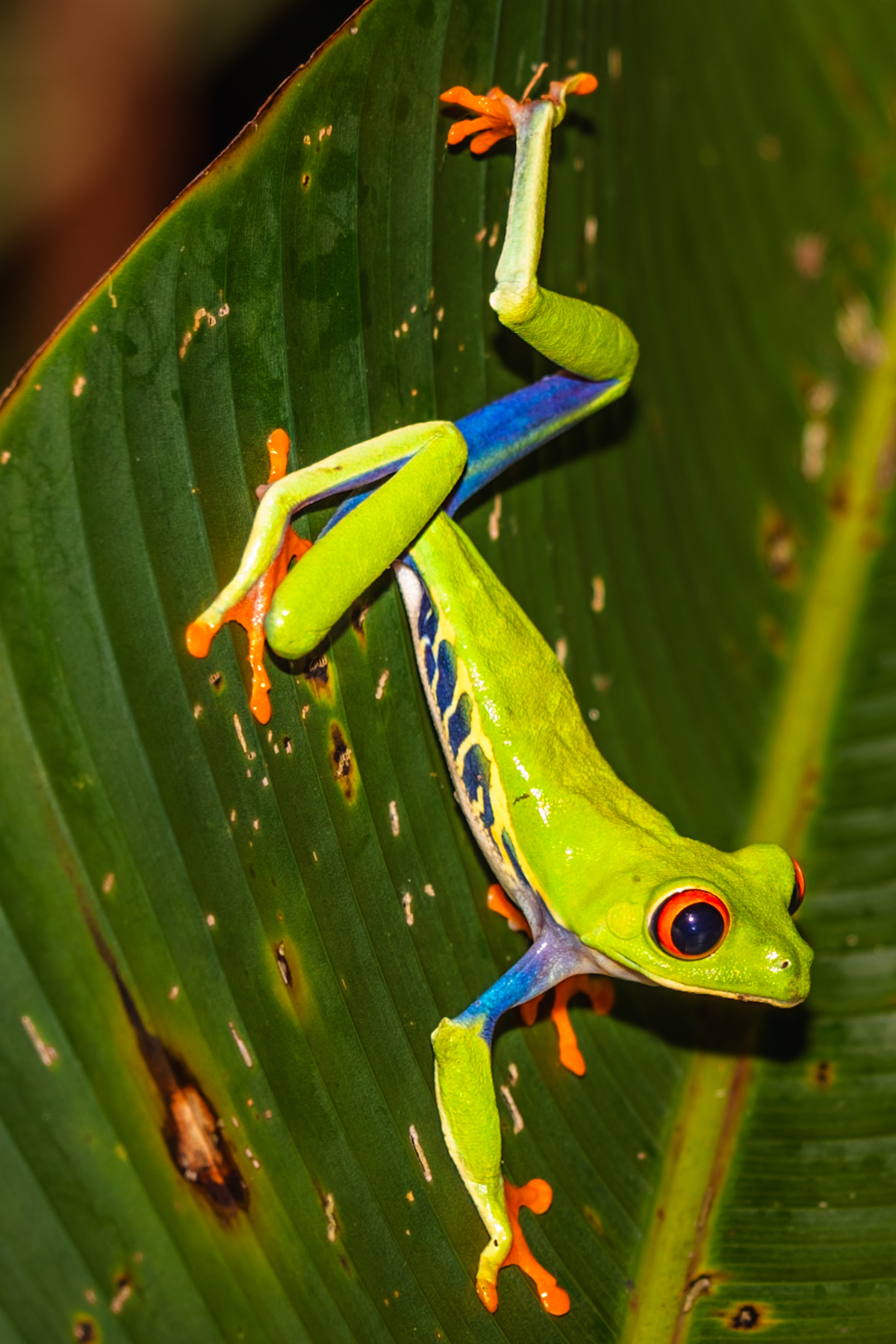
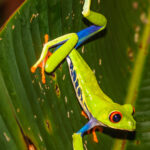
A slender-looking Red-eyed Tree Frog pads down a leaf, displaying the mottled blue and yellow of its belly flank and striking blue inner leg (image by Gin Wilde)
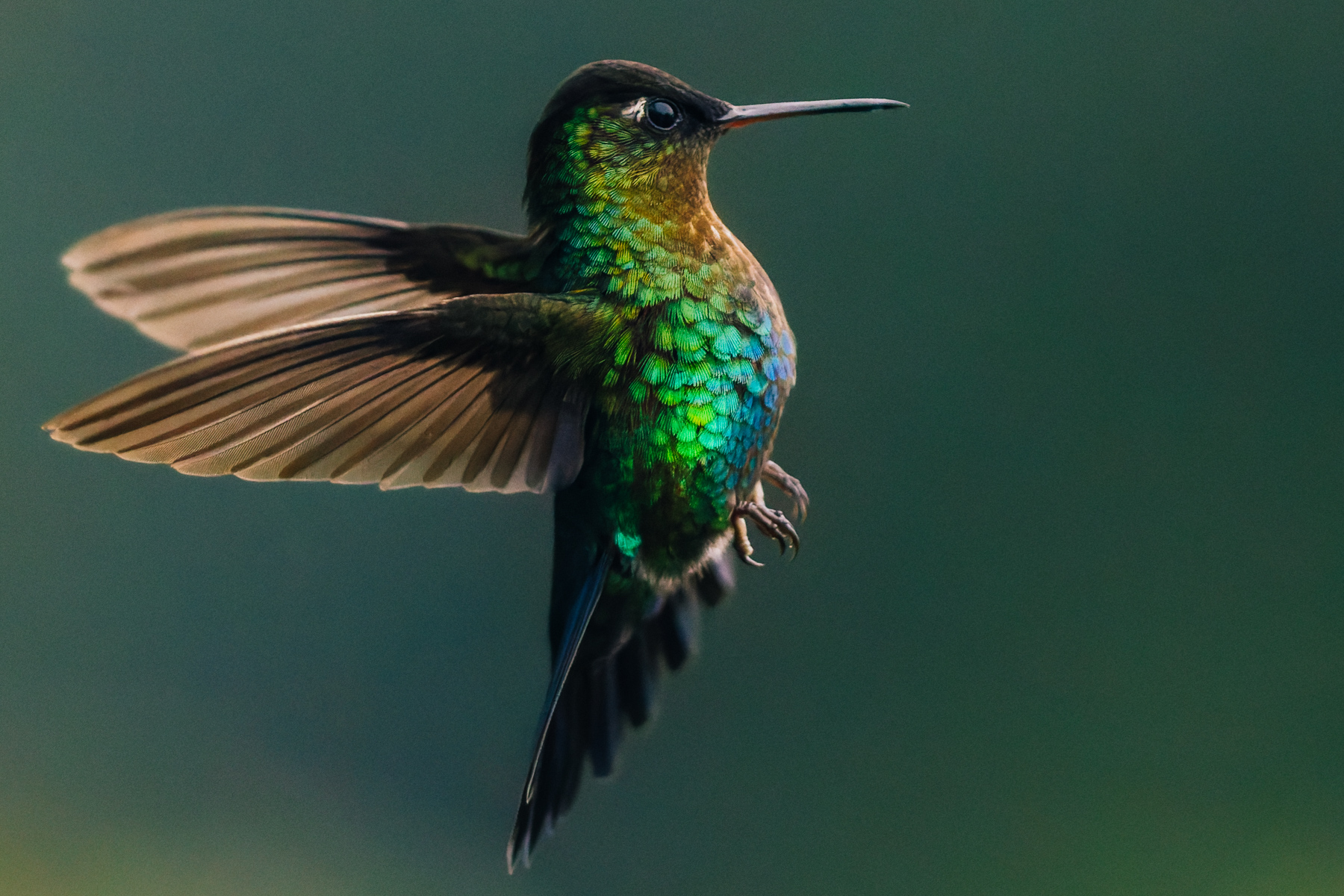
A Fiery-throated Hummingbird - so captivating-looking with its iridescent rainbow plumage - puffs out its chest, in the cloud forests of Costa Rica (image by Gin Wilde)
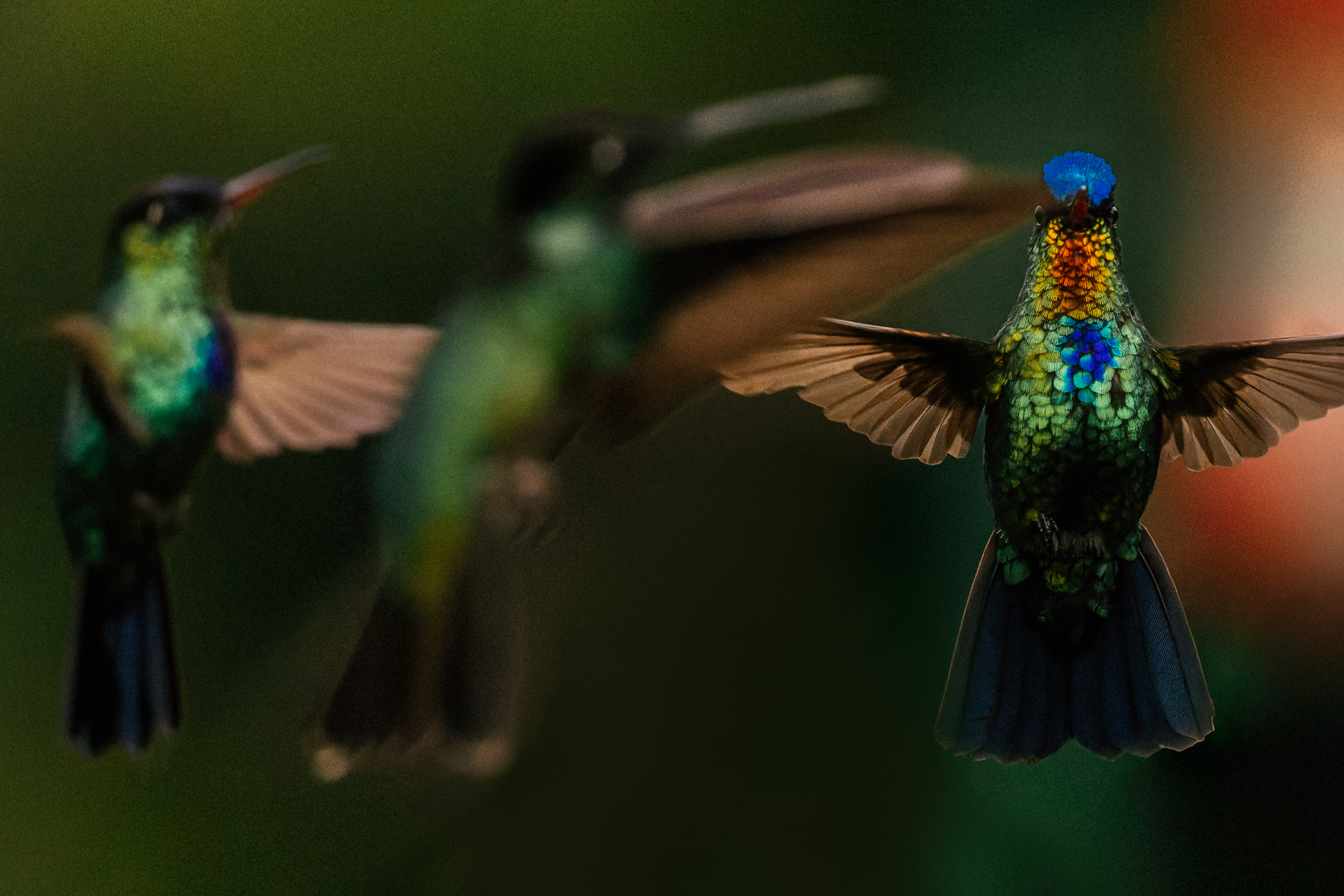
The jewelled beauty that is the Fiery-throated Hummingbird can display shades of orange, red, yellow and blue on its throat, depending on the angle of light and movement of its feathers (image by Gin Wilde)
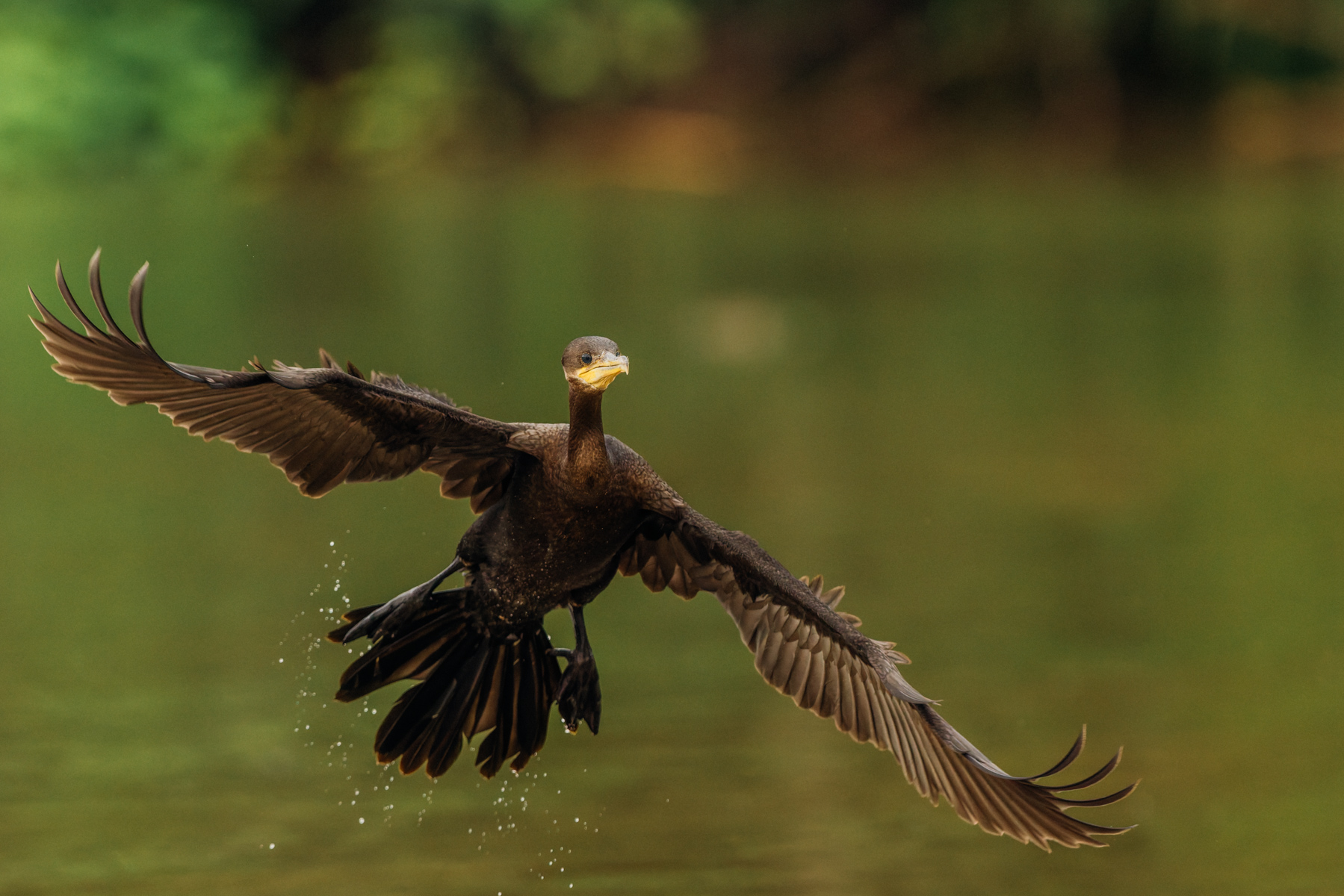
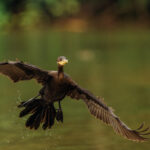
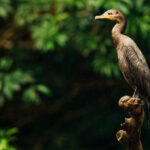
A juvenile Neotropical Cormorant swoops in the Cano Negro wetlands - showing its dark brown breast (image by Gin Wilde)
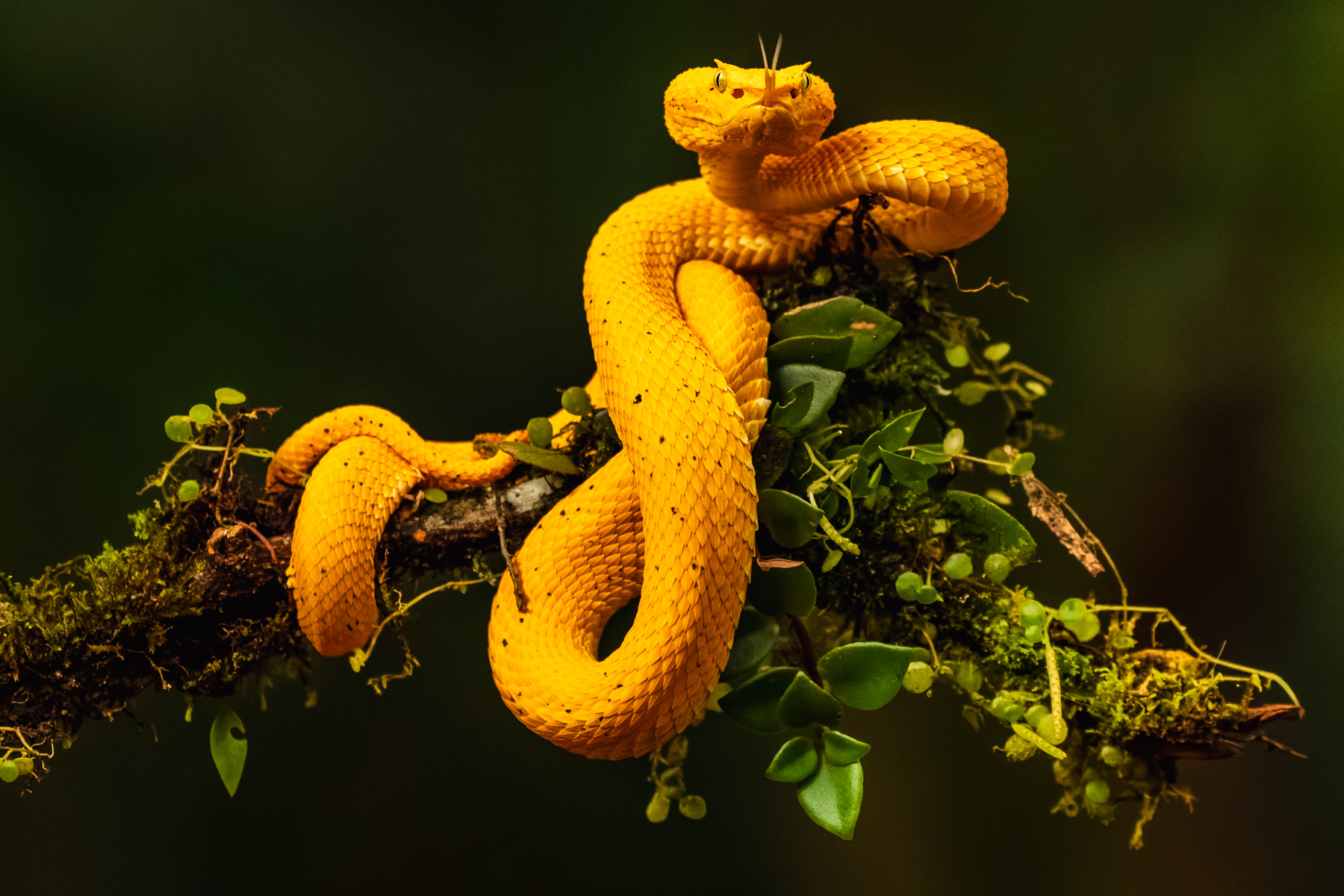
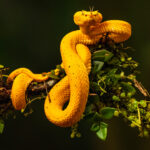
The stunning Eyelash Pit Viper, armed with fangs as sharp as hypodermic needles, but surely one of the world's most beautiful snakes (image by Gin Wilde)
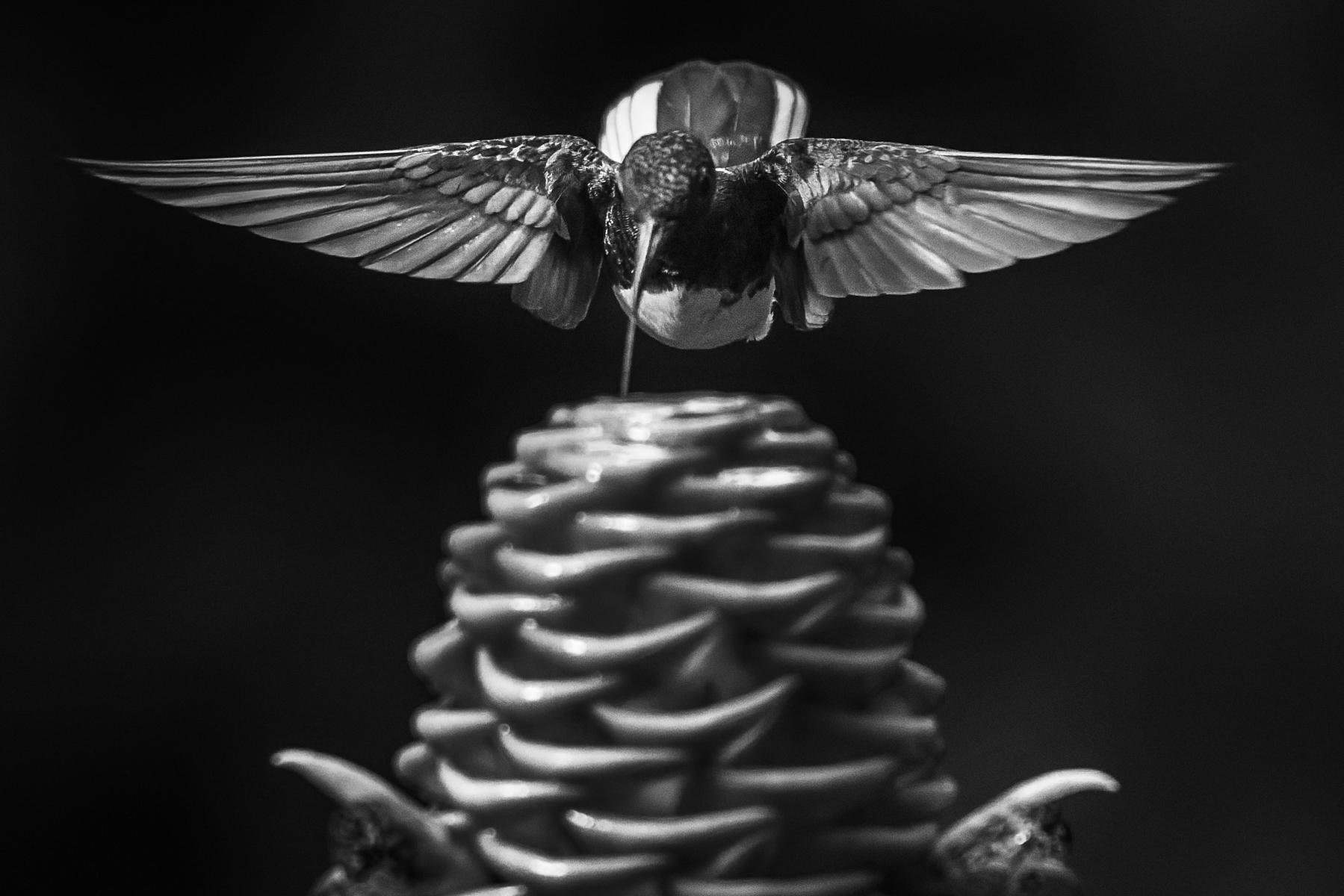
Black-and-white portrait of a White-necked Jacobin. It's a wrench to forgo the colours of Costa Rica, but the iridescence of many hummingbirds can make for striking black-and-white images (image by Gin Wilde)
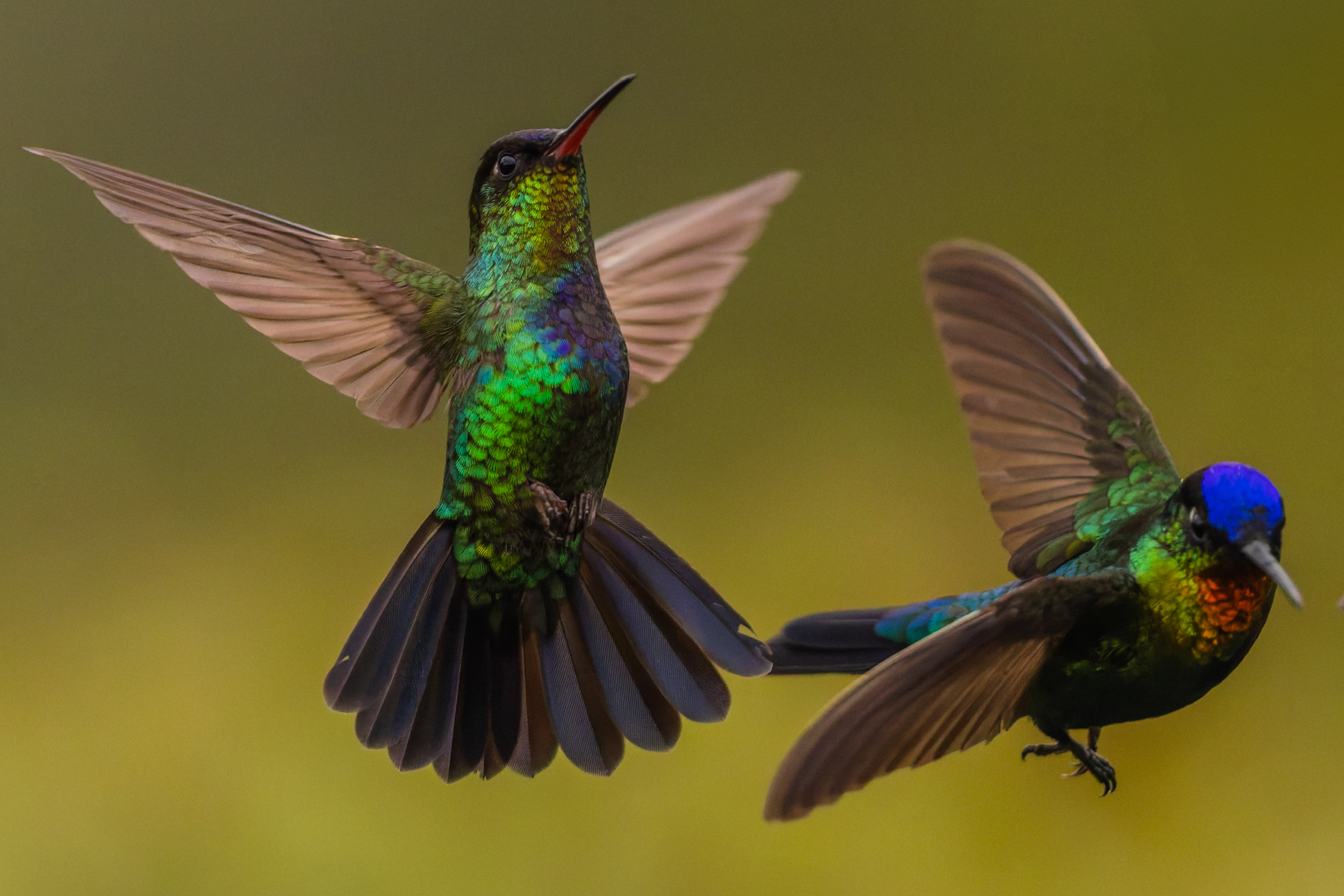
If you wait for a Fiery-throated Hummingbird to turn its head, you're met with a real sight: a striking metallic blue crown and orange iridescent chin (image by Gin Wilde)
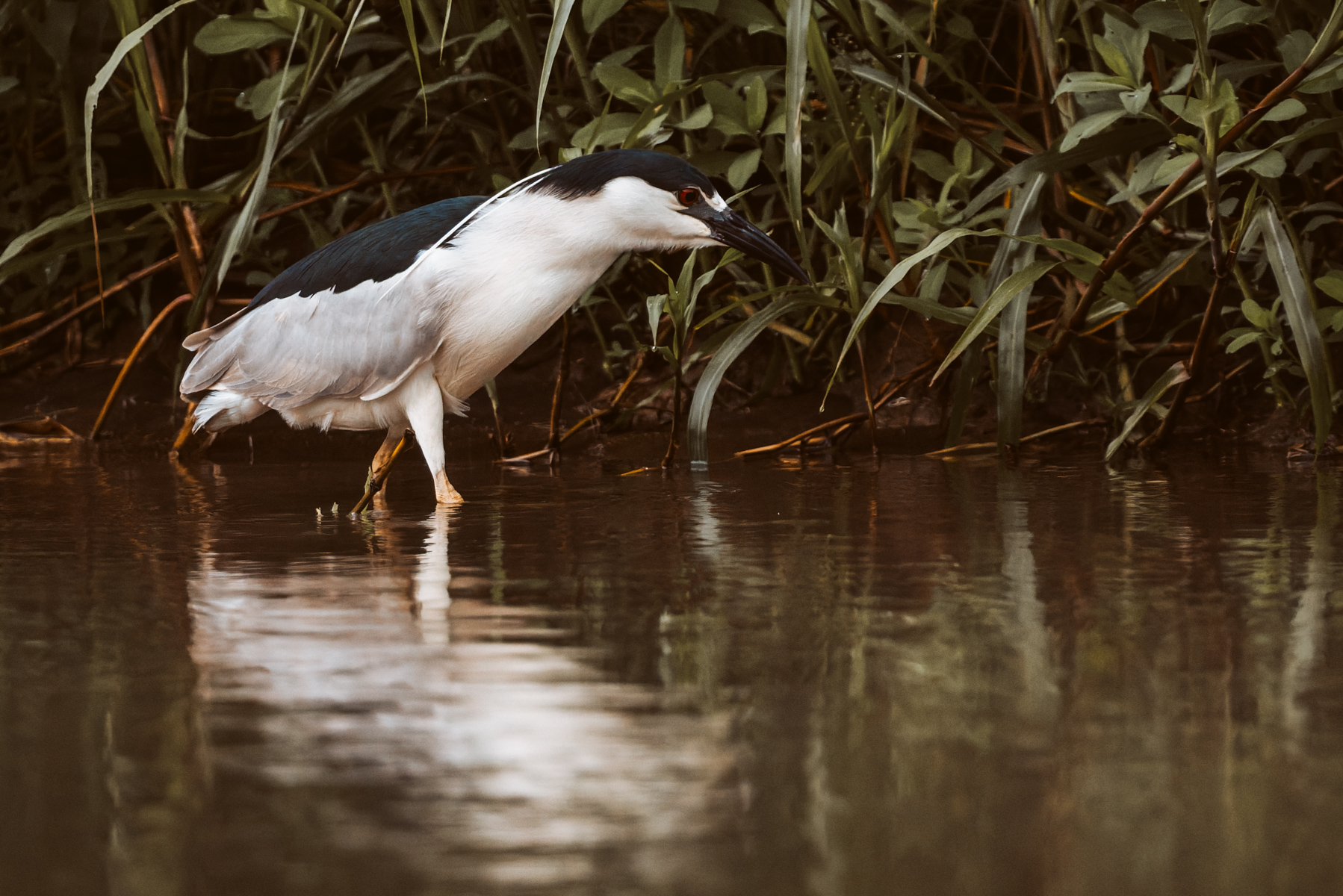
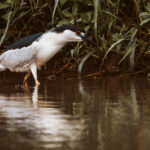
A Black-crowned Night Heron - with its distinctive blood-red eyes - feeds in the shallows of the lagoons of Cano Negro (image by Gin Wilde
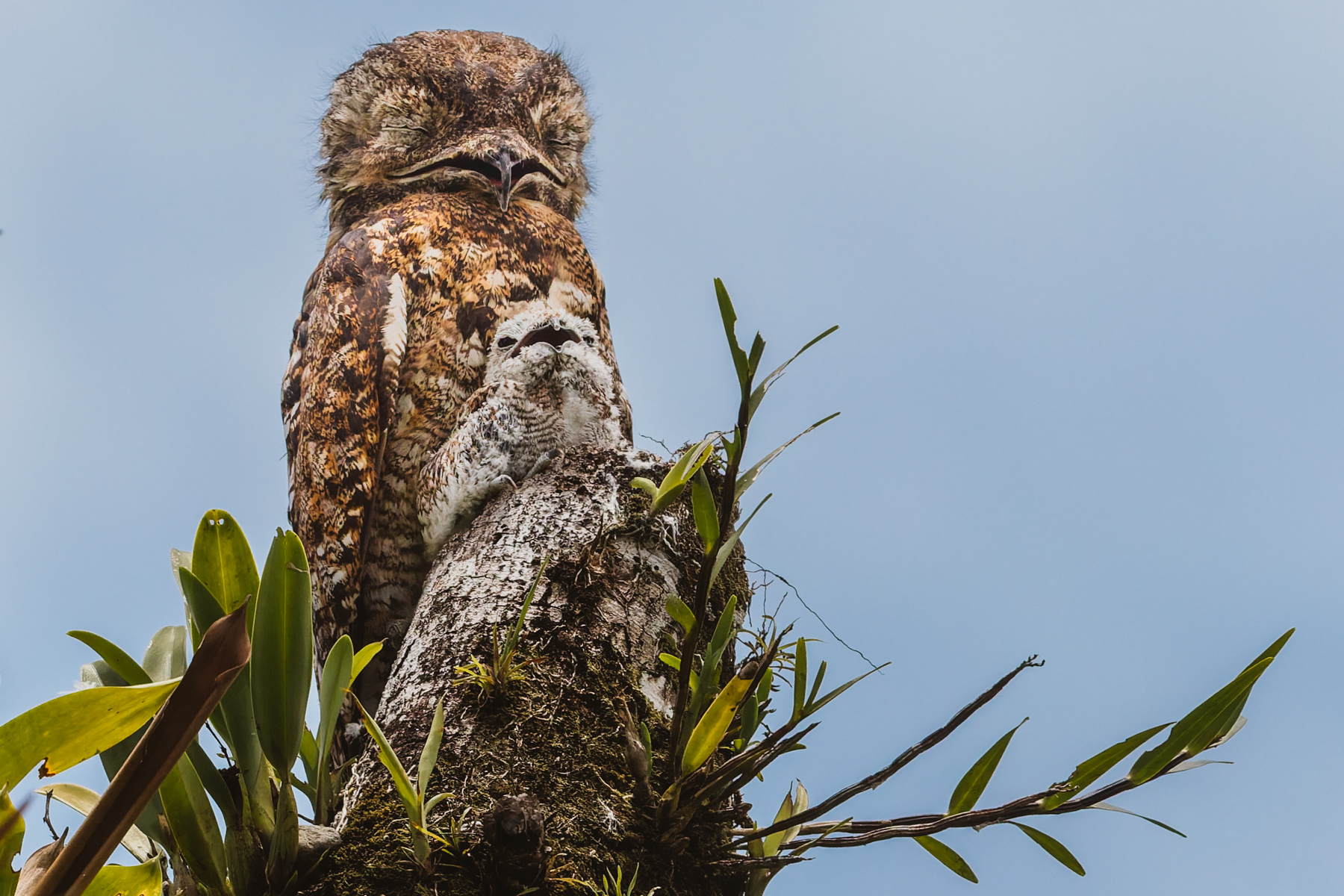
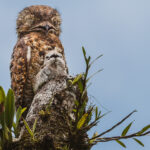
A proud Great Potoo mother guards her chick in Costa Rica's Heredia Province. These are shy and solitary birds, often unseen because they resemble the tip of the tree stumps they love to perch on (image by Gin Wilde)
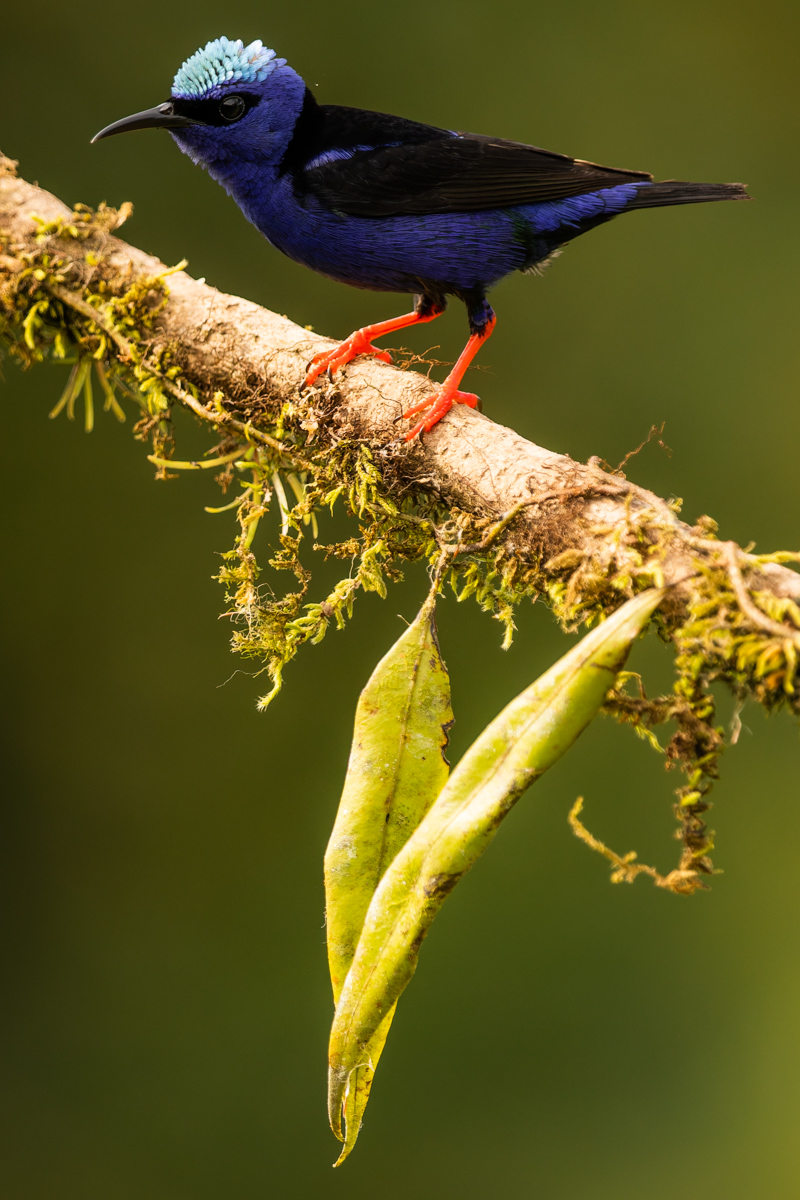
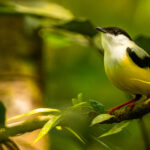
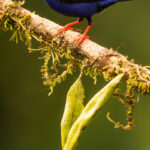
There's something about the Red-legged Honeycreeper (a very charming tanager found in Costa Rica) that makes me think of a cartoon character. Maybe it's the black mask over his eyes, superhero style? (image by Gin Wilde)
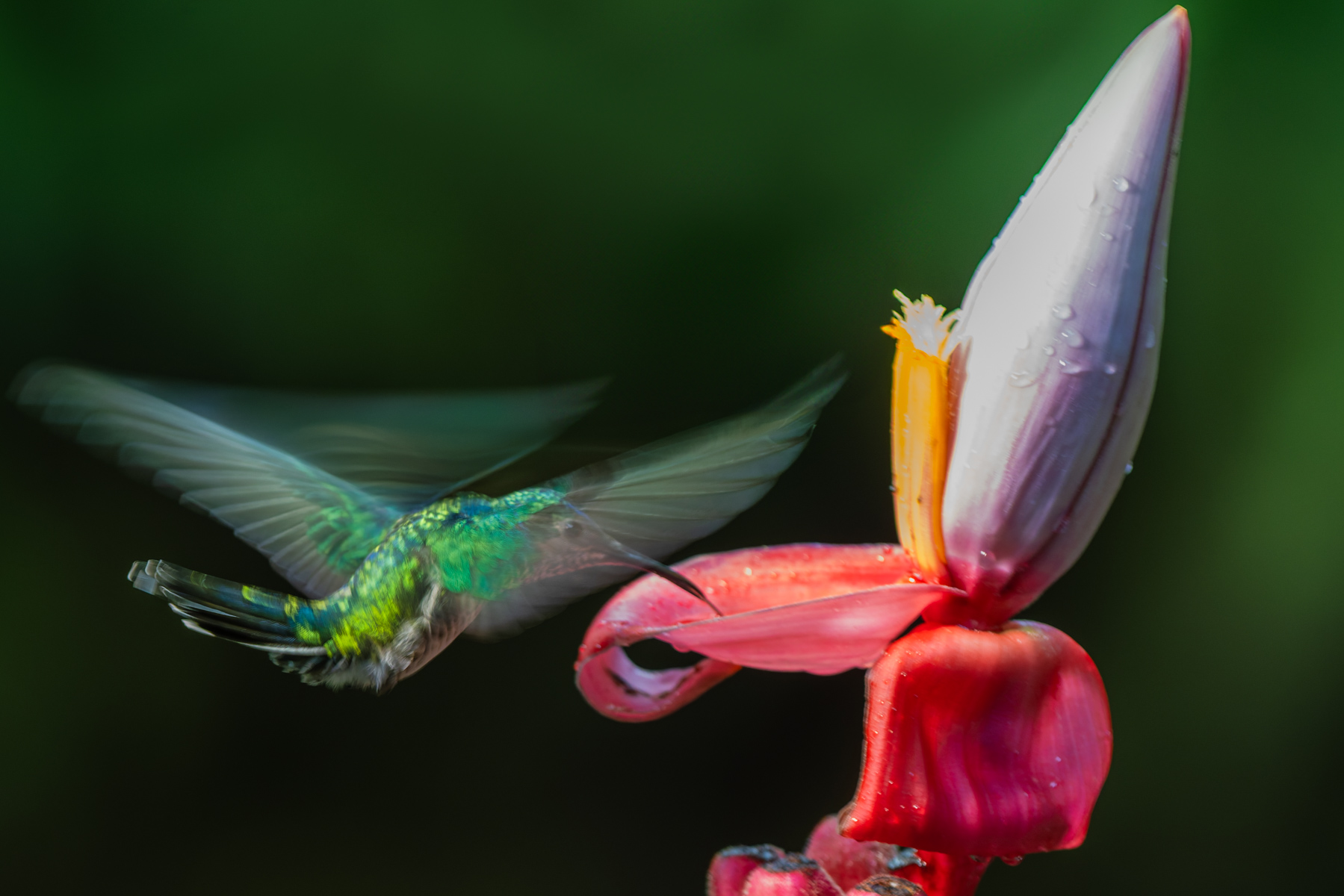
A female White-necked Jacobin, photographed at 1/160 second, rather than the normal 1/4000 shutter speed required for sharp hummingbird images. With wing-flap speeds of 80 beats a second (rising to 200 beats during diving and courtship) these birds are a gift to photograph (image by Gin Wilde)
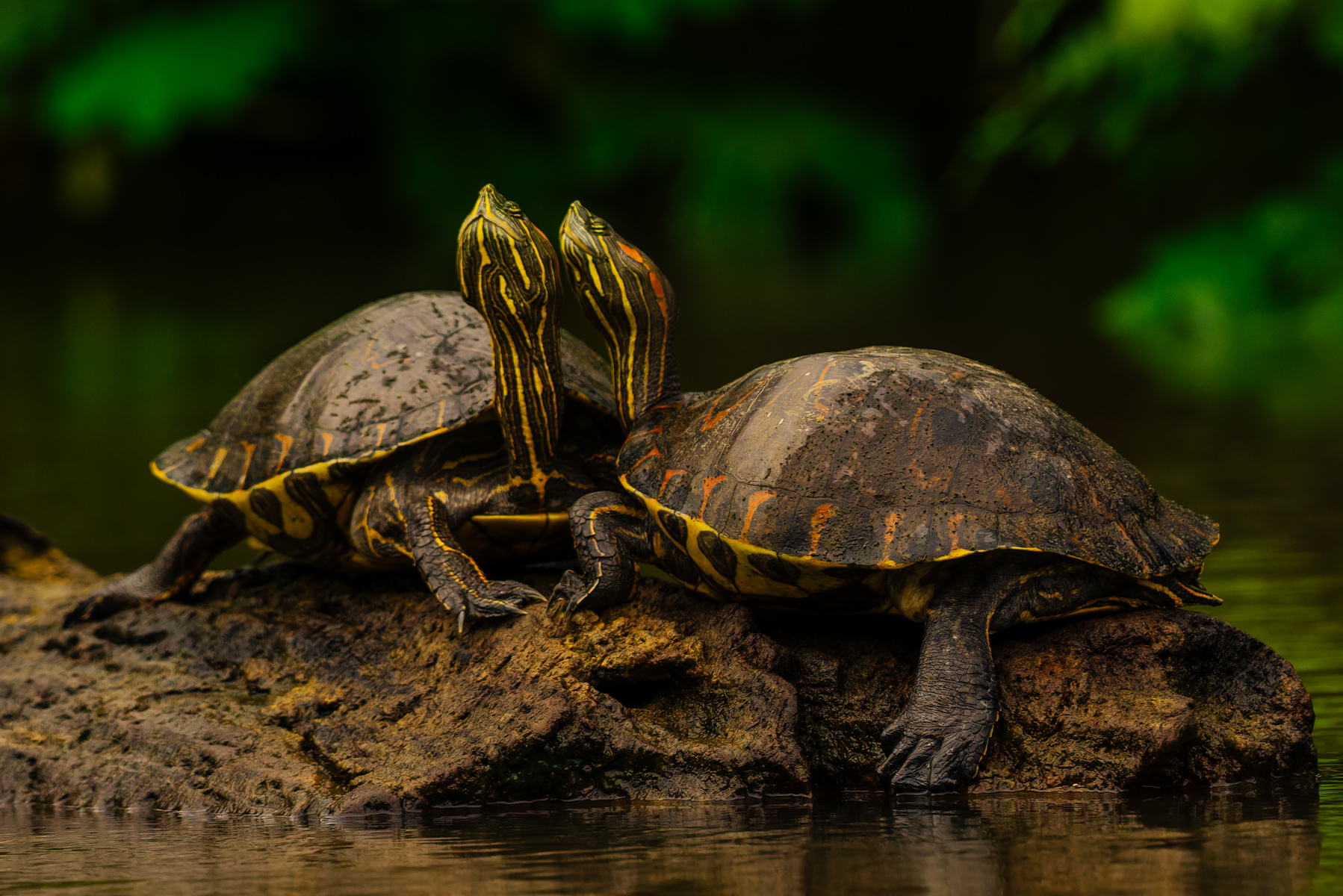
A pair of Nicaraguan Slider Turtles - endemic to Nicaragua and Costa Rica - cozy up to each other in the Cano Negro Wildlife Reserve (image by Gin Wilde)
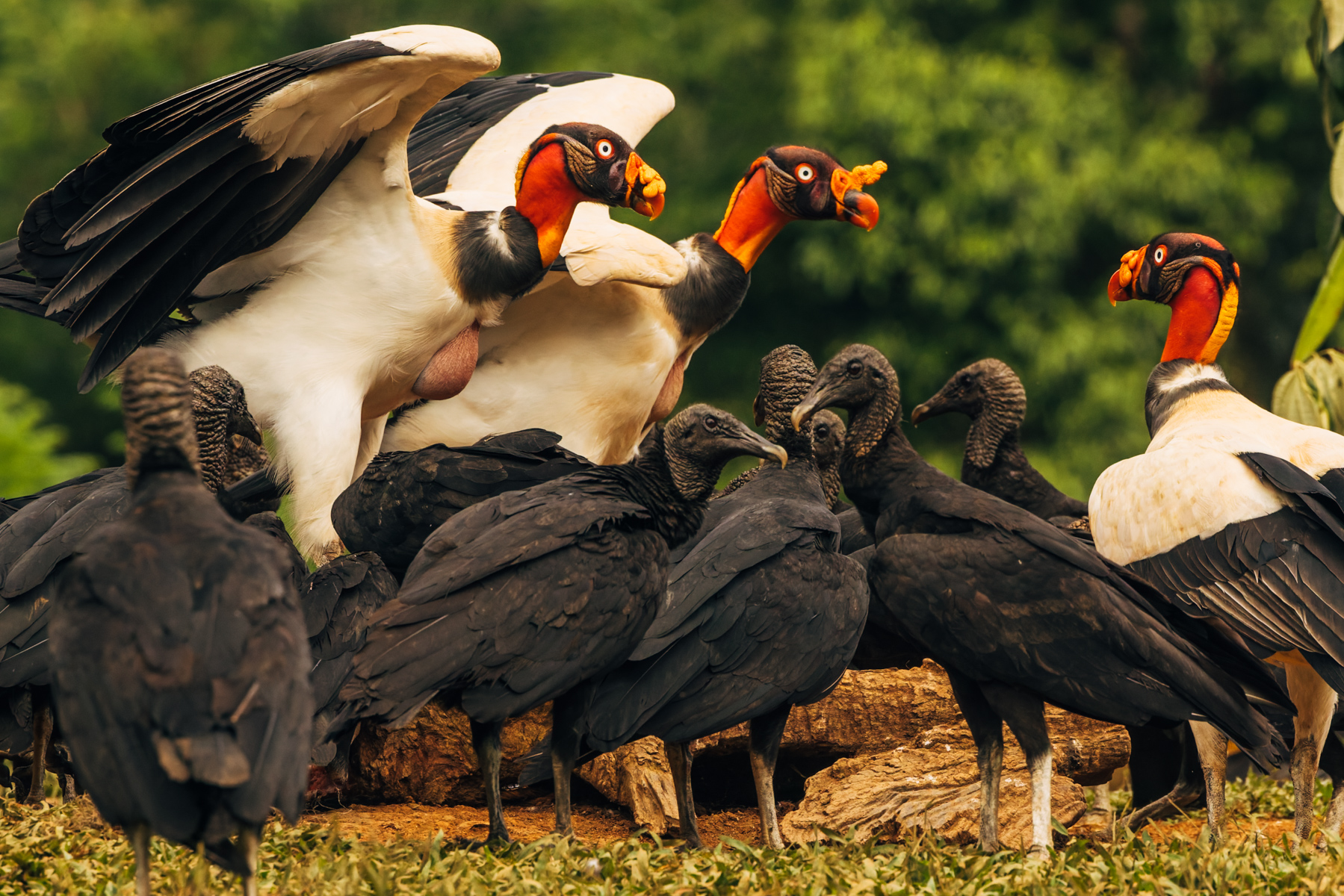
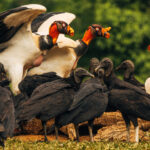
'We'll show you who's King here!' A trio of King Vultures lord over their Black Vulture cousins in Costa Rica. These great hulking raptors (with a strikingly colourful head and neck) - are one of the largest New World vultures, second only to condors (image by Gin Wilde)
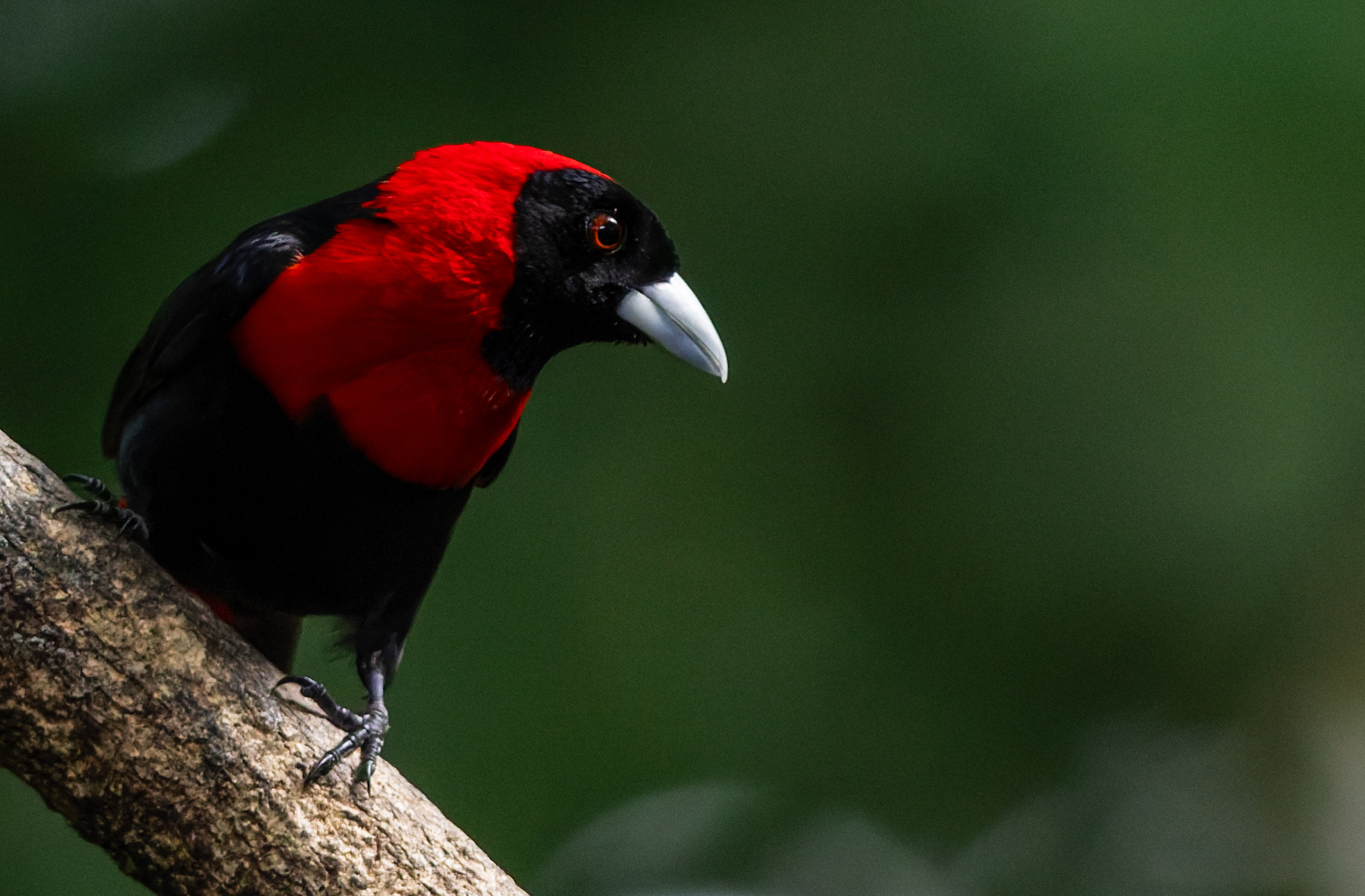
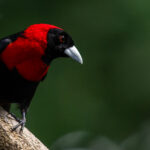
Maybe its the velvety-looking scarlet hood that makes this Crimson-collared Tanager look just like a Catholic Cardinal. Regardless, it is a very handsome bird (image by Gin Wilde)
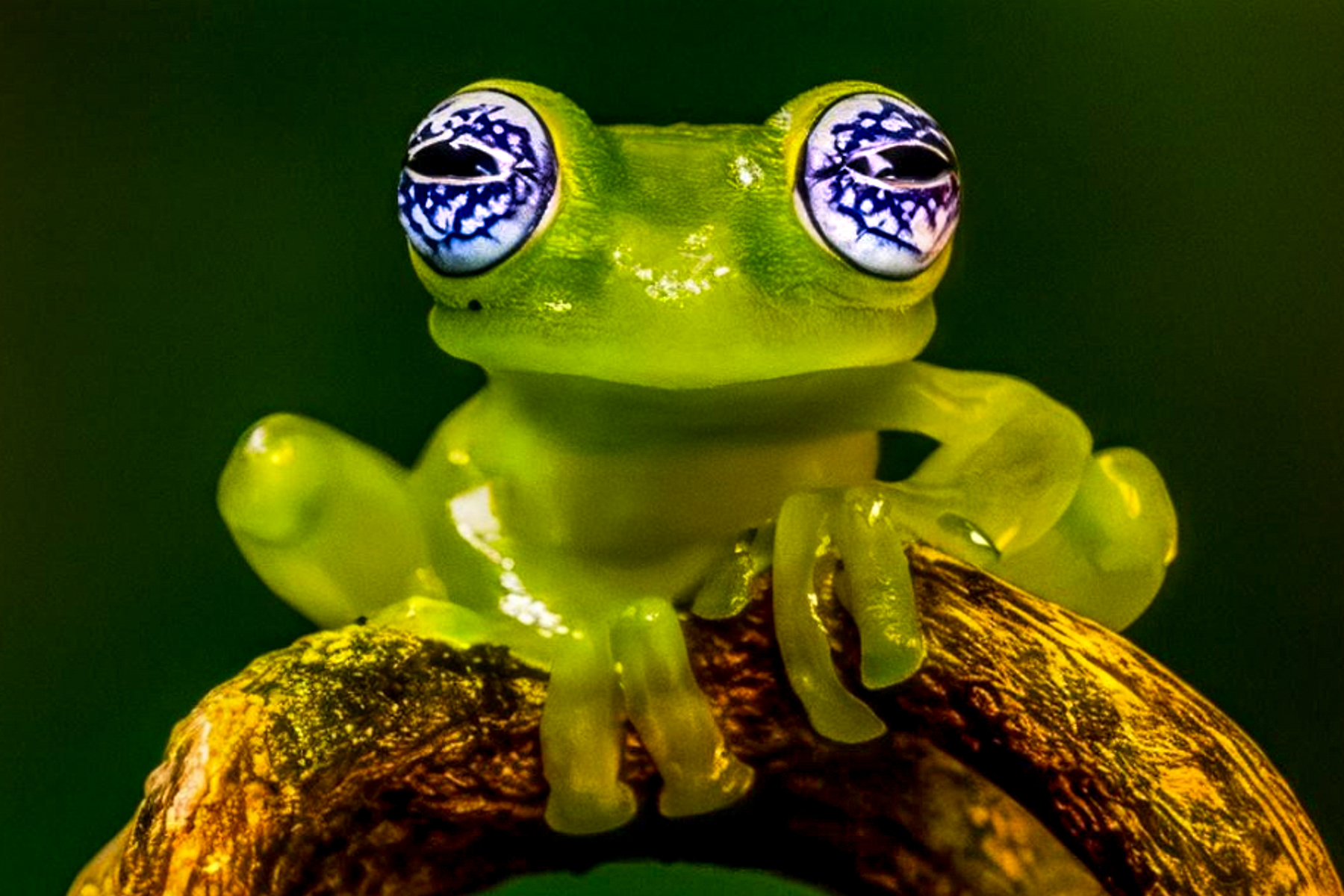
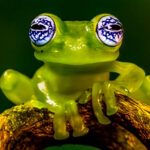
'Look into my eyes...'! Like all glass frogs, the Ghost Glass Frog has semi-transparent skin enabling them to blend into leaves. But its hypnotically cryptic eyes are perhaps the most stunning of all Central and South American frogs (image by Gin Wilde)
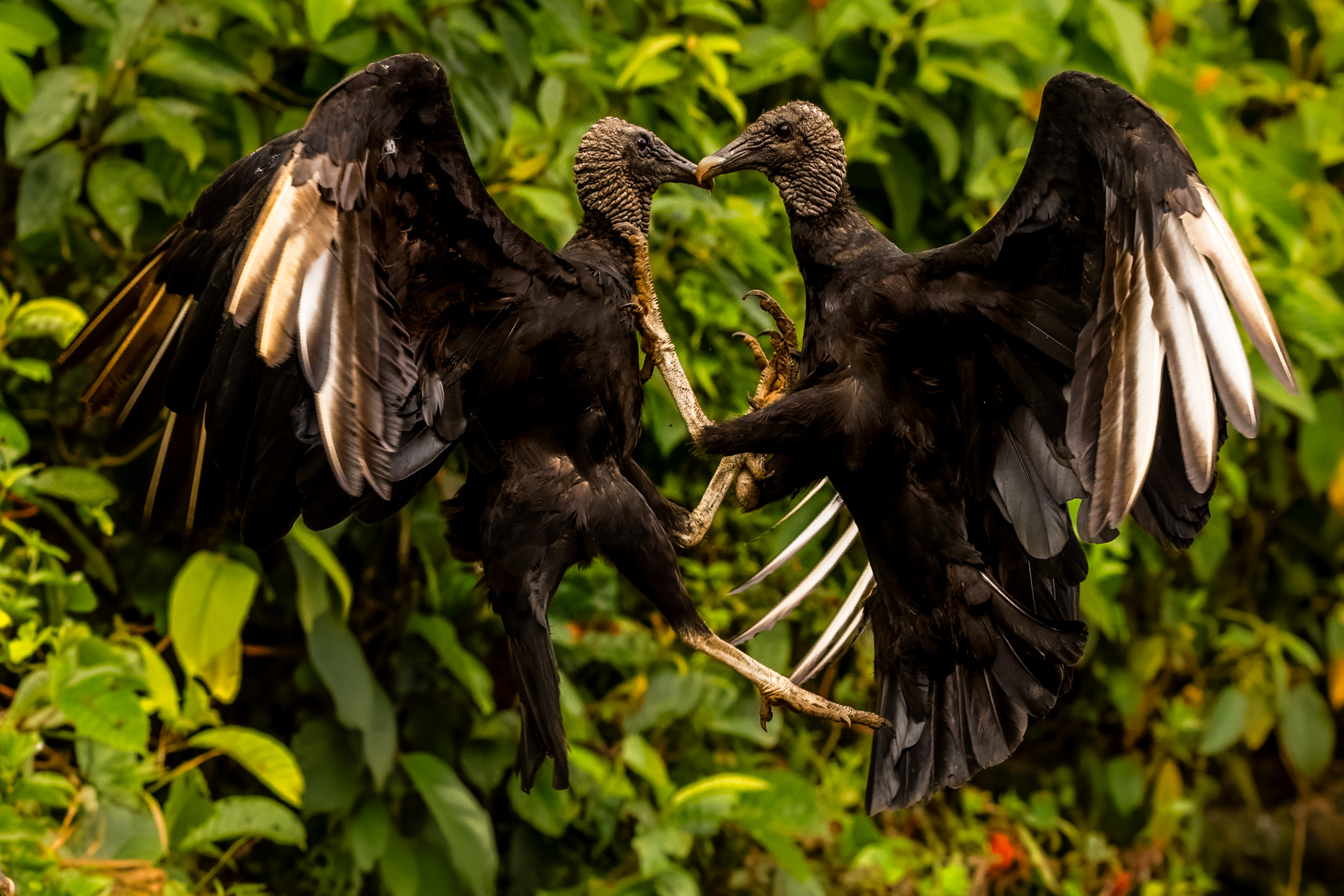
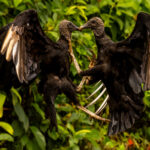
A pair of Black Vultures clash over a carcass below. Despite a moderate wingspan of 1.5 metres (small for a vulture) Black Vultures are surprisingly imposing birds close-up (image by Gin Wilde)
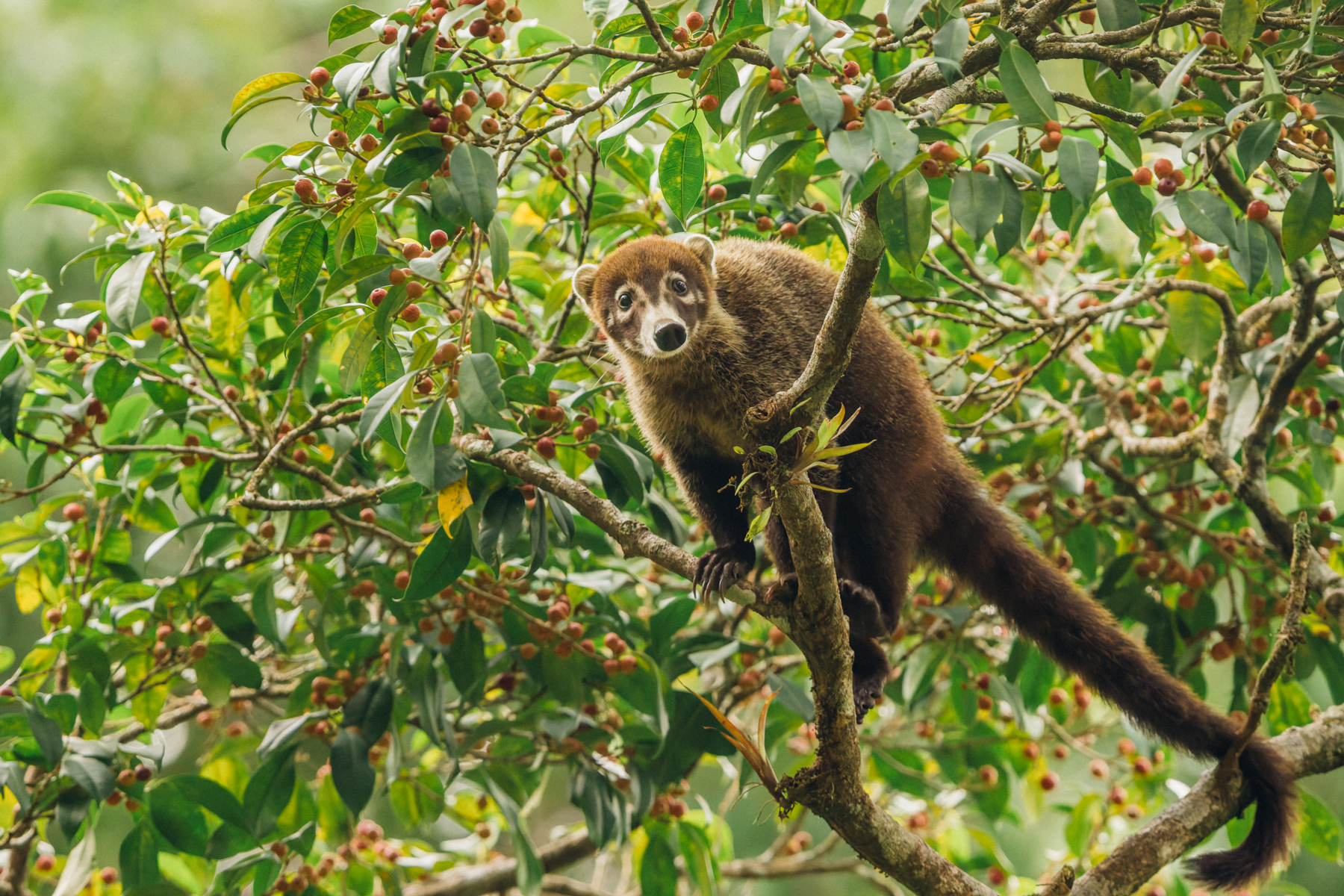
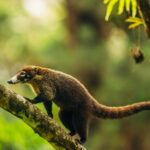
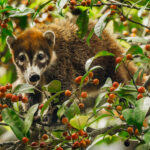
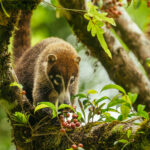
'Busted!' A cheeky-faced White-nosed Coati, snapped moments after he gorged on berries from this Hackberry tree (image by Gin Wilde)
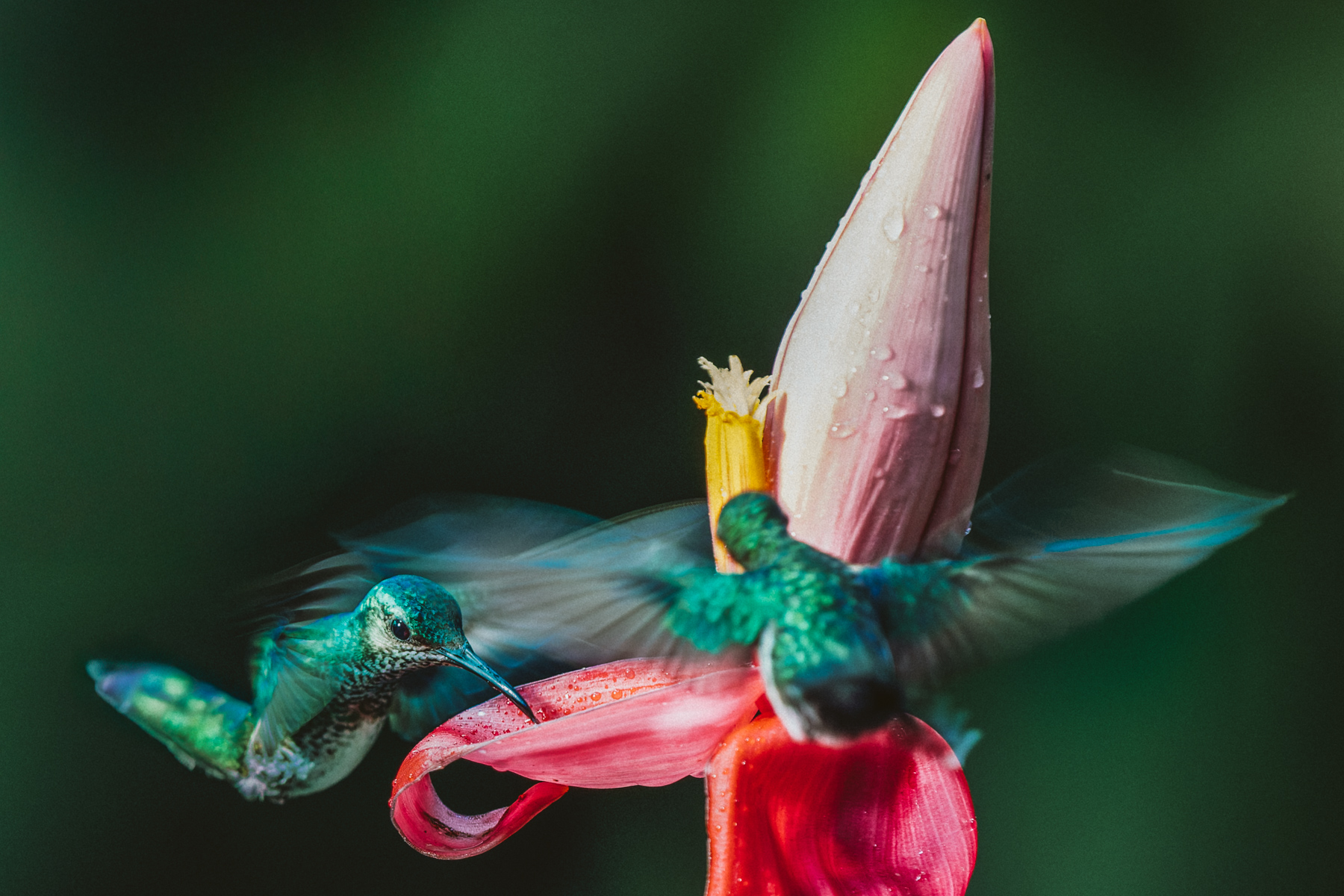
Two female White-necked Jacobins - one of the more tolerant and accommodating hummingbird species - sip nectar together in this slow shutter speed shot (image by Gin Wilde)
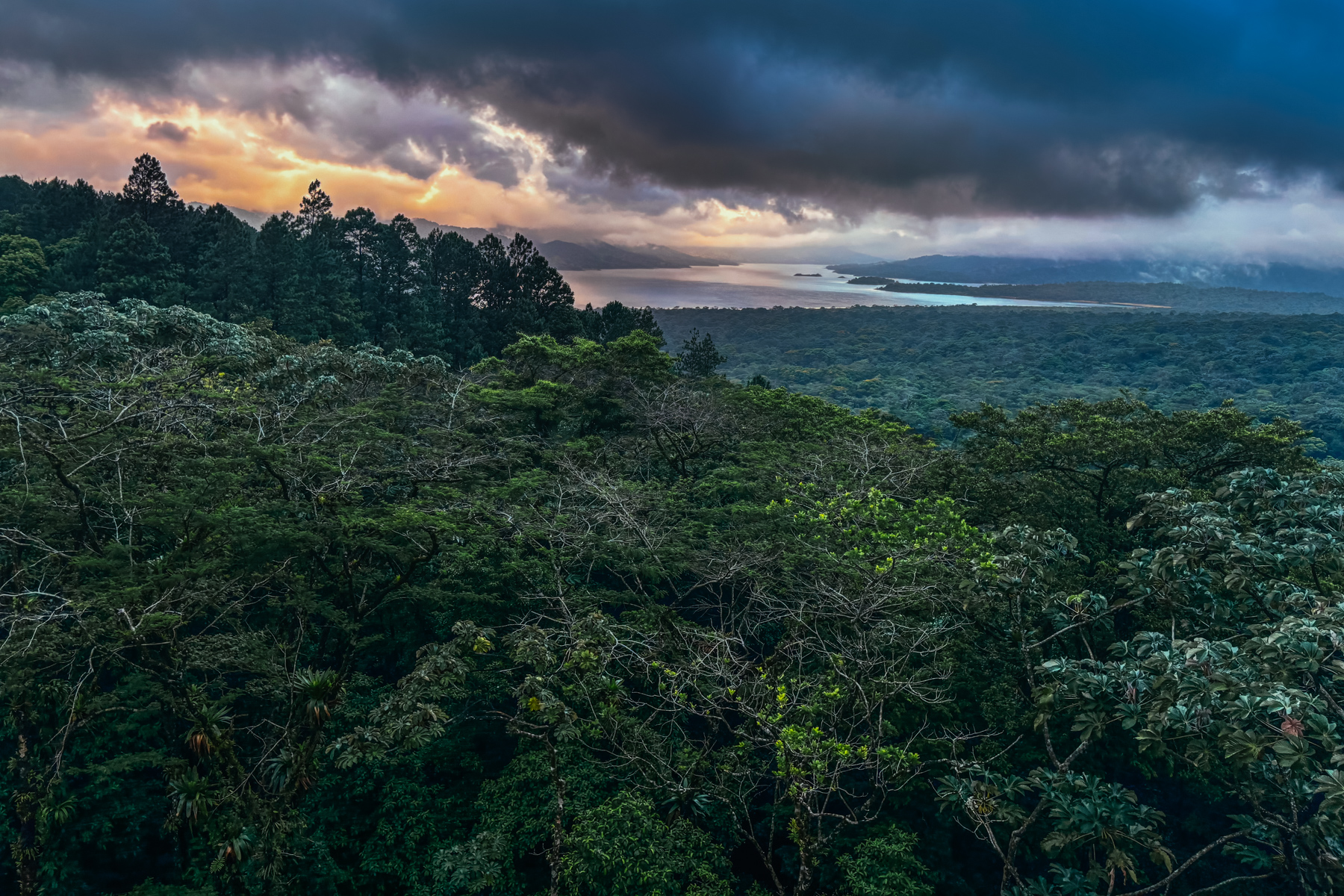
It's easy to become enamoured with the moody skies in the lowlands of Arenal Volcano (image by Gin Wilde)
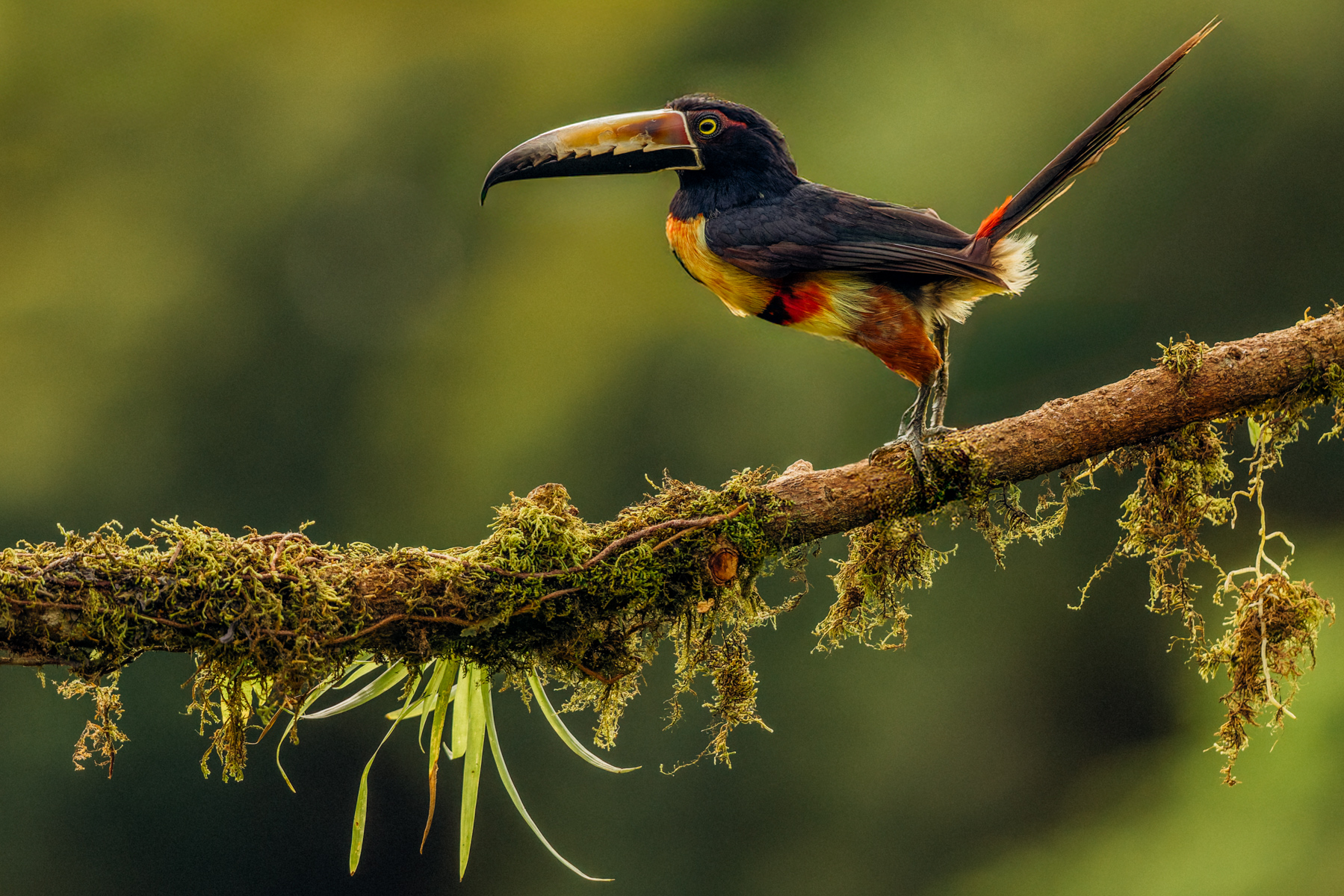
The wonderfully social Collared Aracari is always a pleasing toucan to spot in Costa Rica. Collared Aracaris roost communally, with up to seven snoozing in a cavity overnight (image by Gin Wilde)
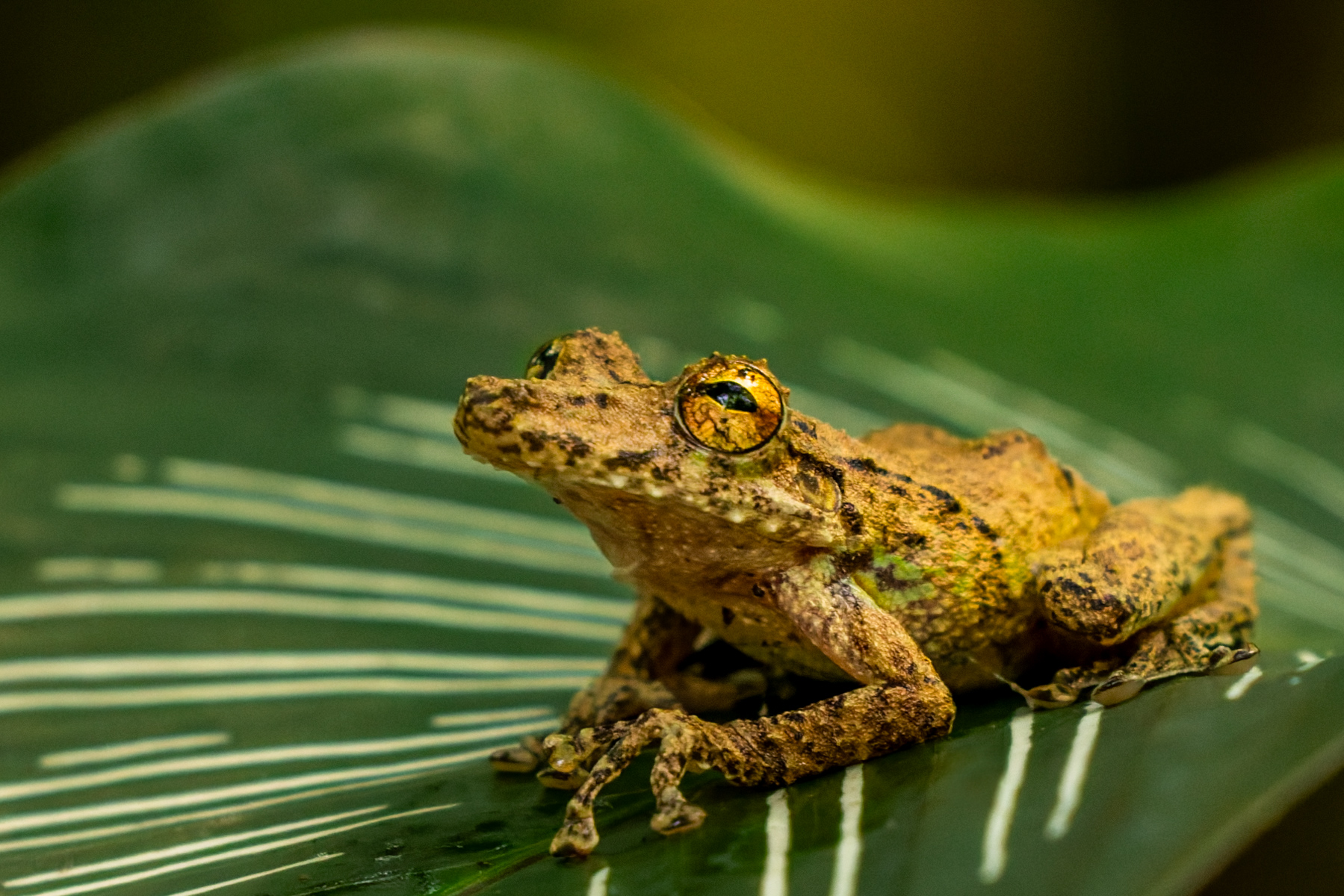
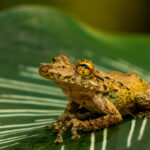
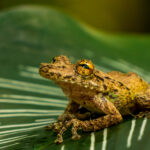
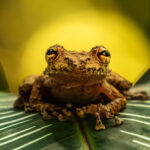
Despite its fairly dull colouration, the Boulenger's Snouted Tree Frog has stunning golden eyes. These frogs make their home in tropical and sub-tropical moist lowland forests (image by Gin Wilde)
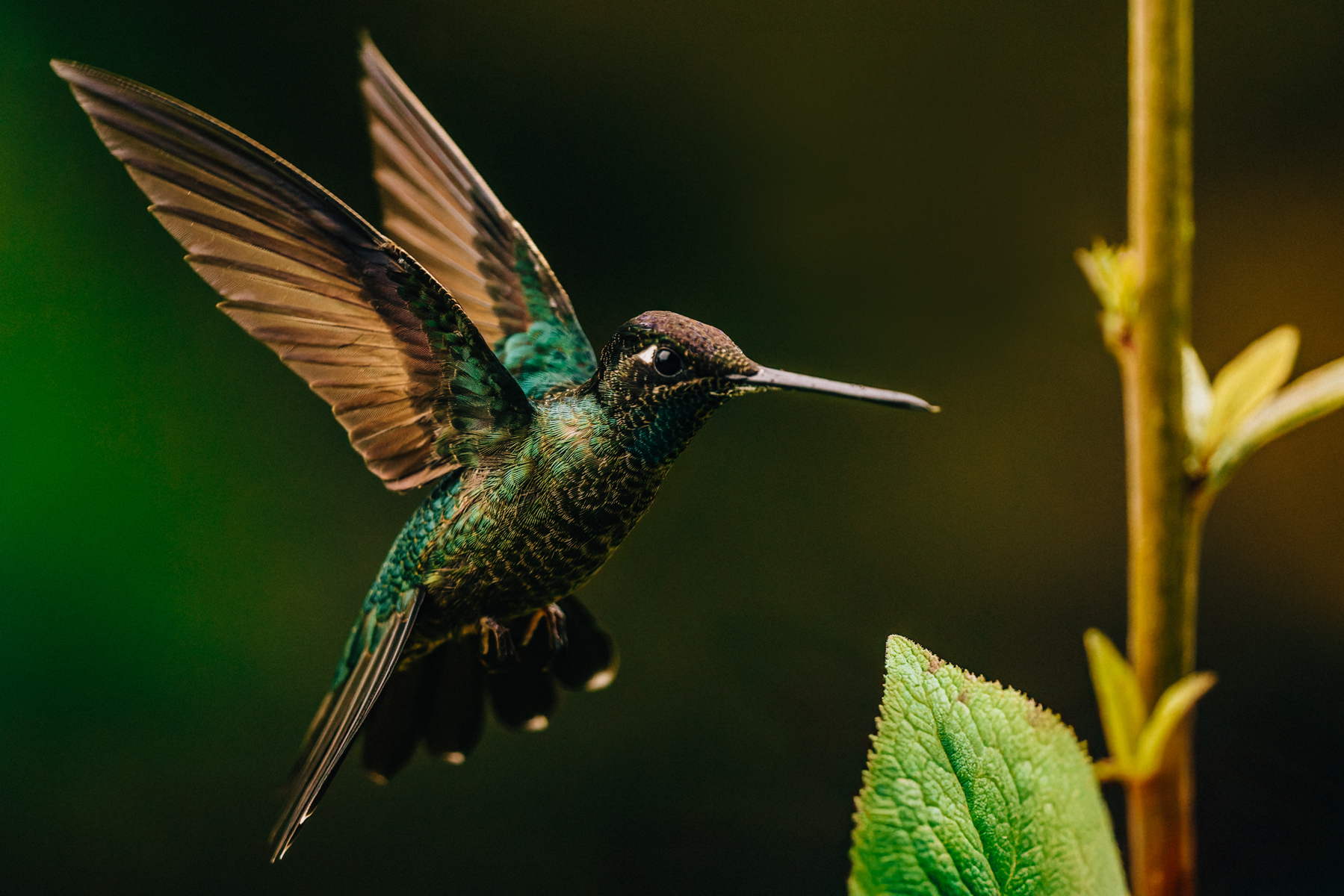
Portrait of a male Talamanca Hummingbird, 'steampunk art style' showing its metallic colouration and green and brown gloss (image by Gin Wilde)
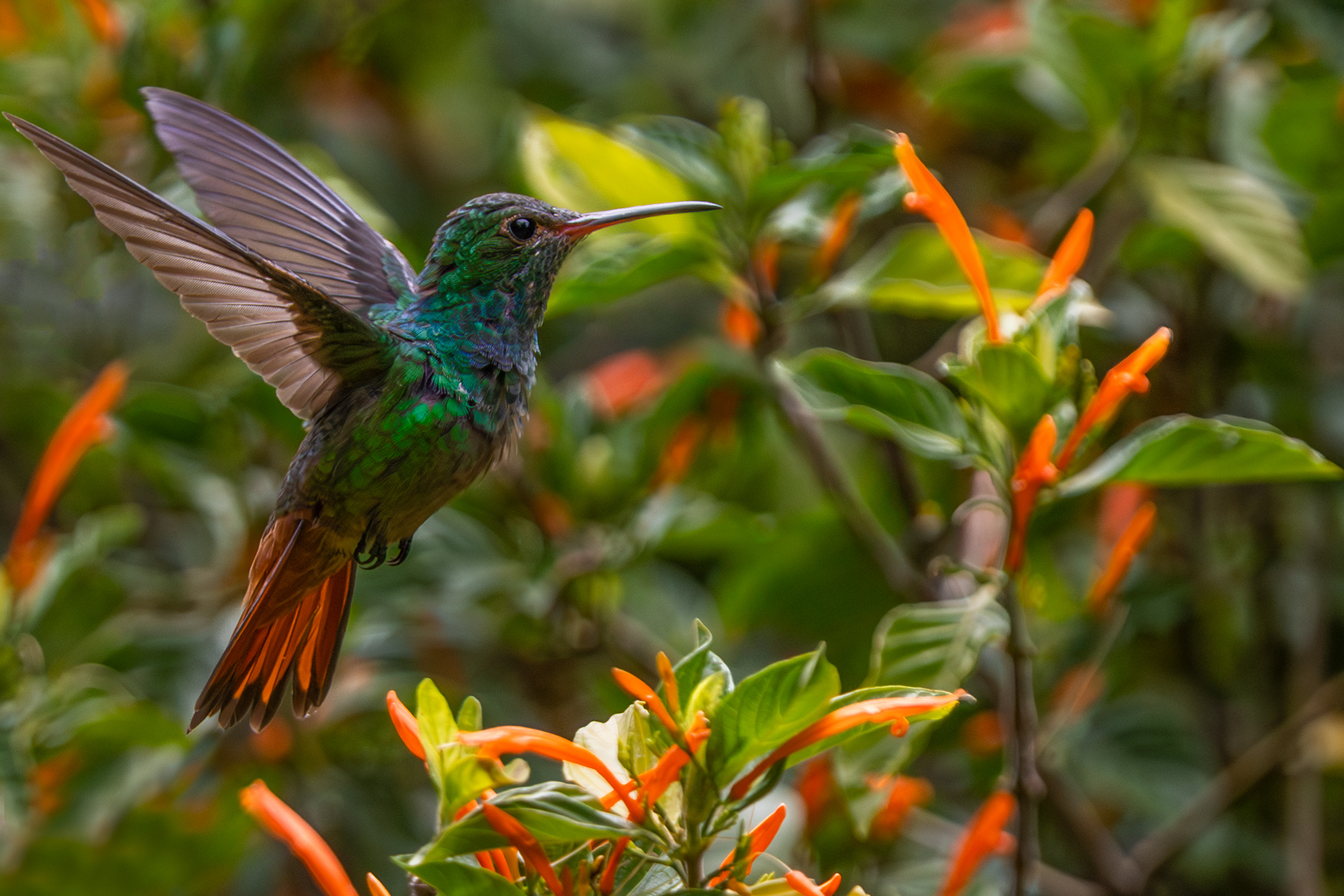
A Rufous-tailed Hummingbird dwarfed by the leaves of a tropical Ti plant in the wonderful gardens of the Hotel Bougainvillea, near San Jose (image by Gin Wilde)
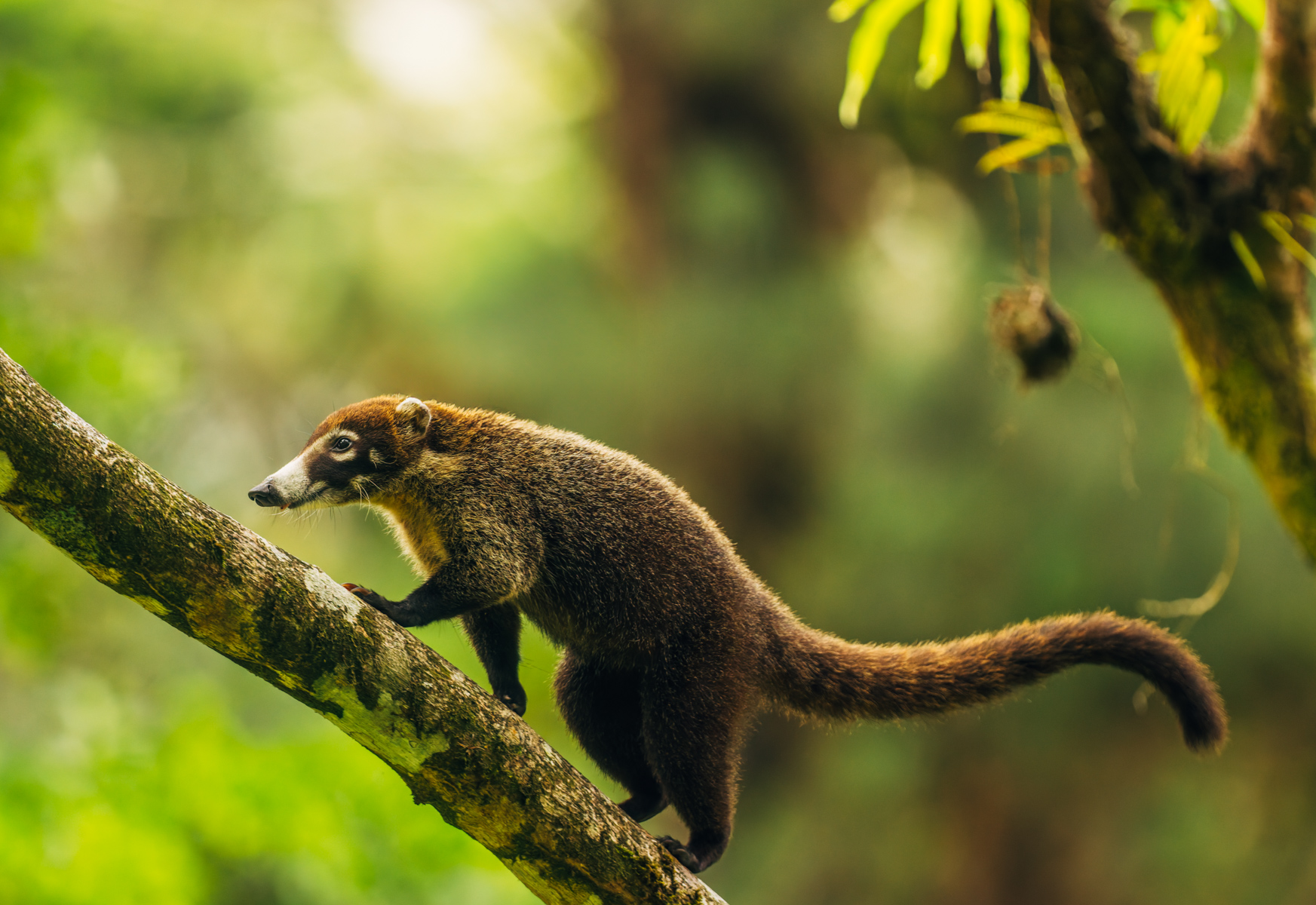
'Up, up, up, goes the White-nosed Coati!' Up to join its pals to gorge on tasty berries! (image by Gin Wilde)
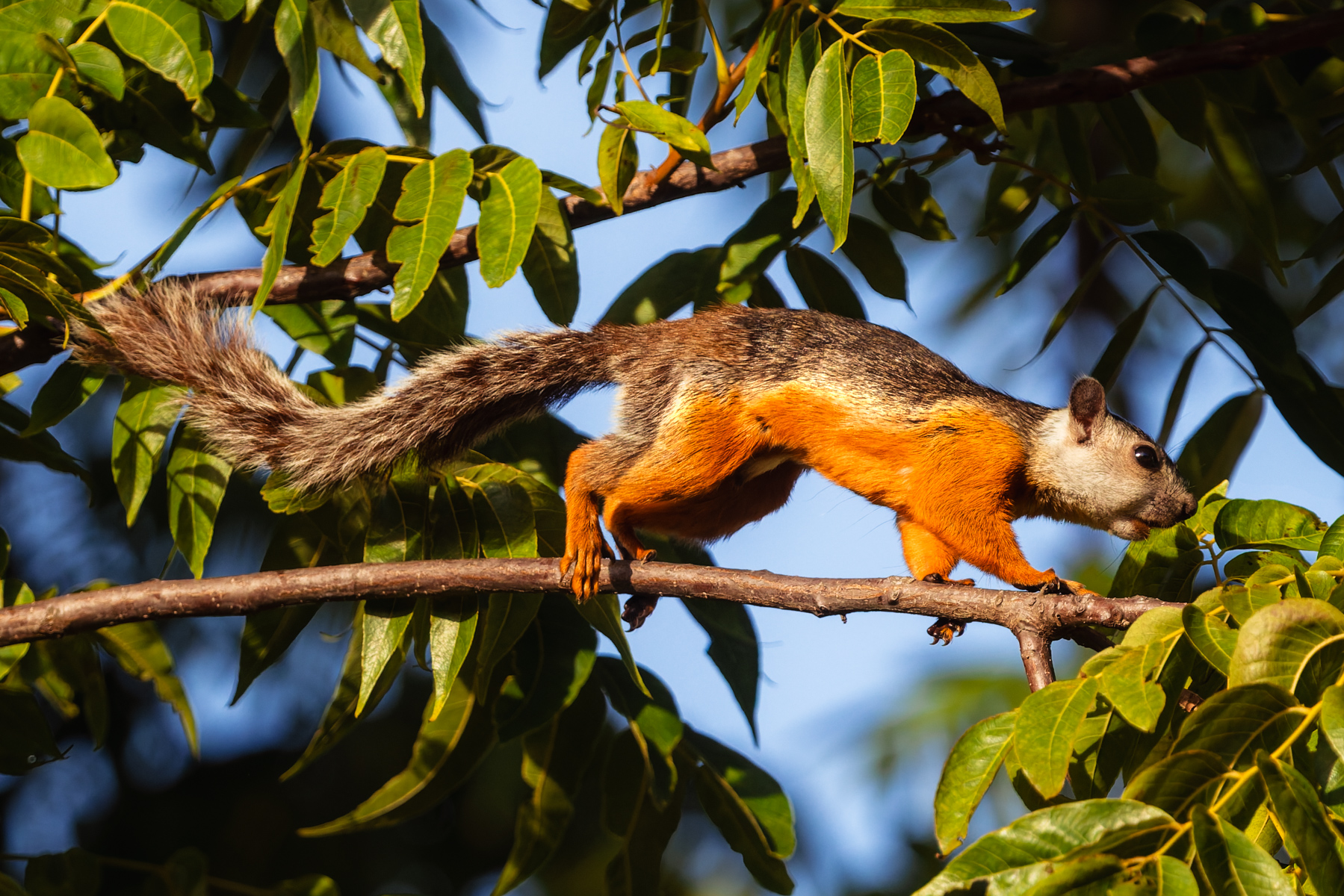
Costa Rica's Variegated Squirrels come in a wide variety of patterns and shades; some dull brown to grey, others sporting a more striking block colouration of orange, white and dark (image by Gin Wilde)
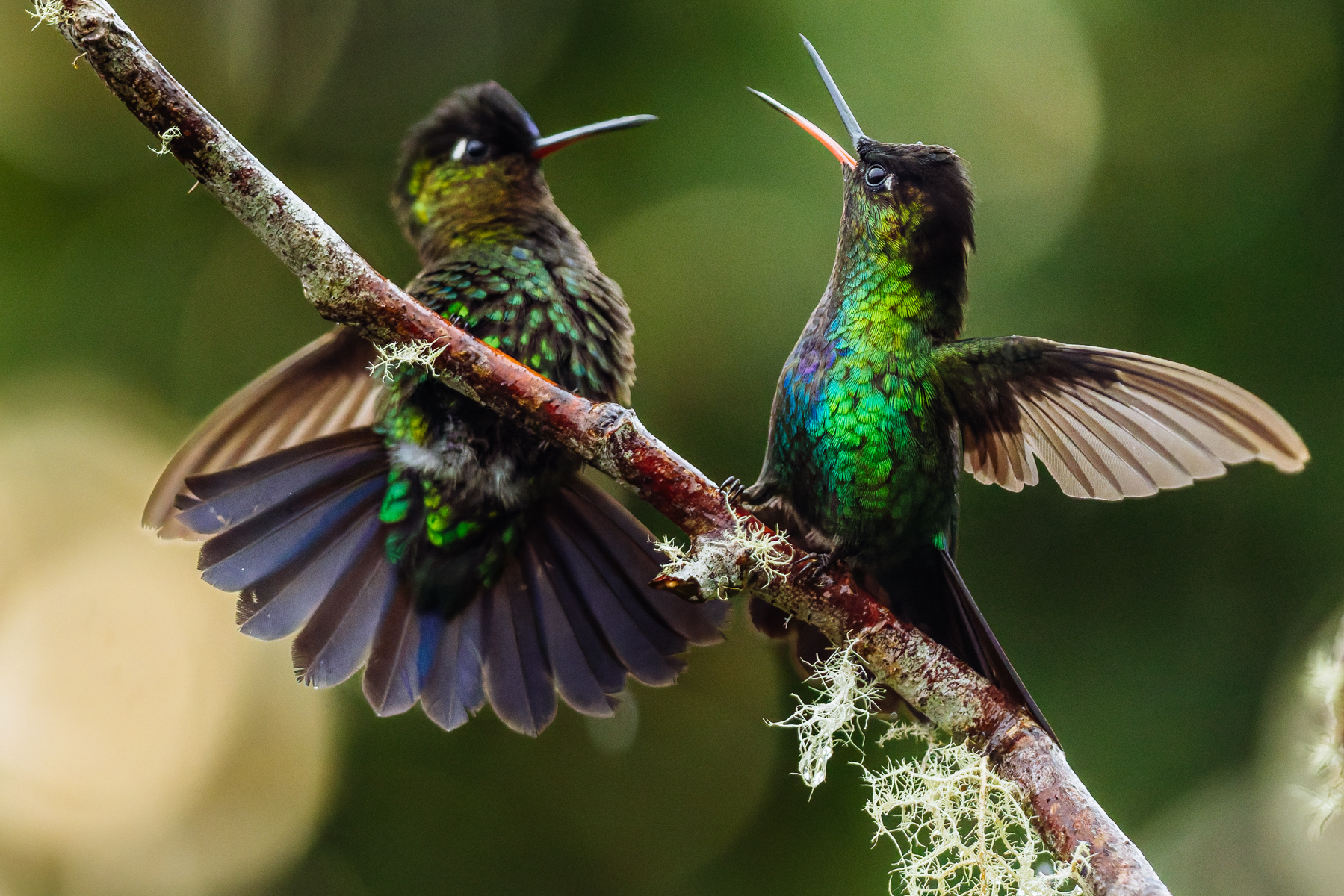
Fiery by name, fiery by nature! Spirited Fiery-throated Hummingbirds quarrel over territory. Visitors to the cloud forests of Costa Rica get used to the feisty behaviour of these beautiful birds (image by Gin Wilde)
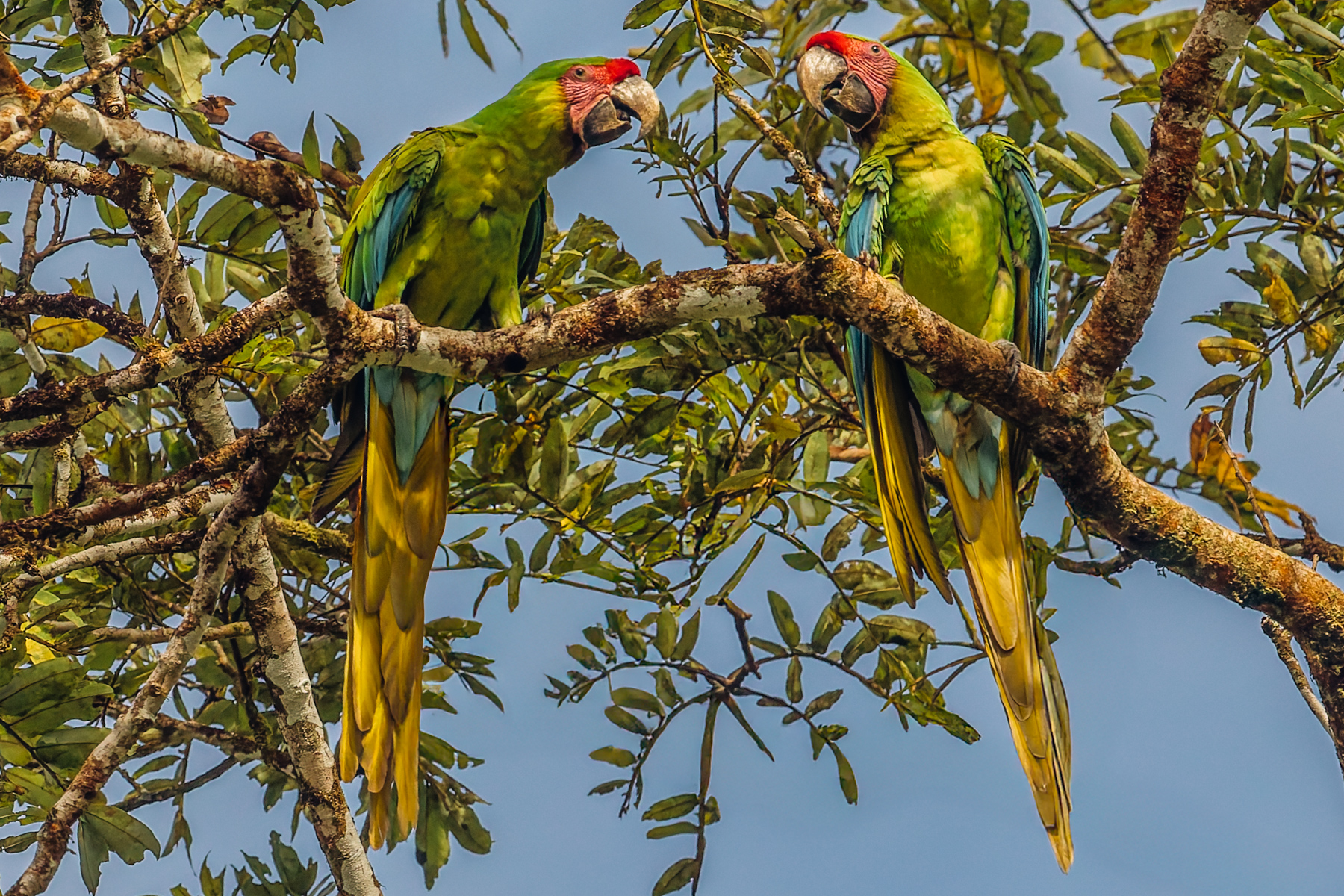
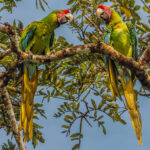
Great Green Macaws are enormous lime-green parrots with a strikingly long tail. Their loud, raucous calls can be heard from half a mile away (image by Gin Wilde)
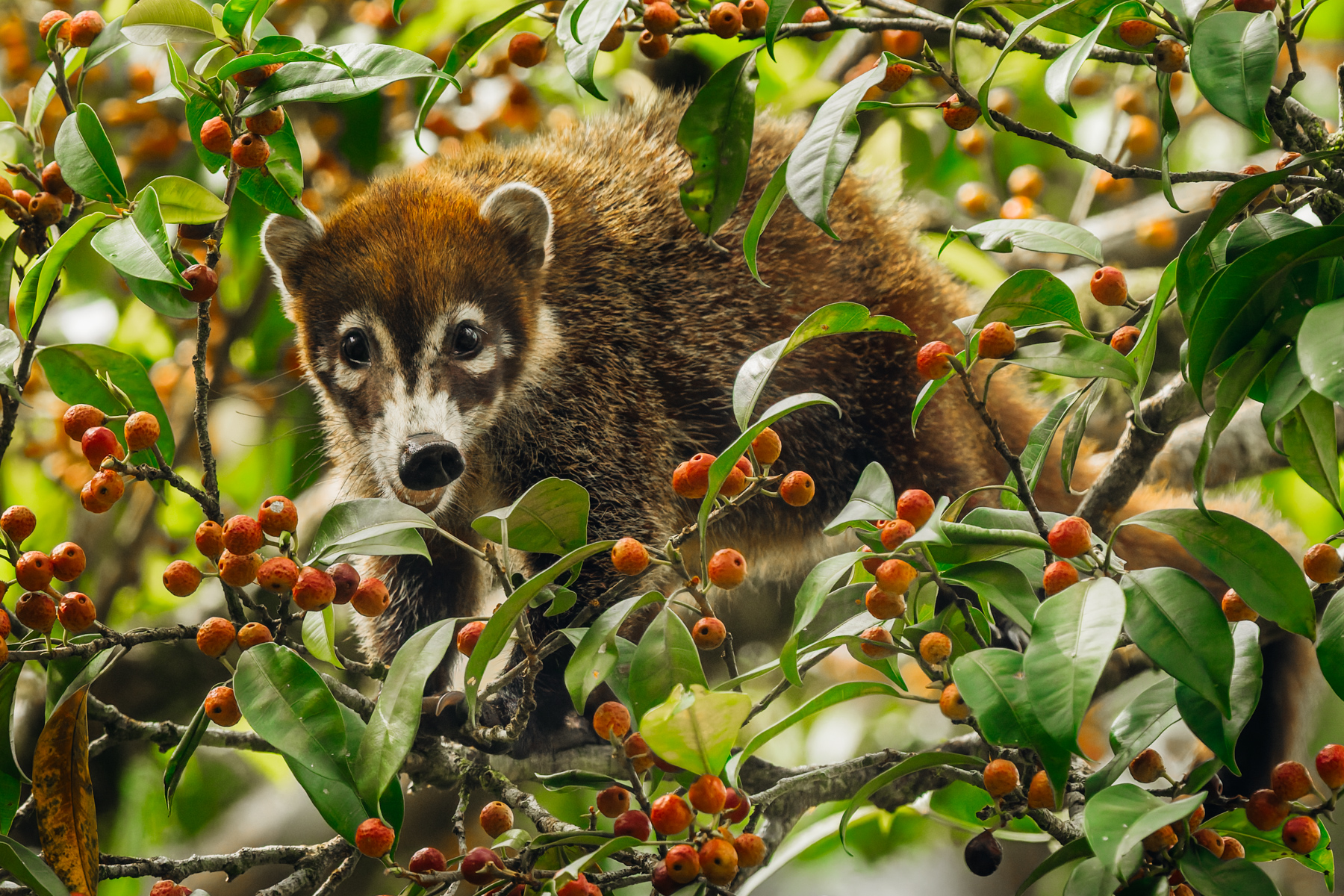
An adorable White-nosed Coati (sometimes also known as the coatimundi) raids the berries of ornamental trees in the foothills of Costa Rica's Arenal Volcano (image by Gin Wilde)
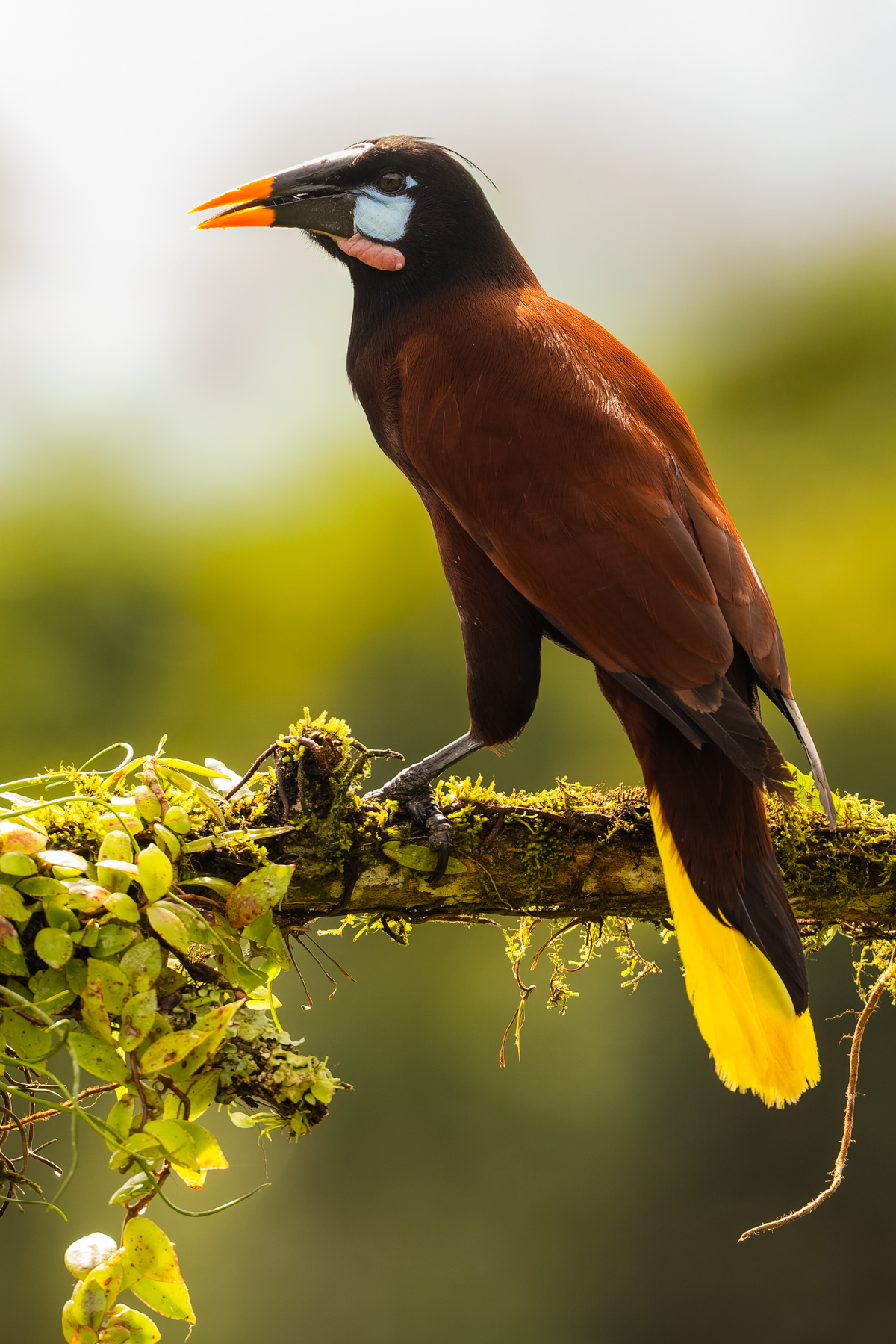
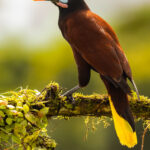
The spectacular Montezuma Oropendola. A gorgeous tropical lowland bird - with a name that goes out of its way to batter you with syllables (image by Gin Wilde)
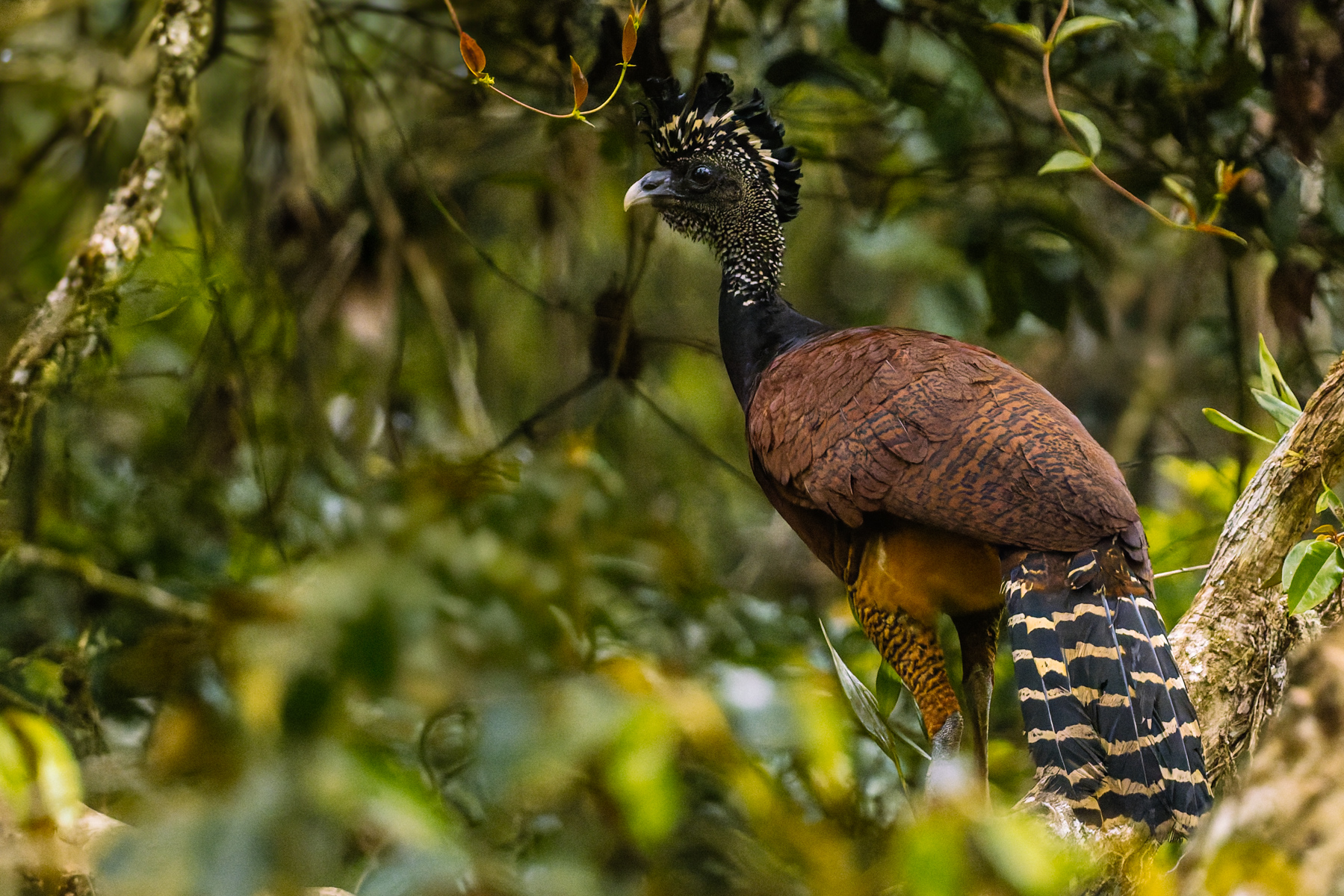
I love the handsome plumage of the female Great Curassow, photographed as she strutted through the undergrowth in the mid-altitude forests around the Arenal Volcano (image by Gin Wilde)
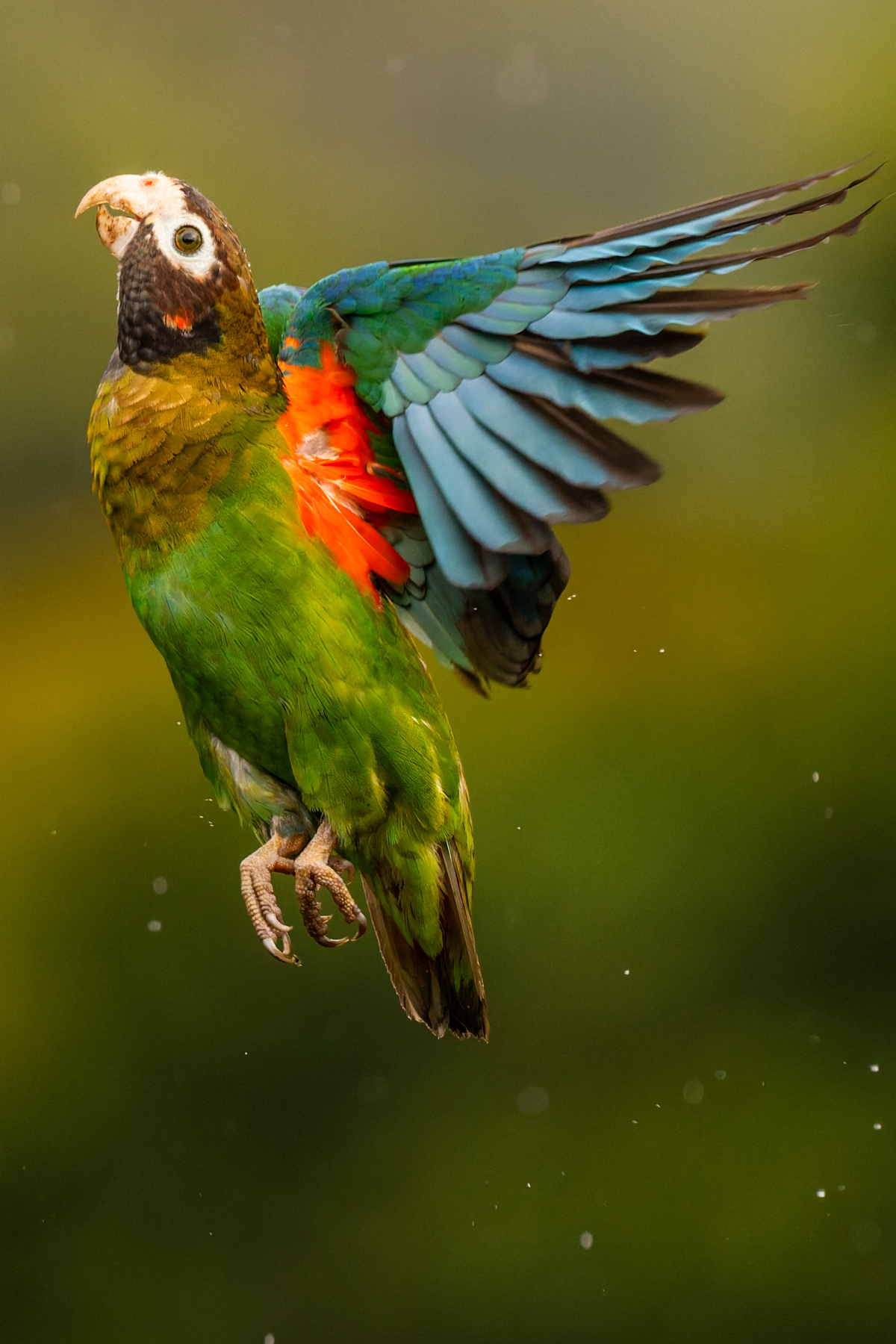
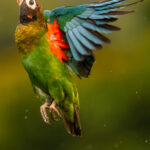
'And up and up we go!' A Brown-hooded Parrot soars skyward, displaying its child's paintbox colouration, at Laguna del Lagarto, Costa Rica (image by Gin Wilde)
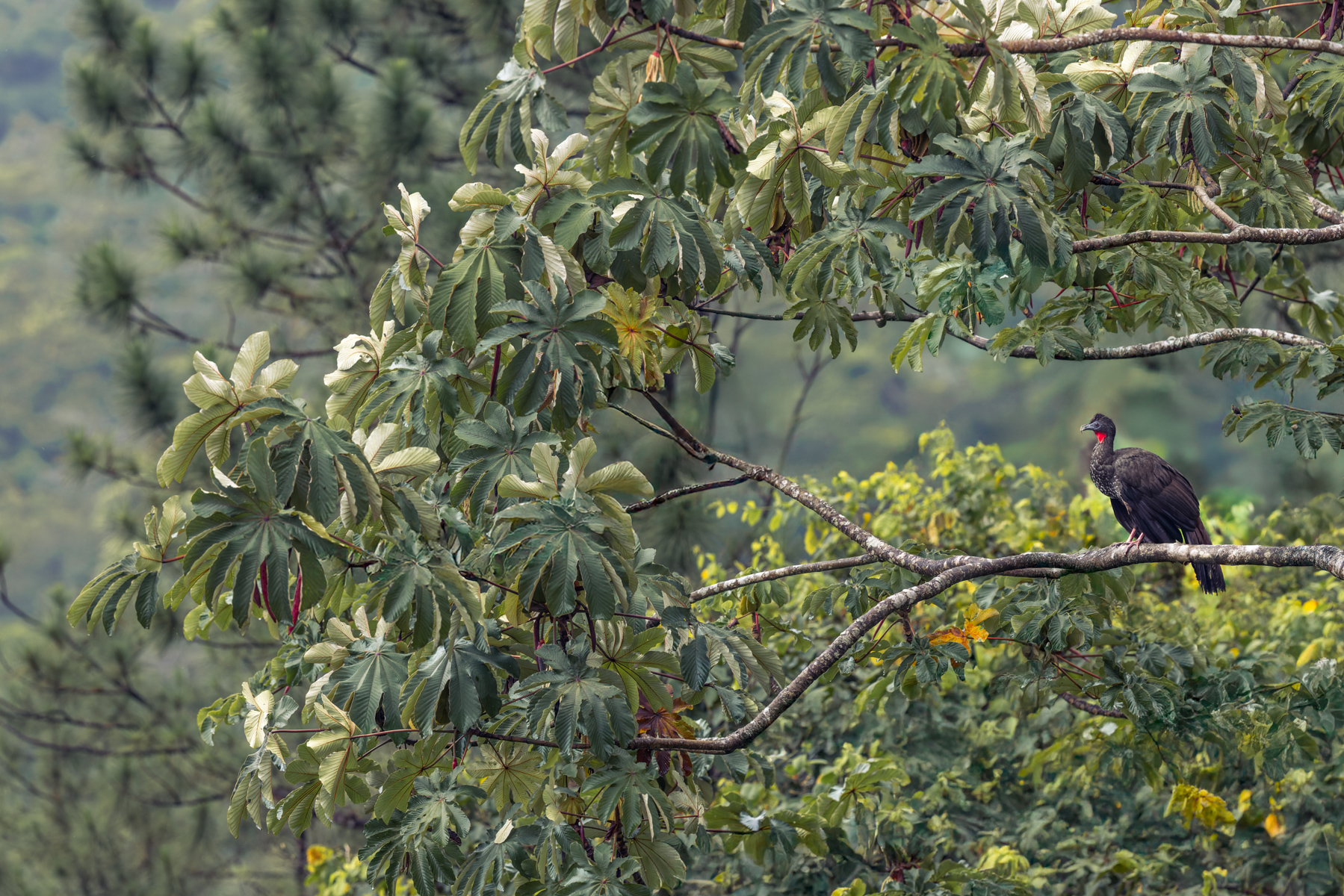
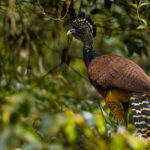
A female Crested Guan looks out over the Cecropia trees that characterise the middle altitude mist forests of Costa Rica (image by Gin Wilde)
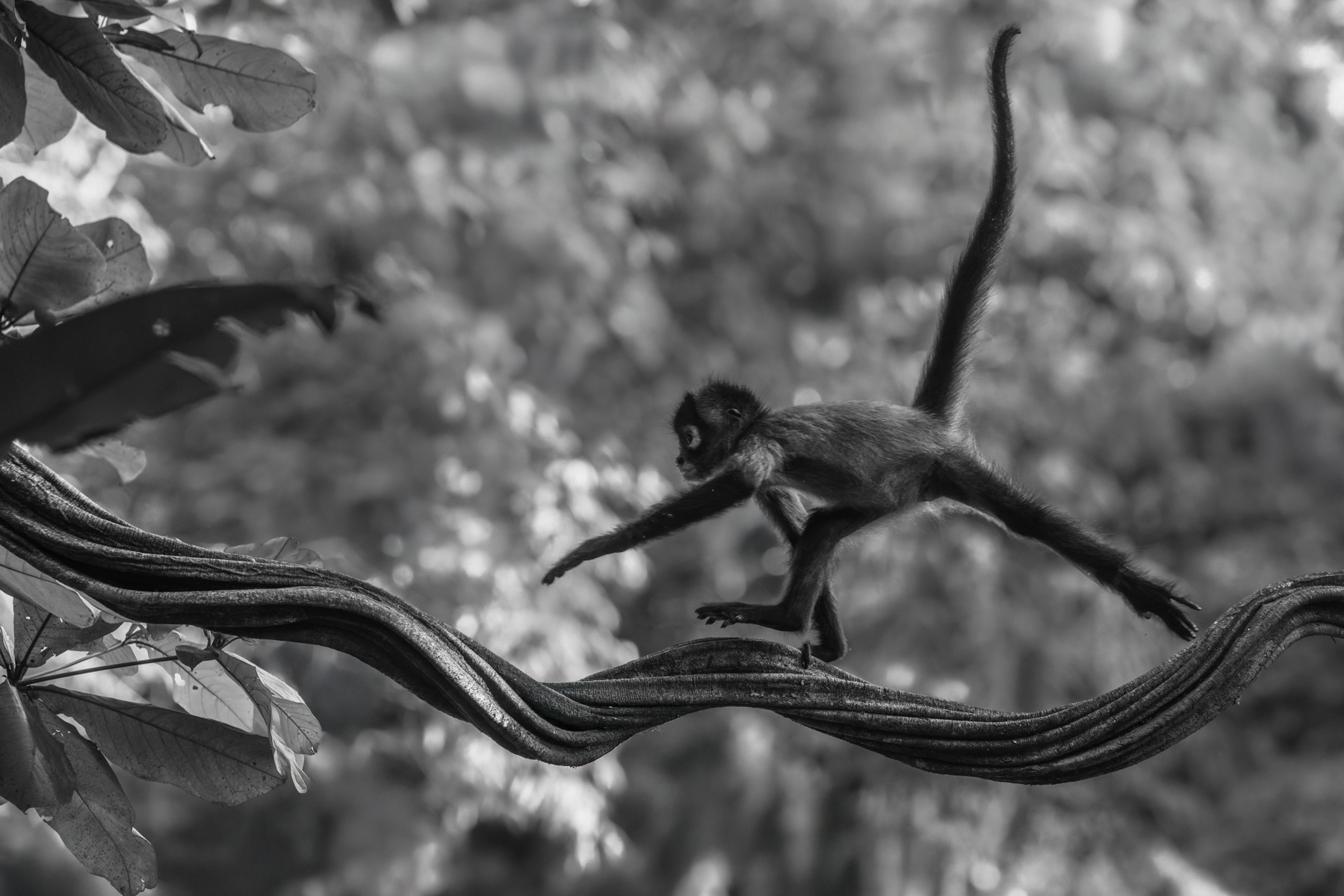
Come back, baby Spider Monkey?! An infant Geoffroy's Spider Monkey dashes back to the safety of its troop (image by Gin Wilde)
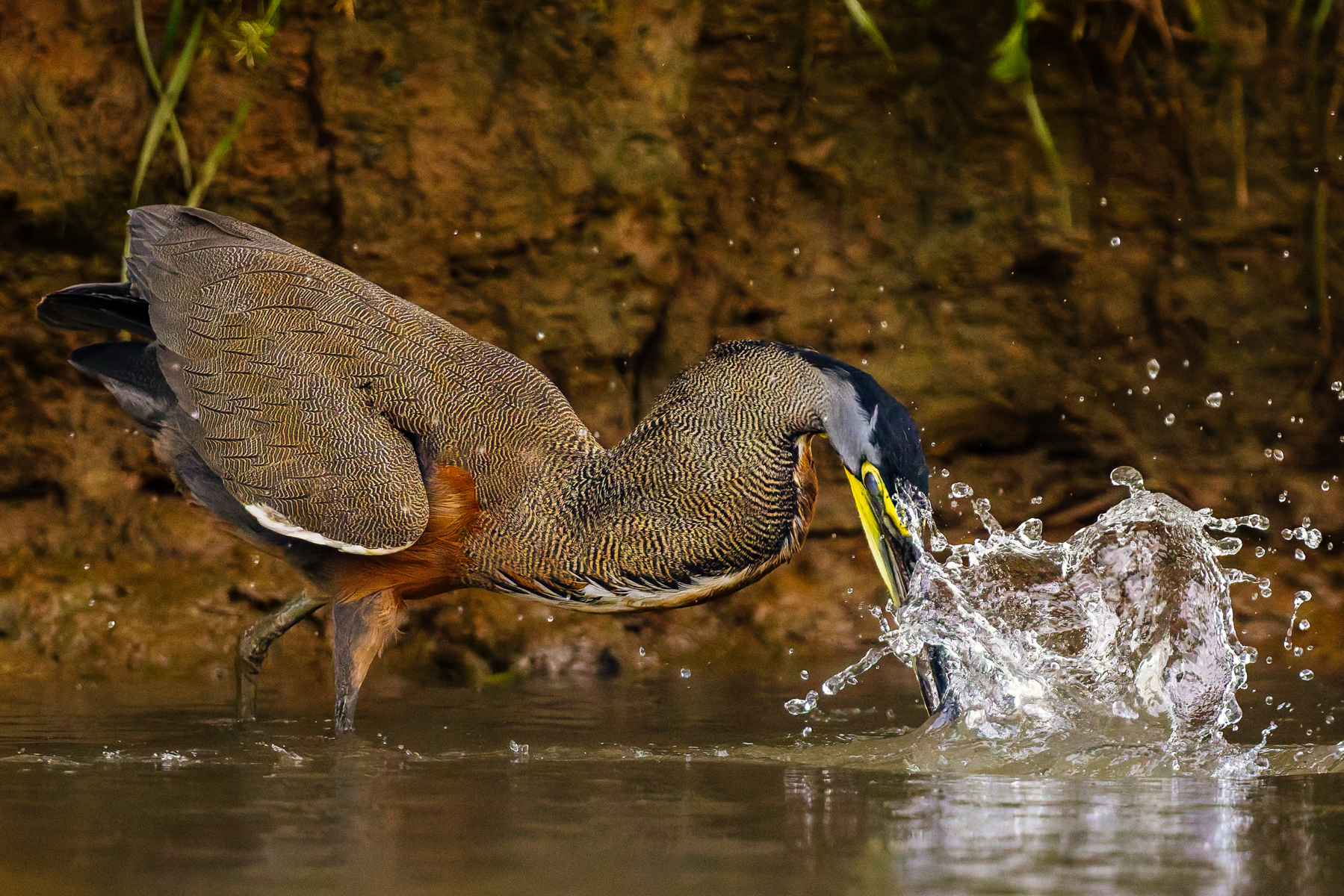
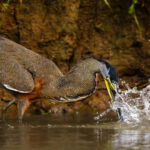
The impressive hunting technique of the Bare-throated Tiger Heron in Cano Negro, Costa Rica. Seconds later, it had swallowed its fish prey (image by Gin Wilde)
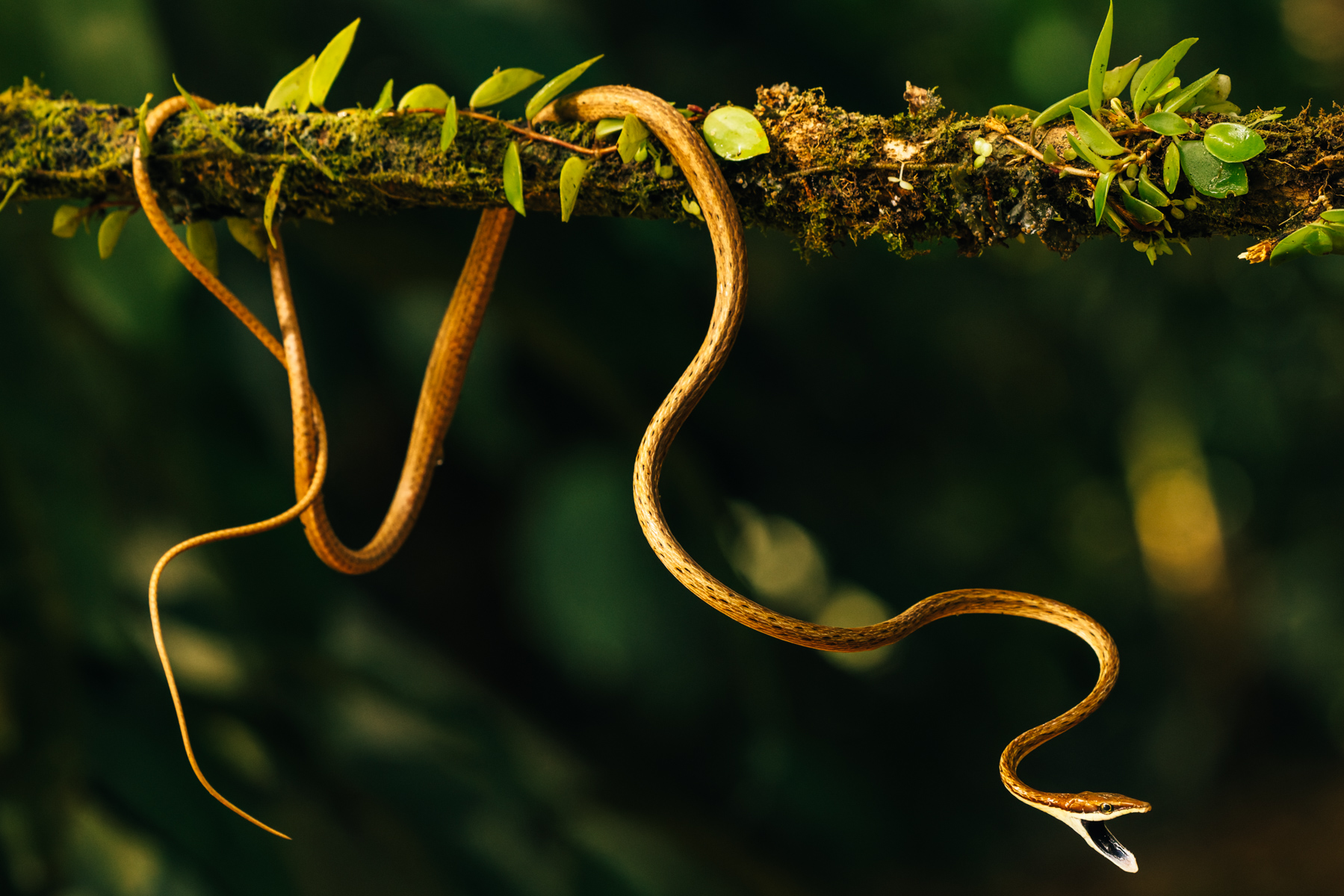
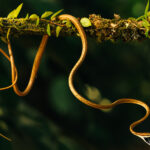
The slender beauty of a Brown Vine Snake, a non-venomous snake, growing up to 2 metres in length and often mistaken for a vine. Inside its mouth, its palate is a striking navy blue (image by Gin Wilde)
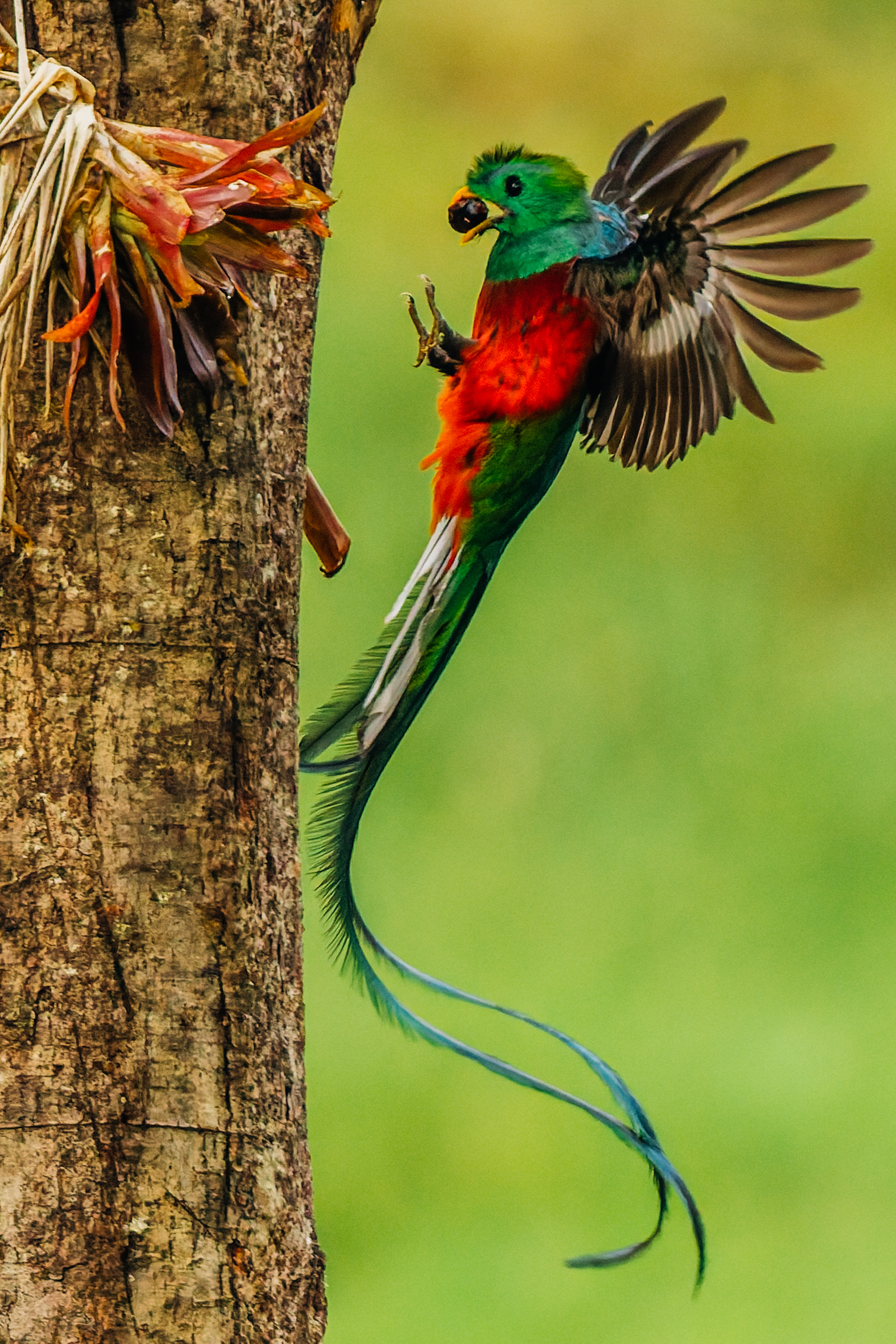
Resplendent Quetzals mate for a life and are attentive parents, like this male bringing fruit back to its fledgeling. Young quetzals begin flying after a month but it can take three years for males to develop their distinctive tail streamer feathers (image by Gin Wilde)
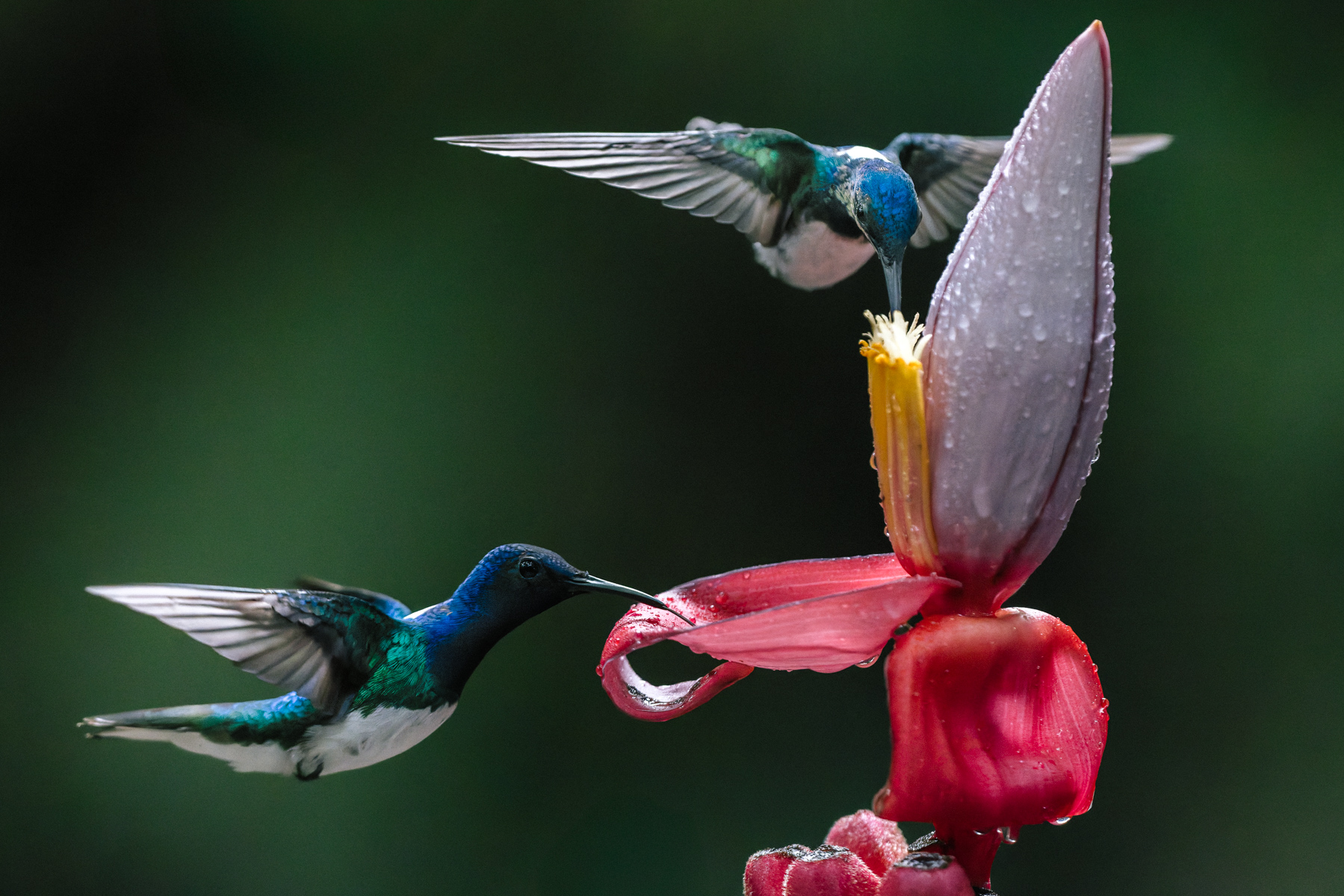
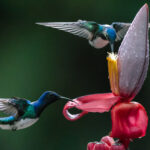
A pair of White-necked Jacobins share a flower, sipping nectar to help fuel their incredibly high metabolism and rapid heart-rate (image by Gin Wilde)
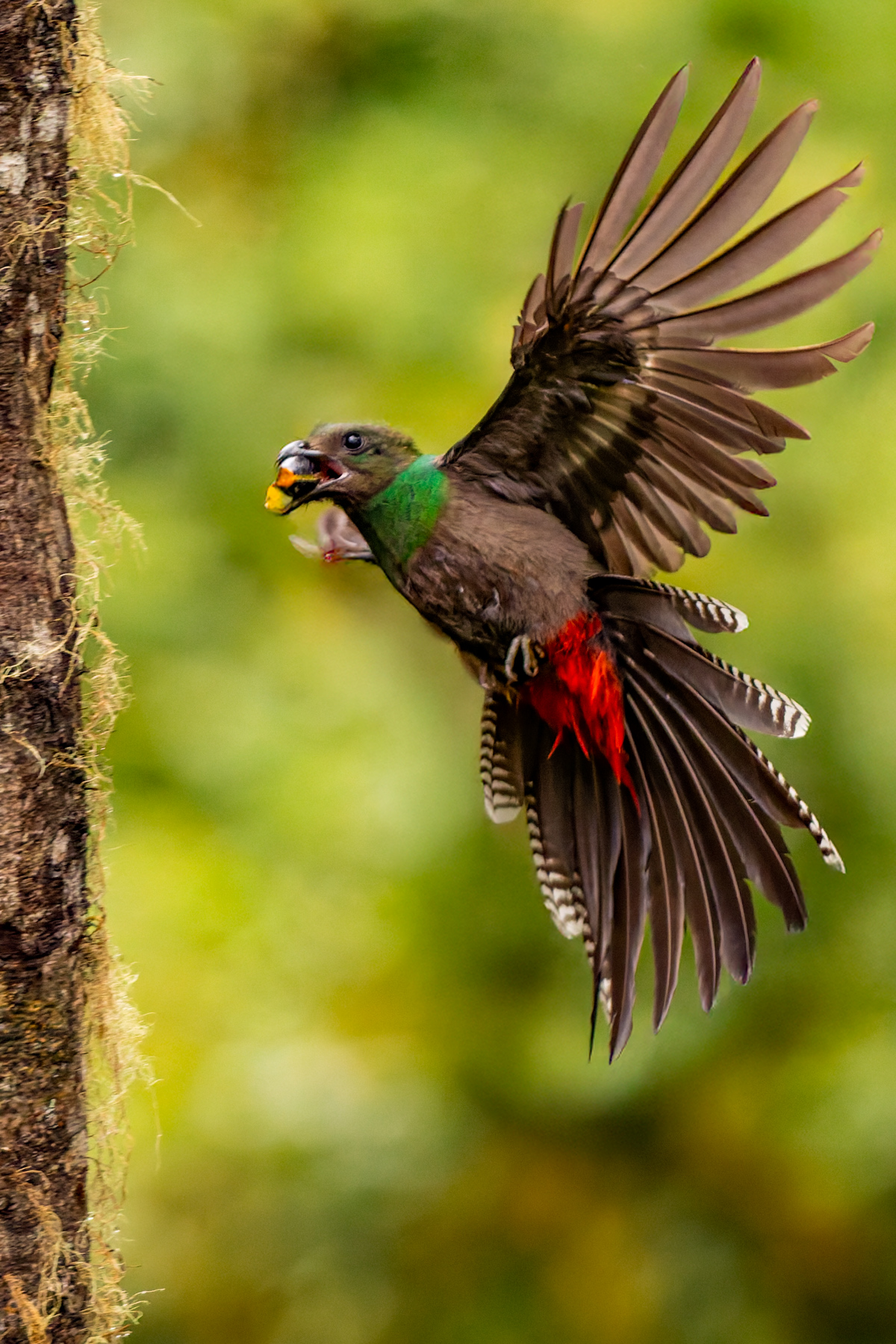
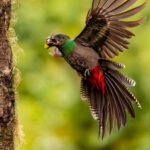
A female Resplendent Quetzal works hard bringing wild avocado and fig to her nest in the cloud forests of Costa Rica (image by Gin Wilde)
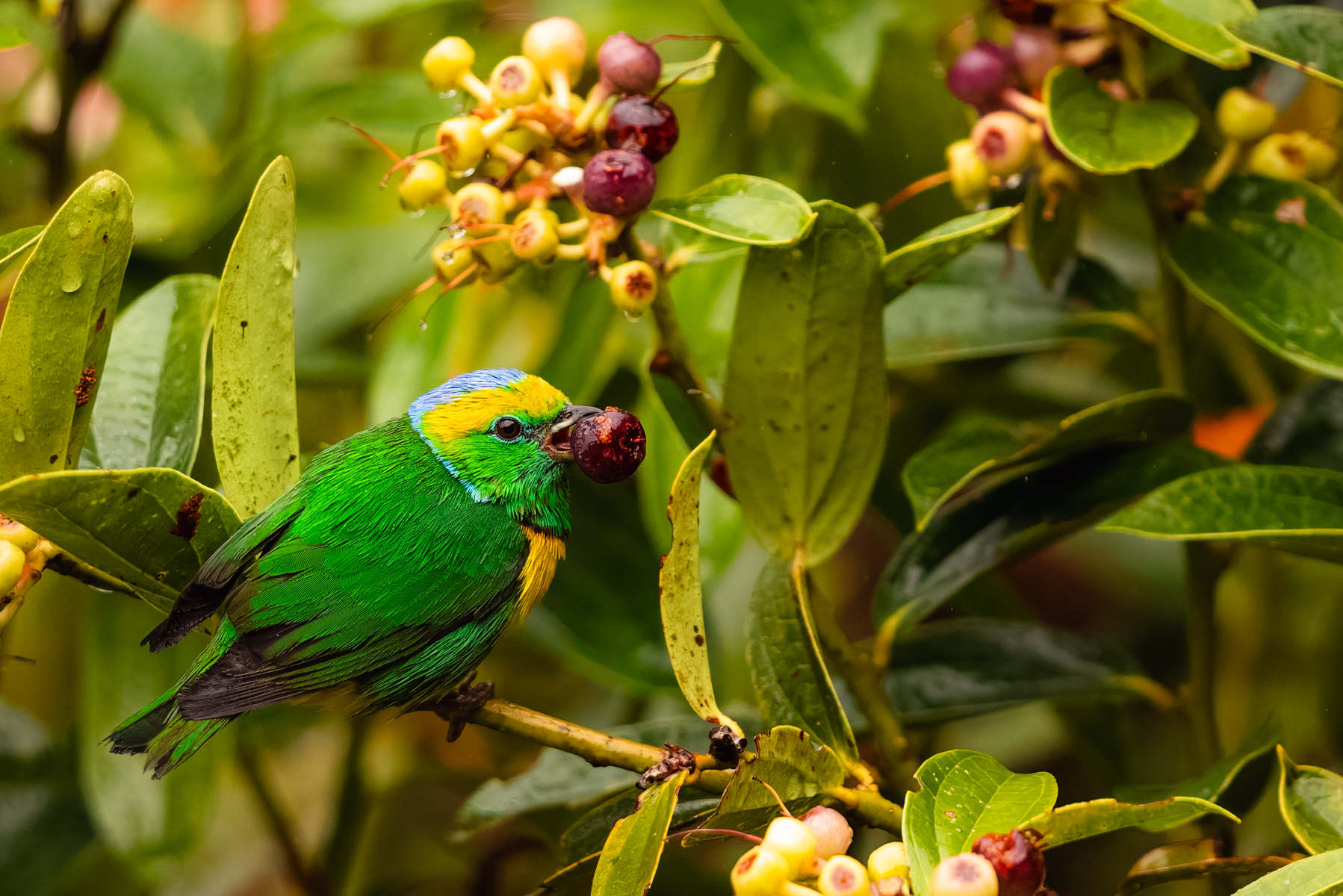
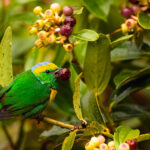
These stoutly Golden-browed Chlorophonia make short work of the berries in the mist forests of Costa Rica (image by Gin Wilde)
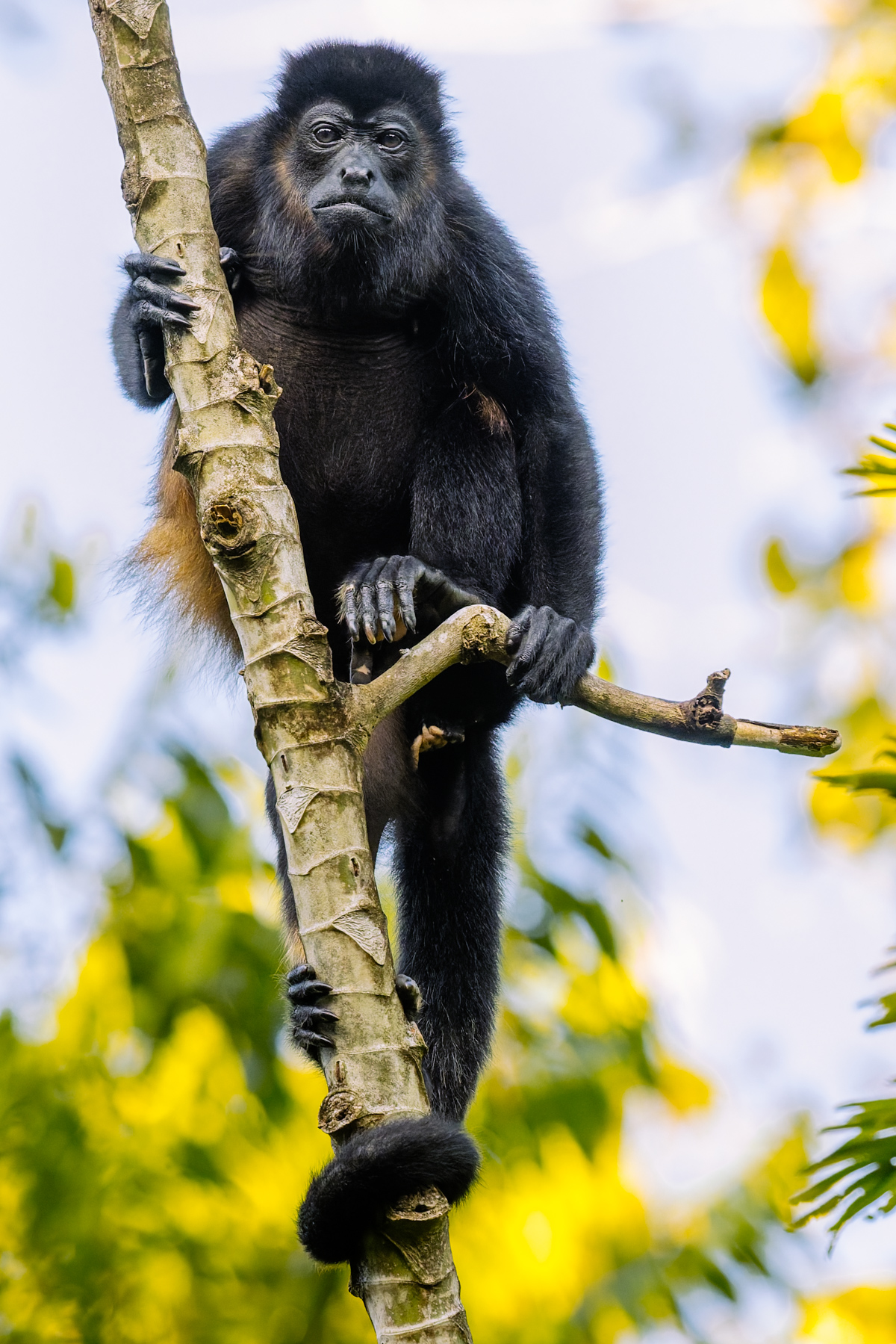
A curious-looking Mantled Howler Monkey checks out what we're up to in Heredia Province, Costa Rica (image by Gin Wilde)
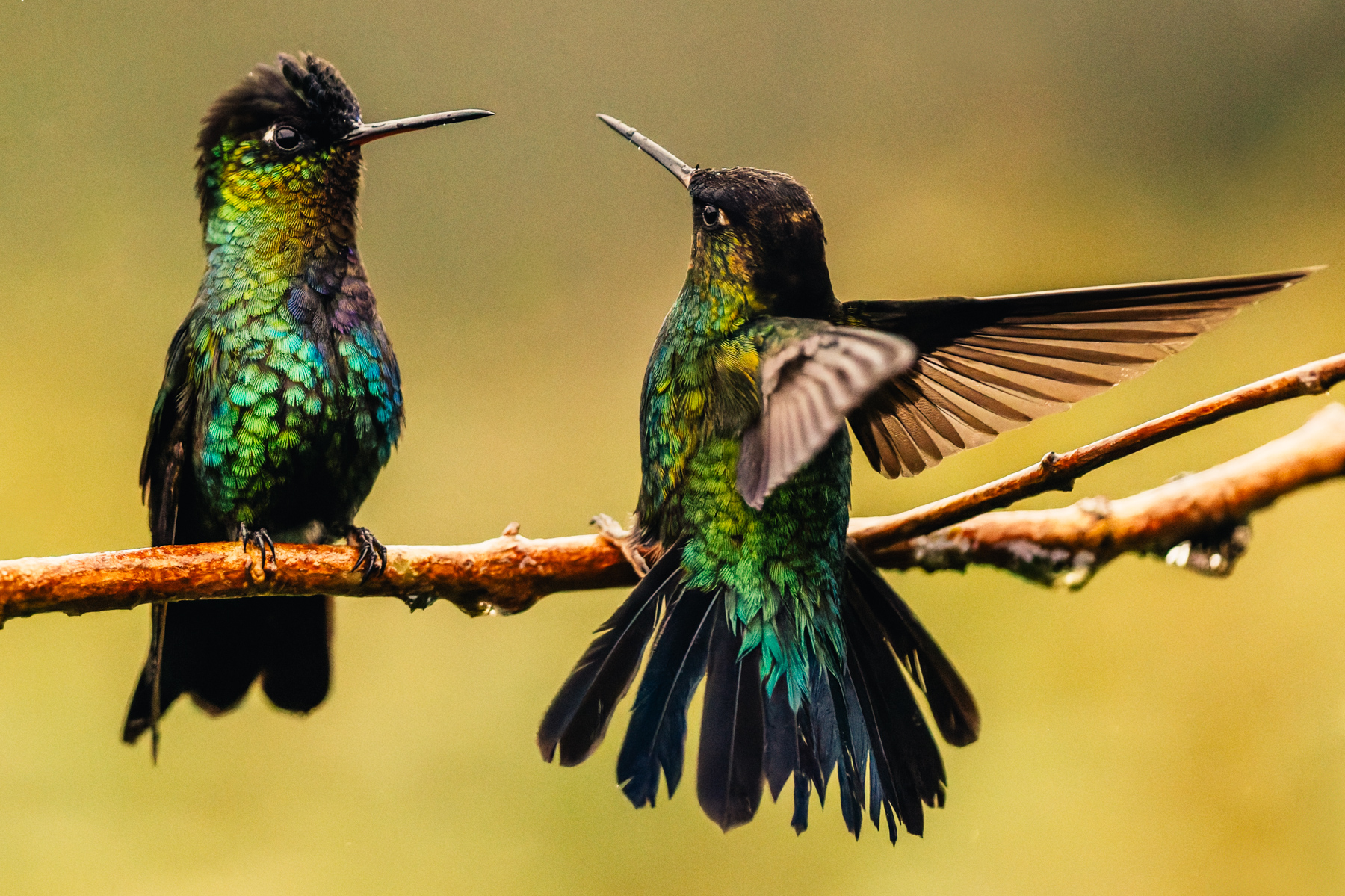
Despite their unquestionable beauty, the Fiery-throated Hummingbird is renowned of one of the most quarrelsome and aggressive hummers...fiercely defending their patch of flowers from any perceived interlopers (image by Gin Wilde)
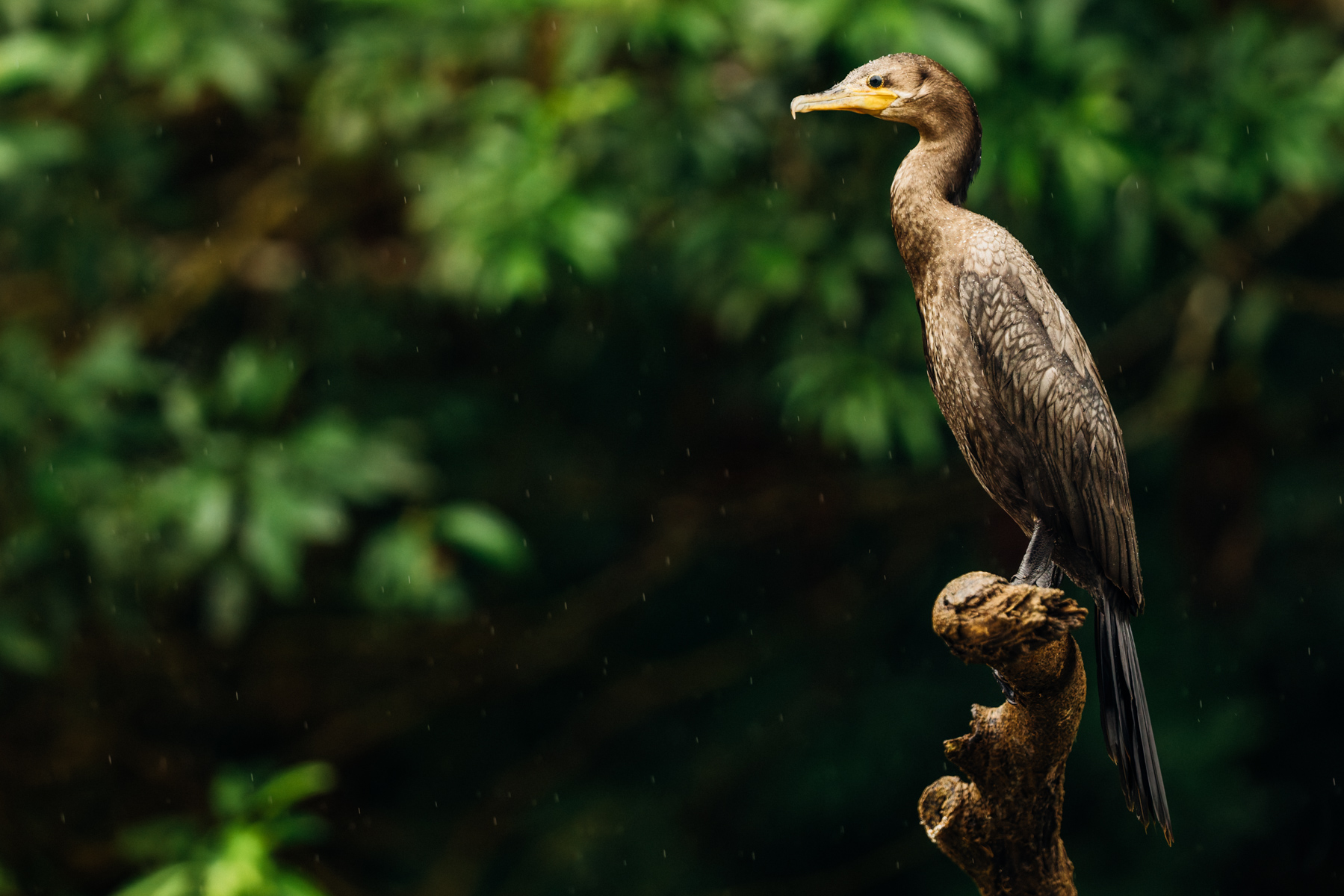
Standing sentry as the rain fell down, this Neotropical Cormorant is perfectly adapted to the riverine world of Cano Negro (image by Gin Wilde)
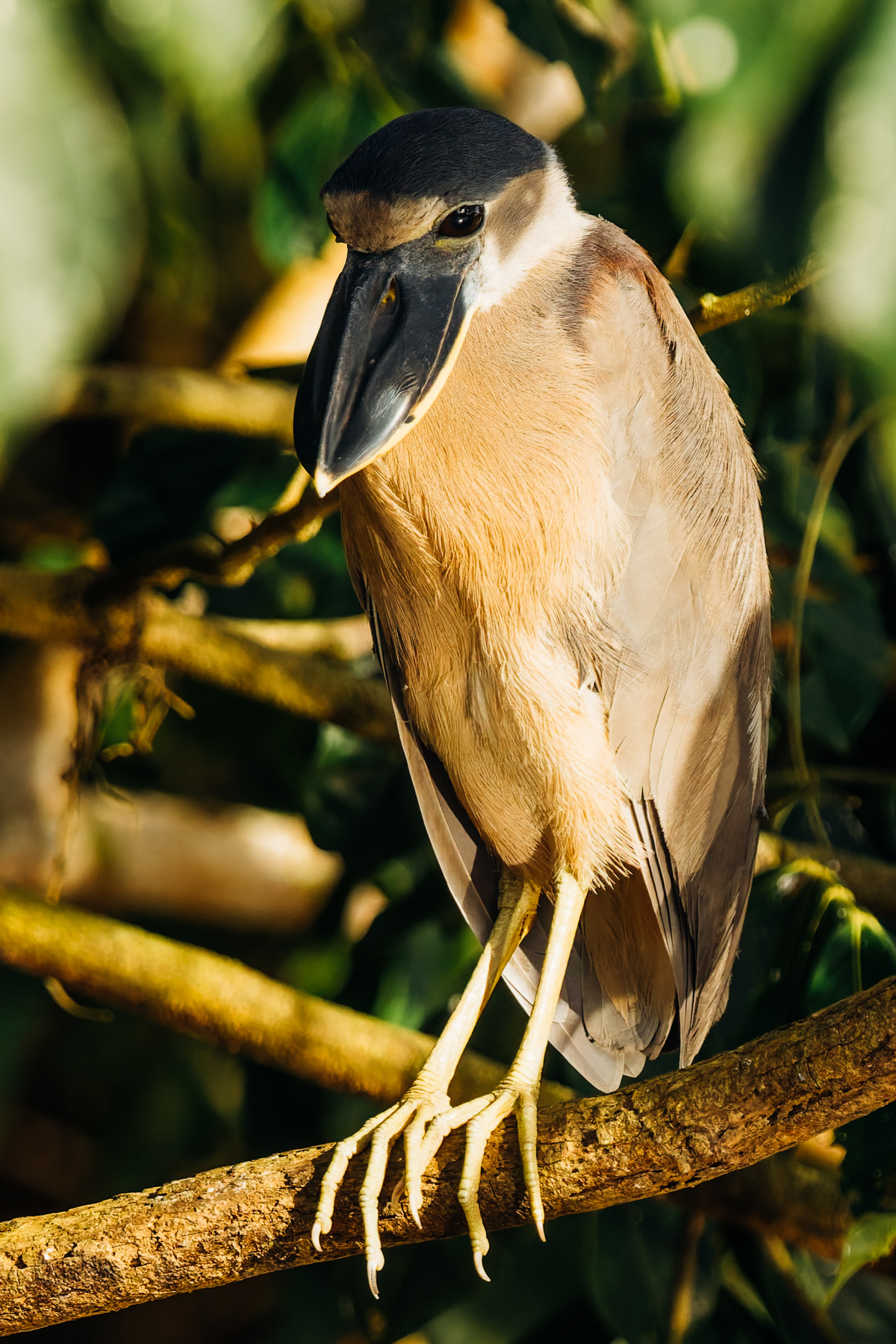
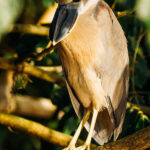
The nocturnal Boat-billed Heron is a treat to see on any boat trip in Central and South America. This bizarre-looking bird mostly comes out at night to feed along the edge of rivers (image by Gin Wilde)
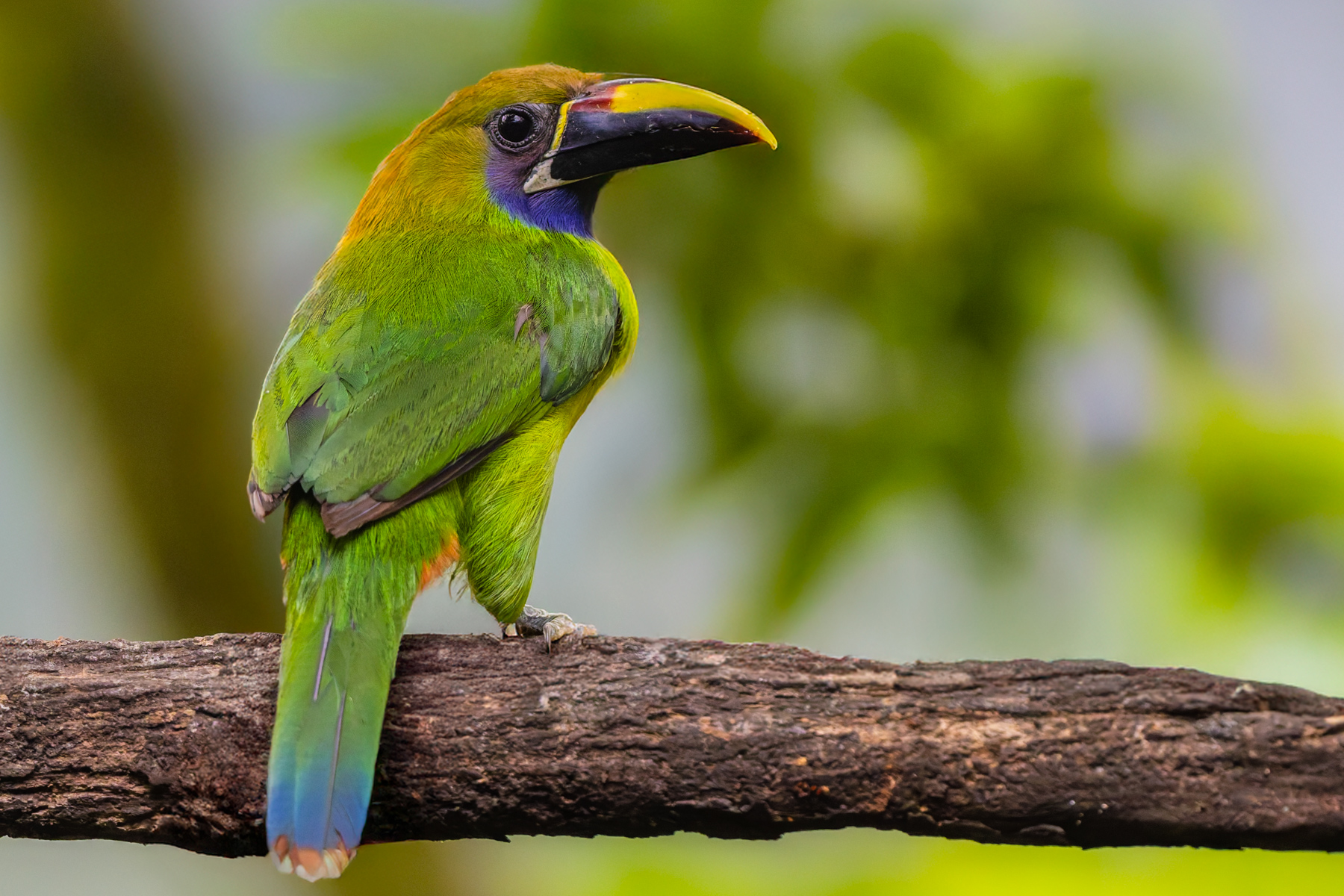
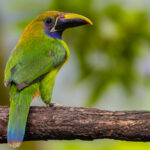
One of the iconic tropical birds of Costa Rica: the rainbow-hued Northern Emerald Toucanet (image by Gin Wilde)
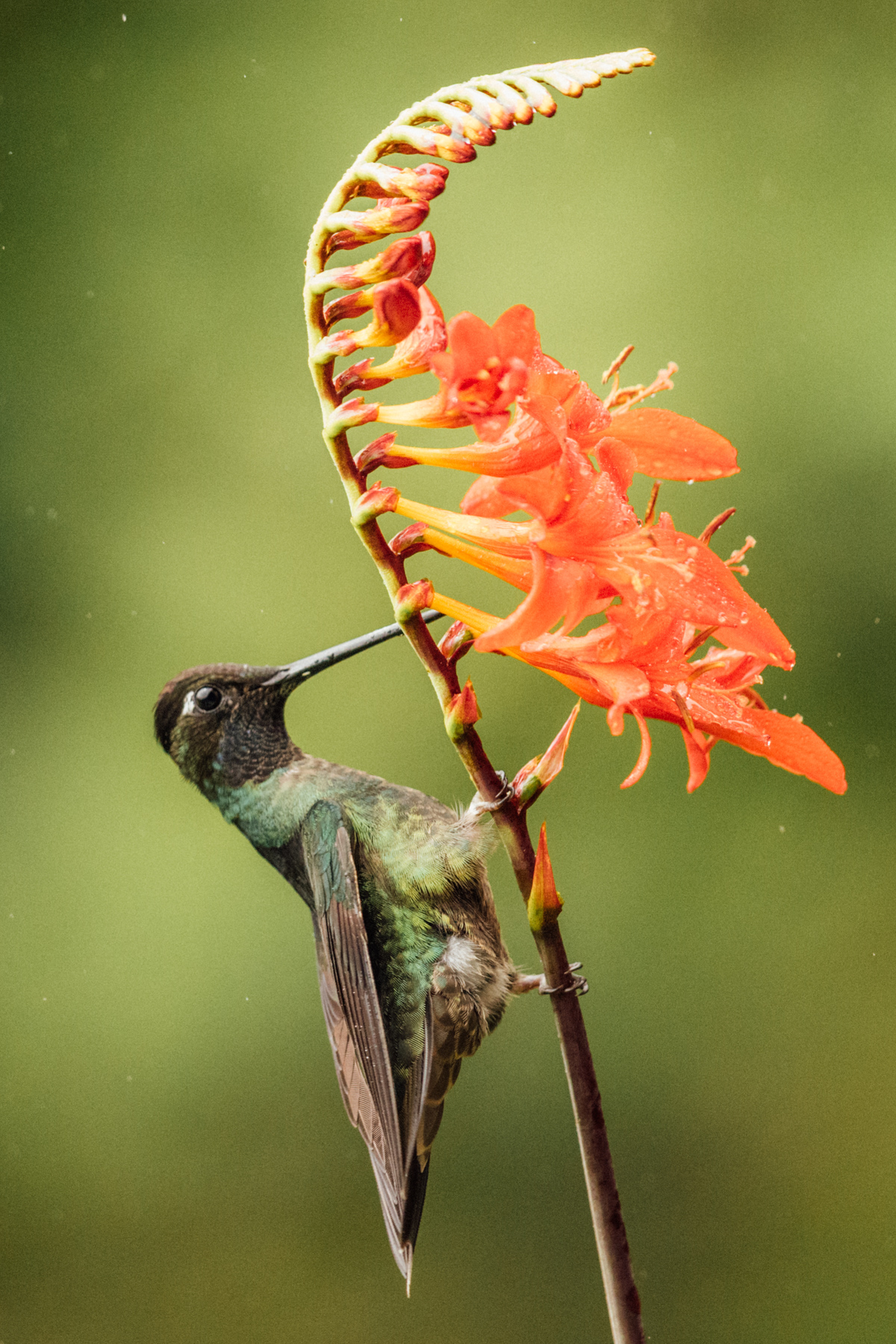
Portrait of a male Talamanca Hummingbird, 'steampunk art style' showing its metallic colouration and green and brown gloss (image by Gin Wilde)
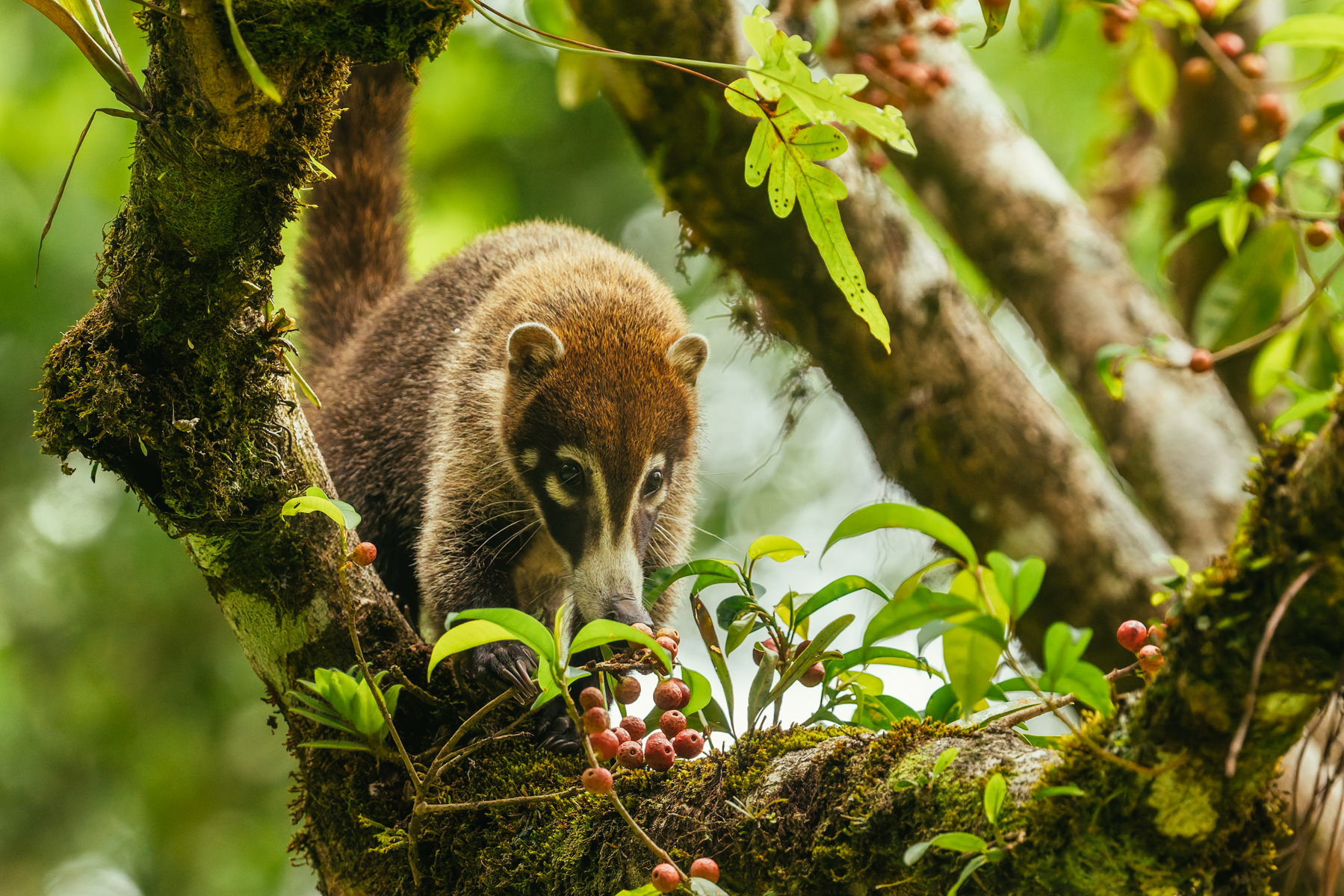
At one point, four White-nosed Coatis were raiding this hackberry tree for juicy fruit, scampering about the branches and happy as kids in a sweet shop (image by Gin Wilde)
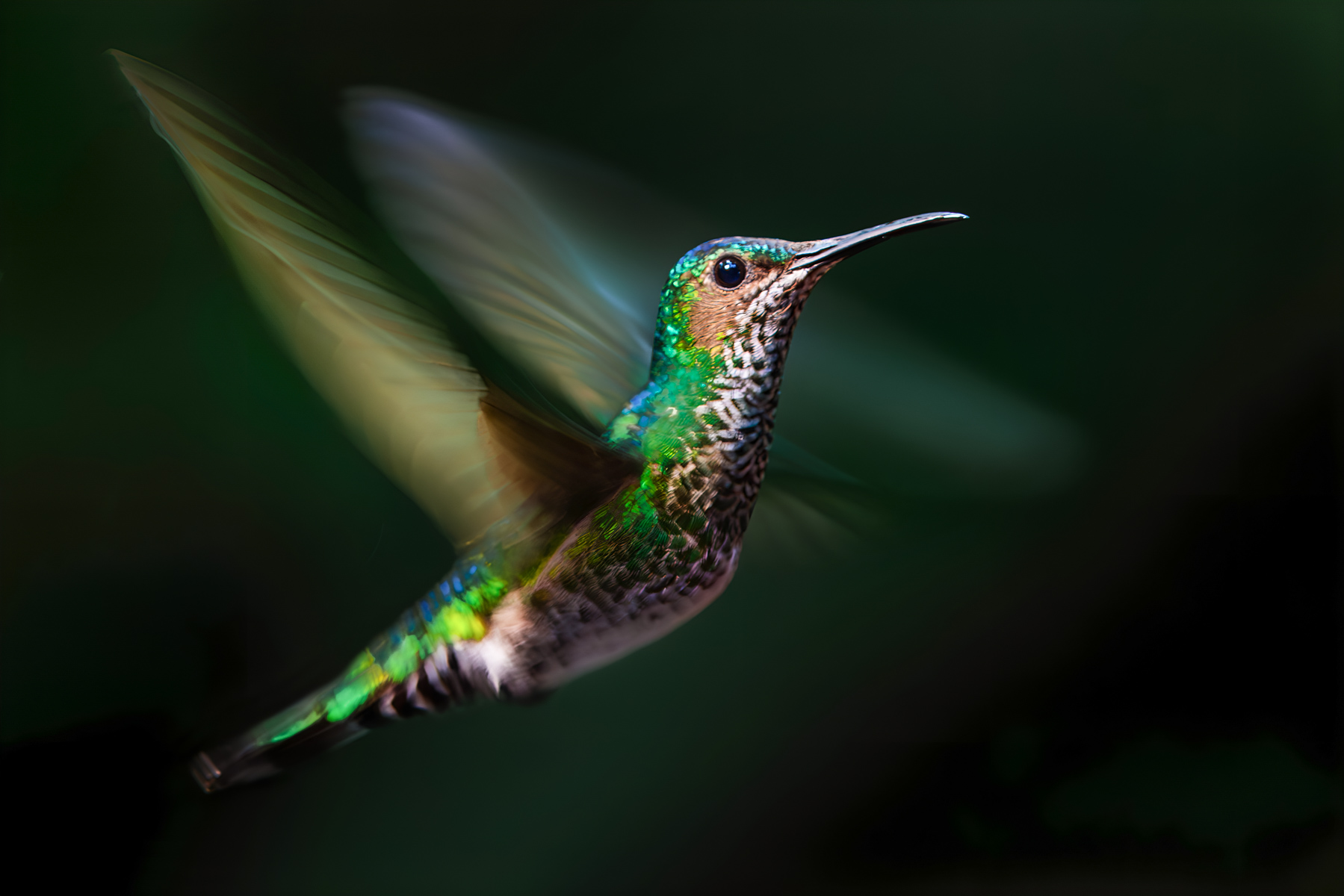
Hand-holding a camera to capture movement in a hummingbird (such as this female White-necked Jacobin) at a shutter speed of 1/100 - but without resulting in a totally blurry image - requires some patience. But can result in compelling images (image by Gin Wilde)
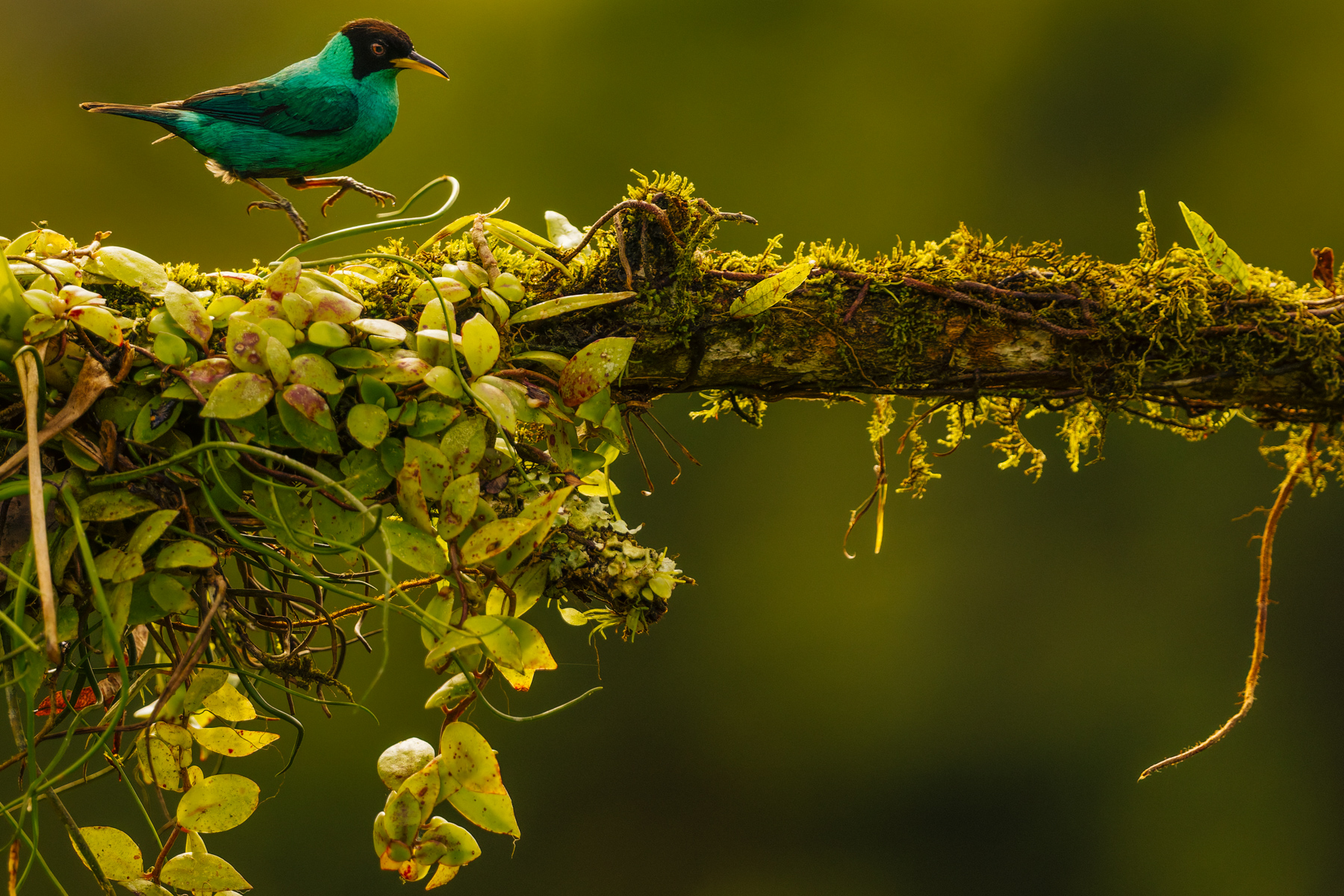
The male Green Honeycreeper - sporting a turquoise colouration unusual in bird species - hops along a branch in Costa Rica's lowland forest (image by Gin Wilde)
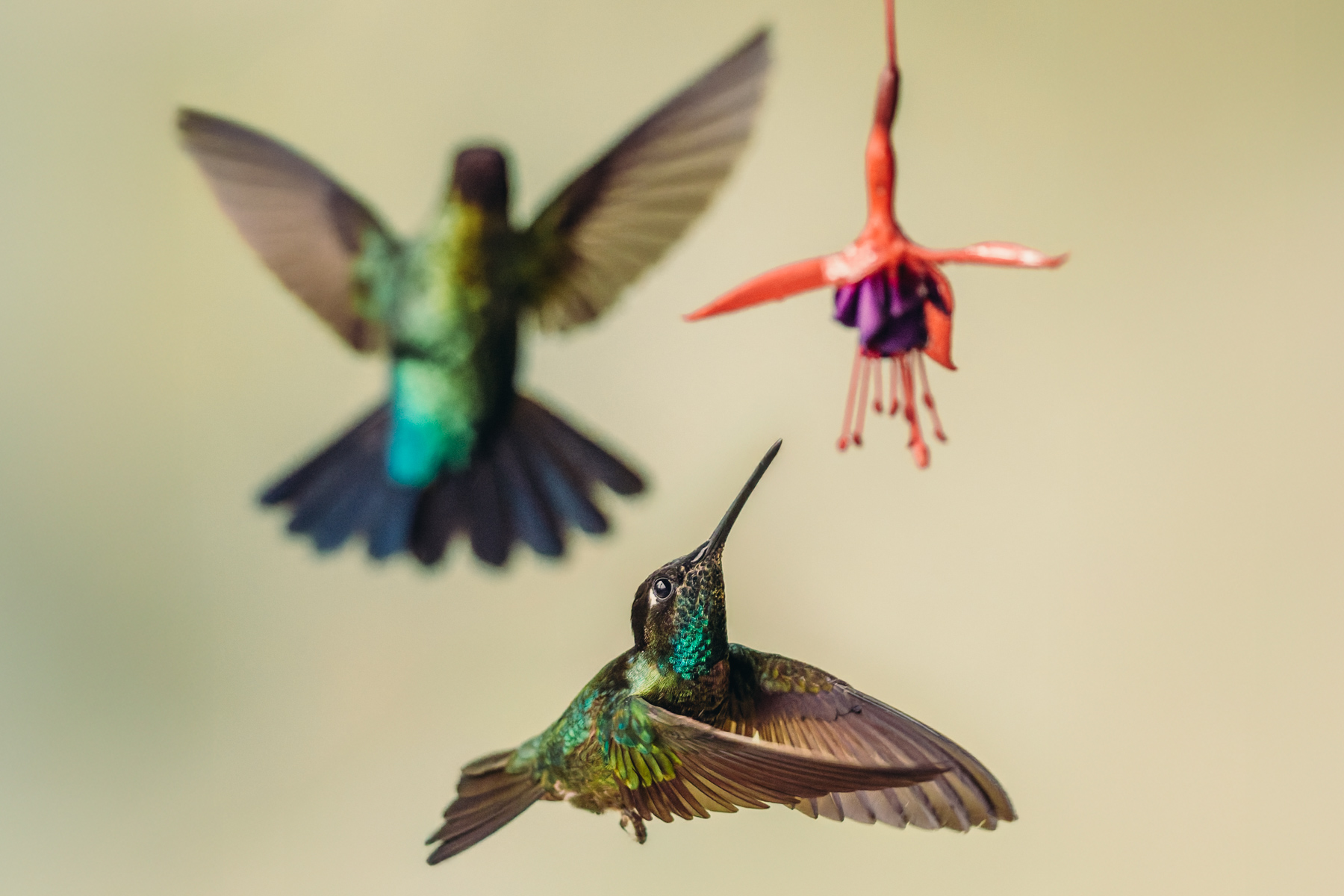
Hummingbirds can be irresistible subjects for a more expressive photography style. Here, a male Talamanca Hummingbird eyes up a flower for feeding (image by Gin Wilde)
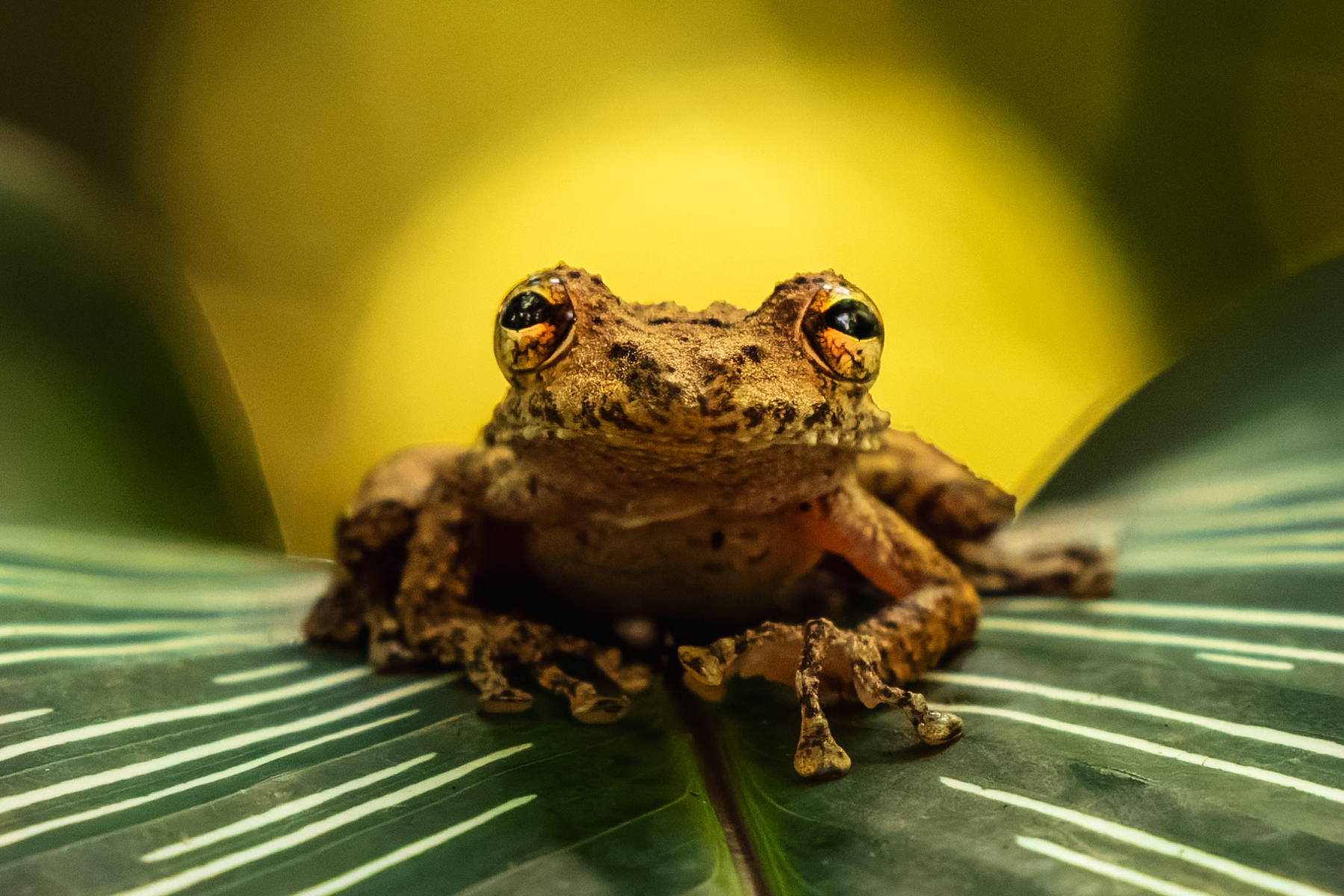
This Boulenger's Snouted Tree Frog looks as if it's basking in the rising sun; instead just backlit by circles of dappled light (image by Gin Wilde)
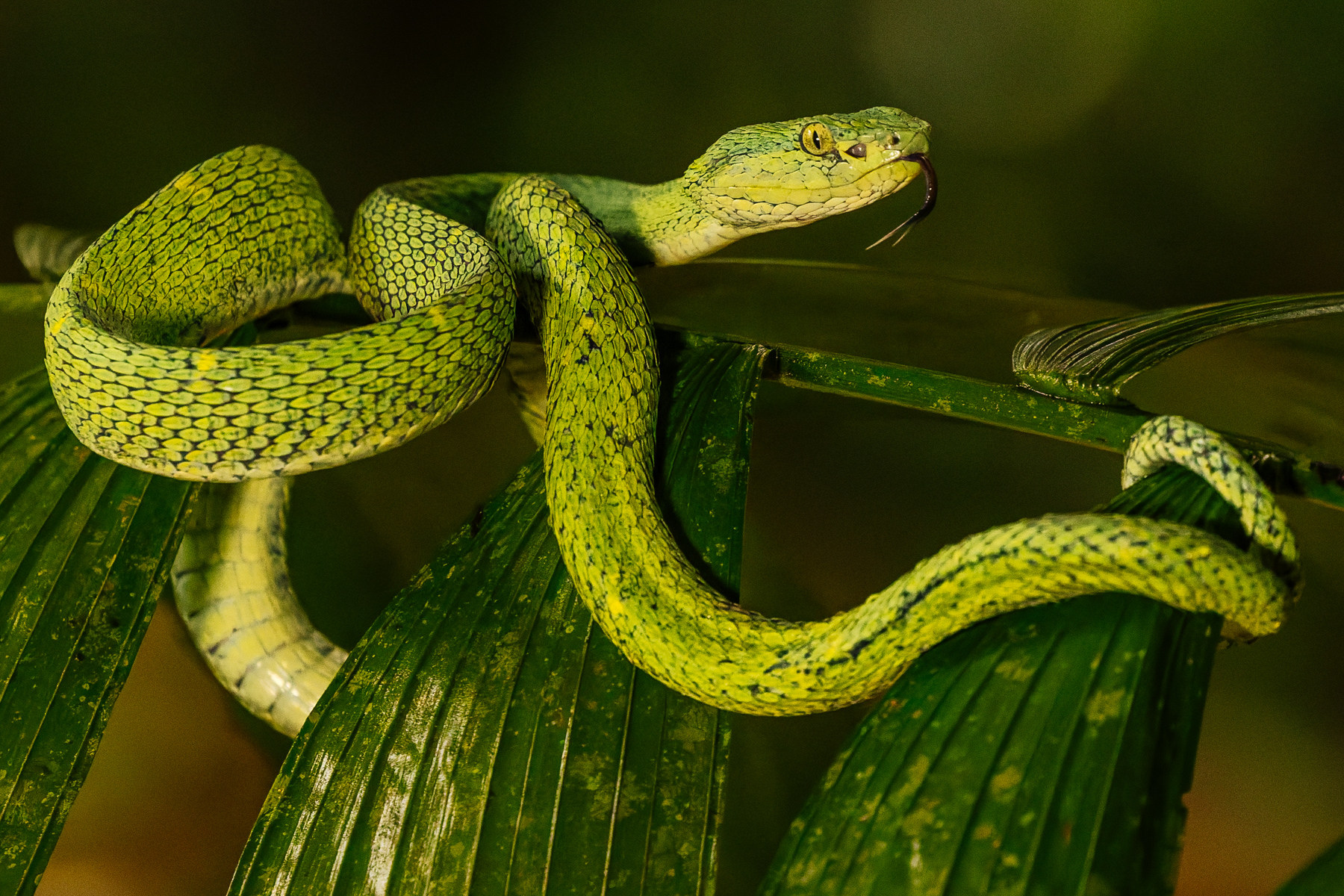
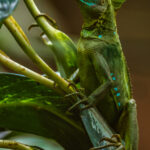
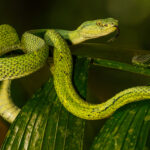
The mint-green colouration of the Side-Striped Palm Pit Viper makes for a strikingly beautiful reptile (image by Gin Wilde)
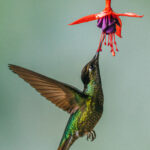

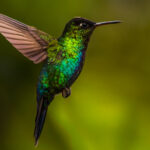
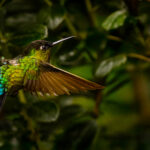
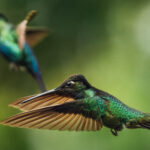
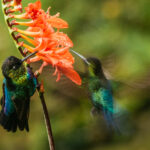
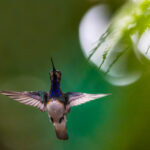

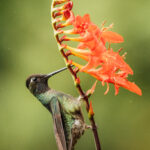


Sideways on, male Talamancas have a dark green gloss and dull head. But when they turn their heads, there's a flash of metallic turquoise chin and gorget, and a striking violet crown (image by Gin Wilde)
Talamanca Hummingbirds are found in Costa Rica and Panama. Females forage by trap-lining; visiting a circuit of flowering plants again and again (image by Gin Wilde)
A shaft of light hits the head and bill of a striking Russet-naped Wood Rail, as it gently picks its way through shallow water in Costa Rica's Heredia Province (image by Gin Wilde)
The tree-dwelling Three-toed Sloth is famously one of the slowest moving mammals on Earth, with an average speed of just 0.15 mph. Here, one has a morning scratch in Alajuela Province, Costa Rica (image by Gin Wilde)
On this year's tour in Costa Rica, it rained. It really bucketed it down. But then the rain cleared and this sunset - over the mid-altitude lowlands - took our breaths away (image by Gin Wilde)
I've never seen a Boa Imperator (constrictor) in real life before. And I wasn't prepared for quite how stunning these snakes are; simply mesmerising animals (image by Gin Wilde)
A male Great Curassow strutted around the gardens of the Arenal Observatory Lodge, after spending the morning singing high in the canopy: a surprisingly low-pitched, booming sound (image by Gin Wilde)
All of these iguanas are Green Iguanas, showing that not all members of the species are actually green. Many Green Iguanas are rust-coloured or even grey (image by Gin Wilde)
This piercing eyed Annulated Tree Boa - a non-venomous constrictor found in Central and South America - is a medium-build beauty of a boa (image by Gin Wilde)
Portrait of a male Shining Honeycreeper; a flash of cobalt blue in the Costa Rican rainforests (image by Gin Wilde)
Often designated as 'the world's most beautiful hummingbird', the Fiery Throated Hummingbird's plumage is a riot of shimmering rainbow colours. They are endemic to the cloud forests of Costa Rica and western Panama (image by Gin Wilde)
The charismatic Keel-billed Toucan is always a joy to see! Toucans often 'duel' with each other using their bills to throw fruit into each other's mouths (image by Gin Wilde)
A female Anhinga prepares to dry her wings, after a morning spent fishing in the Cano Negro wetlands (image by Gin Wilde)
It's hard to imagine ever tiring of the Fiery-throated Hummingbird - one of the world's most beautiful and dynamic hummingbirds (image by Gin Wilde)
The wonderful turquoise colouration of the male Green Honeycreeper make it a favourite among forest bird lovers (image by Gin Wilde)
A Rufous-tailed Hummingbird sips nectar from a flower near the Aranel Volcano, Costa Rica. The Rufous is extremely territorial and aggressive at flower patches, often chasing away other birds and insects (image by Gin Wilde)
A juvenile Striped Owl - characterised by its large ear tufts and cinnamon-coloured eyes - waits for its mother to return with food (image by Gin Wilde)
Portrait of a male Talamanca Hummingbird. Seen from the side, male Talamanca's have a black head and chin, with a green gloss. But when the light hits - and at the right angle - this becomes a violet blue topped by a striking purple crown (image by Gin Wilde)
The female Scarlet-rumped Tanager eschews the striking black and red plumage of the male. But her olive and orange colouration, together with her pale blue beak, makes for a nonetheless beautiful bird (image by Gin Wilde)
The whirligig motion of a hummingbird's wings is something to behold; rotating in a figure-of-eight pattern, allowing them to fly in all directions and generate lift to hover. This bird is Green Crowned Brilliant, taken at a shutter speed of 1/100 (image by Gin Wilde)
Portrait of a male Resplendent Quetzal, showing those immensely beautiful tail feathers (image by Gin Wilde)
Tasting the air, a Hognosed Pit Viper in the Heredia Province of Costa Rica (image by Gin Wilde)
This wonderfully charismatic Black and White Owl, roosting in the mid-altitude forests near Arenal Volcano. Males seduce females in the breeding season through a display of wing flapping and elaborate acrobatic flights (image by Gin Wilde)
A Broad-billed Motmot gobbles its insect prey, in the lowland forests of Costa Rica (image by Gin Wilde)
A male Mantled Howler Monkey swings through trees in Costa Rica's Heredia Province. This species of New World monkey takes its 'mantled' name from the long guard hairs on its side (image by Gin Wilde)
'Don't worry, pal, I've got your back...' A Spectacled Caiman eyes us from the lagoons of Cano Negro - shadowed by his back-up bouncer (image by Gin Wilde)
A pair of curious Orange-chinned Parakeets survey the goings on of the birds in the gardens of Laguna del Lagarto, Costa Rica (image by Gin Wilde)
Despite the thunderstorms, the gardens at Arenal Observatory Lodge - looking out to the shores of Lake Arenal - can be wonderful to go birding in (image by Gin Wilde)
Like a ghostly beauty emerging from the shadows, the Great White Egret is a strikingly graceful bird (image by Gin Wilde)
'Tongue out if you're hungry for nectar!' Orange Nectar Bats in Costa Rica were observed using a unique feeding mechanism that's never been seen in any other animal - allowing them to pull liquid against gravity using a pumping mechanism (image by Gin Wilde)
A feather ruffled Fiery-throated Hummingbird darts through the undergrowth in the cloud forests of Costa Rica (image by Gin Wilde)
A female Anhinga dries her wings in the Cano Negro Wildlife Reserve, Costa Rica. The word 'anhinga' comes from the Brazilian Tupi language and means 'devil bird' or 'snake bird' (image by Gin Wilde)
The strong blue colour on these Selaginall leaves is caused by inteference at two layers in the epidermis that refract light (image by Gin Wilde)
An impressive King Vulture swoops down to feed at Laguna del Lagarto, Costa Rica. King Vultures are one of the largest New World Vultures, second only to Condors (image by Gin Wilde)
It's easy to be bedazzled by the richness of the greens and blues that characterise photography in Costa Rica. Here, a Talamanca hummingbird is backdropped by a Fiery-throated hummer (image by Gin Wilde)
A Mexican Hairy Dwarf Porcupine chows down on a leaf right next to one of our guest's chalets, feasting in daylight despite being mostly nocturnal as a species (image by Gin Wilde)
A Ringed Kingfisher takes flight after gobbling a fish in its riverine home in the Cano Negro Wildlife Reserve, Costa Rica (image by Gin Wilde)
Sometimes the thunderstorms gave way to stunning sunset skies - like this at Arenal Observatory Lodge (image by Gin Wilde)
A handsome Variegated Squirrel - this one a riot of colour in the trees of Costa Rica's Heredia Province (image by Gin Wilde)
A regal looking King Vulture swoops in for a carcass in Costa Rica's Heredia Province. These vultures live predominantly in tropical lowland forest and were believed, in Mayan mythology, to carry messengers between humans and gods (image by Gin Wilde)
Portrait of a Red-eyed Tree Frog. If a child could paint a frog, surely it would look like this! (image by Gin Wilde)
The gloriously verdant view from my private chalet at Paraiso Quetzal Lodge, Costa Rica (image by Gin Wilde)
'Mirage of a Hummingbird'. A Fiery-throated Hummingbird hovers so quickly that it appears almost as a colourful apparition, next to its more stationary companion (image by Gin Wilde)
During breeding season (our time in Costa Rica) male Resplendent Quetzals grow elongated upper tail feathers that form a long flowing train of iridescent turquoise streamers (image by Gin Wilde)
'Hang on, I can reach the best leaves, I know I can!' A Mantled Howler Monkey - the loudest monkey in Costa Rica - stretches to grab leaves in its treetop home (image by Gin Wilde)
This Three-toed Sloth bears a passing resemblance to Yoda, wrapped in a cloak. Although seemingly cuddly, the fur of sloths is host to green algae, which helps them camouflage into trees as well as provide them with nutrients (image by Gin Wilde)
A Talamanca hummingbird, juvenile and with feathers puffed up after a tropical thunderstorm, enjoys a break from the rain (image by Gin Wilde)
Enjoying a morning scratch and hanging from a branch with its muscular forearms, a Three-toed Sloth contemplates its arboreal existence (image by Gin Wilde)
Black-and-white portrait of a White-necked Jacobin. It's a wrench to forgo the colours of Costa Rica, but the iridescence of many hummingbirds can make for striking black-and-white images (image by Gin Wilde)
A Honduran White Bat and her juvenile are expressive and a treat to see, roosting on the underside of leaves that they adapt using a serrated technique, so they can cling on tight (image by Gin Wilde)
A stately-looking Great White Egret looks down at the river below in the Can Negro Wildlife Reserve, Costa Rica (image by Gin Wilde)
The Keel-billed Toucan - also known as the Rainbow-billed Toucan - is famed for its colourful bill, which makes up about one third of its body length! (image by Gin Wilde)
On this year's tour in Costa Rica, it rained. It really bucketed it down. But then the rain cleared and this sunset - over the mid-altitude lowlands - took our breaths away (image by Gin Wilde)
If you can find cuter bats than these Honduran White Bats, then I'd like to see them! These entirely white bats - found only in six of the estimated 1,300 bat species - construct 'tents' out of understory plant leaves by strategically cutting the leaf ribs with their teeth (image by Gin Wilde)
'Fight Club, Hummingbird-style!' Fiery-throated Hummingbirds are known for their fierce defence of their favoured patch of flowers (image by Gin Wilde)
Prize of the rainforest, the majestic tail feathers of the male Resplendent Quetzal are on display as it brings wild avocado and fig to its nest. The Resplendent Quetzal is the largest Trogon, with tail streamers are up to a metre long (image by Gin Wilde)
A male White-necked Jacobin hovers near light dappled saplings in the Alajuela Province of Costa Rica (image by Gin Wilde)
The largest Kingfisher in Costa Rica (and the Americas)- the Ringed Kingfisher (image by Gin Wilde)
Boulenger's Frog (image by Gin Wilde)
This curious Emerald Basilisk Lizard happily sat on a leaf by this year's tour members, as we drank local beer. Basilisks are also known as 'Jesus Christ Lizards' for their incredible ability to run on water (image by Gin Wilde)
Captured mid-air, a male Flame-coloured Tanager darts through the flowery undergrowth in search of berries and insects to feast on (image by Gin Wilde)
For lovers of artistic bird photography, Costa Rica offers a myriad of opportunities. Here, Fiery-throated Hummingbirds against a hanging nectar feeder (image by Gin Wilde)
Two Lesser White-lined Bats roost close together, with their lightning bolt stripes visible in their back fur (image by Gin Wilde)
A handsome Acorn Woodpecker - one of 14 woodpecker species in Costa Rica. Acorn Woodpeckers are well known for stashing large numbers of acorns in telephone poles and tree trunks (image by Gin Wilde)
Found throughout the humid lowlands of Costa Rica, Honduras, Nicaragua and Panama, the Granular Glass Frog is named due to its skin's granular texture (image by Gin Wilde)
Few birds rival the spectacular iridescence of the Fiery-throated Hummingbird. Found only in the cloud forests of Costa Rica and western Panama, this bird alone warrants a trip to Central America (image by Gin Wilde)
A Costa Rican Pygmy owlet waits patiently for its parents to bring back food, soon to leave the nest as it grows in size (image by Gin Wilde)
If you happen across a lek for White-collared Manakin - mostly through hearing the unmistakenly loud clicking sound males make - do stay a while. So challenging to photograph, but such lovely chunky birds (image by Gin Wilde)
The colours of Costa Rica are endlessly joyful. Here, a male Green Honeycreeper - sporting its turquoise plumage - stands out against the green and pink of its tropical plant home (image by Gin Wilde)
A Rufous-tailed Hummingbird dwarfed by the leaves of a tropical Ti plant in the wonderful gardens of the Hotel Bougainvillea, near San Jose (image by Gin Wilde)
Spider Monkeys are considered one of the most expressive - and agile limbed - of all primates. Costa Rica is home to the Geoffrey's (or Black-handed) Spider Monkey, an increasingly endangered species (image by Gin Wilde)
We drank coffee, while photographing so many tropical birds and hummingbirds, at a viewpoint overlooking the San Fernando Waterfall (image by Gin Wilde)
A delicate-legged Black-necked Stilt wades through the shallow waters in the Cano Negro wetlands (image by Gin Wilde)
A Great Kiskadee enjoying a cool-down from sprinklers at Laguna del Lagarto, in Costa Rica (image by Gin Wilde)
'And down the hatch it goes!' A female Anhinga swallows a fish whole in the Cano Negro Wildlife Reserve (image by Gin Wilde)
The flamboyant Roseate Spoonbill, taken in Cano Negro Wildlife reserve, near the border with Nicaragua (image by Gin Wilde)
One of those sights that never fail to enchant me on birding cruises: a tree of egrets (here, Cattle Egrets) roosting communally (image by Gin Wilde)
The female Amazon Kingfisher is a handsome bird, with oily-green and white plumage and a tufted head (image by Gin Wilde)
'Just...about...to reach...my drink...' An Orange Nectar Bat sticks out its tongue to drink from a flower. A process that, in real time, took a fraction of a second (image by Gin Wilde)
'Sky dance of the Fiery-throated Hummingbird'. Pictured with a 'shadow' bird behind (image by Gin Wilde)
My first glimpse of this Golden-hooded Tanager was just a flash of shining gold in the undergrowth. But what a stunning bird it is! (image by Gin Wilde)
Hand-holding a camera to capture movement in a hummingbird (such as this female White-necked Jacobin) at a shutter speed of 1/100 - but without resulting in a totally blurry image - requires some patience. But can result in compelling images (image by Gin Wilde)
The Strawberry Poison Dart Frog is also known as the Blue Jeans Frog. No prizes for guessing how it got its name... (image by Gin Wilde)
With more than a passing resemblance to the 'Woody Woodpecker' cartoon bird, the wonderful red crest of the Lineated Woodpecker gives it a striking appearance (image by Gin Wilde)
A slender-looking Red-eyed Tree Frog pads down a leaf, displaying the mottled blue and yellow of its belly flank and striking blue inner leg (image by Gin Wilde)
A Fiery-throated Hummingbird - so captivating-looking with its iridescent rainbow plumage - puffs out its chest, in the cloud forests of Costa Rica (image by Gin Wilde)
The jewelled beauty that is the Fiery-throated Hummingbird can display shades of orange, red, yellow and blue on its throat, depending on the angle of light and movement of its feathers (image by Gin Wilde)
A juvenile Neotropical Cormorant swoops in the Cano Negro wetlands - showing its dark brown breast (image by Gin Wilde)
The stunning Eyelash Pit Viper, armed with fangs as sharp as hypodermic needles, but surely one of the world's most beautiful snakes (image by Gin Wilde)
Black-and-white portrait of a White-necked Jacobin. It's a wrench to forgo the colours of Costa Rica, but the iridescence of many hummingbirds can make for striking black-and-white images (image by Gin Wilde)
If you wait for a Fiery-throated Hummingbird to turn its head, you're met with a real sight: a striking metallic blue crown and orange iridescent chin (image by Gin Wilde)
A Black-crowned Night Heron - with its distinctive blood-red eyes - feeds in the shallows of the lagoons of Cano Negro (image by Gin Wilde
A proud Great Potoo mother guards her chick in Costa Rica's Heredia Province. These are shy and solitary birds, often unseen because they resemble the tip of the tree stumps they love to perch on (image by Gin Wilde)
There's something about the Red-legged Honeycreeper (a very charming tanager found in Costa Rica) that makes me think of a cartoon character. Maybe it's the black mask over his eyes, superhero style? (image by Gin Wilde)
A female White-necked Jacobin, photographed at 1/160 second, rather than the normal 1/4000 shutter speed required for sharp hummingbird images. With wing-flap speeds of 80 beats a second (rising to 200 beats during diving and courtship) these birds are a gift to photograph (image by Gin Wilde)
A pair of Nicaraguan Slider Turtles - endemic to Nicaragua and Costa Rica - cozy up to each other in the Cano Negro Wildlife Reserve (image by Gin Wilde)
'We'll show you who's King here!' A trio of King Vultures lord over their Black Vulture cousins in Costa Rica. These great hulking raptors (with a strikingly colourful head and neck) - are one of the largest New World vultures, second only to condors (image by Gin Wilde)
Maybe its the velvety-looking scarlet hood that makes this Crimson-collared Tanager look just like a Catholic Cardinal. Regardless, it is a very handsome bird (image by Gin Wilde)
'Look into my eyes...'! Like all glass frogs, the Ghost Glass Frog has semi-transparent skin enabling them to blend into leaves. But its hypnotically cryptic eyes are perhaps the most stunning of all Central and South American frogs (image by Gin Wilde)
A pair of Black Vultures clash over a carcass below. Despite a moderate wingspan of 1.5 metres (small for a vulture) Black Vultures are surprisingly imposing birds close-up (image by Gin Wilde)
'Busted!' A cheeky-faced White-nosed Coati, snapped moments after he gorged on berries from this Hackberry tree (image by Gin Wilde)
Two female White-necked Jacobins - one of the more tolerant and accommodating hummingbird species - sip nectar together in this slow shutter speed shot (image by Gin Wilde)
It's easy to become enamoured with the moody skies in the lowlands of Arenal Volcano (image by Gin Wilde)
The wonderfully social Collared Aracari is always a pleasing toucan to spot in Costa Rica. Collared Aracaris roost communally, with up to seven snoozing in a cavity overnight (image by Gin Wilde)
Despite its fairly dull colouration, the Boulenger's Snouted Tree Frog has stunning golden eyes. These frogs make their home in tropical and sub-tropical moist lowland forests (image by Gin Wilde)
Portrait of a male Talamanca Hummingbird, 'steampunk art style' showing its metallic colouration and green and brown gloss (image by Gin Wilde)
A Rufous-tailed Hummingbird dwarfed by the leaves of a tropical Ti plant in the wonderful gardens of the Hotel Bougainvillea, near San Jose (image by Gin Wilde)
'Up, up, up, goes the White-nosed Coati!' Up to join its pals to gorge on tasty berries! (image by Gin Wilde)
Costa Rica's Variegated Squirrels come in a wide variety of patterns and shades; some dull brown to grey, others sporting a more striking block colouration of orange, white and dark (image by Gin Wilde)
Fiery by name, fiery by nature! Spirited Fiery-throated Hummingbirds quarrel over territory. Visitors to the cloud forests of Costa Rica get used to the feisty behaviour of these beautiful birds (image by Gin Wilde)
Great Green Macaws are enormous lime-green parrots with a strikingly long tail. Their loud, raucous calls can be heard from half a mile away (image by Gin Wilde)
An adorable White-nosed Coati (sometimes also known as the coatimundi) raids the berries of ornamental trees in the foothills of Costa Rica's Arenal Volcano (image by Gin Wilde)
The spectacular Montezuma Oropendola. A gorgeous tropical lowland bird - with a name that goes out of its way to batter you with syllables (image by Gin Wilde)
I love the handsome plumage of the female Great Curassow, photographed as she strutted through the undergrowth in the mid-altitude forests around the Arenal Volcano (image by Gin Wilde)
'And up and up we go!' A Brown-hooded Parrot soars skyward, displaying its child's paintbox colouration, at Laguna del Lagarto, Costa Rica (image by Gin Wilde)
A female Crested Guan looks out over the Cecropia trees that characterise the middle altitude mist forests of Costa Rica (image by Gin Wilde)
Come back, baby Spider Monkey?! An infant Geoffroy's Spider Monkey dashes back to the safety of its troop (image by Gin Wilde)
The impressive hunting technique of the Bare-throated Tiger Heron in Cano Negro, Costa Rica. Seconds later, it had swallowed its fish prey (image by Gin Wilde)
The slender beauty of a Brown Vine Snake, a non-venomous snake, growing up to 2 metres in length and often mistaken for a vine. Inside its mouth, its palate is a striking navy blue (image by Gin Wilde)
Resplendent Quetzals mate for a life and are attentive parents, like this male bringing fruit back to its fledgeling. Young quetzals begin flying after a month but it can take three years for males to develop their distinctive tail streamer feathers (image by Gin Wilde)
A pair of White-necked Jacobins share a flower, sipping nectar to help fuel their incredibly high metabolism and rapid heart-rate (image by Gin Wilde)
A female Resplendent Quetzal works hard bringing wild avocado and fig to her nest in the cloud forests of Costa Rica (image by Gin Wilde)
These stoutly Golden-browed Chlorophonia make short work of the berries in the mist forests of Costa Rica (image by Gin Wilde)
A curious-looking Mantled Howler Monkey checks out what we're up to in Heredia Province, Costa Rica (image by Gin Wilde)
Despite their unquestionable beauty, the Fiery-throated Hummingbird is renowned of one of the most quarrelsome and aggressive hummers...fiercely defending their patch of flowers from any perceived interlopers (image by Gin Wilde)
Standing sentry as the rain fell down, this Neotropical Cormorant is perfectly adapted to the riverine world of Cano Negro (image by Gin Wilde)
The nocturnal Boat-billed Heron is a treat to see on any boat trip in Central and South America. This bizarre-looking bird mostly comes out at night to feed along the edge of rivers (image by Gin Wilde)
One of the iconic tropical birds of Costa Rica: the rainbow-hued Northern Emerald Toucanet (image by Gin Wilde)
Portrait of a male Talamanca Hummingbird, 'steampunk art style' showing its metallic colouration and green and brown gloss (image by Gin Wilde)
At one point, four White-nosed Coatis were raiding this hackberry tree for juicy fruit, scampering about the branches and happy as kids in a sweet shop (image by Gin Wilde)
Hand-holding a camera to capture movement in a hummingbird (such as this female White-necked Jacobin) at a shutter speed of 1/100 - but without resulting in a totally blurry image - requires some patience. But can result in compelling images (image by Gin Wilde)
The male Green Honeycreeper - sporting a turquoise colouration unusual in bird species - hops along a branch in Costa Rica's lowland forest (image by Gin Wilde)
Hummingbirds can be irresistible subjects for a more expressive photography style. Here, a male Talamanca Hummingbird eyes up a flower for feeding (image by Gin Wilde)
This Boulenger's Snouted Tree Frog looks as if it's basking in the rising sun; instead just backlit by circles of dappled light (image by Gin Wilde)
The mint-green colouration of the Side-Striped Palm Pit Viper makes for a strikingly beautiful reptile (image by Gin Wilde)


If you are a wildlife photographer with an artistic disposition, Costa Rica will not fail to bedazzle you. Its land is a collage of a thousand shades of green – amplified and blended in the canopy-filtered light – that frame and envelope an extravagant profusion of life. Without even trying, Costa Rica makes for rainforest photography at its best.
Amidst this cornucopia of birds and beasts, some species inevitably steal your heart. On this year’s tour, several Fiery-throated Hummingbirds – strong contenders for the world’s most beautiful hummingbird – took time out from their constant dramatic ballet of jousting over nectar to perch on our fingertips. Or settle in the palm of our hands.
It’s hard to describe, afterwards, the feeling of holding such a bird. One minute, you’re endeavouring to photograph a blur of jade and sapphire; wings stitching shimmering threads through the air.
And the next, there’s curious eyes gazing up at you from a vivid diamante face. Tiny warm claws of weightlessness in your hand; tiny heart pattering like a biotic machine gun.
It would take a hard heart not to be moved by the weird wonder of it all.
For seasoned nature photographers, there’s no doubt that some wildlife destinations score highly on the raw and the muscular. But the heavyweight champion in charm and beauty? Well, for that, Costa Rica is hard to beat.
This year’s tour had some genuinely lovely wildlife experiences. Among the 122 bird species were seven of owl, at least 13 of hummingbird, 16 reptiles, 11 mammals, ten amphibians and a dizzying number of tropical insects, spiders and plants.
For some tour members, photographing the Resplendent Quetzal – the cloud forest’s iridescent avian prize – was an undisputed highlight. For others, possibly the riverine wildlife of remote Caño Negro, or the sheer assortment of rainbow-hued tropical birds that assembled – then dispersed – around us.
For my part, I loved the Ghost Glass Frog, small but mesmeric with its cryptic, narcotic eyes. And the flash of the Emerald Basilisk Lizard – aka the ‘Jesus Christ Lizard’ – as it duly ran on water.
Also adored were the cheeky antics of the endangered Geoffrey’s Spider Monkeys. And the sweet-faced White-nosed Coati – on a morning when the tropical rain produced its thundery worst – launching a coordinated berry raid on the ornamental fruit trees.
So replete with wildlife subjects was our tour, that selecting photographs for this report was no insignificant challenge!
The Tour Begins: Hotel Bougainvillea and its Paradise Gardens
If there’s a more beautiful starting point on any Wild Images tour than the Hotel Bougainvillea, I’ve yet to see it. Not necessarily for the hotel itself (although it was lovely and the food was delicious) but for the ten acres of botanical gardens that repeatedly win awards for ‘the best garden in Costa Rica.’
Several tour members arrived early, happy to spend whole days wandering the grounds that explode with life. Here, more than 600 species of colourful tropical plants; heliconias, bromeliads, orchids and trees attract a huge abundance of birds, butterflies, frogs and even iguanas.
Small patches of Costa Rica’s crops – such as coffee, cocoa, bananas, pineapple and papaya – nestle alongside clumps of the strikingly-coloured rare Jade Vine, while prime bird targets here included a pair of Mottled Owls roosting in the bamboo, and the ridiculously photogenic Lineated Woodpecker.
Other avian treats were the racquet-tailed Lesson’s Motmot, the Rufous-tailed Hummingbird, Blue-grey Tanager, Hoffman’s Woodpecker, Crimson-fronted Parakeet and the Clay-coloured Thrush: Costa Rica’s national bird.
Located on the outskirts of the capital San Jose, the Hotel Bougainvillea’s brimming gardens were a good entry point to the vast wild richness of Costa Rica – notably one of the most biodiverse places on Earth.
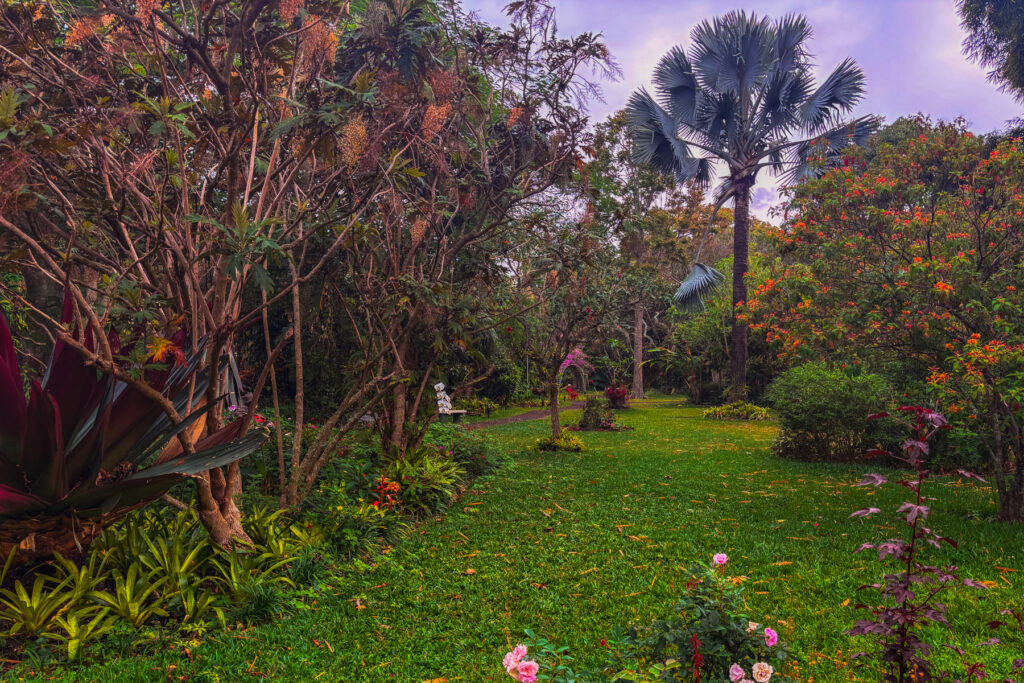
11. Gardens at the Hotel Bougainvillea Costa Rica Virginia Wilde The beautiful gardens at the Hotel Bougainvillea – near San Jose – often win it the title of ‘Costa Rica’s most beautiful garden (image by Gin Wilde)
Despite being smaller than 20,000 square miles (about the size of the US state of West Virginia, or half the size of England) Costa Rica is home to more than half a million species. Almost 6% of the world’s total biodiversity is here, with the country especially rich in butterflies and birds.
Much of this rich floral and fauna comes down to its geographical location, climate and topography. Costa Rica – whose name means ‘rich coast’ in Spanish – straddles the Mesoamerica isthmus between North and South America, facilitating the migration of plants and animals between continents.
Added to this is its neotropical climate, its volcanic bedrock producing highly fertile soils, and its wide range of ecosystems ranging from mangroves, tropical and cloud forests, to coral reefs.
And with more than 25% of its land mass protected in national parks and reserves, Costa Rica well deserves its reputation for environmental conservation and sustainability. To this end, its rainforests are some of the few worldwide that are actually increasing in size.
Our tour visited three of Costa Rica’s seven provinces, travelling between lowland, mid-altitude and high-altitude rainforest, aiming for the widest variety of bird and animal life.
Sarapiqui: Hypnotic Frogs, Snakes and Lowland Hummingbirds
Leaving Hotel Bougainvillea’s gardens was always going to be a wrench. But after breakfast we duly bundled into our spacious bus – driven by our brilliantly laid-back and good-humoured driver Luis – stocked up on water and bus snacks in the local supermarket, and headed north towards Sarapiqui in the neighbouring Heredia Province.
Our destination: Hacienda La Isla eco-lodge, tucked away in the foothills of the Braulio Carrillo National Park: one of the largest protected areas of primary cloud and rainforest in Costa Rica.
We passed through a verdant mountain-range, clad in giant-leaved Gunnera, before stopping for coffee on the lush hillside of La Cinchona. At our viewpoint cafe, hummingbirds buzzed around feeders. And raptors – including our first Black Vultures – soared over the nearby San Fernando Waterfall.
Here, avian treats included our first tanagers: the Silver-throated, Scarlet-rumped and Red-legged Honeycreeper; both Prong-billed and Red-headed Barbet; and the charismatic Northern-emerald Toucanet – an iconic bird of the tropics.
No fewer than five hummingbird species hovered around us on the deck, so close sometimes that we could hear the hum of their wings. We had our first sightings of the pugilistically-named Violet Sabrewing, the Purple-throated Mountain Gem, Green Thorntail, Long-billed Hermit and one of my favourites: the shimmering Green-crowned Brilliant.
Hummingbirds flap their wings at between 50-80 beats a second, making them a blur to the human eye. When diving, this reaches a staggering 200 beats a second, which – coupled with their unusual ability to fly backwards – makes them a challenge to photograph unless you factor in some shutter speeds of at least 1/3,000 or 1/ 4,000.
But there’s also a beauty in photographing hummers at a slower speed. If you can manage to get the eye or part of the body sharp, trying for a speed of 1/160 or below can yield some lovely motion blur. And it is this type of result that can make hummingbird photography so addictive.
Leaving the bird cafe, we arrived at Hacienda La Isla for a hearty Tico fusion food lunch. In the afternoon, we endeavoured to explore the surrounding forest trails in search of frogs, birds and howler monkeys. I say ‘endeavoured’, because the supposed circuit trail had more trail forks and ancillary routes than I previously anticipated.
But our hour-long hike (with an additional ten-minute detour where I considered the potential ramifications of getting us lost) revealed a lek of White-collared Manakins, Crested Guan and Spot-crowned Woodcreeper.
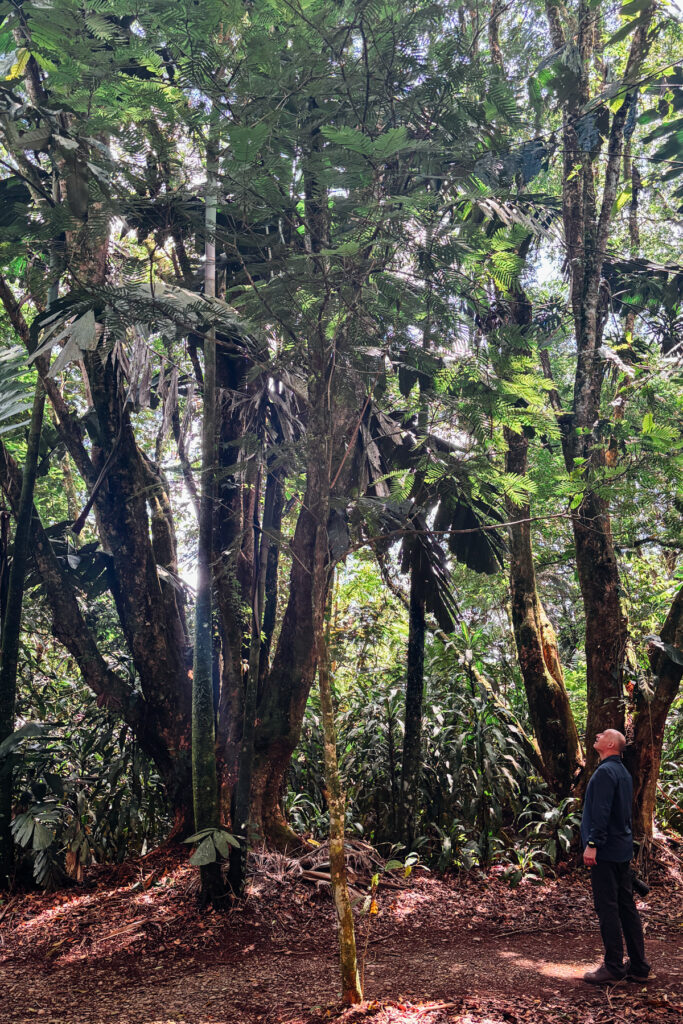
Mario is dwarfed by rainforest trees (image by Gin Wilde)
Later, as we relaxed with a beer by the lodge’s river, we were joined by our first Emerald Basilisk Lizard; seemingly content to perch by us. Under the decking, a Russet-naped Wood Rail pottered around, while Snapping Turtles and small Spectacled Caiman lay lapped by the gently-flowing water.
After dinner, we met up with local nature guide Randell, for what was undoubtedly the best night walk of our tour – and the first introduction for some of our tour members to macro flash photography.
As we wandered slowly through a small tract of rainforest near the lodge, Randell pointed out a variety of small geckos and frogs. We had good sightings of four spider species: the Banana, Golden Orb Weaver (renowned for having the strongest silk in the world), Brazilian Wandering and an impressive Striped-knee ‘Zebra’ Tarantula.
Next, we were all duly – and appropriately – frightened by the line of hefty-looking Bullet Ants, named for the extreme pain they deliver following a sting (akin to being ACTUALLY shot.)
But our evening’s unquestionable highlight wert the many Red-eyed Tree Frogs that hopped around a bush in the lodge’s grounds. Undoubtedly one of the world’s most iconic frogs, if a child were to paint a classic rainforest frog – using only the brightest colours in their paintbox – it would surely look like this.
The following day, we joined one of Heredia Province’s leading naturalists – the wonderfully knowledgeable and conservation-minded Jose ‘Donde’ Copa – for a break-neck tour of some incredible local wildlife.
If you could bottle Donde’s enthusiasm and export it, well, the world would surely be a more vibrant place. We had barely even disembarked from the bus before he bounded up the drive of his rainforest home, pointing out a raft of Strawberry Poison Dart Frogs and geckos among the leaves.
From Donde’s garden hide – looking out over a small stream and loops of vine – we photographed a surprising array of bird species.
Our first Green Honeycreeper (with the male a glorious turquoise) sat next to a cobalt-blue Shining Honeycreeper. Next up: a Montezuma Oropendola; Orange-chinned Parakeet, Black-cheeked Woodpecker, Northern Black-throated Trogon and a Green Kingfisher.
Hummingbirds included the large Green-breasted Mango and the remarkably chilled-out (as hummingbirds go) White-necked Jacobin.
Before long, Donde had ushered us back into the bus for a quick drive down the road. A short wander along a dense rainforest trail yielded sightings of a pair of roosting Crested Owls. At the same time, we took it in turns to photograph a colony of absurdly cute Honduran White Bats, nestled together under a large broad leaf.
One of my favourite species of the tour, these leaf-nosed white fruit bats construct roosting ‘tents’ out of understory plant leaves – strategically cutting the leaf ribs with their teeth to hold the sides of the leaf together as a defence against potential predators, too much light, and the rain. They’re such enchanting – and ingenious – creatures!
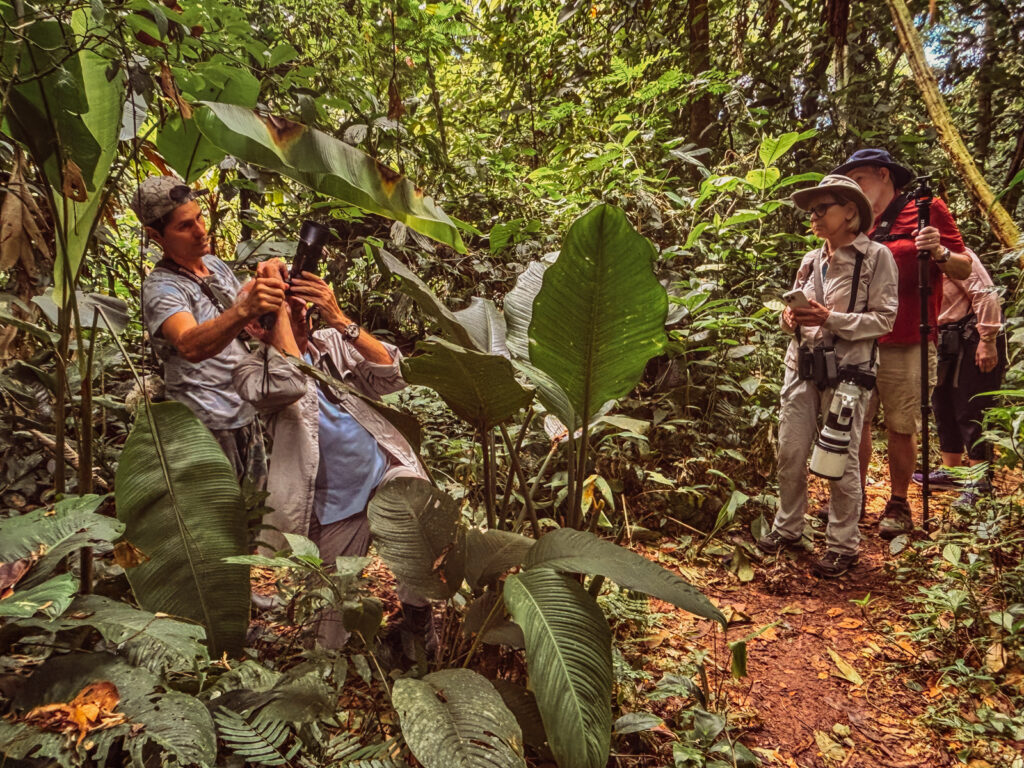
Our brilliant local guide ‘Donde’ helping the group to photograph Honduran White Bats in the rainforest (image by Gin Wilde)
Pressing on, Donde took us across a stream, through a cow field and past lines of Leafcutter Ants, to photograph a handsome roosting Spectacled Owl.
Briefly stopping to view our first Sloth – a Brown-throated (Three-toed) species very high in the trees – we continued into a meadow for a special sighting with a Great Potoo (famed for its bulging marble eyes and wide mouth) and its downy chick. I’m fascinated by Great Potoos – as were many of the tour members – so this was a treat.
After lunch, we returned to Donde’s garden for more hummingbird photography, while he gathered a succession of frogs and snakes from around his home. The absolute highlight: a Ghost Glass Frog – normally incredibly hard to find and see. This tiny translucent frog wowed us all with its hypnotically spangled eyes!
Other species from Donde’s snake and frog dash included a golden-eyed Granular Glass Frog, a baby Cloudy Snail Eater snake and the rightly-feared Fer de Lance snake (responsible for more human deaths in Central and South America than any other reptile.)
My favourite of his snakes: the gorgeously-vibrant, yellow-coloured Eyelash Pit Viper – named for the characteristic scales above its eyes that resemble eyelashes, to aid with camouflage.
Finally, it was time to leave Donde’s home – but not before he brought out some of his wonderful wildlife artwork. It was a great day with a true specialist in his field.
The following morning – after being woken at 4am by the distant but unmistakable whooping roars of Mantled Howler Monkeys – I finally located the troop in the trees not far from the bank on the opposite side of the lodge’s river. I tried to rouse as many of the group as possible to photograph these primates, that take their ‘mantled’ name from the long auburn guard hairs that streak down their flank.
After breakfast we headed to a Sarapiqui-based conservation project, set up by the nature-loving son of a former extractive farmer – who was persuaded to then conserve wildlife, rather than destroy it. Now, this family-owned refuge is a haven for different frog and bird species, with their team rescuing snakes that would otherwise be killed by local land-owners.
On arrival, we photographed a very sound-asleep (and foliage-covered) Hoffman’s (Two-toed) Sloth, before heading to a clearing – overlooked by some roosting Lesser White-lined Bats – set up as an outdoor ‘studio’ to photograph a variety of endemic frog and snake species.
Here, we were able to get close to some incredibly striking frog species, all caught that morning and then released into the wild. These included a Boulenger’s Snouted Tree Frog, Green and Blue Poison Dart Frogs and more Strawberry Poison Dart Frogs (known as the ‘Blue Jeans frog’ due to its indigo-coloured legs.)
The snakes were – without exception – stunning. I’d never seen a Boa Imperator (constrictor) in real life before, and was unprepared for the beauty of this heavyweight reptile.
Other subjects included a Side-striped Pit Viper, Hog-nosed Pit Viper, Ambulated Tree Boa and – another favourite – the whip-thin but almost two-metre long – Brown Vine Snake, with navy-blue gums.
After our session, we headed into the haven’s forest to photograph another White-collared Manakin lek and a second colony of Honduran White Bats; this time just a spirited mother and her infant, roosting in their leaf tent together.
Further bird sightings here included a Streak-headed Woodcreeper, Grey-headed Chachalaca and Ringed Kingfisher.
By lunchtime, cooked by our guide Jose’s sister, droplets of rain had started to fall. Within an hour, it was torrential. For the rest of the day, the rain fell not in drops but in a continuous sheet, blurring the edges of the forest and all around it.
Eventually, we called it a day, heading back to our lodge to marvel at the ferocity of the tropical rainstorm and relax with delicious home-grown food on the riverside deck.
Into Alajuela Province: King Vultures, Nesting Pygmy Owls and Spider Monkeys
As we left Sarapiqui the following morning, Luis got word about a collapsed bridge on the road to our next destination: the sprawling eco lodge reserve of Laguna del Lagarto.
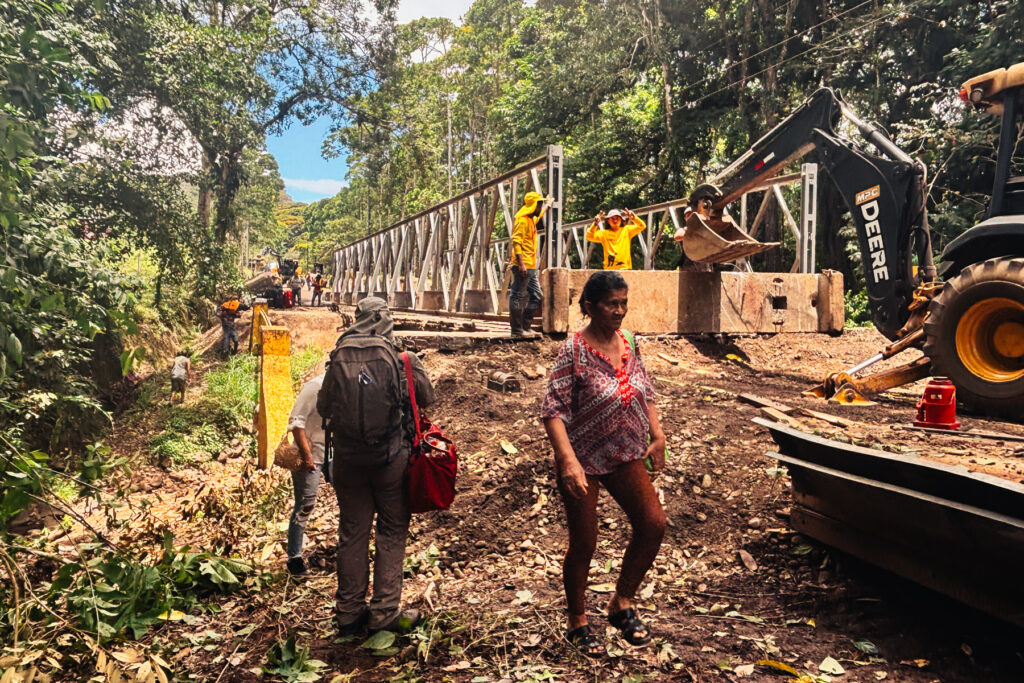
What’s the point of a tour if there’s not a little bit of adventure. A collapsed road bridge the previous day led to some hasty bridge repair – and a short river crossing (image by Gin Wilde)
To give the road-builders time to build a stone crossing point, we made a short diversion to a birding site ran by a friend of Luis. Here, our female guide Luciana took us to a roosting site used by a Striped Owl and her five-week old chicks. We were able to spend some time in a meadow – keeping enough distance to not bother the owls – but near enough to photograph the owlets’ wonderful ear tufts.
As we returned from the meadow, we had our first sightings of Yellow-throated Toucan! We waited patiently by a nesting box, in the hope that the cutest-looking baby toucan (that repeatedly popped out its tiny head and bill) would tempt its mother down.
Alas, we had to press on. And, sure enough, after a two hour drive over the border into the Alajuela Province, we reached the road impasse. Our nascent plan: for Luis to leave the bus, join guides from Laguna del Lagarto in helping to carry our bags over the 15-metre wide river bed, and then have us hop onto a new bus waiting for us on the other side.
The only thing we needed to do was navigate our way down into the mostly-dry river ditch, keeping our feet dry using the strategically placed rocks, and help each other up on the opposite bank.
This was mostly straightforward, yet not without some physical strain for some – despite the group’s efforts to muck in to help. But given the state of the former bridge – and the rapidity with which it was repaired, just two days later – we were all impressed by the work ethic of Costa Rica’s bridge builders!
Our time at Laguna del Lagarto was unquestionably one of the highlights of the tour. The lodge comprises 500 protected hectares (1,200 acres) of contiguous lowland rainforest and lagoons. But, crucially, has several naturally-constructed viewing platforms enabling eye-level photography of a myriad of tropical birds – with plantain feeders and nesting holes at a strategic distance of no more than four metres.
Trucking into the lodge for lunch – served on the largest and most prominent viewing platform – it soon became hard for most of us to actually eat our food, so plentiful were the species flying in around us!
This large decking became the centre of activity for our time here. Being able to sip a coffee or beer, while photographing such colourful birds, well who among us wouldn’t love this?!
Unluckily for me, I forever seemed to be taking down the lunch or dinner orders – or bringing a round of group drinks – when anything of particular note flew in. Thankfully, many in our group got wonderful images of Great Green and Scarlet Macaw, among other great sightings.
Up on this dinner hall balcony, our bird tally quickly totted up. Most notable were the pairs of rainbow-coloured Keel-billed Toucan, tossing food to each other in a perpetual game of ‘catch.’
Other avian delights: Collared Aracari, Olive-backed, Yellow-crowned and Yellow-throated Euphonia, Golden-hooded and Plain-coloured Tanager, plus good sightings of Black-crowned and Masked Tityra. Added to this: a raft of Brown-hooded Parrots, Crested Caracara, Red-lored Amazon and Broad-billed Motmot.
Under the decking, we clocked mammal sightings of Agouti and our first spirited White-nosed Coati.
A species of particular fascination, for all in our group, were the pair of Pygmy Owls, nesting in another part of the lodge’s grounds. This duo made fairly regular (but sometimes erratically-timed) returns to their nesting hole to feed their chick, carrying the spoils of hunts – mostly hapless frogs or insects.
Watching the nesting hole, hoping to catch the moment that the hungry owlet half-emerged from the nest hole to meet its parents, became a favourite activity for this year’s group.
Over the following two nights at Laguna del Lagarto, half the group had a stab at bat photography. Our local guide at the lodge – Didier – talked us through the settings and technique in a 90 minute masterclass, using a flash set-up and radio triggers. (The lodge had triggers for Canon and Sony, while one group member had his own set-up for Olympus.)
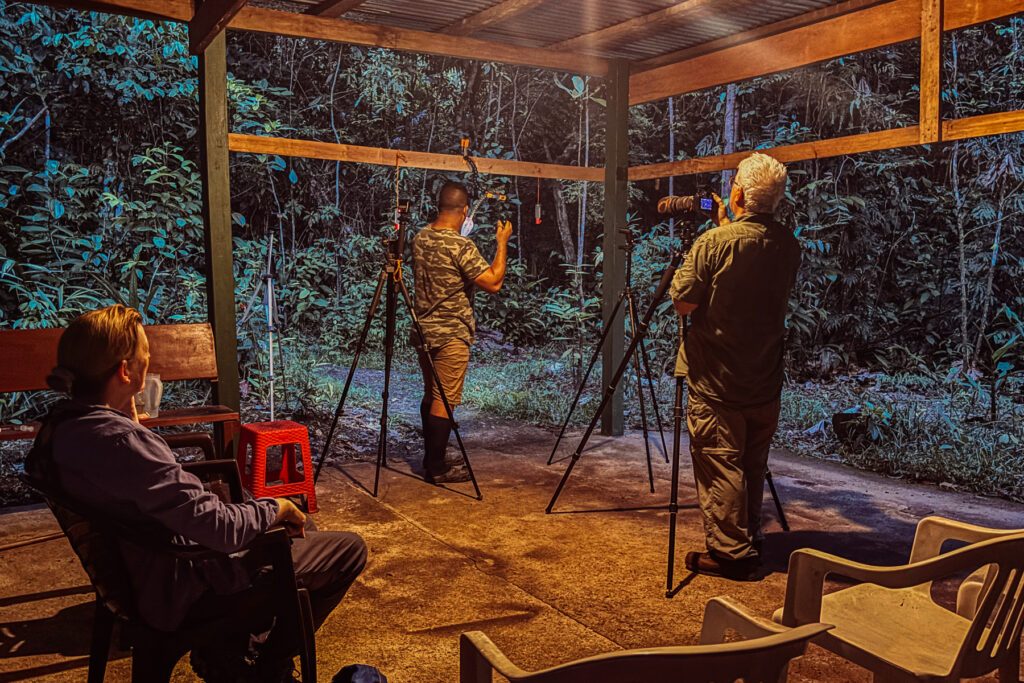
Laguna del Lagarto guide Didier talks John through a bat photography masterclass (image by Gin Wilde)
Some group members were able to achieve fantastic images of Orange-bellied Nectar Bats and Pallas’ Long-tongue Bat. For those observing, even just watching the bats flit around in the darkness was interesting. And – both nights – we were visited by a single firefly (the biggest I have ever seen) which I found mesmerising.
The following day was as full as you could get at this wonderful eco-lodge! Many group members rose at dawn to go birding at their own speed and, after breakfast, we headed down a dirt track and by a lagoon stuffed with Spectacled Caiman, for our session in the King Vulture hide.
Laguna’s specially-designed hide is one of the few places in the world set up with the express purpose of watching these stunning raptors – as they feast on carrion in front of you.
Among the two dozen or so Black Vultures, we were lucky enough to have around eight King Vultures – great hulking white and black raptors (with a strikingly colourful head and neck) – and one of the largest New World vultures, second only to condors.
Believed, by the Mayans, to be messenger birds who relay information to the gods, King Vultures are very charismatic birds to spend a morning with!
In the afternoon, Didier took us to a garden a short drive from the lodge, looking out to a meadow backed by towering trees.
Here, we were able to photograph some wonderfully-coloured smaller birds at close range – such as euphonias and tanagers – before turning our attention to more hummingbirds. While we were enjoying another hummingbird masterclass, a very tame and fluffy pet rabbit hopped around our chairs, hoping for a scratch behind the ears.
It was also here in the private garden that we had our best Geoffroy’s Spider Monkey sightings. These large New World monkeys have disproportionately long limbs, which, combined with their prehensile tails, make them look like spiders when swinging through the trees. Geoffroy’s Spider Monkeys are an increasingly endangered species, suffering a 50% population decline over the past 45 years.
We duly abandoned our hummingbird shoot to watch a small troop of these beautiful primates swing in towards us – nervously at first and with two infants – taking photographs when we could as they emerged from gaps in the trees.
After dinner that evening, half the group opted to go for another night forest walk. This 90-minute nature trek started gently enough – taking in a Common Pauraque, Bullfrog and Spectacled Caiman that our guide seemed to know by name, as they responded to him like excited Labradors greeting their owner.
But the hike was also hard-going in the humidity. We were taken deep into thick rainforest, on muddy trails. My highlight was the Net-throwing spider but – as we endeavoured to return to the lodge – we had no option but to pass under the largest spider web – complete with tarantula – that I’d seen in years. Not easy for one of my very arachnophobic group members, who coped incredibly, given the circumstances!
On our last morning at Laguna del Lagarto, we woke to torrential rain. Finally, there was enough of an interlude for us to join Didier on a short nature drive and walk, with much-enjoyed sightings of a Middle American Screech Owl, gloriously charming Red-capped Manakin and a Bare-throated Tiger Heron.
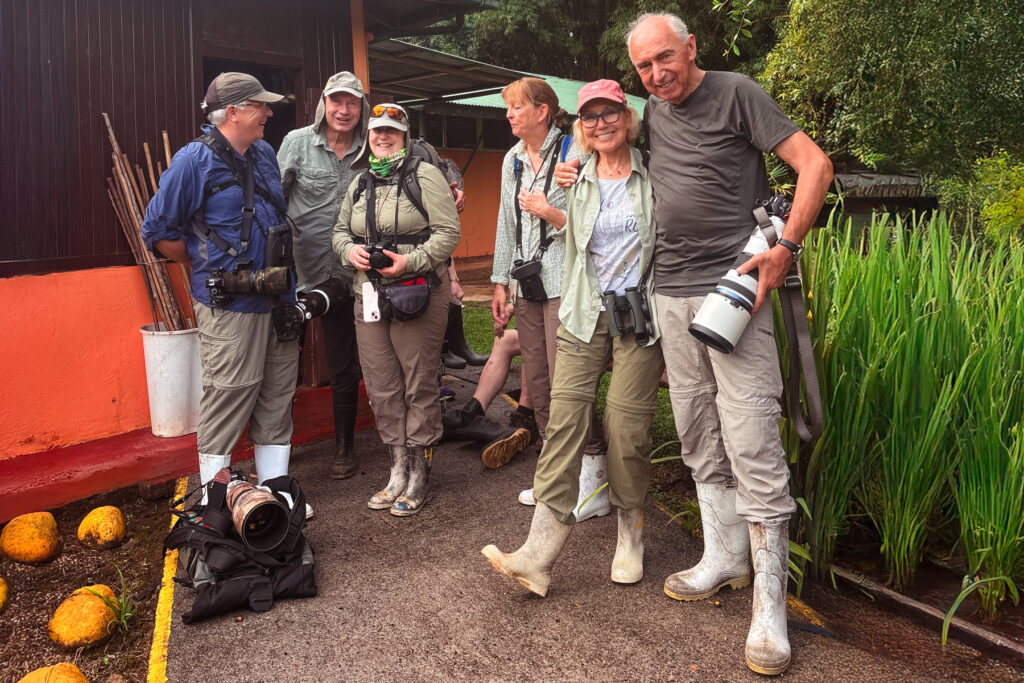
If you want to trek on muddy forest trails to find Screech Owls, you need to borrow some Wellington Boots! (image by Gin Wilde)
All of us agreed we could have stayed at this lodge for at least a week, but we had to press on for the most northerly section of our wildlife odyssey.
Caño Negro: Northern Riverine Haven for Kingfishers and Wetlands Birds
Several members our group were particularly looking forward to this stage of our tour: the watery birding paradise that is the Caño Negro Wildlife Refuge, just 12 miles south of the Nicaraguan border.
These wetlands – a haven for thousands of migratory waterfowl – are known for their ecological richness, and as one of the best places for bird watching in all of Costa Rica.
The main part of the refuge – the Caño Negro Lagoon – is fed by the Rio Frio River, drying up during dry season into smaller lagoons and pools: just perfect for water birds.
Driving north in the Alajuela Province, up to the small town of Los Chiles, we passed miles of agricultural land – fields for dairy farming and crops such as pineapple, coffee, sugarcane and bananas.
We made it to the dock for 3.30pm, in time to jump onto our private boat for an almost three-hour river cruise to see as much wildlife as we could.
Caño Negro didn’t disappoint. Kingfishers and Red-winged Blackbirds were our constant companions. In fact, I don’t think any of our group had ever seen as many tropical kingfishers in any one place. We had continual sightings of Amazon, Ringed, Green – and the American Pygmy (a species one group member, in particular, was thrilled to see, having always eluded him on previous birding tours.)
Wetland species began to tot up, such as our herons: Green, Black-crowned Night, Tricoloured, Bare-throated Tiger and – my favourite – the stocky, adorable-faced Boat-billed.
As we rounded the curves of the lagoon – which became so shallow in places that our boat driver had to punt us back into the deeper water – we had more and more sightings of Ibises, egrets, Anhinga, fishing Neotropical Cormorant, Northern Jacana, Sungrebe, Wood Stork, Roseate Spoonbill, Iguanas and even a Common Potoo high in the trees.
And as the sun started to set, we finally disembarked and headed to our small family-run lodge for dinner. This friendly and homey lodgings was a favourite among some of our group – not only for the wonderful food and cocktails, but for the mix of 60s, 70s and 80s pop classic songs it played in the dining hall.
Rising before dawn the following morning, we had just enough time for coffee and cookies before piling on to another private boat for our sunrise Caño Negro cruise. This wildlife voyage was even more fruitful than the night before – despite the heavy rain, bucketing down, that supplied a wonderful slightly misty and atmospheric backdrop to our sightings (and made us grateful for the boat’s roof.)
We were able to traverse far shallower areas of the wetlands, enabling us to get even closer to kingfishers and other birdlife. My highlights included a nursery of baby Spectacled Caimans – wonderful to see but frustratingly hard to photograph in the rain – and some beautifully posing Nicaraguan Slider Turtles.
And finally, in the shallowest waters of all, in an eerily quiet part of the lagoons, we found a much-desired bird species: the extremely localised Nicaraguan Grackle (both male and female together.)
After a full three hours on the river – which we nearly overshot thanks to my lax timing and desire to keep on exploring – we returned to our lodge for a hearty breakfast, reluctantly leaving Caño Negro to head back south again.
Arenal Volcano: Sloths, Stormy Weather and some wonderful White-nosed Coati
Before pulling into the bustling tourist town of La Fortuna, we stopped for coffee at a famous ‘Iguana Cafe’, which – despite being located on a busy road – lived up to its name by overlooking a small gorge teeming with a large number of (all-sized and coloured) Green Iguanas.
We later found a steak and fish restaurant for lunch, with lovely staff intent on us trying Costa Rica’s national aperitivo, Guaro. This spirit, made from sugarcane, was served as a spicy shot containing lime and Tabasco sauce. To be honest, it was enough to blow your throat out – but at least Luis loved it.
La Fortuna sprang up as a spa town, fed by the many hot springs that arise from the geothermal waters of the hot Tabacon River. Now a thriving mecca for adventure sports, it is overlooked by Costa Rica’s most notable volcano: the Arenal.
After an eruption in 1968 that destroyed three towns, for decades Arenal held the title for the ‘world’s most active volcano’, continually spewing orange lava until 2010, when it was declared functionally inactive.
Frustratingly for us, the Weather Gods were not on our side during our time in this region, with Arenal’s famously commanding peak perpetually covered in a fog of cloud. Only one group member – Katherine – managed to glimpse the peak, after she was out birding and the cloud briefly cleared.
Our eco-lodge in this area: the impressive Arenal Observatory Lodge, featuring 870 acres of primary rainforest, tropical gardens and pastureland inside the Arenal Volcano National Park.
With several trails, a frog pond, observatory tower and gardens – accessed via rope bridges – to explore, most of our time here was spent attempting to dodge the relentlessly heavy tropical thunderstorms, for long enough to get out birding.
Among my favourite species here were the wonderful Crested Guans and Great Curassows that wandered around the Cecropia trees. And despite no luck in locating the Black-crested Coquette, we had great sightings of numerous hummingbird species in the botanical gardens. And the occasional flash of Spider Monkey in the trees.
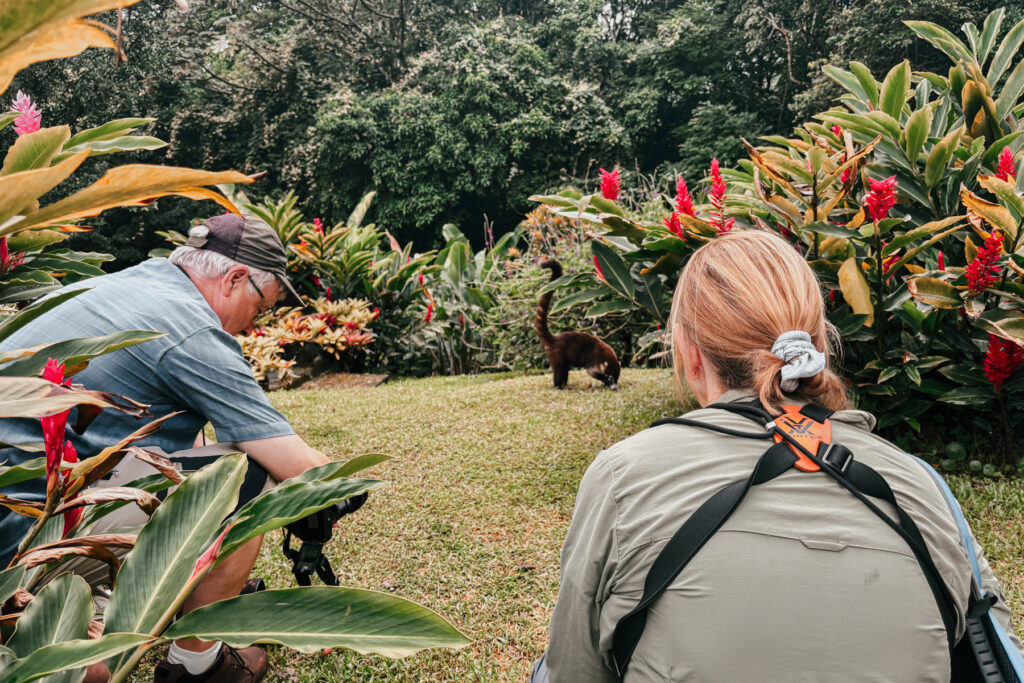
Wild Images guests John and Katherine photograph one of the many White-nosed Coatis that scamper around the Arenal Observatory Lodge (image by Gin Wilde)
However, my highlight was undoubtedly the cheeky foursome of White-nosed Coati. This small team of sweet-faced mammals launched a co-ordinated raid on an ornamental Hackberry tree, scampering up and down the branches and gorging on red berries – clearly delighted by their luck.
Because of the heavy rain forecast, I moved our Sloth session to the following morning, whereupon we headed back towards La Fortuna to a conservation site renowned for its reliable sightings of both Two and Three-toed Sloths.
Our three-hour guided walk did indeed deliver a number of sloth sightings – many of them high up in the trees and hard to photograph. Towards the end, however, we had more luck, with one Brown-throated (Three-toed) waking enough from its slumber to open its eyes and reveal its smiling-looking face.
Other wildlife at this site was surprisingly active. We rounded one trail to hear a fury of desperate squawking from a small flock of Grey-headed Chachalaca. The reason for their panic soon became apparent: a Fer de Lance snake had just pounced on one of their flock – and slowly began to attempt to devour it, head-first, while it was still just alive. For some members of our group, this whole process was fascinating. For others, it was all a bit raw!
The trail also revealed a pair of roosting, and very handsome, Black-and-White Owls, more Red-eyed Tree Frogs, Leafcutter Ants, a lovely Rufous-tailed Jacamar (one of my favourite birds) and an Emerald Tanager. Not bad for a morning on a day set to be a wash-out.
Inevitably, though, the storm clouds rolled in. We grabbed sandwiches at a nearby deli cafe and raced back to our Arenal Observatory Lodge, hoping to do as much birding as we could before we were washed out.
But despite our hopes, the rain soon became so heavy that even attempting to photograph in the gardens was akin to standing in a full-power jet shower.
Despite sheltering under trees, we were forced to retire to our rooms – or head to the restaurant (which, incidentally, served phenomenal meals) looking out over the distant shoreline of Lake Arenal in one direction and the volcano in the other – in search of a beer or cocktail.
That evening, a brief break in the rain unexpectedly unveiled one of the most vivid sunsets I have seen in years. Pure gold over a distant lakeside, and proof that every cloud has a silver – or gold – lining.
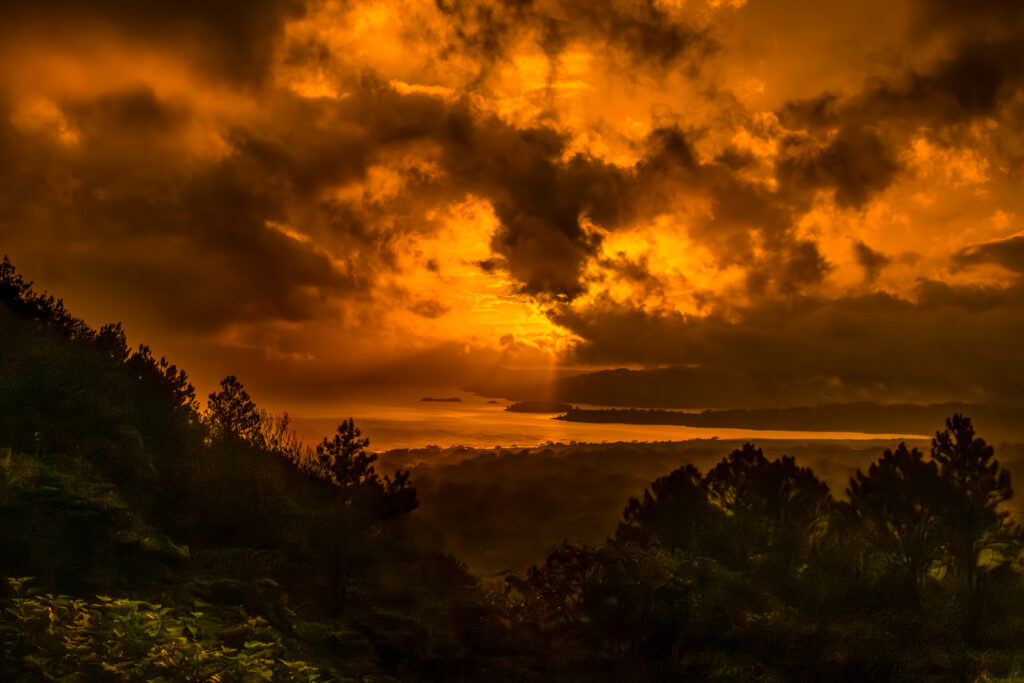
On this year’s tour in Costa Rica, it rained. It really bucketed it down. But then the rain cleared and this sunset – over the mid-altitude lowlands – took our breaths away (image by Gin Wilde)
San Gerardo: Cloud Forests, Rainbow-hued Hummingbirds and the majestic Resplendent Quetzal
More heavy rain thwarted our attempts for a final birding morning, so we waved goodbye to the mist-shrouded Arenal Volcano and began our five-hour drive to the Talamanca Mountains and high-altitude Cloud Forest.
Our base: the wonderful Paraiso Quetzal Lodge, just outside the small mountain town of San Gerardo de Doto. Getting here is no main feat, with an altitude gain of approximately 2,730 metres – which you can definitely feel if, like me, you attempt to run to breakfast.
Private chalets look out onto 80 hectares (almost 200 acres) of primary cloud forest that protect an impressive array of flora and fauna. Guides say that on a clear day, you can see both the Caribbean and Pacific from up here.
Up here, the temperature was noticeably chillier. Thankfully, the lodge had a roaring open fire continuously providing warmth and comfort near the dining room and bar!
As I was checking us in, I noticed not one of the groups was behind me to collect their keys. And no wonder: out on the outside decking, by the dining room, hung some nectar-feeders, around which hovered some of the most breathtakingly colourful hummingbirds you could ever hope to see.
Costa Rica’s incredible hummingbirds (video by Gin Wilde)
Chief among these was the Fiery-throated Hummingbird – famous for its iridescent plumage and feisty, dynamic behaviour. No other hummingbird combines every colour of the rainbow on its throat and breast.
This jewel of a bird – native to the cloud forests of Costa Rica and western Panama – can display shades of orange, red, yellow and blue on its throat, depending on the angle of light and movement of its feathers. With a metallic green body and shimmering blue crown, this is a truly knockout bird.
Another beauty at the feeders was the larger Talamanca Hummingbird – a fellow ‘mountain gem’ hummer, also endemic to the highlands of Costa Rica and Panama.
Sideways on, male Talamancas have a dark green gloss and dull head. But when they turn their heads, there’s a flash of metallic turquoise chin and gorget, and a striking violet crown.
Other species around the feeders included Volcano and Scintillant Hummingbirds, Long-tailed Silky Flycatchers gorging on berries, Lesser and Brown Violetears and the occasional Slaty Flowerpiercer.
One afternoon, we set up flowers drenched with sugar syrup for a hummingbird session – beloved by half the group for photography, while others preferred to shoot hummers and birds like the neon-green Golden-browed Chlorophonia in the bushes below.
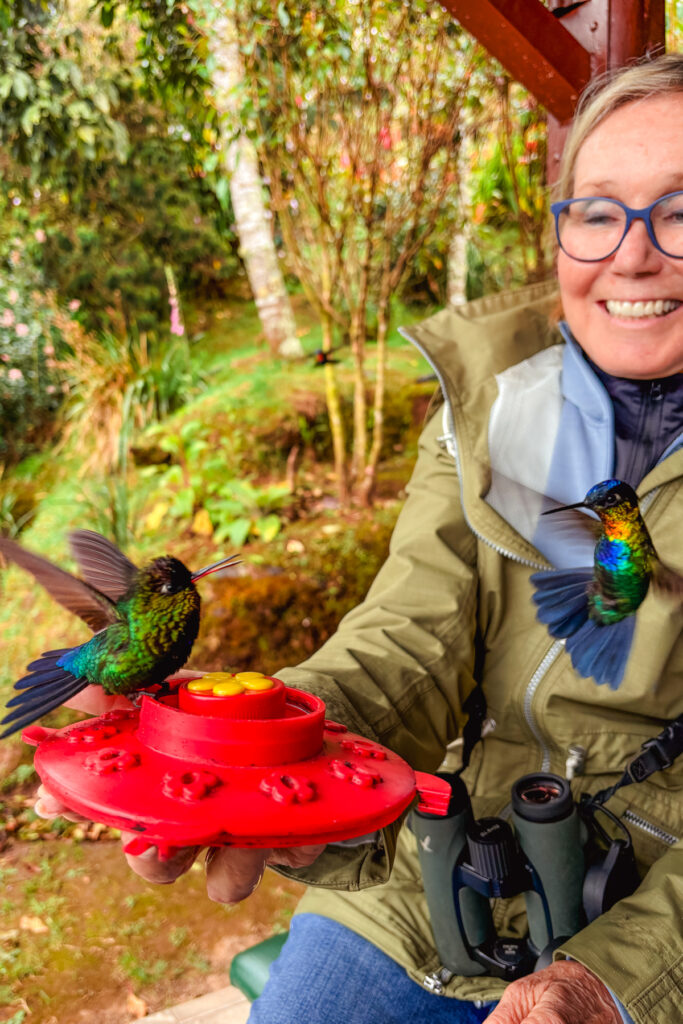
Yona picks up the nectar solution – and finds herself surrounded by spirited Fiery-throated Hummingbirds (image by Gin Wilde)
It was here on this deck that some particularly confident Fiery-throated Hummingbirds began perching on our arms and hands, gazing up at our faces. This inevitably sparked some rare ‘selfie with a hummingbird’ style shots – but one of those experiences that will remain with me forever.
Yet our main focus at this altitude: the iconic (and culturally sacred) Resplendent Quetzal. We had three morning sessions focused on this rainforest beauty – the largest of the trogons – and heralded for its great beauty.
During breeding season (our time here) males grow elongated upper tail feathers that form a long flowing train of iridescent turquoise streamers. But seeing both male and female is an unforgettable sight – as they suddenly appear from the forest, their shimmering plumage a flash of metallic blues, greens, and reds.
Our first morning session focused on a nesting site in nearby pastureland. Local farmers here have worked together to protect the quetzal, using the money from ecotourism to fund nesting sites. It was genuinely lovely to witness both the male and female bringing wild figs and avocado to their young chick.
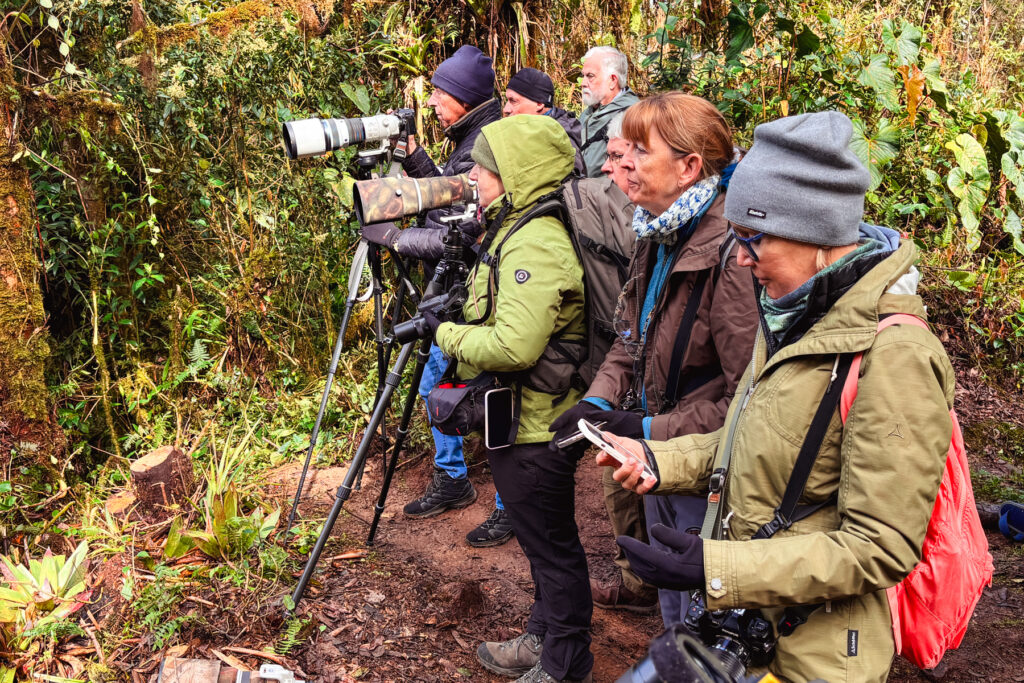
Not ‘Waiting for Godot’; we’re not that literary. ‘Waiting for Quetzal’ is far more rewarding (image by Gin Wilde)
At an alternative nesting site – shown to us by our knowledgeable guide Oscar – was located nearer the lodge, around a ten minute walk along a forested trail. This nesting hole was much closer for photographic purposes, and e had good sightings of both male and female quetzal on our second morning. Frustratingly for us, on our final morning, we waited for almost four hours to see no male at all.
Yet we were all happy with our time here, surrounded by mist and hummingbirds. Another treat was the surprisingly hungry Mexican Hairy Dwarf Porcupine that seemed happy for us to photograph it as it devoured leaves, just outside tour members John and Katherine’s chalet.
On our last morning, we waved goodbye to the scores of hummingbirds and drove for coffee at Miriam’s – one of the most famous cafes in Costa Rica for their bird feeders.
Here, we had brilliant sightings of Acorn Woodpecker, Flame-coloured Tanagers, Large-footed Finch and Spotted Wood Quail.
But finally, it was time to leave for the drive back to San Jose. What a fitting end to a stunningly-diverse Costa Rica tour, packed with a kaleidoscope of colourful birds, reptiles, amphibians and often charismatic mammals, that make their home in these bursting wetlands and forests.
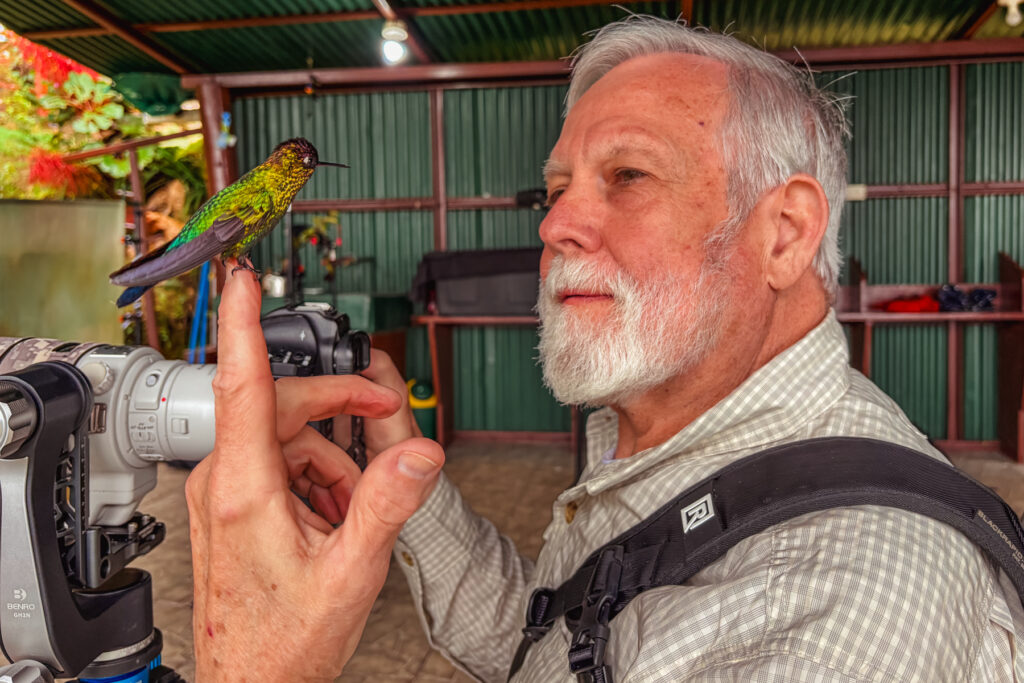
‘Fiery-throated Hummingbird – meet Jim. Jim – meet Hummingbird.’ Several of these beautiful hummers landed on our fingertips and hands (image by Gin Wilde)
Virginia Wilde
Virginia Wilde lives in Edinburgh with her two children, Esme and Albie. Virginia is a photojournalist with a life-long passion for wildlife and the natural world. She spent years working in conflict zones such as Afghanistan and Libya – but has returned to her love of nature and is now based in Scotland. Virginia has […]