India Wildlife Spectacular
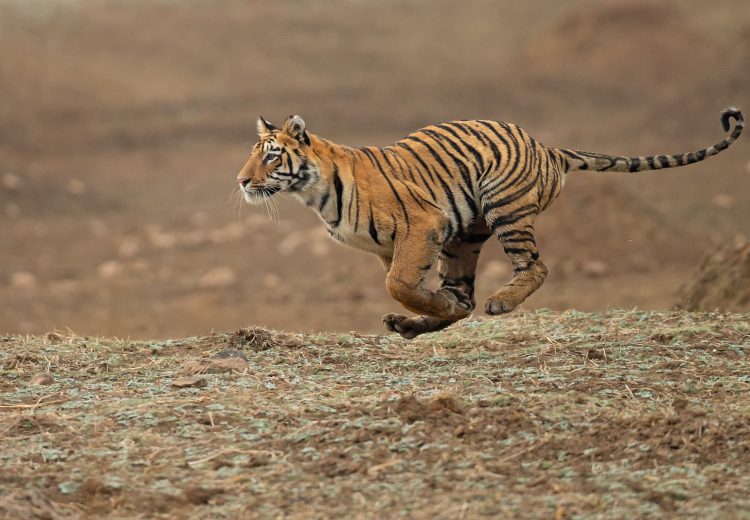
The awe-inspiring Tiger is perhaps the ultimate quarry for wildlife photographers, and we will help you get to grips with this endangered and often elusive animal . (image by Mark Beaman)
Sunday 27th February – Friday 11th March 2011 (13 days)
Gujarat & Thar Desert Pre-Tour Extension from Saturday 19th February (8 days)
Assam Post-Tour Extension to Tuesday 15th March (4 days)
Leader: Mark Beaman
Group Size Limit: 10
Tiger! Surely one of the most evocative creatures that still shares our crowded planet with us, but for how much longer? Of all the mammals that wildlife photographers dream of photographing, this one surely tops the bill! But it is not an easy thing to do, unlike, for example, Lions in Africa, Tigers in Asia are extremely rare and far more secretive, at least in most of their remaining range.
Those visiting the wildlife reserves of India are sometimes lucky enough to see a Tiger on their travels, but often views are brief and quite often there are no sightings at all. To see Tigers well it is necessary to spend plenty of time and also to visit the very best places, and there is no finer and more reliable Tiger reserves than those of the remote state of Madhya Pradesh in central India.
In order to make those Tiger dreams come true, we will be exploring two of the best sanctuaries in Madhya Pradesh, Pench National Park and the better known Kanha National Park. These huge and remote parks, situated in the hill ranges of central India that were immortalized by Rudyard Kipling in the Jungle Book, protect vast tracts of largely deciduous forest which still hold many Tigers. For many years Kanha has been recognized by wildlife enthusiasts and photographers as one of the best places to go if one wants close and regular encounters with Tigers, but in recent years Pench, where the forest is drier and more open, and visitor numbers still far fewer, has been claiming more and more of the limelight. In both these reserves you can expect, not just hope, to get sightings of these extraordinary and beautiful predators, often at very close range, and sometimes be able to watch them for long periods at a time! Staring into the huge, cold yellow eyes of a Tiger just a short distance away is an awesome experience, and Pench and Kanha is where it can happen. We will explore these parks by jeep and also on elephant back, in traditional manner. Although the jeeps allow us to cover more ground, many of the closest encounters are from elephant back, as the Tigers are now so used to being tracked that they seem unconcerned by their close proximity.
Pench and Kanha hold many other large mammals, and those offering good photographic potential include the beautiful Chital (or Spotted Deer), Sambar (a large Red Deer-sized species), Nilgai (or Blue Bull, one of the world’s largest antelopes), Wild Boar, Rhesus Macaque and the characterful Hanuman (or Grey) Langur. Pench is probably the best place in India for seeing and photographing Leopard, while both parks produce regular sightings of Golden Jackal and Jungle Cat, and we even have a reasonable chance of coming across the rare and declining Dhole (or Indian Wild Dog) at Kanha. The huge Gaur (otherwise known as the Indian Bison) is commonly encountered at Kanha, where we should also get the chance to photograph the endangered Swamp Deer as they graze in the marshes.
Both parks hold a rich selection of birdlife and amongst the species that often provide superb portraits are Indian Peafowl (the males will be in full display at the time of our visit), Lesser Adjutant (a huge stork), Crested Serpent Eagle, Crested Hawk-Eagle, Indian Scops Owl and Jungle Owlet.
Pench and Kanha are of course the focus of this Indian journey, but our rich tapestry of experiences will be further enhanced by spending some time further to the north. Here we will pay a visit to the Agra region to see and photograph the imposing Agra Fort and the ethereal Taj Mahal, that pinnacle of human achievement, and then explore the wonderful National Chambal Sanctuary, a little-known reserve on the Chambal River that is home to two species of crocodile (the long-snouted Gharial and the thick-set Mugger), Gangetic River Dolphins, bizarre Indian Skimmers, Great Thick-knees and Black-bellied Terns.
For those able to explore India for longer periods, we have two optional tour extensions available, one before the main tour and one after.
Our pre-tour extension will take in three national parks in the state of Gujarat in western India, and the Thar Desert in the colourful state of Rajasthan.
Gir National Park in Gujarart is famous as the last place where the Asiatic Lion survives and we will start our explorations in this interesting sanctuary that also harbours many other interesting animals, and in particular Leopard and Chowsingha. To the northeast lies Velavadar National Park where we will enjoy close-up encounters with the beautiful Blackbuck, surely one of the most striking antelopes of all We could even sight a Grey Wolf here. Finally we will round off our journey through Gujarat with a visit to the Little Rann of Kutch, home to most of the remaining Indian Wild Asses (or Onagers), Lesser Flamingos, Macqueen’s Bustard, the lovely Indian Courser and many other interesting creatures.
Rajasthan with its turbulent history, warring yet cultured rulers and extraordinary cities and fortresses is surely the region that epitomizes the romantic India of a bygone era. Here the Moghul emperors constantly battled for supremacy with the local rulers, who in turn fought each other whenever they were not having to face an outside threat. The riches they accumulated were used to build awesome strongholds and some of the most fabulous palaces ever constructed. Their lives and times seem like a fairy tale to we inhabitants of a much more crowded and less simple era, but they live on in the remarkable monuments they built that now emblazon India’s rich architectural heritage. Here, in the Thar Desert, we shall visit the romantic desert citadel of Jaisalmer and the city of Jodhpur, where the huge fort on a rocky crag above the city and the ornate palace, not to mention the stunning views, will provide rich subject matter. Most rewarding of all will be the extraordinary spectacle of thousands of fearless Demoiselle Cranes feeding right next to us at the village of Khichan, something few wildlife photographers have so far witnessed.
For those taking the optional post-tour extension to Assam in far northeastern India, there will be the opportunity to explore the magnificent Kaziranga National Park. This famous park in the plains of the wide Brahmaputra River needs little introduction, what with its world-famous populations of Indian Rhinoceros, wild Water Buffalo and Swamp Deer, as well as Asian (or Indian) Elephants. The extensive wetlands and grasslands of Kaziranga also provide vital habitat for such rarities as the huge Greater Adjutant, Slender-billed Vulture, Pallas’s Fish Eagle, Swamp Francolin and Bengal Florican, all of which we will be hoping to photograph.
Mark Beaman, who has been travelling in India since the 1970s, has an intimate knowledge of many of the best wildlife photography venues this wonderful country has to offer and will use that experience to make sure you are in the best places at the best time of day and at the best season for capturing those dream shots.
Itinerary
Day 1 Morning flight from London bound for Delhi, arriving shortly after midnight for an overnight stay.
Day 2 From Delhi we will drive southwards to the historic city of Agra. First we will make a visit to the famous Agra Fort, a massive yet elegant structure of gigantic red sandstone blocks started during the reign of the Mogul emperor Akbar. Here in this romantic setting we can look out from the room where Shah Jahan was imprisoned by his son Aurangzeb and see the distant outline of the Taj Mahal further along the Yamuna River. The fort itself is very photogenic and there are great opportunities to shoot the distant Taj through the ornate windows and archways of the fort. Eventually we come to the climax of our day as, in the late afternoon (the best time of day, typically with soft, golden light shining on the monument), we make our way to the incomparable Taj Mahal, a mausoleum of ethereal beauty built by the Mogul emperor Shah Jahan in memory of his wife Mumtaz Mahal, that really does live up to its reputation and more. This immense building seems to float on its white marble plinth whilst inside the light filters gently down to softly illuminate the jewel-encrusted tombs of the emperor and his beloved. The Taj Mahal is positioned at the edge of the city, immediately above the Yamuna River and happily the far bank of the river is still undeveloped, making for an unspoilt backdrop to this deservedly celebrated monument. After our visit to the Taj we will head for a small but welcoming lodge near the Chambal River for an overnight stay.
Day 3 This morning we will visit the National Chambal Sanctuary on the border between Uttar Pradesh and Madhya Pradesh states. Here the Chambal River, the last unpolluted major river in northern India, flows between low erosion cliffs as it approaches its junction with the Ganges. The sanctuary, which also includes part of the state of Rajasthan further upstream, was set up to protect the healthy population of crocodiles that survives here, and also a population of the highly endangered Gangetic River Dolphin. When we first arrive it may still be misty, so while we wait for the sun to warm the air we will concentrate on the area around the boat dock. Once it is warm enough we will take a boat trip on the river. We should be able to closely approach and photograph the crocodiles as they sun themselves on the sandbars, both the long-snouted Gharial and the more conventionally-shaped Mugger. Typically one encounters large adult male Gharials with a bulbous protrusion on the end of their snout, smaller adults and immatures and even tiny juveniles, all with long rows of fine teeth on display and streamlined, thinly plated bodies that contrast with the more conventional and fearsome-looking teeth and heavy armoured plating of the thick-set Muggers. We also have an excellent chance of seeing the blind Gangetic River Dolphin and we may even be lucky enough to watch them jumping exuberantly, although sometimes they show little more than their backs. The most notable bird species of the Chambal is the localized Indian Skimmer and we should be able to watch these bizarre creatures living up to their name as they flap across the river, intermittently dipping their ‘broken’ bills into the water, or flocking on small islets. Other photographic attractions include the declining Red-naped (or Indian Black) Ibis, the handsome Bar-headed Goose, Bonelli’s Eagle (often drinking at the river’s edge), the hulking, huge-eyed Great Thick-knee, the noisy River Tern and the uncommon Black-bellied Tern. After lunch at our lodge, where there is often a photogenic Brown Hawk-Owl in the gardens, we will return to Delhi for an overnight stay.
Day 4 Morning flight to the city of Nagpur in central India, regional capital of the western part of Maharashtra. From here we head northwards through dry cultivated country and then through the low, forested ranges of the Satpuras to Pench for a four nights stay. Here we will stay at Pench Jungle Lodge, a very pleasant safari lodge with conventional central buildings and visitor rooms consisting of huge walk-in safari tents abutting onto a conventional bathroom. Just the job for a visit to Rudyard Kipling country, for Pench and its surroundings are the original setting for the famous Jungle Book! This afternoon we will have our first opportunity to explore Pench National Park.
Days 5-7 Pench National Park protects a huge tract (758 square kilometres) of mainly dry deciduous tropical forest in the rolling but rocky Satpura range in the state of Madhya Pradesh in north-central India. We shall be spending most of our time in the core area, which amounts to 299 square kilometres, where the habitat is at its best and the density of Tigers at its highest. Each day we will make morning and afternoon excursions into the park by jeep (the park is closed over the midday period), exploring a range of habitats including dry teak forest, rocky areas reminiscent of African ‘kopjes’, jungle pools, grassy meadows and the shores of a large artificial lake.
A relative newcomer to the list of famous Tiger reserves in India, Pench was little visited before the turn of the 21st century, but that has changed now that road access has improved and comfortable accommodations have been built. Today it is known as one of the best places for seeing the endangered Tiger in all India, and in addition one of the best, if not the best, places in India for observing Leopards.
We will be using open-topped jeeps to explore Pench. There will usually be three or four group members per jeep, plus a skilled local driver-guide who is an expert on the maze of roads that crisscross the park, and in particular has an intimate knowledge of the park’s Tigers, Leopards and other key creatures. (Should you prefer to ‘do your own thing’ we can arrange for just one or two people to have their own jeep, for an extra charge.) As we patrol the park tracks we will be keeping a constant lookout for Tigers. The best times of day are early morning and late afternoon, when Tigers can regularly be found walking along the tracks. Several generations of the Pench Tigers have been catalogued by those who study them and all the best driver-guides at seem to have a feel for where a Tiger will appear, so we should have a good chance of several encounters between us, perhaps watching one of the huge territorial adult males on patrol, at times walking right past the jeep showing utter indifference to our proximity, or strolling past the cubs he fathered last year and showing equal disdain (to the distress of the cubs, who clearly want dad to stop and play!). We could find some well-grown cubs playing around in the forest, chasing each other or running around with an old bone in their mouths, perhaps watched over by their attentive but unconcerned mother. Tiger movements are of course unpredictable, so it is quite possible to go for a couple of days without seeing one from your jeep, and then perhaps have two fantastic close-range encounters in succession! It is all a matter of chance.
There is, however, a much more reliable way of seeing the Tigers of Pench and that it to track them by elephants. The mahouts here are extremely experienced in the ways of the Tiger and seem to anticipate where the females and cubs will be lying up during the warmth of the day. We will want to participate in the elephant tracking excursions whenever Tigers are found (which is by no means every day). Four people at a time can travel on each elephant (usually three are employed) through the forest to get really close up to one or more Tigers. Expect some incredible views if this happens! You may not even need a telephoto lens to encompass the entire animal, you can sometimes be so close! The elephants seem untroubled by the proximity of Tigers (they are used to them) and the mahouts are used to taking wildlife photographers very close, so it is likely that we will get within a few metres of the resting cubs and, provided she is ‘at home’, their huge mother. Indeed it is the cubs which show signs of nervousness when the elephants come close – mama is likely to stay sprawled on the ground, or at most rise up a little and give a baleful glare with those corpse-cold pale yellow eyes. The cubs soon settle down, however, and we could even be treated to them drinking in a stream, jumping over logs, interacting with each other or pretending to stalk the elephant! These magical moments are one of the glories of visiting Pench and, if we are reasonably fortunate, we will all have close up encounters with these incredibly beautiful carnivores.
Leopards are seen almost daily at Pench by one or more jeeps, but they are typically shyer and often more distant, perhaps peering balefully from the top of a rock, or crossing the road well ahead. Getting good close-up photographs is a matter of chance, and much less reliable than, say, Tanzania or South Africa. You have much more chance of obtaining a fine contextual shot with the animal in its natural setting amongst the forest and rocky outcrops.
Although Tigers and Leopards dominate the scene at Pench, they would not be there were it not for a healthy population of prey animals. The beautiful Chital (also known as Spotted or Axis Deer) is much the commonest large mammal in the park and we will soon get used to their yelping calls, which rise in pitch when they sight a Tiger. Large herds dominated by a single adult male and parties of bachelor males are a common sight. The big males here have especially impressive antlers and backlit subjects amongst the forest leaves or standing in the tawny grass make wonderful photographic subjects, as do mothers suckling their fawns.
The other really conspicuous species is the Hanuman (or Grey) Langur – they are everywhere in the park, sitting in playful, rowdy groups by the roadside or climbing high in the trees. (The local form is now sometimes treated as a distinct species: Northern Plains Grey Langur.) Monkeys often make for great ‘photo ops’ and the langurs, the Bandar Log of Kipling, with their long, long, curling tails, graceful loping movements and cheeky faces fringed by a ruff of hair are certainly rich subjects. Mothers with small babies are commonly met with and often pose unselfconsciously for some really gooey shots! (Or try long distance telephoto shots of sunlit solitary monkeys sat by the roadside, or crossing a dusty, shadowy track. There are so many possibilities here.)
Other photogenic mammals in the park include the Rhesus Macaque monkey, Golden Jackal, Wild Boar, Sambar (a large deer), Nilgai (or Blue Bull, one of the largest of all the antelopes) and even the tiny but fast-moving Northern Palm Squirrel. If you are in luck a Jungle Cat will put in an appearance, its tawny pellage almost merging with the grass (often only its large ears and golden eyes give it away).
Although it is the prospect of close encounters with Tigers and other mammals that have brought us to Pench, this extensive park is an good place for bird photography also. The delightful little Indian Scops Owl should be found at its roost hole in an old forest tree (the cryptic plumage and the gnarled bark make for beautiful shots), while the quizzical Jungle Owlet hunts birds in the daytime, often allowing us a close approach. Amongst the raptors, we should get some fabulous close-up encounters with both. Crested Serpent Eagle and Crested Hawk-Eagle are both surprisingly tame here, allowing for some portrait quality encounters. Indian Peafowls will be reaching the height of their display period, so we should get some great encounters with older males with huge fanned out ‘tails’ that they shiver enticingly to attract the hens. Plenty of other species are around and there should be good opportunities to photograph a selection of them, including the colourful Indian Roller and perhaps the beautiful but shy Painted Spurfowl.
Day 8 After an early morning excursion at Pench we will transfer to Kanha for a four nights stay at a very comfortable lodge called The Baagh (meaning The Tiger). We should arrive in time for a late afternoon visit to Kanha National Park.
Days 9-11 The huge Kanha National Park, which covers 940 square kilometres (the entire protected area of the Kanha Tiger Reserve covers 2060 square kilometres), is one of India’s oldest, dating back to 1955, and holds a very significant population of over 125 Tigers. The habitat here is greener, taller and denser than at Pench, and is dominated by large areas of tall Sal forest. Large grassy meadows, the sites of former villages and their surrounding cultivation and pastureland, dot the park and in the early morning these meadows can be covered in low-lying mist, creating some beautiful landscapes. At the southeastern edge of the park a high escarpment rises over the flatter lands to the north and west.
As at Pench, we will be making our excursions inside the park by jeep, and as at Pench there is an option to take a jeep for just one or two people at an extra charge. We will also likely have opportunities to see Tiger from elephant back.
The fauna of Kanha is much the same as at Pench, but there are some subtle differences that make a combination visit to the two reserves a worthwhile exercise. Tiger encounters along the tracks are about as frequent as at Pench, but as there are more tracking elephants at Kanha, the chances to view Tigers from elephant back are more frequent here, amounting to perhaps 5 days per week on average.
The huge Gaur (or Indian Bison) is much easier to see here than at Pench and we are likely to come across a herd of these placid bovines feeding in the forest, or wandering across the track in front of our jeep. Close-ups of the massive heads and horns of these impressive beasts are often the shots that make the most impact.
The rare ‘hard ground’ race of the endangered Swamp Deer almost became extinct, but steady conservation efforts at Kanha have brought it back from the brink and nowadays it is easy to encounter this spectacular deer in the meadows, where they often feed up to their bellies in the pools and marshes, their reflections making for a great image. Sometimes the males bedeck their sweeping antlers in aquatic vegetation, making for a very strange but powerful appearance, although this is more frequent during the winter rut.
Kanha is famous for its Dholes (or Indian Wild Dogs), but even so the chances of seeing a pack of these attractive predators is not high during a 4-days visit, being perhaps one in three. We will all be hoping that we get lucky. When encountered, the dogs are often quite unafraid, continuing to go about their business together, whether hunting or some other kind of social interaction, regardless of the presence of a jeep or two.
We shall also have more opportunities to capture bird images, or get more shots of Chital and langurs (the two species often interact at Kanha).
Day 12 After a last morning at Kanha we will drive to Raipur, in nearby Chattisgarh state, and catch an evening flight to Delhi where we connect with an early morning flight bound for London.
Day 13 Morning arrival at London.
Gujarat and Thar Desert Pre-Tour Extension Itinerary
Day 1 Morning flight from London bound for Mumbai, arriving shortly after midnight for an overnight stay.
Day 2 This morning we will take a short flight across the Gulf of Cambay to Keshod in southern Gujarat. From here we will drive to Gir National Park for a two nights stay at a comfortable safari lodge. This afternoon we will commence our exploration of Gir.
Day 3 Gir (or Sasan Gir) National Park protects 1412 square kilometeres of mainly dry deciduous forest, acacia-dominated scrub jungle and grasslands amongst the rocky hills of southern Gujarat. Originally protected by the Nawab of Junagadh, the area became a national park and wildlife sanctuary in 1965. Gir is most famous as the last haunt of the endangered Astiatic Lion, a close cousin of its African relative and a species that once extended from Greece to central India, but is now reduced to a small surviving population in just this one national park in Gujarat! It is of course the Asian Lions of Gir that have brought us here and we shall be concentrating on getting good images of these interesting creatures during our visit. The lions take both natural prey inside the park (especially Chital or Spotted Deer, Sambar and Wild Boar, and also domesticated cattle belonging to the local Maldhari herders in the surrounding wildlife sanctuary, where local people have access rights. Reduced to only about 20 individuals by the early 20th century, the number of Lions has now recovered to over 300. We will use open-topped jeeps to explore the sanctuary, concentrating on finding the Lions. We should all have at least a couple of encounters during our visit and we will be hoping in particular for fine shots of an adult male with a bushy blackish mane.
Gir is also a good place for coming across both Leopard and the little Chowsingha (or Four-horned Antelope), and we will surely have our first sightings of Golden Jackal, Nilgai (or Blue Bull) and the attractive little Chinkara (or Indian Gazelle).
A wide variety of bird species inhabit the park and birds of prey in particular, including Indian, White-backed and Red-headed Vultures, and both Tawny and Crested Serpent Eagles, provide good subjects.
Day 4 After an early morning visit to the park we will travel northeastwards to the town of Bhavnagar, where we will spend the night in one of the old palaces of the Maharaja of Bhavnagar. Late this afternoon we will explore nearby Velavadar (or Blackbuck) National Park, situated near the Gulf of Cambay. This is one of the last areas of relatively undisturbed grassland in Gujarat and is famous for its large herds of elegant Blackbucks, which we will be able to see and photograph at close range (the males, with their long, spiral horns, are especially striking, and the backdrop of tall, dry grass, ranging from yellowish-white to reddish-brown in colour, is especially pleasing). The park is also well known for sightings of Grey Wolf, which we have a small but realistic chance of seeing (on one visit we watched one chasing a herd of Blackbuck, causing utter confusion and panic!) This 34 square kilometres sanctuary also holds some interesting birds, in particular the localized Sykes's Lark. Towards the end of the afternoon large numbers of Montagu’s Harriers and smaller numbers of Pallid and Western Marsh Harriers arrive over the grasslands preparatory to roosting here, making for a an impressive sight.
Day 5 We will have another chance to explore Velavadar this morning before we head northwards, our goal the salty ‘wastelands’ of the Little Rann of Kutch, where we will stay for two nights in a small but welcoming lodge run by a family of local landowners. We will arrive in time for an initial photographic safari in an open-topped 4x4 truck.
Day 6 At its southern edge the Thar Desert gradually gives way to the vast saline flats that form the Great Rann of Kutch and the Little Rann of Kutch. These flats, which were once part of the Gulf of Kutch (it is said Alexander the Great embarked from a port in the gulf at the end of his abortive campaign to conquer northwestern India), are still inundated by the sea during the monsoon months. The Little Rann of Kutch is the last stronghold of the Indian Wild Ass (or Onager), which is now protected by the 4954 square kilometres of the Wild Ass Wildlife Sanctuary. The open flats of the Rann are a wild place, but offer little in the way of sustenance, even to a wild ass, but the bushy and grassy areas towards its periphery are a different matter and here we shall surely encounter a good number of attractive Indian Wild Asses and very likely a few wintering Macqueen’s Bustards from Central Asia, although an extraordinary level of persecution by falconers from Arabia has brought their population to a perilously low ebb. At the very edge of the Little Rann are some bird-rich wetlands and here we are likely to encounter large numbers of Lesser Flamingoes (this region of India is the only area outside Africa where this species breeds), as well as smaller numbers of Greater Flamingoes. Both species make for great images and the whole area is rich in waterbirds in general, with potential subjects including Great White Pelican, the endangered Dalmatian Pelican, Western Reef Egret, Black-headed Ibis, Eurasian Spoonbill, Woolly-necked Stork, the attractive Painted Stork, Asian Openbill (an extraordinary stork with a bill adapted to cracking the shells of pond snails), Comb (or Knob-billed) Duck, flocks of Common Cranes, the stately Sarus Crane, Black-necked Stilt, Pied Avocet, Marsh Sandpiper, Slender-billed Gull and Gull-billed Tern. Areas of dry cultivation and wasteland hold two more specialities that make excellent photographic subjects; the attractive Yellow-wattled Lapwing and the beautiful Indian Courser, while the lovely Rosy Starling can often be found in large, very approachable flocks at the edge of villages.
Day 7 Today is a travel day as we travel northwards through northern Gujarat and into the Thar Desert in western Rajasthan. We are heading for the ancient caravan city of Jaisalmer for an overnight stay and we will surely make some stops along the way, for Rajasthan is a ‘target-rich environment’ for photographers, with the most gaily clothed people in all India, heavily laden camel carts, ancient, crumbling buildings and no end of other things to see and photograph! We should arrive in time to photograph the walled citadel of Jaisalmer, constructed from yellow sandstone, as the sun sets in the west and the walls take on a rich reddish-golden hue.
Day 8 Early this morning, when the light is at its best, there will be an opportunity to explore the beautiful and romantic citadel of Jaisalmer, which dominates the town and can be seen from long distances across the flat surrounding countryside. The whole place still has a medieval feeling about it, what with its crenulated golden sandstone walls, beautiful Jain temples and narrow, winding streets lined by exquisitely carved ‘havelis’ (the houses of the merchants and officials). Later we will travel eastwards to the town of Phalodi for an overnight stay at a richly decorated haveli which has been converted into a small hotel. We have come to this remote corner of India’s Thar Desert to enjoy and photograph one of the most extraordinary wildlife spectacles in all Asia. The small village of Khichan lies not far from Phalodi and here, between autumn and early spring, thousands of Demoiselle Cranes from the steppes of Central Asia and Mongolia gather to live alongside mankind in extraordinary harmony. This amazing event owes its existence to the custom of the people of Khichan to put out grain for the cranes on the edge of the village. So long has this tradition lasted, and so strongly is the reverence for the birds amongst the local community, that even nowadays, long after the merchant wealth from the trans-Thar camel trade that once made Khichan prosperous has ebbed away, the local people still continue. Today they rely on donations from distant clansmen in Bombay, Delhi, London or New York, as well as visitors such as ourselves, to cover the huge sum involved in putting out vast quantities of grain from October to March. At any one time between 3000-5000 cranes congregate at the village, making for an extraordinary spectacle. Twice each day the birds gather on the nearby dunes before flighting in to feed on the scattered grain. At first parties fly over without landing, but then they move in, en masse, to feed. The cacophony of noise as the flocks of bugling cranes wheel close overhead before landing, or the roar of wings when a ‘dread’ affects the feeding mass and they take off like one gigantic organism has to be experienced to be appreciated. After feeding the cranes retreat to rest on the dunes once more, their soft silver-grey plumage contrasting beautifully with the dull orange of the sands. To have been so close to thousands of wild cranes, and to be able to photograph them in such numbers and at such close range, is an extraordinary privilege and we shall all feel glad that we made the pilgrimage to Khichan.
Day 9 Early this morning there will be a second opportunity to spend time with the cranes of Khichan, for the spectacle offers so many extraordinary photo opportunities, including massed shots of the feeding cranes, the beautiful abstract patterns formed by the grey backs as the birds feed, close-ups of the heads with their blood-red eyes and swirling formations of flying birds, that it is good to review the previous day’s results and then have a second crack! After the cranes disperse in mid-morning we will drive to the city of Jodhpur, which was once the capital of one of the ancient Rajput princely states. No visit to city is complete without a look around the truly impressive Meherangarh fortress. Started in 1459, this massive, brooding construction squats upon a hill high above the city. As we walk through the huge Loha (Iron) Gate into the fort we can see the many hand prints left by the queens and concubines of the maharajas of Jodhpur before they committed sati (suttee) on the funeral pyres. The hand prints are still daubed with red as a mark of respect, for those who committed sati are held in great reverence by the people of Rajasthan. As well as possessing an extraordinary palace, with remarkably rich decoration and numerous fascinating objects from the great days of the maharajas, the fort offers dramatic panoramic views across the ‘blue city’ of Jodhpur (so-called because of the many blue-painted buildings). Indian Vultures nest on the steep cliffs below the fort and are often to be seen soaring over the city, as are resident Black Kites. All in all, the fort and palace, and the views over the city buildings, offer a photographic feast. This evening we will take a flight to Delhi for an overnight stay. (This is Day 1 of the main tour.)
Assam Post-Tour Extension Itinerary
Day 12 Instead of returning to Delhi we will catch an evening flight from Raipur to Kolkata (formerly Calcutta) for an overnight stay.
Day 13 This morning we will take a flight to the far northeastern corner of India, to Guwahati the capital of Assam state. From here we will travel still further eastwards, across the wide plains of the Brahmaputra River, to Kaziranga for a three nights stay at a comfortable safari lodge. We should arrive in time for some initial exploration of Kaziranga National Park.
Days 14-15 The fantastic Kaziranga National Park needs little introduction. It is one of the most important wildlife reserves in the world, let alone the Indian subcontinent, being one of the last refuges for the Indian (or Asian One-horned) Rhinoceros and the wild, undomesticated Water Buffalo. We will have opportunities to admire and photograph both these impressive animals, along with Indian (or Asian) Elephant, which is common here, and the marshland form of the Swamp Deer. The rhinos in particular are magnificent, with their armoured hides divided into ‘plates’ creating a decidedly Oriental, even ancient Chinese, impression. All of our excursions into the park will be by open-topped jeep, with regular stops at watch-towers and other vantage points, where we will be treated to some superb panoramic views of the grassland, marshes and lakes dotted with herds of large mammals and an impressive array of waterbirds. We also plan to ride on elephant back in order to get even closer to the rhinos and buffalos for some stunning close-up shots. Both species offer superb photographic possibilities, and the wild cousins of the domesticated Water Buffalo have ‘horn-spans’ that make the latter seem positively puny. Although annually burnt to provide grazing for mammals, the extensive grassland in the park holds some rare and restricted-range birds. We will have a good chance of seeing the threatened Slender-billed Vulture and Swamp Francolin, plus the endangered Bengal Florican (although photographing the latter, a strikingly plumaged bustard, as the males leap into the air in display, is a challenge). Other raptors offering photo opportunities may include the huge and declining Pallas’s Fish Eagle, Grey-headed Fish Eagle, Red-headed Vulture, Eastern Marsh and Pied Harriers, Greater Spotted Eagle and Changeable Hawk-Eagle. Scattered throughout the grassland tracts are a series of shallow wetlands which support good numbers of waterbirds, a number of which should allow us to take some good pictures. Likely candidates include the endangered Spot-billed Pelican, Woolly-necked and Black-necked Storks, Lesser Adjutant and the critically endangered, impressive and decidedly ugly Greater Adjutant (now largely restricted to Assam and Cambodia). Small areas of open woodland and belts of trees shelter plenty of interesting landbirds and the large number of red-flowered Bombax trees attract photogenic flocks of Jungle Mynas and Chestnut-tailed Starlings and the rarer, restricted-range Spot-winged Starling. Nightbirds include Dusky Eagle-Owl and Brown Fish-Owl, and we will endeavour to find both of these at their daytime roosts. Although the snowy peaks of the Himalayas are quite distant, on clear mornings they can easily be seen looming above the plains, making a spectacular backdrop to photographs of the park or its large mammals.
Day 16 After a final early morning at Kaziranga we will return to Guwahati and take a flight to Delhi where we connect with an early morning flight bound for London.
Day 17 Morning arrival at London.
Accommodation & Road Transport: The hotels/lodges are mostly of good or very good standard. All rooms have private bathrooms. The lodge near the Chambal River, where we spend one night, is clean and welcoming but fairly simple. The lodge at the Little Rann of Kutch, where we spend two nights during the pre-tour extension, is similar. All rooms have private bathrooms at both these lodges. Road transfers are by cars or small coach, but we use jeeps (with 3-4 people in each) inside Pench, Kanha, Gir and Kaziranga national parks, and an open-topped truck at the Little Rann of Kutch. Roads are very variable, but average mediocre.
Private Jeep Option: In Pench and Kanha it is possible to arrange private jeeps for just one or two photographers at an extra charge, should you wish to explore the parks alone. Please contact us for cost information.
Walking: The walking effort is mostly very easy, but there are a few moderate length walks in flat terrain at Bharatpur. In Pench and Kanha (and at Kaziranga), most of our photography will be from the jeeps, or from elephant back, so walking effort is minimal.
Climate: Typically it will be warm or hot, dry and sunny (although early mornings are sometimes cool). Although overcast weather is not infrequent, rain is uncommon at this season.
Photographic Equipment: For the larger mammals, the crocodiles and the cranes of Khichan, a 70-210 zoom or similar will be the most useful lens, but we also recommend a 400-500mm telephoto for many bird shots, mammal close-ups etc. Alternatively, you can get wonderful results with a high quality digital compact camera with an 18-20x optical zoom. If you have questions about what equipment you ought to bring, please contact us.
Tour Price: 2011 (provisional): £2640, €3062, $4356 London/London (or £2080, €2413, $3432 Delhi/Delhi). Pre-Tour Extension: £1470, €1705, $2426. Post-Tour Extension: £940, €1090, $1551. Price includes all transportation (including all flights), all accommodations, all meals, bottled water, some drinks, all excursions, all entrance fees, all tips for local drivers/guides and for accommodations/restaurants, leader services.
Single Room Supplement: 2011 (provisional): £286, €332, $472. Pre-Tour Extension: £208, €241, $343. Post-Tour Extension: £104, €121, $172.
Deposit: Main Tour: £400, €464, $660. Pre-Tour Extension: £150, €174, $248. Post-Tour Extension: £100, €116, $165. If booking more than 12 months before departure, the initial deposit is only £150, €174, $248.
Part-Tour Option: Providing there is space, we can accommodate participants who would like to take any part of this tour (for example, just the pre-tour extension). Please contact us for prices and other information.
A Sambar fawn crosses one of the forest tracks in Kanha National Park. (image by Mark Beaman)